Poetry

John Milne: some new choral work

Siegfried SassoonJohn Milne, who is no stranger to this blog, has recently produced two new choral pieces, both anti-war in theme.

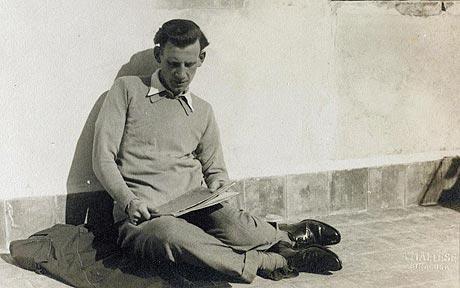
The first, ‘Soldier Boy’, is based on a Siegfried Sassoon text ‘Suicide in the Trenches’, written during WWI. Sassoon penned a number of better-known anti-war poems, but this one’s quite unusual in that it deals with suicide among the ranks (a huge problem in Iraq and Afghanistan even today with about 20 US veterans committing suicide every day, about 20% of the overall suicides in the US while only 1% of Americans have served in the military) – a manifestation of the mindlessness of war and of the vain belief in the soteriological powers of violence’s stunning machinery.

Edith SitwellThe second piece is ‘Still Falls the Rain’. The text here is provided by Edith Sitwell, and cites scripture, ‘Faust’, and all sorts of arcana. Sitwell endured a night of the Blitz in London in 1940, and it is believed that she wrote the poem as the sun rose, bringing with it life’s announcement of perseverance and graced permanence (the Germans bombed exclusively at night). While nowadays we seem to accept with little protest the faceless and mechanised bombing of civilian populations as commonplace, the Blitz marked the first time it was ever done in earnest, and it must have seemed unspeakably vile. John Milne described the closing lines of the poem  as ‘as powerful an affirmation of God’s enduring love in the face of near-infinite human evil as I’ve ever encountered’. Those interested in reading further about the poem can read the exegesis provided by Robin Bates, a professor of English at St. Mary’s College of Maryland.

‘War’, by Thomas W. Shapcott

Sidney Nolan, 'Gallipoli'

Sidney Nolan, ‘Gallipoli’

Remembrance Day. In school assemblies, talk
of manhood achieved in the trenches of World War One.
At seventeen, the boy my father ran from home
and enlisted, falsifying his age. Gallipoli had begun.
Proudly he sat for his photo in the glib slogan
of his army uniform, before he sailed.
The other side of war re-shaped that soldier,
and the later pictures stare bleakly, exiled.

Yet fifty years have silted over the scars;
impossible for me to recognize my father
in either photograph. Time’s habit of movement, event,
long before my birth, wove in him a tidy shelter
of reunion, committee, club, appeal and agenda.
The stories that I grew up with of battles, and “Winter
in ’16” were scraps and relics, toys in an old shoebox.
In the R.S.L. he became a Life Member.

But wars do not finish: it is not over. I speak
of more than personal discoveries.
Gallipoli that was a selfish blunder in high places,
a battle fought for nothing or for polluted seas
of sodden corpses, is other than a ribbon: the errors
are not the meaning, finally. My father woke
struggling, one night, an old man in warm pyjamas,
into the pillbox concussion of old darkness, and it broke

into his age and stranded him. He stumbled past us,
his grown sons, a strange dead boy choking him silent
and spitting stale blood in the safe rooms of our home,
blind for a terrible reckoning, demanding atonement.
And we, in the comfortable bedrooms
taken for granted always, innocent,
were forced among the spaces of his acts and words
to where his gains burned through like punishment.

– Thomas W. Shapcott, ‘War’, in Inwards to the Sun: Poems (St. Lucia: University of Queensland Press, 1969), 59.

‘Thoughts on being The Registrar’, by Catherine van Dorp

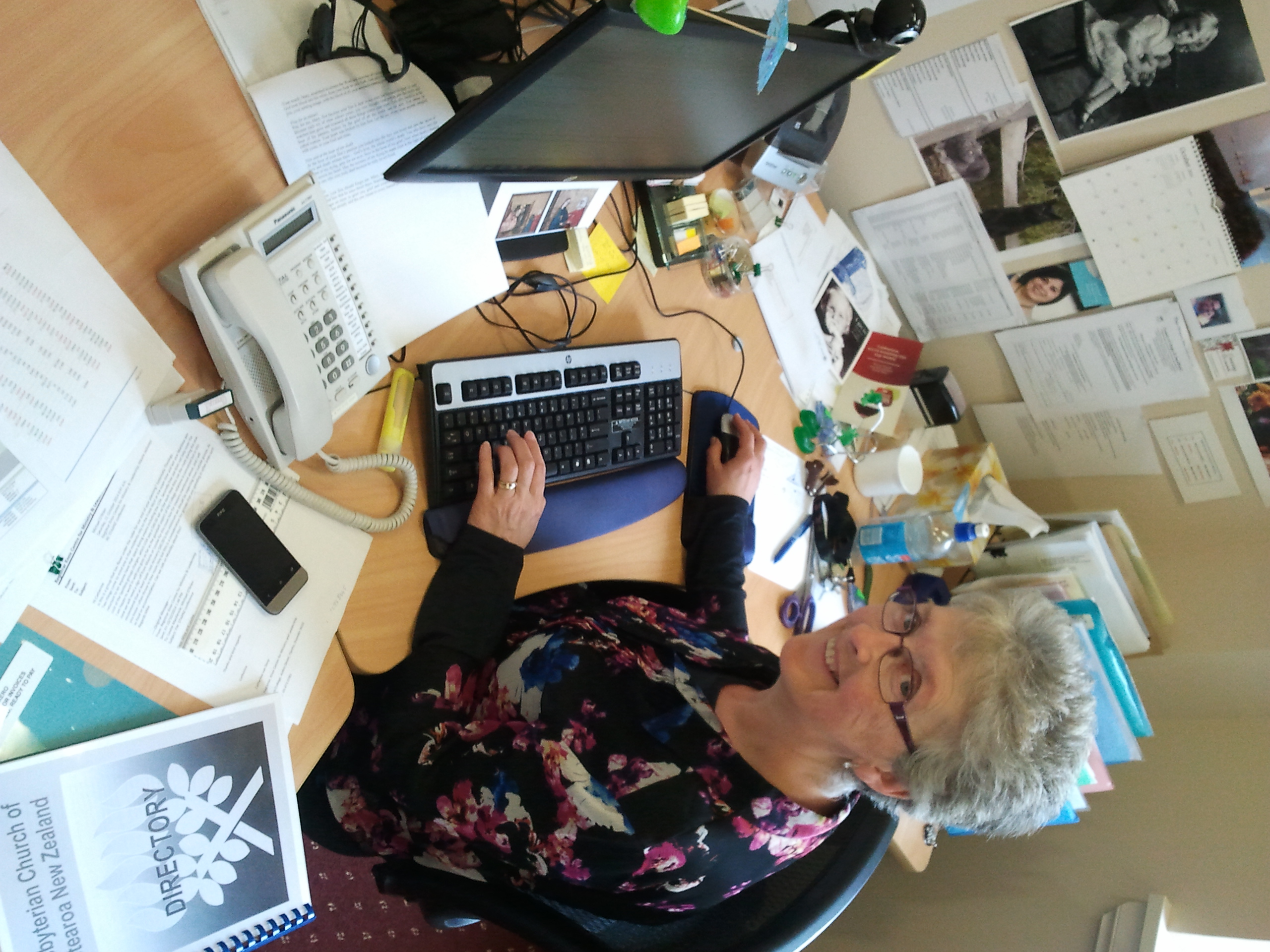
SAMSUNGA hundred jobs half-done;
And half-remembered thoughts hover just beyond recall
Of things to do.
Scribbled names on
Scraps of paper
Remind of calls
That interrupted previous attempts
To beat the chaos.
Lists bring some order
And lend respite
From sense of failure.
Resolution to complete
At least one task
Becomes today’s compulsion.
I click my mouse
Open my spreadsheet
Gather my thoughts
to task at hand
and start again.

The phone rings …

– by Catherine van Dorp, 15 October 2014.

Happy birthday to Samuel Johnson

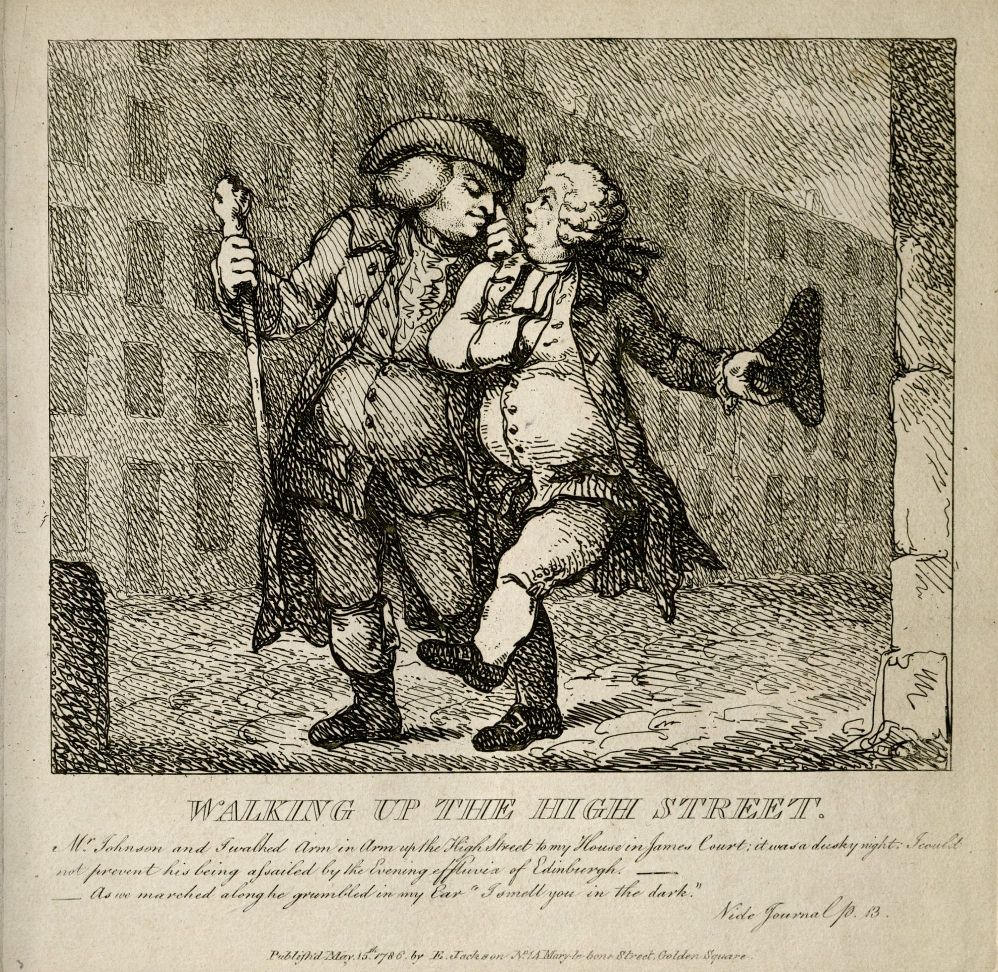
Samuel Johnson and James Boswell enjoying Edinburgh

Samuel Johnson and James Boswell enjoying Edinburgh

… about whom I once wrote a little poem.

By the way, did you hear the apocryphal story about when Johnson was asked by a Scot what he thought of Scotland (that land ‘where there is nothing to be got’ and there exists ‘a diffusion of learning’)?

His reply: ‘That it is a very vile country, to be sure, Sir’.

To which the young Scot rejoined, ‘Well, Sir! God made it’.

‘Certainly he did’, quipped Johnson, ‘but we must always remember that he made it for Scotchmen, and comparisons are odious, Mr. S——; but God made hell’.

Ouch! Of course, the Londoner had himself made a pleasant enough journey to Scotland once, in 1773 with James Boswell, very much enjoying the women and the ‘little Highland steed[s]’, but concluding from their three-month holiday (their twin accounts were subsequently published as The Journey to the Western Islands of Scotland and The Journal of a Tour to the Hebrides) that ‘the noblest prospect which a Scotchman ever sees, is the high road that leads him to England!’

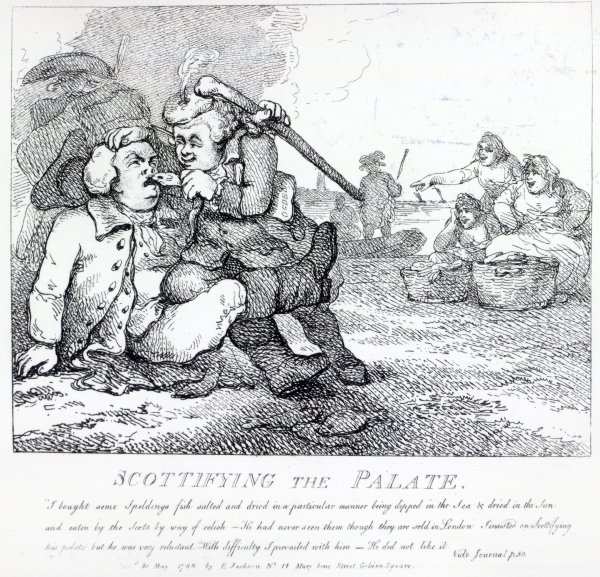
Scottifying the Palate from ‘Picturesque Beauties of Boswell, Part the First’, etched by Thomas Rowlandson, 1786 (etching) Samuel Collings—Read

‘Scottifying the Palate’, from Picturesque Beauties of Boswell, Part the First. Etching by Thomas Rowlandson, 1786.

A wee footnote to Herbert Read’s ‘Bombing Casualties: Spain’

Doll’s faces are rosier but these were children
their eyes not glass but gleaming gristle
dark lenses in whose quicksilvery glances
the sunlight quivered. These blanched lips
were warm once and bright with blood
but blood
held in a moist blob of flesh
not split and spatter’d in tousled hair.

In these shadowy tresses
red petals did not always
thus clot and blacken to a scar.

These are dead faces:
wasps’ nests are not more wanly waxen
wood embers not so greyly ashen.

They are laid out in ranks
like paper lanterns that have fallen
after a night of riot
extinct in the dry morning air.

– Herbert Read, ‘Bombing Casualties: Spain’, in Poems of Protest Old and New: A Selection of Poetry, ed. Arnold Kenseth (London: The Macmillan Company, 1968), 64.

Herbert ReadThese words were written in the 1930s, in response to a photograph accompanying a newspaper article on the Spanish Civil War. Like much of Read’s writing, they could have been written this week or, indeed, in any week since the third century BCE, when the first paper lanterns were created. This is part of their enduring power. But what most strikes me about Read’s poem is the contrast between the violence and loss described in the first three stanzas and the order and reclamation – the being ‘laid out in ranks’ – spoken of in the final one: the mocking plastering-over of violence blasphemously championed under the pretext of bringing order to chaos.

Such efforts to bring about order like this are not necessarily wasted or misguided; indeed, they are a requisite part of the responsibility laid upon us as creatures made in the image of one who is himself set against those parasites in the cosmos which threaten life. However, and to state the obvious, not all that promotes itself as doing that work is, in fact, doing that work. And so the hard and patient and ceaseless work of discernment, the drawing of a line (one not necessarily straight or entirely clear) which steers us away from those Forsyth calls ‘the facile hierophant and the sweet exalté’ and towards a world made new, transformed not by the invasion of a foreign power or by the ascension of a paladin self-made but from within the very bastille of the human condition, charged with Spirit.

‘Otago Farmers’ Market’

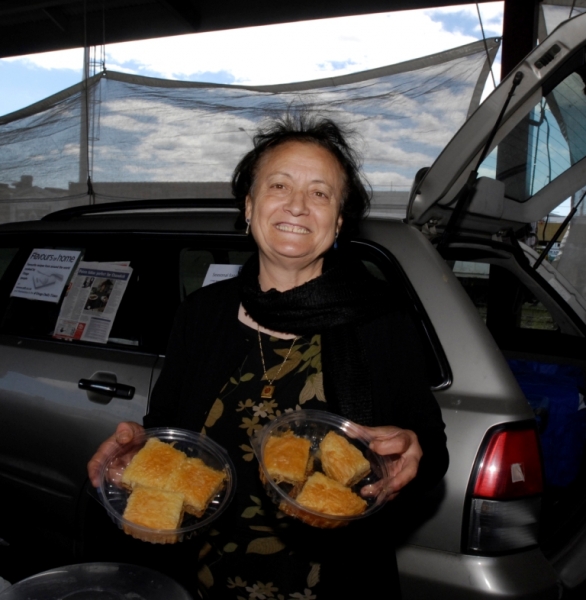
Afife

Well,
there was
no shortage of apples or artichokes
no shortage of walnuts or whiskey
no shortage of cherries or chickens
no shortage of lamb or leeks
no shortage of pork or pinot noir
no shortage of edible flowers or eggs
no shortage of sprouts or Green Man stouts
no shortage of capsicums or Colin’s creamy farmhouse brie
no shortage of potatoes or pies
no shortage of coffee or Cardrona merino lamb
no shortage of tabbouleh or Ken’s tussocks
no shortage of bread or beets
no shortage of galettes or garlic paste
no shortage of asparagus or Afife’s Lebanese delectations
no shortage of smoked salamis or short skirts
no shortage of pears or pizzas
no shortage of vegans or vendors
no shortage of buskers on the platform jamming the blues.
But.
By the time we reached Tony’s ’Nemo’ van
the only fish left were
five
small
sole.
‘It’s been a shocker of a week’, he said.
‘With three hours out to the reef
and three hours back,
and with no calm
to get any sleep. Still,
there’s always next week,
eh’.

© Jason Goroncy
December, 2013

––––––––––

Three years later, in 2016, Mike Crowl set the poem to music. Its first – and possibly last? – performance was by The Choristers.

David Malouf: ‘Long Story Short’

The appearance of a new book by Australian writer David Malouf tends to be a happy occasion on my calendar. Since being introduced to his work as a high school kid (Fly Away Peter was one of only a small handful of books that I ever finished reading at school, and I have re-read it many times since), I have looked out for his books. The most recent novel I read of his was Ransom, published in 2009. I thought it was excellent. He now has a new book out, Earth Hour, his first collection of published poems since Typewriter Music (2007) and Revolving Days (2008). Here’s one of its offerings:

The Book of Grievances has its roots
in singular griefs. A man keeps his list,
his hit list. Writes down times
and places where the knife went in, was twisted. Writes
it down in the ample folder of
his heart as we call it, to be underlined
in red and revisited. The gun he keeps
oiled is also there in the heart’s darkness.

He takes it up and aims. Somebody falls, only he knows who
and where. In the place where grief
began and the wrong was done. When the dead
are as many as his griefs and the books are balanced he too
will be done.

The book, like the gun, is as warmly secret
in him as hoarded sweets. Along with the rough plan
sometime soon
to light out to the Territory, and once
gone send back no message.

– David Malouf, ‘Long Story Short’, in Earth Hour (St Lucia: University of Queensland Press, 2014), 33.

‘Synod’, by Bill Wallace

synod

Synod –
    a piece of time stolen from the rest of life;
    a Law book infested, resolution dominated monument to the status quo;
    a time for living in the ‘cloud cuckoo’ land of statement,
        letter, and a world controlled by church leaders;
    an occasion when right answers are given to wrong questions
        and democracy is worshipped as deity.

Synod is
    a place where illusions are reinforced –
    for the solemn, it provides evidence that life is a machine operating on dour efficiency;
    for the passive, proof that they have no contribution to make;
    for the lively, confirmation that the rest are rather dull and dim-witted;
    for the pious, a demonstration that they alone are in touch with God.

Synod –
    the district feast
    in which clowns have been replaced by committees;
    overeating by verbal obesity
    and the celebration turned into a question.

    Now, before the insecure take umbrage
    and the machine revenge,
    let me hasten to add
    that these are the thoughts of one for whom

    SYNOD HAS COME ALIVE

    because he now sees every human gathering,
    whether on church premises or not,
    as part of the age-old struggle,
    the struggle to be truly human –
        to be liberated from the chains which we make for ourselves,
        to escape from the masks which we choose to wear
            and
        to see people and things as they really are.
            In short

Synod is
    beginning to become an act of worship in which
    resolutions become devotions,
    people become prayers,
    and the laughter of the inner child
    becomes the adult’s life force.

‘O God, help us
    with joy to see the ridiculous behind the reasonable,
    with hope to see the world bursting out of the church,
    with love to see the people taming the machine;
Then the groan in Synod
will evidence the labour of new birth
rather than the death cry of the living church
crushed by its own organization’.

A couple of poems by David Lumsden

hermitHermit

He carried no phone
and sent no text.

He took holidays
but no photos,
downloaded no jpegs,
burned no CDs,
got no snapshots printed.

He maintained no blog.

He had no email address,
deleted no spam,
subscribed to no mailing lists,
unsubscribed from no mailing lists.

He downloaded no songs,
and ripped no music to mp3s.
He created no playlists.

He carried no camera or iPod.
He recharged no devices.
He never backed up.

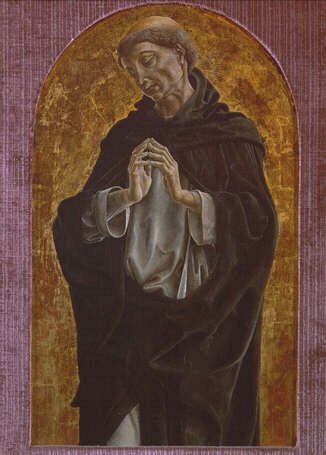
Cosmè Tura. St Dominic, c.1475Cosmè Tura: St Dominic, c. 1475

The theme is those dry wrinkled hands,
The stark high-contrast folds of white
And dark cloth, how the knuckles glint,
An emaciating holy blight
Upon the spirit, one lean face
That pities all the world, he stands
Jointed in diamonds, in iron hurled,
To intercede between God’s wrath
For Man, and iconise belief,
Minted in an abstract space.
The metallic backdrop of gold leaf
Makes it plain this is no scene
Of earth, or what earth can ordain.

[The poems appeared sometime back on Eureka Street, and the source of the images is the Mendocino Coast Model Railroad and Historical Society and Virtual Uffizi]

‘Here It Is’, by Rachel McAlpine

woman at prayerWell to get to the nitty-gritty,
here it is:
I was suddenly sick of praying
to men, for men.
That was the beginning,
the middle and the end.

Ritual: remind myself I am guilty,
wrong, and light in the head.

Orthodox theology and common sense:
yes our Father is sexless,
God is being, God is love,
yes the Holy Spirit is spirit
and Jesus being a Jew
simply had to be male
and he was kind to girls.
Yes I could alter pronouns privately,
yes I am married to God
and have no right to divorce.
Yes Man is metaphor for Woman,
yes I could work within,
yes I could wait a century,
yes it is just as silly
to think of God as Woman –

yet things are right for me
when flesh and spirit agree:
I do not feel included.

One truth is that God the Father
calls mostly to men except
when he wants a cup of tea.

– Rachel McAlpine, ‘Here It Is’, in Selected Poems (Wellington: Mallinson Rendel, 1988), 14.

‘Sentenced to Life’, by Clive James

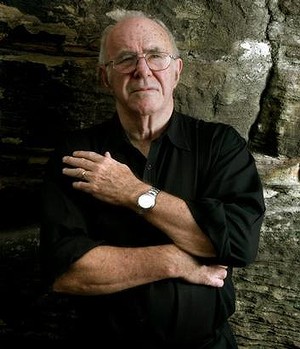
Clive James

As his ‘lungs of dust’ preclude his being able to travel any more, essayist and poet Clive James has in recent years turned his pen to themes of mortality and memory and place, lamenting, among other things, the impossibility of a return from the UK to his native Australia. And so his latest rich offering:

Sentenced to life, I sleep face-up as though
Ice-bound, lest I should cough the night away,
And when I walk the mile to town, I show
The right technique for wading through deep clay.
A sad man, sorrier than he can say.

But surely not so guilty he should die
Each day from knowing that his race is run:
My sin was to be faithless. I would lie
As if I could be true to everyone
At once, and all the damage that was done

Was in the name of love, or so I thought.
I might have met my death believing this,
But no, there was a lesson to be taught.
Now, not just old, but ill, with much amiss,
I see things with a whole new emphasis.

My daughter’s garden has a goldfish pool
With six fish, each a little finger long.
I stand and watch them following their rule
Of never touching, never going wrong:
Trajectories as perfect as plain song.

Once, I would not have noticed; nor have known
The name for Japanese anemones,
So pale, so frail. But now I catch the tone
Of leaves. No birds can touch down in the trees
Without my seeing them. I count the bees.

Even my memories are clearly seen:
Whence comes the answer if I’m told I must
Be aching for my homeland. Had I been
Dulled in the brain to match my lungs of dust
There’d be no recollection I could trust.

Yet I, despite my guilt, despite my grief,
Watch the Pacific sunset, heaven sent,
In glowing colours and in sharp relief,
Painting the white clouds when the day is spent,
As if it were my will and testament –

As if my first impressions were my last,
And time had only made them more defined,
Now I am weak. The sky is overcast
Here in the English autumn, but my mind
Basks in the light I never left behind.

Clive James, ‘Sentenced to Life’, in The Times Literary Supplement, 2 May 2014, 8.

‘Judas in Modern Dress’, by Judith Wright

A Human PatternNot like those men they tell of, who just as suddenly
walk out of life, from wife and fire and cooking-pot
and the whole confusion, to sit alone and naked
and move past motion; gaze through dark and day
with eyes that answer neither. Having completed their journey
they are free to travel past the end of journeys.
But I stepped out alone.
“I reject the journey; it was not I who chose it.
I worked for one end only,
to find the key that lets me through the door
marked Exit. I have found it and I use it.”

There is a tale I heard a wise man tell,
how, tattered with age, beneath a fruiting tree
a seeker sat, and heard in God’s great silence
another traveller, caught in the nets of self,
weeping between anguish and ecstasy,
and over a thousand miles stretched out one hand
to pluck him back again into the Way.

But I was one the saints knew not at all.
A mocking man, a sad man-animal
rejecting world and sense
not for God’s love, but man’s intelligence;
as though a hog looked through a human eye
and saw the human world as dunged as its own sty,
foul ante-room to death. Like that I saw
the abattoir ahead, and smelt the soil
soaked under me with blood. No place for me.

And wise in my own way I worked to find
the weak place in the palings of the Real—
the gap between the Word
and its Creation, the act and the conception—
and forced my way between those married two,
set time against eternity, struggled through,
slipped through annihilation, still being I.

What violence those great powers did to me
as I escaped between, I have forgotten.
But swinging clear I saw the world spin by
and leave me, empty as an insect-shell,
beyond the chance of death, and outside time.

I had the choice. Once I had infinite choices—
all the variety of light and shadow
that sprang to being when Choice first was made.
Now I have knowledge only. Knowledge, and eyes
to watch the worlds cross their eternities.

Times after times the saving word is spoken.
Times after times I feel it wither me.
The fools of time live on and never hear,
and I who hear have chosen not to answer.
It beats against me till my ears are broken.
Times after times I see my death go by
and cannot reach it even with a prayer.
Indeed, since I am neither Here nor There
I cannot live, and therefore cannot die.

Times after times my lips begin to form
the word that I renounced, and close again.
The worlds pass jostling, and their makers dream
immortal life betrayed to daily pain—
the pain that I denied.

I still deny it.

O sweet, sweet, sweet the love in human eyes—
the tree of blossom dressed to meet the bee,
all white, all radiant, golden at the heart.
Halt there, at your Creation! And it dies,
dies into rotting fruit, and tyrannous seed.
If it spring up again, so much the worse.
That was the curse on Eden, Adam’s curse.
The curse by which my heart will not abide.

If I am Judas, still my cause is good.
I will not move my lips to answer God.

– Judith Wright, ‘Judas in Modern Dress’, in A Human Pattern: Selected Poems (North Ryde: Angus and Robertson, 1990), 115–17.

Christian Wiman on belief, faith, poetry, experience, and the unreligious artist

IAM (International Arts Movement) recently posted Makoto Fujimura’s 4-part interview with Christian Wiman. I thought it was worth sharing:

1. On belief and faith

Error
This video doesn’t exist

2. On poetry and faith

Error
This video doesn’t exist

3. On experience and self-expression

Error
This video doesn’t exist

4. The unreligious artist

Error
This video doesn’t exist

Whenever I read Wiman, or read about Wiman, I am reminded of the Church’s long history of mistreatment and silencing of the doubters and sceptics in its midst, of my own disquiet about the idolatry of certainty, and of my own hunger for honest conversation about the mysteries that lie most deeply in the centre of existence. I am also reminded that scepticism as well as faith ‘seeking understanding’ (after Anselm) involves not only some continuity with the past but also the constructive work of doing what Hans-Georg Gadamer famously refers to as opening ‘horizons’ of meaning where one learns ‘to look beyond what is close at hand—not in order to look away from it, but to see it better within a larger whole and in truer proportion’. Theologians, it seems to me, ought to champion the opening up of such ‘hermeneutic space’ for all those – whether so-called believers or sceptics – who simply cannot imag­ine any other way of the world being. This is one place where the work of artists like Wiman take on an almost indispensable role for the church, and perhaps especially in those parts of it which tend to be more than a little wordy (and a little nerdy!) – where, despite all claims to the contrary, what is communicated is that ultimate truths really can be captured by human constructs – not only in liturgical contexts but also in our other theological musings.

My friend Cynthia Rigby recently identified Wiman as an example of one for whom the search for meaning constitutes ‘a kind of belief that … would not run nearly as deep were it void of skepticism’. Clearly, doubt and scepticism may be expressions of faith. Equally, belief may be an expression of a lack of faith, a mistrust and/or fear – the fear of not believing. All this is part of the complexity and ambiguity of scepticism. What sceptics and doubters need, Paul Tillich said, is not repression but courage which ‘does not deny that there is doubt, but … takes the doubt into itself as an expression of its finitude and affirms the content of an ultimate concern’. This is the kind of scepticism which is essential for the kind of theology that grown-ups do!

St Ambrose once said that ‘it did not suit God to save his people by arguments’. Of course, arguments have their uses – encouraging the gift of clarification, for example – but they are no substitute for imagination, vision, and hope, truths not lost on the biblical writers. It is not insignificant that the Bible has no arguments for the existence of God. It is not insignificant that the Bible offers little reason to think that faith should be facile and unambiguous. Indeed, the Bible is unfilled by comfortable and reassuring words about the life of belief and trust. It is unfilled by presentations of a God who expects or demands doubtless faith. If Abraham and Moses and Hannah and Job and Mary and Jesus and Paul suggest any pattern, then our knowledge of God and of God’s ways is learnt not, in the first instance, by clinical enquiry and epistemological certainty but by being found caught up in a reality planned and constrained only by mysterious love, love which appears to have little difficulty in making space for angst and struggle and disbelief. Indeed, in a sense these are a kind of argument for God.

Annunciation and call

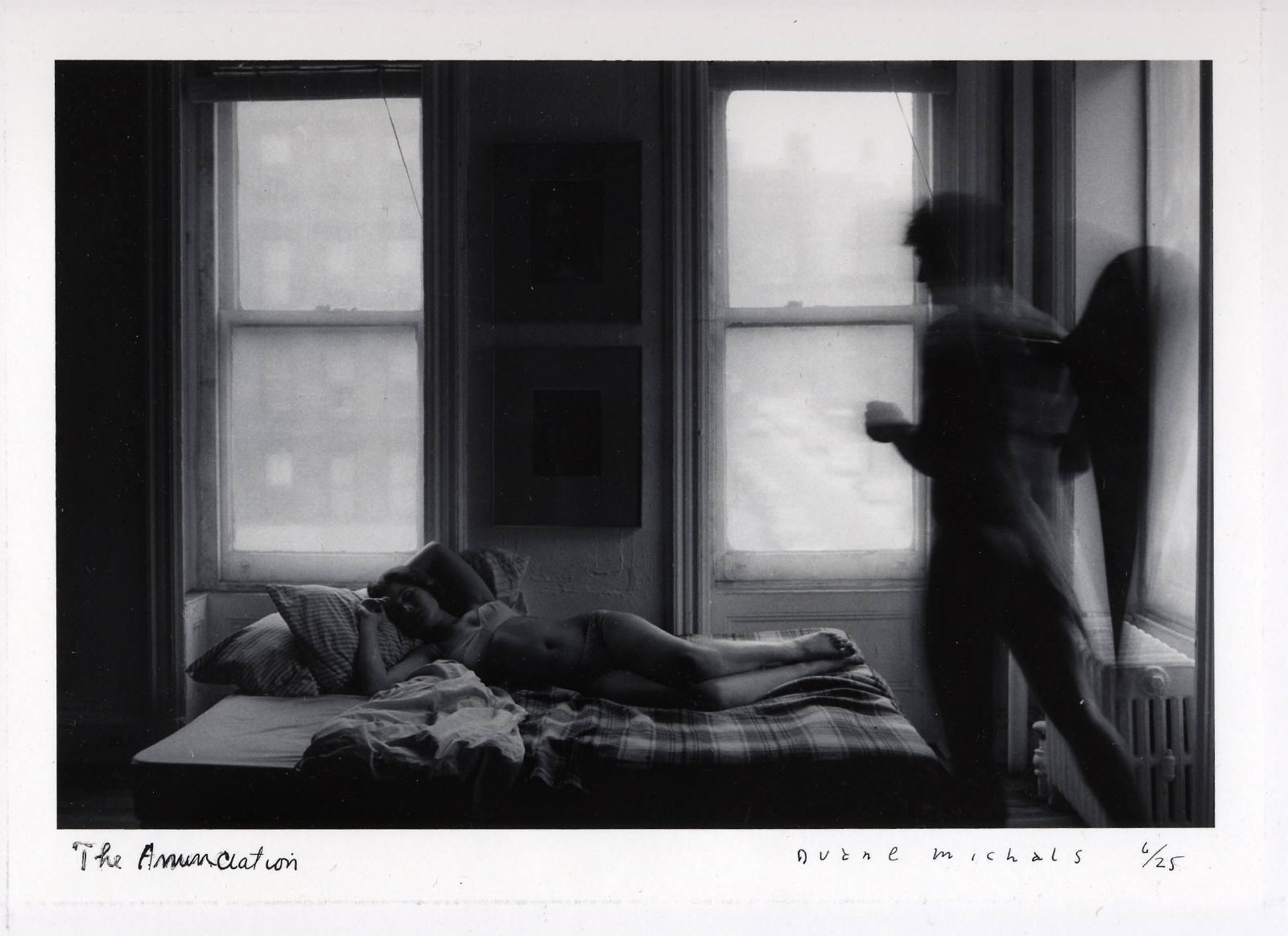
Duane Michals - The Annunciation

One afternoon, in a small window of time between when my students departed at the end of another two-week block course and my turning of attention to report writing, I spent a few moments reflecting on the mysterious relationship between what we ecclesiastical types call ‘call’ and the ancient (its origins were in the 5th century) Feast of the Annunciation – that much-downplayed event in the church’s calendar set to mark the archangel Gabriel’s announcement to Mary that she would conceive and become theotokos (God-bearer), and Mary’s fiat, her ready reception of this most inconceivable of happenings.

One thing that struck me was that this feast, which is observed on 25 March – a full term before the celebration of ‘the birth’ – coincides with Good Friday during those seasons when Holy Week happens in March. This not to be glossed over. For the real subject of the Feast is none other than he who was, at least according to one modern translation of the Bible, ‘slain from the creation of the world’ (Rev 13.8). The entirety of human history, in other words, has a distinct mark of the pietà about it, of the fragile God given into human hands. And there is something peculiarly cataclysmic too about 25 March: according to tradition, events as diverse as the creation of the earth, the creation of Adam, Lucifer’s fall, and the crossing of the Red Sea are all supposed to have happened on this date. And yet, none of these events are as significant to the church as the broadcast to a young girl that she is to bear in her womb the very one in whom, by whom and for whom all things exist. Her womb becomes the place where all life, all that will be, is born. Her womb is also the place where she will feel the pain of her son’s death at the hands of violent strangers, and the pain of lifelessness as he who once suckled on her warm breasts in now laid in a cold rock-hewn tomb belonging to some Sanhedrin member from Arimathea.

A further thing that struck me was the way in which this Feast trumpets Christian ministry’s most basic confession; namely, its impossibility – impossibility marked by the unrelenting command to witness to the sheer givenness of God’s unexpected and messy irruption among us and in us. That Christian ministry and theology, as Valdir Steuernagel has it, is ‘born in the guts, twisted by the shock of God’s visit’, and that ‘the cradle of theology is stupefaction, when we find ourselves absolutely lost and completely thankful for God’s visit’, is not the stuff of carefully manufactured and controlled environments. To offer one’s womb so that the life of another might be formed in us, to embrace waiting, to receive the burden of vocation along with others – others who, like cousin Elizabeth, help us to carry on – is to feel ‘pulled into God’s history’. And to be drowned in baptism (sometimes called ‘ordination’) is to discover oneself a character in the divine humour, the early gurglings of him who will have the last laugh. The Feast of the Annunciation is the church’s answer to those who refute that laughter, and the claim that vocations born of Yes’s like Mary’s are marked above all else by anything other than extreme ambiguity.

Most of my window, however, was spent reading and thinking with three poems on the annunciation – one by the Irish poet-priest John O’Donohue, one by the well-known English poet Elizabeth Jennings, and one by the great Welsh poet-priest R. S. Thomas – poems I wanted to share with readers here.

Cast from afar before the stones were born
And rain had rinsed the darkness for colour,
The words have waited for the hunger in her
To become the silence where they could form.

The day’s last light frames her by the window,
A young woman with distance in her gaze,
She could never imagine the surprise
That is hovering over her life now.

The sentence awakens like a raven,
Fluttering and dark, opening her heart
To nest the voice that first whispered the earth
From dream into wind, stone, sky and ocean.

She offers to mother the shadow’s child;
Her untouched life becoming wild inside.

–  John O’Donohue, ‘The Annunciation’, in Conamara Blues (London: Bantom Books, 2001), 61.

≈≈≈

Nothing will ease the pain to come
Though now she sits in ecstasy
And lets it have its way with her.
The angel’s shadow in the room
Is lightly lifted as if he
Had never terrified her there.

The furniture again returns
To its old simple state. She can
Take comfort from the things she knows
Though in her heart new loving burns
Something she never gave to man
Or god before, and this god grows

Most like a man. She wonders how
To pray at all, what thanks to give
And whom to give them to. “Alone
To all men’s eyes I now must go”
She thinks, “And by myself must live
With a strange child that is my own.”

So from her ecstasy she moves
And turns to human things at last
(Announcing angels set aside).
It is a human child she loves
Though a god stirs beneath her breast
And great salvations grip her side.

– Elizabeth Jennings, ‘The Annunciation’, in Collected Poems (Manchester/New York: Carcanet Press, 1986), 45–46.

≈≈≈

She came like a saint
to her bride-bed, hands
clasped, mind clenched
on a promise. ‘Some

fell by the wayside,’
she whispered. ‘Come, birds,
winnow the seed lest
standing beside a chaste

cradle with a star
over it, I see flesh
as snow fallen and think
myself mother of God.’

– R. S. Thomas, ‘Annunciation’, in Collected Later Poems, 1988–2000 (Highgreen: Bloodaxe, 2004), 194.

≈≈≈

[Image: Duane Michals, ‘The Annunciation, 6/25’. Gelatin Silver Print, 8 x 10 in. Source]
‘The Minister’ by Anne Stevenson

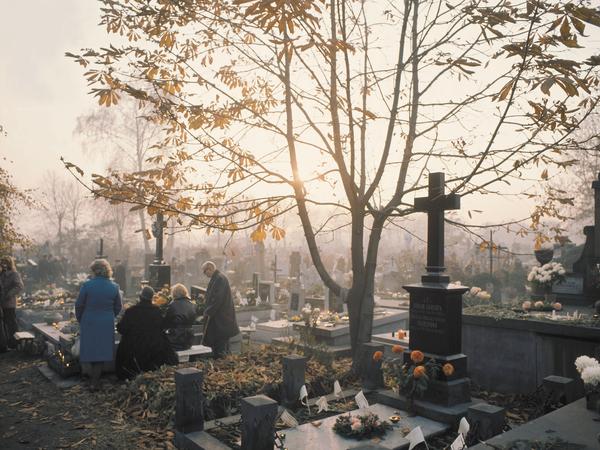
Graveside

We’re going to need the minister
to help this heavy body into the ground.

But he won’t dig the hole;
others who are stronger and weaker will have to do that.
And he won’t wipe his nose and his eyes;
others who are weaker and stronger will have to do that.
And he won’t bake cakes or take care of the kids –
women’s work. Anyway,
what would they do at a time like this
if they didn’t do that?

No, we’ll get the minister to come
and take care of the words.

He doesn’t have to make them up,
he doesn’t have to say them well,
he doesn’t have to like them
so long as they agree to obey him.
We have to have the minister
so the words will know where to go.

Imagine them circling and circling
the confusing cemetery.
Imagine them roving the earth
without anywhere to rest.

– Anne Stevenson, ‘The Minister’, in The Collected Poems 1955–1995 (Oxford: Oxford University Press, 1996), 62.

‘Animal Nativity’, by Les Murray

starving_dogThe Iliad of peace began
when this girl agreed.
Now goats in trees, fish in the valley
suddenly feel vivid.

Swallows flit in the stable as if
a hatching of their kind,
turned human, cried in the manger
showing the hunger-diamond.

Cattle are content that this calf
must come in human form.
Spiders discern a water-walker.
Even humans will sense the lamb,

He who frees from the old poem
turtle-dove and snake,
who gets death forgiven
who puts the apple back.

Dogs, less enslaved but as starving
as the poorest human there,
crouch, agog at a crux of presence
remembered as a star.

Les Murray, ‘Animal Nativity’, in Collected Poems (Melbourne: Black Inc., 2006), 374–75.