- Todd Shy on the gratitude of Marilynne Robinson.
- A new study on how global warming is impacting rainfall.
- Meagan Day on Welcome to Utopia, TX: ‘Today’s deracinated mass culture isn’t as useful for compressing endless formative experiences into a single token of identity. But a TRUMP 2024 sign can make up some of the difference’.
- Ed Watson introduces us to Wittgenstein’s pastoral theology.
- Samantha Rose Hill on Hannah Arendt and not discovering one’s true, authentic self.
- Matthew Milliner on artistic humility in the age of ‘Hot AI Jesus’.
- Gary Morson on reading Solzhenitsyn today.
- Miroslav Volf and the Yale Center for Faith & Culture have set up a memorial website for Jürgen Moltmann.
- Martin Empson on ‘the fear of Anabaptist radicalism’.
- Siddhesh Gooptu on musical circulation, tradition, colonialism, and the problem of authenticity.
- J. Scott Jackson on Daniel Berrigan’s eulogy for William Stringfellow.
- Christopher Benfey reviews some new books on Melville.
- Kevin Power reviews Maestros & Monsters: Days & Nights with Susan Sontag & George Steiner, by Robert Boyers.
- Joy Clarkson reviews Imagination in an Age of Crisis for the journal Studies in Christian Ethics. An early view of the review can be accessed here.
- Statement from the (former) School of Indigenous Studies, University of Divinity.
- Seraj Assi on why Netanyahu’s speech to the US Congress was a gift to future genocide historians.
- Jeremy Scahill interviews Mohammed Al-Hindi: ‘After more than 30 years, Oslo is over’.
- Stan Grant on Donald Trump.
- Slavoj Žižek on Trump as ‘the opium of the people’.
Academia
Harold Bloom on literary criticism
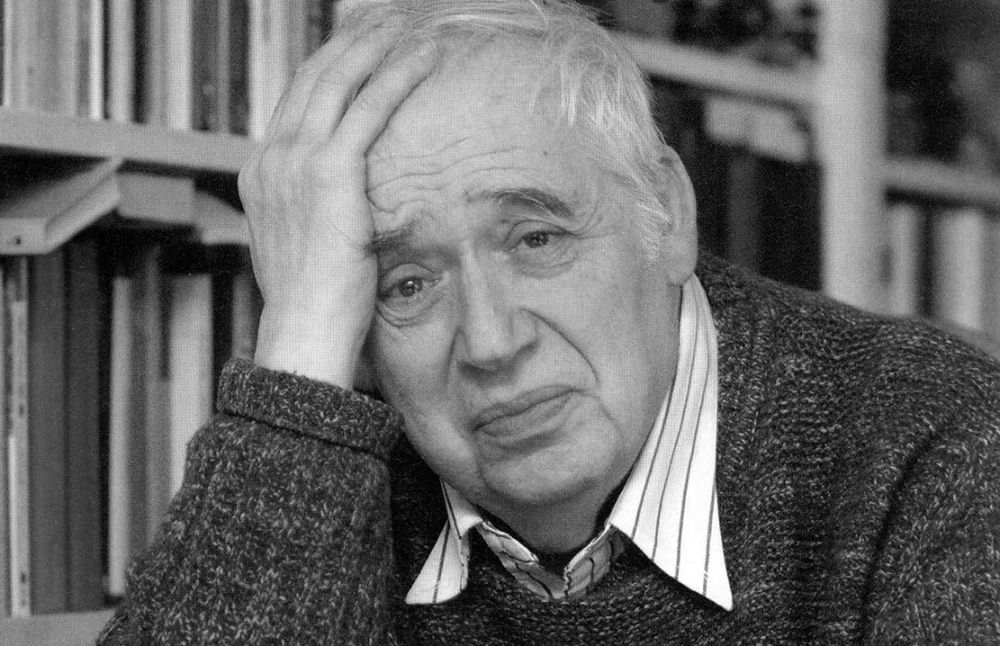
‘Literary criticism, to survive, must abandon the universities, where “cultural criticism” is a triumphant beast not to be expelled. The anatomies issuing from the academies concern themselves with the intricate secrets of Victorian women’s underwear and the narrative histories of the female bosom. Critical reading, the discipline of how to read and why, will survive in those solitary scholars, out in society, whose single candles Emerson prophesied and Wallace Stevens celebrated’.
– Harold Bloom, from the ‘Foreword’ to Northrop Frye’s Anatomy of Criticism: Four Essays.
[Image from The Paris Review]
Some Recent Watering Holes
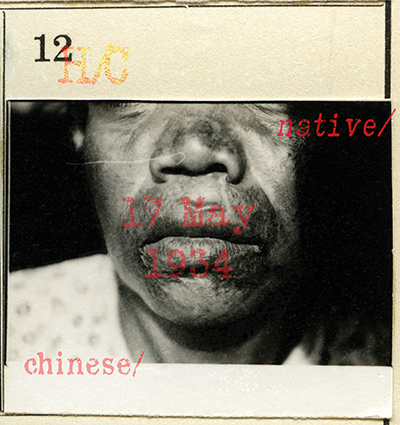
Brenda L. Croft, ‘shut/mouth/scream’ (detail), 2016. Source.
I haven’t posted one of these for a while. Here are a number of pages I’ve appreciated visiting this past week or so:
- Damion Searls on how psychiatrists used Rorschach tests to examine Nazis during the Nuremberg trials.
- George Monbiot’s piece on being ‘Screened Out’.
- Julian Cribb on why ‘coal will kill more people than WWII’.
- Frank Brennan, Tim Costello, Robert Manne, and John Menadue reckon that ‘we can stop the boats and also act decently, fairly and transparently’.
- The announcement about the National Gallery of Australia’s ‘Defying Empire: 3rd National Indigenous Art Triennial’ coming up later this year!
- Chris Green’s Ash Wednesday reflection – Christ’s Death Lives in Us.
- Steve Wright’s Ash Wednesday reflection – To dust.
- Mary Beard is simply awesome: check out her piece on Seneca and her lecture on women in power, delivered at the BM.
- For those within cooee of Melbourne, this looks good – Thomas Crow, Anne Dunlop, and Charles Green talking about theological originality in art.
- Matthew Sharpe on Montaigne’s Essays.
- Jane Hutcheon talks to Reg Mombassa.
- Michael Hobbes on the epidemic of gay loneliness.
- Jonathan Sacks on the architecture of holiness.
- Rick Floyd has been looking for light in the shadow of death.
- Jason Guriel on Christian Wiman and ‘kind of faith that a poet had better not lose’.
- Queensland, a part of the country where most locals seem to espouse the philosophy that two wongs don’t make a white and which is not especially well known for a radical brand of Christianity, sees some religious fanatics charged for beating swords into garden hoes.
- A funeral homily by Kim Fabricius, plus his good little introduction to Christianity.
- Raimond Gaita on Donald Trump’s America.
- John Milbank on the problem of populism and the promise of a Christian politics.
- Scott Jackson asks, ‘Was Niebuhr a “Real” Theologian?’
- The University of Divinity is seeking a Director for its Centre for Research in Religion and Social Policy (RASP).
- Swee Ann Koh asks, ‘Is there racism in the church?’
- Paul Collier reviews a couple of recent efforts to understand the logic and opportunities of, and challenges to, capitalism. Along the way, he has some insightful things to say about nationalism, ‘nationhood’, multiculturalism, and global citizenship too. (However, given the reality of religion, for example, it would be very difficult to defend the claim that ‘nationhood is the only force that has proved to be sufficiently powerful to bind millions of people together in a sense of shared identity’.)
- Why students hate peer review, and how to make it work better for them.
- Watching Umberto Eco and his books and books and books and paintings and books and books and ladders means that I will tolerate no more complaints on this subject, from anyone.
- Speaking of no complaints, Doug Gay’s third public lecture on reforming Scottish Presbyterianism is now available here.
And this:
Academic position: Dean of Studies and Lecturer
 Applications are invited for the position of Dean of Studies and Lecturer at the Knox Centre for Ministry of Leadership in Dunedin, New Zealand. The Knox Centre forms and trains theology graduates for ministry and leadership in the Presbyterian Church of Aotearoa New Zealand. This includes running a two-year internship programme for people training for the Ministry of Word and Sacrament. As Dean of Studies, you will handle course enquiries and manage the ordination programme’s curriculum. As Lecturer, you will teach at least one paper in the ordination studies programme, preferably in the areas of Theological Reflection and/or Presbyterian-Reformed Studies. As well as having the requisite skills in administration and education, you will be familiar with the Presbyterian-Reformed tradition, you will have a proven background in Christian ministry and leadership, and you will have either a D.Min or a PhD in Theology. A full Job Description for this position can be obtained from the Registrar. Applications can be submitted to the Principal. The position is available from 1 January 2015. The closing date for applications is 16 May 2014.
Position: Senior Lecturer in Mission Studies
 Laidlaw College in Auckland is seeking a Senior Lecturer in Mission Studies for its School of Theology, Mission & Ministry:
The Lecturer will be responsible for teaching in mission and contextual studies, ensuring that courses are developed and delivered in ways that are faithful to the Gospel of Christ, culturally incisive, and grounded in a biblical understanding of God’s missional purposes for Aotearoa New Zealand, the nations of the Pacific region, Asia and the world. They will also be actively involved in the College’s community and will lead the College’s Centre for Cross Cultural Mission (C3M).
The desired candidate will have the following skills and qualifications:
- A PhD or equivalent in a relevant area of research
- Significant missional experience
- Active involvement in a local Christian community of faith and in Christian initiatives in the wider global community
- Ability to publish papers and present research at academic conferences
- Experience in teaching within a tertiary education provider
- Experience mentoring students and providing pastoral care
- Understanding of recent developments in the theological and general tertiary education sectors nationally and internationally
- Experience and/or willingness to utilise e-Learning pedagogies and technologies
This position is a permanent full-time (1.0 FTE) position.
Please email your CV and cover letter to Natalie Tims, Human Resources Manager, at ntims@laidlaw.ac.nz to register your interest and request an application pack. Application packs include an application form related to your previous experience and theological principles, a Statement of Faith and a five-year Professional Development Research plan. Application packs must be submitted by Friday 2 May, 2014.
You can read the Job Description here.
Seminar on Debates about Religion and Sexuality
 Between 10–19 June, 2014, the Harvard Divinity School is running a ‘summer seminar for scholars, other writers or artists, religious leaders, and activists who are working on a first large project in which they hope to change the terms of current debates around religion and sexuality’. The seminar will be directed by Mark D. Jordan (Washington University, St. Louis) and Mayra Rivera Rivera (Harvard University), is limited to 12 participants, and HDS is picking up the tab for travel, accommodation and grub.
Applications are due 5 February, 2014, and questions may be directed to rsseminar@hds.harvard.edu.
More info here.
October stations …
 Reading:
- Theologia: The Fragmentation and Unity of Theological Education by Edward Farley
- Piecing Together a Shared Vision: The 1987 Boyer Lectures by Davis McCaughey
- I Heard the Owl Call My Name by Margaret Craven
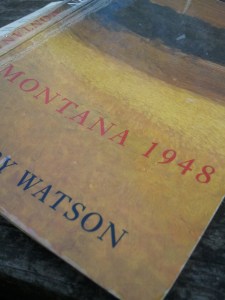
- Montana 1948: A Novel by Larry Watson
- Later Calvinism International Perspectives edited by W. Fred Graham
- Calvinus sacrarum literarum interpres: Papers of the International Congress on Calvin Research edited by Herman J. Selderhuis
- Commentary on the Basis of Union of the Uniting Church in Australia, by J. Davis McCaughey
- Letter to D: A Love Letter by Andre Gorz
- A Portrait of the Artist as a Young Man by James Joyce
- Clergy: The Origin of Species by Martyn Percy
- Rudolf Bultmann: a Biography by Konrad Hammann
- Even as We Speak by Clive James
- The Twits by Roald Dahl
- Karl Barth: Studies of His Theological Methods edited by S. W. Sykes
- Holy Sh*t: A Brief History of Swearing by Melissa Mohr
- Honest Doubt: The History Of An Epic Struggle by Richard Holloway
- The Great Passion: An Introduction to Karl Barth’s Theology by Eberhard Busch
- The Vicar of Nibbleswicke by Roald Dahl
- The Shape of Living by David F. Ford
 Listening
- Reunion Hill by Richard Shindell
- Cloud Lining by Enda Kenny & Lindsay Martin. [I saw these guys play a gig a few weeks back here in Dunedin. ‘Twas certainly one of the best shows I’ve seen in NZ.]
- Reunion by Lucy Kaplansky
- Ten Year Night by Lucy Kaplansky
- The Red Thread by Lucy Kaplansky
- Over the Hills by Lucy Kaplansky
- Flesh & Bone by Lucy Kaplansky
- Cry Cry Cry by Lucy Kaplansky
- Every Single Day by Lucy Kaplansky
- Greatest Hits Live by Hunters & Collectors
- Gathering Mercury (Limited Edition) by Colin Hay
- Going Somewhere by Colin Hay
- Man at Work by Colin Hay
- Are You Lookin’ At Me? by Colin Hay
- American Sunshine by Colin Hay
- Looking for Jack by Colin Hay
- Transcendental Highway by Colin Hay
- Topanga by Colin Hay
- Company of Strangers by Colin Hay
- Wayfaring Sons by Colin Hay
- Peaks & Valleys by Colin Hay
Link love
- Neil Gaiman on why our future depends on libraries, reading and daydreaming
- Kim Fabricius’ last ‘letter’ to his congregation
- Kim Fabricius’ farewell sermon
- Ben Myers asks Why go to church?
- ANZATS issues a call for papers
- Wendell Berry on the politics of gay marriage
- Robert Manne on Why Rupert Murdoch can’t be stopped
- David Suzuki on Q&A
- Roxanne Missingham on the death of the academic book and the path to Open Access
- Christine Cheyne on New Zealand’s Resource Management Act and why not a good model for Australia (or for anywhere else for that matter, including here in NZ)
- A
discussion with James Alison and Brian McLaren
- Theology Studio’s wide-ranging interview with Rowan Williams
- J. M. Coetzee reviews The Hanging Garden by Patrick White
- Fresh revelations of cruelty to Australian sheep in Jordan. [I have posted on live animal exports before]
Leunig love


[Source: The Age]
Teaching positions in the Antipodes
 Carey Baptist College in Auckland is on the hunt for a specialist in Old Testament, and a specialist in New Testament, to join their teaching team of eight. For a copy of a full position description email Charles Hewlett. Applications close on 29 July 2011.
Also, the Uniting Church Theological College and Centre for Theology and Ministry in Melbourne is seeking a new Professor of Old Testament to start in January 2012. Details are available for download here.
On resisting the chaotic non-conformity of private, virtuoso theologies
 ‘Throughout the history of the Reformed tradition, the central place both for the ongoing hermeneutic process urged in the confessions, and for the general influence of the confessions in the Church, has been the pastoral office through preaching, teaching, oversight, and leadership. Correspondingly, it is chiefly the minister of the word, among the other ordained ministries, who is held accountable in the constitutional questions for following the leading and guidance of the confessions of faith. Appropriately, theological education was in the past structured by the theology of the confessions. Rather strongly, thus, I wish to remind those of us that find our calling in theological education that it is scandalous for a faculty member in any discipline in the church’s seminaries not to be able to locate his or her work and thought and teaching matter with relation to the confessional teachings. We do not want again the old teaching oath, or any teaching oath at all, and the inevitably stifling conformity it promotes. But neither do we want the On resistsing that leave the relation of thought to life in the empirical church to the improvisation of individual ministers. Further, theological education carried out in programs of continuing education or presbytery projects of many types, should be oriented by a reasonable awareness of what the Church teaches in its confessional and creedal literature.
More broadly, it is the educational ministry of the Church on all levels that should bear the chief responsibility for a confessionally rooted hermeneutic, worship, and mission. The idiom of the tradition, whether in words or ethic, needs to be exercised in spiritual, biblical, theological, and ethical education.
It would be well, we often think, if one might be just a Christian, and not a Presbyterian, Catholic, or Methodist. But so, it might seem, is the case with language. What if we could avoid German or English and just speak language? But it doesn’t work. Esperanto is a wonderful idea, but like Basic English a few years back, it is bereft of the richness of meaning and naturalness of a true language. So a theological Esperanto, or ecumenical Esperanto—for the time being at least—leaves us far from the concrete reality in which we live and speak. The idiom of the Reformed tradition, when fully understood, is the ground and motive both for ecumenical awareness and progress, and for other kinds of reform and advance. Not abandonment, but reform, as new light breaks forth from Scripture and illuminates new situations in our culture and environment and in the world Church, is the promising idiom of our tradition’. – Edward A. Dowey Jr., ‘Confessional Documents as Reformed Hermeneutic’, Journal of Presbyterian History 79, no. 1 (2001), 58.
Lecturing Position in Biblical Studies
 The School of Theology at the University of Auckland seeks to appoint a Lecturer in Biblical Studies with expertise in Hebrew Bible, but capacities to teach into the New Testament. The position may expand to include studies of Emerging Judaism in the future.
The successful applicant will be expected to undertake research, to teach at introductory undergraduate, advanced undergraduate and postgraduate levels, and to supervise research students for the MTheol and PhD degrees.
Applicants will be expected to have a PhD or equivalent in Biblical Studies, some research publications and teaching experience.
Applications close on 21 March 2010.
For more information contact Elaine Wainwright.
Karl Barth on doing theology in the university
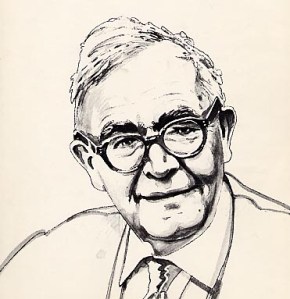 I’ve been re-reading some early lectures by Karl Barth from the period 1916–1923, published as The Word of God and the Word of Man. It really is an inspiring collection, the reading of which is of great encouragement to pastors and theological educators alike, recalling that our unique task is none other than to bear witness to the Word of God unveiled for us in Jesus Christ. When the demands of church and academy pull and prod us in all directions – directions determined, Barth insists, by the very question of being human – Barth graciously recalls our calling as witnesses to the given answer – the one Word of God. This witness alone is the love that we owe to God and to God’s people. And this is no less true for those called to serve in the academy, to which Barth offers the following reminder:
Theology is an omen, a sign that all is not well, even in the universitas literarum. There is an academic need which in the last analysis, as might be inferred, is the same as the general human need we have already described. Genuine science is confessedly uncertain of itself – uncertain not simply of this point or that, but of its fundamental and ultimate presupposition. Every science knows well that there is a minus sign in front of its parenthesis; and the hushed voice with which that sign is ordinarily spoken of betrays the secret that it is the nail from which the whole science hangs; it is the question mark that must be added to the otherwise structurally perfect logic. If this question mark is really the ultimate fact of each of the sciences, it is evident that the so-called academic cosmos is an eddy of scattered leaves whirling over a bottomless pit. And a question mark is actually the ultimate fact of each of the sciences.
So the university has a bad conscience, or an anxious one, and tolerates theology within its walls; and though it may be somewhat vexed at the want of reserve shown by the theologians when they deliberately ask about a matter that cannot with propriety be mentioned, yet, if I am not mistaken, it is secretly glad that some one is willing to be so unscientific as to talk aloud and distinctly about the undemonstrable central Fact upon which all other facts depend – and so to suggest that the whole academic system may have a meaning. Whatever the individual opinion of this or that non-theological doctrinaire may be, there is a general expectation that the religious teacher will give an answer to what for the others takes the shape of a question mark in the background of their secret thought. He is believed to be doing his duty (let him beware of doing it too well!) when he represents as a possibility what the others have known only as an impossibility or a concept of limitation. He is expected not to whisper and mumble about God, but to speak of him: not merely to hint of him, but to know him and witness to him; not to leave him somewhere in the background, but to disregard the universal method of science and place him in the foreground. (pp. 192–3)
Barth then proceeds to recall theology’s ‘position’ within the university’s program, and to draw out some implications for, so-called, ‘religious studies’ departments:
It is obvious that theology does not owe its position at the university to any arbitrary cause. It is there in response to a need and is therefore justified in being there. The other faculties may be there for a similar reason, but theology is forever different from them, in that its need is apparently never to be met. This marks its similarity to the church. It is the paradoxical but undeniable truth that as a science like other sciences theology has no right to its place; for it becomes then a wholly unnecessary duplication of disciplines belonging to the other faculties. Only when a theological faculty undertakes to say, or at least points out the need for saying, what the others rebus sic stantibus [things thus standing] dare not say, or dare not say out loud, only when it keeps reminding them that a chaos, though wonderful, is not therefore a cosmos, only when it is a question mark and an exclamation point on the farthest rim of scientific possibility – or rather, in contradistinction to the philosophical faculty, beyond the farthest rim – only then is there a reason for it.
A faculty in the science of religion has no reason for existence whatsoever; for though it is true that knowledge of religious phenomena is indispensable to the historian, the psychologist, and the philosopher, it is also true that these scholars are all capable of acquiring and applying this knowledge themselves, without theological assistance. Or is the so-called ‘religious insight’ the property only of that rare historian or psychologist who is also a theologian? Is the secular scientist incapable of studying the documents of religion with the same love and the same wisdom? Palpably not.
If then we say that theology is the science of religion, we deprive it of its right to a place at the university. Religion may be taught as well as anything else – but then it must be called into question as well as anything else. To be sure, it is both necessary and possible to know something about religion, but when I study it as something that may be learned, I confess thereby to having the same need above and beyond it as I have above and beyond any science – above and beyond the study of beetles, for instance. New and remarkable and highly intriguing questions about it may keep me busy, but they are questions like all other questions, questions which point on to an ultimate and unanswered question. They are not the question which is also the ultimate answer. They are not the question by virtue of which theology, once the mother of the whole university, still stands unique and first among the faculties, though with her head perhaps a little bowed. (pp. 193–5)
On the relation between the pulpit and the academy
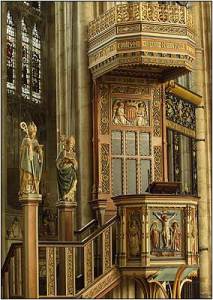 ‘[I]f God speaks, and if God speaks in the church, then on some subjects sermons are not popularized products of more basic scholarly reflection. Rather scholarly reflection is an academized product of the more basic proclamation of the gospel … Thus, for the Christian community, sermons are a first-order, not a second-order, activity … As worship is more fundamental in the church than theology, so kerygmatic proclamation is more basic and often more pertinent than scholarly reflection’. – Charles Partee, The Theology of John Calvin (Louisville/London: Westminster John Knox Press, 2008), 46.
By the way, I’ve succumbed: readers of Per Crucem ad Lucem can now follow the blog via Twitter.
[Update: Rick has posted a great rant reflection on this Partee quote here]
 jasongoroncy.com