Australia

Some notes on Henry Reynolds’ Archibald Baxter Memorial Peace Lecture

‘No war can be called just; they all use the same machinery’. So argued Professor Henry Reynolds (University of Tasmania) at tonight’s Inaugural Archibald Baxter Memorial Peace Lecture, sponsored by the National Centre for Peace and Conflict Studies at the University of Otago. Reynolds opened his public lecture by making the case that pacifism need not necessarily be anti-patriotic. On the contrary, the best thing one can do for a nation, he argued – in the spirit of him whose name and witness were being honoured, the great Archibald Baxter – is to keep it from going to war. He also argued that wars beget war, and that a victory to any side only further perpetuates the violence in one form or another.

Unsurprisingly, Reynolds spent most of his time in what for him is familiar territory – Australia. He rehearsed his oft-played themes about Australia’s hidden wars (see his Black Pioneers: How Aboriginal and Islander People Helped Build Australia, Why Weren’t We Told?, The Other Side of the Frontier: Aboriginal Resistance to the European Invasion of Australia, and Forgotten War – all which are well worth reading), noting how between 1788 and 1928 (or, according to some other historians, 1934) Australia was home to large-scale wars between European settlers and indigenous Australians, and that the frontier conflicts (most of the wars took place in isolated regions) in Queensland saw the deaths of tens of thousands (Reynolds argues for a figure of over fifty thousand people – significantly more Australians than were killed in WWII, and on par with those who died in the war to end them all). And yet, as Reynolds and many others have noted, and John Pilger has recently made most public in his film Utopia, these hidden wars remain uncommemorated at the Australian War Memorial in Canberra, that ‘great emporium of white nationalism’ (Pilger) and pantheon of Australia’s most enduring and important cult – war. (On this, see What’s Wrong with ANZAC?: The Militarisation of Australian History edited by Reynolds and Marilyn Lake.) It is difficult to see how Australians will even begin to think honestly about its wars until this scandal is rectified.

Reynolds suggested that the calendar for military commemorations in Australia is fuller than the religious calendars ever were during the Middle Ages. He might be right, although there’s little at stake if he’s not. But drawing attention to the Edwardian conviction (surely it’s much older than that?) that nations are made in war, and that there can be no true nationhood without war, Reynolds is certainly right to call out the propaganda machines which publish ad infinitum the narrative that Australian involvement in overseas conflicts are the nation’s most important defining events, a fact which begs the question about what nationhood might have meant prior to 1914, and which does wonders for tourist operators arranging parties at ANZAC Cove.

Reynolds concluded with some discussion about the Boer War, noting that there were only four members of the Australian Parliament who voted against involvement, and that there was scarcely any discussion at all – either in Parliament or elsewhere – on either the legality or morality of the war. The new egalitarian democracies of Australia and New Zealand were keener to join Britain’s war than were the Brits, and the colonisers were desperate to secure the allegiance of her loyal subjects (including India), frightfully concerned that they might go the way of Canada or, God forbid, of the United States. The second half of the Boer War in particular saw numerous and widespread atrocities and human rights violations, violations which Australia felt no responsibility for – just as contemporary white Australia, ‘Team Australia’, feels no responsibility for its most costly wars, the one’s which took place upon her own soil – because this was, after all, Mother Britain’s war and not ours.

I left feeling grateful for the work of places like the National Centre for Peace and Conflict Studies, emboldened in my own commitment to the ways of non-violence in the ‘broken middle’ (Gillian Rose), and thinking about the ongoing relevance of Desmond Tutu’s words (published in God Is Not a Christian): ‘There can be no future without forgiveness. There will be no future unless there is peace. There can be no peace unless there is reconciliation. But there can be no reconciliation before there is forgiveness. And there can be no forgiveness unless people repent’.

Dr Peter Young on Australia’s ‘torture’ camps

While the Australian Human Rights Commission conducts its own inquiry into children in detention, and while Scott Morrison (and Tony’s ‘gift to our nation’) stays on his own delusional courseThe Guardian has published this piece based on an interview with the courageous Dr Peter Young:

https://www.youtube.com/watch?v=yyWtqZt7vws

Read the full article here.

After Crucifixion: A Symposium on the Theology of Craig Keen

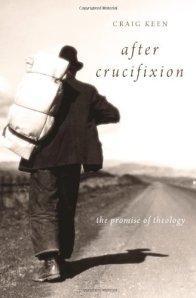
After CrucifixionUnited Theological College and the Centre for Public and Contextual Theology (PaCT) are hosting a symposium on the patient and provocative work of Craig Keen. Keen’s work is described by Bruce McCormack as “animated by a deep personal desire for an authentically kenotic existence, and a longing for the coming of a community of women and men who understand that they cannot live until they die.” Keen’s sensitivity to issues of embodiment, existence, and faith marry with the constellation of thinkers that he has lived with since his youth to produce his subtle, surprising, and prayerful writings. This symposium will focus on his latest book, After Crucifixion: The Promise of Theology, and the questions about faith and life that it impels the reader to consider.

Date: 2728 June, 2014.

Venue: United Theological College, Sydney.

Speakers: Craig Keen, Anita Monro, Benjamin Myers, Janice Rees, Peter Kline, and others.

You can download the Registration Form here, and queries can be directed to here.

Claiming Sovereignty: Theological Perspectives

Claiming Sovereignty

The University of Divinity, Whitley College, the Centre for Theology and Ministry, and the Commission for Mission of the UCA are organising what sounds like a wonderful conference ‘to reflect on discourses of sovereignty in the Australian context’:

In a context where Indigenous claims remain unresolved, the rights of asylum seekers are contested, and global economic forces are making new demands on nation states, the theme of sovereignty demands closer examination. Beginning with discussion of settler colonialism, this conference brings together people from a range of disciplines to reflect on discourses of sovereignty in the Australian context.

Speakers include R. S. SugirtharajahDjiniyini GondarraRobyn Sampson, and Joanna Cruickshank, and a call for papers (proposals due by 15 June) has also been issued.

Further details are available here, or contact Mark Brett or Monica Melanchthon.

Kerry Enright: an interview

Kerry Enright and Pastor BerlinLast night’s edition of the ABC program Sunday Nights, hosted by John Cleary, included an interview with the Rev Dr Kerry Enright, the outgoing National Director of UnitingWorld, and a friend of mine. During the interview, Kerry reflects upon two of his favorite topics – the catholic nature of the church as gift from God and as sign to the world, and on the role of the church in civil society (here the discussion is focused particularly on Fiji, Australia and New Zealand). He also talks a bit about his forthcoming appointment as minister of Knox Church (Presbyterian) in Dunedin. I’m looking forward to welcoming Kerry back to Dunedin, and back to the PCANZ, soon. You can listen to the interview here.

And while I’m mentioning Kerry, there’s also an older interview in which he talks about God’s mission and about the significance of partnerships that UnitingWorld enjoys:

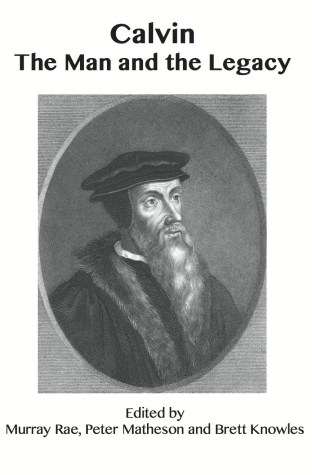
Calvin: The Man and the Legacy

Calvin The Man and the Legacy

After over four years in the wings, it is indeed a delight to see that Calvin: The Man and the Legacy has finally hit the press. (One recalls Walter Benjamin’s words in Aesthetics and Politics―‘I came into the world under the sign of Saturn―the star of the slowest revolution, the planet of detours and delays’).

The book, which is edited by Murray Rae, Peter Matheson and Brett Knowles, consists mostly of papers delivered at a conference held at the Knox Centre for Ministry and Leadership in 2009, one of a plethora of conferences organised to mark the 500th anniversary of Calvin’s birth. It really was a great two days—marked by intelligent papers on a diverse range of themes, good humour, abundant attendance, a generosity of spirit, real coffee, and low testosterone, a combination of features relatively rare at these kinds of gigs.

The book’s description reads:

Alongside essays on aspects of Calvin’s theology, Calvin: The Man and the Legacy includes studies of Calvin as pastor, preacher and liturgist and traces the influence of Calvin as it was conveyed through Scottish migration to Australia and New Zealand. Fascinating stories are told of the ways in which the Calvinist tradition has contributed much to the building of colonial societies, but also of the ways it has attracted ridicule and derision and has been subject to caricature that is sometimes deserved, sometimes humorous, but often grossly misleading.

And the TOC reads:

Part 1: The Man and His Thought

1. Graham Redding—Medicine for Poor Sick Souls?: Calvin’s Communion Service in Profile
2. Jason Goroncy—John Calvin: Servant of the Word
3. Randall Zachman—The Grateful Humility of the Children of God: Knowledge of Ourselves in Calvin’s Theology
4. Elise McKee—A Week in the Life of John Calvin
5. Murray Rae—Calvin on the Authority of Scripture
6. Randall Zachman—Calvin’s Interpretation of Scripture

Part II: The Legacy and the Caricature

7. John Roxborogh—Thomas Chalmers and Scottish Calvinism in the Nineteenth Century
8. John Stenhouse—Calvin’s Own Country? Calvinists, anti-Calvinists and the Making of New Zealand Culture
9. Peter Matheson—The Reception of Calvin and Calvinism in New Zealand: a Preliminary Trawl
10. Alison Clarke—Popular Piety, the Sacraments and Calvinism in Colonial New Zealand
11. Kirstine Moffat—‘Mr Calvin and Mr Knox’: The Calvinist Legacy in the Fiction and Poetry of New Zealand Scots
12. Ian Breward—Calvin in Australia and New Zealand

You can pick up a copy here.

Prophet Michael (Leunig) on various things

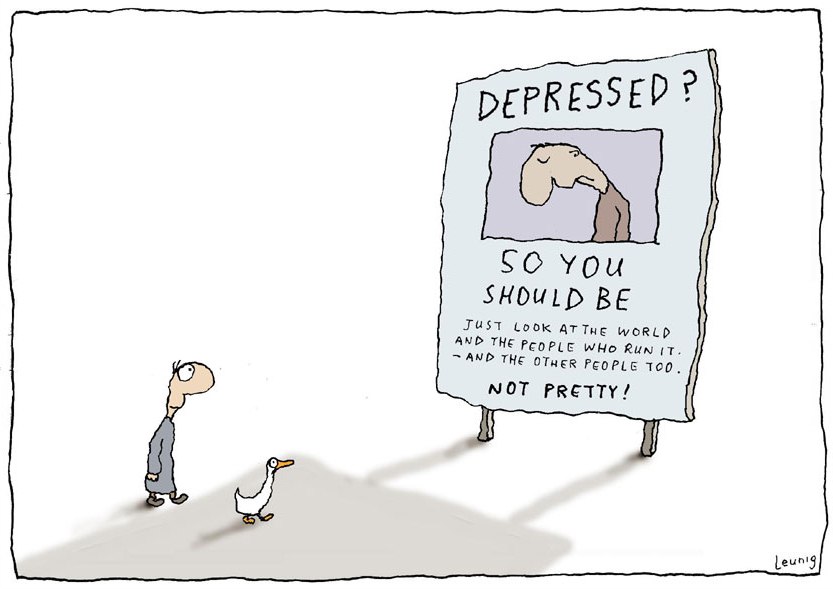
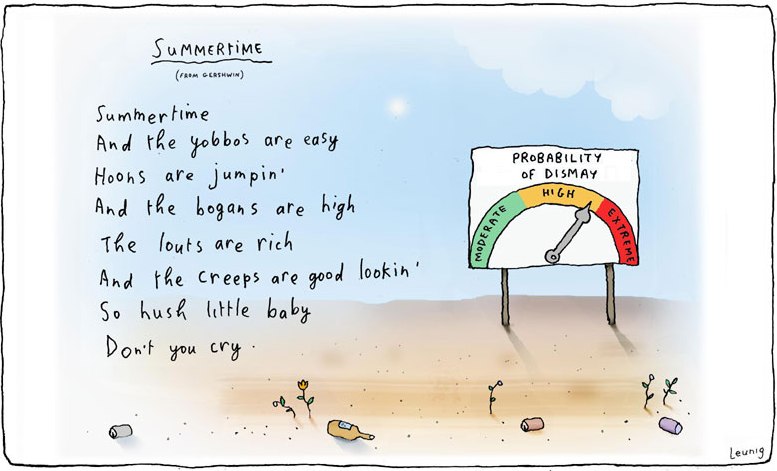
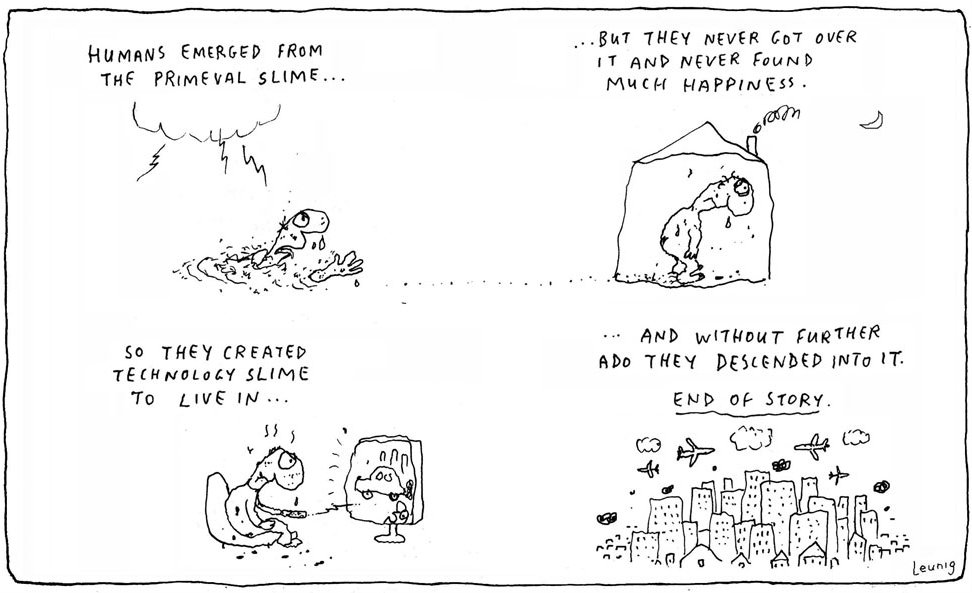
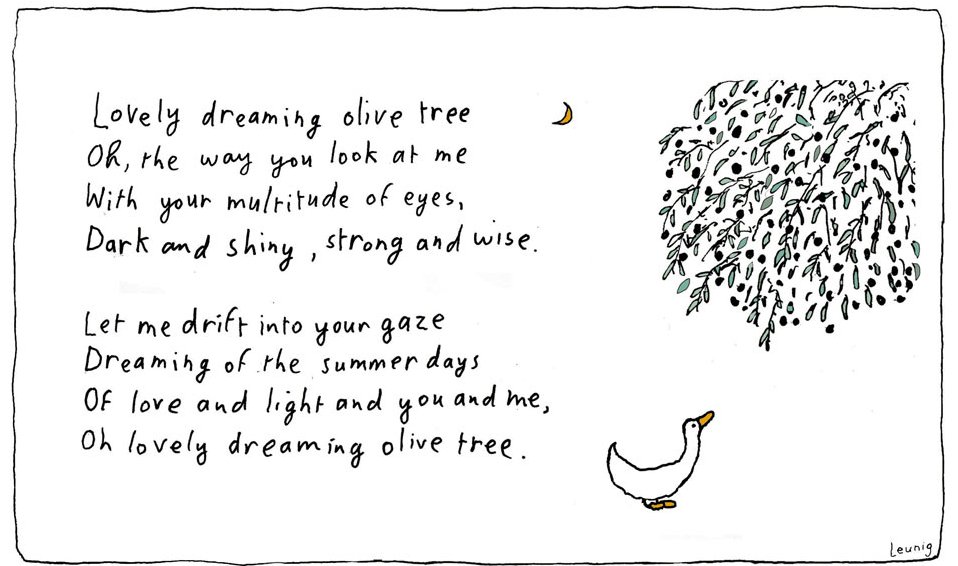
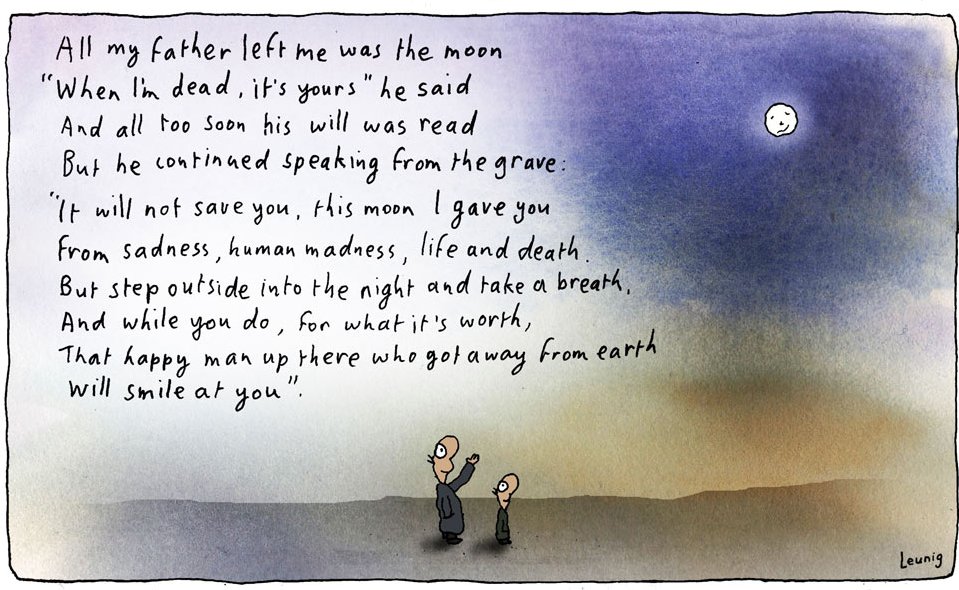
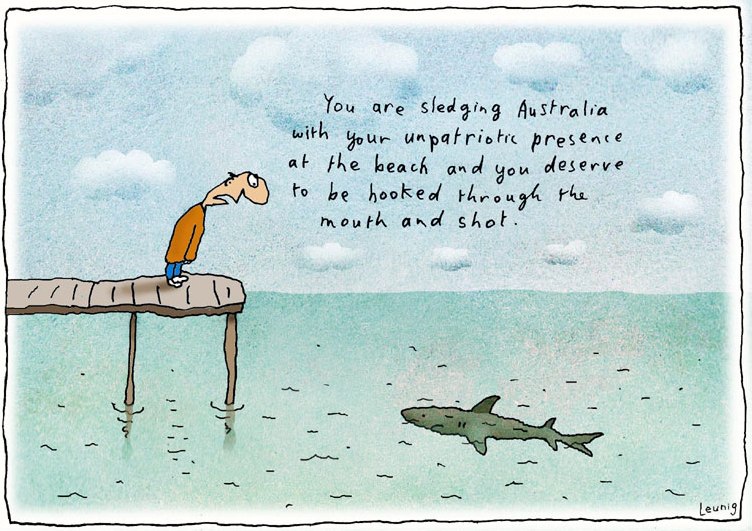
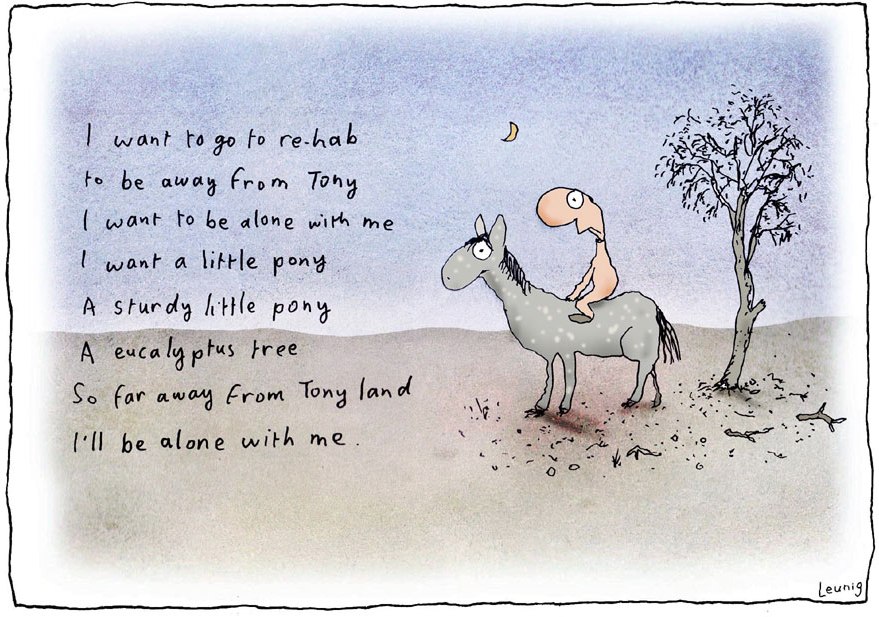
Sad times. They are sad times when a people’s highest interests are decided by methods characterised by the crude arbitrament of numbers, by methods which seek to silence those who would speak unwelcome words, and by methods which seek to render martyrdom inexplicable. In such times, I am exceedingly grateful for all those who shy not away from the madness. One such all-too-rare character is Michael Leunig, whose moral compass, hopeful outlook, ability to laugh at turkeys, and critical courage is exemplified in his recent cartoons published in The Age and the Sydney Morning Herald, newspapers to which Leunig is a regular contributor:

Depressed-27dec

15 December, 2013

Nose-28-dec

28 December, 2013

Summertime-4jan

4 January, 2014

Angry-18-jan

18 January, 2014

Olives-25-jan

25 January, 2014

Moon-1-feb

1 February, 2014

Shark-5feb

5 February, 2014

Tony-feb-7

7 February, 2014

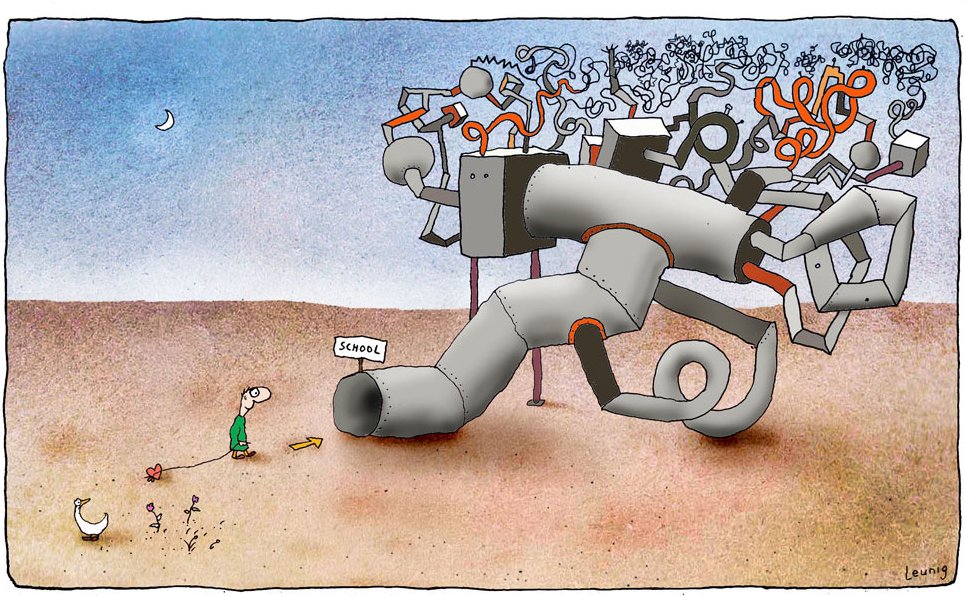
School-8-feb

8 February, 2014

Pyramid-12feb

12 February, 2014

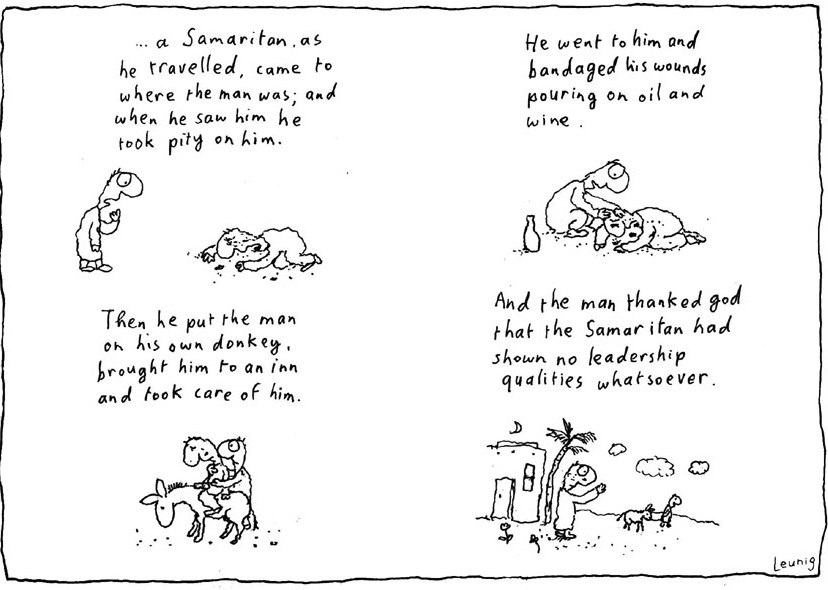
Samaritan-14feb

14 February, 2014

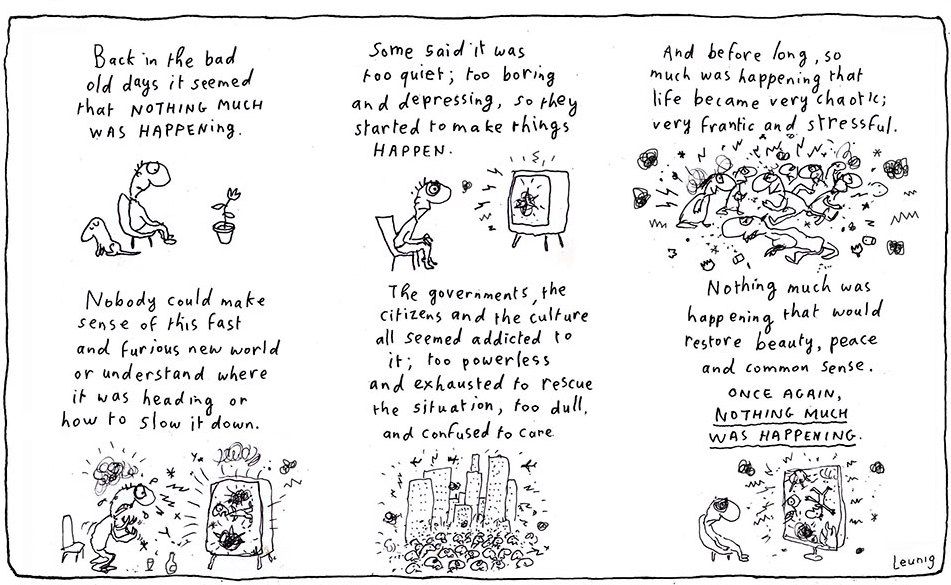
Nothing-15-feb-1

15 February, 2014

Leunig 'Letters'cartoon for Wednesday 19th February 201419 February, 2014

Leunig on Cirque Canberra

Michael Leunig‘s latest three cartoons are a fitting commentary on Cirque* Canberra:

Leunig-Wedding--Oct-9

MPs

Travel Expenses

Plus, one from a few weeks earlier:

Politics-21-Sept

* There is, of course, another  and equally truthful  way of thinking about the image of the circus. I think, for example, of William Stringfellow‘s reflections on the circus as an event of the eschaton. Picking up the image in the wake of Ingmar Berman and Georges Rouault, Stringfellow propose that we recognise circuses as parables of the kingdom and, as such, as parodies of the world as it is. I suspect that Leunig would like that image too.

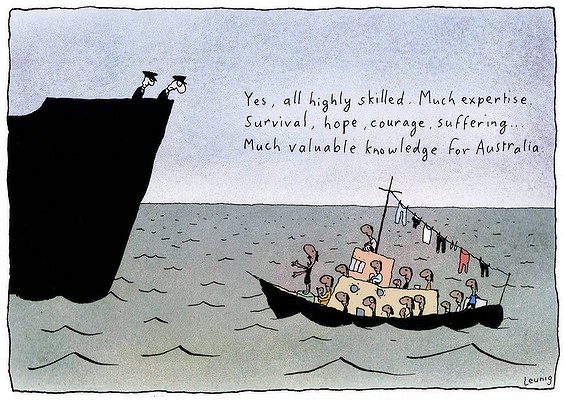
Mark Brett on why Christians should be championing the cause of asylum seekers

Boat people

So why should Christians be championing the cause of asylum seekers today? In short, this issue goes to the heart of our identity and calling as the people of God.

The Gospel of Matthew tells us that Jesus started life as a refugee child, fleeing with his family to Egypt.  Even his father’s name, Joseph, reminds us that Jesus was not the first Jew to be a refugee in Egypt. All the tribal ancestors of Israel took refuge there. We read that scripture was fulfilled when Jesus went there as a child, because “Out of Egypt I called my son” (Matthew 2.15). The quote is from Hosea 11.1:  “When Israel was a child I loved him, and out of Egypt I called my son”. That is, Matthew sees a spiritual analogy between the life of Jesus and the life of Israel: both are marked by the refugee experience.

And this experience is also embodied in the laws of Israel. So, for example, Leviticus 19.34 says:

The immigrant who resides with you shall be to you as the citizen among you; you shall love the immigrant as yourself, for you were immigrants in the land of Egypt: I am the LORD your God.  (cf. Exodus 22.21)

Similarly, the later prophets came to recognize the treatment of asylum seekers as a litmus test of faith (e.g., Jeremiah 7.5-7).

In the Old Testament, the ‘immigrant’, ‘alien’, ‘refugee’ or ‘sojourner’ (all possible translations of ger) is a foreigner who has left his or her country to settle elsewhere. Perhaps the most common reasons for movement are famine and war.

Some things never change: the United Nations Convention Relating to the Status of Refugees (1951), for example, arose as a response to international displacements following World War II, and since Australia is a signatory to this Convention, we recognize the legal right to seek asylum.

When people arrive in a host country, there are always complex questions about the extent of their assimilation. Not surprisingly, then, Old Testament laws sometimes set assimilating strangers apart from ‘the foreigner’ (thenokri or ben nekar) who is not given full rights of participation (e.g., Exodus 12.43 excludes such people from the Passover). This distinction is surprisingly overturned, however, in Isaiah 56.3,6 where the ‘foreigner’ (ben nekar) can offer acceptable sacrifices to God and is welcomed into the covenant community.

References to strangers in the New Testament are few but significant. Being ‘strangers’ (paroikoi) becomes a central metaphor for Christian identity in some books, building on the theological idea in Leviticus that all Israelites were in some sense ‘sojourners’ (Leviticus 25.23, cf. 1 Peter 1.1 and Ephesians 2.19).

Perhaps against our expectations, we may even find Christ present in the stranger. This is precisely the point that is made in the parable of the sheep and the goats in Matthew 25: the hungry and thirsty stranger (xenos in vs. 38 and 44) may actually be the Lord, and not even the people in the parable called ‘the righteous’ have been able to discern this. In other words, no-one has the power to tell whether the needy stranger may in fact be Christ.

Ezekiel 47 is also a challenge to our political imagination: it takes us beyond random acts of kindness and demands that refugees be given a ‘fair go’ in the provision of land, that is, basic resources that provide the foundation of economic security:

So you shall divide this land among you according to the tribes of Israel. You shall allot it as an inheritance for yourselves and for the aliens who reside among you and have begotten children among you. They shall be to you as citizens of Israel; with you they shall be allotted an inheritance among the tribes of Israel. In whatever tribe aliens reside, there you shall assign them their inheritance, says the LORD God. (Ezekiel 47.21-23)

In international comparisons (taking account of national wealth and population sizes), the welcome that Australia offers to asylum seekers is not very impressive.

– Mark Brett, ‘Hospitality: A Biblical Perspective’.

Ed. This piece, written in 2011, and which cites sources which are almost prehistoric, is, of course, completely irrelevant and dated now and I only draw attention to it for the benefit of those historians who may one day be interested in researching such obscure things. It’s almost impossible today to believe that once upon a time some Christians who happen to be living in Australia thought it an act of compassion and of mature political judgement to demonise some of the most vulnerable and yet extraordinarily courageous people on the planet, and an act of freedom to disregard not only the rule of law but, more importantly, the command of God.

Leunig - Refugees

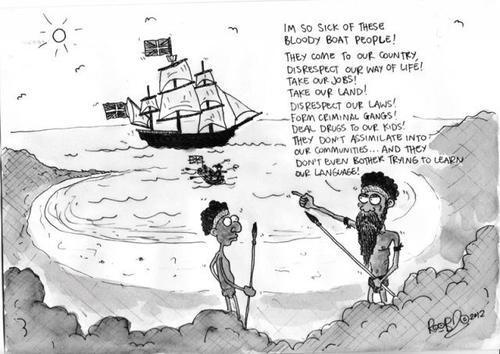
Seeking asylum in Australia

Refugee Rights Protest at Broadmeadows, MelbourneRecent weeks have witnessed no shortage of ink spilt on the matter of the Australian government’s disgraceful – and illegal – policies vis-à-vis asylum seekers. And appropriately so! A number of people have asked me to comment on this question, and at some stage, when I have more moments to spare than I do this week, I may spill some ink of my own on it. In the meantime, however, I wish to draw attention to, and to commend, one editorial (among the many dozens that I have read) that I found particularly helpful. It’s Robert Manne’s piece (published in March this year and so before developments in recent days), ‘Tragedy of Errors: Australia’s shipwrecked refugee policy’.

[There is also an edited transcript of a speech by Barry Jones: ‘Asylum is the greatest moral challenge of our time’. The latter is significantly less satisfying than Manne’s piece, but worth a read all the same, not least given Jones’ long and high profile relationship with the ALP.]

John Pilger and ‘The War You Don’t See’

John Pilger‘s film The War You Don’t See is, above all else, a call to responsible journalism, especially by those ‘journalists’ who have en masse lost their nerve, or who have temporarily (one hopes) mislaid the purpose of their craft. (Of course, Pilger himself has attracted no shortage of detractors over the years who would accuse him of irresponsible journalism. The onus on proof is clearly on the side of the detractors. And then there are those who find themselves in broad agreement with Pilger’s interpretation of things but struggle with a style that is perceived to be arrogant or hyped. I have some sympathy with these critics, although I’ve tried to never let his style get in the way of the content. This interview with the queen of ego herself, Kim Hill, is a case in point.)

There’s challenge here too, it seems to me, for those of us charged with the responsibility of rightly dividing the word of truth, especially for those who have lost our nerve to boldly address the powers or to do the demanding work it takes to simply tell the truth rather than spout the party line.

Anyway, for those who are yet to see the film, I thought I’d commend and post it for viewing here:

Pilger’s latest film (currently in production) is called Utopia and is due out at the end of the year. I look forward to seeing it.

Learning from Australia’s Political Meltdown

Ben Chifley

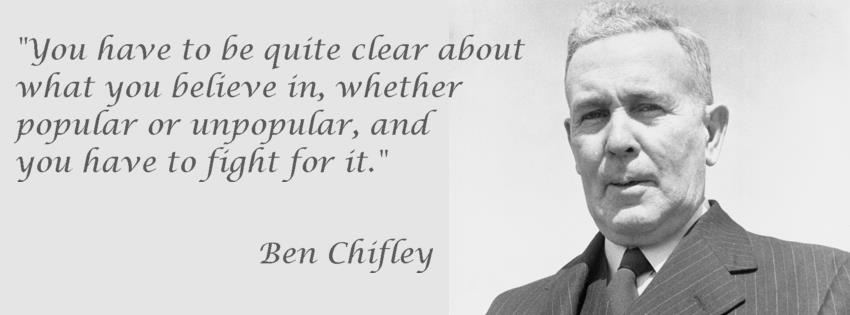
A few days before the recent leadership spill in the Australian Labor Party, former Cabinet Minister and (in my view, quite exceptional) Foreign Minister Gareth Evans offered some thoughts, or some evidence of ‘relevance deprivation syndrome’, on the ALP and what we all might be able to learn from Australia’s political meltdown. I thought them worth reposting:

Australian politics should, on the face of it, hold as much interest for the rest of the world as Mongolian throat singing or Bantu funerary rites. But I have found otherwise in my recent travels in North America, Europe, and Asia. Much more than one might expect, there is an eerie fascination in political and media circles with the death throes of the current Australian Labor Party (ALP) government.

How is it, policymakers and analysts ask, that a government that steered Australia comfortably through the global financial crisis, and that has presided for the last six years over a period of almost unprecedented prosperity, could be facing electoral extinction in September, as every opinion poll is now predicting?

How did a diverse, socially tolerant country with living standards that are the envy of much of the world, become roiled by so much political divisiveness and bitterness? Is there a message for democratic governments generally, or center-left governments elsewhere, or just for the ALP?

It may be that certain peculiarities of the Australian situation are creating more tensions than would be likely elsewhere. A ludicrously short three-year electoral cycle makes it almost impossible to govern in a campaign-free atmosphere. Party rules allow for leaders – including serving prime ministers – to be politically executed overnight by their parliamentary colleagues. Our media’s preoccupation with trivia – and collective lack of conscience – is impressive even by British tabloid standards.

But none of these factors is new. They might have compounded the tensions, but they don’t explain how, in 2010, a party less than three years into its term dispatched a leader, Kevin Rudd, who had brought it to power after 11 years in the political wilderness and still commanded a majority of the public’s support. Nor do they explain why now, three years after she replaced Rudd, Julia Gillard enjoys practically no public support at all and seems destined to lead the ALP back into exile for another generation, if not for good.

Even if Gillard is dropped by her panicking colleagues – and that could happen at any time in the Grand Guignol theater that Australian politics has become – the situation for the world’s oldest labor party is dire indeed.

Those like me who have been out of public office for a long time need to be wary about offering gratuitous commentary – or, worse, advice. It is unlikely to be gratefully received by one’s successors, and it suggests a severe case of what I call “relevance deprivation syndrome.”

But there do seem to be some fundamental rules of political survival that have been ignored in Australia in recent years. Perhaps spelling them out will help others to remember them, not least those parties in Europe, Canada, and elsewhere that share some of the ALP’s social-democratic and center-left ideological traditions and are also struggling to win or retain electoral support.

The first rule is to have a philosophy – and to stick to it. The hugely successful Labor governments led by Bob Hawke and Paul Keating two decades ago did just that, essentially inventing the “third way” model that later became associated with Tony Blair and Gordon Brown in Britain. Its elements were clear: dry, free-market economics (but in our case with low-paid workers benefiting enormously from “social wage” increases in medical care and retirement pensions); compassionate social policy; and a liberal internationalist foreign policy.

Australia’s current government, by contrast, has struggled to re-create anything as compelling. It seems torn between old industrial labor preoccupations, the new environmentalism, and capitulating to populist anxiety on issues like asylum-seeking “boat people.”

The second rule is to have a narrative – and to stick to it. Confused and ever-changing messages don’t win votes. The most wounding criticism of the ALP government is that no one really knows what it stands for. It has initiated visionary national policies in areas like broadband access, disability support, and education, but it has struggled to maintain a coherent and consistent overall story line.

The third rule is to have a decent governing process – and to stick to it. The Rudd administration successfully navigated the global financial crisis largely because the prime minister, with a small inner group, bypassed traditional Cabinet processes. But, with the crisis over, the bypassing continued – increasingly by the prime minister alone. Genuinely collective decision-making can be a painfully difficult process, but, in government as elsewhere, there is wisdom in crowds.

The fourth rule is that leaders should surround themselves with well-weathered colleagues and advisers who will remind them, as often as necessary, of their mortality. Self-confidence, bordering on hubris, gets most leaders to the top. If that is not occasionally punctured, things are bound to end in tears.

The last rule is that one should never trash the brand. Those who mounted the coup against Rudd three years ago felt it necessary to explain that it was because his government was, beneath the surface, a dysfunctional mess. The public hadn’t actually noticed that at the time, but has been prepared to believe it ever since. The tragedy is that both Rudd and Gillard are superbly capable and have complementary skill sets; working together effectively, they were as good as it gets in Australian politics.

Adherence to these rules will not ensure that a governing party stays in office forever. Many other factors, domestic and international, are always in play. Over time, electorates will tire of even the best-run governments, and look for reasons to vote for change.

But following all of these rules should ensure that a party maintains credibility and respect, and that, in defeat, it at least remains competitive for the next election. Observing none of them guarantees catastrophe.
The cruel and godless practice of live animal exports

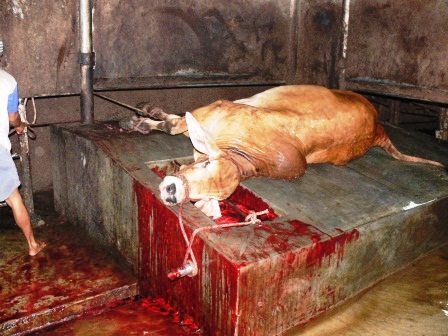
live-export-australian-steer-slaughtered-indonesiaRecently, I posted a video of David Clough’s lecture ‘Rethinking Animality: Towards a New Animal Ethics’. One of the reasons that I drew attention to that lecture was because I consider the work that David (and others too) is engaged in around this issue to be incontrovertibly ‘vital’ [from the late fourteenth century Latin vitalis, meaning ‘of or belonging to life’]. Any society that takes lightly the killing of animals (those creatures whom Dietrich Bonhoeffer refers to as the brothers whom Adam loves), as do those societies with which I am most familiar, has grossly misjudged the sheer giftedness of life itself and is, it seems to me, already well on the way to responding lightly to and of justifying various forms of homicide and deathliness in its midst, blinded by the lie that the life of any creature belongs to something or someone other than God. This is why Karl Barth, for example, argued with due passion that ‘the slaying of animals is really possible only as an appeal to God’s reconciling grace’, and that we ought to have very good reasons for why we might claim the life of another creature for ours. Human beings can only kill an animal, Barth avers, knowing that it does not belong to us but to God alone, and that in killing it – an act which itself is incredibly traumatic, as I can testify – one surrenders it to God in order to receive it back from God as something one needs and desires. ‘The killing of animals in obedience is possible’, Barth contends, ‘only as a deeply reverential act of repentance, gratitude and praise on the part of the forgiven sinner in face of the One who is the Creator and Lord of humanity and beast’. Here Barth’s words compliment the Jewish tradition which champions the need to avoid tzar baalei chayim – causing pain to any living creature – and insists that where animals are killed that they are done so ‘with respect and compassion’, most properly by way of shechita.

With that, I come to the subject of this post; namely, live animal exports. Animals Australia reports that

every year millions of Australian animals are exported live for slaughter. Those who survive the journey often endure brutal treatment and conscious slaughter. Cattle, sheep and goats are sent throughout the Middle East and South East Asia — to countries with no laws to protect them from cruelty. Tens of thousands of animals don’t survive the sea journey and those that do disembark into countries where they are transported, handled and then slaughtered in appalling ways. Most animals slaughtered overseas have their throats cut while they are fully conscious, leading to an incredibly painful and prolonged death. Since 2003, Animals Australia has conducted numerous investigations into the treatment of animals exported from Australia. The evidence from investigations in the Middle East and South East Asia has consistently revealed the willingness of Australia’s live export industry, and consecutive Federal Governments, to export live animals despite appalling cruelty in importing markets.

While Australia remains by far the world’s largest exporter of sheep and cattle, this is not, of course, only an Australian issue. Earlier this year, the New Zealand Herald, for example, reported a ‘Boom in live cattle exports to China’, although thanks to the Customs Exports Prohibition (Livestock for Slaughter) Order these are mostly for breeding purposes, and recent protests at the Port of Dover in the UK are evidence that exporting of live cattle remains a practice in the UK and the EU, with exports going mainly to Italy and France.

This video, produced by Animals Australia, testifies to the cruel and godless practices that attend the live export of animals:

Clearly, this is a political as well as a moral issue (not that the two can ever be separated); and as the Australian Federal election draws near, I wish to publicise my support for the campaign by Animals Australia and Ban Live Export against the sickening and anti-vital practice of live animal exports. I learned recently that one of the Coalition’s priorities, should it win the election, is to ‘apologise’ to Indonesia (a country that receives some 45% of Australia’s live animals) for the Labour Government’s five week trade suspension in 2011, a suspension put in place in direct response to an ABC Four Corner’s program, ‘A Bloody Business’, which exposed the practices that attend live animal exports. In Australia, with the exception of Independent Senator Nick Xenophon, it has been The Greens who have consistently spoken out against this practice and who have sort to (re)introduce the Live Animal Export (Slaughter) Prohibition Bill (2012) into the Senate. And in New Zealand, from which there has been no live animal exports for slaughter since 2003, it is again The Green Party who have tried to maintain pressure to restrict the export of live animals. (I don’t mention this in order to propagandise for The Greens, but simply to report a fact.)

Here is the campaign video produced by Animals Australia:

Opposition Leader Tony Abbott, and the other Coalition party leaders, seem to have forgotten – or, just couldn’t give a rats about – the outrage that Australians felt after that program aired, the facts therein being also corroborated by the live export industry’s own reports. Certainly, it is difficult to see how any formal apology to the Indonesian government or business groups could do anything other than serve to send a message that animal abuse is condoned. To my mind, this ought to be an important election issue. It is certainly an important theological issue. So if you are a fellow Australian citizen, or have your name on the electoral role, then please consider joining me in supporting this campaign.

On helping Tony Abbott to be a Christian

I am so encouraged that Australia’s opposition leader, the honourable Tony Abbott, takes seemingly every opportunity to publicly offer every indication of his sincere intent on being a good Christian. Praise the Lord! Furthermore, it’s great to know that Mr Abbott believes, and that with such costly passion, that ‘Christians’ should be concerned with doing ‘the right thing’. Unfortunately, it appears that Mr Abbot’s got no idea what ‘the right thing’ is; i.e., what is the demand that the gospel lays on him? To be sure, people like Malcolm Fraser and Julian Burnside are doing their darndest to try to educate the poor fella, and I wondered if some accompanying music might help Mr Abbott too. And here I can think of few better than kiwi musician Dave Dobbyn to assist brother Tony to get the ‘Christian’ message (surely he’s not chasing ‘the “Christian” vote’) that he seems so intent on expressing his unyielding fidelity to:

Tonight I am feeling for you
Under the state of a strange land
You have sacrificed much to be here
‘there but for grace…’ as I offer my hand.

Welcome home, I bid you welcome, I bid you welcome
Welcome home from the bottom of my heart.

Out here on the edge
The empire is fading by the day
And the world is so weary in war
Maybe we’ll find that new way.

So welcome home, see I made a space for you now
Welcome home from the bottom of our hearts
Welcome home from the bottom of our hearts.

Keep it coming now – keep it coming now
You’ll find most of us here with our hearts wide open
Keep it coming now – keep on coming now
Keep it coming now – keep on coming now.

There’s a woman with her hands trembling – haere mai
And she sings with a mountain’s memory – haere mai.

There’s a cloud the full length of these isles
Just playing chase with the sun
And it’s black and it’s white and it’s wild
All the colours are one.

So welcome home, I bid you welcome, I bid you welcome
Welcome home from the bottom of our hearts
Welcome home, see I made a space for you now
Welcome home from the bottom of our hearts
From the bottom of our hearts.

[Image: HT to Andrew Beeston, Jono Coates and Jesus]