Author: Jason Goroncy

Frederick Buechner on ‘rather splendid’ symbols

WineI’m still appreciating the offerings from the pen of Frederick Buechner. And I completely dig his take on wine:

‘Unfermented grape juice is a bland and pleasant drink, especially on a warm afternoon mixed half-and-half with ginger ale. It is a ghastly symbol of the life blood of Jesus Christ, especially when served in individual antiseptic, thimble-sized glasses. Wine is booze, which means it is dangerous and drunk-making. It makes the timid brave and the reserved amorous. It loosens the tongue and breaks the ice especially when served in a loving cup. It kills germs. As symbols go, it is a rather splendid one’. – Frederick Buechner, Wishful Thinking. A Theological ABC (San Francisco: Harper, 1973), 95–6.

These words reminded me of the first time I ever heard Robert Jenson speak. It was at Ormond College in Melbourne about 7–8 years ago. I recall the conviction with which he spoke of the centrality of the Eucharist in the life and mission of the Church. I also recall the passion with which he condemned the use of individual shot glasses and highlighted the need for congregations to drink from the one cup, and to fill it with the best wine that we can afford. This conviction finds echo in his Conversations with Poppi about God, where he writes: ‘the wine should be the very best’ and dissolvable bread should be banned. The meal should be appetising, and not like those baptisms ‘when they just dribble a couple of drops on the baby’. – Robert W. Jenson and Solveig Lucia Gold, Conversations with Poppi about God: An Eight-Year-Old and Her Theologian Grandfather Trade Questions (Grand Rapids: Brazos Press, 2006), 33, 34. [Reviewed here]

I’m into sharing meals that make ‘the timid brave and the reserved amorous’. I believe that God is as well. Sounds like the kind of meal we ought to be having more often too.

On chronological snobbery and evangelical realignment in the word of God

Roots

I’ve been busy preparing a paper for an upcoming conference on Calvin. My paper, titled ‘John Calvin: Servant of the Word’, attends to the notion of Calvin as servant/minister of the Word, and considers the attention that preaching occupied in the Reformer’s ministry, his understanding of preaching as divine accommodation, as public, as event, as the Word of God, and its relationship to the proclamation activities of font and table. Along the way, I manage to entertain a few detours, one of which concerns ‘chronological snobbery’.

G.K. Chesterton once quipped that ‘Real development is not leaving things behind, as on a road, but drawing life from them, as from a root. Even when we improve we never progress. For progress, the metaphor from the road, implies a man leaving his home behind him: but improvement means a man exalting the towers or extending the gardens of his home’. 

One recalls here that oft-quoted phrase employed by Inklings C.S. Lewis and Owen Barfield – ‘chronological snobbery’. ‘Chronological snobbery’ is the notion, in Barfield’s words, that ‘intellectually, humanity languished for countless generations in the most childish errors on all sorts of crucial subjects, until it was redeemed by some simple scientific dictum of the last century’. ‘Chronological snobbery’ is a fruit of one of modernity’s great lies, and one which slices of the Church have swallowed with significant detriment.

But a recovery of the Church’s health cannot be purchased via an attempt to return to some golden age. Rather – as the history of God’s people teaches us repeatedly – such recovery comes via realignment with the Church’s evangelical and catholic centre in the gospel itself borne witness to in the prophetic and apostolic writings. At a time when ‘chronological snobbery’ remains the outlook for many, the reading and promotion of such a word will seem ‘countercultural, provocative, [and] strange’.

There are, of course, obvious implications here for pastors. If William Willimon is right that Christians are indeed among ‘the last close readers left in this culture’ (and that is a significant ‘if’), then ‘a major task of pastors is to assist congregations in reading carefully in order to align ourselves to a text, in order to submit and bend ourselves to the complex redescription of reality that is Scripture’.

The best of the alternatives may mean taking on a new look:

snob

Jürgen Moltmann on threats to theological education

A Broad Place‘At the end of the war, both seminaries [established by the Confessing Church] were reopened in order to make it possible to study theology both at state universities and in independent faculties. I still think this double strategy was a wise one, for one never knows from which quarter the freedom of theology may be threatened’. – Jürgen Moltmann, A Broad Place: An Autobiography (trans. Margaret Kohl; Minneapolis: Fortress, 2008), 71.

Frederick Buechner on dreams

frederick buechnerSince he got back from his holiday in Crail, Jim, over at Living Wittily, has been posting some great stuff from Frederick Buechner, posts which sparked enough interest for me to go and dig out some Buechner for myself. Here’s a thought from Whistling in the Dark on dreams: 

‘No matter how prosaic, practical, and ploddingly unimaginative we may be, we have dreams like everybody else. All of us do. In them even the most down-to-earth and pedestrian of us leave earth behind and go flying, not walking, through the air like pelicans. Even the most respectable go strolling along crowded pavements naked as truth. Even the confirmed disbelievers in an afterlife hold converse with the dead just as the most dyed-in-the-wool debunkers of the supernatural have adventures to make Madame Blavatsky’s hair stand on end.

The tears of dreams can be real enough to wet the pillow and the passions of them fierce enough to make the flesh burn. There are times we dream our way to a truth or an insight so overwhelming that it startles us awake and haunts us for years to come. As easily as from room to room, we move from things that happened so long ago we had forgotten them to things lying ahead that may be waiting to happen or trying to happen still. On our way we are as likely to meet old friends as perfect strangers. Sometimes, inexplicably, we meet casual acquaintances who for decades haven’t so much as once crossed our minds.

Freudians and Jungians, prophets and poets, philosophers, fortunetellers, and phonies all have their own claims about what dreams mean. Others claim they don’t mean a thing. But there are at least two things they mean that seem incontrovertible.

One of them is that we are in constant touch with a world that is as real to us while we are in it, and has as much to do with who we are, and whose ultimate origin and destiny are as unknown and fascinating, as the world of waking reality. The other one is that our lives are a great deal richer, deeper, more intricately interrelated, more mysterious, and less limited by time and space than we commonly suppose’. – Frederick Buechner, Whistling in the Dark: An ABC Theologized (San Francisco: Harper & Row, 1988), 37–8.

Australia, the Aborigines, and restitution

Yesterday I posted Barney Zwartz’s piece on Peter Adams’ weighing in on a national discussion on the relationship between indigenous and non-indigenous Australians. [The full text of Peter’s talk is available here]. Adams’ word to non-indigenous Aussies is essentially, ‘Get out or pay up’. Zwartz (who blogs here) has now followed this up with another piece titled ‘Australia, the Aborigines, and restitution’:

Anglican theologian Peter Adam thinks that unless Australia’s indigenous people give us belated permission, everybody whose forebears came after 1788 should decamp and return the land to its first inhabitants.

In a public lecture on Monday, he said that if the non-indigenous stayed they should have to provide whatever recompense the indigenous thought appropriate for the genocide and theft they have suffered.

Impossible! Absurd! Surely this is mere posturing? Neil Mitchell on radio station 3AW certainly thought so. He gave a 60-second tirade against Adam, apparently based on just the short Age report, saying it was the reason why no one should ever step inside a church again. And he thought Adam was melodramatic.

But there’s method in Adam’s madness. First, the Reverend Dr Peter Adam, principal of Ridley College, is a sober and sensible man, a conservative evangelical Christian, who thinks carefully about what he says. He knows very well how impractical and impossible it is for 21 million people to uproot themselves.

Probably Aborigines would not want us to – it’s hardly realistic for them to revert to a pre-colonial hunter-gatherer life. And how far back do you go? For the English would it be ”go home Normans”? Or Vikings? Or Saxons?

And who qualifies as an Aborigine? A Maori leader in New Zealand once said being Maori was a state of mind. ”Beethoven was a Maori,” she said. If being Aboriginal was a state of mind that brought instant reward, large numbers of Australians might self-identify.

But Adam wants to make two points. First is the gravity of what the indigenous people suffered. However impractical, mass emigration would be the moral response because ”what was done was so vile, so immense, so universal, so pervasive, so destructive, so devastating and so irreparable”.

The Christian concepts of repentance and restitution or recompense are profoundly radical. Adam’s idea is in keeping with the biblical concepts, even if these are honoured more in the breach than the observance now that Christianity is so institutionalised.

So it’s not merely rhetorical, however impractical. After all, the colonial powers returned India, Africa and Indonesia to their inhabitants.

The second point, the one that should gain traction, is that Australians need to grapple seriously with the idea of recompense – real recompense – perhaps for the first time. He wants to dispel the convenient fancy articulated by a former prime minister that we are not responsible for our forebears’ actions and owe no apology. Adam said: ”It is right to say ‘sorry’. For they were serious crimes and sins. They included the theft of land, which was not only the theft of livelihood but also the theft of home, identity and religion. They included murder and manslaughter, the destruction of social structures and culture, the breaking up of families, the desecration of the dead and genocide, with no legitimate justification.”

Nor are the churches exempt: their prosperity, he charged, ”has come from the proceeds of crime”.

He wants to rekindle the debate, move it beyond the relatively restricted arguments about apologies and native title. Of course, the broader Australian community has a vested interest in averting our eyes and wringing our hands over Aboriginal suffering. After all, we mean well but it’s so intractable. Adam’s point is, that won’t do – we must go much deeper and it starts with the indigenous telling us what they need. We need fresh eyes and an honest appreciation before we can grasp the gravity and really make amends.

And if Adam’s words are confrontational, that is thoroughly consonant with the ancient Hebrew device of hyperbole, found throughout the Bible. For example, when Jesus said ”And if thy right eye offend thee, pluck it out, and cast it from thee”, what he meant was take the notion of sin seriously; it matters what you do.

And that, surely, is Adam’s point: it matters what we do. It matters to indigenous Australians, it matters to the rest of us, and – for the religious among us – it matters to God.

All non-Aboriginal Australians should be prepared to leave the country

stolen-generationOn Tuesday, The Age ran a piece which picked up on some comments made in a recent lecture by Aussie theologian Peter Adam. [The full text of Peter’s talk is available here]. I’ve learnt much from Peter over many years, particularly about pastoral ministry (see his Speaking God’s Words: A Practical Theology of Preaching and Hearing God’s Words: Exploring Biblical Spirituality), and believe that he is always worth listening to, and no less in this case so germane to what it means to be human community (I have posted on issues relating to indigenous Australians elsewhere). Here’s the report from Barney Zwartz:

All non-Aboriginal Australians should be prepared to leave the country if the indigenous people want that, making restitution for the vile sin of genocide, an Anglican leader suggested last night.

If they stayed, they would have to provide whatever recompense indigenous peoples thought appropriate, the Reverend Peter Adam told a Sydney audience.

”It would in fact be possible, even if very difficult and complicated, for Europeans and others to leave Australia. I am not sure where we would go, but that would be our problem,” he said.

Dr Adam, principal of Ridley College – the main Anglican theological college in Victoria – was giving the NSW Baptist Union’s annual John Saunders Lecture.

Dr Adam said Christian teaching required either restitution – returning what was stolen, the land – or recompense. If those who arrived after 1788 did not leave, they would need to ask each of the indigenous peoples what kind of recompense would be appropriate. This would be complicated and extensive but must be done or the genocide would be trivialised.

”No recompense could ever be satisfactory because what was done was so vile, so immense, so universal, so pervasive, so destructive, so devastating and so irreparable.”

Dr Adam acknowledged that some people had done their best to remedy wrongs, including some government actions, but something ”more drastic” was required.

Dr Adam said churches shared responsibility because the land and wealth of churches came from land stolen from indigenous people. ”The prosperity of our churches has come from the proceeds of crime. Our houses, our churches, our colleges, our shops, our sport grounds, our parks, our courts, our parliaments, our prisons, our hospitals, our roads, our reservoirs are stolen property.”

He called for a co-ordinated recompense by churches that included supporting indigenous Christian ministry and training.

”We European Australians often claim that one of the strengths of the Australian character is ‘caring for the underdog’. That claim is hypocrisy – we do not act with justice, let alone care.”

He said his proposal would be difficult, complicated and costly. ”The alternative is to fail in our moral duty, to admit that for Australia, in Martin Luther King jnr’s words, ‘the bank of justice is bankrupt’.”

The Revd Clarence Arthur Wilmot on Presbyterianism … and America

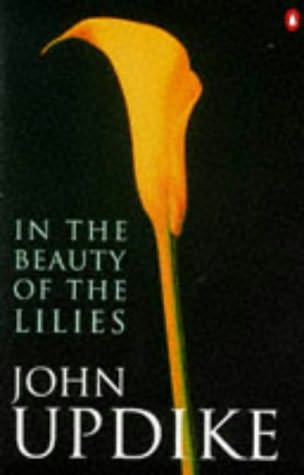
Updike - Beauty of the Lilies‘What all the genteel professors at Princeton Seminary had smilingly concealed, Warfield and Green and the erect, pedantic rest, and the embowering trees and Gothic buildings had in their gracious silence masked, was the possibility that this was all about nothing, all these texts and rites and volumes and exegeses and doctrinal splits (within Scots Presbyterianism alone, the Cameronians, the Burghers Antiburghers, the Auld Lichts and New, the Relief Church and the United Sucession Church, the United Free Church and the Free Church and the further seceding “Wee Frees”) – that all these real-enough historical entities might be twigs of an utterly dead tree, ramifications of no more objective validity than the creeds of the Mayan and Pharaonic and Polynesian priesthoods, and Presbyterianism right back to its Biblical roots one more self-promoting, self-protective tangle of wishful fancy and conscious lies’. – John Updike, In the Beauty of the Lilies (London: Hamish Hamilton, 1996), 18–19).

It is the pouring out of such language that leads Frank Kermode , in a scintillating review, to suggest not merely that In the Beauty of the Lilies is ‘a novel planned with much care’, but also that ‘Updike is almost alone among his contemporaries in his willingness to study this state of dull spiritual privation, what used to be called wanhope; or at any rate to study it in a religious, quasi-theological context. He alone would seek the origins of Clarence’s discomfiture in German Higher Criticism: Semler and Eichhorn, Baur and Welhausen, Strauss’s Das Leben Jesu, all those learned Christians who ‘undermined Christianity’s supporting walls and beams’’.

Kermode continues:

Underneath the busy surface there is Updike’s permanent preoccupation with the vagaries of the spirit in ex-Puritan America. The careful abundance of the writing testifies to his love and admiration for the daily beauties and oddities of American life, past and present, but the deep structures suggest sadness and disappointment. Something serious has been lost or at any rate eroded, a seriousness of intellect but also of spirit. A sign of the degeneration is the difference between Clarence’s religious life and the later fundamentalism accepted by Clark, a doctrine that cuts off all serious thinking at the root.

In the Beauty of the Lilies captivates no less on the second read. Speaking of which, my copy of Marilynne Robinson’s Home arrived today. So excited.

BTW: While I’m drawing attention to London Review of Books, readers of Per Crucem ad Lucem may be interested in a recent piece therein by Slavoj Žižek on ‘Berlusconi in Tehran’.

Marilynne Robinson on America’s ‘Third Great Awakening’ (i.e. Christian Fundamentalism)

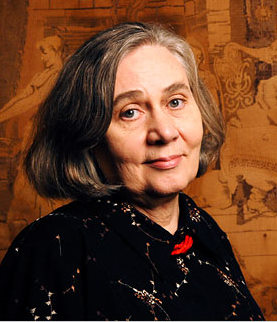
Marilynne Robinson 2‘History is a great ironist, though historians seem rarely to see the joke’. So observes Marilynne Robinson in a delightful essay titled ‘Hallowed Be Your Name’ (in Getting on Message: Challenging the Christian Right from the Heart of the Gospel. ed. Peter Laarman; Boston: Beacon Press, 2006, pp. 1–12). One of the interesting things that Robinson does in this wee essay is to contrast the First and Second Great Awakenings (she notes Edwards and Finney respectively) with what some have identified as a Third Great Awakening. Robinson contends that this third movement – which is what American Christianity is currently living under the burden of – differs significantly from the first two in a number of respects, not least its being ‘notably devoid of interest in equality’. She goes on to argue (and I cite at length) that this Third Great Awakening, whose other name is Christian Fundamentalism,

‘… passionately supports a government whose policies have created a sharp rise in the rate of poverty. For a self-declared Christian movement, it shows startlingly little sense of responsibility for the vulnerable in society.

And here is the culminating irony. This movement, which calls itself fundamentalist, subscribes fervently to the principles of laissez faire capitalism. It has helped to push American society toward what the English economist Herbert Spencer called “the survival of the fittest.” Darwin borrowed that phrase from Spencer to name the dynamic of natural selection in the evolution of species, otherwise known as Darwinism. In other words, our anti-Darwinists are Social Darwinists. The great defender of what were then called “the fundamentals” was William Jennings Bryan, a Democrat and a pacifist and a passionate campaigner against what he saw as the economic structures that created poverty. His “Cross of Gold” speech spoke of the poor of America as Christ crucified – not at all the kind of rhetoric we hear these days. Bryan, a liberal by any standard, opposed Darwinism because it was taken at the time, rightly or wrongly, to justify not only economic exploitation but also racism, colonialism, eugenics, and war. He feared the loss of belief in the sanctity of the human person, the only stay against these things.

The neofundamentalists treat the matter as if the central issue were the existence of God or the literal truth of the Bible. They seem to overlook the implications of the dignity conferred on every human being in the narratives of creation. They speak of a right to life, an oddly disembodied phrase which, isolated as it is by them from human context, tends to devalue the incarnate person and is therefore as unbiblical a conception as Bergson’s élan vital. It invokes Jefferson, but Jefferson posited a divine endowment to every person that includes also liberty and the pursuit of happiness – terms that are difficult to define but that clearly imply dignity and hope and the exercise of meaningful agency. These are rights that, though “inalienable,” have to be enabled and respected in society if they are to exist in fact. For example, they more or less require that one come through childhood in a reasonable state of health. Policies that spread and intensify poverty, besides being unbiblical, deprive individuals of what Jefferson called their God-given rights. The thought among anti-Darwinists was, and supposedly still is, that humankind is demeaned by the notion that God was not in every sense present and intentional in the creation of our first parents. The passionate loyalty of the neofundamentalists to the second chapter of Genesis (the first is startlingly compatible with the idea of evolution, though not Darwinism) seems to have prevented them from reading on in the text. Were they to do so, they would find there much to indicate that God continues to be present, and also intentional, in the lives of Eve’s children.

Since these folk claim to be defenders of embattled Christianity (under siege by liberalism, as they would have it), they might be struck by the passage in Matthew 25 in which Jesus says, identifying himself with the poorest, “I was hungry, and ye fed me not.” This is the parable in hallowed be your name which Jesus portrays himself as eschatological judge and in which he separates “the nations.” It should surely be noted that he does not apply any standard of creed – of purity or of orthodoxy – in deciding whom to save and whom to damn. This seems to me a valuable insight into what Jesus himself might consider fundamental. To those who have not recognized him in the hungry and the naked, he says, “Depart from me, ye cursed, into the eternal fire which is prepared for the devil and his angels.” Neofundamentalists seem to crave this sort of language – more than they might if they were to consider its context here. It is the teaching of the Bible passim that God has confided us very largely to one another’s care, but that in doing so he has in no degree detached himself from us. Indeed, in this parable Jesus would seem to push beyond the image of God as final judge to describe an immanence of God in humankind that makes judgment present and continuous, and that in effect makes our victim our judge. Neither here nor anywhere else in the Bible is there the slightest suggestion that our judge/victim would find a plea of economic rationalism extenuating. This supposed new Awakening is to the first two Awakenings, and this neofundamentalism is to the first fundamentalism, as the New Right is to the New Deal, or as matter is to antimatter’.

Around the traps: Jacques Ellul … et al

  • Ellul
  • Gabriel Fackre posts on Time in Eternity: the Lively Life to Come.
  • A timely challenge by Andrew Hamilton by way of a reconsideration of Bonhoeffer’s ethics.
  • Byron Smith offers some thoughts on Rowan Williams ‘two styles of Anglicanism.
  • And Halden shares two great quotes from Jacques Ellul’s Hope in Time of Abandonment: on prayer and on hope and apocalyptic.
  • And while we’re on that book, I’ll post here some further gems:
    • ‘We were saying that God is no longer anything to some … it would be better to say that on behalf of the practicing unbeliever, the systematic atheist, the doctrinal or practicing materialist, the antitheist, God makes himself nothing in order always to remain at man’s level. But when God makes himself nothing, it is still for the sake of the unbelieving man. He remains sovereign in so doing. In that case we have to be on our guard, for God is both the weak adversary who accepts the combat without putting up a fight and also the one who is capable at any time of revealing Himself as possessed of infinite power’. (p. 104)
    • ‘When man is not made hopeless by God’s silence, it is because he (man) has destroyed his awareness, to the point of wanting nothing better than to be identical instead of identifiable’. (p. 116)
    • ‘God, who has let himself be put to death in Christ, withdraws into His discreetness before the absence of love, the absence of filial relations, the absence of trust, the absence of gift, the absence of loyalty, the absence of truth, the absence of self-discipline, the absence of freedom, the absence of authenticity. God makes Himself absent in this world of absences, which modern man has put together with enthusiasm. Man certainly has not killed God, but in creating this world of absence for himself he has brought about the discreetness of God, which is expressed in God’s turning away and silence’. (p. 124)
    • ‘The passion for language and analysis and hermeneutics is the unintentional expression of God’s silence. It is reasons like this: God is absent, (we are not saying so, of course), so we are going to get along without Him. This demonstrates that it is not all essential that God speaks here and now in order that the witness be heard and received’. (p. 141)
    • ‘The tragedy of interpretation [of Scripture] is a tragedy, not because scientific interpretations enter into overturning the traditional Christian interpretations, nor because the procedures are highly sophisticated, but because God is silent. The Promethean role of Hermeneutics is that of claiming to find a meaning as though God were speaking. Strictly, it is a matter of putting oneself in the place of God’s decision. It is a matter of making Scripture alive and meaningful without God’s making it alive and meaningful. It is a matter of effecting the transition from Scripture to word, or of making language into the word, by putting together highly sophisticated humans means to economize on the use (or role) of the Holy Spirit. Hermeneutics is the business of interpreting revelation without revelation’. (p. 145)
    • ‘I fail to see the justification for accepting as legitimate all the questions about the revelation, more or less, validly raised from different points of view, while at the same time refusing to question those systems, methods, and conclusions from the point of view of revelation’. (p. 145)
    • And my favourite: ‘Man is living in an illusionary world, illusionary because it is made up of images transmitted by communications media. His world is no longer that of his daily experience, of his lived mediocrity of his personality or of his repeated relationships. It has become an enormous decor, put there by the thousands of news items which are almost completely useless for his life, but which are striking, arousing, threatening, glorifying and edifying in their radical insignificance. They give him the feeling of living an experience, which is worth the trouble, in contrast to the rest of his experience, which is colorless and too plainly unimportant. It is an odd perversion which leads the person of this age to bestow importance and sense on that which does not concern him at all … while rejecting the importance and sense of that which is in fact his own experience 24 hours of every day’. (p. 35)

Why read Calvin?

Calvin 19Why read Calvin?

Calvin reminds us that to break bread and drink wine and tell the story about which they bear witness, to embrace the refugee, to spend oneself for those who can offer nothing in return, to put the cause of the gospel before career and comfort, to do justice and to love mercy, is for the Church to participate in the prophetic action of the triune God, and in God’s love for the world. Calvin bequeathed to us a robust theological foundation and ministry example grounded upon the magnificent news that God is determined to self-disclose to us, and that in such a way that God might be ‘heard’ and received. But there is more, for to read Calvin is to be confronted with the possibility that creature’s might be made to be participants in the divine self-disclosure given in the sheer carnality of God, that Spirit and flesh are not so foreign to each other that their co-ministry might not be the means by which broken and hostile creatures are drawn into the knowledge and purlieus of the Father’s reconciling love.

There’s more, of course. Lot’s more … and it’s not all anywhere near as flattering (although this too is valueble). And, no doubt, there are countless other theologians who have borne witness, and are bearing witness, to the kinds of realities to which Calvin so eloquently directed our gaze. We should read these too.

Still, can anyone think of a better reason to read Calvin?

On the relation between the pulpit and the academy

pulpit‘[I]f God speaks, and if God speaks in the church, then on some subjects sermons are not popularized products of more basic scholarly reflection. Rather scholarly reflection is an academized product of the more basic proclamation of the gospel … Thus, for the Christian community, sermons are a first-order, not a second-order, activity … As worship is more fundamental in the church than theology, so kerygmatic proclamation is more basic and often more pertinent than scholarly reflection’. – Charles Partee, The Theology of John Calvin (Louisville/London: Westminster John Knox Press, 2008), 46.

By the way, I’ve succumbed: readers of Per Crucem ad Lucem can now follow the blog via Twitter.

[Update: Rick has posted a great rant reflection on this Partee quote here]

Why Vampires Never Die

willem-dafoe-vampireJust to show that I’m not only reading Calvin these days, yesterday’s New York Times included a fascinating piece on vampires by Guillermo del Toro and Chuck Hogan. Here’s a snippert:

‘Today … we stand at the rich uncertain dawn of a new level of scientific innovation. The wireless technology we carry in our pockets today was the stuff of the science fiction in our youth. Our technological arrogance mirrors more and more the Wellsian dystopia of dissatisfaction, while allowing us to feel safe and connected at all times. We can call, see or hear almost anything and anyone no matter where we are. For most people then, the only remote place remains within. “Know thyself” we do not.

Despite our obsessive harnessing of information, we are still ultimately vulnerable to our fates and our nightmares. We enthrone the deadly virus in the very same way that “Dracula” allowed the British public to believe in monsters: through science. Science becomes the modern man’s superstition. It allows him to experience fear and awe again, and to believe in the things he cannot see.

And through awe, we once again regain spiritual humility. The current vampire pandemic serves to remind us that we have no true jurisdiction over our bodies, our climate or our very souls. Monsters will always provide the possibility of mystery in our mundane “reality show” lives, hinting at a larger spiritual world; for if there are demons in our midst, there surely must be angels lurking nearby as well. In the vampire we find Eros and Thanatos fused together in archetypal embrace, spiraling through the ages, undying’. – Guillermo del Toro and Chuck Hogan, ‘Why Vampires Never Die’.

July bests …

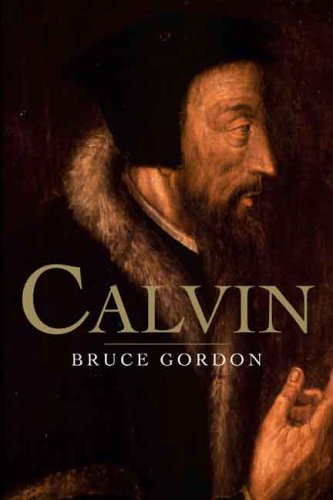
CalvinFrom the reading chair: Housekeeping: A Novel, and The Death of Adam: Essays on Modern Thought, both by Marilynne Robinson; John Calvin as Teacher, Pastor, and Theologian: The Shape of His Writings and Thought, by Randall C. Zachman; Calvin, by Bruce Gordon; Calvin’s Preaching, by T.H.L. Parker; The Theology of John Calvin by Charles Partee; Why Go to Church?: The Drama of the Eucharist, by Timothy Radcliffe; Christian Worship in Reformed Churches Past and Present, edited by Lukas Vischer; Calvin, Participation, and the Gift: The Activity of Believers in Union with Christ, by J. Todd Billings; Grace and Gratitude: The Eucharistic Theology of John Calvin, and The Old Protestantism and the New: Essays on the Reformation Heritage, both by Brain A. Gerrish; and A Theology of Proclamation by Dietrich Ritschl. 

Through the iPod: Twist, by Dave Dobbyn; Bruckner’s Symphonies 1–9, by Berlin Philharmonic conducted by Herbert von Karajan; Troubadour, by George Strait; Lady Antebellum, by Lady Antebellum; My One and Only Thrill, by Melody Gardot; Worrisome Heart, by Melody Gardot.                                                

On the screen: Dogville; Frost/Nixon; Milk; The Pawnbroker; The War on Democracy; The Savages.

In the glass: Speight’s Old Dark.

Modernity’s incurious muffling of theology

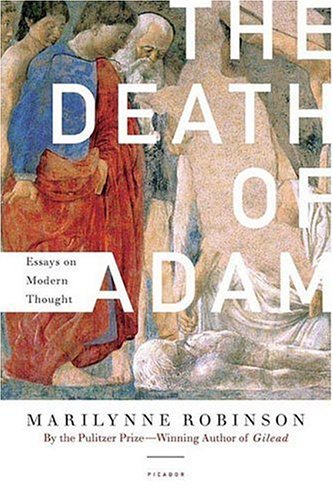
Death of Adam‘This great project, theology, which for so many centuries was the epitome of thought and learning, the brilliant conceptual architecture of western religious passion, entirely worthy of comparison with any art which arose from the same impulse, has been forgotten, or remembered only to be looted for charms and relics and curiosities. We are forever drawing up indictments against the past, then refusing to let it testify in its own behalf – it is so very guilty, after all. Such attention as we give to it is usually vindictive and incurious and therefore incompetent’. – Marilynne Robinson, The Death of Adam: Essays on Modern Thought (New York: Picador, 2005), 182.

Calvin on illegal downloads

piracy global warming

According to Calvin, ‘[S]tealing is not simply committed with our hands, when … someone is able to steal another person’s money or coins. But stealing occurs when a man possesses what isn’t his, and when we don’t attempt to protect what God has put in a person’s hands’. (John Calvin, Sermons on the Ten Commandments (ed. Benjamin Farley; trans. Benjamin Farley; Grand Rapids: Baker, 1980), 190–1).

… but then he never knew about how P2P can save the planet.

Barth’s Hymn to Calvin (the cataract)

calvin

Barth was not the only ‘modern’ theologian to have enjoyed a maturing relationship with Calvin’s thought. In the summer of 1922, the young Barth was teaching a course on the theology of Calvin. As he immersed himself in the reformer’s thought, he became beset by the peculiarity and muscle of what he found. On 8 June, 1922, Barth gave voice to this astonishment in a letter to his friend Eduard Thurneysen:

‘Calvin is a cataract, a primeval forest, a demonic power, something directly down from Himalaya, absolutely Chinese, strange, mythological; I lack completely the means, the suction cups, even to assimilate this phenomenon, not to speak of presenting it adequately. What I receive is only a thin little stream and what I can then give out again is only a yet thinner extract of this little stream. I could gladly and profitably set myself down and spend all the rest of my life just with Calvin’. – Karl Barth and Eduard Thurneysen, Revolutionary Theology in the Making: Barth-Thurneysen Correspondence, 1914–1925 (trans. James D. Smart; Richmond: Westminster John Knox Press, 1964), 101.

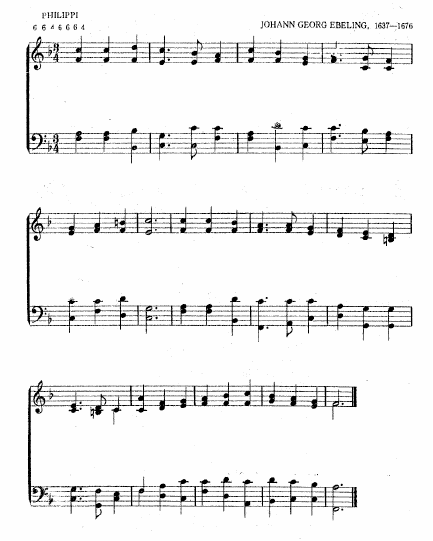
In January 2008, eighty-six years later, these words were then put into verse by David Alexander (then of Tainan Theological College and Seminary) to the tune of Philippi: 

Calvin’s a cataract, primeval forest, a demonic pow’r.
Something directly down, from Himalayan heights,
strange to the absolute, mythic in depth.

We lack the means the equipment to fathom this phenomenon,
nor to present it with adequate clarity.
What we receive is but a little stream.

We can give back but the thinnest of extracts of what we have got.
We would well benefit, if we would only sit,
spending our lives with John Calvin alone.


Hymn - Calvin’s A Cataract.jpg

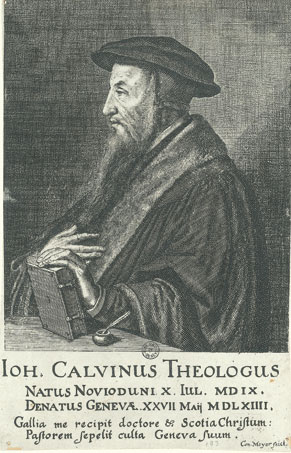
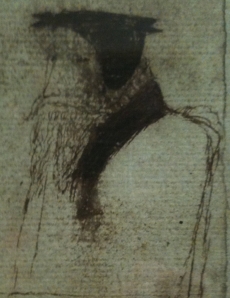
[Top image: Student sketch of Calvin made during a lecture in the Academy (c. 1559-63). HT: Heidelblog]

Robert Fisk: ‘Why does life in the Middle East remain rooted in the Middle Ages?’

FiskHere’s Robert Fisk, deservedly one of the most reputable journalists in the world, on why the ground beneath Arab feet may have become ‘too saturated to build on’. It’s a thought-provoking piece of commentary:

‘Why is the Arab world – let us speak with terrible sharpness – so backward? Why so many dictators, so few human rights, so much state security and torture, so terrible a literacy rate?

Why does this wretched place, so rich in oil, have to produce, even in the age of the computer, a population so poorly educated, so undernourished, so corrupt? Yes, I know the history of Western colonialism, the dark conspiracies of the West, the Arab argument that you cannot upset the sheikhs and the kings and the autocrats, the imams and the emirs when the “enemy is at the gates”. There is some truth to that. But not enough truth.

Once more the United Nations Development Programme has popped up with yet one more, its fifth, report that catalogues – via Arab analysts and academics, mark you – the retarded state of much of the Middle East. It talks of “the fragility of the region’s political, social, economic and environmental structures… its vulnerability to outside intervention”. But does this account for desertification, for illiteracy – especially among women – and the Arab state which, as the report admits, is often turned “into a threat to human security, instead of its chief support”?

As Arab journalist Rami Khouri stated bleakly last week: “How we tackle the underlying causes of our mediocrity and bring about real change anchored in solid citizenship, productive economies and stable statehood, remains the riddle that has defied three generations of Arabs.” Real GDP per capita in the region – one of the statistics which truly shocked Khouri – grew by only 6.4 per cent between 1980 and 2004. That’s just 0.5 per cent annually, a rate which 198 of 217 countries analysed by the CIA World Factbook bettered in 2008. Yet the Arab population – which stood at 150 million in 1980 – will reach 400 million in 2015.

I notice much of this myself. When I first came to the Middle East in 1976, it was crowded enough. Cairo’s steaming, fetid streets were already jam-packed, night and day, with up to a million homeless living in the great Ottoman cemeteries. Arab homes are spotlessly clean but their streets are often repulsive, dirt and ordure spilling on to the pavements. Even in beautiful Lebanon, where a kind of democracy does exist and whose people are among the most educated and cultured in the Middle East, you find a similar phenomenon. In the rough hill villages of the south, the same cleanliness exists in every home. But why are the streets and the hills so dirty?

I suspect that a real problem exists in the mind of Arabs; they do not feel that they own their countries. Constantly coaxed into effusions of enthusiasm for Arab or national “unity”, I think they do not feel that sense of belonging which Westerners feel. Unable, for the most part, to elect real representatives – even in Lebanon, outside the tribal or sectarian context – they feel “ruled over”. The street, the country as a physical entity, belongs to someone else. And of course, the moment a movement comes along and – even worse – becomes popular, emergency laws are introduced to make these movements illegal or “terrorist”. Thus it is always someone else’s responsibility to look after the gardens and the hills and the streets.

And those who work within the state system – who work directly for the state and its corrupt autarchies – also feel that their existence depends on the same corruption upon which the state itself thrives. The people become part of the corruption. I shall always remember an Arab landlord, many years ago, bemoaning an anti-corruption drive by his government. “In the old days, I paid bribes and we got the phone mended and the water pipes mended and the electricity restored,” he complained. “But what can I do now, Mr, Robert? I can’t bribe anyone – so nothing gets done!”

Even the first UNDP report, back in 2002, was deeply depressing. It identified three cardinal obstacles to human development in the Arab world: the widening “deficit” in freedom, women’s rights and knowledge. George W Bush – he of enduring freedom, democracy, etc etc amid the slaughter of Iraq – drew attention to this. Understandably miffed at being lectured to by the man who gave “terror” a new name, even Hosni Mubarak of Egypt (he of the constantly more than 90 per cent electoral success rate), told Tony Blair in 2004 that modernisation had to stem from “the traditions and culture of the region”.

Will a solution to the Arab-Israeli war resolve all this? Some of it, perhaps. Without the constant challenge of crisis, it would be much more difficult to constantly renew emergency laws, to avoid constitutionality, to distract populations who might otherwise demand overwhelming political change. Yet I sometimes fear that the problems have sunk too deep, that like a persistently leaking sewer, the ground beneath Arab feet has become too saturated to build on.

I was delighted some months ago, while speaking at Cairo University – yes, the same academy which Barack Obama used to play softball with the Muslim world – to find how bright its students were, how many female students crowded the classes and how, compared to previous visits, well-educated they were. Yet far too many wanted to move to the West. The Koran may be an invaluable document – but so is a Green Card. And who can blame them when Cairo is awash with PhD engineering graduates who have to drive taxis?

And on balance, yes, a serious peace between Palestinians and Israelis would help redress the appalling imbalances that plague Arab society. If you can no longer bellyache about the outrageous injustice that this war represents, then perhaps there are other injustices to be addressed. One of them is domestic violence, which – despite the evident love of family which all Arabs demonstrate – is far more prevalent in the Arab world than Westerners might realise (or Arabs want to admit).

But I also think that, militarily, we have got to abandon the Middle East. By all means, send the Arabs our teachers, our economists, our agronomists. But bring our soldiers home. They do not defend us. They spread the same chaos that breeds the injustice upon which the al-Qa’idas of this world feed. No, the Arabs – or, outside the Arab world, the Iranians or the Afghans – will not produce the eco-loving, gender-equal, happy-clappy democracies that we would like to see. But freed from “our” tutelage, they might develop their societies to the advantage of the people who live in them. Maybe the Arabs would even come to believe that they owned their own countries’.

[Source: The Independent, 28 July 2009]

On searching for the perfect preacher

preacher parking‘Farel excelled in a certain sublimity of mind, so that nobody could either hear his thunders without trembling, or listen to his most fervent prayers without feeling almost as it were carried up into heaven. Viret possessed such winning eloquence, that his entranced audience hung upon his lips. Calvin never spoke without filling the mind of the hearer with the most weighty sentiments. I have often thought that a preacher compounded of the three would have been absolutely perfect’. (‘The Life of John Calvin’, in Selected Works of John Calvin: Tracts and Letters, Volume 1 (trans. H. Beveridge; Edinburgh: The Calvin Translation Society, 1844), xxxix).

However, it was none of these things that impressed Uncle Karl who, when he came to recall Calvin’s preaching, wrote:

‘How this man is grasped and stilled and claimed – not too quickly must one suppose by his experience of conversion, or by the thought of predestination, or by Christ, or even, as is commonly said, by passion for God’s glory – no, but in the first instance simply by the authority of the biblical books, which year by year he never tired of expounding systematically down to the very last verse!’ (Karl Barth, The Göttingen Dogmatics: Instruction in the Christian Religion (trans. Geoffrey W. Bromiley; vol. 1; Grand Rapids: Wm. B. Eerdmans, 1991), 54).

On ‘Communion Sunday’

eucharist‘The Lord’s Supper may be on its way to becoming a monthly rite, but an arbitrary designation of the first Sunday of the month as “communion Sunday” indicates its institutional rather than ecclesial function’. So writes Joseph Small (Director of Theology Worship and Education Ministries for the PCUSA) in his delightful essay on the church of word and sacrament.

Small also properly warns against the practice of thinking of the Supper exclusively in terms of the Last Supper, arguing that this both sponsors a gloomy exercise in silent introspection and – more tragically – betrays a failure to understand the Supper in terms of the Emmaus experience wherein the community feasts and drinks with the risen Christ in whose presence we come to know and love him more fully. Small recalls that by celebrating the Supper each Lord’s Day, the early church were ‘not commemorating the tragic death of a hero or mourning the premature death of an inspiring teacher’ but were ‘gathering in the presence of the risen, living Christ to be joined to him in his death and resurrection and to be fed by him’. How can a community engage in something akin to a funeral for one who is more alive that we are, for Christ is life in se?

But here, in bread and wine, in eating and drinking together, the community of Jesus receives nourishment for the way of discipleship in the love of God and neighbour. ‘If congregations experience the Lord’s Supper as a remembrance of Jesus’ death, a re-creation of the Last Supper, it is little wonder that they do it infrequently and that when they do they are vaguely puzzled or dissatisfied by it all’. – Joseph D. Small, ‘A Church of the Word and Sacrament’ in Christian Worship in Reformed Churches Past and Present (ed. Lukas Vischer; Grand Rapids/Cambridge: Wm. B. Eerdmans, 2003), 320, 321.