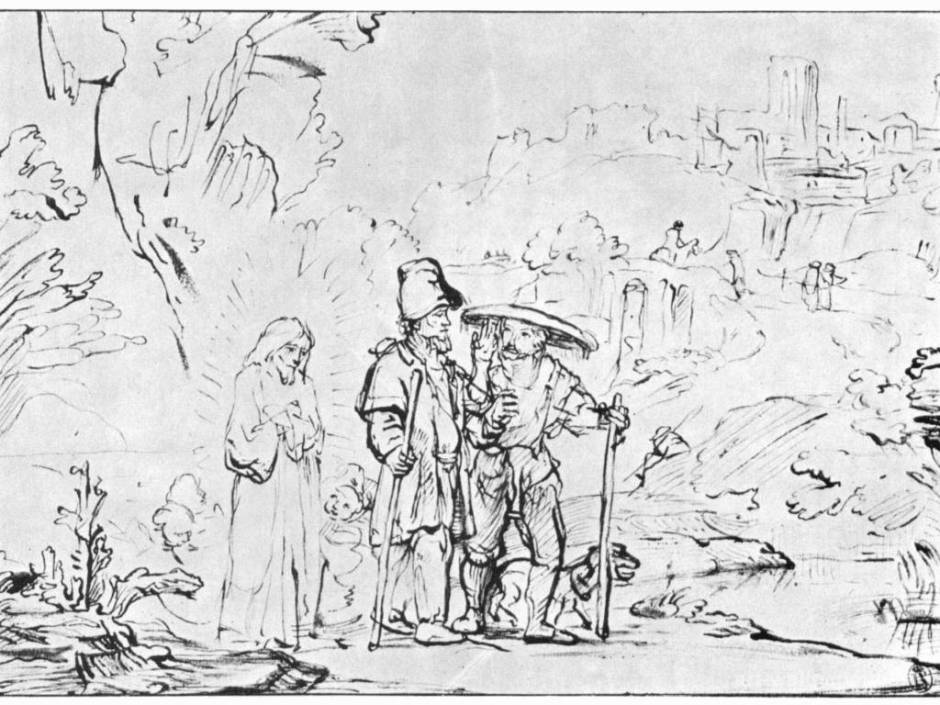
Author: Jason Goroncy

‘My Novices: late 1950s’, by Brother Paul Quenon

Young men came
looking for
–don’t know what–
Left the place
looking for
–don’t know what–
Of these I had no regrets.

Some came, seemed like
looking–
heard some talk about
–what–
stayed awhile
and left
talking like– Well,–
like somewhat.

Serious young men came looking.
took up talk about,
–don’t know what,
stayed long and left
talking
about everything what-not.

Some came completely
clear and sure about
what–
Those I sent away.

Silent young men, a few,
came looking for–
don’t know what–
stayed
and kept on looking
stayed and never got to
what–
wore out,
died,
had never stopped looking for
what–
For these I have no regrets.

All of these I loved, but
seems the part I loved the best
was–
don’t know what–

[HT: PBS Religion & Ethics]

John V. Taylor on the universal Spirit and the meeting of faiths

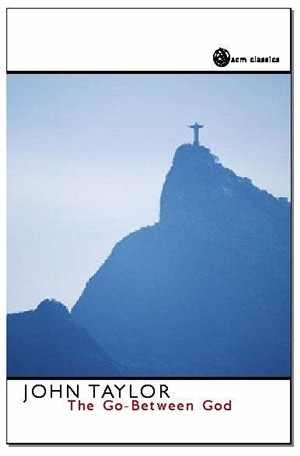
John V. Taylor’s The Go-Between God: The Holy Spirit and the Christian Mission is a profoundly insightful book. Throughout the chapter on religious pluralism, titled ‘Meeting: the Universal Spirit and the Meeting of Faiths’, Taylor reminds us that religion is not the fabrication of theologians with their dogmas but a particular ‘tradition of response to the reality the Holy Spirit has set before their eyes’ (p. 182). Those engaged in inter-faith discourse, even the kind of which John Milbank (in his essay, ‘The End of Dialogue’) rightly refuses to pretend mean ‘anything other than continuing the work of conversion’, will make no headway, Taylor insists, unless they first understand that such traditions of response are both deeply ingrained and dynamic cultural ideas, as well as being attempts at fundamental meaning-making. The first challenge of inter-faith conversation, therefore, is to ‘pay attention to the real conviction that underlies the precise point at which disagreement appears and then try to turn mere confrontation of opposites into a real and possible choice’ (p. 187). In other words, it is to identify the crisis – or, more properly, the crucis – which must be entered into.

Taylor draws upon the work of Kenneth Craig who argues that the contradictions between Muslim and Christian fidelity can be seen to arise from the different ways that Mohammed and Jesus responded to the same situation; namely, being under threat of death. Jesus ‘bowed his head to what was coming’; Mohammed ‘raised his army and marched on Mecca’ (p. 188). (BTW: my colleague Graham Redding drew attention recently to this same fundamental difference, a difference which at bottom reflects two different ideas of God’s nature, on TVNZ’s Q&A program). So Taylor:

But what a strong case Mohammed has! He takes the theology of power seriously. And more often than not, when confronted by the same choice, the Church has taken the Prophet’s way rather than the Messiah’s. Looked at in this way the basic difference between Islam and Christianity becomes an open option, for the Christian no less than for the Muslim – a choice on which we are still making up our minds. The gulf between us is seen, as it were, in cross section. Both I and the Muslim may go forward either on the one side or the other. I said ‘cross section’; for it is nothing less than the cross which is now demanding our decision. (p. 188)

The ‘evangelism of the Holy Spirit’, Taylor insists, ‘consists in creating the occasions for choice’ (pp. 188–9). Enthusiasts of the Gospel ought to be the first to welcome the lesson of the Epiphany story of the magi, not primarily their great learning or the store of their religious experience, but rather the question which they carried, or, rather, which carried them; namely, ‘Where is the child who has been born king of the Jews?’ (Matt 2.2).

Taylor continues:

I believe that the search for Christ’s relevance is a truer and less static way of describing the aim of dialogue than is the older talk about the one word and light which has inspired other religious systems. For it is not in the propositions, regulations, rituals or traditions of a religious system that his universal presence is to be found, but always independent of these phenomena in the uncontainable unattained to which they point, in the questions [people] ask about them, and the protests [people] make against them. It is as judge and saviour of the religious tradition itself that Christ’s relevance to each religion will be found. It is not so much that he is the culmination or crown of every religion … but that in him each religion will be brought to fulfilment in terms true to itself, through crisis and conversion. (p. 190)

Taylor proceeds to say that the eternal and universally-present Spirit, who is uniquely present in Christ but ‘present through the whole fabric of the world’, has been at work ‘in all ages and all cultures making [people] aware and evoking their response, and always the one to whom he was pointing and bearing witness was the Logos, the Lamb slain before the foundation of the world. Every religion has been a tradition of response to him, however darkly it groped towards him, however anxiously it shied away from him’ (pp. 180, 191). While salvation can only ever come ‘as an interruption, a revolution, a new creation’ (p. 192) of God, Taylor has no doubt that ‘as the Holy Spirit turns Muslim or Hindu or Marxist eyes towards the living Christ, the half-truths in their traditions of response will be completed, error will be shown up, disobedience condemned, all evasion of God brought to a halt, and his Son crucified afresh. And out of all that a new Jesus-centred Hinduism, a new Messiah-centred Islam, a new Christ-directed Communism, will be raised up’ (p. 192).

While there are claims made in Taylor’s chapter that I think warrant some challenge or at least some further teasing out, Taylor’s ‘Spirit-centred theology of missions’ (p. 196) has much to commend it, and I found myself needing to sit again with this chapter and wrestle with some of the very questions that I believe Taylor is inviting the church to wrestle further with. Would that more theological books demanded as much of the reader!

It is what Taylor coins the ‘second dimension’ of the Spirit’s work that I find most stimulating to muse about (to borrow a phrase from Jean-Jacques Rousseau). While the first dimension of the Spirit’s work concerns ‘the level of individual response to the magnetism of Jesus Christ’, and which includes ‘individual conversions from one culture to another’ (p. 192), conversions which are often, as Taylor concedes, extremely costly, the second dimension bears witness to the way that the Spirit works in ways entirely unplanned and unforeseen by the Church, an ‘incidental by-product’ largely out of sight ‘like the submerged mass of the iceberg’ (p. 194; PT Forsyth’s readers will recall the use of that same image in his theology). This dimension of the ‘strategy of God’ refers to ‘something that is beginning to happen within the very life of … other faiths themselves, a ferment, a subtle change, brought about by the influence of Jesus Christ upon them, far beyond any conscious impact that Christians are making’ (p. 194. Italics mine). Might these not be counted among the ‘little lights’ of which Barth spoke, the ‘little lights of creation … that … are not passed over or ignored, let alone destroyed or extinguished, but integrated in the great light’ of the Creator (CD IV.3.1, 156)? To be sure, God is not the God of individuals only, but also of nations, movements, histories. And those who would discern the movements of God would do well to not be fixated with the micro or with the personal (one of pietism’s traps), but to also think in centuries, as Forsyth encouraged, and with a large map of a borderless world before them.

I’ll give Taylor the last word, a word that bespeaks the freedom of grace, the determination of love, and the indispensible gift of the disciples’ costly witness:

For Christ is not the property of us Christians and if we rejoice when the Holy Spirit opens [people’s] eyes to his glory, we must at that moment remember how often the church has blinded them, and pray that we be not once more a stumbling block.

But of one thing we can be certain: there would be no such ferment, no response at all, within the body and fabric of these other great faiths, if those who, one by one, through the past century and a half, have been touched by the magnetism of Christ, had not paid the costly price of public confession and baptism with all that that entailed. For this peculiar faith to which we are committed has no power and no appeal whatever except the power and the appeal of the cross. In the confrontation of many faiths, all our dialogue, all our witness, all our loving service of [people’s] need must point to that. But in order to point another effectually, we may often have to be on the cross ourselves. Whatever else the strategy of the Spirit may include, that part of it has not been taken from us. (pp. 196–7)

Dunedin to host two theology conferences

There can be little doubt that the 5-month delay of the parousia (until 21 October) is principally so that Dunedin – the global centre for theology, semi-decent coffee, and steep streets – can serve as host to two planned theological conferences.

The first, from July 29–30, is a conference on theology and art titled ‘To Mend the World’. The keynote speaker will be Professor Bill Dyrness from Fuller Theological Seminary and the conference will include an exhibition on the conference theme at the Temple Gallery, and a special screening of ‘The Insatiable Moon’ followed by discussion with the writer Mike Riddell. Further details here.

The second conference, to be held from September 2–3, will offer a Christian response to the phenomenon of  ‘The New Atheism’ as represented by writers like Richard Dawkins and Christopher Hitchens. This conference, ‘The New Atheism: A Christian Response’, will be jointly hosted by the Faraday Institute at Cambridge University and the University of Otago. Further details here.

‘Take this book back again’: the Bible and the development of a returns policy

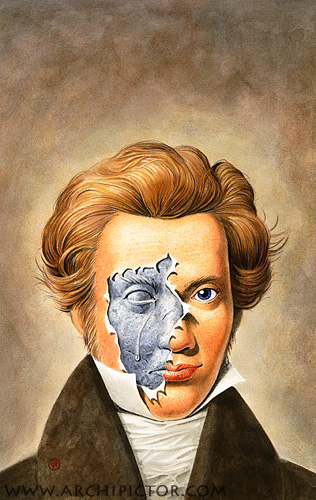
While watching Bill Maher’s recent rant, I was reminded of, and challanged by, another, and much more impressive, ranter – Søren Kierkegaard – and the Dane’s tirade against Bible commentators:

‘The Church has long needed a prophet who in fear and trembling had the courage to forbid people to read the Bible. I am tempted, therefore, to make the following proposal. Let us collect all the Bibles and bring them out to an open place or up on a mountain and then, while we all kneel, let someone talk to God in this manner: Take this book back again. We Christians, such as we are, are not fit to involve ourselves with such a thing; it only makes us proud and unhappy. We are not ready for it. In other words, I suggest that we, like those inhabitants whose herd of pigs plunged into the water and died, beg Christ “to leave the neighborhood” (Mt. 8:34). This would at least be honest talk – something very different from the nauseating, hypocritical, scholarship that is so prevalent today.

The matter is quite simple. The Bible is very easy to understand. But we Christians are a bunch of scheming swindlers. We pretend to be unable to understand it because we know very well that the minute we understand we are obliged to act accordingly. Take any words in the New Testament and forget everything except pledging yourself to act accordingly. My God, you will say, if I do that my whole life will be ruined. How would I ever get on in the world?

Herein lies the real place of Christian scholarship. Christian scholarship is the Church’s prodigious invention to defend itself against the Bible, to ensure that we can continue to be good Christians without the Bible coming too close. Oh, priceless scholarship, what would we do without you? Dreadful it is to fall into the hands of the living God. Yes, it is even dreadful to be alone with the New Testament.

I open the New Testament and read: “If you want to be perfect, then sell all your goods and give to the poor and come follow me.” Good God, if we were to actually do this, all the capitalists, the officeholders, and the entrepreneurs, the whole society in fact, would be almost beggars! We would be sunk if it were not for Christian scholarship! Praise be to everyone who works to consolidate the reputation of Christian scholarship, which helps to restrain the New Testament, this confounded book which would one, two, three, run us all down if it got loose (that is, if Christian scholarship did not restrain it)’. – Søren Kierkegaard, Provocations: Spiritual Writings of Kierkegaard (ed. Charles E. Moore; Maryknoll: Orbis, 2003), 201–2.

J.R.R. Tolkien on the death of Osama Bin Laden

‘It seemed to Frodo then that he heard, quite plainly but far off, voices out of the past:

What a pity Bilbo did not stab the vile creature, when he had a chance!

Pity! It was Pity that stayed his hand, and Mercy: not to strike without need.

I do not feel any pity for Gollum. He deserves death.

Deserves death! I daresay he does. Many that live deserve death. And some that die deserve life. Can you give that to them? Then be not too eager to deal out death in the name of justice, fearing for your own safety. Even the wise cannot see all ends.

“Very well,” he answered aloud, lowering his sword. “But still I am afraid. And yet, as you see, I will not touch the creature. For now that I see him, I do pity him.”’

– J.R.R. Tolkien, ‘The Taming of Sméagol’, in The Lord of the Rings (London: HarperCollins, 1995), 601.

Entering the New Theological Space: A Review

John Reader and Christopher R. Baker, eds, Entering the New Theological Space: Blurred Encounters of Faith, Politics and Community. Explorations in Practical, Pastoral and Empirical Theology (Farnham/Burlington: Ashgate, 2009), pp. xiii + 241, £55.00, ISBN 978-0-7546-6339-3.

Nicholas Lash, in his book Holiness, Speech and Silence: Reflections on the Question of God, gives voice to the difficulty of thinking Christianly in ‘a culture whose imagination, whose ways of “seeing” the world and everything there is to see, are increasingly unschooled by Christianity and, to a considerable and deepening extent, quite hostile to it’. He notes the serious and dangerous demands posed in such a situation by continuing to hold the Gospel’s truth rather than paying mere lip-service to ‘undigested information’ (p. 4). Believing that the time has come to help missiological communities to engage and digest in the linear spaces opened up between post-Christendom politics and interfaith actualities, institutional monads and inter-organisational networks, rural and urban spaces, the status of paid and unpaid, and the contested and evolving relationship between faith and science, for example, the contributors to Entering the New Theological Space seek, in different ways, to map such space ‘by means of a triangulation between narrative, praxis and theory’, to ‘offer some idea of the complexity and interdisciplinarity associated with this new space’ – a so-called ‘third space’, the ‘space of the both/and’ (p. 5), a more fluid space which discards the oft-maintained binarism of the either/or space – and to assist readers to analyse the significance of such ‘blurred encounters’ which, the editors believe, are ‘forcing the church to develop increasingly fluid and experimental forms’ (p. 10).

Each of the fifteen essays in this volume are in their own way stimulating, and most are well-researched and eruditely penned. They cover a range of topics, from John Atherton’s ethical-economical-theological reflection on a ‘pilgrimage’ down Edinburgh’s Royal Mile to explore places where ‘inevitable and potentially creative’ (p. 25) ‘“edges” have become mainstream’ (p. 19), to Malcolm Brown’s essay on the ‘social atomisation’ and ‘rootlessness’ (p. 70) of London’s suburbs, to Margaret Goodall’s exploration of human personhood in a thought-provoking essay on dementia, to Clare McBeath’s piece which asks whether a community or a city can be said to ‘suffer from mental illness’ (p. 147), to Philip Wagstaff’s reflection on the fluidity and stability of rural ministry.

Two essays merit special mention: Martyn Percy’s considers the nature of the cultural dynamics, implicit theology and ‘invisible religion’ (p. 179; the phrase is Thomas Luckmann’s) that continue to birth requests for baptism (or ‘christening’) of children from non-churched families. He writes concerning the ‘deeply coded ways in which people talk and act about God’, that ‘religious language is carried in the emotion, timbre and cadence of worship’ and that ‘deeply coded language is not [necessarily] a strategy for avoiding explicit theological language’ (p. 184). Percy’s attempt to sketch a theology of cultural conversation, and to explore some implications of such conversations for missional and risky engagement in the ‘areas of overlap and hinterlands between the life of the church and the world’ (p. 179) merits further thought.

Drawing upon the work of Bruno Latour and Slavoj Žižek, and bringing their thought into conversation with events surrounding the 2007 outbreak (in Surrey) of foot and mouth disease, John Reader contributes an intriguing, if somewhat undercooked, essay on the nature, possibility and linguistic challenges posed to truth speech by the mutual encounter of science and theology. He concludes by stating that it is ‘only by keeping the insights and theories of both faith and science in circulation’ that we can be ‘certain of remaining “in the truth”‘, and that it is ‘only by loading into the process that contact with the wider world’ that we ‘avoid an unhealthy closure of questioning and debate’ (p. 208).

Some reservations: the noticeable absence in this volume of any discussion on the significance and place of technology (blogging, social media and gaming, for example) in theological and ecclesial discourse and praxis, and vice-versa, represents a disappointing gap. Also, there is in this volume a significant number of typological, grammatical and factual errors (John Knox, for example, was not the ‘first Presbyterian minister of St Giles and Scotland’ (p. 20)), errors which one expects would be corrected before print and to be rare in a book wearing such an inflated price tag. Finally, while one may well concur that ‘all the essays in this book are a testament to the ongoing adaptability and robust mutuality of Christian thought and the church’ (p. 7), if this volume represents ‘the new theological space’ then one might be forgiven for observing that, with one or two exceptions, such space is a little light on the theology front.

These reservations aside, not a few of the essays in this volume deserve wide reading, and the ongoing conversations encouraged therein are to be commended. Social planners, missiologists, pastoral practitioners and those training them will all benefit from reading this book, and from taking up the challenge to engage in the interdisciplinary and multilayered interstices of cultural, political and theological realities.

Johannes Baptist Metz on poverty of spirit

‘In poverty of spirit we learn to accept ourselves as beings who do not belong to ourselves. It is not a virtue that one “acquires”; as such, it could easily turn into a personal possession that would challenge our authentic poverty. We truly “possess” this radical poverty only when we forget ourselves and look the other way. As Jesus put it: “No one who puts a hand to the plow and looks back is fit for the reign of God” (Lk. 9:62). To look back for reassurance is to try to acquire possession and full control over this virtue, which amounts to losing it.

Poverty can never be isolated from the roots of existence and laid hold of. It is thoroughgoing interiority. It is the concentrated commitment of all our capabilities and powers. It cannot be viewed abstractly; it must involve total personal dedication. Like truth, it must be lived (cf. 1 Jn. 1:16) from the depth of our heart, where our existence is unified and were our act of self-acceptance is unified and harmonized with our conscious presence to Being.

The fulfilled ones are the ones who dare to forget themselves and offer up their heart. “The one who loves his or her life loses it, and the one who hates his or her life in this world will keep it for eternal life (Jn. 12:25). To be able to surrender oneself and become “poor” is, in biblical theology, to be with God, to find one’s hidden nature in God; in short, it is “heaven”.

To stick to oneself and to serve one’s own interests is to be damned; it is “hell.” Here we discover, only too late, that the tabernacle of self is empty and barren. For we can only find ourselves and truly love ourselves through the poverty of an immolated heart’.

– Johannes Baptist Metz, Poverty of Spirit (Mahwah: Paulist Press, 1998), 31–2.

Rowan Williams on the oddness of the open Table

‘[The Church’s] complete sharing of baptismal and eucharistic life does not happen rapidly or easily, and the problem remains of how the Church is to show its openness without simply abandoning its explicit commitment to the one focal interpretative story of Jesus. To share eucharistic communion with someone unbaptized, or committed to another story or system, is odd – not because the sacrament is “profaned”, or because grace cannot be given to those outside the household, but because the symbolic integrity of the Eucharist depends upon its being celebrated by those who both commit themselves to the paradigm of Jesus’ death and resurrection and acknowledge that their violence is violence offered to Jesus. All their betrayals are to be understood as betrayals of him; and through that understanding comes forgiveness and hope. Those who do not so understand themselves and their sin or their loss will not make the same identification of their victims with Jesus, nor will they necessarily understand their hope or their vocation in relation to him and his community. Their participation is thus anomalous: it is hard to see the meaning of what is being done’.

– Rowan Williams, Resurrection: Interpreting the Easter Gospel (London: Darton, Longman and Todd, 1982), 68.

Friending: Real Relationships in a Virtual World – a wee review

My friend Lynne Baab has a new book out – Friending: Real Relationships in a Virtual World (IVP). Via an array of stories gleaned from many dozens of interviews, Lynne, who has a PhD in communications and who blogs at Gathering Voices, maps the ways that new technologies and social media are changing the form that many friendships take (even the word ‘friend’ itself has become a verb), threaten to both cheapen as well as promote friendship, and invite us to reassess the nature(s) of friendship itself. She wants to know what makes friendships work, what actions initiate and nurture friendships, why nothing in friendships is permanent, and what does it look like to be a friend in a world shrunken by new communication technologies. Lynne, who is a Facebook devotee, writes with great enthusiasm and warmth, in a very personal style, with a complete absence of academic jargon, with an open Bible, and with an eye on practical concerns. Don’t expect here a treatise on friendship in the manner of a Seneca, or an Augustine, or a critical discussion on the use of technology itself, as that offered by Jacques Ellul – it’s simply not that kind of book. Each chapter concludes with a set of questions for reflection, journaling, discussion or action that could well serve as the basis for group discussion, or a conversation among friends.

You can read the first chapter here, and watch Lynne talking about her book here, here and here.

PT Forsyth, a report on his birthday

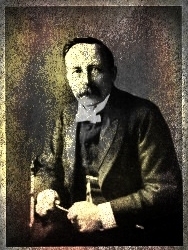
Last evening, a few, including Bertha, Jessie and myself, gathered at an undisclosed location in Tillydron Terrace, Old Aberdeen, to celebrate P.T. Forsyth’s birthday, which falls today. (Peter had been back in town to catch up with old friends, and to give an address on Goethe at the Newtondee Village Gentleman’s Club.) At an unarranged point in the evening, some considerable time after dinner, the birthday boy motioned his desire to make a short speech. In addition to being mostly polite, none of the guests at the party were in any mood to argue, and that despite knowing that ‘short’ speeches were not in their friends’ usual repertoire. It was by now late, many of the conversations had degenerated to talk about sports and favourite movies, and most of the guests were semi-sozzled (Laphroaig had been on special this week at Sainsbury’s.) But ever feeling up for the challenge, and most probably to quell the conversations about that most outré of sports, curling, he arose from his burgundy velvet chair, the one with the studded arms, adjusted his perfectly-tied size 16 white cotton bow tie (none of this polyester ‘one-size-fits-all’ arrangement), and spoke of how ‘Life begins as a problem, but when it ends well it ends as a faith: a great problem, therefore a great faith’. Already by this point, some of the guests hoped-against-hope that he’d finished his wee oration on life and, feeling confused but anticipating that they may be able to send a message to the beloved speaker that it might be a good thing if he started to wrap things up, began that body rustle one does to get ready for a few brief jokes and the raising of a glass to the tune of ‘Co-latha-breith sona, Peter’. But he went on:

Ordinary experience gives us the first half, it sets a problem; gives us the first half, it sets a problem; but the second half, the answer of faith to us, comes from God’s revelation of grace … To overcome the world and master life takes all the deep resources of Eternal God—Father, Son, and Holy Spirit. ‘When the Gospel is duly preached it is the Trinity that preaches’ … [Life] offers a task rather than an enjoyment. The soul must be achieved. The kingdom is above all a gift, but it is also a conquest. We are here to fight the good fight rather than to have a good time. The people to whom life is only an excursion, a picnic, a stroll, or a game grow more and more outlanders in society. Most people—more people than ever, at least—feel life’s problem to-day more sharply than ever before. Indeed, some feel nothing else. The trouble with so many serious minds among us is that life is no more than a problem to them. They are loaded with the riddle of it. They are victims of the age of uncertainty and unrest. It is not work that kills, but such worry. What does the life of worry mean but that life is felt to be much more full of problems than of power? … The problem is disquieting, anxious, and even tragic. It is not simply interesting and musing: not like a chess problem, or a mathematical, or a literary, to be solved at arm’s length by our wits for the pleasure of the thing. We are in no Kriegspiel, but in the real thing always. It touches the nerve. It is a problem, it is not a riddle. It has become a war. It involves the realities of life, the things most dear, solemn, searching, commanding. Darkness—is it the cloud of night or the mist of dawn? Disaster—is it there to burn up life, or to temper and anneal it; to crush life, or to rouse in us the spirit that overcomes it? Death —does it explode life or expand it, stifle it or solve it? Life is not a seductive puzzle; it is a tragic battle for existence, for power, for eternal life … To grasp the real, deep tragedy of life is enough to unhinge any mind which does not find God’s solution of it in the central tragedy of the Cross and its redemption. But life’s tragic problem to-day is not merely discussed in salons by philosophers and their circles, nor by petits-raítres and amateurs of thought; it lays hold of almost every man who takes things seriously at all. And especially it takes religion seriously and gets beyond the Cheeryble brothers. Life is not a riddle for a tea-party, but a battle of blood. It is certainly not a matter of snug optimism in philosophy, nor of mauve religion in fiction’.

At this point, Kentigerna said to Somerled, her husband and co-host, ‘Right. Perhaps we ought to attend to the cake and then call it a night. Big day tomorrow at the curling club’. Peter looked sad and, after a permission-giving glance from Bertha and Jessie, headed towards the cake table for the song and ceremonial cutting, not knowing that his words would continue to unsettle the soul, and the nerve, of not a few on the morrow.

Some other guests sat still, almost paralysed, somewhat confused but certainly unhinged by what they had heard. These were brooding on the possibility that somehow and in some way, even in this little loungeroom in Tillydron Terrace, the wind of God had blown through.

For the record, I very much enjoyed the Carob Cake. It had rich, fudgy frosting.

Uncle Karl’s 125th birthday

Just because today is Uncle Karl’s birthday, I thought it might be worth recalling some passages from the Church Dogmatics on how he thought about such days. Basically, apart from the three occasions where he refers to a particular birthday to mark some other event (see CD IV.2, 667; IV.3.1, xiii; IV.4.viii), Barth refers to birthdays in two ways.

First, he was grateful for the way that birthdays birthed words of ‘understanding and confidence, comfort and encouragement, friendship and co-operation, from so many people … both near and in many distant places’ (CD III.4, xiii). And all of that without any mediation from an ISP!

Second – and there are no surprises here – Barth thought of birthdays christologically. Two passages will suffice here:

‘Jesus of Nazareth—among the many who in Jordan received the baptism of John for the future forgiveness of sins—was the One in whom God was well pleased as His beloved Son, the One upon whom John saw the Spirit descend from heaven, Himself the One who, proclaimed by John, was to come as the bringer of forgiveness. In this way, in the free penitence of Jesus of Nazareth which began in Jordan when He entered on His way as Judge and was completed on the cross of Golgotha when He was judged—there took place the positive act concealed in His passion as the negative form of the divine action of reconciliation. In this penitence of His He “fulfilled all righteousness” (Mt. 3:15). It made His day—the day of the divine judgment—the great day of atonement, the day of the dawn of a new heaven and a new earth, the birthday of a new man’. (CD IV.1, 259)

‘The ἐξουσία with which men become the children of God does not fall on them from heaven, nor can it be mediated through other men, and they certainly cannot fashion it for themselves. It is given them by Him to whom John the Baptist could only bear witness, by Him who came into the world and to His own as the true light, by Him who was not received by His own. He gives it them as the freedom to believe on Him, on His name. Thus these men were born of God (Jn. 1:9–13). The completely unexpected christological turn of the conversation with Nicodemus points in this direction. In interpretation of ἄνωθεν (Jn. 3:3) this points first to birth ἐκ πνεύματος. But then quite suddenly (v. 13) the coming down of the Son of Man from heaven, and on earth His exaltation on the cross (compared to the lifting up of the brazen serpent), are described as the event, incomprehensible to Nicodemus, in virtue of which those who believe in Him will have eternal life in Him. Thus, as the first Adam became ψυχὴ ζῶρα, so the second and last Adam became πνεῦμα ζωοποιοῦν (1 Cor. 15:45). Through His resurrection Christians were begotten again to a living hope (1 Pet. 1:3). The decisive statement of Paul in the account of his conversion in Gal. 1 is that it pleased God to reveal His Son in him (ἐν ἐμοί, v. 16). Conversely, but to the same effect, if a man is in Christ he is a new creature (2 Cor. 5:17). Through Him God has poured out the Spirit on us as “the bath of regeneration and renewal” (Tit. 3:5f.). Nor is the meaning any different in other passages which speak of the new begetting and birth of man from God. It is true exegesis, not eisegesis, to say that the nativity of Christ is the nativity of the Christian man; Christmas Day is the birthday of every Christian’. (CD IV.4, 14–5)

Such an account of human being as defined by Jesus Christ led Barth to come down hard on kill joys. Anyone even semi-familiar with Barth’s writing could be left with no illusions that he would have loved a good birthday bash. Barth was no misanthrope, Cassandra or wet blanket. Indeed, we might best think of him as the twentieth century’s theologian of joy. He warned:

‘We can close ourselves to joy. We can harden ourselves against it. We can be caught in the rut of life in movement. We can try to be merely busy and therefore slothful in the expectation of fulfilments. We can regard life as such a solemn matter that there is no desire for celebration. We can look upon an icy seriousness as the highest duty and virtue. On the basis of experienced disappointments we can try to establish that our only right is to bitterness. Is it not obvious that we can never really have joy? Does not joy really consist only in the joy of anticipation? But the fact that we actually become joyless is only a symptom that in self-embitterment we do violence to life and to God as its Creator. And this is the very thing which must not happen at this point’. (CD III.4, 378)

Finally, whatever one makes of the value of birthday parties, Barth was sure to see even joy in its proper light, for joy too, – or, rather, the quest for joy – may quickly become an idol, even an end in itself fuelled by an entire industry of saturnalia. I recall his sober warning in CD III.2:

‘According to the present trend, we may suppose that even on the morning after the Day of Judgment—if such a thing were possible—every cabaret, every night club, every newspaper firm eager for advertisements and subscribers, every nest of political fanatics, every pagan discussion group, indeed, every Christian tea-party and Church synod would resume business to the best of its ability, and with a new sense of opportunity, completely unmoved, quite uninstructed, and in no serious sense different from what it was before’. (CD III.2, 115)

So, in the spirit of Hebrews 11, let’s raise a glass or two, and light a pipe or two, to Uncle Karl, give thanks for his life and faithfully-fulfilled vocation, and turn our gaze to worship the One to whom he so faithfully bore witness.

BTW: Deutschlandfunk commemorated Barth’s birthday with this short programme. Rick Floyd, too, has written a wee post about the birthday boy.

Living Easter Faith: a reflection on Luke 24.13–35

Easter is always a surprise. Whether Easter meets us in the bustle of busy-ness, or in the deep surges of grace overturning tragedy in our lives, or in the celebration of the eucharist, or in the world with its tsunamis, earthquakes, assassinations, tornadoes, and wars, Easter is always a surprise. And it’s the kind of surprise – thank God – that invites, even shocks, us into waking up, to having our eyes pried open, to recognising that the world in which we fell asleep no longer exists.[1]

And our waking up births new questions: How will we learn to walk in the new reality that Easter’s dawn has opened up? And how shall we proclaim the reality that in the raising of the dead Jesus God is inaugurating the re-creation of all things, and that a new politic is at work in the world? And how shall we avoid being stuck at Good Friday as custodians of the crucifixion, or on Holy Saturday with decimated hopes sealed in a sarcophagus?[2] And what does it mean for us to join Cleopas and his unnamed partner on the road of broken dreams when the very embodiment of our expectations for liberation is walking right beside us … and when – in spite of his imminence – our eyes are kept from recognising the incognito God?[3] In other words, how might we live with both familiarity and mystery, with recognition and doubt? And what might it mean that in the absence of Jesus, it is the presence of the Spirit who makes life meaningful?

Luke tells the story of those who have bet their lives on the wrong messiah. And so, confused as much as anything about the recent events birthed in Jerusalem’s corridors of power but played out on a cross outside of Jerusalem’s walls and around Joseph of Arimathea’s ‘rock-hewn tomb’ (Luke 23.53), these two hit one of the ancient city’s outbound roads and head to Emmaus, a village about 11 kilometers from Jerusalem. Like the others, these two sorry disciples are heading back to fishing nets, back to tax offices, back to missed appointments, back to familiar territory, back to how things were before Jesus interrupted their lives. Carrying their bag of unanswered questions with them, they are on the road that will return them to what T.S. Eliot called ‘the human condition’, a condition marked by the maintenance of a ‘common routine’ and an avoidance of ‘excessive expectation’.[4]

They confess in v. 21: ‘But we had hoped that he was the one to redeem Israel’. That hope is now gone. It is hope in the past tense. This story is about those who have held on to Jesus’ message, but whose lives are now in limbo because God’s plan seems to have run out of steam. It’s about those of us who can’t quite get our minds around Easter. And it’s about those who mourn in post-Christendom bewilderment, wondering how God’s promises relate to the relentlessness of institutional decline.

And as we read this text together, we’re tempted to keep our eyes on the two disciples, tracing their movement towards hope and faith. But Luke turns the spotlight onto Jesus. It is Jesus’ actions which provide the impetus for the narrative. And Jesus’ first action is simple but profound. We read in v. 15 that Jesus simply ‘came near and went with them’. It’s an unremarkable sentence, until we remember that this is just 10 verses after the resurrection. Here is Jesus, fresh from the domain of death, out on a dusty road, still seeking and saving the lost. Frederick Buechner says of this text:

You’d have expected a little more post-resurrection fanfare – an angel choir filling the sky with a Hallelujah chorus perhaps. But instead, Jesus is pursuing two sad pilgrims on a dusty road to a little village out back of beyond. He comes in the middle of all their questions. It’s the sheer ordinariness of it all that is so striking.

What a stunning reminder that God is both closer and stranger than we think. As Buechner put it,

Jesus is apt to come, into the very midst of life at its most real and inescapable. Not in a blaze of unearthly light, not in the midst of a sermon, not in the throes of some kind of religious daydream, but … at supper time, or walking along a road. This is the element that all the stories about Christ’s return to life have in common: Mary waiting at the empty tomb and suddenly turning around to see somebody standing there – someone she thought at first was the gardener; all the disciples except Thomas hiding out in a locked house, and then his coming and standing in the midst; and later, when Thomas was there, his coming again and standing in the midst; Peter taking his boat back after a night at sea, and there on the shore, near a little fire of coals, a familiar figure asking, “Children, have you any fish?”; the two [people] at Emmaus who knew him in the breaking of the bread. He never approached from on high, but always in the midst, in the midst of people, in the midst of real life and the questions that real life asks.[5]

Luke places Jesus with us on the road of our confusion, and tiredness, and frustration, and discouragement, and cynicism – when every ounce of hope has been wrung out of us, and his presence alone is all we have left. And even though we don’t really know who he is, we let him talk, and his words begin to peel away the calluses on our unbelieving hearts.

‘Oh, how foolish you are and how slow of heart to believe all that the prophets have declared!’, Jesus said. ‘Was it not necessary that the Messiah should suffer these things and then enter into his glory?’ In other words: ‘Where have you been all your life? You go to synagogue every week. What Bible have you been reading? Don’t you know your own story? Don’t you remember how, in the economy of God, that even death is no obstacle to God’s determination to bring life to every citadel where death reigns? Maybe those women spouting stories about an empty tomb aren’t so crazy after all’.[6]

But the rebuke is only the beginning! Jesus then walks these pilgrims through Moses and all the prophets. Just as he had done in his hometown synagogue, and just as Philip would do a few years later with an Ethiopian seeker, Jesus directs them to the Scriptures. Why? Because Scripture is the cradle in which we hear the living voice of God.[7] And to hear that voice is to know something of what the two Emmaus pilgrims experienced – our hearts burning within with the very life of God.

And their response? From v. 28:

As they came near the village to which they were going, he walked ahead as if he were going on. But they urged him strongly, saying, “Stay with us, because it is almost evening and the day is now nearly over.” So he went in to stay with them. When he was at the table with them, he took bread, blessed and broke it, and gave it to them. Then their eyes were opened, and they recognized him; and he vanished from their sight. (vv. 28–31).

The disciples on the road fail to recognise him, even in the Bible study. And when they do finally recognise him at the cracking of bread crust, Luke tells us that he ‘vanished from their sight’.[8] It’s easy to miss these few words. The moment of recognition lasts just long enough to surprise, to remind, to reassure, and to release vision and energy enough for a lifetime. Like those first disciples, we too wish he would stay longer, we long for more permanence. Yet, whatever else faith is, it cannot be chronic certainty.[9] Jesus refuses to be contained by us. Even when he makes himself known, he remains strangely elusive, free of our attempts to constrain him, to shape him into our image, to enlist his support for our own cultural, theological and political agendas. And he rejects all our attempts to create an image of an unbroken, impartial and unambiguous God. Jesus will not have us live by sight. The constituents of Easter faith are wonder and surprise, risk and trust, voluntary vulnerability, and contentment with hints of truth and glimpses of glory. That walk to Emmaus could have left the disciples where they were – bewildered, resentful, and at a loose end. But a stranger drew near, and he walked with them, and won confidence enough to not only speak, but to be listened to, and on being asked to stay longer he welcomed their welcome, and shared their meal.[10]

And this brings us to another thing to notice: Recall the first meal in the Bible.[11] ‘The woman took some of the fruit, and ate it; she gave it to her husband, and he ate it; then the eyes of them both were opened, and they knew that they were naked’ (Gen 3.6–7). And now Luke is describing the first meal of the new creation: ‘When [Jesus] was at the table with them, he took bread, blessed and broke it, and gave it to them. Then their eyes were opened, and they recognised him; and he vanished from their sight’. The resemblances here are startling. But what is more astonishing is that the couple at Emmaus discover – through the breaking open of Scripture and in the breaking open of bread[12] – that in Jesus the Christ, the long curse has been broken, that God’s new creation, brimming with life and joy and unforeseen possibility, has burst in upon the world of decay and death and sorrow.

But this table fellowship does not erase the memory of the past, so much as recall the way that in Jesus Christ the entirety of our history – with its shame, betrayal and failure – is gathered up in the reconciling love of God made concrete in Jesus Christ. So Rowan Williams notes how, for both St John and St Luke, the resurrection meals

echo specific occasions of crisis, misunderstanding, illusion and disaster. They “recover” not only the memory of table-fellowship, but the memory of false hope, betrayal and desertion, of a past in which ignorance and pride and the rejection of Jesus’ account of his destiny in favour of power-fantasies of their own led the disciples into their most tragic failure, their indirect but real share in the ruin of their Lord. Yet Jesus, even as he sees their rejection taking shape, nonetheless gives himself to his betrayers in the breaking of bread. The resurrection meals restore precisely that poignant juxtaposition of his unfailing grace and their rejection, distortion and betrayal of it.[13]

Here, Word and Sacrament redefine life for us, challenging our assumptions about Jesus, and about his message of radical love rather than revenge for our enemies, because it is only as we love that we see the nature of the God who is kind to the ungrateful and the wicked (Luke 6.35).[14] ‘Oh, how foolish … and how slow of heart’ the world has been this week to hear this message. To claim Easter faith is to claim the great alternative to the way of death. Easter faith recognises God’s passion for the life of every person threatened by death. And Easter faith participates in love’s process by getting up out of the apathy of misery and out of the cynicism of prosperity, and fighting against death’s accomplices – the economic death of the person we allow to starve; the political death of those who are oppressed; the social death of the handicapped and the refugee; the noisy death that strikes through tomahawk missiles and torture chambers; and the soundless death of the apathetic soul. This is the protest for life that the Word and Table call us to, and equip us for, and keep us from turning to death’s tools to accomplish, and from losing heart.[15]

The promise of this text in Luke is that Jesus will meet his beloved through the opening up of Scripture and ‘in the breaking of the bread’. There is no hocus pocus here, as if Scripture and Holy Communion are some magical elements by which we can manipulate God. Rather, there is only the promise of the God who in the freedom of love confronts us again and again and again in Jesus Christ, leading us into God’s future, and joining us wherever we read the Bible and share bread and wine together.

I finish with a poem:

We walked into the sunset
brooding our deep loss,
sure that the best days of our lives
lay dead behind us.

We talked around the rumours
spread by our small group,
but feared to embrace the good news
lest it be false hope.

A stranger then overtook us,
travelling our road,
he unfolded the truths and loves
our grief had betrayed.

Our hearts trembled within us
for the faith we’d lost,
we reached an inn at sundown
wanting to break fast.

We sat at table together
to share cheese and bread,
he took up the loaf and broke it
and out danced the dead![16]


[1] The eruption of newness in which we find ourselves is itself birthed by an event entirely original and unpredictable and even inconceivable. The resurrection of the dead Jesus is an event which so shatters all of our explanatory categories that no one story, no one account, can adequately capture what it means. Whether we think of the story in John’s gospel about the resurrected Jesus penetrating locked doors, or of Matthew’s description of earthquakes and of frightened soldiers, of resurrected bodies coming out of the tombs and entering Jerusalem en masse, or this account in Luke’s Gospel. In contrast to Matthew and John, Luke has no resurrection appearance at the sight of the tomb. See Christopher F. Evans, Saint Luke (London: SCM Press, 2008), 901–4. The NT communities are straining to find words to adequately bear witness to an event about which words betray their limit. So Walter Brueggemann, The Prophetic Imagination (Minneapolis: Fortress Press, 1978), 107: ‘There is not any way to explain the resurrection out of the previously existing reality. The resurrection can only be received and affirmed and celebrated as the new action of God whose province it is to create new futures for people and to let them be amazed in the midst of despair’. But of the fact that the early disciples are amazed and eager to bear witness to the things that they had seen and heard concerning Jesus there can be no question. It is unsurprising, therefore, that the themes of perception and response play such a central role throughout Luke’s Gospel. And even in this chapter, we see that despite the clarity of Jesus’ prophecies, the empty tomb leads to mixed evaluations. It seems that it is only with the direct intervention of Jesus in the Emmaus scene that the possibility of truly seeing who Jesus is is strengthened. See Joel B. Green, The Gospel of Luke (ed. Ned B. Stonehouse, et al.; The New International Commentary on the New Testament; Grand Rapids/Cambridge: Wm. B. Eerdmans, 1997), 841.

[2] David L. Bartlett and Barbara Brown Taylor, ed., Feasting on the Word: Preaching the Revised Common Lectionary, Year A, Volume 2 (Louisville: Westminster John Knox Press, 2010), 418. The French philosopher Simone Weil once said that ‘if the gospel omitted all mention of Christ’s resurrection, faith would be easier for me’. I think that Weil was challenging the common but shallow assumption that the resurrection makes life easier for those who believe. It doesn’t. For one of the realties that the NT paints is that the reaction to the news that ‘Christ is risen!’ suggests not confirmation and relief but disturbance and disorientation. Those first disciples were like the walking wounded after an explosion, and their subsequent witness was as overwhelmed as it was overwhelming. That’s why those courtroom-inspired ‘proofs’ of the resurrection are so misconceived and insipid. They not only fail to resolve the insurmountable literary and historical problems of the Gospel texts, but they turn the irreducibly mysterious into the demonstrable and manageable, as if the resurrection were under our control and for our consolation. See Marva J. Dawn, ‘”Behold! It Came to Pass,” Luke 24:13–35 – The Third Sunday of Easter’, Journal for Preachers 28, no. 3 (2005).

[3] On the journey metaphor in Luke see James L. Resseguie, Spiritual Landscape: Images of the Spiritual Life in the Gospel of Luke (Peabody: Hendrickson, 2004).

[4] T.S. Eliot, The Cocktail Party (New York: Harcourt, Brace and World, 1950), 139: ‘The condition to which some who have gone as far as you/Have succeeded in returning. They may remember/The vision they have had, but they cease to regret it,/Maintain themselves by the common routine,/Learn to avoid excessive expectation’.

[5] Frederick Buechner, A Room Called Remember: Uncollected Pieces (San Francisco: Harper, 1992), 77; cf. Frederick Buechner, Now and Then (San Francisco: Harper & Row, 1983), 86–7: ‘There is no event so commonplace but that God is present within it, always hiddenly, always leaving you room to recognize him or not recognize him … See [your life] for the fathomless mystery that it is. In the boredom and pain of it no less than in the excitement and gladness: touch, taste, and smell your way to the holy and hidden heart of it because in the last analysis all moments are key moments, and life itself is grace’.

[6] Corbin Eddy, Who Knows the Reach of God?: Homilies and Reflections for Year A (Toronto: Novalis, 2001), 142. Modified.

[7] To be sure, Scripture, like every gift of God, can be misused – whether to claim the superiority of one race or ethnic group over another, or to propagate anti-Semitism, or to sanction horrendous acts of violence and ethnic cleansing, or to justify the subordination of women to men and related acts of domestic violence. But received rightly, it is in Scripture that we hear the very voice of love. See René Girard, Things Hidden since the Foundation of the World (trans. Stephen Bann and Michael Metteer; Stanford: Stanford University Press, 1987), 278: ‘Western culture as a whole, whether Christian or post-Christian, … is moving further and further away from Christ … It is struggling to rid itself of Christ for good. But at the very point when it is under the impression of moving in quite a different direction, Christ is to be found beside it, as he has been for a long time, “opening the Scriptures”’.

[8] See Buechner, A Room Called Remember 7–8: ‘[Christ] is our shepherd, but the chances are we will never feel his touch except as we are touched by the joy and pain and holiness of our own life and each other’s lives. He is our pilot, our guide, our true, fast, final friend and judge, but often when we need him most, he seems farthest away because he will always have gone on ahead, leaving only the faint print of his feet on the path to follow. And the world blows leaves across the path. And branches fall. And darkness falls. We are, all of us, Mary Magdalene, who reached out to him at the end only to embrace the empty air. We are the ones who stopped for a bite to eat that evening at Emmaus and, as soon as they saw who it was that was sitting there at the table with them, found him vanished from their sight’.

[10] That Jesus longs to share his hospitality – the hospitality of the Triune God – with us there can be no doubt. That he does so through Scripture and Holy Communion is the testimony of a Church two millennia old. That the hospitality of God might be the hospitality of travelling strangers becomes the doorway to grace. And here in Luke’s telling, the willingness of this stranger on the road to enter the space of another – our space, our history, our limitation – recalls a level of trust and hope almost entirely foreign to us. That Cleopas and his companion welcome this stranger into their home expresses a deep vulnerability. And yet it is precisely in this moment of encounter, this moment of tangible love that embraces the brokenness of betrayal and the fragility of human hope, that the rays of Easter sunlight come burning away the frost that has rotted the human mind and made cold the human heart. And weary travellers are revived, and their hearts renewed.

[11] See N.T. Wright, Luke for Everyone (Louisville: Westminster John Knox Press, 2004), 296–8.

[12] A key word here is ‘revelation’. ‘Revelation is’, as one writer put it, ‘the clue that enables one to put together the disparate experiences of life into a meaningful, coherent whole, to see a pattern and purpose in human history, to overcome the incongruities between what life is and what life ought to be’. John H. Leith, Basic Christian Doctrine (Louisville: Westminster John Knox Press, 1993), 30.

[13] Rowan Williams, Resurrection: Interpreting the Easter Gospel (London: Darton, Longman and Todd, 1982), 39–40.

[14] This point is well made in John Howard Yoder, Nonviolence: A Brief History. The Warsaw Lectures (ed. Paul Martens, et al.; Waco: Baylor University Press, 2010), 89.

[15] Jürgen Moltmann, The Power of the Powerless: The Word of Liberation for Today (San Francisco: Harper & Row, 1983), 123–6. For all kinds of reasons Luke’s Emmaus narrative of that troubled journey and its resolution, touches into those deep places of our human experience, those parts of our journey that are also troubled, from which we don’t emerge unscathed or unchanged. But in the breaking of bread, the Guest becomes the Host, our eyes see, and our souls are fed – and life is nourished again towards wholeness. So Walter Brueggemann, Living the Word: How Do We Practice an Easter Life? [nd (cited 30 April 2011)]; Online: http://www.sojo.net/index.cfm?action=magazine.article&issue=soj1105&article=how-do-we-practice-an-easter-life: ‘The walk with the risen Christ is an ongoing process of having our anxiety transformed in faith, and our despair transformed in hope. While our anxious, despairing world is inevitably self-destructive, the church alternatively lives in buoyant faith and daring hope that issues forth in an emancipated life in the world’.

[16] Bruce Prewer, ‘Emmaus’ in Beyond Words: Reflections on the Gospel of Luke (Melbourne: The Joint Board of Christian Education, 1995), 62.

Hauerwas on Mother’s Day, and other idols

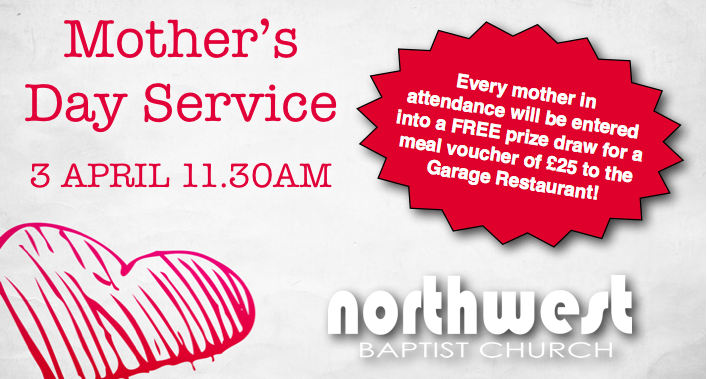
I’m not sure when Mother’s Day became part of the Church’s calendar (I obviously missed the memo on that one), but Stanley Hauerwas, who is always such fun to read, and whose latest collection of provocative and stimulating sermons and essays, Working with Words: On Learning to Speak Christian, reminds us why we ought to lament the fact that so many did get the memo.

He once addressed a group of young people with these words:

I assume most of you are here because you think you are Christians, but it is not at all clear to me that the Christianity that has made you Christians is Christianity. For example:

—How many of you worship in a church with an American flag?

I am sorry to tell you your salvation is in doubt.

—How many worship in a church in which the Fourth of July is celebrated?

I am sorry to tell you your salvation is in doubt.

—How many of you worship in a church that recognizes Thanksgiving?

I am sorry to tell you your salvation is in doubt.

—How many of you worship in a church that celebrates January 1st as the “New Year”?

I am sorry to tell you your salvation is in doubt.

—How many of you worship in a church that recognizes “Mother’s Day”?

I am sorry to tell you your salvation is in doubt.

I am not making these claims because I want to shock you. I do not want you to leave the Youth Academy thinking that you have heard some really strange ideas here that have made you think. It is appropri­ate that you might believe you are here to make you think, because you have been told that is what universities are supposed to do—that is, to make you think. In other words, universities are places where you are educated to make up your own mind. That is not what I am trying to do. Indeed I do not think most of you have minds worth making up. You need to be trained before you can begin thinking. So I have not made the claims above to shock you, but rather to put you in a position to discover how odd being a Christian makes you.

One of the great difficulties with being a Christian in a country like America—allegedly a Christian country—is that our familiarity with “Christianity” has made it difficult for us to read or hear Scripture. For example, consider how “Mother’s Day” makes it hard to compre­hend the plain sense of some of the stories of Jesus. In Mark 3:31–35 we find Jesus surrounded by a crowd. His mother and brothers were having trouble getting through the crowd to be with Jesus. Somebody in the crowd tells him that his mom cannot get through the mass of people to be near him. Which elicits from Jesus the rhetorical question “Who are my mother and brothers?” which he answered, noting, “Here are my mother and my brothers! Whoever does the will of God is my brother and sister and mother.” Even more forcefully Jesus says in Luke 14:26: “Whoever comes to me and does not hate father and mother, wife and children, brothers and sisters, yes, and even life itself, cannot be my disciple.” When you celebrate “Mother’s Day,” the only thing to do with texts like these is “explain them,” which usually means Jesus could not have meant what he plainly says.

Of course, the presumption that Christianity is a family-friendly faith is a small-change perversion of the gospel when compared to the use of faith in God to underwrite American pretensions that we are a Christian nation possessing righteousness other nations lack.

– Stanley Hauerwas, Working with Words: On Learning to Speak Christian (Eugene: Cascade Books, 2011), 116–7.

And while I’m drawing attention to brother Stanley’s latest publication, let me quote another passage, this time his wonderful wedding sermon opener. The target? The sentimentalisation of love:

Christians are required to love one another—even if they are married. That may be a cruel and even heartless demand, but it is nonetheless the way things are if you are a Christian. From Paul’s perspective marriage is not necessarily the context that determines the character of love or our ability to love and be loved by another. Rather, Paul seems to think we need to learn to be loved by God and so to love God, and then pos­sibly ourselves, and if we have gotten that far we may even discover we can love our neighbor, who may be our enemy, which often turns out to be the necessary condition for those who are married to love one another. (p. 139)

‘The Club’

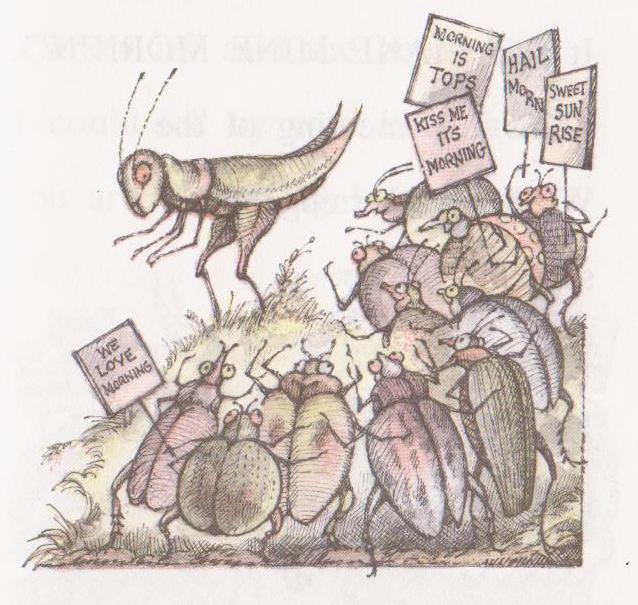
One of the most delightful little books that I’ve read in recent weeks is Grasshopper on the Road, a ‘Level 2’ book by Arnold Lobel. I just had to share my favourite story. It’s called ‘The Club’:

Grasshopper walked quickly along the road.
He saw a sign on the side of a tree.
The sign said MORNING IS BEST.
Soon Grasshopper saw another sign.
It said THREE CHEERS FOR MORNING.

Grasshopper saw a group of beetles.
They were singing and dancing.
They were carrying more signs.
“Good morning,” said Grasshopper.
“Yes,” said one of the beetles.
“It is a good morning. Every morning is a good morning!”
The beetle carried a sign.
It said MAKE MINE MORNING.
“This is a meeting of the We Love Morning Club,” said the beetle. “Every day we get together to celebrate another bright, fresh morning. Grasshopper, do you love morning?” asked the beetle.
“Oh yes,” said Grasshopper.
“Hooray!” shouted all the beetles.
“Grasshopper loves morning!”
“I knew it,” said the beetle. “I could tell by your kind face. You are a morning lover.”

The beetles made Grasshopper a wreath of flowers.
They gave him a sign that said MORNING IS TOPS.
“Now,” they said, “Grasshopper is in our club.”

“When does the clover sparkle with dew?” asked a beetle.
“In the morning!” cried all the other beetles.
“When is the sunshine yellow and new?” asked the beetle.
In the morning!” cried all the other beetles.
They turned somersaults and stood on their heads.
They danced and sang.
“M-O-R-N-I-N-G spells morning!”

“I love afternoon too,” said Grasshopper.
The beetles stopped singing and dancing.
“What did you say?” they asked.
“I said that I loved afternoon,” said Grasshopper.
All the beetles were quiet.
“And night is very nice,” said Grasshopper.

“Stupid,” said a beetle.
He grabbed the wreath of flowers.
“Dummy,” said another beetle.
He snatched the sign from Grasshopper.
“Anyone who loves afternoon and night can never, never be in our club!” said a third beetle.

“UP WITH MORNING!” shouted all the beetles.
They waved their signs and marched away.
Grasshopper was alone.
He saw the yellow sunshine.
He saw the dew sparkling on the clover.
And he went on down the road.

– Arnold Lobel, ‘The Club’ in Grasshopper on the Road (New York: HarperCollins, 1978), 8–16.

A note on the Formula, Liberty of Conscience and the Declaratory Act

A guest post by Andrew Smith.

In 1930, the minister J.A. Asher and the elder J.S. Butler of the Presbytery of Hawke’s Bay supported an overture from the Presbytery to the General Assembly of the Presbyterian Church of New Zealand. It read:

Whereas this Presbytery of Hawke’s Bay, being of the opinion that Question 2, appointed to be asked of elders on the occasion of their ordination to the office, having reference to the Westminster Confession of Faith, has given rise to considerable difficulty; has resulted in men declining to accept the office of eldership, who have been in every way qualified for such office, to the detriment of the interests of our Church; hereby overtures the General Assembly that Question 2 be omitted from the questions in connection with the ordination of elders.

An examination of the Year Book of the period shows that Question 2, asked of all office-bearers of the Presbyterian Church of the time reads: ‘Do you sincerely own and believe the system contained in the Westminster Confession of Faith; and do you acknowledge the said doctrine as expressing the sense in which you understand the Holy Scriptures; and will you constantly maintain and defend the same, and the purity of worship in accordance therewith?’

Perhaps some laymen being ordained to office found this question too much to ask. Even in the early parts of the twentieth century, the Westminster Confession, a document written in dense legal language several centuries old, was too impenetrable for them to answer Question 2 in good conscience. Unlike the Bible it had no ‘revised standard version’. Rather than omitting Question 2, the General Assembly moved to revise the questions for the ordination of elders. At the same time the Church of Scotland was proceeding in the same direction and the Presbyterian Church of New Zealand chose to wait on the parent church to create a new formula and adopted a similar one with questions replacing the Formula of Subscription in 1936. The new form of the formula read:

I believe the fundamental doctrines of the Christian Faith contained in the Westminster Confession of Faith and other subordinate standards of the Church. I acknowledge the Presbyterian government of this Church to be agreeable to the Word of God, and promise that I will submit thereto and concur therewith. I promise to observe the order of worship and the administration of all public ordinances as the same are or may be allowed in this Church.

The formula was not amended again until the General Assembly of the Presbyterian Church of Aotearoa New Zealand in 2010 to read:

I believe in the Word of God in Scriptures of the Old and New Testaments and the fundamental doctrines of the Christian Faith contained in the Kupu Whakapono and Commentary, the Westminster Confession of Faith and other subordinate standards of this Church. I accept that liberty of conviction is recognised in this Church but only on such points as do not enter into the fundamental doctrines of Christian Faith contained in the Scriptures and subordinate standards. I acknowledge the Presbyterian government of this Church to be agreeable to the Word of God and promise to submit to it. I promise to observe the order and administration of public worship as allowed in this Church.

The General Assembly carried the motion that the Formula be reworded as above. While it was sent to the presbyteries and church councils, consideration to report back at the 2012 General Assembly it was adopted ad interim. There was some debate in the Assembly. My feeling is that the General Assembly did not compare the old and new versions of the Formula and that the new version has some innovations on which there could be improvements.

Firstly if the phrase in the Word of God in Scriptures of the Old and New Testaments needs to be added to the Formula then I think it should come after the subordinate standards. As it reads it conflates the authority of the Scriptures with that of the subordinate standards. While placing the Scriptures as pre-eminent is appealing, placing it as our ultimate authority is much clearer. Without further research, which probably goes back to the Church of Scotland’s version of the Formula, I suspect that the earlier generation decided that not placing the Scriptures here avoided controversy. Their intention is not without merit.

Secondly I suggest that the word conviction should be amended to read conscience. Liberty of Conscience has a long history in the Presbyterian Church going back to the Declaratory Act. It was first passed by the Church of Scotland in 1892, then by the then independent Synod of Otago and Southland in 1893, and by the united Presbyterian Church of New Zealand in 1901. Reading the Declaratory Act it seems evident that the church of this period had problems accepting that God elected some for salvation and some for damnation, especially those who died before the age of decision-making. This is an age when literature suggested that children came from heaven and if they died before a certain age that they could join the angels. Conscience has precedence in the Church’s terminology, conviction does not. To me conviction suggests belief or opinion while conscience is the prompting of the Holy Spirit. That is a significant difference.

Finally, I would strike out the words but only. To paraphrase the Gospels, what comes out of a butt goes into the sewer! But is a conjunction, a balancing word that contrasts a negative clause with a positive one, the negative clause coming first and the positive clause after the conjunction. Liberty of conviction is in the negative clause of the sentence, and the fundamental doctrines of Christian faith in the positive. The sentence reads like a big stick to police ordained ministers and elders. Agreement with this sentence suggests that too much liberty of conviction or conscience cannot be trusted. Conform or else we will have you thrown out of office! Removing it would encourage more faith in our leadership.

I believe that Asher and Butler’s overture in 1930 remains a challenge for the modern church and we still don’t know the answer. We have the Subordinate Standards of the Church. Our shared knowledge of them remains shallow. They are beyond our grasp of understanding: the words are too clever, too pretty. We might give more consideration to the Terms and Conditions taking out membership on Facebook than we do to the Formula of Ordination and to our Confessions. It lies in the too hard basket.

‘Emmaus’, by Bruce Prewer

We walked into the sunset
brooding our deep loss,
sure that the best days of our lives
lay dead behind us.

We talked around the rumours
spread by our small group,
but feared to embrace the good news
lest it be false hope.

A stranger then overtook us,
travelling our road,
he unfolded the truths and loves
our grief had betrayed.

Our hearts trembled within us
for the faith we’d lost,
we reached an inn at sundown
wanting to break fast.

We sat at table together
to share cheese and bread,
he took up the loaf and broke it
and out danced the dead!

– Bruce Prewer, ‘Emmaus’ in Beyond Words: Reflections on the Gospel of Luke (Melbourne: The Joint Board of Christian Education, 1995), 62.

Why should we love our enemies?

Why should we love our enemies? The first reason is pretty obvious. Returning hate for hate multiplies hate, adding deeper darkness to a night already devoid of stars. Darkness cannot drive out darkness; only light can do that. Hate cannot drive out hate; only love can do that. Hate multiplies hate, violence multiplies violence, and toughness multiplies toughness in a descending spiral of destruction. So when Jesus says “Love your enemies” [Matt. 5:44], he is setting forth a profound and ultimately inescapable admonition. Have we not come to such an impasse in the modern world that we must love our enemies – or else? The chain reaction of evil – hate begetting hate, wars producing more wars – must be broken, or we shall be plunged into the dark abyss of annihilation’. – Martin Luther King Jnr, Strength to Love (Philadelphia: Fortress Press, 1977), 53.

Revenge (‘keeping faith with the dead’) or Reconciliation (keeping Easter faith)?

In light of events dominating the news, there’s an interesting reflection by Michael Ignatieff in a book written in response to the Balkan crisis of the 1990s. In The Warrior’s Honour: Ethnic War and the Modern Conscience, Ignatieff argues that the virtue which underlies and motivates revenge is simply the matter of ‘keeping faith with the dead’. This is something known to us all, whether givers or objects of terror. He writes:

‘The chief moral obstacle in the path of reconciliation is the desire for revenge. Now, revenge is commonly regarded as a low and unworthy emotion, and because it is regarded as such, its deep moral hold on people is rarely understood. But revenge – morally considered – is a desire to keep faith with the dead, to honour their memory by taking up their cause where they left off. Revenge keeps faith between generations; the violence it engenders is a ritual form of respect for the community’s dead – therein lies its legitimacy. Reconciliation is difficult precisely because it must compete with the powerful alternative morality of violence. Political terror is tenacious because it is an ethical practice. It is a cult of the dead, a dire and absolute expression of respect’. – Michael Ignatieff, The Warrior’s Honour: Ethnic War and the Modern Conscience (London: Chatto & Windus, 1988), 188.

The Church, of course, is the child of the narrative at the heart of which is reconciliation, a narrative which is ‘difficult’, to be sure, but whose Author makes it possible to ‘from now on … regard no one from a worldly point of view’ (2 Cor 5.16), to live hopefully by the word that ‘in Christ God was reconciling the world to himself, not counting their trespasses against them, and entrusting the message of reconciliation to us’ (2 Cor 5.19), and to rejoice in the vocation of being ‘Christ’s ambassadors, as though God were making his appeal through us’ (2 Cor 5.20). Such is a narrative is difficult to live by because, as Ignatieff notes, it exists in relentless competition with ‘the powerful alternative morality of violence’.

Jürgen Moltmann, in The Power of the Powerless, bears witness to this ‘difficult’ way, a way which lives not from that narrative that is passing away but from what Moltmann calls ‘the superabundance of God’s future’:

‘The Easter faith recognizes that the raising of the crucified Christ from the dead provides the great alternative to this world of death. This faith sees the raising of Christ as God’s protest against death, and against all the people who work for death; for the Easter faith recognizes God’s passion for the life of the person who is threatened by death and with death. And faith participates in this process of love by getting up out of the apathy of misery and out of the cynicism of prosperity, and fighting against death’s accomplices, here and now, in this life. Weary Christians have often enough deleted this critical and liberating power from Easter. Their faith has then degenerated into the confident belief in certain facts, and a poverty-stricken hope for the next world, as if death were nothing but a fate we meet with at the end of life. But death is an evil power now, in life’s very midst. It is the economic death of the person we allow to starve; the political death of the people who are oppressed; the social death of the handicapped; the noisy death that strikes through napalm bombs and torture; and the soundless death of the apathetic soul. The resurrection faith is not proved true by means of historical evidence, or only in the next world. It is proved here and now, through the courage for revolt, the protest against deadly powers, and the self-giving of men and women for the victory of life. It is impossible to talk convincingly about Christ’s resurrection without participating in the movement of the Spirit “who descends on all flesh” to quicken it. This movement of the Spirit is the divine “liberation movement,” for it is the process whereby the world is recreated. So resurrection means rebirth out of impotence and indolence to “the living hope.” And today “living hope” means a passion for life, and a lived protest against death … Christ’s resurrection is the beginning of God’s rebellion. That rebellion is still going on in the Spirit of hope, and will be complete when, together with death, “every rule and every authority and power” is at last abolished (1 Cor. 15:24). The resurrection hope finds living expression in men and women when they protest against death and the slaves of death. But it lives from something different – from the superabundance of God’s future. Its freedom lives in resistance against all the outward and inward denials of life. But it does not live from this protest. It lives from joy in the coming victory of life. Protest and resistance are founded on this hope. Otherwise they degenerate into mere accusation and campaigns of revenge. But the greater hope has to take living form in this protest and resistance; otherwise it turns into religious seduction … Easter is a feast, and it is as the feast of freedom that it is celebrated. For with Easter begins the  laughter of the redeemed, the dance of the liberated and the creative play of fantasy. From time immemorial Easter hymns have celebrated the victory of life by laughing at death, mocking at hell, and ridiculing the mighty ones who spread fear and terror around them. Easter is the feast of freedom. It makes the life which it touches a festal life. “The risen Christ makes life a perpetual feast,” said Athanasius. But can the whole of life really be a feast? Even life’s dark side – death , guilt, senseless suffering? I think it can. Once we realize that the giver of this feast is the outcast, suffering, crucified Son of Man from Nazareth, then every “no” is absorbed into this profound “yes,” and is swallowed up in its victory. Easter is at one and the same time God’s protest against death, and the feast of freedom from death. Anyone who fails to hold these two things together has failed to understand the resurrection of the Christ who was crucified. Resistance is the protest of those who hope, and hope is the feast of the people who resist’. (pp. 123–26).

Robert Frost was right; we have a choice. That choice, in this case just as in others more domestic, is between Revenge (‘keeping faith with the dead’) and Reconciliation (keeping Easter faith):

Two roads diverged in a wood, and I –
I took the one less travelled by,
and that has made all the difference.

Revenge, justice and pleasure

While watching President Obama’s re-election speech this afternoon on the death on Osama bin Laden – and particularly while seeing the video footage of celebrating crowds – I was reminded of a few paragraphs from Don Carson’s Love in Hard Places:

‘Not that long ago on television we heard a soldier protest, “You must understand . . . it was our revenge!” The soldier was a Serb captured by the Kosovo Liberation Army. His words were broadcast in a television interview, nicely translated for the benefit of English-speaking peoples. He admitted that his unit had been involved in brutal acts of ethnic cleansing. Certainly he was frightened to be in the hands of his enemies, but he did not appear to be ashamed: “You must understand . . . it was our revenge!”

That is the trouble with revenge, of course: it does not feel like a sin. It feels like justice. Many of us have become inured to the distinction because we have watched so many movies or read so many books in which revenge, especially revenge that is adamantly pursued when the proper authorities either cannot or will not pursue justice, is itself just. It matters little if the hero is Clint Eastwood in a spaghetti western or a Dirty Harry film, or Bruce Lee in a martial arts flick, or Rambo getting even in Vietnam. In every case, we enjoy a cathartic release because we are made to feel the violence is just and therefore that the revenge is justified. When the right is on your side, revenge, no matter how violent, is a pleasure. It is just‘.

– Don A. Carson, Love in Hard Places (Wheaton: Crossway Books, 2002), 72–3.

Levinas on searching and dying

‘Time and death: these themes are subordinated to the search for the signification of the being of beings, a search that itself does not come from the curiosity of the explorer, but is a search essential to man, characteristic of his essence, his esse. Being qua being is already to-be-in-question. This essence in question is equivalent to being-there as the humanity of man, who is a being whose being is equivalent to the essence in question. This placing in question is also a pre-comprehension of being; it is effectuated in the form of a taking charge: a taking charge within Dasein and a charge imposed in the most incontestable way—to the point of becoming properly my own. This superlative thus takes the meaning of mineness, in such a way that being qua being-in-question is the affair of ipseity. This taking charge is the mode of the human beings to-be, which unfolds as being-there, as being-the-there, and this unfolds as being-in-the-world, which itself unfolds as care, where care is broken into a triple structure: being-out-ahead-of-oneself (ec-sistence) as already-in-the-world (facticity), alongside of things (dispersion or dereliction among things) … Death is a possibility that is absolutely certain. It is the possibility that makes all possibility possible’.

– Emmanuel Levinas, God, Death, and Time (trans. Bettina Bergo; California: Stanford University Press, 2000), 46, 49.