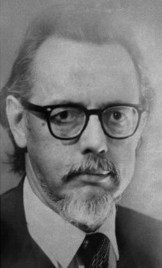
 The latest edition of One the Road, the journal of the Anabaptist Association of Australia and New Zealand, includes a helpful piece by Michael Buttrey titled ‘12 ways to prematurely write off Yoder: Some common misconceptions about Yoder’s ‘Neo-Anabaptist’ vision’. Buttrey identifies the twelve ‘misconceptions’ as:
1. Yoder believes Constantine corrupted the church.
2. Yoder thinks that there was no salt or light in the medieval church.
3. Yoder hates Luther, Calvin and the other magisterial Reformers.
4. Yoder has a low view of God’s sovereignty over history. Or:
5. He idolizes the early church.
6. Yoder inappropriately sees Jesus’ earthly life as normative.
7. Yoder fails to deal with the Old Testament, especially the wars of Joshua.
8. Yoder’s pacifism inhibits any effective witness to the state, especially regarding war.
9. Even for Christians, Yoder’s pacifism is impossible, or at least irresponsible.
10. Yoder advocates separation from the world that ‘God so loved.’ And:
11. Isn’t Yoder a ‘fideistic sectarian tribalist’ like Stanley Hauerwas?
Here, Buttrey writes:
These common accusations seriously misunderstand Yoder.
First, Yoder’s context was one where he was urging traditionally quietist Anabaptists to realize they had a social ethic and witness to society, while simultaneously calling activist Christians to realize they need not abandon the gospel and take up the methods of the world in their impatience to get things done. Ironically, Yoder has often been taken more seriously by theologians and political philosophers outside his tradition – such as Stanley Hauerwas and Romand Coles – than those on the ‘inside.’
Second, Yoder has no desire to divide the church further. Indeed, in “The Kingdom As Social Ethic” he deeply objects to the labelling of radically obedient groups as sectarian, for they had no intentions of separating themselves:
[Such groups] have called upon all Christians to return to the ethic to which they themselves were called. They did not agree that their position was only for heroes, or only possible for those who would withdraw from wider society. They did not agree to separate themselves as more righteous from the church at large. (85)
Third, Yoder is fundamentally not interested in withdrawal or separation from society. In “The Paradigmatic Public Role of God’s People,” Yoder agrees with Karl Barth that ‘what believers are called to is no different from what all humanity is called to. … To confess that Jesus Christ is Lord makes it inconceivable that there should be any realm where his writ would not run.’ (25) Of course, those who seriously see Christ’s commands as normative for all tend to be called fideists or theocrats. Yoder is neither.
Yoder is not a fideist because, unlike most realists, he sees the gospel as having a truly universal appeal. Christian realists typically assume that the gospel is inaccessible and incomprehensible to all other groups, and so it is necessary to use a neutral, ‘public’ language to oblige non-Christians ‘to assent to our views on other grounds than that they are our views.’ (16–7) Indeed, it is not Yoder but his critics who tend to think that their faith is fundamentally irrational and its public demands must be set aside for that reason. This reverse fideism is not surprising, however, given how modern liberal democracies understand religious groups and language.
Further, Yoder is not a theocrat, because he does not call for the violent imposition of the gospel, which would be an oxymoron. Rather, the challenge for the church is to purify its witness so ‘the world can perceive it to be good news without having to learn a foreign language.’ (24) Christ’s universal lordship obliges the church to make great demands of the world, but by definition, the gospel witness is a process of public dialogue, not coercion.
In short, the best word for Yoder’s understanding of the church’s witness to society is that of model. Consider some of these potential imperatives for civil society Yoder derives theologically in that same essay:
- egalitarianism, not because it is self-evident (history suggests that it is clearly not!) but because baptism into one body breaks down ethnic and cultural barriers;
- forgiveness as commanded by Christ (he agrees with Hannah Arendt that a religious origin and articulation for forgiveness is no reason to discount it in secular contexts);
- radical sharing and hospitality, even voluntary socialism, as implied in the Eucharist; and
- open public meetings and dialogue, as Paul instructed the Corinthians.
This sketch is almost a political “platform,” and hardly separatist. But for Christians with typical approaches to politics, Yoder’s call for the church to be where God’s vision for society is first implemented and practiced is an enormous stumbling block. It is yet another irony that realists are so often closet quietists: they see the only choice as being between transforming society and letting it go its own way. Yoder, however, asks us to obey Christ even if no one else is interested – although he trusts that the Kingdom will advance if the word of God is faithfully witnessed and embodied amid the powers and principalities of the world.
12. Yoder and Stanley Hauerwas are the same.
You can read the full piece here.
 Three kings? Not even one
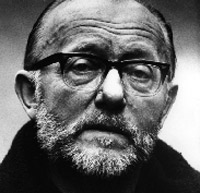



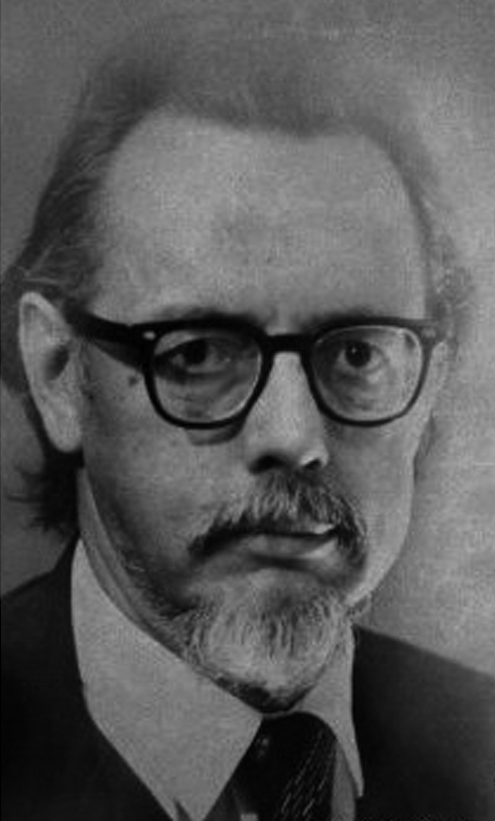

 Happy Christmas to all readers of Per Crucem ad Lucem. Here’s PT Forsyth singing his constant song, and reminding us again of why today the Church might sing Joy to the World, and of the ‘wonders of [God’s] love’









 jasongoroncy.com