 ‘In going where you have to go, and doing what you have to do, and seeing what you have to see, you dull and blunt the instrument you write with. But I would rather have it bent and dull and know I had to put it to the grindstone again and hammer it into shape and put a whetstone to it, and know that I had something to write about, than to have it bright and shining and nothing to say, or smooth and well-oiled in the closet, but unused’. – Ernest Hemingway, ‘Preface to “The First Forty-nine”‘, in The Complete Short Stories of Ernest Hemingway (New York: Simon and Schuster, 1987), 3–4.
Some vodcast shout outs
 Time away typically allows me the chance to catch up on some of my favourite podcasts and vodcasts, and to clear some room in my iTunes library. Two of my favourite vodcasts are Insight and 101 East. I just wanted to give a wee shout out about some interesting recent episodes from both. From Insight:
and from 101 East:
- ‘True believers’ – on the church in China
- ‘The world’s longest ongoing war’ – on the Karen’s ongoing battle for self-rule in Burma
- ‘Australia’s boomtown curse’ – on the cost of Australia’s mining boom
- ‘The Lady on the Lake’ – on the future role of Aung San Suu Kyi, the artist Zayer Thaw and Burmese ex-pats living in Thailand
On the Cost and Grace of Parish Ministry
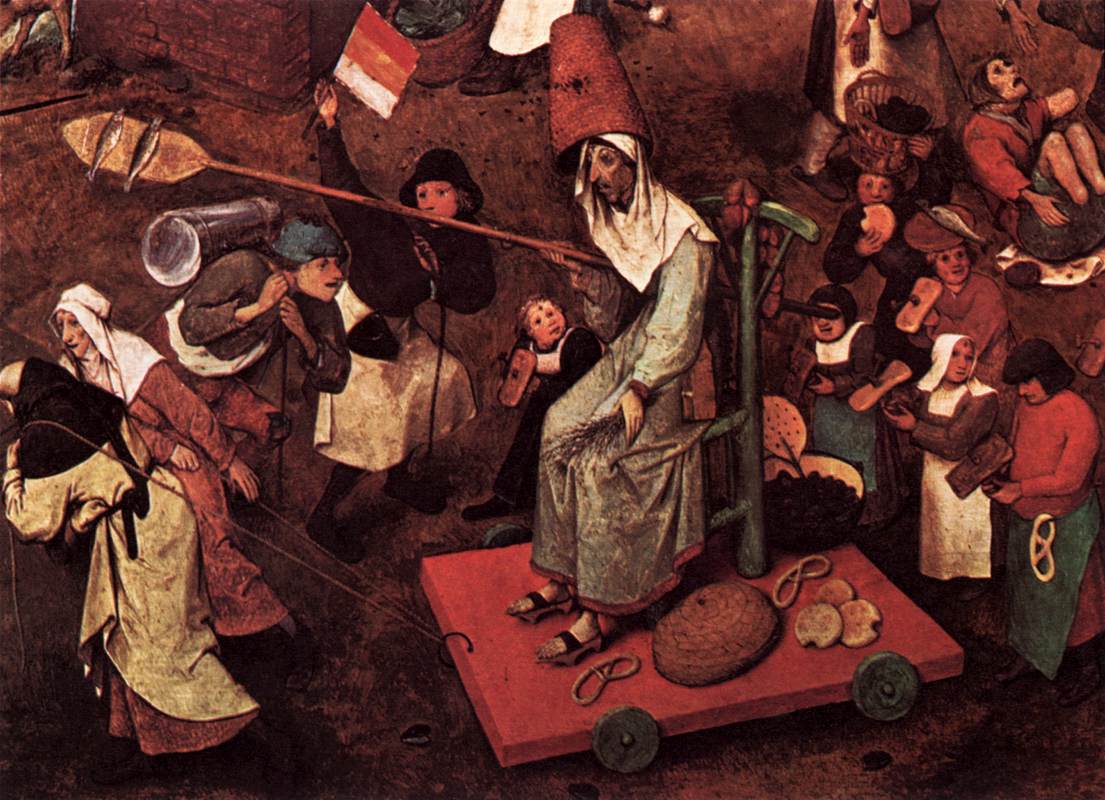
Pieter Bruegel , 'The Fight between Carnival and Lent' (detail)
With every intention of getting back to this series next year, here’s the links so far to my series of posts on the cost and grace of parish ministry:
- On the cost and grace of parish ministry – Part I
- On the cost and grace of parish ministry – Part II
- On the cost and grace of parish ministry – Part III
- On the cost and grace of parish ministry – Part IV
- On the cost and grace of parish ministry – Part V
- On the cost and grace of parish ministry – Part VI
- On the cost and grace of parish ministry – Part VII
- On the cost and grace of parish ministry – Part VIII
- On the cost and grace of parish ministry – Part IX
- On the cost and grace of parish ministry – Part X
- On the cost and grace of parish ministry – Part XI
- On the cost and grace of parish ministry – Part XII
- On the cost and grace of parish ministry – Part XIII
- On the cost and grace of parish ministry – Part XIV
Human artistry and the adding of value to creation
 While preparing some lectures recently on theology and the arts, I was struck again by one limitation that both art and Christian theology share – namely, the impossibility of absolute innovation. As Rowan Williams noted, ‘To add to the world, to extend the world and its possibilities, the artist [like the theologian] has no option but to take his [or her] material from the world as it is’. Even our best attempts at liberation from words, from the determinations of human language and imaginings, can only carry us so far as we are brought to what Williams calls ‘a complete imaginative void, the dark night of an utter alienation from the “available” world, “the desert of the heart”’.
Still, the human response of taking up ‘material from the world as it is’ does not obviate the truth that the world is God’s, nor suggest that God ‘“made something” and then wondered what to do with it’. Rather, as Ruth Etchells puts it in A Model of Making: Literary Criticism and its Theology, ‘from the first the creative purpose was one of profound and secure relationship’. And, it seems, if such a relationship is to be truly characterised by love, then its prime instigator will also create ‘room’ for creation to be itself. In other words, God’s love achieves its end not through brute force but by patient regard for what Emmanuel Levinas termed the ‘otherness of the other’. To be sure, God never retreats from creation into some kind of self-imposed impotence, but rather remains unswervingly faithful, interested and involved in all that goes on. But this is not to suggest that all is, so to speak, in order. And so Christians, when they speak of creation, will want to speak, as many physicists too will want to do, not only of creation’s order and but also of its disorder, not only about its being but also about its becoming, and about the space that God has granted the world, space which implies some risk, and which can neither be ignored nor annihilated if all there is is to be brought to love telos; i.e., to all that ‘God has prepared for those who love him’ (1 Cor 2.9).
Not a few scholars and practitioners are now talking about the sense in which art serves to make this space meaningful, and of the way that art is concerned to transform created things, to improve creation, to add value to creation, to, in Auden’s words, ‘make a vineyard of the curse’. J.R.R Tolkien understood this well, as his fairy stories and indeed his entire project of mythopoesis attest his concern to not merely ennoble, challenge and inspire, but also to heighten reality itself, to invite us to look again at familiar things, and see them as if for the first time. Jacques Maritain, too, in Creative Intuition in Art and Poetry, once wrote that ‘Things are not only what they are. They ceaselessly pass beyond themselves, and give more than they have …’. In other words, it is claimed that there is absolutely nothing passive going on when a painter picks up a piece of charcoal, or a dancer performs Swan Lake. Abraham Kuyper was right to insist in his 1898 Stone lectures that art ‘discover[s] in those natural forms the order of the beautiful, and … produce[s] a beautiful world that transcends the beautiful of nature’. And others, too, have spoken of the way that the arts contribute to the transformation of disorder, bearing witness to the belief that creation is not indispensable to God’s liberating purposes for all that God has made, purposes which point not to a return to a paradise lost but to a creation made new, a making new which apprehends the reality of human artistry and which proceeds in the hope that both the location and the vocation of the children of God is inseparable from creation itself.
Alfonse Borysewicz on his art
For regular readers of Per Crucem ad Lucem, the name of New York-based artist Alfonse Borysewicz will be somewhat familiar. While on a trip recently to the USA, I had the privilege and joy of staying with Alfonse and his family, during which time my appreciation of his work and its importance at this moment in history was more-deeply confirmed. (I was almost-equally impressed with the intimate knowledge he had of, and affection he displayed about, NYC’s subway system). Alfonse’s bookshelves betray a mind that has long-wrestled with theology, philosophy and aesthetics. But like most artists, Alfonse is more comfortable speaking into and through his art than he is speaking about his art. Still, he does a good deal of, and good job with, the latter too. Here he is in a recent interview produced by Calvary Baptist Church in Grand Rapids:
A welcoming church
I’ll soon be in India. The e-correspondence thus far indicates that I’ll be met by some very welcoming people. I guess that I’ll also be looking for a welcoming church. So while engaging in some brief online research this morning, the pic-of-the-crop thus far on the welcoming-church front goes to this small village church [source] on the highway that connects Mangalore to Bangalore:

… though there’s wisdom in sometimes just keeping an open mind in case a more inviting option presents itself:
Barth on Barth (and on Barthians)
 Speaking at a Ministers’ Meeting in Schulpforta in July 1922, Barth offered the following remarks:
‘With theology proper I have hardly made a start. Whether I shall ever get on with it or whether I shall even wish to get on with it, I do not know. I really do not presume to place beside the work that has been done and is being done by the great and venerable creators of theological systems anything equal or commensurable. Do not think that I make my contribution to theological discussion, today or any day, in rivalry with the fundamentalist, liberal, Ritschlian, or history-of-religion type of theology. Take it rather as a kind of marginal note, a gloss which in its way agrees and yet does not agree with all these types – and which, I am convinced, loses its meaning the moment it becomes more than a note and takes up space as a new theology next to the others. So far as Thurneysen, Gogarten, and I really may be said to form a “school” in the familiar sense of the word, our work is superfluous. I think that every one, however important may be the contents of his marginal note, may well remain in his own school and with his own masters, if only as a corrective, as the “pinch of spice (biszchen Zimt) in the food,” as Kierkegaard says. “My theology” is related to the theologies proper somewhat as the Community of Moravian Brethren is related to the communions and churches proper: it has no wish whatever to form a new type of its own’. – Karl Barth, ‘The Need and Promise of Christian Preaching’ in The Word of God and the Word of Man (New York: Harper and Brothers, 1957), 98.
Nicholas Lash on patterns of human action
 ‘Patterns of human action embody particular conceptions, not only of what it is, but of what it might be, to be human: they simultaneously express both fact and possibility, actuality and hope. Patterns of human action – whether individual, domestic, social or political – thus symbolically express both what is and what might be meant by “humanity” … If human existence, as it is and as it might be made to be, is the contingent expression of the creative and transformative action of God, then patterns of human action are not merely symbolic but are, in principle, sacramental – expressive of the mystery of grace’. – Nicholas Lash, Theology on the Way to Emmaus (Eugene: Wipf & Stock, 2005), 5–6.
Italo Calvino on re-reading
 For a variety of reasons, I’ve been doing quite a bit of re-reading lately. And then, with great delight and while engaging in some non-re-reading, I came across this wonderful little opening to Italo Calvino’s essay Why Read the Classics? (a book which I will probably re-read at some stage):
1. The classics are those books about which you usually hear people saying: ‘I’m rereading…’, never ‘I’m reading…’
At least this is the case with those people whom one presumes are ‘well read‘; it does not apply to the young, since they are at an age when their contact with the world, and with the classics which are part of that world, is important precisely because it is their first such contact.
The iterative prefix ‘re-’ in front of the verb ‘read’ can represent a small act of hypocrisy on the part of people ashamed to admit they have not read a famous book. To reassure them, all one need do is to point out that however wide-ranging any person’s formative reading may be, there will always be an enormous number of fundamental works that one has not read.
Put up your hand anyone who has read the whole of Herodotus and Thucydides. And what about Saint-Simon? and Cardinal Retz? Even the great cycles of nineteenth-century novels are more often mentioned than read. In France they start to read Balzac at school, and judging by the number of editions in circulation people apparently continue to read him long after the end of their schooldays. But if there were an official survey on Balzac’s popularity in Italy, I am afraid he would figure very low down the list. Fans of Dickens in Italy are a small elite who whenever they meet start to reminisce about characters and episodes as though talking of people they actually knew. When Michel Butor was teaching in the United States a number of yean ago, he became so tired of people asking him about Émile Zola, whom he had never read, that he made up his mind to read the whole cycle of Rougon-Macquart novels. He discovered that it was entirely different from how he had imagined it: it turned out to be a fabulous, mythological genealogy and cosmogony, which he then described in a brilliant article.
What this shows is that reading a great work for the first time when one is fully adult is an extraordinary pleasure, one which is very different (though it is impossible to say whether more or less pleasurable) from reading it in one’s youth. Youth endows every reading, as it does every experience, with a unique flavour and significance, whereas at a mature age one appreciates (or should appreciate) many more details, levels and meanings.
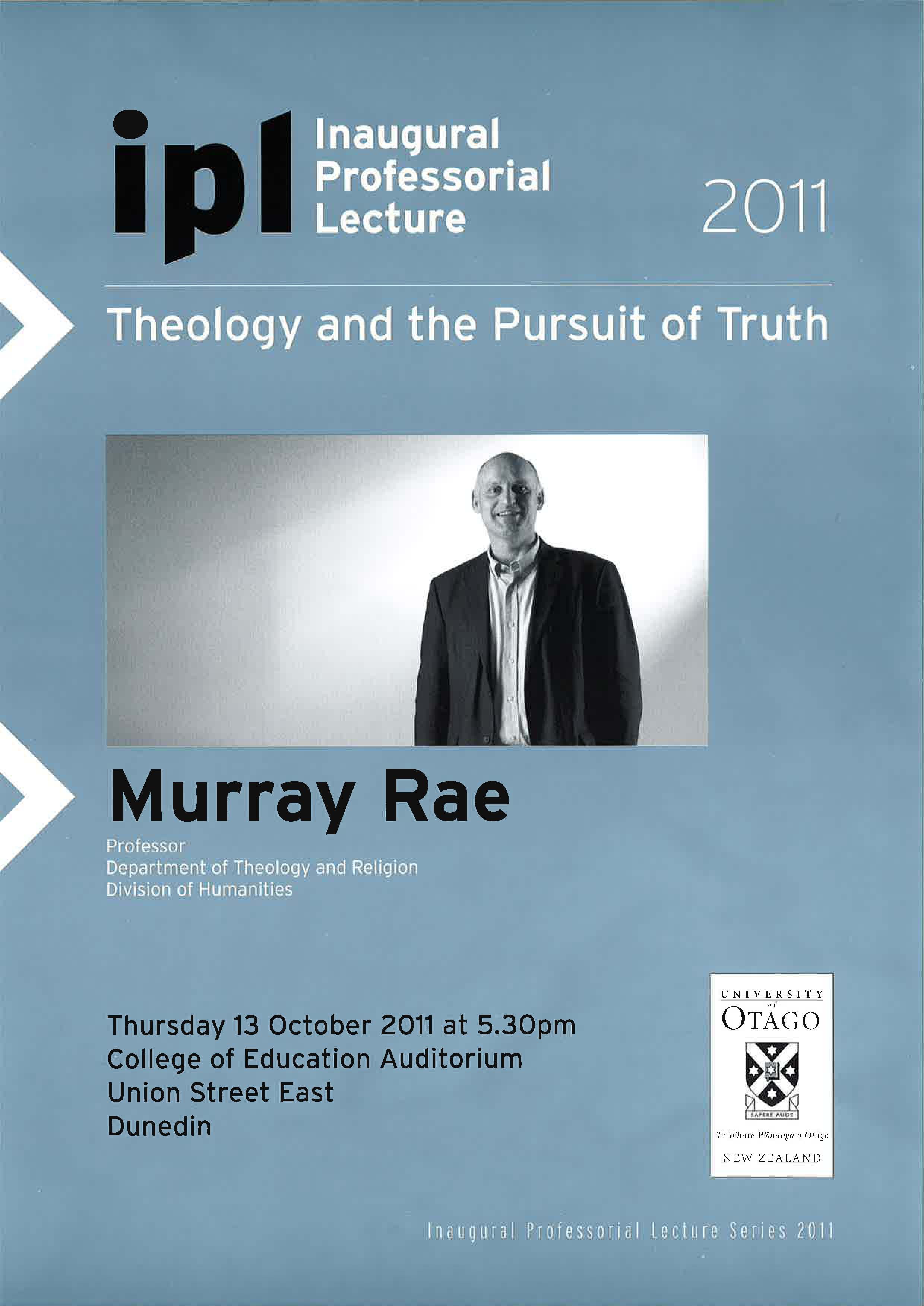
Murray Rae’s Inaugural Professorial Lecture on ‘Theology and the Pursuit of Truth’
Next Thursday, Professor Murray Rae will give his Inaugural Professorial Lecture. His topic is ‘Theology and the Pursuit of Truth’, and all are welcome. Here’s the details:
Some midweek jazz
I’ve been enjoying listening to Brian Blade lately, especially the albums Brian Blade Fellowship, Season of Changes, Perceptual and Mama Rosa. So, in the spirit of sharing the love, here, for your part-body pleasure, is a wee live clip of a track that appears on Season of Changes – ‘Return of the Prodigal Son’.
The impossible possibility of being a minister
 Many Barthians, non-Barthians and anti-Barthians alike like to quote and debate the so-called ‘impossible possibility’ in conversations about soteriological universalism and about das Nichtige. But a more pressing ‘impossible possibility’, for Barth, concerns the fact that the Word of God might be unveiled ‘through the foolishness of our proclamation’ (1 Cor 1.21). I was reminded of this again recently while reading Barth’s wonderful chapter on ‘The Task of the Ministry’ in The Word of God and the Word of Man wherein Barth sums up the pastor’s dilemma thus: ‘As ministers we ought to speak of God. We are human, however, and so cannot speak of God. We ought therefore to recognize both our obligation and our inability and by that very recognition give God the glory. This is our perplexity. The rest of our task fades into insignificance in comparison’ (p. 186). I am also reminded of the ‘impossible possibility’ when I read Arnold Kenseth’s poem ‘Sunday’s Hour’:
Comes Sunday’s hour, and speech hangs itself
On God’s red tree. Preacher, word-monger, I
Defy the interdict, naming dark Yahweh, taking Him
And His fire in vain. O havoc, cry havoc! Sigh
His deep blue breath into phrases and praises.
Still, it is impossible. He will not dwell half
Or anywhere in my capture. Yet I must draw home
The net, try to catch somehow His graces.
For it is by grace we live, and all the people
Must be told. So I could wish my body more
Contained Him, that my walks more shaped, here
And there, His amble. How ill beneath a steeple
I incarnate! Despite me, then, come now,
Let His enlightening strike us row by row.
– Arnold Kenseth, ‘Sunday’s Hour’ in Seasons and Sceneries: Poems (Iowa City: Windhover Press, 2002). [HT: Rick Floyd]
‘Vane’, by Brian Turner
 Nostalgia’s a weather vane
that veers from fact to fiction,
imaginary to real, what’s
perceived as such; and as such
it’s the big if only linked
to the sad what if? It’s
what you never stop asking,
what splinters happiness,
hobbles the wish to be
oh so precise, robust, explicit.
September stations …
 Reading:
- The Lot: In Words by Michael Leunig.
- Heralds of God by James S. Stewart.
- When I Was in Hospital You Visited Me by Simon Wilson.
- Essays Philosophical and Theological by Rudolf Bultmann.
- The Fiddles of God by Rutherford Waddell.
- Pastoral Care in Hospitals by Neville A. Kirkwood
- Ministry to Outpatients: A New Challenge in Pastoral Care by Herbert Anderson et al.
- Pastoral care in the Modern Hospital by Heije Faber.
- Death and Life by Helmut Thielicke.
- Never Let Me Go by Kazuo Ishiguro.
- On the Theology of Death by Karl Rahner.
- Theological Investigations, Vol. XIII: Theology, Anthropology, Christology by Karl Rahner.
- The Death of Ivan Ilyich by Leo Tolstoy.
- Being and Time by Martin Heidegger.
- The Power to Comprehend with All the Saints: The Formation and Practice of a Pastor-Theologian edited by Wallace M. Alston Jr. and Cynthia A. Jarvis.
- Theology, Death, & Dying by Ray S. Anderson.
- Mighty Stories, Dangerous Rituals: Weaving Together the Human and the Divine by Herbert Anderson and Edward Foley.
- Introverts in the Church: Finding Our Place in an Extroverted Culture by Adam S. McHugh.
- The End of the World and the Ends of God: Science and Theology on Eschatology edited by John Polkinghorne and Michael Welker.
- Death, the Riddle and the Mystery by Eberhard Jüngel.
- Being in Ministry: Honestly, Openly, and Deeply by Douglas Purnell.
- Theology without Words: Theology in the Deaf Community by Wayne Morris.
- Selected Letters by Seneca.
- Eternal Life?: Life After Death as a Medical, Philosophical, and Theological Problem by Hans Küng.
Some re-reads (because some books provoke many visits)
- Life Together and Prayerbook of the Bible (Dietrich Bonhoeffer Works, Vol. 5) by Dietrich Bonhoeffer.
- Accompany Them with Singing: The Christian Funeral by Thomas Long.
- The Wounded Healer: Ministry in Contemporary Society by Henri Nouwen. [Another re-read, but some books provoke many visits, and this is one of them.]
- On Thinking the Human by Robert Jenson.
- Instead of Death: New and Expanded Edition by William Stringfellow.
Listening:
- Gurrumul and Rrakala by Gurrumul.
- New Map of the World and One by Paul Colman Trio.
- Live In London by Leonard Cohen.
- Beethoven: Symphonies Nos. 5 & 7 – Herbert von Karajan and the Berlin Philharmonic Orchestra.
- Alison Krauss & Union Station – Live by Alison Krauss & Union Station.
Watching:
- Animal Kingdom
- The Pipe
- Another Year (I loved this film)
Art that Tells the Story: a commendation
 We homo sapiens are, essentially, both a storied people and a story-telling people. So, a basic human question is not primarily, ‘What am I, as an individual, to do or decide?’ but rather, ‘Of what stories do I find myself a part, and thus who should I be?’; for we literally live by stories. The Church, too, understands itself as a pilgrim people, as a people storied on the way, as a people whose very way becomes the material which shapes the narrative that has long preceded it and which is being written with it. It understands that being human never begins with a white piece of paper. As Alasdair MacIntyre rightly reminds us in After Virtue: A Study in Moral Theory, we never start anywhere. Rather, we simply find ourselves within a story that has been going on long before our arrival and will continue long after our departure. Moreover, Christian community begins with being found in the very act of God’s self-disclosure, an act which, in Jamie Smith’s words, ‘cuts against the grain of myths of progress and chronological snobbery’ and places us in the grain of the universe. And what – or, more properly, who – is disclosed in that crisis of discovery is one who provides memory, unity, identity and meaning to the story of our life. So Eberhard Jüngel: ‘We are not … simply agents; we are not just the authors of our biography. We are also those who are acted upon; we are also a text written by the hand of another’. Hence it is not just any story by which the Church lives but rather a particular story given to it – namely, Israel’s story in which, in the words of R.S. Thomas, it ‘gaspingly … partake[s] of a shifting identity never [its] own’.
 Back in 1993, Robert Jenson wrote a great little piece titled ‘How the World Lost Its Story’ (First Things 36 (1993), 19–24). He opened that essay with these words:
It is the whole mission of the church to speak the gospel … It is the church’s constitutive task to tell the biblical narrative to the world in proclamation and to God in worship, and to do so in a fashion appropriate to the content of that narrative, that is, as a promise claimed from God and proclaimed to the world. It is the church’s mission to tell all who will listen, God included, that the God of Israel has raised his servant Jesus from the dead, and to unpack the soteriological and doxological import of that fact.
To speak the gospel and, in Jenson’s parlance, to ‘do so in a fashion appropriate to the content of that narrative’, the Church is given a pulpit, a font and a table; in fact, many pulpits, fonts and tables. And these remain the principle ‘places’ where the people of God can expect to hear and to see and to taste and to learn and to proclaim the story into which they have been gathered, redeemed and made an indispensable character. This is not, however, to suggest that these are the only places wherefrom the free and sovereign Lord may speak, nor to aver in any way that the gospel is somehow kept alive by the Church’s attempt to be a story teller, for the story is itself nothing but God’s own free and ongoing history in Jesus. As Jüngel put it in God as the Mystery of the World, ‘God does not have stories, he is history’. 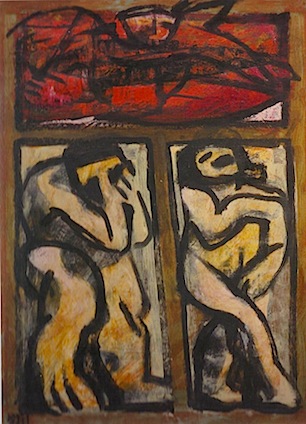 To speak gospel is literally to proclaim God, speech that would be a lie and completely empty were it not the story of God with us, of the saving history which has become part of God’s own narrative, of the world which has, in Jesus Christ, become ‘entangled in the story of the humanity of God’ (Jüngel), a story at core kerygmatic and missionary, and unfinished until all its recipients are included in its text. For, as Jenson has written in his much-too-neglected Story and Promise, the story of Jesus – who is the content of the gospel – ‘is the encompassing plot of all men’s stories; it promises the outcome of the entire human enterprise and of each man’s involvement in it’. To know this man’s story, therefore, is to know not only the story of God but also our own story. Indeed, it is the story that makes human life possible at all. As Jenson would write elsewhere, ‘Human life is possible — or in recent jargon “meaningful” — only if past and future are somehow bracketed, only if their disconnection is somehow transcended, only if our lives somehow cohere to make a story’.
And here we come up against the perennial question of human speech, and it’s back to Jüngel (and to Peter Kline’s article on Jüngel and Jenson) to help me out: ‘The language which corresponds to the humanity of God’, writes Jüngel, ‘must be oriented in a highly temporal way in its language structure. This is the case in the language mode of narration, [or] telling a story’. In other words, if Kline reads Jüngel correctly, Jüngel is suggesting that narrative or story is the mode of human 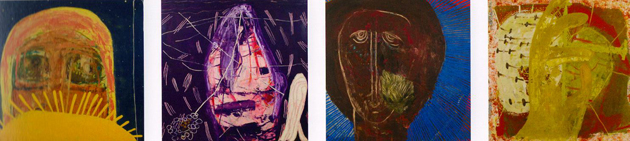 language which most appropriately corresponds to the form of God’s life among and with us. Commenting on Jüngel, Kline argues that narrative alone witnesses to the change from old to new, can capture the movement and becoming in which God has his being, corresponds to the eschatological event of Jesus’ death and resurrection, and brings ‘the word of the cross’ to expression in a way apposite to us. So Jüngel: ‘God’s humanity introduces itself into the world as a story to be told’. Kline notes that for Jüngel, the church is given a story to tell, but, in Jüngel’s words, it ‘can correspond in [its] language to the humanity of God only by constantly telling the story anew’. God’s humanity ‘as a story which has happened does not cease being history which is happening now, because God remains the subject of his own story . . . God’s being remains a being which is coming’. The community, Kline says, tells only the story of Jesus Christ’s history, and so it constantly looks back to what has happened. Yet the telling of this story is also always new because God’s entrance into human language that once happened continues to happen again and again as Jesus Christ continues to live in the freedom of the Spirit. God is not confined to his once-enacted history, to one language or culture; history does not consume God. So Jüngel again: ‘God who is eschatologically active and who in his reliability is never old [is] always coming into language in a new way’.
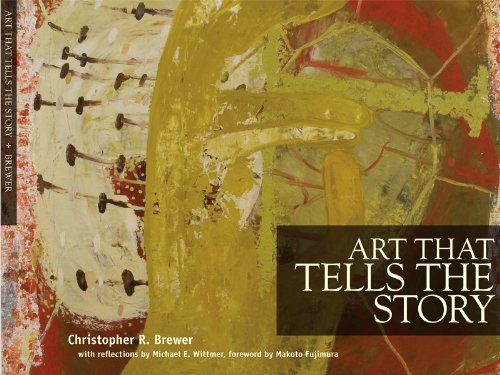
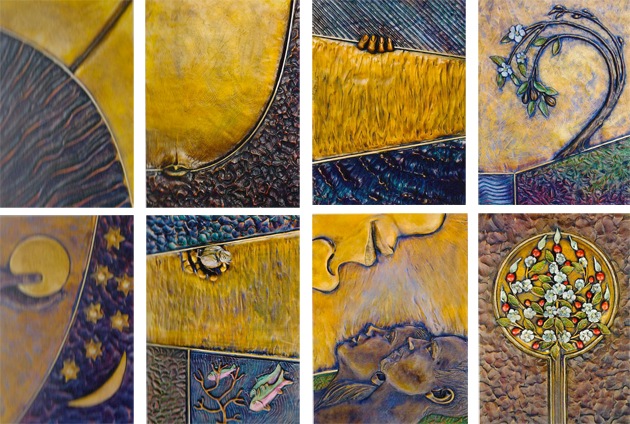
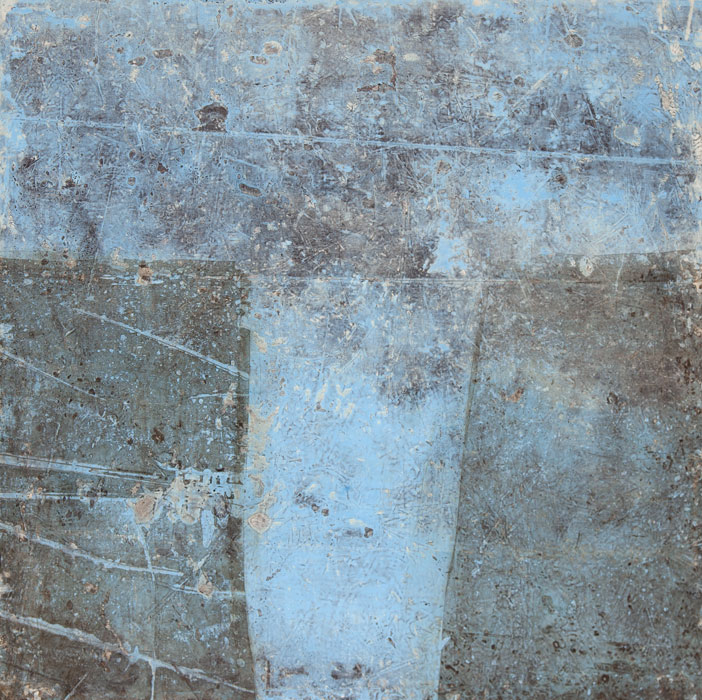
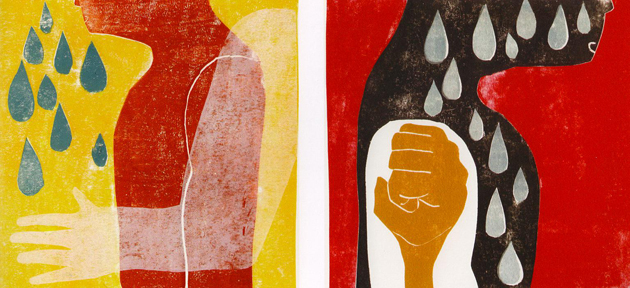 ‘Telling the story anew’. ‘God … [is] always coming into language in a new way’. Which brings me to Chris Brewer’s new book, Art that Tells the Story. Others have already summarised the book, so let me simply say that Art that Tells the Story is a freshly-presented and beautifully-produced book which attempts to tell the old, old story … again. Boasting some intriguing prose (by Michael E. Wittmer) and coupled with well-curated images from a diverse array of accomplished visual artists including Jim DeVries, Wayne Forte, Edward Knippers, Barbara Februar, Clay Enoch, Julie Quinn, Michael Buesking and Alfonse Borysewicz, among others, herein, word and image work in concert to open readers up to hear and see again, and to hear and see as if for the first time, the Bible’s story of creation, fall, redemption, and consummation, inviting – nay commanding!, for the gospel is command – readers to comprehend in this story their own, and to enter with joy into the narrative which is the life of all things. A book this beautiful ought to be in hardback; but may it, all the same, find itself opened and dialogued with next to many coffee mugs, and in good and diverse company. Like its subject, this is one to sit with, to be transformed by, and to share with others.
Flannery O’Connor once confessed, in Mystery and Manners, that ‘there is a certain embarrassment about being a story teller in these times when stories are considered not quite as satisfying as statements and statements not quite as satisfying as statistics’. ‘But’, she continued, ‘in the long run, a people is known, not by its statements or statistics, but by the stories it tells’. And so the dogged persistence of theologians and artists. Indeed, it is stories – in fact, a particular, if not very short or simple, story – that Brewer’s book is primarily concerned to tell. That his chosen medium is the visual arts reminded me of something that NT Wright once said, and which is, I think, worth repeating:
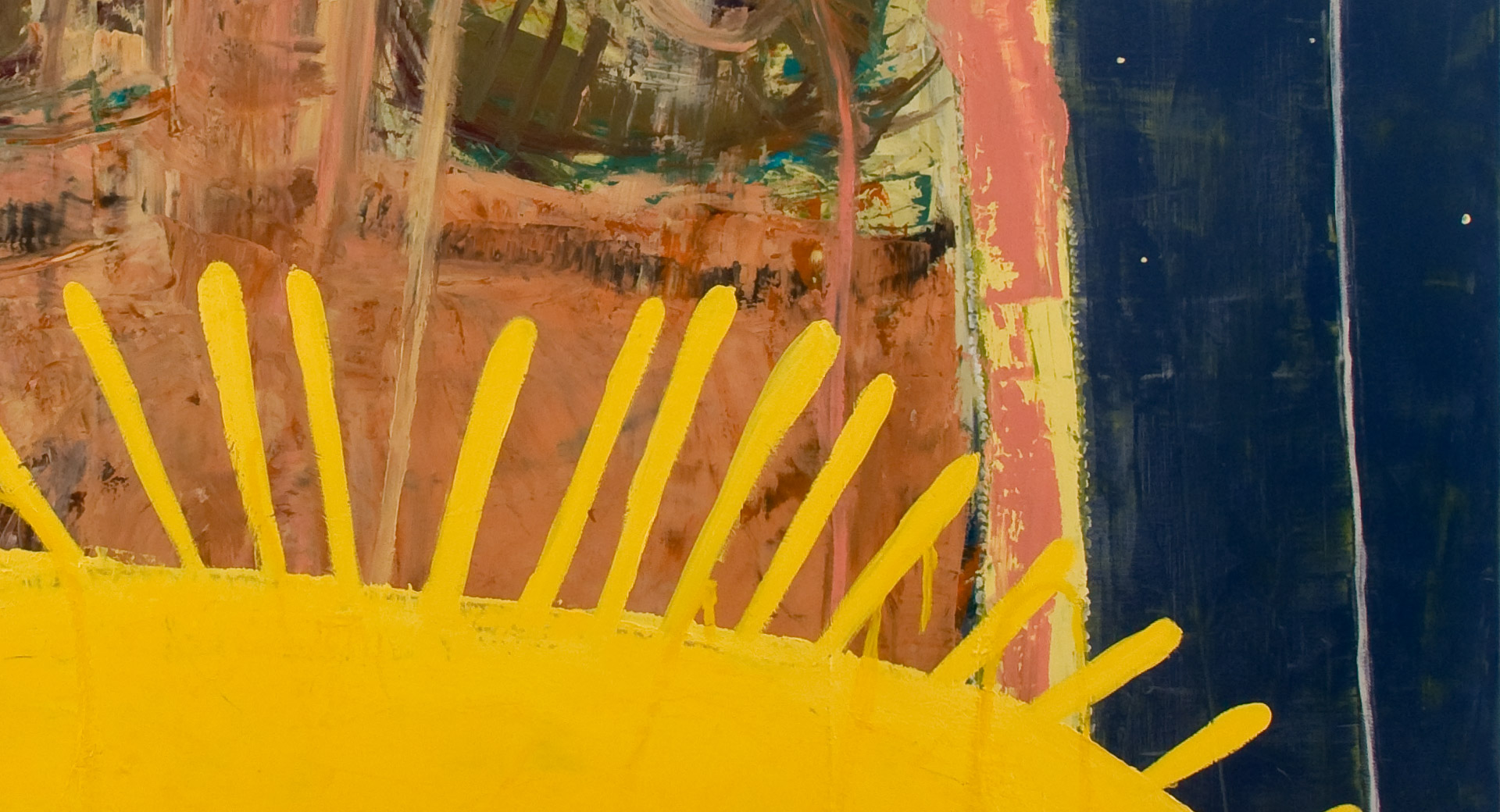 We have lived for too long with the arts as the pretty bit around the edge with the reality as a non-artistic thing in the middle. But the world is charged with the grandeur of God. Why should we not celebrate and rejoice in that? And the answer sometimes is because the world is also a messy and nasty and horrible place. And, of course, some artists make a living out of representing the world as a very ugly and wicked and horrible place. And our culture has slid in both directions so that we have got sentimental art on the one hand and brutalist art [on] the other. And if you want to find sentimental art then, tragically, the church is often a good place to look, as people when they want to paint religious pictures screen out the nasty bits. But genuine art, I believe, takes seriously the fact that the world is full of the glory of God, and that it will be full as the waters cover the sea, and, at present (Rom 8), it is groaning in travail. Genuine art responds to that triple awareness: of what is true (the beauty that is there), of what will be true (the ultimate beauty), and of the pain of the present, and holds them together as the psalms do, and asks why and what and where are we … And our generation needs us to do that not simply to decorate the gospel but to announce the gospel. Because again and again, when you can do that you open up hermeneutic space for people whose minds are so closed by secularism that they just literally cannot imagine any other way of the world being. I have debated in public … with colleagues in the New Testament guild who refuse to believe in the bodily resurrection and, again and again, the bottom line is when they say ‘I just can’t imagine that’, the answer is, ‘Smarten up your imagination’. And the way to do that is not to beat them over the head with dogma but so to create a world of mystery and beauty and possibility, that actually there are some pieces of music which when you come out of them it is much easier to say ‘I believe in the Father and the Son and the Holy Spirit’ than when you went in.
Art that Tells the Story is grounded upon the premise that artists and theologians can not only help us to see better, but also that like all human gestures toward the truth of things, the work of artists can become an instrument through which God calls for our attention. And here I wish to conclude by re-sounding a call trumpeted by Michael Austin in Explorations in Art, Theology and Imagination:
Theologians must be on their guard against commandeering art for religion, must allow artists to speak to them in their own language, and must try to make what they can of what they hear. What they will hear will tell of correspondences and connections, of similarities, of interactions and of parallel interpretations and perceptions which will suggest a far closer relationship of essence between art and religion than many theologians have been prepared to acknowledge. As the churches at the beginning of the twenty-first century become more fearful and therefore more conservative there may be fewer theologians prepared to take the risks that embracing a truly incarnational religion demands of them. In particular what they hear may suggest to them that their many (often contradictory) understandings of God and redemption and salvation in Christ need to be radically reconsidered if a new world is to be made.
Chris Brewer’s Art that Tells the Story is just such an attempt. It’s good stuff.
Hans Küng on the ‘Putinization of the Catholic Church’
 Since being exposed, many moons ago now, to Hans Küng’s excellent book The Church, I’ve tried, slowly, to get my eyes upon everything available by Küng. In fact, I’ve just finished reading his book Eternal Life?: Life After Death as a Medical, Philosophical, and Theological Problem. Like his other work – indeed, as with all great thinkers – one need not agree with everything he says to learn much from him. Anyway, I’m waffling. The point of this post is simply to draw attention to the fact that Der Speigel has just published a very frank and interesting two-part interview with Küng (‘Part 1: A Putinization of the Catholic Church’, and ‘Part 2: The Catholic Church Will Undoubtedly Become More Protestant’) in which the main subject of attention is, somewhat unsurprisingly given the titles, the non-gospel shape of Pope Benedict’s leadership. It made me wonder for a moment if Küng had been reading Forsyth! Anyway, here’s a few snippets:
Ratzinger’s predecessor, John Paul II, launched a program of ecclesiastical and political restoration, which went against the intentions of the Second Vatican Council. He wanted a re-Christianization of Europe. And Ratzinger was his most loyal assistant, even at an early juncture. One could call it a period of restoration of the pre-council Roman regime …
In my view, the Catholic Church as a community of faith will be preserved, but only if it abandons the Roman system of rule. We managed to get by without this absolutist system for 1,000 years. The problems began in the 11th century, when the popes asserted their claim to absolute control over the Church, by applying a form of clericalism that deprived the laity of all power. The celibacy rule also stems from that era … It’s true that this absolutism is an essential element of the Roman system. But it was never an essential element of the Catholic Church. The Second Vatican Council did everything to move away from it, but unfortunately it wasn’t thorough enough. No one dared to criticize the pope directly, but there was an emphasis on the pope’s collegial relationship with the bishops, which was designed to integrate him into the community again …
The shamelessness with which the Vatican’s policy has simply hushed up and neglected the concept of collegiality since then is beyond compare. An unparalleled personality cult prevails once again today, which contradicts everything written in the New Testament. In this sense, one can state this very clearly. Benedict has even accepted the gift of a tiara, a papal crown, the medieval symbol of absolute papal power, which an earlier pope, Paul VI, chose to surrender. I think this is outrageous. He could change all of this overnight, if he wanted to …
In the past, the Roman system was compared with the communist system, one in which one person had all the say. Today I wonder if we are not perhaps in a phase of “Putinization” of the Catholic Church. Of course I don’t want to compare the Holy Father, as a person, with the unholy Russian statesman. But there are many structural and political similarities. Putin also inherited a legacy of democratic reforms. But he did everything he could to reverse them. In the Church, we had the Council, which initiated renewal and ecumenical understanding. Even pessimists couldn’t have imagined that such setbacks were possible after that. The Polish pope’s restoration policy, beginning in the 1980s, made it possible for the like-minded head of the highly secretive Congregation for the Doctrine of the Faith (CDF), once known as the Congregation of the Roman and Universal Inquisition – and it’s still an inquisition, despite its new name – to be elected pope.
‘The God who Graciously Elects’: Bruce McCormack and the 2011 Kantzer Lectures [UPDATED]
 The plan is that in just 10 days time, Bruce McCormack will deliver the first of seven of the 2011 Kantzer Lectures in Revealed Theology. His theme? ‘The God who Graciously Elects’. Few have thought, written and spoken more about this topic in recent years than Bruce has, and even though I’ve now heard Bruce speak to this theme on five occasions across three continents, I’m very much looking forward to hearing him again, this time via the promised live stream.
Here’s the UPDATED lecture titles:
Lecture One: Tuesday, September 27 | 7:00-8:30 pm “Is the Reformation Over? Reflections on the Place of the Doctrine of God in Evangelical Theology Today” Lecture Two: Wednesday, September 28 | 2:00-3:30 pm “From the One God to the Trinity: The Creation of the Orthodox Understanding of God” Lecture Three: Wednesday, September 28 | 4:00-5:30 pm “The Great Reversal: From the Economy of God to the Trinity in Modern Theology” Lecture Four: Thursday, September 29 | 4:00-5:30 pm “The God Who Reveals Himself: The Mystery of the Trinity in the New Testament” Lecture Five: Monday, October 3 | 2:00-3:30 pm “Which Christology? Refining the Economic Basis of the Christian Doctrine of God” Lecture Six: Monday, October 3 | 4:00-5:30 pm “The Processions Contain the Missions: Reconstructing the Doctrine of an Immanent Trinity” Lecture Seven: Tuesday, October 4 | 4:00-5:30 pm “The Being of God as Gift and Grace: On Freedom and Necessity, Aseity and the Divine “Attributes” The lectures are open to all, free of charge. They will also be live-streamed here.
David Bentley Hart on ‘The Violence of Christian History’
David Bentley Hart is not only an extraordinarily erudite theologian, he is also very generous in his service of the gospel, always worth listening to, and always offers much to learn from. Here he is in a CPX interview on the question of violence in Christian history:
I’ve drawn attention to this part of the interview before, and to the five parts which follow it:
- The violence of Christian history
- The new atheists and an ugly God
- Ethics and the good life
- Nostalgia for a pagan past
- Gnosticism and alternative gospels
- Suffering and the problem of evil
Unfortunately, CPX seems to have removed the video version of the interview. The full interview, however, is still available here (in MP3 format) or here via iTunes.
On blood and guts, violence and death
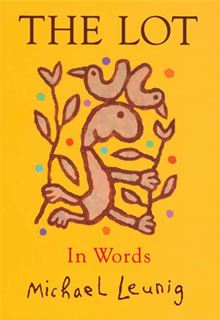 I’ve been enjoying this delightful collection of short essays by the Melbourne-born poet, artist and cultural commentator Michael Leunig. Here’s a snippet from his essay ‘Blood and Guts, Violence and Death’:
“No nation can go to war without a sufficient reserve of hatred, cruelty and bloodlust politely concealed in its general population, and if our so-called Western democracies wanted their ‘war against terror’, then let them now at least see the graphic details of war’s sickening and hideous consequences.
The curse is, however, that it’s the children who are most defiled and blighted by such frightening imagery – and they had no part in it.
My years in the abattoir taught me that society denies its bloodlust and cruelty and imagines that such impulses appropriately belong to prehistoric barbarians, or ‘rough and uncouth men’. But I believe we now have the unique modern cruelty of the refined and educated Western man, the respected gentleman in the fine suit who has never much dirtied his hands or killed a living creature, never meditated upon a rotting corpse and never had his consciousness infected with the messy organic substances of violent death – yet who can sign with an elegant golden pen the document that unleashes the cowardly invasion and who can then go out to dine on claret and lamb cutlets.
The likes of these men abound in the halls of academia, the boardrooms and corridors of power, and the chicken-coop workstations of the media, where they have clamoured for war, for all sorts of ungodly and unfathomable reasons, without really knowing in their bones how it works – the business of violence and blood and guts.
They are primally inexperienced, unconnected and unwise. Their flesh has not been seared. Their repressed death fascination and sly cruelty has not yet been transformed into reverence and understanding by initiation into things carnal and spiritual, by the actual sights and sounds of splattering blood and crunching bone, and the pitiful flailing and wailing of violent death – the very thing they would unleash upon others. Just one sordid street-fight or one helpless minute of aerial bombardment might redeem them. They lack the humbling erudition of the slaughterman, the paramedic and, no doubt, the soldier who has really been a soldier.
I dare say there’s something foul, creepy and disgraceful emerging in the character of corporate and political leadership in ‘Western civilisation’, and I sense it’s substantially the result of an insipid masculinity problem.
The insatiable need for heartless power and ruthless control is the telltale sign of an uninitiated man – the most irresponsible, incompetent and destructive force on earth.”
– Michael Leunig, The Lot: In Words (Camberwell: Penguin, 2008), 50–2.
Around the boab trees
 There’s some good reading around at the moment. Here’s a few pieces I’ve enjoyed:
- J.M Coetzee on The Angry Genius of Les Murray
- Yvonne Willkie ruminates about old sermons
- Peter Singer writes about Bhutan’s ‘gross national happiness’
- Ben Myers reviews Rob Bell’s Love Wins (btw: Steve Holmes did a series of helpful posts on Bell’s book back in April)
- Brad East shares some Luther who reminds us that the only God we know is the God who suckled on Mary’s breasts
- David Congdon reviews The Bible Made Impossible
- Evan Kuehn points to two recent articles on Schleiermacher: Robert Merrihew Adams’s on philosophical aspects of his Christology, and Johannes Wischmeyer’s on Schleiermacher’s involvement with the founding of the University of Berlin
- Matthew Milliner reminds us of the legacy of John Ruskin
- Paul Fromont on Allie Eagle’s latest project (which, by the way, includes that half-finished pastel drawing of yours truly featured on my author page)
- Rick Floyd (who has a new blog address) shares his 9/11 sermon, first preached a decade ago
- J.R. Daniel Kirk, who is normally worth reading, proves his fallibility once again with a shocker on Is Systematic Theology Necessary?
- Michael Jenson is reading James Hunter’s To Change the World: The Irony, Tragedy, and Possibility of Christianity in the Late Modern World, and thinking about ‘oppressive egalitarianism’
- Garry Deverell shares his sermon on the paradox of forgiveness
 jasongoroncy.com