Books

Acknowledgements

Ruben Gallego’s White on Black was awarded the Russian Booker Prize in 2003. And appropriately so. I thought it one of the most intriguing novels I’ve read this year, one which unrelentlessly invites the reader to think about time and place, loss and irritation, foolishness and music, democracy and wheelchairs, bayonets, books and borscht, and neverness – differently. But it’s the Acknowledgements that I wish to draw attention to here in this post, particularly in light of Ben Myers’ recent splash on book dedications.

Gallego concludes his book thus:

‘Thanks to Eve, our Foremother, for eating the apple.
Thanks to Adam, for taking part.
Special thanks to Eve.

Thanks to my grandmother Esperanza for bearing my mama.
Thanks to Ignacio for taking part.
Special thanks to my grandmother.

Thanks to my mama for bearing me.
Thanks to David for taking part.
Special thanks to my mama.

Thanks to my mama for bearing my sister.
Thanks to Sergei for taking part.
Special thanks to my mama.

Thanks to my literature teacher. Once when I was sick, she brought me chicken soup. She brought jam to class, and we ate jam and were perfectly happy. When I wrote compositions, she gave me the highest mark, when she didn’t give me the lowest.

Thanks to Sergei for editing and publishing my first texts.
Special thanks to my literature teacher for the jam.

Thanks to my wives, for having been.
Thanks to my daughters, for having been and being.
Special thanks to my daughters for being.

Thanks to all the women, granddaughters and grandmothers, young and old, beautiful and less beautiful.
Thanks to all the men.
Special thanks to the men for taking part.

Thanks again to my mama.

June bests …

From the reading chair: Patterns of Reform: Continuity and Change in the Reformation Kirk by James D. Kirk; Humanism and Reform: The Church in Europe, England and Scotland, 1400–1643 edited by James Kirk; The True Face of the Kirk: An Examination of the Ethos and Traditions of the Church of Scotland by R. Stuart Louden; Theology of the Reformed Confessions and Knowledge of God and the Service of God According to the Teaching of the Reformation: Recalling the Scottish Confession of 1560 by Karl Barth; John Knox: An Introduction to His Life and Works by Richard G. Kyle and Dale W. Johnson (reviewed here); Called to Be Human: Letters to My Children on Living a Christian Life by Michael Jinkins; Theosis in the Theology of Thomas Torrance by Myk Habets (reviewed here); Hyperion and Selected Poems by Friedrich Holderlin.

Through the iPod: Beethoven, Britten: Violin Concertos, Bach: Inventions & Partita and Vivaldi: The Four Seasons by Janine Jansen.

On the screen: The Wire: The Complete Third Season; Invictus.

A commendation for Anthony Thiselton’s The Living Paul: An Introduction to the Apostle and his Thought

I want to take a wee break from posting on Stringfellow to commend another book, namely Anthony Thiselton’s The Living Paul: An Introduction to the Apostle and his Thought.

Here’s a book written by someone who has wrestled long and hard with the subject but doesn’t feel the need to keep reminding you of that fact, a book written in full awareness and appreciation of the technical issues and debates going on in the background but is not sidetracked or straightjacketed by them, a book which articulates the subject at hand with sensitivity, pastoral wisdom, theological acumen, and a level of clarity and conciseness that I struggle to reach writing a birthday card.

Anthony Thiselton’s brief for The Living Paul was to pen ‘something which makes Paul accessible, but without undue oversimplification’. He has fulfilled this brief impressively. Many an undergrad will be helped here.

John Knox: An Introduction to His Life and Works: a wee review

Richard G. Kyle and Dale W. Johnson, John Knox: An Introduction to His Life and Works (Eugene: Wipf & Stock, 2009). xi + 208 pages. ISBN: 978-1606080900. Review copy courtesy of Wipf and Stock.

This volume, co-penned by two scholars well published on the book’s subject, traces the life and thought of John Knox. It does so not via an attempt at what we might call ‘straight biography’ but rather through a chronological examination and interpretation of his writings. The interpretation of Knox offered here is sympathetic but fair, helpfully introduces some secondary literature on Knox, avoids an over-romanticised reading of the preacher whom Stewart Lamont described as ‘a cross between Ian Paisley and the Ayatollah Khomeini’, and avoids the temptation succumbed to by many contemporaries biographers of judging too harshly the personalities of the past against the values of the present.

A very accessible and (apart from some editorial oversights and typos, for e.g., an incomplete bibliography, and who is T.F. ‘Torrence’?, on p. 21) well-researched introduction to a complicated yet decisive period in Scottish history, and that via the life and thought of one of its great saints. John Knox: An Introduction to His Life and Works is an easy book to commend, and those looking for a genuine entrée on the life and thought of a volcanic prophet with ‘the courage of a lion’ could do little better. Those hungry enough to also want a main course would be well served in the devouring of John Knox by Rosalind K. Marshall too.

May bests …

From the reading chair: The Night Trilogy: Night, Dawn, Day by Elie Wiesel; A Simplicity of Faith: My Experience in Mourning and Free in Obedience by William Stringfellow; Christology: A Global Introduction by Veli-Matti Karkkainen; Emily Dickinson’s Approving God: Divine Design and the Problem of Suffering by Patrick J. Keane; Return to Rome: Confessions of an Evangelical Catholic by Francis J. Beckwith; The Plague by Albert Camus; Changing the Conversation: A Third Way for Congregations by Anthony B. Robinson (reviewed here); Theological Investigations, Volume 19 by Karl Rahner; Playing God: Poems About Medicine by Glenn Colquhoun; For Us Surrender Is Out of the Question: A Story from Burma’s Never-Ending War by Mac McClelland; Naming the Silences: God, Medicine, and the Problem of Suffering by Stanley Hauerwas.

Through the iPod: Bach Cantatas 57, 110, 151 by Bach Collegium Japan, Masaaki Suzuki; Sacrificium by Cecilia Bartoli; After the Morning and Hill of Thieves by Cara Dillon; Hindemith: Viola Sonatas, Vol. 1 by Lawrence Power Lawrence Power and Simon Crawford-Phillips; The Near Demise of The High Wire Dancer by Antje Duvekot; Nicola Porpora: Orlando by Olga Pitarch, Betsabee Hass Robert Expert.

On the screen: The Idiot (Hakuchi) [1951]; Winter in Wartime (Oorlogswinter) [2008]; We Can Be Heroes [2010]; Breaking the Silence: Burma’s Resistance [2009].

Changing the Conversation: A Third Way for Congregations: A Review

Anthony B. Robinson, Changing the Conversation: A Third Way for Congregations (Grand Rapids/Cambridge: Wm. B. Eerdmans, 2008), 199 pp; ISBN 978-0-8028-0759-5.

Changing the Conversation is a sequel to Anthony Robinson‘s most recent books Transforming Congregational Culture (2003) and What’s Theology Got to Do with It? Convictions, Vitality, and the Church (2006). It builds upon and complements work done by Diana Butler Bass, Darrell Guder, Michael Foss, Barbara Brown Taylor, Brian McLaren and others in their quest for the Church to find ‘a third way’ of being that moves beyond stereotyped polarities all-too-typical of its life and seeks a redefinition from a new centre which finds its pulse in its defining narrative – that is, in the divine economy. Robinson invites congregations to walk upon a way paved by the rediscovery of fresh language (which includes a rediscovery of ‘older words and concepts of the living tradition of our faith’ (p. 2)), the development of new conceptual frameworks, the formulation of new agendas and imaginings for being and doing church, and the fostering of new ways of framing both internal and external challenges and relations.

Robinson (who has served as an ordained Minister of the United Church of Christ and has remained in touch with the realities of congregational life), understands that change is an inevitable and indispensable part of congregational life, that good leaders know and embrace this, and that a significant part of healthy change involves ceasing the typically dead-end conversations that congregations engage in, embracing reality accurately, and framing the challenges adequately. Drawing upon Ron Heifetz’s distinction between technical problems and adaptive challenges, and rehearsing Peter Drucker’s two simple questions – ‘What business are you in?’ and ‘How’s business?’ – this book identifies and is shaped around ten conversations that Robinson believes are requisite in order to initiate, deepen, sustain and grow congregational and denominational life.

The opening chapter is concerned to map in broad outline some of the important historical and cultural shifts that have shaped, and been shaped by, the Church’s baptism of and in Christendom, and how the emergence of a post-Christendom North America is impacting historically mainline Protestant congregations and their ministry from one of chaplaincy to one of mission. One feature of Church that he believes will need to undergo a significant shift in both conceptuality and praxis concerns the role of pastors: ‘Instead of being chaplains to church and community, they will be congregational leaders and spiritual directors. They will not do most or all of their ministry on behalf of the larger church. They will support that ministry through preaching and teaching, mentoring and guiding’ (p. 29).

William Stringfellow once observed, ‘These are harsh days for Protestants in America. American Protestants suffer the pathetic anxieties of a people once ascendant and reigning, but now defensive and in retreat’. How congregations might respond creatively (and in ways that move beyond lament and complaint, bewilderment and apathy) to the challenges and opportunities of this post-Christendom situation is the subject of Chapter Two. Rather than denying or bemoaning the sea change, Robinson asks if congregations might find a way to discern God at work among them and to respond by birthing new and more productive conversations and hopeful, engaged responses. He reminds us that ‘the word “Protestant” does not mean perpetual protest’ but rather derives from pro (‘for’) and testari (‘to testify). So, he asks, ‘what testimony do we offer about God and about God’s work in our midst?’ (p. 44).

The third conversation, ‘A New Heart’, is an invitation to think about how the renewal of hearts and minds is at the centre of mainline Protestant congregations, is not reducible to a formula or recipe, and is always more important than any technique or program.

In Chapter Four, Robinson turns to the issue of leadership, arguing that the work of leadership in the post-Christendom period is to assist congregations to face their own most important challenges and make progress on them. He defines pastoral leadership as ‘mobilizing a congregation … to engage its own most pressing problems and deepest challenges’ (p. 84). Part of the task of leadership (not necessarily of the ‘ordained’) is to read the context and congregation, to name and describe the challenges accurately, and to ‘remind a congregation (or other group) of its theologically and biblically informed purpose and core values. In other words, leadership should keep before the congregation the issues of “who are we?” (core values) and “why are we here?” (purpose)’ (pp. 85–6). Robinson observes that many congregations suffer a ‘leadership vacuum’, that instead of pastoral leaders and governing boards, they have chaplains and a group that is either ‘listening to endless reports or trying to micro-manage the operational administration of the congregation. The future’, he continues, ‘belongs to congregations that call and empower pastors who are leaders, and then also call and prepare governing boards that provide effective policy direction and leadership’ (p. 96).

This directly raises the question of purpose, which is the concern of Chapter Five. The ‘Why are we here?’ question is, according to Robinson, always the most important question to begin with. He avers that congregations need reasonable clarity about their core purpose if they are to foster any new vitality and to shift, as Foss believes, from ‘a culture of membership to a culture of discipleship’ (p. 101). In making the important distinction between purpose and vision, Robinson, following C. Kirk Hadaway, contends that purpose is more important than vision, the former both precedes and shapes the latter: ‘Without a fairly clear sense of purpose, congregations can get caught up in the game of cultural catch-up or what’s newest and latest’ (p. 105).

Robinson continues to labour this distinction and its logic of priority in chapters six to eight, drawing upon Heifetz’s notions on ‘adaptive challenges’. In Chapter Six, the concern is to explore the relationship between vision and purpose, on how congregations move from naming their raison d’être, to identifying the key challenges and then authoring a vision statement or strategic plan that serves their ministry. One vital emphasis here is that the work of the congregation does not fall to experts or authorities, nor to the pastor, or a consultant, or a small group designated to solve their problems for them. Rather, Robinson insists that ‘it is the people with the problem themselves, the people facing the challenge, who do the work. If the work is “discovering again God’s purpose (mission) for our church,” we can’t simply assign that to a mission committee’ (p. 122). While he acknowledges that most congregations face a combination of technical problems and adaptive challenges, to the extent that they understand those challenges as technical problems only, they will fail. Moreover, they would have ‘missed important, God-given opportunities to experience new hearts and minds’ (p. 123).

In some ways Chapter Seven represents the book’s thesis most clearly: that the governance and organisation that many congregations are working with are outmoded and incompetent because designed for, and assuming of, a Christendom rapidly passing away. Here’s his basic point:

Underlying the Christendom-era structures of church life are two notions: (1) the best way to involve people in Christian life and church participation is to get them serving on a board or committee of the church; and (2) the job of laity is to manage the church. If your church assumes that the best way to involve people in Christian life and the church is to get them on a board or committee, there’s a good chance that your congregation will have a lot of boards and committees to accommodate them. The result is often structures that are either Byzantine in complexity or Catch-22-like in absurdity. The second unhelpful assumption is that the really important job of lay Christians is to manage the church, its buildings, finances, property, and personnel. This effectively takes the team off the playing field and gives it the task of managing the clubhouse. Instead of inviting people to do ministry, current systems invite them to manage the ministry. You put these two assumptions together and let the whole thing settle for some decades, and the result would make for a good Monty Python skit … Could it be that the real job of dedicated Christians is not to manage the work of the ordained or the operational administration of the church facility, but to represent Christ to the world? I suspect that many would affirm this in theory, yet our church structures tend not to support the theory (pp. 137–8, 140).

The eighth conversation attends to another arena of adaptive work facing mainline congregations; namely, public theology. It asks what shape and what voice the Church might embody in the public square in an age of redefined relations. ‘Death and Resurrection’ is the title of Chapter Nine. Here Robinson suggests that while, for some situations, congregational renewal is possible, sometimes a death – or something that looks and feels very much like death – is required before a resurrection is possible. The final conversation is a bit of a ‘Where to from now?’ chapter.

Changing the Conversation will be read with profit by denominational staff, seminarians studying congregational life, and leaders of congregations. It offers a clear vocalization of some important theses and synthesises some valuable material on mission and vision. That said, some readers will want to question whether Robinson himself offers a decisive enough severing from the Christendom mindset that he is so properly concerned about. At the very least, the book’s pages frequently require some translation from a North American congregational context into other local dialects. Finally, how one assesses this book depends largely on whether one is seeking a handbook of tools or nutrition for a renewing of ecclesiological imagination. While there are indications that Robinson is seeking to offer both, it is more of the former rather than the latter that is to be found in this book.

Stanley Hauerwas on being human, on being a theologian

I recently started reading Stanley Hauerwas’ latest book Hannah’s Child: A Theologian’s Memoir. It’s a very special book, and over the next bit I may even post a few exerpts from it. But in the meantime, here’s two videos in which Hauerwas talks about this book, the nature of theological biography, the life of a theologian, having children, engaging with Islamic thought, encountering Karl Barth and other things that have changed his life.

The Joy of Teaching

Harry Hazel, The Joy of Teaching: Effective Strategies for the Classroom (Eugene: Pickwick Publications, 2010). xii + 158 pages. ISBN: 978-1-60608-613-1. Review copy courtesy of Wipf and Stock.

Since I read Ken Bain’s book What the Best College Teachers Do, I’ve tried to keep abreast with books on teaching, books which seek to hold up before me the teacher’s task and to encourage me to attend to its craft. Recently, I read The Joy of Teaching: Effective Strategies for the Classroom by Harry Hazel, Professor of Communication Arts at Gonzaga University and author of Art of Talking to Yourself and Others and The Power of Persuasion, and co-author of Communicating Effectively: Linking Thought and Expression.

In researching for this book, Hazel collected reactions from over one hundred North American teachers about why they like what they do. Most emphasised the joy of helping students learn and seeing those students develop their potential: ‘Good teachers challenge, cajole, prod, push and move each student as far as they can’ (p. 5). Hazel observes that while good teachers ‘give away’ knowledge, those who find little joy in giving to others will find little joy in teaching. Moreover, great teachers exhibit a passion for their profession which leaves no doubt that they enjoy, at a deep level, what they were doing. They hold learning in high esteem and are committed to ongoing formation and to professional development.

He shares a number of other findings:

  • excellence in teaching has more to do with an exceptional grasp of the material and clear communication techniques than with popularity.
  • the best teachers demand much of their students.
  • good teachers take time to find out how students in a class learn best, and then adapt. Like Bain, Hazel too notes that there is all the difference in the world whether we are teaching a subject to students or teaching students a subject, and that effective teachers will employ whatever method they believe will best develop an individual student.
  • good teachers respect and love their students: ‘It may seem obvious that liking students is a prerequisite to liking education, but some teachers don’t really like most of their students. They tolerate them because they have to. Once the class is over, they have little contact with them. Happy teachers, on the other hand, really like the students they encounter’ (p. 133).

Against Gerald Goldhaber’s prophecy (in Organizational Communication) on the death of the lecture, Hazel draws upon Plato, Aristotle and Joseph Lowman’s work in Mastering the Techniques of Teaching to defend the use of ‘what can be an excellent teaching tool’:

Properly delivered, a lecture lights up a room. If a teacher is well organized, presents her ideas clearly and sprinkles theory with riveting examples, she has a good chance of keeping the attention of her students. But if she speaks in a monotone, wanders all over her subject and hovers in the clouds of abstraction, most of her students will tune out. The bland lecture competes with the Quaalude as a way to induce sleep. (p. 37)

While some will find The Joy of Teaching a little anecdote-heavy (a sad trend, it seems, in much recent North American literature), and few engaged with adult-education will find much here that inspires, the book will certainly be read with profit by secondary school teachers and by those who care about what is happening in our high schools.

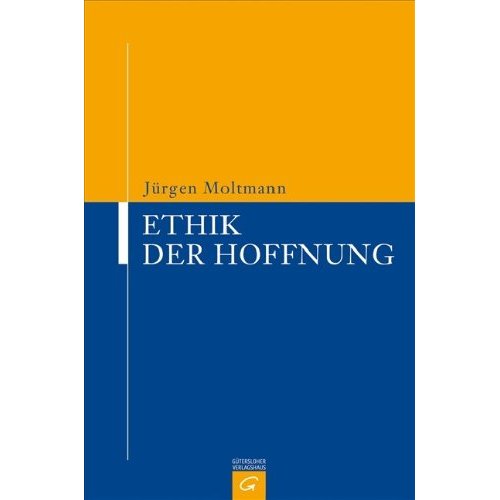
Jürgen Moltmann’s Ethik der Hoffnung

Now here’s something worth hanging out for: Jürgen Moltmann’s latest offering Ethik der Hoffnung. It’s due out on 26 July. In the meantime, all we have is the blurb:

‘Mit der »Theologie der Hoffnung« begründete Jürgen Moltmann 1964 seinen internationalen Ruf. Die politische Botschaft dieses Buches: Christliche Existenz und gesellschaftliches Handeln gehören zusammen. Jetzt folgt endlich die lang erwartete »Ethik der Hoffnung«. Darin entwirft Moltmann die Grundlinien einer Ethik der Hoffnung, die für ihn leitend waren und sind. Er macht deutlich, wie aus einer Perspektive der Theologie der Hoffnung ethische Sichtweisen, ethische Urteile und konkretes Handeln aussehen könnten.

Nach einem grundlegenden Kapitel über den Zusammenhang von Eschatologie und Ethik folgen drei Schritte: Moltmann fragt nach einer Ethik des Lebens in Abgrenzung gegen eine Ethik des Todes, nach einer Ethik der Erde angesichts der ökologischen Herausforderungen der Gegenwart und schließlich nach einer Ethik der Gerechtigkeit angesichts der wachsenden gesellschaftlichen und globalen Ungleichgewichte im sozialen Miteinander.

Dies ist kein Lehrbuch, aber ein auf ethische Praxis ausgerichteter Entwurf mit Handlungsvorschlägen in Hoffnungshorizonten’.

It’s almost as exciting as this.

April bests …

From the reading chair: Atonement: The Person and Work of Christ by T.F. Torrance; Divine Empathy: A Theology of God by Edward Farley; The Knot of Vipers, by François Mauriac; Reformed Worship by Howard L. Rice & James C. Huffstutler; God’s Inescapable Nearness by Eduard Schweizer; Aussie Gems: Cindy Ella by Tom Champion & Glen Singleton; Aussie Gems: Redback on the Toilet Seat by Slim Newton & Craig Smith; Participating in God: A Pastoral Doctrine of the Trinity by Paul S. Fiddes; The Doors of the Sea: Where Was God in the Tsunami? by David Bentley Hart; Theology & Ministry in Context & Crisis: A South African Perspective by John W. de Gruchy; Good and Evil by Edward Farley; Common Life: Poems by Robert Cording.

Through the iPod: Women and Country by Jakob Dylan; Hold on to Me by The Black Sorrows; X&Y by Coldplay; Symphony No. 6; Into the Twilight; Summer Music by Sir Arnold Bax; Infamous Angel, My Life and The Way I Should by Iris DeMent; Paganini: Violin Concertos with Salvatore Accardo; Nothing Like the Sun and The Dream of the Blue Turtles by Sting; Leave Your Sleep by Natalie Merchant; Standard Songs for Average People by John Prine & Mac Wiseman; Fair & Square by John Prine.

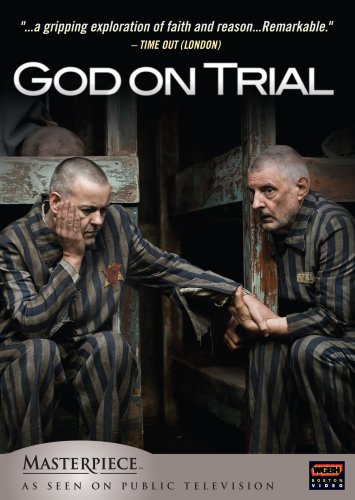
On the screenBoy [2010]; Endgame [2009]; The White Ribbon [2009]; God on Trial [2008]. BTW: I also saw von Trier’s Antichrist, the most hideous and uninteresting film I’ve seen this year.

By the bottle: Wasp, by Invercargill Brewery.

Theodicy, Suffering and Faith: A Bibliography

Thanks so very much to all readers of Per Crucem ad Lucem who took the time to contribute a richly-helpful smorgasboard of readings and films in response to my previous post. This has been enormously helpful (and encouraging) and I’ve spent much of today checking out some of these suggestions (including some really obvious ommissions to my original list) and building a fuller list which I hope to keep adding to in the coming months. Again, additional suggestions are most welcome.

Books/Essays

Film

[Updated: 26 April 2010]

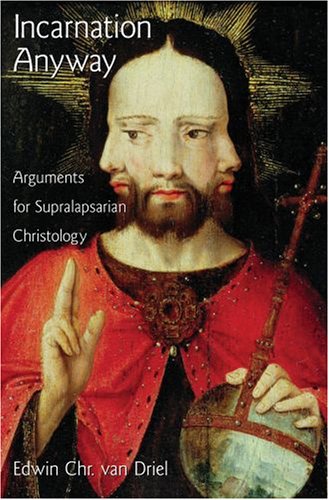
Incarnation Anyway: Arguments for Supralapsarian Christology: A Review

Incarnation Anyway: Arguments for Supralapsarian Christology, by Edwin Christian van Driel. Pp. xii + 194. Oxford: Oxford University Press, 2008, ISBN 978 0 19 536916 8. £45.

It was the brilliant John Duns Scotus who recalled that ‘God is not in a genus’ (Deus non est in aliquo genere), reminding us that our knowledge of God is impossible in any general sense. Indeed, Christian theology is premised on belief in divine self-disclosure and, moreover, that such disclosure is an act of grace. Duns Scotus also supposed that creation’s purpose and destiny concerns ‘co-lovers’ participating in the Triune life. It was for such that the Word of God became flesh, unveiling for us the causa finalis of our humanity. That this is God’s way for us – even if sin had not come into the human scene – bespeaks the inner meaning of the grace which precedes sin and testifies to the gospel logic of the incarnation.

Supralapsarianism, the subject of Edwin Chr. van Driel’s book Incarnation Anyway (a reworked version of his doctoral dissertation completed at Yale University), is a doctrine whose beginnings reach back at least as far as the twelfth century, even if van Driel’s treatment is concerned with its less hypothetically-speculative nineteenth- and early twentieth-century articulations. The first part of his essay (pp. 9–124) attempts to chart and examine the ways in which supralapsarian christology has been articulated. It does so via a consideration of three forms that the doctrine assumed in its nineteenth-century revival, namely in Friedrich Schleiermacher (‘the first major supralapsarian theologian since the Middle Ages’ (p. 9)), in Isaak August Dorner and in Karl Barth (on whom the most ink is spilt), attempting in each case to attend to the three ways in which God is thought to relate to God’s other – in redemption (Schleiermacher), in creation (Dorner), and in eschatological consummation (Barth). While there are occasions when readers may feel that van Driel constrains his subjects’ thought with a rigid logic foreign to their projects, in each case he attempts to expose the inner logic, coherence and strength of each articulation while not neglecting to draw attention to any weaknesses.

Van Driel argues that the conceptual structures of Schleiermacher’s supralapsarianism is determined both negatively and positively by the notion of absolute dependence and the inferred forms of divine omnipotence. He notes that, for Schleiermacher, sin is not excluded from the scope of divine causality – that God is the author of sin calls for a different locus for sin in the divine decree. God ordains sin in order to make humanity receptive to redemption. This move means that human sin acquires determining and logical priority over the incarnation. Indeed, van Driel outlines how in Schleiermacher’s schema, ‘sin and redemption are essential parts of our relationship to Christ. We need Christ because of our sin, and only because of our sin. If there were another reason why we relate to Christ, God would not have to introduce sin in the divine decree. We are connected to Christ only through his redemptive activity. There is no space for a meaningful relationship with Christ that is not marked by this’ (p. 25). And again: for Schleiermacher, ‘human beings will not be receptive to the divine gifts in Christ unless these gifts address an evil in their lives’ (p. 126). Under van Driel’s examination, the identified ‘fault lines’ in Schleiermacher’s ordo salutis (especially his sympathy with a felix culpa account) widen as the essay proceeds.

For Dorner, the incarnation is the necessary fruit of the divine decision to create ethical persons and of the divine determination that such become ‘full personalities’, a reality only possible in ‘interpersonal interaction with the ethical’ (p. 49). Dorner premises his arguments on the notion that God is a lover of love – the amor amoris – whose passion is to aggrandize the life of love in his other. This twofold surrender (of God to human beings, and of humans to God) is embodied in religion, the divine contribution to which is revelation, the consummation of which is the incarnation. For Dorner, the incarnation is a basic implication of God’s decision to create: ‘Decisive for whether one takes the incarnation to be means or end is what one takes to be the divine motivation behind it. For Dorner, the motivation for incarnation is embedded in the motivation for creation’ (pp. 59–60). This move, van Driel suggests, sponsors an unsatisfactory stepping stone in Dorner’s doctrine of creation and highlights what van Driel considers to be the most troubling and deep-lying ambiguity in Dorner’s supralapsarian christology. He continues:

In [Dorner’s] proposal, it is the necessity of God’s creative act that sets everything else in motion. God’s ethical necessity is expressed in the act of creation; given the nature of the ethical necessity, creation will be brought to consummation; given the same ethical necessity, this will be done by way of incarnation. None of this follows, though, when the act of creation is a contingent act. Of course, it could still be argued that God leads creation to consummation, and that the incarnation is central to consummation. In such a scenario, the governing divine act would not be given with God’s nature, but would be the result of a free act of God’s will. And if creation were embedded in God’s will rather than God’s nature, it would be better to start one’s theological account thereof not at the beginning but at the end of God’s work: What goal had God in mind when God freely called creation into being? What motivated God to create? Systematically this means that the argument for supralapsarian incarnation should not be embedded in the doctrine of creation but in eschatology. (p. 62)

With that note, van Driel turns to Barth’s ‘argument from consummation’, that requisite feature of Barth’s doctrine of election upon which van Driel will construct his own proposals. Van Driel observes how Barth’s supralapsarian christology takes its shape in his actualism. God’s election of Jesus Christ is primal in order, self-giving in nature, gracious in its motivation, creative in its effect, all-inclusive in its scope and supralapsarian in character, and the latter in a twofold sense – in terms of both predestination and christology: ‘Divine predestination is not a first step in a divine response to sin and neither is the incarnation … God’s election of Christ’s human nature is thus the first action in the divine relating to what is not God’ (pp. 67, 68). Again: ‘At the heart of Barth’s supralapsarianism lies … his reading of the biblical narrative as a narrative of election. Election is an eschatological category; and the eschaton is the first in order of the divine decrees. Object and subject of these decrees is Jesus Christ – not the Son as λóγος ασαρκος the preincarnate Word, but the Son as Jesus Christ, the incarnate Word. The incarnation stands thus at the very beginning of God’s relating to what is not God’ (p. 81). From here, van Driel turns to the question of the relationship between epistemology and sin: ‘That God unveils Godself by way of veiling is partly due to our sinfulness, but not wholly. The ontological and epistemic principles that govern divine revelation are not a result of sin, but given with the nature of Creator and creation. Incarnation, as the necessary means of divine self-disclosure, is therefore a supralapsarian event’ (p. 77).

Certainly Barth’s supralapsarian narrative recalls that creation forms the stage for covenant’s story – a story authored in the loving event called triune being, and whose meaning requires both soteriological and eschatological achievement – and that the creation which makes covenant possible does not exist for itself but for the gracious God upon whose will its future and being is contingent. However, according to his evaluation of Barth, van Driel identifies some adverse consequences of Barth’s account. He reserves most ink to attend to a concern regarding creational entropy, that ‘creation, in and by itself, will necessarily lapse into evil’ (p. 85) by ontological necessity. This elicits a helpful discussion by van Driel on time, eternity and history (pp. 111–17), and on the relationship between supralapsarianism and das Nichtige (pp. 118–24).

Building on Barth’s work (which van Driel finds to be the most satisfying of the three accents), van Driel turns in the second part (pp. 125–70) to expand on the notion of eschatological consummation, arguing that the logic of the incarnation is not contingent upon sin in any way (no felix culpa) but points to a divine will for (i) eschatological superabundance, (ii) the beatific vision, and (iii) divine friendship. The first of these attempts at a constructive argument is premised on the relation between the eschaton and the proton of creation, contending that the eschaton births an abundance and richness in intimacy with God and in human transformation which the proton did not know: ‘In Christ we gain more than we lost in Adam’ (p. 151). And because the notion of felix culpa makes such promise contingent upon sin (which by its very nature only alienates us from God), eschatological fulness (the embodiment of which happens in Christ) can only be understood in supralapsarian terms. Van Driel’s second supralapsarian argument directs us to the visio Dei. Here he extends his first argument and defends supralapsarianism on the basis that full enjoyment of the beatific vision for bodily beings requires sensory contact such as we are given sui generis in the incarnation, resurrection and ascension of the human God. Finally, van Driel arrives at the destination to which his entire essay seems directed, namely the notion of friendship with God and that of such a deep kind that the divine availability attested to in the logic of supralapsarian christology is the most compelling. Such friendship, van Driel avers, is not dependent finally on God’s desire to reconcile estranged humanity but rather in the very opposite truth: God’s desire to reconcile estranged humanity finds its origin in the divine will for friendship. The fullest expression of this will is undressed in the incarnation and best attested to in supralapsarian logic. Throughout, van Driel resists concerning himself with the hypothetical situation voiced by the medievals of whether the incarnation would have taken place had humanity not sinned, and concerns himself with ‘Christ as we have him’ (p. 164). He also exploits the tendency (as he sees it) in infralapsarianism to minimize the eschatological dimensions of creation and those inclinations to reduce creation to that which exists, falls and is then redeemed, in favour of an account which witnesses to the divine determination to bring creation to its goal in Jesus Christ apart from any dependency upon a creation-fall-redemption schema.

Against those who would defend some version of felix culpa (and here van Driel names Schleiermacher, Gregory, Milton and Barth), Incarnation Anyway challenges Supralapsarians to ‘explore the meaning of the incarnation, the presence of God among us, as an excellent good in and of itself, and not take refuge in a doctrine of sin to beef up incarnation’s meaning. We do not need the bad to enjoy Christ’ (p. 131). Again: ‘we do not have to preach sin before we can preach Christ; we can preach Christ as the offer of love and friendship with God; and it is thereafter, in the light of that offer of friendship and love, that human beings discover themselves as sinners’ (p. 166).

A final section (pp. 171–5) offers a very brief, but helpful, genealogy of supralapsarianism. Some readers may benefit by reading this section first.

Incarnation Anyway could have been a much better book than it is. Unfortunately, too frequently it reads somewhat like a collation of separate and uneven pieces, not a few of which seem largely unrelated to his subject. It is unclear, also, why van Driel reserves disproportionate space (pp. 90–101) in this forum to continuing his debate with Bruce McCormack. Or why he includes a discussion on ‘more-dimensional reality’ (pp. 167–69). As interesting as both conversations are, as they stand they contribute little to his overall thesis. More substantially, I remain incredulous of van Driel’s articulation of the distinction between incarnation as gift to human nature and that as gift to human persons. He suggests that for those who contend that the Word’s assumption of fallen flesh changes the ontological status of humanity from the inside out then the ‘logic of assumption’ does all the work, and Christ’s over-againstness of our human natures is undermined. While the distinction van Driel identifies remains valid, the inclination to separate them is unfortunate, the description and analysis offered for each is unclear, and the available resources for holding both together in the tradition (not least the Reformed tradition out of which the author speaks) is ignored, even if here the critique of Dorner and Barth finds some traction. Finally, this study most properly belongs to a larger project, as the Bibliographical Appendix indicates, and would have been strengthened significantly had its author attended more fully to the genesis and developments in supralapsarian thought in Rupert of Deutz, Robert Grosseteste, Alexander of Hales, Albert the Great and, perhaps especially, in John Duns Scotus and his theology of election. That said, van Driel’s essay remains a welcome and too-lonely contribution to a topic of great import, and leaves the reader eagerly anticipating more from his pen on this topic, especially in those areas where he offers his own constructive proposals.

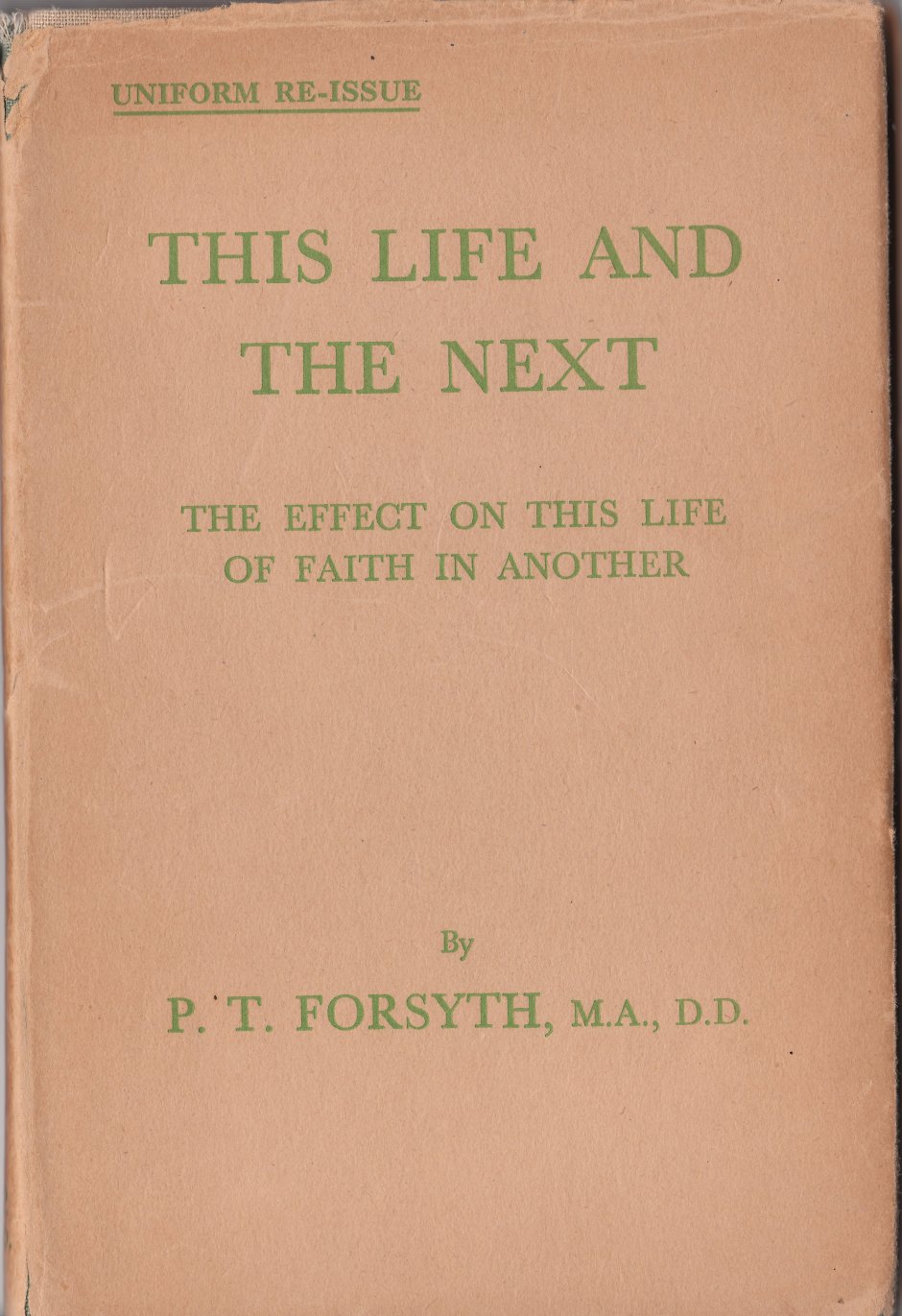
This Life and the Next

While most of PT Forsyth’s books attracted the publishers’ ‘reprint’ buttons (sometimes up to 11 or 12 different publishers, as was the case with his Lyman Beecher Lectures on Preaching delivered in 1907 at Yale University and subsequently published as Positive Preaching and the Modern Mind), by 1946 all of his books were out of print. Since then, of course, thanks to Independent Press and Hodder and Stoughton and, more recently, to our good friends at New Creation Teaching Ministry and Wipf and Stock, many of Forsyth’s bests works have been resuscitated. But not – at least not yet (one lives by hope, after all) – his final book, This Life and the Next, which first appeared in 1918.

Of the readers of Forsyth, too few have read this volume and, of those, sadly very few have spoken highly of it. Not a few have indicated that the book represents Forsyth’s greatest literary flop, and even his spiral into ‘heresy’, dealing as it does with themes not often tackled by so Protestant of spirits, such as prayer for the dead and what we might refer to as a Protestant reappraisal of the doctrine of purgatory.

But I like This Life and the Next very much and, for those who have previously drunk deeply from other Forsythian wells,  I reckon that it brings together nicely many of the themes and questions with which he increasingly wrestled in the decade before his death in 1921.

Anyway, all that is just a round-about way of saying that I’ve now made it available as a pdf here, ready to join the other links I’ve already provided to a number of his other works. So take up and read; or, should that be, download and read!

March bests …

From the reading chair: Genesis: Interpretation Commentary by Walter Brueggemann (this really is an exceptional book); The Incarnation: An Interdisciplinary Symposium on the Incarnation of the Son of God edited by Stephen T. Davis, Daniel Kendall and Gerald O’Collins; God in the Wasteland: The Reality of Truth in a World of Fading Dreams by David F. Wells (this was a re-read for me and, for the most part, was almost as profitable as the first time ‘round way back in 1994); Love’s Endeavour, Love’s Expense: The Response of Being to the Love of God by William Hubert Vanstone; Lament for a Son by Nicholas Wolterstorff; Incarnation Anyway: Arguments for Supralapsarian Christology by Edwin Chr Van Driel (I’ll post a review of this one in due course).

Through the iPod: In Our Bedroom After the War by Stars; Scratch My Back by Peter Gabriel; Another Sky by Altan; Hobo by Charlie Winston; Melodii Tuvi: Throat Songs and Folk Tunes from Tuva by Various Artists; Black Noise by Pantha Du Prince; Knee Deep in the North Sea by Portico Quartet; Albertine by Brooke Fraser; American Central Dust by Son Volt; Grace by The Soweto Gospel Choir; San Patricio by The Chieftains & Ry Cooder; A Young Person’s Guide To Kyle Bobby Dunn by Kyle Bobby Dunn.

On the screen: The Wire: Second Season; Marx Brothers – The Cocoanuts/Animal Crackers/Monkey Business/Horse Feathers/Duck Soup; Hancock’s Half Hour [Volume 1]

By the bottle: Highland Park 15 Year Old

Answer: Donald MacKinnon

Sometimes you’ve just gotta go with your gut on things. After assuming that Andre would totally nail this wee comp (he just needed to trust his instinct that ‘it has to be MacKinnon’), my dear friend Theng Huat (a fellow Forsyth devotee who has a habit of beating people to the post!) has pinched it with the suggestion of the great Donald MacKinnon. Well done Theng Huat. It’s, as you indicate, from MacKinnon’s essay in Justice the True and Only Mercy: Essays on the Life and Theology of Peter Taylor Forsyth (ed. by Trevor Hart).

Theng Huat, of course I’d love to shout you an all-expenses paid trip to NZ, but will you settle for a few books instead? Here’s a few that I thought may interest you. Take your pick of any three:

February bests …

From the reading chair: Concerning The True Care of Souls by Martin Bucer [the appearance of this volume – the first ever translation in English! – is a momentous landmark]; People of Bread: Rediscovering Ecclesiology by Wolfgang Vondey; Cross-Shattered Christ: Meditations on the Seven Last Words by Stanley Hauerwas; Words for Silence: A Year of Contemplative Meditations by Gregory Fruehwirth; On Religion: The Revelation of God As the Sublimation of Religion by Karl Barth; Thinking about Christ with Schleiermacher by Catherine L. Kelsey.

Through the iPod: Keepers, Workbench Songs, and Somedays The Song Writes You by Guy Clark; Going Somewhere by Colin Hay; Arrogance Ignorance and Greed by Show of Hands; Too Long in the Wasteland by James McMurtry; Cimarron Manifesto by Jimmy LaFavel; Live and No Deeper Blue by Townes Van Zandt; American VI: Aint No Grave by Johnny Cash. Did I mention Somedays The Song Writes You by Guy Clark? Absolutely brilliant!!!!

On the screen: Two Weeks [2007]; Dead Man Walking [1995].

Lenten Resources

Lent has begun. Those seeking Lenten resources might wish to visit the following places:

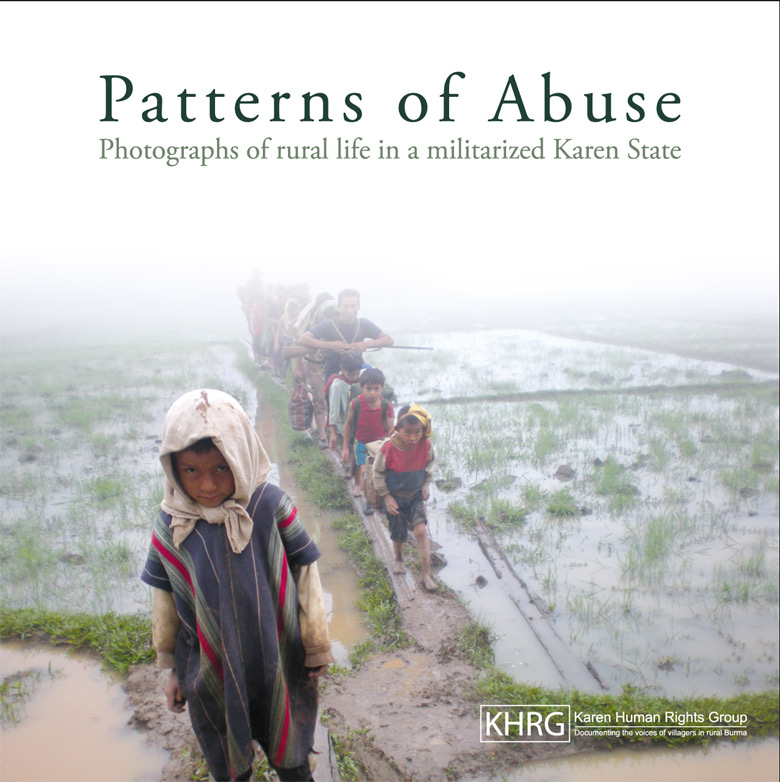
    Patterns of Abuse: Photographs of rural life in a militarized Karen State

    I have sometimes used this blog to draw attention to the humanitarian abuses facing Karen and Burmese people, two people groups most dear to me. And a few weeks ago, I mentioned that the Karen Human Rights Group (whose important work focuses on the human rights situation of villagers in rural Burma) has produced a 98-page photo-annotated album called Patterns of Abuse: Photographs of rural life in a militarized Karen State. This nicely-produced book contains 125 images taken over a 17-year period and depicts life in rural Karen State. My copy of the book arrived in our mailbox yesterday, and it powerfully documents the most tragic of human rights abuses against a most resilient people living under – and resisting – one of the most oppressive and evil regimes in history. A well-written introduction presents an accurate survey of the historical and political context that the Karen face, and subsequent sections illustrate and describe village life in Karen State, life in State Peace and Development Council-Controlled areas, life in non State Peace and Development Council-Controlled areas, as well as sections on soldiers and various portraits.

    That neighbouring-Thailand’s welcome increasingly seems to be running dry only adds to the deep sense of anxiety that the 133,000+ Karen refugees experience, an anxiety further fed by the increasing sense of donor fatigue over a prolonged refugee crisis.

    Please consider purchasing a copy. All proceeds support the work of KHRG.

    January bests …

    From the reading chair: Not Every Spirit: A Dogmatics of Christian Disbelief by Christopher Morse; Secular Christianity and God Who Acts by Robert J. Blaikie; The Calvin Handbook edited by Herman J. Selderhuis; Studies in Theology by James Denney; Institutes of the Christian Religion: 1541 French Edition by John Calvin, edited by Elsie McKee; Markings: Poems and Drawings, and Berlin Diary by Cilla McQueen; Practical Theology: An Introduction by Richard R. Osmer.

    Through the iPod: The Astounding Eyes of Rita, Le Pas Du Chat Noir, Astrakan Cafe, ECM Touchstones: Conte de l’Incroyable Amour, Le Voyage de Sahar, Thimar, Barzakh, and Khomsa, all by Anouar Brahem; Available Light by Dave Dobbyn; Arvo Pärt: I am the True Vine by Paul Hillier; Britten Choral Works by Choir of King’s College Cambridge

    On the screen: The Wire (Season 1); Mary and Max [2009].

    By the bottle: Olssens Nipple Hill Pinot Noir 2008

    Doing my bit to reduce landfill

    I never cease to be amazed at some of the books that people literally throw away. Such scandalous and violent disposals are certainly a sign that we are living in the last days. A recent trip to the local tip saw me return with three books:

    An enquiry to the bloke who works there ‘in the book section’ revealed that the most thrown away book at the tip is the Bible.