Author: Jason Goroncy

Slavitt: ‘The Seven Deadly Sins’

Seven Deadly Sins

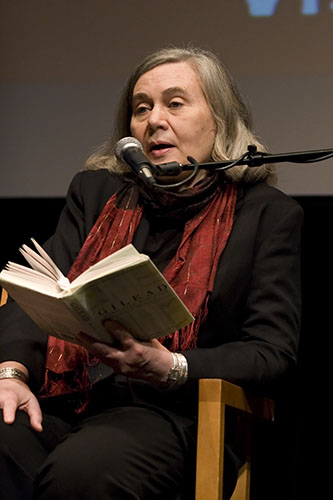
Having just finished reading David R. Slavitt’s, The Seven Deadly Sins and Other Poems, I could not resist posting just one more. Here’s the title piece: ‘The Seven Deadly Sins’ (pp. 51-56), one I delighted in reading a number of times, not least because of its reminiscence with Lewis’ Wormwood-Screwtape correspondence. It also made me wish that the tradition identified a host more deadly sins.

1 pride
Surely, there must be some mistake. I admit
at once that my name is there with the other six,
but after all, if you look at what I am
and what I do, as you should not only for my
sake but your own, and examine in however
perfunctory a fashion before passing
judgment, you will realize that I have about me
a certain dignity, even a moral weight,
and that my contribution over the generations
has been by no means negligible. Only call me
self-respect, or, avoiding false modesty, honor,
and where are we then? In what way are my promptings
sinful? Pride gives men a reason for doing
the right thing even when the world
has gone mad. Without any self-regard,
I suggest that a man is helpless, very likely
depressed, and could at any moment go
native. In this light you must concede
that I am one of the bulwarks of decency: I
embody not only ethical norms but also
standards of good taste in dress and deportment
as well as in art and music without which
civilization would long ago have toppled.
A sin? No, I’m a virtue and have my pride.

2 anger
This is, to say the very least, annoying,
but as you see, I am calm, I am in control.
I should like to point out, however, that the capacity
for anger is morally neutral, and even, sometimes,
a good thing. Does injustice make you angry?
Do cruelty and suffering not engage
your emotions? Intellectual disapproval
is never enough. What you want is your blood to boil,
to seethe with fury at the outrageousness of what
you cannot tolerate, and mankind ought not to permit.
Anger, or call it instead righteous wrath,
is an aspect of the divine, and if we partake
to any degree in that perfection, then we
also feel rage at what goes on around us.
For me to be classed as one of the seven deadly
sins is enough to make anyone angry,
but what’s wrong with that, as long as I maintain
proper decorum? The mental state, the mere
idea of anger cannot be sinful. Any
random thought that crosses your mind . . . Are you held
accountable for that? Then you are all
eternally damned—that is if you still believe
in damnation and those scary Italian pictures
of the last judgment with the shrieking souls falling
on one side of the canvas, and, on the other,
beatific wimps ascending, smiling,
full of the gas of gentle piety.
Do you want to be one of those? Do you? I ask you.
Grow up, accept who you are, and accept me.

3 avarice
I know what you’re about to say: radix
malorum est cupiditas. I admit
that, in Latin, it has a nice ring to it, but let us
be frank with one another and try to imagine
a world in which there wasn’t at least some degree
of cupiditas. The industrial revolution
is erased, the capitalist system in which mankind
is better off, at least in a material way,
than it ever has been since they rooted about
for acorns. Ambition? The desire for betterment,
for one’s self and family too, the eagerness
for respect that society shows, it cannot be
denied, in financial terms, the only language
universally understood . . . You want to chuck
all that? What are you, some kind of left-wing dreamer?
Greed can get out of hand (but then what can’t?)
and be carried sometimes to grotesque excess.
And if that is the case, then Greed isn’t the sin
but Excess—which oddly does not appear on the list.
A roof over your head, a decent bed,
a nice house, or maybe even a little
more than that? A car that’s fun to drive
and you’re on the road to hell? Does that make sense?
Who’s left? You want to go and live on a commune?
Or maybe some simple place in the third world?
Well, maybe you do, but only because it’s cheaper,
you can get good servants for next to nothing, and live
remarkably well on what your portfolio yields.

4 envy
The rest of them envy me, and I admit
that I am pleased by this. It’s always nice
when somebody looks at your ring, your stickpin, your wife,
the emeralds at her neck and on her bosom,
and smiles to hide the grinding of his teeth
as he admits to himself (but you know, too)
that you are the alpha male. The other six
are on the list, but I am the only one
who appears as well in the Ten Commandments, which galls them.
Not that this makes me especially heinous or different,
for who does not feel envy when window-shopping
on Madison in the sixties? He’s blind, or dead,
or he has so much, himself, that he only knows
envy from the receiving end, for it
is a two-way street. You crave what this man has,
or how much he knows, or how good he looks, or his youth
or health, or his success, or his children’s . . . Of course,
you do, and this is a goad to work harder.
Take a longer view, and all the improvements
of the past five hundred years, you must admit,
resulted from my prompting. The labor movement?
Universal suffrage? The fundamental
belief in equal justice? They’re all my doing,
and answers to the envy that first informed
those men and women that they were being treated
like beasts, like dirt. Why then does my name appear
on lists of prohibitions and taboos?
Precisely for that reason—that I disturb
the social order and make the nobles quake
in their huge dining rooms with the centerpieces
of silver and gold, the crystal chandeliers,
the flatware, the fine china, and all those footmen.
They count on it that wealth arouses envy
and hope that the peasants, believing what they’ve been told,
won’t riot (at least not yet), for that would be sinful.

5 lust
I have an affirmative defense. I am not only not
a sin but the subject of Jehovah’s first commandment:
Be fruitful and multiply. How else does that happen,
do you suppose, and what demented church father
loathing the body, loathing himself, dreamed up
the perverse idea that lust was, in itself,
a bad thing? The Greeks, who were civilized—
at least for a while—thought of me as a god
and accorded me respect. What man or woman
can look at a painting or sculpture, never mind of a nude
but even a pot of flowers, a landscape, a still life,
without lust, or say an appreciation
of the sensuous forms the painter has on offer,
and not respond at all? I should not have been put here
on this ridiculous list, and whoever thinks
I deserve such a calumny ought to see
a shrink. People can, I concede, misuse
my gift, but that’s their business. Love, children,
the survival of the species have their costs.
I invite you to take a walk with me in the springtime
when the girls first reappear in their summer dresses
and tell me it is not good to be alive.

6 gluttony
What, I ask you, distinguishes me from hunger
that can’t be a sin, except in the mind of some
self-abusing monk in his cell, despising
whatever is not pure spirit? Men are bodies,
and bodies need to be fed. But to answer the question,
gluttony is excess, some unattractive
fat rich man whom it’s easy to laugh at.
There are, nevertheless, a few words
of explanation (not perhaps a defense
but at least an extenuation) for the deeper
question is the nature of his hunger
that he knows is unhealthy. His doctor, at every visit,
talks of his sleep apnea, his arthritis,
and his A1C hemoglobin that’s high,
and the poor fellow would cut back if he could.
He resolves to do better, and tries, and fails.
That hunger of his isn’t for food but for love.
He is sad, or beyond sad, and in his heartbreak
he needs to be consoled and he dimly remembers—
or cannot quite remember what his body
keeps, still, in its deepest recesses—lying
on his mother’s breast, snug, warm, loved,
and being suckled, and he would give the world
to go back to that, but he can’t, and instead he gorges,
stuffs himself, and never is satisfied.
But is that a moral defect? Or is it the world,
perilous and unfriendly as it is,
that deserves reproof? Show him a little compassion,
the understanding and love that he hungers for.

7 sloth
Not laziness, no, it’s bigger than that. The older
name was better, Accidie, which suggests
a larger fatigue, not only of flesh but of spirit,
a failure, at last, of faith, and that indeed
would be a sin, that is if you believed
in sin. But my people don’t. Perhaps they used to,
but now they get by on pills, the Lexapro
and maybe a little Wellbutrin. And their despair
may not indicate madness but sanity,
for they have seen through to the dismal truth of things—
that nothing lasts, that the dreams of their youth were merely
dreams. They grow up and age, and the body betrays,
and the mind, as it starts to consider the emptiness
that beckons, resigns itself. The childhood faith
they used to have seems quaint, or a bad joke.
There is no afterlife. There is no life.


It’s poetry ‘Stupid’

stupid‘In an age dominated as much as the past two centuries have been by science and the scientific method, those who fear mechanism have turned for support to the poets and artists. Professor Whitehead suggested that the metaphysicians of the future may be its poets rather than its philosophers, and that more than once, as in the case of Plato, this had been true of the past as well … In Kierkegaard’s century, the opposition to the primacy of intellect as the medium for acquiring knowledge came especially from the Romantic school of writers and thinkers in Germany, France, and England. Realizing that scientific mechanism would bring on what Nietzsche termed “the devaluation of all values,” the Romantics demanded the recognition that poetry communicated a higher knowledge than did prose, and that there was a wisdom in the history of the race which the intellect could neither transmit nor judge’.

So penned Jaroslav Pelikan in his richly-rewarding study Fools for Christ: Essays on the True, the Good, and the Beautiful (Philadelphia: Muhlenberg Press, 1955). While I do not consider myself one who dances with the Romantics (perhaps if you saw me dance you would understand something of why), I am unashamedly one of those who has – in the face of modernity’s unbridled confidence in scientific method – ‘turned for support to the poets and artists’. Consequently, and for some time now, it has been my practice to read a poem a day. Currently, I’m steadily making my way through C.K. Stead’s Collected Poems, 1951–2006, and a great collection by David R. Slavitt, The Seven Deadly Sins and Other Poems. Here’s Slavitt’s ‘Stupid’:

The sneezing having abated, the throat no longer
sore, I am nonetheless less, exhausted, stupid
as if my mental rheostat were turned down.
Paragraphs in books became opaque.
Even the talk on the radio faded in
and out, its reception fine but mine not.
An interesting adventure, one might have imagined,
but stupidity finds nothing interesting,

infecting, dulling the whole world down to itself,
with the one brilliant, heartbreaking exception—
that the dreams of the stupid are vivid as yours or mine,
their colors as bright, their mysteries all the more
mysterious and profound. Beyond, beneath
that intelligence we hold dear, they come into their own.

– David R. Slavitt, ‘Stupid’, in The Seven Deadly Sins and Other Poems (Baton Rouge: Louisiana State University Press, 2009), 16.

And let me share another one. Slavitt again, this time on ‘What Is Poetry About?’ (from pp. 17–18)

Or ask, rather, what earthly good is it,
when a trivial thing like not being able to find
my silver and amber pillbox can ruin my morning?
It’s somewhere here, I had it yesterday, I couldn’t have lost it,
but I can’t find it, which is as good as or as bad as.
One ought not to be too attached to objects, of course, and it is uneconomic
to pay a psychiatrist more to hear one’s kvetches about losing, say, a pillbox,
than the thing cost in the first place. But then think of the vessels
at Balthazar’s feast, not just cathected objects,
but holy, stolen out of the Temple by his father, Nebuchadnezzar.
This pillbox was from Krakow, a gift from my daughter.
We’d had a lovely day at Auschwitz … No, seriously, a good day,
with a Purim service at the end of it, and the old men, the remnants, the relicts,
chanting about Haman and his ignominious end in Shushan.
If you’re going to Auschwitz, you should go erev Purim,
which makes it bearable. And the pillbox was a memento of that.
So I dug through pockets of trousers and jackets, looked in the nightstand drawer,
peered under the bed, in a trivial but desperate
tizzy. Not to drag it out too exquisitely,
it was on the floor beside the nightstand, where the cats had knocked it
or left it after having played a little pillbox hockey,
which is as good as pinecone hockey with what they can snatch
from the guest bathroom potpourri. And everything was better,
I had it in hand and could relax, or at least stop worrying about that.
I’ve given up looking for the pen one cat or the other knocked off my desk,
not an important pen, but one I liked,
but I have forgiven them because what is the point in not forgiving them?
And they are dear cats, now that I’ve figured out
how their licking each other and then fighting, and then running around like dervishes
reminds me of my mother and my Aunt Vera, because these two
are also sisters and have a sororal connection, not
altogether pacific but deeply attached. So I forgive them for this, too,
which is easier, now that I have the pillbox back in my pocket.
Nebuchadnezzar was punished for having taken the vessels from the Temple,
went mad, and, like a beast, ate grass. Or if he wasn’t punished,
he just happened to go mad, which was, to the Jews who observed it,
significant. More modern ones might simply suggest that he see a shrink
and talk about whatever was bothering him, so that even if he was still unhappy
he would at least stop grazing like a bull in a meadow.
It’s the grass at Auschwitz that is misleading.
A friend of mine who was there, who was really there,
told me that they ate all the grass, not crazy but just hungry.
And poetry? Is what holds all this together, what keeps me
more or less together, or at least is a way of changing the subject.

Facebook and Twitter 101 for Congregations

Facebook TwitterA dear colleague of mine, Lynne Baab, will be hosting a webinar on Facebook and Twitter 101 for Congregations, on 22 September 22 (in USA) and 23 September (NZ and Australia). Here’s a description:

[Lynne will] provide an overview of how Facebook and Twitter both work; how groups, such as congregations, can use them; and a discussion of whether we need to be concerned about online relationships replacing face to face relationships. If you’ve been wanting someone to help you evaluate whether or not your congregation should be considering these social networking options, this webinar has been designed just for you.

A Creed for Modern Times

GreedAndrew Bradstock is Howard Paterson Professor of Theology and Public Issues at the University of Otago, Dunedin. He recently (5 August 2009) delivered a public lecture at the University of Auckland’s School of Theology titled ‘Profits Without Honour?: Economics, spirituality and the current global recession’. I love his opening:

We believe in one Market, the Almighty,
Maker of heaven on Earth,
Of all that is, priced and branded,
True growth from true growth,
Of one being with the Economy.
From this, all value is added.

We believe in Deregulation, once and for all,
The only way to prosperity.
For us and for our salvation,
Reagan and Thatcher were elected
And were made gods.
In their decade they legislated
To take away our economic sins.
They were crucified by the Liberal Media,
But rose again, in accordance with their manifestos.
They ascended in the polls
And are seated at the right hand of Milton Friedman.

We believe in the Invisible Hand,
The giver of economic life.
It has spoken through our profits.
It proceeds from the Law of the Deregulated Market,
And with the Market is worshipped and glorified.

We believe in one Globalised Economy.
We believe in one key business driver
For the increase in Gross Domestic Product.
We acknowledge one bottom line
For the measurement of wealth.
We look for the resurgence of executive compensation packages
And the life of the financial years to come.

Amen.

Pre-School Theology – 1

Tunnel BeachI live with a three-year-old theologian many of whose questions beg in vain for an answer from her theologian-father. Recent months have seen us doing some exegesis on the Lord’s Prayer (apparently one of the funniest prayers ever written), and we’ve also discussed the Nicene Creed together (apparently it’s unnecessarily long: ‘it doesn’t need to be that long’). Here’s a few of her recent pronouncements:

  • ‘Because Jesus is God raised from the dead, then God must have a penis’.
  • ‘God is exactly like Jesus. There is no other God’.
  • ‘The cross means that God is a wonderful boy … but God’s not really a boy or a girl’.
  • ‘It’s OK when we don’t know how to pray because Jesus can pray for us’.
  • ‘I don’t understand the Spirit’.

Makes me seriously excited about being a father, and about discovering together with my daughter the wonderful life of the God made known in Jesus.

J. McLeod Campbell and P.T. Forsyth on Christ’s Vicarious Ministry

John McLeod Campbell

This Friday (11 September) I will be presenting a paper at the Christian Thought & History/Pastoral Theology Seminar at the Department of Theology and Religious Studies (University of Otago).

The title of my paper is ‘“Tha mi a’ toirt fainear dur gearan”: J. McLeod Campbell and P.T. Forsyth on Christ’s Vicarious Ministry’.

All are most welcome to attend. The seminar will take place in Seminar Room 4.C.11, 4th Floor, Arts/Burns Building between 15.00–1615.

Rob Bell and Don Golden on eucharist and the new humanity

Jesus wants to save Christians‘In the new humanity, them becomes us, they becomes we, and those become ours. This is why it is very dangerous when a church becomes known for being hip, cool, and trendy. The new humanity is not a trend. Or when a church is known for attracting one particular kind of demographic, like people of this particular age and education level, or that particular social class or personality type. There’s obviously nothing wrong with the powerful bonds that are shared when you meet up with your own tribe, and hear things in a language you understand, and cultural references are made that you are familiar with, but when sameness takes over, when everybody shares the same story, when there is no listening to other perspectives, no stretching and expanding and opening up – that’s when the new humanity is in trouble.

The beautiful thing is to join with a church that has gathered and find yourself looking around thinking, “What could this group of people possibly have in common?” The answer, of course, would be the new humanity. A church is where the two people groups with blue hair – young men and older women – sit together and somehow it all fits together in a Eucharistic sort of way. Try marketing that. Try branding that. The new humanity defies trends and demographics and the latest market research.

In Acts 8 some of Jesus’ first followers are healing people, and a man named Simon sees this and offers them money and says, “Give me also this ability.” Simon is seduced into thinking that the movement of the Spirit of God is a commodity to be bought and sold like any other product. The apostles chastise him for his destructive thinking, because … the Eucharist is not a product.

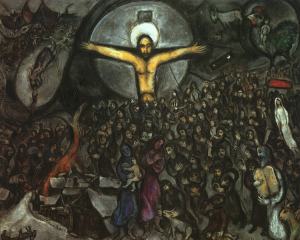
Chagall - Exodus (1952-66)

Glossy brochures have the potential to do great harm to the body and blood. Church is people. The Eucharist is people. People who have committed themselves to being a certain way in the world. To try to brand that is to risk commodifying something intimate, sacred, and holy.

A church is not a center for religious goods and services, where people pay a fee and receive a product in return. A church is not an organization that surveys its demographic to find out what the market is demanding at this particular moment and then adjusts its strategy to meet that consumer niche.

The way of Jesus is the path of descent. It’s about our death. It’s our willingness to join the world in its suffering, it’s our participation in the new humanity, it’s our weakness calling out to others in their weakness. To turn that into a product blasphemes the Eucharist.

The Eucharist is what happens when the question is asked, What does it look like for us to be a Eucharist for these people, here and now? What does it look like for us to break ourselves open and pour ourselves out for the healing of these people in this time in this place? The temptation is simply to duplicate the Eucharist of someone else’.

– Rob Bell and Don Golden, Jesus Wants to Save Christians: A Manifesto for the Church in Exile (Grand Rapids: Zondervan, 2008), 156–8.

A challenge for theological educators

resident aliens‘The seminaries have produced clergy who are agents of modernity, experts in the art of congregational adaptation to the cultural status-quo, enlightened facilitators whose years of education have trained them to enable believers to detach themselves from the insights, habits, stories and structures that make the church the church’. – Stanley Hauerwas and William H. Willimon, Resident Aliens: A provocative Christian assessment of culture and ministry for people who know that something is wrong (Nashville: Abingdon Press, 1989), 116.

Karen Brounéus on Rwanda, psychology and processes of reconciliation

Karen_BroneusThose within earshot of Dunedin might like to know that the next gathering of the Human Rights Book Group is Monday 14 September 5:30pm @ the Dunedin City Library, 1st floor, ITLeft Room (behind the room with the computers). We are very pleased to have as our guest speaker Dr Karen Brounéus, a post-doc fellow from the National Centre for Peace and Conflict Studies within the Humanities Deptartment at Otago University. Her work has focused on the psychological benefits of the reconciliation process in Rwanda and this will be the focus of our meeting this month. Her talk is titled ‘Rwanda – Are there psychological benefits to the reconciliation process?’

Trout with Ginger, Parsley and Rosemary

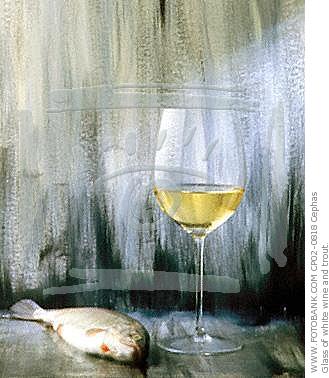
wine & troutThere are few greater pleasures than cooking, and to the sharing of recipes there appears no end. The latter strikes me as entirely appropriate because food is all about sharing. Bereft of a pretentious title, here’s one of my favourite trout recipes:

Ingredients

  • Fresh trout, gutted (and, if preferred, filleted)
  • A generous handful of fresh rosemary, chopped
  • An equally-generous handful of fresh Italian parsley, chopped
  • 1–2 tbsp chopped or grated ginger
  • 2–3 tbsp honey
  • Finely grated zest of 1 orange
  • Juice from 1 orange
  • 3–4 tsp lemon juice
  • 2–3 tsp soy sauce
  • 3–4 tbsp pine nuts
  • 4–5 handfuls of baby spinach (optional)
  • Crushed rock salt
  • Black pepper, freshly ground
  • Butter
  • Extra Virgin Olive Oil
  • Rice

Cooking

  • First thing is, preheat the oven to 200°C, gas mark 6. Then get the rice on (in lightly salted water). Then season the trout (whether whole or fillets) all over with all the rosemary, all the ginger, half the parsley and salt and pepper. Don’t skimp on the ginger! Place fish in a shallow ovenproof dish with a good splash of extra virgin olive oil and butter (extra butter on top helps the cholesterol) and bake covered for about 20 minutes, or until the fish is opaque.
  • Meanwhile, pour yourself a generous glass of wine (you’re working hard). Then, mix together the honey, orange zest, orange juice, lemon juice, soy sauce, and a little salt and pepper in a bowl. Then it’s time for a quick drink (of the wine, not the sauce).
  • Then, lightly toast the pine nuts until light brown (don’t burn the little fellas), then put them aside to cool down. If you’re going for the spinach option, it’s now time to add the spinach to the pan in which you toasted the pine nuts, add 2–3 tbsp water and cover. Cook for around 3 minutes until the spinach has wilted.

Serving Up

Place the rice (and spinach) on warmed serving plates – right in the centre. Then gently place the trout on top of the rice (and spinach). Scatter the plate with the toasted pine nuts, splash the dressing over the fish and sprinkle with the remaining parsley.

Eat slowly, and enjoy it with the best bottle of Pinot Gris or Sauvignon Blanc that you can afford.

Committees

Leunig - rightsOh, give me your pity!
I’m on a committee,
Which means that from morning to night.

We attend and amend
And contend, and defend
Without a conclusion in sight.

We confer and concur,
We defer and demur,
We reiterate all of our thoughts.

We revise the agenda
With frequent addenda
And consider a load of reports.

We compose and propose,
We suppose and oppose,
And the points of procedure are fun,

But though various notions
Are brought up as motions
There’s terribly little gets done.

We resolve and absolve;
But we never dissolve,
Since it’s out of the question for us

To bring our committee
To end like this ditty,
Which ends with a period – thus.

– Anonymous, cited in Helen B. Schwartzman, The Meeting: Gatherings in Organizations and Communities (New York: Plenum Press, 1989), 207.

August bests …

Moltmann - A Broad PlaceFrom the reading chair: In the Beauty of the Lilies, by John Updike; A Broad Place, by Jürgen Moltmann; An Educated Clergy: Scottish Theological Education and Training in the Kirk and Secession, 1560-1850, by Jack C. Whytock.

Through the iPod: Jewel, Lullaby; KD Lang, Watershed; jj, jj n° 2; Lucinda Williams, Little Honey and West; Emmylou Harris, All I Intended to Be; John Hiatt, Same Old Man and Slow Turning.

On the screen: Leonard Cohen: I’m Your Man [2005]; Disgrace [2008]

In the glass: Two Degrees Pinot Noir 2007.

Participatio: A new journal is born

tftorranceParticipatio is the journal of the Thomas F. Torrance Theological Fellowship. The long-anticipated first volume is now available for download here, and includes Eulogies by Alasdair Heron and George Hunsinger, and Recollections and Reflections by Geoffrey W. Bromiley, Elmer M. Colyer, Jock Stein, Howard Taylor, David Torrance, Kenneth Walker and Robert T. Walker. It also includes the following Essays:

  • Ray S. Anderson, ‘The Practical Theology of Thomas F. Torrance’
  • Alister E. McGrath, ‘Thomas F. Torrance and the Search for a Viable Natural Theology: Some Personal Reflections’
  • Paul D. Molnar, ‘The Centrality of the Trinity in the Theology of Thomas F. Torrance’

I know what I’ll be reading in the next few days …

Frederick Buechner on the communion of saints

KereruWith the Calvin Conference over, and a few days before I get back into the swing of preparing lectures again, it’s time to share another gem from Buechner (certainly I’m too tired to write anything intelligent myself):

‘At the Altar Table the overweight parson is doing something or other with the bread as his assistant stands by with the wine. In the pews, the congregation sits more or less patiently waiting to get into the act. The church is quiet. Outside, a bird starts singing. It’s nothing special, only a handful of notes angling out in different directions. Then a pause. Then a trill or two. A chirp. It is just warming up for the business of the day, but it is enough.

The parson and his assistant and the usual scattering of senior citizens, parents, teenagers are not alone in whatever they think they’re doing. Maybe that is what the bird is there to remind them. In its own slapdash way the bird has a part in it too. Not to mention “Angels and Archangels and all the company of heaven” if the prayer book is to be believed. Maybe we should believe it. Angels and Archangels. Cherubim and seraphim. They are all in the act together. It must look a little like the great jeu de son et lumière at Versailles when all the fountains are turned on at once and the night is ablaze with fireworks. It must sound a little like the last movement of Beethoven’s Choral Symphony or the Atlantic in a gale.

And “all the company of heaven” means everybody we ever loved and lost, including the ones we didn’t know we loved until we lost them or didn’t love at all. It means people we never heard of. It means everybody who ever did – or at some unimaginable time in the future ever will – come together at something like this table in search of something like what is offered at it.

Whatever other reasons we have for coming to such a place, if we come also to give each other our love and to give God our love, then together with Gabriel and Michael, and the fat parson, and Sebastian pierced with arrows, and the old lady whose teeth don’t fit, and Teresa in her ecstasy, we are the communion of saints’. – Frederick Buechner, Whistling in the Dark: An ABC Theologized (San Francisco: Harper & Row, 1988), 30–1.

John Calvin: Servant of the Word

Calvin's pulpit in St-Pierre cathedral

Calvin's pulpit, St-Pierre Cathedral, Geneva

Short of the Lord’s return, or of some unforeseen event, Monday will see me deliver a paper on ‘John Calvin: Servant of the Word’ at the Calvin Rediscovered conference in Dunedin. Here’s my opening paragraph, and if you’re around consider coming along to hear the rest. It really does look like it’ll be a worthwhile gig.

While the Church had known schism before, its program of reform in the sixteenth century led to its fragmentation the likes of which it had not known since the ‘Great Schism’ some five centuries earlier. The magisterial reformers were understandably concerned about the centrifugal force that their program encouraged, and they did not dismiss lightly Rome’s sharp indictment that disunity indicated defect. This concern is evident in one of the more ‘catholic’ of the Reformed confessions, the Second Helvetic Confession (1566) penned by Huldrych Zwingli’s student Heinrich Bullinger: ‘We are reproached because there have been manifold dissensions and strife in our churches since they departed themselves from the Church of Rome, and therefore cannot be true churches’. In response, and by way of marking some distance from more radical wings of the reformation, the magisterial reformers reminded Rome of her own history of conflict and fragmentation, and, more substantively, addressed the question of what constitutes ‘true church’. Their conclusion, précised by John Calvin, is well known: ‘Wherever we see the Word of God purely preached and heard, and the sacraments administered according to Christ’s institution, there, it is not to be doubted, a church of God exists’. These two ‘marks’ function not as boundaries so much as ‘directional signs that point to the core of faithful church life’. And they recall that no matter how frequently or intentionally the Church may engage in additional practices or activities, the most basic, indispensable and controlling hub of its life remains its witness to the one Word of God from pulpit, font and table. This paper will mainly be concerned to attend to the place that the former occupied in Calvin’s ministry and thought, and it asks what remains serviceable about Calvin’s homiletic for those who preach – and for those who hear and taste – the Word of God today.

Frederick Buechner on hate and love

love hateApologies to those who may be getting tired of the Buechner citations (you can blame Jim for planting this seed), but I’m finding his writing alluring. Here he is on hate and love:

‘Hate is as all-absorbing as love, as irrational, and in its own way as satisfying. As lovers thrive on the presence of the beloved, haters revel in encounters with the one they hate. They confirm him in all his darkest suspicions. They add fuel to all his most burning animosities. The anticipation of them makes the hating heart pound. The memory of them can be as sweet as young love. The major difference between hating and loving is perhaps that whereas to love somebody is to be fulfilled and enriched by the experience, to hate somebody is to be diminished and drained by it. Lovers, by losing themselves in their loving, find themselves, become themselves. Haters simply lose themselves. Theirs is the ultimately consuming passion’. – Frederick Buechner, Whistling in the Dark: An ABC Theologized (San Francisco: Harper & Row, 1988), 57.

Hamill wets his (webbed) feet …

Bruce HamillBruce Hamill (who has for too long sat on the sidelines of blogdom, and too infrequently waded in with gems from the south, and who has been a guest poster here at Per Crucem ad Lucem) has finally exhausted the ears of the good people of Dunedin, and so has started his own blog – boo to a goose – with a view to exhausting those of the rest of the planet, post by post. Bruce is an engaging and astute theologian who thinks consciously in the service of the church. He serves as one of the ministers of the Coastal Unity parish in Dunedin.

Consider adding boo to a goose to your blogroll and rss feed reader.