Author: Jason Goroncy

Hope: a late-winter reflection

Watts - Hope 2The thought of my affliction and my homelessness is wormwood and gall! My soul continually thinks of it and is bowed down within me. But this I call to mind, and therefore I have hope: The steadfast love of the Lord never ceases, his mercies never come to an end; they are new every morning; great is your faithfulness. “The Lord is my portion,” says my soul, “therefore I will hope in him.” – Lamentations 3.19–24

To be human is to be a creature of hope, to be orientated towards something which or someone who transcends the boundaries of our own history and experience, and to see our life as anchored somewhere beyond view. I was reminded of this again recently when I was reading Václav Havel’s wonderful book Disturbing the Peace wherein he writes:

… the kind of hope I often think about (especially in situations that are particularly hopeless, such as prison) I understand above all as a state of mind, not a state of the world. Either we have hope within us or we don’t; it is a dimension of the soul, and it’s not essentially dependent on some particular observation of the world or estimate of the situation. Hope is not prognostication. It is an orientation of the spirit, an orientation of the heart; it transcends the world that is immediately experienced, and is anchored somewhere beyond its horizons …

Hope, in this deep and powerful sense, is not the same as joy that things are going well, or willingness to invest in enterprises that are obviously headed for early success, but, rather, an ability to work for something because it is good, not just because it stands a chance to succeed. The more unpropitious the situation in which we demonstrate hope, the deeper that hope is. Hope is definitely not the same thing as optimism. It is not the conviction that something will turn out well, but the certainty that something makes sense, regardless of how it turns out. In short, I think that the deepest and most important form of hope, the only one that can keep us above water and urge us to good works, and the only true source of the breathtaking dimension of the human spirit and its efforts, is something we get, as it were, from “elsewhere.” It is also this hope, above all, which gives us the strength to live and continually to try new things, even in conditions that seem as hopeless as ours do, here and now. (pp. 181–82)

Christians, and people of other faiths too, will want to give a particular name to this ‘elsewhere’ of which Havel (who was an agnostic) speaks, and the ‘love’ and ‘mercies’ and ‘faithfulness’ of the Lord of which the writer of Lamentations (possibly Jeremiah) speaks, but the basic conviction here will be shared by all. For Christians, this ‘elsewhere’ has a name – Jesus Christ – and it has a particular shape – the cross and resurrection. And St Paul reminds us that to call upon this name, and to embody this cross-resurrection shape, and to participate in this hope – in this ‘elsewhere’ orientation – is something that we do not do alone, for the patient Spirit of God hopes along with us too, perhaps especially when things feel the most hopeless, and waits with us for all things to become new.

And this hoping also takes a particular kind of shape in our world. And it is important that it does, for as Edward Schillebeeckx reminds us, ‘Who could believe in a God who will make everything new later if it is in no way apparent from the activity of those who hope in the One who is to come that he is already beginning to make everything new now?’

Hope, in other words, does not allow us to remain unmoved, but the Spirit of hope ‘leads us into life, into the whole of life’, and encourages faith so that it does not degenerate into faintheartedness, and strengthens love so that it does not remain enclosed within itself and with those who are like it.

Hope leads everything.
For faith only sees what is.
But hope sees what will be.
Charity only loves what is.
But hope loves what will be –
In time and for all eternity. (Charles Péguy, as cited in Jürgen Moltmann, The Experiment Hope, 189)

♦♦♦

Prayer (modified from Terry Falla, Be Our Freedom, Lord, and Rowland Croucher, ed., Still Waters, Deep Waters, 127–28)

O Lord our elsewhere, be for us the truth on which our life and death are built, the hope that cannot be destroyed, the freedom from which love and justice flow, and the joy that has eternity within it.

God of hope, we confess that we have fallen prey to false hopes; hopes of success, prestige, influence; we have invested ourselves emotionally in them only to be disappointed.

We pray for those we see deceived by the illusions of false hope; led by false shepherds, political and psychological messiahs who promise much, but deliver little.

We praise and thank you for our true hope, a sure and certain hope in your Son, and pray that even today we might live in the light of the last day. Help us not to be nostalgic for the past nor possessive of the present, but, with the Spirit’s help, to hold today and each day open to the future heritage of your Kingdom. Amen.

god in the art gallery

God in the art galleryTomorrow night, I will be speaking about (and showing some slides of) artist’s images of Jesus. Here are the details:

Where: The Seminar Room at Salmond College, 19 Knox Street, Dunedin
Time: 7.30 pm

If you’re in Dunedin, you are very welcome to come along. There’s even supper.

Forsyth’s plea for an All Creatures’ Day

cow‘Now what day should we have for All Creatures’ Day? You will not find that in the almanack either. But what better day could we have than this selfsame Christmas Day? For was Jesus born among other children? Was He born into a nursery? Was there a crowd of other children all eager to see the new baby, and all clapping their hands when they did? Nothing of the kind. You know He was born in a stable, with a horse-trough for a cradle, with straw for a bed, and the cattle for company. There was the ass on which His mother rode, there were the asses of the other travellers who had got rooms in the inn; there were the cows belonging to the farm, and the fowls pecking in the straw; and there were the sheep—well, the sheep, of course, were in the fields, where the angels’ message came to the men who were taking care of them. The animals were nearer to the infant Jesus than any children were. And how often He spoke of the animals when He grew up; and He never spoke as if he despised them, but always as if He watched and loved them. And how very much the animals owe to Jesus! How much better the religion of Jesus has made people treat animals! The animals owe Jesus a great deal, if they but had a tongue to tell it. Yet they have tongues. I once saw a very old carving of the Nativity over a great church door. Now, I have seen several old pictures of the Nativity with the animals standing by or looking in with great interest at the stable window. But in this case they were still more interested; they were very affectionate to the baby, and their tongues expressed it. For it was two cows, and they had come up to the manger. You may know, perhaps, how curious cows are about clothes. They eat the cottage wash sometimes when it is hung out on the hedge. Well, among the swaddling clothes they found the baby; and they were so far from being disappointed that they felt quite loving, and they were licking it with their great rough tongues. I often think cows very kindly animals, but I never thought so more than then. Very likely the artist, with a kindly humour, wished to represent the homage of the creatures for the little Jesus. And he knew that they could not speak and praise with their tongues like men. So he made them worship in the only way their tongues could’.

– P. T. Forsyth, ‘Dumb Creatures and Christmas: A Little Sermon to Little Folk, 1903’ in Descending on Humanity and Intervening in History: Notes from the Pulpit Ministry of P.T. Forsyth (ed. Jason A. Goroncy; Eugene, OR: Pickwick Publications, 2013).

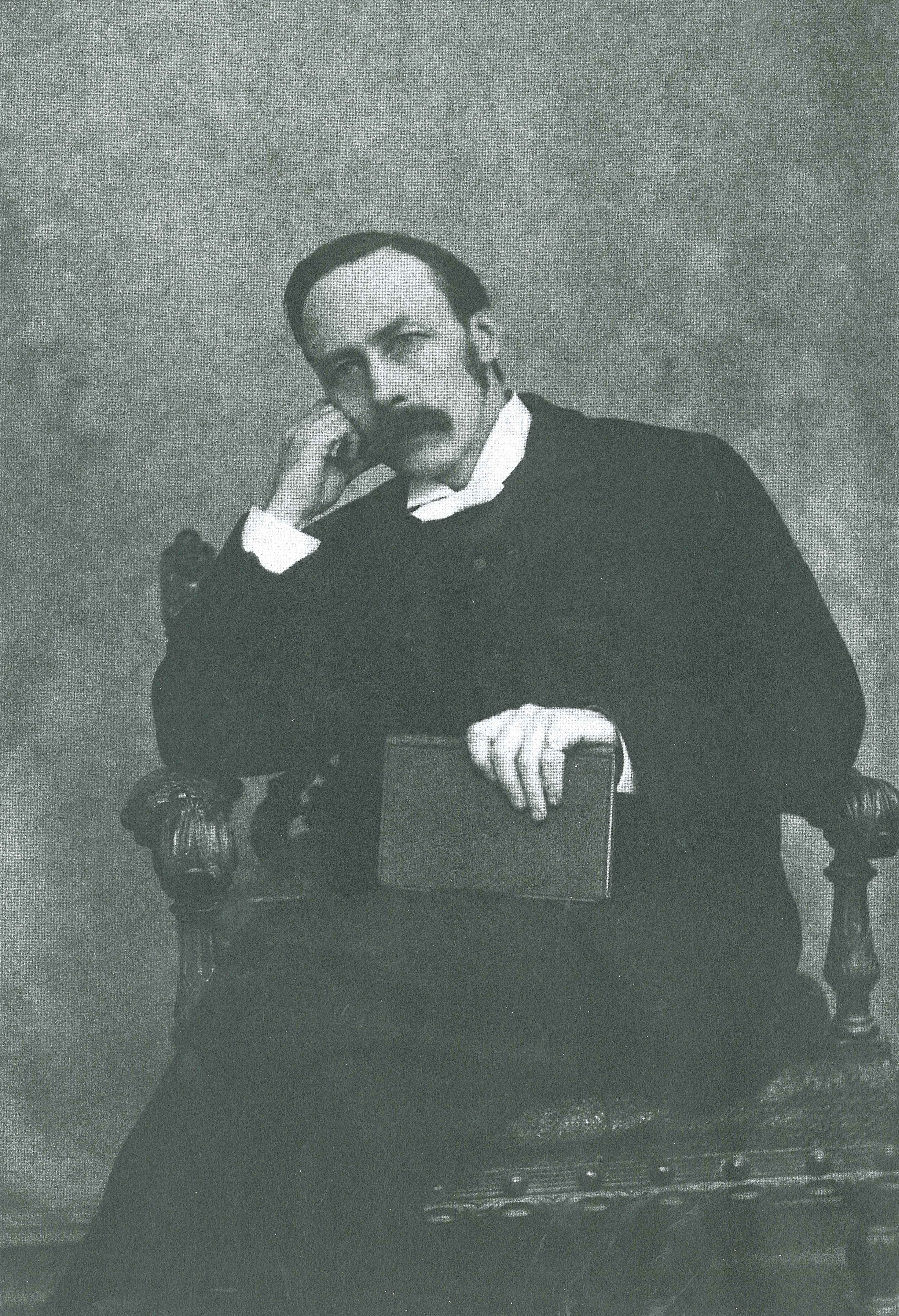
On reading P. T. Forsyth

River bankRecently, I posted a snippet from one of my forthcoming books, another on P.T. Forsyth, titled Descending on Humanity and Intervening in History: Notes from the Pulpit Ministry of P.T. Forsyth. As the typesetter and myself put the final touches on the manuscript, I have been struck again by the gift that discovering Forsyth has meant for me. I share a little of that in the book’s Introduction. Here’s a taste:

There can be little doubt that one of the real gifts that this great Congregationalist and Edwardian theologian bequeathed to the Church is the encouragement of her ministers to forego the “affable bustle” that would see them running errands for the culture motivated in no small part by an attempt to convince the world—and the Church!—of the use, value and worthiness of their vocation, and to instead give themselves wholly to echo and bear witness to divinely-ordained foolishness—what Forsyth calls “the Folly of the Cross”—and to trust the outcome to God. Those who carry the burden—a joyous burden to be sure, but a burden nonetheless—of preaching week after week will no doubt be familiar with that anxiety that attends the sweat marks staining the manuscript, the fruit of one’s wrestling with the very impossible possibility of the preacher’s task—which is nothing less than witness to and confession of God’s self-disclosure—of addressing those not only desperate to hear the Word of life but also those long deafened by the drums of seemingly endless counter-words, that feeling that despite all one’s best efforts the fire that burns so freshly in the heart of the biblical witness has all but been snuffed out by the time the sermon is made public. Such an experience is not uncommon among ministers; nor is the quest for some trustworthy guides. The pulpit is a demanding mistress!

A generation after Douglas Horton discovered Karl Barth’s Das Wort Gottes und die Theologie in the library of the Harvard Divinity School and in Barth’s “strange new world” a potent alternative to the dehydrated humanism in which he had been trained, Browne Barr, who later taught homiletics at Yale, made a similar discovery in 1944 when, as a green minister in a recently-vacated parsonage he found himself among old-looking and left behind books which lined the study walls where the “practice pulpit set up by his predecessor . . . faced the street.” He reasoned:

The church was in such poor shape—no worship center, no 16mm projector, no personality games in the youth society or new signs on the front lawn—because the old minister, the stricken one, was a Britisher who simply was not up-to-date, modern. It was obvious he did not understand American needs nor use contemporary methods. There wasn’t a single flannel cloth board in the whole church or parsonage, but he certainly had a lot of books! The young man glanced at the titles and his eye fell on one about “preaching” and the “modern mind.” He picked it up and flipped a few pages into it . . . He remained there transfixed for a long time . . . He read until darkness and cold woke him to the hours’ passing. He tucked that single volume under his arm and went down out of the attic and through the cold house and into the street. He had found the place where he was to study and practice to be a preacher for the next years of his life. He had also found the man, then dead 23 years, who was to be his instructor.

The cause of the hypnosis was Forsyth’s Positive Preaching and [the] Modern Mind. In many ways the origin of the book in your hands lies in a similar experience (or, more accurately, in a series of such experiences) in myself half a century and more since Barr’s encounter with “the homiletician’s theologian.” While sitting at a Melbourne bus stop some years before I entered pastoral ministry, the last bus for the evening had long departed before I looked up from my first reading of Forsyth’s The Justification of God. During those late hours, I was given to see myself as one having been carried into the very crisis where God and the world meet. There was something arresting, too, about Forsyth’s style. It seemed to simultaneously bear witness to the elusive nature of divine truth and to open up that space which had been cleared and invite—nay, command—me to enter, or, better still, to find myself already in, the new landscape created by the crisis, the view of and from which was entirely unexpected. Moreover, as I came to learn, this landscape, satiated as it is with the occupation of holy love, rendered hollow and disenchanting much of what my reading of theology had taught me, and what my own arrogance had assured me, and underlined the impotence of all creaturely aspirations, including and perhaps especially religion, to speak to the real issues facing human persons, their consciences and their communities. Here, I was confronted with a Word that one could live by with the honesty and integrity that being human demands, a Word which faced the world and not only a select minority within it living, as it were, in an ark, a Word destined to be made public to those living in the cynicism and despondency of the time, and of all times.

Words from Czesław Miłosz come readily to mind: “I have read many books but I don’t believe them/When it hurts we return to the banks of certain rivers.” One of those banks is called “reading P. T. Forsyth.” On that bank, I experienced not only a dying but also a resurrection, a resurrection into a new and still largely-unsurveyed world wherein everything and every one—including God—is viewed sub specie crucis; that is, under the vista or form of the cross. Forsyth’s thought, drenched as it is in the cruciality of God, came as a lifeline, even as something like a sacrament or as medicine which charged life itself with the Spirit who makes life life, with the Son who is the living content of God’s own good news and who experienced in a divine life our death “unsustained by any sense of the grandeur and sublimity of the situation,” and with the Father who in all the jealousy and joy of holy love transforms “bold and bitter” mutineers into the delighted and forgiven children of God who “in their living centre and chronic movement of the soul experience sonship as the very tune of their heart, the fashion and livery of their will,” and which cleared for me a way which bespoke of realities I can do little more than point to regarding the task of Christian ministry into which I was being called. Reading Forsyth, I also came to believe in preaching, and to keep on preaching when the content of my speech finds so little echo in the shape of my own living, or when my spirit is as dry as the Simpson Desert, or when it is soaking wet but off course and perilously close to the rocks, or when in darkness so overwhelming that escape seems impossible, and when, like Maurice Gee’s Reverend George Plumb, I make “loud noises to persuade back my memories.”

To be sure, to believe in preaching is to believe in miracles; or, more properly, it is to believe in One who not only already longs to speak but who also “gives life to the dead and calls into existence things that do not exist” (Romans 4:17). Moreover, to believe in preaching is to believe that such calling into existence occurs via the irresponsible method of liberally sowing seeds whether in places where there is no soil, or on rocky ground, or among thorns, or in fertile and productive soil. Of course, to believe in preaching is not the same thing as to believe in preachers. Forsyth too taught me that, and enabled me to hear what I later learnt and heard again in Barth and in others—that “the Church does not live by its preachers, but by its Word.”

– Jason A. Goroncy, ‘Preaching sub specie crucis: An Introduction to the Preaching Ministry of P.T. Forsyth’ in Descending on Humanity and Intervening in History: Notes from the Pulpit Ministry of P.T. Forsyth (ed. Jason A. Goroncy; Eugene, OR: Pickwick Publications, 2013).

Cornel West and Julian Assange in conversation

West and Assange

Here’s a remastered version of Cornel West’s interesting conversation with Julian Assange, recorded last May at the Ecuadorian Embassy in London. The ‘blues man’ wants to talk about W. B. Du Bois, R. H. Tawney, Margaret Fuller, Martin Luther King, Jr., Hannah Arendt, Abraham Heschel and Plato, and Assange wants to talks about Google, the rule of law, Bradley Manning and Wikileaks. They both like talking about courage, and appropriately so. The pastor-theologian in me wishes that they had also spent some time talking about ego.

[An earlier version of the talk was posted here.]

On reading Moby Dick

Moby Dick

‘It is generally recognized that the canons of the ordinary novel do not apply to Moby-Dick. If we applied them we should be forced to put it down as an inept, occasionally powerful, but on the whole puzzling affair. This was the opinion up to two decades ago. During those decades we have discovered Moby-Dick to be a masterpiece. What caused this shift in perspective? To put it simply, we discovered how Moby-Dick should be read. We must read it not as if it were a novel but as if it were a myth. A novel is a tale. A myth is a disguised method of expressing mankind’s deepest terrors and longings. The myth uses the narrative form, and is often mistaken for true narrative. Once we feel the truth of this distinction, the greatness of Moby-Dick becomes manifest: we have learned how to read it’. – Clifton Faldman, in The Atlantic Monthly 172 (July, 1944), 90. [HT]

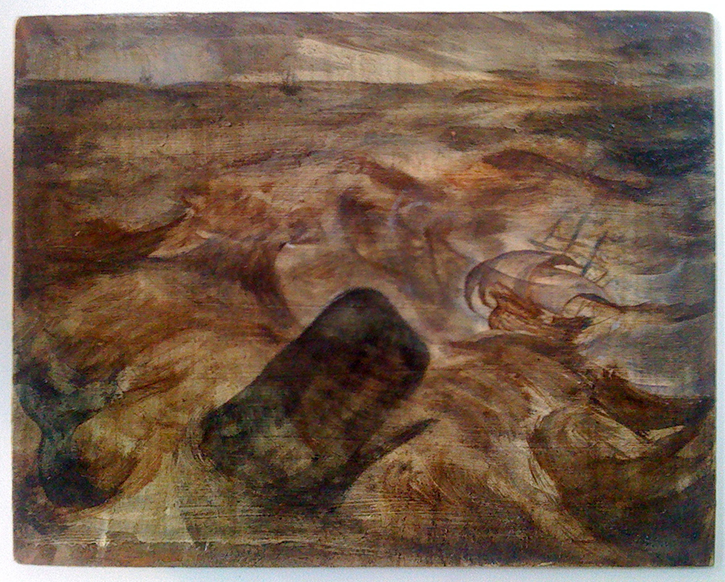
[Image: Clara Drummond, ‘Cape-Horner in a great Hurricane’. Oil on board, January 2012]

The Reformation as a triumph of the sacraments

WineIn a wee reflection on Herbert McCabe’s The New Creation, Peter Leithart offers a good word on why the magisterial reformers were not about the triumph of word over sacraments:

[T]he mainstream Reformers were more sacramental than the Catholic church. For the Reformers, no one was to participate in the life of Christ’s body non-sacramentally. That was simply a contradiction in terms, for the sacraments were the means of participations. Sacramental participation and membership in Christ are completely co-extensive; there’s no spillage or overlap, such that someone (an infant, say!) might be seen as a member of Christ without being marked with Christ’s sacramental sign. The Reformation was not a triumph of word over sacrament; it was a triumph of sacraments.

You can read the rest of the article here. [HT to David Entwistle for drawing my attention to it]

And some of my own thoughts on the Supper can be read here.

Symposium on Theology, Spirituality and Cancer

Theology, Spirituality and CancerThe School of Theology at The University of Auckland, and Laidlaw College, are organising a Theology, Spirituality and Cancer symposium, an ‘interdisciplinary meeting exploring dialogue between theological (including biblical), religious, philosophical, spiritual, healthcare and pastoral arenas’. The symposium, which will be held on 20-21 February 2014 at the University of Auckland (City Campus), is aimed at academics and practitioners, including religious ministers, chaplains, counsellors and healthcare practitioners in related areas, and will ‘address issues such as theodicy, cancer therapies, end of life care, pastoral issues, and insights a theological, religious or spiritual perspective can bring to an understanding of all aspects of cancer’. More information, including the Call for Papers, is available here.

John Milne’s ‘The Jesus Prayer’

A few weeks ago, I drew attention (here on PCaL) to the work of American composer John Milne and to his piece  ‘Per Crucem ad Lucem‘. Since then, John has kindly sent me a number of additional recordings of his work, so I thought I would share another one. Here’s his rendition of ‘The Jesus Prayer’:

Lord Jesus Christ, Son of the Living God, have mercy on me, a sinner
In death, I will stand before the Son of Man – Behold I tell you a mystery.

July stations …

Jayber CrowReading:

Listening:

Watching:

Ageing and Spirituality conference

Aging-5The Selwyn Centre for Ageing and Spirituality is organising a one-day conference to ‘hear New Zealand researchers and others with an academic interest in the area speak about ageing and spirituality’.

Dates:  6 September 2013, 9.30 am – 4 pm

Place:   Tamaki Campus – University of Auckland, 261 Morrin Rd, St Johns, Auckland

The conference is concerned with the following topics:

• Spirituality and ageing: a discussion from a principle-based, evidence-informed and zeitgeist-based approach
• Spirituality teaching in NZ medical schools
• Spirituality in a Dunedin rest home
• The church and older people after the Christchurch earthquakes
• Older people and euthanasia
• Religious and spiritual data from the LILAC study
• The role of religion/spirituality in mental health and mental health care – general findings and data and literature relevant to the older adult participants
• Caregiving across cultures
• Grief and loss in caregivers of people with dementia
• The role of caregivers and their interaction with rest home residents, particularly noting their preparedness to respond to needs of a spiritual nature
•  Spirituality in residential dementia care

More information here.

Seeking asylum in Australia

Refugee Rights Protest at Broadmeadows, MelbourneRecent weeks have witnessed no shortage of ink spilt on the matter of the Australian government’s disgraceful – and illegal – policies vis-à-vis asylum seekers. And appropriately so! A number of people have asked me to comment on this question, and at some stage, when I have more moments to spare than I do this week, I may spill some ink of my own on it. In the meantime, however, I wish to draw attention to, and to commend, one editorial (among the many dozens that I have read) that I found particularly helpful. It’s Robert Manne’s piece (published in March this year and so before developments in recent days), ‘Tragedy of Errors: Australia’s shipwrecked refugee policy’.

[There is also an edited transcript of a speech by Barry Jones: ‘Asylum is the greatest moral challenge of our time’. The latter is significantly less satisfying than Manne’s piece, but worth a read all the same, not least given Jones’ long and high profile relationship with the ALP.]

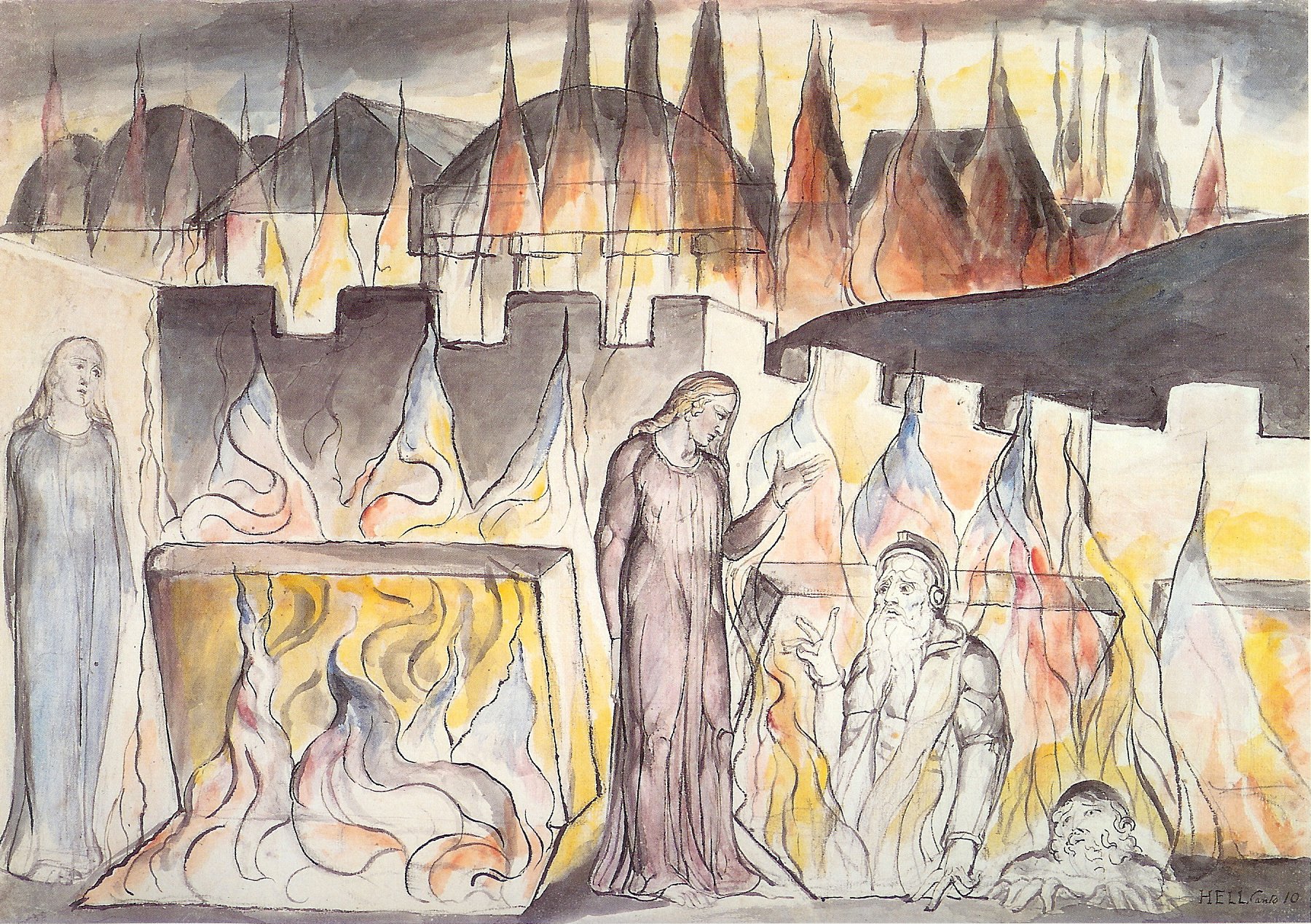
‘The Good Man in Hell’, by Edwin Muir

Blake Dante Hell X Farinata

If a good man were ever housed in Hell
By needful error of the qualities,
Perhaps to prove the rule or shame the devil,
Or speak the truth only a stranger sees,

Would he, surrendering to obvious hate,
Fill half eternity with cries and tears,
Or watch beside Hell’s little wicket gate
In patience for the first ten thousand years,

Feeling the curse climb slowly to his throat
That, uttered, dooms him to rescindless ill,
Forcing his praying tongue to run by rote,
Eternity entire before him still?

Would he at last, grown faithful in his station,
Kindle a little hope in hopeless Hell,
And sow among the damned doubts of damnation,
Since here someone could live and could live well

One doubt of evil would bring down such a grace,
Open such a gate, all Eden would enter in,
Hell be a place like any other place,
And love and hate and life and death begin.

– Edwin Muir, ‘The Good Man in Hell’ in Collected Poems (London: Faber and Faber, 1960), 104.

An update on my forthcoming book ‘Descending on Humanity and Intervening in History’

Forsyth 16A week or so ago, I received  finally  the first proofs for my forthcoming book Descending on Humanity and Intervening in History: Notes from the Pulpit Ministry of P.T. Forsyth (Pickwick Publications). I’m really delighted with the typesetter’s efforts, and genuinely excited to see this 350+ page baby  which consists of forty-eight sermons (most of which are previously unpublished), a Foreword by David Fergusson, and an Introduction by yours truly – finally near full term. All going to plan, she should be ready to pop in the next few months. Of course, I’ll announce the birth soon after I know about it. In the meantime, here is a wee taster, an ultrasound (to keep the running metaphor alive), from the Preface wherein I attend to the matter and logic of the book’s title:

A note about the title of this volume is in order too. The phrase “descending on men and intervening in history” appears in Forsyth’s Yale lectures. In the section wherein the phrase appears, Forsyth was concerned about religious liberalism’s tendency towards vagueness and detachment from a more intellectually and morally rigorous or “positive” religion that speaks to the deep crises of human history and experience. The former understands Christ to be the product rather than the creator of the Church, reduces the history of redemption to “the ascending history of the race developed with God’s aid,” and begins from ideas and ends in the theological suicide of positive belief and distinctive experience. The so-called “positive” theology of the New Testament, however, is chiefly concerned with God’s moral action of overcoming human sin and the hallowing of God’s own name in the creation in order that God might hear an echo of himself therefrom. Whereas the former merely proposes prerequisites for and conditions of reconciliation, the latter bears witness to the reconciliation that has already taken place in Jesus Christ, trumpeting that we are already in a healed situation and “not merely in a world in process of empirical reconciliation.” Also, the gospel descends on, rather than arises from, us:

It is not a projection of [our] innate spirituality. It is revealed, not discovered, not invented. It is of grace, not works. It is conferred, not attained. It is a gift to our poverty, not a triumph of our resource. It is something which holds us, it is not something that we hold. It is something that saves us, and nothing that we have to save. Its Christ is a Christ sent to us and not developed from us, bestowed on our need and not produced from our strength, and He is given for our sin more than for our weakness.

So Forsyth could describe the experience of faith as that which rests on God’s finished work and then “takes a line,” appealing to “our moral mettle” and calling us not to mere consideration and pondering but to “moral verve and vigilance,” to stake the entirety of our being and eternity on selection, decision, and committal. This choice, Forsyth averred, depicts the gulf faced by preachers, a gulf that Forsyth believed is as wide and as irreconcilable as that between being a herald of the gospel and an advocate of culture. The former, Forsyth said, “will make you strangers and sojourners in the world, the other citizens of the world . . . One will make you apostles of Christ, and one will make you champions of humanity. One will make you severe with yourself, one will make you tender with yourself. One will commend you to the naughty people, and one will commend you to the nice.” He continues:

Now of these two tendencies one means the destruction of preaching. If it cease to be God’s word, descending on men and intervening in history, then it will cease as an institution in due time. It may become lecturing, or it may become oratory, but as preaching it must die out with a positive Gospel. People cannot be expected to treat a message of insight from man to man as they do a message of revelation from God to man. An age cannot be expected to treat a message from another age as they treat a message from Eternal God to every age. Men with the passion of the present cannot be expected to listen even to a message from humanity as they would to one from God. And if humanity redeem itself you will not be able to prevent each member of it from feeling that he is his own redeemer.

In other words, Forsyth sees at stake here nothing less than the nature of the gospel as grace, as that foreign word that descends and intrudes and makes alive, rather than that which arises from our own situation and in the end merely coddles a frondeur race in its blindness and recalcitrance. The latter promises to raise the dead while having nothing but death’s machinery with which to do so—machinery reluctant, moreover, either to name the corpse as corpse or even to attend to the right grave. But not so the preacher of grace, the preacher who, with words given, names a thing for what it is and by such naming participates in grace’s continuing event by which all things are being made new. To so recall Forsyth’s plea here is to recall that he was, of course, ministering at a time when the theology of the day was radically out of joint with the situation confronting the human community in Europe, when the easy optimism heralded as the new orthodoxy was about to be crushed under the press of catastrophic historical events. In response, Forsyth attacked the amorality of established theology and raised a too-lonely voice in plea for a staurocentric theology of redemption.

Orthodox and Reformed in dialogue

Centre Orthodoxe du Patriarcat OEcumeniqueA guest post by Joseph D. Small

Followers of Per Crucem ad Lucem may have seen the video of Orthodox theologian George Dragas’ wonderful reminiscence of T.F. Torrance. In his remarks, Dragas mentioned the Orthodox-Reformed Dialogue, which he and Torrance co-chaired. The Dialogue resulted in a remarkable ecumenical achievement, the ‘Agreed Statement on the Holy Trinity’.

Ecumenical dialogues (a number of reports from which can be accessed here) often assume agreement on fundamental theological matters, focusing instead on neuralgic issues or comparative ecclesiology. But Torrance believed that mutual understanding of Trinity was the essential prerequisite for the viability of future dialogues on other themes. Only from acknowledgment of shared Trinitarian faith, Torrance believed, could the two church bodies proceed to discuss issues about which there might be less commonality, such as the nature of the church, ministry, and sacraments.

The ‘Agreed Statement on the Holy Trinity’ is precisely that, a statement that speaks with one voice. Unlike many reports that emerge from ecumenical dialogues, the Agreed Statement does not set out differing emphases or divergent positions. It begins by stating, ‘We confess together the evangelical and ancient Faith of the Catholic Church …’, and it is common confession that is articulated throughout. The Agreed Statement is divided into eight brief, densely packed sections, each one of which contains affirmations that are of enduring importance. The Agreed Statement on the Holy Trinity is a singular theological and ecumenical achievement. It is worth attention for its succinct articulation of the doctrine of the Trinity, and also for its demonstration of the very best in ecumenical engagement. The text is readily available here, as well as in Growth in Agreement II: Reports and Agreed Statements of Ecumenical Conversations on a World Level, 1982–1998 edited by Jeffrey Gros, Harding Meyer and William Rusch.

The parable of the Good Samaritan: a sermon by Marilynne Robinson

Rudd - Faith in Politics

Let the words of my mouth and the meditations of my heart be acceptable in Thy sight, O Lord, my strength and my Redeemer.

The parable of the Good Samaritan is more complex than it might seem at a first or a hundredth reading. Its central point is precious and also clear, that we are to help where help is needed, putting aside every distinction and consideration that might give us an excuse to pass by on the other side. If we are more like the scribe and the priest on too many occasions, sometimes we encounter, and sometimes we are, good Samaritans, people who do the kind and necessary thing, even the difficult and costly thing, when occasion arises, hoping nothing in return but to secure the well being of a stranger. This nameless, and fictional, Samaritan has left innumerable descendants, and they have been a blessing to us all.

Luke gives the parable an interesting context. A lawyer rises to “test” Jesus. He asks Jesus what he must do to inherit eternal life. Jesus asks him what is written in the law. He answers, “You shall love the Lord your God with all your heart, and with all your soul, and with all your strength, and with all your mind, and your neighbor as yourself.” Jesus replies, “Do this and you will live.” Good brothers and sisters in Christ, let us ponder the fact that, if Jesus is to be believed, the law of Moses is fully sufficient to the securing of eternal life.

The lawyer is offering an established first-century Jewish understanding of the essence of the law of Moses. Notice that here the lawyer cites the law. In the Gospel of Matthew it is Jesus who quotes it. He does so repeatedly, a fact which might explain, though it cannot excuse, the belief widely held among Christians that the commandment originated with Jesus. I have even seen it argued that this commandment to love, which is found in Leviticus, a Book of Moses, epitomizes the difference between the law of Moses and the law of Christ, between Judaism and Christianity. It’s hard to know sometimes whether to laugh or to weep or to tear one’s hair. Be that as it may. Here Luke gives us two first-century Jews discussing the correct interpretation of a particularly venerated law of Moses.

What is called a “law” here is in fact a phrase taken from a law, Leviticus 19:18, which forbids grudgeholding and revenge. In the New Testament the phrase is consistently understood to have a much broader meaning than its original context would give it. Indeed, it seems to be in its nature somehow to have and to acquire always broader reference. The phrase occurs three times in the Gospel of Matthew. In the first, Jesus enlarges the circle of those to be loved to include one’s enemy, since God “makes his sun to rise on the evil and the good, and sendeth rain on the just and the unjust.” Again, when a young man asks what he must do to be saved, Jesus cites the Ten Commandments, and then, “Thou shalt love thy neighbor as thyself.” It is remarkable to find this phrase, stripped of its context, given equal standing with the Decalogue. Its great importance is made clear again when Jesus responds to a question put to him by another lawyer – “Teacher, which is the great commandment in the law?” Jesus replies, “Thou shalt love the Lord thy God with all they heart, and with all the soul, and with all thy mind. This is the great and first Commandment. And a second like unto it is this, Thou shalt love thy neighbor as thyself. On these two commandments the whole law hangeth, and the prophets.” In the Gospel of Mark Jesus quotes the great commandment, to love the Lord, as the first in importance. Then he says, “The second is this, Thou shalt love thy neighbor as thyself, There is none other commandment greater than these.” Paul quotes the phrase in Romans, saying that the law is summed up “in this word, namely, Thou shalt love thy neighbor as thyself.” He says, “Love worketh no ill to his neighbor; therefore love is the fulfillment of the law.”

In the exchange in Matthew that prompts the famous parable of compassion in today’s text, the lawyer who is testing Jesus grants the authority of this commandment, but, being a lawyer, he wants a clarification. “Who is my neighbor?” Luke says he is seeking to justify himself when he asks this question, which might be understood to mean that he is asking “Whom am I obliged to love? and, conversely, who falls outside the range of those to whom love is owed?” Presumably the lawyer in his attempt to be obedient to this law has been proceeding on a definition of his own that allows him to be a little bit selective. The Hebrew word translated “neighbor” can mean kinsman, friend, companion, or neighbor as we understand the word. The Greek word suggests less in terms of personal relationship and more in terms of nearness, physical proximity. In both cases, the concept “neighbor” is potentially somewhat narrow, as it is for us. The lawyer, intent on his own salvation, clearly does not want on one hand to risk loving where he would realize no eternal benefit from it, or, on the other. to allow himself indifference or hostility toward anyone on whom his eternal happiness might depend. In the way of pious people in all times and places, he wants to get it right.

Now, as it happens, there is another law, another commandment to love, in the same chapter of Leviticus, fifteen verses on, which is far too little known, though we must assume Jesus knew it, and probably the lawyer did, too. It says: When an alien resides with you in your land, you shall not oppress the alien. The alien who resides with you shall be to you as the citizen among you; you shall love the alien as yourself, for you were aliens in the land of Egypt. I am the Lord your God. A phrase very like the one with which we are familiar could have floated free of this context – Thou shalt love the alien as thyself. Here the law specifically draws the stranger, as stranger, into the great defining narrative of the people Israel. Aliens are in effect naturalized, made, in the same language, properly the objects of love just as neighbors are, and on precisely the grounds that they are outsiders. Without reference to origins or any other quality, their circumstance is all the identity that matters. Put these laws side by side, and together they make neighbor and stranger equivalent terms. In the language of the Hebrew Bible there is a structure called a merism. The naming of two extremes – heaven and earth, good and evil – implies everything that falls between them. This is to say that, taken together, the commandments to love in Leviticus are very broad indeed. Whence, perhaps, the energy that makes this fragment of a law, thou shalt love thy neighbor as thyself, rank among the greatest laws.
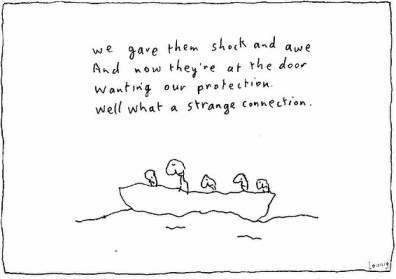
Boat peopleStill, the lawyer seems to feel that he can love where the law requires, that the requirement of the law can be limited and defined – and that self-interest can inspire a good enough approximation to that exalted emotion to satisfy the commandment, and to serve his eternal purposes. Looking at context again, this characteristic pairing of the laws to love God and neighbor makes them both dependent on the one word “love.” Thou shalt love the Lord thy God, and thy neighbor as thyself. To perform actions that only signify love of God is not sufficient – is in fact reprehensible, offensive to God, as all the prophets tell us. The very emphatic language of the first of the laws – love is to engross heart, soul, strength and mind – makes this point. It is in effect a definition of love, that it is engrossed by its object, and is in that sense selfless. The lawyer is using his own interests, piously defined, to determine the limits of his love as well as its proper focus. Insofar as his thinking influences his feeling, he is preventing himself from really loving anyone. The self-forgetfulness love requires is impossible for him.

I propose that the parable turns on this point. The kindness of the Samaritan has no self-interest behind it, no motive of friendship or kinship. In fact, there was inveterate hostility between Samaritans and Jews. In a broad, cultural sense, the Jew was the Samaritan’s enemy. Freud might have referred this hostility to what he called the narcissism of minor difference, the tendency of friction and conflict to occur most frequently between populations that are most similar to each other. Our own United States has engaged in three wars in which its national survival was at stake – the Revolution and the War of 1812, fought against England, and the Civil War, between our own North and South. Over the centuries Europeans have found differences among themselves that were intolerable to them and trivial or invisible to outsiders. And so with the world at large.

The kingdom of Israel became divided after the reign of Solomon. After the separation, the northern kingdom was called Israel, then Samaria, and the southern kingdom was called Judah, then Judea. This distinction is reflected in the word “Jew,” which means Judean. Both peoples centered their faith and worship around the five books of Moses. The Samaritans did not accept the prophets or worship at the temple in Jerusalem but at a temple of their own in Bethel. These distinctions are reflected in the Old Testament text from the writing of the prophet Amos. Christianity, of course, has its origins in the religious culture of Judea, which might lead to further, sadder reflection on the narcissism of minor differences. In any case, the antipathy felt on both sides, Samaritan and Judean, was very real and is certainly a factor in this parable. The compassion of the Samaritan expresses an utter freedom, on this occasion, at least, from the mean distinctions culture and history seem always to generate and to impose. In making the good man of the parable a Samaritan, another inheritor of the traditions of Moses, and specifically of the commandments to love in Leviticus, Jesus suggests that this “heretic’s” understanding of them and obedience to them were of a higher order than the lawyer’s, a man who had devoted himself to mastering the law, and probably prided himself on his command of it. Jesus is inviting his hearers to put aside these same mean distinctions, to emulate a Samaritan. In putting aside the strictures of religion, they will enable themselves to be truly obedient to the law. We are all painfully aware that the most telling indictment of Christianity is our persistent failure to distinguish identity and adherence from actual, lived faithfulness.

But Jesus broadens the question much further. A commandment to love is mysterious in itself. Thou shalt love the Lord thy God. How is this done? If one’s heart does not incline to love, or to this kind of love, what then? How does one love God, of Whom reverence itself requires us to acknowledge that we can know so little? Jesus says; the commandment “Thou shalt love thy neighbor as thyself” is like unto the first great law. How is this to be understood? For Christians, the answer lies in Jesus Himself, in the Incarnation. In another famous parable, this one in the 25th chapter of Matthew, the Son of Man, appearing enthroned as apocalyptic judge of all the nations of the earth, says to the blessed, “I was hungry, and you fed me. I was naked and you clothed me.” To the Samaritan he would say, “I was beaten and robbed and left lying by the road, and you bound my wounds and cared for me, bearing every expense of time and effort and money, expecting nothing in return.” This parable in Matthew is also addressed to the question put by the lawyer in the text we have read today, what one must do to inherit eternal life, and there is absolutely nothing sectarian in the answer it gives. Humanity’s remotest ancestors could come under its blessing. The impulse to be kind manifest in the parable of the Good Samaritan is a human impulse, rarer than it ought to be and beautiful wherever it finds expression. Christians can know that they honor God Himself whenever they honor another human being, showing that they understand the value of his or her dignity, life, peace and safety. Jesus, man of sorrows, Son of Man, gives us most explicit instruction on this point. If we fail in our reverence toward others, it is not because we don’t know better.

Still there is a question. Can we oblige God to think well of us by showing mercy and generosity? As children of the Reformation we must answer, no, we cannot. The revelation we are given in Matthew’s parable of the Great Judgment is not simply that heaven blesses acts of mercy, but something vastly more astounding, that Christ is present in those who are vulnerable to our oppression or neglect, and that Christ feels and remembers in his own person every kindness that is done to them. It is not the pathos of the world but its profound sacredness that is shown to us. At issue in our parable is not how the word neighbor is to be understood, but what is meant by the word love.

That one verb expresses the right relation of ourselves to God and of ourselves to whomever circumstance puts in our way. Notice how Jesus’s parable shifts our perspective. The neighbor is definitely not a relative, not the member of the community, not a co-religionist. Jesus’s having made his protagonist a Samaritan suggests that he takes the lawyer to expect the definition of the word “neighbor” to fall within one of these categories, if not more than one. The letter of the law could be used, as it so often is, to deny the spirit of the law. Jesus does not even allow the word to mean “whoever needs our kindness or our help,” though this would be a very broad definition, since everyone does need kindness very often. Instead he defines the neighbor not as the proper object of love – but as the one who acts lovingly. More precisely, his story moves the lawyer to this recognition. If love of neighbor were a commandment honored generally, then its effects would be reciprocal. As neighbors we would receive the benefits of this love, and also extend them to others. We create ourselves as neighbors – and fulfill the law – when we honor our side of this shared bond, whether the bond is acknowledged on the other side or not. The word has as broad a definition as we have insight, engagement and compassion to give it.

And there is always another, much larger, context. The Gospel gives us a scene in which a legal scholar is disputing with a self-taught carpenter about a point of law. A bright fellow, he must have thought, interesting enough to spar with a little. He’s attracting crowds, and that can be dangerous. If I give him a question we specialists have struggled with, I might take him down a peg. No harm in that.

The writers of the Gospels take this carpenter to have been, in fact, the epitome of holiness, the Word made flesh, the universal judge. The lawyer is debating the law with God Himself, whose own commandments are at issue. This makes the scene most remarkable. But it is remarkable for nothing more than for the fact that Jesus, the Christ of Luke’s Gospel, is an ordinary man. On a landscape where prophets have appeared he is taken by some people to be one more prophet. Others have no opinion, or take no notice. But, in light of the utterly singular Presence the writer we call Luke understood him to be, there is the greatest significance in the fact that he really is one of us. He might have been the man lying injured by the side of the road, and he might have been the Samaritan who took him up. His wounds would have bled, his voice and his hands would have comforted, just as theirs did, just as ours do. The deep holiness with which human life is invested, which is so great that the Christ could take on true humanity without the least diminishment of his holiness, should tell us who we are and whom we are among, and why it is that the love of neighbor is “like unto” the love of God.

Let us be truly faithful to the last commandment of Jesus, that we love one another. Amen.

Marilynne Robinson preached this sermon at the Congregational United Church of Christ of Iowa City, 14 July 2013.

[A note on the first image: The first image, of Kevin Rudd, is accompanied with words from Rudd’s essay ‘Faith in Politics’, published in The Monthly, October 2006. It seemed a fitting image to use given the subject of the sermon, and the shameful political context in Australia during recent days from where I first read it.]

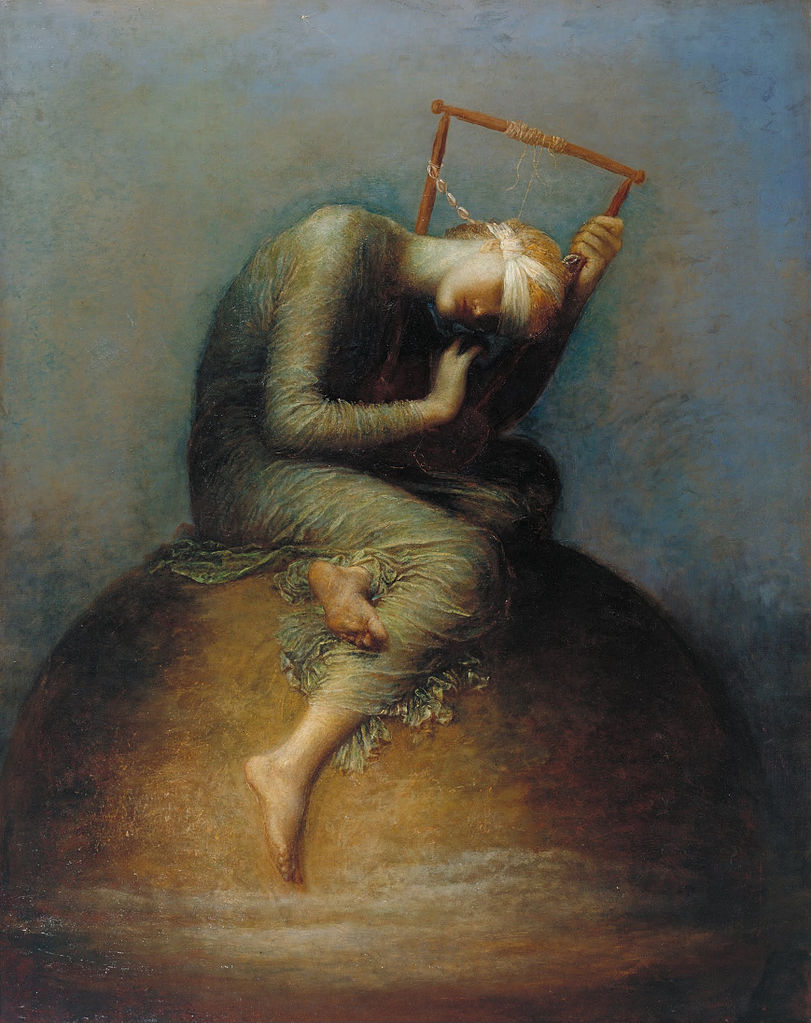
Good samaritans

John Milne’s ‘Per Crucem ad Lucem’

FugueOne of the amazing readers of this blog, the aspiring Chicago choral composer John Milne, was kind enough to email me a copy of a wonderful piece of music that he had recently written and recorded. It is titled ‘Per Crucem ad Lucem‘, about which he writes:

I had originally conceived a very modern arrangement, a slow evolution of minor and sometimes dissonant chords rising up and eventually resolving into a triumphant major chord, but once the phrase took on a melodic form I knew it had to be something more of a Bach-like fugue.

You can listen to the piece here. As you might imagine, I was absolutely delighted that John sent it to me, and then gave me permission to post it here. The music is both deeply moving and a faithful witness to the truth articulated in its title. What do you think?

A few days later, John sent me another piece, this time one set to the poem ‘Soft and safe to thee, be this earthly bed’. I may post it sometime.

Orders of Service for a Tangihanga and an Unveiling: A resource manual for worship leaders

Te Paepae Tapu o Te Maungarongo ki Ohope

The Rev Wayne Te Kaawa, the Moderator of Te Aka Puaho (the Māori Synod of the Presbyterian Church of Aotearoa New Zealand) has helpfully produced a bilingual Māori and English resource for ministers and worship leaders who may need resources to aid them with a tangi, funeral and unveiling. It can be downloaded here.

A wee rant on the unwelcoming church

‘The feeling of being unwanted is the most terrible poverty’. – Mother Theresa 

Everything is a sign, literally. No-thing points to nothing. And over the past few weeks, I’ve been noticing some very literal  and very disturbing  signs around some churches that I’ve visited; signs which indicate, at the very least, some serious confusion about the nature and raison d’être of the community that gathers together in the name of Hospitable Love. Film isn’t able to capture the mustiness and temperature (or lack thereof) of some of the depressing solitary confinement cells (sometimes these are called ‘play area’, or ‘cry room, or ‘creche’) that I’ve seen recently, but here are just a few shots (including one that I pulled from somewhere else on the web) of some other signs that I’ve happened across:

This slideshow requires JavaScript.

For those who may be interested, I’ve uploaded a copy of Peter Corney’s wee and somewhat dated booklet, The Welcoming Church. It has some good practical ideas in it. But seriously, folks; hospitality is not rocket science. If someone takes the trouble to visit your home, the least you can do is to let them in, say hello, brew them a coffee, feed them, let them change their kid’s nappy (and use your rubbish bin), find something to talk about, make sure they know where the loo is, remember their name, enjoy them, participate in the movement of ek-stasis which characterises the good cheer of the universe itself, and bless them with a bag of vegetables, a curry, or a bottle of homemade lemonade to take away when they leave. It takes a little bit of thought and effort but, like I said, it’s not rocket science.

So why is it that there are some faith communities, including those made up of some of the nicest individuals you will ever meet, that are just so unwelcoming, or whose public environment, at least, is such? To be sure, there’s a job here for some theology of architecture and of interior design. And at the risk of doing a René Girard, I guess that there’s something too to be said about the DNA of those attracted to serve as community gate keepers. But wherever there is a shortage of the former, that ball needs to be picked up. And where the latter prevails, where such inhospitable demons exist, such need to be exorcised, along with their footprints, if the Body of Christ is to look, feel and smell less decapitated than it often appears. Surely love demands  and seeks  no less.

Sometimes it’s the little things, eh …

Rant over.

By the way, I’m happy to receive by email any photos that I can add to this collection.