Author: Jason Goroncy

Kerry Enright: an interview

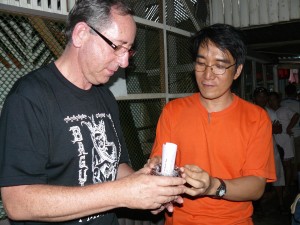
Kerry Enright and Pastor BerlinLast night’s edition of the ABC program Sunday Nights, hosted by John Cleary, included an interview with the Rev Dr Kerry Enright, the outgoing National Director of UnitingWorld, and a friend of mine. During the interview, Kerry reflects upon two of his favorite topics – the catholic nature of the church as gift from God and as sign to the world, and on the role of the church in civil society (here the discussion is focused particularly on Fiji, Australia and New Zealand). He also talks a bit about his forthcoming appointment as minister of Knox Church (Presbyterian) in Dunedin. I’m looking forward to welcoming Kerry back to Dunedin, and back to the PCANZ, soon. You can listen to the interview here.

And while I’m mentioning Kerry, there’s also an older interview in which he talks about God’s mission and about the significance of partnerships that UnitingWorld enjoys:

On complementarity, univocity, equivocity, and analogy … and God

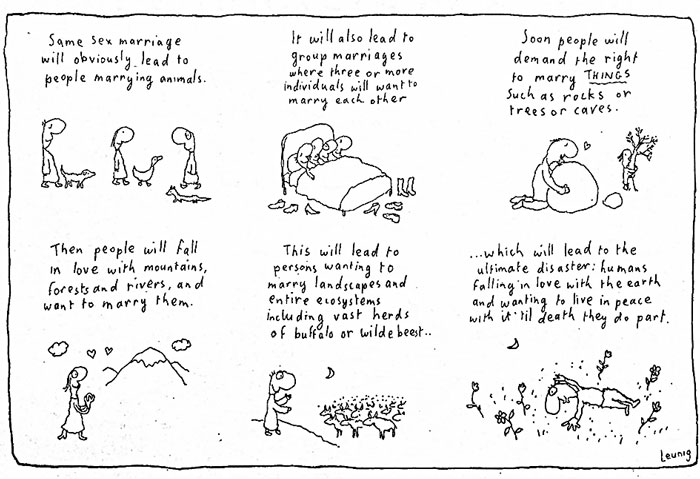
Same sex marriage

A good friend just directed me to Andrew Davison’s interesting piece on complementarity, published yesterday over at the Church Times site. Here’s the gist:

Sexual difference is obviously not sufficient to guarantee complementarity; and it seems, empirically, that it is not even necessary: not if the word “complementary” is taken to refer to something real in the world.

Complementarity rests on more than sexual difference. As with similarity and difference, it is worked out on many levels – many more than the bishops acknowledge. It matters which experiences and traditions a couple share, for instance, and which they do not. The otherness that a woman finds in a man is not exhausted by his maleness: there is also the fact that he is a Scot while she is English, that he tends to think in concrete terms while she tends to be abstract-minded, and so on. Similarities between a man and a woman are also important. Our own experience confirms that a certain irreducible difference exists between any two people, in any kind of relationship. The difference of one person from another is more profound than a difference of sex,even in an opposite-sex relationship. When a man finds comfort in his female partner, for instance, her femaleness is not a matter of indifference, but she also matters as another human being: as someone to talk to, someone to rely on, someone to share responsibilities with. Adam’s first response to the creation of Eve was to her similarity with him – “This at last is bone of my bones, and flesh of my flesh” – not to her difference.

So many elements of similarity and difference are interwoven in a heterosexual relationship that picking out just one sort of difference – sexual difference – as if it were all that mattered for complementarity is remarkably short-sighted. No one loves someone else simply as a man or simply as a woman, and not also as funny, or serious, or Welsh, or practical, or tall, or dark-haired, or a hundred other factors. A collapse of difference into male-female difference, which so undergirds current Church of England formulations, reduces our vision of sexual relationships to the level of a budget brothel: you ask for a woman, you ask for a man, and you take the first one who’s free: sexual difference is what matters, not particularity.

You can read the entire piece here. Those interested in the questions raised here might also like to read Eugene Rogers’s essay ‘Same-sex complementarity’, published a few years ago in Christian Century. I found Rogers’s essay, as well as his book Sexuality and the Christian Body: Their Way into the Triune God, to be very helpful resources.

The matter is of particular interest to me at the moment because I’m currently working on a short statement on marriage, by invitation of the Presbyterian Church of Aotearoa New Zealand.

That love which ‘shifts the boundaries of our being’

old couple

Nothing can explain this adventure – let’s say a quirk
of fortune steered us together – we made our covenants,
began this odyssey of ours, by hunch and guesswork,
a blind date where foolish love consented in advance.
No my beloved, neither knew what lay behind the frontiers.
You told me once you hesitated: A needle can waver,
then fix on its pole; I am still after many years
baffled that the needle’s gift dipped in my favour.
Should I dare to be so lucky? Is this a dream?
Suddenly in the commonplace that first amazement seizes
me all over again – a freak twist to the theme,
subtle jazz of the new familiar, trip of surprises.
Gratuitous, beyond our fathom, both binding and freeing,
this love re-invades us, shifts the boundaries of our being.

– Micheal O’Siadhail, ‘Out of the Blue’, in Poems 1975–1995: Hail! Madam Jazz and A Fragile City (Bloodaxe: Newcastle upon Tyne, 1999), 124.

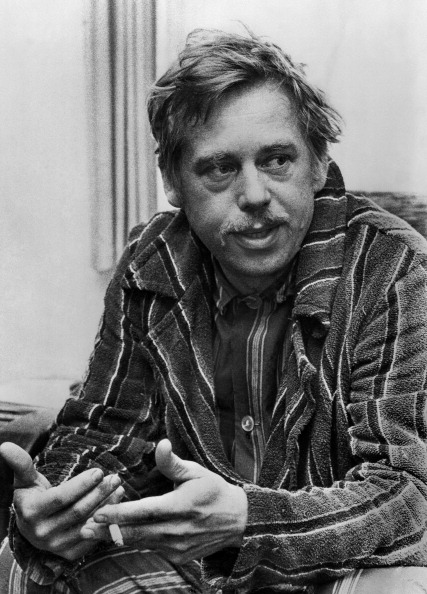
Václav Havel on the need for a radical renewal of our sense of responsibility

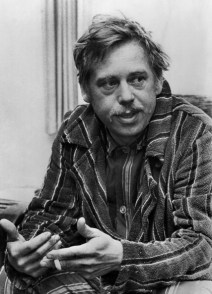
Czech dissident Vaclav Havel speaks at hVáclav Havel is no stranger to this blog. I find myself turning again and again to his words – words matured in the crucible of suffering and of hope, in the illusive corridors of ‘power’ and in the freedom of ‘powerlessness’. Recently, I had reason to revisit reading a number of his talks given during the ’90s. It was challenging to re-hear these words from his famous Commencement Address given at Harvard University on 8 June 1995:

The veneer of global civilization that envelops the modern world and the consciousness of humanity, as we all know, has a dual nature, bringing into question, at every step of the way, the very values it is based upon, or which it propagates. The thousands of marvellous achievements of this civilization that work for us so well and enrich us can equally impoverish, diminish, and destroy our lives, and frequently do. Instead of serving people, many of these creations enslave them. Instead of helping people to develop their identities, they take them away. Almost every invention or discovery from the splitting of the atom and the discovery of DNA to television and the computer can be turned against us and used to our detriment. How much easier it is today than it was during the First World War to destroy an entire metropolis in a single air-raid. And how much easier would it be today, in the era of television, for a madman like Hitler or Stalin to pervert the spirit of a whole nation. When have people ever had the power we now possess to alter the climate of the planet or deplete its mineral resources or the wealth of its fauna and flora in the space of a few short decades? And how much more destructive potential do terrorists have at their disposal today than at the beginning of this century.

In our era, it would seem that one part of the human brain, the rational part which has made all these morally neutral discoveries, has undergone exceptional development, while the other part, which should be alert to ensure that these discoveries really serve humanity and will not destroy it, has lagged behind catastrophically.

Yes, regardless of where I begin my thinking about the problems facing our civilization, I always return to the theme of human responsibility, which seems incapable of keeping pace with civilization and preventing it from turning against the human race. It’s as though the world has simply become too much for us to deal with.

There is no way back. Only a dreamer can believe that the solution lies in curtailing the progress of civilization in some way or other. The main task in the coming era is something else: a radical renewal of our sense of responsibility. Our conscience must catch up to our reason, otherwise we are lost.

It is my profound belief that there is only one way to achieve this: we must divest ourselves of our egoistical anthropocentrism, our habit of seeing ourselves as masters of the universe who can do whatever occurs to us. We must discover a new respect for what transcends us: for the universe, for the earth, for nature, for life, and for reality. Our respect for other people, for other nations, and for other cultures, can only grow from a humble respect for the cosmic order and from an awareness that we are a part of it, that we share in it and that nothing of what we do is lost, but rather becomes part of the eternal memory of Being, where it is judged.

A better alternative for the future of humanity, therefore, clearly lies in imbuing our civilization with a spiritual dimension. It’s not just a matter of understanding its multicultural nature and finding inspiration for the creation of a new world order in the common roots of all cultures. It is also essential that the Euro-American cultural sphere the one which created this civilization and taught humanity its destructive pride now return to its own spiritual roots and become an example to the rest of the world in the search for a new humility.

General observations of this type are certainly not difficult to make, nor are they new or revolutionary. Modern people are masters at describing the crises and the misery of the world which we shape, and for which we are responsible. We are much less adept at putting things right.

So what specifically is to be done?

I do not believe in some universal key or panacea. I am not an advocate of what Karl Popper called “holistic social engineering”, particularly because I had to live most of my adult life in circumstances that resulted from an attempt to create a holistic Marxist utopia. I know more than enough, therefore, about efforts of this kind.

This does not relieve me, however, of the responsibility to think of ways to make the world better.

It will certainly not be easy to awaken in people a new sense of responsibility for the world, an ability to conduct themselves as if they were to live on this earth forever, and to be held answerable for its condition one day. Who knows how many horrific cataclysms humanity may have to go through before such a sense of responsibility is generally accepted. But this does not mean that those who wish to work for it cannot begin at once. It is a great task for teachers, educators, intellectuals, the clergy, artists, entrepreneurs, journalists, people active in all forms of public life.

Above all it is a task for politicians.

Even in the most democratic of conditions, politicians have immense influence, perhaps more than they themselves realize. This influence does not lie in their actual mandates, which in any case are considerably limited. It lies in something else: in the spontaneous impact their charisma has on the public.

The main task of the present generation of politicians is not, I think, to ingratiate themselves with the public through the decisions they take or their smiles on television. It is not to go on winning elections and ensuring themselves a place in the sun till the end of their days. Their role is something quite different: to assume their share of responsibility for the long-range prospects of our world and thus to set an example for the public in whose sight they work. Their responsibility is to think ahead boldly, not to fear the disfavour of the crowd, to imbue their actions with a spiritual dimension (which of course is not the same thing as ostentatious attendance at religious services), to explain again and again both to the public and to their colleagues that politics must do far more than reflect the interests of particular groups or lobbies. After all, politics is a matter of serving the community, which means that it is morality in practice. And how better to serve the community and practise morality than by seeking in the midst of the global (and globally threatened) civilization their own global political responsibility: that is, their responsibility for the very survival of the human race?
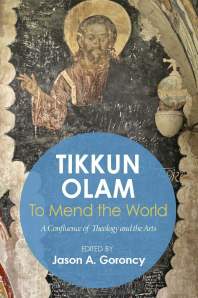
Tikkun Olam – a review by Alistair McBride

Tikkun Olam CoverJason Goroncy (editor), Tikkun Olam – To Mend the World: A Confluence of Theology and the Arts (Eugene, OR: Pickwick Publications, 2014). ISBN: 9781610979221; 208pp.

A guest review by Alistair McBride

My review copy arrived on the day National Radio were playing the third of the 2013 Reith lectures featuring the potter, Grayson Perry, speaking in Londonderry on the role of art in society with the title, ‘Nice Rebellion: Welcome in’. The introduction focussed on the role of shock and rebellion then he commented on the nature of pluralism, marketing and attitudes. He said:

‘Detached irony has become the kind of default mode of our time in the art world … it was dangerous when art became synonymous with shock, which it did for a while in the sort of 1990s. There was so much art that was seen as shocking that it became what people looked for when they went to art, when in fact you know art can be lots of different things’.

In recognising that multi-role function, Grayson was able to extend the discussion beyond the simplistic ‘Art as shock’ motif. That became clearer in a response to a question where he said, ‘Art does have a very powerful thing that it can offer you and that is you know when you get involved in making something, you kind of forget yourself for a moment as well; and you also, in little ways you are affecting the world. You know if you feel powerless and depressed or something, if you’re making something you are in a small way changing the world. You do have that power, you do have that opportunity’.

This collection of papers from the symposium all offers approaches to this second view of art. They traverse a range of the arts looking at poetics, aesthetics, literature, painting, architecture, multimedia worship and song. Some offered a more theological, others philosophical, while two contributions were self-reflective with a quite personal approach.

Goroncy’s Introduction provides an excellent overview of the theme with pointers as to how each essay fits into place, as well as some commentary as to where the idea of ‘tikkun olam’ has developed from, namely the Mishnah and its revival in the 16th century by Rabbi Luria (p. 14). Goroncy builds a framework for us using W. H. Auden and Rowan Williams as points of intersection. The theme leads ‘with “unconstraining voice” the way towards healing’ in a world which is dislocated by its hurt and ‘busy griefs’ (p. 2). He understands the essays are ‘birthed upon the premise that artists and theologians can help us to see and hear better’ (p. 5). Underlying such a claim is the idea that there is a truth about the world and that truth telling reveals both present condition and future possibilities, and that for the Christian, ultimately that truth telling is grounded in the divine revelation which illuminates human lives and concerns. He concludes with a description of a leitmotif that runs through most of the essays, that of the question of beauty and its place in the search for the justice of which the kingdom speaks, and responses to the various answers given to that and the hope for the world that is engendered.

I found I responded to the essays in different ways. The most accessible were the offerings of Libby Byrne and the conversation between Joanna Osborne and Allie Eagle. Each used images by the artist that gives the reader a sense of where the journey of each has taken them, as well as allowing an appreciation of the imagery used and how it illustrates the theme. I have always appreciated having commentary with titles for works of art so that I can reflect on what I am looking at and these two pieces of work provide that. I found myself clearly engaged with Libby’s story and her exploration of the wounds in the world through her own work and that of Anselm Kiefer. In her conclusion she speaks of having chosen to live close to the wound so that she is ‘open to the possibility of being transformed, made more whole than [she has] been before’ (p. 111).

The second pair was Murray Rae’s and Steven Guthrie’s essays using architecture and music. Rae’s exploration of Daniel Libeskind’s work in Berlin and his approach that won him the competition for redeveloping the Ground Zero site in New York was enlightening. It showed how the work of architects is also to be included in this mending of the world through what we build and how we build it to ‘reveal the extent to which the Spirit is at work’ (p. 150). In a quite different way, Guthrie’s exploration of our contemporary environment, drawing from both the Psalms and from Pythagoras’ idea of the music of the spheres, offered a new way to understand the act of communal singing, both choral and congregational. Each of these essays gave the reader something to hang their understanding on.

Carolyn Kelly and Jonathan Ryan both take as their focus the Markan story of the unnamed woman who anointed Jesus. Carolyn explores how aesthetics has become lost from theological discourse particularly in the Protestant sphere, while Jonathan explores notions of beauty and extravagance using this story as the vehicle to address the issue of poverty and injustice. Each adds something to our reading of the text as well as inviting the reader to explore how art might have a role to play in our wider understanding of mending the world.

Julanne Clark-Morris explores the role of multimedia in worship. As she used two video pieces in her presentation that cannot be accessed through the medium of print, the essay becomes something of a taster with the promise of more behind it.

The last group of essays – by Bill Dyrness, Trevor Hart and John Dennison – all use literature and come across as more academic pieces. John Dennison’s essay on Seamus Heaney’s prose poetics I found heavy going and will need careful re-reading. I was unsure of which voice I was to hear – Heaney’s, the critics’ or Dennison’s; yet Heaney’s faith and his understanding of the role of poetry and the poetic imagination in the world certainly address the theme of the book.

Most of the essays give very good bibliographies that enable the reader to explore their own responses to each presentation. This has been a rich experience exploring a side of the world that I don’t often appreciate, and as one whose personal world is in need of mending I found particularly in Byrne’s essay something that, for me, makes the whole collection a worthwhile addition to my library.

– Alistair McBride is the minister of Scots and St Stephen’s Presbyterian Churches, Hamilton.

Interviewing David Clark MP

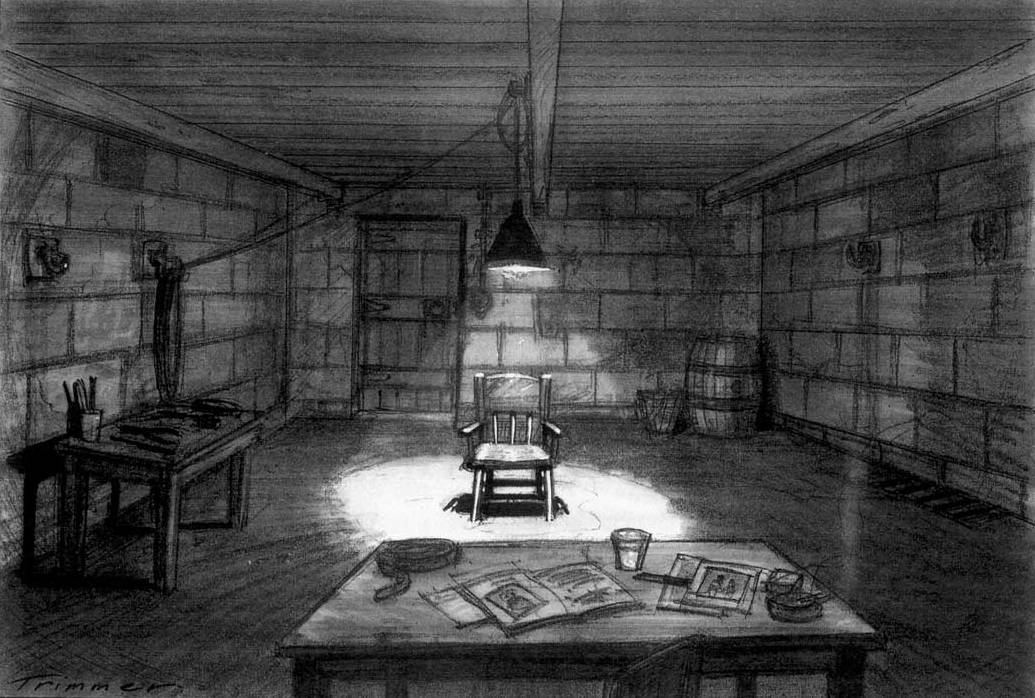
Interrogation roomLike many of life’s journeys, it all began with a single question. On this occasion, it was one posed by my daughter Sinead: ‘Why are so many things in Dunedin made in China?’, she asked. Rather than blunder my own way through an answer, I suggested that we write to the Prime Minister, the Rt Hon John Key, and ask him. She thought that that was a good idea: ‘Mr Key always seems to have a lot of time to play golf and to tweet about Lorde, so surely he will have enough time to talk with me!’, she said. And, ‘he’s always rabbiting on about how much he enjoys talking to average New Zealander’s about issues that matter to them’, I added. So, hopeful, we wrote to him. We received no reply. We wrote to him again, and again, and again, and again – inviting an answer to the question – but still no response came. This was disappointing, and birthed some grumpiness.

The invitation to discuss this, and any other question Sinead might have, was taken up by our local MP, David Clark. He should know about this stuff, we thought. After all, he is the Opposition spokesperson for economic development.

So, a few weeks ago, Sinead meandered down to the MP’s office to arrange an interview. That interview took place yesterday. In addition to her initial question, she posed a number of other questions – about Dunedin, about being a parliamentarian, about the personal costs of politics, about the relationship between politics and faith, and about the push for New Zealand to have a new flag. David was gracious, unpatronising, and honest in his replies, Sinead (and her dad) learnt a lot, and new questions were formed. And then she and David went out for ice-cream at Rob Roy Dairy.

I was very proud of her, and grateful to David for taking some time out to discuss matters of importance with one of New Zealand’s newest citizens.

Mike Crowl’s Grimhilda!

Almost two years ago, my daughter Sinead (who had just turned six at the time) and I attended the opening night of a delightful musical called Grimhilda!, written by local musician, poet, blogger and author Mike Crowl. It was a really fun night, and from the moment we left, Sinead, who was already a bibliophile,  was already asking two things: (i) is there an accompanying book? and (ii) when is Mike going to make the next musical thingy?

We were both very pleased when the answer to Sinead’s first question was answered a few months ago with the appearance, on Kindle, of Grimhilda! – a fantasy for children, and their parents. An animated storyline brimming with a generous splattering of dry humour and colourful characters, and a pace that affords some time for the narrative to unfold in ways that give due attendance to layers beyond the mere pedestrian, combine to make this a rollickingly good read for parents and their wee sprogs. Sinead and I read this tale, this invitation to adventure, and we didn’t want it to end. At times we felt that we were journeying with the Pevensie kids. This is good thing. We look forward to more from Mike’s pen.

Grimhilda is also about to be released on Smashwords.

Wendell Berry on loss and recovery

I remember feeling sad when I got to the final pages of Wendell Berry’s magnificent Jayber Crow; sad because I didn’t want the story to end, sad because I’d fallen in love with Berry’s prose and couldn’t imagine the next book I’d read to be anywhere near as exquisite, sad because I wanted to linger longer in Jayber’s barber shop in Port William, Kentucky, wherefrom I might look at the world – its history and its gnawing hopes – through Jayber’s truthful eyes and to see things familiar but as if for the first time.

And, while soaring from Austin to San Francisco, over landscape both infertile and august, I felt that sadness lift a couple of days ago when I returned to Berry’s Port William via his book A Place in Time: Twenty Stories of the Port William Membership. Two passages in particular struck me. Both, in their own way, concern the theme of loss and recovery:

‘Well, you get older and you begin to lose people, kinfolks and friends. Or it seems to start when you’re getting older. You wonder who was looking after such things when you were young. The people who died when I was young were about all old. Their deaths didn’t interrupt me much, even when I missed them. Then it got to be people younger than me and people my own age that were leaving this world, and then it was different. I began to feel it changing me. When people who mattered to me died I began to feel that something was required of me. Sometimes something would be required that I could do, and I did it. Sometimes when I didn’t know what was required, I still felt the requirement. Whatever I did never felt like enough. Something I knew was large and great would have happened. I would be aware of the great world that is always nearby, ever at hand, even within you, as the good book says. It’s something you would maybe just as soon not know about, but finally you learn about it because you have to’.

‘Our descendants may know such a time again when the petroleum all is burnt. How they will fare then will depend on the neighborly wisdom, the love for the place and its genius, and the skills that they may manage to revive between now and then’.

One could learn a hell of a lot by hanging around in Port William. Some day soon, I hope to return and …

Academic position: Dean of Studies and Lecturer

kcmlApplications are invited for the position of Dean of Studies and Lecturer at the Knox Centre for Ministry of Leadership in Dunedin, New Zealand. The Knox Centre forms and trains theology graduates for ministry and leadership in the Presbyterian Church of Aotearoa New Zealand. This includes running a two-year internship programme for people training for the Ministry of Word and Sacrament. As Dean of Studies, you will handle course enquiries and manage the ordination programme’s curriculum. As Lecturer, you will teach at least one paper in the ordination studies programme, preferably in the areas of Theological Reflection and/or Presbyterian-Reformed Studies. As well as having the requisite skills in administration and education, you will be familiar with the Presbyterian-Reformed tradition, you will have a proven background in Christian ministry and leadership, and you will have either a D.Min or a PhD in Theology. A full Job Description for this position can be obtained from the Registrar. Applications can be submitted to the Principal. The position is available from 1 January 2015. The closing date for applications is 16 May 2014.

Butcher’s Crossing: a commendation

I recently finished reading – very slowly, because this is a book that deserves much time – Butcher’s Crossing by John Williams. Like Williams’ Stoner, this book is a masterpiece. At core, it is a critique of the Emersonianism that has dogged the American dream, and a commentary on American history itself – marked by the triumph and tragedy of human conquest on the frontier, the ambiguity of friendship, the pursuit of individual identity and the risk of its loss vis-à-vis the natural world, the temptation of escape from the common, and the seductions of violence in its cold and mindless destruction. All that is told by way of a story of a group of men who leave Butcher’s Crossing, a little town in Kansas, and head off into an isolated valley in the Colorado Rockies in search of buffalo, wealth and self.

I’ll not write any more lest I give away too much of the plot, but here’s a section that could have been penned by Qoheleth himself:

“Young people,” McDonald said contemptuously. “You always think there’s something to find out.” “Yes, sir,” Andrews said. “Well, there’s nothing,” McDonald said. “You get born, and you nurse on lies, and you get weaned on lies, and you learn fancier lies in school. You live all your life on lies, and then maybe when you’re ready to die, it comes to you—that there’s nothing, nothing but yourself and what you could have done. Only you ain’t done it, because the lies told you there was something else. Then you know you could of had the world, because you’re the only one that knows the secret; only then it’s too late. You’re too old.” “No,” Andrews said. A vague terror crept from the darkness that surrounded them, and tightened his voice. “That’s not the way it is.” “You ain’t learned, then,” McDonald said. “You ain’t learned yet … Look. You spend nearly a year of your life and sweat, because you have faith in the dream of a fool. And what have you got?

Austin Diary III: Raison d’être


Frierson Seminar

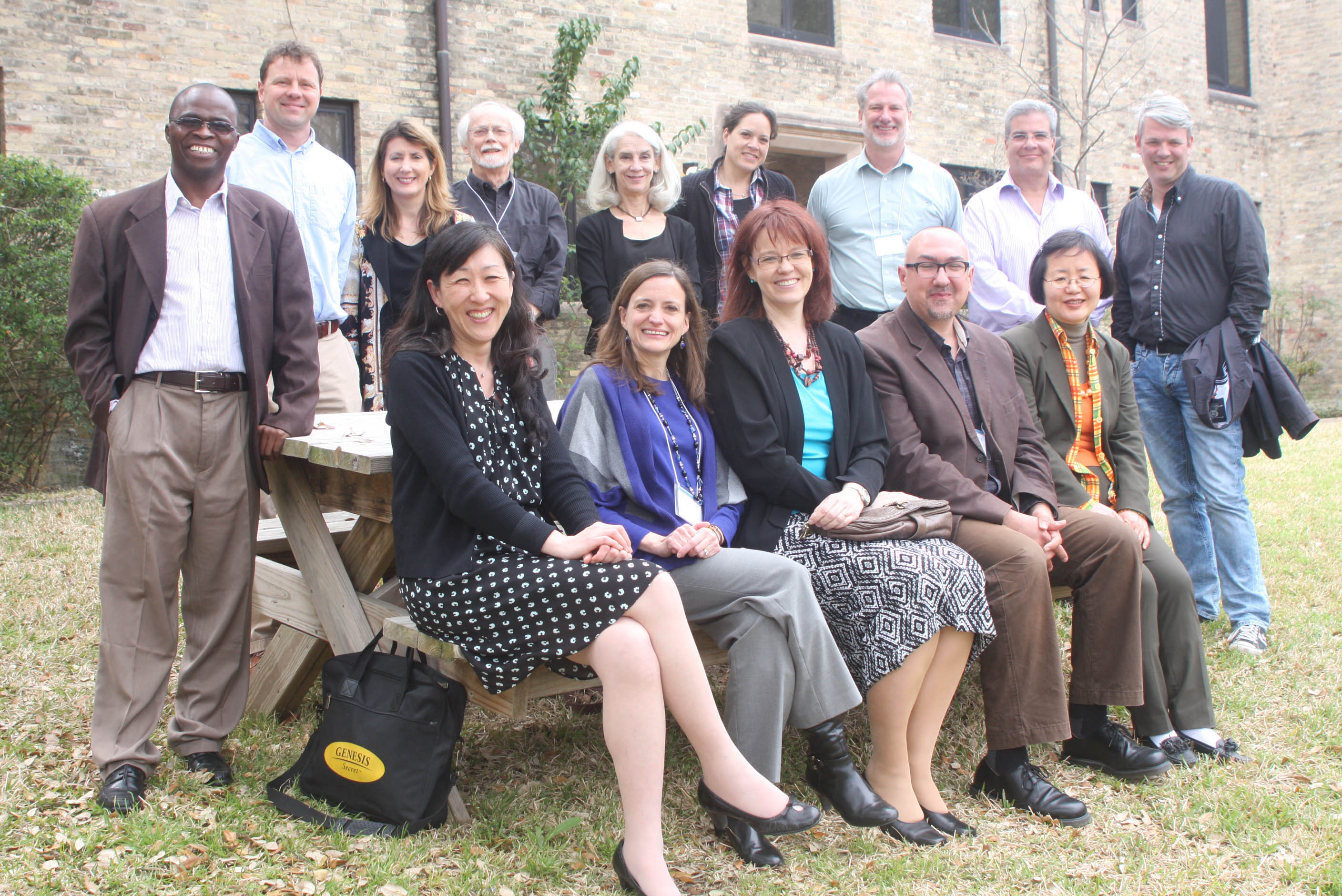
Aside from a little day trip down to magnificent San Antonio, this past week has seen me in Austin. My principle reason for being here has been to participate in the Inaugural Clarence N. and Betty B. Frierson Distinguished Scholars’ Conference at Austin Presbyterian Theological Seminary. The theme of the conference—“Always Being Reformed: Challenges, Issues and Prospects for Reformed Theologies Today”—provided a welcome invitation for a diverse and international company of scholars to address themes, questions, and issues in the Reformed tradition resonant with their own contexts and areas of expertise. The participants were Carlos Cardoza-Orlandi, Deborah and Henk van den Bosch, Grace Ji-Sun Kim, Lameck Banda, Margit Ernst Habib, Martha Moore-Keish, Mary Fulkerson, Meehyun Chung, Bill Greenway, Cindy Rigby, David Jensen, and myself. Our three days together were marked by joy, gratitude, friendship, good scholarship, trust, ego-free candour, great food, wonderful hospitality, and with hope that we might be able to do it again—a gathering of qualities still a little all-too-rare at academic gigs.

Austin Diary II: Introductions

I met you yesterday. It was the first time. I thought you were a god. It was your long smooth back. Long, even longer than Ingrid Bergman’s, and marked by as much pulchritude. Or was it that voice—so confident, and free? Or the way you greeted friends and strangers, sojourners and indifferents alike, and me?

I asked many locals about you. Only one even knew your name. And where I thought you exotic, they named you ‘common’. Where I named you ‘generous’ and ‘kind’, they called you ‘scavenger’, and ‘crow like’, and ‘a varmint’, at one time even in the same breath.

But they do not see you as I do. Most do not see you at all. Not on 6th Street East, anyway—on 6th Street East where they even named a bar after you once; one of those hipster ‘Sorry, No Kids’ joints all caged in like a jail full of lost souls playing the jukebox and bad darts. But no saloon here could produce anything near matching the magnificence of your song. Down the road in Fort Worth, they named an art gallery after you, and a couple of guys from LA, Ken Neufeld and Scott Guy, teamed up to write a little love song, ‘for 8-part mixed voices’, about you … but not here, not here in this music mecca of the desert with its Willie Nelson Boulevard.

But it was given to one guy—an out-of-towner who loves the Liverpool Football Club and the New England Patriots (not an entirely unacceptable combination) and Irish beer and blond middle-aged women and Ben & Jerry’s—‘Vermont’s Finest’—ice cream (the Cake Batter is his favourite)—to introduce us. And with the help of a smartphone—smart, I assume, because it knew of you—was able to tell us both your full name, and about your dietary habits, and about your mating patterns.

grackle

‘She’s a grackle’, he said. ‘A quiscalus quiscula’. ‘Ah, a grackle’, I said with a sense of great accomplishment; for my pursuit was near over. And, knowing your name, I was filled with wonder ever more.

And later, when I was eating outside at La Condesa, you were there too—did you follow me?—striding elegantly around my table while I enjoyed my platos fuertes of mole dominguero (seared airline chicken breast, three day mole, grilled green beans, crema) and my Austin Beerworks Pearl-Snap German-style pils. You seemed to welcome my worship. You seemed unbothered by the crowds, those masses whose anthem was ‘Save the grackle, my ass!’. You seemed more aware than all of us of the sun’s setting. And you won me again with your song, and that long blue back.

And as I wandered back along Guadalupe Street, from 2nd up to 27th, I was greeted by what seemed like all your mates—an entire grackle orchestra, playing, free of charge in the trees outside the University Baptist Church whose current edifice was erected in 1921 (when the Reverend A. L. Aulick was kicking about doing his thing) and is now ‘listed in the National Register of Historic Places by the United States Department of the Interior’. And I thought, stuff the Department and its register. The end and the beginning of all things—interior and exterior and posterior—was being played out right here, right in these trees above the pavement outside ‘Austin’s Progressive voice of faith’, the music which was, with great success, drowning out all the traffic with which the new creation is joyously unfamiliar.

grackles-roosting

__________

I’m not, it seems, the only grackle worshipper here in Austin. Sophie Gilbert, a wildlife researcher, educator, and PhD student at the University of Alaska Fairbanks, has created a video, ‘Shrieks of Joy: The Grackles of Austin’, and has posted it just last week:

Austin Diary I: You realise (or realize) that you’re visiting another planet when …

… while out for an innocent stroll, you happen across sights like this:

PHOTO_20140319_202638

and this:

PHOTO_20140319_200309

and this:

PHOTO_20140319_174622

All in a public place; just there—there, right in front of you—there where anyone, even left-handed people, and people who like to taste the coffee in their coffee, can see it.

And all that, just down the road from this—but which you have to sign in to see (presumably because anywhere in the world where Finney and Forsyth appear within such close proximity of each other is cause for grave public concern, and confusion):

PHOTO_20140319_212519

All told, I’m enjoying Uncle Stanley’s home state. And I’ll post something a little more intelligent about it tomorrow.

An invitation to read in ‘community’

The Isolator, invented in 1925

The Isolator, invented in 1925

Dear readers,

I hope that this finds you well, and firing on all (or at least on most) of your cylinders. I have a request to make of you: if/when you have read one or more of my books or anyone else’s books, may I ask you to please resist the urge to read in isolation and instead share your thoughts on what you’ve read, whether via a blog (it seems that us bloggers used to do this more often in the ol’ days than we do now), or via Goodreads, or via penning a few ‘review’-like words on the relevant Amazon or other bookseller’s site … or even with an actual person. I ask this because I’m increasingly bothered by the way that most of us read ‘alone’. One of the reasons that I greatly appreciate emails from readers about my books—and I will continue to welcome such!—is that the conversations and comments that emerge in such correspondence are very often of mutual help to both reader and author. Most of this could be widened.

I’ve ummed and ahed about writing this ‘letter’, mostly out of fear that it is motivated by a desire to increase sales. I sincerely hope that this is not the case, although my—and probably yours too—adroitness for self-deception is significantly developed. On my most conscious level, this request is motivated by a conviction that anything that helps readers read and to both articulate and gain a guileless assessment of a book is helpful, especially when one feels free to be as ruthlessly honest and as critical and as fair as one needs to be.

Thank you for considering this wee request.

Pax,

Jason

Kim Fabricius on climate change

Bury head in sand

‘Young-earth creationism is an intellectual disaster, but anthropogenic climate-change* denial is, more, a moral disaster. It is not merely risible, it is repugnant; not just bad science but odious ideology. And world leaders for whom the penny has finally dropped – what do they do but loiter without intent, hands in pockets, counting their change? To wilful ignorance, economic self-interest, and political opportunism, add the global “bystander effect” – the more nations that witness other nations in even more distress than their own, the less likely any one nation will say “Enough is enough!” and act – well, one despairs even of damage limitation (like chemo with late-stage cancer). And you don’t need a weatherman to know which way the wind blows: extreme meteorological events, environmental devastation, human suffering will worsen; mass migrations and territorial conflict will ensue; only fundamentalists will rejoice – they’ll have a sodden field day with the book of Revelation. We say climate-change denial is an “opinion”; our grandchildren will ask us why we didn’t call it like it is – a sociopathology’. – Kim the doodle man.

* On the evidence for anthropogenic climate change, see the IPCC’s Fourth Assessment Report, released in 2007. A synthesis of the report can be accessed here. While it is no understatement to admit that I am considerably science-challenged, I found the report accessible, and deeply troubling. Heck, I reckon that even Tony Abbott and John Key could understand it, if they wanted to. The IPCC’s latest report is due out next week.

Semper Reformanda as a Confession of Crisis

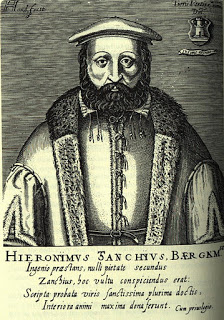
Girolamo ZanchiSoon, I will be making my way to Austin TX. It will be my first time in ‘the live music capitol of the world’ (other candidates for the accolade are Melbourne and Berlin), and I’m not a little gutted that I won’t be there in time to enjoy the South By Southwest events. Still, I’m very much looking forward to participating in the ‘Inaugural Clarence N. and Betty B. Frierson Distinguished Scholars’ Conference’ at Austin Seminary. The conference theme is Always Being Reformed: Challenges, Issues and Prospects for Reformed Theologies Today.

Any excuse to think critically about matters at the very heart of the reformed project is to be welcomed because this strange beast called ‘Reformed’ can never be a default or settled position, and because it is through such self-examination that the reformed serve the church catholic and its witness to Christ in the world. Is this not precisely the only justification for the reformed project at all?

My paper is unambitious and simple in its three broad aims, each of which earns a section. Here’s a wee summary, for those who may be interested:

I. The first section is an attempt to identify the historical beginnings and theological intentions of the aphorism semper reformanda, and to trace some of the ways in which the commitment to this animus of the reformed project has evolved among us. I note that the etymological history of the reformanda sayings is sketchy, but whether their geneses were in 1670s Holland (in the writings of Jacobus Koelman, Johannes Hoornbeeck, and Jodocus van Lodensteyn) or in 1562 in the Italian reformer Girolamo Zanchi (the strong case for priority in Zanchi’s writings is in reference to some correspondence with Theodore Beza, and his treatise De Reformatione Ecclesiarum), they all use the idea of semper reformanda in a similar way—namely, as a summons to the church to be restored to a former purity. Only then, it is argued, can the church really be called ‘reformed’. Zanchi, Calvin, the early reform movements in France and indeed most of the tradition since (with few exceptions; e.g., the Synod of Privas, 1612, argued that ongoing reform would be destabilizing for the church. Another way to read this is to say that those who found themselves benefiting from past reforms did not want their new positions to be undermined), believed that such reform is both possible and is to be a permanent characteristic of the church’s existence in the world.

History points to a movement whose character and energy were ripe for transformation, believing that such would represent not a human achievement but an action of God who calls the church to renewed obedience and continuing reformation through Holy Scripture. Reform, in other words, was to be the fruit of a people attentive to the Word of God in the Bible and to the living Word who ever breaks himself open to us therein. So understood, Ecclesia semper reformanda is not ecclesia semper varianda. Or, as T. S. Eliot put it, reformation is not an ‘endless cycle of idea and action, endless invention, [and] endless experiment’ for its own sake. It is, however, as Michael Jinkins has argued, an invitation to adapt the lessons of the past ‘to new conditions in new environments and to do so in ways that remain appropriate to who we are called to be as a community of followers of Jesus Christ’.

II. The second, and longest, section asks more specifically about how that commitment relates to reformed patterns of confessing. Principally, what I am arguing for here is that to confess the faith in the spirit of the semper is to confess that the Christian community is, at core, in a state of crisis.

I begin by arguing that confession is first and foremost concerned with the community’s lived wrestle with and response to the live question ‘Who is Jesus Christ today?’ This question calls for some risk—faith’s risk that our response might drive us away from familiar formulations and into previously-unchartered territory. This is what it means to be a living tradition, continuously being brought into being by One who encounters us both in and for new contexts. So while we will speak in some continuity with the past, we must reject all moves to deify past confessions. I suggest that confession exemplifies something of the character of commentary insofar as exegesis always calls for new translation. Such work entails the risks of having misheard, of having spoken out of turn, of living with both continuity and discontinuity with one’s history, and of having no stable culture and no visible institutional identity upon which one can rely.

It seems to me that the formula ecclesia reformata semper reformanda serves to safeguard against the temptation to capture revelation as some fixed given, as ‘a thing’. Consequently, I suggest that it calls for something of an event metaphysics wherein the pilgrim community and its witness are continuously disrupted, created and reformed by the eschatological Word and Spirit. One implication of this is that our claims will have an invisible, indemonstrable, and unprovable character about them, and so will be of little value in the hands of those whose measure of reality is that which is passing away.

Drawing on the work of Hendrik Kraemer, Michael Weinrich, J. C. Hoekendijk, Karl Barth, Rudolf Bultmann, Ernst Käsemann, William Stringfellow and Dietrich Bonhoeffer, I argue that confession, as understood by the reformed, is a form of dispossession. That is, for a community-in-diaspora to confess Christ is to be entirely uninvested in its own self-preservation. It is a community whose attention to God’s address is such that ‘its whole life is put in question’ (Karl Barth).

III. The final section of my paper attempts to place on the table one theo-political commitment that might call for reevaluation; namely, how the reformed conceive their relationship vis-à-vis the modern state. I take it that this section is an implication of the previous one—i.e., an implication of the gospel’s eschatological character and what it means to be a community entirely unsettled and unpredictable and unreliable when it comes to its relationship with whatever current arrangements might be in place in the world. The Word of God creates a crisis particularly for those who want life to be secure and invulnerable and certain for it calls for faith to live what Donald MacKinnon names ‘an exposed life’ and to boldly resist all efforts to ‘justify’ its position in the world.

My invitation for us to do some critical thinking about what this might mean for our relationships with the state recalls, of course, that the reformed will share radically different—even contradictory—positions on this subject as on others, and this is how it should be. What ought to be unequivocal, however, is that such positions resist being settled ones, and that they emerge from our hearing afresh the Word in context. Again, the issue here is the divine freedom, and the provisional nature of the Christian community elected for service in this world.

I look forward to the ensuing discussion.