Author: Jason Goroncy

The political realm as a place of spiritual decision

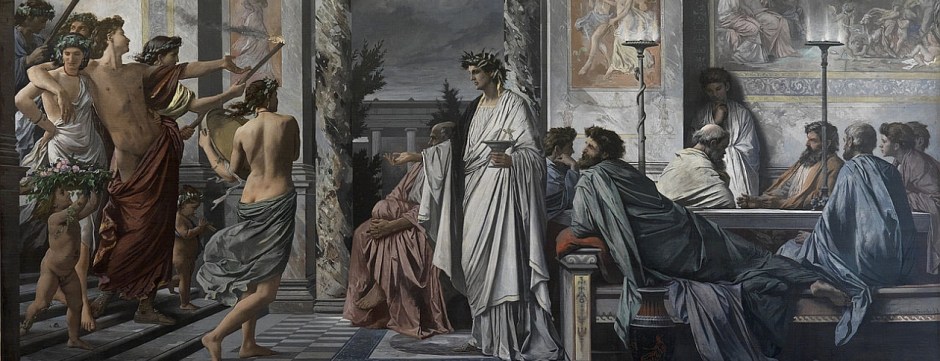
Plato's Symposium - Anselm Feuerbach

‘The weightiest criticisms of Christian speech and practice amount to this: that Christian language actually fails to transform the world’s meaning because it neglects or trivializes or evades aspects of the human. It is notoriously awkward about sexuality; it risks being unserious about death when it speaks too glibly and confidently about eternal life; it can disguise the abiding reality of unhealed and meaningless suffering. So it is that some of those most serious about the renewal of a moral discourse reject formal Christian commitment as something that would weaken or corrupt their imagination. It may equally be that a Church failing to understand that the political realm is a place of spiritual decision, a place where souls are made and lost, forfeits the authority to use certain of its familiar concepts or images in the public arena’.

– Rowan Williams

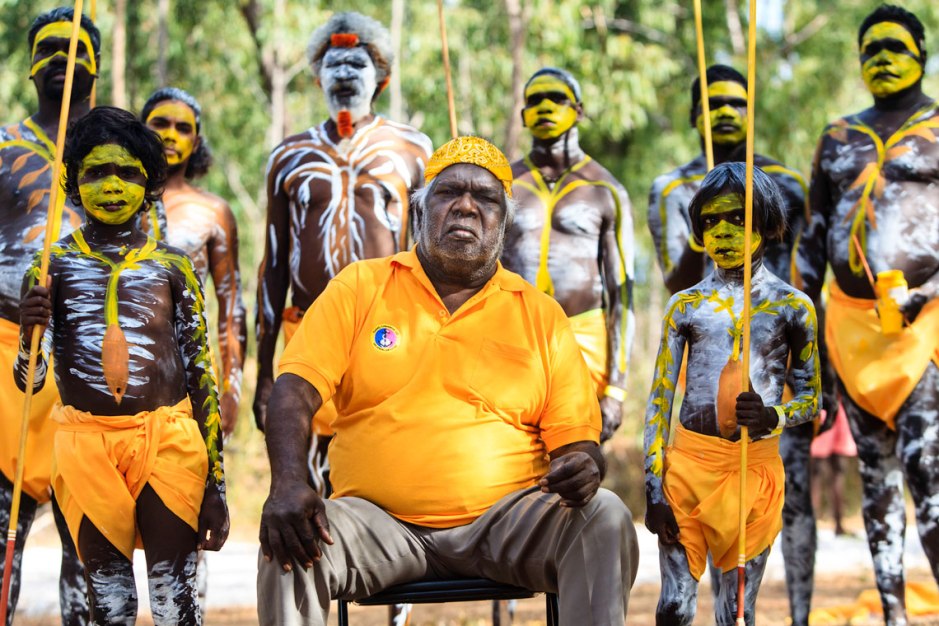
Galarrwuy Yunupingu on leadership

Galarrwuy Yunupingu

Every now and then an essay is written that will probably be read for decades, an essay that risks the invitation to change the way whitefellas view the world and their place in it. This piece by Galarrwuy Yunupingu may be one of those.

One of the recurring themes that emerges throughout the essay is that of leadership. At one point, Dr Yunupingu describes an action of a great ancestor Ganbulapula:

This action was both stunning and brilliant, and it lifted people’s eyes from the mire of disorder, disagreement and bitter division. In that unprecedented throwing of the decorated log coffin, that unexpected shift into a new context, a new network of cultural meaning was created – a new future was believed in. The action generated the possibility of a future different from the past. Bitter division was healed by way of bold, confident leadership.

What a extraordinary description of what good leadership can be about! (Most of us, I suspect, are more familiar with management than we are real leadership.)

On the subject of political leadership, the author offers these timely words:

I live in the total knowledge that politics is a business that runs hot and cold every time a new office holder comes to Canberra (and Darwin), and they have to find some answers to what they can do in their time. Three years is such a short time, and politicians are under pressure to do something instead of biting their fingernails and having no solutions.

Aboriginal people need to understand that the government of the day will always seek to justify itself, protect itself and get its reputation straight. Its members will worry about their jobs and about saying things that will keep them in the good books with their electors, who are mainly white people. And those people will often have little good to say about Aboriginal people; when the voters do talk to their politicians they may want something from us or have some problem with us, because we are not like them. And this adds to the worry of politicians who are most of all concerned about whether they will be re-elected. That’s their first commitment. That’s the real situation. So the only way through it is for a politician to risk prestige with the voters to make the achievement, and to believe that an outcome can be good for all concerned.

This type of sacrifice from strength is the key to leadership. My father had to sacrifice much, too much, to reconcile his life with the ways of the modern world. But he did so. What Aboriginal people ask is that the modern world now makes the sacrifices necessary to give us a real future. To relax its grip on us. To let us breathe, to let us be free of the determined control exerted on us to make us like you. And you should take that a step further and recognise us for who we are, and not who you want us to be. Let us be who we are – Aboriginal people in a modern world – and be proud of us. Acknowledge that we have survived the worst that the past had thrown at us, and we are here with our songs, our ceremonies, our land, our language and our people – our full identity. What a gift this is that we can give you, if you choose to accept us in a meaningful way …

Kevin Rudd, like prime ministers before and after him, acknowledged my leadership and made promises to my people. Tony Abbott made the same promises and came and lived on my land at Gulkula, and from there he ran the government for five or six days. Both were decent and respectful men. All the prime ministers I have known have been friendly to me, but I mark them all hard. None of them has done what I asked, or delivered what they promised. I asked each one to be truthful and to honestly recognise the truth of history, and to reconcile that truth in a way that finds unity in the future. But they are who they are and they were not able or not permitted to complete their task. For a prime minister is beholden to his party and to the parliament, which in turn is held by the Australian people. And the Australian people seem to disapprove of my simple truths, or the idea of proper reconciliation. The Australian people do not wish to recognise me for who I am – with all that this brings – and it is the Australian people whom the politicians fear. The Australian people know that their success is built on the taking of the land, in making the country their own, which they did at the expense of so many languages and ceremonies and songlines – and people – now destroyed. They worry about what has been done for them and on their behalf, and they know that reconciliation requires much more than just words.

So the task remains: to reconcile with the truth, to find the unity and achieve the settlement. A prime minister must lead it and complete it. The leader of the nation should accept his or her commission and simply say what he or she thinks is right, and put that forward for the nation to correct, or to accept, or to reject. Let us have an honest answer from the Australian people to an honest question.

This vision, this challenge, this way of reading the world, does not emerge out of a vacuum. It is in every way non-novel, the fruit of millennia of song cycles which, as Yunupingu describes it, both tell of a person’s life and serve as ‘the universities of our people, where we hone and perfect our knowledge’. This seems to me to speak of not only the ways that our identities are grounded in story – that we are, in fact, storied peoples – but also of the fact that such stories are characterised by both the burdens and liberties of receiving, carrying, and then passing on traditions that are always dynamic and marked with the hope that makes life bearable. Whether or not our futures lay in the direction of our past, it seems that our futures can never be about an escape from the past. The best of our leaders, such as Yunupingu himself, get this. As he writes earlier on in the piece:

As a man reaches the final points in his journey it is then for others to do the singing. Others must take the lead, acknowledge him and guide him. If there is unfinished business it is no longer for that man to carry that business; others who have taken responsibility and who have taken leadership must then bear the burden of creation. The future is theirs, to be taken by them, crafted along the terms set by law as given to us by those that have come before. And failure will be theirs also, to own and bear witness to if they fail.

I have lived my song cycle and I have done what I can to translate the concepts of the Yolngu world into the reality of my life. I have endured much change and seen many different faces – I have watched both Aboriginal and non-Aboriginal leaders move in and out. And of course I have mixed feelings when I reflect on my life’s work. I feel a deep sadness at times, yet I know that I have done much that is useful. I know that I have secured my family’s birthright – we will not drift off with the tide; we will stand and endure, and our names will pass down through the decades and the centuries. Yunupingu means “the rock that stands against time”, and so be it. But I think always of what has been lost around me against what endures. It is a form of torture for a Yolngu person to see the loss of our life: every word, every note, every slip in the song is pain; every patch of land taken; every time an outsider takes control from Yolngu; every time we compromise; and every time we lose something or someone. I tell my family to stand strong and endure, stay within the guidelines of our law, stay with the song cycles and be armed with this knowledge so as to secure for our people our lands, our way of life and our place in the world.

These are just some snippets of what really is a remarkable essay, the entirety of which you can read here.

Australia’s offshore detention system and the Journal of Medical Ethics

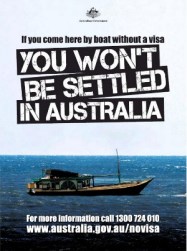
Offshore detentionJulian Burnside has drawn attention to four recently-published articles on Australia’s offshore detention system. They appeared in the Journal of Medical Ethics, and they contribute to a significant and growing body of academic literature on what is a far cry from being a merely academic subject:

ABSTRACT: Australian immigration detention has been identified as perpetuating ongoing human rights violations. Concern has been heightened by the assessment of clinicians involved and by the United Nations that this treatment may in fact constitute torture. We discuss the allegations of torture within immigration detention, and the reasons why healthcare providers have an ethical duty to report them. Finally, we will discuss the protective power of ratifying the Optional Protocol to the Convention against Torture and other Cruel, Inhuman or Degrading Treatment or Punishment as a means of providing transparency and ethical guidance.

ABSTRACT: Australian immigration detention centres are in secluded locations, some on offshore islands, and are subject to extreme secrecy, comparable with ‘black sites’ elsewhere. There are parallels between healthcare professionals working in immigration detention centres and healthcare professionals involved with or complicit in torture. In both cases, healthcare professionals are conflicted between a duty of care to improve the health of patients and the interests of the government. While this duality of interests has been recognised previously, the full implications for healthcare professionals working in immigration detention have not been addressed. The Australian Government maintains that immigration detention is needed for security checks, but the average duration of immigration detention has increased from 10 weeks to 14 months, and detainees are not informed of the progress of their application for refugee status. Long-term immigration detention causes major mental health problems, is illegal in international law and arguably fulfils the recognised definition of torture. It is generally accepted that healthcare professionals should not participate in or condone torture. Australian healthcare professionals thus face a major ethical dilemma: patients in immigration detention have pressing mental and physical health needs, but providing healthcare might support or represent complicity in a practice that is unethical. Individual healthcare professionals need to decide whether or not to work in immigration detention centres. If they do so, they need to decide for how long and to what extent restrictive contracts and gagging laws will constrain them from advocating for closing detention centres.

The compromised nature of healthcare has now been well documented along with the pervasive nature of dual agency (or dual loyalty) obligations, between that of patients, the immigration department and other contractors. This has only served to restrict and distort the nature of healthcare and limit clinicians in their roles with healthcare frequently subverted to other policy goals. Accountability is obscured and oversight is limited with arrangements that attempt to divest responsibility from the immigration department. At best clinicians are required to navigate ethically fraught terrain where they frequently have to compromise what may be ideal or even generally accepted treatment, at worst this promotes conduct that is clearly unethical. Along with the detention environment this all serves to curtail what benefits may usually be gained from treatment. These issues have played out in a more acute form in off-shore detention where there has been a number of examples of the immigration department intervening in medical transfers and treatment recommendations.

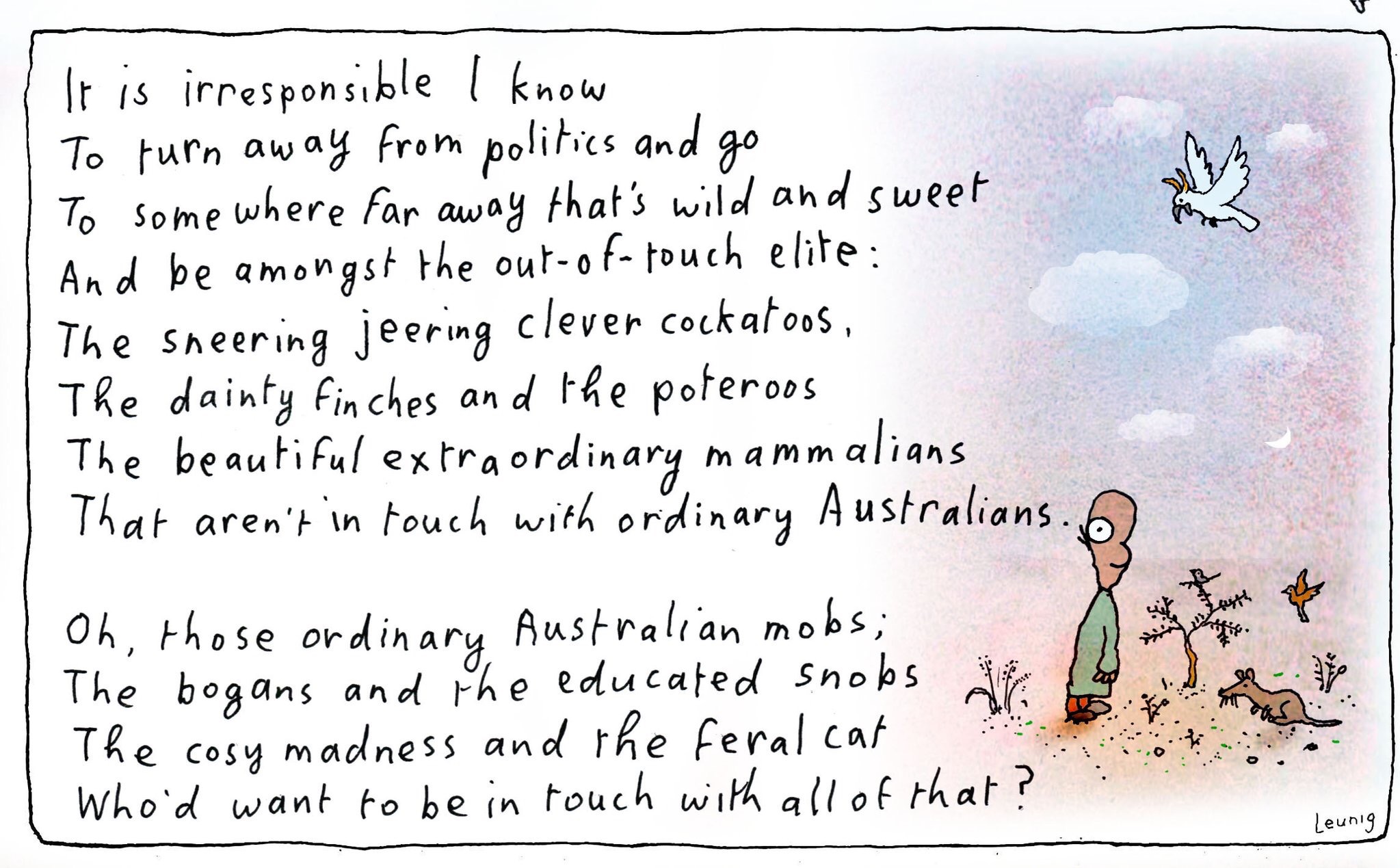
Sadly and justifiably, regardless of the final results of this past weekend’s federal election, those illegally detained in Australia’s offshore detention centres can expect nothing to change. We are being governed by xenophobic dragons with little regard either for the rule of law or for human decency.

‘Tenebrae’, by Geoffrey Hill

Tenebrae

He was so tired that he was scarcely able to
hear a note of the songs: he felt imprisoned
in a cold region where his brain was numb
and his spirit was isolated.

1

Requite this angel whose
flushed and thirsting face
stoops to the sacrifice
out of which it arose.
This is the lord Eros
of grief who pities
no one; it is
Lazarus with his sores.

2

And you, who with your soft but searching voice
drew me out of the sleep where I was lost,
who held me near your heart that I might rest
confiding in the darkness of your choice:
possessed by you I chose to have no choice,
fulfilled in you I sought no further quest.
You keep me, now, in dread that quenches trust,
in desolation where my sins rejoice.
As I am passionate so you with pain
turn my desire; as you seem passionless
so I recoil from all that I would gain,
wounding myself upon forgetfulness,
false ecstasies, which you in truth sustain
as you sustain each item of your cross.

3

Veni Redemptor, but not in our time.
Christus Resurgens, quite out of this world.
‘Ave’ we cry; the echoes are returned.
Amor Carnalis is our dwelling-place.

4

O light of light, supreme delight;
grace on our lips to our disgrace.
Time roosts on all such golden wrists;
our leanness is our luxury.
Our love is what we love to have;
our faith is in our festivals.

5

Stupefying images of grief-in-dream,
succubae to my natural grief of heart,
cling to me, then; you who will not desert
your love nor lose him in some blank of time.
You come with all the licence of her name
to tell me you are mine. But you are not
and she is not. Can my own breath be hurt
by breathless shadows groaning in their game?
It can. The best societies of hell
acknowledge this, aroused by what they know:
consummate rage recaptured there in full
as faithfulness demands it, blow for blow,
and rectitude that mimics its own fall
reeling with sensual abstinence and woe.

6

This is the ash-pit of the lily-fire,
this is the questioning at the long tables,
this is true marriage of the self-in-self,
this is a raging solitude of desire,
this is the chorus of obscene consent,
this is a single voice of purest praise.

7

He wounds with ecstasy. All
the wounds are his own.
He wears the martyr’s crown.
He is the Lord of Misrule.
He is the Master of the Leaping Figures,
the motley factions.
Revelling in auguries
he is the Weeper of the Valedictions.

8

Music survives, composing her own sphere,
Angel of Tones, Medusa, Queen of the Air,
and when we would accost her with real cries
silver on silver thrills itself to ice.

– Geoffrey Hill (1932–2016)

Should Christians support anti-discrimination legislation? Some very inadequate and provisional scribbles

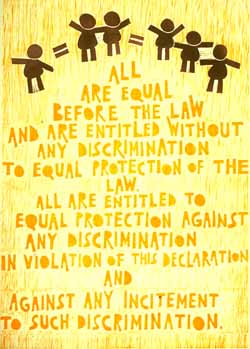
non discriminationPolitics is messy, as messy as is the human muddle itself. For people of faith, discerning how one ought best participate in that mess – or whether to participate in it at all, an act which itself actually represents a kind of participation – is typically characterised by a similar pattern of ambiguity and oddness that is unavoidable. This is no less so for those who follow Jesus.


Today, I happened across a strange post arguing why Christians in Australia ‘can’t vote Greens’. Its author, Andrew, an Anglican minister, is troubled by the fact that one of the country’s main political parties is championing anti-discrimination legislation. He believes that this equates to the Greens advocating for a kind of totalitarianism that is fundamentally at odds with the practice of following one’s conscience. He proceeds to argue, very strangely indeed, that ‘amongst the first political commitments of Christians, following Jesus’ words, is to a pluralist state’. The words of Jesus to which he refers are those recorded in Matthew 22: ‘Render to Caesar the things that are Caesar’s; and to God the things that are God’s’.

The argument goes that a Christian cannot support the Greens on the grounds that the Greens have a policy that prohibits discrimination on religious grounds. The facts, it seems, are a little less clear cut than Andrew suggests. The amendment that the former Australian Greens senator and social justice lawyer Penny Wright put before the parliament argued that the ‘religious exemptions in the Sex Discrimination Act strike the wrong balance between freedom of religion and protection from arbitrary discrimination’, an acknowledgement that the weighing up of rights is always a very difficult task indeed. So too Penny Wong, a Christian and Labor Party senator, once noted that the government must seek ‘to balance the existing law and the practice of religious exemptions with the principle of non-discrimination’. I read in these calls a challenge to keep that conversation a live one. Wright’s statement reads, in part:

Freedom of religion is an important human right. However, religious bodies should not have a free pass to discriminate. The Sex Discrimination Act as it stands gives broad exemptions from anti-discrimination law for religious bodies and educational institutions set up for religious purposes. The exemptions fly in the face of the idea that people should be treated equally, with dignity and respect, so that they can have access to opportunities and services such as health, education and housing. As a result of these exemptions, a religious hospital can refuse to employ a gay doctor, a religious school can refuse to enrol a bisexual student or to hire a lesbian administrator, and a faith based homelessness shelter can refuse to accept a transgender resident. (Italics mine)

The proposal from the Greens, as stated elsewhere, is that ‘blanket exemptions for religious organisations do not apply when that organisation is using public money to provide public services like health, education and housing’. That sounds very reasonable to me.

I confess to being as seduced as is Andrew when it comes to defending a broad commitment to religious pluralism. But his argument strikes me as very odd, especially for a Christian and particularly upon the grounds of Matthew 22. To my mind, he appears to suggest, albeit tacitly, that it is somehow the role of the state to help Christians to be Christians, to follow Jesus. His argument also appears to confuse or conflate the roles that God has assigned to so-called civil authorities with those given to the church. It is, it seems to me, reasonable to argue, and to hope, that it is precisely the responsibility of the state to ensure that all of its citizens – and especially, perhaps, its most vulnerable; and this sometimes includes religious communities – are granted equal rights and access under the law. (Ben Saul, Challis Chair of International Law at the University of Sydney, recently reminded us too that ‘Human rights failures say a lot about our government’.) I remind Andrew that it has been the Greens – and not, sadly, the ALP and the Liberal–National Coalition – who have consistently respected and defended the important role that the Australian Human Rights Commission plays in protecting the rights, including the religious rights, of all those whom our parliament and courts are obligated, by both domestic and international law, to protect.

Conversely, it is the responsibility of the Christian community (I dare not speak for other religious traditions) to challenge and even to break such laws if and whenever its obedience to the rule of Christ demands it do so, that believers might live in the world with a clear conscience and their lives testify that God and not Caesar is sovereign. In a world marked by unbridled greed, abuse of power, and the defence of both by means of state-sponsored violence, God help Christians if they become known for being ‘good citizens’.

Perhaps what this little response to Andrew’s post represents has more to do with our respective ecclesial tribes – that Andrew is an Anglican and that I am of the free church tradition – than it is about whether or not one might, in good conscience, support this or that political party, none of which, it must be said, a Christian can support uncritically. It certainly reminds me, and for this I am grateful to Andrew, that following Jesus is, at core, a profoundly political act; indeed, it is the most political act of all. Might I confess, however, that it is difficult for me to see how Andrew’s critique represents much more than a gasp by a powerful institutional elite to maintain ground that a particular political arrangement – associated with the name of Constantine – once secured, or at least promised. God’s promises – the promises of one whose power is not of this world and which is made perfect precisely in the act of forgoing its own rights – might, I suggest, be quite otherwise. (So John Dickson noted around the time of the last election: ‘a Christian vote is a vote for others, not oneself. It is fundamental to the Christian outlook that life be devoted to the good of others before oneself’.)

Returning to those strange words of Jesus’ – ‘Render to Caesar the things that are Caesar’s; and to God the things that are God’s’ – I want to suggest that for too long Christians have stood on the side of Herod here, and have, as a result, sought to take the sting out of the impossibility that Christian discipleship represents. ‘Christian accommodation to play the game dictated by Caesar’s coin insures that the separation between state and church makes Christians faithful servants of states that allegedly give the church freedom’ (Stanley Hauerwas).

Or, as another has said: ‘For freedom Christ has set us free. Stand firm, therefore, and do not submit again to a yoke of slavery’.

Paul Fiddes on being Baptist

This past week, Whitley College has played host to Professor Paul Fiddes who has been our guest speaker at the annual School of Ministry. He has been speaking on the theme of Baptist identity. It really has been a rich time in so many ways. For those who were unable to be there, or who might like a little summary of what it was all about, here is a precis of the various addresses:

Songs that stink

Paddling By the ShoreIt has been my privilege over recent days to have prepared the liturgies for the various worship services held this week at Whitley College’s School of Ministry. I included two songs from Kim Fabricius’s collection of hymns published in Paddling by the Shore. People seemed to really appreciate these songs, a testimony I am pleased to hear. My own enthusiasm for Kim’s book is noted on its back cover:

The songs gathered here stink. They stink of theology cultivated by the best of the Catholic tradition and sensitive to the hazards of congregational worship. They stink of the holy wit of an indecorous soul set loose. And, most wonderfully, they stink of divinity unashamedly immersed in the blunt realities of being human in the world and delighting in life familiar with, but unconstrained by, death. They also should be sung, loudly and lots.

A number of folk asked me for a copy of the words for the two songs we sang from this collection. So, for them and for any others that may be interested, here they are:

‘Out of nothing God created’. Tune: Blaenwern – 87 87

Out of nothing God created
all the somethings that exist;
from a Bang the world inflated,
light-years later earth he kissed.
Starting with the smallest microbe,
moving from the sea to land,
life evolved around the new globe,
gently pushed by God’s good hand.

‘Go!’ said God, and animated,
species spread by law and chance;
Spirit fashioned and related
each to all in sacred dance.
All that breathes is love’s location,
not just humans in their pride;
by selection and mutation,
ask the beasts how God can guide.

Now creation groans and shudders,
plundered, poisoned, colonized
by a beastly little brother,
self-styled as the one who’s wise.
Will the sparrows finally perish,
though God clothes them and protects?
Time is short, so let us cherish
all that God will resurrect.

‘Migrant Jesus, at the border’. Words modified. Tune: Servant Song/Brother Sister Let Me Serve You.

Migrant Jesus, at the border,
refugee of fear and hate,
you’re a threat to law and order,
nightmare of the nation-state.

Child of Israel, fleeing soldiers,
from the Jordan to the Nile,
were your parents passport-holders,
were you welcomed with a smile?

Home from Egypt, Spirit-breathing,
in the towns of Galilee,
how you had the people seething
when you preached the Jubilee.

At the margins, far from center,
where you met the ostracized,
even friends weren’t keen to enter
conversations that you prized.

Ease our fears, forgive our hatred
of the other and the odd;
help us see the single-sacred:
face of stranger – face of God.

Migrant Jesus, at the border –
Manus Island or Nauru –
Greetings, sister! Welcome, brother!
Make this place your promised land.

How democracy produced a monster

‘[He] came to power in a democracy with a highly liberal constitution, and in part by using democratic freedoms to undermine and then destroy democracy itself …

[His party’s] surge in popular support … reflected the anger, frustration and resentment – but also hope – that [he] was able to tap among millions of [his countrymen]. Democracy had failed them, they felt. Their country was divided, impoverished and humiliated. Scapegoats were needed …

Mercifully, what happened [then] … will remain a uniquely [sic] terrible episode in history. What took place then reminds us even so of the illusory assumption that democracy will always be a favored choice of a population torn apart by war, facing enormous privations and burning with resentment at national humiliation through perceived foreign interference. It also reminds us of the need for international cooperation to restrain potential “mad dogs” in world politics before they are dangerous enough to bite’.

– Ian Kershaw, How democracy produced a monster (3 February, 2008)

Steve Biddulph on why Eddie McGuire should resign

Eddie McGuire

Meanwhile, over here in the colonies, there’s a much-welcome statement from Australian-based psychologist Steve Biddulph on why Eddie McGuire should resign:

In case you are in any doubt, I think he should resign too.

The pattern is important to understand if we are to end violence against women.

Caroline Wilson is a serious journalist, she made valid and important – but always reasoned – criticisms of Eddie McGuire’s performance as a manager of Collingwood. That’s her job.

A grown up would have two options – to address her arguments and make a case why she was wrong. Or to concede that she was right.

But instead of engaging as an equal and an adult, Mr McGuire seethed, and in a setting where he felt safe, among mates, and in the hearing of several million people, they joked about – essentially – killing her.

When shamed men can’t deal with the anxiety they feel, they choose to resolve it by imagined, or real, violence, and rally support from other men to make that okay.

This also happened with Alan Jones and our first woman PM Julia Gillard, and the infamous “chaff bag” threats. And as we see in the daily news – from Yorkshire to Orlando, there’s always some nutter willing to carry it out.

Token apology that is forced by circumstance isn’t the same as real change. You have to say – this is a character flaw.

Even if the victim wasn’t a woman, it’s still wrong.

Adults deal with conflict or disagreement with words, respectfully, and safely. Only mature adults should be in positions with this much power …

A few commenters, mostly men, are saying “it was just a joke”. Because they are presumably fathers, I want to explain this, as it makes a difference to your parenting. If you go back to my piece at the top, I am saying I don’t believe this was “just” a joke.

There was a context. He was genuinely threatened and angry at her criticism in her articles. It was on his mind.

It came out quite inappropriately at a charity dunking. It was a slip up, sure, but it showed his underlying anger, and his inability to deal with it in an adult way.

And it showed him appealing for emotional support to his mates. It was anger and threat leaking out through humour.

And as the Age pointed out today, she wasn’t there, so it can’t be banter. Banter is when people are sharing in put downs for fun, by mutual agreement. Humour is used to mask violence every single day. Rapists and abusers often say “get over it”.

It was window into the man’s heart. And that is a huge thing.

[Source]

Is the ACL the least theologically-literate lobby group in the country?
ACLIs the Australian Christian Lobby the least theologically-literate lobby group in the country?
They may well be, for according to their latest newsletter, ‘A marriage plebiscite is … the only way that, as Christians, we can secure both the future of marriage, and our freedoms to believe and practice our faith’.

This piece of brilliant propaganda might be the least Christian statement on marriage that I’ve ever read. What an embarrassment these people are to the Good News.

They’re certainly right about one thing, however: ‘There’s more at stake this election [sic] than marriage’. But even on that subject, the institution of marriage is far too important to be left to the likes of the ACL to define it.

[Update: Within minutes of this little post going live, the Australian Christian Lobby blocked me from the ability to post comments on, or even to ‘Like’, their Facebook page. (As far as I am aware, this is a first for me.) So much for being about promoting ‘public contributions of the Christian faith reflected in the political life of the nation’.]

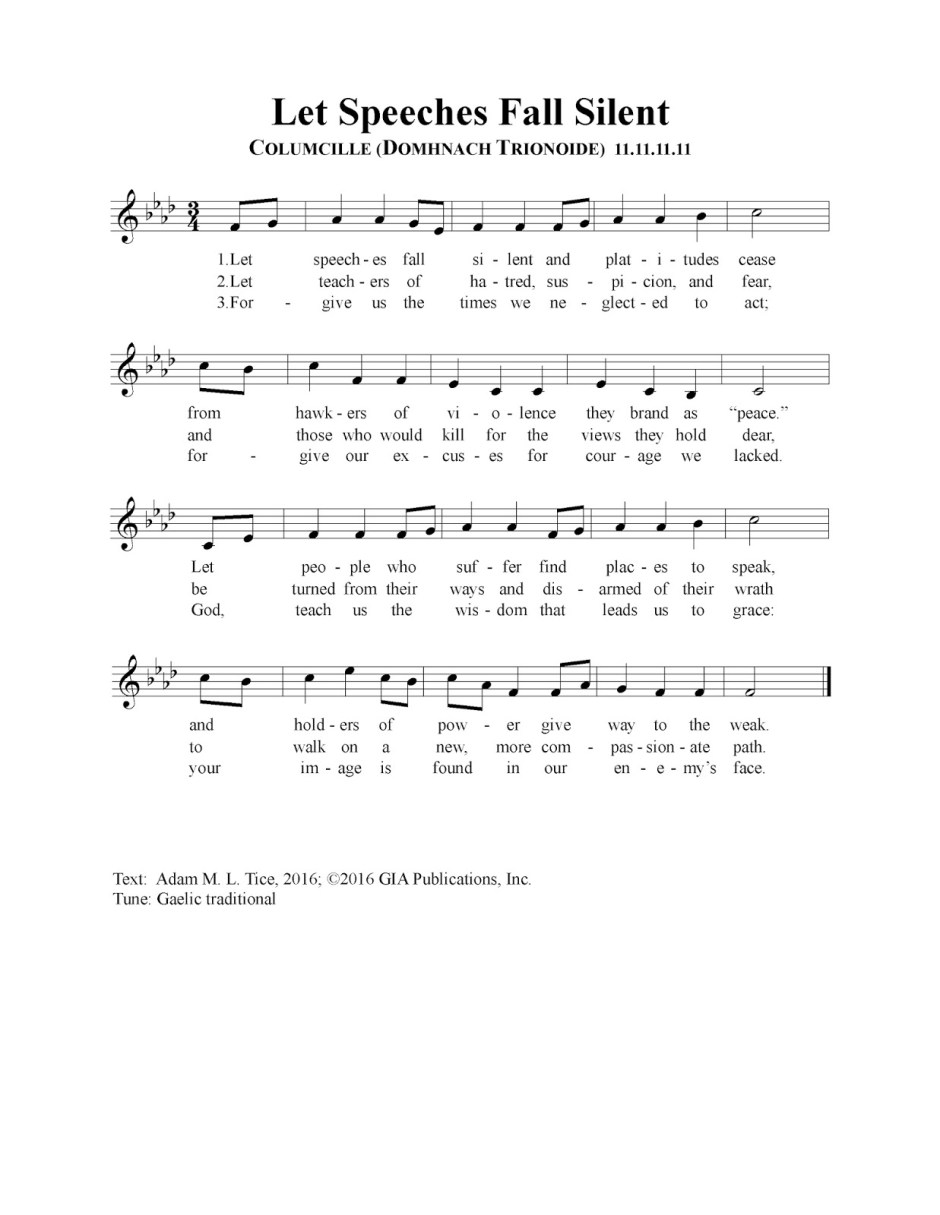
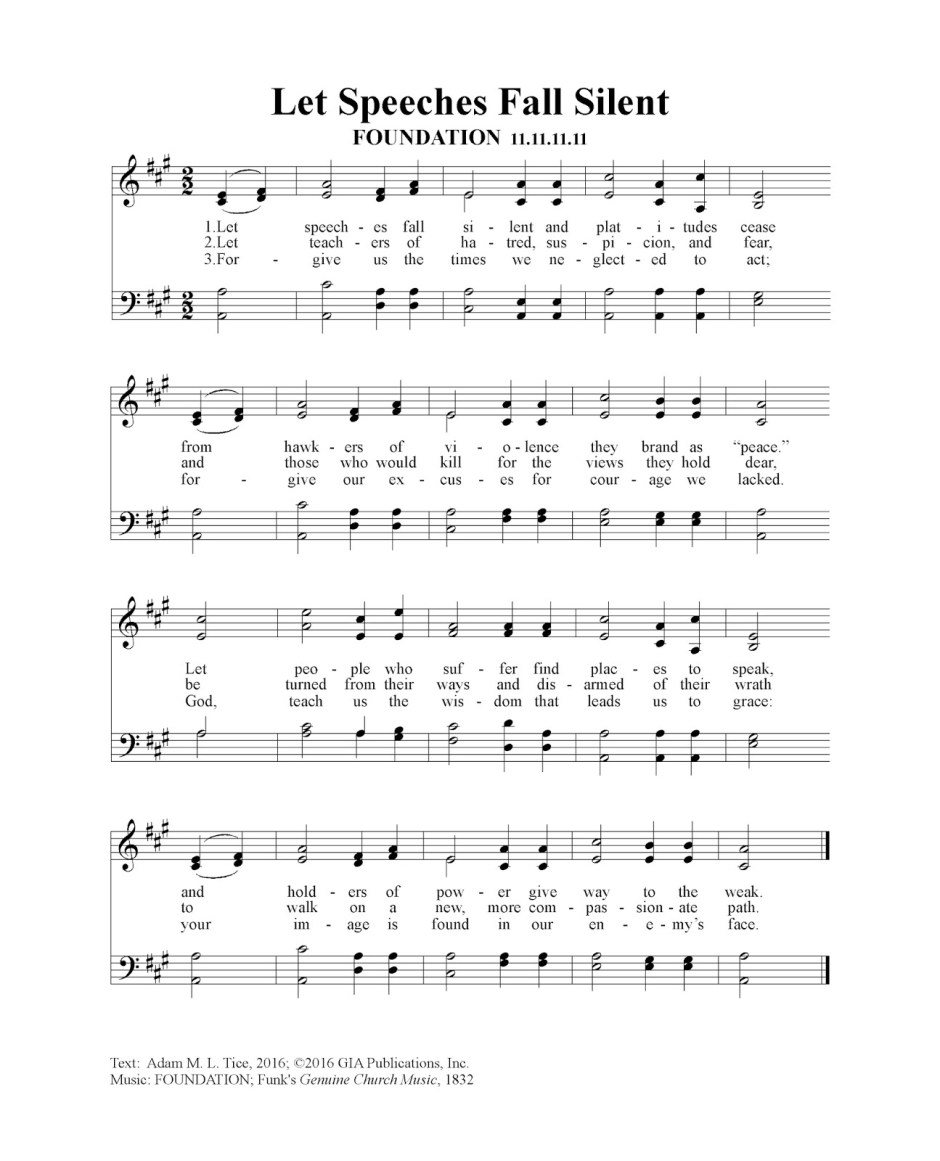
Let Speeches Fall Silent

Adam Tice’s response to the recent shootings in Orlando was to pen some wonderful text for a new hymn:

Let speeches fall silent and platitudes cease
from hawkers of violence they brand as “peace.”
Let people who suffer find places to speak,
and holders of power give way to the weak.

Let teachers of hatred, suspicion, and fear,
and those who would kill for the views they hold dear,
be turned from their ways and disarmed of their wrath
to walk on a new, more compassionate path.

Forgive us the times we neglected to act;
forgive our excuses for courage we lacked.
God, teach us the wisdom that leads us to grace:
your image is found in our enemy’s face.

Let Speeches Fall Silent COLUMCILLELet Speeches Fall Silent FOUNDATION

Imagination, leadership, and the gift of a safe public commons

electionImagine going to an event, as I did last night, where political candidates for the upcoming federal election are asked about what kind of leader they aspire to be, about what kind of leadership might best meet the challenges that are facing our local, regional, and global communities and their moral and physical environments. Imagine imagining that you were expecting to hear names like Oodgeroo Noonuccal, Mary Robinson, Nelson Mandela, Aung San Suu Kyi (who today celebrates her 71st birthday), Lowitja O’Donoghue, Desmond Tutu, Dag Hammarskjold, Jonathan Sacks, Rowan Williams, Fred Hollows, Eva Burrows, Muhammad Yunus, or Noel Pearson, and instead being told by one of those political aspirants that the best models of leadership today are those championed by Ronald Regan, David Cameron, and John Key. Tea, anyone?
I’m immensely grateful that there were some other – some more sagacious – voices present, a reminder that our parliament also has some good people serving in it and that many who aspire to serve in such a way are also of outstanding ilk, even if I disagree with them on some matters that we both agree are fundamental for the healthy flourishing of life.

I’m also encouraged that the event itself was hosted by two churches who believe that part of their service to the wider community is to create safe spaces where such conversations might occur. There can be no healthy society without a rigorous and safe public commons. It is, above all, the role of the constitution, the courts, and the parliament (including its organisations such as the Human Rights Commission) and not the church to ensure the existence of such spaces. But that need not preclude religious communities also making such space available.

… in contrast to my nature

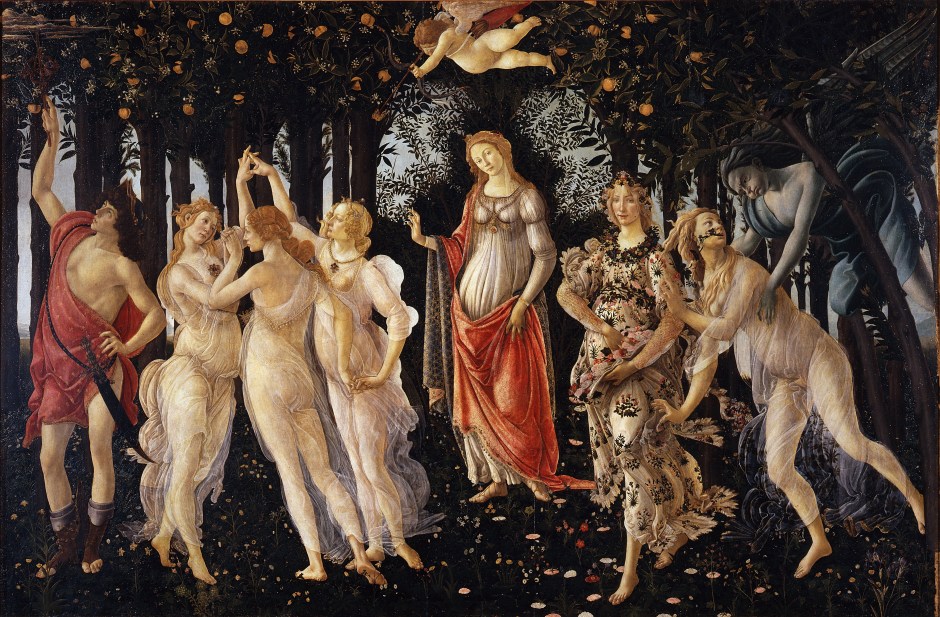
Botticelli Primavera

I read some really beautiful words today; the middle bit of Clive James’s poem ‘13: You Saw Nothing in Hiroshima’, from his latest collection Gate of Lilacs: A Verse Commentary on Proust:

Proust’s book gave me the courage to admit –
As did the culture of Japan, as did
The architecture of the Winter Palace,
The glass and plaster of the Amalienburg
And many fine and delicate things throughout
Our heritage – think of the Graces swaying
In Botticelli’s Primavera, think
Of the bronzes that a scuba diver found
Two hundred metres down in the sand floor
Of the sea at Capo Riace in our time,
Those bronzes that had spent two thousand years
Being beautiful down there – think of all that
And too much more that I have no time now
Even to name, now that my death comes close –
To admit that almost all I’ve ever loved
Exists in contrast to my nature. I,
A clumsy man, and thoughtless, with small gifts
Of subtlety or intuition, have
No natural business fondling the fine-drawn
And exquisite. Tanagra figurines,
If given to my keeping, I’d have used
For paperweights. We’re talking a born vandal,
A Goth dyed in the wool. Yet all my life
People and things I’ve loved have always shared
Unnecessary grace.

A little Friday link love

Triduum II - version 5

Haven’t done one of these posts in a while …

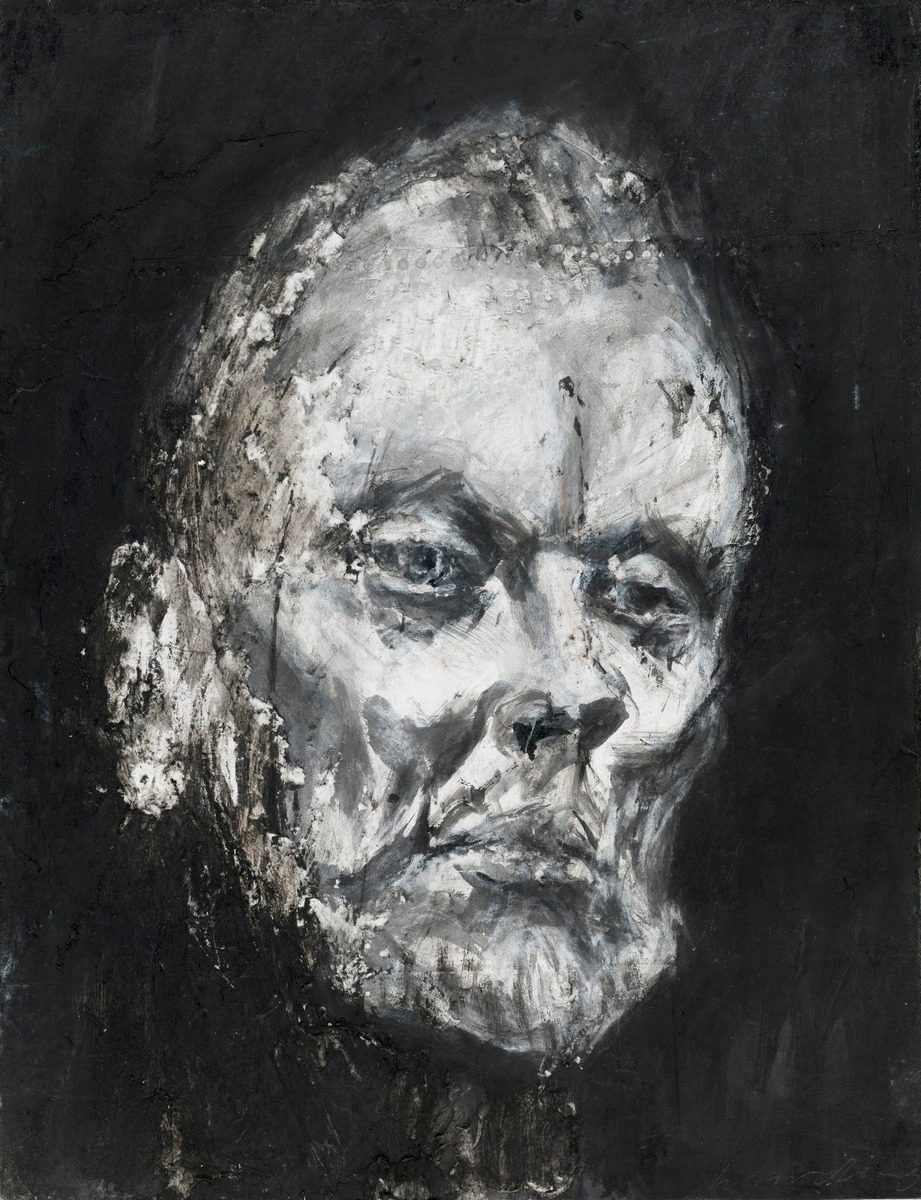
[Image: Alfonse Borysewicz]

‘Being, After Martin’

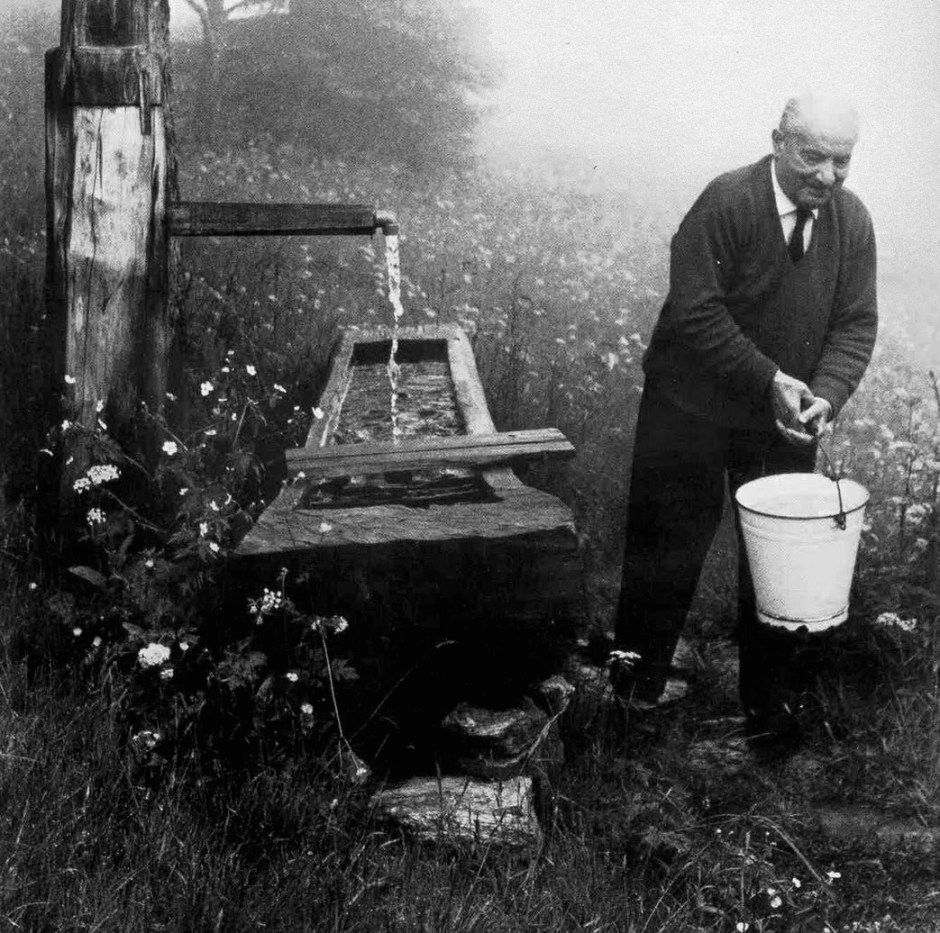
Heidegger at spring Gelassenheit

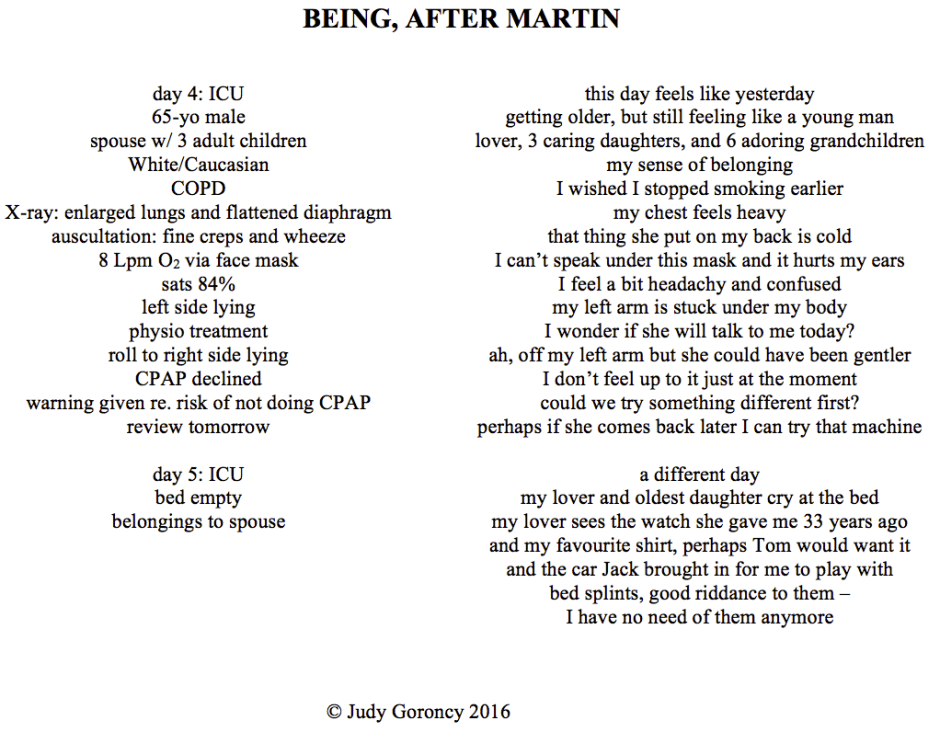
My remarkable partner, a physiotherapist and mad Western Bulldogs supporter (this latter fact is quite irrelevant here), recently dipped her pretty toes into the ponds of poetry. This is without doubt a much-to-be-celebrated achievement. Hell, it calls for a drink!

Her inaugural offering, see below, was inspired by a twin encounter – with a patient, and with the thought of Martin Heidegger, whose work she has been trying to decipher. The poem represents her attempt to bear witness to, and to contrast, two methods, as she refers to them – ‘that of the raw facts (the “scientific method”, as told from the physiotherapist’s perspective) and the subjective experience of the patient’. This is coupled with an effort to take up Heidegger’s invitation to read and recognise being with the other, and that that being itself is not exhausted by such action.

What’s not to love about all that!


Being, After Martin

Michael Jinkins on the future, or otherwise, of theological education

sailing fog‘So what the Dickens is going on? Where are theological schools headed? Do we still have options that will not undercut the quality of education we expect and need for those going into ministry?

This last question is the one that keeps me awake at night.

Dan Aleshire, executive director of ATS and the wisest analyst of theological schools in our time, in his address to participants in the annual Presidential Intensive Leadership Conference quoted something said many years ago by Dutch Leonard, a professor at Harvard Business School. Dr. Leonard famously said: “The central challenge for nonprofit leadership is that mediocrity is survivable.”

To which Dan said: “Maybe no longer is this true.”

Dan is so right about this. Mediocrity is dead, as Tom Friedman said in one of his New York Times columns a couple of years ago (in response to which I wrote an earlier blog). If you want your organization to survive, whatever it does must be excellent. Just “good enough” is no longer good enough.

That is exactly where the rub comes. A mediocre school is not long for this world. Even great schools have failed. And most of the schools that have failed were still delivering a traditionally strong education to their students.

I would hazard to guess that many, if not most, of the schools that have stumbled and fallen in the past several years didn’t fail because they lacked adequate analytics. Like most businesses that fail, they failed because they didn’t do what their analysis told them they needed to do. Some failed because they jumped on what appeared to be a bandwagon headed to success only to discover too late that the solution wasn’t the right one for them. Others have attempted to do “business as usual” in an exceptional era, and they simply ran out of operating capital. Others were unwilling for whatever reason to sacrifice their sacred cows for the sake of their mission.

The seminaries that have flourished have disciplined themselves to make tough choices based on their strategic vision. Furthermore, successful schools in the current environment do not think of adaptation as something they did, but something they do’.

You can read the rest of the post here.

Calvin for today: on living with ‘others’

Hungary

This story made news today here in Australia. It reminded me of John Calvin’s words on James 3.1:

For it is to be observed, that James does not discourage those neighbourly admonitions, which the Spirit so often and so much recommends to us, but that immoderate desire to condemn, which proceeds from ambition and pride, when any one exalts themselves against their neighbour, slanders, carps, bites, and malignantly seeks for what they may turn to a sinister purpose: for this is usually done when impertinent censors of this kind insolently boast themselves in the work of exposing the vices of others.

From this outrage and annoyance James recalls us; and he adds a reason, because they who are thus severe towards others shall undergo a heavier judgment: for that person imposes a hard law on themselves, who tries the words and deeds of others according to the rule of extreme rigour; nor do they deserve pardon, who will pardon none. This truth ought to be carefully observed, that they who are too rigid towards others, provoke against themselves the severity of God.