Year: 2010

On the cost and grace of parish ministry – Part IV

Andrew Irvine’s book Between Two Worlds: Understanding and Managing Clergy Stress (London: Mowbray, 1997) is a helpful study on a number of fronts. As the book’s title suggests, Irvine argues that ‘often behind the “masks” of office hides a person caught in two worlds between the authenticity of personhood and the role and expectation of office’. He asks, ‘With whom can this tension be shared? To whom can the inner doubts, fears and even “sins” be disclosed? Are others, whose masks seem more authentic than ours, invaded by these same realities in their lives?’ (p. xiii). The book examines the personal world of pastors and the factors which contribute to a ‘profession fraught with tension and subject to excess stress’ (p. xiii).

Irvine begins, in the first chapter, by identifying and discussing some of the biblical, historical, societal, and personal factors that shape the foundation for pastoral ministry before turning, in Chapter Two, to discuss both the positive and negative, and internal and external, features of stress. Among the internal features he names ‘success issues’, ‘sexuality’, ‘guilt’, ‘perfectionism’, ‘theological issues’, ‘identity issues’ and ‘authority dynamics’. I found his observations on the last two in this list, in particular, to be the most significant.

Irvine, who completed his PhD dissertation on ‘Isolation and Pastoral Ministry’ (St Andrews, Unpublished, 1984), had already hinted at the magnitude of identity in his Introduction where he noted that often, caught up in the trappings of office, it is the minister who, forgetting his/her own humanity, imposes the stress of non-being. And here he draws on the work of Carl Jung, who in two articles on the ego, warns of ‘the danger of over-identification with the “role” of an office and, in that act, the forgetting of the identity of the total self with all the intrinsic value of the inner person’ (p. xii). Later on, Irvine cites again from Jung’s well-known 1953 essay ‘The Relations Between the Ego and the Unconscious’ (published in Two Essays on Analytical Psychology, Collected Works 7; London: Routledge and Kegan Paul), recalling how, for Jung, an individual can become trapped behind mask of a persona and thereby ‘takes a name, earns a title, represents an office, he is this or that’ (Jung, p. 156, para. 246). In other words, there is the danger of one’s identity becoming to greater or lesser degree ‘synonymous with the “role” of office, from which many cannot escape. In all functions of life, at least those visible to the outside observer, the clergy may be “Reverend So-and-So” or “the minister at Saint James”, the “woman minister from St David’s”, and so on’ (p. 28). In support, Irvine cites from psychiatrist Robert McAllister who, in 1965, penned the following observation:

The clergyman seems to me to be constantly involved in his environment in a way that does not characterize any other profession or vocation. He develops an overworked sense of identity with his clerical role. He cannot be anything but a clergyman at anytime, whether he is on vacation or at work or in the privacy of his room. A physician, a lawyer, a bricklayer, a carpenter … can be something else, can get completely away from his profession or trade.

And Irvine suggests that the problem ‘is even greater for the spouse of the clergyperson who becomes a second-string description, “the husband/wife of the/our minister”’ (p. 28). He continues: ‘All of this raises a multiplicity of questions of identity for the clergy. Not least of these questions is how the individual, that person behind the mask/persona, can find true relationship which nurtures and strengthens. In the loss of personal identity which occurs when relationship is predominantly based on office or role there is the anxiety of unfulfilment and the inner self becomes starved for healthy depth interaction. A false identity is established based on role, where in desperation the individual seeks fulfilment and relationship. Not only is the stress of loss of personal identity great in itself, but it disallows opportunity to alleviate pressure through expression of inner need, desires, doubts and fears’ (p. 28).

On the related-matter of authority dynamics (relating to issues of control and loss), Irvine notes that ‘this is not an easy question to address with clergy, for pietism looks unfavourably on such things in ministry’ (p. 29). He confesses that the desire for power and authority is a part, if not a controlling aspect, of our make-up, and that the milieu of the Church does not guarantee an exception to this. The question of authority – and its loss – is especially pressing, he writes, ‘in a world where more and more people are highly educated’ and where ‘a greater responsibility for decision making is encouraged in the workplace and a more “businesslike” way of doing things has evaded and in some cases replaced the “spiritual” procedures of the past’ (p. 29).

These all constitute what Irvine calls ‘internal features of stress’. The mirror side – the ‘external features of stress’ – are also named: ‘personal space’, ‘societal pressures’, ‘relational dynamics’, ‘colleague dynamics’, ‘vocational demands’, ‘family issues’ and ‘theological issues’. Concerning the latter, I shall say more in later posts. But here I wish to draw attention to what Irvine says about ‘vocational demands’. Irvine notes that it seems as though pastors  are particularly at risk of over-identification with the tasks of ministry which mean that life’s stresses converge with vocational stresses and the all-consuming tasks of ministry. When this occurs, the issues of family, societal demands and other personal requirements intersect and may become ‘overshadowed by the factors of vocation’ (p. 35). He proceeds to identify three separate sets of expectations which serve as a source of conflict: (i) the actual expectations of the faith community; (ii) those that lie within the pastor themselves; and (iii) imaginary expectations.

On the first of these, Irvine notes that the expectations of church communities are both diverse and dependent on those things which have served to shape its membership. ‘In fact, the diversity of expectations is so great’, he suggests, ‘that the task of fulfilling all, in most cases, would be nigh to humanly impossible. Even the more official expectations of the church, those which originate from the appointed boards of the church, originate from those things which have shaped the board/committee and their vision for ministry through that church in that community’ (p. 35).

On the second, namely those expectations that lie within pastoral practitioners themselves, Irvine contends that each pastor will ‘have their own expectation as to what constitutes ministry and the way in which they see their personal gifts for ministry being utilized specifically within that church and community. Again this originates from those factors which have shaped their vision of ministry and probably to a large degree their training and experience’ (p. 35).

The imaginary expectations, the third named, are the ‘assumed expectations that the clergy thinks the church expects of them’. These may, Irvine insists, ‘be based on the comments or insinuations of a few, an isolated occurrence or may be purely illusory. These are often the factors which drive the clergy the hardest and prompt the comment “He/she is his/her own worst enemy”’ (p. 35).

Irvine also suggests that despite the middle-class nature of Christian communities, pastors are ‘often placed in a position of living beneath the level of both parishioners and community’. The continuing tradition of church-provided housing places ministers in ‘a position of having no equity in the real-estate market, often making retirement, and the anxiety of approaching retirement, difficult. The whole monetary aspect of the ministry brings with it considerable difficulty’ (p. 36).

As tempted as I am to do so, I don’t want to précis the entire book here. The remainder of the book, which I commend, attends to the following topics: The stresses that attend a lost and changing identity, the unique stresses that attend being a woman in ministry, the risks that attend various levels of relationship, the problem, types and root causes of isolation, issues of sexuality and identity, of stress in the vicarage and the dynamics that attend family life and needs, the quest for identity and wholeness, issues of integrating perspectives of exteriority and interiority, spiritual development, models and systems of support, and matters of self-assessment and balance.

I do, however, want to draw attention to Irvine’s very basic words on the discipline of journaling, some of which I found helpful, not least because I have recently taken up journaling again after many years of looking at a closed book and of discerning that blogging is no substitute for the practice.

Irvine begins by noting that journaling is an ancient Christian practice – from the apostles who kept records of their journeys, encounters and conversations, to Augustine’s masterful Confessions. Irvine understands journaling as ‘a tool of self-measurement which, when properly used, chronicles for us the place of beginning against which we measure progress and, ultimately, ending. Without this measure, movement becomes indiscernible except in broad terms and predominately external components. For instance, we can recall early years of ministry in terms of major events and movement, but lose much of the sharpness of the cutting edge of our thought which motivated those actions during that time period. So soon we forget the impact of the moment with all its joys and pain’ (p. 192).

And journaling, he insists, helps in other ways too: ‘There is always a discrepancy between what we think we do or have done, and what actually has transpired. For instance I may think I balance my time well on sabbatical between the research, writing, speaking engagements, conference presentations, goal setting with colleagues and the sabbath rest badly needed. My journal records soon revealed that my tendency towards being a workaholic has short-changed the sabbath rest and that there is need for readjustment’. Journaling can, therefore, be both ‘brutally revealing’ and ‘absolutely essential’. He continues:

Journal keeping also records significant thoughts, emotions and reactions as one interacts with the diversity of life. Written in the aftermath of such actions it records how one’s life and faith interacted. It is in that interaction within our own lives that depth of understanding comes, enabling us to provide care and concern for others. It is the record of our journey, common with all humanity, which allows the empathy to interface with the lives of others. (p. 193)

Irvine then offers some advice pertaining to setting up a journal. He talks – against the advice of some spiritual directors – about making journal keeping ‘a habit’, of seeing journaling as part of a daily spiritual exercise, and of keeping it simple: ‘Simplicity and a process that is user-friendly is the key to sustaining a journal. For the computer literate such records can be recorded and stored by that means. The more traditional method of utilizing a notebook works for some while for others the ease of writing on a computer and the tangible form of the hardcopy has led to the use of ringbinders for computer print-offs. Whatever works for the individual is best’ (p. 194). For what it’s worth, there’s no way that I could journal on a computer. I need paper, heavy paper, and preferably a fountain pen and/or a 4B pencil.

Whatever the process used, Irvine properly notes that confidentiality and security remain essential, and he also addresses the question of the final disposal of the journal, whether before or after one’s death: ‘each person will need to determine their own process for this. Some have commissioned a trusted friend to dispose of the documents in the case of death while others have recorded their request in a will along with all other dispersal of property. This is personal, but needs to be considered’ (p. 194).

Irvine also encourages that rather than keeping a ‘general journal’ that each time period be considered in the light of certain guided questions which, he believes, will ‘assist in identifying the matter of balance in each time period’ (p. 194). Similarly, he notes, specific sections of the journal may be kept for theological insights, biblical reflections, goal setting or any such area as is deemed helpful by the recorder: ‘The journal will contain both the record of the task of ministry and the personal journey of the individual. It should be remembered here that the assessment is of balance and a sense of wholeness of being. The record of doing is important, but equally so is the record of reflection and inner discovery’ (p. 194).

I confess to finding this stocktaking approach to journaling brutally sterile and promoting of a form of individualistic and anthropocentric navel-gazing that is, among other things, bad for the back, and I find myself reaching for the trump card that Irvine himself provides; namely, ‘Whatever works for the individual is best’. But Irvine offers the following framework as a guide, and that birthed from much experience, and so I reproduce it here by way of encouragement to those for whom such a template may be more inspiring:

Daily Journal

(Record under separate headings)

[1] What occupied most of your time today?

[2] What is/was your predominant feeling as the day came to a close?

[3] What provided you with the greatest sense of satisfaction?

[4] What was the greatest source of frustration/anxiety?

[5] Describe time spent with family and in personal relationships.

[6] Did you find time for your own personal space for relaxation, exercise and rest?

[7] What challenged your thinking?

[8] What was your source of spiritual renewal today?

[9] Other comments or observations on the day:

Weekly Journal

(Record a short weekly review at the end of each week)

[1] What seem to be the predominant factors/issues of the week?

[2] What, upon reflection, was the greatest accomplishment of the week?

[3] What provided the greatest sense of frustration?

[4] What building did you do during the week of relationships with family, friends and others?

[5] What spiritual renewal/strength did you receive during the week and from what source did this come?

[6] What stewardship was exercised over your physical being?

[7] Were there aspect(s) of your life neglected during the week? If so, which? Why?

[8] Other comments or observations on the week:

Monthly Summary

Using the weekly summaries for reflection, complete a short monthly review using the guide questions as outlined under the heading for Weekly Journal.

I conclude this post with Kafka: ‘I won’t give up the diary again. I must hold on here, it is the only place I can’. [Franz Kafka, I Am a Memory Come Alive: Autobiographical Writings (ed. Nahum Norbert Glatzer; New York: Schocken Books, 1974), 21]

◊◊◊

Other posts in this series:

Stretching the Zonules: 100 years ago today, and more recent exploits

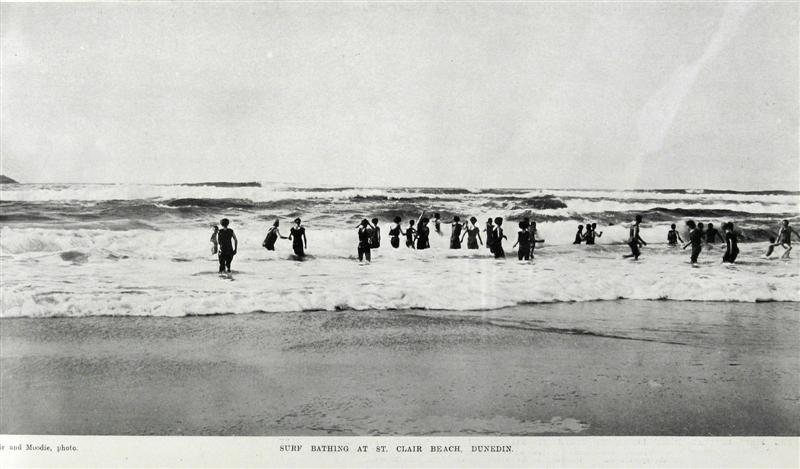
‘The question of providing religious services for summer holiday-makers in the country was before the Dunedin Presbytery at its meeting yesterday in relation, particularly, to the growing popularity of Warrington and contiguous seaside resorts.

A report submitted recommended that a tent be procured at Warrington, but this proposal did not seem to find general favour although the point has not been settled, the matter having been referred to a small committee.

The Rev. J. Chisholm said it seemed to him that more attention should be given to these seaside resorts in the future.

The churches were almost empty for a few weeks in the year, and unless more attention were paid to the young people they would form habits which would doubtless be confirmed, and that would be to the injury of their church.

The Rev. R. Fairmaid brought the matter nearer home than the northern coast by referring to Broad Bay and the Peninsula.

A young man had told him that a kind of pagan life was lived thereby the young people who gathered for week ends.

This was a deplorable condition from the moral point of view, and, so far as he understood, there was no service provided by their people in these quarters.

The committee appointed could perhaps attend to this matter, too.

It was pointed out by the Rev. W. Scorgie, in concluding the discussion, that there was a Methodist Church at Broad Bay and a Presbyterian Church at Portobello’.

[First published in the Otago Daily Times on 7 September 1910. Reprinted in today’s ODT]

Also, there’s some good reading around the traps at the moment:

  • William Cavanaugh on Christopher Hitchens and the myth of religious violence.
  • Matthew Bruce reviews Matthias Gockel’s Barth and Schleiermacher on the Doctrine of Election. [BTW: my own review of this book is available here].
  • Richard L. Floyd shares an appreciation of Donald Bloesch.
  • Kim Fabricius shares a wonderful Call to Worship.
  • Steve Biddulph on fatherhood.
  • Robert Fisk on ‘honour’ killings and on the pain of satisfying family ‘honour’.
  • Ben Myers shares a note on misreading.
  • Robin Parry (shamelessly) plugs a forthcoming book on universalism: “All Shall Be Well”: Explorations in Universalism and Christian Theology, from Origen to Moltmann.
  • Luther is still bugging the locals.
  • Simon Holt shares a nice prayer from Ken Thompson about pigeon holes, compartments, and other places.
  • And Ken MacLeod offers a brilliant solution for distracted writers: ‘One of the major problems for writers is that the machine we use to write is connected to the biggest engine of distraction ever invented. One can always disconnect, of course – there’s even software that locks out the internet and email for selected periods – or use a separate, isolated computer, but I think something more elegant as well as radical is needed. What I’m thinking of is some purely mechanical device, that took the basic QWERTY keyboard with Shift and Return keys and so on, but with each key attached to an arrangement of levers connected to a physical representation of the given letter or punctuation mark. These in turn would strike through some ink-delivery system – perhaps, though I’m reaching a bit here, a sort of tape of cloth mounted on reels – onto separate sheets of paper, fed through some kind of rubber roller (similar to that on a printer) one by one. The Return key would have to be replaced by a manual device, to literally ‘return’ the roller at the end of each line. Tedious, but most writers could do with more exercise anyway. Corrections and changes would be awkward, it’s true, but a glance at any word processor programme gives the answer: the completed sheets could be, physically, cut and pasted’.

BTW: I haven’t abandoned my series on the cost and grace of parish ministry. If all goes to plan, I’ll be back posting on it this week.

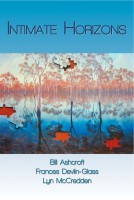
Intimate Horizons: The Post-Colonial Sacred in Australian Literature – A Review

Intimate Horizons: The Post-Colonial Sacred in Australian Literature, by Bill Ashcroft, Frances Devlin-Glass, and Lyn McCredden. (Adelaide: ATF Press, 2009), vi + 364 pp. IBSN 9781921511790

Intimate Horizons is an erudite and intriguing overture to post-colonial Australian literature and, via such, into the psyche of a nation. Its enquiry proceeds on the assumption that the twentieth-century’s final defeat of the gods is injudicious and that Australian authors working after the savageries of two world wars – and as indigenous peoples began to speak back to their colonisers, and in so doing open up new vistas of understanding about the land and about human relationships – began to “encounter the sacred as a region of difference, transformation and empowerment” (2).

The clear movement of Australian literature at the middle of the century is away from time – and its correlates such as history and rationality – to space which overwhelms it, and to the bodies and the proximate material world, and their stories, around which space is constituted. The conclusion to be made from this is that the literary engagement with place during this period, veering away from the horizontal sublime towards the sense of the sacred in the proximate, ordinary and material world, undertakes an unconscious movement towards Aboriginal experience, towards place as an embodied presence – characteristic of Aboriginal culture. (22–3)

The works of Francis Webb, Roland Robinson, David Malouf, and others, echo a fugue of common themes replayed across genres and decades, and which relate to the sacredness of place and embodiment, and the production of aesthetic “presence,” both of which are demotic and proximate, which stand in tension with those inherited forms from Europe, and “in which the sacred is glimpsed outside structure of interpretation” (18). Indeed, the authors of this volume (Bill Ashcroft, Frances Devlin-Glass and Lyn McCredden) believe that art and literature have been the “cultural discourses most successful in shedding the European yoke” (4) and have created, in Joseph Addison’s words, a “spacious horizon” as liberating as it is terrifying and which intimates distance and “placelessness” (8) that overwhelms the colonial imagination, disrupting the Romantic notion of the sublime and opening up the way to an acuity of the sacred in the broad spaces that characterise the horizontal experience of place. The authors are particularly critical of that literature which “seeks refuge in a melancholic and privileged mythologising of Australian history and white settler responses to it” (258).

Perceptive chapters on Patrick White (who “seemed to promise a new imagining of what is meant to be Australian” (33)), James McAuley (whose poetry speaks in a “haunted, homeless and displaced register” (105)), and Judith Wright (whose “‘parabolic’ vision … ‘runs beside or beyond the world of everyday’” (143)), are complemented with follow-up chapters exploring the “creative collision/encounter of paradigms of bush nationalism … and earthed sacredness” (165), and, drawing upon the work of Xavier Herbert, Kim Scott and Alexis Wright, “versions of the Indigenous sacred” (206) which find voice from the ecological depths of indigenous epistemology.

Chapter Seven, perhaps the most engaging of the chapters, surveys some contemporary Australian poetry which invites us to embrace questions of sacredness – a “theology of the earth” (285) – through “an immersion in the material world of place and time, and the material processes of poetic language” (244). Here we are introduced to poems by Kevin Hart, Robert Adamson, Gwen Harwood, Les Murray, Robert Gray, Lionel Fogarty and Sam Wagan Watson, whose poetry “triggers possibilities for change, even as it keeps the horrors of the colonial past in sight (283). Heirs to Webb and Wright, each of these poets, it is argued, when read within the context of the sacred, can be seen “grappling in new, demotic forms of language with the thisness of place, … with the intricate, lived realities of history in Australia” (245), and that partly by a refusal to be “pale reflections of European forms and ideas” (250). Such particularities, it is suggested, “are never merely backdrops to the poetry; nor does some abstracted ‘other’ seem to be the desired goal. Rather, in different but related ways, the poets confront this palpable, earthed, proximate place, Australia, through processes that do not cede any simplistic or monolithic access to the sacred” (245). This is evident, our authors observe, in “the drive to find new words” – “earthed, demotic languages of the sacred” – in order to respond to the “tangible realities of this place” (248). One place where this drive is evidenced is when Murray (a Roman Catholic) and Gray (one deeply influenced by Buddhist and Dharmic thought) are brought into conversation: “Gray’s Australia is permeated by the moral and spiritual meditativeness of a solitary poet, a cosmopolitan intellectual and sensualist, given to the detailed ‘thinginess’ of this place, but facing finally towards universalising formulations garnered across the centuries, into his reading and writing. Murray’s is a much more embattled, idiosyncratic and restless imagination” (277).

The final chapter considers the ways in which contemporary Australian fiction operates in a continual and heteroglossic dialogue with “earlier voices, a dialogue between different perceptions of the sacred sublime, and increasingly a dialogue between white and Aboriginal, between meaning cultures and presence cultures … [and which] constantly avoids closure” (288). It is one thing to suggest that the apotheosis of language adheres to an “intimation of the horizon of meaning at the edge of language” (321), to treat language as in some sense “sacramental” (232), to avoid monologism and to embrace a “multiplicity of voices” (288); it is another entirely to avoid clarifying the basis upon which such a discourse might take place. It is of little help to the reader to confess (after wading through over 300 pages!) that this book “avoids defining the term [‘the sacred’] because the very ground of our discussion – the concept of Presence, of meaning which exceeds final interpretation – makes definitions useless” (325). To be sure, I am not calling here for a kind of “doctrinal statement,” what I take the authors to mean by “orthodoxy” (288). Rather, as a Christian theologian, I wish to suggest that the dialogue and quest for new languages that a “metaphorically displaced society” (318) is groping after are literally given to us not in silence (as the authors suggest) but in the noise of divine incarnation, in the enfleshment of the divine in a particular location and story – in the ordinary – which is indeed “realised in the creative imagination” (300). As it stands, the pseudo-mysticism assumed throughout the book is as destructive of discursive knowledge as it is of birthing ethical action, concerns which are, I suspect, not far from some of the writers herein considered.

Those with deep allergies to natural theology – of the grammar of “place that remains the path to the sacred” (32) – will find much herein to baulk at: in its starkness, a borrowed fight which reminds the reader that while escape into cosmic emotions contemplating the grandeurs of antipodean place and space has some draw, any enlargement of the intelligence and calm of the mind is offset by the starvation of the soul groping for what Murray calls “unpurchased lifelong plenishment.”

The authors of Intimate Horizons assume much of their readers. They assume knowledge of Australian history, of post-colonial literature, of aboriginal spirituality, of the basic contours of theological grammar, of current discourse around race-relations, of the sense and sacramentality of place, and of antipodean attitudes to sentimentalism and religion. Some grasp of Heidegger’s notion of “Being” would be of help too.

The book highlighted again for me the legitimacy of Ian Anderson’s claim (in his Introduction to Blacklines: Contemporary Critical Writing by Indigenous Australians, edited by Michele Grossman), that “in the context of settler colonial states, such as Australia, colonial structures have never been dismantled. Colonial ways of knowing are not historical artefacts that simply linger in contemporary discourse. They are actively reproduced within contemporary dynamics of colonial power. Yet this fundamental observation does not really seem to have penetrated mainstream postcolonial theory” (24). Still, this stimulating book invites, and deserves, close reading. It helps one read Australian fiction and poetry – and, indeed, a national mythology – with more informed and sharpened eyes.

[An edited version of this review is to appear in Colloquium in due course]

On keeping company with Christ

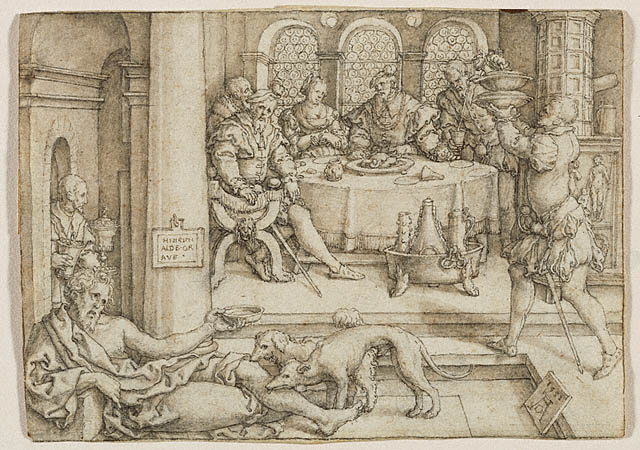
In a few weeks’ time, on the Eighteenth Sunday after Pentecost, one of the lectionary readings that I plan to preach from is Luke 16.19–31. It’s not an easy text to understand or to preach, but I’m thinking that Duncan Forrester might be able to help me out:

‘It is impossible to keep company with Christ if we refuse to accept the company he has chosen to keep. Following the patristic principle ubi Christus ibi ecclesia (where Christ is, there is the Church), it is necessary to go to find Christ and therefore the Church among the poor he loves, to listen to them, and to learn afresh from them how to worship God in Spirit and in truth … Worship separated from the great issues of liberty and justice has become idolatry, an instrument of ideological manipulation, a way of hiding from God rather than encountering Him’. – Duncan B. Forrester, Theological Fragments: Explorations in Unsystematic Theology (London/New York: T&T Clark, 2005), 109, 110.

[Image: Heinrich Aldegrever, ‘Lazarus Begging for Crumbs from Dives’s Table’, 1552]

‘There is a being, they say’, by R.S. Thomas

There is a being, they say,
neither body nor spirit,
that is more power than reason, more reason
than love, whose origins
are unknown, who is apart
and with us, the silence
to which we appeal, the architect
of our failure. It takes the genes
and experiments with them and our children
are born blind, or seeing have
smooth hands that are the instruments
of destruction. It is the spoor
in the world’s dark leading away
from the discovered victim, the expression
the sky shows us after
an excess of spleen. It has gifts it
distributes to those least fitted
to use them. It is everywhere and
nowhere, and looks sideways into the shocked face
of life, challenging it to disown it.

– R.S. Thomas, Counterpoint (Newcastle upon Tyne: Bloodaxe Books, 1990), 20.

August exploits …

From the reading chair: A People Betrayed: The Role of the West in Rwanda’s Genocide by Linda Melvern; Colossians and Philemon: An Introduction and Commentary by NT Wright; Critical Reflections Of Stanley Hauerwas’ Theology Of Disability: Disabling Society, Enabling Theology edited by John Swinton; The Disabled God: Toward a Liberatory Theology of Disability by Nancy L Eiesland; The Good and Beautiful God: Falling in Love With the God Jesus Knows by James Bryan Smith; Christian Identity (Studies in Reformed Theology) edited by Eddy Van Der Borght; Counterpoint by RS Thomas; Uncommon Gratitude: Alleluia for All That Is by Joan Chittister & Rowan Williams; The Promise of the Father: Jesus and God in the New Testament by Marianne Meye Thompson; How to Read a Poem: And Fall in Love with Poetry by Edward Hirsch; Teachers As Cultural Workers: Letters to Those Who Dare Teach by Paulo Freire; Theological Fragments: Essays in Unsystematic Theology by Duncan B. Forrester; Very Little … Almost Nothing: Death, Philosophy and Literature by Simon Critchley; Foundations of Dogmatics, Vol. 1 by Otto Weber; Reformational Theology: A New Paradigm for Doing Dogmatics by Gordon J. Spykman; Care of the Soul : A Guide for Cultivating Depth and Sacredness in Everyday Life by Thomas Moore; Bread Baking: An Artisan’s Perspective by Daniel T. DiMuzio; Books of Amos and Hosea by Harry Mowvley; Resist!: Christian Dissent for the 21st Century edited by Michael G. Long.

Through the iPod: U2 Go Home – Live from Slane Castle by U2; London Calling: Live in Hyde Park by Bruce Springsteen & The E Street Band; Foundling by David Gray; All Delighted People by Sufjan Stevens.

On the screen: Edge of Darkness; Where the Wild Things Are; Shelter; Shutter Island; The Infidel; The Wolfman; After Life; Into the Storm; Into the Wild.

On the cost and grace of parish ministry – Part III

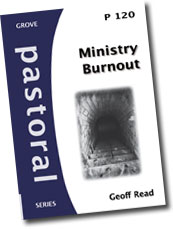
Mistaken attitudes to the issue surrounding clergy burnout are not helped by the frequent interchangability of the terms ‘burnout’ and ‘stress’. While related phenomena, burnout and stress describe different realities. In his wee booklet Ministry Burnout (Grove Books, 2009), Geoff Read makes the point that ‘stress is essentially the physiological or psychological response to many different sorts of situations and demands … Burnout is one response to sustained exposure to certain sorts of stressors. A person reaches a state of burnout when the three factors of emotional exhaustion, detachment and sense of lack of achievement have reached a level of such severity that the person’s ability to function is significantly impaired’ (p. 6).

I was encouraged to see Read here drawing upon work undertaken by Leslie Francis whose own research in the area of psychological health and professional burnout has yielded very important findings. Francis’ research suggests that personality is the strongest predictor of burnout; that ‘personality factors provide a better prediction of burnout than personal, contextual, family or ministry factors raise important questions for selection, formation and support of those called to ordained ministry’ (p. 20). Two studies conducted in 2004 among Anglican and Roman Catholic ministers highlighted ‘the centrality of extraversion and of neuroticism in predicting clergy susceptibility to burnout … Put crudely, neurotic introverts are much more likely to become victims of burnout than stable extroverts, and this holds true across a range of different ministry contexts’. (Leslie Francis and D.W. Turton. ‘Recognizing and Understanding Burnout Among Clergy: A Perspective from Empirical Theology’, in Building Bridges Over Troubled Waters: Enhancing Pastoral Care and Guidance. Edited by David Herl and Mark L. Berman. Lima: Wyndham Hall, 2004, 315). Francis also co-authored (with Rodger Charlton, Jenny Rolph, Paul Rolph, and Mandy Robbins) the report ‘Clergy Work-Related Psychological Health: Listening to the Ministers of Word and Sacrament within the United Reformed Church in England’, published in Pastoral Psychology 58/2 (2009): 133–149. The report was the first ever published study of work-related psychological health of United Reformed Church (URC) ministers, and drew upon conversations with 58 URC ministers serving in the West Midland Synod. The report drew a number of noteworthy conclusions:

  1. Those surveyed are ‘aware of suffering from high levels of negative affect and who yet succeed in deriving high levels of satisfaction from their ministry. A responsible Church should not, however, allow the high level of positive affect acknowledged by the ministers to mask the deleterious effects of high levels of negative affect. The problems of high levels of negative affect, poor work-related psychological health and professional burnout among ministers of word and sacrament within the United Reformed Church are too serious to be ignored’.
  2. Although there are clearly many areas in common between the experiences of URC ministers and those serving in other denominations in England, there may be some areas of stress that are being highlighted in distinctive ways by URC ministers. ‘These areas included the pressures generated by serving in a denomination which has experienced significant decline both in membership and in ordained ministers, but which has not reduced its number of churches in comparable ways. Ministers are serving multiple churches characterised by dwindling and ageing congregations. There is a feeling of uncertainty in the air regarding the long-term sustainability of the United Reformed Church and such uncertainty is bad for the morale of ministers’.
  3. Overall, ministers have low expectations regarding the ability of the URC to support their needs and to protect their work-related psychological health. ‘Such low expectations may or may not be an accurate reflection of the real state of things, but it is nonetheless a worrying reflection on how the denomination itself addresses the psychological health needs of its ministers’.
  4. Overall, ministers welcomed the survey, and ‘saw it as a positive sign that the wider Church was concerned about and committed to addressing the issues of clergy stress, professional burnout and poor work-related psychological health among ministers. Awareness of these issues, the ministers argued, needs to be urgently raised throughout the Church as a whole’.

But back to Read. Read writes about the need for clarity around ministry roles, and the need for pastors to be able to answer the vocational question, ‘Why do I do what I do?’ That this question is taken seriously is essential, he insists, for being able to make meaningful decisions about the use of time in the how and what of ministry. ‘It empowers clergy to shift from a reactive ministry, driven by the expectations and demands of others, to one that is proactive, intentional and driven by conviction’ (p. 16). And he names three areas which merit particular attention in relation to burnout: the now-but-not-yet gap between the ontological and eschatological realities in which we live and life as it is experienced in the here and now; living with conflict and criticism; and the ambiguity of role.

One thing that I really appreciate about Read’s booklet is the stress that he places upon the question of our identity in Christ. Drawing upon Henri Nouwen’s The Return of the Prodigal Son, and Wendell Freist’s article ‘Understanding and Prevention of Missionary Burnout’ (Taiwan Mission Quarterly, 1992), Read argues that while the question of our identity in Christ is one which all Christians share, ‘the representative dimension of priesthood and profile of other “professional Christians” does mean that any deficits will be under particular and sustained pressure’ (p. 13). He points to the way that Jesus’ own ministry began as ‘highly significant and instructive’ insofar as it followed the pattern of identity, vocation and only then ministry, and suggests that ‘without a clear sense of identity and purpose, clergy are subject to the stress of either the chronic effort to fulfil [others’] expectations – acting like a plate spinner dashing to keep numerous plates in the air – or living with the chronic pain of never truly being themselves – like a left-handed person forced to write with the right hand’ (pp. 13–4). He continues:

In his work on burnout originally addressed to OMF missionaries, Dr Wendell Friest describes two distinct missionary types. Type A is characterized by a sense of self worth and self-acceptance based on achievement. Type B finds identity in giving and meeting the needs of others. Both lead to driven lives that Friest characterizes as achievement fatigue (Type A) and compassion fatigue (Type B). Like Nouwen, Friest believes that reconnecting with the freedom that is rooted in our identity in Christ is a crucial resource for the Christian in combating burnout, for both Type A and B temperaments. This involves not just the theological but also experiential movement from slave to sin, to son/daughter of God, and then on to a freely chosen slavery or servanthood.

The heart of the good news is the restoration of God the Father’s original purposes for his children: the status of sonship rather than slavery (Gal 4.4–7). But, so often, experience lags behind the theological reality and so acceptance and identity can remain rooted in slavery or addiction to achievement or meeting others’ expectations. Burnout can be not only a result of such slavery but also a key opportunity to face this disconnect between what we preach and what we experience. Burnout can become an invitation to connect experientially with the transforming power of grace in terms of our identity. Freedom simply to ‘be’ replaces the drive to have to ‘do’ to prove something (Type A) or assuage the guilt of being unable to fulfil all the needs of others (Type B). This newfound freedom finds expression in ministry, enabling one ‘… to get back into the slave modality without losing the son-daughter modality.’ Friest calls this Slave Modality 2, what I prefer to call servanthood. In Christ we see this voluntary self-emptying as described in Philippians 2.5–11. Paul’s prized status as ‘slave’ (1 Cor 9.19) is one he freely adopts. It is clear from Romans 12.1 that this is a voluntary decision on the part of the individual, a free response to God’s merciful adoption of us as sons and daughters.

Friest comments, ‘If we are slaves to God unwillingly because we feel this is God’s demand, something he has imposed or exacted, there will never be joy in our lives – only complaining (maybe repressed), resentment, and bitterness … [But] in being both a child of God and a slave of God we are identifying with Jesus. We are free “to be abased, and … to abound” (Phil 4.12).’ We can enjoy life without guilt, and we can serve without drivenness or compulsion, and without a need for achievement or recognition.

Both models of identity also invite conscious reconnecting with the one who calls and, prior to that, who simply loves us. This is a spirituality that is relational, about me as me rather than just me as a minister. What is my God like? Have I unconsciously distorted my perception of him too? Is there a disconnect between the God of grace I say I believe in and proclaim and the image of him that I actually live and take into my vocation and on into my functioning in ministry? Allowing God to be God to us enables a growing experience of one’s identity in Christ to re-emerge. This is rooted in grace and unconditional love rather than just existing with an identity dependent on performance and the opinion of others. (pp. 15–6)

_____

Other posts in this series:

On the cost and grace of parish ministry – Part II

Earlier this decade, Peter Kaldor and Rod Bullpitt wrote Burnout in Church Leaders (Adelaide: Openbook Publishers, 2001), The book drew upon, and sought to collate and comment upon, Australian findings gathered in the 1996 National Church Life Survey (the NCLS was completed by around 4,400 senior ministers/pastors/priests in around 25 denominations) and the then-named Catholic Church Life Survey (the 1996 CCLS sampled 256 parish priest and 97 assistant parish priests). They record that while variations in levels of burnout exist, burnout is ‘clearly a significant issue for the churches at large’. They noted that higher than average burnout scores were recorded for church leaders serving in Anglican, Reformed, Lutheran, Presbyterian, Church of the Nazarene, Roman Catholic and the Salvation Army; and that there were (surprisingly) lower than average burnout scores among Pentecostal denominations, and some smaller denominations, including the Wesleyan and Brethren churches. They note: ‘Such a result may surprise some, given the high stress that can be associated with large and growing churches, which are more common in the Pentecostal denominations. This is where a distinction between positive and negative stress may be important. The pressures of work in congregations that feel they are going somewhere may generate stress that is positive and energising, rather than negative and leading to burnout’ (p. 13). They also note that younger leaders are more susceptible to burnout (p. 13), and that it is, apparently, ‘more stressful to be a charismatic minister in a non-Pentecostal denomination that it is to a pastor in a Pentecostal denomination’ (p. 16).

Kaldor and Bullpitt conclude that, overall, the average burnout score for Protestant church leaders was 38.5%; Catholic parish priests participating in the CCLS averaged 39.4%. They also draw attention to findings from the Alban Institute Burnout Inventory (AIBI) which measures the levels of risk for stress and burnout among church leaders. These are:

  • 56%        Borderline to burnout (for the record, I polled in this category)
  • 21%        Not an issue
  • 19%        Burnout is an issue
  • 4%          Extreme burnout

This suggests, as they note, that for at least 23% of all Protestant church leaders, burnout is a major issue. In addition, a further half are potential candidates for burnout. The figures are similar for Catholic priests, for whom around 27% burnout is a major issue while a further 52% are potential candidates for burnou

Kaldor and Bullpitt also highlight that while one may raise some questions about the applicability of the Alban Institute classification for the Australian context, the results are confirmed by other questions in the NCLS. Around 11% of Protestant/Pentecostal church leaders and 9% of Roman Catholic leaders agree or strongly agree that they often do not feel they are the right person for the job in their particular congregation or parish. Such people have significantly higher levels of burnout, scoring around 50 on the AIBI, compared to an average of 38, placing them firmly at the high burnout end of the spectrum. Moreover, something in the order of 12% of Protestant leaders and 8% of Roman Catholic leaders say they ‘often’ think of leaving the ministry and an identical percentage (12%) from both groups diagnose themselves as having high or very high levels of stress. The results of the survey show that more clergy place themselves at the high end of the stress scale than at the low end, and that clergy recognise in themselves the seeds of a problem.

Kaldor and Bullpitt proceed to note that this is ‘not just an issue for paid leaders’, but is also a ‘critical issue’ for the church at large. While the remainder of their study (which I commend) goes on to address in greater detail some of the reasons behind this ‘critical issue’, they conclude the opening chapter with these words:

‘It would seem that a significant number of senior ministers/pastors/priests in Anglican and Protestant congregations in Australia are suffering severe burnout and are at risk of leaving the ministry.

The figures from Catholic priests participating in the CCLS suggest similar levels of burnout to their non-Catholic counterparts.

These results may well constitute the tip of the iceberg for the churches in this country. It is quite likely that they understate levels of burnout. There is always some measure of error in self-reporting, and clergy may underestimate their levels of stress out of a desire to be seen (to others or to themselves) as competent in their roles. This is certainly the perception of those who are responsible for caring for church leaders.

In addition, these results are for people currently exercising senior leadership within congregations and parishes across Australia. It does not include those who are no longer in congregational/parish ministry, fulfilling other tasks in the churches or working in quite different fields. It does not include the many people who have moved out of full-time ministry altogether, possibly as a result of burnout.

Rowland Croucher and John Mark Ministries claim that there are possibly as many as 10,000 people who have left full-time ordained congregational ministry across Australia, a similar number to the number serving in congregations across all denominations. In their survey of ex-pastors, they found 40% either not worshipping anywhere or not using their ministry gifts in any way with a congregation or parish … While there are many reasons for leaving the ministry, it is clear that stress and burnout are responsible for a significant number of casualties’. (pp. 11–12)

_____

Other posts in this series:

On the cost and grace of parish ministry – Part I

‘The pastoral vocation is to help people grow spiritually, resist their lowest impulses and adopt higher, more compassionate ways. But churchgoers increasingly want pastors to soothe and entertain them. It’s apparent in the theater-style seating and giant projection screens in churches and in mission trips that involve more sightseeing than listening to the local people.

As a result, pastors are constantly forced to choose, as they work through congregants’ daily wish lists in their e-mail and voice mail, between paths of personal integrity and those that portend greater job security. As religion becomes a consumer experience, the clergy become more unhappy and unhealthy’. – G. Jeffrey MacDonald, ‘Congregations Gone Wild’.

As one charged with both a responsibility for the training and supervision of pastors, and who has himself crashed – and watched many colleagues crash – against the rocks of burnout and depression, this is a topic of particular interest to me. To be sure, I am no expert on these issues, but I thought that I might use this forum to do some tentative thinking out loud about this topic over coming months. [Recent weeks have seen some attention in the media and around blogdom given to the matter of clergy burnout: see, for example, here, here, here, here, here, here, here, here, here, here and here. This is, of course, no new news to clergy, though others seems to be interested.]

As sobering as much of the reading and statistics are, on their own they are more paralysing than aiding. Still, they do point to part of the story, and so are worth recalling. So, for example, consider the conclusions found in the USA and published recently by Pastoral Care Inc., namely that:

  • 90% of the pastors report working between 55 to 75 hours per week.
  • 80% believe pastoral ministry has negatively affected their families. Many pastor’s children do not attend church now because of what the church has done to their parents.
  • 95% of pastors do not regularly pray with their spouses.
  • 33% state that being in the ministry is an outright hazard to their family.
  • 75% report significant stress-related crisis at least once in their ministry.
  • 90% feel they are inadequately trained to cope with the ministry demands.
  • 80% of pastors and 84% of their spouses feel unqualified and discouraged as role of pastors.
  • 90% of pastors said the ministry was completely different than what they thought it would be like before they entered the ministry.
  • 50% feel unable to meet the demands of the job.
  • 70% of pastors constantly fight depression.
  • 70% say they have a lower self-image now than when they first started.
  • 70% do not have someone they consider a close friend.
  • 40% report serious conflict with a parishioner at least once a month.
  • 33% confess having involved in inappropriate sexual behavior with someone in the church.
  • 50% of pastors feel so discouraged that they would leave the ministry if they could, but have no other way of making a living.
  • 70% of pastors feel grossly underpaid.
  • 50% of the ministers starting out will not last 5 years.
  • 10% of ministers will actually retire as a minister in some form.
  • 94% of clergy families feel the pressures of the pastor’s ministry.
  • 80% of spouses feel the pastor is overworked.
  • 80% spouses feel left out and underappreciated by church members.
  • 80% of pastors’ spouses wish their spouse would choose a different profession.
  • 66% of church members expect a minister and family to live at a higher moral standard than themselves.
  • The profession of ‘Pastor’ is near the bottom of a survey of the most-respected professions, just above ‘car salesman’.
  • 4,000 new churches begin each year and 7,000 churches close.
  • Over 1,700 pastors left the ministry every month last year.
  • Over 1,300 pastors were terminated by the local church each month, many without cause.
  • Over 3,500 people a day left the church last year.
  • Many denominations report an “empty pulpit crisis”. They cannot find ministers willing to fill positions.

And the #1 reason listed in that survey for why pastors leave the ministry was that ‘Church people are not willing to go the same direction and goal of the pastor. Pastor’s believe God wants them to go in one direction but the people are not willing to follow or change’. Perhaps this reflects MacDonald’s statement above.

[NB: Pastoral Care Inc. attribute these figures to research carried out by themselves, by The Fuller Institute and by George Barna. Mick Crowl has rightly, to my mind, flagged some concern about the accuracy of these statistics. Still, their general tone is confirmed in other findings.]

And Anne Jackson, in her recently published Mad Church Disease: Overcoming the Burnout Epidemic (pp. 48–9), lists the following (sobering) figures on (US) clergy health:

  • 71 percent of all ministers admitted to being overweight by an average of 32.1 pounds [14.59 kg]. One-third of all ministers were overweight by at least 25 pounds [11.36 kg], including 15 percent who were overweight by 50 pounds [22.73 kg] or more.
  • Two-thirds of all pastors skip a meal at least one day a week, and 39 percent skip meals three or more days a week.
  • 83 percent eat food once a week that they know they know they shouldn’t because it is unhealthy, including 41 percent who do this three or more days a week.
  • 88 percent eat fast food at least one day a week, and 33 percent eat fast food three or more days a week.
  • 50 percent get the recommended minimum amount of exercise (30 minutes per day, three times a week); 28 percent don’t exercise at all.
  • Four out of ten ministers (approximately 39 percent) reported digestive problems once a week, with 14 percent having chronic digestive problems (three days per week).
  • 87 percent don’t get enough sleep at least once a week, with almost half (47 percent) getting less sleep than they need at least three nights a week. Only 16 percent regularly get the recommendation of eight hours or more per night.
  • 52 percent experience physical symptoms of stress at least once a week, and nearly one out of four experiences physical symptoms three or more times a week.

I am not interested here to engage with the details of these statistics. To be sure, they indicate important and painful realties for many pastors, their partners and their children. I am interested here, however, in thinking more generally about this prevalent reality, and to exploring some theological and other resources that witness to more life-giving ways for pastors … and for the rest of us.

_______

Other posts in this series:

On the perspicuity of Scripture

Once upon a time, when describing the ‘power of the Word of God’, Uncle Karl referred to the ‘magic of biblical thought and language … to which we must not on any account remain insensible, but which we can and must allow to have its due effect. As the essential pre-requisite for a biblical exegesis which does not remain confined to grammatical-historical matters, there is needed an intuition, an ability to detect the dæmonic magic of the Bible’ [CD I/2, 674]. Barth was concerned here, as elsewhere, with the freedom of the Word ‘in its illimitability or its equality over against other powers’, one feature of which concerns the reality that the early generations of Protestant reformers championed; namely, the perspicuity of Scripture. While writing some Bible studies on Amos recently, I have been encouraged to employ that great principle of hermeneutics. (Apparently, it’s a principle that works for other parts of the Bible too!). Anyway, that all brought to mind some quotes that I once gathered on the doctrine, quotes that I thought worth sharing here:

‘Scripture is self-interpreting and perspicuous by virtue of its relation to God … The clarity of Scripture is a function of its place in the divine self-demonstration, and of the Spirit’s work of ordering the mind, will and affections of the reader towards what Calvin called “heavenly doctrine”. Perspicuity only makes sense when seen in a soteriological context, that is, in relation to God’s act as Word and Spirit and the creature’s act of faith. Like other properties of Scripture, such as sufficiency, efficacy or perfection, clarity is not a formal or natural property of the text considered in isolation … Rather, Scripture is clear because through the Spirit the text serves God’s self-presentation. Properly speaking, it is not Scripture which is self-interpreting but God who as Word interprets himself through the Spirit’s work … Scripture is clear because of the Spirit’s work in which creaturely acts of reading are so ordered towards faithful attention to the divine Word that through Scripture the light of the gospel shines in its own inherent splendour. Perspicuity is thus not a way of suggesting that reading is superfluous; it is about the way in which faithful reading within the economy of revelatory grace is not sheerly spontaneous but a receptive act of the intelligence of faith … In sum: Scripture’s clarity is neither an intrinsic element of the text as text nor simply a fruit of exegetical labour; it is that which the text becomes as it functions in the Spirit-governed encounter between the self-presenting saviour and the faithful reader. To read is to be caught up by the truth-bestowing Spirit of God’. – John Webster, Holy Scripture: A Dogmatic Sketch (Cambridge: Cambridge University Press, 2003), 93–5.

‘The canon of the Reformation scholars was to take the clear passages and use them to test the obscure. That was to be the principle to guide the Church. Cranks and doctrinaires might fix on unique and obscure passages which fascinated their angular or mystic minds. They might puncture these texts and then colour the whole of the Bible with a dilution of the theosophy which oozed from them. To this day ill-taught and self-taught people frame amateur fantastic theologies in that way. And the poor churches are bewildered by the gropings of unfortunate men who were told at college only that they must make their own theology. Do you wonder that the result of such teachng is collapse for church or college? But the sound principle of old was otherwise. And it remains sound to-day. We should use the clear to interpret the obscure. But that is not exactly what they mean who say that the Bible must be read by way of a selection of certain parts. They would proceed by the way of dissection. They would act critically rather than hermeneutically. They would cut out certain pieces as being Bible, and discard certain others as intrusions on the Bible; and the discarded portions would not be interpreted by the rest, but rather neglected, and practically ejected from the canon’. – P.T. Forsyth, The Church, the Gospel and Society (London: Independent Press, 1962), 75–6.

‘To put it briefly, there are two kinds of clarity in Scripture, just as there are also two kinds of obscurity: one external and pertaining to the ministry of the Word, the other located in the understanding of the heart. If you speak of the internal clarity, no man perceives one iota of what is in the Scriptures unless he has the Spirit of God. All men have a darkened heart, so that even if they can recite everything in Scripture, and know how to quote it, yet they apprehend and truly understand nothing of it. They neither believe in God, nor that they themselves are creatures of God, nor anything else, as Psalm 13[14:1] says: “The fool has said in his heart, ‘There is no god.’” For the Spirit is required for the understanding of Scripture, both as a whole and in any part of it. If, on the other hand, you speak of the external clarity, nothing at all is left obscure or ambiguous, but everything there is in the Scriptures has been brought out by the Word into the most definite light, and published to all the world’. – Martin Luther, Luther’s Works, Vol. 33 : Career of the Reformer III (Philadelphia: Fortress Press, 1999), 28.

‘It is a wondrous and beneficial thing that the Holy Spirit organised the Holy Scriptures so as to satisfy hunger by means of its plainer passages, and remove boredom by means of its obscurer ones.’ … ‘If you cannot yet understand [a passage of Scripture], you should leave the matter for the consideration of those who can; and since Scripture does not abandon you in your infirmity, but with a mother’s love accompanies your slower steps, you will make progress. Holy Scripture, indeed, speaks in such a way as to mock the proud readers with its heights, terrify the attentive with its depths, feed great souls with its truth and nourish little ones with sweetness.’ – Augustine, in Kathryn Greene-McCreight, Ad Litteram: How Augustine, Calvin, and Barth Read the “Plain Sense” of Genesis 1-3 (New York: Peter Lang Publishing, 1998), 164,167.

So back to Amos, and that with Jeremiah’s help, and Luke’s. Ah … the dæmonic magic of the Bible!

Judgement Day: the date is set

While some real skeptics abound, notable biblical scholar Harold Camping has determined after a close study of  Scripture that Jesus will be using his return ticket on May 21, 2011. [That’s a Saturday; so much for resting on the Sabbath!]. Camping, who sounds like he’d be good mate of Chris Tilling‘s, has reached this conclusion by juggling the date of Jesus’ crucifixion (previously unknown, but praise be! revealed to Mr Camping as precisely April 1, AD33) with the numbers 5, 10 and 17, which are apparently linked with atonement, completeness and heaven.

The details of the calculation are too wonderful and mysterious to go into here, but the glorious news is that, after 2,000 years of delays and rescheduling, a date has finally been set for the rapture and last judgement. So now is the time to plan your holidays around the event, to empty out your bank account on my Wishlist, and to reach out to the wicked heathen with this sexy bumper sticker.

You can learn more – and pick up your free stickers, postcards, business cards and pocket calendars, and more – here and here.

The only question that remains is: which kind of virgin will you be?

[HT: Ship of Fools]

On resisting the chaotic non-conformity of private, virtuoso theologies

‘Throughout the history of the Reformed tradition, the central place both for the ongoing hermeneutic process urged in the confessions, and for the general influence of the confessions in the Church, has been the pastoral office through preaching, teaching, oversight, and leadership. Correspondingly, it is chiefly the minister of the word, among the other ordained ministries, who is held accountable in the constitutional questions for following the leading and guidance of the confessions of faith. Appropriately, theological education was in the past structured by the theology of the confessions. Rather strongly, thus, I wish to remind those of us that find our calling in theological education that it is scandalous for a faculty member in any discipline in the church’s seminaries not to be able to locate his or her work and thought and teaching matter with relation to the confessional teachings. We do not want again the old teaching oath, or any teaching oath at all, and the inevitably stifling conformity it promotes. But neither do we want the On resistsing that leave the relation of thought to life in the empirical church to the improvisation of individual ministers. Further, theological education carried out in programs of continuing education or presbytery projects of many types, should be oriented by a reasonable awareness of what the Church teaches in its confessional and creedal literature.

More broadly, it is the educational ministry of the Church on all levels that should bear the chief responsibility for a confessionally rooted hermeneutic, worship, and mission. The idiom of the tradition, whether in words or ethic, needs to be exercised in spiritual, biblical, theological, and ethical education.

It would be well, we often think, if one might be just a Christian, and not a Presbyterian, Catholic, or Methodist. But so, it might seem, is the case with language. What if we could avoid German or English and just speak language? But it doesn’t work. Esperanto is a wonderful idea, but like Basic English a few years back, it is bereft of the richness of meaning and naturalness of a true language. So a theological Esperanto, or ecumenical Esperanto—for the time being at least—leaves us far from the concrete reality in which we live and speak. The idiom of the Reformed tradition, when fully understood, is the ground and motive both for ecumenical awareness and progress, and for other kinds of reform and advance. Not abandonment, but reform, as new light breaks forth from Scripture and illuminates new situations in our culture and environment and in the world Church, is the promising idiom of our tradition’. – Edward A. Dowey Jr., ‘Confessional Documents as Reformed Hermeneutic’, Journal of Presbyterian History 79, no. 1 (2001), 58.

There he goes, tacking against the fields’ uneasy tides …

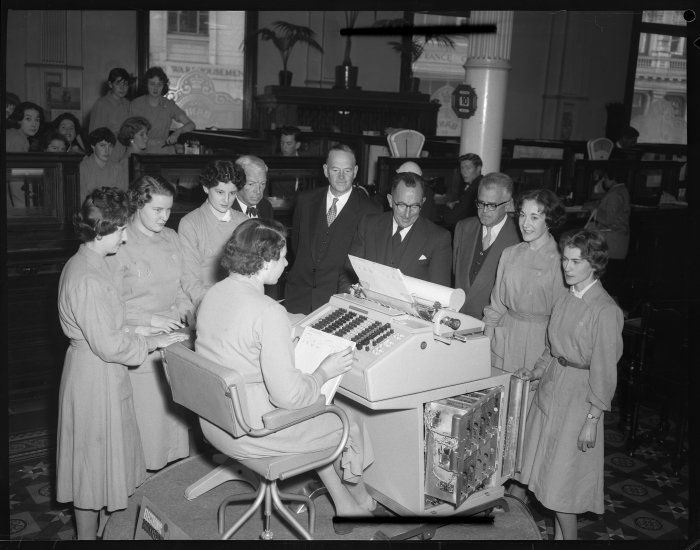
[Image: Members of the staff of the Bank of New Zealand, on Lambton and Customhouse Quays, Wellington, gather around the first electronic book-keeping machine installed in the bank, 1960. HT: National Library of New Zealand]

Neutral education?

‘There is no such thing as a neutral education process. Education either functions as an instrument which is used to facilitate the integration of generations into the logic of the present system and bring about conformity to it, or it becomes the “practice of freedom”, the means by which men and women deal critically with reality and discover how to participate in the transformation of their world’. – Jane Thompson, in Peter Mayo, Gramsci, Freire and Adult Education: Possibilities for Transformative Action (Global Perspectives on Adult Education and Training) (New York: St Martin’s Press, 1999), 5.

Gavin D’Costa on a Theology of Religions

In this video, Gavin D’Costa talks about his ‘move to the right’ from Rahner to the nouvelle théologie and Barth (‘the one key influence in this move … who [got] to the truth more than most Catholic thinkers’), about inclusivism, exclusivism and pluralism (which is ‘a type of exclusivism’), about soteriological universalism, and about post-mortem conversion.

Choosing a school for your child

So anyway, this week, following a process significantly more taxing upon one’s mind and conscience than that which attends the purchase of a house, we finally settled on a school for our daughter. After shortlisting two schools, here’s what swung it for us:

  1. It’s right next door to the fush ‘n’ chup shop, which means healthy lunches and so fit minds.
  2. It’s over the road from the fushing ‘n’ hunting shop, which means that I’ll be significantly more excited about doing school pick-ups and drop offs, and that kids who aren’t interested in taking up pansie sports like netball and touch rugby can pop over and buy a crossbow or gun and take up some really worthwhile sport like sheep- and/or zombie-hunting. I’m all for cat culls too.
  3. The main road which runs right through the middle of the campus encourages the entire local community to get involved in the battle to keep class sizes down. (This means fewer queues at the hunting shop too.)
  4. They offer free drum lessons!

So on your bike kid … have fun out there, and if you learn how to count or think along the way, then that’s OK; we can deal with that later. And as fa spellin an stuff wee got spel cheque noow aniwaye cept that mynes not workeeng. So just stick with the basics – playtimes and fush ‘n’ chup lunches.

BTW: For those of you who currently reside in other sectors of the empire, this video (sent to me by a guy whose wife – or son – stole my Bible; so not the most reputable of types) may help decode some of this post:

The Floyd Theses on Interim Ministry

Rick Floyd has posted a wonderfully-provocative and long-overdue discussion starter on ‘interim’ ministry. It begs reposting:

1. The chief purpose of long interim ministries is to provide a regular supply of jobs for ministers who are unwilling or unable to take a settled pastorate.  This is not a good thing.  Although a good interim minister can be a gift to a congregation, he or she is no substitute for a settled pastor.  Interims work to contract, they often don’t live in the communities they serve, and they are not going to stay.  It is a different kind of ministry, and the longer a church has an interim minister the longer it is deprived of the covenantal relationship that comes with having a called and settled minister.

2. During my 30 years in the ministry the length of interim ministries has expanded from a few months to two or three years (or more.) Meanwhile settled ministries are getting shorter, so the only difference seems to be less accountability on the part of the interim minister. Many seem to prefer it that way.

3. Interim ministers were once typically retired experienced pastors who preached, did pastoral care, and kept a light hand on the organization while the congregation sought a new settled pastor.

4. Today, interim ministers lead elaborate congregational self-studies, change the structures, rewrite the by-laws, and generally move the furniture around in ways that were once considered to be the job of a settled leader.

5. The reason that the extended length and the frenetic re-shuffling of interim ministry is justified as necessary is because the leave-taking of a pastor is considered to be such a trauma that only expert interim leadership can help the congregation heal from it and prepare for new leadership. It is true that there are such traumatic situations, such the death of a pastor, cases of clergy abuse or misconduct, or where there has been profound conflict. These situations may well call for extended interims. But the new model for interim ministry assumes that every transition needs such a long and intense interim. They do not. Why then are all interims expected to be so long? See #1.

6. The model for much interim ministry is a family system model where congregations are seen as dysfunctional systems and the former pastor (actually called the BFP “beloved former pastor” in some interim training) is seen as the problem. Sometimes this is true. Usually it is not, but the one-size-fits all template is demeaning to former pastors who have served faithfully. One must wonder if it can be possible that every pastor’s predecessor was incompetent, lazy, controlling or evil.

7. Long interims frequently dissipate the momentum of many church programs, make the congregation feel adrift, lose the allegiance of many long-term members, and often leave the new settled pastor with a much-diminished congregation. This scorched-earth policy allows for little continuity between pastorates, and means the new pastor often must “re-invent the wheel” in a new setting.

8. Interim ministers have their own networks, and often work outside the existing judicatory processes. They can and often do function as a free-floating class of paladins for hire that raises fundamental questions about the meaning of ordination and the accountability of the ordained.  Ordaining someone to interim ministry is a (new) practice that needs serious scrutiny.

9. Because the models of interim ministry are derived largely from psycho-social systems theory and/or corporate management models they have little regard for the church’s own grammar of how to be church. These interim models are very thin on the ground when it comes to theology. This mirrors a general trend in ministry toward professional identity over the ancient churchly arts of soul-craft and ministry of the Word of God.

10. Lay persons in leadership during a time of pastoral transition are well-advised to carefully query potential interim ministers about their model of interim ministry. Question the assumption that every church needs a two or three year interim. Maybe you do, but ask why? Ask if the interim is planning on doing a lot of restructuring, and if so, why? The congregation should decide what it needs from an interim, and not hire an interim to tell it what it needs from him or her. An interim is just that, an interim who gets you through a period to allow the “search and call” process to take place. The rule of an interim should be like a doctor: “Do no harm.” A good interim will leave a small footprint.