Year: 2009

How the elderly bear witness

Aging-3‘Perhaps it is time to revive the long Christian tradition that regarded old age as a theatre of virtue and courage. Ageing was imagined as a kind of final transaction, whereby the elderly show what the good life looks like, having reached the point where they can drop all pretence and start telling the story of their lives honestly.

But the elderly also bear witness to what good death looks like: how to face the completion of one’s life with courage and faith. Those gathered around in loving community express their humble gratitude for these lives well lived, and urge the dying not to waver in their faith as they sprint toward their final prize’. – Scott Stephens, ‘Aged care in purgatory‘. (HT: Ben Myers)

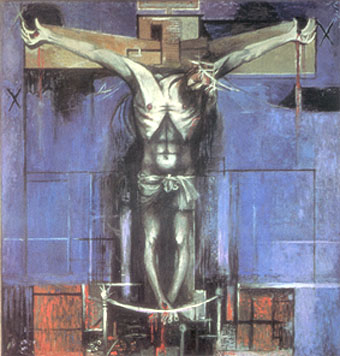
Geoffrey Bingham: ‘O Cross of Christ, O place of bliss’

Crucifixion

1. O Cross of Christ, O place of bliss,
Of man’s invective traitor’s kiss,
Of sin and shame, of wounds and fear,
O Cross of pain you call us near.
The world cannot escape Your Cross,
Its mind reject fore’er the loss,
The darkness of the limbo dread
From which You cried for us—the dead!

We cannot know the pain You bore,
Nor ever live the anguish sore
That tore that holy cry of shame
From hellish depths of dreadful pain.
In You the ancient evil met
The modern guilt, th’eternal debt,
The wrath of God, the curse of law,
The separation evermore.

2. The wounds that sin in us had wrought—
Unholy sickness that we caught
From evil’s madness, from the womb,
That led us to eternal doom—
These, these were there upon You laid,
You wounded were by wounds we made,
Our wounds were Yours upon the Tree,
That we into Your wounds may flee.

In You the sins of all the race
Distorted body, mind and face,
Until You seemed as man no more,
Destroyed—as Man—for evermore.
O Holy One, You suffered much
To free us from the doomful clutch
Of sin and Satan, wrath and law,
And liberate us evermore.

3. Sometimes when all the world’s asleep,
Sometimes when terror’s passions deep
Come stealing to us from their grave—
Those sins from which He came to save
Our race of doom and dreadful death—
We cry as though our latest breath
Had come at last, and we are lost,
Upon guilt’s storm forever tossed.

But grace comes throbbing through that night,
And sin’s forgiven, and holy light
Breaks to us from Your Cross and Tomb
As You come to our upper room.
O Christ now risen from the grave,
You gave Yourself ourselves to save,
And all the pains of memory
Are banished in that holy Tree.

4. The shame of guilt cannot return,
Nor fire of curse within us burn.
You sin and guilt and curse became
To save us from eternal shame.
Our spirits in Your Cross rejoice,
And with us all creation’s voice
Is lifted in the highest praise
For love and grace and all Your ways.

O Cross of Christ, O place of bliss,
Of man’s invective, traitor’s kiss,
Of sin and shame, of wounds and fear,
O Cross of pain and love so dear,
We praise our God for love that gave
As Son to die, as Son to save.
We lift our songs, our hearts adore
And worship You for evermore.

Geoffrey C. Bingham, 1994

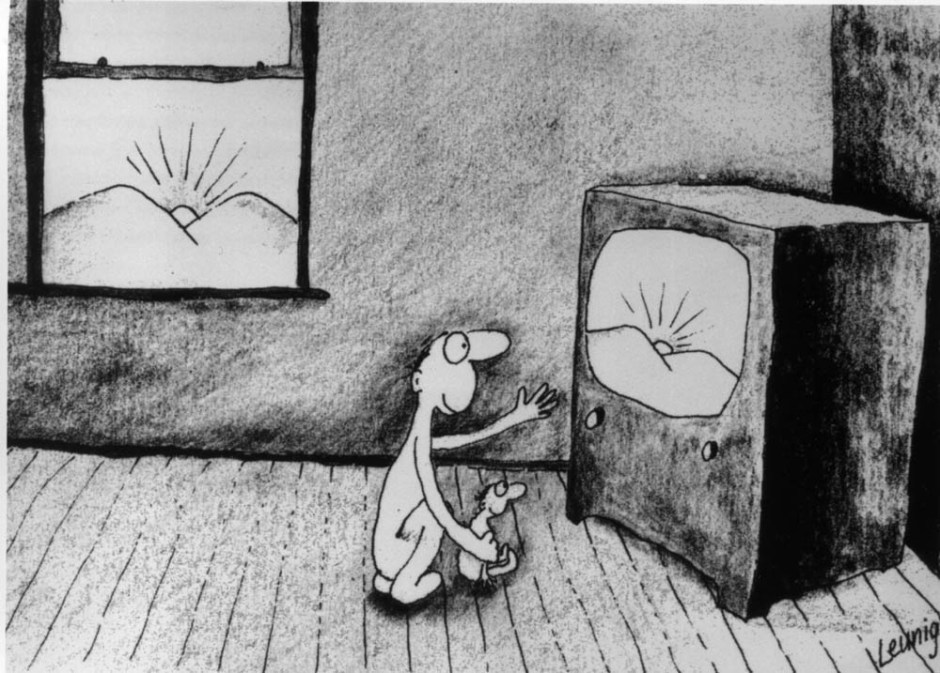
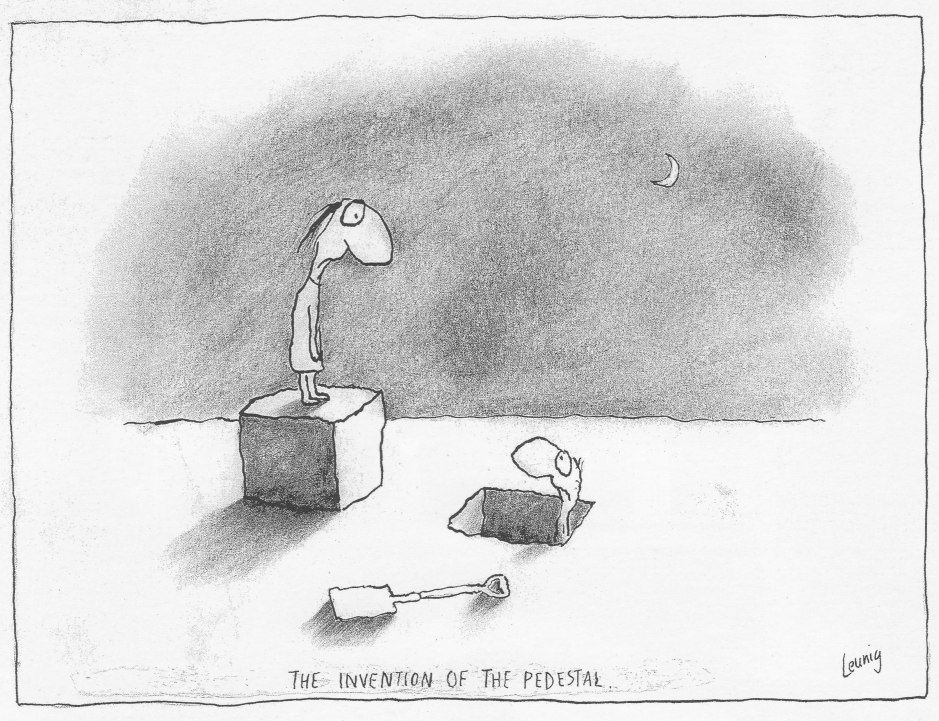
Leunig on Over Stimulation

TV Sunset

‘The individual is overwhelmed by the magnitude. We have embraced technology and economic systems that are just unfathomable and massive and all-powerful. I think television is a totally destructive and corrosive medium. People are living lives though television and films and the media rather than through their own lives. They are not living creatively. They are living reactively and passively all the time. We feel we need all this stimulation, but in fact we need very little’. – Michael Leunig

Geoffrey C. Bingham (6 January 1919 – 3 June 2009): ‘Beyond Despair’s Beyond’

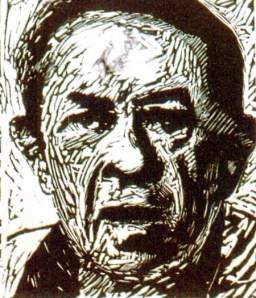
Geoffrey BinghamGeoffrey Bingham – a man who I’ve often referred to as ‘my grandfather in the faith’ – has died. Geoff was one of Australia’s ablest theologians and gifted teachers. He was also a prolific writer of books, (long) hymns and poetry. Thanks be to God for such an inspiring and encouraging servant.

Geoff had a ministry throughout six States of Australia and in a number of countries overseas. An Anglican minister trained at Moore Theological College, he had pastored one church before going to Pakistan with his family under the aegis of the Church Missionary Society. There he was the Founder-Principal of the Pakistan Bible Training Institute at Hyderabad Sindh. He saw revival break out along with his ministry and had a wide coverage on the Indian sub-continent and beyond.

In 1966, he and the family returned to Australia and in 1967 he began as the Principal of the Adelaide Bible Institute (ABI, now Bible College of South Australia, BCSA). He left the college in 1973. Shortly after, New Creation Teaching Ministry was formed.

In 2005, he was honoured by being made a Member of the Order of Australia ‘for service to the community through Christian ministry, encouraging cross-cultural theological education and as an author’ (The Advertiser, January 26, 2005, 10).

Here’s one of Geoff’s poems, entitled ‘Beyond Despair’s Beyond’:

I have been born
Into a world
Strong with despair,
Tensing with fear,
Alert to the evil and calamity,
Straining and pawing at the birth,
With the tensed mother
Waiting the articulate cry
Of the new indignant,
Or protesting, flesh.

Out of the cover
Of the dark cavernous womb,
Into a larger womb,
The still confining world,
The wider prison
Of the engulfing cosmos.

Listening I hear the sounds,
The murmured opposition,
The muttered protest,
The first ripples of indignation
That will grow to the anger
Bursting in a surfing roar,
The battering protest
That first invades, then crashes
On the unassailable shore.

Of what am I speaking?
What is my astoundment about
But the inherent, the innate
Rise to the justified anger
Of the beleaguered humanity
Beleaguering the vindictive world,
The harsh weight
Of the unavoidable circumstances,
The poor jokes on the holy venom
Of the indestructible God.
This the understood Fate,
Inexorable and not comprehensible,
Fearful and vengeful,
Implanting the guilt faculty
That the imagination may twist
The knife of failure, the sharp edge
Of intolerable finitude
And human helplessness.

I am a man, one such
Of whom I speak,
I too have scanned and felt
The inexorable God and His fate,
The unpassioned, the uncanny action
Of His devastating wars, the destructible,
The shattering spears of pain
Piercing, evoking the inner stress,
Causing the fear of dreaded doom.
With other men—the other angry—
I am the warrior of despair,
The vagrant marine of anguish,
The flighting airman of the cavernous skies,
The doomed terrestrial of the Holy bloodiness,
Clenching my fist at the Uncaring,
The calloused and unfeeling One
Indifferent to His earthlings,
Of the flesh that knows beauty,
And the heart that hates
When confined concepting
And intense intellecting
Breaks into the wider sphere
And ranges round its God,
Raging and raging, scaling,
Eagling the higher realm,
Unmantling the supernal Majesty,
Unmasking the Ineffable,
Unclothing and revealing
The Eternal Failure,
The incompetent Deity.

I have lived where men and women
Crouch in the cabins of despair,
Freighted with the contemporary burden,
The massive accumulation
Of the unending sorrow, the suffering
Of the unending race, the timeless
And the angry passing on
Of the caravans of their past,
Weighted with bewilderment
And loaded with the bric-a-brac
Of useless anguish. I have lived
Where the hot and hasty anger
Compounded itself;
Shrieking at the Inexorable,
Little wonder that the puny fists
Beat in their hatred, hammered in wrath
And unmagnificent despair
On the stolid gates, the impassive
And pillared doors, silent as sentinels
Of the heedless Eternal.

Not for all time can man thus live,
Pitting his wits, securing his weak wisdom
Against the silent Celestial.
He must act. He must hate.
He must rage until the inner fires
Commit their own holocaust,
The self-destructing of the savage soul
Until it withers down
To muttering inanity, mouthing
The incomprehensible gloom
Of his dark nether regions.
Not for long, not for ever
Can the galled spirit sustain itself;
The rushing and receding tides
Of its stimulating but suddenly
Sterile adrenalin. The Object must enlarge,
Expanding into the Gloomy and the Vengeful,
Old Inexorable with His relentless grasping
Of the poor prideful flesh, the befuddled
He once initiated and now
Sustains for its self-wrought orgies
Of justful pride and bloody indignation.

Give us the heights to soar, discovering;
The depthful depths to plummet,
Uncovering the dimensions that we did not know—
If they be there (they must be there)—
Or wholly annihilate, compress
Into ultimate nothing the wounded
And the angry, or else
Make us the creatures who can comprehend
The fool futility, and know
Despair’s dimensions are but tragedy,
That justful anger is but baneful pride,
Hubris above the true Celestial,
Idiocy of the self-appointed judge,
The earthly fleshling soaring high
Beyond his rightful realm.
Show us the guilt is but the good,
The gift of God, communicating,
The prodding of the conscience,
The awakening power
Of the new sensitivity.

Not in the ultimate is despair;
Not in the outcome is the fear;
And not the terror is the true telos:
But in the gentle spirit, meek in face,
Of the Inexplicable. Knowing is there
For the finally humbled,
The consummated simple one
Who no longer batters at
The serene Celestial.
His is no bitter wrath. Not one is justified
Who has not hung on the same Tree
As that of the Authentic Sufferer.
None has entered into the true anguish,
The embracing love, the universal agape
That answers only the proliferating query,
That brings the ignorant questionnaire
To its own and obvious end.
Nerveless hands cease their trembling,
The baffled spirit its eternal questing,
And the angry muttering
Dies to a painful silence
Where the constant steady dripping
Of love’s clotted gouts
Strike answers on the desolate rocks
And the dry and dreary stones
Of more desolate Golgotha.

Not in the brilliant concepting,
Nor in the peerless logic
Of immaculate man—the justified one—
Lies the answer. Not in the burning quest
For cosmic and anthropothic justice
Lies the healing, the final peace
Of the embattled and embattling
Humanity. Justice brings nought
Of itself. No peace ineffable,
Or serenity ensconced; not
Until the love itself
Justifies the unjust, the prideful,
In the vast and swirling vortex,
The incredible complex
Of the Ineffable, suffering.

Down there in the dark maelstrom,
The inexplicable anguish, the strong tides
Of the simple suffering lies the complete.
There alone is the living solution,
The unknowable revelation made known,
The outworking actuation of the love
That dooms death to death,
Tails dread mortality and its evoked anger
To its inevitable extinction.
Incomprehensible is love’s comprehensible
Until the astounded spirit grasps the hem
Of the Celestial suffering.

The dark tides of the self-compounded anger
Still rage in the multifarious madness
Of the enraged humanity. The crazed surf
Still breaks with its booming
On the barriers of seeming fate.
The roar, however, is the lie
And the sneering sophistication
Of the unwise, the smooth, superficial
And blasé creature, cynical and joyless,
The ungrateful man, unknowing yet knowing
He must cast the Eternal love in gloomed garments
Of the Inexorable, the ruthless, relentless
And painfully pitiless, the darkly Inexplicable;
Else would his own unempathy
Be unmasked, and his fierce tides
Protesting in hypocrisy his own primal purity
Appear as the sewage of the heart,
The pathetic litter of his own wayside
Strewn from eternity to eternity;
The graffiti of his own mind
Inscribed in furtive secrecy
Against the kindly Eternal
Who gave him birth in love.

Beyond the despair lies No-despair;
Beyond the gloom, the doom, and justful rage
Of the unjust imagination
Lies the serenity, the peaceful persistence
Of the generative love. Think not then
The high indignation upthrust from authentic truth,
The true purpose, the living telos:
Know, rather, that its rebel pride
Rears back from the true submission,
The functional fullness
Of the primal creation. Lordship is lost
When the prideful spirit reaches to take
And grasp the Celestial initiative
And its high prerogatives.

Believe not the brilliant artistry,
The cunning sophistry, the conniving,
Portraying the stark, deifying despair,
Giving grandeur to its indignation
At massed cruelty, divine ruthlessness,
And feeding the impassioned spirit
With fuel for its indignation.
Come, dethrone the judge within;
Let him stand under judgement,
Bowed in the dock of God, accepting the verdict
And the Divine execution, the true edict
Of the holy Judge; then let him say
If ever he saw such vindication,
Such fiat of acquittal, such liberation
Of the darkful doomed humanity,
Such glory of liberty imposed
By holy Love, in the empathic motions
Of the eternal crucible, the Cross
Crucial to man and God, the pitted hate
The Ineffable endured in the paling flesh
Of his ceaseless suffering. Anger not only dies
But with it the despair and the doom;
The gloom dissolves in the brilliant blaze
Of the Sun of righteousness
Who breaks on the ebullient day,
Emancipating the purified spirit,
Delivering it to its true destiny,
Thrusting it forward resistlessly
To the Divine delights, the endless banquet
Of the eternal Love. Pleasures are prodigal
At His right hand, everlastingly.

Here, where the new humanity
Breaks into transforming truth,
The lie is doomed to die, the light to flow
And the new un-anger and un-rage
To gladly justify the God who justifies,
And for ever to explore
The stately and stretching dimensions
Of the authentic, the promised peace
And the eternal serenity.

– Geoffrey C. Bingham, ‘Beyond Despair’s Beyond’, in The Spirit of All Things (Blackwood: Troubadour Press, 1991), 65–72.

Barth on visual representations of Jesus

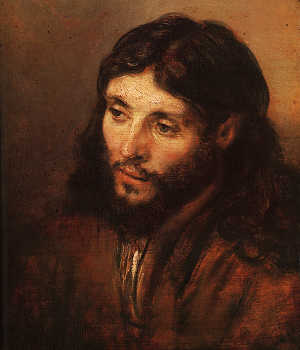
Rembrandt - Portrait of Christ's Head (1650)

Rembrandt Harmenszoon van Rijn, 'Portrait of Christ's Head', c.1650. State Museum, Berlin-Dahlem.

In preparing some lectures on theology and the arts recently, I’ve been struck yet again how that for all his radical revision of some central aspects of Calvin’s thought, Barth remains remarkably close to Calvin at so many key junctures, and consistently so (it would seem) on issues related to the visual arts. Here’s just one example:

This decisive task of preaching in divine service seems to suggest that the presence of artistic representations of Jesus Christ is not desirable in the places of assembly. For it is almost inevitable that such static works should constantly attract the eye and therefore the conscious or unconscious attention of the listening community, fixing them upon the particular conception of Jesus Christ entertained in all good faith no doubt by the artist. This is suspect for two reasons. The community should not be bound to a particular conception, as inevitably happens where there is an artistic representation, but should be led by the ongoing proclamation of His history as His history with us, so that it moves from one provisional Amen to another, in the wake of His living self-attestation pressing on from insight to insight. Supremely, however, even the most excellent of plastic arts does not have the means to display Jesus Christ in His truth, i.e., in His unity as true Son of God and Son of Man. There will necessarily be either on the one side, as in the great Italians, an abstract and docetic over-emphasis on His deity, or on the other, as in Rembrandt, an equally abstract, ebionite over-emphasis on His humanity, so that even with the best of intentions error will be promoted. If we certainly cannot prevent art or artists from attempting this exciting and challenging theme, it should at least be made clear both to them and to the community that it is better not to allow works of this kind to compete with the ministry of preaching. (Barth, CD, IV.3.2, 867)

To be sure, Barth had already anticipated this move in CD IV/2 when he insisted that Jesus Christ cannot be known in his humanity as abstracted from his divine sonship:

As God cannot be considered without His humanity, His humanity cannot be considered or known or magnified or worshipped without God. Any attempt to treat it in abstracto, in a vacuum, is from the very first a perverted and impossible undertaking. As Son of Man, and therefore in human form. Jesus Christ does not exist at all except in the act of God, as He is first the Son of God. Where He is not known as the latter, He cannot really be known in His humanity as abstracted from the divine Son as its Subject.

This was the difficulty which beset all the modern attempts – now, of course, more rare – to sketch a biography of Jesus, a picture of His life and character. It is no accident that the New Testament material for this purpose is so sparse and unsatisfactory. The scholars and men of letters who attempted it in their different ways were necessarily betrayed from one difficulty into another. A predicate cannot be properly seen and understood and portrayed without its subject. But in itself and as such the humanity of Jesus Christ is a predicate without a subject. And although the attempt was made – and very seriously sometimes – it was absolutely impossible to try to ascribe a religious significance, or to enter into a religious relationship, with this predicate suspended in empty space. It is only rhetorically that the empty predicate of His humanity could and can be counted as a subject which summons us in this way.

Even greater is the difficulty of representing Jesus Christ in the plastic arts. It is even greater because here there emerges unavoidably, and indeed purposively and exclusively, the particular and delicate question of the corporeality of Jesus. The prior demand of a picture of Christ is that its subject should be seen. And He must be seen as the artist thinks he sees Him according to the dictates of his own religious or irreligious, profound or superficial imagination, and as he then causes others to see Him (and sometimes in such a way that they cannot possibly fail to do so). As against this, the biographer of Jesus only speaks, or writes, on the basis of texts by which he can in some degree be checked by his readers or hearers, and in books which can be left unread or forgotten. The claim of the biographer is an impossible one. But that of the artist who portrays Christ is so pressing as to be quite intolerable. It must also be added that every picture in pencil, paint or stone is an attempt to catch the reality portrayed, which is as such in movement, at a definite moment in that movement, to fix it, to arrest or “freeze” its movement, to take it out of its movement. The biographer has at least the relative advantage over the artist that whether he does it well or badly he has to tell a story and therefore to see and understand and portray what he takes to be the life of Jesus on a horizontal plane, in a time-sequence, in movement. In addition to everything else, the picture of Christ is far too static as a supposed portrayal of the corporeality of Jesus Christ in a given moment. But what will always escape both the biographer and the artist, what their work will always lack, is the decisive thing – the vertical movement in which Jesus Christ is actual, the history in which the Son of God becomes the Son of Man and takes human essence and is man in this act. In this movement from above to below He presents Himself as the work and revelation of God by the Holy Spirit, as the Jesus Christ who is alive in the relationship of His divinity to His humanity. But He obviously cannot be represented in this movement, which is decisive for His being and knowledge, either in the form of narrative or (especially) in drawing, painting or sculpture. The attempt to represent Him can be undertaken and executed only in abstraction from this peculiarity of His being, and at bottom the result, either in literary or pictorial art, can only be a catastrophe. We say this with all due respect for the abilities of the great artists, and the good intentions of the not so great, who in all ages (incited rather than discouraged by the Church) have attempted this subject. But this cannot prevent us from saying that the history of the plastic representation of Christ is that of an attempt on the most intractable subject imaginable. We shall have to remember this when in the doctrine of the Church we come to the question of instruction by means of plastic art. It is already clear that from the point of view of Christology there can be no question of using the picture of Christ as a means of instruction’. (Barth, CD IV.2, 102–3)

That art is concerned with ‘earthly, creaturely things’ is reflected in Barth’s scathing critique of attempts to visualise the ‘inaccessible and incomprehensible side of the created world’, and he lists ‘heaven’, and Christ’s resurrection and ascension as examples: ‘There is no sense in trying to visualise the ascension as a literal event, like going up in a balloon. The achievements of Christian art in this field are amongst its worst perpetrations’ (Barth, CD III/2, 453). And, on the resurrection, he writes:

There is something else, however, which the Easter records and the whole of the New Testament say but wisely do not describe. In the appearances He not only came from death, but from His awakening from the dead. The New Testament almost always puts it in this way: “from the dead.” From the innumerable host of the dead this one man, who was the Son of God, was summoned and awakened and reconstituted as a living man, the same man as He had been before. This second thing which the New Testament declares but never attempts to describe is the decisive factor. What was there actually to describe? God awakened Him and so He “rose again.” If only Christian art had refrained from the attempt to depict it! He comes from this event which cannot be described or represented – that God awakened Him. (Barth, CD IV.2, 152)

Only with Mozart the musician, it would seem, are we in safer hands!

Karl Barth on those who claim to have ‘discovered a “new Barth”’

Karl Barth‘May I conclude with a more general observation – especially in view of a sentence which I came across some time ago – that “for the moment only the angels in heaven know where the way of this Church Dogmatics will finally lead.” The writer presumably meant that its future way – on which there may well be some further surprises – could easily end in the darkness of more or less serious heterodoxies or even heresies. Well, we shall have to hope for the best. I can certainly confirm his view to this extent. When I take up the theme of each part-volume, or even embark upon each new section, although I keep to a general direction, only the angels in heaven do actually know in detail what form the material will take. But to me it is very comforting that the angels in heaven do know, and as far as I am concerned it is enough if I am clear that at each point I listen as unreservedly as possible to the witness of Scripture and as impartially as possible to that of the Church, and then consider and formulate whatever may be the result. I am, therefore, a continual learner, and in consequence the aspect of this Church Dogmatics is always that of quiet but persistent movement. But is the same not true of the Church itself if it is not a dead Church but a Church which is engaged in a living consideration of its Lord? Would it not be abnormal if I were in a position to show the eternal mysteries, and the truths of the Christian faith as they are revealed in time, like a film which has been taken and fixed, as though I were myself the master of them? Of course it would. Am I then groping in the dark? Is anything and everything possible? Not at all. In the twenty-three years since I started this work I have found myself so held and directed that, as far as I can see, there have so far been no important breaks or contradictions in the presentation; no retractations have been necessary (except in detail); and above all – for all the constant critical freedom which I have had to exercise in this respect – I have always found myself content with the broad lines of Christian tradition. That is how I myself see it, and it is my own view that my contemporaries (and even perhaps successors) ought to speak at least more circumspectly when at this point or that they think they have discovered a “new Barth,” or, what is worse, a heresy which has seriously to be contested as such. Naturally, I do not regard myself as infallible. But there is perhaps more inward and outward continuity in the matter than some hasty observers and rash interjectors can at first sight credit’. – Karl Barth, Church Dogmatics IV/2 (Edinburgh: T&T Clark, 2004), x–xi.

May bests …

John Coltrane Blue TrainBest books: On Being Family: A Social Theology of the Family by Ray S. Anderson and Dennis B. Guernsey; John Newton, The Double Rainbow: James K. Baxter, Ngāti Hau and the Jerusalem Commune (Reviewed here); Reconstructing Pastoral Theology by Andrew Purves; We Are Still Married: Stories and Letters by Garrison Keillor; Bearing Fresh Olive Leaves by Calvin Seerveld.

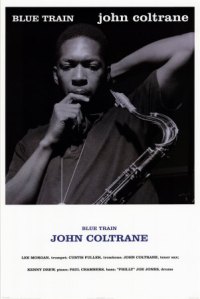
Best music: Live In London by Leonard Cohen; Blue Train by John Coltrane; Outer South by Conor Oberst & the Mystic Valley Band.

Best films: A Love Song for Bobby Long [2005]; Kramer vs. Kramer  [1979]. 

Best drink: Frangelico.

‘The Young Lutheran’s Guide to the Orchestra’

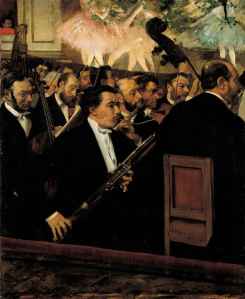
Degas- l'orchestre‘To each person, God gives some talent, such as writing, just to name one, and to many persons He has given musical talent, though not as many as think so. For the young Lutheran, the question must be: Do I have a genuine God-given musical talent, or do I only seem gifted in comparison to other Lutherans?

If your talent is choir or organ, there’s no problem. Choir members and organists can be sure their gift is from God because who else but God would be interested? Just like nobody gets fat on celery, nobody goes into church music for the wrong motives.

But for a Lutheran who feels led to play in an orchestra, the first question must be: Are you kidding? An orchestra?

In the Bible, we read about people singing and playing musical instruments, the harp, trumpet, psaltery, but always in praise of the Lord, not for amusement. We do not read that our Lord Himself ever played an instrument or enjoyed hearing others play theirs. The apostles did not attend concerts or go to dances. Are you sure this is what you want? Do you know what you’re getting into? Opera. Is that anyplace for a Christian? Don Juan and Mephistopheles and Wagner and all his pagan goddesses hooting and hollering, and the immorality – I mean, is anybody in opera married? You play in an orchestra, you’re going to wind up in opera, and the next thing you know, you’re going to be skipping Sunday mornings.

If you steer clear of opera and stick to orchestral concert music, where are the Christian composers? Modern ones are existentialists, the Romantics were secular humanists, the eighteenth century was all rationalists, and the seventeenth was Italians, except for Bach, and you can’t make a living playing Bach. You go in an orchestra, you’re going to be devoting your life to a lot of music that sort of swirls around in spiritual mystery searching for answers that people could find in the Bible if someone showed them where to look.

But if you’re determined to play in an orchestra, then you ought to ask yourself: Which instrument is the best one for a Lutheran to play? If our Lord had played an instrument, which one would he have chosen? Probably not a French horn. It takes too much of a person’s life. French horn players hardly have the time to marry and have children. The French horn is practically a religion all by itself. Should a Lutheran play the bassoon? Not if you want to be taken seriously. The name says it all: bassoon. Maybe you’d do it for a hobby (“Let’s go bassooning this weekend, honey!”) but not as your life occupation.

Many Lutherans start out playing clarinets in marching band and think of the clarinet as a Christian instrument, clear and strong and almost human, but a symphonic clarinet is different from the band clarinet: it’s sardonic, skeptical and definitely worldly. The English horn sounds Christian, maybe because we think of it as the Anglican Horn, but it’s so mournful, so plaintive. And so are English Horn players. They all have incredibly complicated problems, they’re all depressed, especially at night, which is when the concerts are. The oboe is the sensualist of the woodwind section, and if there’s ever a wind a Lutheran should avoid, it’s this one. In movie soundtracks, you tend to hear the oboe when the woman is taking off her clothes, or else later, when she asks the man for a cigarette. The flute is the big shot of the wind section. Jean-Pierre Rampal, James Galway, both millionaires (how many millionaire bassoonists are there?), because everyone knows it’s the hardest to play. To spend your life blowing across a tiny hole – it’s not really normal is it? The flute is a temptation to pride. Avoid it. The last member of the woodwind family is the flakiest, and that’s the piccolo. No Salvation Army Band ever included a piccolo and no piccolo virtuoso ever did an album of gospel music. This is not a devotional instrument.

violinWe come now to the string section. Strings are mentioned in the Scripture and therefore some Lutherans are tempted to become string players, but be careful. Bass, for example. An extremely slow instrument, the plowhorse of the orchestra, and bass players tend to be a little methodical, not inventive, not quick, not witty or brilliant, but reliable. This makes the instrument very tempting to German Lutherans. And yet, bass notes have a darkness and depth to them that, let’s face it, is sexual. And when bass players pick up their bows, I don’t think there’s any doubt what’s going on in their minds back there. The cello section seems so normal, and cellists seem like such nice people. The way they put their arms around their instruments, they look like parents zipping up a child’s snowsuit. They seem like us: comfortable, middle-range. And yet there is something too comfortable, maybe too sensual, about the cello. The way they hold the instrument between their legs: why can’t they hold it across their laps or alongside themselves? The viola section is not a nice place for a Lutheran and here you’ll have to have to take my word for it. I know violists and they are fine people until, late at night, they start drinking a few bottles of cheap red wine and roasting chickens over a pit in a vacant lot and talk about going to Yucatan with a woman named Rita. Don’t be part of this crowd. The violin is a problem for any Christian because it is a solo instrument, a virtuoso instrument, and we’re not solo people. We believe in taking a back seat and being helpful. So Christians think about becoming second violinists. They’re steady, humble, supportive. But who do they support? First violins. You want to get involved with them? The first violins are natural egotists. The conductor looks to them first, and most first violinists believe that the conductor secretly takes his cue from them, that he, a simple foreign person, gets carried away by listening to the violins and falls into a romantic, emotional reverie and forgets where in the score he is and looks to the concertmaster, the No. 1 first violin, to find out what’s going on: this is what violinists believe in their hearts. If the conductor dropped dead, the rest of the orchestra would simply follow the violin section, while the maestro’s body was carried away, and nobody would know the difference. Is this a place for a Lutheran to be? In the biggest collection of gold-plated narcissists ever gathered on one stage? No.

Let’s be clear about the brass section. First of all, the rest of the orchestra wishes the brass were playing in another room, and so does the conductor. His back is toward the audience, so they can’t see what he’s saying to the brass section; he’s saying: You’re too damn loud, shut the fuck up (in Italian, this doesn’t sound course at all). The brass section is made up of men who were at one time in the construction trades and went into music because the hours were better. They are heavy dudes, and that’s why composers wrote so few notes for them: because they’re juveniles. The tuba player, for example, is a stocky bearded guy who has a day job as a plumber. He’s the only member of the orchestra who bowls and goes deer hunting. It’s not an instrument for a sensitive Lutheran, and anyway, there’s only one tuba and he’s it. The trombonist is a humorist. He carries a water spray gun to keep his slide moist and often uses it against other members of the orchestra. A Shriner at heart, he knows more Speedy Gonzalez jokes than you thought existed. The trumpet is the brass instrument you imagine as Christian, thinking of Gideon and of the Psalms, but then you meet a real-life trumpet player and realize how militaristic these people are. They don’t want to wear black tie and play Bach, they want tight uniforms with shiny buttons, and they want to play as loudly as they possibly can. Most of the people who keel over dead at concerts are killed by trumpets.

There are two places in the orchestra for a Lutheran, and one is percussion. It’s the most Lutheran instrument there is. Percussionists are endlessly patient, because they don’t get to play much. Pages and pages of music go by where the violins are sawing away and the winds are tooting and the brass is blasting but the percussionist sits and counts the bars, like a hunter waiting for the quail to appear. A percussionist may have to wait for twenty minutes just to play a few beats, but those beats have to be exact and they have to be passionate and climactic. All that the epistles of Paul say a Christian should be – faithful, waiting, trusting, filled with fervor – are the qualities of the percussionist. The other Lutheran instrument, of course, is the harp. It is the perfect instrument for a Christian because it keeps you humble. You can’t gallivant around with a harp. Having one is like living with an elderly parent in poor health – it’s hard to get them in and out of cars, impossible to satisfy them. A harp takes fourteen hours to tune and remains in tune for twenty minutes or until somebody opens a door. It’s an instrument for a saint. If a harpist could find a good percussionist, they wouldn’t need an orchestra at all; they could settle down and make wonderful music, just the two of them’.

– Garrison Keillor, ‘The Young Lutheran’s Guide to the Orchestra’ in We Are Still Married (New York: Viking Penguin, 1989), 30–4.

Art: not a means to an end

Calvin Seerveld

‘Art is not a means to an end, it is not a function of something else. Art stands or falls on its own artistic contribution in God’s world, To think of art, or practise it, as a tool for some other purpose is to sell it out to a technocratic bent of mind, damning it to a permanent identity crisis and reducing it to a kind of colonial status at the beck and call of touring VIPs for approved cultural missions’. – Calvin Seerveld, Bearing Fresh Olive Leaves: Alternative Steps in Understanding Art (Willowdale: Toronto Tuppence Press, 2000), 11.

Trevor Hart on Science, Faith, the Arts, God and the Imagination

trevor-hartThe Centre for Public Christianity has made available four short video conversations filmed with Trevor Hart when Trevor was in Sydney last year to deliver the 22nd Annual New College Lectures at the University of New South Wales. (These talks are available for MP3 download here). Trevor is always worth listening too, and the videos are available here:

Cassidy on McCormack on Barth: Election and Trinity

The latest issue of The Westminster Theological Journal includes a piece by James J. Cassidy entitled ‘Election and Trinity’ in which he offers a ‘non-Barthian’ critique of Bruce McCormack’s reading of Barth’s ‘second’ doctrine of election. It’s a predictable argument: ‘… what McCormack has done is conflate the very Creator-creature distinction that he claims to maintain. Or, rather, he has collapsed the creature into the Creator, just as his Christology (with its ‘‘Reformed kenosis’’) collapses the humanity into the divinity of Christ’.

I have neither the time nor the desire to engage with Cassidy here, at least at this stage,  but simply wanted to draw attention to the article.

Leunig on Television

TV‘You see a society that’s provided for by television is a society that says it doesn’t need too many parks or natural situations for children to play in because television will look after them. So I think we, we start to construct the shape of our cities and our suburbs is built around this fact that people can be taken care of, they can be plonked in a room and absorbed in this virtual reality and reality itself becomes kind of a little bit degraded. I have a sense that it is mad making somewhere. That the quality of attention we give to each other as humans is degraded and diminished eventually with the sustained cultural usage’. – Michael Leunig

Ray Anderson on Marriage

‘Is it impossible for God to work in the life of one who has suffered an irretrievable loss of the “one flesh” relationship in such a way that he cannot or will not join this person together with another in a new marriage? Or, dare we suggest that the command of God can both put to death and raise again persons who experience dissolution of the marriage bond? Would it be too much to paraphrase the words of Jesus and say, “Marriage is made for man and not man for marriage!” If a theology of marriage insists that marriage is a work of God and exists under the command of God, there does seem to be a basis to suggest that in the situation where sinful humanity has experienced brokenness and loss, the commandment of God is the presence of God himself at the center of that person’s life to effect new being and new possibilities. This would be to take the authority of Scripture seriously as directing us to God himself as the one who summons us in Scripture to acknowledge him as the author of life rather than of a “law that kills.”

… Because God joins himself to the temporal social relationship consummated as a marriage and recognized by society and the church, that marriage is indissoluble on any grounds whatsoever other than the command of God. If a marriage comes to the point of utter breakdown so that it is a disorder rather than an order of human relationship, and inherently destructive to the persons involved, one can only seek to bring that relationship under God’s judgment. For Christians, this means that the breakdown of a marriage to the point of utter failure is a betrayal of the covenant love that God has invested in that marriage, and is therefore a sin. To attempt to find legal or moral grounds on which to be excused from the marriage contract is, in our opinion, untenable. The scriptural teaching on marriage and divorce clearly brings the marriage under the judgment of God as the one who has the absolute right of determining its status.

If Christians, and the church, do not have a process to deal with sin and with grace as a work of God, then there will be little hope for those who become victims and casualties of hopeless marriages. But where the work of God is understood as his contemporary presence and power under the authority of Scripture to release those who are in bondage and create a new status where “all things are new,” then the church as the community of Christ will have the courage to say NO to a continued state of disorder and YES to the forgiveness and grace of God that brings persons under a new authority of divine healing and hope. We are speaking here, by analogy, of a “death and resurrection” experience as the work of God in the midst of human lives. To create a “law of marriage” that would deny God the authority and power to put a marriage to death and to raise the persons to new life through repentance and forgiveness would appear to be a desperate and dangerous course of action. What God has joined together, indeed, let not man put asunder. But where God puts asunder as a judgment against sin and disorder, and therefore as his work, let not man uphold a law against God.

… The command of God by which marriage as a human, social relation is given the status of covenant partnership is a positive and rich resource of growth and renewal. What God “joins together” he attends with love and faithfulness. This is a promise and commitment of God himself to the marriage relation as a source of love, healing, and hope. The Christian community participates in this work of God by providing a context of support and enabling grace for each marriage that belongs to the community.

Those who undertake the calling of ministry to families through pastoral care and counseling have as their first priority the ministry of encouragement and support for marriages. This is a constructive and positive reinforcement of marriage and prevents its deterioration into a shell of the love and commitment it is meant to express. God is faithful to weak and problem-plagued marriages – not merely angry at unfaithfulness. God is patient and loving to marriages where love has been lost – not merely angry at our own anger and lovelessness. God is hopeful toward marriages that are ready to crash – not merely angry at our incompetence. God never gives up on his “joining together,” because God is himself the covenant partner of marriage. This produces a bonding that never is allowed to become bondage’. – Ray S. Anderson, ‘Bonding without Bondage’, in Ray S. Anderson and Dennis B. Guernsey, On Being Family: A Social Theology of the Family (Grand Rapids: Wm. B. Eerdmans, 1986), 103–4.

John Oman Conference

Oman2009 sees the 70th anniversary of the death of Professor John Oman. To mark the occasion there is to be conference on his life and ideas.

Oman, born in Orkney and alumni of Edinburgh, was a minister of the United Presbyterian Church and subsequently of the Presbyterian Church of England. After parish work in Paisley and Alnwick he was appointed Professor of Theology at Westminster College, Cambridge. He was also Principal of the College and Moderator of the English General Assembly. Oman was a creative theologian and philosopher of religion; his two best known books are Grace and Personality, in which he teaches that God is personal and always treats us as persons, and The Natural and Supernatural, in which he argues that all people have a felt awareness of God that prompts faith. Whilst Oman is not well known today, he was judged at the time of his death as ‘amongst the most original, independent, and impressive theologians of his generation and of his country’.

The anniversary conference is to be held at Westminster College, Cambridge from 15th–17th September 2009 and will feature local and international speakers, including Professors Stephen Bevans, George Newlands, Alan Sell and David Thompson. Topics will include Oman’s Christology, the intellectual and cultural context of his work, his response to Darwinism, and the importance of his work for contemporary missiology.

For enquiries, contact Adam Hood.

What keeps Protestant’s silent?

individualism 1

‘What keeps us silent is not spirituality, as with the Friends [Quakers], and we need not flatter ourselves it is, but an overdriven individualism, which makes us proudly timid, and which in other forms is dissolving our churches into mere associations, not to say audiences’. – Peter T. Forsyth, Intercessory Services for Aid in Public Worship (Manchester: John Heywood, 1896), 6.

[Image: CartoonStock]

‘The Double Rainbow: James K. Baxter, Ngāti Hau and the Jerusalem Commune’: A Review

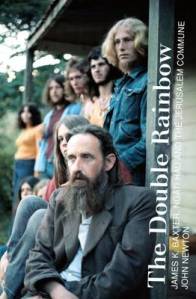
the-double-rainbowJohn Newton, The Double Rainbow: James K. Baxter, Ngāti Hau and the Jerusalem Commune (Wellington: Victoria University Press, 2009). 224 pages. ISBN: 9780864736031. Review copy courtesy of Victoria University Press.

John Newton’s engaging book, The Double Rainbow: James K. Baxter, Ngāti Hau and the Jerusalem Commune, examines the Ngāti Hau community that Aotearoa’s best-known poet James K. Baxter was instrumental in establishing at Hiruhārama, on the Whanganui River – ‘the country’s first and most influential experiment in “hippie” communalism’ (p. 38). As Newton notes in his Introduction:

The double rainbow is Baxter’s symbol for a mutually regenerative bicultural relationship. He recognised that the Pākehā majority ignored Māori culture, not just to the cost of Māori … but also to its own detriment. Pākehā, he wrote in 1969, a few months before he first moved to Jerusalem, ‘have lived alongside a psychologically rich and varied minority culture for a hundred years and have taken nothing from it but a few place-names and a great deal of plunder’. Pākehā culture’s material dominance was accompanied by an arrogance and ethnocentrism which left it spiritually impoverished.

He cites Baxter:

‘Ko te Maori te tuakna. Ko te Pakeha te teina …’ The Maori [sic] is indeed the elder brother and the Pakeha [sic] the younger brother. But the teina has refused to learn from the tuakana. He has sat sullenly among his machines and account books, and wondered why his soul was full of bitter dust …

And then offers the following commentary:

The cost was everywhere to be seen, but nowhere more plainly than among urban youth. For Baxter, their wholesale disaffection was a realistic verdict on the society they had inherited, a mainstream culture whose spiritlessness and meanness – to say nothing of its arrogance towards its neighbours – deserved no better. In the Māori world, by contrast, and particularly in Māori communalism, he believed he could see an alternative to this atomised majority culture – a system of values that answered to the longings and frustrations that he recognised, both in himself and in the young people around him. To establish an alternative Pākehā community that could ‘learn from the Maori side of the fence’ was to help restore, symbolically, the mana of the tangata whenua and to begin to resuscitate a Pākehā culture that was choking to death on its own materialism. (pp. 11–12)

Such constitutes the earth from which a functioning intentional community at Hiruhārama budded, a community made up largely of those for whom mainstream Aotearoan society meant fatherlessness.

While concerned to not diminish Baxter’s part in the formation of the Ngā Mōkai community but rather to place it in the context of a larger ‘utopian experiment’ (p. 88) he initiated, Newton seeks to ‘offer a stronger account of what Baxter achieved at Jerusalem by bringing into focus its collaborative dimension’ (p. 16). He properly contends that what the 41-year-old Baxter set in motion, and towards which the baby-boomer ‘orphanage’ of the damaged which was his living poetry bore witness to, was something considerably bigger than Baxter himself, and that the unique cohabitation and set of cultural negotiations which was embodied in the Whanganui River communities (particularly Ngāti Hau, Ngā Mōkai, the church – which was ‘threaded through the life of the river’ (p. 59) – and the Sisters of Compassion) draw attention to implications far beyond both Baxter or to the communities themselves. This, of course, is of the essence of Baxter himself, that before he was a hippie, he was ‘a Catholic, a Christian humanist, and an aspiring Pākehā-Māori’ (p. 36), he was a poet-prophet charged not simply with interpreting the social environment which he inhabited, but of actively improving it, of giving material shape to it. The book is loosely divided into three main sections: an introductory phase that addresses the pre-history of the community and Baxter’s first year of residence; a middle section that covers its heyday; and a downstream phase that describes the community’s various offshoots, and considers its legacy. The result – for the reader prepared to follow the narrative – is the stripping away of ‘cultural safety’.

Newton details further upon what we know of Baxter from other places while eloquently introducing us to a host of other equally-fascinating characters – Father Wiremu Te Awhitu, pā women Dolly, Alice, Lizzie and Wehe (who are often remembered as ‘substitute’ mothers (p. 89)), Aggie Nahona, and Denis O’Reilly among them. He also highlights Baxter’s visionary kinship with French-born nun Marie Henriette Suzanne Aubert with whom he shared ‘a staunch commitment to Māori, and to spiritual love as the first principle of a hands-on social mission’ (p. 45). Newton argues that this part of Baxter’s history ‘doesn’t get acknowledged in Baxter’s rhetorical point-scoring at the expense of the mainstream church. Without it, however, his own Jerusalem “orphanage” would never have eventuated. In one sense the debt is symbolic or poetic: the presence of the church at Jerusalem draws te taha Māori into dialogue with the other key spiritual driver of his later career, namely his Catholic faith … Baxter brought his showmanship, and his personal (some might argue, narcissistic) sense of mission. But he also brought with him – embodied, or enacted – the self-interrogation and social radicalisation that had seized hold of the Catholic Church globally in the wake of Vatican II. After the Berrigans and the draft card burnings, after liberation theology, what did the Christian mission imply in the context of ongoing colonial injustice?’ (pp. 46, 47)

Jerusalem was Baxter’s riposte to all those Pākehā institutions – the churches, the university, the nuclear family and so on – whose lack of heart and small-minded materialism were now failing Pākehā youth in the same way that Pākehā culture had always failed Maori. In looking for a remedy for the failings of Pākehā society, he found his prime inspiration in the communitarian virtues that he saw among Māori: aroha, mahi, kōrero, manuhiritanga. This was ‘learn[ingJ from the Maori side of the fence’: his community was to be modelled on the marae. Of course, in offering this open door the commune depended entirely on the hospitality of Ngāti Hau … But the commune was not just a place to live – a material shelter for whomever happened to be there … it was also a piece of political theatre. And the commune’s significance as a political intervention depended for its fullest expression on publicity: it was intended, at least in part, to be a spectacle, a City on a Hill! At the same time, it was integral to the kaupapa that it be open to all comers. This was the paradox that Baxter was confronted by: the more effectively this vision was communicated, the more would it lead to a pressure of numbers that would overwhelm the commune’s own capacity to provide for itself, and which eventually must wear out the patience of the local community. (p. 65)

Yet Newton is at pains to point out throughout his study that Hiruhārama is bigger than Baxter. Indeed, the bulk of the book is given to defending and illustrating this thesis, that Hiruhārama after Baxter entered into a period of unforeseen maturity, and particularly the maturity of its relationship with the pā. Community life under Greg Chalmers’ leadership may have been less eventful, but those years from 1972 do more to fulfil Baxter hopes of regenerative partnerships than those prior.

Two chapters are concerned with articulating the events birthed following the final closure of the community at Hiruhārama, and to highlighting that while a distinctive phase of the Ngā Mōkai narrative had reached its end, its impulse didn’t die with the community itself. Newton draws attention to a network of loosely affiliated houses – from flats and private homes, to crashpads and urban shelters, to far-flung intentional communities – which functioned as homes-away-from-home for a diasporic Ngā Mōkai whānau, a ‘network of initiatives which imported the Jerusalem kaupapa back into urban contexts’ (p. 154), and there ‘offering a dispersed community the chance of reconnection, reaffirmation and renewal’ (p. 164). He recalls Hiruhārama’s various germinations at Reef Point, Wharemanuka and Whenuakura. ‘With the shutting of the original commune, these “shoots of the kumara vine” [became] the focus of the Ngā Mōkai story. It’s here, in this ramshackle archipelago, that those who had been touched by Jerusalem attempted to keep alive the kaupapa’ (p. 131).

The penultimate chapter, ‘Baxter’s Wake’, re-spotlights Baxter, and is given to argue that Baxter’s literary legacy and his social legacy are ‘shoots of the same vine’ (p. 169):

‘Jerusalem’ was never an alternative to the poetry; it was part of it, its logical destination, even its most vivid accomplishment. In his burial on the river we find Baxter the poet and the Baxter the activist inextricably entwined. This integration was precisely his ambition, and the fact he achieved it is what makes these events still resonate. (p. 171)

So Newton appropriately accentuates Baxter’s formulation of the poet’s ethical task to be no mere interpreter of society but one who endeavours to make society more just. ‘It is this sense of embodied ethics … which leaps into focus when we think about Jerusalem’ (p. 179).

The Double Rainbow is the fruit of an incredibly-impressive amount of extensive and laborious research. Newton commendably resists romanticising Baxter, Baxter’s vision, or the Ngāti Hau ‘classroom’ itself. Those engaged in Baxter’s work and who want to better understand his Jerusalem Daybook or are interested in his biography, those seeking to understand, assess and inform Aotearoa’s multi-cultural, historical and spiritual landscape, those wanting to listen and to speak intelligently into contemporary debates about the relationship between government authorities and badge-wearing gangs carving out their own neo-tribal identity, and, more broadly, to a nation fascinated with re-carving a new national identity which buries settler mono-culturalism in its wake, and those devoted to the challenging work of inspiring, creating, leading, building, replanting and closing local and grassroots communities will be well-served to have Newton’s essay in hand. An invaluable and timely record, it is also certain to inform, impress and inspire.

A Prayer from the Birthday Boy

Forsyth 9.jpg‘O Lord, thou knowest our frame, and rememberest that we are dust. Pity the sorrows of such as are torn by undeserved pain. Refresh all that are worn by perpetual care. Light up the faith of the dying. And comfort the bereaved with Thy regard. Deliver the souls of those who are bound in the chain of their own misdeeds. And send Thy Pentecostal power and joy to those holy ones who have the world’s sin for a great burden upon their souls. We bear all our fear, and sin, and sorrow to the Redeemer who bears them all before Thee, and by His intercession heals them all’. – Peter T. Forsyth, Intercessory Services for Aid in Public Worship (Manchester: John Heywood, 1896), 19–20.

James K. Baxter: ‘Song to the Holy Spirit’

Wild Goose

Lord, Holy Spirit,
You blow like the wind in a thousand paddocks,
Inside and outside the fences,
You blow where you wish to blow.

Lord, Holy Spirit,
You are the sun who shines on the little plant,
You warm him gently, you give him life,
You raise him up to become a tree with many leaves.

Lord, Holy Spirit,
You are the mother eagle with her young,
Holding them in peace under your feathers.
On the highest mountain you have built your nest,
Above the valley, above the storms of the world,
Where no hunter ever comes.

Lord, Holy Spirit,
You are the bright cloud in whom we hide,
In whom we know already that the battle has been won.
You bring us to our Brother Jesus
To rest our heads upon his shoulder.

Lord, Holy Spirit,
You are the kind fire who does not cease to burn,
Consuming us with flames of love and peace,
Driving us out like sparks to set the world on fire.

Lord, Holy Spirit,
In the love of friends you are building a new house,
Heaven is with us when you are with us.
You are singing your songs in the hearts of the poor
Guide us, wound us, heal us. Bring us to the Father.

– James K. Baxter, ‘Song to the Holy Spirit’, in Collected Poems (ed. John Edward Weir; Oxford: Oxford University Press, 1979), 572.