The Tree of Life: a note

On Thursday night, with two friends, an empty bladder, and with a very heightened sense of anticipation, I went to see Terrence Malick’s The Tree of Life. It is a phenomenal film, and at some stage (for this film requires a number of viewings) I may post some thoughts about it, and about the experience of watching it on The Regent‘s massive screen. But not now. For now, I simply want to confess, particularly for the benefit of those who are yet-to-see-but-hope-to-see the film, that this is a film that demands and rewards some preparation, and, to that end, that I was glad that I had done some reading beforehand. Here’s some of what I found most helpful:

Since, I’ve also found this piece: The Tree of Life: a son of tears. And finally, this from David Bentley Hart:

The film, in fact, is brilliant, mesmerizingly lovely, and almost alarmingly biblical. Even if one is not enchanted (as I most definitely am) by Malick’s signature cinematic mannerisms, or by the fleeting hints of his more recondite intellectual preoccupations (Heidegger? Gnosticism? Buddhism? Russian Sophiology, perhaps?), surely one ought to recognize the ingenious subtlety of the scriptural allegories around which the film is built, and of the film’s meditations on the mystery of God’s silence and eloquence, and on innocence and transgression, and on the divine glory that shines out from all things.

Or so I was thinking as I drowsed there, warming my pelt in a pool of sunlight. Then, however, it occurred to me that perhaps, after all, these critics did have a kind of point. Oh, yes, The Tree of Life is profoundly, if mysteriously, scriptural—with its images of Eden, Cain and Abel, God speaking out of the whirlwind, divine Wisdom dancing at the heart of creation, Christ the man of sorrows, and so on—but is that sufficient to make it a truly Catholic film, at least of the sort these earnest critics so obviously crave? And I realized that probably it is not: It contains no pericopes from the catechism, no triumphant affirmations of papal primacy, no satisfying deathbed conversions, no heartwarming tableaux of the happy Catholic family warm in the embrace of Mother Church, no nuns, no Bing Crosby, no Italians …

Edward Davis lectures on religion and science

The Department of Theology and Religion at the University of Otago is hosting Professor Edward Davis for a series of public lectures on religion and science.

Professor Davis is Distinguished Professor of the History of Science at Messiah College (Grantham, Pennsylvania), where he teaches courses on historical and contemporary aspects of Christianity and science. Best known for studies of the English chemist Robert Boyle, Professor Davis edited (with Michael Hunter) The Works of Robert Boyle, 14 vols. (Pickering & Chatto, 1999-2000), and a separate edition of Boyle’s subtle treatise on the mechanical philosophy, A Free Enquiry into the Vulgarly Received Notion of Nature (Cambridge University Press, 1996). He has also written numerous articles about religion and science in the United States, including a study of modern Jonah stories that was featured on two BBC radio programs. His current project, supported by the National Science Foundation and the Templeton Foundation, examines the religious activities and beliefs of prominent American scientists from the period between the two world wars.

‘Dictionaries of National Biography’, by Brian Turner

My father’s father, quirky
and inquisitive till the end,
was the first to tell me

you never stop learning.
Well, I don’t know about you
but this fine December morrning

I learnt that Krishna Menon
was deemed devastatingly’
attractive to women, Jane Austen

showed few signs of having
much of a sense of humour,
Florence Nightingale, the Lady

with the Lamp, was ‘a good mimic’
and Thomas Batty, the first man
to train an elephant to stand

on its head, died in a lunatic
asylum. Also, the not always grand
Duke of York succumbed

to dropsy. So what about me,
then, as 62 approaches?
As my father caustically said

each time he saw me
for months before he died,
I need a haircut.

Fred Williams: Intimate Horizons

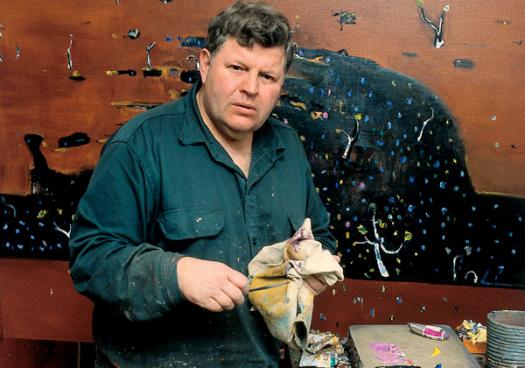
The day has been filled with a number of highlights, not least of which was the discovery of a piece about Fred Williams by Peter Conrad in the latest issue of The Monthly. Williams is certainly among my favourite painters, from Australia or elsewhere. I well remember his show at the National Gallery of Victoria back in the 80s – it was absolutely mind-blowing. Anyway, here’s a wee snippet from Conrad’s piece:

In 1947 the art historian Kenneth Clark sympathised with Sidney Nolan’s early efforts to paint “the Australian countryside (if one can call that inhospitable fringe between sea and desert by such a reassuring name)”. Clark suspected that art, with its play of bright but not blinding light and soft shadow, was disabled because Australia contained “no dark woods … no thick, sappy substances”, no excuse for pictorial impasto.

A decade later, Fred Williams returned to Melbourne after spending six years as a student in London and began to prove Clark wrong. The work Williams had done in England – mostly figurative, with wistful urban vignettes of buskers and beggars, or souvenirs of the desperately jaunty acrobats and comedians in the last remaining music halls – proved to be a false start. In Australia the land was starkly depopulated bush, with no workers tidily pruning the trees, as seen in one of his English etchings, and no church steeples to organise and sanctify the view. The affectionately downtrodden rural scenery of Constable seemed irrelevant, as did Turner’s frothy sublimity. On a trip to Kosciuszko National Park, Williams discovered something quite unlike the Alps that had excited the European Romantics. Storm clouds pummelled the Australian mountains in an aerial bombardment and snow, as it settled onto rock, sketched grotesque, leering faces.

The geometrical boulders painted by Cézanne were of some help, because they reminded Williams to consider what the land was made of, but his visual education did little to prepare him for his first expeditions to Mittagong in the Southern Highlands, New South Wales, and Upwey in the Dandenongs, Victoria. He was bewildered by the lack of a skyline, and by the eye’s inability to find a track through the mess of scrub: perspective is an urban convenience, allowing us to travel to the horizon in a straight line, and Australian space refused to be regulated.

You can read the whole piece here.

I was especially pleased, too, to read that the National Gallery of Australia in Canberra will be hosting an exhibition of Williams’ work entitled ‘Infinite Horizons’, from 12 August to 6 November 2011. It’s enough to make one want to jump onto a plane, very soon.


‘Presbyterian Support Services’, by Brian Turner

It seems a wan place to be
perhaps because you’re surrounded by discards
and you’re aware that some would say
you could do with sprucing up yourself …
which, by certain standards of the day –
what others are there? – is true.

The down-at-heel often seem
stripped of pride in their appearance
was what your spic father intoned,
asserting they lacked that cluck of self-esteem,
and though money’s sure as hell
not everything, what do you do
when you haven’t got much of it
except rummage about in an op shop
where there’s more hush than hurrah?

You guess there’s no pat answer
and while most of the clothes
have a lot of life left in them
they are dulled by their failure
to disclose the dramas
they were party to. Not only that,
you’re nagged by the thought
that the last time
you bought a pair of jeans here
a female friend wondered if you knew
they were really a woman’s
and you ought to have known that
by the waist measurement
and the size of the arse.

‘July, Carey’s Bay’, by Brian Turner

(visiting Cilla)

A storm was forecast but had not arrived
by the time I had to leave. You said, surprised,
What a beautiful night. You said it twice
as we stood on your verandah and listened

to the sou’wester gusting in the trees,
watched it burring the silver waters
of the harbour all the way from Carey’s Bay
to Taiaroa and reaches beyond my comprehension;

the light on the sea sounding (if one can
hear
light) like cow bells tinkling
across a white field. In the oil-stained bay
yachts swung on their moorings, straining,

and I hoping to be home
before the first wild shower of rain.

– from Listening to the River (Dunedin: McIndoe, 1983).

Systematic Theology Association of Aotearoa New Zealand – annual meeting

The annual meeting of STAANZ (Systematic Theology Association of Aotearoa New Zealand) will be held in Auckland, at Epsom Baptist Church, 6 Inverary Rd, Epsom, beginning a 0900 on Wednesday 7 December and concluding at 1700 on Thursday 8 December. The topic this year is ‘Trinity’. There is a call for papers, and abstracts can be emailed to Nicola Hoggard-Creegan before the end of August.

The good, the beautiful and the true

Last week, a conference and exhibition (actually, the exhibition is still running) took place which I had the privilege to help organise. We chose for our theme the Hebrew phrase ‘Tikkun Olam’ – to mend the world – and invited artists and theologians to converse together about the following questions: Can there be repair? Can art and can theology tell the truth of the world’s woundedness and still speak of hope?

One of the themes to arise from the conversations concerned the Church’s long and deep indebtment to the three-fold notion of the good, the beautiful and the true, a notion articulated in Plato and given significant mileage through Thomas Aquinas in whom it reaches something of a dead end because in the final analysis Thomas’s articulation – like Kant’s after him – is too divorced from the particular form that God’s life actually takes in the world. For God’s beauty is not, as some suggest, the infinite serenity of God’s life. Rather, God’s beauty is the infinite drama of God’s life, a drama which, as Jonathan Edwards so wonderfully articulated, draws attention to God’s intrinsic plurality – God is beautiful precisely because God is Triune.

And so it is perhaps not too odd that the twentieth century which witnessed something of a renaissance of interest in the doctrine of the Trinity also witnessed a widescale broadening of the notion of beauty in the discourse of aesthetics. Beauty was no longer understood in the narrow terms outlined by Kant and others, and it became rightly recognised as having to do, in John de Gruchy’s words, with ‘the experience and perception of reality that we associate with the imagination and creativity, with metaphor and symbol, with games, playfulness, and friendship. The arts, whether fine or popular in all their manifold forms are central to aesthetics because they embody and express this dimension of experience, they evoke memories and suggest possibilities, thereby enabling us to see reality differently’.

Where beauty has been banished from contemporary aesthetic discourse, it has largely been in ‘reaction to the aestheticism of those who pursued beauty for its own sake, a Romantic escapism oblivious to the ugly realities of a world gripped by oppression’. But movements birthed by reaction alone are doomed to fail; and anyway, any account of aesthetics which claims the name ‘Christian’ will have to deal with the fact that the very centre of divine unveiling recalls that the beautiful and the ugly are not so easy to disentangle as we might first expect. Indeed, a Christian account of beauty can neither ignore nor offer easy escape from evil.

It is not, therefore, improper – indeed, it may be incumbent upon Christian theologians and artists – to approach the question of beauty through a consideration of its opposite, namely ugliness. Indeed, it is sometimes the case, as Theodor Adorno observes, that ‘art has to make use of the ugly in order to denounce the world which creates and recreates ugliness in its own image’. John de Gruchy suggests that ‘it is precisely this protest against unjust ugliness that reinforces the value and significance of beauty as something potentially redemptive. Indeed, if aesthetics were just about the beautiful we would never really understand “the dynamic life inherent in the concept of beauty”’. If ugliness has the capacity to destroy life, then Dostoevsky’s claim that ‘beauty will save the world’ invites us to not only (as PT Forsyth put it) ‘distrust the easy optimism of the merely happy creeds’, but also to see the invitation towards theological aesthetics as about faith seeking to understand reality – in its ugly forms too – from the vista of the beauty of God revealed primarily in the bloodied wounds of the cross where all that is ugly is transfigured by a profundity of beauty. Such beauty, as Karl Barth insists, ‘embraces death as well as life, fear as well as joy, what we might call the ugly as well as what we might call the beautiful’. To speak of beauty in its deepest reality is, in other words, to speak not just of any beauty, but rather of a very specific beauty. Indeed, it is beauty so specific that it goes by a particular name – Jesus Christ. Jesus Christ – who he is and what God does in him – is the very beauty of God.

‘From Bracken’s Lookout, Dunedin’, by Brian Turner

…Who ever saw
The limit in the given anyhow?
 – Seamus Heaney

Just what you’d expect of a lookout
named after a poet
whose best-known phrase is ‘Not understood’,

the carpark on the first step of the hill
to Opoho is sited so we sit
with backs to the cemetery,

where Bracken’s remains are buried,
facing the city that’s encircled
by sea and high hills.

We’re in between here, and so much
that’s past and present is taut
with a longing for permanence,

immortality seeming out of the question,
though I’m old enough to know
there are ghosts yet to be laid to rest

in the shadowed streets below.
What we have here’s random selection,
the language of hereafter and begetting,

and what’s given is what we sense
and nothing else. Extravagance
is not part of a southern legacy

and all know what ‘for better or worse’
means, and the phrase
‘what goes up must come down’

always raises a smile, is oddly regenerative.
I loiter, lost and found,
and watch the birds – for whom

everything depends on the given –
swing back and forth in the late sun
scribing arcs of a pendulum.

– Brian Turner, ‘From Bracken’s Lookout, Dunedin’, in Taking Off (Wellington: Victoria University Press, 2001), 84–5.

‘Semi-Kiwi’, by Brian Turner

The barn roof needs painting
and the spouting is ruined.
Likewise the roof of this house
in which we live, borer here,
rot there. I’m neither handy
in the great Kiwi DIY tradition,
nor monied, which rather leaves
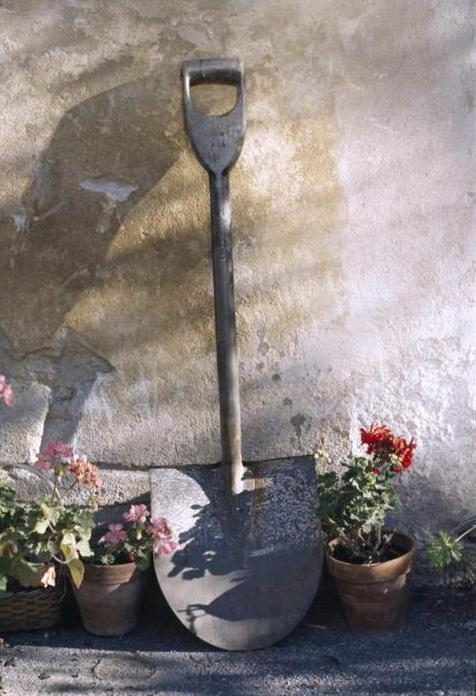
us up shit creek without a shovel.
I grub to find what Stevens called
the ‘plain sense of things’
and come up empty-handed
more often than not, but
I’m a dab-hand at recognising,
if not suppressing, self-pity,
and I can back a trailer
expertly, so all is not lost.

– Brian Turner, ‘Semi-Kiwi’, in Taking Off (Wellington: Victoria University Press, 2001), 17.

‘Some reasons why I got this job’, by Brian Turner

Because I’m charming, elegant, gracious.
Cultivated, strapping, and look good on the box.
Because I haven’t appeared on
This Is Your Life.
Because I don’t sit up late
and watch sad movies on TV.
Because I’ve given the effigies to charity
and thrown away the pins.
Because I’m fast on the bike
and cast very nicely when standing
in ripples in high country streams.
Because footie’s no more important than art.
Because there’s love in a cool climate.
Because I accept that we just have to live with sandflies.
Because, when Americans began talking loudly
outside the motel window at 6:15 this morning
they weren’t threatened with weapons of mass destruction.
Because I’ve been surprised by what I’ve written
and perseverance isn’t to be sneezed at
except when caught in the middle of a bull paddock.
Because there’s no good reason to give up trying
to do the decent thing, now and again.
Because annoyance or irritation
make more sense than anger and outrage.
Because there’s room to do better.
Because we’re not yet lost nor found.
Because my grandmother was scared I was drawn
to depravity, and her husband told me
if I wasn’t careful I’d become an anathema.
Because … because this is not the sort of poem
I’m said to write. Or is it?

– Brian Turner, ‘Some reasons why I got this job’. New Zealand Listener, March 15, 2003.

‘On Top of the World’, by Brian Turner

‘On Top of the World’
(for Kila Hepi)

The days seem longer all of a sudden
now that August’s here
and inventions become realities
ingrained.

Riding between Wedderburn
and Hills Creek we’re on top
of the world, my young friend Kila
and I, the clouds like white drapery
spilling down the mountains,
and the sun’s like acclamation
strobing the downs. And the angels
in their white dresses
kick their bangled heels
and dabble their feet
in the ever blue blue.

It seems that the purer
the air the greater one’s ardour.
We stop and listen for the songs
of air and water and I swear
I heard the rapt sounds
of angels singing, not of Paradise lost
but Paradise now.

[Image: Tony Bridge]

‘Place’, by Brian Turner

Once in a while
you may come across a place
where everything
seems as close to perfection
as you will ever need.
And striving to be faultless
the air on its knees
holds the trees apart,
yet nothing is categorically
thus, or that, and before the dusk
mellows and fails
the light is like honey
on the stems of tussock grass,
and the shadows are mauve birthmarks
on the hills.

– Brian Turner, All That Blue Can Be (Dunedin: John McIndoe, 1989).

‘Sadness and Shadow’, by Brian Turner

Few would doubt that New Zealand punches well above its weight in a number of areas, not least of which is poetry. Since arriving in this land, I have made a concerted effort to better understand its story. And while reading some the significant and lesser-known histories has been indispensable to that end, no less so has been familiarising myself with this land’s painters, sculptors, musicians, novelists and poets. Of the latter, I have particularly enjoyed work by Ursula Bethell, Glenn Colquhoun, C.K. Stead, Cilla McQueen and, of course, James K. Baxter. Recently, I also discovered the work of Dunedin-born poet Brian Turner, who was just conferred with an honorary doctorate by the University of Otago. Anyway, I’ve decided that this week here at Per Crucem ad Lucem I’ll be posting poems by Turner. Enjoy. Here’s the first:

Sadness and Shadow

The one known as The Leader said
If we can discern the difference
Between sadness and shadow
we’ll have unlocked the doors to peace.

So they trooped off into the hills
to a hut at the head of a tussocky valley
with snarls of matagouri in the gulleys
and vast shields of scree like grey-blue tunics
on the mountains all round.

And there they stayed. The sun shone
without libation, the wind blew whoo
under the edges of the roofing iron.
On nights when the moon was bright
mica sparkled in schist by the river.

In winter they went to be early
leaving the fire to burn sIowly
through the night, a dervish,
and the river muttered and shrank.
Mice scurried along rafters and squeaked.

Weeks went by. No one wanted to be first
to say it was time to go home. One
by one they died forlorn, unenlightened,
wondering where, exactly, they’d
come from, and if anyone was still there
wittering on about free trade
and indigenous rights, prostitution,
rugby and the demise of Friday Flash.

Bewildereds couldn’t understand why
technological advances hadn’t solved
age-old questions, removed dilenmma,
or why even the brightest people stumbled
when faced with the conflict between
personal expression and social obligation.

Eventually the sole survivor
walked out of the hills
but couldn’t find one familiar face,
so she returned to the hut
in the mountains and buried
the remains of her friends,
and she lay down beside sadness
and shadow and waited to hear
the lilting sounds of peace on the wind.


July stations …

Reading:

Listening:

Watching:

To Mend the World: gratitude

Those for whom Per Crucem ad Lucem is a regular stopping place will know that recent months have seen me involved in birthing a twin project called To Mend the World. With the exhibition now in full swing (at the Temple Gallery) and the conference furniture packed away, it’s good to be able to pause a while, to claim some space to do an initial reflection. It has been a wonderful and wonderfully-full two days.

It has certainly been a privilege to be part of a small band who together envisioned the conference, whose energy made it possible, and whose commitment to the conversation between art and theology is long and outstanding. We had a great line up of speakers who, via some wonderfully-stimulating presentations, modelled what the organisers of the conference had hoped – a humble and respectful but no less critical and intelligent conversation by artists and theologians around the conference theme of ‘Tikkun olam’. We were overwhelmed by the number of people who registered for the conference – around double what we had initially anticipated – plus a number of welcomed-walk ins too, all of whom engaged in the conversations with enthusiasm and grace. Like every conference of which I’ve been a part, this one too provided opportunity to re-connect with friends, to finally put some faces to names, and to meet in-the-flesh those with whom one has only ever ‘met’ in e-land. Of this latter category, it was really great to finally meet Paul Fromont, with whom I enjoyed a very rewarding conversation and my first pint of Moe Methode.

An event of this kind is an all-too-rare thing, and its happening has been both a real joy and a long-time goal for me personally. I hope that all who attended left the event as encouraged, challenged and enriched as I was by the encounter.

Speaking of theology and the arts, here’s a few recent links of interest:

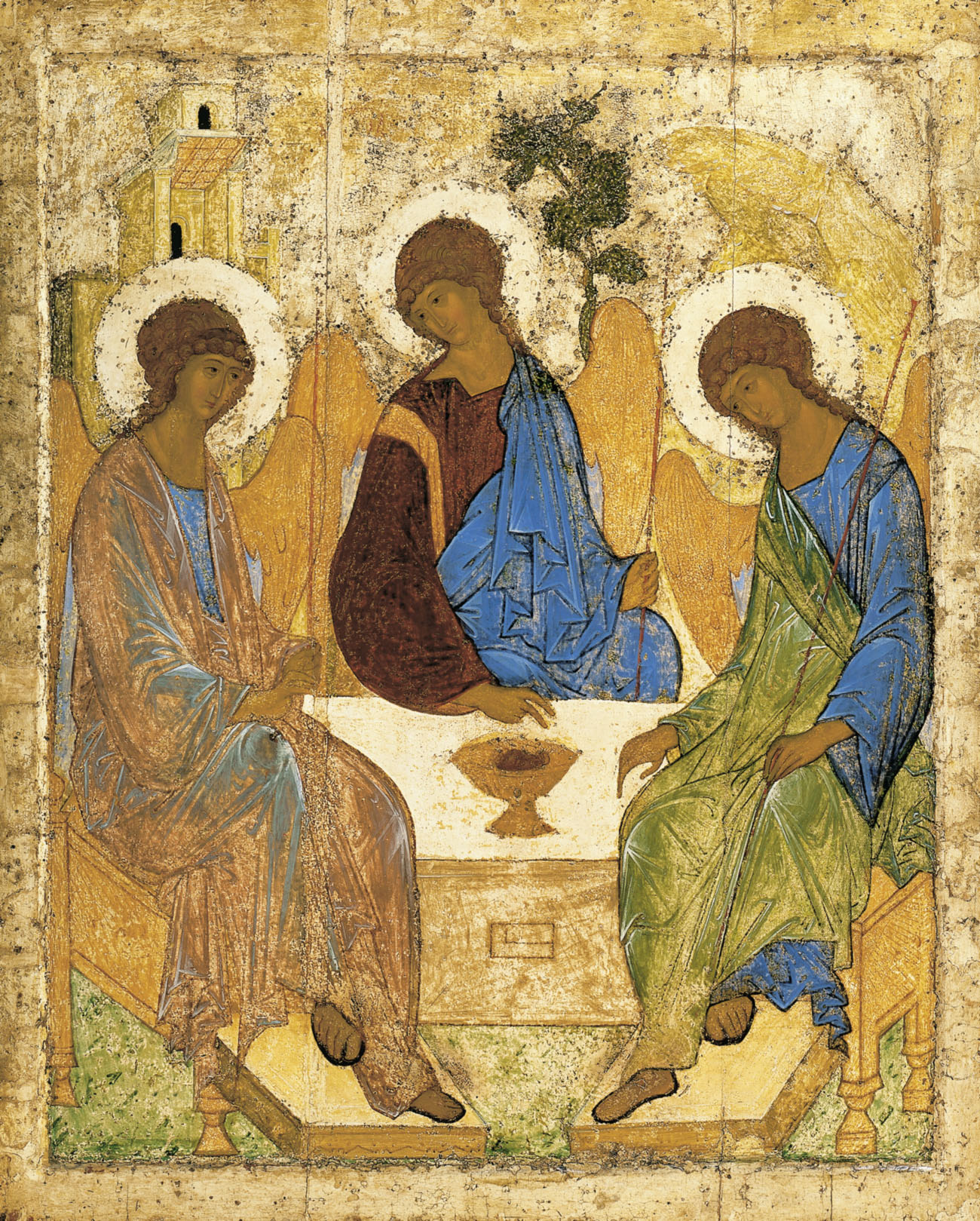
‘Rublev’, by Rowan Williams

One day, God walked in, pale from the grey steppe,
slit-eyed against the wind, and stopped,
said, Colour me, breathe your blood into my mouth.

I said, Here is the blood of all our people,
these are their bruises, blue and purple,
gold, brown, and pale green wash of death.

These (god) are the chromatic pains of flesh,
I said, I trust I shall make you blush,
O I shall stain you with the scars of birth

For ever, I shall root you in the wood,
under the sun shall bake you bread
of beechmast, never let you forth

To the white desert, to the starving sand.
But we shall sit and speak around
one table, share one food, one earth.

– Rowan Williams, ‘Rublev’ in After Silent Centuries (Oxford: The Perpetua Press, 1994).

Gulls of a feather

I’ve just returned from a few days away with the family on the lovely Banks Peninsula, where two days of snow and blizzards were promptly followed by much-welcomed sun and blindingly-clear light. (Unfortunately, there has not been enough of the latter to make our driveway at home accessible yet.) Having survived the former, these gulls were well and truly enjoying the latter. I initially thought that a caption contest might be a fun thing, but I now think that their joy is simply worth sharing as is.

This slideshow requires JavaScript.


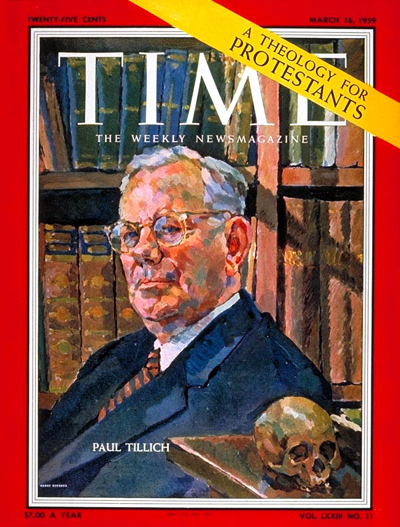
John [Updike] on Paul [Tillich]

While Tillich writes with ‘admirable intelligence … the net effect [of his thought] is one of ambiguity, even futility – as if the theologian were trying to revivify the Christian corpse with transfusions of Greek humanism, German metaphysics, and psychoanalytical theory. Terms like “grace” and “Will of God” walk through these pages [i.e., the pages of Morality & Beyond] as bloodless ghosts, transparent against the milky background of “beyond” and “being” that Tillich, God forbid, would confuse with the Christian faith’.

– John Updike, Assorted Prose (London: Andre Deutsch, 1965), 183.

To be sure, I’ve always found Tillich’s sermons to be quite engaging; but Updike’s description of Tillich’s Morality & Beyond rings true for most of Tillich’s three-volume systematics as well.