On cooking Indian (plus a recipe for Paneer Tikka Masala)

Indian spicesThere is something highly addictive about Indian food. In fact, ‘scientists’ (which is the BBC’s name for the odd creatures who typically spend four-fifths of their life trying to secure funding in order to research things that half a dozen people in the world care enough about to bother reading the findings on; not that important matters have typically been the concern of the majority) like a crew at Nottingham Trent University a few years back claim that ‘just thinking about eating a curry can make people feel high and eating it arouses the senses and makes your heart beat faster’. But I‘m not concerned here with that kind of addiction.

Rather, I’m concerned about the addiction that attends cooking Indian food. There’s something about the range, the texture and the colour of the various spices, about a home (and a human nose) coming alive with exotic aromas from ingredients grown 14,000 kms away, about the wonderfully friendly and cricket-loving people who run those funky little Indian food marts, and, of course, there’s the thrill – as brimming with eschatological hope as anything ever was – that drives one to produce a curry as near perfect as creatures living anywhere north of the Bellingshausen Station are capable of. Like the thrill of anticipation that attends catching a trout on a fly pattern that you had tied yourself, so too is the joy of creating your own curry recipe (as opposed to simply copying one from some tried and true volume by Camellia Panjabi or Pushpesh Pant). There’s something gloriously physical, too, about preparing Indian dishes. You are involved in the process from go to whoa in ways that many other forms of cooking don’t seem to invite nearly as much. Cooking Indian announces to the cook – and to all who have eyes to see and noses to whiff and palates to tingle – that the only creation worth celebrating, the only creation that is, is the creatio continua. Cooking Indian, in other words, is a prophetic act which exposes the joyless lie of deism and celebrates the joyful freedom of the God of spice. To be sure, such an act of (sub-)creation, of participation in the movement of Spirit in creation – like that which attends fly tying – requires some time-consuming research, patience, and sometimes a few doozies along the way, as with many of life’s most valuable gifts. But the rewards are obvious to all who so venture out (and hopefully to those they cook for as well!).

Had I an editor, s/he would have no doubt deleted the previous paragraphs laden as they are with mixed metaphors and superfluous waffle irrelevant to any definition of a point that this post purports to be about, and demanded that I make plain this post’s purpose in ways that demand less ink and much less of the reader’s patience and time and theological lexica. But I don’t have an editor, so they’re staying put. And having now released a few things off my chest, I am delighted to share a wee recipe – one in progress, for are not all recipes symbols of the provisionality and, in some cases, the idolatry of our attempts at meaning making and of our strange groping for the Bread of Heaven? – for Paneer Tikka Masala. I do so with no apologies in advance for the inconsistent use of measurement systems (something that I’m confident that my intelligent readers will be able to cope with), and with a caveat lector around the fact that I reserve the right to edit the recipe as I further tweak it. Cooking as creatio continua.

By the way, I’m always keen to hear from readers who give the recipes posted here at PCaL a go, and/or who have suggestions arising from their own culinary efforts.

SAMSUNG

Paneer Tikka Masala

Serves 8–10

Ingredients

For the tikka:

  • 1kg of Paneer, cut into 1-inch cubes
  • 1 green capsicum, cut into 1-inch pieces
  • 1 red capsicum, cut into 1-inch pieces
  • 2 tbsp peeled, finely grated ginger
  • 4 garlic cloves, finely crushed
  • 2 tsp ground cumin
  • 2 tsp paprika
  • 1 tsp kashmiri chilli powder
  • 1 tsp garam masala
  • 12 tbsp yogurt
  • 6 tbsp olive oil

For the masala:

  • 8 tbsp ghee or olive oil
  • 3–4 medium-sized onions, very finely sliced
  • 2 tbsp peeled, finely grated ginger
  • 10–12 garlic cloves, crushed
  • 1 tsp ground turmeric
  • 3 tsp kashmiri chilli powder
  • 3 tsp paprika
  • 2 tsp coriander, finely ground
  • 2 tsp cumin, finely ground
  • 8 tbsp plain yogurt
  • 4 medium-sized tomatoes, peeled and finely chopped
  • 700 ml chicken stock
  • 1/2 tsp salt, or to taste
  • 1/2 cup tomato puree
  • 2 tsp kasoori methi, crushed
  • 1 tsp garam masala
  • 8 tbsp chopped coriander leaves
  • ½ cup cream

Method

1. In a non-reactive bowl, marinate the paneer and capsicum in the ginger, garlic, cumin, paprika, chilli powder, garam masala and yogurt. Mix well, cover, and refrigerate for a couple of hours. Pour yourself a drink.

2. When you’re ready to cook, it’s time to make the masala. Over medium heat, heat the olive oil in a large lidded pan (I use a large cast iron French oven made by Le Creuset. It has not failed me yet, with any dish). When the oil is hot, put in the onions, and stir until they brown (about 8–10 mins) but don’t burn the little fellas. Then add the ginger and garlic and keep stirring for about a minute. Then add the turmeric, chilli powder, paprika, coriander and cumin. Stir for about 10 seconds, and then add 1 tbsp of yogurt. Stir until it is absorbed (think stock and risotto!), and add the remaining yogurt in the same way – a tbsp at a time.

3. Now add the tomatoes, stopping along the way to give thanks to God for these amazingly versatile little friends, and then fry them for 5–6 minutes on low, or until they turn pulpy. Then add the stock, salt, and tomato puree and bring it all to a gentle simmer. Cover, reduce the heat to low, and simmer gently for 20 minutes, or until the sauce is as thick as a stubborn Methodist (OK, not quite that thick. Think, instead, of somewhere between a nice creamy Anglo-Catholic, that all-too-rare breed of high-church Presbyterian and an ol’ time charismaniac. In other words, thick but thin too. Better still, just think cream.). Stir in the kasoori methi, garam masala and chopped coriander leaves, and, checking the flavour, add more salt if needed. Add the cream, stir gently, and simmer uncovered on very low. Refill your glass and put on some Iris DeMent. If you’ve made it this far and it’s not looking like a complete disaster, then you’re a champion.

4. If you’re someone who likes super smooth gravy, then now is the time to set the blender onto the sauce. After blending, keep it simmering away on very low while you attend to step 5.

5. While the masala is simmering away uncovered, it’s time to cook the paneer and capsicum. Thread the marinated paneer cubes and capsicum onto skewers, brush with oil and grill until lightly browned on all sides. Take the paneer and capsicum off the skewers, place in the masala, stir in well, and serve immediately. (As an alternative to the skewer method, fry the paneer and capsicum in butter/oil until all sides are lightly browned. Or, as an additional but I think less successful alternative, brush each piece of paneer and capsicum with butter/oil and bake in a 180° celsius oven until lightly browned.)

6. Garnish with more chopped coriander leaves (if you’re into pretty food) and enjoy with naan or roti or rice (my preferred type of which is Sona Masoori). More importantly, enjoy it with friends and/or enemies.
The Beauty of Holiness

LambA guest post by Chris Green

Ps. 96.7-9
1 Thess. 4.3
Heb. 12.15

God means to make us holy. As one of our texts put it, “This is the will of God: your sanctification.” But what does this actually mean? What exactly is it that God wants for us? Simply this: to make us like Christ. St Paul says it directly; we are predestined to be conformed to the image of the Son. Sanctification, then, names the process by which the Father, working in, with, and through us by the Spirit, accomplishes this work of making us like the Son, our humanity through and through glorified by sharing together in the Triune life.

Making us like Christ requires a healing of all that sin has corrupted, disfigured, and destroyed in us. And it requires a reordering and reenergizing of our loves and habits of body, mind, and spirit so that we come to live lives worthy of the gospel. Such radical renovation of our lives depends upon our being baptized in and filled with the Spirit—made to partake of the divine nature, as St. Peter has it—so that we come, over time, to take on Christ’s divine-human likeness. Only in this way are we made apt for God, neighbor, and creation. Only in this way are we made truly ourselves.

If we aren’t careful, however, our talk about holiness will slide into nonsense—or something worse. In many people’s minds, the call to holiness is a call to a certain kind of moral rigor. To be holy is to be “good” in an extraordinary, perhaps even superhuman, way. For me, this kind of perversion is exemplified by Bro. Wright, a cranky old man from the church my family attended when I was kid. Bro. Wright—it’s impossible to overstate how pleased I am that this happened to be his name—believed that he was “fully sanctified,” and so not only couldn’t sin but also couldn’t even be tempted to sin. Every December 31st, during what we called the “watch night” service, he would testify that if he had the year to live again he would do nothing differently. I don’t need to tell you that he was unbelievably distant, mean-spirited, condescending. No lie: he sat to the side of the sanctuary, in a metal folding chair, and presided over the services. In the end, not long before he died, he became so weary of dealing with the rest of us that he quit coming to church altogether.

Of course, Bro. Wright—or, more accurately, my memory of him—is a caricature. Still, I suspect that many of us recognize in this sketch an image we know. Perhaps we recognize something of ourselves? Regardless, it’s safe to say that if we’re thinking of the saintly life as one that leads away from the ugliness and inconvenience of life together, then we have utterly misunderstood the gospel. Sanctification moves us always deeper in, more toward the center of community, in the world as well as in the church.

The Fourth Gospel teaches us that Jesus is the one who prays for us to be where he is, interceding for us to have a home in his nearness to the Father. To be like Jesus, then, is to be “with God,” to abide “in the Father’s embrace,” and precisely in that place to open our lives for others, especially those most removed from God—the godless, the ungodly, the godforsaken. Christ prepares for us a place in the Father, the room he himself is. “I go to prepare a place for you,” he promises, “that where I am, you may be also.” He is the Father’s house, and as we become like Christ, we too become roomy, opened more and more for others to find their place in God through us. To be where Christ is, is to embody the mind of Christ, as Philippians 2 describes it; that is, to refuse to fixate on or take refuge in our personal relation to God, but instead to go on emptying ourselves, in myriad ways, in the unpretentious care of our neighbors and enemies, becoming obedient, day after day, to the cross we’re bound to bear.

The horizontal beam of this cross is the otherness, the strangeness, of our sisters and brothers, outside and inside the church, and all the difficulties their strangeness causes for us and for them. As Bonhoeffer says, “Only as a burden is the other really a brother or sister and not merely an object to be controlled.” The vertical beam is the otherness, the strangeness of the God whose ways are not our ways and whose thoughts are beyond our thoughts. Enduring this manifold strangeness, we identify ourselves with Christ in his intervening, atoning agony and just so find ourselves taking on his character. Look again at Hebrews 12. The holiness to which we are called, the holiness without which we cannot see the Lord, is a holiness we are called to make possible for others. “See to it,” the text says, “that no one fails to obtain the grace of God.” See to it that the weak are made strong, that the lame are healed. See to it that bitterness can take no root. See to it that Jacob and Esau live at peace.

Intercession, then, is the surest mark of holiness. Like Abraham, we intercede for Sodom—not only for God to spare their lives but also for God to forgive their sins. Like Moses and Aaron, we stand in the midst of the rebels—the very ones calling for our demise—and resist the divine judgment against them. Like Christ, even as we are dying, falling into the abyss of godforsakeness, we cry out for our oppressors’ forgiveness. “Father, forgive them; they do not know what they are doing.” A.W. Tozer famously said that the most important thing about us is what comes into our minds when we think about God. That’s not quite right. The most important thing about us is what comes into our hearts when we see the sins of our enemies. In the end, the sheep are known by how they see—and see to the needs of—the goats.

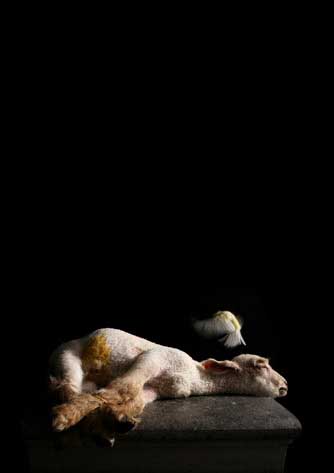
Finally, I want to return to the language of the “beauty” of holiness. In what ways is holiness beautiful? In just the same way that Jesus himself is beautiful. The beauty of holiness is the unrecognized, undesired beauty of the Suffering Servant who suffers for others’ salvation, his life utterly expended for theirs. As we become like him, we too will be despised, held in no account, as we, like and with him, bear others’ infirmities, carry their dis-ease, making their wounds our own, letting their iniquities fall upon our heads. Oppressed and afflicted, we will hold our tongues, and find ourselves again and again led like lambs to the slaughter. For his sake, we are sure to be killed all day long—and precisely in these moments to know ourselves to be “more than conquerors.” It is this beauty that will captivate the world, so that they’ll say of us, “they have been with Jesus.” By this the world will know that we are his disciples. What more could we want or ask for?

[Chris’ recent book, Toward a Pentecostal Theology of the Lord’s Supper: Foretasting the Kingdom, was reviewed here]

Rajasthani Red Meat

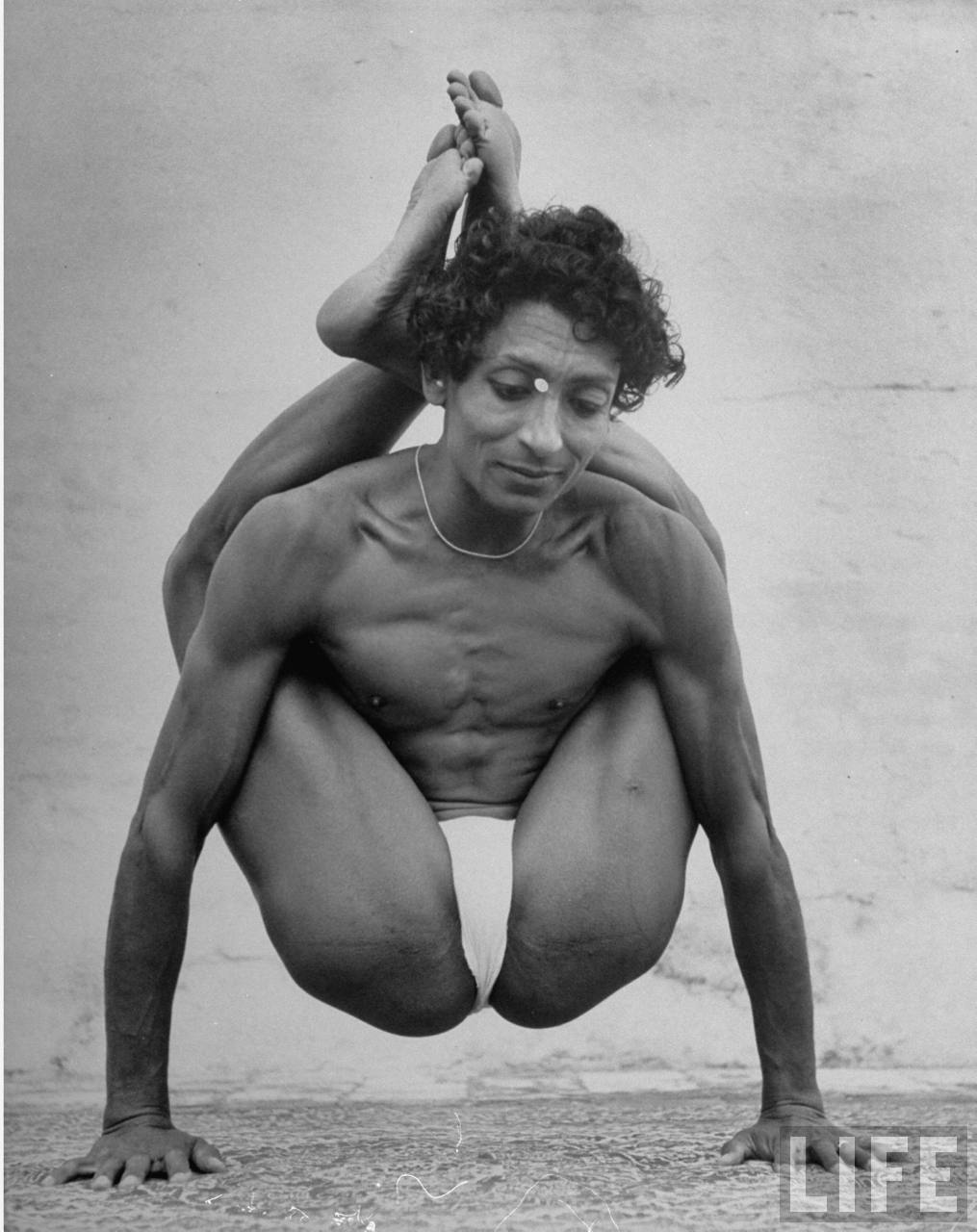
Indian Man Practicing Yoga - May 1949This recipe, based on Madhur Jaffrey’s from her At Home with Madhur Jaffrey: Simple, Delectable Dishes from India, Pakistan, Bangladesh, and Sri Lanka, is a real hoot at our place.

When this dish is served in the Rajasthan desert region of India, its colour, coming mainly from ground hot chillies, is a fiery red. In the recipe below, I have moderated the heat by mixing cayenne pepper with more calming paprika for those who might prefer a milder curry. Fresh red paprika is good too if you are chasing a more traditional colour. My own preference, however, is to go with the Kashmiri chilli powder.

It is generally served with Indian flatbreads, but is just as good served with rice. A calming green, such as spinach or Swiss chard, could be served on the side as well, as can plain yoghurt.

Serves 4–6

Ingredients
¼ cup olive or coconut oil
Two 7cm cinnamon sticks
6 whole cloves
10 green cardamom pods
1 large red onion, chopped finely
2 teaspoons very finely grated peeled fresh ginger
4 garlic cloves, crushed to a pulp
1 tablespoon ground coriander
1kg stewing lamb, preferably from the shoulder, cut into big (6-8cm) cubes. (Alternatively, you can use stewing beef.)
1½ teaspoons salt, or to taste
1 teaspoon cayenne pepper
2 tablespoons Kashmiri chilli powder
3 tablespoons chopped fresh coriander

Method
Pour the oil into a large, heavy pan and set over medium-high heat. When hot, put in the cinnamon sticks, cloves, and cardamom. Let the spices sizzle until the aroma begins. Add the onions. Stir and fry until they turn a reddish brown. Add the ginger, garlic, and coriander. Stir for a minute. Add the lamb/beef, salt, cayenne, and chilli powder. Stir for 3–4 minutes. Now add 4 cups water and bring to a boil. Cover, turn heat to low, and simmer for about an hour 1, stirring occasionally. Then remove the lid, and continue simmering on very low heat for between 2 and 6 (or more) hours, or until the meat is tender and the gravy is at your desired thickness. Sprinkle the coriander over the top when serving. Enjoy with a beer and with some after-dinner yoga.

The Māori Prophets

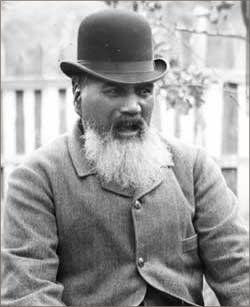
Te WhitiMāori Television is running what promises to be a fascinating seven-part series on The Māori Prophets. Here’s the blurb:

The Māori prophets are an incredible part of our nation’s history. The Prophets is a fascinating seven-part series presented by Anglican Priest and historian, Reverend Hirini Kaa.

From the time the Bible began to be widely translated into te reo Māori in the 1830s through to the middle of the 20th century, the show chronicles the lives, beliefs and social conditions that saw these messianic figures rise from within Māori communities.

Starting with leaders like Papahurihia, the first prophet to draw on Māori and Christian doctrine, emerging with a new form of traditional Māori spirituality to more well-known prophets (Te Kooti, Te Whiti and Tohu and Ratana), The Prophets unveils an incredible part of our nation’s history.

Thus far, only the first episode in the series has been aired. It – and presumably, in time, those episodes forthcoming – can be viewed here.

When ten commandments is ‘too many’ …

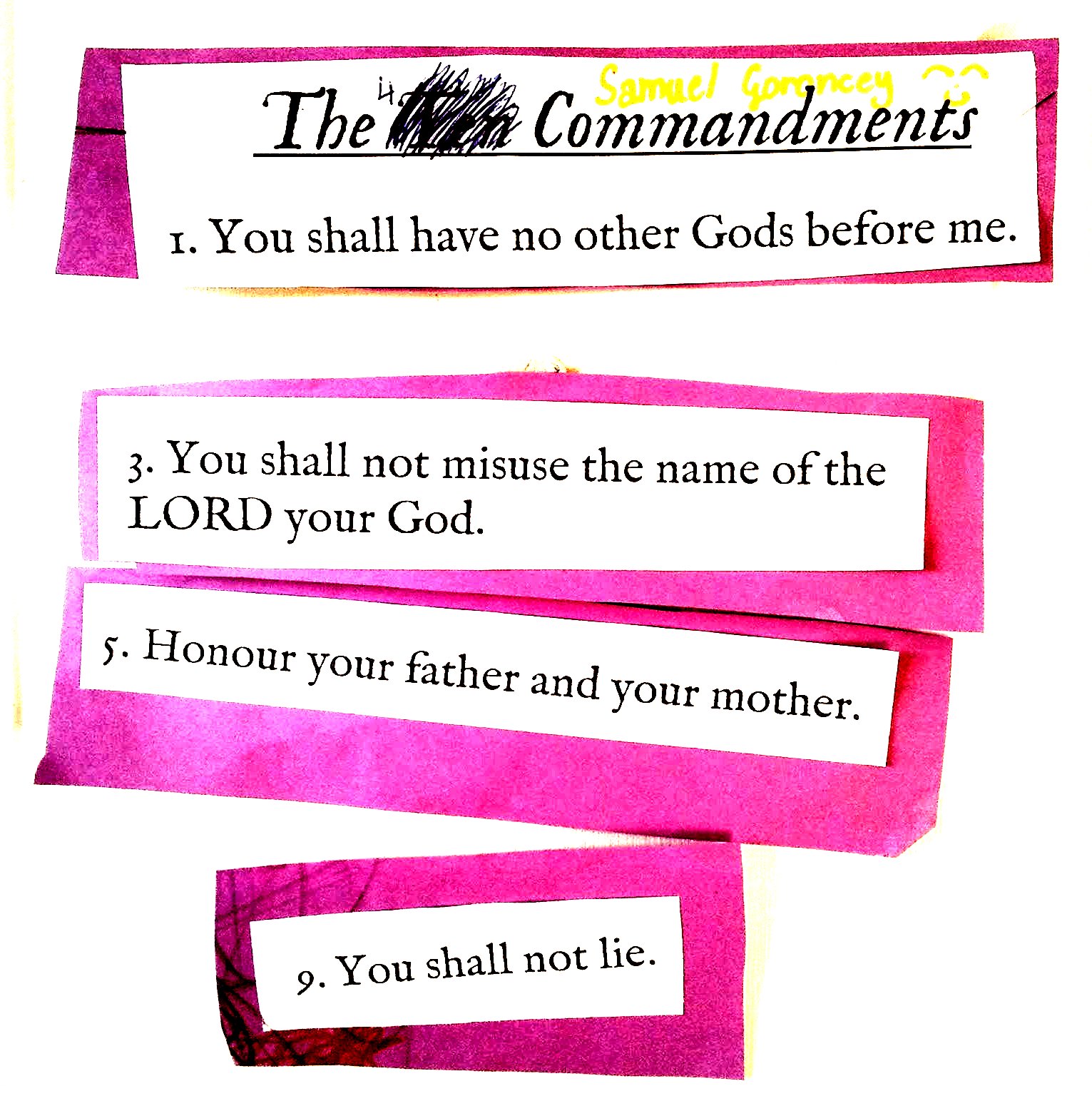
My son Samuel (2) is convinced that ten commandments is ‘too many’. (He doesn’t have a particularly developed doctrine of divine wisdom, and we haven’t done Leviticus yet, so I’m cutting him some slack!) And while he’s yet to learn how to spell his own surname properly, he’s probably onto something here, especially if Jesus is to be our guide on such matters (so Luke 10.27 and parallels). Anyway, Samuel has picked out his favourite the most important four:

4 commandments

Not a bad list. I tried to convince him about the one that says something about tidying up your room, but he wasn’t buying it. Still, I was pleased to see that #5 made the cut … for now.

Lipsey’s Dag Hammarskjöld: A Life – 3

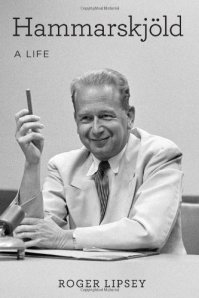
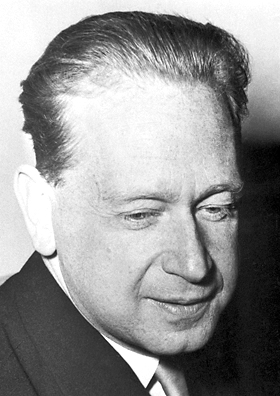
Lipsey - Hammarskjold. A LifeIt is true that Dag Hammarskjöld was given an astonishing apprenticeship in life and early career in terms of both formal education and other opportunities through which he would gain valuable perspectives on the inner workings of international diplomacy. It was a start which prepared him well for the vocation in which he would eventually find his feet. But among the many things that made him extraordinary as a world leader was an energy turned towards things more elusive. His deep and hope-filled capacity to say ‘Yes’ to humanity (he was not naïve; the Congo crisis birthed in him a conviction that ‘there are really evil persons – evil right through – only evil’, p. 510), and his ‘moral stature and incorruptible justice, his integrity and whole-hearted commitment, and his never-failing sense of responsibility vis-à-vis the task’ (p. 51) – to recall a description provided by Hammarskjöld’s governmental colleague and later loyal friend Henrik Klackenberg (Hammarskjöld served as a member of the Swedish cabinet in the early 1950s) – grew not only out of the soil provided by a mother with a deep social conscience and spirituality, but also, as Roger Lipsey notes, by a ‘crushingly honest exploration of what it is to live; to have mind, heart, and body; to be thrown into this world; to decipher experience; to carry burdens and face weaknesses a little wisely; to find something approaching inner peace; to glimpse a larger pattern, and somehow serve the good’ (p. 53).

Anyone familiar with Markings could not but agree that this description is indicative of its author’s quest to live an examined life – ‘we are witnessing a gifted soul deeply engaged in its own education’ (p. 59) – a quest which more than any other single factor made Hammarskjöld lead out of a tributary that too few dare approach, but which Lipsey, appropriately, makes much of throughout this biography. As Hammarskjöld would write in Markings:

The road to self-knowledge does not pass through faith. But only through the insight we gain by pursuing the fleeting light in the depth of our being do we reach the point where we can grasp what faith is. How many have been driven into our darkness by empty talk about faith as something to be rationally comprehended, something ‘true’.

HammarskjöldIt is little wonder therefore that one of the most recurring themes in Lipsey’s study is loneliness, an indispensable burden (it seems) of a person given to take seriously the long wandering for home that the hungry soul risks, and of a leader given to undertake with unflinching gravity the risky service of humanity – the lonely burden of true leadership – and that while carrying the conviction that ‘the only elevation possible to man lies in the depths of humiliation’ (Hammarskjöld, as cited on p. 502). Little wonder too that while not lacking in resources, Lipsey’s Hammarskjöld is ‘a tormented soul’ (p. 65).

He was not, however, without wonderful friends – his brother, Bo and Greta Beskow, W. H. Auden and John Steinbeck among them. Indeed, one of the persistent refrains throughout Lipsey’s account of Hammarskjöld’s life concerns the abiding value of true friends, particularly at those times when (such as in the midst of the Suez and Congo crises) ‘one’, in Hammarskjöld’s words, ‘happens to be standing in the middle of crossroads along which an abnormally high level of political traffic is pressing’ (p. 488), when hope is clouded in and lost to weariness, and when the music of reconciliation is drowned out by the Machiavellian drums of fear and mistrust. His friends, it seems, provided a sanctuary wherein his humour was most expressive, and where his kindness could be enjoyed without fear of suspicion. They also helped him to keep things in perspective – to ‘remember that there is more to reality than [the] chaos, menace, and slander’ (p. 492) which characterised so much of his day-to-day work as a political celibate (although he was not, by his own admission, a political virgin). As with prayer, his friends too were a gift from the God of hope, the One for whom chaos and human recalcitrance finally represent no obstacle to love reaching its goal – however long it may take, and however hard the arc of history must bend. His relationship with his friends represents too where the road to self-knowledge could be traversed, and where the repeatable journey from death to life passes though the experience of unworthiness, disappointment and incapability into the freedom of inexplicable relief and surprise, and even joy.

some thursday drop-offs

Drop-off-AreaIt’s been a while since I shared some link love. Let me remedy that:

Alfonse Borysewicz on The Beekeeper Paintings

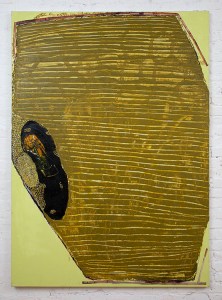
HiveAlfonse Borysewicz, a dear friend, is no stranger to this blog. I have been a fan of his work for some years now, and Alfonse has also kindly penned the Foreword to a book that I’ve edited  Tikkun Ola To Mend the World: A Confluence of Theology and the Arts (forthcoming from Pickwick Publications). There is a short video here of Alfonse speaking about his Beekeeper Paintings, currently on show at Space 38|39 in NYC. In his own words:

For too long I have felt like a stranger or a man on the moon with my obsession of religious imagery. All around me I see an abandonment of overt religious imagery (especially by a contemporary somewhat abstract hand) yet I not only cling to painting more ‘religious’ imagery but have sought to exhibit them in churches where even there it seems to lack an apparent audience. What authenticates this work, and keeps me faithful to it, especially in my mature years, is that ‘undertow of mystery’ in the painting itself. In that sense, the man on the moon estrangement has been transformed to the nurturing Bee Keeper. Several years ago I came across a poem by Robert Frost which seemed to encapsulate the issues and emotions of my own artistic sojourn. The White-Tailed Hornet Lives in a Balloon moves from a simple observation of a hornet in a barn to a contemplation of our humanity to divinity. In the same way my installation of six paintings begins with a stare upwards to the hornets hive and with eye moving left and right then center to the Christ experience and my/our response to it. The poetic becomes engaged with the religious. It is my own altarpiece in paint to ponder both the wonder and mystery of it all; especially for an audience of one.

Encountered by One who has established kinship with us in time: celebrating Søren Kierkegaard

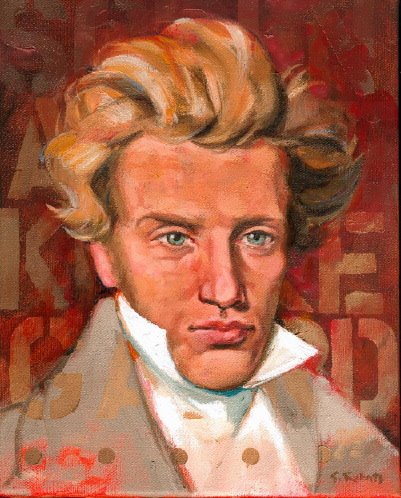
KierkegaardAware that today marks the 200th anniversary of the Danish philosopher/theologian Søren Kierkegaard, I invited a dear friend and Kierkegaard scholar Andrew Torrance (whose doctoral work is on Kierkegaard and Barth) to pen a few thoughts on the birthday boy and his work. I am very grateful to Andrew for taking up the invitation with these words:

It is not easy to write a short post on the 200th anniversary of such a multifaceted thinker as Søren Kierkegaard. But Kierkegaard himself provides us with a pointer for such a task. In his spiritual autobiography, The Point of View, he notes that his ‘whole authorship pertains to Christianity, to the issue: becoming a Christian’ (23). Yet his perspective on the Christian existence is also not narrow in focus. So how should one proceed from here? At this point, Kierkegaard’s pseudonym Johannes Climacus provides us with further focus when he considers what is decisive about the Christian faith. Towards the end of Concluding Unscientific Postscript (where he elaborates on his work, Philosophical Fragments), Climacus makes it clear that there is no Christian faith without the eternal God entering into time to deliver persons into a relationship with God. The decisively Christian rests wholly upon the real God personally encountering individuals in history and delivering them from their self-enclosed existences into a new life of relationship with God. This new life is constituted by an outward relationship mediated by the one who, precisely by being the eternal truth, constitutes the only way to that truth.

kierkegaard 2So, in Concluding Unscientific Postscript (which Kierkegaard describes as the “turning point” in his entire authorship), Climacus asserts that it is the real person of God, rather than a mere human idea of God, that lies at the heart of the Christian faith. For Kierkegaard himself, this person is the person of Jesus Christ, the God-human. What this means is that Christians are defined by a relationship with the truth “who” cannot become a possession of the immanent human mind; ‘God cannot be an object for man, since God is subject’ (Journals and Papers, 2:1349). Yet while this truth cannot become an object of human thought, it can and does transform human thought. For Kierkegaard, becoming a Christian involves a transformative journey that is grounded in an active relationship with the God who is present with us and encounters us in Jesus Christ. As such, at the basis of Kierkegaard’s Christian vision is not an existentialist view of human becoming, nor an attack on the nominal Christianity of Danish Christendom, rather it is a commitment to the Gospel, to the person of Jesus Christ.

Accordingly, as Kierkegaard engaged with the question of becoming a Christian, he was acutely aware that he was without authority in this task. He did not for a moment believe that it was within his power to present the world with the truth of revelation, nor did he believe that he could explain how exactly persons are awakened to the truth of revelation. Why? Because any human idea that he put forward could not communicate the truth of who God is; it could not take the place of the divine subject. Kierkegaard’s words could never mediate the Christian truth and could never explain the mystery of God’s grace. Consequently, his proclamation was completely at the mercy of God who encounters us in Jesus Christ. He could only turn to the High Priest whose incarnation does not simply reveal a unity between the God and humanity but creates this unity. As another of Kierkegaard’s pseudonyms, Anti-Climacus writes, ‘That the human race is supposed to be in kinship with God is ancient paganism; but that an individual human being is God is Christianity, and this particular human being is the God-man.’ (Practice in Christianity, 82).

With this view, Kierkegaard challenged the overpowering belief that we are able to talk about God without God, reducing God to the realm of finite human understanding and language – a move that has repeatedly enabled the idea of God to become a plaything to be employed for our own human agendas. Kierkegaard saw this move as one that was enabled by the handholding “Christianity” had taken up with the variety of idealisms, Romanticisms, and post-enlightenment humanisms that exalt the powers of immanent human reason.

The problem with Kierkegaard’s emphasis on the outward relationship with God, realised in and through Jesus Christ, is that it entailed an inescapable uncertainty. When the truth is located beyond human subjectivity, in a transcendent other, the Christian cannot look to her own immanent powers of comprehension for security. In fear and trembling, she is required to trust that her faith is not simply a product of her own belief-forming imagination but is actually awakened by the reality of Jesus Christ. Paradoxically, the Christian is called to believe that she cannot truly believe without the one in whom she believes.

Kierkegaard 1Under these circumstances, Kierkegaard realised that, speculatively, he could not get beyond the possibility that his Christian life was a purely poetic existence, an existence created by his own imagination. So, to the question of whether or not he himself was a Christian, he responds,

My answer would be: I trust to God that I am a Christian; I believe that out of grace he will accept me as a Christian… The question of whether I am a Christian (and thus for every individual, whether he is a Christian) is entirely a God-relationship. (Point of View, 135)

Although, for Kierkegaard, the Christian faith entails devotion to a reality who cannot be commandeered by the human mind, this did not mean that his theology undermined the importance of human practice. Also, it did not mean that his theology called for a blind fideism. His theology called for Christian realism that did not repose in an inward ability to embrace uncertainty but turns to the reality of God who encounters us in history, the God who actively awakens us, upbuilds us and governs us in our faith. He encouraged Christians to struggle as witnesses to God in the world, with the understanding that God upholds them in their struggles, working behind them and with them. He summoned Christians to lead prayerful lives, lives in which they learned to talk about their struggles with God. He told Christians to strive to follow Christ, to be obedient, with the knowledge that when they fall short, Christ is not only their prototype but also their redeemer. He sought to foster an attitude of earnest repentance, with which Christians continually turn to God for renewal – for example, by coming to encounter God in the eucharist (in the presence of Christ). And he proclaimed these things by continually turning to the witness of Scripture, to the words through which God speaks to the world.

Ultimately, for Kierkegaard, it is not primarily our beliefs and practices that make us Christian. Again, if we find that we have become Christian it is because we are conscious of having been encountered by the God-human, Jesus Christ and have been drawn into communion with the one who, inconceivably, has established kinship with us in time.

Commemorating 60 years since Dag Hammarskjöld took office as Secretary-General

A few weeks ago, the UN held an event to commemorate 60 years since Dag Hammarskjöld took office as Secretary-General. The event was opened by the current UN Secretary-General Ban Ki-Moon and included a presentation by Roger Lipsey, author of Hammarskjöld: A Life. The event also included a debate between Brian Urquhart (who was one of Hammarskjöld’s main advisors in his role as Secretary-General), Andrew Gilmour (who serves as the Director of the Political, Peacekeeping, Humanitarian and Human Rights Unit with the Executive Office of the Secretary-General), and Annika Söder (who is Executive Director of the Dag Hammarskjöld Foundation). I thought that perhaps those few readers who have been interested in my recent posts on Hammarskjöld might appreciate watching some of the video from that event. Hammarskjöld’s address begins at around the 20 minute mark.

April stations …

George Mackay Brown and the Philosophy of CommunityReading:

Listening:

Watching:

Lipsey’s Dag Hammarskjöld: A Life – 2

Lipsey - Hammarskjold. A LifeJim Gordon’s recent post asks some good questions about the nature of leadership. He insightfully compares two figures – Steve Jobs and Dag Hammarskjöld – and asks which of these represents the brand of leadership most commensurate with the ministry of the viva vox dei of which the church is a creature. While words like ‘perseverance’, ‘attractive’, ‘impressive’, ‘innovative’ and ‘successful’ dominate airport bookshops’ literature on the subject of leadership, and go some way to describing Jobs’ own unique set of giftings, what is less apparent is a lexicon required to describe the manner of leadership modelled by Hammarskjöld, where the grammar of ‘servanthood’ and ‘trust’ and ‘relationships’ proves to be both indispensable and to be ends in themselves, and where the whole is motivated by a particular vision of reconciliatory being at the centre of all reality, the patient Thou apart from whom life makes no sense, and hope in the possibilities of human communities in which the many (and not the few) flourish is kept alive.

I am thus far only about half way through Lipsey’s gentle, spiritual and stimulating biography on Hammarskjöld, but already there has been hardly a page in which Jim’s assessment of the Swedish diplomat and economist is not confirmed, and that perhaps in no chapter more so than that which attends to tensions in late 1957 when the Maoist Chinese announced that they had sentenced to prison eleven American airmen, plus two CIA agents, shot down near the Korean border. The details of the so-called ‘Peking negotiation’ are carefully retold in Chapter 10 of Lispey’s book, ‘Un Chinois aux Yeux Bleus’ (pp. 210–36), and do not need to be rehashed here except to say, with some understatement, that the level of trust and understanding between the USA and mainland China was at sometime of a low ebb in the aftermath of the Korean War, the UN was still in many ways writing its own job description (something which was among Hammarskjöld’s greatest and most lasting contributions as Secretary General), and China was ardent about finding a seat as a UN member nation. What strikes me most about Hammarskjöld’s leadership in this environment fraught with cultural and political sensitivities (as was the case at other times too such as the tumultuous period of 1956-57 in the Middle East, a region ‘churning with anger and mistrust, conspiracy and threat, outside pressures and a partially concealed but grim arms race’ (p. 237)) was the risky and vulnerable shape of his commitment to practical reconciliation, his refusal to sacrifice deeply help principles on the altar of short-term political point scoring, his personal dedication to the possibility of a certain vision of the future in which international relations might be characterised not by a life-defeating defensiveness and abstraction but by patient and deeply personal trust and search for mutual understanding which for Hammarskjöld, at this particularly volatile point in twentieth century history, meant wading gently through a political, legal, historical and organisational morass. It was, to be sure, an act of careful diplomacy – and the favourable outcome was, in many ways, a triumph of such – but if by that we mean something like an act of a clever stuntman, we will have completely missed an astonishing achievement of an extraordinarily hopeful human being among us. To recall words he spoke in May 1955 at a press conference on nuclear disarmament, and which in many ways characterise his own leadership: ‘There have been no precedents or experiences which entitle us not to try again’.

That the church too is burdened with passionately-defended lines of demarcation that sponsor a silence towards and lies about those who hold to different positions on all manner of subjects, and with a widespread absence of porosity – and so a desire to grow with and vis-à-vis the other – means that she too is desperately in need of the kind of leadership that Hammarskjöld embodies.

‘The Wedding Feast at Cana in Galilee’: a sermon by the Rev Dr Thomas Fortheringhame

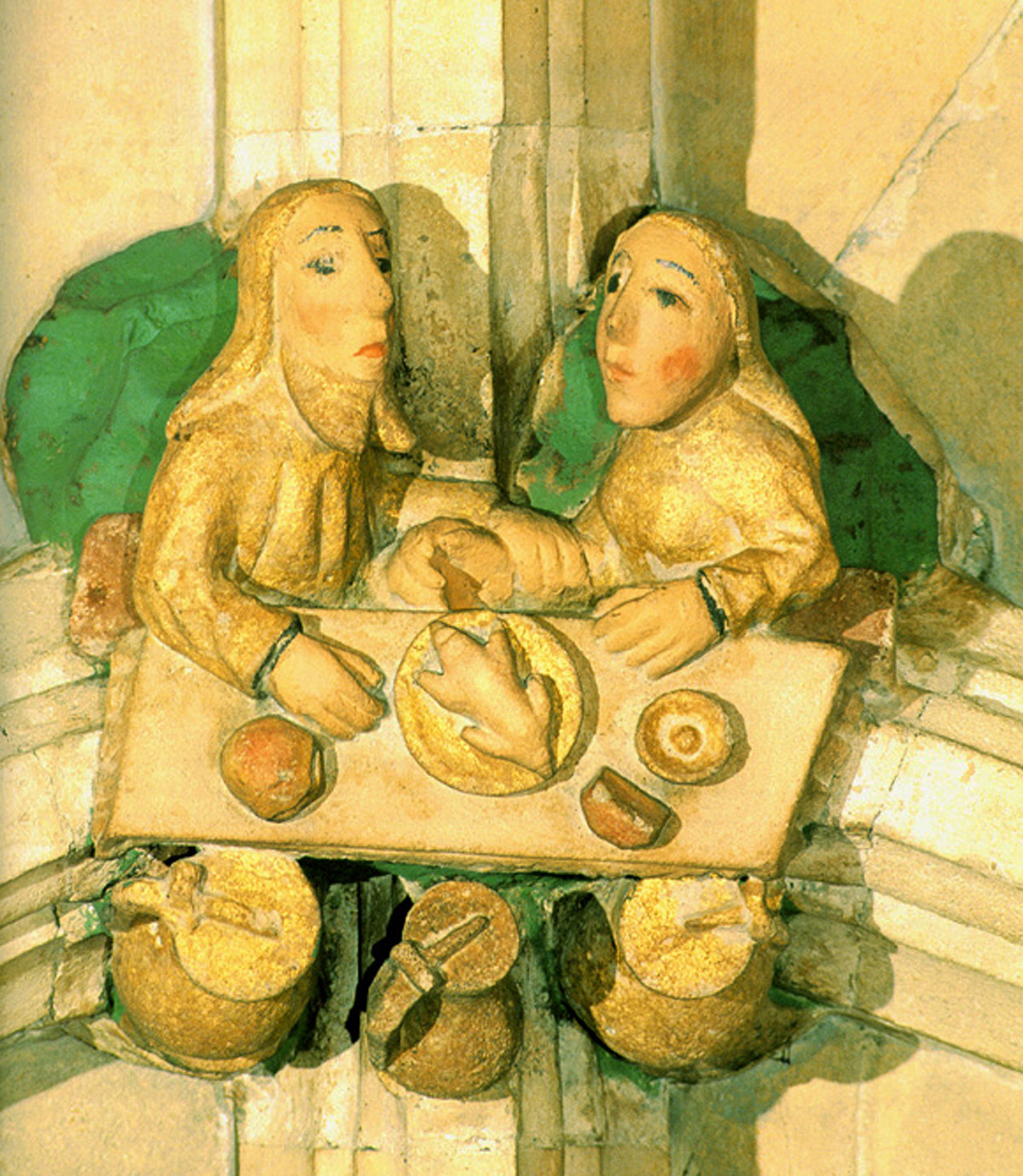
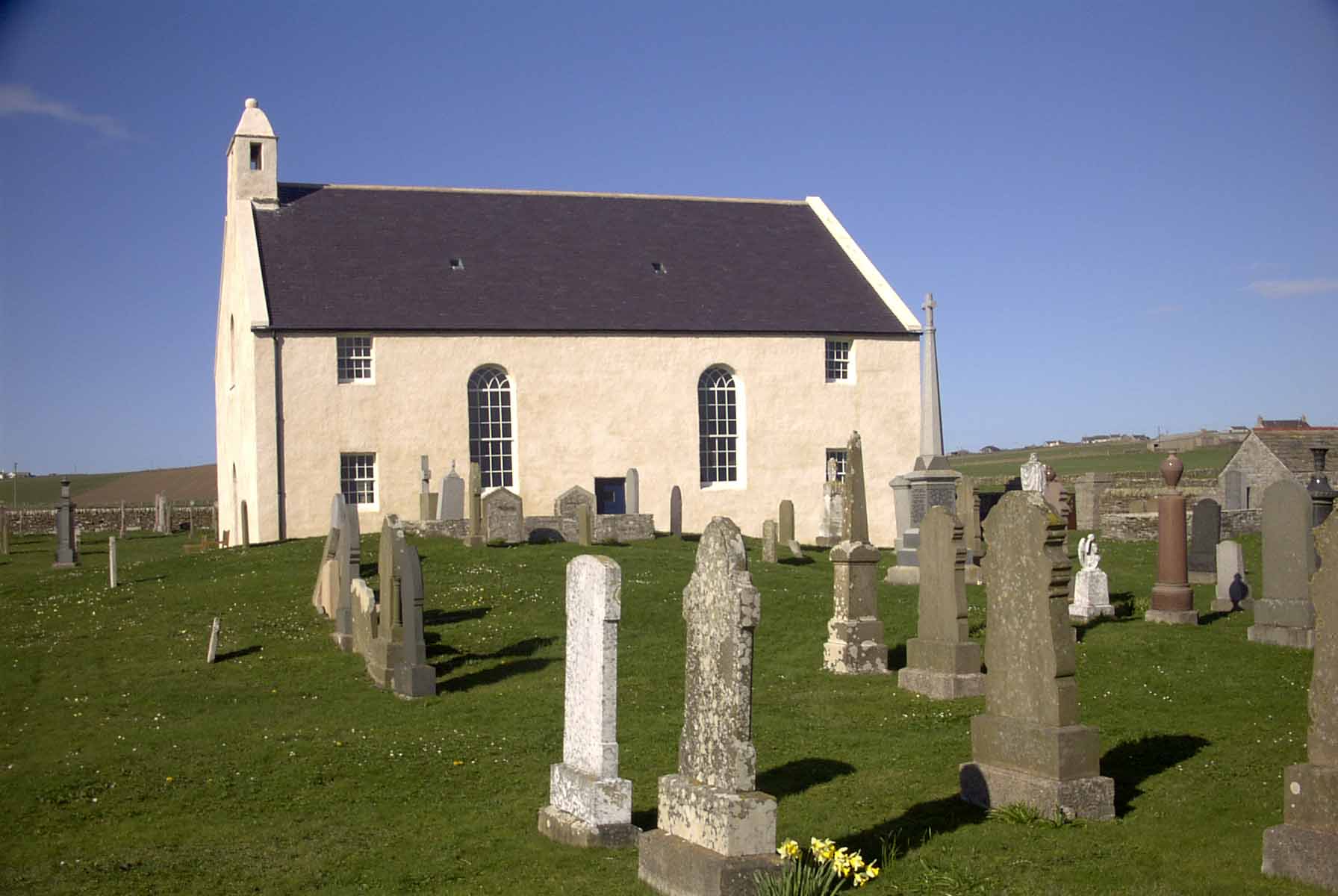
norwich-canaI have been at pains, of late, to discover a more erudite and faithful exposition on chapter 2 of St John’s Gospel – on the wedding at Cana – than that preached by the Rev. Dr Thomas Fortheringhame, who served as minister of the parish church of St. Peter’s which stands at one end of a sandy bay on the west coast of Orkney. Of course, the current House of the Lord there is a small square stone utilitarian structure built in the year 1826 by the freely-given labour of all the parishioners; women are said to have carried the stones from the quarry three miles away on their backs, a slow, holy, winter-long procession. But there were churches there before the present church was erected. The inscribed tombs in the churchyard go back to the seventeenth century, and there are older anonymous stones.

The good reverend doctor was the author of two volumes of sermons published in Edinburgh, not half a mile from The Mound. He complained in a written account of the parish that ‘the Kirk roof is full of leakings and dribblings in the winter time, and of draughts at all seasons of the year, whereby the parishioners are like to catch their death of cold, and often my discourses are broken by reason of their hoastings and coughings. The masonry is much delapidated’. It was soon after this that plans were drawn up by the laird for the building of the present church on the same site. But there were other churches there even before Dr Fortheringhame’s wet and draughty edifice. Among the clustering tombstones is a piece of a wall with a weathered hole in it that looks as though it might have been an arched window, and slightly to one side an abrupt squat arrangement of dressed stones that suggests an altar. The Rev. Dr Fortheringhame – O what a gentleman of such magnificent faith! – says curtly, ‘There is in the vicinity of the Kirk remnants of a popish chapel, where the ignorant yet resort in time of sickness and dearth to leave offerings, in the vain hope that such superstition will alleviate their sufferings; the which Romish embers I have exerted myself to stamp out with all severity during the period of my ministry’. Anyway, without further ado, I commend to your learning and most earnest meditation Dr Fortheringhame’s sermon, dated August 1788, on the wedding feast at Cana in Galilee:

‘Brethren, some of you might be thinking that the piece of gospel I read out just this minute anent the Lord Christ’s turning of water into wine at Cana of Galilee is divine permission to you to make drunken beasts of yourselves at every wedding that takes place within the bounds of this parish this coming winter; ay, and not only at every wedding but at every christening forby and every funeral and harvest supper. It is the devil of hell that has put such a thought into your minds. It never says in holy writ that any wedding guest was drunk at Cana of Galilee.

‘Magnus Learmonth, you in the second pew from the back, at the wedding you made for your third lass Deborah at Skolness at the back end of Lammas, all the guests lay at the ale-kirn like piglets about the teats of a sow till morning, to the neglect even of dancing; and two women in this same district came to themselves next morning in the ditch of Graygyres. Bella Simison, you do well to hang your head there at the back of the Kirk – it argues a small peck of grace. Andrina of Breck, you were the other defaulter – don’t look at me like that, woman! – you have a brazen outstaring impudence commensurate with your debauchery. Well I know you and your runnings back and fore between Breck and the alehouse with your bit flask under your shawl. Things are told privily into my lug.

‘What this text argues, brethren, is that the host at the wedding, the bridegroom’s good-father, was a careful and a prudent man with his bawbees. No doubt this provident man said to himself the day the marriage bids were sent about the countryside with a hired horseman, “If I order too few pigs of drink, they’ll say I keep the purse-strings drawn over tight, and if I order too muckle they’ll say I’m a spendthrift. And so I find myself between devil and deep. What is the right quantity of drink for a celebration such as this?” … Being a prudent man, I say, he ordered too few pigs of drink (only it wasn’t pigs of usquebaugh, whisky, in that foreign place, nor yet ale; it was jars of wine). The which when the Lord came he corrected, he set to right, as he will beyond a doubt set to right all our exaggerations and our deficiencies, since only he kens what is stinted and what is overblown in the nature of every man born. He adds and he takes from. The stringent economy of the host drew no rebuke from him. He accomplished the miracle. Then there was dancing, then there was fiddling, then no doubt near midnight bride and groom were carried into the ben room with roughness and sly jokes and a fiddle and five lanterns.

St Peters Orkney‘Nor was this the end of meat and drink as far as the Lord was concerned. You ken all about the multiplication of the five bannocks and the two cod-fish, concerning which I preached to you for an hour and more last Sabbath. There came a night at the supper-board when he suddenly took an oat-cake and broke it and raised his jug of drink and leaned across and said to them who were no doubt wanting to fill their bellies without any palaver, “This is my body,” he said, and then, “This is my blood” – a most strange and mystifying comparison indeed, that the papists would have us believe to be a literal and real and wholly breath-taking change of substance effected by a form of words. Whatever it means, brethren – and our General Assembly has not and doubtless will not bind you to any infallible conclusions as to the significance of these utterances – whatever it means, it teaches us a terrible reverence for the things we put in our mouths to nourish us, whether it is the laird’s grouse and claret or the limpets that Sam of the Shore eats with cold water out of the well in the lean days of March.

‘You will not go home, therefore, and hog down your brose like swine in a sty or like cuddies at a trough. The common things you put in your mouths are holy mysteries indeed, beyond the taste and the texture. Therefore, brethren, with reverence you will make them a part of your body and your life.

‘Prudence, my brethren, a proper proportioning of our goods, estimation, forethought – so much to the King, so much to the laird, so much to the Kirk, so much for the maintainance [sic] of ourselves and them that belong to us, so much to the poor – that is doubtless the meaning of this text; and for the things we lack, that we should ask the Lord to supply them, and so rest content in our estate.

‘John Sweynson, I observe that you bought a new shawl to your wife’s head at the Kirkwall Market, with what looks to be silken lacing round the edge of it, a thing of vanity, and new black lace gloves to her hands. She will not darken this kirk door again, no nor you either, with these Babylonish things on her body.

‘Samuel Firth, of the operations of your farm, Dale in the district of Kirkbister, naturally I ken nothing, nor does it concern me. But you have seven black cows on the hill if you have one, and fifty sheep forby, and a hundred geese. Is it a proper and a godly thing, think you, that your three small bairns sit in the front pew there under the precentor blue and channering with the cold, they having no right sarks to their backs nor boots to their feet? Have a care of this, look to it, as you call yourself a Christian. Amen.

‘Concluding, I have two announcements to make. John Omand, on account of the bastard child he fathered on Maria Riddoch at Michelmas, appeared before the Kirk session on Wednesday and being duly constrained answered Yea to the accusation, wherefore he will suffer public rebuke three sequent Sabbaths in this Kirk on the stool of penitence, beginning next Sabbath.

‘I hear that the French brig Merle, Monsieur Claude Devereux, master, discharged some cargo at the Bay of Ostray in the darkness of Friday night. The gentlemen of the excise were at Kirkwall, playing at cartes. Will you, therefore, James Drever, deliver as usual a keg of best brandy at the Manse tomorrow morning, when Mistress Skea my serving woman will see that you are recompensed for your pains’.

[Note: The ‘sermon’ appears in George Mackay Brown’s delightful book, A Time to Keep: And Other Stories.]

Deep Blue Kids Bible: A commendation

Deep Blue Kids BibleSome time ago here at PCaL, I mentioned my quest for a suitable children’s bible. As many parents know, it’s a tough gig to find a rightly-pitched kids bible and so I was most grateful for those readers who weighed in with some excellent suggestions and guidelines. I am also very grateful to Lil Copan at Abingdon Press who read of this father’s plight and who very kindly took it upon herself to send me a gratis copy (i.e., with no strings attached) of the Deep Blue Kids Bible. It has proved to be a fantastic choice for us. The translation (the Common English Bible) is reliable (and it handles the vexed Galatians 2.20 fantastically!), fresh and accessible, and its presentation is aesthetically attractive with helpful introductions to books, practical (and not too distracting) in-text notes, a good little dictionary for those tricky words (like ‘cistern’ and ‘nard’ and ‘ordinance’ and ‘winnow’), some short devotions, and some legible maps. Most importantly, my (now) seven-year-old loves reading it. So if you’re looking for a kid’s bible, then I reckon that the Deep Blue Kids Bible is definitely worth your consideration.

On the doom of Sabbath breakers

Sabbath Breakers, 1671An oft-recalled feature of nineteenth-century life in Scotland was reverence for the Lord’s Day. This, of course, in itself, was no new phenomenon. It had long been part of Scottish (and indeed British) Christianity. Nor was it either particularly distinctly Presbyterian, or even Protestant. But this reverence took on new passion and legal seriousness in Victorian society. And the unearthing and recalling of such stories – in their various incarnations and evolutions – makes teaching church history a heap of fun. Consider, for example, the horrifying testimony of Robert Wallace (who had been minister of two Edinburgh parishes, professor of Ecclesiastical History at the University, editor of The Scotsman, and Member of Parliament) from his Life and Last Leaves:

It would be impossible for me to describe the feeling which was created in my mind by the weekly recurrence of our Sabbatic observances. All of a sudden everything that I had been doing last week had become wicked. Latin, Greek, Mathematics, were now wicked; so were marbles, ‘tig’, and races; so were walking, except to church, laughing, singing, except psalms, playing the flute, ‘fiddle’, or any instrument of music, reading newspapers (specially wicked), or anything except the Bible and ‘good’ books. There was scarcely anything that was safe to do from our rising in the morning until our going to bed at night, except reading the Bible, singing psalms, saying or joining in prayers, hearing sermons preached in church or at home. Breakfast, dinner and tea were permitted, because they were necessary to the execution of the sabbath programme; but even during these meals we were not to speak our own words or think our own thoughts. To me the day was a terror, it was so difficult to keep it perfectly; and I knew the doom of sabbath-breakers … On Sundays we were usually engaged for fifteen hours in round numbers, directly or indirectly, connected with the special avocations of the day. Of these, fully seven were devoted to exercises of Biblical worship, including the reading of ‘good’ books, tracts, sermons, and other literature having a Biblical reference; three hours and a half to conversation on the sermons, services, and other religious topics; two hours and a half to preparations for worship, dressing and changing our dress, and walking to and from church; and two hours to meals. I am distributing the conversation, of course, over the journeying and the meals, and allowing each its strict quota.

And we might add further examples: of using only one beater instead of two; of only washing the face, of the fact that the Free Presbyterian website doesn’t operate on the Sabbath, etc. Or that delightful story recalled by George Mackay Brown, in Letters from Hamnavoe, about John Louttit, Kirk Officer of the Secession Church and ‘Sabbath Breaker’:

Last week we followed the Rev Peter Learmonth through Stromness, to find out the number of ale houses along the street in the year 1839. He was somewhat shocked and shaken to discover that there were 38.

This week, we will take a sideways glance at another ecclesiastic figure from the early nineteenth century. There he stands, John Louttit, Kirk Officer of the Secession Church, appointed 22nd March 1814, with a harpoon in one hand and the big Kirk bible under his other arm.

The Kirk Session had given long and anxious consideration to the appointment of its first Kirk officer. They debated the matter for six months and more. He must above all be a pious and good-living man. The election fell upon John Louttit. His salary was to be one guinea a year, plus threepence at every baptism.

For more than eight years we must assume that John Louttit performed his office faithfully and well: carrying up the bible to the pulpit on the Sabbath, keeping the new building above the Plainstones swept and garnished, touching his forelock to the elders in the kirk door.

Then, suddenly, a dreadful thing happened. On 15th October 1822, John Louttit was charged with Sabbath profanation. It was as if a thunderbolt had fallen into the sheepfold.

What had happened, it seems, was that early one Sunday morning John Louttit was lighting his blink of fire in his house at the pier (and it was a terrible job sometimes to get those red peats from the side of Brinkie’s Brae to take light) when he heard folk running along the street, and the sound of boats being pushed down the nousts. ‘Tutcut,’ said John Louttit. He made his breakfast, a poor meal of bread and buttermilk. (You could hardly live like a king on a guinea a year.)

More young men ran past his window. Oars splashed in the harbour. The women – who should have been putting on their best grey shawls for the morning service – were clucking like hens in every door. John Louttit heard the word ‘whales’. That was the cause of all the excitement. There was a school of whales somewhere in the west. The pagans of Stromness were setting forth – Sabbath or no – for the great round-up and slaughter.

John Louttit, putting on his stiff white collar, debated the matter seriously. He was one of the best whale hunters in Orkney. Nothing delighted him more than to yell and clash metal behind a blundering panic-stricken herd; until at last, in blind panic, they hurled themselves to death on the beach at Warbeth or Billia-Croo. Then it was time for the knives and the barrels. John Louttit saw in his mind’s eye, with great vividness, the red whale steaks. Well salted, a man could live off them all winter. He could sit up late, over a yarn and a dram, by the light of a tallow candle that came out of the whale also.

Sabbath profanation was a serious matter. On the other hand, a man was permitted on such a day to do ‘works of necessity and mercy’. Winter was coming on and John Louttit’s cupboard was not overstocked. A guinea a year was not a princely salary … John Louttit removed his stiff, high, white collar. He took the sharp flensing knife from the cupboard. He put on his oldest moleskin trousers; they were likely to be well spattered with blood before sundown. John Louttit took down the oars from the rafters. He went gravely down the steps to his dinghy.

The minister had to carry the bible up to the pulpit himself that Sabbath. A week after the original charge, John Louttit made a second appearance before the Session. It is recorded that, at the meeting of 22nd October, ‘he did not express that sense of the evil of such a notorious profanation of the Lord’s day as was wished or expected. It was agreed that he should be rebuked before the congregation on Saturday first.’

That is the one brief tantalising glimpse that we have of John Louttit. There is no end to the story. We have no idea whether he was sacked in disgrace, or reinstated; if so, perhaps he had to give all his whale meat and tallow to the poor, and go on living piously and poorly on his salary of fourpence a week.

Now it is all very well for us ‘moderns’, for whom Sunday has all-too-often come to be little different from other days of the week, to respond to such Sabbatarianism with a polite smile, but it is worth asking ourselves whether an institution like the Evangelical Sabbath could have persisted so long as it did if it were not at least partially successful in meeting the religious and other needs of God’s people during the late nineteenth century.