Apologies

Apologies to those who receive this blog’s posts via the email subscription and who inadvertently received an unbaked, or at least half-baked, version of the previous post. It was typed up on the WordPress app (as was this apology) while I was both horizontal and half asleep and I had meant to save the post as a draft and work on it sometime after the birds announced the new day.

I understand that such sloppiness indicates neither the end of the world nor a sign of such.

On the hunt for an old(ish) KJV Bible

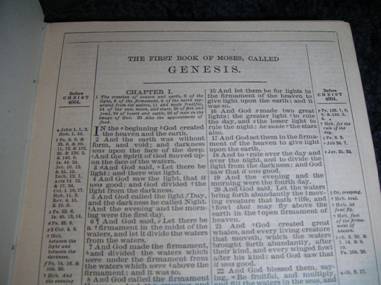
A brother of mine, whom we shall call Robert, for that is his name, is on the hunt for a Bible. Not just any Bible, mind you, but a specific Bible, or at least a specific edition of the Bible, and that even older than the ones produced by Mr Murdoch. He is desperate to locate a 1885 edition of the King James Bible, the precise title and publishing details of which are:

The Holy Bible, Containing the Old and the New Testaments: translated out of The Original Tongues, and with the Former Translations Diligently Compared and Revised (New York: American Bible Society, Instituted in the year MDCCCXVI, 1885)

The edition sought has a page layout like this:

KJV 2

Why is he looking for a copy? He is just about to complete three months sabbatical leave during which he has been engaged with creating a digitised version of the Cook Islands Maori Bible. It is a journey he has been taking with the Uniting Bible Societies (South Pacific/NZ/Australia) and Cook Islands Christian Church in Rarotonga.

Over the past year, volunteers from NZ, Australia and Rarotonga have been manually typing the text into a Word document in preparation for transfer to the programme Paratext, and subsequent editing etc. The Cook Islands ‘Hard Copy Bible’ has reference columns inclusive. Robert has identified the KJV edition mentioned above as that which was used by the translators in producing the original Cook Islands Maori Bible and believes that availing himself of the reference information in that edition is now vital in taking his project forward. So if anyone can assist Robert in locating a copy of the KJV in question, he would be most delighted to hear from you. You can leave a comment below or email Robert directly.

On the glory of our Anzac heroes

Roll of honour

Regular readers here at PCaL may have noticed (from the sidebar) that I’ve been reading a fair bit of stuff lately from the Orkney writer George Mackay Brown. Indeed, Brown’s work was the focus of my recent sabbatical project (to be continued) wherein I have been particularly interested in Brown’s presentation of the notion of time. But more on that later.

Brown’s third novel, Time in a Red Coat, is an extraordinary tale of a somewhat Melchizedekian heroine who travels through time in order to bring healing to a history and race marked by tragedy, mistrust and violence, and by the sheer absence of an imagination of a world unmarked by such.

Along the way, I was struck by these words, and was again reminded of the great pagan charade that Antipodeans know as ‘Anzac Day‘ (celebrated each year on 25 April, a day marked to remember the dishonesty of worldly politics, the brutality of empire, and by the fact that many ministers serving in the Antipodes are seduced every April by a temptation to place their salvation on the line):

‘If a knight was brought into the courtyard mortally wounded, words like “heroism” and “glory” and “fame” were invoked to cover the ugliness – and beautiful words were carved on his tomb stone’. (pp. 36–37)

Coconut Red Lentil Soup

Coconut Red Lentil SoupThis recipe, modified ever-so-slightly from one shared by Heidi Swanson, was a real hit at our place last week, and I wanted to share the love.

Stuff to source

1 cup/200g yellow split peas
1 cup/200g red split lentils (masoor dal)
7 cups/1.6 liters water
1 medium carrot, diced into 1 cm bits
2 tablespoons fresh peeled and minced ginger
2 tablespoons curry powder
2 tablespoons butter or ghee
8 green onions (scallions), thinly sliced
1 green chilli, finely chopped
1/3 cup/45g raisins
1/3 cup/80 ml tomato paste
1 can coconut milk (I used lite)
2 teaspoons fine grain sea salt
one handful coriander, chopped
cooked brown (or white) rice

Stuff to do with it

Give the split peas and lentils a good rinse – until they no longer put off murky water. Place them in an extra-large soup pot, cover with the water, and bring to a boil. Reduce heat to a simmer and add the carrot and 1/4 of the ginger. Cover and simmer for about 30 minutes, or until the split peas are soft.

In the meantime, in a small dry skillet or saucepan over low heat, toast the curry powder until it is quite fragrant. Be careful though, you don’t want to burn the curry powder, just toast it. Set aside. Place the butter in a pan over medium heat, add half of the green onions, the remaining ginger, the green chilli (optional) and raisins. Sauté for two minutes stirring constantly, then add the tomato paste and sauté for another minute or two more.

Add the toasted curry powder to the tomato paste mixture, mix well, and then add this to the simmering soup along with the coconut milk and salt. Simmer, uncovered, for 20 minutes or so. The texture should thicken up, but you can play around with the consistency if you like by adding more water, a bit at a time, if you like. Or simmer longer for a thicker consistency.

Serve over a small amount (about a handful) of cooked brown (or white) rice, and garnish with a generous sprinkling of fresh coriander and the remaining green onions.

Serves 6.

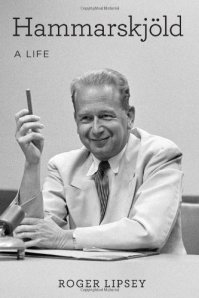
Lipsey’s Dag Hammarskjöld: A Life – 1

Lipsey - Hammarskjold. A LifeI anticipate that it’s going to be a read as slow as it is formative. I recently began working my way through Roger Lipsey’s attentive and long-overdue biography on the remarkable Swedish diplomat and economist Dag Hammarskjöld. Hammarskjöld served as the second secretary-general of the United Nations (1953–61). He was, as Rowan Williams has observed, ‘one of the most significant moral influences in international politics in the decades immediately after the war’ and who almost single-handedly shaped the ‘vision for international co-operation and crisis management that we struggle to realise and, however reluctantly, take for granted across a great deal of the globe’. For better or ill, the international community today lives with Hammarskjöld’s inheritance. In a review of Lipsey’s book (published in the recently resurrected Cambridge Humanities Review), Williams properly reminds us that

If we largely assume that the United Nations, imperfect as it is, is the only viable forum for brokering international conventions and agreeing on responses to serious crises, it is Hammarskjöld we have to thank for this. And if we also feel intense frustration at the ineffectiveness of the UN as an active peacekeeping force, its failure to offer protection to those most at risk or to exert sanctions against tyrants, this book will help us understand the roots of this, both in Hammarskjöld’s own scrupulous attempts to prevent the UN becoming an intervening power in its own right and in the consistent refusal of major powers to collaborate on sustainable protocols about this and their blinkered loyalty to ‘bloc’ interests. If you want to know why the UN can’t and won’t sort out the nightmare of Syria, many of the answers lie here.

Hammarskjöld was a public figure dedicated to a life of serving the world through the fostering of imagination and policies that serve the interests of peace and reconciliation and hope in a world whose very structures so often pull in a counter direction. He was also a figure who carried an unwavering conviction that true service to the world means descending into the world to be of service, however humble, on terms that worldly people value.

He was one too who attended to the deep things of the spirit. His only book, Vägmärken (Markings), which was published posthumously in 1963, is a collection of his diary reflections from 1925 (when he was 20 years old) until his death (in suspicious circumstances) in 1961. More importantly, it is an astonishing testimony to what nourished him internally. Lipsey describes this nourishment in terms of a ‘sanctuary’, noting some of the ways that this ‘sense of sanctuary’ (p. 4) found expression – in the creation, for example, of a small meditation room on the ground floor of the UN headquarters, the Room of Quiet, for which Hammarskjöld wrote a short statement which reads:

This is a room devoted to peace
and those who are giving their
lives for peace. It is a room of quiet
where only thoughts should speak.

There is a real sense in which the room itself bears witness to something profoundly true about Hammarskjöld himself. As Rolf Edberg (the Swedish Ambassador to Norway) noted on the occasion of the posthumously awarded Nobel Peace Prize in 1961, ‘No one who met [Hammarskjöld] could help noticing that he had a room of quiet within himself’. That sanctuary was nurtured and deepened and sustained by a life fed by the reading of Scripture, and by other spiritual writings by Meister Eckhart, Thomas à Kempis, Blaise Pascal, Martin Buber, the fourteenth mystic who penned The Cloud of Unknowing and the Anglican Book of Common Prayer, as well as Buddhist and Taoist and Tibetan writings, and by a life given to prayer.

Although I’ve only just begun to wade into its waters, what is already apparent about Lipsey’s remarkable study is the way that he resists the temptation, taken up by so many biographers, to divorce the inner and the outer, the public and the private, worlds of his subject. Lipsey is committed to presenting Hammarskjöld as one in whom the spirituality evident in Markings both informs and is informed by his very public life and the policies and practices that he was determined to encourage on the international stage. Such a commitment is not only honest scholarship but it also recalls the great personal cost associated with the manner and vision of leadership that Hammarskjöld himself demonstrated, and it offers a challenge to those of us who are called to public roles (albeit less public than Hammarskjöld’s) and to attendance to (with the manner of integrity required of the subject) an honest and thinking faith. It also raises questions, at least for me, about how one might serve within an institution like ‘the church’ when its practices and theological convictions may be significantly at odds with one’s own, and do so with integrity, humility, patience and hope. And about those whom we serve but whose service takes other forms and is primarily outwith the boundaries of the churchly institution. How might one atmosphere inform the other, and how might one stay grounded and whole?

So Lipsey:

Many know something of spirituality in the sanctuary of a spiritual community or in their privacy. But what becomes of it, how does it serve and find paths forward when it must return to the world – when it has duties? Does it enrich a man or woman’s dedication to work? Does it strike deep roots in plain things or is it aloof? Does it touch life and allow itself to be touched only because there is no practical alternative? Does it learn from troubled circumstances and difficult people or does it long for the close of business so that it can go off on its own? Is it denatured by stress or does it somehow thrive? Does it make one more clear-sighted and strategic when strategy is needed – or hamper mobility by draping it in holy vestments, in slow ideas? (p. 4)

For Hammarskjöld, it seems, such questions expose and heighten the necessity of attendance to the sanctuary, to prayer. It is not as if prayer ‘works’, or as if prayer helps us to ‘make sense’ of life, or even of prayer itself. There is nothing utilitarian about true prayer. But in the mystery of prayer, the church (and here she is not alone) believes we are gathered up into God’s own movement of love and shadows; we are gathered up into home.

There is something palpable too about what I understand to be a deep christological mooring in Hammarskjöld’s unharnessed dedication to service in and of the world all the while being rooted in the mysteries and service of God, and of seeing each as being indispensible to the other. Something of this is borne witness to in a prayer that Hammarskjöld penned in 1954, the opening four lines of which (as a translator and interpreter of Markings, Bernhard Erling, has shown) are intensely trinitarian:

Thou who art over us,
Thou who art one of us,
Thou who art
Also within us,
May all see Thee – in me also,
May I prepare the way for Thee,
May I thank Thee for all that shall fall to my lot,
May I also not forget the needs of others,
Keep me in Thy love
As Thou wouldest that all should be kept in mine.
May everything in this my being be directed to Thy glory
And may I never despair.
For I am under Thy hand,
And in Thee is all power and goodness.

Give me a pure heart – that I may see Thee,
A humble heart – that I may hear Thee,
A heart of love – that I may serve Thee,
A heart of faith – that I may abide in Thee. (Markings, 100)

Calvinism and Law: a conference

Calvinism LawThe International Reformed Theological Institute (ITRI), an affiliate member of the World Communion of Reformed Churches, is organising its tenth International Conference. It will take place between 2–7 July 2013 in the picturesque town of Sárospatak in Hungary. The theme will be Calvinism and Law – a relationship with a long history, and with no shortage of contemporary relevance. They have also issued a call for papers. These, and relevant questions about the conference, can be emailed to Albert Nijboer before April 20. More information is available here.

Please note too that a listing of other forthcoming theological conferences is available here.

Lovers, Watchmen, Chorus: a sermon on Song of Songs 3.1–5 and 5.2–8

Song-of-SongsA guest post by Chris Green 

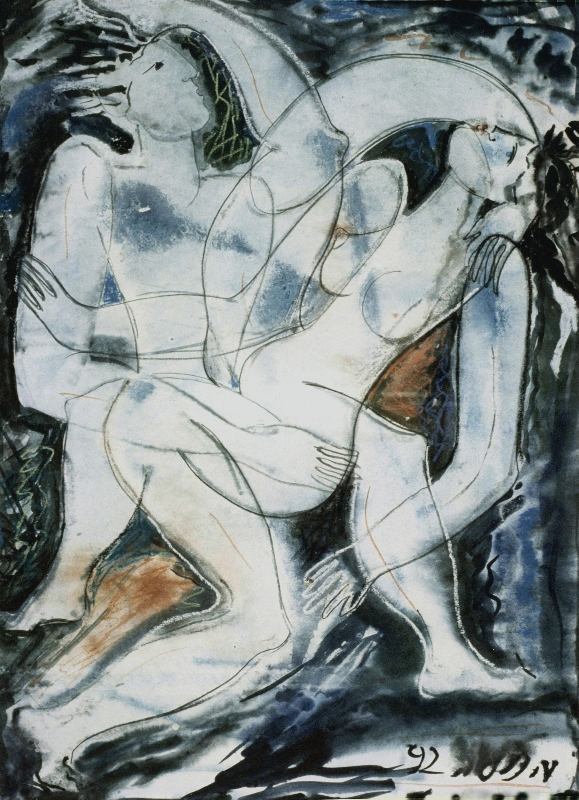
Anytime I preach from Song of Songs I’m reminded of a “gift” my mother gave Julie and me not long after we announced our engagement: a 12-part sermon series from Song of Songs on love-making and the art of marriage. We were, as you’d expect, traumatized by such a graphically “literal” reading; but rest easy—what I’m offering today is a typological reading.

More seriously, I’m struck by the resonance of a theme—or chorus of themes—I’ve heard spoken in our chapel services this year (for example, in sermons by Jonathan Martin, Dr. Gause, Dr. Martin, Chris Brewer, Michael Pogue, and Dr. Cheryl Johns): the invitation into the holy, transfiguring Presence of Christ—holy because he alone transfigures; transfiguring because he alone can share with us his holiness. We have been invited again and again to tryst with him in the garden of agony, to know him in the fellowship of his sufferings, to be melded into him, as a branch is one with the Candlestick. I trust whatever I say today will be heard as a voice in that choir.

**

Reading Song of Songs is a bewildering, at times impossible, venture. On a close reading, the text turns out to be an impenetrable tangle of characters, exchanges, and metaphors/images—a “thick darkness.” At times, the text slides into apparent meaninglessness, or at least becomes unreadable. As Paul Griffiths says, “Almost everything … is puzzling and disconcerting. The Song’s reader must look for help, first elsewhere in the Song and then elsewhere in Scripture.”

Why would God give us such a text? Perhaps precisely because God means for us to acknowledge our helplessness, allowing ourselves to be forced into the desperation necessary to see all things new. Perhaps because it is only in our shared struggle to make gospel sense of the written Word of Scripture that we are ourselves being made apt for transfiguration into the image and likeness of the living Word, Jesus Christ. Seeing that, we know this “thick darkness” of meaning as in fact a form of the radiant darkness enthroned on the Ark—it’s not without reason that ancient Jewish and Christian readers described the Song as the Holy of Holies of Scripture—, a darkness that makes us aware of our blindness and just so begins to open our eyes, ever so gradually, to the rising light.

***

When they’re read side-by-side, a pattern emerges from these two scenes. The lover, abed at night, is consumed with longing for her beloved, whom she names “The-One-Whom-My-Heart-Loves.” She dives out into the night to find him. She encounters the watchmen, who prove of no use. Her desire is ultimately unmet, and in the end the chorus is invoked to act. Of course there are variations: for example, in the first scene, her longing is awakened by her own fantasies; in the second, they are stirred by the beloved’s attempts to break into her rooms; in the second scene, she does not find her beloved at all; in the first scene she does in fact find him—only to fall asleep before they can consummate their love. But there’s something about this pattern of frustration that demands our attention. Why the seeking? Why the not-finding? Why the finding-and-losing? Why the failings of desire? Because Jesus is not only the one whom we desire; he is also the one who must educate, master, our desires. We desire the wrong things. So he has to teach us to desire the right things. We desire the right things wrongly. So he has to teach us to desire the right things the right way. As our lives are more perfectly aligned with Christ’s, we find ourselves desiring more than our nature can in fact receive. So we must be transfigured into his likeness, sharing in his divine nature, so we can be made capable of truly enjoying the infinity of God’s love.

As these scenes illustrate, Christ both draws near to us, awakening our desire, and withdraws from us, hiding himself, frustrating that newly-awakened desire. But make no mistake: he does it all for our good. As Song 2.14 makes clear, he longs to see our face even more than we can desire to see his—but we do not yet have faces to face him; our eyes cannot yet behold his glory.

We belong to Jesus and he belongs to us. But we cannot “hold” him, cannot keep him in our “mother’s house,” in whatever reality we’ve know as “home.” If we would be strange with his saving strangeness, we cannot domesticate him, drawing him down to the size of our lives. Instead, we must be ever increasingly enlarged until we are conformed finally to the full measure of his stature, filled to overflowing with the fullness of his life. To that end, he says to us, as he said to Mary Magdalene, “Do not cling to me!” He does not want to be as we remember him, or as we wish or imagine him to be. He insists, for our good, on being all the Father knows him to be for us. Until the End, therefore, we must ever be pursuing him in the Spirit, always reaching out to apprehend that for which we have been apprehended; never grasping, always being held.

****

The watchmen—or “sentinels,” as one translation has it—play a major role in these scenes. In the first scene, they ignore the woman’s cry. In the second scene, they abuse her for her forwardness. Some readers have taken them as types of the prophets, whom God uses to chastise God’s people. But I see them as religious figures who regard themselves as gatekeepers entrusted with the preservation of a certain “order.” Concerned with keeping the status quo—and confusing it with the Kingdom—they, like Eli did with Hannah, fail to discern the difference between the disordered passions of those dominated by the “flesh” and the Spirit-inflamed longings of the God-intoxicated. Like the Pharisees, they fail at the most basic level to understand that this God desires mercy and not sacrifice (Mt. 9.10-13).

The text says that while the lover was seeking her beloved, the sentinels “found” her. Clearly, then, they are no longer searching for the beloved. They have reduced themselves to watching out for rule-breakers, for those they identify as bandits or outlaws. In truth, they have abandoned their “first love” (Rev. 2.4). Now, they love their “city” and its “order” far more than they love the one who dwells always outside the city gates (Heb. 13.12-14), the one who befriends sinners and dies with thieves.

“Watchmen,” of whatever kind, trade in perverse notions of holiness. As Jonathan Martin put it, they are more concerned with standing up for Jesus than with standing with him. We, however, should be those who recognize that Jerusalem shall be inhabited as a city without walls (Zech. 2.1ff)—and so has no need of sentinels, at least not of this kind.

*****

We need to be like the daughters of Jerusalem. Unlike choruses in classical Greek drama, this chorus of “young women” is engaged with the characters and not only the audience/readers. Again and again, they ask questions of the lover and her beloved. In 5.9, they ask her the question: “What is your beloved more than another beloved?” And, hearing her ecstatic response, make the decisive offer (6.1): “Where has your beloved turned, that we may seek him with you?”

They can ask such a question and make such a promise because they see her differently than the watchmen see her. They see her as “fairest among women.” In fact, they see her exactly as her beloved sees her. In this, they show us the true nature of Christian being: to know one another rightly is to see one another as Christ sees us. As St. Paul says, we know no one “after the flesh” any more (2 Cor. 5.16). Let this, then, be our prayer: in our seeking may we find not only The-One-Whom-Our-Heart-Loves, but also one another. For, in finding one another, we begin to become the people who can know as we are known.

[Chris’ recent book, Toward a Pentecostal Theology of the Lord’s Supper: Foretasting the Kingdom, was reviewed here]

Grading papers as a form of lovemaking

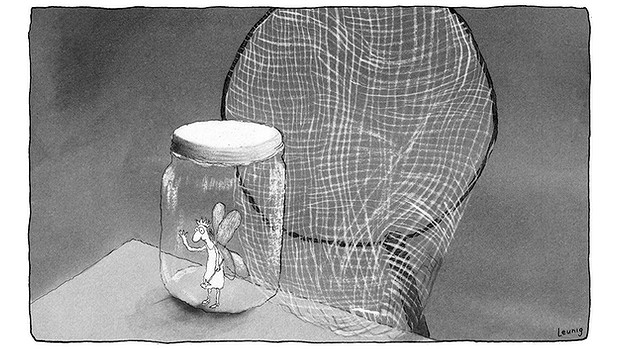
grading-1aIt is not difficult to imagine a world in which not a few teachers will be seduced by the kind of software that edX is making available. But it is inevitable, is it not, that such seductive invitations, if taken up, will be met with a massive anti-climax and a certain increase in academic sterility. More tragically, however, it would mean a decline in the frequency and joy of teachers making love. For grading papers, like indexing a book or replying to students’ emails, is an act of love-making – love for our students, love for attempts at meaning making, love for the pains that inevitably accompany an inquiring mind, love for the subject and for those whose labours have made ours possible, love for the task of teaching itself, et cetera. And as with all other forms of love making, one is, to be sure, not always ‘in the mood’, and it can be simply exhausting and largely unsatisfying in and of itself. It is certainly a form of judgement. Even so, it is incumbent upon we who teach – the incumbency of the kind of freedom that only love can bring – to strive to improve our love-making skills (it’s why some of us try to keep up with our Greek, for example) rather than subcontracting such responsibilities out to third parties, gadgetries and gimics. Thank God for good tools – that is, tools which assist our efforts to love – but when tools reign over, replace, or even become an extension of the lover themselves, we have ceased to love, and so God help us all.

ch901101

Speaking of love making, if all goes to plan the next post here at Per Crucem ad Lucem will be a sermon on two texts from the Song of Songs.

Martyn Percy in Dunedin

percy martynThe Centre for Theology and Public Issues at the University of Otago is to host Martyn Percy for two public talks on Monday 15 April:

(i) Prof Percy will be giving the fourth Abbey College Prestige Lecture, in collaboration with the Centre, at 5.30 pm in Archway 3 Lecture Theatre in Dunedin. The title of the lecture is: Salvation and Soil: Some Challenges for Churches in Contemporary Culture.

(ii) And earlier, from 12.30-1.30 pm, he will be in conversation with Centre Director, Andrew Bradstock, in the University’s AV Studio (Owheo Building, 133 Union Street East, Dunedin). You are welcome to attend in person or watch on-line. If you plan to attend in person, you will need to reserve your seat either by e-mail or phone (+64 3 471 6458).

Rick Floyd on ‘Low Sunday’

AngelRick Floyd writes some wonderful sermons. Here’s a snippet from one he preached a few years ago on John 20.24–29. It’s on ‘Low Sunday’, and it’s titled ‘Behind Locked Doors’:

The Second Sunday of Easter, traditionally called “Low Sunday,” is a tough Sunday for a preacher for a number of reasons.  First of all, the context of our preaching can be a bit discouraging. We have fewer than half the people we had last week, and I always preach better for some reason when their are more people present. It must have something to do with group dynamics. Easter is always a high holy day in the church, a bright and festive day, and though the church in theory believes that Easter lasts for the Great Fifty Days, the second Sunday is, well you know, Low Sunday.  Plus I am always exhausted and worn thin after Easter. But having said all that let me make a confession: I like low Sunday.

I like it for two reasons. First, the folks who come on Low Sunday tend to be the faithful core of the congregation and I feel I don’t have to explain so much of the Gospel to you. To use Eugene Peterson’s helpful distinction, on Low Sunday there are more pilgrims and fewer tourists. I say that not to disparage religious tourists, God knows we have all been that at one time or another. God meets us where we are and even spiritual tourists need God’s mercy and love. My point is just that hardly anyone feels a pressing social or cultural need to get up and come to church on Low Sunday, so those who are here tend to be serious about what we are doing here, and I appreciate that, since I am serious about what we are doing here.

But the second and more important reason I like Low Sunday is that it speaks deep truths about how the risen Christ comes to us. Low Sunday is sort of a down and out Sunday, and the Lord Jesus seems to appear especially to the down and out. If you read the stories of the resurrection appearances it is startling that without exception the disciples are doing nothing especially religious when Jesus appears to them. They aren’t praying or worshipping. In Luke they are walking on the road lamenting what had happened, or they are fishing, having given up their discipleship to return to their day job. Here in John’s Gospel on Easter night the disciples are in a locked room, hiding in fear.

And it occurs to me that is the church’s natural state: a bunch of scared people locking out the world. You might argue that the disciples are not yet the church, until Jesus comes to them and gives them the Holy Spirit (John’s version of Pentecost) and you would be right.  The church without the risen Christ and the Holy Spirit is just a bunch of quite literally dispirited people hiding in fear from real and imagined enemies.

And that is one of the reasons I like Low Sunday. The disciples are so obviously failures at being disciples and so they share that in common with us. It’s Easter and they don’t even know it. They have nothing to offer as the church, no vision, no energy, no courage, no conviction. They are hiding. They are afraid. As far as they know Jesus is dead and done. The shepherd has been struck down and the sheep have scattered.

You can read the rest here.

Pinkfoot, Hawarden

2013-03-24 17.34.26

Drink to the dregs the
winter’s fracture and
sun’s terminal
stretch and
follow the snow-lined
Broughton Brook.

Fly south-west
over Beeches Wood
toward the receding of
a tide once
certain but
now a tired
unknowing.

– Jason Goroncy, March 2013

March stations …

Reading:

Listening:

Watching:

‘Resurrection’, by R. S. Thomas

Easter. The grave clothes of winter
are still here, but the sepulchre
is empty. A messenger
from the tomb tells us
how a stone has been rolled
from the mind, and a tree lightens
the darkness with its blossom.
There are travellers upon the road
who have heard music blown
from a bare bough, and a child
tells us how the accident
of last year, a machine stranded
beside the way for lack
of petrol, is crowned with flowers.

‘They set up their decoy’, by R. S. Thomas

They set up their decoy
in the Hebrew sunlight. What
for? Did they expect
death to come sooner
to disprove his claim
to be God’s son? Who
can shoot down God?
Darkness arrived at
midday, the shadow
of whose wing? The blood
ticked from the cross, but it was not
their time it kept. It was no
time at all, but the accompaniment
to a face staring,
as over twenty centuries
it has stared, from unfathomable
darkness into unfathomable light.

– R. S. Thomas, Counterpoint (Newcastle upon Tyne: Bloodaxe Books, 1990), 38.

‘Open the Doors!’, by Edwin Morgan

Open the doors! Light of the day, shine in; light of the mind, shine out!

We have a building which is more than a building.
There is a commerce between inner and outer,
between brightness and shadow, between the world and those who

think about the world.

Is it not a mystery? The parts cohere, they come together
like petals of a flower, yet they also send their tongues
outward to feel and taste the teeming earth.
Did you want classic columns and predictable pediments? A
growl of old Gothic grandeur? A blissfully boring box?
Not here, no thanks! No icon, no IKEA, no iceberg, but

curves and caverns, nooks and niches, huddles and
heavens syncopations and surprises. Leave symmetry to
the cemetery.
But bring together slate and stainless steel, black granite
and grey granite, seasoned oak and sycamore, concrete
blond and smooth as silk – the mix is almost alive – it
breathes and beckons – imperial marble it is not!

Come down the Mile, into the heart of the city, past the kirk
of St Giles and the closes and wynds of the noted ghosts of
history who drank their claret and fell down the steep
tenements stairs into the arms of link-boys but who wrote
and talked the starry Enlightenment of their days –
And before them the auld makars who tickled a Scottish king’s
ear with melody and ribaldry and frank advice –
And when you are there, down there, in the midst of things,
not set upon an hill with your nose in the air,
This is where you know your parliament should be
And this is where it is, just here.

What do the people want of the place? They want it to be
filled with thinking persons as open and adventurous as its
architecture.
A nest of fearties is what they do not want.
A symposium of procrastinators is what they do not want.
A phalanx of forelock-tuggers is what they do not want.
And perhaps above all the droopy mantra of ‘it wizny me’ is
what they do not want.
Dear friends, dear lawgivers, dear parliamentarians, you are
picking up a thread of pride and self-esteem that has been
almost but not quite, oh no not quite, not ever broken or
forgotten.
When you convene you will be reconvening, with a sense of not
wholly the power, not yet wholly the power, but a good
sense of what was once in the honour of your grasp.
All right. Forget, or don’t forget, the past. Trumpets and
robes are fine, but in the present and the future you will
need something more.
What is it? We, the people, cannot tell you yet, but you will know about it when we do tell you.
We give you our consent to govern, don’t pocket it and ride away.
We give you our deepest dearest wish to govern well, don’t say we
have no mandate to be so bold.
We give you this great building, don’t let your work and hope be other than great when you enter and begin.
So now begin. Open the doors and begin.

‘Open the Doors!’ was originally written for the opening of the Scottish Parliament, 9 October 2004. Hearing a section of it read in the context of morning Eucharist, however – as I did this morning as part of the missio – gave a wonderfully fresh sense to it, and to the Supper too.

‘He atones not with blood’, by R. S. Thomas

He atones not with blood
but with the transfusions
that are the substitute of its loss.

Under the arc-lamps
we suffer the kisses
of the infected needle,

satisfied to be the saviour
not of the world, not
of the species, but of the one

anonymous member
of the gambling party
at the foot of the cross.

– R. S. Thomas, Counterpoint (Newcastle upon Tyne: Bloodaxe Books, 1990), 38.

R. S. Thomas on wonderful people, and on Non-Conformity

(c) DACS and Sir Kyffin Williams; Supplied by The Public Catalogue FoundationJ. B. Lethbridge’s interview with R. S. Thomas, published in the Anglo-Welsh Review, is a delightful compliment to a mid-morning strong cup of tea. Here are two enjoyable moments from Thomas:

‘I’m very conscious as an idea that there must be wonderful people in the world, but I don’t meet them’.

‘I’m sort of Non-Conformist without agreeing with the Non-Conformist way of worship. I find the average Non-Conformist place of worship so ugly. Not that the [Established] churches are much better, but the average Non-Conformist chapel is such a hideous place – I can’t worship. And yet I like the sort of freedom, their emphasis on the Bible as being the sort of direct word of God to the individual, that you don’t need a priest to come between you and God. I like their disassociation from the Establishment in England, the King and Queen and this sort of rubbish. I like it for that side. I don’t like the system of deacons … I dislike cathedrals on the whole, big places, because they are associated in my mind with English imperialism. I see these royal processions and the bishop in all his regalia and the Union Jack flying, you know, hanging in the corner. I look upon the Church of England as having betrayed Christianity by its acquiescence in war and this sort of thing’.