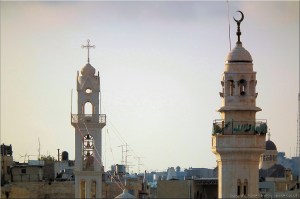
The Syrian Orthodox Church and the Omar Mosque, Old Town, Bethlehem, Palestine.
Two very constructive contributions to the discussion birthed from recent events at Wheaton College:
Robert Priest, Professor of International Studies and Professor of Mission and Anthropology at Trinity Evangelical Divinity School, is concerned ‘over the way Wheaton [College] has framed the issues, over the repercussions of this for Christian witness, and over the failure to include missiologists and missionaries as interlocutors’. By way of response, he invited a number of evangelical and other respected missiologists and missionaries – those, in other words, whose insights have been mostly tragically absent in this discussion – ‘to write short essays addressing the following question: “What are the missiological implications of affirming, or denying, that Muslims and Christians worship the same God?”’ The result is a very helpful and much-welcomed resource, this ‘Occasional Bulletin’ from The Evangelical Missiological Society (EMS).
The Australian theologian Geoff Thompson, of Pilgrim Theological College, has posted ‘an observation, some other questions, a concern, and a personal reflection’ here.
I also really appreciated this brief and timely reflection from Matthew Milliner (of Wheaton College), delivered at the Islamic Center of Wheaton.
I commend these resources to you. And if you, dear readers, come across any other such resources on this subject, you are encouraged to draw attention to them in the comments box below.
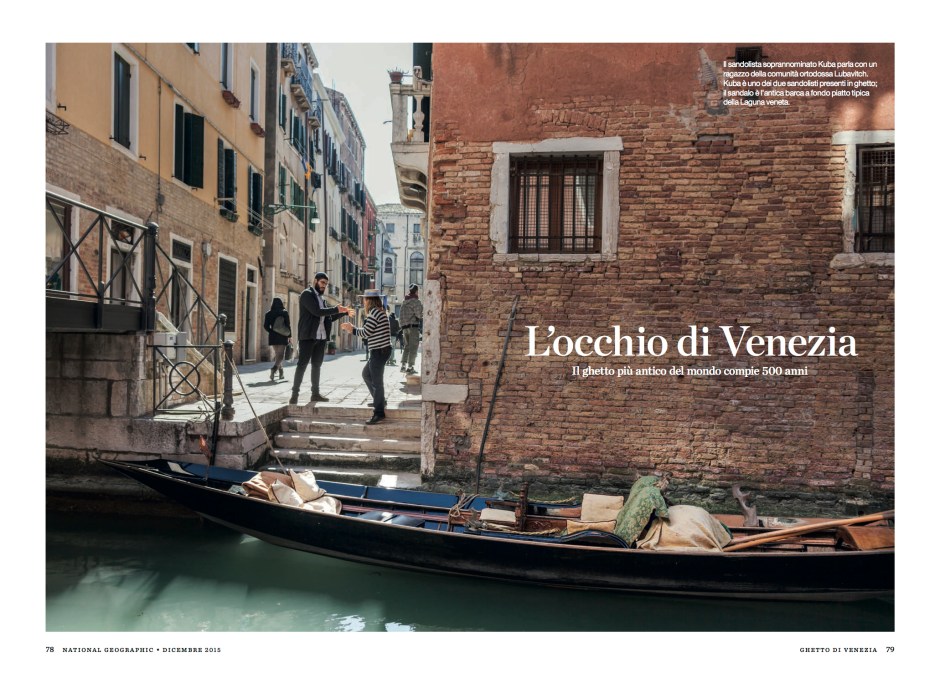
The December edition of National Geographic includes a fascinating little read, and some great photos too by Fabrizio Giraldi, on Venice and its being home to the world’s oldest Jewish ghetto, at 500 years.
Paul Fiddes has written a nice little reflection on the nature of covenant and how it relates to Baptist ecclesiology. Here’s a section:
It is essential to realise that this covenant is not a legal contract. The ‘way’ in which covenant partners walk can only be one of mutual trust. This is where Baptists have given an insight to the universal church which is a true gift. In the local congregation, covenanted together, all the members ‘watch over’ each other, and this ‘oversight’ happens in the church meeting as they seek to find the mind and purpose of Christ for them. At the same time, Baptists have always believed that Christ calls some of these members to exercise ‘oversight’ (or a ‘watching over’) in a spiritual leadership of the congregation. Among Baptists there is no legal provision, no church law, which regulates the relation between these two forms of ‘oversight’, the one corporate and other personal. Congregations must therefore learn to live in the bonds of trust between the people and their ministers. Oversight flows to and fro freely between the whole congregation and its spiritual leaders.
In the same way, oversight flows to and fro between the local congregation and the association of churches. The single congregation lives in a covenant made by Christ, and Christ is present among them to make his purpose known. The congregation is his body, where Christ becomes visible in the world today. This is why the congregation has ‘freedom’ to make decisions about its life and mission, and cannot be coerced or imposed upon by any church authorities outside it. The congregation is not ‘autonomous’, which means ‘making laws for itself’. Christ makes its laws, and the church has the freedom and responsibility to discern his ways. It is free because it is ruled only by Christ.
But Christ also calls local congregations together into covenant, in association. Where churches are assembled through their representatives, there too Christ is present, there he becomes visible to the world in the body of his people, there his mind can be known through the help of the Holy Spirit. Local congregations are thus ‘interdependent’, needing each other’s spiritual gifts and understanding if they are to share in God’s mission in the world.
Yet in the covenant principle there is no legal contract, only the way of trust. In their search for the mind of Christ the local church meeting must listen to what the churches say as they seek to listen to Christ together. It must take with complete seriousness the decisions made at an association level, and will need good reason not to adopt them for itself. But in the end it has freedom to order its own life as a covenant community which stands under the rule of Christ. It needs the insights of other churches to find the mind of Christ, but then it has the freedom to test whether what is claimed to have been found is truly his mind. It might feel called to make a prophetic stand on some issue, and will stand under the judgment only of Christ as it does so.
Other churches may think that this covenantal approach of mutual trust is hopelessly impracticable, and that it would be better to regulate the relation between people and clergy, between churches and diocese or province. Baptists have learned over the years to live with the risks of trust and love. Here there is plenty of opportunity for muddles, mistakes and frustrations, but also room for all to flourish.
Ben Myers’s delightful and constructive offering yesterday to the discussion of whether Christians and Muslims worship the same God reminded me of Pope Gregory VII’s letter to Anzir, the King of Mauretania. In that letter, penned in 1076 (and so in the period between John of Damascus and Paul of Antioch, Ben’s two subjects), Gregory suggests that Christians and Muslims do indeed worship the same God, ‘although in different ways’. (Implicitly, he is doing what many recent commentators, in their noble efforts to seek intellectual coherence, have failed to do; namely, to indicate, albeit subtly, a distinction between ontological and epistemological claims vis-à-vis God.)
So Gregory:
God, the Creator of all, without whom we cannot do or even think anything that is good, has inspired to your heart this act of kindness. He who enlightens all people coming in to the world [Jn 1.9] has enlightened your mind for this purpose. Almighty God, who desires all people to be saved [1 Tim 2.4] and none to perish, is well pleased to approve in us most of all that besides loving God people love others, and do not do to others anything they do not want to be done unto themselves [Mt 7.12]. We and you must show in a special way to the other nations an example of this charity, for we believe and confess one God, although in different ways, and praise and worship him daily as the creator of all ages and the ruler of this world. For the apostle says: ‘He is our peace who has made us but one’ [Eph 2.14]. Many among the Roman nobility, informed by us of this grace granted to you by God, greatly admire and praise your goodness and virtue … God knows that we love you purely for his honor and that we desire your salvation and glory, both in the present and in the future life. And we pray in our hearts and with our lips that God may lead you to the abode of happiness, to the bosom of the holy patriarch Abraham, after long years of life here on earth. (Cited in J. Neuner and J. Dupuis, eds., The Christian Faith in the Documents of the Catholic Church. Bangalore: Theological Publications in India, 1982, 276–77. Slightly modified for gender inclusivity and correction of one of the biblical references.)
The backstory to this letter – and there’s always a backstory! – is that Anzir had sent Gregory a gift which included the freeing of some Christian (?) prisoners. Gregory’s response was this letter sent with a delegation as a sign of friendship, and the remarkable invitation to live together in the spirit of the Sermon on the Mount.
Bruce McCormack too has weighed into the recent conversation with a very helpful piece.
(And for those who may be interested, I touched briefly on the subject a few years ago in this post.)
I’m trying to settle on a film – just one – to include in my upcoming christology unit. (I often include at least one film per unit.) So far, I’ve shortlisted the following:
Au Hasard Balthasar (Bresson)
Calvary (McDonagh)
The Last Temptation of Christ (Scorsese)
Magnolia (Anderson)
Son of Man (Dornford-May)
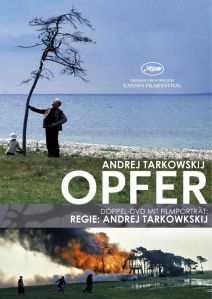
Offret (Tarkovsky)
One Flew Over the Cuckoo’s Nest (Forman)
Romero (Duigan)
Waiting for Godot (Beckett)
(That’s right, neither The Life of Brian, nor Miss Congeniality, nor Jesus of Montreal, nor The Karate Kid, norRed Sonja, nor The Gospel According to St. Matthew, nor Taxi Driver quite made this year’s shortlist.)
At the moment, the frontrunners for me are Beckett’s Godot and Tarkovsky’s Offret, but I’m keen to crowdsource any other suggestions.
‘A cold coming we had of it,
Just the worst time of the year
For a journey, and such a long journey:
The ways deep and the weather sharp,
The very dead of winter.’
And the camels galled, sore-footed, refractory,
Lying down in the melting snow.
There were times we regretted
The summer palaces on slopes, the terraces,
And the silken girls bringing sherbet.
Then the camel men cursing and grumbling
and running away, and wanting their liquor and women,
And the night-fires going out, and the lack of shelters,
And the cities hostile and the towns unfriendly
And the villages dirty and charging high prices:
A hard time we had of it.
At the end we preferred to travel all night,
Sleeping in snatches,
With the voices singing in our ears, saying
That this was all folly.
Then at dawn we came down to a temperate valley,
Wet, below the snow line, smelling of vegetation;
With a running stream and a water-mill beating the darkness,
And three trees on the low sky,
And an old white horse galloped away in the meadow.
Then we came to a tavern with vine-leaves over the lintel,
Six hands at an open door dicing for pieces of silver,
And feet kicking the empty wine-skins.
But there was no information, and so we continued
And arriving at evening, not a moment too soon
Finding the place; it was (you might say) satisfactory.
All this was a long time ago, I remember,
And I would do it again, but set down
This set down
This: were we led all that way for
Birth or Death? There was a Birth, certainly
We had evidence and no doubt. I had seen birth and death,
But had thought they were different; this Birth was
Hard and bitter agony for us, like Death, our death.
We returned to our places, these Kingdoms,
But no longer at ease here, in the old dispensation,
With an alien people clutching their gods.
I should be glad of another death.
– T. S. Eliot, ‘Journey of the Magi’, in Collected Poems, 1909–1962 (London: Faber and Faber, 1963), 109–10.
[Image: Robert Perry, ‘Three Trees at Sunset, Fontainebleau Forest’]
The poet and novelist George Mackay Brown is well-known for his love of place, and for his laments about their destruction with the advent of stuff like concrete, plastic bottles, portable transistor radios, and what he describes as the ‘menace of cars’, indeed with all signs of industrialization.
In a piece penned for The Orcadian and published on 23 March 1972, he (again) recounts feelings of deep grief about the prevalence of contaminants – oil slicks and junk – that he finds on his sojourns along the coast of his beloved island home. But the piece concludes on a different note:
We must have faith that somewhere, deep down at the very roots and sources of life, there is an endless upsurge of health and renewal. (If there were not, the earth would have shriveled like a rotten apple millenniums since.) A hundred years ago the poet Gerard Manley Hopkins, troubled by the pollution of industrial England, consoled himself with the certainty that ‘there lives the dearest freshness deep down things …’. We can only hope that that primal unsullied source will be strong enough to wash away the frightful poisons that men are pouring into the air and earth and oceans every hour of the day and night. So, nowadays, when I take an afternoon walk around the coast, I am not offended any more by the empty sauce bottles and syrup tins on the rocks below. They seem to be simply human friendly objects. The freshness of nature, that lives ‘deep down things’, passes over them, and they are gone.
Hope is the strangest – and the most unbelievable – protest.
1. Immanuel! Immanuel!
Our hearts are opened to You;
We see Your flesh in Maryʼs womb,
And know Your love is usward.
We cannot tell the glory left
Or if Your angels wholly wept.
2. Immanuel! Immanuel!
God in our flesh forever,
You walk our streets, and feel our pain
With love that none can sever.
Our eyes had never seen our God
Nor known that He would shed His blood.
3. Immanuel! Immanuel!
The prophets sang Your coming,
They said that God would dwell with Man
That we might see His loving.
Oh, how our hearts and minds are dazed,
Whilst all creation stares, amazed.
4. Immanuel! Immanuel!
We see Your eyes of pity,
We watch You walk in Spiritʼs power
In hamlet, vale and city.
We see the Fatherʼs glory near
And know His Presence all so dear.
5. Immanuel! Immanuel!
The Spirit dwells within You.
He shows His power and love to all
In fruit You bear abundant.
Ah Triune God, we see You One
In this eternal holy Son.
6. Immanuel! Immanuel!
The mystery of the Godhead
Is plain for us in all You do
And say as You lead homeward.
Great Shepherd of the needy flock
You lead us to the living Rock.
7. Immanuel! Immanuel!
Our great High-Priest in heaven,
You intercede as man for us
And lead our worship ever.
Our hearts are one with You above
Whilst here we tell the world Your love.
8. Immanuel! Immanuel!
The God who loves forever,
The sinful race made new in You,
Dear Father, Son and Spirit,
The whole ecclesia sings Your praise
As priests unto their God, always.
No one ever listens to girls. Not in my world. No one listens when we have something to say. No one believes us when something amazing happens. No one believes us when we get used and abused.
I was by the hearth when it happened. I don’t know where my mother and father were. Or my brothers. I was by the hearth making bread, little flat breads dropped on a stone. It was one of my tasks.
I heard a noise. I thought it was the buzz of insects. But it was feet on gravel. I heard a voice – an unfamiliar voice, clear; it could have been a man or a woman’s. One word, ‘Hello.’
And then a face poked in through the door. When I think about it now I think it was a young face. Beardless. But I can’t be sure. I thought, ‘Oh. You’re beautiful.’
I wasn’t scared when he – when she – walked in. I know I should have been. After all, the visitor was a stranger.
I should have run. But I stood my ground. And when she spoke – the more I think about it, the more I think she was a she – she was kind.
‘Mary, I’ve got something to ask.’
She knew my name. She might have got it from someone, but somehow I knew she hadn’t.
‘Who are you?’ I asked.
‘You already know,’ she said.
And I did. I knew she was God. Or her messenger. I knew she was an angel.
‘Will you say yes?’ the angel asked. There was fear in her voice. As if any answer might be the wrong one.
I had felt womanhood stirring in me for months. My mother had told me what to expect. The itch in my chest. The stab in my belly. The blood that would come.
I knew what was being asked.
I said, ‘Why me?’
God shrugged.
I had two questions. ‘Will they hate me?’ ‘Will they hate the child?’
God wept. I stared.
‘Will you do it?’ she asked.
I gave the answer I knew I’d regret.
℘℘℘℘℘
JOSEPH (I)
Matthew 1:18–25
Do I look like a fool?
I might not be shiniest nail in the box, but that doesn’t mean I deserve to be treated like a pillock.
That’s what I felt like she’d done. Mary. My intended.
She’d told me she was pregnant.
I laughed when she first said it. It would be typical of her jokes.
But from the look on her face – fierce, determined, scared – I saw this was no joke.
I stared at her and I couldn’t speak.
I saw that she thought I might hit her. Or spit on her.
That’s what made me angry. That she could think that of me.
I wanted to get out. I wanted to shout.
I kicked a chair across the room.
Mary stood her ground.
I felt ashamed. To lose my temper like that.
I breathed deep and said, ‘Who’s the father?’
‘God,’ she said. Artlessly.
I laughed again. A sneer, really. I didn’t deserve to be insulted.
I walked towards the door. I’d drop her. Release the obligation. It was more than she deserved. She deserved to be publicly shamed. Stoned.
‘Joseph,’ she said. Just one word. ‘Joseph.’
It was the way she said it that mattered.
It wasn’t pleading. It wasn’t full of tears. There was no fear.
It was gentle. It had authority.
It was her voice, but it was not her voice.
It was a voice that knew me. That was more intimate than a whisper in my ear. It was a voice – impossible though it sounds – that knew my body better than I could.
It was that voice that stopped me.
It was that voice which told me I should try to trust her.
It was that voice which helped me say, ‘Yes.’ To her. To God.
Yes, the musos are fabulous! While I certainly could do without the singers and the dancers, that music is a gift from a place that is very familiar to God. That it is apparently quite unfamiliar to many who profess to like and practice the kind of stuff that God likes and practices is something very near tragic. A spirit of celebration and praise is near the heart of all worship characterised by the gifts and promises of one literally pushed into the world kicking, farting, and screaming.
Of course, every good thing has its ape, but apes are only apes and it seems only fair that they be allowed to have some fun too.
But I concur with those who note the incongruence between the message and the medium. It’s like seeing an athletic woman selling ‘health drinks’ or muesli bars; you suspect that you’re being sold bullshit. More on this in a moment (see #6).
However, far from seeing this performance as something that I ought to therefore dismiss out of hand, which may be an understandable first reaction, I feel drawn to ask further questions. I want to know, for example, what happens before, and after, this song. How am I to interpret this single performance in the context of a larger event and story and witness, and of a culture largely foreign to me? Maybe it’s simply – whether partly or mostly – a piece of shallow and money-making glitz and that’s all. But I can’t even begin to form that judgement unless I have some broader context – and some other stories – in which to evaluate it, lest my judgement be held hostage to simply another set of cultural manifestations. (Some, of course, might well argue that much of that context is already provided for us in other stories that we have heard and/or experienced first hand about Hillsong’s modus operandi. But I want to know more, and I’ve long learnt that the truth ain’t the facts.)
That the piece doesn’t work in the cultures with which I identify and am most familiar and conversant doesn’t mean that it’s necessary discordant with the actions of God. After all, God isn’t a Christian, let alone a male Aussie with wog parents. Hell, I’m not even sure God speaks English. Indeed, one might make the argument that the stranger and more unfamiliar and more difficult it is to understand and interpret, the closer it may be to the stuff of God. (I’m not suggesting for a moment that this is Hillsong’s motivation here.) Nathanael’s observation about the Caribbean context, and that GQ article too, raise some perennial questions for me about the relationship between gospel and culture, of the temptations to make an ideology out of the former and of making indiscriminate familiarity with the latter the precondition for the gospel’s reception.
Watching the performance of this single song, online, nearly 17,000 kilometres from where it was performed, I have the same kind of confusion I experience whenever I worship in a building with a national flag in it; or an Honour Roll commemorating those who gave their lives in ‘the service of freedom’ and ‘for God, King and Country’, some of whom, it is noted (sometimes with the sign of a little cross!), ‘paid the supreme sacrifice’; or whenever I see a reference, in my ecclesiological territory, to ‘senior pastor’; or when I hear that a qualification for being a bishop (in some other ecclesiological territories) is proof of a penis; or whenever I see an innocent bunch of carnations perched on a baptismal font; or whenever congregations celebrate the Lord’s Supper not with a common cup but with those hideous little shot glasses; or when I see a funeral casket draped with the flag of a football team; or when I see church children get shuffled off out of ‘adult church’ so that they can engage in some more ‘age-appropriate’ activites; or when I visit a church worship centre in rural Thailand that is, visually speaking, entirely indistinguishable from the Buddhist temple down the road save for a presence of a small crucifix. I could go on …
A hearty thank you to all who have taken up my invitation. If to embark on theology is to be unstable bearers of live questions (as Mike Higton puts it), then I welcome the invitations that this clip offers, and the conversations that it has encouraged. May both continue.
In recent years, Hillsong London has marked the coming of Christmas in ways reminiscent of what lots of churches do – an evening of carol singing marketed as ‘a night that is focused on celebrating what Christmas is really about – JESUS!’
Last year’s event included this unique performance of ‘Silent Night’:
Error
This video doesn’t exist
Some of us found the performance to be quite confusing, on so very many levels. This is not a bad thing. (Of course, a quick Google search reveals that there are no shortage of people who confess no such confusion at all.) When those whose experience across a wide range of ecclesiastical supermarkets together find that their hermeneutical skills are up against it, this is a time to embrace the questions.
So this post. I have my own developing thoughts, which I may post at some stage. But consider the comments box below my invitation to you, dear reader, to help me interpret what the Willy Wonka that was all about. [NB. I want this to be constructive, so vitriolic comments are likely to find my delete button.]
–––––––
Update: For those who may be interested, I’ve posted a few follow-up scribbles here.
An old song of the music hall
I will sing, or none at all,
Though women lift their noses high
When I haul out to cool my throat
A bottle from my overcoat
And say a word to make their feathers fly.
On the hills above Kaitangata
A cord of old man manuka,
I cut it in a day.
Then I got my cheque and bummed a ride to town
For a pan of eels and a woman and a shakedown
And sold my traps for a bucket of White Lady.
Mad McAra, John O’Hara,
Swagger Joe and my dry father
In the marble orchard lie.
Their ghosts at daybreak in my room
Beckoning with a wicked thumb
Ask me for a bottle of White Lady.
When I was kneehigh to a gander
I learnt to fart against the thunder;
Big Mother Joseph broke her cane on me.
When the white Host rides in air
I bend my head and say a prayer
For that old harridan hot in Purgatory.
A burning orphan in the night
I took a wander by starlight
To where the Child in a loosebox lay –
‘Concrete Grady is my name
And I’ll be damned,’ I said to Him;
‘Then I’ll be damned Myself,’ said He to me.
Christians protect Muslims in prayer during the 2011 uprisings in Cairo, Egypt. Source: @NevineZaki
A few week’s ago, on the eve of what was anticipated to be a time of conflict and hostility in Melton, one of Melbourne’s western suburbs, the Director of Mission and Ministries for the Baptist Union of Victoria, the Rev Daniel Bullock, sent out a letter to Baptist church leaders inviting them to pray for fellow Baptists in the Melton area. Such a letter was both timely and appropriate.
However, my colleague Terry Falla and I felt that more could have – and ought to have – been said in that letter, and so we sent a brief response to Daniel and to the BUV’s communications department to that effect, hoping that they might be able to find a place to make it public. Unfortunately, Victorian Baptists – Baptists of all people! – have effectively abolished any such avenue for public discourse and discernment. Neither our denominational blog, nor our assemblies (or ‘Gatherings’ as they are now called), nor any other places of which I am aware, offer such opportunities to occur in any meaningful ways. The reasons for this are complex, and do not, as far as I have been able to discern, reflect the desires of either Daniel himself or of the BUV’s communications department. Given this current reality, I have decided to share our letter here instead in the hope that it might encourage further reflection and discussion among my colleagues in ministry:
Dear Daniel,
Your call for prayer for the churches of Melton (20/11/2015) was timely, for there is no doubt that, as incredible as it seems, religious liberty for some minorities in Australia is now under threat. Your invitation has caused us a great deal of soul searching and has given rise to the conviction that, should another town or city be the object of anti-Muslim protests, we as Baptists include those under attack in our call for prayer and find ways of standing in solidarity with them in extremely distressing and stressful days. After all, it is not mostly us Christian churches at this time in our history that are the objects of fear, anger, resentment, and prejudice, but our Muslim sisters and brothers.
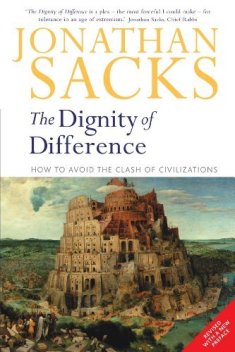
Our recommendation is twofold: (i) a call for prayer for those who are the target of discrimination, and (ii) that in our own local contexts some of us meet with Muslim leaders and other Muslims to express our concern for and solidarity with them; to gratefully and graciously receive whatever hospitality might be offered; to share with them how our own faith tradition was itself born of adversity and persecution, and values profoundly the principles of liberty of conscience and freedom of worship for all; and to commit to embark on the journey of learning to celebrate together what Jonathan Sacks calls ‘the dignity of difference’.
We encourage Victorian Baptists to embrace these challenging invitations with the fear-negating love, faith, hope, and courage that characterises followers of the crucified and risen Jesus.
We look forward to hearing from you.
In grace and peace,
Terry Falla & Jason Goroncy
Daniel’s response (published here with his permission) was both gracious and encouraging:
Dear Jason and Terry
Thanks for your correspondence to the Comms Team with proposed posting for our BUV Blog, expressing your concerns and recommendations around our recent call to prayer regarding the events expected in Melton.
We don’t actually have a forum for this type of posting on the website – neither BUV Blog, nor Baptists on Mission provide a forum for ‘letter to the editor’ type pieces. I do take on board your point though, that although we did ask people to pray for the churches, for safety and peace on the streets, and for those charged with maintaining law and order, we didn’t also include prayer for those who are the objects of fear, anger, resentment, and prejudice. This was an oversight, which we will be sure to address on any future occasion. I agree with the points you are making, it’s a helpful and instructive communication, so again, thank you.
Human beings suffer,
They torture one another,
They get hurt and get hard.
No poem or play or song
Can fully right a wrong
Inflicted and endured.
The innocent in gaols
Beat on their bars together.
A hunger-striker’s father
Stands in the graveyard dumb.
The police widow in veils
Faints at the funeral home.
History says, Don’t hope On this side of the grave.
But then, once in a lifetime
The longed-for tidal wave
Of justice can rise up,
And hope and history rhyme.
So hope for a great sea-change
On the far side of revenge.
Believe that further shore
Is reachable from here.
Believe in miracle
And cures and healing wells.
Call miracle self-healing:
The utter, self-revealing
Double-take of feeling.
If there’s fire on the mountain
Or lightning and storm
And a god speaks from the sky
That means someone is hearing
The outcry and the birth-cry
Of new life at its term.
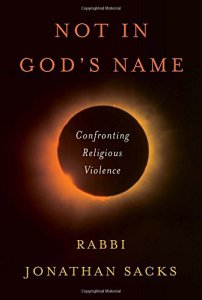
In this first interview, conducted by First Things Senior Editor Mark Bauerlein, Jonathan Sacks talks about themes attended to in his latest book, Not In God’s Name: Confronting Religious Violence. They discuss René Girard’s mimetic theory, the sibling rivalry that characterises the relationships between Abraham’s most enduring children – Jews, Christians, and Muslims – and the infinite depths and breadths of the divine love for them all.
The second interview is conducted by Walter Russell Mead, and then opens up to many questions from the floor. Here, Sacks explores the roots of religious extremism, the roots and natures of violence, different ways of reading those religious texts common to Abraham’s kids, secular nationalisms, and more:
And, two excerpts from the book:
When religion turns men into murderers, God weeps.
So the book of Genesis tells us. Having made human beings in his image, God sees the first man and woman disobey the first command, and the first human child commit the first murder. Within a short space of time ‘the world was filled with violence’. God ‘saw how great the wickedness of the human race had become on the earth’. We then read one of the most searing sentences in religious literature. ‘God regretted that he had made man on the earth, and his heart was filled with pain’ (Gen. 6:6).
Too often in the history of religion, people have killed in the name of the God of life, waged war in the name of the God of peace, hated in the name of the God of love and practised cruelty in the name of the God of compassion. When this happens, God speaks, sometimes in a still, small voice almost inaudible beneath the clamour of those claiming to speak on his behalf. What he says at such times is: Not in My Name.
Religion in the form of polytheism entered the world as the vindication of power. Not only was there no separation of church and state; religion was the transcendental justification of the state. Why was there hierarchy on earth? Because there was hierarchy in heaven. Just as the sun ruled the sky, so the pharaoh, king or emperor ruled the land. When some oppressed others, the few ruled the many, and whole populations were turned into slaves, this was – so it was said – to defend the sacred order written into the fabric of reality itself. Without it, there would be chaos. Polytheism was the cosmological vindication of the hierarchical society. Its monumental buildings, the ziggurats of Babylon and pyramids of Egypt, broad at the base, narrow at the top, were hierarchy’s visible symbols. Religion was the robe of sanctity worn to mask the naked pursuit of power.
It was against this background that Abrahamic monotheism emerged as a sustained protest. Not all at once but ultimately it made extraordinary claims. It said that every human being, regardless of colour, culture, class or creed, was in the image and likeness of God. The supreme Power intervened in history to liberate the supremely powerless. A society is judged by the way it treats its weakest and most vulnerable members. Life is sacred. Murder is both a crime and a sin. Between people there should be a covenantal bond of righteousness and justice, mercy and compassion, forgiveness and love. Though in its early books the Hebrew Bible commanded war, within centuries its prophets, Isaiah and Micah, became the first voices to speak of peace as an ideal. A day would come, they said, when the peoples of the earth would turn their swords into ploughshares, their spears into pruning hooks, and wage war no more. According to the Hebrew Bible, Abrahamic monotheism entered the world as a rejection of imperialism and the use of force to make some men masters and others slaves.
Abraham himself, the man revered by 2.4 billion Christians, 1.6 billion Muslims and 13 million Jews, ruled no empire, commanded no army, conquered no territory, performed no miracles and delivered no prophecies. Though he lived differently from his neighbours, he fought for them and prayed for them in some of the most audacious language ever uttered by a human to God – ‘Shall the Judge of all the earth not do justice?’ (Gen. 18:25) He sought to be true to his faith and a blessing to others regardless of their faith.
That idea, ignored for many of the intervening centuries, remains the simplest definition of the Abrahamic faith. It is not our task to conquer or convert the world or enforce uniformity of belief. It is our task to be a blessing to the world. The use of religion for political ends is not righteousness but idolatry. It was Machiavelli, not Moses or Mohammed, who said it is better to be feared than to be loved: the creed of the terrorist and the suicide bomber. It was Nietzsche, the man who first wrote the words ‘God is dead’, whose ethic was the will to power.
To invoke God to justify violence against the innocent is not an act of sanctity but of sacrilege. It is a kind of blasphemy. It is to take God’s name in vain.
And …
Terror is the epitome of idolatry. Its language is force, its principle to kill those with whom you disagree. That is the oldest and most primitive form of conflict resolution. It is the way of Cain. If anything is evil, terror is. In suicide bombings and other terrorist attacks, the victims are chosen at random, arbitrarily and indiscriminately. Terrorists, writes Michael Walzer, ‘are like killers on a rampage, except that their rampage is not just expressive of rage or madness; the rage is purposeful and programmatic. It aims at a general vulnerability: Kill these people in order to terrify those.’
The victims of terror are not only the dead and injured, but the very values on which a free society is built: trust, security, civil liberty, tolerance, the willingness of countries to open their doors to asylum seekers, the gracious safety of public places. Religiously motivated terror desecrates and defames religion itself. It is sacrilege against God and the life he endowed with his image. Islam, like Judaism, counts a single life as a universe. Suicide and murder are forbidden in the Abrahamic faiths. Judaism, Christianity and Islam all know the phenomenon of martyrdom – but martyrdom means being willing to die for your faith. It does not mean being willing to kill for your faith.
Terror is not a justifiable means to an acceptable end, because it does not end. Terrorists eventually turn against their own people. Walzer again: ‘The terrorists aim to rule, and murder is their method. They have their own internal police, death squads, disappearances. They begin by killing or intimidating those comrades who stand in their way, and they proceed to do the same, if they can, among the people they claim to represent. If terrorists are successful, they rule tyrannically, and their people bear, without consent, the costs of the terrorists’ rule.’ There is no route from terror to a free society.
Nor is it the cry of despair of the weak. The weak have different weapons. They know that justice is on their side. That is why the prophets used not weapons but words. It is why Gandhi and Martin Luther King preferred non-violent civil disobedience, knowing that it spoke to the world’s conscience, not its fears. True need never needs terror to make its voice heard.
The deliberate targeting of the innocent is an evil means to an evil end, to achieve a solution that does violence to the humanity and integrity of those we oppose. To give religious justification to it is to commit sacrilege against the God of Abraham, who is the God of life. Altruistic evil is still evil, and not all the piety in the world can purify it. Abraham’s God is the power that rescues the powerless, the God of glory who turns the radiance of his face to those without worldly glory: the poor, the destitute, the lonely, the marginal, the outsiders of the world. God hears the cry of the unheard, and so, if we follow him, do we.
Now is the time for Jews, Christians and Muslims to say what they failed to say in the past: We are all children of Abraham. And whether we are Isaac or Ishmael, Jacob or Esau, Leah or Rachel, Joseph or his brothers, we are precious in the sight of God. We are blessed. And to be blessed, no one has to be cursed. God’s love does not work that way.
Today God is calling us, Jew, Christian and Muslim, to let go of hate and the preaching of hate, and live at last as brothers and sisters, true to our faith and a blessing to others regardless of their faith, honouring God’s name by honouring his image, humankind.
Jonathan Sacks has described the public commons as ‘the places you go where you do not have to pay’. Such places are becoming increasingly rare in the world’s cities; they are being converted into shopping centres and entertainment complexes. ‘But these are not civic spaces. We go there as consumers, not as fellow citizens’. And so we are formed. Relationships once based on neighbourliness and the shared bonds of citizenship have become commercialised and disembodied. And exposed here, Sacks argues, is one of the real gifts that religion bequeaths to liberal democracies – that they can help such societies ‘to acquire the habits of co-operation which form the basis of trust on which the economics and politics of a free society depend’. He continues:
One of the classic roles of religion has been to preserve a space – physical and metaphysical – immune to the pressures of the market. When we stand before God we do so regardless of what we earn, what we own, what we buy, what we can afford. We do so as beings of ultimate, non-transactional value, here because someone – some force at the heart of being – called us into existence and summoned us to be a blessing. The power of the great world religions is that they are not mere philosophical systems, abstract truths strung together in strictly logical configurations. They are embodied truths, made vividly real in lives, homes, congregations, rituals, narratives, songs and prayers – in covenantal communities whose power is precisely that they are not subject to economic forces. They value people for what they are; they value actions for the ideals that brought them forth; they preserve relationships by endowing them with the charisma of eternity made real in the here-and-now.
My friend Naoya Kawakami has sent news that his latest book, a theology which brings post-Fukushima realities into conversation with P. T. Forsyth’s thinking on the atonement, has just been published. It represents another reminder not only of the abiding power of good theology to speak to a context unimagined by the original author but also of the long and continuing interest in Forsyth’s work in Japan, where seventeen of Forsyth’s books have already been translated into Japanese, and four additional ones have undergone a second translation.
In addition to Naoya’s two published studies on Forsyth, two other books have also appeared in recent years, including Yutaka Morishima’s study Forsyth shingaku no kozo genri: Atonement wo megutte (A Structural Principle of P. T. Forsyth’s Theology: Through the Atonement). Yutaka also informs me that Forsyth’s book The Soul of Prayer, much loved in Japan, has now been translated into Korean. And that just last week, there was a meeting of pastors and theologians in Tokyo, the sole purpose of which was to read and discuss together Forsyth’s Faith, Freedom and the Future. I understand that the moderator of the group is working on a new translation of the book.
On a considerably more sombre note, Naoya has also asked me to share some news about the situation on the ground near Fukushima. He writes:
Unfortunately, the situation has become worse. Because of so many misrule and responsibilities, the illness and to contaminate have expanded. We have to see a kind of Massacre on the children and nature. So many people shut down their eyes to see the reality. And TEPCO and government have started what they want crudely.
But some churches stand with the mothers harmed so deeply. We are now waiting how the Lord shall do His Work with them.
 Paul Fiddes has written a
  Ben Myers’s
  I’m trying to settle on a film – just one – to include in my upcoming christology unit. (I often include at least one film per unit.) So far, I’ve shortlisted the following:
 The poet and novelist George Mackay Brown is well-known for his love of place, and for his laments about their destruction with the advent of stuff like concrete, plastic bottles, portable transistor radios, and what he describes as the ‘menace of cars’, indeed with all signs of industrialization.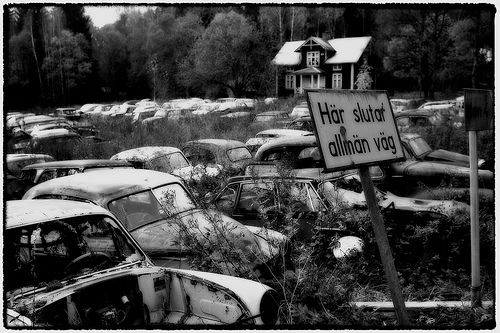

 … in the previous
  An old song of the music hall


 jasongoroncy.com