On the relationship between systematic theology and analytic philosophy

As one who basically shares David Bentley Hart’s assessment of Anglo-American analytic philosophy as ‘degradingly barren’ and as ‘a silly game with poorly formulated rules, which serves as an excellent tool for avoiding thinking deeply about anything irreducible to crude propositions’, and who has enormous respect for Alan Torrance, I was interested in this recent discussion here between Helen De Cruz, Kevin Hector, and Alan on the (blessed and vexed) relationship between systematic theology and analytic philosophy.

And while I am considerably less sanguine than is Alan about the merits of analytic philosophy as a particularly helpful handmaiden in the pursuit and articulation of truth (partly on the grounds expressed in the interview about the ahistorical, acultural, and apolitical character of the way that Anglo analytic philosophers seem to go about their task; I have similar concerns, too, about those who undertake studies on Søren Kierkegaard, for example, with little or no concern to understand or attend to the context of village Lutheranism in nineteenth-century Denmark, or those who write books about Bonhoeffer as if he were a North American version of a Sydney Anglican (as opposed to an Anglican who happens to live in Sydney)), I was very grateful for the discussion, and for some of the acknowledgments contained therein, and for the opportunity to revisit the questions. I thought others might be too, so here ’tis:

On religion and civil society: a response to Simone Sinn

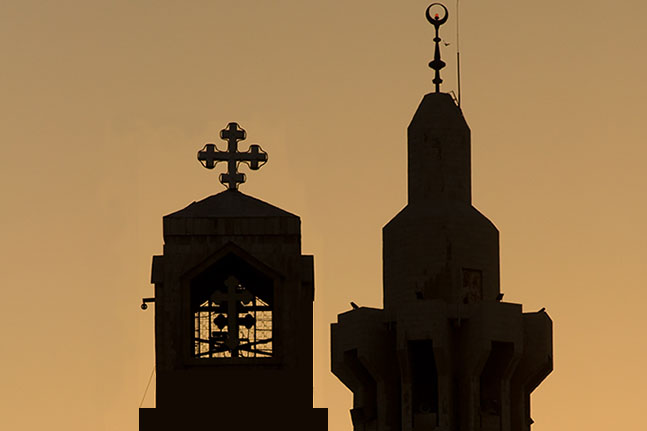
Church-MosqueLast week, I was again in Geneva participating in a colloquium on religion and state. The meeting had a particular focus on the ways in which Christianity and Islam conceive and negotiate their relationship with the state. It was, as I anticipated, a stimulating event. I was invited to give a response to a very fine paper by Simone Sinn of the Lutheran World Federation. I enjoy doing such things. The tricky bit about doing it this time, however, was that I first heard the paper at the same time as did everyone else; i.e., I never received a copy of the paper in advance. But like one of Alexander Pope’s fools, I braved upon ground where angels might think a couple of times before venturing, and hazarding a guess (which was pretty accurate, as it happens) at where Simone’s paper might go – and in a desperate state ripping shamelessly from Rowan Williams (especially his wonderful collection of essays in Faith in the Public Square) – I tentatively offered the following words (and some good discussion ensued):

–––––––––––– ℘℘℘℘℘℘ ––––––––––––

Taking some bearings

Ongoing deliberations about Turkey’s admission to the EU and, of course, what is being called ‘Europe’s refugee crisis’, have exposed even further all manner of concerns about what we might call Europe’s historic Christian identity and indeed about the idea of ‘Europe’ itself. As we speak, in my own country (which remains, in many ways, an outpost of Europe), there is widespread anxiety regarding the arrival of refugees, especially those from Muslim-majority lands, and concentrated protests going on regarding the building of mosques and the recent granting of a visa to a certain Dutch politician with a very interesting hair style who plans to launch a new political party in Australia. So, what a time to be thinking about these things!

The one thing that is certain in this current climate is that things are ‘deeply uncertain and fluid’. ‘There is’, as Rowan Williams has noted, ‘widespread impatience with transnational institutions, from the EU to the UN, yet equally widespread anxiety about the dominance of a single power. We are increasingly aware of the issues that cannot be solved by single sovereign states on their own – ecological crisis, terrorism, migrancy – yet are uncomfortable with any notion of global jurisdictions’. The global north is increasingly conscious of facing a highly critical, if internally diverse, Islamic world and is struggling to know how best to respond to its presence outside and inside its own borders. ‘Enlightenment liberalism, the self-evident creed of reasonable people, now appears as simply one cultural and historical phenomenon among others. Its supposed right to set the agenda for the rest of the world is no longer beyond question, however much the American Right or the European Left assume that their positions are the natural default beliefs of intelligent human beings, and that cultural and religious variety are superficial matters of choice or chance’.

As Williams also notes, the narrative, standard just a few decades ago, of a universal drift towards so-called secularization has had to undergo radical modification, a challenge severely hindered by the fact that so much of Europe seems to have developed a severe case of amnesia regarding its own complex history dating back at least as far as the Germanic, Turkic and Slavonic migrations that destroyed the Roman Empire between 376 and 800 CE. This is not a situation, in other words, that was birthed in the Enlightenment. Rediscovering this story, it seems to me, is critical if current challenges are to be responded to responsibly and constructively. I am grateful, therefore, for Simone’s paper and her efforts to locate more recent public discourse in some larger historical frames, with her two twentieth-century examples from Germany and Indonesia. This kind of work is important if we are to avoid the unhistorical and facile optimism that characterizes so much contemporary debate on all fronts.

Some theological commitments

Simone is equally concerned to bring other resources – explicitly, theological resources – to this task. This is highly proper, not least because the central and foundational convictions of political liberalism in Europe are an explicit fruit of its Christian history. Particularly, ‘the distinctively European style of political argument and debate is made possible by the Church’s persistent witness to the fact that states do not have ultimate religious claims on their citizens’.

Simone focuses on two theological commitments that, in her words, ‘enable an affirmative understanding of civil society’. She names here anthropology and political ethics. As important and fruitful and these two fields of enquiry might be, uprooted from some even more basic theological commitments I’m not convinced that they provide for the Christian community the robust ‘theological motives’ (to use Simone’s phrase) or theological muscle that the opportunities and challenges before us call for. More germane and fertile enquiry might be had by attending more explicitly to implications perhaps yet unearthed or unapplied to this new context in the following five areas:

  1. Incarnation. There are questions to be asked, for example about the character of Christ’s body as ‘extendible’ and ‘transposable’ and ‘unstable’, a body that can expand itself, for example, to incorporate other bodies and ‘make them extensions of his own’, as Graham Ward argues. What might be some implications for the church of its own claim that in Christ the world has been given a body that ‘can cross [all] boundaries, ethnic boundaries, gender boundaries, socio-economic boundaries’, and religious boundaries, for example, boundaries unpoliced by the church?
  2. Trinity. Recent decades have witnessed significant interest among theologians – both Roman Catholic (e.g., Karl Rahner, Jacques Dupuis, Gavin D’Costa, Raimundo Panikkar) and Protestant (e.g., Karl Barth, Wolfhart Pannenberg, Clark Pinnock, S. Mark Heim, John Hick) – to explore more intentionally ways in which the revelation of God’s triune mode of being might constitute a constructive basis or ‘roadmap’ for a positive interpretation of religious diversity and even religious pluralism from the standpoint of Christian theology. I understand that there has been a formal dialogue between French Muslims and Roman Catholics around this very question.
  3. Pneumatology. There are also questions to revisit here regarding the implications of the claim that the church has no monopoly on God’s Spirit but that the Spirit belongs to everybody, and to nobody; questions constructively explored some decades ago in the work of John V. Taylor.
  4. Soteriology. What bearing might faith’s claim that there can be no salvation apart from my neighbour, for example, have to our discussion on life together in changing territories?
  5. Ecclesiology. Are there not pressing questions also to be asked here about the strangely eschatological and provisional nature of the Christian community’s place in the world (something exposed, thank God, through the erosion of the Constantinian arrangements)? And then there are critical questions too about the alternative citizenship of the church and its sharing a common life with those who do not share that citizenship.

On the public commons

Simone champions the widely-held view that the notion of a ‘“civil society” presupposes a space … where citizens can organize themselves voluntarily around common interests or common goals’, a space, she says, where ‘active citizenship is experienced and exercised’, and, we might add (drawing on the work on John de Gruchy), a space ‘in constant need of broadening and deepening, and therefore of debate and [of] clarification’. Such a commitment need not, of course, be grounded in any consensus about what constitutes ultimate truth, or even agreement that such an oddity may exist. It requires only that citizens seek to meet in such a space, and a just state that will regulate its chaotically pluralist character. (I was at this point in Simone’s paper reminded of that pioneering Scottish architect and architectural theorist Alexander Thomson who, in the middle of the nineteenth century, championed a vision of public space that is both open and horizontal, and whose work was informed by a deep conviction that the so-called private life of the home be not divorced from the public space of the street where the community gathers to make and to carry out ideas together.)

Lest the liberal state loses its essential liberalism, that public space and ‘active citizenship’ of which Simone rightly speaks must engage also in a continuing dialogue with religious communities, and those with each other. Failure to do so would mean that the state would become ‘simply dogmatically secular, insisting that religious faith be publicly invisible; or … chaotically pluralist, with no proper account of its legitimacy’ except that ‘the state is the agency that happens to have the monopoly of force’ (Williams). Luke Bretherton, in his book Christianity and Contemporary Politics, argues much the same – that it is the state’s responsibility to ensure that ‘there is an increasingly constructive engagement between [itself] and minority religious groups’. To be sure, the source of our common life does not itself rest in the state any more than it rests in any other intermediate institution, guild, religious or civil association, each of which ought, in Williams’ words, to ‘have a natural liberty to exist and [to] organize themselves’. But the state is given a unique vocation to, to some degree, regulate this social variety and ‘chaotic pluralism’, a role that is an implicit outworking of any political philosophy that rejects a sacralized sovereignty. The challenge, therefore, is for the apparatus of the state to become what Williams calls ‘a reliable and creative “broker” of the concerns of the communities that make it up’.

The history of Islam, particularly outside of its historic-majority cultures, is a history characterised by the experience of negotiating and renegotiating its way in a great variety of settings. This is indeed the character of all living faith. Some Muslim scholars, such as the Swiss academic Tariq Ramadan (who teaches at the University of Oxford) insist that there is in Islam no absolute theological commitment to an imposition of specifically Muslim law even in majority contexts. In his book Western Muslims and the Future of Islam, he contends that Muslim identity need only be at odds with Western cultural identity where certain cultural habits are in direct conflict with Islamic precepts. This means, he argues, not only that there is no single ‘homeland’ for Muslims, but also that Muslims can be at home, can adapt in truly integrated rather than in ‘hodgepodge’ ways, in any geographical and political environment. And so they must, he insists, avoid ‘self-ghettoization’, avoid becoming ‘spectators in a society where they were once marginalized’, avoid retreat from the public commons and what Ramadan calls ‘the service of all, for the good of all’. ‘The “way of faithfulness”’, writes Ramadan, ‘compels [Muslims] not only to respect plurality but also to step outside the [intellectual, religious, and social] ghettos, [and to] know each other better’, to be constantly renegotiating the new public spaces, as must the church, and to act together to ‘ensure the fullest possible statement of shared moral goals and anxieties’ (Williams) in the public commons.

I share Simone’s conviction that viable civil societies in religiously plural contexts presuppose viable interreligious relations, with a high priority given to efforts at the local level where the freedom to engage in ‘convivial and cooperative relations’, however difficult and unstable, and to do so in ways that avoid what Luke Bretherton calls ‘religious vandalism’, yields – dare I say it – signs of the Spirit’s work, signs indeed that ‘the earth is the Lord’s and all that is in it, the world, and all those who live in it’ (Ps 24.1). All this, for me, is an outworking of an implicit christology which resists existing in a vacuum, which rejoices in the fact that ‘dialogue among the religions is no longer a luxury but a theological necessity’ (David Tracy), and which welcomes the encounters, challenges, and fresh questions that a rapidly-changing Europe (and Australia) occasions.

The Indian theologian Stanley Jedidiah Samartha (incidentally, I suspect that we could learn a great deal from the Indian experience vis-à-vis religious plurality) sees in the coming of Jesus part of ‘God’s dialogue with humanity’. Our dialogue with people of other faiths, he argues, is part of our participation in God’s dialogue with humanity, and this, as Karl Barth insisted, is grounded in God’s own intratrinitarian dialogue. Of course, as Williams has suggested elsewhere, part of what happens in a good dialogue between people of different faiths is, one hopes, learning to see what the other person’s face looks like when it is turned towards God. To shut out that possibility is to reject the invitation to grow up, and it is to abandon the difficult gift of ‘hard silence – a stepping-back from the urge to solve things prematurely’.

Some concluding thoughts

Simone’s paper is a welcome invitation to imagine a space less threatened by the ignorance that engenders and nourishes fear, and to embrace the unforeseen possibilities that a future which must not neglect its past – lest Europeans (and Australians too, for that matter) become a thriftless people – ought neither to be yoked to it.

In 2005, Rowan Williams delivered a speech not too far from here at the Palais de Congrès de Lyon. His speech was entitled ‘Is Europe at its End?’, and he concluded, as will I, with these words:

In short, my hopes for the future of Europe are that it will continue to be a culture of question and negotiation – because I believe that this is the way it is truest to its Christian roots. But given the enormous dangers of a dominant secularism, a denial of the public visibility of religious commitment and its role in managing and moulding social identity, I hope for a political climate in Europe that is open to co-operation between state and religious enterprise. If this does not happen, the state becomes unselfcritical in its godlessness and religious communities become isolated and defensive; they too lose the capacity for critical awareness.
Leonardo Boff on Papa Francisco: Iglesia en salida, ¿de dónde y hacia dónde?

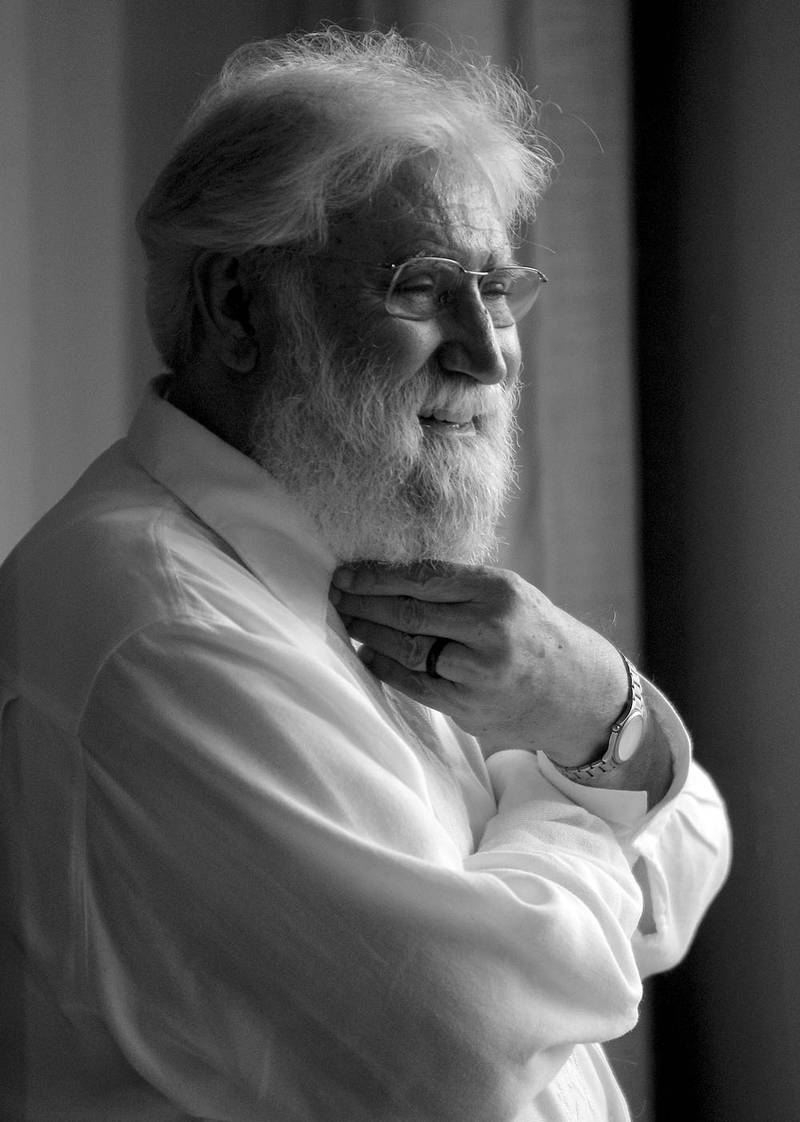
Leonardo BoffIt was probably over twenty-five years ago, but I can still remember the moment when I first read Leonardo Boff. I can’t now remember if it was his Introducing Liberation Theology or his Jesus Christ Liberator, or something else. I can hardly even remember what any of his main arguments were. I can, however, remember being struck by a way of approaching the theological task itself that I had hardly ever encountered before. I wondered, is it really possible for theology to be so unenslaved to dogmatic minutiae, to bear so few signs of the overly-apologetic anxiety that so marks the discipline, to appear so unhindered by the opinions of his protagonists, to care so deeply and so courageously for the world, to so reek of Christ? I wondered, is this really theology at all? And while I did (and do) not share Boff’s mind on a number of subjects, there could be no doubting that here was a dear brother and teacher in Christ, labouring with that same bold freedom and disembarrassment and urgency and risk that I also encountered in Bonhoeffer’s Letters and Papers from Prison.

I relived some of those same moments again tonight when I happened across this recent statement (3 July 2015) from Boff, now 76. It is testimony to life’s celebration in the thick of fossilising death, to joy’s protesting hope amidst despair, and a summons to the Christian community to heed Pope Francis’ call to turn away from those patterns of non-cruciform power and self-service and self-preservation and religiosity that so often characterise its life and to turn towards the compassionate and thoroughly-worldly tradition of Jesus; a summons, put otherwise, to become contemporary with Christ. I thought it worth reposting:

Celebrando todavía la extraordinaria encíclica sobre “el cuidado de la Casa Común”, volvemos a reflexionar sobre una perspectiva importante del Papa Francisco, un verdadero logotipo de su comprensión de la Iglesia como “una Iglesia en salida”. Esta expresión encierra una velada crítica al modelo anterior de Iglesia que era una Iglesia “sin salida” debido a los diversos escándalos de orden moral y financiero, que forzaron a renunciar al Papa Benedicto XVI, una Iglesia que había perdido su mejor capital: la moralidad y la credibilidad de los cristianos y del mundo secular.

Pero el logotipo “Iglesia en salida” posee un significado más profundo, hecho posible porque viene de un Papa fuera de los cuadros institucionales de la vieja y cansada cristiandad europea. Esta había encerrado a la Iglesia dentro de una comprensión que la volvía prácticamente inaceptable para los modernos, rehén de tradiciones fosilizadas y con un mensaje que no mordía los problemas de los cristianos y del mundo actual. La “Iglesia en salida” quiere marcar una ruptura con aquel estado de cosas. Esta palabra “ruptura” irrita a los representantes del stablishment eclesiástico, pero no por eso deja de ser verdadera. Y entonces surge la pregunta: “salida” de dónde y hacia dónde? Veamos algunos pasos:

  • Salida de una Iglesia-fortaleza que protegía a los fieles de las libertades modernas hacia una Iglesia-hospital de campaña que atiende a toda persona que la busca, sin importar su estado moral o ideológico.
  • Salida de una Iglesia-institución absolutista, centrada en sí misma hacia una Iglesia-movimiento, abierta al diálogo universal, con otras Iglesias, religiones e ideologías.
  • Salida de una Iglesia-jerarquía, creadora de desigualdades hacia una Iglesia-pueblo de Dios, que hace de todos hermanos y hermanas: una inmensa comunidad fraternal.
  • Salida de una Iglesia-autoridad eclesiástica, distanciada de los fieles o incluso de espaldas a ellos, hacia una Iglesia-pastor que anda en medio del pueblo, con olor a oveja y misericordiosa.
  • Salida de una Iglesia-Papa de todos los cristianos y obispos que gobierna con el rígido derecho canónico hacia una Iglesia-obispo de Roma, que preside en la caridad y sólo a partir de ella se hace papa de la Iglesia universal.
  • Salida de una Iglesia-maestra de doctrinas y normas hacia una Iglesia-de prácticas sorprendentes y de encuentro afectuoso con las personas más allá de su pertenencia religiosa, moral o ideológica. Las periferias existenciales ganan centralidad.
  • Salida de una Iglesia-de poder sagrado, de pompa y circunstancia, de palacios pontificios y titulaciones de nobleza renacentista hacia una Iglesia-pobre y para los pobres, despojada de símbolos de honor, servidora y portavoz profética contra el sistema de acumulación de dinero, el ídolo que produce sufrimiento y miseria y mata a las personas.
  • Salida de la Iglesia-que habla de los pobres hacia una Iglesia-que va a los pobres, conversa con ellos, los abraza y los defiende.
  • Salida de una Iglesia-equidistante de los sistemas políticos y económicos hacia una Iglesia-que toma partido a favor de las víctimas y que llama por su nombre a los causantes de las injusticias e invita a Roma a representantes de los movimientos sociales mundiales para discutir con ellos cómo buscar alternativas.
  • Salida de una Iglesia-automagnificadora y acrítica hacia una Iglesia-de verdad sobre sí misma y contra cardenales, obispos y teólogos celosos de su status pero con cara de “vinagre o de viernes santo”, “tristes como si fuesen a su propio entierro”, una Iglesia, en fin, hecha de personas humanas.
  • Salida de una Iglesia-del orden y del rigorismo hacia una Iglesia-de la revolución de la ternura, de la misericordia y del cuidado.
  • Salida de una Iglesia-de devotos, como esos que aparecen en los programas televisivos, con curas artistas del mercado religioso, hacia una Iglesia-compromiso con la justicia social y con la liberación de los oprimidos.
  • Salida de una Iglesia-obediencia y de la reverencia hacia una Iglesia-alegría del evangelio y de esperanza todavía para este mundo.
  • Salida de una Iglesia-sin el mundo que permitió que surgiese un mundo sin Iglesia hacia una Iglesia-mundo, sensible al problema de la ecología y del futuro de la Casa Común, la madre Tierra.

Estas y otras salidas muestran que la Iglesia no se reduce solamente a una misión religiosa, acantonada en una parte privada de la realidad. Ella posee además una misión político-social en el mejor sentido de la palabra, como fuente de inspiración para las trasformaciones necesarias que rescaten a la humanidad para una civilización del amor y de la compasión, que sea menos individualista, materialista, cínica y desprovista de solidaridad.

Esta Iglesia-en-salida ha devuelto alegría y esperanza a los cristianos y reconquistado el sentimiento de ser un hogar espiritual. Por su sencillez, despojamiento y acogida con amor y ternura se ha granjeado la estima de muchas personas de otras confesiones, de simples ciudadanos del mundo e incluso de jefes de Estado que admiran la figura y las prácticas sorprendentes del Papa Francisco en favor de la paz, del diálogo entre los pueblos, de la renuncia a toda violencia y a la guerra.

Más que doctrinas y dogmas es la Tradición de Jesús, hecha de amor incondicional, de misericordia y de compasión que por él se actualiza y revela su inagotable energía humanizadora. Pues, entre otras cosas, este es el mensaje central de Jesús, aceptable por todas las personas de todos los rincones.

Seeking hospitality in Melbourne

There is a Christian missionary family (of 5), including three young children, who are currently serving in Siberia with Pioneers. They will be returning to Melbourne on furlough for six months from 11 January, and they are looking for a place (min 2 bedrooms) to stay, preferably somewhere in either Melbourne’s North, East, or South (including Mornington Peninsula) which is where their main supporter base is. They would prefer to remain in the one place so that their kids could attend the one school.

If you or someone you know may be able to help, then please get in touch with me via the Contact page

If you’re a Facebooker, then please feel free to spread the word too.

faithfulness, through a glass darkly

Through a glass darkly

To think about love as that which is sourced in God, which moves us towards healing, which is open to others, which refuses the bondage of disembodiment, which takes risks, and which carries with it certain responsibilities, is to recall that love is not too far removed from that other fruit of the Spirit that ought to characterise the Christian community; namely, faith. For the Christian community, to faith is to risk the entirety of its existence by leaning unreservedly into the Word who addresses it and who calls it away from its own life-less patterns of self-reliance and into God’s true freedom.

It is important to remember that faith is neither the ‘idolatry of certainty’ (Monika Hilder) nor the same as belief. To believe is part of faith, but faith also involves not believing, questioning, doubting, exploring, or not knowing what to believe. A faithful response to God includes the courage to explore further, to value mystery rather than carrying the burden of knowing all that is to be known. And a faithful community is one that welcomes and holds together all of these dimensions of faith – rejoicing, resting, anguishing, risking, exploring, being unstable bearers of live questions. Faith communities devoid of such dimensions are communities in danger, or worse, of not growing up at all.

It is not insignificant that the Bible has no arguments for the existence of God. It is not insignificant that the Bible offers little reason to think that faith should be facile and unambiguous. Indeed, the Bible is unfilled by comfortable and reassuring words about the life of belief and trust. It is unfilled by presentations of a God who expects or demands doubtless faith. If Abraham and Moses and Hannah and Job and Mary and Jesus and Simeon and Paul suggest any pattern, then our knowledge of God and of God’s ways is characterised not by epistemological certainty but by being found caught up in a reality planned and constrained only by mysterious love, love which appears to have little difficulty in making space for angst and struggle and disbelief, and which is at home looking through a glass darkly. Indeed, in a sense these are a kind of argument for God.

Faith is always being called into risky business. The faithful deal with shadows, partaking little of ‘the optimistic gleam of scientific progress’ (Catherine Keller). Faithful communities are therefore unavoidably characterised by some confusion, some doubt, and some ambiguity. Indeed, these are part of their gift and witness. And trusting this is a sign of their faithfulness to the One whose ways are not like ours.

[Image: David Mello]

Alfonse Borysewicz on ‘news of another mass shooting in the United States’

PrayersAlfonse Borysewicz wrote to me today saying that he had now lost count at how many shootings there have been since he wrote the Foreword to Tikkun Olam (2013,) which begins with these words:

‘I awoke to the news of another mass shooting in the United States, this time at a cinema. Once again, the news was met with outpourings of grief and shock, and with the same reluctance to engage with the questions that similar prior events had brought to the surface. Unfortunately this plague will be repeated soon enough in some other form and at some other place; it is just a matter of time’.

Prayers ascending for Chris Harper Mercer, for those who have died and were injured at his hands, for the Umpqua Community College, and indeed for all those victims and perpetrators of senseless violence in Syria, Burma, Nigeria, and elsewhere, for a President who has the power to drop nuclear bombs on Koreans but no power to take guns away from those he has been elected to govern, for Alfredo Prieto, and for all those who love them. Kyrie, eleison.

Richard Flanagan on books

Gould's Book of FishMy (re-)reading of Richard Flanagan’s The Narrow Road to the Deep North turned me into a disciple, a Flanaganite, a lover of all things Flanagan, and so determined to enjoy my way through everything he’s published. I recently finished reading his Gould’s Book of Fish, doting on quirky page after quirky page of this delightful story, and along the way falling in love with William Buelow Gould who lived ‘once upon a time … long ago in a far-off place that everyone knows is not here or now or us’.

Here’s one of my favourite passages; it’s about books:

‘Perhaps reading and writing books is one of the last defences human dignity has left, because in the end they remind us of what God once reminded us before He too evaporated in this age of relentless humiliations—that we are more than ourselves; that we have souls. And more, moreover.

Or perhaps not.

Because it clearly was too big a burden for God, this business about reminding people of being other than hungry dust, and really the only wonder is that He persevered with it for so long before giving up. Not that I am unsympathetic—I’ve often felt the same weary disgust with my own rude creations—but I neither expect nor wish the book to succeed where He failed … I had begun with the comforting conclusion that books are the tongue of divine wisdom, and had ended only with the thin hunch that all books are grand follies, destined forever to be misunderstood.

Mr Hung says that a book at its beginning may be a new way of understanding life—an original universe—but it is soon enough no more than a mere footnote in the history of writing, overpraised by the sycophantic, despised by the contemporary, and read by neither. Their fate is hard, their destiny absurd. If readers ignore them they die, and if granted the thumbs-up of posterity they are destined forever to be misconstrued, their authors transformed first into gods and then, inevitably, unless they are Victor Hugo, into devils’.

– Richard Flanagan, Gould’s Book of Fish

The church as unstable community

SuspendedA little note about being Protestant: One deeply Protestant conviction is that in this world there exists nothing wholly reliable, nothing immune from absolute vulnerability. And indeed the most vulnerable of part of it is the church –­ that community ever in diaspora, that community that has been thrust into ‘an unprecedented history’, a ‘continuous risky adventure with always hazardous improvisations’ (Johannes Hoekendijk).

To be an apostolic community is to experience a profound letting go, an unmastering, a dispossession. It is to experience oneself as the unstable bearer of a live question – ‘the bearer of the question which the Gospel poses … The Church’s … task is to preserve this questioning’ – to receive and to discover forms and practices of life and language that will ‘keep alive the possibility of our hearing this disruption, and which will allow it to be felt deeper and far wider than the circle of its original impact’ (Mike Higton).

It was this kind of letting go that informed Vincent Donovan’s conviction, in his work among the Masai people in Tanzania. Donovan, a Roman Catholic priest and member of the Congregation of the Holy Spirit, understood the significance of not fixing the form of the church in advance, of not predetermining what the Christian community should look like. He had that deeply gospel-informed instinct that the missio Dei involves a quest for the emergence of the Word’s community in whatever forms and whatever shapes such might take. He understood that ‘because a missionary comes from another already existing church, that is the image of church [they] will have in mind, and if [their] job is to establish a church, that is the church [they] will establish’. But ‘the missionary’s job’, as Donovan put it, ‘is to preach, not the church, but Christ. If he [or she] preaches Christ’, a ‘church may well result, may well appear, but it might not be the church [the missionary] had in mind’. (Little wonder he was not Rome’s best friend.) The missionary church must preach Christ, not the church. And the response – and the shape of that response – will be up to those who hear the message. They will have to do their own work, offer their own faithful responses to the Word they hear. The Word must have his own freedom to create or not to create whatever forms of community he chooses. And what he chooses might look entirely unfamiliar to all who have passed by his way before.

I am reminded here of Paul Tillich’s observation that ‘what makes Protestantism Protestant is the fact that it transcends its own religious and confessional character, that it cannot be identified wholly with any of its particular historical forms’. One implication of this is that pilgrim communities stay awake to the truth that their strength lies in the knowledge that they are, in principle, weak and fragile and homeless. To be Christian community is to be, as Ben Myers once put it, continuously suspended over the abyss of nonbeing, upheld solely by the voice of one before whom we stand utterly exposed, and who continually calls us into new being. It is a community, therefore, that always puts safety last. It is a community that, as another great Australian theologian put it, is ‘prepared to live without guarantees, without the guarantee of an infallible book, or infallible creeds, or an infallible church’ (Davis McCaughey). It is a community that continually risks the judgement of God’s Word, and that lives in such a way that it is entirely uninterested and uninvested in its own self-preservation. It is a community that lives faithfully with the receding horizon of postponed dreams and made free thereby to throw itself entirely into the embarrassing service of Jesus, and that not for God’s sake but solely for the sake of the world. It is a community, therefore, that is always learning how to fail, always rediscovering its uneven record. It is a community that risks even its life with God so that it might become contemporary with Christ.

Rather than understanding its vocation as the extension or propagation of its own modes of being, the church’s vocation in and relation to the world is to be determined solely by its relation to the transposing and boundary-crossing Christ, the Word of its being. It is a community that ‘strives to show, to embody, the way in which the incalculable variety of human concerns can be “at home” in and with the confession of faith in Jesus. It does not seek to impose a uniform Christian culture or a preconceived Christian solution; it aims only to keep open and expanding the frontiers of the community as gift’ (Rowan Williams).

We are talking about a community that can never be completely at home and rooted anywhere in this world, a diaspora community constantly set out on a journey, opening itself up to the future; not any future, mind you, but the future of Jesus Christ. At every step of the way, it needs the forgiveness of its sins and the encouragement of the Spirit. In difficult circumstances, it will be a community that seeks, while sighing deeply, to do its task as well as it can in the expectation of the appearance of its Lord. Precisely so does it offer its witness in the world.

The fundamentally unstable nature of the community is an insight that is shared, it seems to me, by one of the early church’s greatest theologians – Mary. Mary reminds us of the pilgrim nature of being truly human – that one undertakes the life of faith, and indeed theology, with a sense of the agony of vocation, and with profound risk. Mary also understood that the smell of divine transcendence is not only born in unexpected encounters but that it is also ‘born in the guts’, literally. In Mary, we learn that the transcendent is imminent, closer to us than is our own breath and yet more foreign to us than our imaginations dare allow. Mary understood that the life of faith is undertaken by those who feel that they are being ‘pulled into God’s history’ and who have been ‘twisted by the shock of God’s visit’. And she understood that it is a life pursued in community with others, conscious that ‘the burden of vocation is too heavy to carry alone’. Mary also reminds us that faith ‘does not just give answers. It also asks questions’. And it ‘must learn to say “I don’t know”. It must learn to hear God saying that [God] owns the time’ (Valdir Steuernagel). She reminds us that faith’s vocations are undertaken not only in the wake of certain achievements but also in the confession of their own limits and uncertainties. The community gathered around her Son is a community whose life is marked by gut-wrenching ambiguity, a community that ever lives between Holy Friday’s experience of god-abandonment in death and the mystery of an empty sepulchre. It is a community that lives – literally lives, literally comes alive – in the experience of its own unstable dying, an experience in which the invisible Christ ­­– he for whom Holy Saturday is familiar territory ­­– stands among us, carrying us, and indeed the world, more deeply into God’s own movement of love and life.

Whitley College welcomes Dr Ian Dicks

Whitley College is pleased to announce the appointment of Rev Dr Ian Dicks, BA, Dip Theol, PhD as Lecturer in InterCultural Studies.

Ian Dicks is an Australian who has lived and served in Malawi for the last 20 years. Ian was ordained within the Baptist Union of South Australia and, together with his wife Wendy, has served with Global Interaction amongst the Yawo people. His current role is as ‘Cross-Cultural Worker, Anthropological and Missiological Consultant’ with Global Interaction.

Ian Dicks is an expert in the field of intercultural communications: people relating to people who are different in language, customs and beliefs. For him, this is the essence of Christian mission:  in the New Testament, in other countries, but also in our own streets and neighbourhood.

Ian has undertaken ground-breaking research in the language of the Yawo people and is currently working on a dictionary of that language. He has a passion for enabling people to learn how to relate to those whose language, traditions and experience are different from our own. He has been helping the staff of Global Interaction to engage with these challenges, and upon his return to Australia will be sharing these skills with people studying at Whitley. He has been an adjunct teacher at the University of Malawi. He has also worked in local community development projects and leadership training.

This is a shared appointment with Global Interaction: Ian will continue assisting the work in Malawi for some months each year, for the next two years at least. The balance of the year will be spent teaching at Whitley College. Ian will teach from his expertise in understanding and relating to Muslim people, Contextual Mission, and in InterCultural Communication. He would love also to lead a study trip to Malawi!

The Council and Faculty of Whitley College are delighted to be working with Global Interaction in our common commitment to training in intercultural competence and mission. We look forward with real excitement to Ian Dicks’ contribution to our life as a College and all he has to offer the Christian community.

Together with his family, Ian will be returning to Australia to take up this new position in January 2016. Please pray for him, for Wendy, Simeon and Benjamin as they prepare for this very significant change in their lives.

[This announcement originally appeared here]

Work of God, Work of the People: Reflections on the Spirit of Liturgical Worship

Coptic worship

A guest post by Chris Green

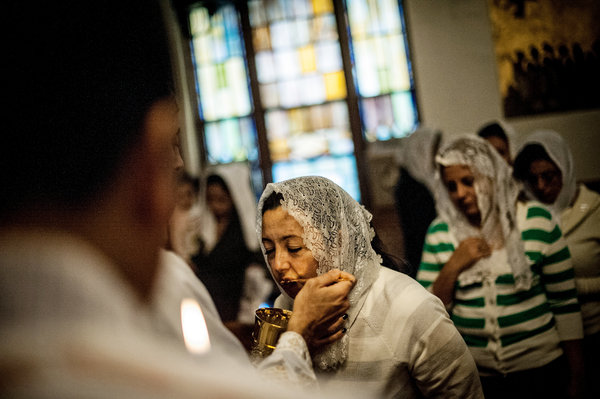
Liturgy, we are often reminded, is ‘the work of the people’. But that claim has to be qualified immediately by (at least) two other truths. First, liturgy – and, more importantly, the worship that it serves­ is always already God’s work before it is ours. Worship is not our gift to God until it is God’s gift to us. And just because God is Trinity even our gift to God is made possible only by God giving God to God through us. Secondly, the liturgy is the church’s work before it is ours, personally or communally. The liturgy in its various expressions belongs to the ‘one, holy, catholic and apostolic Church’ and not to my tribe or yours.

Faithful liturgies emerge and are developed over time as ‘accrued wisdom of the body of Christ, led by the Spirit’. That means the ‘liturgical heritage’ of the church catholic belongs to all Christians – indeed, to everyone and everything.[1] As Jamie Smith puts it, ‘these rituals are the gifts of God, for the people of God’.[2] We should be thankful for these gifts. Were our liturgies entirely of our own making, our vision would be tragically narrowed. We would see only that part of God’s work that looks like what we expect to see. We would, in other words, be blinded by our own lights rather than given light to see the light that enlightens everyone coming into the world.

I just said that liturgy serves worship. But how is that so? Iris Murdoch observes that within our inner dialogue, words mean in the same way as ‘outer words’, and this indicates that ‘we can know our own internal imagery [only] because we have been initiated into a shared public world of meanings’.[3] What she says about the work of learning to speak and to read Russian applies at least in some ways that liturgy serves worship:

… I am confronted by an authoritative structure which commands my respect. The task is difficult and the goal is distant and perhaps never entirely attainable. My work is a progressive revelation of something which exists independently of me … something which my consciousness cannot take over, swallow up, deny or make unreal.[4]

In other words, it is as we are faced with the alienness of the liturgy in its ‘authoritative structure’ – a structure that cannot be ‘taken over’ or ‘swallowed up’ – that we are humbled, prepared to speak to God and about God more truthfully, more transformatively.

As Israel enters the Promised Land, she is warned against worshipping as the locals do – ‘You shall not worship the Lord your God in such ways’ – or according to her own heart-desires (Deut. 12.4, 8). Instead, the people are bound to ‘seek the place’ where God has chosen to ‘put his name’ (Deut. 12.5). True worship, they are told, can take place only there, in that chosen-for-them place. The same rule holds for us now. Grace, in drawing us into ordered worship, calls us to the place of crucifixion, the place of kenotic openness to neighbor-in-God. The chosen place is identified for us by the liturgy of Word and Sacrament, where we are gathered as a sanctified, Spirit-filled people in a sanctified, Spirit-filled space and time to be present prayerfully to the God who speaks and acts paradigmatically in the liturgy. As we enter into the play and work of liturgical worship, taking its words and gestures as our own, we make ourselves available in a particular way to the Spirit’s sanctifying work.

All that said, let me hasten to add: these forms, by themselves, will not get done what needs doing. Jenson gets it right, I think: ‘the question of our liturgy as liturgy of the Spirit is not so much a question about any particular things we do, as about the spiritedness of the whole performance’.[5] A lifeless performance of the liturgy is a betrayal of our calling. Now, it clearly does matter what we do.[6] But how we do whatever we do is at least equally important.

Of course, spirited liturgical performance is not the only or ultimate concern. In a sense, the truth about the faithfulness or unfaithfulness of our liturgy and liturgical performance comes to light only after the service ends. The question is: do we ‘walk worthy’ (Eph. 4.1) of the Gospel we enact liturgically? Bonhoeffer is unquestionably right: ‘only where hands are not too good for deeds of love and mercy in everyday helpfulness can the mouth joyfully and convincingly proclaim the message of God’s love and mercy’.[7] If we are enacting the liturgy faithfully, then we are going to find ourselves inescapably sensitized to the needs of our neighbors, opened to their world in all of its otherness. The Eucharist, as the center of our worship, first gathers, then scatters us into ever-widening circles of service and care. Filled with the Spirit of the liturgy, we cannot help but live ex-centrically, compelled by Christ’s love to live not for ourselves ‘but for him who died and was raised’ for us (2 Cor. 5.14–15).

[1] James K. A. Smith, ‘“Lift Up Your Hearts”: John Calvin’s Catholic Faith’, Meeter Center Lecture (Oct 2012), p. 15. Available online: http://www.scribd.com/doc/109817080/Lift-Up-Your-Hearts-John-Calvin-s-Catholic-Faith; accessed: August 24, 2014.

[2] Smith, ‘Lift Up Your Hearts’, p. 15.

[3] Iris Murdoch, The Sovereignty of Good (London: Routledge Classics, 2001), p. 14.

[4] Murdoch, The Sovereignty of Good, p. 87.

[5] Robert W. Jenson, ‘Liturgy of the Spirit’, The Lutheran Quarterly, 26.2 (May 1974), pp. 189–203 [189].

[6] In Jenson’s own words (‘Liturgy of the Spirit’, p. 191), a ‘relatively superficial, but nonetheless vital level of our concern is, therefore, that the liturgical items be there, by which our service can be eschatological promise and anticipation’.

[7] Dietrich Bonhoeffer, Life Together (San Francisco: HarperOne, 2009), p. 100.

Judy is running for refugees

ASRCSpoiler alert: This post is an absolutely shameless plug for my amazing partner Judy and for the fantastic work undertaken by the Asylum Seeker Resource Centre.

Judy, by far the fittest member of our wee clan (and, yes, that includes the dog), is preparing to take part in Run 4 Refugees as part of this year’s Melbourne Marathon. She is doing this in order to raise funds for the Asylum Seeker Resource Centre (ASRC). I can’t think of a better reason to run. (Truth be told, short of being chased by Babylonians or something I can’t think of a good reason to run at all.)

If you would like to sponsor Judy in this humble and sweaty endeavour you can do so really easily by visiting HERE. (Note: You don’t need to be in Australia to do this. You can sponsor her from anywhere.) Donations over AUD$2 are tax deductible too.

Thank you, kind readers, for giving this your consideration, and please feel free to help spread the word.

‘Then I came by boat’

During Lent 2014, Tri Nguyen, a pastor of the Brunswick Baptist Church and one of my students at Whitley College, made a pilgrimage from his church in Melbourne to Parliament House in Canberra to deliver a gift to the Australian Parliament. The gift was a large model of the boat in which he and his father and sister fled Vietnam in 1982, the year they also arrived in Australia as refugees.

Now, Marleena Forward, a Melbourne-based filmmaker, has produced this short film of Tri’s inspiring, reconciling, and challenging journey – one considerably longer than that undertaken in 2014. The film won the Audience Award in the Australian Shorts section at the Human Rights Arts Film Festival. It’s called ‘Then I came by boat’:

On being ecclesiastical tourists

Duane-Hansons-TouristsWhile in the mad throes of writing lectures for an upcoming course that I’ll be teaching on the church, I am grateful to be re-reading Michael Jinkins’s very fine book The Church Faces Death: Ecclesiology in a Post-Modern Context. In one little section, subtitled ‘The Hitchhiker’s Guide to the Church’, Jinkins offers a great reminder of the challenge and danger that inherently lies in teaching a course on ecclesiology. It begins:

Roland Barthes’s essay “The Blue Guide” is suggestive for those who want to learn to reflect on the speech of the church about itself. His essay considers a popular series of tourist guidebooks (called Guide Bleu in French) to various European destinations. To be precise, his essay considers the presuppositions, one might almost say the prejudices, of the guidebook, which remain unstated by the editors and reduce the particularities of a country and its inhabitants to stereotypes, cliches, and sights (or monuments) to be seen, but not observed. The complex and real “human life of a country disappears,” he writes, “to the exclusive benefit of its monuments.” And the rich diversity of human existence is boiled down to a few picture postcard images. He writes:

In Spain, for instance, the Basque is an adventurous sailor, the Levantine a lighthearted gardener, the Catalan a clever tradesman and the Cantabrian a sentimental Highlander. We find again here this disease of thinking in essences, which is at the bottom of every bourgeois mythology of man (which is why we come across it so often). The ethnic reality of Spain is thus reduced to a vast classical ballet, a nice neat commedia dell’arte, whose improbable typology serves to mask the real spectacle of conditions, classes and professions. For the Blue Guide, men exist as social entities only in trains, where they fill a “very mixed” Third Class. Apart from that, they are a mere introduction, they constitute a charming and fanciful decor, meant to surround the essential part of the country: its collection of monuments.

Is there not a corresponding danger in ecclesiology to reduce the vast diversity of church, the ambiguities of this rich human-divine reality, to a few neat (noncontradictory) patterns, types, models, paradigms, definitions, or descriptions—to notice the monumental remains and to dismiss as irrelevant (and irrelevantly messy) the actual communities of faith that shape these monuments and that move within them and make sense of them? What would it entail, what would it require of us, to notice and take seriously the particularities of church, to go beyond phenomenology to phenomengnosis, to understand the ambiguous flux of existence as itself the sign that demands to be understood in its own terms? Barthes says, later in this essay:

Generally speaking, the Blue Guide testifies to the futility of all analytical descriptions, those which reject both explanations and phenomenology: it answers in fact none of the questions which a modern traveller can ask himself while crossing a countryside which is real and which exists in time. To select only monuments suppresses at one stroke the reality of the land and that of its people, it accounts for nothing of the present, that is, nothing historical, and as a consequence, the monuments themselves become undecipherable, therefore senseless. What is seen is thus constantly in the process of vanishing, and the Guide becomes, through an operation common to all mystifications, the very opposite of what it advertises, an agent of blindness.

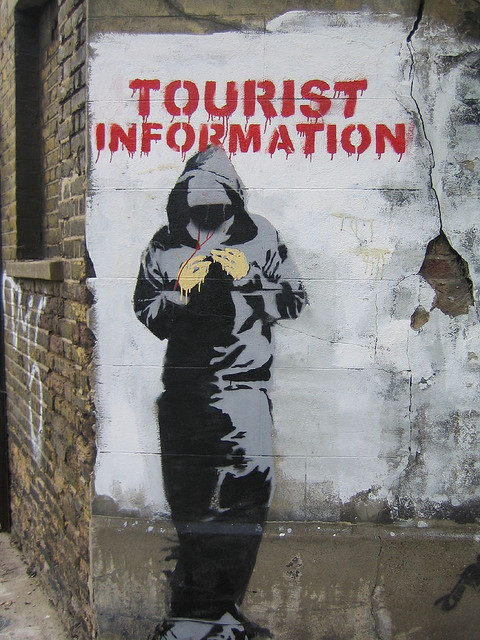
Banksy - Tourist InformationA tourist, perhaps on one of those packaged coach tours, can visit a foreign country only to tick off the sights (the monuments): the Eiffel Tower, Westminster Abbey, Edinburgh Castle. She envisions the people of these foreign countries she visits as stereotypes already firmly established in her head: Scot in kilt with bagpipes, Englishman with umbrella and bowler, Frenchman wearing beret, smoking cigarette, drinking wine. The tourist returns home having traveled but having only minimally encountered the countries toured and their inhabitants. The idiosyncratic, the eccentric reality of humanity, the exactness of place and time and circumstance, the life lived in ordinariness is easily ignored in the headlong rush to account for all stereotypes (thus never really knowing the people) and monuments (thus never understanding why the monuments are there or what they signify). One sees here the way in which the yearning for essence can alienate us from history; though this superficial tourist may be surrounded by “historical” monuments, she has little access to their meaning because they have been decontextualized; consequently, she is estranged from her own history of being present in that place. In the worst cases, the tourist takes her “home” on tour with her to the extent that she never enters into the foreign time and place at all—the ultimate jet lag.

The ecclesiastical tourist, likewise, can emerge from a “study of the doctrine of the Church” having never entered into church at all. While giving the impression of sailing to all the great ports of call, he may have only circumnavigated the stereotypes. What is clearly implied in such ecclesiological globetrotting is that the church is an idea, and that paying attention to the actuality of particular human communities of faith only distracts us from some divine ecclesiology, a neat analytical description that is (supposedly) forever and everywhere true.

Anabaptist Ethics and Same-Sex Marriage

The resurrectionOn the Road, the journal of the Anabaptist Association of Australia & New Zealand, have just republished a conference paper written by my dear friend Bruce Hamill. The paper, which was written in an effort to bring some constructive theology to bear upon a vexed set of questions, is titled ‘Anabaptist Ethics and Same-Sex Marriage’. Here’s how it concludes:

Marriage — that ancient institution serving the nurture of companionship and human flourishing in love — has for most of Christian history been assumed to be defined by the biological complementarity of ‘male and female’, although not necessarily by procreation. In Jesus and the apocalyptic Christian writers not only does the coming kingdom relativise the institution of marriage to this ‘time between the times’, it sets it, and all the other institutions within which we live, under the authority and judgement of Christ. In doing this it re-establishes marriage in terms of a new purpose for disciples of Christ — indeed a two-fold purpose — to bear witness to the new creation seen in the love of Christ for the church and to practise the life of that new creation in intimate acts of mutual and bodily self-donation. This ethical revolution reaches its clearest expression when Paul concludes that even creational structures like ‘male and female’ do not define life in Christ. It is thus a small step with the benefit of biological and psychological science to conclude that other creational structures such as samesex orientation might, for some, provide a more appropriate vehicle for the discipline of marriage.

You can read the entire piece online here and here, or as a single pdf here.

Church: The Quest for Christian Community

One of the units that I’ll be teaching at Whitley College (University of Divinity) this coming semester (30 July–29 October) is called Church: The Quest for Christian Community. The unit can be taken at levels 2, 3, or 9, and all are welcome to enrol.

Over 12 sessions, we will consider the following broad themes:

1. The Quest for Christian Community: Approaches, Issues, Challenges
2. The Community in Kingdom and Spirit
3. The Community as the Body of Christ
4. The Community as Priesthood and People of God
5. The Community and the Missio Dei
6. The Community under water: Baptism
7. The Community at Table: Eucharist
8. The Community of the Word
9. The Community Growing in God
10. The Community at Work
11. The Community in the World
12. The Ethical Community

And here’s a little taster of what is in store:

If you are interested in joining us, or in simply finding out more about this course and others, contact Whitley College (by email or phone 03 9340 8100) for more information.

A Review of Theng Huat Leow’s The Theodicy of Peter Taylor Forsyth

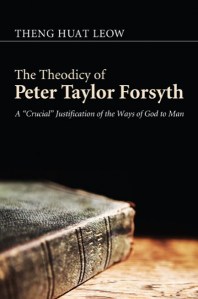
The Theodicy of Peter Taylor ForsythThe Theodicy of Peter Taylor Forsyth: A “Crucial” Justification of the Ways of God to Man, by Theng Huat Leow. (Eugene, OR: Pickwick Publications, 2011), xviii + 268pp. ISBN: 9781608994359.

‘To justify God is the best and deepest way to fortify men. It provides the moral resource and stay which is the one thing at last. With open face to see the glory of God in things as they are, to blink nothing of the terror and yet to be sure of the Kingdom of God with all our heart – that is more for the courage of man than any nationalism or any patriotism when heart fails and grief benumbs’. So wrote one of the most able theological minds that Britain produced during the nineteenth century – P. T. Forsyth, in his extraordinarily astute book The Justification of God: Lectures for War-Time on a Christian Theodicy. What is, perhaps, most remarkable about such a claim is that it was published, as the subtitle indicates, at the height of the Great War, the event in which God, according to Forsyth, entered the pulpit and which brought to the surface again the ‘old dilemma’. But contra the Stoics and Gottfried Leibnitz and Joseph de Maistre, it was Forsyth’s claim that the solution of the great world juncture is at last a provision from God which both taxes all the resources that faith has, and settles faith in a certainty grounded in but finally from outwith history and its moral order – in the world’s moral crisis, in tragedy, in the great divine commedia, in Christ and his cross.

In this well-researched, and clearly-written exposition of Forsyth’s ‘Theodicy’, Theng Huat Leow (Lecturer in Theology at Trinity Theological College, Singapore) provides an able and constructive introduction to Forsyth’s theological oeuvre via a consideration of a subject of central concern to the Scottish Congregationalist theologian – God’s self justification in the face of evil. And because of Forsyth’s open-textured approach to theology, an approach that refuses the kind of tidiness for which most theology strives, a study like this occasions opportunity to engage with Forsyth’s thinking on a range of subjects, a prospect appropriately exploited by the author. Hence, Leow introduces Forsyth’s thinking on the relationship between evil, sin, and suffering, his appropriation of Martin Luther’s theologia crucis, his understanding of divine election, his conviction that, no matter how ‘devious’ and ‘dreadful’ the way, creation would willingly ‘go through it again at the Father’s will’ for ‘the last things shall crown the first things, and … the end will justify the means’, his ‘Christian universalism’, his constructive and cautious engagement with evolutionary theory, and the important distinction Forsyth makes between God’s primary and secondary acts of judgement, his commitment to divine passibility and to sailing along the rocks of ‘true patripassianism’, his view on the origin of evil, among other subjects. Leow notes Forsyth’s conviction that the problems of evil are ‘essentially insoluble from an intellectual or theoretical perspective’, and considers Forsyth’s approach to theodicy along ‘practical’ and ‘historic’ lines. What this means, as Leow makes plain, is that Forsyth resolves ‘to treat the existence of evil in our world as a given reality, and [to] direct his focus on God’s practical overcoming of it through his act on the Cross’ (p. 180), a move which gives to Forsyth’s theodicy ‘unity, cohesion and groundedness in the historical reality of this world’ and so renders, in Leow’s assessment, Forsyth’s justification of God to be one which ‘far surpasses’ (p. 235) corresponding attempts penned in Forsyth’s day.

Avoiding hagiography, and with judicious editorial judgement, Leow brings Forsyth’s thought into conversation not only with those with whom Forsyth himself was most interested to engage – e.g., G. W. F. Hegel, Wilhelm Windelband, Albert Schweitzer, R. J. Campbell, etc. – but also with more contemporary voices known for their engagement with the subject at hand, such as Albert Camus, Marilyn McCord Adams, David Bentley Hart, Paul Fiddes, Dorothee Sölle, J. K. Mozley, Jürgen Moltmann, and others.

Greatly to be welcomed is Leow’s taking seriously the much-too neglected and ‘subjective aspects’ of the atonement, highlighting, most obviously, the role that prayer – and especially protest prayer – plays in Forsyth’s thought: that it may be God’s will for us to resist God’s will; that to struggle with God is one way of doing God’s will, one way of saying, ‘Thy will be done’; that, as Forsyth would insist in his profound essay The Soul of Prayer, the divine will is ‘to be resisted as much as indulged’.

But a quibble and a most unfortunate miscalculation ought also be noted. Regarding the quibble, curious is Leow’s heavy reliance throughout the book on Richard Bauckham’s reading of Fyodor Dostoyevsky’s The Brothers Karamazov, a near-essential reference, it seems, in any essay on the subject of theodicy. Why then, did he not engage with Dostoyevsky’s characters directly rather than have them mediated through Bauckham’s interpretation?

If my memory serves me correctly, Forsyth’s Justification was my entrée into Forsyth’s corpus. I was a theological abecedarian, it was not an easy read, and I had no Beatrice to guide me. Dr Leow’s book is a Beatrice: but this Beatrice brings along a partner who too often distracts and detracts from the conversation, rather than enhances it, steering it away from its substantial themes and terms and, in so doing, rearranges the parameters of discussion in ways that leave Forsyth, at times, misheard and misrepresented, and with his thought systematised in ways that castrate some of its spirit. This, in my view, is the most substantive setback with Leow’s study. The most apparent candidate for this less-welcome friend is John Hick and his Evil and the Love of God. This is evident in Leow’s frequent – and very odd – description of Forsyth’s theodicy as ‘Irenaean’ (see pp. 188, 195–96, 209, 223, 227–30, passim), and, not unrelatedly, in his suggesting a view of sin that is considerably tamer than is Forsyth’s own. The Aberdonian insisted, in the strongest possible terms, that there could be no Hegelian integration of God’s antithesis into God’s final purposes for the world – ‘Die sin must or God’! To be sure, Leow is aware that for Forsyth there can be no possible compromise at this point (see, for e.g., pp. 17, 237), but, because of the distractions generated by Beatrice’s friend, the implications of that principal conviction struggle to arrive at their proper end.

However, those desiring to engage the questions that give rise to theodicies generally, or those wishing to better understand one of that project’s most daring and able theological minds, ought not allow these criticisms to dissuade them from taking up this composed and valuable study.

–––––––––––––––––––––––––––––––––––––––––––––––––––––––––

In due course, a version of this review will appear in Colloquium.

David Bentley Hart on God, Creation, and Evil

This past week, the University of Notre Dame has been host to an impressive line up of minds for the Creation out of Nothing: Origins and Contemporary Significance conference. Some of those papers can be listened to here, including David Bentley Hart’s wonderful paper of ‘God, Creation, and Evil’, its concern being to highlight the obvious implications of such for a theology of apokatastasis panton.

Tasting Chris Green’s Sanctifying Interpretation – Part 3: “Scripture as Divine and Deifying Foolishness”

Sanctifying InterpretationAnd a final excerpt from Chris Green’s Sanctifying Interpretation: Vocation, Holiness, and Scripture (pp. 127–29):

By and large, evangelical models emphasize the ‘glory’ of the Scriptures: their majesty, their beauty, their power. But the Scriptures are at-one-ed with Christ as the living Word of the gospel’s God only insofar as they share in his ongoing humiliation, in his weakness and foolishness that subverts worldly power and wisdom (1 Cor. 1.18–25). God’s glory is revealed above all in God’s humility, as the events of creation, the call of Israel in Abraham, the Incarnation, Passion and Ascension, and the Eucharistic gathering of the Church testify. And the same holds for the Scriptures. They are holy just in that they are ‘low and despised’, chosen to expose the pretensions of the wise and the strong, ‘to reduce to nothing’ our assumptions about God, ourselves, and the world works (1 Cor. 1.27–28). The sacred texts, in Hamann words, are like the ‘old rags’ twisted together into ropes to draw Jeremiah from his pit.[1] Receiving them in this way, we find ourselves humbled, made that much more transparent, opened in small and odd ways toward God in our neighbor and our neighbor in God.

God against Us for Us

This reveals one of the strangest strangenesses in the Christian life: on the one hand, we cannot even begin to read the Bible as Scripture unless we have some sense of who God is and what God is like, but, on the other hand, we never read the Scripture faithfully without having our sense of what God is like in some way dramatically upended and altered. We can be sure, for example, that God is not capricious or cruel. We can know that God is not in any sense unfaithful. But the awful truth is that even in knowing God’s faithfulness we misperceive what that faithfulness means for us and requires of us at any given time. Therefore, we have to let the Spirit rescue us from readings of Scripture that distort the image of God. Reading faithfully, our idolatrous misapprehensions of God are graciously wrecked, again and again, as we are drawn toward Christlikeness.

John 5 shows that many of Jesus’ contemporaries rejected him because they believed his actions on the Sabbath violated the Scriptures. But he responds by insisting that they are in fact misreading the sacred Scriptures. ‘You pore over the scriptures’, he warns them, ‘believing that in them you can find eternal life’ (Jn 5.39a NJB). Tragically, they cannot see how these very texts witness to Christ. ‘It is these scriptures that testify to me, and yet you refuse to come to me to receive life!’ (Jn 5.39b–40 NJB). Therefore, in the End, they stand accused by the very texts they claim to understand and wield in judgment against Jesus. 

45Do not think that I will accuse you before the Father; your accuser is Moses, on whom you have set your hope. 46If you believed Moses, you would believe me, for he wrote about me. 47But if you do not believe what he wrote, how will you believe what I say?

Jesus not only rebukes them for failing to keep the Law given by Moses (Jn 7.19), but also insists that they in effect have re-written the Law in their own terms. Twice he tells them, ‘In your law it is written …’ (Jn 8.17; 10.34), and in his last words to his disciples he says he has been hated without cause ‘to fulfill the word that is written in their law’ (Jn 15.25). Tellingly, at Jesus’ trial ‘the Jews’ tell Pilate, ‘We have a law, and according to that law he ought to die’ (Jn 19.7), and Pilate gives them their way: ‘Take him yourselves and judge him according to your law’ (Jn 18.31).[2]

Like those who opposed Jesus then, we can, and no doubt often do, search the Scriptures futilely, to our own and others’ hurt. We can so distort the Scriptures that we make God’s Word unfaithfully our own. We need to be saved from these unsanctified and unsanctifying readings, and that salvation takes place only as we allow the Spirit to uses texts to threaten and overthrow our (mis)readings. Scripture sanctifies us by overthrowing the unfaithful uses we have made of Scripture, by being a Word not of our own making, a Word that is for us by first being against us. It is as we struggle with texts that wreak havoc with our interpretive grid that we, like Jacob, are seized by the unnamed one who speaks the saving blessing.

[1] See John R. Betz, After Enlightenment: the Post-Secular Vision of J.G. Hamann (Malden, MA: Wiley-Blackwell, 2009), pp. 43–45.

[2] Similarly, Paul differentiates ‘the Torah of sin and death’ from ‘the Torah of the Spirit of life’ (Rom. 8.2), a difference determined by how we read—and live in response to—the Scriptures.