Politics

On helping Tony Abbott to be a Christian

I am so encouraged that Australia’s opposition leader, the honourable Tony Abbott, takes seemingly every opportunity to publicly offer every indication of his sincere intent on being a good Christian. Praise the Lord! Furthermore, it’s great to know that Mr Abbott believes, and that with such costly passion, that ‘Christians’ should be concerned with doing ‘the right thing’. Unfortunately, it appears that Mr Abbot’s got no idea what ‘the right thing’ is; i.e., what is the demand that the gospel lays on him? To be sure, people like Malcolm Fraser and Julian Burnside are doing their darndest to try to educate the poor fella, and I wondered if some accompanying music might help Mr Abbott too. And here I can think of few better than kiwi musician Dave Dobbyn to assist brother Tony to get the ‘Christian’ message (surely he’s not chasing ‘the “Christian” vote’) that he seems so intent on expressing his unyielding fidelity to:

Tonight I am feeling for you
Under the state of a strange land
You have sacrificed much to be here
‘there but for grace…’ as I offer my hand.

Welcome home, I bid you welcome, I bid you welcome
Welcome home from the bottom of my heart.

Out here on the edge
The empire is fading by the day
And the world is so weary in war
Maybe we’ll find that new way.

So welcome home, see I made a space for you now
Welcome home from the bottom of our hearts
Welcome home from the bottom of our hearts.

Keep it coming now – keep it coming now
You’ll find most of us here with our hearts wide open
Keep it coming now – keep on coming now
Keep it coming now – keep on coming now.

There’s a woman with her hands trembling – haere mai
And she sings with a mountain’s memory – haere mai.

There’s a cloud the full length of these isles
Just playing chase with the sun
And it’s black and it’s white and it’s wild
All the colours are one.

So welcome home, I bid you welcome, I bid you welcome
Welcome home from the bottom of our hearts
Welcome home, see I made a space for you now
Welcome home from the bottom of our hearts
From the bottom of our hearts.

[Image: HT to Andrew Beeston, Jono Coates and Jesus]

Around the traps: To the memory of ulcers scraped with a tin spoon

Around: ‘And I am dumb to tell a weather’s wind/How time has ticked a heaven round the stars’

It helps, now and then, to step back and take a long view.

The kingdom is not only beyond our efforts,
it is even beyond our vision.

We accomplish in our lifetime only a tiny fraction
of the magnificent enterprise that is God’s work.
Nothing we do is complete, which is a way of saying
that the kingdom always lies beyond us.
No statement says all that could be said.
No prayer fully expresses our faith.
No confession brings perfection.
No pastoral visit brings wholeness.
No program accomplishes the church’s mission.
No set of goals and objectives includes everything.

This is what we are about.
We plant the seeds that one day will grow.
We water seeds already planted,
knowing that they hold future promise.

We lay foundations that will need further development.
We provide yeast that produces far beyond our capabilities.

We cannot do everything, and there is a sense of liberation
in realizing that. This enables us to do something,
and to do it very well. It may be incomplete,
but it is a beginning, a step along the way,
an opportunity for the Lord’s grace to enter and do the rest.

We may never see the end results, but that is the difference
between the master builder and the worker.

We are workers, not master builders; ministers, not messiahs.
We are prophets of a future not our own.
Amen.


Reducing to nothing the things that are: a wee reflection on the politics of power

Vince Boudreau’s book Resisting Dictatorship: Repression and Protest in Southeast Asia begins with these words:

There are times and places about which nothing seems more significant than the sheer energy and violence that states direct against basic freedoms. The snippets of information that filter from these dictatorial seasons – tales of furtive hiding and tragic discovery: hard times and uneasy sleep – describe lives utterly structured by state repression. Authoritarians bent on taking power, consolidating their rule or seizing resources frequently silence opponents with bludgeons, bullets and shallow graves, and those who find themselves in the path of the state juggernaut probably have trouble even imagining protest or resistance without also calculating the severity or likelihood of state repression. Such considerations surely influence whether individuals take action or maintain a frustrated silence, and will over time broadly shape protest and resistance. (p. 1)

My long interest in the people and politics of Burma, in particular, means that I think a lot about this kind of stuff, and particularly about how the community of God might witness to and in the midst of such situations where the abuses of authority birth such blatantly evil fruit and where the climate of hope has been beclouded in fear. [Rose Marie Berger’s recent post on Guantanamo: When Will it Get Foreclosed?, for example, recalled such fruit in another part of the world]. Certainly, all human relationships and institutions live under the constant threat of the abuse of power. And even a cursory reading of history will reveal that the Church too has been both victim and perpetrator of such abuse. (I am aware that already I have used the words authority and power interchangeably here. Certainly they are at least related, and the proper understanding and use of each will decide whether the ways being pursued bring the fragrance of life or the stench of death to a situation.)

In my teaching, I am particularly interested to encourage thinking about the relationship between power and pastoral ministry, between the politics of power and what I call the ‘eucharistic ontology’ of Christian witness. Of course, we might do just as well reading 1 Corinthians 1.27–29, and recalling that ‘God chose what is foolish in the world to shame the wise, what is weak in the world to shame the strong, what is low and despised in the world, things that are not, to reduce to nothing things that are, so that no one might boast in the presence of God’. I guess that I am concerned with exploring the Church’s option of resistance to powers’ abuse as noted by Boudreau; namely, whether we ‘take action or maintain a frustrated silence’. And if the Church is called, among other things, to participate in Jesus’ work of destroying ‘the works of the devil’ (1 John 3.8), then what weapons does God (for surely, to paraphrase Bonhoeffer, that section of humanity in which Christ is taking form must resist the temptation to take up other weapons!) arm the friends of Jesus with?

In his ‘Reflections on the Notification Sent to Jon Sobrino’, published in Getting the Poor Down From the Cross: Christology of Liberation, José Comblin recalls that ‘Christendom has meant that there has been a close alliance between the clergy and the civil powers, meaning the civil authorities. A long reflection that is not only theory, but that has emerged out of living together with the poorest of the people, has demonstrated that this alliance has left no space for the Church of the Poor. This alliance has treated the poor like beggars, and has not allowed them to grow socially and/or culturally. This has been the case despite the pretty speeches of the authorities, meaning the dominant aristocracies’ (p. 75).

The fact is, as Duncan Forrester has also reminded us of in his Theological Fragments, Christian worship loses its integrity when it becomes either isolated from the realities of life, or an escape from the implications of oppression. ‘It is impossible to keep company with Christ if we refuse to accept the company he has chosen to keep. Following the patristic principle ubi Christus ibi ecclesia (where Christ is, there is the Church), it is necessary to go to find Christ and therefore the Church among the poor he loves, to listen to them, and to learn afresh from them how to worship God in Spirit and in truth … Worship separated from the great issues of liberty and justice has become idolatry, an instrument of ideological manipulation, a way of hiding from God rather than encountering Him’ (pp. 109, 110).

So the need to keep worshipping, to keep being confronted by the Word who puts us and our schemes to death and then calls us to participate in his action, and to keep hoping, like John the Baptist, that the One we encounter on the road might be ‘the one who is to come’ (Matt 11.3//Luke 7.19–20).

Writing off Yoder

The latest edition of One the Road, the journal of the Anabaptist Association of Australia and New Zealand, includes a helpful piece by Michael Buttrey titled ‘12 ways to prematurely write off Yoder: Some common misconceptions about Yoder’s ‘Neo-Anabaptist’ vision’. Buttrey identifies the twelve ‘misconceptions’ as:

1. Yoder believes Constantine corrupted the church.

2. Yoder thinks that there was no salt or light in the medieval church.

3. Yoder hates Luther, Calvin and the other magisterial Reformers.

4. Yoder has a low view of God’s sovereignty over history. Or:

5. He idolizes the early church.

6. Yoder inappropriately sees Jesus’ earthly life as normative.

7. Yoder fails to deal with the Old Testament, especially the wars of Joshua.

8. Yoder’s pacifism inhibits any effective witness to the state, especially regarding war.

9. Even for Christians, Yoder’s pacifism is impossible, or at least irresponsible.

10. Yoder advocates separation from the world that ‘God so loved.’ And:

11. Isn’t Yoder a ‘fideistic sectarian tribalist’ like Stanley Hauerwas?

Here, Buttrey writes:

These common accusations seriously misunderstand Yoder.

First, Yoder’s context was one where he was urging traditionally quietist Anabaptists to realize they had a social ethic and witness to society, while simultaneously calling activist Christians to realize they need not abandon the gospel and take up the methods of the world in their impatience to get things done. Ironically, Yoder has often been taken more seriously by theologians and political philosophers outside his tradition – such as Stanley Hauerwas and Romand Coles – than those on the ‘inside.’

Second, Yoder has no desire to divide the church further. Indeed, in “The Kingdom As Social Ethic” he deeply objects to the labelling of radically obedient groups as sectarian, for they had no intentions of separating themselves:

[Such groups] have called upon all Christians to return to the ethic to which they themselves were called. They did not agree that their position was only for heroes, or only possible for those who would withdraw from wider society. They did not agree to separate themselves as more righteous from the church at large. (85)

Third, Yoder is fundamentally not interested in withdrawal or separation from society. In “The Paradigmatic Public Role of God’s People,” Yoder agrees with Karl Barth that ‘what believers are called to is no different from what all humanity is called to. … To confess that Jesus Christ is Lord makes it inconceivable that there should be any realm where his writ would not run.’ (25) Of course, those who seriously see Christ’s commands as normative for all tend to be called fideists or theocrats. Yoder is neither.

Yoder is not a fideist because, unlike most realists, he sees the gospel as having a truly universal appeal. Christian realists typically assume that the gospel is inaccessible and incomprehensible to all other groups, and so it is necessary to use a neutral, ‘public’ language to oblige non-Christians ‘to assent to our views on other grounds than that they are our views.’ (16–7) Indeed, it is not Yoder but his critics who tend to think that their faith is fundamentally irrational and its public demands must be set aside for that reason. This reverse fideism is not surprising, however, given how modern liberal democracies understand religious groups and language.

Further, Yoder is not a theocrat, because he does not call for the violent imposition of the gospel, which would be an oxymoron. Rather, the challenge for the church is to purify its witness so ‘the world can perceive it to be good news without having to learn a foreign language.’ (24) Christ’s universal lordship obliges the church to make great demands of the world, but by definition, the gospel witness is a process of public dialogue, not coercion.

In short, the best word for Yoder’s understanding of the church’s witness to society is that of model. Consider some of these potential imperatives for civil society Yoder derives theologically in that same essay:

  • egalitarianism, not because it is self-evident (history suggests that it is clearly not!) but because baptism into one body breaks down ethnic and cultural barriers;
  • forgiveness as commanded by Christ (he agrees with Hannah Arendt that a religious origin and articulation for forgiveness is no reason to discount it in secular contexts);
  • radical sharing and hospitality, even voluntary socialism, as implied in the Eucharist; and
  • open public meetings and dialogue, as Paul instructed the Corinthians.

This sketch is almost a political “platform,” and hardly separatist. But for Christians with typical approaches to politics, Yoder’s call for the church to be where God’s vision for society is first implemented and practiced is an enormous stumbling block. It is yet another irony that realists are so often closet quietists: they see the only choice as being between transforming society and letting it go its own way. Yoder, however, asks us to obey Christ even if no one else is interested – although he trusts that the Kingdom will advance if the word of God is faithfully witnessed and embodied amid the powers and principalities of the world.

12. Yoder and Stanley Hauerwas are the same.

You can read the full piece here.

John Pilger: Mourn on the fourth of July

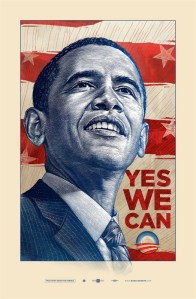
barack-obamaThe monsoon had woven thick skeins of mist over the central highlands of Vietnam. I was a young war correspondent, bivouacked in the village of Tuylon with a unit of US marines whose orders were to win hearts and minds. “We are here not to kill,” said the sergeant, “we are here to impart the American Way of Liberty as stated in the Pacification Handbook. This is designed to win the hearts and minds of folks, as stated on page 86.”

Page 86 was headed WHAM. The sergeant’s unit was called a combined action company, which meant, he explained, “we attack these folks on Mondays and we win their hearts and minds on Tuesdays”. He was joking, though not quite. Standing in a jeep on the edge of a paddy, he had announced through a loudhailer: “Come on out, everybody. We got rice and candy and toothbrushes to give you.”

Silence. Not a shadow moved.

“Now listen, either you gooks come on out from wherever you are, or we’re going to come right in there and get you!”

The people of Tuylon finally came out and stood in line to receive packets of Uncle Ben’s Long Grain Rice, Hershey bars, party balloons and several thousand toothbrushes. Three portable, battery-operated, yellow flush lavatories were kept for the colonel’s arrival. And when the colonel arrived that evening, the district chief was summoned and the yellow flush lavatories were unveiled.

“Mr District Chief and all you folks out there,” said the colonel, “what these gifts represent is more than the sum of their parts. They carry the spirit of America. Ladies and gentlemen, there’s no place on earth like America. It’s a guiding light for me, and for you. You see, back home, we count ourselves as real lucky having the greatest democracy the world has ever known, and we want you good folks to share in our good fortune.”

Thomas Jefferson, George Washington and Davy Crockett got a mention. “Beacon” was a favourite, and as he evoked John Winthrop’s “city upon a hill”, the marines clapped, and the children clapped, understanding not a word.

It was a lesson in what historians call “exceptionalism”, the notion that the United States has the divine right to bring what it describes as liberty and democracy to the rest of humanity. That this merely disguised a system of domination, which Martin Luther King described, shortly before his assassination, as “the greatest purveyor of violence in the world”, was unspeakable.

As the great people’s historian Howard Zinn has pointed out, Winthrop’s much-quoted description of the 17th-century Massachusetts Bay Colony as a “city upon a hill”, a place of unlimited goodness and nobility, was rarely set against the violence of the first settlers, for whom burning alive some 400 Pequot Indians was a “triumphant joy”. The countless massacres that followed, wrote Zinn, were justified by “the idea that American expansion is divinely ordained”.

Not long ago, I visited the American Museum of History, part of the celebrated Smithsonian Institution in Washington, DC. One of the popular exhibitions was “The Price of Freedom: Americans at War”. It was holiday time and lines of people, including many children, shuffled reverentially through a Santa’s grotto of war and conquest where messages about their nation’s “great mission” were dispensed. These ­included tributes to the “exceptional Americans [who] saved a million lives” in Vietnam, where they were “determined to stop communist expansion”. In Iraq, other true hearts ­“employed air strikes of unprecedented precision”. What was shocking was not so much the revisionist description of two of the epic crimes of modern times as the sheer scale of omission.

“History without memory,” declared Time magazine at the end of the 20th century, “confines Americans to a sort of eternal present.. They are especially weak in remembering what they did to other people, as opposed to what they did for them.” Ironically, it was Henry Luce, founder of Time, who in 1941 divined the “American century” as an American social, political and cultural “victory” over humanity and the right “to exert upon the world the full impact of our influence, for such purposes as we see fit and by such means as we see fit”.

None of this is to suggest that vainglory is exclusive to the United States. The British presented their often violent domination of much of the world as the natural progress of Christian gentlemen selflessly civilising the natives, and present-day TV historians perpetuate the myths. The French still celebrate their bloody “civilising mission”. Prior to the Second World War, “imperialist” was an honoured political badge in Europe, while in the US an “age of innocence” was preferred. America was different from the Old World, said its mythologists. America was the Land of Liberty, uninterested in conquest. But what of George Washington’s call for a “rising empire” and James Madison’s “laying the foundation of a great empire”? What of slavery, the theft of Texas from Mexico, the bloody subjugation of central America, Cuba and the Philippines?

An ordained national memory consigned these to the historical margins and “imperialism” was all but discredited in the United States, especially after Adolf Hitler and the fascists, with their ideas of racial and cultural superiority, had left a legacy of guilt by association. The Nazis, after all, had been proud imperialists, too, and Germany was also “exceptional”. The idea of imperialism, the word itself, was all but expunged from the American lexicon, “on the grounds that it falsely attributed immoral motives to western foreign policy”, argued one historian. Those who persisted in using it were “disreputable purveyors of agitprop” and were “inspired by the communist doctrine”, or they were “Negro intellectuals who had grievances of their own against white capitalism”.

Meanwhile, the “city on the hill” remained a beacon of rapaciousness as US capital set about realising Luce’s dream and recolonising the European empires in the postwar years. This was “the march of free enterprise”. In truth, it was driven by a subsidised production boom in a country unravaged by war: a sort of socialism for the great corporations, or state capitalism, which left half the world’s wealth in American hands. The cornerstone of this new imperialism was laid in 1944 at a conference of the western allies at Bretton Woods in New Hampshire. Described as “negotiations about economic stability”, the conference marked America’s conquest of most of the world.

What the American elite demanded, wrote Frederic F Clairmont in The Rise and Fall of Economic Liberalism, “was not allies but unctuous client states. What Bretton Woods bequeathed to the world was a lethal totalitarian blueprint for the carve-up of world markets.” The World Bank, the International Monetary Fund, the Asian Development Bank, the Inter-American Development Bank and the African Development Bank were established in effect as arms of the US Treasury and would design and police the new order. The US military and its clients would guard the doors of these “international” institutions, and an “invisible government” of media would secure the myths, said Edward Bernays.

Bernays, described as the father of the media age, was the nephew of Sigmund Freud. “Propaganda,” he wrote, “got to be a bad word because of the Germans… so what I did was to try and find other words [such as] Public Relations.” Bernays used Freud’s theories about control of the subconscious to promote a “mass culture” designed to promote fear of official enemies and servility to consumerism. It was Bernays who, on behalf of the tobacco industry, campaigned for American women to take up smoking as an act of feminist liberation, calling cigarettes “torches of freedom”; and it was his notion of disinformation that was deployed in overthrowing governments, such as Guatemala’s democracy in 1954.

Above all, the goal was to distract and deter the social democratic impulses of working people. Big business was elevated from its public reputation as a kind of mafia to that of a patriotic force. “Free enterprise” became a divinity. “By the early 1950s,” wrote Noam Chomsky, “20 million people a week were watching business-sponsored films. The entertainment industry was enlisted to the cause, portraying unions as the enemy, the outsider disrupting the ‘harmony’ of the ‘American way of life’… Every aspect of social life was targeted and permeated schools and universities, churches, even recreational programmes. By 1954, business propaganda in public schools reached half the amount spent on textbooks.”

The new “ism” was Americanism, an ideology whose distinction is its denial that it is an ideology. Recently, I saw the 1957 musical Silk Stockings, starring Fred Astaire and Cyd Charisse. Between the scenes of wonderful dancing to a score by Cole Porter was a series of loyalty statements that the colonel in Vietnam might well have written. I had forgotten how crude and pervasive the propaganda was; the Soviets could never compete. An oath of loyalty to all things American became an ideological commitment to the leviathan of business: from the business of armaments and war (which consumes 42 cents in every tax dollar today) to the business of food, known as “agripower” (which receives $157bn a year in government subsidies).

Barack Obama is the embodiment of this “ism”. From his early political days, Obama’s unerring theme has been not “change”, the slogan of his presidential campaign, but America’s right to rule and order the world. Of the United States, he says, “we lead the world in battling immediate evils and promoting the ultimate good… We must lead by building a 21st-century military to ensure the security of our people and advance the security of all people.” And: “At moments of great peril in the past century our leaders ensured that America, by deed and by example, led and lifted the world, that we stood and fought for the freedoms sought by billions of people beyond their borders.”

Since 1945, by deed and by example, the US has overthrown 50 governments, including democracies, crushed some 30 liberation movements and supported tyrannies from Egypt to Guatemala (see William Blum’s histories). Bombing is apple pie. Having stacked his government with warmongers, Wall Street cronies and polluters from the Bush and Clinton eras, the 45th president is merely upholding tradition. The hearts and minds farce I witnessed in Vietnam is today repeated in villages in Afghanistan and, by proxy, Pakistan, which are Obama’s wars.

In his acceptance speech for the 2005 Nobel Prize for Literature, Harold Pinter noted that “everyone knew that terrible crimes had been committed by the Soviet Union in the postwar period, but “US crimes in the same period have been only superficially recorded, let alone documented, let alone acknowledged, let alone recognised as crimes at all”. It is as if “It never happened. Nothing ever happened. Even while it was happening, it wasn’t happening… You have to hand it to America… masquerading as a force for universal good. It’s a brilliant, even witty, highly successful act of hypnosis.”

As Obama has sent drones to kill (since January) some 700 civilians, distinguished liberals have rejoiced that America is once again a “nation of moral ideals”, as Paul Krugman wrote in the New York Times. In Britain, the elite has long seen in exceptional America an enduring place for British “influence”, albeit as servitor or puppet. The pop historian Tristram Hunt says America under Obama is a land “where miracles happen”. Justin Webb, until recently the BBC’s man in Washington, refers adoringly, rather like the colonel in Vietnam, to the “city on the hill”.

Behind this façade of “intensification of feeling and degradation of significance” (Walter Lippmann), ordinary Americans are stirring perhaps as never before, as if abandoning the deity of the “American Dream” that prosperity is a guarantee with hard work and thrift.. Millions of angry emails from ordinary people have flooded Washington, expressing an outrage that the novelty of Obama has not calmed. On the contrary, those whose jobs have vanished and whose homes are repossessed see the new president rewarding crooked banks and an obese military, essentially protecting George W Bush’s turf.

My guess is that a populism will emerge in the next few years, igniting a powerful force that lies beneath America’s surface and which has a proud past. It cannot be predicted which way it will go. However, from such an authentic grass-roots Americanism came women’s suffrage, the eight-hour day, graduated income tax and public ownership. In the late 19th century, the populists were betrayed by leaders who urged them to compromise and merge with the Democratic Party. In the Obama era, the familiarity of this resonates.

What is most extraordinary about the United States today is the rejection and defiance, in so many attitudes, of the all-pervasive historical and contemporary propaganda of the “invisible government”. Credible polls have long confirmed that more than two-thirds of Americans hold progressive views. A majority want the government to care for those who cannot care for themselves. They would pay higher taxes to guarantee health care for everyone. They want complete nuclear disarmament; 72 per cent want the US to end its colonial wars; and so on. They are informed, subversive, even “anti-American”.

I once asked a friend, the great American war correspondent and humanitarian Martha Gellhorn, to explain the term to me. “I’ll tell you what ‘anti-American’ is,” she said. “It’s what governments and their vested interests call those who honour America by objecting to war and the theft of resources and believing in all of humanity. There are millions of these anti-Americans in the United States. They are ordinary people who belong to no elite and who judge their government in moral terms, though they would call it common decency. They are not vain. They are the people with a wakeful conscience, the best of America’s citizens. They can be counted on. They were in the South with the civil rights movement, ending slavery. They were in the streets, demanding an end to the wars in Asia. Sure, they disappear from view now and then, but they are like seeds beneath the snow. I would say they are truly exceptional.”

Adapted from an address, Empire, Obama and the Last Taboo, given by John Pilger at Socialism 2009 in San Francisco on 4th July.

[Source: johnpilger.com]

Hauerwas on sex, marriage, politics and love

Jan van Eyck, ‘The Arnolfini Portrait’ (1434). Oil on oak panel of 3 vertical boards; National Gallery, London.

Jan van Eyck, ‘The Arnolfini Portrait’ (1434). Oil on oak panel of 3 vertical boards; National Gallery, London.

‘The dominant assumption has been that the evaluation of different kinds of sexual expressions should center on whether they are or are not expressive of love. On the contrary, the ethics of sex must begin with political considerations, because ethically the issue of the proper form of sexual activity raises the most profound issues about the nature and form of political community. I am not denying that sex obviously has to do with interpersonal matters, but I am asserting that we do not even know what we need to say about the personal level until we have some sense of the political context necessary for the ordering of sexual activity. Indeed, one of the main difficulties with the assumption that thc ethics of sex can be determined on the basis of interpersonal criteria is the failure to see how that assumption itself reflects a political option. To reduce issues of sexuality to the question of whether acts of sex are or are not fulfilling for those involved is to manifest the assumption of political liberalism that sex is a private matter. The hold this political theory has on us is illustrated by how readily we also accept the assumption that the private nature of sexuality does not involve issues of political theory …

‘We must understand that if Christians and non-Christians differ over marriage, that difference does not lie in their understanding of the quality of interpersonal relationship needed to enter or sustain a marriage, but rather in a disagreement about the nature of marriage and its place in the Christian and national community. Christians above all should note that there are no conceptual or institutional reasons that require love between the parties to exist in order for the marriage to be successful …

The requirement of love in marriage is not correlative to the intrinsic nature of marriage but is based on the admonition for Christians to love one another. We do not love because we are married, but because we are Christian. We may, however, learn what such love is like within the context of marriage. For the Christian tradition claims that marriage helps to support an inclusive community of love by grounding it in a pattern of faithfulness toward another. The love that is required in marriage functions politically by defining the nature of Christian social order, and as children arrive they are trained in that order.

Moreover, Christians should see that the family cannot, contrary to [Bertrand] Russell’s claim, exist as an end in itself nor by itself provide a sufficient check against pretentious rationalism. Such an assumption is but a continuation of the liberal perversion of the family and only makes the family and marriage more personally destructive. When families exist for no reason other than their own existence, they become quasi-churches, which ask sacrifices far too great and for insufficient reasons. The risk of families which demand that we love one another can be taken only when there are sustaining communities with sufficient convictions that can provide means to form and limit the status of the family. If the family does stand as a necessary check on the state, as Russell and I both think it should, it does so because it first has a place in an institution that also stands against the state – the church …

‘ … the ambivalence of the church toward marriage is grounded in the eschatological convictions which freed some from the necessity of marriage – i.e., singleness becomes a genuine option for service to the community. This is a dangerous doctrine indeed, for it is a strange community which would risk giving singleness an equal status with marriage. But that is what the church did, and as a result marriage was made a vocation rather than a natural necessity. But as a vocation, marriage can be sustained only so long as it is clear what purposes it serves in the community which created it in the first place. With the loss of such a community sanction, we are left with the bare assumption that marriage is a voluntary institution motivated by the need for interpersonal intimacy …

‘Many want to treat sex as just another form of communication – like shaking hands. I suppose in response to such a suggestion one can at least point out that sex is often more fun than shaking hands. However, the reason that we seem to assume that sex should be reserved for “special relations” is not that sex itself is special, but that the nature of sex serves the ends of intimacy. But intimacy is indeed a tricky matter to sustain, and that may be the reason why many have argued that marriage is necessary to provide the perduring framework to sustain intimacy.

Moreover, once the political function of marriage is understood to be central for the meaning and institution of marriage, we have a better idea of what kinds of people we ought to be to deal with marriage. Most of the literature that attempts to instruct us about getting along in marriage fails to face up to a fact so clearly true that I have dared to call it Hauerwas’s Law: You always marry the wrong person. It is as important to note, of course, as Herbert Richardson pointed out to me, that the reverse of the law is also true: namely, that you also always marry the right person. The point of the law is to suggest the inadequacy of the current assumption that the success or failure of a marriage can be determined by marrying the “right person.” Even if you have married the “right person,” there is no guarantee that he or she will remain such, for people have a disturbing tendency to change. Indeed, it seems that many so-called “happy marriages” are such because of the partners’ efforts to preserve “love” by preventing either from changing.

This law is meant not only to challenge current romantic assumptions but to point out that marriage is a more basic reality than the interpersonal relations which may or may not characterize a particular marriage. Indeed, the demand that those in a marriage love one another requires that marriage have a basis other than the love itself. For it is only on such a basis that we can have any idea of how we should love’.

– Stanley Hauerwas, ‘Sex and Politics: Bertrand Russell and “Human Sexuality”‘.

Around the traps …

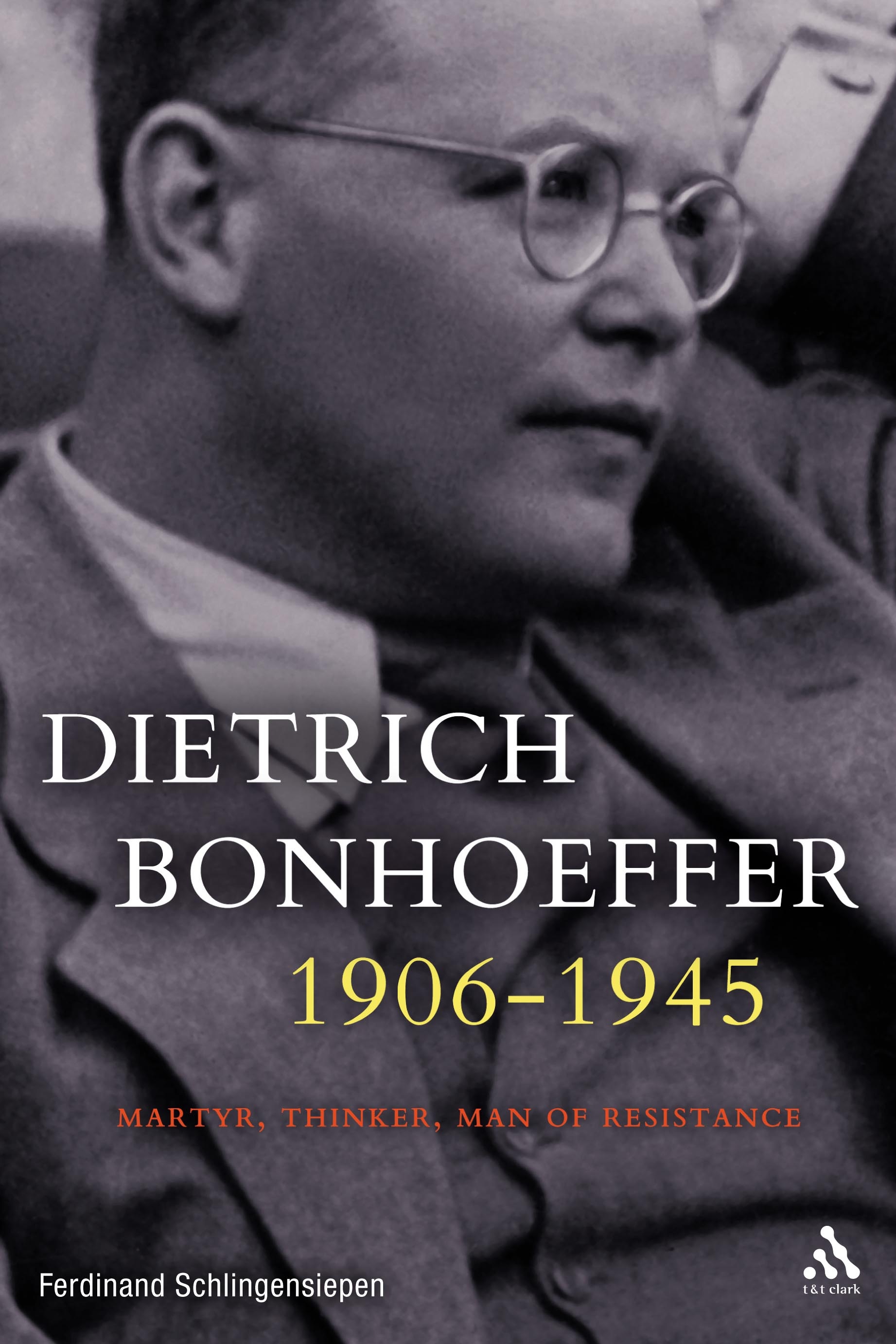
dietrich-bonhoeffer

John Pilger on ‘The politics of bollocks’

obamaWhile much of the world has been observing the post-election balloons starting to deflate, the last streamers being swept up, and the last drop of bubbly being sculled (though some of us have now refilled our flutes after recent news), John Pilger‘s gutsy pen has been resisting all efforts to shut up and be grateful that at least President Bush is gone. It’s time, he says, for Obama-lovers to grow up. He is, of course, right. Here’s Pilger piece published in yesterday’s New Statesman

‘Growing up in an Antipodean society proud of its rich variety of expletives, I never heard the word bollocks. It was only on arrival in England that I understood its magisterial power. All classes used it. Judges grunted it; an editor of the Daily Mirror used it as noun, adjective and verb. Certainly, the resonance of a double vowel saw off its closest American contender. It had authority.

A high official with the Gilbertian title of Lord West of Spithead used it to great effect on 27 January. The former admiral, who is a security adviser to Gordon Brown, was referring to Tony Blair’s assertion that invading countries and killing innocent people did not increase the threat of terrorism at home.

“That was clearly bollocks,” said his lordship, who warned of a perceived “linkage between the US, Israel and the UK” in the horrors inflicted on Gaza and the effect on the recruitment of terrorists in Britain. In other words, he was stating the obvious: that state terrorism begets individual or group terrorism at source. Just as Blair was the prime mover of the London bombings of 7 July 2005, so Brown, having pursued the same cynical crusades in Muslim countries and having armed and disported himself before the criminal regime in Tel Aviv, will share responsibility for related atrocities at home.

There is a lot of bollocks about at the moment.

The BBC’s explanation for banning an appeal on behalf of the stricken people of Gaza is a vivid example. Mark Thompson, the BBC’s director general, cited the corporation’s legal requirement to be “impartial . . . because Gaza remains a major ongoing news story in which humanitarian issues . . . are both at the heart of the story and contentious”.

In a letter to Thompson, David Bracewell, a licence-fee payer, illuminated the deceit behind this. He pointed to previous BBC appeals for the Disasters Emergency Committee that were not only made in the midst of “an ongoing news story” in which humanitarian issues were “contentious”, but also demonstrated how the corporation took sides.

In 1999, at the height of the illegal Nato bombing of Serbia and Kosovo, the TV presenter Jill Dando made an appeal on behalf of Kosovar refugees. The BBC web page for that appeal was linked to numerous articles meant to stress the gravity of the humanitarian issue. These included quotations from Blair himself, such as: “This will be a daily pounding until he [Slobodan Milosevic] comes into line with the terms that Nato has laid down.” There was no significant balance of view from the Yugoslav side, and not a single mention that the flight of Kosovar refugees began only after Nato had started bombing.

Similarly, in an appeal for victims of the civil war in the Congo, the BBC favoured the regime led by Joseph Kabila by not referring to Amnesty, Human Rights Watch and other reports accusing his forces of atrocities. In contrast, the rebel leader Laurent Nkunda was “accused of committing atrocities” and ordained the bad guy by the BBC. Kabila, who represented western interests, was clearly the good guy – just like Nato in the Balkans and Israel in the Middle East.

While Mark Thompson and his satraps richly deserve the Lord West of Spithead Bollocks Blue Ribbon, that honour goes to the cheer squad of President Barack Obama, whose cult-like obeisance goes on and on.

On 23 January, the Guardian‘s front page declared, “Obama shuts network of CIA ‘ghost prisons'”. The “wholesale deconstruction [sic] of George Bush’s war on terror”, said the report, had been ordered by the new president, who would be “shutting down the CIA’s secret prison network, banning torture and rendition . . .”

The bollocks quotient on this was so high that it read like the press release it was, citing “officials briefing reporters at the White House yesterday”. Obama’s orders, according to a group of 16 retired generals and admirals who attended a presidential signing ceremony, “would restore America’s moral standing in the world”. What moral standing? It never ceases to astonish that experienced reporters can transmit PR stunts like this, bearing in mind the moving belt of lies from the same source under only nominally different management.

Far from “deconstructing the war on terror”, Obama is clearly pursuing it with the same vigour, ideological backing and deception as the previous administration. George W Bush’s first war, in Afghanistan, and last war, in Pakistan, are now Obama’s wars – with thousands more US troops to be deployed, more bombing and more slaughter of civilians. Last month, on the day he described Afghanistan and Pakistan as “the central front in our enduring struggle against terrorism and extremism”, 22 Afghan civilians died beneath Obama’s bombs in a hamlet populated mainly by shepherds and which, by all accounts, had not laid eyes on the Taliban. Women and children were among the dead, which is normal.

Far from “shutting down the CIA’s secret prison network”, Obama’s executive orders actually give the CIA authority to carry out renditions, abductions and transfers of prisoners in secret without threat of legal obstruction. As theLos Angeles Times disclosed, “current and former US intelligence officials said that the rendition programme might be poised to play an expanded role”. A semantic sleight of hand is that “long-term prisons” are changed to “short-term prisons”; and while Americans are now banned from directly torturing people, foreigners working for the US are not. This means that America’s numerous “covert actions” will operate as they did under previous presidents, with proxy regimes, such as Augusto Pinochet’s in Chile, doing the dirtiest work.

Bush’s open support for torture, and Donald Rumsfeld’s extraordinary personal overseeing of certain torture techniques, upset many in America’s “secret army” of subversive military and intelligence operators because it exposed how the system worked. Obama’s newly confirmed director of national intelligence, Admiral Dennis Blair, has said the Army Field Manual may include new forms of “harsh interrogation” which will be kept secret.

Obama has chosen not to stop any of this. Neither do his ballyhooed executive orders put an end to Bush’s assault on constitutional and international law. He has retained Bush’s “right” to imprison anyone, without trial or charge. No “ghost prisoners” are being released or are due to be tried before a civilian court. His nominee for attorney general, Eric Holder, has endorsed an extension of Bush’s totalitarian USA Patriot Act, which allows federal agents to demand Americans’ library and bookshop records. The man of “change” is changing little. That ought to be front-page news from Washington.

The Lord West of Spithead Bollocks Prize (Runner-Up) is shared. On 28 January, a nationally run Greenpeace advertisement opposing a third runway at Heathrow Airport in London summed up the almost wilful naivety that has obstructed informed analysis of the Obama administration.

“Fortunately,” declared Greenpeace beneath a Godlike picture of Obama, “the White House has a new occupant, and he has asked us all to roll back the spectre of a warming planet.” This was followed by Obama’s rhetorical flourish about “putting off unpleasant decisions”. In fact, the president has made no commitment to curtail America’s infamous responsibility for the causes of global warming. As with George W Bush and most other modern-era presidents, it is oil, not stemming carbon emissions, that informs his administration. His national security adviser, General Jim Jones, a former Nato supreme commander, made his name planning US military control over the exploitation of oil and gas reserves from the Persian Gulf and the Caspian Sea to the Gulf of Guinea off Africa.

Sharing the Bollocks Runner-Up Prize is the Observer, which on 25 January published a major news report headlined, “How Obama set the tone for a new US revolution”. This was reminiscent of the Observer almost a dozen years ago when liberalism’s other great white hope, Tony Blair, came to power. “Goodbye xenophobia” was the Observer‘s post-election front page in 1997 and “The Foreign Office says ‘Hello World, remember us?'”. The government, said the breathless text, would push for “new worldwide rules on human rights and the environment” and implement “tough new limits” on arms sales. The opposite happened. Last year, Britain was the biggest arms dealer in the world; currently, it is second only to the United States.

In the Blair mould, the Obama White House “sprang into action” with its “radical plans”. The president’s first phone call was to that Palestinian quisling, the unelected and deeply unpopular Mahmoud Abbas. There was a “hot pace” and a “new era”, in which a notorious name from an ancien régime, Richard Holbrooke, was despatched to Pakistan. In 1978, Holbrooke betrayed a promise to normalise relations with the Vietnamese on the eve of a vicious embargo ruined the lives of countless Vietnamese children. Under Obama, the “sense of a new era abroad”, declared the Observer, “was reinforced by the confirmation of Hillary Clinton as secretary of state”. Clinton has threatened to “entirely obliterate Iran” on behalf of Israel.

What the childish fawning over Obama obscures is the dark power assembled under cover of America’s first “post-racial president”. Apart from the US, the world’s most dangerous state is demonstrably Israel, having recently killed and maimed some 4,000 people in Gaza with impunity. On 10 February, a bellicose Israeli electorate is likely to put Binyamin Netanyahu into power. Netanyahu is a fanatic’s fanatic who has made clear his intention of attacking Iran. In the Wall Street Journal of 24 January, he described Iran as the “terrorist mother base” and justified the murder of civilians in Gaza because “Israel cannot accept an Iranian terror base [Gaza] next to its major cities”. On 31 January, unaware he was being filmed, Tel Aviv’s ambassador to Australia described the massacres in Gaza as a “pre-introduction” – a dress rehearsal – for an attack on Iran.

For Netanyahu, the reassuring news is that the new US administration is the most Zionist in living memory, a truth that has struggled to be told from beneath the soggy layers of Obama-love. Not a single member of the president’s team demurred from his support for Israel’s barbaric actions in Gaza. Obama himself likened the safety of his two young daughters with that of Israeli children but made not a single reference to the thousands of Palestinian children killed with American weapons – a violation of both international and US law. He did, however, demand that the people of Gaza be denied “smuggled” small arms with which to defend themselves against the world’s fourth-largest military power. And he paid tribute to the Arab dictatorships, such as Egypt, which are bribed by the US treasury to help the United States and Israel enforce policies described by the UN special rapporteur Richard Falk, a Jew, as “genocidal”.

It is time the Obama lovers grew up. It is time those paid to keep the record straight gave us the opportunity to debate informatively. In the 21st century, people power remains a huge and exciting and largely untapped force for change, but it is nothing without truth. “In the time of universal deceit,” wrote George Orwell, “telling the truth is a revolutionary act.”

Howard Zinn on ‘War and Social Justice’

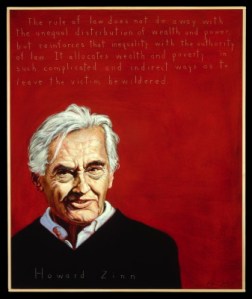
howard-zinI appreciate reading and listening to American historian and playwrite Howard Zinn. Democracy Now recently posted a wonderful speech by Zinn which he gave at Binghamton University a few days after the 2008 presidential election. The speech is entitled ‘War and Social Justice’. It’s also available as Real Video Stream, Real Audio Stream or MP3, as well as via iTunes for thoser who subscribe to the DN podcast (audio) or (video).

Oliver O’Donovan on democracy


Two quotes from Oliver O’Donovan that arose out of this discussion on voting:

‘One could almost say that there is only one political question worth asking about liberal democracy: how firmly are the two elements, political freedom and and electoral legitimation, bound together? Is their conjunction a matter of necessity? Or is it merely the product of a peculiar socio-ecological niche, perhaps too fragile or too specialized to transplant?’ – Oliver O’Donovan, Ways of Judgment (Grand Rapids: Eerdmans, 2005), 168.

‘Electoral forms, then, not only fail to guarantee a just, or liberal, government; they are no guarantee of material representation either. The defense of Western democracy must, it seems, be even more modest than the most modest defense current among apologists. Perhaps it may take some form such as this: Modes of representation cannot be chosen in a vacuum; they are dependent upon the conditions of society and on the forms of spontaneous representation that arise unbidden. In a society that has lost most of its traditional representative forms to the unstable and shifting relations built on individualism and technology, but which can count on economic wealth, good communications, and general literacy, there is not serious alternative to the ballot box. Attempts to revive lost forms of loyalty are liable to be Ersatz and morally hollow; we had better secure ourselves against the temptations they present by setting a high procedural threshold for movement of spontaneous popular identity, and this electoral democracy provides. The case for democracy is that it is specifically appropriate to Western society at this juncture. It is a moment in the Western tradition; it has it own ecological niche. This allows us no universal claims of the “best regime” kind, nor does it permit the imperialist view that the history of democracy is the history of progress. Yet within its own terms it allows us to be positive about democracy’s strengths. The best regime is precisely that regimne that plays to the virtues and skills of those who are governed by it; and this one serves us well in demanding and developing certain virtues of bureaucratic and public discourse that the Western tradition has instilled. It is our tradition; we are bred in it; we can, if we are sensible about it, make it work’.  – Oliver O’Donovan, Ways of Judgment (Grand Rapids: Eerdmans, 2005), 178 .

Thirteen Propositions on Voting: a repost

I rarely do this, but some time ago, I posted Thirteen Propositions on Voting. Looking over them again today in light of tomorrow’s US elections, I thought that it was worth a repost:

A preamble: this is not an exhaustive list.

1. Remember, if you are a Christian then you are part of a pilgrim people who ought never really feel at home in this world because we have been made for another.

2. No matter which government is in power, the Church’s charge remains the same – to preach the Gospel. This will include, among other things, at least a 4-fold word: (i) challenging the structures of our society that demean humanity made in the image of God; (ii) challenging the agendas of our society that leave the poor and the widows and the orphans without a voice; (iii) challenging the complacency of a people who refuse to think, or can’t be bothered thinking, about the consequences of the decisions we are making (this has obvious international consequences); and (iv) challenging the selfishness of those who get fatter and fatter at the expense of others, and at the expense of the creation.

3. God’s people receive their identity not from earthly governments, but from the knowledge that they belong to the Lord Jesus and live under his government, and by his word.

4. Regardless of what’s going on in the fleeting world of politics, the Gospel will always have something to say to the world, and to a Church that must continuously strive to keep itself from ever thinking that the Gospel of the Cross is not enough.

5. We must beware lest we fall into the trap that so many Christians throughout history have fallen into of believing that there is such a thing as the only and true Christian form of government. No political party can be baptised, nor any political system. The radical call of Jesus remains regardless of what the government of the day is doing. This doesn’t mean that we shouldn’t strive to bring about godly reforms and laws in the land, but it does mean that we mustn’t delude ourselves into thinking that we can create a heaven on earth.

6. The temptation to deny Christ exists no matter what the political situation and culture is.

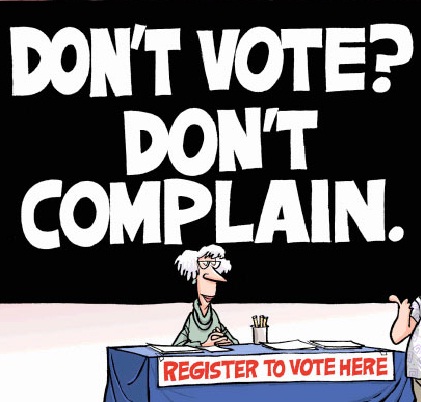
7. Don’t be among those who see voting as a chore and as a painful waste of time. Remember that it is a privilege to vote. God has placed many of us in countries where we have the opportunity to take part in decision making as well as in the keeping of our elected leaders accountable. Thank God that some of God’s people live in such places. [I have always struggled to understand how a democracy can encourage non-compulsory voting, not least given the claim of support for democracy-making in other parts of the world!]

8. Thank God for democracy, but never trust it. ‘Democracy’, wrote Forsyth, ‘is but a half-truth. It must have a King. Aristocracy is just as true and as needful. It builds on an authority in things no less than democracy builds on an equality. The free personality of democracy is only possible under a free authority. The free soul is only possible in a free King … There must always be a House of Moral Lords. There must always be leaders and led, prophets and people, apostles and members, genius and its circle, and elect and a called. Ah! democratic and aristocratic principles are both deep in the foundations of our Christian faith’. At the end of the day, ‘democracy is the recurrent suspicion that more than half of the people are right more than half the time’ (E. B. White). Recall the words of C.S. Lewis: ‘I am a democrat [believer in democracy] because I believe in the Fall of Man. I think most people are democrats for the opposite reason. A great deal of democratic enthusiasm descends from the ideas of people like Rousseau, who believed in democracy because they thought mankind so wise and good that every one deserved a share in the government. The danger of defending democracy on those grounds is that they’re not true … I find that they’re not true without looking further than myself. I don’t deserve a share in governing a hen-roost. Much less a nation … The real reason for democracy is just the reverse. Mankind is so fallen that no man can be trusted with unchecked power over his fellows. Aristotle said that some people were only fit to be slaves. I do not contradict him. But I reject slavery because I see no men fit to be masters’.

9. Remember that even secular leadership comes under the domain of God’s sovereignty, and that God uses non-Christians, as well as Christians, to bring about his purposes. The Bible assures us that all those who serve the people well are servants of God. So thank God for his own sovereign governing of the world (Rom 13:1-7).

10. Pray diligently for the leaders and all those in responsibilities of power and decision making. We are commanded by God to pray for all our leaders. Pray that they would make wise and just decisions and govern with mercy as well as strength. Pray for those who do not know Christ, that they would become Christians.

11. Pray for wisdom about your vote. Make your vote count. Make your vote a wise vote.

12. Don’t vote for the party who will best serve your pocket and own interests, but vote for the government or person who you prayerfully and honestly believe can best think through the necessary and complex issues with an attitude of serving others within their own country, and beyond.

13. Once the election has taken place, don’t grumble if your choice of party or person is not elected, for Peter tells us to, ‘Live such good lives among the pagans that, though they accuse you of doing wrong, they may see your good deeds and glorify God on the day he visits us. Submit yourselves for the Lord’s sake to every authority instituted among men: whether to the king, as the supreme authority, or to governors, who are sent by him to punish those who do wrong and to commend those who do right. For it is God’s will that by doing good you should silence the ignorant talk of foolish men. Live as free men, but do not use your freedom as a cover-up for evil; live as servants of God. Show proper respect to everyone: Love the brotherhood of believers, fear God, honour the king (1 Peter 2:12-17).

NT Wright – ‘Kingdom come: The public meaning of the Gospels’

Kingdom come: The public meaning of the Gospels
by N.T. Wright

In his new book, The Great Awakening, Jim Wallis describes how as a young man growing up in an evangelical church, he never heard a sermon on the Sermon on the Mount. That telling personal observation reflects a phenomenon about which I have been increasingly concerned: that much evangelical Christianity on both sides of the Atlantic has based itself on the epistles rather than the Gospels, though often misunderstanding the epistles themselves.

Indeed, in this respect evangelicalism has simply mirrored a much larger problem: the entire Western church, both Catholic and Protestant, evangelical and liberal, charismatic and social activist, has not actually known what the Gospels are there for.

Matthew, Mark, Luke and John are all in their various ways about God in public, about the kingdom of God coming on earth as in heaven through the public career and the death and resurrection of Jesus. The massive concentration on source and form criticism, the industrial-scale development of criteria for authenticity (or, more often, inauthenticity), and the extraordinary inverted snobbery of preferring gnostic sayings-sources to the canonical documents all stem from, and in turn reinforce, the determination of the Western world and church to make sure that the four Gospels will not be able to say what they want to say, but will be patronized, muzzled, dismembered and eventually eliminated altogether as a force to be reckoned with.

The central message of all four canonical Gospels is that the Creator God, Israel’s God, is at last reclaiming the whole world as his own, in and through Jesus of Nazareth. That, to offer a riskily broad generalization, is the message of the kingdom of God, which is Jesus’ answer to the question, What would it look like if God were running this show?

And at once, in the 21st century as in the first, we are precipitated into asking the vital question, Which God are we talking about, anyway? It is quite clear if one reads Christopher Hitchens or Friedrich Nietzsche that the image of “God running the world” against which they are reacting is the image of a celestial tyrant imposing his will on an unwilling world and unwilling human beings, cramping their style, squashing their individuality and their very humanness, requiring them to conform to arbitrary and hurtful laws and threatening them with dire consequences if they resist. This narrative (which contains a fair amount of secularist projection) serves the Enlightenment’s deist agenda, as well as the power interests of those who would move God to a remote heaven so that they can continue to exploit the world.

But the whole point of the Gospels is that the coming of God’s kingdom on earth as in heaven is precisely not the imposition of an alien and dehumanizing tyranny, but rather the confrontation of alien and dehumanizing tyrannies with the news of a God-the God recognized in Jesus-who is radically different from them all, and whose inbreaking justice aims at rescuing and restoring genuine humanness. The trouble is that in our flat-Earth political philosophies we know only the spectrum which has tyranny at one end and anarchy at the other, with the present democracies our dangerously fragile way of warding off both extremes. The news of God’s sovereign rule inevitably strikes democrats, not just anarchists, as a worryingly long step toward tyranny as we apply to God and to the Gospels the hermeneutic of suspicion that we rightly apply to those in power who assure us that they have our best interests at heart. But the story that the Gospels tell systematically resists this deconstruction-for three reasons having to do with the integration of the Gospel stories both internally and externally.

First, the narrative told by each Gospel-yes, in different ways, but in this regard the canonical Gospels stand shoulder to shoulder over against the Gospel of Thomas and the rest-presents itself as an integrated whole in a way that scholarship has found almost impossible to reflect. Attention has been divided, focusing either on Jesus’ announcement of the kingdom and the powerful deeds-healings, feastings and so on-in which it is instantiated, or on his death and resurrection. The Gospels have thus been seen either as a social project with an unfortunate, accidental and meaningless conclusion, or as passion narratives with extended introductions. Thus the Gospels, in both popular and scholarly readings, have been regarded either as grounding a social gospel whose naive optimism has no place for the radical fact of the cross, still less the resurrection-the kind of naïveté that Reinhold Niebuhr regularly attacked-or as merely providing the raw historical background for the developed, and salvific, Pauline gospel of the death of Jesus. If you go the latter route, the only role left for the stories of Jesus’ healings and moral teachings is, as for Rudolf Bultmann, as stories witnessing to the church’s faith, or, for his fundamentalist doppelgängers, stories that proved Jesus’ divinity rather than launching any kind of program (despite Luke 4, despite the Sermon on the Mount, despite the terrifying warnings about the sheep and the goats!).

Appeals for an integrated reading have met stiff opposition from both sides: those who have emphasized Jesus’ social program lash out wildly at any attempt to highlight his death and resurrection, as though that would simply legitimate a fundamentalist program, either Catholic or Protestant, while those who have emphasized his death and resurrection do their best to anathematize any attempt to continue Jesus’ work with and for the poor, as though that might result in justification by works, either actually or at the existentialist meta-level of historical method (Bultmann again, and Gerhard Ebeling and others).

The lesson is twofold: (1) Yes, Jesus did indeed launch God’s saving sovereignty on earth as in heaven; but this could not be accomplished without his death and resurrection. The problem to which God’s kingdom-project was and is the answer is deeper than can be addressed by a social program alone.

(2) Yes, Jesus did, as Paul says, die for our sins, but his whole agenda of dealing with sin and all its effects and consequences was never about rescuing individual souls from the world but about saving humans so that they could become part of his project of saving the world. “My kingdom is not from this world,” he said to Pilate; had it been, he would have led an armed resistance movement like other worldly kingdom-prophets. But the kingdom he brought was emphatically for this world, which meant and means that God has arrived on the public stage and is not about to leave it again; he has thus defeated the forces both of tyranny and of chaos-both of shrill modernism and of fluffy postmodernism, if you like-and established in their place a rule of restorative, healing justice, which needs translating into scholarly method if the study of the Gospels is to do proper historical, theological and political justice to the subject matter.

It is in the entire Gospel narrative, rather than any of its possible fragmented parts, that we see that complete, many-sided kingdom work taking shape. And this narrative, read this way, resists deconstruction into power games precisely because of its insistence on the cross. The rulers of the world behave one way, declares Jesus, but you are to behave another way, because the Son of Man came to give his life as a ransom for many. We discover that so-called atonement theology within that statement of so-called political theology. To state either without the other is to resist the integration, the God-in-public narrative, which the Gospels persist in presenting.

Second, the Gospels demand to be read in deep and radical integration with the Old Testament. Recognition of this point has been obscured by perfectly proper post-Holocaust anxiety about apparently anti-Jewish readings. But we do the Gospels no service by screening out the fact that each of them in its own way (as opposed, again, to the Gospel of Thomas and the rest) affirms the God-givenness and God-directedness of the entire Jewish narrative of creation, fall, Abraham, Moses, David and so on. The Old Testament is the narrative of how the Creator God is rescuing creation from its otherwise inevitable fate, and it was this project, rather than some other, which was brought to successful completion in and through Jesus. The Gospels, like Paul’s gospel, are to that extent folly to pagans, ancient and modern alike, and equally scandalous to Jews. We gain nothing exegetically, historically, theologically or politically by trying to make the Gospels less Jewishly foolish (or vice versa) to paganism and hence less scandalous, in their claim of fulfillment, to Judaism.

Third, the Gospels thus demonstrate a close integration with the genuine early Christian hope, which is precisely not the hope for heaven in the sense of a blissful disembodied life after death in which creation is abandoned to its fate, but rather the hope, as in Ephesians 1, Romans 8 and Revelation 21, for the renewal and final coming together of heaven and earth, the consummation precisely of God’s project to be savingly present in an ultimate public world. And the point of the Gospels is that with the public career of Jesus, and with his death and resurrection, this whole project was decisively inaugurated, never to be abandoned.

From the perspective of these three integrations, we can see how mistaken are the readings of both the neo-Gnostic movement that is so rampant today and the fundamentalism that is its conservative analogue. Indeed, if an outsider may venture a guess, I think the phenomenon of the religious right in the U.S. (we really have no parallel in the United Kingdom) may be construed as a clumsy attempt to recapture the coming together of God and the world, which remains stubbornly in scripture but which the Enlightenment had repudiated, and which fundamentalism itself continues to repudiate with its dualistic theology of rapture and Armageddon.

It is as though the religious right has known in its bones that God belongs in public, but without understanding either why or how that might make sense; while the political left in the U.S., and sometimes the religious left on both sides of the Atlantic, has known in its bones that God would make radical personal moral demands as part of his program of restorative justice, and has caricatured his public presence as a form of tyranny in order to evoke the cheap and gloomy Enlightenment critique as a way of holding that challenge at bay.

The resurrection of Jesus is to be seen not as the proof of Jesus’ uniqueness, let alone his divinity-and certainly not as the proof that there is a life after death, a heaven and a hell (as though Jesus rose again to give prospective validation to Dante or Michelangelo!)-but as the launching within the world of space, time and matter of that God-in-public reality of new creation called God’s kingdom, which, within 30 years, would be announced under Caesar’s nose openly and unhindered. The reason those who made that announcement were persecuted is, of course, that the fact of God acting in public is deeply threatening to the rulers of the world in a way that Gnosticism in all its forms never is. The Enlightenment’s rejection of the bodily resurrection has for too long been allowed to get away with its own rhetoric of historical criticism-as though nobody until Gibbon or Voltaire had realized that dead people always stay dead-when in fact its nonresurrectional narrative clearly served its own claim to power, presented as an alternative eschatology in which world history came to its climax not on Easter Day but with the storming of the Bastille and the American Declaration of Independence.

Near the heart of the early chapters of Acts we find a prayer of the church facing persecution, and the prayer makes decisive use of one of the most obviously political of all the Psalms. Psalm 2 declares that though the nations make a great noise and fuss and try to oppose God’s kingdom, God will enthrone his appointed king in Zion and thus call the rulers of the earth to learn wisdom from him. This point, which brings into focus a good deal of Old Testament political theology, is sharply reinforced in the early chapters of the Wisdom of Solomon.

Psalm 2 also appears at the start of the Gospel narratives, as Jesus is anointed by the Spirit at his baptism. Much exegesis has focused on the christological meaning of “Son of God” here; my proposal is that we should focus equally, without marginalizing that Christology, on the political meaning. The Gospels constitute a call to the rulers of the world to learn wisdom in service to the messianic Son of God, and thus they also provide the impetus for a freshly biblical understanding of the role of the “rulers of the world” and of the tasks of the church in relation to them. I have three points to make in this regard.

First, it is noteworthy that the early church, aware of prevailing tyrannies both Jewish and pagan, and insisting on exalting Jesus as Lord over all, did not reject the God-given rule even of pagans. This is a horrible disappointment, of course, to post-Enlightenment liberals, who would much have preferred the early Christians to have embraced some kind of holy anarchy with no place for any rulers at all. But it is quite simply part of a creational view of the world that God wants the world to be ordered, not chaotic, and that human power structures are the God-given means by which that end is to be accomplished-otherwise those with muscle and money will always win, and the poor and the widows will be trampled on afresh. This is the point at which Colossians 1 makes its decisive contribution over against all dualisms which imagine that earthly rulers are a priori a bad thing (the same dualisms that have dominated both the method and the content of much biblical scholarship). This is the point, as well, at which the notion of the common good has its contribution to make. The New Testament does not encourage the idea of a complete disjunction between the political goods to be pursued by the church and the political goods to be pursued by the world outside the church, precisely for the reason that the church is to be seen as the body through whom God is addressing and reclaiming the world.

To put this first point positively, the New Testament reaffirms the God-given place even of secular rulers, even of deeply flawed, sinful, self-serving, corrupt and idolatrous rulers like Pontius Pilate, Felix, Festus and Herod Agrippa. They get it wrong and they will be judged, but God wants them in place because order, even corrupt order, is better than chaos. Here we find, in the Gospels, in Acts and especially in Paul, a tension that cannot be dissolved without great peril. We in the contemporary Western world have all but lost the ability conceptually-never mind practically-to affirm that rulers are corrupt and to be confronted yet are God-given and to be obeyed. That sounds to us as though we are simultaneously to affirm anarchy and tyranny. But this merely shows how far our conceptualities have led us again to muzzle the texts in which both stand together. How can that be?

The answer comes-and this is my second point-in such passages as John 19 on the one hand and 1 Corinthians 2 and Colossians 2 on the other. The rulers of this age inevitably twist their God-given vocation-to bring order to the world-into the satanic possibility of tyranny. But the cross of Jesus, enthroned as the true Son of God as in Psalm 2, constitutes the paradoxical victory by which the rulers’ idolatry and corruption are confronted and overthrown. And the result, as in Colossians 1:18-20, is that the rulers are reconciled, are in some strange sense reinstated as the bringers of God’s wise order to the world, whether or not they would see it that way. This is the point at which Romans 13 comes in, not as the validation of every program that every ruler dreams up, certainly not as the validation of what democratically elected governments of one country decide to do against other countries, but as the strictly limited proposal, in line with Isaiah’s recognition of Cyrus, that the Creator God uses even those rulers who do not know him personally to bring fresh order and even rescue to the world. This lies also behind the narrative of Acts.

This propels us to a third, perhaps unexpected and certainly challenging reflection that the present political situation is to be understood in terms of the paradoxical lordship of Jesus himself. From Matthew to John to Acts, from Colossians to Revelation, with a good deal else in between, Jesus is hailed as already the Lord of both heaven and earth, and in particular as the one through whom the Creator God will at last restore and unite all things in heaven and on earth. And this gives sharp focus to the present task of earthly rulers. Until the achievement of Jesus, a biblical view of pagan rulers might have been that they were charged with keeping God’s creation in order, preventing it from lapsing into chaos. Now, since Jesus’ death and resurrection (though this was of course anticipated in the Psalms and the prophets), their task is to be seen from the other end of the telescope. Instead of moving forward from creation, they are to look forward (however unwillingly or unwittingly) to the ultimate eschaton. In other words, God will one day right all wrongs through Jesus, and earthly rulers, whether or not they acknowledge this Jesus and this coming kingdom, are entrusted with the task of anticipating that final judgment and that final mercy. They are not merely to stop God’s good creation from going utterly to the bad. They are to enact in advance, in a measure, the time when God will make all things new and will once again declare that it is very good.

All this might sound like irrationally idealistic talk-and it is bound to be seen as such by those for whom all human authorities are tyrants by another name-were it not for the fact that along with this vision of God working through earthly rulers comes the church’s vocation to be the people through whom the rulers are to be reminded of their task and called to account. We see this happening throughout the book of Acts and on into the witness of the second-century apologists-and, indeed, the witness of the martyrs as well, because martyrdom (which is what happens when the church bears witness to God’s call to the rulers and the rulers shoot the messenger because they don’t like the message) is an inalienable part of political theology. You can have as high a theology of the God-given calling of rulers as you like, as long as your theology of the church’s witness, and of martyrdom, matches it stride for stride.

This witness comes into sharp focus in John 16:8-11. The Spirit, declares Jesus, will prove the world wrong about sin, righteousness and judgment-about judgment because the ruler of this world is judged. How is the Spirit to do that? Clearly, within Johannine theology, through the witness of the church, in and through which the Spirit is at work. The church will do to the rulers of the world what Jesus did to Pilate in John 18 and 19, confronting him with the news of the kingdom and of truth, deeply unwelcome and indeed incomprehensible though both of them were. Part of the way in which the church will do this is by getting on with, and setting forward, those works of justice and mercy, of beauty and relationship, that the rulers know ought to be flourishing but which they seem powerless to bring about. But the church, even when faced with overtly pagan and hostile rulers, must continue to believe that Jesus is the Lord before whom they will bow and whose final sovereign judgment they are called to anticipate. Thus the church, in its biblical commitment to “doing God in public,” is called to learn how to collaborate without compromise (hence the vital importance of common-good theory) and to critique without dualism.

In particular, as one sharp focus for all this, it is vital that the church learn to critique the present workings of democracy itself. I don’t simply mean that we should scrutinize voting methods, campaign tactics or the use of big money within the electoral process. I mean that we should take seriously the fact that our present glorification of democracy emerged precisely from Enlightenment dualism-the banishing of God from the public square and the elevation of vox populi to fill the vacuum, which we have seen to be profoundly inadequate when faced with the publicness of the kingdom of God. And we should take very seriously the fact that the early Jews and Christians were not terribly interested in the process by which rulers came to power, but were extremely interested in what rulers did once they had obtained power. The greatest democracies of the ancient world, those of Greece and Rome, had well-developed procedures for assessing their rulers once their term of office was over if not before, and if necessary for putting them on trial. Simply not being reelected (the main threat to politicians in today’s democracies) was nowhere near good enough. When Kofi Annan retired as general secretary of the United Nations, one of the key points he made was that we urgently need to develop ways of holding governments to account. That is a central part of the church’s vocation, which we should never have lost and desperately need to recapture.

All this, of course, demands as well that the church itself be continually called to account, since we in our turn easily get it wrong and become part of the problem instead of part of the solution. That is why the church must be semper reformanda as it reads the Bible, especially the Gospels. Fortunately, that’s what the Gospels are there for, and that’s what they are good at, despite generations of so-called critical methods which sometimes seem to have been designed to prevent the Gospels from being themselves. Part of the underlying aim of this essay is to encourage readings of the Bible which, by highlighting the publicness of God and the gospel, set forward those reforms which will enable the church to play its part in holding the powers to account and thus advancing God’s restorative justice.

This article is adapted from a lecture N.T. Wright gave at a meeting of the Society of Biblical Literature in November 2007.

[Source: The Christian Century]

More Chomsky

Chomsky in the news

Chomsky on video

Chomsky interviews

When asked: ‘Should US officials be held accountable for war crimes committed by Sadaam Hussein against Iran while receiving US support? What would have to happen before such jurisdiction could be enforced and accused individuals brought to justice?’ His reply:

If we accept the elementary moral principle of universality then there is no doubt that US officials should be held accountable for their conscious support for horrendous crimes, and even more so, for the crimes they commit themselves. We may recall, in this connection, the eloquent words of Justice Robert Jackson at Nuremberg, cited in Interventions, which explicitly address this quesiton. What would have to happen before we could apply to ourselves the principles we sternly apply to others? Something like a moral revolution. That’s by no means impossible. There has been considerable progress in these respects over the years, though there is still a long way to go …

2008 Gifford Lectures: ‘Religion and Its Recent Critics’

Professor David Fergusson (Professor of Divinity, The University of Edinburgh) will deliver the 2008 Gifford Lectures on the topic ‘Religion and Its Recent Critics’. The program for the 2008 Gifford Lectures is available here, and it looks impressive.

Tuesday 8 April
The new atheism: historical roots and contemporary context.

Thursday 10 April
The implausibility of religious belief: claims and counter-claims.

Tuesday 15 April
The genesis of religion: can Darwinism explain it away?

Wednesday 16 April
Religion, morality and art: invention or discovery?

Tuesday 22 April
Is religion bad for our health? Saints, martyrs and terrorists.

Thursday 24 April
Sacred texts: how should we treat them?

Sounds like something in there for everyone. The lectures will be held at the Sir Charles Wilson Lecture Theatre, University Avenue/Gibson Street, Glasgow @ 18.00. They are free and open to the public. Registration to Clare Laidlaw (0141 330 4978)

Faith, law and democracy

In light of Rowan Williams’ recent lecture – and the reaction it brought to the surface – there’s an interesting piece in today’s Economist on ‘Defining the Limits of Exceptionalism’. Here’s a taste:

In every democratic and more-or-less secular country, similar questions arise about the precise extent to which religious sub-cultures should be allowed to live by their own rules and “laws”. One set of questions emerges when believers demand, and often get, an opt-out from the law of the land … What has upset the old equilibrium, say law pundits in several countries, is the emergence all over the world of Muslim minorities who, regardless of what they actually want, are suspected by the rest of society of preparing to establish a “state within a state” in which the writ of secular legislation hardly runs at all. The very word sharia … is now political dynamite.

Full article here. And I have written more on this here.

Also, NT Wright offers a helpful contribution to the post-lecture here in this Washington Post article.