
 The Center for Barth Studies at Princeton Theological Seminary and the Thomistic Institute of the Pontifical Faculty of the Immaculate Conception at the Dominican House of Studies, in cooperation with the Karl Barth Society of North America are organising what promises to be a wonderfully stimulating conference, to be held at Princeton. More information is available here.
Conference
Auckland’s 1960s to Cairo’s 2011
 Otago University’s National Centre for Peace and Conflict Studies is hosting a public seminar by theologian and activist George Armstrong on the theme Auckland’s 1960s to Cairo’s 2011: A Half Century in the Struggle of Peoples for Peace with Justice.
When: Wednesday 23 February 2011, 12.00-1.30pm
Where: Commerce 2.20
According to the blurb, the Rev Dr George Armstrong (PhD, Princeton) came from Dunedin to Auckland in the 1960s and found himself shuttled between the Anglican Church and the New Zealand State, between Christianity and secularity. He came as lecturer in Systematic Theology to St John’s College and has been there – off and on – ever since. He has worked as a controversial and occasionally high-profile theologian in Maori, Pakeha, and Pacific sectors of Church and Society from the parochial to the global. He became briefly a public figure through the 1970s as a founder of the Auckland and New Zealand “Peace Squadrons”, flotillas of small boats who eventually made nuclear warship visits to New Zealand impossible. (The government – and eventually politicians of all stripes – outlawed them.)
Around: ‘And I am dumb to tell a weather’s wind/How time has ticked a heaven round the stars’

- Wonderful stuff by Slavoj Žižek on the miracle of Tahrir Square
- Fascinating pieces by Bert Olivier on Egypt: The crisis of modernity all over again?, and on Panopticism, Facebook, the ‘information bomb’, and Wikileaks
- Immanuel Kant’s guide to a good dinner party
- Jason Byassee on mentoring people with books
- David Gambrell on welcoming children in worship
- The 2011 Barth Conference is on the theme ‘Thomas Aquinas and Karl Barth: An Unofficial Protestant-Catholic Dialogue’
- On the subject of conferences, registrations for the ‘”Tikkun Olam” – to mend the world’ conference and exhibition are now open. This is shaping up to be a really exciting event.
- Kent Eilers offers ‘four handles’ on reading Barth
- The so-called ‘Romero Prayer’, by John Cardinal Dearden:
It helps, now and then, to step back and take a long view.
The kingdom is not only beyond our efforts,
it is even beyond our vision.
We accomplish in our lifetime only a tiny fraction
of the magnificent enterprise that is God’s work.
Nothing we do is complete, which is a way of saying
that the kingdom always lies beyond us.
No statement says all that could be said.
No prayer fully expresses our faith.
No confession brings perfection.
No pastoral visit brings wholeness.
No program accomplishes the church’s mission.
No set of goals and objectives includes everything.
This is what we are about.
We plant the seeds that one day will grow.
We water seeds already planted,
knowing that they hold future promise.
We lay foundations that will need further development.
We provide yeast that produces far beyond our capabilities.
We cannot do everything, and there is a sense of liberation
in realizing that. This enables us to do something,
and to do it very well. It may be incomplete,
but it is a beginning, a step along the way,
an opportunity for the Lord’s grace to enter and do the rest.
We may never see the end results, but that is the difference
between the master builder and the worker.
We are workers, not master builders; ministers, not messiahs.
We are prophets of a future not our own.
Amen.
To Mend the World (Tikkun Olam): a confluence of theology and the arts
 The traditions of artistic expression and of Christian faith are richly intertwined. Artists help us to see differently. They draw attention to the order of things, and to their disorder. They help us to see the world’s beauty; they present us with its simplicity, and confront us with its tragedy. Now and again the work of artists becomes something more. Like all human gestures toward the truth of things, the work of artists can become an instrument through which God calls for our attention.
Attentiveness to God is also the task of Christian theology. Theology is, simply, a mode of attentiveness to the self-disclosure of God, and a striving to see the truth of things in light of that self-disclosure.
A group of us here in Dunedin are organising a conference and exhibition which will bring together artists and theologians to foster this intertwining.
The conference and exhibition are premised on the conviction that artists, theologians and people of faith have things to learn from one another, things about the complex inter-relationality of life, and about a coherence of things given and sustained by God.
The aim is to bring painters, poets, musicians, indeed, artists of all descriptions, together with theologians, and with people of faith, to explore a particular theme; can there be repair? Can there be a mending of the world, wounded as it is by war, by hatred, by exploitation and by neglect. We have chosen the Hebrew phrase ‘Tikkun Olam’ – to mend the world – to signal the conference theme, and to pose the question: Can there be repair? Can art and can theology tell the truth of the world’s woundedness and still speak of hope? Can poetry still be written after unspeakable tragedy, a concerto played, a brush taken up? Must it be written, played, or taken up, perhaps more than ever?
We invite you to join us in exploring this theme.
Conference Dates & Place
29–30 July 2011. Knox Centre for Ministry and Leadership, Knox College, Arden Street, Dunedin.
Conference Speakers
The theme will be addressed by a range of speakers including Professor William Dyrness, Professor of theology and culture at Fuller Theological Seminary, California.
Exhibition Dates & Place
An exhibition of work that picks up the theme of the conference – To mend the world: Tikkun Olam – is also being organised and will run for a week over the period of the conference.
Invitation to Artists
Artists are invited to participate in a group exhibition to be held at a Dunedin gallery. Information about submissions is available here.
More information on both the conference and exhibition is available here.
Systematic Theology Association of Aotearoa New Zealand Annual Conference
 The Annual conference of STAANZ will be held at the Knox Centre for Ministry and Leadership, Knox College, Arden Street, Dunedin, from November 11–12, 2010.
The Conference will include the following papers:
- Bruce Hamill, Why Practical Theology Amounts to Ecclesiology: clarifying issues in the current ecclesiology debate
- Hugh Bowron, Walter Kasper on the Church and the Churches
- Merv Duffy, The True Vine: The Ecclesiology of the First Catholic Missionaries in Aotearoa
- Harold Hill, The Salvation Army as a case study of the clericalisation process
- Nicola Hoggard Creegan, On the Church and Moral Character (Title to be confirmed)
- Kevin Ward, Selling out the house of God?
- Andrew Nicol, The Church As Detour: Reflections in the Theology of Robert W. Jenson
- Andrew Torrance, Søren Kierkegaard on the Relationship between Human Agency and Divine Agency in the Process of Reconciliation
- Don Fergus, Taking up Space on Earth: Dietrich Bonhoeffer on the Visbility of the Church
- Mark Gingerich, Kierkegaard’s Understanding of Original Sin and its Implications for his Understanding of the Self.
- Christopher Holmes, The Ecclesia and the Presence of Christ.
- Myk Habets and Greg Liston, Propositions Toward a Third Article Ecclesiology: Methodological Criteria and Constitutive Features.
- Graham Redding, Perspectives on Church and Ministry: Reflections on a Moderatorial Term
- Adam Dodds, The Necessity of an Ecclesial Missiology
- Alan Thomson, Ecclesiology Between Purpose and Place: Negotiating the Gap
More information is available here.
[Image: bobtravis @ Photography Blogger]
Jim Wallis on Faith, Ethics and Public Life
 A guest post by Andrew Bradstock.
With his rare ability to challenge people to think afresh about the issues of the day, and consider how religious faith can transform hope-less situations into hope-ful ones, Jim Wallis is always worth hearing.
But with so many news items at present involving ‘faith’ in different ways – from the threats to burn the Koran and proposal for a Muslim community centre near Ground Zero in the US, to the Pope’s visit to the UK, to the debates here and elsewhere about what it means to be ‘secular’, to the ongoing conflicts in Iraq, Afghanistan and Israel/Palestine – this is a particularly apposite time to get the insider’s perspective that a global commentator and White House adviser like Wallis is able to give.
There is a rare opportunity to hear Jim Wallis in person in Dunedin next week, and I hope you are planning to seize it!
Next Tuesday, 28 September, from 2.00 – 6.00 pm at First Church in Moray Place, Wallis will speak at a Conference on Faith, Ethics and Public Life. The main event of the afternoon will be the Howard Paterson Memorial Lecture in Public Theology, to be introduced by the Vice Chancellor, Prof David Skegg, and delivered by Jim Wallis at 4.30 pm, and also included in the programme are a ‘public conversation’ with Mr Wallis and the launch of his new book, Rediscovering Values.
Full information about the programme is available here, where you can also book your ticket (tickets are just $20 ($15 concession) including refreshments). Admission to just the Memorial Lecture at 4.30 pm is of course, as with all University open lectures, free, though in the event of the venue being full priority will be given to full ticket-holders.
As anticipated, this being Jim Wallis’s only South Island event tickets are going quickly, so do make sure you get yours now to avoid disappointment. I look forward to seeing you!
Andrew Bradstock
Howard Paterson Professor of Theology and Public Issues
Department of Theology and Religion
University of Otago
PO Box 56 Dunedin 9054
There he goes, tacking against the fields’ uneasy tides …
- Some forthconing books to look out for: Paul’s New Moment: Continental Philosophy and the Future of Christian Theology by John Milbank, Creston Davis, Slavoj Žižek; Commanding Grace: Studies in Karl Barth’s Ethics by Daniel L. Migliore; Defending Constantine: The Twilight of an Empire and the Dawn of Christendom by Peter J. Leithart; and The Paradox of Disability: Responses to Jean Vanier and L’Arche Communities from Theology and the Sciences edited by Hans S. Reinders.
- Robin Parry points us to a fascinating article by Dale Martin titled ‘When Did Angels Become Demons?’ which why ‘Christian systematic theologians should not feel bound to explore angelology and demonology within the confines of the traditional Christian view and might find fruitful ideas worth exploring in earlier biblical thinking in which angels and demons were two different kinds of creature rather than good and bad versions of the same kind’.
- An upcoming conference (and call for papers) considering ‘Perspectives on Evil’.
- Richard Hays on (not) burning the Quran.
- Brian McLaren, the Artful Dodger.
- Hauerwas on learning how to speak Christian.
- Clark Pinnock has finished the race.
- Davey Henreckson posts on Westminster and the ecumenical creeds and shares some Westminster-related links.
- Paul Helm reviews Bob Letham’s latest book, The Westminster Assembly: Reading Its Theology in Historical Context.
- Finally, they can keep their ipads, kobos, kindles, nooks, (Sony) readers, and pocket books; I’ll have one of these man-size e-readers any day:
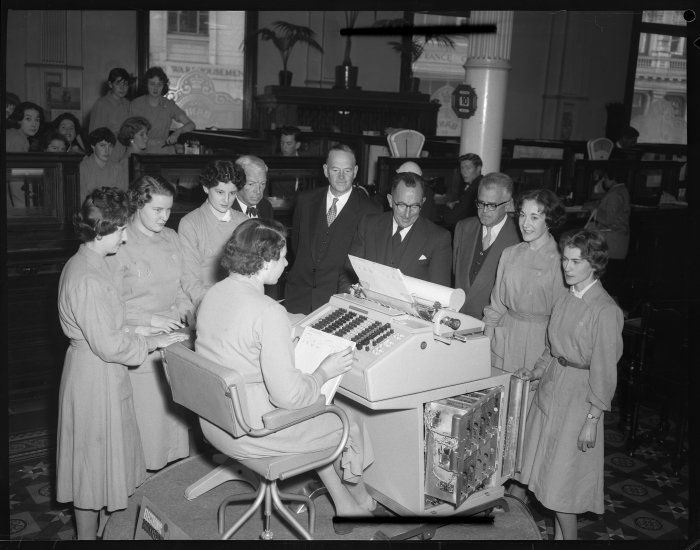
[Image: Members of the staff of the Bank of New Zealand, on Lambton and Customhouse Quays, Wellington, gather around the first electronic book-keeping machine installed in the bank, 1960. HT: National Library of New Zealand]
Jim Wallis in Dunedin
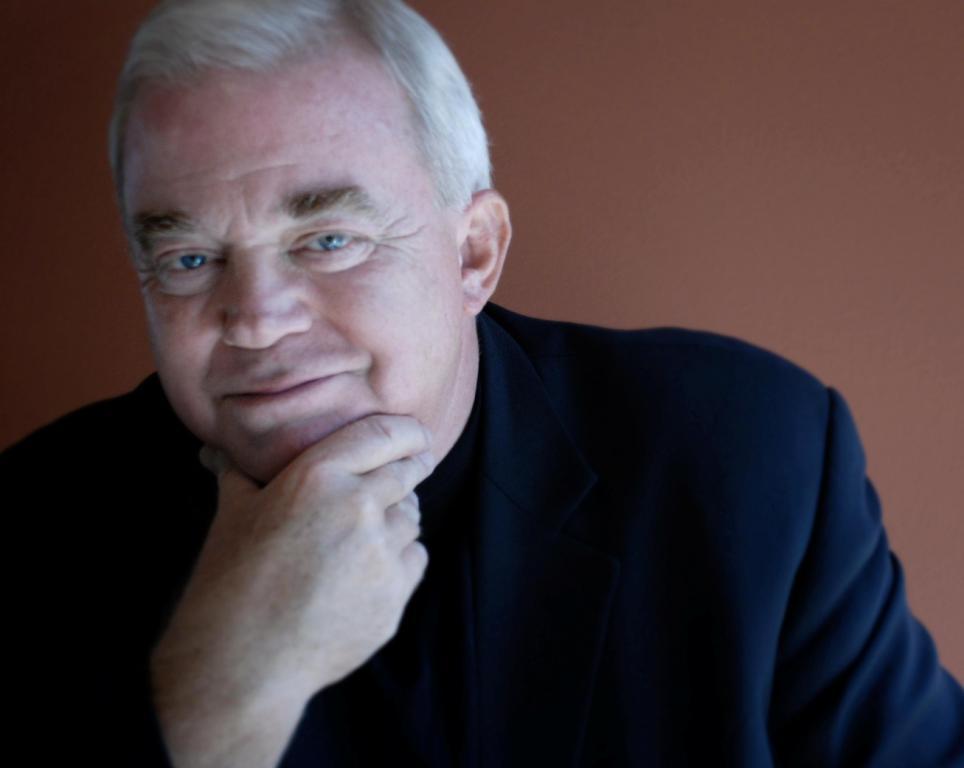 The Centre for Theology and Public Issues is hosting Jim Wallis, founder and CEO of the Sojourners Community in Washington DC, for an event in Dunedin on Tuesday 28 September. He will be keynote speaker at a conference on ‘Faith, Ethics and Public Life’ as well as deliver the Howard Paterson Memorial Lecture in Public Theology. The venue is to be held at First Church, in Moray Place.
Tickets for the full conference, priced at $20 ($15 for students, beneficiaries & U-16s), can be booked online. The Howard Paterson Lecture is open to all the public, though space priority will be given to those who have booked for the whole conference.
Enquiries relating to this event can be made via email, or by calling +64 (0)3 479 8450, or by writing to The Centre for Theology and Public Issues, University of Otago, PO Box 56, Dunedin 9054.
Holy Spirit in the World Today Conference talks
 Most of the talks from the recent Holy Spirit in the World Today Conference, a two day conference jointly sponsored by St Paul’s Theological College and St Mellitus College, are now available for download:
- Homily – Rowan Williams
- Whispers of God at Work, in Cyberspace, in the Media and among the Young – Ken Costa
- Interview with Professor Jürgen Moltmann
- The Church in the Power of the Spirit – Jürgen Moltmann
- Q&A with Professor Jürgen Moltmann and Archbishop Rowan Williams
- Key Issues in Pneumatology – David Ford
- One Spirit, Many Tongues: Globalization, Faith Traditions, and Human Flourishing – Miroslav Volf
- Filled with the Spirit – Sandy Millar
- Bible Reading – Jane Williams
- In the Spirit: Learning Wisdom, Giving Signs – David Ford
- Q&A with Miroslav Volf and David Ford – COMING SOON!
- Life in the Spirit: Identity, Vocation and the Cross – Graham Tomlin
Theology in Aotearoa: Two Conferences
 1. The Systematic Theology Association of Aotearoa New Zealand is holding its Annual Conference in Dunedin on 11-12 November 2010.
The principal theme of the conference will be ‘Ecclesiology’. Those interested in presenting papers should send an abstract of 200-300 words addressing the theme to Murray Rae by 30 June. Papers to be presented at the conference should be no longer than 45 minutes in duration.
In addition to the principal theme of the conference there will also be opportunity for postgraduate students working in other areas of Systematic Theology to present shorter papers on the theme of their postgraduate research. Such papers will be of 30 minutes duration and an abstract of 200-300 words should likewise be submitted to Murray Rae by 30 June.
Submissions from postgraduate students on the principal theme of the conference will also be welcome.
2. The Laidlaw-Carey Graduate School is sponsoring a colloquium on the theme The Theology and Practice of Lament. The colloquium will explore cultural and theological implications of texts and practices of lament and/or complaint. Potential papers, should address complaint/lament with a focus on spiritual/theological dimensions so might include:
- readings of biblical or other complaint or lament literature (Psalms, Job, Lamentations etc)
- studies of historical or contemporary lament songs
- pastoral perspectives on the contemporary practice of lament
- theological reflections
- cross cultural perspectives on lament practices
- post Holocaust reflections
- contemporary political reflections
The colloquium will take place in Auckland on 10-11 February 2011, with a view to publishing a book with the same title in 2011. Enquiries and abstracts (before 31 July 2010) should be addressed to Miriam Bier or Tim Bulkeley.
Conference: Being Christian in the South Pacific — Kiwi Christian Practice
 The Pastoral/Practical Theology Group in Aotearoa New Zealand is organising a conference around the topic Being Christian in the South Pacific — Kiwi Christian Practice.
Here’s the details:
The Date: 8—9 November, 2010
The Location: Knox Centre Seminar Room, Hewitson Wing, Knox College, Arden Street, Dunedin
The Cost: $10 donation to cover morning and afternoon tea
The Blurb
Pastoral/practical theology stands at the intersection of Christian ministry and academic research. In pastoral/practical theology, we critically examine the practices of Christian ministry using theological and historical analysis as well as humanities and social science research methods. If you wish to register for the conference, please email Mary Somerville.
The Call for Papers
We are seeking presentations that address a wide variety of topics related to congregational life in Aotearoa. We hope that graduates and current students of MMin, MTheol, DMin and PhD programs who studied topics related to congregations will consider presenting a summary of their research or one aspect of their research. We are seeking papers for 20- and 40-minute slots. In a 20-minute slot, please plan on speaking for 15 minutes and allow 5 minutes for discussion. In a 40-minute slot, please plan on a 30-minute presentation and 10 minutes for discussion.
In submitting a proposed paper, please
- indicate what sort of time slot you are applying for, remembering that most of us suffer from the occupational hazard of nearly always saying more than we think we’re going to;
- include a 50-100 word abstract of the proposed paper.
Proposals should be emailed to Dr Lynne Baab or, if necessary, posted to her at the Department of Theology and Religious Studies, University of Otago, PO Box 56, Dunedin, and should be received by 30 July.
[Image: bluebison]
I tidied up the kitchenette, I tuned the old banjo …
- Peter Leithart on why we need to be ‘something like’ Biblicists
- David Guretzki has a fantastic post on Christmas preaching with Karl Barth
- John Mark Reynolds posts Ten Reasons for Calvinists to be Cheerful This Christmas
- Ben Myers announces a Sydney symposium on ‘Sarah Coakley and the Future of Systematic Theology’
- Cynthia Nielsen introduces Hans-Georg Gadamer (Part I, II)
- The latest Journal of Reformed Theology is out, and includes an essay by fellow-blogger David W. Congdon titled ‘Jesus and Faith: The Doctrine of Faith in Scripture and the Reformed Confessions’
- Trevor Faggotter reflects on the relationship between church and compost
A Symposium: Aspects of Māori Christianity and Mission
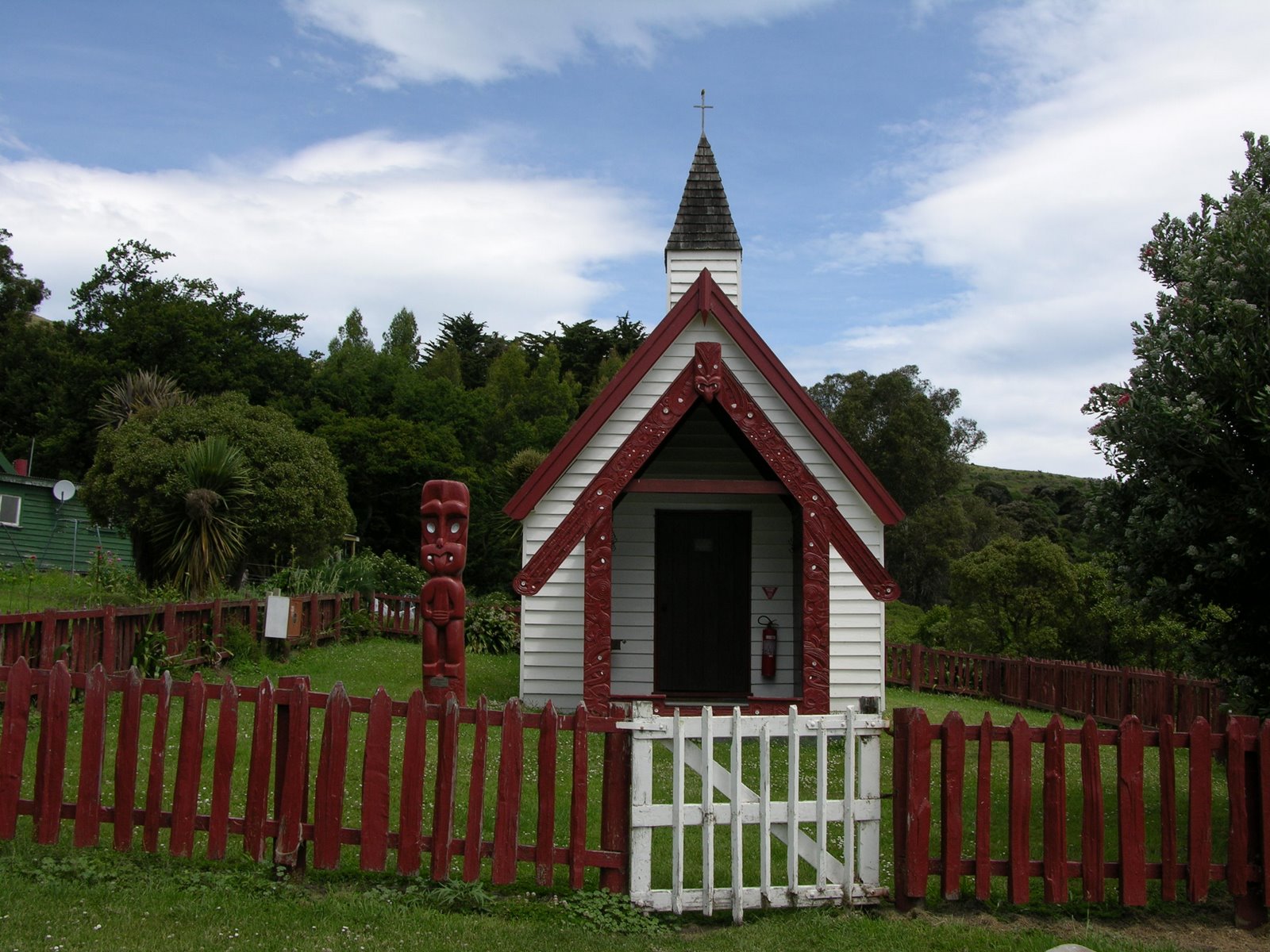
Aspects of Māori Christianity and Mission
Historical, Theological and Contemporary Perspectives
A Symposium, November 18–19, 2009
Last year a number of University of Otāgo academics formed a research group, Te Whakapapa o te Whakapono: Lineages of Faith, in conjunction with Te Wānanga a Rangi (the Presbyterian Church’s Theological College for Māori ministers) in order to further research into Māori interactions with Christianity. This research is multi-disciplinary, with a strong emphasis on both theology and history. The project aims to examine the encounters between the Christian Church and the Tāngata Whenua in New Zealand, to trace the growth and development of Christian faith among the Māori people, and to consider the ways in which that development has contributed to the shaping of New Zealand identity and society. To further the aims of the research project a Symposium will be held at Salmond College, Dunedin from November 18-19, 2009.
Speakers/topics will include:
- Kathie Irwin, ‘John and Hōriana Laughton’
- Hirini Kaa, ‘Tīhei taruke!: Mohi Turei and Ngāti Porou Christianity’
- Bernie Kernot, ‘Translating the Gospel in the Māori Art Tradition: the works of the late Rt Rev. Hāpai Winiata’
- Robert Joseph, ‘1. Rangatiratanga in the American West – The Hirini Whaanga Whānau Migration to Utah in the 19th Century’ and ‘2. Are Mormons Maori? Doctrinal and Historical Parallels between Māoritanga and Mormonism’
- Peter Lineham, ‘Is Destiny Church a Māori faith or a faith of Māori?’
- Nathan Matthews, ‘Kaikatikīhama – Tō tātou taonga whakahirahira. The role of Māori Catholic Catechists in the Marist Mission 1870 -1900’
- Simon Moetara, ‘Māori & the Pentecostal Churches in Aotearoa-NZ’
- Hugh Morrison, ‘Presbyterian children, images of Māori and imperial sentiments’
- Keith Newman, ‘Rātana, the Prophet. Mā te wa; the sign of the broken watch’
- Lachy Paterson, ‘Race, gender and te ao Māori: Pākehā women field workers of the Presbyterian Māori Mission’
- Murray Rae, ‘Rua Kēnana and the Iharaira’
- Wayne Te Kaawa, ‘The Contribution of James MacFarlane’
- Hone Te Rire, ‘Hīhita me ngā Tamariki o te Kohu’
- Yvonne Wilkie, ‘The Presbyterian Women’s Missionary Union and their response to Māori Mission’
For more information or to register, contact Murray Rae (before 12 November).
John Calvin: Servant of the Word

Calvin's pulpit, St-Pierre Cathedral, Geneva
Short of the Lord’s return, or of some unforeseen event, Monday will see me deliver a paper on ‘John Calvin: Servant of the Word’ at the Calvin Rediscovered conference in Dunedin. Here’s my opening paragraph, and if you’re around consider coming along to hear the rest. It really does look like it’ll be a worthwhile gig.
While the Church had known schism before, its program of reform in the sixteenth century led to its fragmentation the likes of which it had not known since the ‘Great Schism’ some five centuries earlier. The magisterial reformers were understandably concerned about the centrifugal force that their program encouraged, and they did not dismiss lightly Rome’s sharp indictment that disunity indicated defect. This concern is evident in one of the more ‘catholic’ of the Reformed confessions, the Second Helvetic Confession (1566) penned by Huldrych Zwingli’s student Heinrich Bullinger: ‘We are reproached because there have been manifold dissensions and strife in our churches since they departed themselves from the Church of Rome, and therefore cannot be true churches’. In response, and by way of marking some distance from more radical wings of the reformation, the magisterial reformers reminded Rome of her own history of conflict and fragmentation, and, more substantively, addressed the question of what constitutes ‘true church’. Their conclusion, précised by John Calvin, is well known: ‘Wherever we see the Word of God purely preached and heard, and the sacraments administered according to Christ’s institution, there, it is not to be doubted, a church of God exists’. These two ‘marks’ function not as boundaries so much as ‘directional signs that point to the core of faithful church life’. And they recall that no matter how frequently or intentionally the Church may engage in additional practices or activities, the most basic, indispensable and controlling hub of its life remains its witness to the one Word of God from pulpit, font and table. This paper will mainly be concerned to attend to the place that the former occupied in Calvin’s ministry and thought, and it asks what remains serviceable about Calvin’s homiletic for those who preach – and for those who hear and taste – the Word of God today.
Thinking Calvin
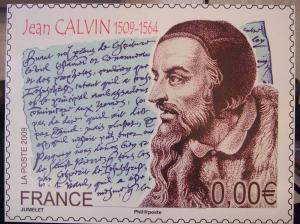 In recent days, my attention has turned to John Calvin, and to a paper that I’m trying to pen for an upcoming conference on Calvin. It has been great to meet books that have remained unopened on my shelves – and the library’s – for well over a decade (I knew I’d read them eventually!), to revisit some great studies, and to familiarise myself with some of the more recent and hard to get scholarship, including Bruce Gordon’s very readable Calvin, and Jean-Daniel Benoît’s enthralling study, Calvin in His Letters: A Study of Calvin’s Pastoral Counselling, Mainly from his Letters (trans. Richard Haig; Courtenay Studies in Reformation Theology; Appleford: Sutton Courtenay Press, 1986); thanks Jim for putting me on to Benoît. I’m also appreciating some re-digging into Barth’s reading of Calvin, such as this observation:
We must not view Calvin’s church of holiness as a catholicizing confusion of divine and human commands, at least not as far as Calvin himself was concerned, no matter what misunderstandings might have arisen among his successors. Calvin himself clearly saw the possibility of such a confusion. Under the pressure of the order and holiness that he found in God, he realized that order and holiness are incommensurable. They cannot be imitated on this side of the human sphere that is not to be confused with the other world, in the little city of Geneva that even at the pinnacle of his success he never truly regarded as a Jerusalem. With a certain resigned wisdom and grim humor, if we might put it thus, he spoke only of honoring God by bonds of humanity so far as this is possible seeing that we live on earth. Calvin did not fall victim to the illusion that gripped the Middle Ages and that has gained force again in the modern age, the illusion that there is a continuous path that leads step by step from an earthly city of God to the kingdom of heaven. For him the divine was always divine and the human always human. – Karl Barth, The Theology of John Calvin (trans. Geoffrey Bromiley; Grand Rapids: Wm. B. Eerdmans, 1995), 201.
If you’re interested, my own paper, (tentatively) titled ‘John Calvin: Servant of the Word’, proposes to attend to the notion of Calvin as minister of the Word, and to consider the attention that preaching occupied in Calvin’s ministry, his understanding of preaching as divine accommodation, as public, as event, as the Word of God, and its relationship to the proclamation activities of font and table.
John Oman Conference
 2009 sees the 70th anniversary of the death of Professor John Oman. To mark the occasion there is to be conference on his life and ideas.
Oman, born in Orkney and alumni of Edinburgh, was a minister of the United Presbyterian Church and subsequently of the Presbyterian Church of England. After parish work in Paisley and Alnwick he was appointed Professor of Theology at Westminster College, Cambridge. He was also Principal of the College and Moderator of the English General Assembly. Oman was a creative theologian and philosopher of religion; his two best known books are Grace and Personality, in which he teaches that God is personal and always treats us as persons, and The Natural and Supernatural, in which he argues that all people have a felt awareness of God that prompts faith. Whilst Oman is not well known today, he was judged at the time of his death as ‘amongst the most original, independent, and impressive theologians of his generation and of his country’.
The anniversary conference is to be held at Westminster College, Cambridge from 15th–17th September 2009 and will feature local and international speakers, including Professors Stephen Bevans, George Newlands, Alan Sell and David Thompson. Topics will include Oman’s Christology, the intellectual and cultural context of his work, his response to Darwinism, and the importance of his work for contemporary missiology.
For enquiries, contact Adam Hood.
Conferencing in the Antipodes
 There’s a number of conferences coming up in the greatest part of the world:
- Trinitarian Theology after Barth: An International Symposium (Auckland, 14-15 May)
- South Island Ministry Conference (Dunedin, 19-21 May)
- International Conference on Baptist Studies V, and the Australian Baptist Research Forum III (Melbourne, 15-18 July)
- Calvin Rediscovered (Dunedin, 24-25 August)
- Australian Association of Mission Studies (Canberra, 2-5 October)
ITIA Conference: Reversed Thunder: The Art of the Psalms
 The Institute for Theology, Imagination and the Arts is hosting an international conference at which artists, biblical scholars, historians, theologians and others will explore the shaping impact of the Psalter on western imagination.
Conference on Global Theological Education
 The World Reformed Fellowship has announced a conference on Global Theological Education (March 21 – 22, 2009). The conference will be held at The Reformed Millennium Center Jl.Industri Blok B 14 No.1, Kemayoran, Jakarta, Indonesia. The proposed schedule is as follows:
Saturday, March 21
16:00 – 16:15 Greetings from International Director, Dr. Samuel Logan and Local Host, Dr. Benyamin Intan
16:15 – 17:00 Dr. Stephen Tong, Executive Director of Stephen Tong Evangelistic Ministries International: “Reformed Theology in the 21st Century”
17:00 – 17:30 Dr. Ric Cannada, Chancellor of Reformed Theological Seminary in the USA: “”Reformed Theology and Theological Education in the United States”
17:30 – 18:00 Dr. Victor Cole of the Nairobi Evangelical School of Theology in Kenya: “Reformed Theology and Theological Education in Africa”
18:00 – 18:30 Dr. Kin Louie of the China Graduate School of Theology in Hong Kong: “Reformed Theology and Spiritual Formation”
18:30-19:30 Dinner
19:30-21:00 Q & A
Sunday, March 22
17:00 – 17:30 Dr. Augustus Lopes, Chancellor of Mackenzie University in Sao Paulo, Brazil: “Reformed Theology and Theological Education in Latin America”
17:30 – 18:00 Dr. In Whan Kim, President of Chong Shin University and Theological Seminary in Seoul: “Reformed Theology and the Pastoral Ministry””
18:00 – 18:30 “Dr. Matthew Ebenezer of New Theological College in Dehra Dun, India: “Reformed Theology and Missions”
18:30-19:30 Dinner
19:30-21:00 Q & A
Attendance at the conference is free but those wishing to attend must register in advance with Erwin Mah.
Around the traps … [Updated]
 Michael Jensen gives us Five reasons that Calvin was a postmodernist.
- Robert Hubbard tells us why The Curious Case of Benjamin Button is a derivative mess.
- A new blog to check out: Crucendo.
- For those blessed enough to be in NZ, Robert Jenson will be in Dunedin in March as the University of Otago’s Burns Lecturer. He is described by Wolfhart Pannenberg as, ‘one of the most original and knowledgeable theologians of our time’. While in Dunedin, Professor Jenson has kindly agreed to lead a half-day seminar at the Knox Centre on the subject of the Eucharistic Church being a Missional Church. It will be held on Friday 13 March, 9.30 am to 12pm. Because the seminar will be interactive we have set a limit of 30 people. The cost per person will be $25, this includes morning tea. To register please contact Catherine van Dorp or phone +63 03 473 0783.
- For those in the UK, The Linacre Centre for Healthcare Ethics is hosting a one-day conference (Saturday 21st February) on Fertility and Faith. More information here and here.
- For those unfortunate enough to be in the USA, Biblical Theological Seminary is hosting what looks like a worthwhile conference on ‘Hazardous to your Health – Pastoring through Church Challenges’. More information here.
- And Robert Fisk asks: ‘When did we stop caring about civilian deaths during wartime?’
 jasongoroncy.com