 The Inaugural Lecture for the 2012 academic year for students at the Knox Centre for Ministry and Leadership was delivered by my colleague the Rev Mark Johnston. A copy of the lecture – ‘Uneasy Rider? The Challenge to a Ministry of Word and Sacrament in a Post-Christendom Missional Climate’ – is now available for download (pdf,ppt). Previous inaugural lectures can be downloaded by visiting here.
Church
A welcoming church
I’ll soon be in India. The e-correspondence thus far indicates that I’ll be met by some very welcoming people. I guess that I’ll also be looking for a welcoming church. So while engaging in some brief online research this morning, the pic-of-the-crop thus far on the welcoming-church front goes to this small village church [source] on the highway that connects Mangalore to Bangalore:

… though there’s wisdom in sometimes just keeping an open mind in case a more inviting option presents itself:
Entering the New Theological Space: A Review
 John Reader and Christopher R. Baker, eds, Entering the New Theological Space: Blurred Encounters of Faith, Politics and Community. Explorations in Practical, Pastoral and Empirical Theology (Farnham/Burlington: Ashgate, 2009), pp. xiii + 241, £55.00, ISBN 978-0-7546-6339-3.
Nicholas Lash, in his book Holiness, Speech and Silence: Reflections on the Question of God, gives voice to the difficulty of thinking Christianly in ‘a culture whose imagination, whose ways of “seeing” the world and everything there is to see, are increasingly unschooled by Christianity and, to a considerable and deepening extent, quite hostile to it’. He notes the serious and dangerous demands posed in such a situation by continuing to hold the Gospel’s truth rather than paying mere lip-service to ‘undigested information’ (p. 4). Believing that the time has come to help missiological communities to engage and digest in the linear spaces opened up between post-Christendom politics and interfaith actualities, institutional monads and inter-organisational networks, rural and urban spaces, the status of paid and unpaid, and the contested and evolving relationship between faith and science, for example, the contributors to Entering the New Theological Space seek, in different ways, to map such space ‘by means of a triangulation between narrative, praxis and theory’, to ‘offer some idea of the complexity and interdisciplinarity associated with this new space’ – a so-called ‘third space’, the ‘space of the both/and’ (p. 5), a more fluid space which discards the oft-maintained binarism of the either/or space – and to assist readers to analyse the significance of such ‘blurred encounters’ which, the editors believe, are ‘forcing the church to develop increasingly fluid and experimental forms’ (p. 10).
Each of the fifteen essays in this volume are in their own way stimulating, and most are well-researched and eruditely penned. They cover a range of topics, from John Atherton’s ethical-economical-theological reflection on a ‘pilgrimage’ down Edinburgh’s Royal Mile to explore places where ‘inevitable and potentially creative’ (p. 25) ‘“edges” have become mainstream’ (p. 19), to Malcolm Brown’s essay on the ‘social atomisation’ and ‘rootlessness’ (p. 70) of London’s suburbs, to Margaret Goodall’s exploration of human personhood in a thought-provoking essay on dementia, to Clare McBeath’s piece which asks whether a community or a city can be said to ‘suffer from mental illness’ (p. 147), to Philip Wagstaff’s reflection on the fluidity and stability of rural ministry.
Two essays merit special mention: Martyn Percy’s considers the nature of the cultural dynamics, implicit theology and ‘invisible religion’ (p. 179; the phrase is Thomas Luckmann’s) that continue to birth requests for baptism (or ‘christening’) of children from non-churched families. He writes concerning the ‘deeply coded ways in which people talk and act about God’, that ‘religious language is carried in the emotion, timbre and cadence of worship’ and that ‘deeply coded language is not [necessarily] a strategy for avoiding explicit theological language’ (p. 184). Percy’s attempt to sketch a theology of cultural conversation, and to explore some implications of such conversations for missional and risky engagement in the ‘areas of overlap and hinterlands between the life of the church and the world’ (p. 179) merits further thought.
Drawing upon the work of Bruno Latour and Slavoj Žižek, and bringing their thought into conversation with events surrounding the 2007 outbreak (in Surrey) of foot and mouth disease, John Reader contributes an intriguing, if somewhat undercooked, essay on the nature, possibility and linguistic challenges posed to truth speech by the mutual encounter of science and theology. He concludes by stating that it is ‘only by keeping the insights and theories of both faith and science in circulation’ that we can be ‘certain of remaining “in the truth”‘, and that it is ‘only by loading into the process that contact with the wider world’ that we ‘avoid an unhealthy closure of questioning and debate’ (p. 208).
Some reservations: the noticeable absence in this volume of any discussion on the significance and place of technology (blogging, social media and gaming, for example) in theological and ecclesial discourse and praxis, and vice-versa, represents a disappointing gap. Also, there is in this volume a significant number of typological, grammatical and factual errors (John Knox, for example, was not the ‘first Presbyterian minister of St Giles and Scotland’ (p. 20)), errors which one expects would be corrected before print and to be rare in a book wearing such an inflated price tag. Finally, while one may well concur that ‘all the essays in this book are a testament to the ongoing adaptability and robust mutuality of Christian thought and the church’ (p. 7), if this volume represents ‘the new theological space’ then one might be forgiven for observing that, with one or two exceptions, such space is a little light on the theology front.
These reservations aside, not a few of the essays in this volume deserve wide reading, and the ongoing conversations encouraged therein are to be commended. Social planners, missiologists, pastoral practitioners and those training them will all benefit from reading this book, and from taking up the challenge to engage in the interdisciplinary and multilayered interstices of cultural, political and theological realities.
Rowan Williams on the oddness of the open Table
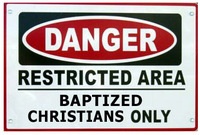 ‘[The Church’s] complete sharing of baptismal and eucharistic life does not happen rapidly or easily, and the problem remains of how the Church is to show its openness without simply abandoning its explicit commitment to the one focal interpretative story of Jesus. To share eucharistic communion with someone unbaptized, or committed to another story or system, is odd – not because the sacrament is “profaned”, or because grace cannot be given to those outside the household, but because the symbolic integrity of the Eucharist depends upon its being celebrated by those who both commit themselves to the paradigm of Jesus’ death and resurrection and acknowledge that their violence is violence offered to Jesus. All their betrayals are to be understood as betrayals of him; and through that understanding comes forgiveness and hope. Those who do not so understand themselves and their sin or their loss will not make the same identification of their victims with Jesus, nor will they necessarily understand their hope or their vocation in relation to him and his community. Their participation is thus anomalous: it is hard to see the meaning of what is being done’.
– Rowan Williams, Resurrection: Interpreting the Easter Gospel (London: Darton, Longman and Todd, 1982), 68.
A note on the Formula, Liberty of Conscience and the Declaratory Act
 A guest post by Andrew Smith.
In 1930, the minister J.A. Asher and the elder J.S. Butler of the Presbytery of Hawke’s Bay supported an overture from the Presbytery to the General Assembly of the Presbyterian Church of New Zealand. It read:
Whereas this Presbytery of Hawke’s Bay, being of the opinion that Question 2, appointed to be asked of elders on the occasion of their ordination to the office, having reference to the Westminster Confession of Faith, has given rise to considerable difficulty; has resulted in men declining to accept the office of eldership, who have been in every way qualified for such office, to the detriment of the interests of our Church; hereby overtures the General Assembly that Question 2 be omitted from the questions in connection with the ordination of elders.
An examination of the Year Book of the period shows that Question 2, asked of all office-bearers of the Presbyterian Church of the time reads: ‘Do you sincerely own and believe the system contained in the Westminster Confession of Faith; and do you acknowledge the said doctrine as expressing the sense in which you understand the Holy Scriptures; and will you constantly maintain and defend the same, and the purity of worship in accordance therewith?’
Perhaps some laymen being ordained to office found this question too much to ask. Even in the early parts of the twentieth century, the Westminster Confession, a document written in dense legal language several centuries old, was too impenetrable for them to answer Question 2 in good conscience. Unlike the Bible it had no ‘revised standard version’. Rather than omitting Question 2, the General Assembly moved to revise the questions for the ordination of elders. At the same time the Church of Scotland was proceeding in the same direction and the Presbyterian Church of New Zealand chose to wait on the parent church to create a new formula and adopted a similar one with questions replacing the Formula of Subscription in 1936. The new form of the formula read:
I believe the fundamental doctrines of the Christian Faith contained in the Westminster Confession of Faith and other subordinate standards of the Church. I acknowledge the Presbyterian government of this Church to be agreeable to the Word of God, and promise that I will submit thereto and concur therewith. I promise to observe the order of worship and the administration of all public ordinances as the same are or may be allowed in this Church.
The formula was not amended again until the General Assembly of the Presbyterian Church of Aotearoa New Zealand in 2010 to read:
I believe in the Word of God in Scriptures of the Old and New Testaments and the fundamental doctrines of the Christian Faith contained in the Kupu Whakapono and Commentary, the Westminster Confession of Faith and other subordinate standards of this Church. I accept that liberty of conviction is recognised in this Church but only on such points as do not enter into the fundamental doctrines of Christian Faith contained in the Scriptures and subordinate standards. I acknowledge the Presbyterian government of this Church to be agreeable to the Word of God and promise to submit to it. I promise to observe the order and administration of public worship as allowed in this Church.
The General Assembly carried the motion that the Formula be reworded as above. While it was sent to the presbyteries and church councils, consideration to report back at the 2012 General Assembly it was adopted ad interim. There was some debate in the Assembly. My feeling is that the General Assembly did not compare the old and new versions of the Formula and that the new version has some innovations on which there could be improvements.
Firstly if the phrase in the Word of God in Scriptures of the Old and New Testaments needs to be added to the Formula then I think it should come after the subordinate standards. As it reads it conflates the authority of the Scriptures with that of the subordinate standards. While placing the Scriptures as pre-eminent is appealing, placing it as our ultimate authority is much clearer. Without further research, which probably goes back to the Church of Scotland’s version of the Formula, I suspect that the earlier generation decided that not placing the Scriptures here avoided controversy. Their intention is not without merit.
Secondly I suggest that the word conviction should be amended to read conscience. Liberty of Conscience has a long history in the Presbyterian Church going back to the Declaratory Act. It was first passed by the Church of Scotland in 1892, then by the then independent Synod of Otago and Southland in 1893, and by the united Presbyterian Church of New Zealand in 1901. Reading the Declaratory Act it seems evident that the church of this period had problems accepting that God elected some for salvation and some for damnation, especially those who died before the age of decision-making. This is an age when literature suggested that children came from heaven and if they died before a certain age that they could join the angels. Conscience has precedence in the Church’s terminology, conviction does not. To me conviction suggests belief or opinion while conscience is the prompting of the Holy Spirit. That is a significant difference.
Finally, I would strike out the words but only. To paraphrase the Gospels, what comes out of a butt goes into the sewer! But is a conjunction, a balancing word that contrasts a negative clause with a positive one, the negative clause coming first and the positive clause after the conjunction. Liberty of conviction is in the negative clause of the sentence, and the fundamental doctrines of Christian faith in the positive. The sentence reads like a big stick to police ordained ministers and elders. Agreement with this sentence suggests that too much liberty of conviction or conscience cannot be trusted. Conform or else we will have you thrown out of office! Removing it would encourage more faith in our leadership.
I believe that Asher and Butler’s overture in 1930 remains a challenge for the modern church and we still don’t know the answer. We have the Subordinate Standards of the Church. Our shared knowledge of them remains shallow. They are beyond our grasp of understanding: the words are too clever, too pretty. We might give more consideration to the Terms and Conditions taking out membership on Facebook than we do to the Formula of Ordination and to our Confessions. It lies in the too hard basket.
The Wisdom of Stability: A Review
 In The Wisdom of Stability: Rooting Faith in a Mobile Culture (Brewster: Paraclete Press, 2010), Jonathan Wilson-Hartgrove seeks to write a book about ‘staying put and paying attention’. In a culture characterised by unprecedented mobility, he believes that ‘the most important thing most of us can do to grow spiritually is to stay in the place where we are’ (p. 1). The author insists that the life of Spirit is, in Rowan Williams’ words, impossible ‘in abstraction from the actual business of living in the body of Christ, living in concrete community. The life of intimacy with God in contemplation is both the fruit and the course of a renewed style of living together’. Or, in Wilson-Hartgrove’s words, ‘Apart from stability in the life of a community, the songs of Zion quickly begin to sound like wishful thinking’ (p. 63).
Drawing from the experiences of the monastic fathers and mothers, and from his own journey now as a minister of St. Johns Baptist Church and member of Rutba House, Wilson-Hartgrove properly argues that the practices of stability cannot be ‘reduced to a quick fix for the spiritual anxiety of a placeless people’, and that ‘if our feelings of rootlessness are what drive us to the practice, we’ll need something more than an immediate sense of relief to help us stay’ (pp. 110–11). He turns then to consider three ‘midday demons’ which require resistance if we are to be serious about not being perpetual pot plants but being planted in soil where our roots have room to reach deeper. These are ambition, boredom and vanity.
He writes of ambition: ‘ambition tempts us to forsake the mundane for the sake of unlimited growth – or, at least, new opportunities. We are so easily unimpressed by the ordinary, longing for the feeling of excitement that comes with a new task to take up, new people to engage, new challenges to face (p. 114). And of boredom: ‘Whereas ambition pushes us toward perpetual motion, boredom paralyzes, leaving us unable to love our neighbors or even take care of our own basic needs. Though different in character, these midday twins tempt us to the same lack of care. In their grip, it is impossible for us to find joy in community’ (p. 118). And of vanity: ‘Vainglory comes midway along our journey to suggest that all our care is best directed toward self-preservation … Vainglory will try to persuade us that there is nothing more important in the world than our own stability, encouraging us to defend it at all costs against any potential threat’ (pp. 122, 123).
There is wisdom in these words, and there’s much to like about the book. Still, I have two reservations about commending it: First, it’s nauseatingly repetitive, yet another example of a standard article-length piece being padded out to make a book. Second, and more substantially, there is, surprisingly, a drift towards an unearthed nostalgia here which works to undermine the author’s basic thesis. (It may be, of course, that my cultural eyeglasses are simply the child of a different prescription to those of Wilson-Hartgrove’s.) Walter Brueggemann once observed of memory that it is that which ‘may be enmeshed in a nostalgic longing for normalcy and “the good old days,” when life was simple and agrarian, settled, and well-ordered. That nostalgia is all intertwined with evangelical memory, so that the nostalgia has a vague religious feeling about it. There is a need to sort out the normative memory from this other vague yearning’. I’m unconvinced that Wilson-Hartgrove (in this volume) succeeds fully in doing the kind of sort out that Brueggemann, rightly to my mind, calls for.
For me, the highlight of the book was this poem (on p. 106):
The house was built in ’98,
prior to my arrival.
And a big maple tree at the corner of the porch
was run over and buried lots of times by wagons
moving in materials to build the house.
And the other maples what Daddy had planted,
they had no trouble at all.
But they all died and this one lived that had such rough treatment.
And there’s a saying
“Rough weather makes good timber.”
It may be
that the trouble with folks today
is that they’re raised like hothouse flowers,
and they don’t have much to go on
at the end.
Around the traps: To the memory of ulcers scraped with a tin spoon
- Rowan Williams on the Big Society.
- Les Murray and the Poetry of Depression, a review-piece by Meghan O’Rourke.
- The latest edition of Zeitschrift für Neuere Theologiegeschichte (Vol. 18, No. 1, April 2011) is now available and includes an essay on ‘Albrecht Ritschl and the Tübingen School. A neglected link in the history of 19th century theology’ by Johannes Zachhuber. The Forsythian in me is excited to see this. [I also found a version of this essay here].
- The preacher your preacher could preach like.
- Alain Badiou responds to Jean-Luc Nancy on Libya, and on elsewhere in the Middle East.
- Kurt Vonnegut on the simple shapes of stories.
- Warner Brothers wins the Roger Awards.
- The latest edition of the Journal of Reformed Theology (5/1, 2011) is out.
- Robert Manne on the untold story of Julian Assange.
- T&T Clark launch Continuum e-Books.
- Michael Jensen is blogging on human nature and the arts (parts I, II, III, IV).
- The Postcolonial Theology Network and Whitley College are hosting a conference – Story Weaving: Colonial Contexts and Postcolonial Theology.
- Michael Jinkins on Martin Luther King’s questions about the church.
- Bruce Hamill reflects on what the church is called to be in our world.
- Travis McMaken has been posting on and linking to posts on David Kelsey’s 2011 Warfield Lectures (parts I, II, III, IV, V, VI).
- John Pilger on Westminster, Libya and Yemen.
School(s) for Conversion – a commendation
 On 14 January 1935, Dietrich Bonhoeffer penned the following words to his brother Karl-Friedrick: ‘… the restoration of the church will surely come only from a new type of monasticism which has nothing in common with the old but a complete lack of compromise in a life lived in accordance with the Sermon on the Mount in the discipleship of Christ. I think it is time to gather people together to do this …’
Whether we are thinking about explicitly religious, or of broader, expressions of new ways of being human community, the birthing of new types of monasticism has long been a feature of ecclesial existence. While having at times drifted in and out of neomonastic communities, and while wrestling frequently with the kingdom-foreignness of the way of being-in-communion that my own introverted default setting reboots to, I’ve mainly been an intrigued onlooker who has read very little in the last decade or so that has come from within the movements themselves that articulates in any depth the intentionalism of such life together. (Whether or not all such communities characterise the ‘new type of monasticism’ for which Bonhoeffer longed is not the point here.)
But I’ve been eager to read and think more. I was delighted, therefore, to discover Wipf and Stocks’ New Monastic Library Series, of which School(s) for Conversion: 12 Marks of a New Monasticism, a book edited by The Rutba House, is a part. (I’m also currently reading Community of the Transfiguration: The Journey of a New Monastic Community by Paul R. Dekar, and “Follow Me”: A History of Christian Intentionality by Ivan J. Kauffman, both of which I’m enjoying immensely.)
The ‘new’ monasticism differs from the ‘old’ in a number of ways. Here are three, for example: (i) vows of celibacy, poverty and obedience are relatively rare; (ii) while geographic proximity of members is preferable, it is not necessary; and (iii) distinctive religious habits have been largely replaced by non-distinctive Levis.
The movement of the Spirit from which this book is birthed sees itself as characterised by the following twelve marks:
1) Relocation to the abandoned places of Empire;
2) Sharing economic resources with fellow community members and the needy among us;
3) Hospitality to the stranger;
4) Lament for racial divisions within the church and our communities combined with the active pursuit of a just reconciliation;
5) Humble submission to Christ’s body, the church;
6) Intentional formation in the way of Christ and the rule of the community along the lines of the old novitiate;
7) Nurturing common life among members of intentional community;
8) Support for celibate singles alongside monogamous married couples and their children;
9) Geographical proximity to community members who share a common rule of life;
10) Care for the plot of God’s earth given to us along with support of our local economies;
11) Peacemaking in the midst of violence and conflict resolution within communities along the lines of Matthew 18; and
12) Commitment to a disciplined contemplative life.
This book attends to these marks, one chapter on each, exploring each theme drawing upon Scripture, contemporary examples, and personal experience.
Taking up Alasdair MacIntyre’s challenge to construct ‘local forms of community within which civility and the intellectual and moral life can be sustained through the new dark ages which are already upon us’, the contributors to this volume believe that when such longing as this instructs the church, ‘the local forms of community for which MacIntyre calls are no longer primarily for the sustenance of intellectual and moral life. Nor are they communities that withdraw from the world to insure their own survival and the flourishing of their members. Rather, within the life of the church a new monasticism exists to sustain knowledge of the gospel of the kingdom that was proclaimed, embodied, and accomplished in Jesus Christ. And the communities of the new monasticism exist for the sake of witness to Jesus Christ who is the life and hope of the world’.
This book is written not by theoreticians or monasticism-virgins cutting their idealistic and yuppie teeth in a utopian wilderness for a while before retreating back to ‘the real world’. Rather, these challenging essays betray a maturity and realism that one might expect from those who have the runs on the board, so to speak, whose commitment to embodying the kingdom which is truly the life of the ‘real world’ is humbling and utopia-destroying, and who love the church as God’s community in travail and often so slow to be on the way.
An Inaugural Lecture: ‘Learning to See and to Waddle with our Tongues: a view from the Table’
One of the noble traditions around the place where I work is the annual inaugural lecture. It is a public event, and is typically well-supported by Dunedinites, plus a few ring-ins from other places. It was my turn this year to deliver the lecture, and I chose as my subject the Lord’s Supper. The lecture was titled ‘Learning to See and to Waddle with our Tongues: a view from the Table’. A number of folk have asked me for a copy (possibly in the vain hope that it may make more sense the second-time ’round), so here’s what I said:
Writing off Yoder
 The latest edition of One the Road, the journal of the Anabaptist Association of Australia and New Zealand, includes a helpful piece by Michael Buttrey titled ‘12 ways to prematurely write off Yoder: Some common misconceptions about Yoder’s ‘Neo-Anabaptist’ vision’. Buttrey identifies the twelve ‘misconceptions’ as:
1. Yoder believes Constantine corrupted the church.
2. Yoder thinks that there was no salt or light in the medieval church.
3. Yoder hates Luther, Calvin and the other magisterial Reformers.
4. Yoder has a low view of God’s sovereignty over history. Or:
5. He idolizes the early church.
6. Yoder inappropriately sees Jesus’ earthly life as normative.
7. Yoder fails to deal with the Old Testament, especially the wars of Joshua.
8. Yoder’s pacifism inhibits any effective witness to the state, especially regarding war.
9. Even for Christians, Yoder’s pacifism is impossible, or at least irresponsible.
10. Yoder advocates separation from the world that ‘God so loved.’ And:
11. Isn’t Yoder a ‘fideistic sectarian tribalist’ like Stanley Hauerwas?
Here, Buttrey writes:
These common accusations seriously misunderstand Yoder.
First, Yoder’s context was one where he was urging traditionally quietist Anabaptists to realize they had a social ethic and witness to society, while simultaneously calling activist Christians to realize they need not abandon the gospel and take up the methods of the world in their impatience to get things done. Ironically, Yoder has often been taken more seriously by theologians and political philosophers outside his tradition – such as Stanley Hauerwas and Romand Coles – than those on the ‘inside.’
Second, Yoder has no desire to divide the church further. Indeed, in “The Kingdom As Social Ethic” he deeply objects to the labelling of radically obedient groups as sectarian, for they had no intentions of separating themselves:
[Such groups] have called upon all Christians to return to the ethic to which they themselves were called. They did not agree that their position was only for heroes, or only possible for those who would withdraw from wider society. They did not agree to separate themselves as more righteous from the church at large. (85)
Third, Yoder is fundamentally not interested in withdrawal or separation from society. In “The Paradigmatic Public Role of God’s People,” Yoder agrees with Karl Barth that ‘what believers are called to is no different from what all humanity is called to. … To confess that Jesus Christ is Lord makes it inconceivable that there should be any realm where his writ would not run.’ (25) Of course, those who seriously see Christ’s commands as normative for all tend to be called fideists or theocrats. Yoder is neither.
Yoder is not a fideist because, unlike most realists, he sees the gospel as having a truly universal appeal. Christian realists typically assume that the gospel is inaccessible and incomprehensible to all other groups, and so it is necessary to use a neutral, ‘public’ language to oblige non-Christians ‘to assent to our views on other grounds than that they are our views.’ (16–7) Indeed, it is not Yoder but his critics who tend to think that their faith is fundamentally irrational and its public demands must be set aside for that reason. This reverse fideism is not surprising, however, given how modern liberal democracies understand religious groups and language.
Further, Yoder is not a theocrat, because he does not call for the violent imposition of the gospel, which would be an oxymoron. Rather, the challenge for the church is to purify its witness so ‘the world can perceive it to be good news without having to learn a foreign language.’ (24) Christ’s universal lordship obliges the church to make great demands of the world, but by definition, the gospel witness is a process of public dialogue, not coercion.
In short, the best word for Yoder’s understanding of the church’s witness to society is that of model. Consider some of these potential imperatives for civil society Yoder derives theologically in that same essay:
- egalitarianism, not because it is self-evident (history suggests that it is clearly not!) but because baptism into one body breaks down ethnic and cultural barriers;
- forgiveness as commanded by Christ (he agrees with Hannah Arendt that a religious origin and articulation for forgiveness is no reason to discount it in secular contexts);
- radical sharing and hospitality, even voluntary socialism, as implied in the Eucharist; and
- open public meetings and dialogue, as Paul instructed the Corinthians.
This sketch is almost a political “platform,” and hardly separatist. But for Christians with typical approaches to politics, Yoder’s call for the church to be where God’s vision for society is first implemented and practiced is an enormous stumbling block. It is yet another irony that realists are so often closet quietists: they see the only choice as being between transforming society and letting it go its own way. Yoder, however, asks us to obey Christ even if no one else is interested – although he trusts that the Kingdom will advance if the word of God is faithfully witnessed and embodied amid the powers and principalities of the world.
12. Yoder and Stanley Hauerwas are the same.
You can read the full piece here.
Images of the Eucharist
While writing a lecture on the Lord’s Supper, I’ve been reflecting on some interesting images which, each in different ways, invite us to think again about what the Church might be up to when it engages in this particular proclamatory performance. Here’s a few that struck me:
The liturgical year: training for life in this world and the next
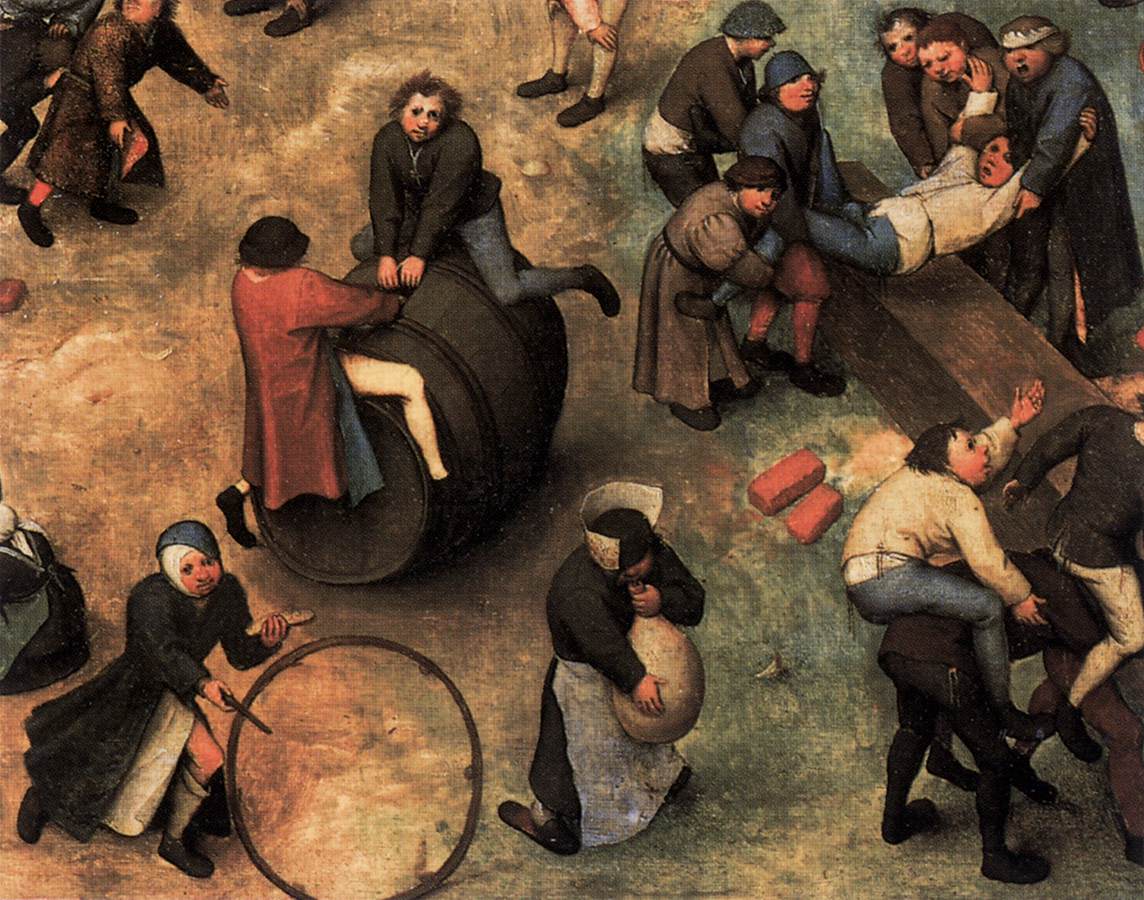 Halden Doerge’s latest post, The impotence of the liturgical year, is well worth reading. And why I have neither the time nor the inclination to give a full response, I did want to post just a few of my initial reactions. To publish one’s thoughts on-the-run, as it were, is always a somewhat dangerous thing to do in blogdom, but what the salami; it’s close to Christmas, and my responsibility-guard is down.
What Halden wishes to affirm needs to be affirmed: that Advent and the Church’s liturgical calendar as a whole is, properly conceived, about God and not about a fascination with or idolatry about liturgical time per se; that God in his freedom may meet us like he did Zechariah, i.e., while ‘going about the usual liturgical practices of [the] calendar’; we ought not presume that God in his freedom will meet us like he did Zechariah, i.e., while ‘going about the usual liturgical practices of [the] calendar’; that the liturgical calendar functions as something like an icon insofar as we are invited to look through rather than at it, etc., etc., … So three or more cheers for Halden. Halden may also be right when he suggests that some of the claims made by ‘liturgical enthusiasts’ for the efficacy of calendar observance are exaggerated and often appear to lack any empirical testing (I think that the Bible calls this ‘fruit’; the Bible also encourages us to look for such). While I confess that I’ve never actually met such enthusiasts (I haven’t met most people), it is probable that in a world where people can get excited about watching synchronised swimming that some such people do exist.
But I want to defend the claim, made by Hauerwas and others (there is some irony here for it was Halden, among others, who inspired me to read Hauerwas again after some years of neglect), that living in a deeper awareness of the story of Jesus and of the Church does, in the freedom and grace of God, ‘do’ something. Specifically, it trains us. It immerses us into a gospel-forming rhythm. And that is precisely something that the Church’s calendar encourages (rather than ‘does’) too. Like praying the Lord’s Prayer, or fasting, the Church’s calendar calls us into the river with others and watches to see if we are learning to swim in it yet, or otherwise. It does not turn us into liturgical automatons. Again, it trains us. It trains us in the way of ordinary gospel-posture. (It seems significant to me that the bulk of the Church’s time is ‘ordinary’). To claim that keeping Church time ‘does’ something is different to claiming that such time-keeping has some kind of magical power, something akin to a superstitious understanding of baptism articulated by some (in less enlightened times than our own ;-)). The former is to say something about the way that faith understands God’s way with us; the latter is simply atheistic.
I understand that every time we come to the Lord’s Table, for example, which is where the entire Church story is enacted in concentrated form, we are offered training in how to live sacramentally in the world, to unearth its idolatries and to expose what William Stringfellow (in Free in Obedience) calls the ‘transience of death’s power in the world’. I agree that the training itself doesn’t, in Halden’s words, ‘just do it’, i.e., do the work in and of itself of making us more like the discipling community intended by the training ‘event’, but I’m not sure that the fault (if we are looking for such) here lies with either the teacher nor with the training manual. I think that Jamie Smith’s thesis, in Desiring the Kingdom, is basically right. To be baptised into the liturgical life of the community is to be immersed into its habit-forming practices, practices which are invitational, which are undertaken with a view to fostering transformation of both mind and performance, and have something like what we might call eschatological reserve or groan. In other words, they are the gift of the Spirit, and so bear the print of the Spirit’s hand. As one of my students put it to me recently, the Church is called to be ‘a foretaste of a community of right relationships’, not the kingdom arrived! This begs the question of how the Church’s observance of ‘real’ time prepares and directs one for life as it shall be: ‘For now we see in a mirror, dimly, but then we will see face to face. Now I know only in part; then I will know fully, even as I have been fully known’ (1 Cor 13.12).
Or think of the Supper, the central act of the Christian community. As the community gathers around the Table, we are offered, among other things, training in how to forgive others. God creates koinonia around the Table in which, as Hauerwas and Willimon argue in Resident Aliens (sorry Dan but I think that Hauerwas has a point here, even if his response to you was less than satisfying), ‘even small, ordinary occurrences every Sunday, like eating together in Eucharist, become opportunities to have our eyes opened to what God is up to in the world and to be part of what God is doing. If we get good enough at forgiving the strangers who gather around the Lord’s Table, we hope that we shall be good at forgiving the strangers who gather with us around the breakfast table. Our everyday experience of life in the congregation is training in the arts of forgiveness; it is everyday, practical confirmation of the truthfulness of the Christian vision’ (p. 91), and it is an invitation to live as if the one who first appeared as a stranger at the Emmaus breakfast was serious when he preached the so-called Sermon on the Mount.
As a side note, Jaroslav Pelikan (in The Christian Tradition: A History of the Development of Doctrine, Vol. 4: Reformation of Church and Dogma (1300–1700), p. 124) recalls an interesting point argued by Nicholas de Cusa. While de Cusa supported communion in only one species (bread), he linked Eucharistic practice with the health of the church. Pelikan summarises de Cusa’s position thus: ‘When the love of the church was at its peak, believers communicated often and under both species; when it was only warm, they received more rarely and by means of intinction; and now that it was merely tepid, they received even less often and under one species. Thus, “the usage was commensurate with the love of the church”’.
Perhaps it is no coincidence, afterall, that St Paul comes back to the Supper as he deals with the Corinthians and their train-wreck of a church. We either feast on Christ, or we feast on each other!
On the cost and grace of parish ministry – Part XIII
 In the two previous posts in this series, I have been reflecting briefly on the relationship between baptism and ordination. Both – and that together – are a divine summons to a life of discipleship. Here I want to suggest that we ought to understand ‘ordination’ not only in relation to baptism, but also in relation to God’s wider work of calling forth faith, to God’s work of guiding and enabling the whole community of faith, to God’s concern of shalom-making for all people. Ordination ought to be seen in the light of this broader movement of the divine will – that is, in the context of God’s good purposes for creation. So, the ministry to which a pastor is ordained is deeply and inherently about a life in God, and it means participation in that life, and in that life’s economy as it turns towards the world. This means that ordination makes no sense not only apart from baptism but – and more fundamentally – apart from Jesus Christ, and apart from his service to the Father on behalf of the world. So T.F. Torrance:
‘Christ was Himself the diakonos par excellence whose office it was not only to prompt the people of God in their response to the divine mercy and to be merciful themselves, not only to stand out as the perfect model or example of compassionate service to the needy and distressed, but to provide in Himself and in His own deeds of mercy the creative ground and source of all such diakonia. He was able to do that because in Him God Himself condescended to share with men their misery and distress, absorbed the sharpness of their hurt and suffering into Himself, and poured Himself out in infinite love to relieve their need, and He remains able to do that because He is Himself the outgoing of the innermost Being of God toward men in active sympathy and compassion, the boundless mercy of God at work in human existence, unlimited in His capacity to deliver them out of all their troubles’. – Thomas F. Torrance, ‘Service in Jesus Christ’ in Theological Foundations for Ministry: Selected Readings for a Theology of the Church in Ministry (ed. Ray S. Anderson; Edinburgh/Grand Rapids: T&T Clark/Wm. B. Eerdmans, 1979), 718.
 While it is fair to say that pastoral ministry in the contemporary West is attended by some unique pressures, including an increasing lack of clarity over the role of the pastor, none who have read any church history, let alone the Bible (think, for example, of brother Moses), could reasonably conclude that the concerns surrounding clergy ill-health and burnout to which I drew attention in the earliest posts in this series (I, II, III, IV & V) are problems foreign to earlier generations of ministers. Augustine, for example, once got so near to burnout that he had to turn away from his duties for a six-month sabbatical. In his book Augustine and the Catechumenate, William Harmless lists six factors that Augustine associated with burnout: (i) a failure to rely of the judgement of the faithful; (ii) boredom; (iii) the fear of making a mistake; (iv) an apathetic congregation; (v) the fear of being interrupted; and (vi) grief of heart (pp. 133–40). And one of the deep truths that Augustine reminds us of is that Christian existence is life-in-community, and with that community’s history, catechumenate and sacraments. It is these realities, Augustine believed, that tired ministers ought to turn to: to eat of the Body of Christ is to be refreshed; to drink of his Blood is to live (see, for example, his ‘Sermon on John 6.53’).
In more recent times, PT Forsyth has observed a ‘general sense of unrest’, of ‘inner unrest’ and ‘mental mobility’ of ministers, many of whom themselves are quite blind to the veracity of their own situations. ‘A very great number wish to change their sphere’, he said. Forsyth, who was a college principal, notes the lack of adequate training of ministers, and laments that some ‘leave college without the love or habit of Bible study; or without the reserve principles which come out to settle things in the most dangerous period, which is middle life; and so they devote themselves to nothing – beyond the weekly tale of work’. He continues:
‘In due course comes exhaustion and the “sinking feeling.” They have nothing in which they can collect and possess themselves from the tension and distraction of the place and the hour. They never arrive. And what they read adds to the dissipating effect. It is largely the newspapers, religious or other, or it is similar fugitive products; which is like reading the commentaries before studying the passage. That is to say, their mind is being bombarded with tiny particles of fact or fancy in a constant stream; and the vibration, largely unconscious at the time, accumulates to a chronic and mysterious unrest. How many would increase their peace and power of mind if they would eschew newspapers [and he may have added ‘the internet’] for a year. Yet to do it postulates the very power which is desired. Or if they were driven to more deliberate prayer in order to neutralize the atmosphere of criticism and mental dissipation in which a press age plunges them. For lack of it men may easily become dilettanti not in theology only but in soul, religious amateurs instead of spiritual masters, mere seekers, and experimenters instead of experts of the Gospel and adepts of faith. And our creed may come to suffer from what the doctors now call tea-ism – tremors due to the abuse of sedatives …
I have often found in my own case, too, that the preparation of sermon after sermon, with a constant change of subject, produced an effect of unrest. The mind loses the continuity, the self-possession, that belongs to stability and power. I have found I was apt to prepare my sermons better than myself. Is that an uncommon experience – to spend more on preparing a sermon than on preparing the message, and to spend least of all on preparing oneself for the total work of the ministry? It is with the preaching as it is with the prayer – the great and hard thing is preparing oneself, and preparing not for the occasion but for the vocation. Should the message not be the overflow of the preacher’s life experience, and the sermon the ebullition of the message?
I am sure the real and general secret of the unrest is spiritual, whether my diagnosis in detail be accurate or not; whether it be the case with each individual or not. The disease is secularity of interest. We imbibe much of it from the quivering age’. – Revelation Old and New, 105–7.
◊◊◊
Other posts in this series:
- On the cost and grace of parish ministry – Part I
- On the cost and grace of parish ministry – Part II
- On the cost and grace of parish ministry – Part III
- On the cost and grace of parish ministry – Part IV
- On the cost and grace of parish ministry – Part V
- On the cost and grace of parish ministry – Part VI
- On the cost and grace of parish ministry – Part VII
- On the cost and grace of parish ministry – Part VIII
- On the cost and grace of parish ministry – Part IX
- On the cost and grace of parish ministry – Part X
- On the cost and grace of parish ministry – Part XI
- On the cost and grace of parish ministry – Part XII
- On the cost and grace of parish ministry – Part XIV
On the cost and grace of parish ministry – Part VIII
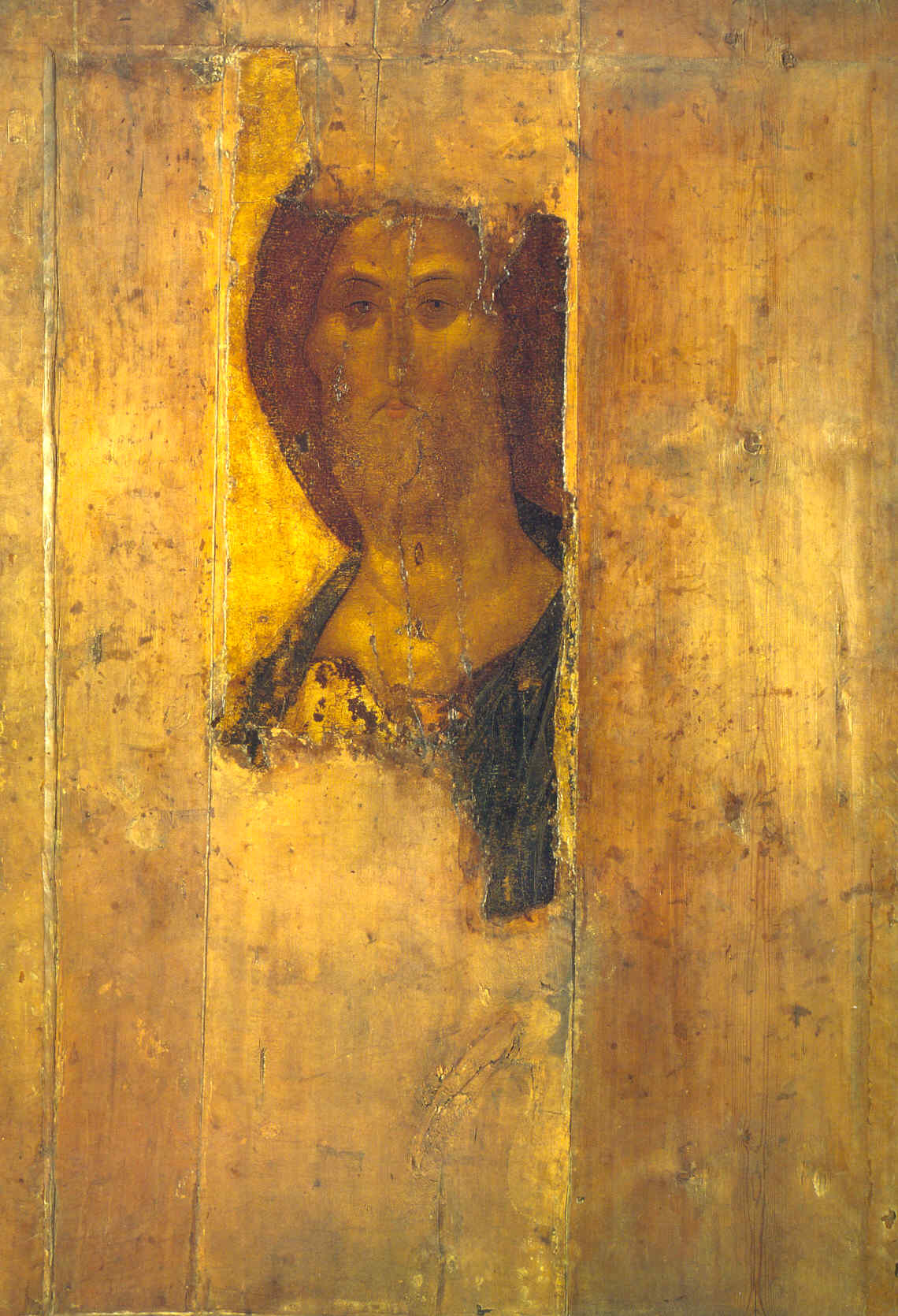 If there is a crisis in ministerial and churchly identity, it is, I propose, a crisis that finds it genesis in a defunct christology. One of the critical questions for every Christian – pastors too! – concerns the confidence we have in the gospel itself, which is really confidence in God and his Christ and should not in any way be confused with self-confidence. Much of the ‘leadership’ literature that lands on a pastor’s desk or in a pastor’s inbox – and which finds its voice in sermons and pastoral counsel – constitutes a wave of temptation to employ the powers of this present age for ministry. Much of this is hard to resist. With the enormous stress birthed by dwindling congregations, the temptation to turn inward and/or to ‘manage the institution’ rather than ‘serve the gospel’ is potent. And with the command to stones to become loaves of bread comes a loss of the memory that the Church is a creature of the Word (creatura verbum Dei), is an entity formed by the gospel alone, and for the gospel alone. This means that its capacity for being a community in the world lies wholly in the gracious God, whose work creates a radical dependence on the gospel which itself is the act and Word of God judging our false allegiance to idols, defeating evil powers and calling us to know and witness to God. In every sense, therefore, the Church is the Church insofar as it glories in the weakness and foolishness of the cross and repents of its theologies of glory.
So there exists a radical connection between the doctrine of justification and pastoral ministry. Put differently, we might say that everything for the Church depends on Christ’s humanity and substitutionary work. If this is not clear, the Church will become dependent on the pastor’s humanity, on her or his personality and action, and/or on its own programmatic existence which is destined for death. All around us is what TF Torrance describes as the Protestant psychological Sacerdotalism which displaces the humanity of Christ as leader of the community and sole substitute for our life, and leaves the Church with mere human alternatives to the one saving work of God secured in Christ’s humanity. So often in ministry we seek justification in terms of what is seen. We seek an outcome in order to justify our ministry. (This helps to keep the ecclesiastical sociologists in business, and those who draft endless ‘reviews’). But all ministry is God’s ministry. And we are called to participate in that ministry. When we fail to realise or fulfill our calling, it is often because we have neglected or abandoned or rejected the actuality that our calling is a participation, and not a proprietorship. Put otherwise, there is no such thing in and of itself as ‘the Church’ or as ‘ministry’. There is only God, and a people created and called out by God to witness to God and to God’s creation of God’s marvellous grace by which reality is (re-)constituted and by which all things live and breathe and worship and die and live again.
Some years ago, Ray Anderson penned a wonderful paper on ‘A Theology of Ministry’ (published in Theological Foundations for Ministry) in which he argued that ‘ministry precedes and produces theology’. By ‘ministry’, he meant that which ‘is determined and set forth by God’s own ministry of revelation and reconciliation in the world’. The task of the Church is to reflect on, to bear witness to, and to participate in, this ministry as set forth by God. Neither the Church nor her doctors and pastors and sessions stand on their own and determine the shape and content and ground of ministry. And so Anderson continues, ‘To say that all ministry is God’s ministry is to suggest that ministry precedes and determines the Church’. Clearly what Anderson was contending for was that the way we see ministry is essential to how we understand the Church. So when we call the pastor ‘the minister’ we are confessing that her ministry expresses something about the way the Church understands its own existence. The nature of ministry is the nature of the Church, and the minister par excellence, the leitourgos, is Jesus Christ himself (Heb 8.1).
In that same collection, James Torrance shows us how Jesus Christ is the minister in the true sanctuary that the Lord has set up. Jesus ministers to the Father on our behalf. All ministry is, first and foremost, the ministry of the Father who demonstrates his love to us in sending the Son (who himself does not act on his own accord, but carries out the will of the Father) that we might have life in him (John 5.17, 19, 30; 6.38; 1 John 4.9). The Son’s ministry is about, among other things, revelation (John 1.18) and reconciliation (2 Cor 5.17–19) in response to the will of the Father. And the Spirit, as the other paraclete, continues the ministry of the Son of bearing witness to the Father’s holy love (John 14.26; 15.26; 16.7, 13–15; Rom 8.9–15). To think about Christian ministry, and to engage in such, therefore, is to take up an invitation to participate in the very life of God – Father, Son and Spirit in their mutual witness to each other, and to the world. It is also, to borrow language from the Book of Hebrews, to ‘enter God’s rest’ (4.10), on which I will say more in the next post in this series.
Anderson also argued that ‘Christ’s primary ministry is to the Father for the sake of the world, not to the world for the sake of the Father’. This means that it is the purpose and joy of the Father, and not human needs, which determines the prime nature of Christ’s ministry (John 6.38). And in the Holy Spirit the Church is given to participate in Christ’s ministry to the Father for the sake of the world. Again, only in the context of this vision of the ministry of the Triune God does it make any sense to talk about the Church – the called-out people of God, the ekklesia – and its ministry. Ecclesiology, as Colin Gunton noted in On Being the Church: Essays on the Christian Community, is controlled by the tri-personed community of God. This means that the Church – if it truly is to be the Church – has no business in running its own agenda – indeed, it has no agenda! To press on as if it did, or to be concerned with one’s own preservation, is to uproot oneself from the very soil of what constitutes it. That is, it is to be ‘made a waste; it shall not be pruned or hoed, and it shall be overgrown with briers and thorns’ (Isa 5.6).
◊◊◊
Other posts in this series:
- On the cost and grace of parish ministry – Part I
- On the cost and grace of parish ministry – Part II
- On the cost and grace of parish ministry – Part III
- On the cost and grace of parish ministry – Part IV
- On the cost and grace of parish ministry – Part V
- On the cost and grace of parish ministry – Part VI
- On the cost and grace of parish ministry – Part VII
- On the cost and grace of parish ministry – Part IX
- On the cost and grace of parish ministry – Part X
- On the cost and grace of parish ministry – Part XI
- On the cost and grace of parish ministry – Part XII
- On the cost and grace of parish ministry – Part XIII
- On the cost and grace of parish ministry – Part XIV
Saturday Link Love

- Ashgate announces some new titles: Christ and the Other: In Dialogue with Hick and Newbigin by Graham Adams; Four Philosophical Anglicans: W.G. De Burgh, W.R. Matthews, O.C. Quick, H.A. Hodges by Alan Sell; Ethics with Barth: God, Metaphysics and Morals by Matthew Rose; Philip Melanchthon, Speaker of the Reformation by Timothy J. Wengert.
- Think ‘Progressive Church’.
- Ben Myers on Tomáš Halík, atheism and patience.
- Parker Palmer on writing and faith.
- Church rules on funeral rites and wrongs.
- Halden Doerge jumps back into the blogging pond with some thoughts on the postliberal theological project.
- Mike Crowl shares a nice quote from Nouwen on spiritual direction.
- Jim Gordon on welcoming Benedict XVI to Scotland, and a joyful reflection on Benedict XVI in Bellahouston Park.
- Trevor Cairney reports on Jeremy Begbie’s 2010 New College Lectures on ‘Music, Modernity and God’. For those, like me, who couldn’t be there but wanted to, there’s MP3s to come!
- Marilynne Robinson takes on bad science writers.
- Rowland Croucher shares some questions about sex that he’s been asked as a counsellor.
- Countdown to Freedom for Aung San Suu Kyi. Also, Thakin Ohn Myint, Aung San Suu Kyi’s mentor, has died.
- Myanmar’s Election Commission cancels polls in ethnic areas because they know military government proxy parties cannot win.
- Questioning Myanmar’s Electoral Commission’s definition of ‘Free and Fair’.
- Rick Floyd on When Blogs Die.
Hauerwas on Christian identity, and on being sent into the world
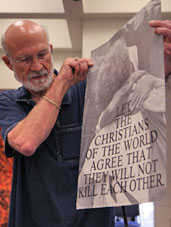 ‘”We’re all congregationalists now.” I don’t particularly like it, but we are. How to ensure given that reality that Eucharistic assemblies are not separate from each other is one of the great challenges before us. The role of the bishop is very important to make sure that Eucharistic assemblies are not isolated from one another. There are also other ways to do it. Certainly sending people from one congregation to another helps. But how we recover Christian unity in the world in which we find ourselves is a deep challenge. By “unity,” I don’t mean just agreement about ecclesial organization; I mean the refusal of Christians to kill one other. I think that the division of the church that has let nationalism define Christian identity is one of the great judgments against the Reformation in particular’.
‘Christians have to engage the world in which we find ourselves. We’re in love with the world because God is in love with the world. Therefore, we want the world to know what God has given us. Of course, I’ve never asked Christians to refrain from being politically engaged. I just want them to be there as Christians. What it means to be there as Christians is to be shaped by the body and blood of Christ, which has been done for the world. The closing prayer after our Eucharist celebration includes: Send us now into the world in peace and grant us strength and courage to love and serve you with gladness and singleness of heart through Christ our Lord, Amen. How could that be a retreat? I can’t imagine how the Eucharist can be self-containing if you’re sent out from it’.
– Stanley Hauerwas & Andy Rowell, ‘The Gospel Makes the Everyday Possible’.
The Floyd Theses on Interim Ministry
 Rick Floyd has posted a wonderfully-provocative and long-overdue discussion starter on ‘interim’ ministry. It begs reposting:
1. The chief purpose of long interim ministries is to provide a regular supply of jobs for ministers who are unwilling or unable to take a settled pastorate. This is not a good thing. Although a good interim minister can be a gift to a congregation, he or she is no substitute for a settled pastor. Interims work to contract, they often don’t live in the communities they serve, and they are not going to stay. It is a different kind of ministry, and the longer a church has an interim minister the longer it is deprived of the covenantal relationship that comes with having a called and settled minister.
2. During my 30 years in the ministry the length of interim ministries has expanded from a few months to two or three years (or more.) Meanwhile settled ministries are getting shorter, so the only difference seems to be less accountability on the part of the interim minister. Many seem to prefer it that way.
3. Interim ministers were once typically retired experienced pastors who preached, did pastoral care, and kept a light hand on the organization while the congregation sought a new settled pastor.
4. Today, interim ministers lead elaborate congregational self-studies, change the structures, rewrite the by-laws, and generally move the furniture around in ways that were once considered to be the job of a settled leader.
5. The reason that the extended length and the frenetic re-shuffling of interim ministry is justified as necessary is because the leave-taking of a pastor is considered to be such a trauma that only expert interim leadership can help the congregation heal from it and prepare for new leadership. It is true that there are such traumatic situations, such the death of a pastor, cases of clergy abuse or misconduct, or where there has been profound conflict. These situations may well call for extended interims. But the new model for interim ministry assumes that every transition needs such a long and intense interim. They do not. Why then are all interims expected to be so long? See #1.
6. The model for much interim ministry is a family system model where congregations are seen as dysfunctional systems and the former pastor (actually called the BFP “beloved former pastor” in some interim training) is seen as the problem. Sometimes this is true. Usually it is not, but the one-size-fits all template is demeaning to former pastors who have served faithfully. One must wonder if it can be possible that every pastor’s predecessor was incompetent, lazy, controlling or evil.
7. Long interims frequently dissipate the momentum of many church programs, make the congregation feel adrift, lose the allegiance of many long-term members, and often leave the new settled pastor with a much-diminished congregation. This scorched-earth policy allows for little continuity between pastorates, and means the new pastor often must “re-invent the wheel” in a new setting.
8. Interim ministers have their own networks, and often work outside the existing judicatory processes. They can and often do function as a free-floating class of paladins for hire that raises fundamental questions about the meaning of ordination and the accountability of the ordained. Ordaining someone to interim ministry is a (new) practice that needs serious scrutiny.
9. Because the models of interim ministry are derived largely from psycho-social systems theory and/or corporate management models they have little regard for the church’s own grammar of how to be church. These interim models are very thin on the ground when it comes to theology. This mirrors a general trend in ministry toward professional identity over the ancient churchly arts of soul-craft and ministry of the Word of God.
10. Lay persons in leadership during a time of pastoral transition are well-advised to carefully query potential interim ministers about their model of interim ministry. Question the assumption that every church needs a two or three year interim. Maybe you do, but ask why? Ask if the interim is planning on doing a lot of restructuring, and if so, why? The congregation should decide what it needs from an interim, and not hire an interim to tell it what it needs from him or her. An interim is just that, an interim who gets you through a period to allow the “search and call” process to take place. The rule of an interim should be like a doctor: “Do no harm.” A good interim will leave a small footprint.
Ten (Draft) Propositions on the Missionary Nature of the Church
 1. We commend the motivation which grants missiology a prime locus within ecclesiology, and, conversely, understands ecclesiology within the locus of the missio dei.
2. We commend the claim that the community’s task of bearing witness to Christ is of the esse to the missio ecclesiae.
3. We commend the assertion that the missio ecclesiae finds its genesis and telos in the trinitarian relations ad intra and in the missio dei ad extra.
4. But we reject those articulations which suggest that the divine ontology in se is determined in the missio dei ad extra and so undermine the truth that the missio dei is an action of free grace from Father, Son and Holy Spirit.
5. We commend the intention to bring the conversation about the missio ecclesiae into dialogue with divine election, or what we might call ‘missional election’.
6. We commend the determination that understands the missio ecclesiae as an extension of, and witness to, the divine love.
7. We reject the decision to blur the distinction between the esse and the bene esse of the people of God along missiological lines.
8. We reject those theological programs which would reduce the Church’s raison d’être to the functions of mission.
9. We reject any suggestion that the Church is in a position of self-determination. Founded in baptism, called into being by proclamation, ruled by scripture and nourished by the eucharist, the Church is – and remains – a creatura verbum Dei, a people claimed and kept by God and made one by the vivifying Spirit to worship God in spirit and truth. The Church can be faithful or perfidious to its ontology, it can choose to hear or to be deaf, but its hearing or otherwise does not determine its status or its end. Only its Creator can do this. Again, the Church is not the determination of the creature but of the one God of grace. Jesus’ promise to the apostolic community is that he will remain with it until the very end of the age. These are the words of a faithful lover in unilateral covenant which his beloved. That this lover is as good as his word provides the certainty that the Church – like Israel – is neither optional nor independent nor dispensable to God’s purposes for creation.
10. We ought to be able to say all this without resort to Latin.
William Stringfellow, Imposters of God: Inquiries into Favorite Idols – Part IV
 After chapters on money and status (pp. 31–6), race (pp. 39–43), and patriotism (pp. 47–52), Stringfellow, in Chapter Seven, turns to the idol named ‘Church’. He recalls that by the sheer gift of God, the Church lives in the midst of a history constituted by the Fall and in ‘juxtaposition to each and every institution and ideology in their fallenness’ for the critical purpose of ‘being a witness and example of the society of mankind and of all creatures liberated from the power of death’ (p. 55). In building his argument, Stringfellow considers the very constitution of the Church at Pentecost, where, he notes, arise two peculiar characteristics which distinguish the Church as free from the power of death. Both, he insists, pertain to the Church as renewed creation, that is, both inhere in the unity of the Church, bestowed in Pentecost by God for the sake and service of the world. He names these characteristics the ‘secular unity’ of the Church and the ‘churchly unity’ of the Church:
The secular unity of the church at Pentecost consists in the extraordinary transcendence, in that event in which the church is called into being, of all worldly distinctions familiar to men. Thus, according to the biblical testimony, on the day of Pentecost there are gathered in one place men of every tribe and tongue who are, in becoming the new society of the church, no longer divided and separated and unreconciled on account of their differences of race or language, ideology or class, nationality or age, sex or status, occupation or education, or, indeed, even place and time (Acts 2). Such distinctions, so esteemed in the world that they are representative of the idols men worship and vainly look to for justification, are surpassed in such a way in the establishment of the church in history that the church is characterized, biblically, as “a new creation,” “a holy nation,” “a priest among the nations,” “a foretaste of the Kingdom of God,” “a pilgrim people,” “a pioneer of salvation,” “a new race,” a community in which there is neither Jew nor Greek, bond or free, but in which all have become one in Christ.
Coincident with this worldly unity of the church at Pentecost is a churchly unity encompassing the manifold charismatic gifts bestowed upon the church and distributed and appointed among members of the church, such as prophetism, preaching, teaching, healing, administration, speaking in tongues, and so on. (See Ephesians 4:11–14, cf. 1 Corinthians 14:1–19.) These particular gifts of God to the church are missionary gifts – that is, they are entrusted to the church and authenticated in their exercise by members of the church as means of witness and service to the world. At the same time, according to the biblical precedent, the efficacy of a specific gift requires the presence and use of all the other various gifts so that they are all interrelated and interdependent, and so that each enhances the wholeness of the body of the church. The diversity of charismatic gifts is not occasion for division of the church into sects or parties or for status distinctions or exclusionary practices among members of the church. The gifts are contributions to a churchly unity which serves a broken, divided, fallen world as a forerunner of the reconciliation vouchsafed in Christ for the world.
It is possible to speak of the marks of the church in other frames of reference which are both trustworthy and worthwhile, but it is never possible to omit these two marks of the church manifested in the constitution of the church at Pentecost. (pp. 56–7)
Stringfellow proceeds to note that ‘a distinctive mark of the biblical mind’ is the ability to ‘discern that human history is a drama of death and resurrection and not, as religionists of all sorts suppose, a simplistic conflict of evil vs. good in an abstract sense’ (p. 64). God has embodied the aspects of the essential conflict between life and death into his own drama of death and resurrection: ‘In the light of the Gospel, every life, every person, every event, is included in the context of death and resurrection – of death and the resurrection of life, of death and transcending the power of death. As death is not just something which each of us must eventually face, but a power at work here and now, so the power of the resurrection is neither something remote nor merely promissory. The resurrection of Jesus Christ means the available power of God confronting and transcending the power of death here and now in the daily realities of our lives’ (pp. 64–5).
It is to this truth that the Church is elected, called and empowered to bear witness. This election, calling and empowerment takes place in the event of Jesus’ resurrection. This event announces the end of the reign of death and inaugurates the new creation in which we need no longer fear the power of death, and so we need no longer serve any idols:
The resurrection constitutes freedom for men from all idolatries, whether of race or money or church or whatever. It constitutes freedom from death as a moral power in history, freedom to welcome and honor life as a gift, freedom to live by grace, unburdened by the anxiety for justification which enslaves men to idols.
In this freedom, we can begin to be faithful to our own humanity, and so faithful to God. We can go to work to give back to our various idols their true nature and purpose in relation to human beings and human living: to love our country and try to restore it to a sense of its true vocation in the family of nations; to use money as a medium facilitating equable exchange of goods and services; and try to get it so used in our society and in our world, and so on.
In this freedom, we no longer serve idols in our work or other experiences; we serve the living God. We work in the service of life, for ourselves and our fellow men. We work to re-establish human life in our relationships with ourselves and others and things in our society, anticipating in hope the final restoration when God will be “all in all.”
Thus work takes on the character of worship “in spirit and in truth,” and in our worship we celebrate the life and restoration we are working for. In such freedom, then, the present obvious dichotomy between what Christians do in the sanctuary and what they do in society can be done away with. What is affirmed and enacted in our corporate liturgical worship is what we affirm and work for in our daily lives. In both, we celebrate the gift of life as such by participation in God’s affirmation of life in the face of death. (pp. 65–6)
Imposters of God, which began its life as a study book for high school students, has been described as a work which ‘exposes the reality of idolatry at the heart of our common life in the world: work, status, money, race, the church, etc. But perhaps most importantly, it provides hope: a way of living in grace’ (Anthony Dancer). Yes it does. And Karl Barth was right about Stringfellow when he said, ‘You should listen to this man!’
Don’t forget Wipf & Stock’s offer to readers of Per Crucem ad Lucem of 40% off the retail price of any of the Stringfellow volumes. To obtain the 40% discount, just include the coupon code STRINGFELLOW with your order.
William Stringfellow, Free in Obedience – Part IV
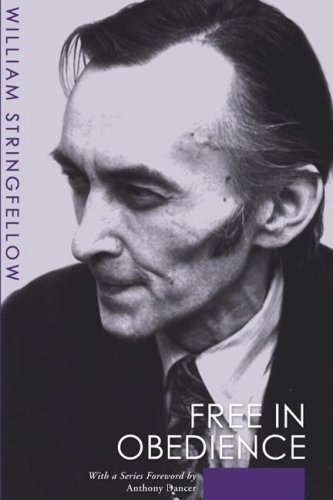 ‘The Church is born and lives … in the gift of Pentecost’ (p. 101). It is Pentecost, Stringfellow reminds us in Free in Obedience, that births the Church into the ‘awful freedom’ of Christ’s victory, a freedom from death, a freedom which empowers the people of God to live jubilantly ‘during the remaining time of death’s apparent reign, without escaping or hiding or withdrawing from the full reality of death’s presence … It is the freedom to live anywhere, any day, in such a way as to expose and confound the works of death and at the same time to declare and honor the work of Christ’ (pp. 75–6). This freedom is not given for God’s sake, or for the sake of the Church, but in order that the world may ‘recover wholeness and completion of life’ (p. 76). It represents, therefore, an act of divine generosity which gathers up in its ek-static movement a people called to witness to the grace, truth and power of Christ’s resurrection. Those so gathered are called into an ‘ethics of obedience’ (p. 76), a calling which involves a loosening of the grip on the principalities of race, class, ideology, commerce, status, etc., that hold the Church captive:
‘The principality of the nation is served by the silence of the Church on issues confronting society; the nation willingly tolerates a silent, uncritical, uninterfering Church concerned only with such esoteric things of religion as public worship’. (p. 85)
On the whole, the Church – largely confused about the freedom given in the gospel and ‘in which it was constituted at Pentecost’ (p. 88) – has been a faithful chaplain and ‘handmaiden’ (p. 95) to the State, dutifully blessing the State’s causes and idolatrous claims with a ‘dignity of allegiance that ought to be given only to God’ (p. 86). Those already familiar with Yoder’s and Kerr’s critiques of Constantinianism’s project of the politicisation of the church according to the terms of the state, the civil sovereigns, powers and principalities of this world, will find echoes here in Stringfellow.
After a discussion on the legitimacy and necessity of civil disobedience (though the Church is never to engage in civil disobedience as anarchists but only in order to affirm the nation’s true vocation), Stringfellow brilliantly outlines the proper relation between church and state (neither of which are ‘exempt from the fall’ (p. 98)) under God’s authority. He argues that ‘the Church vis a vis the nation is always in the position of standing against the nation in the nation’s bondage to death; at the same time, the Church is always in the position of standing for the nation in a most profound way that recalls the vocation for the nation in the service of God … The Church reminds the nation, as it is does any other principality, of the origin of its life, of the service it owes to God, and of the accountability of the nation to God in ruling the common life of men in society’ (pp. 92, 93). He also identifies the void in Protestant moral theology which fails to account for the way that those church bureaucrats who think that they control the institution are themselves slaves to the principalities of death.
‘This does not mean that Christians should be loath to work in churchly institutions, but it does mean that those who do should be aware of the reality which confronts them and should not be romantic about it because the principality bears the name “church.” Above all, they should be prepared to stomach the conflict which will surely accompany their use of the freedom from idolatry of even churchly principalities which Christ himself has secured’. (p. 99)
Stringfellow then engages with a wonderfully-helpful reflection of the ongoing power and significance of Pentecost (and of the authority present in Christian baptism) for shaping and determining Christian witness in a world in which King Jesus, possessed of the Holy Spirit, triumphantly encounters the powers and principalities of death – and death itself. ‘The Church, in the gratuity of Pentecost, is enabled to witness to God’s authority over the principalities in his victory over death by its knowledge of death, its discernment of the powers of death, and by unveiling and laying bare the works of death in this world’ (p. 102).
Don’t forget Wipf & Stock’s offer to readers of Per Crucem ad Lucem of 40% off the retail price of any of the Stringfellow volumes. To obtain the 40% discount, just include the coupon code STRINGFELLOW with your order.
 jasongoroncy.com