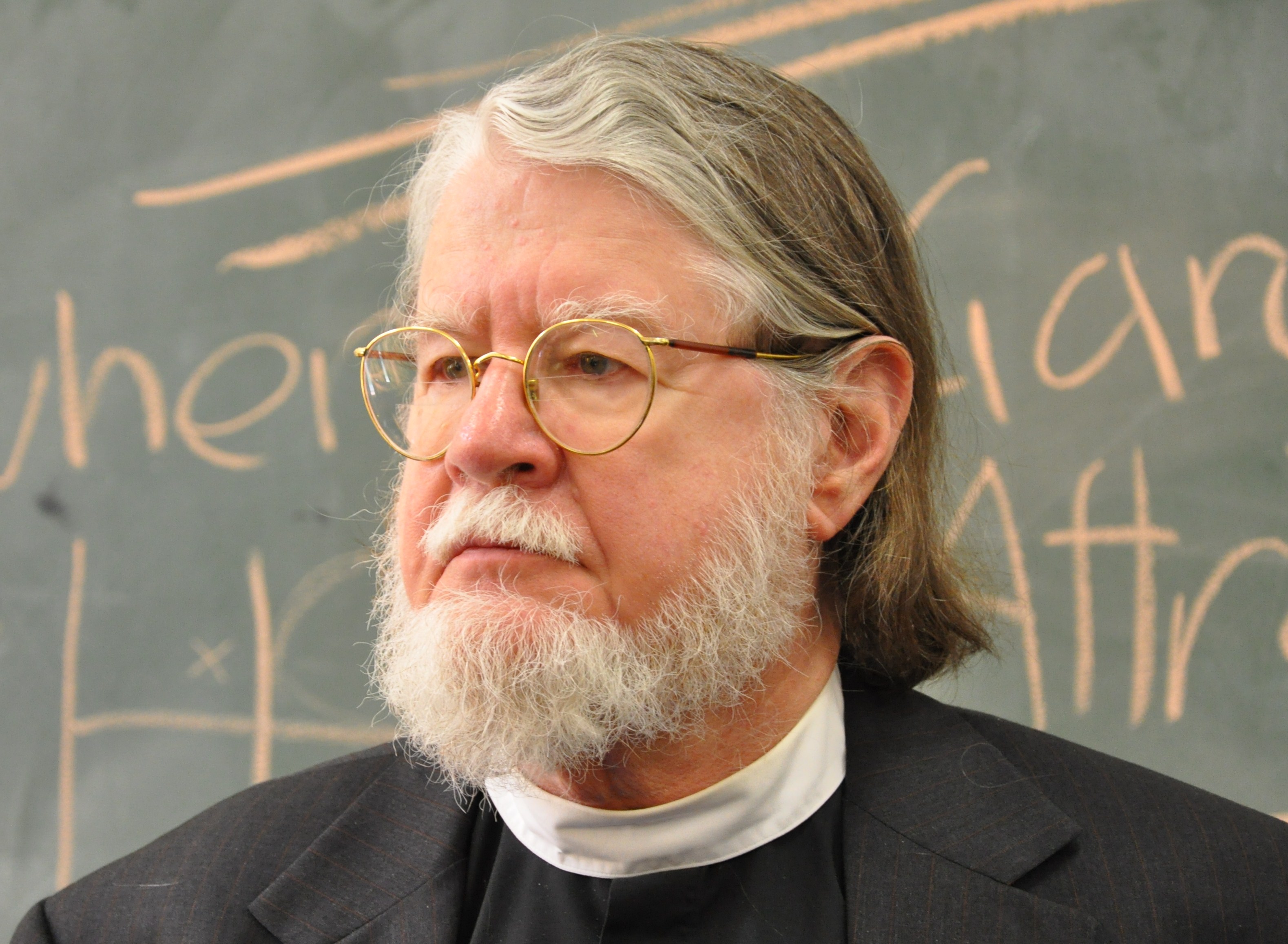
Author: Jason Goroncy

On the dynamic of Holy Scripture

path‘In order to have vision we must have memory. Indeed forgetfulness or amnesia is precisely what strips us of vision – without the past there can be no future. So our contemporary improvisation must be informed and directed by both a profound indwelling of the biblical vision of life and a discerning attentiveness to the postbiblical scenes that have already been acted out in the history of the church.

There is a certain dynamic in this approach to biblical authority that could be described as a dance between innovation and consistency. Our serious reading of Scripture must be characterized by fidelity to the thrust of the narrative and thus provide our life with a consistency and stability, a rootedness. At the same time, however, the Bible as an unfinished drama gives us freedom for historical innovation and thus a creative and imaginative flexibility in our historical responses. It is only by maintaining the essential relationship between stability and flexibility that we “may avoid the hazards” of both a rigid fossilization of our faith and “a deeper relativizing which gives up everything for a moment of [contemporary] relevance” [Walter Brueggemann, The Creative Word. Philadelphia: Fortress, 1982, 7].

As we read through the biblical story, it is clear that the Israelites themselves retold their stories with such fidelity and innovation. As the ancient Israelites encountered new situations, they remembered and interpreted their traditions in such a way that they engaged contemporary problems and concerns. Indeed without such dynamic interpretation, the texts and traditions contained within them were seen to be incomplete. There is therefore a dynamic of “inner-biblical exegesis” wherein various biblical traditions are creatively reworked in Israel’s Scriptures. As the biblical story unfolds, the received traditions were “adapted, transformed, or reinterpreted” …

Stability and flexibility, fidelity and creativity, consistency and innovation – these are key if a narrative text is to have any current authority in our lives’.  – Brian J. Walsh and Sylvia C. Keesmaat, Colossians Remixed: Subverting the Empire (Leicester: InterVarsity Press, 2004) , 134-5)

[Image taken stolen from deepchurch]

Towards a theology of the child: a series

childhoodHere’s my posts so far on a theology of the child in historical perspective. It’s a series that I’ve enjoyed doing and which I’d like to return to at some stage (but not for a wee while).

Jürgen Moltmann on Childhood: it all depends on perspective

kidsBy way of drawing a conclusion to a series of wee posts on exploring a theology of childhood (see previous posts on John Calvin, Friedrich SchleiermacherKarl Barth, David JensenKarl Rahner and Tony Kelly) I turn here to German Reformed theologian Jürgen Moltmann. In his essay ‘Child and Childhood as Metaphors of Hope’ [Theology Today 56, no. 4 (2000), 592-603], Moltmann observes the difference in how parents or educators speak about the child, how a child speaks about herself, and how adults recall their own childhood. These three ways of speaking of childhood can also be referred to as (1) ‘pedagogical childhood’, (2) ‘child’s childhood’, and (3) ‘future childhood’.

1. A concerned parents and educators view of childhood.

From the view of concerned parents and teachers, childhood is an age that is meaningful and good in itself on the one hand; on the other hand, it is a stage that is to be overcome by the child’s own development, through training provided by adults and education provided by the society. Finally, parents have to bring up their children, so that they can become something and can be made fit for a life in the world of adults … The open future of children has been pressed into the prescribed adult world through parental and educational measures. Childhood has been viewed as the ‘evolving’ stage of human existence, while old age seems to be the ‘devolving-stage of human existence’. The model of full humanity thus has been the grown-up human being between the ages of twenty-five and sixty-preferably, of course, the ubiquitous man ‘in his best years’.

Moltmann proceeds to cite the work of Leopold von Ranke to sponsor his protest against those notions which would reduce childhood to a mere ‘underdeveloped stage that must be overcome’, or, in von Ranke’s words, as a ‘prologue of the future’, claiming that

‘every epoch is immediate to God’, since the Divine strives to manifest itself in every epoch, and cannot be manifest in its entirety in any one single age. The same is valid for the stages of human life. Children, adolescents, adults and seniors find meaning in each stage of their lives. Every lived moment has meaning for eternity and represents ‘life in abundance’. Thus, every child and youth has a ‘right to their own present’. Even a child who dies early could have had an ‘abundant’ life. Life in abundance is not measured in terms of length, but in terms of the depth of life experience, a quality that will never be reached by a mere quantity of years lived and time spent. Life that is abundant in every present moment has to be affirmed and respected by others, by parents and educators, and should not be sacrificed on the altar of progress.

girl2. A child’s view of childhood.

How children view childhood is an almost impossible mystery for adults to discern. Moltmann writes:

What childhood is for children or how children view their own childhood remains a mystery almost impossible for adults to access since our experiences get confused with both our desires and fears … Perhaps we only become conscious of our childhood experience when we are no longer children, since we can only recognize that from which we are already removed. I think that childhood is outlined and determined by the fact that we are no longer ‘in the safety’ of our mother’s womb, but not yet ‘independent’ … On the other hand, we recall the dependencies, the nightly fears, the powerless dreams of one’s own all-powerfulness and the empty days. We also call to mind how small we were and how big the father, how helpless we were and how omniscient our mother, as well as how the bigger children always seemed already capable of everything. And still we experienced and performed everything ‘for the first time’. With boundless amazement, we would follow the flight of a fly and would interrogate our parents with unanswerable questions of ‘why’. How entranced we were in our games, reacting spontaneously and with unpremeditated laughter and tears. The darkness of the lived moment” would often be very dark and would not become light, either before or after. Surely before we were ‘school children’, we were ‘playing children’ but even then we were watched by adults and we adopted their attitudes and opinions in order to please them. Still, we will have to find some way to respect the interior perspectives of a child’s experience: otherwise all of our analyses read our own projections onto the child.

childlike-wonder3. An adult’s view of their childhood or the child in themselves.

Moltmann names the sentimentality and regressiveness that keep us from making peace with the reality of our own aging, when our ‘beginning gets glorified’ and ‘childhood is retrospectively seen as a landscape of unlimited possibilities and objectified as the potential of beginning’. He continues:

Since there is always more in our beginnings than we can actually bring forth, given the complexity of our circumstances, childhood and youth come to be seen as the glorified dawn of life. When we think of our youth and of all we might have been, we discover the future in our past. Our past ‘beginnings’ become the source of our future, in such a way that a ‘future childhood’ is constructed. This childhood awakens deep longings inside of us: the longing to be secure, to feel warm; the longing to experience life as a mystery one more time, the longing to experience wonder; the longing for a new beginning; a longing for the child within that wants to be born anew, so that the miracle of life may begin yet again. From this perspective, the beginnings of life seem pure and good. Consequently, children always seem innocent to us: their eyes mirror dreamy innocence. Yet, when is it that humans become capable of guilt? The dream of a sexually innocent childhood may only be the reversal of the old, terrible doctrine of original sin, which taught that children were conceived and born in sin and therefore had to grow tip under humanity’s hereditary burden. But from this perspective of ‘future childhood’, ‘innocence’, ‘new beginning’, and access to a ‘world of unlimited possibilities’, we construct childhood as a metaphor of hope.

David Bentley Hart on the rude interruption

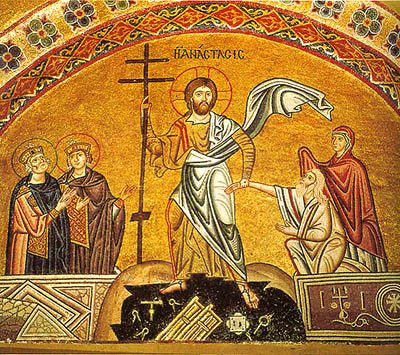
resurrection‘Nietzsche, the quixotic champion of the old standards, thought jesting Pilate’s “What is truth?” to be the only moment of actual nobility in the New Testament, the wry taunt of an acerbic ironist unimpressed by the pathetic fantasies of a deranged peasant. But one need not share Nietzsche’s sympathies to take his point; one can certainly see what is at stake when Christ, scourged and mocked, is brought before Pilate a second time: the latter’s “Whence art thou?” has about it something of a demand for a pedigree, which might at least lend some credibility to the claims Christ makes for himself; for want of which, Pilate can do little other than pronounce his truth: “I have power to crucify thee” (which, to be fair, would under most circumstances be an incontrovertible argument). It is worth asking ourselves what this tableau, viewed from the vantage of pagan antiquity, would have meant. A man of noble birth, representing the power of Rome, endowed with authority over life and death, confronted by a barbarous colonial of no name or estate, a slave of the empire, beaten, robed in purple, crowned with thorns, insanely invoking an otherworldly kingdom and some esoteric truth, unaware of either his absurdity or his judge’s eminence. Who could have doubted where, between these two, the truth of things was to be found? But the Gospel is written in the light of the resurrection, which reverses the meaning of this scene entirely. If God’s truth is in fact to be found where Christ stands, the mockery visited on him redounds instead upon the emperor, all of whose regal finery, when set beside the majesty of the servile shape in which God reveals Himself, shows itself to be just so many rags and briars. This slave is the Father’s eternal Word, whom God has vindicated, and so ten thousand immemorial certainties are unveiled as lies: the first become last, the mighty are put down from their seats and the lowly exalted, the hungry are filled with good things while the rich are sent empty away. Nietzsche was quite right to be appalled. Almost as striking, for me, is the tale of Peter, at the cock’s crow, going apart to weep. Nowhere in the literature of pagan antiquity, I assure you, had the tears of a rustic been regarded as worthy of anything but ridicule; to treat them with reverence, as meaningful expressions of real human sorrow, would have seemed grotesque from the perspective of all the classical canons of good taste. Those wretchedly subversive tears, and the dangerous philistinism of a narrator so incorrigibly vulgar as to treat them with anything but contempt, were most definitely signs of a slave revolt in morality, if not quite the one against which Nietzsche inveighed—a revolt, moreover, that all the ancient powers proved impotent to resist.

In a narrow sense, then, one might say that the chief offense of the Gospels is their defiance of the insights of tragedy—and not only because Christ does not fit the model of the well-born tragic hero. More important is the incontestable truth that, in the Gospels, the destruction of the protagonist emphatically does not restore or affirm the order of city or cosmos. Were the Gospels to end with Christ’s sepulture, in good tragic style, it would exculpate all parties, including Pilate and the Sanhedrin, whose judgments would be shown to have been fated by the exigencies of the crisis and the burdens of their offices; the story would then reconcile us to the tragic necessity of all such judgments. But instead comes Easter, which rudely interrupts all the minatory and sententious moralisms of the tragic chorus, just as they are about to be uttered to full effect, and which cavalierly violates the central tenet of sound economics: rather than trading the sacrificial victim for some supernatural benefit, and so the particular for the universal, Easter restores the slain hero in his particularity again, as the only truth the Gospels have to offer. This is more than a dramatic peripety. The empty tomb overturns all the “responsible” and “necessary” verdicts of Christ’s judges, and so grants them neither legitimacy nor pardon’. – David Bentley Hart, ‘God or Nothingness’ in I Am The Lord Your God: Christian Reflections on the Ten Commandments (ed. Carl E. Braaten and Christopher R. Seitz; Grand Rapids: Wm. B. Eerdmans, 2005), 64-66.

Nick Cave: The Love Song Lecture

nick-cave

‘I see that my artistic life has centered around an attempt to articulate the nature of an almost palpable sense of loss that has laid claim to my life. A great gaping hole was blasted out of my world by the unexpected death of my father when I was nineteen years old. The way I learned to fill this hole, this void, was to write. My father taught me this as if to prepare me for his own passing. To write allowed me direct access to my imagination, to inspiration and ultimately to God. I found through the use of language, that I wrote god into existence. Language became the blanket that I threw over the invisible man, that gave him shape and form. Actualising of God through the medium of the love song remains my prime motivation as an artist. The love song is perhaps the truest and most distinctive human gift for recognising God and a gift that God himself needs. God gave us this gift in order that we speak and sing Him alive because God lives within communication. If the world was to suddenly fall silent God would deconstruct and die. Jesus Christ himself said, in one of His most beautiful quotes, “Where ever two or more are gathered together, I am in your midst.” He said this because where ever two or more are gathered together there is language. I found that language became a poultice to the wounds incurred by the death of my father. Language became a salve to longing.

Though the love song comes in many guises – songs of exultation and praise, songs of rage and of despair, erotic songs, songs of abandonment and loss – they all address God, for it is the haunted premises of longing that the true love song inhabits. It is a howl in the void, for Love and for comfort and it lives on the lips of the child crying for his mother. It is the song of the lover in need of her loved one, the raving of the lunatic supplicant petitioning his God. It is the cry of one chained to the earth, to the ordinary and to the mundane, craving flight; a flight into inspiration and imagination and divinity. The love song is the sound of our endeavours to become God-like, to rise up and above the earthbound and the mediocre’. – Nick Cave, ‘Love Song Lecture’.

Michael Jinkins on preserving the complexities

escher

‘While orthodoxy has always sought to maintain the deep tensions at the heart of the gospel (such as Jesus Christ, “fully divine, fully human”), and has steadfastly resisted reducing these tensions to simple either/or statements, heresy inevitably loses its hold on one or the other of opposing affirmations that only together can lay claim to the truth, and thereby violates the integrity of the mystery of faith … With some regularity I am told by some church or religion “expert” that lay people demand simple answers, black and white responses to the complicated moral and spiritual issues arising in this fast-paced world. It is more important to be interesting than accurate one expert told me. With considerable regularity I also teach classes and preach in congregations around the country, and the lay persons I meet in these classes not only read magazines and papers like The Economist, The Wall Street Journal, and other print and online media, they not only also run businesses, work in the fields of law and medicine and education, and are apparently able to whistle and walk simultaneously, they also crave a deeper more complex engagement with Christian faith. We don’t have to treat matters of faith dully in order to preserve the complexities, let alone the mysteries, of faith and life. And we certainly don’t have to dumb down our presentation of the gospel and of the gospel’s intersections with life in order to stimulate the interests of our audiences. A friend related a story about advice he received from an expert in Christian publishing. The expert told him that he needed to eliminate the nuances from a piece he had written for a lay audience. My friend responded with something that would drive a hedgehog crazy, but that is music to the ears of every fox: The really important stuff has to be nuanced, or else it isn’t true’. – Michael Jinkins, ‘Down with slogans!’

Forsyth on the current claptrap against theology

forsyth-13‘It is doubtful if anywhere so much ability is going to seed as in the pulpit, if so much toil, ingenuity, intelligence, and feeling are being wasted anywhere as in the thousands of sermons that go to their drawers as to their last cradle and long home, week by week, to haunt as feckless ghosts the preacher’s soul. Hence the restlessness that is observable in the ministry in various quarters, the sense of ineffectiveness, the desire to try a new soil with the same seed, in the hope that the Spirit may at last reward the effort and bring back His sheaves with Him. But it is not a change of sphere that is required most. That may but foment the unquiet, or else become the soul’s narcotic, It is a change of note that is needed, and a change that no new place can bring. If the lack is power, the cause of the lack is the absence of a definite, positive, and commanding creed which holds us far more than we hold it, holds us by the conscience, founds and feeds us on the eternal reality, and, before we can do anything with it, does everything with us. Every Church and every preacher is bound to run down without such a creed, and no amount of humane sympathy or vivid interests can avert the decline. In every direction, the Church is suffering from the inability to know its own spiritual mind, or to strike a stream from its own rock, and from its indisposition to face the situation or its impotence to fathom it. For a generation now we have been preaching that experience is the great thing, and not creed; till we are losing the creed that alone can produce an experience higher than the vagaries of idiosyncrasy, or the nuances of temperament, or the tradition of a group, or the spirit of the age … The current claptrap against theology is only an advertisement of the lack in religion of that passion of spiritual radicalism and mental veracity which will settle nowhere but at the very roots of things, and must draw its strength from the last realities of the soul’s intelligent life. The result of the defect is a vague sense of insecurity as to foundations and an insidious dubiety which, unconsciously to the preacher, conveys itself to his flock, and generates a malaise that nobody can explain’. – PT Forsyth, ‘Veracity, Reality, and Regeneration’, London Quarterly Review 123 (1915), 194, 195.

Forsyth on liberty, truth and thinking for yourself

forsyth-12A few days ago, I posted a cartoon which included the caption [from the lips of a teacher]: ‘When writing your essays, I encourage you to think for yourselves while you express what I’d most agree with’. The post drew a thoughtful response from Andre who suggested that the cartoon raised a number of important questions, including one about ‘whether the command to “think for yourselves” isn’t also a product of late-capitalism, a variant of the command to enjoy’. I’d been thinking about Andre’s statement when I re-read Forsyth’s 1908 essay on ”The Love of Liberty and the Love of Truth’, an essay, I think, which contributes an essential mix into the issues that the Andre raises, and which I will keep pondering:

‘The New Testament knows nothing explicitly of the liberty to pursue truth. That blessing is of science and the modern age. It is not religious in its historical origin. And, in so far as it is religious at all it is the inevitable, but indirect result of another and greater liberty, which is that of the New Testament, the liberty that truth must pursue because truth first creates it. Free thought is not a primary Christian interest’. (p. 160)

‘… freedom is a thing entirely conditioned by the nature of its authority, of the reality to which it answers and owes its being’ (p. 161)

‘… theological freedom must always be limited by the Gospel that makes a Church a Church, makes it live, and makes its life free. Theology in a university, as an academic science, has a freedom (and a feebleness) which it can have in no Church. A Church of free thought would be no Church at all, but the most sectarian of sects, and the most scholastic of schools. There is something almost boyish in the aggressive use of a pulpit for free thought propaganda’. (p. 162)

‘The Church of a real Gospel is called to something more than a vague zeal for liberty as an unchartered freedom. It is called to throw its weight upon the positive Evangel which makes it free. For liberty itself could become an idol, and could be used for a cloak to hide the poverty of our faith, and to express a sympathy too soft to be firm or true’. (p. 168)

‘It has been said that the creeds represent extravagances and eccentricities imported into a simple Christianity. But to the historic eye it is rather the other way. They represent on the whole the growing corporate life which normally shed the raw Gnostic extravagances of youth. Unfortunately they came to be canonised in perpetuity, and used as means of oppression and obscurantism by their epigoni. And it was to prevent such abuse that churches arose in which the form of faith was non-confessional, based on an honest evangelical understanding, which was declaratory at most, and not exclusive … But of course if such trustful freedom became an evangelical failure, there is a natural danger that many minds would for practical purposes turn from an internal to an external authority, and would return to the idea of a brief and revisable creed which should be of obligation, as the only means of saving the Churches from dissolving into star dust and luminous mist’. (p. 170)

Forsyth: Sunny Love or Solemn Grace?

forsyth-10‘The old layman demanded depth at any cost, for which he was willing to pay the inward price and meet the preacher half way; the new demands simplicity at no cost at all, and will have everything brought, cooked and flavoured, to his door. Simplicity for him is not what clears a concerned conscience, but it is what speaks the language of his business or consecrates the voice of his bosom. It is the Gospel deposited at his private address, without effort of his, for family use; it is not a Gospel which he travels miles of spiritual preparation to hear, and which might cost father, mother, wife, or child. He does not dig for it as for hid treasure – the ministry is there for that purpose, in the preparing of sermons. And the ministry fails because it either has to dig alone, or it is discouraged to do more than hoe the ground, and then finds nothing to make it more than a carrier and turn it to a prophet. In church going many hope at most to be impressed, and at least to have a treat: what they fear is to be humiliated – broken up, cast down, taught an obedience, frightened about their soul, and born again. Theirs is a cordial faith rather than a joyful – as the New Testament understands joy. It is a faith of the heart rather than the conscience, a faith in sunny Love rather than solemn Grace’. – P.T. Forsyth, ‘Lay Religion’. Constructive Quarterly 3, December (1915), 781-2.

Forsyth: ‘Christianity and Society’

forsyth-61Regular readers of Per Crucem ad Lucem can gear themselves up for some more Forsyth in the next few posts. Here’s a few nuggets from his 1914 essay, ‘Christianity and Society’ (Methodist Review Quarterly):

‘The Church’s true attitude and action in the world is Christ’s. It is that of him whose indwelling makes it a Church The question, therefore, of the Church’s relation to Society is really the whole question of Christology’. (pp. 3-4)

‘Christ is God by his eternal personal relation to the divine holiness, rather than by his essential relation to the divine substance’. (p. 4)

‘The Church is not simply the superlative of religious society. It is not spiritual Humanity coming to its own. Christianity is not the republication of the lex naturæ with supreme éclat. Grace is not a mere reēnforcement of nature. There is a new Creation. That is the vital thing’. (p. 5)

‘The principle of the Church is thus the antithesis of the world; and yet it is in constant and positive relation with it. They co-exist in a vital paradox which is the essence of all active religion. The Gospel can neither humor human nature nor let it alone. That is the grand collision of history, however its form may vary … Hence the first business of the Church is not to influence man but to worship and glorify God, and to act on man only in that interest. All its doctrine, preaching, culture, and conduct is a confession and glorification of the Saviour. The Church does not save; it only bears living witness and makes humble confession, in manifold ways, of a God who does. It is not a company for the promotion of goodness, but a society for the honor of God’. (p. 6)

‘The evil neglect of the theologian by the public today is in a measure his own fault. His truth has not kept pace with the growth of social interest. It has been too idealogical, and not enough social. His doctrine has not remained a living expression even of his own society of the Church. He has failed to show how necessary it is for the social interest itself. And he has not so construed the Gospel as to force a social regeneration on the Christian conscience. He has been often occupied with a God of substance, process, or ideas, instead of a God of act, life, and the Kingdom’. (p. 7)

‘Christianity has more and more to face a dechurched civilization. The circumstances are thus quite different from the mediæval state of things. The traditional civilization is turned more and more upon its own resources. Can they save it from anarchy? It is on its trial’. (p. 14)

‘… our eyes are being purged today to see many things. We feel the effects of a modernized Pelagianism, the effect of worshiping (if it is worship) a God whose revelation is too little of a moral crisis and re-creation of human nature, and too much of its glorification. We inherit a Christianity which allows too much to human nature, and therefore is conquered by it’. (p. 17)

Forsyth: ‘Christ – King or Genius?’

forsyth-5Just been reading Forsyth’s essay, ‘Christ – King or Genius?’ published in the July 1916 edition of Methodist Review (pp. 433-47). It’s classic Forsyth-style, and picks up a great many of the themes that dominate his christology: Jesus’ self-identify, his difference from us, the soteriological priority given to his obedience, Christ as other than the apotheosis of Nature and the hierophant of humanity, his redeeming achievement as God’s Missionary, etc. Here’s a few Forsyth gems:

‘Hero worship is a precious protest against naturalism and for man; but it ends in Nietzsche and the superman unless it be itself superseded by the Godman’. (p. 438)

‘… the worship of God in Christ does not rest on a scorn of the gifted, but on a leveling grace which uplifts all. Truly it knows how mean man can be amid his very wisdom and greatness, how dark God may remain to us in the midst of culture’s kindliest light, and how weak he may be as a control amidst the men of genius, might, and liberty. But from such a brilliant and ignoble race Christ does not retire to the heights; he goes down to its depths – meaning not that he marches into its slums, but that he contracts himself into his impotence. He does not simply frequent man’s company; he is united with his soul and self-withdrawn into his sickness’. (p. 441)

Helmut Thielicke on the conscience

thielicke-3‘The conscience is not serene or troubled according to what we have done or not done. Peace of conscience depends solely upon what we are, i.e., on whether we believe – and the extent to which we believe – in the boundless unconditioned mercy of God … It is theologically wrong to try to pacify a conscience-stricken person by talking away his sins. To do so is to try to cure him by means of the “outer tent.” But there is no healing here, and cannot be. In fact the heart of his problem is that he is still loitering in this forecourt. The only way we can help is to point him to the εφαπαξ that which took place once-and-for-all for him in the crucifixion of Jesus Christ’. – Helmut Thielicke, Theological Ethics Volume 1: Foundations (Grand Rapids: Wm. B. Eerdmans, 1979), 310.

Forsyth on Luther’s merit

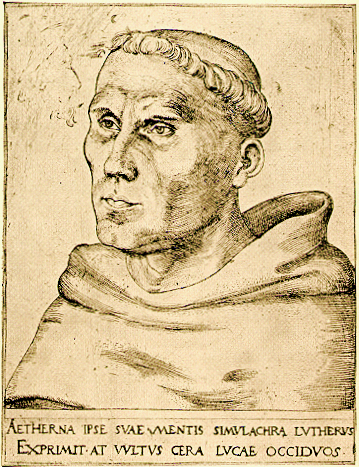
luther-1‘Luther’s merit was not the heroism of his conscience, but the rediscovery of a new conscience beyond the natural, and beyond the institutional – whether canonical in the Church, or civil in the State. He found a conscience higher and deeper than the natural, the ecclesiastical, or the Political – the individual, the canonical, or the civil; more royal than culture, clergy, or crown. He found a conscience within the conscience. He found anew the evangelical conscience, whose ideal is not heroism at all, but the humility and obedience of the conscience itself, its lostness and its nothingness except as rescued and set on its feet by Christ, in whom no man is a hero, but every man a beggar for his life’. – Peter T. Forsyth, Rome, Reform and Reaction: Four Lectures on the Religious Situation (London: Hodder & Stoughton, 1899), 121. 

Forsyth is aware that Christianity’s concern is not with the self-assertion or self-glorification of human nature, but with the redemption and reconstituting of wills. The conquered conscience recognises this ‘Another, greater and better … Who comes to us, gives Himself to us’ in such a way that we are enabled, in faith, to give ourselves to, and find ourselves in, him. There is, Forsyth avers, no higher relation possible to human persons. However, although faith consoles the conscience, it does not necessarily follow that the testimony of the gospel and the feeling of the conscience enter into some sort of harmony in faith. In fact, as Zachman notes in his brilliant study (The Assurance Of Faith: Conscience In The Theology Of Martin Luther And John Calvin), ‘in the experience of tribulation (Anfechtung), the opposition between the Word of God and the feeling of the conscience is intensified’ (p. 63; see also pp. 63-8, 80-7, 151, 182, 192, 198-203, 210-23, 226, 246). This is because, as Forsyth notes, the unconquerable relationship between conscience and Conscience entails the acquisition of a new and final authority:

The prime question of religion is not, “How do I stand to the spiritual universe?” but “How shall I stand before my Judge?” The last authority must be the authority owned by the conscience, and required by the sinful, guilty conscience of a race. It is the authority of a Saviour … One whose absolute property we are … It is the authority of the moral absolute, of the holy, which stands over us and changes us from self-satisfaction to self-scrutiny, self-knowledge, and self-humiliation in the presence of the righteousness loving and eternal. (Peter T. Forsyth, The Principle of Authority in Relation to Certainty, Sanctity and Society: An Essay in the Philosophy of Experimental Religion (London: Independent Press, 1952) 303-4; cf. pp. 400; Peter T. Forsyth, The Preaching of Jesus and the Gospel of Christ (Blackwood: New Creation Publications, 1987) 55-6.)

Lent Reflection 5: Hans Urs von Balthasar on the three decisive hours

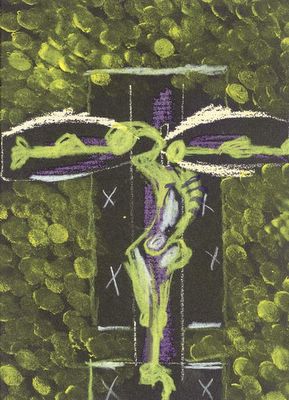
crucifixion-2‘”Now from the sixth hour there was darkness over all the land until the ninth hour.” It was as if the cosmos sensed that something decisive was going on here, as if it were participating in the darkness invading the soul of Christ. For our part, we do not need to experience this darkening, for we are already estranged and dark enough. It would suffice if we held onto our faith in a world that has become dark all around us; it would be enough for us to be convinced that all inner light, all inner joy and security, all trust in life owes its existence to the darkness of Golgotha and never to forget to give God thanks for it’. – Hans Urs von Balthasar, You Crown the Year With Your Goodness: Sermons Through the Liturgical Year (trans. Graham Harrison; San Francisco: Ignatius Press, 1989), 85-6.

I have posted previously von Balthasar’s entire sermon – The Scapegoat and the Trinity – from which this portion is lifted.

Rowan Williams on cynicism and scepticism

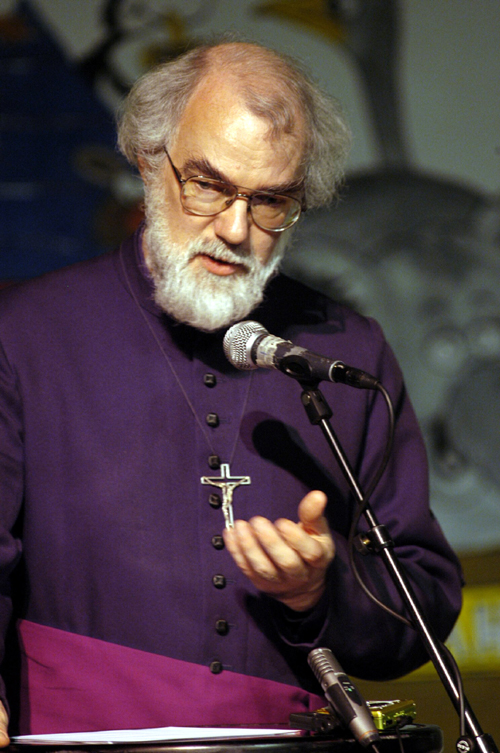
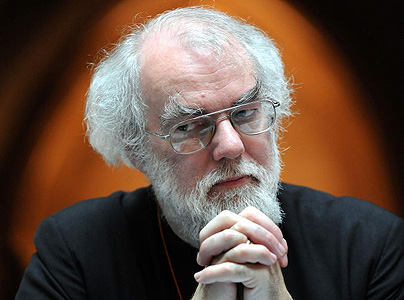
rowan-williams‘… I think cynicism is one of the worst things that can afflict a society. Scepticism, the capacity to ask tough questions and not allow people to get away with things is healthy in a society. Cynicism, which simply assumes the worst and assumes that there’s nothing you can do about it except throw blame around in an endless kind of ‘paint-balling riot’ – that’s no use to anybody’. – Rowan Williams, ‘Interview with Radio 4 ‘Today’ programme ahead of G20 summit’, Tuesday 31 March 2009.

Robert Jenson: The 2009 Burns Lectures on Video

robertjenson-008

© 2009. Photo taken by John Roxborogh, when Robert Jenson visited the Knox Centre for Ministry and Leadership in Dunedin. Used with permission.

I recently posted notes on Robert Jenson’s 2009 Burn Lectures delivered at the University of Otago on the theme, ‘The Regula Fidei and Scripture’:

The video podcasts of those lectures are now available for download as MP4s: