Is the world unfinished? This is the title of Jürgen Moltmann’s 2011 Boyle Lecture, given on 8 February 2011 at St Lawrence Jewry, London, and subsequently published in Theology. Herein, Moltmann explores interactions between theology and the sciences, the ‘readabilty of the world’, and the non-contradiction that exists between the empirical concept of nature and the theological concept of creation. Moltmann also reflects on some themes more traversed in his thinking; namely, the nature of time and history and their openness to the future. The lecture’s gracious respondent was Alan Torrance, who takes on naturalism, temporalist accounts of time (‘the past is not ontologically annihilated by the so-called “passage of time”‘, Torrance argues), and, albeit too briefly, Moltmann’s presentation and use of the doctrine(s) of kenosis (a doctrine which I believe was/is too easily dismissed by some theologians who share Alan’s surname and which I would love to see Alan engage with more seriously at some stage).
Author: Jason Goroncy
Jonathan Mane-Wheoki on Christianity and Māori Art and Architecture
 In July this year, the Department of Theology and Religion at the University of Otago hosted the first of what promises to be a biannual lecture series in honour of Professor Albert Moore. This year’s lectures were delivered by Professor Jonathan Mane-Wheoki, Professor of Fine Arts at Elam School of Fine Arts at the University of Auckland, and addressed the theme ‘Toi Karaitiana: Christianity and Māori Art and Architecture’.
For those who missed these lectures, or would like to experience them post festum, these are now available:
- Lecture 1: From Samuel Marsden to Frederick Bennett: Te Hahi Mihinare (23 July) [Video; Audio]
- Lecture 2: From Patoru Tamatea to Ralph Hotere: The impact of Catholic spirituality and iconography (24 July) [Video; Audio]
- Lecture 3: Regret and resistance – The Crucified Tekoteko (25 July) [Video; Audio]
My friend Andrew has also provided a wee summary of the lectures here.
Some interviews with Moltmann
 Undoubtedly, one of the most stimulating minds among Reformed theologians today remains that of Jürgen Moltmann. I hope to post a lecture by Moltmann soon, but here I simply wish to draw attention to three interviews that I discovered and enjoyed this morning. The first two happen to be pre-conference interviews.
The first is from the 37th National Theological Conference held at Trinity Wall Street on the theme of ‘God’s Unfinished Future’ and can be seen here. (A snippet from the interview can be read here, and Moltmann’s lecture from the conference can be viewed here and here.)
And in the lead up to BMS’s one-day Catalyst Live event, the organisers have shared a wee interview with Moltmann in which he comments on atheism, anti-intellectualism, fundamentalism, and the necessity for involvement in politics.
Finally, there’s this interview on Bibel TV – Parts I and II.
September stations …
 Reading:
- Evil and the Christian Faith by Nels F. S. Ferré
- The Christlike God by John V. Taylor
- The Living Word: A Theological Study of Preaching and the Church by Gustaf Wingren
- God and Human Suffering by Douglas John Hall
- Reformed and Ecumenical: On Being Reformed in Ecumenical Encounters, edited by Christine Lienemann-Perrin, Hendrik M. Vroom, Michael Weinrich
- Perpetually Reforming: A Theology of Church Reform and Renewal by John P. Bradbury
- Systematic Theology, Vol. 2: Doctrine by James William McClendon Jr.
- On Being the Church edited by Colin Gunton & Daniel Hardy
- To Be Reformed by Joseph D. Small
- Black Pioneers: How Aboriginal and Islander People Helped Build Australia by Henry Reynolds
Listening:
- 13 Songs You May or May Not Have Heard Before, Sparrows Point, Blue Divide, Not Far Now and Reunion Hill, by Richard Shindell
- The Last Ship by Sting
- The Diving Board by Elton John
- Paradise Valley by John Mayer
- Build Me Up From Bones by Sarah Jarosz
- Irish Pirate Ballads and Other Songs of the Sea by Dan Milner
- Where Have All The Flowers Gone: The Songs of Pete Seeger by Various Artists
Watching:
- Babel
- The Pillars of the Earth
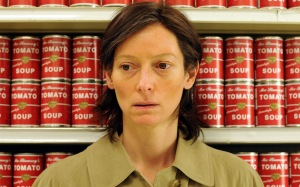
- We Need to Talk About Kevin. This is one of the most extraordinary films I’ve seen in many years, with an absolutely astonishing performance by Tilda Swinton. (On a less enthusiastic note, Australia’s ‘MA 15+’ rating is severely misjudged.)
An update on “Tikkun Olam”—To Mend the World: A Confluence of Theology and the Arts
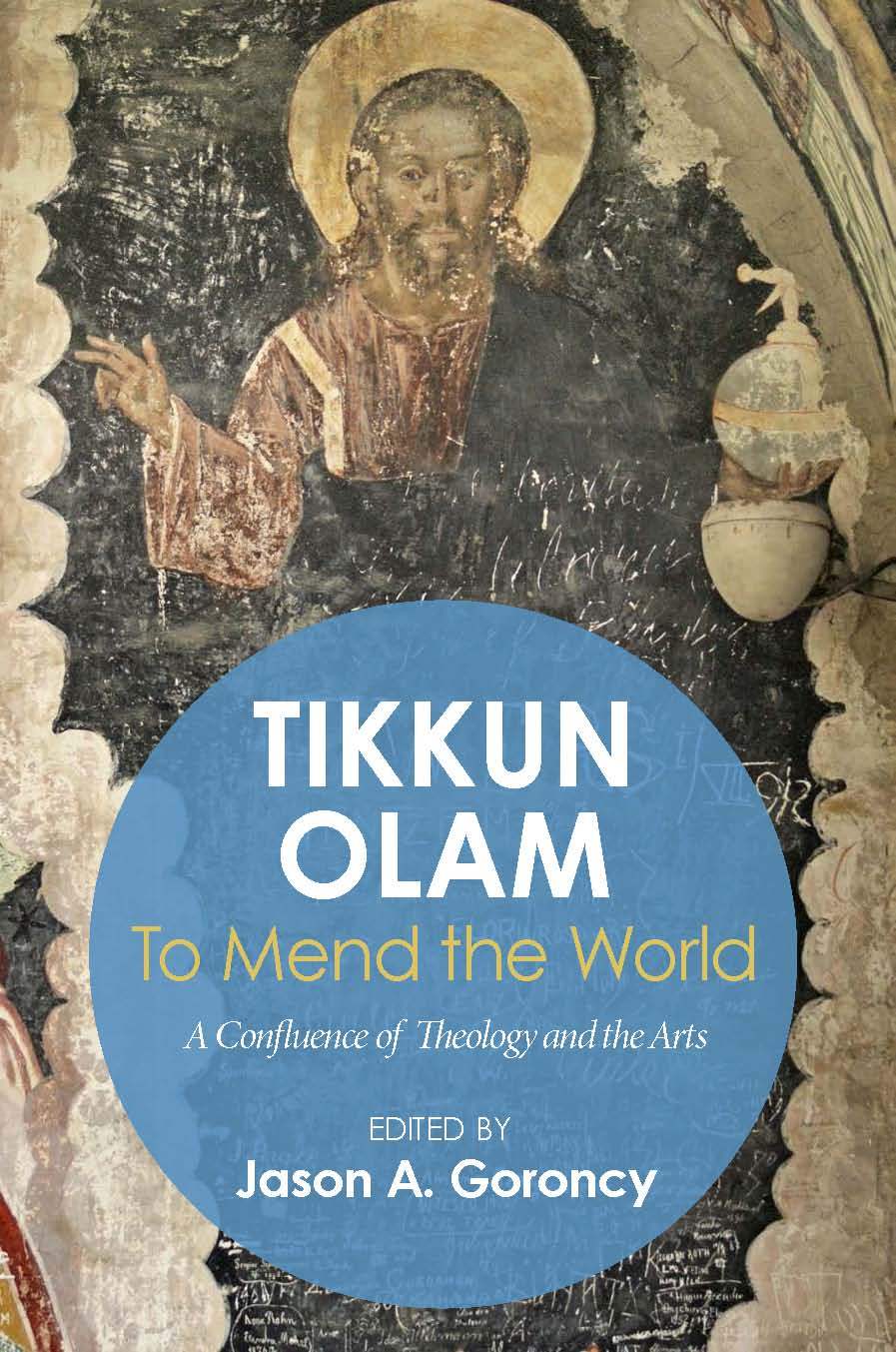 Recently, the publishers, essayists and myself have picked up a gear or two with the final edits on the forthcoming book “Tikkun Olam”—To Mend the World: A Confluence of Theology and the Arts (Pickwick Publications). The book is a collection of essays premised on a very basic conviction that artists, theologians and others have things to learn from one another, things about the complex interrelationality of life, and about a coherence of things given and sustained by God. The essays therein attend to the lives and burdens and hopes that characterize human life in a world broken but unforgotten, in travail but moving towards the freedom promised by a faithful Creator. More specifically, they reflect on whether the world – wounded as it is by war, by hatred, by exploitation, by neglect, by reason, and by human imagination itself – can be healed. Can there be repair? And can art and theology tell the truth of the world’s woundedness and still speak of its hope?
The Foreword was written by New York-based artist Alfonse Borysewicz, and the Table of Contents reads thus:
- Introduction—Jason Goroncy
- “Prophesy to these Dry Bones”: The Artist’s Role in Healing the Earth—William Dyrness
- Cosmos, Kenosis and Creativity—Trevor Hart
- Re-forming Beauty: Can Theological Sense Accommodate Aesthetic Sensibility?—Carolyn Kelly
- Questioning the Extravagance of Beauty in a World of Poverty—Jono Ryan
- Living Close to the Wound—Libby Byrne
- The Sudden Imperative and Not the Male Gaze: Reconciliatory Relocations in the Art Practice of Allie Eagle—Jo Osborne and Allie Eagle
- Building from the Rubble: Architecture, Memory and Hope—Murray Rae
- The Interesting Case of Heaney, the Critic, and the Incarnation—John Dennison
- New Media Art Practice: A Challenge and Resource for Multimedia Worship—Julanne Clarke-Morris
- Silence, Song, and the Sounding-Together of Creation—Steven Guthrie
Also, Jeremy Begbie and Paul Fiddes were kind enough to read the manuscript and to provide the following endorsements for the book:
‘Artistically sensitive, theologically rich, and eminently readable – this is a rare combination, but it is amply demonstrated in this fascinating set of essays’.
– Jeremy Begbie, Duke Divinity School, Duke University
‘Emerging from a theological symposium and an art exhibition, the essays in this book show in glorious profusion and profundity the marks of this double origin. Theologians, artists, literary scholars, and musicians combine to bear witness to a world that is broken and yet is also the stage for a decisive event of divine love and healing. These are essays full of insights about order and disorder, beauty and tragedy. Their achievement is to make the reader think and, above all, imagine’.
– Paul S. Fiddes, University of Oxford
When the book becomes available, I’ll be sure to let readers here at Per Crucem ad Lucem know.
Daniel Bell on ‘Just War and Christian Discipleship’
 By way of a wee follow up to a recent post on ‘just war’ theory, I wish to draw attention to a talk, which I have only just gotten around to listen to, by Daniel Bell on ‘Just War and Christian Discipleship’, the subject of a book and of this pamphlet also by Bell. It’s a paper presented at Wheaton’s Theology Conference earlier this year on Christian Political Witness, and is available for download in both MP3 and MP4 formats.
Parry on Goroncy on Forsyth [updated]
Remembering 11 September
 A confession: I can be a bit of a geek when it comes to following those ‘On this day’ sites. And, in an effort to demonstrate that geeks can be good lovers, I thought I’d share some of my geek-love about important events on this day in recent history:
1226: The Roman church’s practice of the public adoration of the Blessed Sacrament outside of Mass spreads from monasteries to parishes. The Catholics are starting to go all soft.
1297: Scottish patriot William Wallace defeated Edward I’s pommie army at Stirling Bridge. Apparently, it happened just like in the movie, except that it was in black and white because it was the olden days.
1814: The poms take another beating, this time at the hand of an American fleet in the Battle of Lake Champlain. ‘Those bloody colonies are simply not towing the line’, it was reported.
1863: Bushranger Captain Thunderbolt escapes from the supposedly escape-proof Cockatoo Island gaol. Three cheers for Captain Thunderbolt!
1885: D. H. Lawrence was born in Eastwood, England. Thank you Eastwood in England.
1893: The inaugural meeting of the Parliament of the World’s Religions. Seems like a whacko concept to me.
1900–2099: New Year’s Day in the Coptic and Ethiopian calendars. Happy new year to brothers and sisters, many of whom do life in massive travail.
1916: The first time that ‘Star Spangled Banner’ was sung at the beginning of a baseball game. Nationalism and sport – who would have thought? ‘And where is that band who so vauntingly swore/That the havoc of war and the battle’s confusion/A home and a country, should leave us no more?’ Go the Red Sox!
1928: The first trans-Tasman flight, and it only took them 14 hours 25 minutes. Virgin Australia Airlines could learn a lot from Charles Kingsford Smith and Charles Ulm.
1962: The Beatles recorded their first singles, ‘Love Me Do’ and ‘P.S. I Love You’, at EMI studios in London.
1970: The final episode of ‘Get Smart’ aired on CBS-TV. So grateful for re-runs. I spent the first 8 years of my life talking to my shoes.
1973: Chilean President Salvador Allende, who was the world’s first democratically-elected Marxist head of state, died in a violent CIA-backed military coup.
1974: ‘Little House On The Prairie’ made its television debut. Tragic but true.
1977: Steven Biko died in police custody. Tragic but true.
1977: David Bowie and Bing Crosby recorded a duet version of ‘The Little Drummer Boy’. This is not looking good for music, folks. The next decade could be a real disaster on the pop music front.
1997: The Scots, the Lord’s beloved, voted to create their own Parliament after 290 years of union with the poms. Now finish the job boys!
2000: The beginning of the S11 protests against the World Economic Forum’s meetings in Melbourne.
2013: Jason had a bowl of dahl and a very large mug of coffee for breakfast. Ambrie had a bowl of muesli and a big cup of milk. Father and daughter are both doing well.
Beyond cynicism and credulity
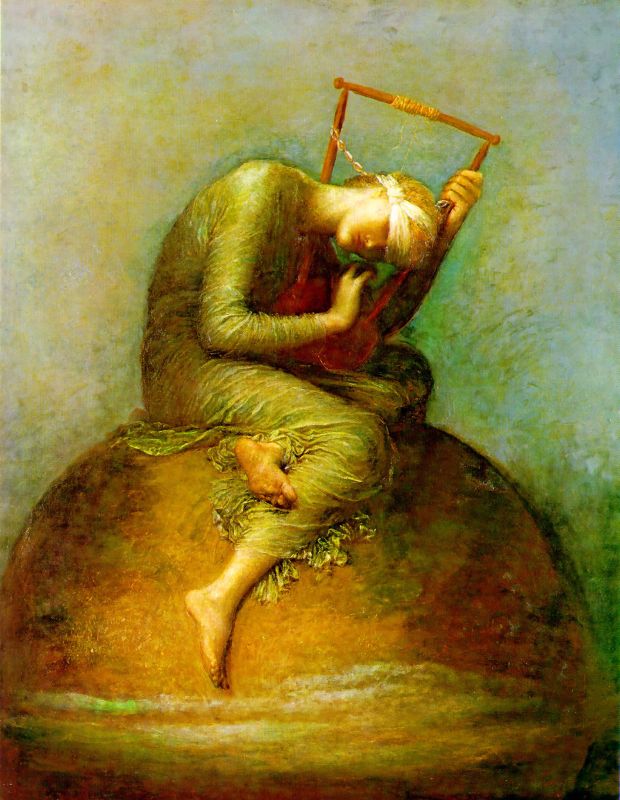
Just read a really wonderful reflection here on Hebrews 11.1, ‘Beyond Cynicism and Credulity: On the Meaning of Christian Hope’, by Douglas John Hall.
And now I can’t wait to preach on Hebrews 11!
Leunig, Hunsinger and Hauerwas on ‘just war’ theory
As the US continues to beat its war drums in the Middle East, it’s a good time to think again about the so-called ‘just war’ theory. So, I draw attention to three pieces – from Michael Leunig, from George Hunsinger and from Stanley Hauerwas.
So, Leunig:

And in a recent piece published in Commonweal Magazine, Hunsinger argues that ‘a defensible case for the attack on Syria would have to satisfy traditional “just war” standards. In its modern form the just-war tradition (jus ad bellum) involves at least four primary elements: just cause, legitimate authority, last resort, and reasonable chance of success. If these criteria remain unmet, the recourse to war is unjustified’. In Hunsinger’s view, the proposed attack on Syria meets none of these standards.
And here, Hauerwas argues that the real realists are not the just-war advocates anyway, but the pacifists. Moreover, he contends that ‘the lack of realism about realism by American just war advocates has everything to do with their being American’. ‘In particular’, he suggests, ‘American advocates of just war seem to presume that democratic societies place an inherent limit on war that more authoritarian societies are unable to do. While such a view is quite understandable, I would argue that democratic society – at least, the American version – is unable to set limits on war because it is democratic. Put even more strongly, for Americans war is a necessity to sustain our belief that we are worthy to be recipients of the sacrifices made on our behalf in past wars. Americans are a people born of and in war, and only war can sustain our belief that we are a people set apart’. Such democracies, Hauerwas believes, ‘by their very nature seem to require that wars be fought in the name of ideals that make war self-justifying’. And, characteristically, Hauerwas concludes his piece with a reflection on the relationship between war, christology and ecclesiology:
Pacifists are realists. Indeed, we have no reason to deny that the “realism” associated with Augustine, Luther and Niebuhr has much to teach us about how the world works. But that is why we do not trust those who would have us make sacrifices in the name of preserving a world at war. We believe a sacrifice has been made that has brought an end to the sacrifice of war.
Augustine and Luther thought Christians might go to war because they assumed a church existed that provided an alternative to the sacrificial system war always threatens to become. When Christians no longer believe that Christ’s sacrifice is sufficient for the salvation of the world, we will find other forms of sacrificial behaviours that are as compelling as they are idolatrous. In the process, Christians confuse the sacrifice of war with the sacrifice of Christ.
If a people does not exist that continually makes Christ present in the world, war will always threaten to become a sacrificial system. War is a counter church. War is the most determinative moral experience many people have.
That is why Christian realism requires the disavowal of war. Christians do not disavow war because it is often so horrible, but because war, in spite of its horror – or perhaps because it is so horrible – can be so morally compelling. That is why the church does not have an alternative to war. The church is the alternative to war. When Christians lose that reality – that is, the reality of the church as an alternative to the world’s reality – we abandon the world to the unreality of war.
For what it’s worth, whenever I happen across Christians defending just-war theory to justify their participation in the state’s various machineries of cross-border violence (which, for the record, is not what I think Hunsinger is doing), I’m reminded of another George – George Bernard Shaw – and his challenge to (hypocritical) church leaders:
They have turned their churches into recruiting stations and their vestries into munitions workshops. But it has never occurred to them to take off their black coats and say quite simply, ‘I find in the hour of trial that the Sermon on the Mount is tosh, and that I am not a Christian. I apologise for all the unpatriotic nonsense I have been preaching all the years. Have the goodness to give me a revolver and a commission in a regiment which has for its chaplain a priest of the god Mars: my God.’ Not a bit of it. They have stuck to their livings and served Mars in the name of Christ, to the scandal of all religious mankind.
A chair in Theology and Public Issues
 With the recent departure of Professor Andrew Bradstock from these picturesque and stimulating shores, the Council of the University of Otago is now advertising the following position:
The Council of the University of Otago invites applications for the Howard Paterson Chair in Theology and Public Issues and Director of the Centre for Theology and Public Issues.
The University is seeking a scholar with a distinguished record of international research publications and teaching experience in the area of Theology and Public Issues, Public Theology, Christian Ethics or Applied Theology.
The Howard Paterson Professor will be expected to engage in ongoing research, teaching and postgraduate supervision and will be the Director of the Centre for Theology and Public Issues within the Department of Theology and Religion. The aims of the Centre are to facilitate research at the interface of Christian theology and society in a New Zealand context, and to encourage in the public realm theologically and ethically informed discussion on matters of public interest, including important issues of public policy. The Centre’s activities will include research and research publication, hosting conferences, public symposia and other educational events, and media commentary. The Centre has a national focus, and is also a foundation member of the Global Network for Public Theology. It attracts high-quality research students, and is expected to seek external funding to support some of its activities.
Salary will be at an appropriate point in the University’s professorial range, depending on qualifications and experience. Less experienced candidates with appropriate expertise are not precluded from applying but may be appointed at an Associate Professorial level.
For confidential enquiries about this role, please contact the search partner, Academic Search International:
Sonia Pechner, Executive Director
Email: Sonia.pechner@academic-search.net
T: +64 9 379 6900 M: +64 21 338 879
Closing Date 4th October 2013.
The position will be available from 1 February, 2014, or as soon as possible thereafter.
Robin Parry on ‘the dangers of apologetics’
This is worth reading.
August stations …
 Reading:
- Hannah Arendt: For Love of the World by Elisabeth Young-Bruehl. An impressive and well-researched biography on one of the most untwitter-like characters of the twentieth century.
- Wild Red Horses by Alan Marshall. This one’s worth reading just for the great story ‘Singing to God’.
- The Word of God and Theology by Karl Barth. An energetic and fresh translation, with excellent critical notes, of some of Uncle Karl’s most important essays. An absolute ‘must-read’ for preachers!
- Complicity in the Holocaust: Churches and Universities in Nazi Germany by Robert P. Ericksen. A very helpful study and, if Ericksen’s right, an important corrective to many widely-held misconceptions.
- Tradition and Dissent by Davis McCaughey. A fascinating collection of addresses from one of the great Antipodean minds of the twentieth century. Thank you Belfast!
Listening:
- Light and Spark Seeker by Matisyahu
Watching:
An(other) update on Descending on Humanity and Intervening in History
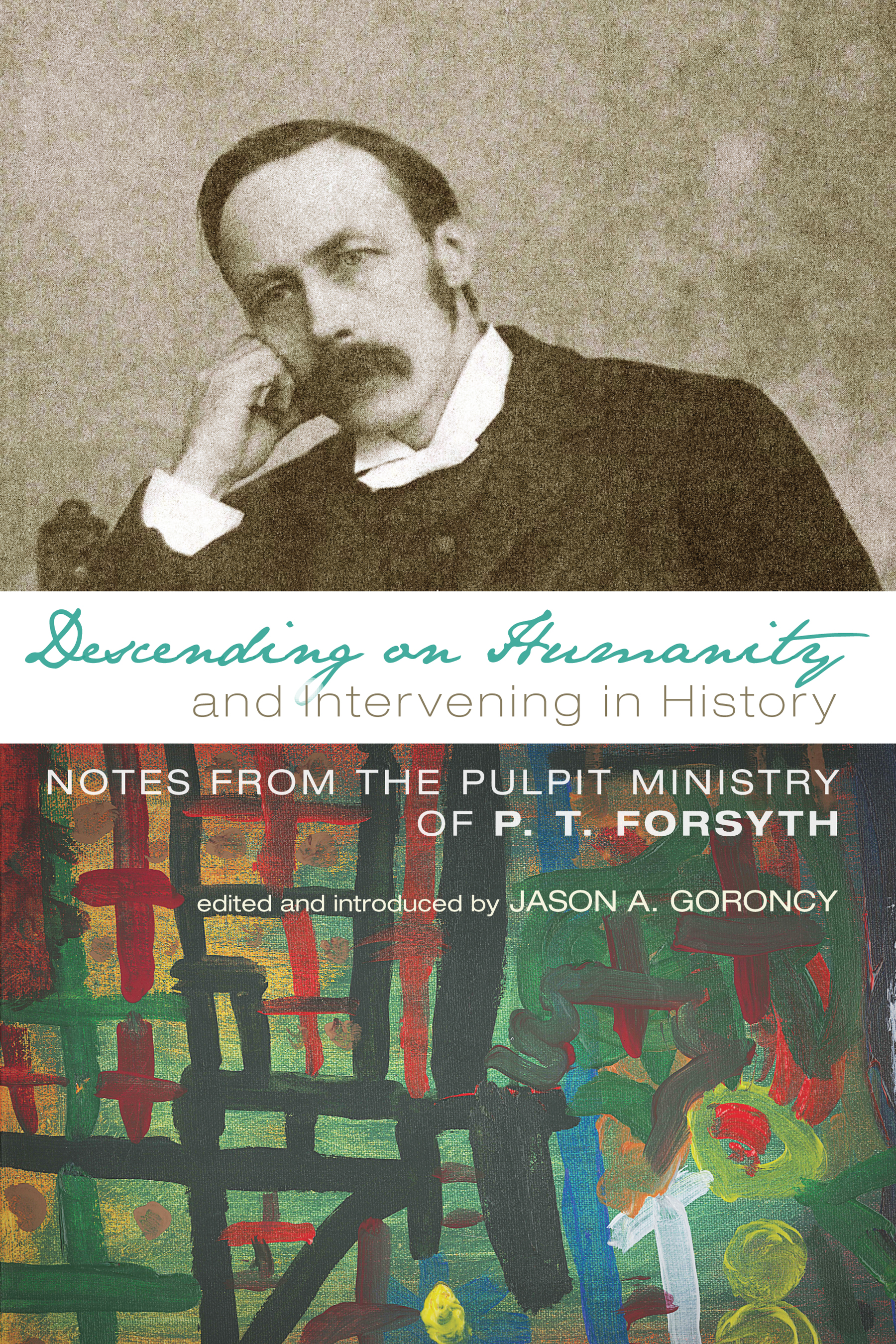 I’m delighted to inform readers of Per Crucem ad Lucem that it is looking increasingly likely that my forthcoming book Descending on Humanity and Intervening in History: Notes from the Pulpit Ministry of P.T. Forsyth will be available sometime around October (and so in good time for Christmas). The project has taken considerably longer – and considerably more energy – than I had imagined when I first embarked on it many moons ago. That said, it has been a project marked by great joy, and with hope that the final product may be a blessing to all who take up and read and, beyond such persons, to others.
The folk at Wipf and Stock, and especially Charlie Collier, Matthew Wimer (the typesetter) and Amelia Reising (the cover designer), have again been great to work with.
Mark Brett on why Christians should be championing the cause of asylum seekers
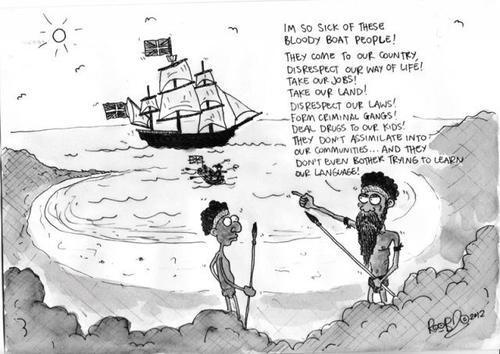
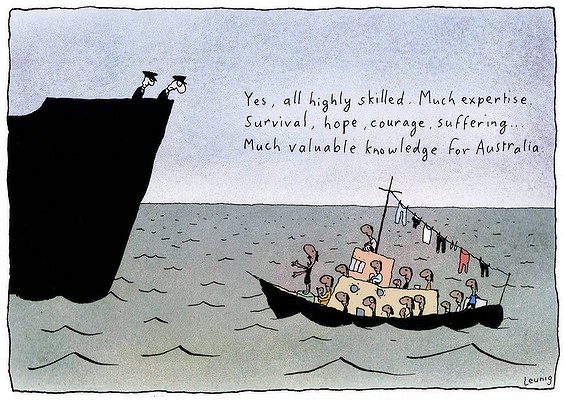
So why should Christians be championing the cause of asylum seekers today? In short, this issue goes to the heart of our identity and calling as the people of God.
The Gospel of Matthew tells us that Jesus started life as a refugee child, fleeing with his family to Egypt. Even his father’s name, Joseph, reminds us that Jesus was not the first Jew to be a refugee in Egypt. All the tribal ancestors of Israel took refuge there. We read that scripture was fulfilled when Jesus went there as a child, because “Out of Egypt I called my son” (Matthew 2.15). The quote is from Hosea 11.1: “When Israel was a child I loved him, and out of Egypt I called my son”. That is, Matthew sees a spiritual analogy between the life of Jesus and the life of Israel: both are marked by the refugee experience.
And this experience is also embodied in the laws of Israel. So, for example, Leviticus 19.34 says:
The immigrant who resides with you shall be to you as the citizen among you; you shall love the immigrant as yourself, for you were immigrants in the land of Egypt: I am the LORD your God. (cf. Exodus 22.21)
Similarly, the later prophets came to recognize the treatment of asylum seekers as a litmus test of faith (e.g., Jeremiah 7.5-7).
In the Old Testament, the ‘immigrant’, ‘alien’, ‘refugee’ or ‘sojourner’ (all possible translations of ger) is a foreigner who has left his or her country to settle elsewhere. Perhaps the most common reasons for movement are famine and war.
Some things never change: the United Nations Convention Relating to the Status of Refugees (1951), for example, arose as a response to international displacements following World War II, and since Australia is a signatory to this Convention, we recognize the legal right to seek asylum.
When people arrive in a host country, there are always complex questions about the extent of their assimilation. Not surprisingly, then, Old Testament laws sometimes set assimilating strangers apart from ‘the foreigner’ (thenokri or ben nekar) who is not given full rights of participation (e.g., Exodus 12.43 excludes such people from the Passover). This distinction is surprisingly overturned, however, in Isaiah 56.3,6 where the ‘foreigner’ (ben nekar) can offer acceptable sacrifices to God and is welcomed into the covenant community.
References to strangers in the New Testament are few but significant. Being ‘strangers’ (paroikoi) becomes a central metaphor for Christian identity in some books, building on the theological idea in Leviticus that all Israelites were in some sense ‘sojourners’ (Leviticus 25.23, cf. 1 Peter 1.1 and Ephesians 2.19).
Perhaps against our expectations, we may even find Christ present in the stranger. This is precisely the point that is made in the parable of the sheep and the goats in Matthew 25: the hungry and thirsty stranger (xenos in vs. 38 and 44) may actually be the Lord, and not even the people in the parable called ‘the righteous’ have been able to discern this. In other words, no-one has the power to tell whether the needy stranger may in fact be Christ.
Ezekiel 47 is also a challenge to our political imagination: it takes us beyond random acts of kindness and demands that refugees be given a ‘fair go’ in the provision of land, that is, basic resources that provide the foundation of economic security:
So you shall divide this land among you according to the tribes of Israel. You shall allot it as an inheritance for yourselves and for the aliens who reside among you and have begotten children among you. They shall be to you as citizens of Israel; with you they shall be allotted an inheritance among the tribes of Israel. In whatever tribe aliens reside, there you shall assign them their inheritance, says the LORD God. (Ezekiel 47.21-23)
In international comparisons (taking account of national wealth and population sizes), the welcome that Australia offers to asylum seekers is not very impressive.
– Mark Brett, ‘Hospitality: A Biblical Perspective’.
Ed. This piece, written in 2011, and which cites sources which are almost prehistoric, is, of course, completely irrelevant and dated now and I only draw attention to it for the benefit of those historians who may one day be interested in researching such obscure things. It’s almost impossible today to believe that once upon a time some Christians who happen to be living in Australia thought it an act of compassion and of mature political judgement to demonise some of the most vulnerable and yet extraordinarily courageous people on the planet, and an act of freedom to disregard not only the rule of law but, more importantly, the command of God.
PARK(ing) Day Eucharist
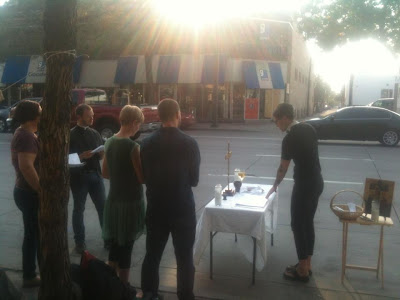
Now here’s a little invitation that I would love to see a few churches take up: PARK(ing) Day, which takes place this year on Friday 20 September, is ‘an annual worldwide event where artists, designers and citizens transform metered parking spots into temporary public parks’. And it occurred to me (and clearly to others too) that this just might be a great place, way and opportunity for Jesus’ friends – and his friends-to-be – to celebrate the Lord’s Supper; i.e., to proclaim the weird and inconvenient and public activity of God’s reign in the world.
And while it’s true that every now and then, reality protrudes ‘into the protective armor of illusion and the result is psychological havoc’, what’s not to welcome – and to like – about that!
A wee update on Descending on Humanity and Intervening in History
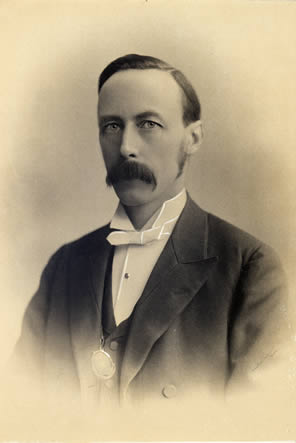 A number of folk have written to ask me where things are at with my forthcoming book, Descending on Humanity and Intervening in History: Notes from the Pulpit Ministry of P.T. Forsyth. I’m pleased to report that things are progressing well. The proofs are looking great, and the cover designer is just working on producing something agreeable. In the meantime, the book has received the following kind endorsements:
‘Far from being a collection of cozy meditations, here are challenging, biblically rooted, theologically powerful, pastorally concerned essays and sermon notes by Britain’s most stimulating theologian of the twentieth century. Church members will be energized; preachers will be prompted towards relevant exposition. This book is the product of much persistent burrowing by Jason Goroncy, whose substantial introduction is an exemplary piece of scholarship in its own right. We are greatly indebted to him’. – Professor Alan P. F. Sell, University of Wales Trinity Saint David
‘Few modern theologians have displayed the combination of intellectual energy, rhetorical power, and pastoral commitment of P. T. Forsyth. In this valuable collection of Forsyth’s sermons, many of them hitherto unpublished, we encounter a conviction too often absent in church and academy alike – that theology and preaching belong vitally together. In these striking examples of that vision, contemporary readers will find much to learn, challenge, and inspire’. – Ivor J. Davidson, University of St Andrews
Chasing essays [updated]
 For some weeks now, I’ve been wracking my brains, various search engines, and a plethora of library catalogues trying to get my hands on the following two essays:
- Brian G. Armstrong, ‘Semper Reformanda: The Case of the French Reformed Church, 1559–1620’, in Later Calvinism: International Perspectives (ed. W. Fred Graham; Kirksville: Sixteenth Century Journal Publishers, 1994), 119–140.
- Richard Muller, ‘Diversity in the Reformed Tradition: A Historiographical Introduction’, in Drawn into Controversie: Reformed Theological Diversity and Debates Within Seventeenth-Century British Puritanism (Oakville: Vandenhoeck & Ruprecht, 2011), 1–30. (I only need the last 5 pages of this one!)
Even where I have (finally) been able locate the relevant items listed in a library catalogue, the librarian has been unable to unearth the book! Sigh! So, basically, I need some help here and am really keen to hear from anyone who may have copies, or access to copies, of one or both of the aforementioned essays. I can be contacted via here.
♦
Note: I’m both delighted and relieved to declare that this hunting trip is now over. Many, many thanks, indeed to all those who have so kindly offered to assist me in my hunt for these two essays. I have been humbled by the response … and I now have copies. Thank you.
Through the headphones …
 Two interviews to note:
- Andrew Bradstock is interviewed by Chris Laidlaw on the role of religion in today’s secular society.
- Nicholas Mutch chats with Rowan Williams about literature, religious education and Richard Dawkins [HT: Paul Fromont]
A review of Dustin Resch’s Barth’s Interpretation of the Virgin Birth
 Advanced access to my review of Dustin Resch’s book, Barth’s Interpretation of the Virgin Birth: A Sign of Mystery, is now available via the Journal of Theological Studies website.
 jasongoroncy.com