The judgements of mercy

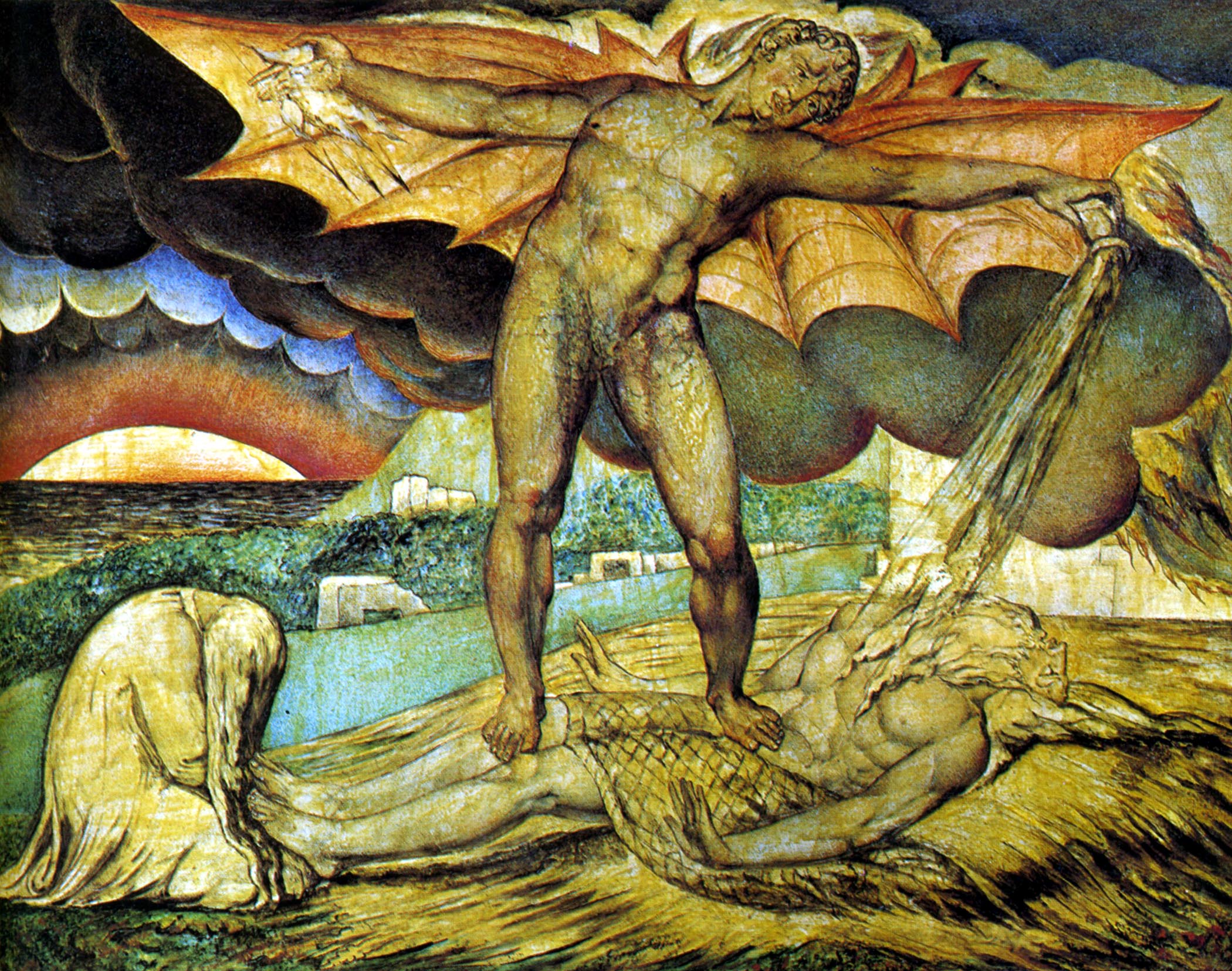
Kim Fabricius has posted a thought-provoking reflection (does Kim ever post any other kind?) on why the Iceland volcano is God’s judgement! It reminded me of this wonderful hymn penned by Geoffrey Bingham:

1. We have not been knowing the voice of the Father,
We have not been hearing the voice of His pain,
We have not been knowing the heart of His loving;
Our own have been sinning—yes—time and again.

2. Long have we persisted in ways of rebellion;
Unnaturally pressed in the ways of our loves:
The love of our idols and love of our pleasures,
Ignoring the grace that flows full from above.

3. The work of the Cross is as nought in our thinking,
The plan to redeem but a trifling thing,
’Tis worship we worship, but not in the Spirit,
’Tis love that we love, but not Him who is King.

4. Our hearts are so barren though we have such riches;
Our riches are rags—not the raiment we claim;
Our spirits are naked, yet flaunt we our hardness;
Our wounds are so deep, but we say there’s no pain.

5. His judgements that come are the judgements of mercy—
The droughts and the famines the gifts of our God;
The pain that we feel is to heal us from evil;
The scourge in our spirits the blessing of God.

6. The judgements of God now release us from judgements,
The death of our dying to bring us to life;
The pain of our idols will drive us to Jesus,
To cry in the days and to weep in the nights.

7. There’s balm in the fountain of Calvary’s Gilead,
There’s healing from pain in the Cross of His love,
There’s pardon that heals us, and purifies wholly;
There’s peace for the conscience which comes from above.

8. The Father has healed from the wounds of our sinning,
Has clothed us with beauty—all brought by the Dove;
The judgements are finished, ’tis joy until glory,
’Tis grace upon grace, and is love upon love.

— Geoffrey C. Bingham, 1991

For those who would like a copy of the music to this hymn, here it is. By the way, this hymn, along with hundreds of others, is available freely from New Creation Teaching Ministry whose hymn books are, to my mind, among the richest collections of songs for congregational worship around. They are available in C, Bb and Eb music, and as overheads. Some of the songs are also available for purchase on CD.

Theodicy, Suffering and Faith: A Bibliography

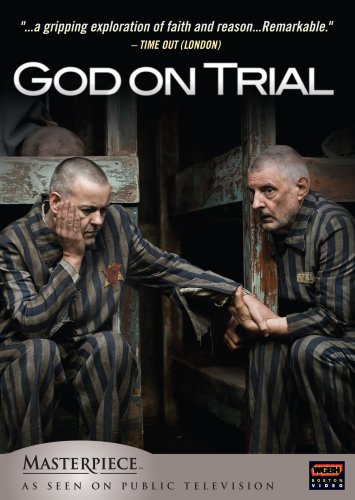
Thanks so very much to all readers of Per Crucem ad Lucem who took the time to contribute a richly-helpful smorgasboard of readings and films in response to my previous post. This has been enormously helpful (and encouraging) and I’ve spent much of today checking out some of these suggestions (including some really obvious ommissions to my original list) and building a fuller list which I hope to keep adding to in the coming months. Again, additional suggestions are most welcome.

Books/Essays

Film

[Updated: 26 April 2010]

Theodicy and Suffering

‘Many times we have to suffer very acutely until we finally quit being like a crustacean that sits in its hard shell and is always alone with its own self, caring for nothing going on around it. Isn’t there a special kind of religious hardshell?  Some have never observed that God is always God for all others and that he is not nearly so interested in the life of our individual souls, as in the birth of a community in which individuals think about others and practice this concern continually in intercession and thanksgiving. God is incomparably interested in that’. So wrote Eduard Schweizer in a sermon on suffering, published in God’s Inescapable Nearness, a wee collection of sermons that I’ve been reading during a brief interlude between preparing lectures on different topics.

I’m about to start preparing some lectures on what is most certainly among the most difficult of theological subjects; namely, theodicy and suffering. So far, I’m considering pulling together some selected readings from a number of places, including the following:

So at this point I’m requesting some help: Where else might I be looking? What other resources (film, poetry, opera, etc) might be useful here to help pastors think faithfully about these difficult questions and to encourage some fruitful conversation?

Karl Barth on worship and the cost of discipleship (on Romans 12:1–2)

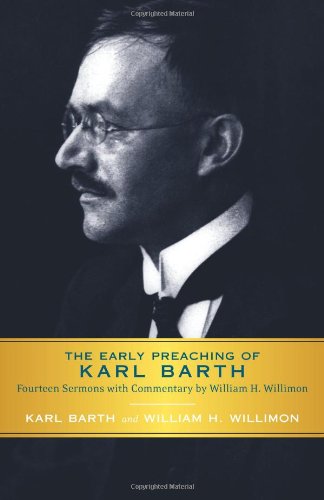
To celebrate my recent success, I awarded myself with a copy of The Early Preaching of Karl Barth: Fourteen Sermons with Commentary by William H. Willimon. Thus far, I’ve resisted the temptation to post on it, to rave about the homiletical energy of the twentieth-century’s greatest theologian, his exegetical insights and proficiency in what is arguably the preachers’ most difficult task, namely application. But I give in. Here he is on Romans 12:1–2, from a sermon preached on 3 March, 1918:

‘In the words “well pleasing to God” it is said that our thoughts, words and works are in need of God’s blessing if they are truly to be a worship of God. It is indeed right when we search for God and wish to bring about better conditions in the world, but God must also be able to say yes to the ways and means we have of doing it, for otherwise nothing will come of our efforts. It is indeed good, for example, to pray for and pursue the conversion of persons, but if one cannot put aside an evil way of being that pricks and stings, God is not in it. To give the needy from one’s surplus is also good, but whether or not God rejoices in it will depend, for example, on how one has gained the surplus. To turn the world upside down, like the Bolsheviks now want to do, would also be good and much needed, but when they wave around their automatic weapons, the blessing of God cannot be in it. Good, pure persons are needed in order to serve God in a good, pure way, a way that is well pleasing to God. What passes by this good and pure way of being can never lead to the goal.

I think that we now understand a little of what Paul meant when he said that a sacrifice is needed for a reasonable worship of God. Here we must look deeply into what is holy. Something must be brought, presented, given. In the words themselves we already notice something of that serious, radical, and personal decision that the Bible requires of us and before which we are rightly perplexed. It is difficult for us and even hurts to give something away, even if it were only a little money that we would rather keep, or a friendly word, when we would rather say something sullen or rude, or an hour of our time that we would rather have for ourselves. The word “sacrifice” always attacks us, like a sharp knife. We would rather serve God in some other way than through sacrifice. In what Paul calls a reasonable worship of God, the giving of a little money is not enough, nor is a good word, nor a little time. One must seriously question whether any of these is a “living sacrifice, holy and well pleasing to God.” In fact, they are holy sacrifices only when another and much greater prior sacrifice has taken place, so that it now stands behind them.

For there is only one sacrifice that God acknowledges and accepts from us, and if you do not make this sacrifice, the rest collapses like a house of cards. This one sacrifice, according to Paul, consists in “presenting your bodies.” What he means is your personhood, your own self, without making a difference between the outer and inner person or of what is spiritual in us and what is natural. He says expressly “your bodies!” and not “your souls!” What Paul means is that there is no difference, that when he speaks of the body he includes the soul. We like to make fine and seemingly intelligent distinctions, as when we say, “Inwardly I am also of this opinion, but outwardly I do not wish to show it”; or, “In my heart I stand on this side too, but with my person I would rather not confess it”; or, “In my soul I want to belong to God, but my body – which means all that I am outwardly in the concealment of my private life, in my family, in my business, in my position in the village – this body of mine may keep going along as usual and often goes fully other ways than the ways of God.”

The Bible does not make such fine and clever distinctions. Paul prevents them simply by saying, “Present your bodies as a living sacrifice, holy and well pleasing to God.” Here none of those distinctions and the like are acknowledged, such as when one reads worshipfully in the hymnbook on Sunday morning, but on Sunday afternoon goes a completely different way, as many of our teenagers in the confirmation class do. Here one is not allowed to be an idealist that reads good books in the evening, but in the factory during the day acts on the basis of the same principles, or rather lack of principles, as everyone else. Here one is not allowed to be a child of God who today cannot boast enough of the glory of truly trusting God, but tomorrow gets entirely out of sorts when their store of goods has dwindled in some small way.

Such fine distinctions are not possible for Paul. “Present your bodies as a sacrifice!” Then God will receive what God wills to receive from you and what God can use. As long as we do not wish to present our bodies, we wish to give nothing of ourselves. If we have once understood the inner and the outer, what belongs to the soul and what belongs to the body, one’s personal human spirit and one’s physical person – then we will sacrifice what must be sacrificed; then it will be a living sacrifice, holy and well pleasing to God, just as God is living and holy; then we will give ourselves into the power of God!

That is what is meant by a reasonable worship of God. What a pity it is and what a distress that at bottom we all fear the gods so much that we are all so religious and full of endeavor, and yet understand so little of this sacrifice, of giving ourselves, our bodies, as sacrifices into the power of God. Oh, how would the doors that are now closed to us open – all the doors of sin and care before which we so helplessly stand; the doors of persons we do not understand nor they us; the doors of sad social conditions that we presently cannot change – how would truth and salvation come to light, how would the change of things that we wish for happen, if we would only break out of all our so-called worship of God, our religions, convictions, and endeavors! We would break out of all these prisons, over which is written, “My intentions are good,” and instead enter into what God intends, into that reasonable worship of God in Spirit and in truth. This is what the Bible places before us in such a great, natural, and healthy way!’ – Karl Barth and William H. Willimon, The Early Preaching of Karl Barth: Fourteen Sermons with Commentary by William H. Willimon (trans. John E. Wilson; Louisville: Westminster John Knox Press, 2009), 51–3.

Thomas Merton on ‘one’s daily immersion in “reality”‘

“Nine tenths of the news, as printed in the papers, is pseudo-news, manufactured events. Some days ten tenths. The ritual morning trance, in which one scans columns of newsprint, creates a peculiar form of generalized pseudo-attention to a pseudo-reality. This experience is taken seriously. It is one’s daily immersion in ‘reality.’ One’s orientation to the rest of the world. One’s way of reassuring himself that he has not fallen behind. That he is still there. That he still counts! My own experience has been that renunciation of this self-hypnosis, of this participation in the unquiet universal trance, is no sacrifice to reality at all. To ‘fall behind’ in this sense is to get out of the big cloud of dust that everybody is kicking up, to breathe and to see a little more clearly.”

– Thomas Merton. Faith and Violence (Notre Dame: University of Notre Dame Press, 1968), 151.

[HT: Kim Fabricius]

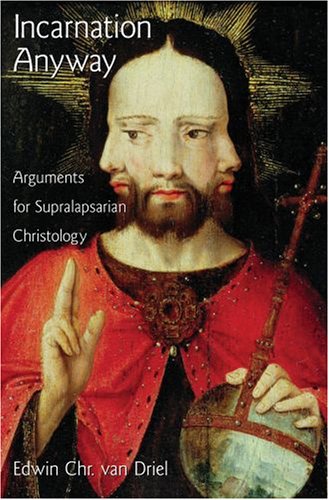
Incarnation Anyway: Arguments for Supralapsarian Christology: A Review

Incarnation Anyway: Arguments for Supralapsarian Christology, by Edwin Christian van Driel. Pp. xii + 194. Oxford: Oxford University Press, 2008, ISBN 978 0 19 536916 8. £45.

It was the brilliant John Duns Scotus who recalled that ‘God is not in a genus’ (Deus non est in aliquo genere), reminding us that our knowledge of God is impossible in any general sense. Indeed, Christian theology is premised on belief in divine self-disclosure and, moreover, that such disclosure is an act of grace. Duns Scotus also supposed that creation’s purpose and destiny concerns ‘co-lovers’ participating in the Triune life. It was for such that the Word of God became flesh, unveiling for us the causa finalis of our humanity. That this is God’s way for us – even if sin had not come into the human scene – bespeaks the inner meaning of the grace which precedes sin and testifies to the gospel logic of the incarnation.

Supralapsarianism, the subject of Edwin Chr. van Driel’s book Incarnation Anyway (a reworked version of his doctoral dissertation completed at Yale University), is a doctrine whose beginnings reach back at least as far as the twelfth century, even if van Driel’s treatment is concerned with its less hypothetically-speculative nineteenth- and early twentieth-century articulations. The first part of his essay (pp. 9–124) attempts to chart and examine the ways in which supralapsarian christology has been articulated. It does so via a consideration of three forms that the doctrine assumed in its nineteenth-century revival, namely in Friedrich Schleiermacher (‘the first major supralapsarian theologian since the Middle Ages’ (p. 9)), in Isaak August Dorner and in Karl Barth (on whom the most ink is spilt), attempting in each case to attend to the three ways in which God is thought to relate to God’s other – in redemption (Schleiermacher), in creation (Dorner), and in eschatological consummation (Barth). While there are occasions when readers may feel that van Driel constrains his subjects’ thought with a rigid logic foreign to their projects, in each case he attempts to expose the inner logic, coherence and strength of each articulation while not neglecting to draw attention to any weaknesses.

Van Driel argues that the conceptual structures of Schleiermacher’s supralapsarianism is determined both negatively and positively by the notion of absolute dependence and the inferred forms of divine omnipotence. He notes that, for Schleiermacher, sin is not excluded from the scope of divine causality – that God is the author of sin calls for a different locus for sin in the divine decree. God ordains sin in order to make humanity receptive to redemption. This move means that human sin acquires determining and logical priority over the incarnation. Indeed, van Driel outlines how in Schleiermacher’s schema, ‘sin and redemption are essential parts of our relationship to Christ. We need Christ because of our sin, and only because of our sin. If there were another reason why we relate to Christ, God would not have to introduce sin in the divine decree. We are connected to Christ only through his redemptive activity. There is no space for a meaningful relationship with Christ that is not marked by this’ (p. 25). And again: for Schleiermacher, ‘human beings will not be receptive to the divine gifts in Christ unless these gifts address an evil in their lives’ (p. 126). Under van Driel’s examination, the identified ‘fault lines’ in Schleiermacher’s ordo salutis (especially his sympathy with a felix culpa account) widen as the essay proceeds.

For Dorner, the incarnation is the necessary fruit of the divine decision to create ethical persons and of the divine determination that such become ‘full personalities’, a reality only possible in ‘interpersonal interaction with the ethical’ (p. 49). Dorner premises his arguments on the notion that God is a lover of love – the amor amoris – whose passion is to aggrandize the life of love in his other. This twofold surrender (of God to human beings, and of humans to God) is embodied in religion, the divine contribution to which is revelation, the consummation of which is the incarnation. For Dorner, the incarnation is a basic implication of God’s decision to create: ‘Decisive for whether one takes the incarnation to be means or end is what one takes to be the divine motivation behind it. For Dorner, the motivation for incarnation is embedded in the motivation for creation’ (pp. 59–60). This move, van Driel suggests, sponsors an unsatisfactory stepping stone in Dorner’s doctrine of creation and highlights what van Driel considers to be the most troubling and deep-lying ambiguity in Dorner’s supralapsarian christology. He continues:

In [Dorner’s] proposal, it is the necessity of God’s creative act that sets everything else in motion. God’s ethical necessity is expressed in the act of creation; given the nature of the ethical necessity, creation will be brought to consummation; given the same ethical necessity, this will be done by way of incarnation. None of this follows, though, when the act of creation is a contingent act. Of course, it could still be argued that God leads creation to consummation, and that the incarnation is central to consummation. In such a scenario, the governing divine act would not be given with God’s nature, but would be the result of a free act of God’s will. And if creation were embedded in God’s will rather than God’s nature, it would be better to start one’s theological account thereof not at the beginning but at the end of God’s work: What goal had God in mind when God freely called creation into being? What motivated God to create? Systematically this means that the argument for supralapsarian incarnation should not be embedded in the doctrine of creation but in eschatology. (p. 62)

With that note, van Driel turns to Barth’s ‘argument from consummation’, that requisite feature of Barth’s doctrine of election upon which van Driel will construct his own proposals. Van Driel observes how Barth’s supralapsarian christology takes its shape in his actualism. God’s election of Jesus Christ is primal in order, self-giving in nature, gracious in its motivation, creative in its effect, all-inclusive in its scope and supralapsarian in character, and the latter in a twofold sense – in terms of both predestination and christology: ‘Divine predestination is not a first step in a divine response to sin and neither is the incarnation … God’s election of Christ’s human nature is thus the first action in the divine relating to what is not God’ (pp. 67, 68). Again: ‘At the heart of Barth’s supralapsarianism lies … his reading of the biblical narrative as a narrative of election. Election is an eschatological category; and the eschaton is the first in order of the divine decrees. Object and subject of these decrees is Jesus Christ – not the Son as λóγος ασαρκος the preincarnate Word, but the Son as Jesus Christ, the incarnate Word. The incarnation stands thus at the very beginning of God’s relating to what is not God’ (p. 81). From here, van Driel turns to the question of the relationship between epistemology and sin: ‘That God unveils Godself by way of veiling is partly due to our sinfulness, but not wholly. The ontological and epistemic principles that govern divine revelation are not a result of sin, but given with the nature of Creator and creation. Incarnation, as the necessary means of divine self-disclosure, is therefore a supralapsarian event’ (p. 77).

Certainly Barth’s supralapsarian narrative recalls that creation forms the stage for covenant’s story – a story authored in the loving event called triune being, and whose meaning requires both soteriological and eschatological achievement – and that the creation which makes covenant possible does not exist for itself but for the gracious God upon whose will its future and being is contingent. However, according to his evaluation of Barth, van Driel identifies some adverse consequences of Barth’s account. He reserves most ink to attend to a concern regarding creational entropy, that ‘creation, in and by itself, will necessarily lapse into evil’ (p. 85) by ontological necessity. This elicits a helpful discussion by van Driel on time, eternity and history (pp. 111–17), and on the relationship between supralapsarianism and das Nichtige (pp. 118–24).

Building on Barth’s work (which van Driel finds to be the most satisfying of the three accents), van Driel turns in the second part (pp. 125–70) to expand on the notion of eschatological consummation, arguing that the logic of the incarnation is not contingent upon sin in any way (no felix culpa) but points to a divine will for (i) eschatological superabundance, (ii) the beatific vision, and (iii) divine friendship. The first of these attempts at a constructive argument is premised on the relation between the eschaton and the proton of creation, contending that the eschaton births an abundance and richness in intimacy with God and in human transformation which the proton did not know: ‘In Christ we gain more than we lost in Adam’ (p. 151). And because the notion of felix culpa makes such promise contingent upon sin (which by its very nature only alienates us from God), eschatological fulness (the embodiment of which happens in Christ) can only be understood in supralapsarian terms. Van Driel’s second supralapsarian argument directs us to the visio Dei. Here he extends his first argument and defends supralapsarianism on the basis that full enjoyment of the beatific vision for bodily beings requires sensory contact such as we are given sui generis in the incarnation, resurrection and ascension of the human God. Finally, van Driel arrives at the destination to which his entire essay seems directed, namely the notion of friendship with God and that of such a deep kind that the divine availability attested to in the logic of supralapsarian christology is the most compelling. Such friendship, van Driel avers, is not dependent finally on God’s desire to reconcile estranged humanity but rather in the very opposite truth: God’s desire to reconcile estranged humanity finds its origin in the divine will for friendship. The fullest expression of this will is undressed in the incarnation and best attested to in supralapsarian logic. Throughout, van Driel resists concerning himself with the hypothetical situation voiced by the medievals of whether the incarnation would have taken place had humanity not sinned, and concerns himself with ‘Christ as we have him’ (p. 164). He also exploits the tendency (as he sees it) in infralapsarianism to minimize the eschatological dimensions of creation and those inclinations to reduce creation to that which exists, falls and is then redeemed, in favour of an account which witnesses to the divine determination to bring creation to its goal in Jesus Christ apart from any dependency upon a creation-fall-redemption schema.

Against those who would defend some version of felix culpa (and here van Driel names Schleiermacher, Gregory, Milton and Barth), Incarnation Anyway challenges Supralapsarians to ‘explore the meaning of the incarnation, the presence of God among us, as an excellent good in and of itself, and not take refuge in a doctrine of sin to beef up incarnation’s meaning. We do not need the bad to enjoy Christ’ (p. 131). Again: ‘we do not have to preach sin before we can preach Christ; we can preach Christ as the offer of love and friendship with God; and it is thereafter, in the light of that offer of friendship and love, that human beings discover themselves as sinners’ (p. 166).

A final section (pp. 171–5) offers a very brief, but helpful, genealogy of supralapsarianism. Some readers may benefit by reading this section first.

Incarnation Anyway could have been a much better book than it is. Unfortunately, too frequently it reads somewhat like a collation of separate and uneven pieces, not a few of which seem largely unrelated to his subject. It is unclear, also, why van Driel reserves disproportionate space (pp. 90–101) in this forum to continuing his debate with Bruce McCormack. Or why he includes a discussion on ‘more-dimensional reality’ (pp. 167–69). As interesting as both conversations are, as they stand they contribute little to his overall thesis. More substantially, I remain incredulous of van Driel’s articulation of the distinction between incarnation as gift to human nature and that as gift to human persons. He suggests that for those who contend that the Word’s assumption of fallen flesh changes the ontological status of humanity from the inside out then the ‘logic of assumption’ does all the work, and Christ’s over-againstness of our human natures is undermined. While the distinction van Driel identifies remains valid, the inclination to separate them is unfortunate, the description and analysis offered for each is unclear, and the available resources for holding both together in the tradition (not least the Reformed tradition out of which the author speaks) is ignored, even if here the critique of Dorner and Barth finds some traction. Finally, this study most properly belongs to a larger project, as the Bibliographical Appendix indicates, and would have been strengthened significantly had its author attended more fully to the genesis and developments in supralapsarian thought in Rupert of Deutz, Robert Grosseteste, Alexander of Hales, Albert the Great and, perhaps especially, in John Duns Scotus and his theology of election. That said, van Driel’s essay remains a welcome and too-lonely contribution to a topic of great import, and leaves the reader eagerly anticipating more from his pen on this topic, especially in those areas where he offers his own constructive proposals.

Christianity is Empire

Over at The Jesus Manifesto, Mark Van Steenwyk is beginning a four-part series examining the ‘intrinisically oppressive nature of much of traditional Christianity’. Here’s a snippert from his first post – Christianity is Empire, Part 1:

‘The argument that Christianity is intrinsically oppressive is nothing new, but it persists. That’s because it is true. Christianity, at least as it is understood by the majority of Christians throughout the ages is inherently oppressive and will inevitably lead to Empire. A Christianity that is willing to use the Sword will always nurture Empire.

This may not always be the case with all Christians everywhere, and it certainly wasn’t true for the earliest followers of Jesus, but it is such a well-worn pattern of Christian practice that it would be foolish to simply dismiss those who argue that Christianity is inherently oppressive.

Traditional readings of Genesis (about subduing the land) mixed with traditional views of the Lordship of Christ (which gives his followers socio-religious superiority) mixed with the evangelistic impulse of the Great Commission (which gives us a mandate to extend Christ’s rule to the ends of the earth) are problematic enough as they stand. But if you add the willingness to use violence to accomplish these ends, you are creating the perfect empire cocktail.

If we are going to have a faith that resists domination, we need to re-examine our willingness to use the Sword to accomplish any Gospel-inspired goals. If a Christianity that is willing to use the Sword will always nurture Empire, we need to put away the sword’.

Material to evoke some good conversation, not least for those in my part of the world thinking about stuff to do with Anzac Day (a subject which birthed this post of mine last year on Aliens in the Church: A Reflection on ANZAC Day, National Flags and the Church as an Alternative Society).

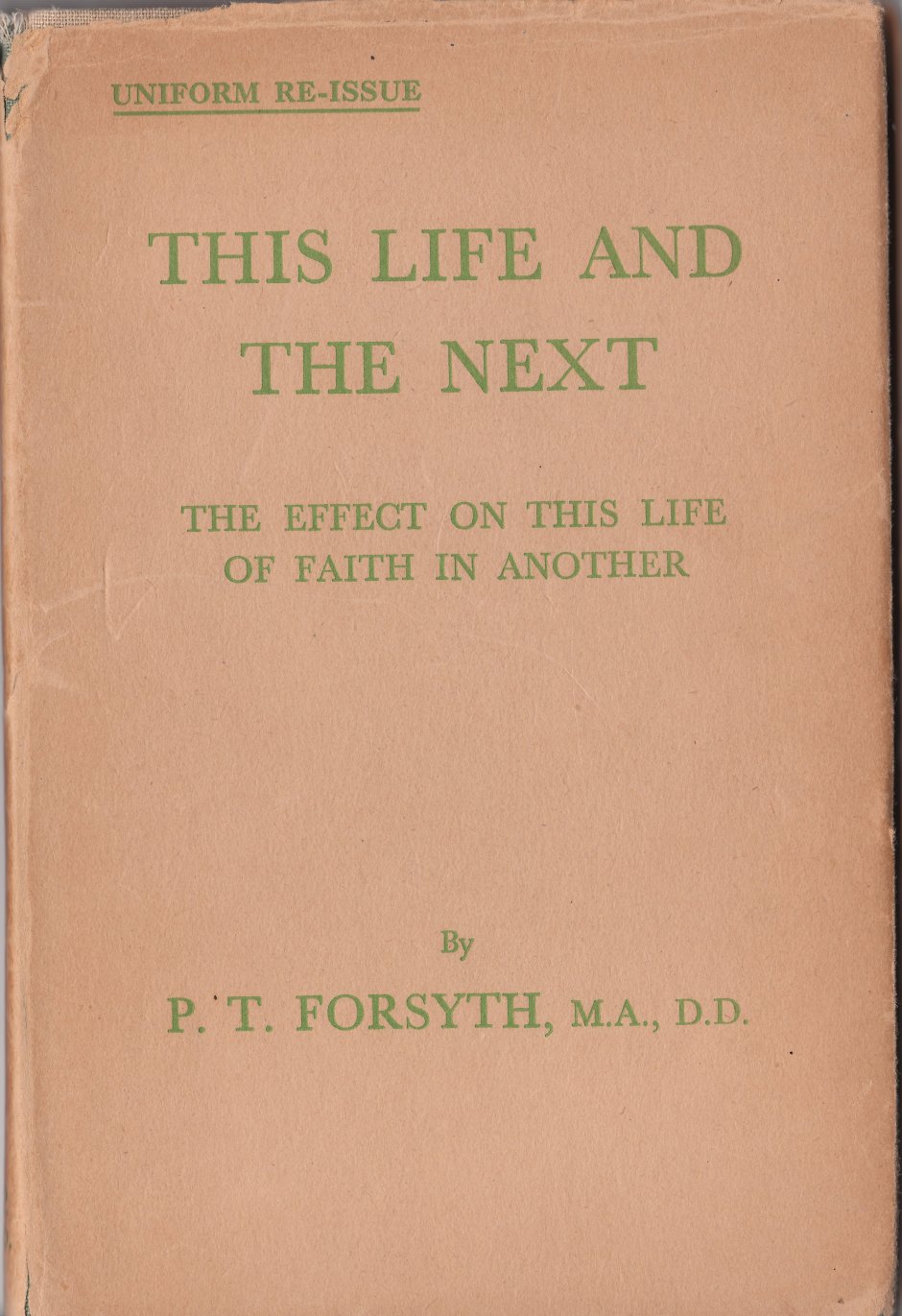
This Life and the Next

While most of PT Forsyth’s books attracted the publishers’ ‘reprint’ buttons (sometimes up to 11 or 12 different publishers, as was the case with his Lyman Beecher Lectures on Preaching delivered in 1907 at Yale University and subsequently published as Positive Preaching and the Modern Mind), by 1946 all of his books were out of print. Since then, of course, thanks to Independent Press and Hodder and Stoughton and, more recently, to our good friends at New Creation Teaching Ministry and Wipf and Stock, many of Forsyth’s bests works have been resuscitated. But not – at least not yet (one lives by hope, after all) – his final book, This Life and the Next, which first appeared in 1918.

Of the readers of Forsyth, too few have read this volume and, of those, sadly very few have spoken highly of it. Not a few have indicated that the book represents Forsyth’s greatest literary flop, and even his spiral into ‘heresy’, dealing as it does with themes not often tackled by so Protestant of spirits, such as prayer for the dead and what we might refer to as a Protestant reappraisal of the doctrine of purgatory.

But I like This Life and the Next very much and, for those who have previously drunk deeply from other Forsythian wells,  I reckon that it brings together nicely many of the themes and questions with which he increasingly wrestled in the decade before his death in 1921.

Anyway, all that is just a round-about way of saying that I’ve now made it available as a pdf here, ready to join the other links I’ve already provided to a number of his other works. So take up and read; or, should that be, download and read!

The Reverend Michael Scott

Tom Arthur asks pastors if they would rather be like Donald Trump or Michael Scott. His own preference, unsurprisingly, is for Michael Scott, and here’s why:

‘I couldn’t put my finger on my preference for Michael Scott over Donald Trump until the most recent episode of “The Office.” Cohesion in the office falls apart as the sales department becomes more important in the company and ends up getting bigger paychecks. All of a sudden money and success come into the story. Michael says that this office breakdown is because they used to “make friends first, make sales second.”

Here’s my leadership takeaway. “The Office” is the kind of place where friendship takes precedence over almost every other goal. When I first started watching I wondered why the characters didn’t just quit and go work someplace else. But then I realized that there is a deep honesty in the show, and honesty leads to commitment. People are who they are, even in all their embarrassing glory, and somehow they keep working together (but do they ever actually do any work?). Somehow Michael Scott holds all these people together amidst their eccentric personalities and crazy dysfunctions.

That’s a different kind of success than the kind that Trump symbolizes, and it’s the kind of success that a pastor should be aiming for. Sometimes successful pastoral leadership looks quite different than what the world calls success. Sometimes it looks like Michael Scott’.

Seven Stanzas at Easter

Make no mistake: if He rose at all
it was as His body.
If the cells’ dissolution did not reverse, the molecules reknit, the
amino acids rekindle,
the Church will fall.

It was not as the flowers,
each soft spring recurrent;
it was not as His Spirit in the mouths and fuddled eyes of the
eleven apostles;
it was as his flesh: ours.

The same hinged thumbs and toes,
the same valved heart
that – pierced – died, withered, paused, and then regathered out of
enduring Might
new strength to enclose.

Let us not mock God with metaphor,
analogy, sidestepping transcendence;
making of the event a parable, a thing painted in the faded credulity
of earlier ages:
let us walk through the door.

The stone is rolled back, not papier mache,
not stone in a story,
but the vast rock of materiality that in the slow grinding of time will
eclipse for each of us
the wide light of day.

And if we will have an angel at the tomb,
make it a real angel,
weighty with Max Planck’s quanta, vivid with hair, opaque in the
dawn light, robed in real linen
spun on a definite loom.

Let us not make it less monstrous,
for in our own convenience, our own sense of beauty,
lest, awakened in one unthinkable hour,
we are embarrassed by the miracle,
and crushed by remonstrance.

– John Updike, ‘Seven Stanzas at Easter’, in Telephone Poles and Other Poems (London: Andre Deutsch, 1964), 72–3.

A Lenten Reflection: Rublev’s icon of the Trinity and the healing of Nicodemus

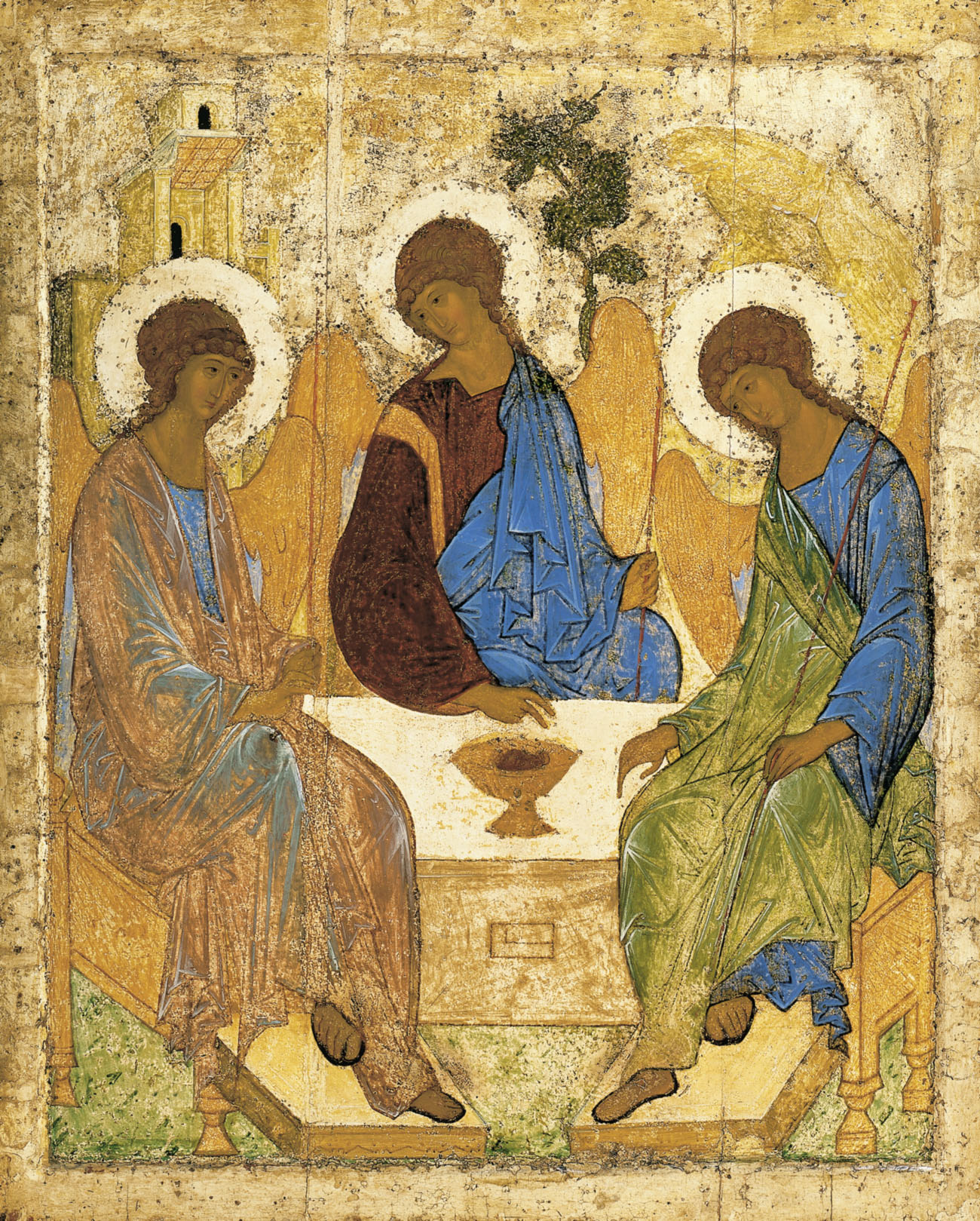
The well-known 15th-century Russian Orthodox icon of the Trinity by Andrei Rublev rehearses the story of Abraham’s encounter with the three heavenly figures at Mamre (so Genesis 18:1 – ‘The LORD appeared to Abraham near the great trees of Mamre while he was sitting at the entrance to his tent in the heat of the day’). The icon invites us to both consider and to be considered by the very centre of Christian truth. The triune God – Father, Son, and Holy Spirit – is re-presented from left to right. Ante Jeroncic, Georgij Yu. Somov and others have offered interpretations: the three persons form the circumference of a circle, attesting perhaps to the divine unity; each of the persons embrace a staff in their left hand, a sign of authority; each of the persons is clothed in blue, a symbol of God’s eternity; each of the persons has overlapping wings, a communication of their intimacy. The colour of clothing too is significant: gold recalling the Father’s glory, purple the royalty and suffering of the Son, and green the life-giving mission of the Spirit. And then there’s the table (the location where koinonia takes place), the house (symbolising, perhaps, the created order and/or the church), the tree (shorthand for the cross), and the mountain (a recollection of the theophanies, of the Mount of Transfiguration, and of the location of covenant renewal).

There is little doubt of the icon’s beauty (as Ante recalls in a follow-up post), even while this icon invites us to reconsider what we mean by beauty. And it does this in a very simple yet profound way. It does this via the sets of hands which point towards the chalice in which is what appears to be a roasted lamb. It is in this gesture that we are invited to rethink all that we might mean when we talk about glory, and power, and God. For this gesture recalls that the God with whom we have to do in Jesus Christ is the God who is so fully one with us that his very being is re-constituted in the action of becoming flesh, of taking the form of a slave, and of dying the very death which has become a way of ‘life’ for us. It also recalls that just as it takes the doctrine of the Trinity to make any sense of the cross, it takes the cross to unveil for us the heart of the Triune God.

The gesture of the central figure – the one whom the Church proclaims as ‘very God of very God, begotten, not made, being of one substance with the Father and by whom all things were made’ – invites us to reconsider, and, indeed, to put to death, all of our preconceived images of what God may or may not be like, and to allow our image of God to be finally determined in one place and in one place alone – in the life, death, resurrection and ascension of Mary and Joseph’s firstborn son who alone is the image of the invisible God, and who constitutes the form that divine beauty takes in the world. To talk about God and to talk about beauty is not, in the first instance, to recall a set of religious doctrines or a philosophy of beauty. Still less is it to impose such upon a being which we then name ‘God’. It is, rather, to atten­d to a movement in history enacted for us, a bloody and deathly movement, namely the story of Jesus of Nazareth the Word of God made flesh for us, living for the Father’s joy in the power of the Spirit and who, from the side of broken and recalcitrant humanity offers God the praise and thanks due to God’s name. In other words, God’s love finds its clearest and most decisive voice in this particular person whom the Father has set his love upon and who is not ashamed to call us his sisters and brothers. What makes this particular act beautiful is the persons who undertake them and their mutual self-surrendering love for one another, and for the healing of the world, which is there revealed to us.

After Jesus had died, Joseph of Arimathea asked Pilate for Jesus’ body. St John tells us that Joseph was a disciple of Jesus, but secretly because he feared the Jews. John also tells us that Joseph did not do this alone, but that he was accompanied by someone who had appeared much earlier on in the narrative, namely Nicodemus, the wealthy aristocrat, pharisee and learned rabbi who earlier had visited Jesus at night during an earlier first visit to Jerusalem (John 3). Now here he is again, on Jesus’ last visit to that violent and hard-hearted city. This time, Nicodemus brought a mixture of myrrh and aloes, about seventy-five pounds worth. Taking Jesus’ body, the two of them wrapped it, with the spices, in strips of linen (John 19:39–40). In this violated and now lifeless body of a young teacher called Jesus, Nicodemus is given to see the very fullness of beauty – for in Jesus he is confronted by one who loves the Lord with all his heart, soul, mind and strength, and who loves human beings – even his enemies – even unto death. And in Jesus Nicodemus is confronted with himself and with the world’s operations. Such a vision of divine beauty reconstitutes Nicodemus’ world, a new reality is taking hold of him, a reality which is causing him to question all that he had once held to be good and true and beautiful. Such a vision of divine beauty sees Nicodemus no longer arranging a backroom meeting with Jesus at night, but sitting at this table that Rublev paints, sitting in Christ with the Spirit and with the Father and sharing in a life reconstituted by the chalice-directed hospitality at their centre.

In a wonderful collection of sermons preached at St Andrew’s church in St Andrews in 1996–97, and subsequently published as At the Cross: Meditations on People Who Were There, Richard Bauckham and Trevor Hart recall that

for Pilate and the chief priests the cross refutes Jesus’ claim to be king, if refutation were needed. But for Nicodemus it refutes Pilate’s and the chief priest’s respective claims to represent divine rule. In this radical polarizing of the alternatives Nicodemus can no longer have any truck with political compromise. He finally burns his boats. He throws in his lot with Jesus. He publicly honors him as king. He steps completely outside the circle that binds the governor’s residence and the high priest’s council chamber together. He accepts whatever it might mean to find God’s rule exemplified, even implemented in the humiliated and suffering Jesus. He commits himself to whatever that might involve by way of reversal of conventional thinking about power and status, about what really matters and what really gets things done in the real world. He commits himself to whatever it means to think that neither Pilate nor the chief priests in fact have the last word as they think they do, that beyond the petty game they play with each other actually God holds and plays a trump card of which they have no conception. When Nicodemus saw Jesus crucified and when he recognized this crucified Jesus as truly the king who rules for God, then (might we not say?) Nicodemus was truly born from above, born again of the Spirit of God. For “no one,” Jesus had said to him, “can see the kingdom of God without being born from above. (pp. 111–12)

Richard and Trevor then share this prayer with us:

Lord Jesus, with Nicodemus we recognize you
as the ruler of all
not in spite of your cross
but because of it.
We see your power in your weakness,
your glory in your humiliation,
your sovereignty in your self-giving service,
your victory in your death.
Help us not to be taken in by the illusions of evil,
by the apparent dominance of the forces that oppose God in this world
by the apparently overwhelming influence
of forces that corrupt life and destroy creation.
Help us to resist them.
Keep us from the temptations of power and influence,
from using them to serve the idols
of self-advancement or the causes we favor,
from treating other people as means to our ends,
from disregarding others on the way to our ends.
Help us to recognize the power of truth and love,
help us to acknowledge you as the only Lord.
Your kingdom come.

[Having just returned from lunch with the US Ambassador to New Zealand, David Huebner, this prayer takes on a richer challenge for me.]

Maundy Thursday blessings.

So what’s the purpose of a book review?

While chatting recently to a friend about book reviews and their purpose, he came up with a definition: ‘To help the writers know they are understood and appreciated without too much attention to their mistakes, to help the readers know whether or not it is for them, to identify one or two critical issues worth discussing along the way, and to ease the conscience of the reviewer about all the free books s/he has acquired through this means, not all of which were ever read’. Doesn’t cover all bases, to be sure, but it’s as good a definition as I’ve encountered.

March bests …

From the reading chair: Genesis: Interpretation Commentary by Walter Brueggemann (this really is an exceptional book); The Incarnation: An Interdisciplinary Symposium on the Incarnation of the Son of God edited by Stephen T. Davis, Daniel Kendall and Gerald O’Collins; God in the Wasteland: The Reality of Truth in a World of Fading Dreams by David F. Wells (this was a re-read for me and, for the most part, was almost as profitable as the first time ‘round way back in 1994); Love’s Endeavour, Love’s Expense: The Response of Being to the Love of God by William Hubert Vanstone; Lament for a Son by Nicholas Wolterstorff; Incarnation Anyway: Arguments for Supralapsarian Christology by Edwin Chr Van Driel (I’ll post a review of this one in due course).

Through the iPod: In Our Bedroom After the War by Stars; Scratch My Back by Peter Gabriel; Another Sky by Altan; Hobo by Charlie Winston; Melodii Tuvi: Throat Songs and Folk Tunes from Tuva by Various Artists; Black Noise by Pantha Du Prince; Knee Deep in the North Sea by Portico Quartet; Albertine by Brooke Fraser; American Central Dust by Son Volt; Grace by The Soweto Gospel Choir; San Patricio by The Chieftains & Ry Cooder; A Young Person’s Guide To Kyle Bobby Dunn by Kyle Bobby Dunn.

On the screen: The Wire: Second Season; Marx Brothers – The Cocoanuts/Animal Crackers/Monkey Business/Horse Feathers/Duck Soup; Hancock’s Half Hour [Volume 1]

By the bottle: Highland Park 15 Year Old

From the sentiment of Christ’s babyhood to the fellowship of his death

A word of encouragement to those who may be preaching on Philippians 2.5–11 this week:

‘The centre of the Incarnation is where Christ placed the focus of His work—not at the beginning of His life, but at its end; not in the manger, but in the cross. The key to the Incarnation is not in the cradle, but in the cross. The light on Bethlehem falls from Calvary. The virtue lies in some act done by Christ; and He Himself did no act in His birth, but in His death He did the act of the universe. The soul of the Incarnation does not lie in His being born of a pure virgin; but it lies in the death of His pure soul and the perfect obedience of His will as a propitiation for the sins of the world. God was in Christ as reconciler, not as prodigy. The key to the Incarnation lies, not in the miracle performed on His mother, but in the act of redemption performed by Himself. Christ’s great work on our behalf was not in assuming our nature at birth, but in what He did with the nature we call assumed. Men were not redeemed by Christ being born as He was, but by His dying as He did. It is that which establishes His power over us sinners. It is that which makes His real value to our souls, because it is there that He atones, expiates, reconciles. It is that which gives chief value to His entrance in the world—not that He was miraculously born, but that He was born to die and redeem. The saving humiliation was not that of the manger but of the cross. It was a humiliation not inflicted or imposed, but achieved. And the self-emptying behind all was one to be explained, not by anything happening to Him in His humble birth, but by what happened through Him in His humiliating death. If He had not been born in that way, and yet had died as He did, He would still have been our reconciliation with God, our Redeemer from the curse, and our Saviour from the sin of the soul and of the race. The power of His Incarnation has become so weak among men, for one reason, because its explanation has been sought at the wrong end of His life. The wonder has been transferred from Good Friday to Christmas, from the festival of the second birth to the festival of the first, from redemption to nativity, from the fellowship of His death to the sentiment of His babyhood’. – PT Forsyth, God the Holy Father, 40–1.

John Barclay to lecture kiwis on ‘unconditioned’ and ‘pure’ gifts

Professor John Barclay will be at the University of Otago (Dunedin) next week to deliver the De Carle Open Lectures on Tuesday 30 March and Wednesday 31 March. All are welcome. Here’s the details:

Tuesday 30 March, 5.10pm. (Archway 1 Lecture Theatre): ‘Paul and the Subversive Power of the Unconditioned Gift

Working from the anthropology of gift, and the practice of gifts in Paul’s first-century context, a critical question emerges concerning who is qualified or worthy to receive the gift; answers on the gift’s proper distribution reveal foundational social norms.  Paul’s mission to non-Jews broke Jewish ethnic and legal norms, and was the social corollary of his conviction that a divine gift (of Christ) had been given and distributed without qualificatory conditions.  This conviction represents a highly unsettling perception of the world, at odds with the normal categories of hierarchy, quality and significance, and capable of creating irregular, socially creative communities. Paul emerges as one of the most subversive thinkers of the ancient world.

Wednesday 31 March, 5.10pm. (Archway 1 Lecture Theatre):‘Paul, Reciprocity and the Modern Myth of the Pure Gift’

The modern ideology of the pure, unilateral and utterly disinterested gift is the product of social and economic developments in Western history, strengthened by Protestant polemics and modern individualism.  In Paul’s context, as in most traditional societies, gifts create obligations, are bi-lateral in exchange, and are a key mechanism for social integration.  Paul’s ideology of gift-reciprocity in a community bound together by gift and need indicates that he is not a modern – and all the better for that!  Special features of Paul’s notion of community-construction will be explored, with suggestions concerning their relevance to contemporary social and economic problematics.

Some good news

Some considerable time has passed since I completed writing my PhD thesis. Friday night saw me formally defend it in an oral exam known as a viva voce. In its most hoped for form, ‘the viva’ is a kind of friendly inquisition which involves a richly-rewarding conversation with two (or more) very qualified examiners, both of whom are encouraging and constructive in their comments, deeply perceptive in their questions, who assess a solid piece of work fairly and without unduly pushing personal agendas, and who pass the thesis without qualification or any further editing required. Mine was just such an experience with Tom Smail and Ivor Davidson.

For those who may be interested, here’s an abstract of my essay:

‘This essay explores whether the notion of “hallowing” provides a profitable lens through which to read and evaluate the soteriology of British theologian P.T. Forsyth, and it suggests that the hallowing of God’s name is, for Forsyth, the way whereby God both justifies himself and claims creation for divine service. It proposes that reading Forsyth’s corpus as essentially an exposition of the first petition of the Lord’s Prayer is an invitation to better comprehend not only his soteriology but also, by extension, his broader theological vision and interests. Chapters One and Two are concerned with questions of methodology, and with placing Forsyth in the social context of his day, with introducing the theological landscape and grammar from which he expounds his notion of reality as fundamentally moral, and with identifying some of the key but neglected voices that inform such a vision. Chapter Three explores the principal locale wherein the first petition of the Lord’s Prayer is answered: in Jesus Christ, whose confession of holiness ‘from sin’s side’ justifies God, destroys sin and creates a new humanity. Chapter Four examines Forsyth’s moral anthropology – specifically, the self-recovery of holiness in the human conscience – and considers holiness’ shape in the life of faith. Chapter Five inquires whether Forsyth’s theology of hallowing finally requires him to embrace dogmatic universalism, and identifies what problems might attend his failure to so do and consequently threaten to undermine his soteriological program’.

Conference: Being Christian in the South Pacific — Kiwi Christian Practice

The Pastoral/Practical Theology Group in Aotearoa New Zealand is organising a conference around the topic Being Christian in the South Pacific — Kiwi Christian Practice.

Here’s the details:

The Date: 8—9 November, 2010
The Location: Knox Centre Seminar Room, Hewitson Wing, Knox College, Arden Street, Dunedin
The Cost: $10 donation to cover morning and afternoon tea

The Blurb
Pastoral/practical theology stands at the intersection of Christian ministry and academic research. In pastoral/practical theology, we critically examine the practices of Christian ministry using theological and historical analysis as well as humanities and social science research methods. If you wish to register for the conference, please email Mary Somerville.

The Call for Papers
We are seeking presentations that address a wide variety of topics related to congregational life in Aotearoa. We hope that graduates and current students of MMin, MTheol, DMin and PhD programs who studied topics related to congregations will consider presenting a summary of their research or one aspect of their research. We are seeking papers for 20- and 40-minute slots. In a 20-minute slot, please plan on speaking for 15 minutes and allow 5 minutes for discussion. In a 40-minute slot, please plan on a 30-minute presentation and 10 minutes for discussion.

In submitting a proposed paper, please

  • indicate what sort of time slot you are applying for, remembering that most of us suffer from the occupational hazard of nearly always saying more than we think we’re going to;
  • include a 50-100 word abstract of the proposed paper.

Proposals should be emailed to Dr Lynne Baab or, if necessary, posted to her at the Department of Theology and Religious Studies, University of Otago, PO Box 56, Dunedin, and should be received by 30 July.

[Image: bluebison]