Here and there …


Welcome Samuel Jamieson Goroncy

Regardless of whether one counts the day’s beginning at midnight, or as sometime in the early hours of the previous morning, it’s been a long day and that principally for one reason. At around 0222 this morning, my partner and I welcomed into the world our beautiful son and Sinéad’s brother, Samuel Jamieson.

At various times throughout the day – i.e., when I wasn’t feeling totally freaked out by the fact that the girl’s names that we had spent so long debating were now literally immaterial, and, relatedly, that this wee one so tightly cocooned in soft blankets and a stylish teddy-bear jumpsuit has bits underneath that I simply wasn’t expecting to see – I meditated on the words from Lamentations 3.22: ‘The steadfast love of the Lord never ceases, his mercies never come to an end’, and I silently recalled Walter de la Mare’s wee poem written for his daughter Florence. The poem is titled ‘The Birthnight: To F.’, and reads:

Dearest, it was a night
That in its darkness racked Orion’s stars;
A sighing wind ran faintly white
Along the willows, and the cedar boughs
Laid their wide hands in stealthy peace across
The starry silence of their antique moss:
No sound save rushing air
Cold, yet all sweet with Spring,
And in thy mother’s arms, couched weeping there,
Thou, lovely thing.

Samuel, this seven pound two ounce wonder, represents, no less than other children, what Jürgen Moltmann once named ‘metaphors of God’s hope for us’, that with every child, a new life – original, unique, incomparable – begins. And that while we typically ask, who does this or that child look like (apparently because we seem to think we can only understand the new in the comparison with what is already known or similar), we also encounter the entirely different, the entirely dissimilar and unique in each child. It is, Moltmann suggests, precisely these differences that we need to respect if we want to love life and allow an open future. Moltmann also recalls that with every beginning of a new life, the hope for the reign of peace and justice is given a new chance. It is important – and I feel the weight of the challenge here – to see Samuel in his own transcendent perspective and so to resist forming him according to the stale images of our world. Every new life is also a new beginning of hope for a homeland in this world which is-and-is-being redeemed. If it were not, we would have no reason to expect anything new from a beginning. Samuel will be baptised on 14 November at Highgate Presbyterian Church in Dunedin.

A final thing: Mother and Samuel are both doing very well. Dad and sister are glowing. Even the dog seems unusually excited. It is yet to be seen if our adorable chickens start laying eggs again, inspired by the events of recent days.


‘Unseasonable Journey’, by Susan Jones

I remember it as if it was yesterday
the day he set his face
and turned towards Jerusalem.

We all knew that look,
all of us women
who followed him
Mary, Joanna,
Susanna and the rest,
we knew, all of us,
once that look was in his eyes
and his jaw set in that determined way
nothing any of us could say would change his mind.

An autumn chill
whispered its way
around my heart
the long, lovely summer
of camaraderie and companionship
was over

for I knew
we all knew
(especially him, although he never said)
death
lay at the end of this unseasonable journey.

Looking back now,
I remember the slow,
inevitable
irrevocable
feel of that time

his words falling on our ears
as leaves fall
one by one
from trees
weeping away their life
in golden tears

(afterwards, we looked back,
surprised at the depth
of golden leaves
which had gathered at our feet)

the first few leaves
fluttered gently to the ground
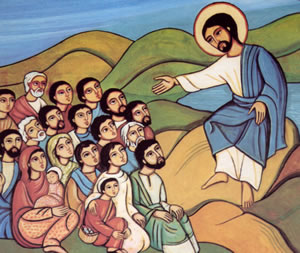
as he told the men to let the children be.
‘the kingdom belongs to such as these,’ he said.
We women knew what he meant
we know children
the gut honesty
that hasn’t been veneered with social graces yet.
We knew what he meant.

And it seemed a single golden leaf
gently touched my hair
as I heard him say
‘Mary has chosen the better part
it shall not be taken from her’

and it hasn’t.

A few more leaves fell
when he wept over the city

the stormy tension was all through Jerusalem
like one of those autumn storms
that pulls leaves from the trees in jealous fury

but once,
there was a lull,
when, through the heavy scent of ointment
above the women’s tears he said to the stony faces
about him
‘she has done this for my burial’
and a shower of golden leaves
joined the others on the ground.

But autumn ends
with gaunt skeletons
against a wintry sky
and so his end came
on a gaunt tree
starkly black
amidst a darkened day
and the chill of winter
settled on my soul
the pile of leaves
about my feet
lost their glow
as the promises lost their power.

The cold went deep within me,
and even when love had burst forth
out of season
life in the middle of death
warmth in the heart of winter,
and the leaves at my feet
had regained their golden glow
(for now I knew the promises were true)
the memory of that desolation remained

Reminding me God does not wait for spring
but offers life in winter
for love knows no season

– Susan Jones, What was it like?: Bible Reflections (Melbourne: Joint Board of Christian Education, 1993).

‘The Country Clergy’, by R.S. Thomas

I see them working in old rectories
By the sun’s light, by candlelight,
Venerable men, their black cloth
A little dusty, a little green
With holy mildew. And yet their skulls,
Ripening over so many prayers,
Toppled into the same grave
With oafs and yokels. They left no books,
Memorial to their lonely thought
In grey parishes; rather they wrote
On men’s hearts and in the minds
Of young children sublime words
Too soon forgotten. God in his time
Or out of time will correct this.

– RS Thomas, ‘The Country Clergy’, in Collected Poems, 1945–1990 (London: Dent, 1993), 82.

[Image: Gozaic]

Hymn: ‘We praise the Word of God’

The PCUSA has kindly made available the text and music of a hymn by David Gambrell. The words are set to the familiar tune Leoni (‘The God of Abraham Praise’), and bear witness to the dynamic nature of the Word of God as understood in the Reformed tradition, as ‘Scripture – the Word written, preaching – the Word proclaimed, and the Sacraments – the Word enacted and sealed, bear testimony to Jesus Christ, the living Word’ (Directory for Worship, W-1.1004). Permission is granted for congregational use in worship/educational settings.

1. We praise the Word of God
made flesh in Jesus Christ:
the wellspring of undying love,
the bread of life,
who spoke with human lips
yet taught with heaven’s voice,
in whom we put our hope and trust,
and still rejoice.

2. We learn the Word of God
in stories of the faith:
the Scriptures’ living witness to
God’s truth and grace,
where prophets cry for peace,
apostles preach and pray,
and saints of all the ages seek
God’s holy way.

3. We live the Word of God
when good news we proclaim:
when captives find their liberty
and lose their chains;
when mourners sing with joy
the Word of God resounds,
the Spirit of the Lord still speaks,
and grace abounds.

The sheet music is here.

A wee note on Calvin’s (wordy) sermons

Lest we hastily accuse Calvin of extraneous verbiage, we would do well to recall the distance between the sixteenth and twenty-first centuries. In her extraordinary collection of essays The Death of Adam: Essays on Modern Thought, Marilynne Robinson notes that ‘Cauvin and his supporters seem to have been intent on consolidating a revolution, one in which religion was as central to the imagination of the project as political liberty would be in the eighteenth and nineteenth centuries, and economics and nationalism in the nineteenth and twentieth. Traditionally European societies instructed their members in approved beliefs through rituals, processions, feasts, fasts, pilgrimages, and iconography. Geneva replaced all that with hour upon hour of sermons and lectures, and a system of education that was compulsory for all children and free for the poor … If all these lectures and sermons seem a poor exchange for pageants and altarpieces, it is well to remember the Renaissance passion for books, and for the languages and literatures of antiquity, first of all the Bible. Cauvin’s virtuosic scholarship could be thought of as monumental public art, by analogy with the work of contemporaries like Michelangelo’ (pp. 199–200). And Bernard Cottret, in Calvin: A Biography, recalls that ‘Calvin was never so much a man in his time and of his time as in his sermons’ (p. 289).

This spoken proclamation – which was, in Calvin’s mind, the prime purpose of his preaching – was then transposed into written form as a result of the ‘company of strangers’ who, from 29 September 1549, arranged for Calvin’s sermons to be recorded in shorthand by Denis Raguenier, then transcribed, printed and published. A basic list of Calvin’s sermons is available in Appendix 7 of Cottret’s volume (pp. 354–5). Between 1549 and 1564, Calvin preached verse-by-verse through Psalms, Jeremiah, Lamentations, Micah, Zephaniah, Hosea, Joel, Amos, Obadiah, Jonah, Daniel, Ezekiel, 1 and 2 Thessalonians, 1 and 2 Timothy, Titus, 1 and 2 Corinthians, Job, Deuteronomy, Isaiah, Galatians, Ephesians, Harmony of the Gospels (during his last five years), Acts, Genesis, Judges, 1 and 2 Samuel, and 1 Kings. Some ignorant librarians sold many of the volumes for the weight of the paper. A search of the lost sermons means that we now possess about 1500 of them. Cottret recalls that the Opera Calvini includes 872 sermons, while a further 680 are in the process of being published elsewhere, particularly in the Supplementa Calviniana. The manuscripts are held in the Bibliothèque Publique et Universitaire in Geneva, the Bodleian Library in Oxford, and Lambeth Palace in London. (See Cottret, Calvin, 289n5).

Those wishing to read more on Calvin’s preaching might consult the following:

By the way, those interested in Calvin’s view of Scripture might check out:

Bruce McCormack Lectures

January 2011 will witness Professor Bruce McCormack give the Croall Lectures (in the Martin Hall at New College) on the theme ‘Abandoned by God: The Death of Christ in Systematic, Historical, and Exegetical Perspective’. The titles are:

  • 17th January – Penal Substitution: Its Problems and Its Promise
  • 18th January – The Cry of Dereliction: The Strange Fate of Jesus in the New Testament
  • 20th January – The Incarnation as Saving Event: Theories Which Order the Work of Christ to a Metaphysical Conception of His Person
  • 24th January – Let Justice and Peace Reign: Theories Which Fail to Integrate the Person and Work of Christ
  • 25th January – After Metaphysics: Theories Which Order the Person of Christ to His Work
  • 27th January – The Lord of Glory was Crucified: Reformed Kenoticism and Death in God.

And later in the year (September 27 – October 4, 2011), Professor McCormack will also be giving the Kantzer Lectures on the theme ‘The God Who Graciously Elects: Six Lectures on the Doctrine of Election’.

Any who have been so priviledged to have heard Bruce lecture before can anticipate a real feast.

‘Read the old …’

Ben Myers’ latest post, Reading and Progress (which is a wonderful follow-up to his post on writing), reminded me of CS Lewis’ fine ‘Introduction’ to Athanasius’ On the Incarnation: De Incarnatione Verbi Dei, and particularly of Lewis’ advice to ‘read the old’:

‘There is a strange idea abroad that in every subject the ancient books should be read only by the professionals, and that the amateur should content himself with the modern books. Thus I have found as a tutor in English Literature that if the average student wants to find out something about Platonism, the very last thing he thinks of doing is to take a translation of Plato off the library shelf and read the Symposium. He would rather read some dreary modern book ten times as long, all about “isms” and influences and only once in twelve pages telling him what Plato actually said. The error is rather an amiable one, for it springs from humility. The student is half afraid to meet one of the great philosophers face to face. He feels himself inadequate and thinks he will not understand him. But if he only knew, the great man, just because of his greatness, is much more intelligible than his modern commentator. The simplest student will be able to understand, if not all, yet a very great deal of what Plato said; but hardly anyone can understand some modern books on Platonism. It has always therefore been one of my main endeavours as a teacher to persuade the young that firsthand knowledge is not only more worth acquiring than secondhand knowledge, but is usually much easier and more delightful to acquire.

This mistaken preference for the modern books and this shyness of the old ones is nowhere more rampant than in theology. Wherever you find a little study circle of Christian laity you can be almost certain that they are studying not St. Luke or St. Paul or St. Augustine or Thomas Aquinas or Hooker or Butler, but M. Berdyaev or M. Maritain or M. Niebuhr or Miss Sayers or even myself.

Now this seems to me topsy-turvy. Naturally, since I myself am a writer, I do not wish the ordinary reader to read no modern books. But if he must read only the new or only the old, I would advise him to read the old. And I would give him this advice precisely because he is an amateur and therefore much less protected than the expert against the dangers of an exclusive contemporary diet. A new book is still on its trial and the amateur is not in a position to judge it. It has to be tested against the great body of Christian thought down the ages, and all its hidden implications (often unsuspected by the author himself) have to be brought to light. Often it cannot be fully understood without the knowledge of a good many other modern books. If you join at eleven o’clock a conversation which began at eight you will often not see the real bearing of what is said. Remarks which seem to you very ordinary will produce laughter or irritation and you will not see why – the reason, of course, being that the earlier stages of the conversation have given them a special point. In the same way sentences in a modern book which look quite ordinary may be directed at some other book; in this way you may be led to accept what you would have indignantly rejected if you knew its real significance. The only safety is to have a standard of plain, central Christianity (“mere Christianity” as Baxter called it) which puts the controversies of the moment in their proper perspective. Such a standard can be acquired only from the old books. It is a good rule, after reading a new book, never to allow yourself another new one till you have read an old one in between. If that is too much for you, you should at least read one old one to every three new ones.

Every age has its own outlook. It is specially good at seeing certain truths and specially liable to make certain mistakes. We all, therefore, need the books that will correct the characteristic mistakes of our own period. And that means the old books. All contemporary writers share to some extent the contemporary outlook – even those, like myself, who seem most opposed to it. Nothing strikes me more when I read the controversies of past ages than the fact that both sides were usually assuming without question a good deal which we should now absolutely deny. They thought that they were as completely opposed as two sides could be, but in fact they were all the time secretly united – united with each other and against earlier and later ages – by a great mass of common assumptions. We may be sure that the characteristic blindness of the twentieth century – the blindness about which posterity will ask, “But how could they have thought that?” – lies where we have never suspected it, and concerns something about which there is untroubled agreement between Hitler and President Roosevelt or between Mr. H. G. Wells and Karl Barth. None of us can fully escape this blindness, but we shall certainly increase it, and weaken our guard against it, if we read only modern books. Where they are true they will give us truths which we half knew already. Where they are false they will aggravate the error with which we are already dangerously ill. The only palliative is to keep the clean sea breeze of the centuries blowing through our minds, and this can be done only by reading old books. Not, of course, that there is any magic about the past. People were no cleverer then than they are now; they made as many mistakes as we. But not the same mistakes. They will not flatter us in the errors we are already committing; and their own errors, being now open and palpable, will not endanger us. Two heads are better than one, not because either is infallible, but because they are unlikely to go wrong in the same direction. To be sure, the books of the future would be just as good a corrective as the books of the past, but unfortunately we cannot get at them.

I myself was first led into reading the Christian classics, almost accidentally, as a result of my English studies. Some, such as Hooker, Herbert, Traherne, Taylor and Bunyan, I read because they are themselves great English writers; others, such as Boethius, St. Augustine, Thomas Aquinas and Dante, because they were “influences.” George Macdonald I had found for myself at the age of sixteen and never wavered in my allegiance, though I tried for a long time to ignore his Christianity. They are, you will note, a mixed bag, representative of many Churches, climates and ages. And that brings me to yet another reason for reading them. The divisions of Christendom are undeniable and are by some of these writers most fiercely expressed. But if any man is tempted to think – as one might be tempted who read only con- temporaries – that “Christianity” is a word of so many meanings that it means nothing at all, he can learn beyond all doubt, by stepping out of his own century, that this is not so. Measured against the ages “mere Christianity” turns out to be no insipid interdenominational transparency, but something positive, self-consistent, and inexhaustible. I know it, indeed, to my cost. In the days when I still hated Christianity, I learned to recognise, like some all too familiar smell, that almost unvarying something which met me, now in Puritan Bunyan, now in Anglican Hooker, now in Thomist Dante. It was there (honeyed and floral) in Francois de Sales; it was there (grave and homely) in Spenser and Walton; it was there (grim but manful) in Pascal and Johnson; there again, with a mild, frightening, Paradisial flavour, in Vaughan and Boehme and Traherne. In the urban sobriety of the eighteenth century one was not safe – Law and Butler were two lions in the path. The supposed “Paganism” of the Elizabethans could not keep it out; it lay in wait where a man might have supposed himself safest, in the very centre of The Faerie Queene and the Arcadia. It was, of course, varied; and yet – after all – so unmistakably the same; recognisable, not to be evaded, the odour which is death to us until we allow it to become life: “An air that kills From yon far country blows.”

We are all rightly distressed, and ashamed also, at the divisions of Christendom. But those who have always lived within the Christian fold may be too easily dispirited by them. They are bad, but such people do not know what it looks like from without. Seen from there, what is left intact despite all the divisions, still appears (as it truly is) an immensely formidable unity. I know, for I saw it; and well our enemies know it. That unity any of us can find by going out of his own age. It is not enough, but it is more than you had thought till then. Once you are well soaked in it, if you then venture to speak, you will have an amusing experience. You will be thought a Papist when you are actually reproducing Bunyan, a Pantheist when you are quoting Aquinas, and so forth. For you have now got on to the great level viaduct which crosses the ages and which looks so high from the valleys, so low from the mountains, so narrow compared with the swamps, and so broad compared with the sheep-tracks …’.

– C.S. Lewis, ‘Introduction’ in On the Incarnation: the treatise De incarnatione Verbi Dei (Crestwood: St. Vladimir’s Seminary Press, 1993), 3–7.

On the ‘expository sermon’

On Monday, I posted from Dietrich Ritschl’s book A Theology of Proclamation, a volume that I recently had reason to return to again. One of the things that I love about this book is the way that Ritschl understands the Word as the dynamic God in the free act of gracious self-unveiling through human speech and deed. God’s Word, through Jesus’ presence in the Spirit, becomes entangled with our word which, by grace, is ‘of no less authority than [God’s] own Word’ (pp. 67-8). He cites 1 Thessalonians 2.13 [‘We also constantly give thanks to God for this, that when you received the word of God that you heard from us, you accepted it not as a human word but as what it really is, God’s word, which is also at work in you believers’] in support of this claim, and then proceeds to note the cruciality of the claim regarding Jesus’ presence in the Spirit:

‘This is not just a “theological formula”. If we left it out, we would have a Word of God that is separated from God; we would make God the prisoner of our thoughts or theologies. We would have a Word with which we could operate, a Word we could “use”, a Word we could judge. But it could not be the Word of God, the Word which operates with us, uses us, and judges us. Our work in the Church, therefore, can only be a service to this one life-giving Word of God. The clearest expression of this truth is the fact that there is no other way to preach than to preach an “expository sermon”, and even this is not a guarantee’.

‘Americans do not have to believe in God, because they believe that it is a good thing simply to believe’

Saturday’s Guardian ran this perceptive comment on the religiousity of Brits and United Statesians by Stanley Hauerwas:

‘The British, I have discovered, assume that Americans are more religious than they are. That presumption seems justified in the light of Ed Miliband’s declared atheism. As yet no one running for high political office in the US has been willing so to identify themselves. Indeed, it seems to be a requirement of political office in America that you believe in God. Americans seem to think those who rule us must believe in God because, if they do not, they cannot be “moral”– which means they will cheat on their spouses, thus destroying the family, which will bring civilisation to an end.

Yet I remain unconvinced that the difference between Britain and the US, when it comes to religion, can be determined by the faith or lack of it of those in public office. In fact, I am not convinced that the US is more religious than Britain. Even if more people go to church in America, I think the US is a much more secular country than Britain. In Britain, when someone says they do not believe in God, they stop going to church. In the US, many who may have doubts about Christian orthodoxy may continue to go to church. They do so because they assume that a vague god vaguely prayed to is the god that is needed to support family and nation.

Americans do not have to believe in God, because they believe that it is a good thing simply to believe: all they need is a general belief in belief. That is why we have never been able to produce interesting atheists in the US. The god most Americans say they believe in is not interesting enough to deny, because it is only the god that has given them a country that ensures that they have the right to choose to believe in the god of their choosing, Accordingly, the only kind of atheism that counts in the US is that which calls into question the proposition that everyone has a right to life, liberty, and happiness.

America is the exemplification of what I call the project of modernity. That project is the attempt to produce a people that believes it should have no story except the story it chose when it had no story. That is what Americans mean by freedom.

The problem with that story is its central paradox: you did not choose the story that you should have no story except the story you chose when you had no story. Americans, however, are unable to acknowledge that they have been fated to be “free”, which makes them all the more adamant that they have a right to choose the god that underwrites their “freedom.”

A people so constituted will ask questions such as “Why does a good god let bad things happen to good people?” It is as if the Psalms never existed. The story that you should have no story except the story you chose when you had no story produces a people who say: “I believe that Jesus is Lord – but that is just my personal opinion.”

I hope that makes it understandable that Americans expect their presidents to believe in god. They do so because they are confident that the god presidents believe in is not a god that can call into question the American project. This is why President Obama had to leave his church when his pastor suggested that God might stand in judgment on the US.

Of course George W Bush was and is a sincere Christian. But that is just an indication of how little being a Christian has to do with sincerity. That is why I find Miliband’s atheism more interesting than the “faith” of the American presidents’.

– Stanley Hauerwas, ‘How real is America’s faith?’ Guardian, 16 October 2010, 45.

[Images: Rodney Dunning & Art Flutter]

Some encouragement for preachers: Dietrich Ritschl on the sermon

‘The Word of the sermon is indeed a new Word and not a repetition of last Sunday’s sermon, but this does not mean that each sermon devaluates or extinguishes the previous sermons. If this were so, the New Testament could never speak about a “Church” and Paul could never refer to the message he had brought before … This is true because Jesus Christ’s presence among His people does not consist of appearances discontinuous in time, i.e., which occur …

‘The presence of Christ in the sermon is nothing less than the presence of the eternal Father who speaks in Jesus Christ through the Holy Spirit His very own Word of judgment and consolation, life and light; but it happens according to the secret of the ubi et quando visum est deo, the free decision of God to reveal Himself wherever and whenever He decides. The identification between God’s Word and the word of the human witness is under no circumstances the work of man, but always the free work of God’.

– Dietrich Ritschl, A Theology of Proclamation (Richmond: John Knox Press, 1960), 72, 73, 77.

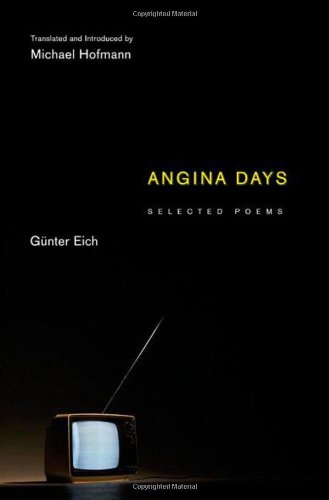
‘Topography of a Better World’, by Günter Eich

Vain the cruel hope
that the screams of the tortured
might pave the way for a brighter future:

observe whose voice trembles with emotion,
whose heart is stirred
when the rolls are changed
at twenty-eight minute intervals.

Greetings, cemeteries!

– Günter Eich, Angina Days: Selected Poems (trans. Michael Hofmann; Princeton/Oxford: Princeton University Press, 2010), 87.

‘This is my truth. Tell me yours’: A Sermon on 2 Timothy 2.8–19

A guest post by Jono Ryan.

What do you believe to be true? About the meaning of your life? About the meaning of death? About the existence of God, and the relationship of this God to our fragile world? What do we believe to be true? For most of the generations that have preceded us in faith, questions and statements of belief were of great importance—worth dying for, or even worth killing for. On occasion, we may wonder whether our Christian forebears took these questions too seriously, but it seems that in our day, we have gone to the other extreme. For within the church these days, the question of “what it is that we believe” can seem an arbitrary and ambivalent one.

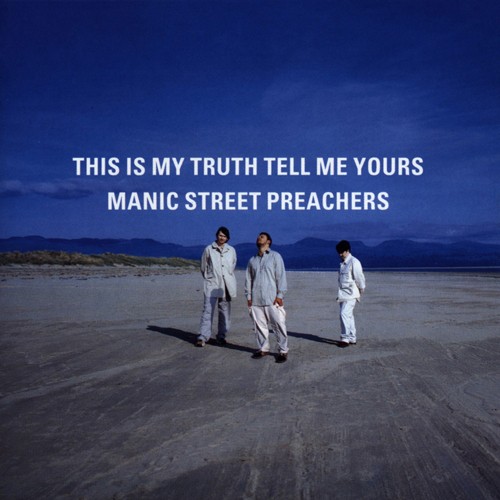
About ten years ago, a British indie rock band named the ‘Manic Street Preachers’ released an album entitled: “This is my truth. Tell me yours.” The album title wasn’t so much provocative as it was ironic, and captures well our engagement with questions of truth within the church. Sometimes I think we approach the question of “what we believe” like the pick-n-mix section of the supermarket: we wander along the aisle with our bag and little scoop, maybe passing over this passage of scripture, and that teaching of Jesus but taking a little of that one, and a little of this one until we find a personal, customized blend that meets our appetite for the day. The world is created by God? One scoop. This God is good and loving? Two scoops. This God was revealed in Jesus Christ? Half a scoop? Jesus Christ was crucified, and resurrected on the third day? Christ will one day return, bringing creation to completion? Perhaps I’ll pass on those ones … but I’ve found something that works for me. The question of what is true is based upon what we find intellectually plausible, or emotionally appealing—whatever works for us. This is my truth. Tell me yours.

This album title may capture well our attitude to truth, but I think it’s fair to say, however, that the apostle Paul doesn’t have the Manics on his iPod as he is writing to Timothy here. We recall from last week that this is a pastoral letter: Paul is writing to encourage Timothy, to challenge and to coach him in his personal life of discipleship and ministry. And central to this pastoral care is the question of belief—of what it is that Timothy  believes, and what he subsequently teaches to others. It’s clear that Paul is taking quite a different tack here. The word of truth, Paul insists, must be “rightly explained.” And he claims that to “swerve from the truth,” as some church leaders like Hymenaeus and Philetus have, will instead produce gangrenous effects throughout the community, a rotting away of the body of Christ. It seems that Paul cannot say, “this is my truth, tell me yours,” for the truth of which Paul speaks is clearly something more than pick’n’mix personal preference; this is a truth grounded in something more substantial; it stands firm.

At this point, we might be inclined to simply dismiss Paul as being a closed-minded conservative, but let’s not forget that, while once he was certainly a narrow-minded dogmatic, since being confronted by Christ on the Damascus Road, his whole belief system has been blown apart. In Christ, he has discovered a truth that required his understanding to be rebuilt, piece by piece, as he learnt anew what it means to live rightly before God. And as part of this renewing of Paul’s mind, Paul has been challenging others to broaden their horizons, Jews and Christians alike.

But for all this broadening of horizons, here Paul is directing Timothy to the centre, to the fundamental truths so central to Christian identity. It would be easy for us to think that, in giving this teaching, Paul is saying “here is the truth,” “here is the correct statement”, as if the truth was something that could be learned by rote. But this would suggest that “the truth” was simply a matter of words—precisely what Paul is opposed to, when he warns us to “avoid wrangling over words, which does no good, but only ruins those who are listening.” Words and statements of belief are important—indeed, Paul has devoted much of his life to them—but in the Christian tradition, truth is a person, not a statement. “I am the way, I am the truth, and I am the life,” Jesus said. To be a Christian is to confess firstly that in Jesus Christ, God is revealed; that in Jesus Christ, we see what is truly true: about God, ourselves, and about the world God has created. For Christians, the truth or falsity of anything else we might say or do is revealed in relation to Jesus Christ.

Perhaps we can appreciate then, why Paul urges Timothy to “Remember Jesus Christ.” Paul would not undergo suffering for a doctrinal statement. He wouldn’t become a prisoner for a good idea. But for the person of Jesus Christ, for the truth Paul has encountered in Jesus Christ, he will willingly undergo hardship, even the injustice of being locked away for his faith.

The teaching Paul gives then, directs Timothy towards the person, the truth of Jesus Christ. In doing so, he quotes a statement of faith—“this saying is sure” he says. But like any statement of faith, it is sure, not because of its theological rigour, but because of its faithfulness in directing us toward Jesus Christ, the one in whom we can be sure. And this is certainly true of the saying Paul quotes, for in every phrase, we are linked up with Jesus Christ:

“If we have died with Christ, we will also live with him;
if we endure, we will also reign with him;
if we deny him, he will also deny us;
if we are faithless, he remains faithful
—for he cannot deny himself.”

This saying is an important encouragement for Timothy’s own life of discipleship. However, this “word of truth” is also of vital importance for those around him too: this word of truth must be “rightly explained” to others, Paul urges, for those whose teaching has “swerved from the truth” has upset the faith of many in Timothy’s community. Paul’s concern is not to get everyone to conform, to tow the party line, but rather a pastoral one, because he can see that this misleading teaching has “upset the faith” of many, and is becoming like gangrene, eating away at the body of Christ. We need only consider the effect of the “health and wealth” gospel, or the way the gospel has been used to oppress women, to be reminded of the negative impact of untruthful teaching in the church. Drawing this community back to the truth of Christ, then, is not so much an exercise in doctrine as it is an important exercise of pastoral care, something we see in each of these four lines Paul quotes from this “sure saying”.
Firstly, “If we have died with Christ, we will also live with Christ.” Pastorally, there may be those who think that the Christian life is solely about sacrifice and dying to self, leading them to the point of despair. Alternatively, there may be those who are all about “new life in Christ,” but have no idea that following Christ will always be a costly decision. Here, then, we are reminded of the central truth of our Christian identity: that in baptism, our lives are woven into the life of Jesus Christ, the one who suffered death, and was resurrected to new life. For some of us, there is a challenge here: “if we have died with Christ, we will also live with Christ.” For in following Jesus, all of us are required to shoulder a cross, to be willing to die to our own ambition and self-interest. But there is also a great encouragement, for these moments of dying to self-interest, and of physical death itself, are all bound up in the cross of Christ, and if we have participated in this death, how much more will we participate in this life of Christ. Whatever it may have cost us, we have much to be hopeful for.

Second line: “If we endure, we will also reign with Christ.” Pastorally, perhaps Timothy or others around him were finding the Christian life too hard, discouraged by opposition or distractions. Or perhaps also there were those who didn’t find it hard enough—who assumed that the Christian life was one of ease and comfort. Paul reminds him, “If we endure, we will also reign with Christ.” We know from the gospels that Jesus, the King of kings, did not receive much by way of royal treatment. Rather, in embracing the frailty of human life, Christ’s journey was a difficult one, requiring endurance, even to the point of death. However, it was by walking this path that the power and authority of Christ was displayed. For us, perseverance is required in the Christian journey. It is a long road, and it will sometimes be difficult, but we are encouraged to persevere, because “if we endure, we also will reign with Christ”.

Third line: “If we deny Christ, Christ will also deny us.” This might trouble us, but the pastoral relevance of this teaching becomes clearer when we consider the trouble that the likes of Hymenaeus and Philetus are stirring up with their dodgy teaching. The truth of Christ we are reminded of here is that, despite our attempts to create a huggy sort of Jesus, Jesus did not shy away from confronting his opponents. “Whoever denies me before others,” he said, “I also will deny before my Father in heaven.” It is a matter of some consequence whether we decide to seek the truth, or swerve from the truth, and particularly when, like Hymenaeus and Philetus, we have been charged with responsibility and leadership for others in the faith. Those who are outspoken in their opposition to the lordship of Christ will be confronted.

We need to weigh this warning, however, against the closing line, which breaks with the pattern of the first three lines. For until now, these lines have started with our actions, and moved to their consequence. But here: “If we are faithless, Christ remains faithful—for Christ cannot deny himself.” Pastorally, this is an urgently needed truth for Timothy and his peers. For do not all of us struggle to be faithful to God? What if we don’t have enough faith? What if we stuff up, and make mistakes? This “sure saying” culminates in an important encouragement: that Christ is the faithful one—that while we will ebb and flow, it is the very character of God to be faithful and trustworthy. Ultimately, our relationship with God is not grounded in our flaky attempts at faith, but in Christ’s enduring faithfulness. This closing line reminds us, then, that the truth Paul is directing us toward is not simply a slogan to memorise, or words to wrangle over. The truth that Paul urges Timothy toward is the truth of God’s character, the truth of what God has done in Jesus Christ.

A pick’n’mix truth that is simply the sum of our appetites and personal preferences has no ability to change and transform us, to call us on to anything new. Such a truth simply reinforces these chains that bind us. But as Paul reminds us, even though he himself is in chains, the word of God is not chained. As we read in John’s gospel, when we encounter Jesus, we encounter the truth, and this truth will set us free. Encountering the truth of Jesus Christ has significant consequences for our life, and the life we share together. For this is a truth that is life-changing, life-demanding, and life-giving, a truth Paul challenges Timothy to take seriously, and a truth that demands our attention also. Amen.

‘Journey’, by Günter Eich

You can turn away
from the leper’s rattle,
close your ears and windows
and wait for him to go.

But when you’ve heard it once,
you will always hear it,
and because he won’t leave,
you will have to.

Pack a bundle, not too heavy,
because no one will help you carry it.
Sneak out, and leave the door open behind you,
you’ll not be back.

Travel far to get clear of him,
take ship or go out into the wilderness:
the rattle of the leper will never stop.

You’ll take it with you while he stays behind.
That boom-boom-boom in your ears—
it’s the sound of your own heart!

– Günter Eich, Angina Days: Selected Poems (trans. Michael Hofmann; Princeton/Oxford: Princeton University Press, 2010), 35.

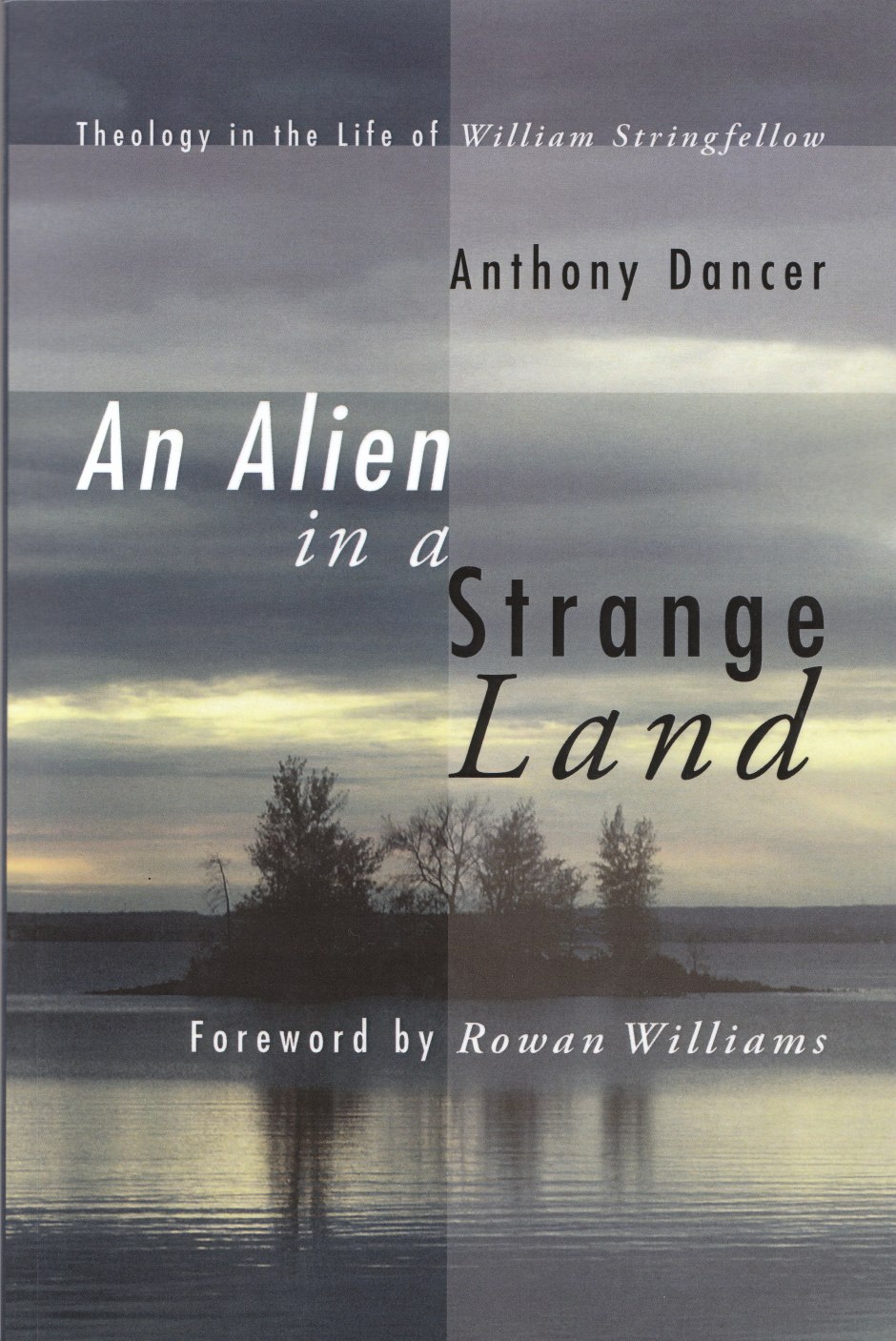
A new book on William Stringfellow: An Alien in a Strange Land: Theology in the Life of William Stringfellow

Today, from a land not too far away, landed upon my desk a signed copy of Anthony Dancer’s latest book, An Alien in a Strange Land: Theology in the Life of William Stringfellow (Wipf & Stock, 2010), launched just a few weeks ago here in New Zealand. Readers of Per Crucem ad Lucem will know of my interest in William Stringfellow, whose work I am still drinking deeply from. Now we have Anthony’s volume (which began as a thesis in 1988 under the supervision of John Webster and Chris Rowland, and which includes a ‘Foreword’ by Rowan Williams) to look forward to as well. As a taster, here’s the ‘Introduction’:

William Stringfellow was the kind of oddity that doesn’t come along every day. He spoke truth to power, whether either party was fully ready for such a conversation, as so often they were not. His was a voice from the margins, honed on the street, eloquent and incisive. His was a very human, fragile, passionate life attempting to live in freedom and obedience to God, against the tyranny of empire. He spoke as much with his life as he did his writing. Although reprints of Stringfellow’s books in recent years provide easier access to much of his published writing, there remains no sustained treatment of and engagement with Stringfellow at a biographical level. There are many reasons for this, and although this is no biography it does contain within it a sustained engagement with his life. It is only by engaging his theology through biography that we can begin more fully and comprehensively to appreciate Stringfellow’s significance to us today, particularly as we seek to discern what it means to be human and faithful amidst our rapidly changing social context. Theology, as Stringfellow realized only too well, is a fundamentally practical, political, and missional discipline orientated around, and orientating, our life in the world.

The first chapter introduces Stringfellow and establishes the research methodology employed herein. The relationship of Stringfellow’s life and his theology is such that in seeking to understand the latter it is necessary to enquire into the former. This research therefore takes the form of biographical theology: a critical examination of Stringfellow’s lifework that explores the way in which his commitment to politics and faith informed his vocational (and therefore theological) formation and articulation to the point at which his moral theology becomes most fully immersed in the politics of the Bible. This commitment to politics and faith make personal and social context, private and political life, crucial to the formation of his life and theology, and therefore this book places Stringfellow’s lifework within his socio-political context.

Chapter 2 examines the socio-political context of the 1950s, in relation to which Stringfellow essentially sought to locate himself. These were crucial years for America, dominated by the themes of threat (Cold War and communism) and prosperity (economic growth); excess and fear amidst a culture of consumption provided the framework for cultural identity.

Chapter 3 goes on to examine Stringfellow’s engagement with both the law and the church during this period and pays particular attention to his decision for both faith and law: on both counts a conversion experience was to prove paradigmatic for his later work. This chapter also draws upon his experiences in the ecumenical movement, the law, and later in Harlem. The themes of reconciliation and authenticity emerge to the fore, and the politics of ecumenism—the political dimension of unity—has a high profile. Paying particular attention to examining the emergence of this politicization, it examines his time in Europe, before discussing his commitment to the Bible and the layperson. Attention is also given to his emerging understanding of the Christian life as worship, and the consequences this has for his understanding of the law and the church. Finally, it examines his lifework as he encounters the East Harlem Protestant Parish and poverty, and discovers the concrete reality of the power of death in the principalities and powers. The empirical imperative that dominates his lifework is here a desire for political and personal authenticity.

Following this, chapter 4 explores some of the salient features of the sociopolitical landscape of the 1960s. It shows how this period was one of hopeful democracy, in which movements of dissent and protest began to emerge; it was a time of radical protest and liberal government, and yet by the beginning of the 1970s the nation had become polarized. It explores how, whilst the “threat” of communism persisted, and in fact took very real and manifest form, liberal politics dominated government in the form of the Great Society, and politics and law were seen as morally determinate. Issues of rights came to the fore, mostly on the back of successful civil rights legislation, and left wing politics found a voice on the campuses of America’s colleges through the movement of the new left.

Next, attention is given to Stringfellow’s lifework during this period, in which he confronted what he saw as the state’s bullish attitude of invincibility, along with religion’s apostasy. The dominant theme of his public and private encounters throughout the 1960s and beyond was his commitment to articulating the relevance and importance of the politics of the Bible for living in freedom from the power of death. Emphasis is given to the way it was ultimately, however, less an act of criticism and more an act of restoring hope.

Therefore, chapter 5 explores how he called the church to account through his polemical writing, confronting religion in America, and identifying the complicity of White Anglo-Saxon Protestants in the maintenance of the state and their betrayal of the gospel. It also examines the hope which he extended by exploring what he believed the ministry and mission of the authentic church of Christ might look like: the centrality of the Bible, the restoration of the roles of priests and people, the seminary underground, and the character of the Christian life which this fosters.

Chapter 6 moves on to examine three radicalizing encounters that transformed his lifework: his meeting with Karl Barth (who advocated America should listen to this man), his rejection at an ecumenical conference on Religion and Race (at which he declared the answer to the racial crisis is baptism), and his meeting and falling in love with Anthony Towne (through which he discovered and experienced love and acceptance at a personal level). It discusses how these events radicalized his lifework in relation to biblical politics.

Following these discussions, chapter 7 examines their effects upon his lifework by examining his prophetic confrontation with Johnson’s Great Society. This represents not so much a radical departure as a radical reorientation in relation to the power of death. The Great Society was the political hallowed ground of the mid-1960s, and Stringfellow’s confrontation draws upon the resources of his lifework to date. Particular attention is given to his criticisms of race and poverty, given their prominence in his lifework. It goes on to show how, following these criticisms, Stringfellow once again offers hope, this time detailing what he terms the ethics of reconciliation—a demand not for novelty, but orthodoxy for life. It therefore looks at his incarnational christological ethic, which requires a revolution in the way in which America conceives of Jesus Christ: it is biblical politics—reconciliation of creation to God in Christ, fostering realism, inconsistency, radicalism, and intercession.

Finally, this book explores his own experience of life-threatening illness and personal confrontation of death. It discusses the way in which this was at once both a personal and public encounter, upon which he brought biblical politics to bear in resistance and advocacy. It then goes on to discuss the way in which this fostered a further and final point of radicalization in his lifework leading directly up to the production of An Ethic for Christians and Other Aliens in a Strange Land: the emergence of semiotic creativity, in which Babylon and Jerusalem confront one another.

The chapters of this book weave our way through a foundational part of his life and work. His lifework teaches us about hope. It is deeply political and intensely personal. It is vulnerable, human, inconsistent, and not without mistakes. It is woven together at the edges of society, pulling together the varied threads of experience and encounter. There is both a sweetness and a lament in the weaving that teach us something profound about being biblical people.

This book is dedicated to all who walk this path. Most especially, it is dedicated to Hera.

Finally, there is a saying in Maori: E kore te kumara e korero mo tona ake reka (The kumara never tells of its own sweetness). A traditional staple food for Maori, it is left for those who delight in the kumara and feed off it to speak on its behalf. So it is with Stringfellow. I am proud to have the responsibility to speak of such sweetness, and hope it may enrich lives.


On the cost and grace of parish ministry – Part XIII

In the two previous posts in this series, I have been reflecting briefly on the relationship between baptism and ordination. Both – and that together – are a divine summons to a life of discipleship. Here I want to suggest that we ought to understand ‘ordination’ not only in relation to baptism, but also in relation to God’s wider work of calling forth faith, to God’s work of guiding and enabling the whole community of faith, to God’s concern of shalom-making for all people. Ordination ought to be seen in the light of this broader movement of the divine will – that is, in the context of God’s good purposes for creation. So, the ministry to which a pastor is ordained is deeply and inherently about a life in God, and it means participation in that life, and in that life’s economy as it turns towards the world. This means that ordination makes no sense not only apart from baptism but – and more fundamentally – apart from Jesus Christ, and apart from his service to the Father on behalf of the world. So T.F. Torrance:

‘Christ was Himself the diakonos par excellence whose office it was not only to prompt the people of God in their response to the divine mercy and to be merciful themselves, not only to stand out as the perfect model or example of compassionate service to the needy and distressed, but to provide in Himself and in His own deeds of mercy the creative ground and source of all such diakonia. He was able to do that because in Him God Himself condescended to share with men their misery and distress, absorbed the sharpness of their hurt and suffering into Himself, and poured Himself out in infinite love to relieve their need, and He remains able to do that because He is Himself the outgoing of the innermost Being of God toward men in active sympathy and compassion, the boundless mercy of God at work in human existence, unlimited in His capacity to deliver them out of all their troubles’. – Thomas F. Torrance, ‘Service in Jesus Christ’ in Theological Foundations for Ministry: Selected Readings for a Theology of the Church in Ministry (ed. Ray S. Anderson; Edinburgh/Grand Rapids: T&T Clark/Wm. B. Eerdmans, 1979), 718.

While it is fair to say that pastoral ministry in the contemporary West is attended by some unique pressures, including an increasing lack of clarity over the role of the pastor, none who have read any church history, let alone the Bible (think, for example, of brother Moses), could reasonably conclude that the concerns surrounding clergy ill-health and burnout to which I drew attention in the earliest posts in this series (I, II, III, IV & V) are problems foreign to earlier generations of ministers. Augustine, for example, once got so near to burnout that he had to turn away from his duties for a six-month sabbatical. In his book Augustine and the Catechumenate, William Harmless lists six factors that Augustine associated with burnout: (i) a failure to rely of the judgement of the faithful; (ii) boredom; (iii) the fear of making a mistake; (iv) an apathetic congregation; (v) the fear of being interrupted; and (vi) grief of heart (pp. 133–40). And one of the deep truths that Augustine reminds us of is that Christian existence is life-in-community, and with that community’s history, catechumenate and sacraments. It is these realities, Augustine believed, that tired ministers ought to turn to: to eat of the Body of Christ is to be refreshed; to drink of his Blood is to live (see, for example, his ‘Sermon on John 6.53’).

In more recent times, PT Forsyth has observed a ‘general sense of unrest’, of ‘inner unrest’ and ‘mental mobility’ of ministers, many of whom themselves are quite blind to the veracity of their own situations. ‘A very great number wish to change their sphere’, he said. Forsyth, who was a college principal, notes the lack of adequate training of ministers, and laments that some ‘leave college without the love or habit of Bible study; or without the reserve principles which come out to settle things in the most dangerous period, which is middle life; and so they devote themselves to nothing – beyond the weekly tale of work’. He continues:

‘In due course comes exhaustion and the “sinking feeling.” They have nothing in which they can collect and possess themselves from the tension and distraction of the place and the hour. They never arrive. And what they read adds to the dissipating effect. It is largely the newspapers, religious or other, or it is similar fugitive products; which is like reading the commentaries before studying the passage. That is to say, their mind is being bombarded with tiny particles of fact or fancy in a constant stream; and the vibration, largely unconscious at the time, accumulates to a chronic and mysterious unrest. How many would increase their peace and power of mind if they would eschew newspapers [and he may have added ‘the internet’] for a year. Yet to do it postulates the very power which is desired. Or if they were driven to more deliberate prayer in order to neutralize the atmosphere of criticism and mental dissipation in which a press age plunges them. For lack of it men may easily become dilettanti not in theology only but in soul, religious amateurs instead of spiritual masters, mere seekers, and experimenters instead of experts of the Gospel and adepts of faith. And our creed may come to suffer from what the doctors now call tea-ism – tremors due to the abuse of sedatives …

I have often found in my own case, too, that the preparation of sermon after sermon, with a constant change of subject, produced an effect of unrest. The mind loses the continuity, the self-possession, that belongs to stability and power. I have found I was apt to prepare my sermons better than myself. Is that an uncommon experience – to spend more on preparing a sermon than on preparing the message, and to spend least of all on preparing oneself for the total work of the ministry? It is with the preaching as it is with the prayer – the great and hard thing is preparing oneself, and preparing not for the occasion but for the vocation. Should the message not be the overflow of the preacher’s life experience, and the sermon the ebullition of the message?

I am sure the real and general secret of the unrest is spiritual, whether my diagnosis in detail be accurate or not; whether it be the case with each individual or not. The disease is secularity of interest. We imbibe much of it from the quivering age’. Revelation Old and New, 105–7.

◊◊◊

Other posts in this series:

Heiko Oberman on Reformed preaching


‘The sermon does not have to try desperately to be actual because it has the highest possible actuality … The sermon is … apocalyptic in the sense that, far from merely referring to the final evaluation of our records, it reveals to us now in time and space the final will of God for the individual Christian: it is God’s last word, to which no syllable will be added. For this reason the Reformation could preach the certitudo salutis, the certainty of salvation, because he who will judge us is the same who fulfilled the law. In the words of Calvin: ‘When a Christian looks into himself he finds cause to be afraid or even to despair … [But] he will win a sure hope of eternal perseverance when he considers that he belongs to Him who cannot fall or fail’. It gives pause to realize that this message which proved to lend the Reformation movement its reconciling and liberating power has virtually disappeared from the Protestant pulpit’. – Heiko A. Oberman, ‘Preaching and the Word in the Reformation’, Theology Today 18, no. 1 (1961), 19.

On the cost and grace of parish ministry – Part XII

In my previous post, I spoke of baptism as ordination to ministry, seeking to bear witness to the reality that baptism speaks God’s word of life and God’s summons to a life of discipleship. All that follows – such as the practice in my own tradition of calling some to the ordered or ‘specific ministries’ of the church, what we call ‘ordination’ – is essentially functional. So Joseph Small in his fine essay ‘Ordination and Authority’: ‘Ordination to one of the church’s ordered ministries is not the simple recognition that a person possesses “gifts for ministry” or that a particular office suits a person’s abilities. Nor does ordination follow naturally from a person’s “sense of call.” Ordination is certainly not about access to position, influence, and power in the church. Instead, ordination is the church’s act of recognizing the movement of the Holy Spirit in the interactions among the church’s ordering of ministries, its standards for these ministries, and its current needs, together with prayerful discernment by persons, congregations, and presbyteries’.

Ordination means that ministers ought to take their primary ‘job description’ not from some local contract that he or she may have entered into but from their ordination vows, vows which are themselves grounded in baptism, that act of the Church which is grounded in the gospel. So there is something of a trajectory from the divine economy to local ordination (even though it is a trajectory that the Church and its ministers has very often misread and abused in the grab for power). This means that here in New Zealand, Presbyterian ministers must do the following:

  • Confess Jesus Christ as Saviour and Lord;
  • Believe that they are called by God and the Church to the ministry of Word and Sacrament;
  • Receive the witness of the Bible as the supreme rule of faith and life, and undertake to preach from the Bible in order to make Jesus Christ known;
  • Celebrate the sacraments of Baptism and Holy Communion with the people of God;
  • Accept that the Apostles’ and Nicene Creeds witness to the core faith of the holy catholic Church, and accept the Westminster documents and the Kupu Whakapono and its accompanying Commentary as witnesses to the Reformed tradition of faith;
  • Relying on the power of the Holy Spirit, commit oneself to the study of the Bible, to model one’s life and ministry on Christ, and to be faithful in prayer;
  • Share in the life and work of the Presbytery and the courts of the Church to uphold the doctrine, worship, government and discipline of the Church, and at all times seek its unity and peace;
  • Accept the call to minister to a particular parish and congregation.

Such vows provide shape and direction to – and place much-needed boundaries around – the task of pastoral ministry. Clearly there is nothing here about the need for ministers to be doing everything! So Brad Greenberg: ‘The big problem clergy have is the ability to say no … it’s only gotten harder in a world where pastors friend their flock on Facebook and are always reachable by cell call or text’.

In a recent sermon on Temptations and Triumphs of Ministry, Kenneth L. Carder properly recalled:

‘Baptism defines who we are, who our family is and what our ministry entails … Our primary calling, then, is to accept and live our baptismal identity! That is a ministry we share as laity and clergy. Ordination does not supersede baptism. Rather, it derives from baptism. And the bedrock calling of the ordained and commissioned is to support the baptized in living their identity in the world. There is no higher calling than our baptismal calling. Baptism has to do with our being as beloved daughters and sons of God: it is who we are. The glorious, triumphant news is that it is all a gift. We cannot earn our worth and relationship as God’s son or daughter any more than we earned our right to be born. Baptism is God’s affirmation, “Do not fear, for I have redeemed you; I have called you by name, you are mine” (Isaiah 43:1). Therefore, our worth lies in the One to whom we belong, and nothing can take that from us, not even death itself! And the glorious good news is that it is all a gift. We call it grace. Our basic identity and worth are not the triumph of our efforts. They are the free gift of God. In the words of the Epistle of First John: “See what love the Father has given us, that we should be called children of God; and that is what we are. … Beloved, we are God’s children now; what we will be has not yet been revealed. What we do know is this: when he is revealed, we will be like him, for we will see him as he is” (3:1–2)’.

He continues:

‘Ordained and commissioned ministry is especially susceptible to trying to prove and earn our worth [i.e. to reject our baptisms and to embrace a self-constituted existence]. One means is by what one of my faculty colleagues at Duke calls “being a quivering mass of availability” – meeting people’s expectations and superficial desires rather than identifying the hungers that cannot be satisfied with bread. Or using the pastoral role to ingratiate ourselves to the masses so they will applaud us, validate our importance, and fill our need for praise and affirmation. The consequences can be catastrophic boundary violations and traumatic abuse of the pastoral relationship; and [this shadow] is often manifested in using congregations as steppingstones in career advancement, which is fleecing the sheep rather than shepherding them. A prayer that I have prayed almost every day of my 50 years of ministry is “Oh God, do not let me be unduly distracted today by either criticism or praise.”

The ministry offers numerous substitutes for baptism as our identity and ministry – size of church, titles, ecclesial positions. We are part of a culture that values worth on the basis of what we know, how we look, what we own, what we produce. Our appointments, salaries, attendance, budgets, ranking on the “work sheet,” political clout and awards become our identity. What we do replaces who we are; being is replaced with doing. Such proofs of our identity are like trying to fill our deep hunger to be somebody with bread made from stone.

Another deadly temptation is the abuse of power inherent in being called by God, confusing political and institutional power with love. Or, rather than being formed by the power of love, we are shaped by the love of power. The tempter showed Jesus the kingdoms of this world and said, “If you … will worship me, it will all be yours.”

Henri Nouwen reminds us that “one of the greatest ironies of the history of Christianity is that its leaders constantly gave in to the temptation of power – political power, military power, economic power, or moral and spiritual power.” He adds that “power offers an easy substitute for the hard task of love. It seems easier to be God than to love God, easier to control people than to love people, easier to own life than to love life”’.

As I have written elsewhere (in a reflection on 2 Corinthians 11.16–12.10):

Here is grace’s way – of Israel’s birth through a barren womb. Here is grace’s way – of the champion from Gath killed by Jesse’s youngest son. Here is grace’s way – of the Word taking on fallen flesh and stubbornly refusing to be fallen in it. Here is grace’s way – of ostracised women being commissioned as proclaimers of God’s good news. Here is grace’s way – that the deepest revelations of God are not given to the wise and understanding but to infants. Here is grace’s way – that God has a deliberate policy of positive discrimination towards nobodies, that the kingdom of God belongs to the poor and that the earth will be inherited by the meek. Here is grace’s way – love your enemies and bless those who make life hell for you. Here is grace’s way – of God making foolish and weak the wisdom and power of the world. Here is grace’s way – of God putting his treasure into jars of clay in order to show that God’s all-surpassing power is from God and not from us. Here is grace’s way – that only in humiliation do we find God exalting us, only in dying do we find God making us alive, only in throwing our lives away do we find God giving life back to us. Here is grace’s way – of power being brought to an end in weakness. Here is grace’s way – that we might actually be more use to God with our thorns than without them. Only when I am weak, am I strong.

There is something else that is important to include at this point in this series of posts; namely, that the justification of the Church and of its ministry is not the work the minister. If and when justification is made, it will be the free act of God. At the very least, this truth should divert the Church away from the temptation to engage in those attempts which foster self-righteousness, smugness, and fact-denying illusion. So Richard John Neuhaus warns that pastoral ministry is not the Church’s office of public relations: ‘Our job is not to project a more positive “image” of the Church, as that term is used in the communications media. Our task is to take seriously the biblical images or models of the Church that illuminate the Church’s full mission as the sign of humanity’s future. As we take this biblical understanding of the Church seriously, there is ever so much in the empirical Church of which we must be relentlessly critical’. And Neuhaus proceeds to offer an ever-timely warning about collapsing the Church and the Kingdom of God:

‘Whatever else we may be guilty of, we are not guilty of the fact that the Church is not the historical consummation of the Kingdom of God. Far from our being embarrassed by the limitations of the existent Church, it is among our chief responsibilities to underscore the truth that the Church is not to be confused with the Kingdom of God. The Christian community points toward that Kingdom. In some important respects it anticipates that Kingdom. But the Church is as far in time from the Kingdom as is the whole creation of which the Kingdom is the universal future. The disappointment, discontent, and frustration that the world feels over its distance from perfection is also our disappointment, discontent, and frustration. In this sense, the Church is emphatically part of the world; indeed, as Paul describes it in Romans 8, the Church is the most restlessly yearning part of the whole creation. The difference is that we know the reason for the hope of perfection that is within us (1 Pet. 3). That reason is the preview or proleptic appearance of our hope vindicated in the resurrection of Jesus the Christ. Living in communion with him, we not only share but articulate and intensify the world’s discontent. Our gospel is not the gospel of optimism, which is, after all, simply a different way of looking at things. It is not simply an angle of vision but a new datum that we proclaim to the world. That datum, which is the message and life of Jesus, is the reason for the hope that is within us and, if only they knew it, the foundation and rationale of hope within all people. And so, because we do not pretend that the Church is the Kingdom of God, we offer no excuses for its not being the Kingdom of God. There will be no satisfactory Church, no Church that can be embraced without ambiguity, until the world of which the Church is part is satisfactorily ordered in the consummation of God’s rule. In short, we cannot get it all together until God has gotten it all together in the establishment of the Messianic Age’. – Richard John Neuhaus, Freedom for Ministry (Grand Rapids: Wm. B. Eerdmans, 1992), 23–4.

◊◊◊

Other posts in this series:

‘The body is mine and the soul is mine’, by R.S. Thomas

‘The body is mine and the soul is mine’
says the machine. ‘I am at the dark source
where the good is indistinguishable
from evil. I fill my tanks up
and there is war. I empty them
and there is not peace. I am the sound,
not of the world breathing, but
of the catch rather in the world’s breath.’
Is there a contraceptive
for the machine, that we may enjoy
intercourse with it without being overrun
by vocabulary? We go up
into the temple of ourselves
and give thanks that we are not
as the machine is. But it waits
for us outside, knowing that when
we emerge it is into the noise
of its hand beating on the breast’s
iron as Pharisaically as ourselves.

– R.S. Thomas, Counterpoint (Newcastle upon Tyne: Bloodaxe Books, 1990), 47.

[Image: Irene Rice Pereira, Man and Machine, 1936. Oil on coarse plain weave linen, 36 1/4 x 48 1/4″]

The Philosophy of Crime

While in the midst of preparing lectures on seventeenth-century Reformed confessions, I happened upon this interesting  piece (not least given the ongoing debates about prison-reform here in NZ) in the Marlborough Express (from 1886) on ‘The Philosophy of Crime’:

‘It is not often that a prisoner enters into a disquisition upon the philosophy of crime, but one Henry Barr, convicted of sheep stealing before Mr Justice Williams a few days ago, unpacked his heart, and made a remarkable confession as to what the Yankees would call his natural cussedness. Had he been theologically inclined, he might have held himself up as a fine example of the doctrine of original sin, or of the Calvinistic idea of predestination according to the Westminster Confession of Faith. “Once a thief always a thief” is the view commonly held by the police. In Barr’s case there is certainly a good deal to support it. The prisoner stated that there was nothing but a record of evil deeds against him since he was a lad. As far as temptation to crime was concerned, he looked upon himself as a helpless baby. His experience was that a man once in prison could not keep out of it. This conclusion he had arrived at was that he was naturally inclined to evil, and that, in spite of having had good parents and most worthy brothers and sisters, he had given up all hope of struggling against fate. What perplexed him most was the problem that often presented itself to his mind during the lonely hours of solitary confinement. “Am I responsible for what I do?” That he had not been able to solve. The judge answered the question in the affirmative, for he sentenced the man to 10 years imprisonment, adding, however, the somewhat illogical remark (considering that the prisoner had repeatedly undergone long sentences) that the effect of punishment was to act as a deterrent in the repetition of crime. The history of this convict, like that of many others, is a proof that punishment very frequent has no effect as a deterrent of crime. It is well known that the attempts at reforming criminals made within our gaols are complete failures. When a reform is effected it is accomplished outside the prison, and has its basis in giving the prisoner a decent start in life. The Salvation Army and the Discharged Prisoner’s Aid Society have done excellent work in this direction. It is to be regretted that they did not get the opportunity of trying their hand on Barr. The prison whose discharged inmates trouble the State again the least is one in which an elaborate system of compulsory education is followed. As long as we rely upon the perfunctory performance of a chaplain’s duty, our gaol system will produce but an infinitesimally small percentage of reformed characters’. – Marlborough Express, Volume XXII, Issue 25, 30 January 1886, 2.