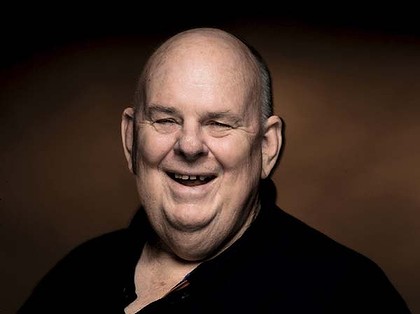
William Cavanaugh interviews

The Centre for Public Christianity has made available a three-part video interview with William Cavanaugh:

1. The myth of religious violence

2. Consumerism and Spirituality

3. The Post GFC World

Also, around the traps:

Around the traps: To the memory of ulcers scraped with a tin spoon

The Presbyterian Research Network: Scottish Seeds in Antipodean Soil

The next meeting of the Presbyterian Research Network (14 April) will see Graham Redding speak to us on Scottish Seeds in Antipodean Soil: the development of Presbyterian Worship in Aotearoa NZ.

We meet at the Knox Centre for Ministry and Leadership, Knox College, for drinks and nibbles at 5pm for a 5.30 talk, and are away by 7pm. All are welcome.

Subsequent meetings will consider the following topics:

  • 9 June 2011. The Demon Drink and the Christian: Yesterday and Today. Speaker: Geoff Troughton
  • 8 September 2011. How patterns of congregational life are changing. Speakers: Kevin Ward and Sarah Mitchell
  • 10 November 2011. The Challenge of Changing the Justice Landscape: how do we do justice honourably with victims, reduce recidivism and change public attitudes? Speaker: Janet Sim Elder

A Wretched Man: A Novel of Paul the Apostle – a review

I remember the first time I read Gerd Theissen’s The Shadow of the Galilean. It was the early 90s. The book is an outstanding achievement. Interweaving the latest in biblical scholarship with an imagination fuelled by Scripture’s heart and with an evangelical zeal to simply tell the story, Theissen helped to bring the Gospels, and their central character, to life for me. And he reinforced for me what I think I first learned via a deep immersion in the liturgical practices of my faith community – that the communication of divine truth demands the work of the very imagination it is determined to sanctify. So Jonathan Edwards: ‘Unless you use imagination, unless you take a truth and you image it – which of course is art – you don’t know what it means’. Or, as Nicholas Lash puts it in Holiness, Speech and Silence: Reflections on the Question of God, and citing John Henry Newman first up:

‘It is not reason that is against us, but imagination.’ … The ways in which we ‘see’ the world, its story and its destiny; the ways in which we ‘see’ what human beings are, and what they’re for, and how they are related to each other and the world around them; these things are shaped and structured by the stories that we tell, the cities we inhabit, the buildings in which we live, and work, and play; by how we handle – through drama, art and song – the things that give us pain and bring us joy. What does the world look like? What do we look like? What does God look like? It is not easy to think Christian thoughts in a culture whose imagination, whose ways of ‘seeing’ the world and everything there is to see, are increasingly unschooled by Christianity and, to a considerable and deepening extent, quite hostile to it.

In such a situation, continuing to hold the Gospel’s truth makes much more serious and dangerous demands than mere lip-service paid to undigested information. Unless we make that truth our own through thought, and pain, and argument – through prayer and study and an unflinching quest for understanding – it will be chipped away, reshaped, eroded, by the power of an imagining fed by other springs, tuned to quite different stories. And this unceasing, strenuous, vulnerable attempt to make some Christian sense of things, not just in what we say, but through the ways in which we ‘see’ the world, is what is known as doing theology.

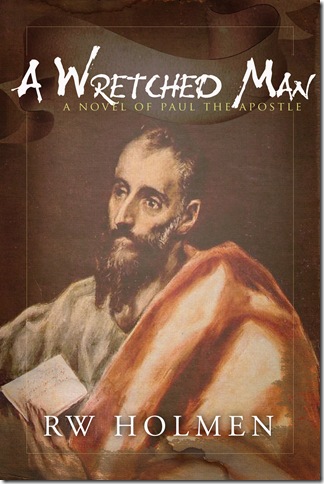
This is precisely why I welcomed reading Obie Holmen’s A Wretched Man: A Novel of Paul the Apostle. Holmen seeks to do with the Apostle to the Gentiles something like what Theissen did with Jesus ‘the Apostle and High Priest of our confession’ (Heb 3.1) – situate Paul in his geographical, social, historical and psychological landscape, and gift us with a creative way of hearing afresh the letters that make up the bulk of the New Testament.

According to Holmen, prior to his fire-side conversion-encounter with Yeshua (Jesus), ‘Paulos (Paul), the defender of orthodoxy, had acquired a proud identity and a status; self-righteousness became the dressing for his wounds, masking his inner torment’ (p. 75). Indeed, ‘the wretched man wandered the streets of Tarsos, lost and alone, accursed and condemned’ (p. 54). Thereafter, Holmen paints Paulos as one who is seeking to carve out the implications – for Torah, for Jewish privilege, for our understanding of God, etc. – of this radical encounter with Yeshua. The entire story takes place, markedly, against Paul’s own conflict – the ‘inner torment’ – between his inherited (and then reconstituted) theology and his homosexuality, the latter manifest in his relationship with Gentile friend Arsenios. Augustine once suggested, to the shock of some of his fellow bishops, that St Paul may have been ‘greatly tainted by sexual desires’. In his portrait of the gay Apostle Paul, Holmen exploits this suggestion beyond what the old bishop of Hippo may have had in mind, and some readers may well lay the book down because of such. But such action would, in my view, represent a premature judgement.

A Wretched Man is no The Shadow of the Galilean, to be sure, but Holmen is a gifted writer, and his well-researched yarn is certain to encourage readers to read the Bible in a new light, with a deepened awareness of the groundedness of its message, with a new appreciation of the real humanity of its figures, and – I suspect most importantly for the author – a renewed wonderment of the magic of divine grace.

An annotated name index would help the reader. The book has a dedicated website here.

Conference on The Bible and Baptists

The Australasian Baptist Research Forum, in conjunction with Whitley College, Melbourne, is organising a conference for 27–29 June, 2011 on the theme The Bible and Baptists: Readers, Teachers and Preachers. Here’s the official lowdown:

2011 is the 400th anniversary of the publication of the King James Authorised Version of the Bible.  Such an anniversary provides an excellent opportunity for reflection on the place of the Bible among Baptists.  How have we and do we interact with the text of the Bible as ‘lay’ readers, professional teachers and preachers?  Papers are invited that explore this theme historically, theologically and pastorally, or provide examples of how Baptists are currently undertaking any or all of these tasks.  The audience at the Forum will hopefully include not only those engaged in theological study, teaching and ministry, but also thoughtful Christians ready to participate along side the ‘professionals’.

Keynote speakers will be Professor Sean Winter, graduate of Bristol Baptist College and Professor of New Testament at the Uniting Church Theological College, Parkville, Victoria; and Dr George Wieland lecturer in Biblical Studies, Mission and Cross-cultural Field Education at Carey Baptist Theological College, NZ.  We are also negotiating to have an academic from Asia present at the Forum.  It is proposed that a book of papers from the Forum will be published as the third ABRF publication.  Presentations at the Forum will be no more than 20 minutes long with 5 minutes question time.  Final papers should be no more than 5000 words including footnotes and written for thoughtful Christians.

A call for papers has also been issued:

Abstracts due: 15 April , 2011

Confirmation of Papers Accepted: 30 April , 2011

Final Papers Due: 3 June, 2011

For further information, or to submit abstracts, please contact Dr Graeme Chatfield (email or +61 02 92627890).


School(s) for Conversion – a commendation

On 14 January 1935, Dietrich Bonhoeffer penned the following words to his brother Karl-Friedrick: ‘… the restoration of the church will surely come only from a new type of monasticism which has nothing in common with the old but a complete lack of compromise in a life lived in accordance with the Sermon on the Mount in the discipleship of Christ. I think it is time to gather people together to do this …’

Whether we are thinking about explicitly religious, or of broader, expressions of new ways of being human community, the birthing of new types of monasticism has long been a feature of ecclesial existence. While having at times drifted in and out of neomonastic communities, and while wrestling frequently with the kingdom-foreignness of the way of being-in-communion that my own introverted default setting reboots to, I’ve mainly been an intrigued onlooker who has read very little in the last decade or so that has come from within the movements themselves that articulates in any depth the intentionalism of such life together. (Whether or not all such communities characterise the ‘new type of monasticism’ for which Bonhoeffer longed is not the point here.)

But I’ve been eager to read and think more. I was delighted, therefore, to discover Wipf and Stocks’ New Monastic Library Series, of which School(s) for Conversion: 12 Marks of a New Monasticism, a book edited by The Rutba House, is a part. (I’m also currently reading Community of the Transfiguration: The Journey of a New Monastic Community by Paul R. Dekar, and “Follow Me”: A History of Christian Intentionality by Ivan J. Kauffman, both of which I’m enjoying immensely.)

The ‘new’ monasticism differs from the ‘old’ in a number of ways. Here are three, for example: (i) vows of celibacy, poverty and obedience are relatively rare; (ii) while geographic proximity of members is preferable, it is not necessary; and (iii) distinctive religious habits have been largely replaced by non-distinctive Levis.

The movement of the Spirit from which this book is birthed sees itself as characterised by the following twelve marks:

1) Relocation to the abandoned places of Empire;

2) Sharing economic resources with fellow community members and the needy among us;

3) Hospitality to the stranger;

4) Lament for racial divisions within the church and our communities combined with the active pursuit of a just reconciliation;

5) Humble submission to Christ’s body, the church;

6) Intentional formation in the way of Christ and the rule of the community along the lines of the old novitiate;

7) Nurturing common life among members of intentional community;

8) Support for celibate singles alongside monogamous married couples and their children;

9) Geographical proximity to community members who share a common rule of life;

10) Care for the plot of God’s earth given to us along with support of our local economies;

11) Peacemaking in the midst of violence and conflict resolution within communities along the lines of Matthew 18; and

12) Commitment to a disciplined contemplative life.

This book attends to these marks, one chapter on each, exploring each theme drawing upon Scripture, contemporary examples, and personal experience.

Taking up Alasdair MacIntyre’s challenge to construct ‘local forms of community within which civility and the intellectual and moral life can be sustained through the new dark ages which are already upon us’, the contributors to this volume believe that when such longing as this instructs the church, ‘the local forms of community for which MacIntyre calls are no longer primarily for the sustenance of intellectual and moral life. Nor are they communities that withdraw from the world to insure their own survival and the flourishing of their members. Rather, within the life of the church a new monasticism exists to sustain knowledge of the gospel of the kingdom that was proclaimed, embodied, and accomplished in Jesus Christ. And the communities of the new monasticism exist for the sake of witness to Jesus Christ who is the life and hope of the world’.

This book is written not by theoreticians or monasticism-virgins cutting their idealistic and yuppie teeth in a utopian wilderness for a while before retreating back to ‘the real world’. Rather, these challenging essays betray a maturity and realism that one might expect from those who have the runs on the board, so to speak, whose commitment to embodying the kingdom which is truly the life of the ‘real world’ is humbling and utopia-destroying, and who love the church as God’s community in travail and often so slow to be on the way.

‘Lines to Dr Walter Birk on his Retiring from General Practice’, by W.H. Auden

When you first arrived in Kirchstetten, trains had
long been taken for granted, but electric
light was still a surprise and as yet no one
had seen a tractor.

To-day, after forty-five years, as you leave us,
autobahns are a must, midwives are banished
and village doctors become museum pieces
like the horse-and-buggy.

I regret. The specialist has his function, but
to him we are merely banal examples of
what he knows all about. The healer I have faith in is
someone I’ve gossipped

and drunk with before I call him to touch me,
someone who admits how easy it is to misconsider
what our bodies are trying to say, for each one
talks in a local

dialect of its own which can alter during
its lifetime: so children run high fevers on
slight provocation, while the organs of old men
suffer in silence.

When summer plumps again, our usual sparrows
will phip in the eaves of the patulous chestnuts
near your old home, but none will ask: “Is Dr.
Birk around to hear me?”

For nothing can happen to birds that has not
happened before: we though are beasts with a sense of
real occasion, of beginnings and endings,
which is the reason

we like to keep our clocks punctual, as Nature’s
never is. Seasons she has, but no Calendar:
thus every year the strawberries ripen
and the autumn-crocus

flares into blossom on unpredictable
dates. Such a Schlamperei cannot be allowed an
historian: with us it’s a point of honor
to keep our birth-days

and wedding-days, to rejoice or to mourn, on
the right one. Henceforth the First of October
shall be special for you and us, as the Once when
you quit the Public

Realm to private your ways and snudge in a quiet
you so deserve. Farewell, and do not wince at
our sick world: it is genuine in age to be
happily selfish.

– Wystan Hugh Auden, ‘Lines to Dr Walter Birk on his Retiring from General Practice’, in Epistle to a Godson, and Other Poems (New York: Random House, 1972), 10–11.

Roland Barthes’ Mourning Diary

I’ve just finished reading Roland Barthes’ Mourning Diary, an enthralling collection of wee notes Barthes began to pen the day after his mother died in October 1977. It is a profound record of grief’s journey into suffering and into a deeper questioning of selfhood. Along the way, Barthes reflects on neurosis, solitude, immortality, annihilation, time, solitude, anonymity, monuments, materialism, prayer, friendship, and Ingrid Bergman. The book offers us one man’s raw reflections on an experience common to most – all? – of us, mourning and grief, borne witness to in these words:

‘We don’t forget,
but something vacant settles in us’.

– Roland Barthes, Mourning Diary: October 26, 1977–September 15, 1979 (trans. Richard Howard; New York: Hill and Wang, 2010), 227.

March stations

Reading:

Listening:

Watching:

Slavoj Žižek masterclasses, and Jacques Lacan lecture

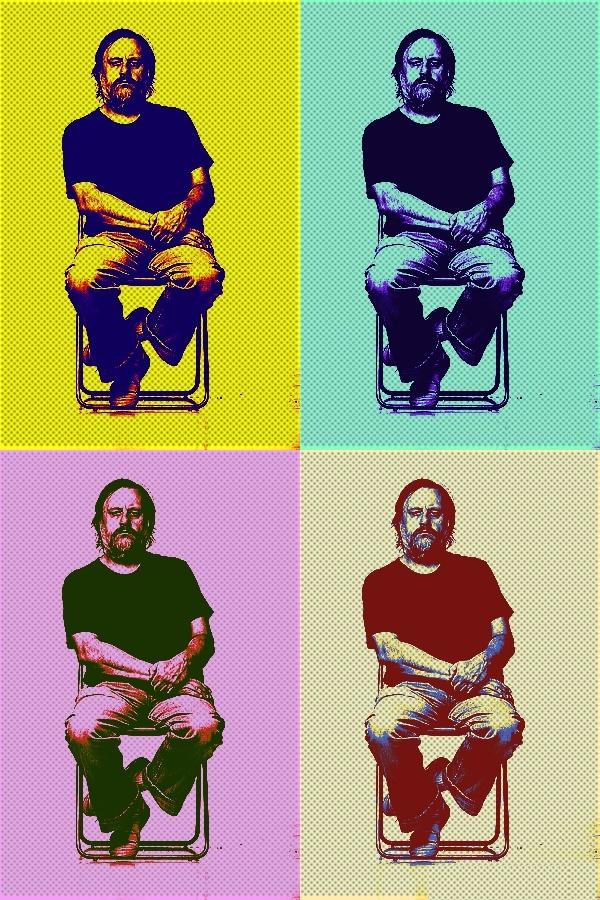
The Birkbeck Institute for the Humanities has been hosting some ‘Masterclasses’ with Slavoj Žižek. The three talks are available for download here:

Need more Žižek? There’s also an older talk:

Plus, here’s an interesting lecture (1971) by, and interviews with, Jacques Lacan in which he ruminates about language, death, faith, life, psychoanalysis, love, alienation, and paranoia:


Reading Maurice Gee … finally

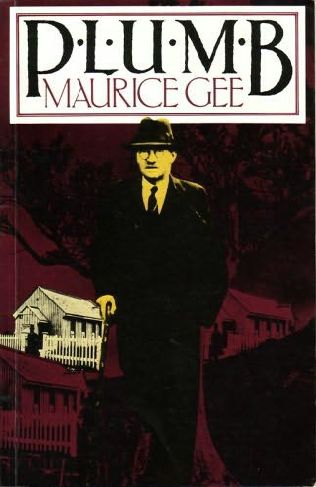
There can be little doubt that among the most exciting things about living in any part of the world is becoming acquainted with the local (farmers) markets, the cuisine, the drink, the music, the slangs … and the stories. And then there are the local writers. While one looks in vain to discover any decent Kiwi journalists being published in this country (to be sure, there are some fantastic bloggers), it’s another game entirely when it comes to academics, poets, and writers of fiction. One of the first enquiries I made even before I landed on the southern climbs that I now call ‘home’ concerned Kiwi authors, and particularly those given to spin a good yarn. And among the names that kept appearing was the Whakatane-born writer Maurice Gee. Gee has penned some thirty novels, and a host of short stories. But the place to begin with Gee, I was repeatedly told, was with his highly-acclaimed book Plumb (1978). So after collecting dust on the bedside box for not a few months, I finally got around to reading Plumb, a book somewhat reminiscent of Marilynne Robinson’s Gilead and Home (with their themes of family, doubt, faith, healing, secrets, generations and death) and which paints the story of the Revd George Plumb, a character moulded in no small part upon Gee’s own grandfather, a pacifist who was sent to prison for his convictions. Here are some of my favourite sentences from Plumb:

  • ‘Life on the margins has a pain the sharper for my knowledge that here those I love are in a state of exile’. (p. 3)
  • ‘The Presbyterians of Emslie went to their church for religious reasons, not to be told how go conduct their lives’. (p. 57)
  • ‘But whoso hath this world’s goods, and seeth his brother have need, and shutteth up his bounds of compassion from him, how dwelleth the love of God in him? A good question, and not to be answered by donations to charity’. (p. 62)
  • ‘I [i.e., George Plumb] tried to explain to her [Meg, his daughter] my belief in man’s spiritual destiny … I talked in large optimistic terms – because I had lost my path. I was in darkness again and felt I might never come out of it, and so I made loud noises to persuade back my memories.’ (p. 204)

With the seed of enthusiasm for Gee’s writing now firmly planted, it will certainly not be so long before I read him again. I already have three more in the pile ready to go: Prowlers, Going West, and Live Bodies; and then, of course, there’s the final two volumes in the Plumb trilogyMeg and Sole Survivor – which trace the ‘Plumb’ story over a further two generations. Yeah for Gee!

‘David: Psalm 51’, by Geoffrey Bingham

Thou requirest truth
In the inward parts:
Not merely on the lips,
Where man may mutter anything,
And seal his subterfuge,
Making it truth for him
And those who hear.

Thou requirest truth
When man is truly man:
Down in the depths beneath,
Where You alone may see:
Man senses but he does not know
That truth is the truth
That You require.

I, David, was a man of joy,
Of pleasant power,
Of daily purity.
True, I too was tempted,
But should I fall
Would know I fell
And cry to You for help.

When then I fell
And said I did not fall,
When kept within
The hellish sin I did
And made it joy, not sin,
The fires began
That ran into my soul.

At nights they burned,
By day they flamed,
Hot coals that dried
Or sweated me
Until the power had gone,
That once I knew
In doubtless joy.

When Nathan came
His piercing eyes
Looked to the depths
(His eyes were Yours);
The holy flame
Burned even more.
I was undone.

The mercy cried
Was mercy come,
The lava fled
Its burning core,
And I was freed—
The flame was gone
By mercy’s love.

The truth required
In inward parts,
The purity
Within the heart
Have come again.
No greater gift
Was ever given.

Here then I weep
For grace and sin,
The wasted hour,
The splendid grace:
Both show me truth
Is what I need,
With wisdom.

Teach me, then, Lord,
Of sin’s deceit,
The sludge of sin
That full defiles.
Give me the love
Of purity,
The only truth.

Now sings my heart,
The heart so pure
The miracle of love
Has made again.
The man destroyed
Is made anew
For purity.

I know, dear Lord,
The cost is Yours.
Sin’s suffering
Is mine alone,
But Yours the pain
Messiah takes
Unto the death.

Broken I go,
Though healed.
Wisdom I know,
Though foolish.
You have unmasked
The sin that binds,
And set me free.

Freedom thus bought
Is freedom prized
And holiness
Is gift most high.
Man breathes eternity
In holiness
And knows You true.

This is the wisdom required:
This is the gift of God
Set in the inward parts,
True purity in peace
And holiness in joy.

– Geoffrey C. Bingham, The Spirit of All Things (Blackwood: Troubadour Press, 1992), 72–4.

Jürgen Moltmann’s Ethics of Hope: Eschatological Possibilities For Moral Action: A Review

A review of Timothy Harvie, Jürgen Moltmann’s Ethics of Hope: Eschatological Possibilities For Moral Action (Ashgate New Critical Thinking in Religion, Theology and Biblical Studies; Aldershot: Ashgate, 2009).

It was Karl Barth who, in his Ethik (1928), reminded us that Christian theology is always ethics, that ethics belongs to theology proper precisely because God makes himself responsible for us, and that ‘ethics as a theological discipline is the auxiliary science in which an answer is sought in the Word of God to the question of the goodness of human conduct’. It is of little surprise, therefore, that such a commitment is shared by one of Barth’s most prolific students, Jürgen Moltmann, whose own articulations concerning theological ethics remain valuable though, in his own words, ‘an unfinished task and an unfulfilled wish’ (p. ix).

Timothy Harvie’s volume (a ‘slightly revised version’ of his doctoral dissertation submitted to the University of Aberdeen and supervised by Professor John Webster) represents an attempt to consider and extend an unfinished trajectory in Moltmann’s theology; namely, and appropriately, an ethics of hope. It is, in the words of its author, ‘not a piece of applied ethics engaging specific moral quandaries or the nature of Christian virtues’ but rather ‘an attempt to theologically describe the sphere of Christian moral action and the means by which this is enabled to take place’ (p. 3). Harvie makes it clear in the Introduction that his essay will argue that Moltmann does not begin with antecedent ethical presuppositions and then mould dogmatics to fit these concerns. Rather, ‘Moltmann begins with an investigation of theological concerns stemming from the biblical history and then attempts to articulate the moral relevance this theological conception has for the current social situation of humanity’ (p. 6).

The book is divided into two parts. In Part I, Harvie attends to the christological, pneumatological and eschatological foundations for an ethics of hope, and offers readers (and particularly those unfamiliar with Moltmann’s oeuvre) an accessible entrée into a number of vistas fundamental to Moltmann’s theological project. Through four chapters, Harvie’s aim is to rehearse how Moltmann is principally concerned with articulating the Christian gospel, and subsequently concerned to point to how the Church’s convictions about the gospel inform her ethical assertions.

He opens with a chapter on hope and promise, noting that the generative thrust and unambiguous priority of Christian hope, for Moltmann, is birthed in the divine promise given in a particular locus in history, and creating and securing a new trajectory for history and for human existence: ‘In the midst of a history wrought with injustice, turmoil and sin, the promise of God (given definitively in the resurrection of Jesus Christ) secures a new future which contravenes the sinful status quo of the present with a new creative work of God for a redeemed cosmos. This new, creative work secured in the promise is a novum in history which moves towards the present’ (p.15). Harvie proceeds to cite Moltmann – ‘The simple prolongation of the status quo no longer provides a future for which it is worth living’ (p. 26) – and avers that eschatological hope grounded in the cross-resurrection means that Christian living becomes subversive, demanding not onlookers but, in Moltmann’s words, ‘combatants’ (p. 26). The promise of God in Jesus Christ creates in history an interval between promise and fulfilment, a Zwischenraum or ‘between-space’, which sets in motion a way of living adumbrated in the promised future but ‘enacted through the creative work of God in such a way that in Christ humans [i.e., the Exodus community, Exodusgemeinde] may now participate in this space … in contradistinction to the world’ (p. 28). This way of living is ‘life commensurate with the Kingdom of God’ (p. 36).

The Kingdom of God, another topic of decided importance for Moltmann, is the subject of Chapter Two. Herein, Harvie outlines the way that Kingdom and christology are inextricably bound up together, and attends to the way that, for Moltmann, the Kingdom represents not only a positive description of the content of Christian hope but also ‘a foil to critique societal situations [Moltmann] perceives to be unjust’ (p. 40). Jesus’ embodiment of the Kingdom, it is noted, means table fellowship with sinners, liberating proclamation and praxis for the poor, and healing to the broken.

Chapters Three and Four attend to the role that pneumatology and the doctrine of the trinity, respectively, play in Moltmann’s theology, and how each informs the ethical shape of his theology of hope. With clarity, Harvie outlines that while, for Moltmann, the trinitarian history of the divine life with the world begins with the history of the promise, a history which culminates in the death and resurrection of the Son, it is the faithful and historical efficacy of the Spirit which ‘constitutes the continuing presence of the Kingdom’ in both Church and world. ‘This’, he continues, ‘in no way denigrates the future horizon of Christian hope for the Kingdom, but rather structures the initial fulfilment of the divine promise, which creates a surplus of expectation and hope for the eschatological novum’ (pp. 57–8). He notes how, for Moltmann, those empowered by the Spirit are ‘led to be non-conformists with the unfulfilled present, which leads to death. The Church, through the work of the Spirit, is empowered to resist in its Zwischenraum of tension, to overcome death with life, violence with peace, and hate with love’ (p. 92). Harvie is critical of Moltmann’s emphasis on a ‘universal society’ (p. 85), arguing that such ambiguity blurs the distinction between the Spirit’s work in the Church and in wider society. In Chapter Four, Harvie gathers up many of the already-attended-to themes and brings them into dialogue with Moltmann’s exposition on the trinity, noting that the creature’s moral living does not equate principally to imitatio of the trine life so much as, by the Spirit, being ‘taken up into the divine communion as an-other … to participate in and live out of the divine love’ (p. 109). Herein, as Moltmann explains it, the ‘lived circulation’ (p. 118) which is the divine life has two kinds of openness: first, there is an intra-Trinitarian openness between the three persons; second, and implying no deficiency of being, the Trinity is open for communion with creation. ‘This divine openness’, Harvie suggests, ‘fundamentally alters the moral life of the Christian through justification and sanctification’ (p. 122). In an interesting conversation with work by Carl Schmitt and Richard Bauckham, Harvie notes how Moltmann’s thoroughly trinitarian theology creates an eschatological ethic which rejects both clerical and political monotheisms, and he follows Bauckham’s critique of Moltmann that the tendency to inadequately distinguish between the triune life in se and the social life of creatures has ‘no biblical basis’ (p. 128). Turning then to the way that creatures participate by the Spirit in the fellowship of love, Harvie considers how, for Moltmann, the notion of divine apatheia both sponsors a utopian hope and undermines the command to be ‘present in open, loving solidarity with those who suffer’ (p. 135).

Harvie then turns – in Part II – to a more focused consideration of the ethical shape that the theological foundations he has outlined in Part I take in creaturely existence. He does this via three discussions on hope: on (i) time and space for hope, (ii) hope for humanity, and (iii) hope for the economy.

In the first of these, what I found to be the most stimulating part of the book, Harvie draws upon Augustine and Bauckham to very helpfully explicate how Moltmann understands, and makes use of, christologically-determined categories of time over against, say, Kathryn Tanner’s ‘futureless eschatology’ (what Carl Braaten calls ‘eschatology sans eschaton’) and time’s modern myths, and how these then inform what Moltmann wishes to aver about the theo-ethical implications of such in the kingdom of God wherein space – conceived as both Zeitraum and Zwischenraum – is opened up for hope and moral action. The present earthly time – the time of promise – is ‘characterized by expectation and anticipation of the novum which is anticipated in the promise and ensured by the divine faithfulness’ (p. 151) and, by the tension created between the divine-human covenant which existentially orients creaturely perspective to the future, sensitises covenant partners to the incongruous nature of their surroundings. Contra Mark Lewis Taylor and Rubem Alves, Harvie notes that, for Moltmann, ‘the ethical space envisioned in a moral theology of hope is not simply the space of human structures where moral action is attempted through one’s own empowerment to one’s own end. Rather, it is a space created by the promise of God through the death and resurrection of Christ in which human structures are transformed by the efficacious work of the Holy Spirit to manifest the eschatological Kingdom. This space orients Christian moral action, through the divine promise, to the future. The result is that this space is then in tension with those structures, circumstances and actions which are not located within the Kingdom of God or brought about through the beneficent work of God through the Spirit’ (p. 167).

Harvie turns, in the final two chapters, to the subjects of human nature, human dignity and human rights, and to outline how he understands Moltmann’s theology of hope might inform conversations about economics. He rightly notes that for Moltmann, the imago Dei depends upon, and says more about, God than it does upon any human trait per se, that the imago Christi is paramount for an ethics of hope, and that ‘it is precisely at this Christologically focused point within eschatological history that the Zwischenraum of tension … is understood to constitute the sphere of Christian moral action’ (p. 172). He also rightly notes that ‘the claim that human beings have equal and intrinsic worth is difficult to maintain as a universal presupposition apart from God’s revelation as creator and redeemer of the world’ (p. 181).

These concluding chapters, however, are disappointingly conservative in their application of the ethic that Moltmann’s thought invites. Harvie proposes no genuine protest to the structures of that world put to death in the crucified God, and very little hint of the novum created by the radical interruption of Jesus’ resurrection and the life that this event births. The praxiological content of the eschatological Zwischenraum which is characterised as life in the Spirit, in other words, is left drastically underdeveloped. The ethical implications of Moltmann’s professional project call for a more radical engagement – or what Ernst Wolf calls a ‘creative discipleship’ – of the ecclesia than Harvie outlines here. Moreover, as Moltmann avers in Theologie der Hoffnung, we must speak not only of the historic transformation of social and public life but also of the suffering, self-surrender, self-expenditure and sacrifice that attend such ‘day-to-day obedience’, and which mark a different way from the glories of self-realisation and the miseries of self-estrangement arising from ‘hopelessness in the world of lost horizons’ – ways disclosed to the laos tou theou in the future of the crucified God in whose life they participate, and to whom they look for the coming of the kingdom in fulness. At the end of the day, Harvie tumbles into the very trap that Hauerwas outlines (and which Harvie cites on p. 183): ‘One of the things that bothers me about such discourse is the designation “us,” meaning Christians, and “them,” meaning the poor. Such language inherently presupposes that Christians have no convictions that might not make them poor. As a result we privilege our place as rich Christians who can justify our being rich because we are concerned about justice’.

While the essay is unduly repetitive, it is amiably unencumbered with distractive engagements with secondary literature and side issues. Where these are relevant, they are appropriately attended to, and that so as not to sidetrack the reader from the main line of enquiry; namely, Moltmann’s own presentation of a foundation for an ethic grounded in trinitarian space-making and orientated toward the future in the kingdom of life and love. And while the ethical implications drawn by Harvie are, to my mind, drastically undercooked, there can be little doubt that those interested in exploring a rich theological foundation for Christian ethics will find much here of value.

An Inaugural Lecture: ‘Learning to See and to Waddle with our Tongues: a view from the Table’

One of the noble traditions around the place where I work is the annual inaugural lecture. It is a public event, and is typically well-supported by Dunedinites, plus a few ring-ins from other places. It was my turn this year to deliver the lecture, and I chose as my subject the Lord’s Supper. The lecture was titled ‘Learning to See and to Waddle with our Tongues: a view from the Table’. A number of folk have asked me for a copy (possibly in the vain hope that it may make more sense the second-time ’round), so here’s what I said:

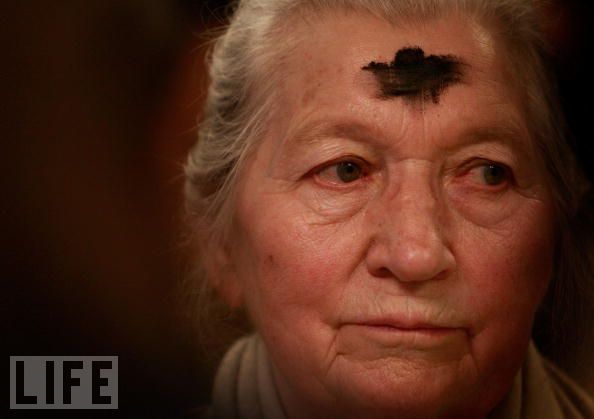
Ash Wednesday: poems and prayers

Lent darkness

Dragons lurk in desert spaces
Penetrating the mind with evil claw.
Serpent’s teeth seek out the chinks
insidiously, relentlessly, gnawing on the bone;
searching out the interstices of muscle and sinew.

Such is the pain of the wilderness.
Alone, alone, alone,
Christ sits
in the waste place of abandoned pleas and questions
until exhausted
finally
at last
the realisation
comes
that in the end
there is only
God.

In the night-time of our fears
in the present reality of abandonment
when family and friends
turn and run,
be present, ever present God.
Be present with those
camped out in the fields of hopelessness
with refugees and homeless,
those who live lives of quiet desperation.
Be present until the desert places
blossom like the rose
and hope is born again.

– Kathy Galloway (ed.), The Pattern of Our Days: Liturgies and Resources for Worship (Glasgow: Wild Goose Publications, 1996), 130.

◊◊◊

Ash Wednesday

I
Because I do not hope to turn again
Because I do not hope
Because I do not hope to turn
Desiring this man’s gift and that man’s scope
I no longer strive to strive towards such things
(Why should the agèd eagle stretch its wings?)
Why should I mourn
The vanished power of the usual reign?

Because I do not hope to know
The infirm glory of the positive hour
Because I do not think
Because I know I shall not know
The one veritable transitory power
Because I cannot drink
There, where trees flower, and springs flow, for there is nothing again

Because I know that time is always time
And place is always and only place
And what is actual is actual only for one time
And only for one place
I rejoice that things are as they are and
I renounce the blessèd face
And renounce the voice
Because I cannot hope to turn again
Consequently I rejoice, having to construct something
Upon which to rejoice

And pray to God to have mercy upon us
And pray that I may forget
These matters that with myself I too much discuss
Too much explain
Because I do not hope to turn again
Let these words answer
For what is done, not to be done again
May the judgement not be too heavy upon us

Because these wings are no longer wings to fly
But merely vans to beat the air
The air which is now thoroughly small and dry
Smaller and dryer than the will
Teach us to care and not to care Teach us to sit still.

Pray for us sinners now and at the hour of our death
Pray for us now and at the hour of our death.

II
Lady, three white leopards sat under a juniper-tree
In the cool of the day, having fed to sateity
On my legs my heart my liver and that which had been contained
In the hollow round of my skull. And God said
Shall these bones live? shall these
Bones live? And that which had been contained
In the bones (which were already dry) said chirping:
Because of the goodness of this Lady
And because of her loveliness, and because
She honours the Virgin in meditation,
We shine with brightness. And I who am here dissembled
Proffer my deeds to oblivion, and my love
To the posterity of the desert and the fruit of the gourd.
It is this which recovers
My guts the strings of my eyes and the indigestible portions
Which the leopards reject. The Lady is withdrawn
In a white gown, to contemplation, in a white gown.
Let the whiteness of bones atone to forgetfulness.
There is no life in them. As I am forgotten
And would be forgotten, so I would forget
Thus devoted, concentrated in purpose. And God said
Prophesy to the wind, to the wind only for only
The wind will listen. And the bones sang chirping
With the burden of the grasshopper, saying

Lady of silences
Calm and distressed
Torn and most whole
Rose of memory
Rose of forgetfulness
Exhausted and life-giving
Worried reposeful
The single Rose
Is now the Garden
Where all loves end
Terminate torment
Of love unsatisfied
The greater torment
Of love satisfied
End of the endless
Journey to no end
Conclusion of all that
Is inconclusible
Speech without word and
Word of no speech
Grace to the Mother
For the Garden
Where all love ends.

Under a juniper-tree the bones sang, scattered and shining
We are glad to be scattered, we did little good to each other,
Under a tree in the cool of day, with the blessing of sand,
Forgetting themselves and each other, united
In the quiet of the desert. This is the land which ye
Shall divide by lot. And neither division nor unity
Matters. This is the land. We have our inheritance.

III
At the first turning of the second stair
I turned and saw below
The same shape twisted on the banister
Under the vapour in the fetid air
Struggling with the devil of the stairs who wears
The deceitul face of hope and of despair.

At the second turning of the second stair
I left them twisting, turning below;
There were no more faces and the stair was dark,
Damp, jaggèd, like an old man’s mouth drivelling, beyond repair,
Or the toothed gullet of an agèd shark.

At the first turning of the third stair
Was a slotted window bellied like the figs’s fruit
And beyond the hawthorn blossom and a pasture scene
The broadbacked figure drest in blue and green
Enchanted the maytime with an antique flute.
Blown hair is sweet, brown hair over the mouth blown,
Lilac and brown hair;
Distraction, music of the flute, stops and steps of the mind
over the third stair,
Fading, fading; strength beyond hope and despair
Climbing the third stair.

Lord, I am not worthy

but speak the word only.

IV
Who walked between the violet and the violet
Who walked between
The various ranks of varied green
Going in white and blue, in Mary’s colour,
Talking of trivial things
In ignorance and knowledge of eternal dolour
Who moved among the others as they walked,
Who then made strong the fountains and made fresh the springs

Made cool the dry rock and made firm the sand
In blue of larkspur, blue of Mary’s colour,
Sovegna vos

Here are the years that walk between, bearing
Away the fiddles and the flutes, restoring
One who moves in the time between sleep and waking, wearing

White light folded, sheathing about her, folded.
The new years walk, restoring
Through a bright cloud of tears, the years, restoring
With a new verse the ancient rhyme. Redeem
The time. Redeem
The unread vision in the higher dream
While jewelled unicorns draw by the gilded hearse.

The silent sister veiled in white and blue
Between the yews, behind the garden god,
Whose flute is breathless, bent her head and signed but spoke no word

But the fountain sprang up and the bird sang down
Redeem the time, redeem the dream
The token of the word unheard, unspoken

Till the wind shake a thousand whispers from the yew

And after this our exile

V
If the lost word is lost, if the spent word is spent
If the unheard, unspoken
Word is unspoken, unheard;
Still is the unspoken word, the Word unheard,
The Word without a word, the Word within
The world and for the world;
And the light shone in darkness and
Against the Word the unstilled world still whirled
About the centre of the silent Word.

O my people, what have I done unto thee.

Where shall the word be found, where will the word
Resound? Not here, there is not enough silence
Not on the sea or on the islands, not
On the mainland, in the desert or the rain land,
For those who walk in darkness
Both in the day time and in the night time
The right time and the right place are not here
No place of grace for those who avoid the face
No time to rejoice for those who walk among noise and deny the voice

Will the veiled sister pray for
Those who walk in darkness, who chose thee and oppose thee,
Those who are torn on the horn between season and season, time and time, between
Hour and hour, word and word, power and power, those who wait
In darkness? Will the veiled sister pray
For children at the gate
Who will not go away and cannot pray:
Pray for those who chose and oppose

O my people, what have I done unto thee.

Will the veiled sister between the slender
Yew trees pray for those who offend her
And are terrified and cannot surrender
And affirm before the world and deny between the rocks
In the last desert before the last blue rocks
The desert in the garden the garden in the desert
Of drouth, spitting from the mouth the withered apple-seed.

O my people.

VI
Although I do not hope to turn again
Although I do not hope
Although I do not hope to turn

Wavering between the profit and the loss
In this brief transit where the dreams cross
The dreamcrossed twilight between birth and dying
(Bless me father) though I do not wish to wish these things
From the wide window towards the granite shore
The white sails still fly seaward, seaward flying
Unbroken wings

And the lost heart stiffens and rejoices
In the lost lilac and the lost sea voices
And the weak spirit quickens to rebel
For the bent golden-rod and the lost sea smell
Quickens to recover
The cry of quail and the whirling plover
And the blind eye creates
The empty forms between the ivory gates
And smell renews the salt savour of the sandy earth

This is the time of tension between dying and birth
The place of solitude where three dreams cross
Between blue rocks
But when the voices shaken from the yew-tree drift away
Let the other yew be shaken and reply.

Blessèd sister, holy mother, spirit of the fountain, spirit of the garden,
Suffer us not to mock ourselves with falsehood
Teach us to care and not to care
Teach us to sit still
Even among these rocks,
Our peace in His will
And even among these rocks
Sister, mother
And spirit of the river, spirit of the sea,
Suffer me not to be separated

And let my cry come unto Thee.

– Thomas S. Eliot, ‘Ash Wednesday’ in The Waste Land and Other Poems (ed. Helen Hennessy Vendler; New York: Signet Classic, 1998), 66–76.

◊◊◊

A Prayer on Ash Wednesday

Most gracious and loving God, I seek this day to remember that I am dust and to dust I shall return.

God, why do I fear being mortal? Perhaps I think it diminishes me in your sight.

And yet …

the flower that is here today and gone tomorrow is no less precious to you simply because it is transitory.

the sparrow that falls to the ground is no less precious to you simply because of its frailty.

So with me. I am precious to you even though all too soon my body will be food for the worms.

Thank you, Lord, for assuring me of my infinite worth.

I can now face the real truth about myself – namely, that I am dust, and to dust I shall return. And after … the resurrection of the dead!

Amen.

– Richard Foster, Prayers from the Heart/Celebration of Discipline/Money, Sex & Power (London: Hodder & Stoughton, 1995), 22.

◊◊◊

Vision and mirage

Lord Jesus, you have faced temptation;
you know how difficult it can be
to distinguish between vision and mirage,
between truth and falsehood.

Lord, help us when we are tempted:
And save us when we fall.

Help us in the church:
when we confuse absence of conflict with the peace of God;
when we equate the shaping of ecclesiastical structures with serving you in the world;
when we imagine that our task is to preserve rather than to put at risk;
when we behave as though your presence in life were a past event rather than a contemporary encounter.

Lord, help us when we are tempted:
And save us when we fall.

Help us in the world:
when we use meaningless chatter to avoid real dialogue;
when we allow the image presented by the media to blind us to the substance that lies behind it;
when we confuse privilege with responsibility, and claim rights when we should acknowledge duties;
when we allow high-sounding reasons to cover evil actions.

Lord, help us when we are tempted:
And save us when we fall.

We pray for all who have been brought to the edge of their endurance;
for those whose pain is unending;
for those for whom the earth is a cruel desert and existence a constant struggle against overwhelming odds;
for those who suffer through their own folly or through the malice or folly of others.

Lord, help us when we are tempted:
And save us when we fall.

Lord Jesus, you have passed through the test of suffering,
and are able to help those who are meeting their test now.

Lord, help us when we are tempted:
And be with us to the end.

– Terry C. Falla, ed., Be Our Freedom Lord: Responsive Prayers and Readings for Contemporary Worship (Adelaide: OpenBook Publishers, 1994), 306–7.

◊◊◊

Marked by Ashes

Ruler of the Night, Guarantor of the day …
This day – a gift from you.
This day – like none other you have ever given, or we have ever received.
This Wednesday dazzles us with gift and newness and possibility.
This Wednesday burdens us with the tasks of the day, for we are already halfway home
halfway back to committees and memos,
halfway back to calls and appointments,
halfway on to next Sunday,
halfway back, half frazzled, half expectant,
half turned toward you, half rather not.

This Wednesday is a long way from Ash Wednesday,
but all our Wednesdays are marked by ashes –
we begin this day with that taste of ash in our mouth:
of failed hope and broken promises,
of forgotten children and frightened women,
we ourselves are ashes to ashes, dust to dust;
we can taste our mortality as we roll the ash around on our tongues.

We are able to ponder our ashness with
some confidence, only because our every Wednesday of ashes
anticipates your Easter victory over that dry, flaky taste of death.
On this Wednesday, we submit our ashen way to you –
you Easter parade of newness.
Before the sun sets, take our Wednesday and Easter us,
Easter us to joy and energy and courage and freedom;
Easter us that we may be fearless for your truth.
Come here and Easter our Wednesday with
mercy and justice and peace and generosity.
We pray as we wait for the Risen One who comes soon.

– Walter Brueggemann, Prayers for a Privileged People (Nashville: Abingdon, 2008), 27–8.

And, finally, because, like Luther, I’m exhausted from all the pious and sentimental and non-christologically-determined navel-gazing dribble that is so-often associated with Lent, here’s one of my favourite prayers. It comes from Stanley Hauerwas:

Free Us from Self-Fascination

Lord Almighty, we say we want to serve you, we say we want to help others less fortunate than ourselves, we say we want justice. But the truth is, we want power and status because we so desperately need to be loved. Free us from our self-fascination and the anxious activity it breeds, so that we might be what we say we want to be – loved by you and thus capable of unselfish service. Amen.

– Stanley Hauerwas, Prayers Plainly Spoken (Downers Grove: InterVarsity Press, 1999), 49.

You may also like to check out some previous posts on Lent, there’s a great reflection on Ash Wednesday here, and Garry Deverell has a helpful post here too.

An update on Christchurch from the Moderator of Christchurch Presbytery

Martin Stewart serves as the Moderator of the Christchurch Presbytery, and as one of the ministers at St. Stephen’s Church and Community Centre. He is a highly-respected leader of the Presbyterian family here in New Zealand and in the midst of all that is pressing upon his time, emotions and energy, he is managing to keep the wider church informed about what is happening on the ground in Christchurch. Here is his latest reflection, and a pastoral letter penned in his capacity as Moderator:

‘I ventured across town today to the sea-side suburb of Redcliffs to help a woman load up stuff on a trailer – she is moving with her children to Queenstown – I had conducted her husband’s funeral late last year – the load for her is horrendous. We have been told to avoid travelling unnecessarily and we have heeded that. But heading over there was a real eye-opener. The scenes of devastation across the city are one thing on TV and quite another thing seeing it with my own eyes. What a mess and what dust! The piles of sand/dirt on the streets become normal, as does damage to every second or third building. I am surprised to find myself seeing these things and not reacting – it is as if this is has become normal. It is all abnormal, but the all-consuming nature of it numbs me.. Someone sent me the attached photo of the dust at the point of the earthquake – it is frightful.

The trip over was at 9am and I got there much faster than I anticipated in 20 minutes. Heading home at 11.30am was a different story, it took an hour and a half! The main arterial routes are all damaged.

Rev Dugald Wilson and I have been working for the last five months on earthquake matters for the Presbytery. We met with the assessors manager working for the Presbyterians on Friday. He was quite cut up by what he has seen and heard – he is a fine guy and because of this earthquake he will be bumped up the chain and not as available to us as he has been. He along with the insurers manager and engineer firm manager that we have been working with are all church-goers – it has really helped – we feel that the peculiarities of our ways of working are understood. Our assessor friend told us that this event along with September is the largest insurance event in the history of world insurance (recognising also that we are a high-level insured society). It is also the worst earthquake to hit an urban area in the world – not in magnitude but in the nature of the forces caused by the shallowness of the quake and its proximity to a city. With that knowledge, it is remarkable that there weren’t more fatalities. Every day or two the police reduce the projected number of fatalities, and the news today about there being no bodies in the Anglican Cathedral reminds us again that we have escaped the kinds of horror that many other cities and regions in the world have suffered.

The 600 food boxes from the Wellington Presbyterian churches have been delivered and the team have made their way back home’.

Here’s a wee video that tells something of that story:


A Pastoral Letter from the Moderator

Dear friends

What a troubled season we are in. The unfolding tragedy as bodies are pulled from the rubble in our city is simply horrible – we rejoiced that we had escaped fatalities in September, but now we lament the loss of many – the task ahead will be carried out with heavy hearts and take an extraordinary amount of energy. Our hearts go out to the many families and friends who are grieving the loss of loved ones. We are also mindful of the many hundreds of people who are working tirelessly for the welfare of our city – thank God for them all. Many are working in places of extreme danger – what a blessing they are.

We are having to juggle a multitude of tensions in these times – tragedy and triumph, loss and gain, death and life, despair and hope. So often news of human tragedies of great magnitude come to us from far-off places across the waters, but this time it is our city, our families and neighbours, and our houses, businesses and churches that are affected. I hope and pray that you are finding solace in your faith and support in your church families – draw deep from the well of God’s grace, and I also pray that you are discovering new opportunities to love and serve your neighbours and find the face of God in the faces of those who are around us.

The Presbytery has mobilised on a range of fronts – I list just some of them here:

1. Parish Twinning – linking west wide churches with the east side harder hit ones. Rev Hamish Galloway has written the following: “Heard of twin cities – what about twin parishes! Some of our parishes have been badly hit by the earthquake, others have come through with buildings and homes largely intact. This is a time to support each other and we are all looking for ways to do that. In the ancient wisdom of Ecclesiastes 4, two are better than one and a cord of three strands is not easily broken! The invitation is for those who are stronger in the present situation and those who have been hit badly to talk about forming a supportive relationship around things like facilities, personnel, services, etc … What parish can your parish begin this conversation with? What would the relationships look like? We would love to see these conversations initiated and then grow into genuine twin relationships. We would love to hear about it too as it unfolds so that where it is working we can share this as an inspiration to others.

2. A Mobile Minister – we are exploring the possibility of having one of our ministers circulating among the east-side churches – offering support and being a conduit between need and help. What this looks like and what form it takes will unfold in the next while, but in the meantime I have asked Rev Darryl Tempero to work in my name as a liaison person with the east-side churches in our care. He is also the point person helping arrange time out in North Auckland for people.

3. Emergency and relief accommodation – we are receiving many offers of accommodation for people in need from all over the country. Liz Whitehead is coordinating this. It can be for respite as well as emergency. To enquire about this please contact Liz via email or phone 027 257 7112 or (03) 314 8110.

4. Linking with all churches – the Revs Darryl Tempero and Phil King are establishing our linking with the inter-church group who have significant people and skill resources able to be directed to where there is need.

5. Building damage – we are attending to the processes of having buildings inspected by structural engineers, making buildings safe, restoration, and in some cases demolition, with assessors and insurers. We had made significant progress on this prior to 22 February. We anticipate that the problems in outlying areas will still progress swiftly, but given the needs in the CBD and in residences, the restoration process (assessment, costings, etc.) will be a longer process this time. Rev Dugald Wilson and I continue to be the ones to talk to about any issues you have. We work closely with all of the parish liaison people appointed last year. Sadly, St George’s in Linwood has already been demolished. We anticipate that the St Paul’s Trinity Pacific, Berwick Street, and St John’s in Lyttleton churches will also be demolished, and there are serious issues with the Knox, Mt Pleasant and North Avon churches. This is not an easy time.

6. Caring for the carers – I am concerned for the well-being of those who have responsibility for pastoral care, especially the ministers. Finding our way ahead is going to take a very long time and I encourage Sessions and Parish Councils to encourage their ministers to attend supervision, take appropriate time off each week, a weekend a term, and also to have at least a week of leave on the near horizon. I ask you to please be generous in helping your ministers look after themselves.

7. PCANZ appeal – the Presbyterian Church has launched an appeal to support our churches. Congregations and individuals can make an offering by direct bank credit to the Presbyterian Church of Aotearoa New Zealand, account number 02 0500 0086963 00 with the reference: CHQUAKE, or mail their offering to, Financial Services, Presbyterian Church of Aotearoa New Zealand, PO Box 9049, Wellington 6141. There is information about this on the PCANZ webpage. As a Presbytery we have asked the Assembly office to handle all donations and letters of support so that we are freed from that administrative load. Congregations have been invited to seek financial relief. It would help if I could be informed of any plans you have to access this.

8. Messages of Support – the PCANZ website has also listed many of the letters of support from around the world. They are very encouraging – the prayers of millions are with us.

9. Stories – the Archives Department of our church has also been offering informative material about what is happening here along with things of a historical nature. Yvonne’s blog is well-worth a regular visit.

I encourage folk to approach the Presbytery with any concerns you have or information you need. The Presbytery is here to resource you in your partnership in God’s mission in your communities. Our resources are stretched and we are tired, but we are not alone – we have one another and God’s enabling Spirit is our strength. Our Lord calls to those who are weak and heavy-laden to come to him and find rest and their burdens eased.

May the grace of our Lord Jesus Christ, the love of God, and the fellowship of the Holy Spirit be with you all.

Martin Stewart
Moderator

If you are of the praying kind, please keep Mart and the people of New Zealand in your prayers.

You might also like to check out these earlier posts:

The modern time myth

In light of recent inklings of revolution in the Middle East, and in light of a conversation I had just yesterday with a friend about Robert Jenson’s notion of time, I was struck by these words from Richard Bauckham in his characteristically-helpful essay on Jürgen Moltmann’s understanding of time:

‘The modern time myth can be seen as an ideology of the powerful, for whom a future continuous with the present represents the continuation and extension of their position of dominance and privilege. (Here the critique can be applied to the time myth only in its liberal progressivist, not its Marxist revolutionary form.) A model of time which requires the future to be extrapolated from the past and the present, which denies alternative possibilities, radical changes, real novelty, unpredictable irruptions in the historical process, is a model in the interests of those who must suppress alternative possibilities if they are to maintain their own power in the future. It is the ideology which justifies their own power to determine the future … Thus the one-sided secular millenarianism of the modern world is a myth of power which provokes among the powerless and the dominated the hope of an apocalyptic end to the present order and an alternative future …’. – Richard Bauckham, ‘Time and Eternity’, in God Will Be All in All: The Eschatology of Jürgen Moltmann (ed. Richard Bauckham; Minneapolis: Fortress Press, 2001), 170.

John Webster on Holy Scripture

‘… Scripture is a transcendent moment in the life of the church. Scripture is not the church’s book, something internal to the community’s discursive practices; what the church hears in Scripture is not its own voice. It is not a store of common meanings or a Christian cultural code – and if it engenders those things, it is only because Scripture is that in which Jesus Christ through the Spirit is pleased to utter the viva vox Dei. Consecrated by God for the purpose of Christ’s self-manifestation, Holy Scripture is always intrusive, in a deep sense alien, to the life of the church. All this is to say that the church assembles around the revelatory self-presence of God in Christ through the Spirit, borne to the communion of saints by the writings of the prophets and apostles. This divine revelation is “isolated” – that is, it is a self-generating and self-completing event’. – John Webster, Confessing God: Essays in Christian Dogmatics II (London/New York: T&T Clark, 2005), 189.

Papers on TF Torrance

The journal Theology in Scotland has just published a special issue devoted to papers given at two recent day conferences marking the publication of the two-volume edition of Prof. T.F. Torrance’s dogmatics lectures.

The issue’s contents are a mix of academic papers on aspects of Torrance’s work and personal reminiscences by several of his former students. Also featured is a fascinating exchange of letters between T.F. Torrance and the distinguished American philosopher Brand Blanshard on the reception of the theologies of Karl Barth and Emil Brunner.

The special issue is priced at GBP12.50 including p&p, and is available from the University of St Andrews online shop or by sending a cheque payable to ‘University of St Andrews’ to Production Manager, Theology in Scotland, St Mary’s College, St Andrews, Fife KY16 9JU, Scotland.