Participatio is out

Torrance_4The latest edition of Participatio, the journal of the Thomas F. Torrance Theological Fellowship, is now available. It includes an extended article by Bob Walker on the relationship between the incarnation and the atonement in TF‘s theology, as well as pieces (some quite dated) by Baxter Kruger, David Fergusson, Victor Shepherd and Paul Molnar.

While I’m thinking of Torrance, those looking for some advent reading would do well to consider journeying with, among other of TF’s work, TF’s New College lectures published as Incarnation: The Person and Life of Christ, or his brilliant study on the Nicene Creed published as The Trinitarian Faith: The Evangelical Theology of the Ancient Catholic Faith (which was my own entrée to TF’s thought), or his extraordinary shorter book The Mediation of Christ.

November stations …

https://i0.wp.com/www.schwabe.ch/uploads/pics/shop/wc_4995.jpgA combination of conferences, travel, editing and teaching – and a Kilimanjaro of admin – has meant that it’s been a little bit of a light month on the reading front, and that the pile of unread books amassing on and under and around my desk, bed and toilet bowl are scaling to unforeseen heights. That said, my daughter’s school teacher – the lovely Margie Hanning – introduced me to some of the wonderful titles listed here.

Reading:

Listening:

  • 20 by Kate Rusby.

Watching:

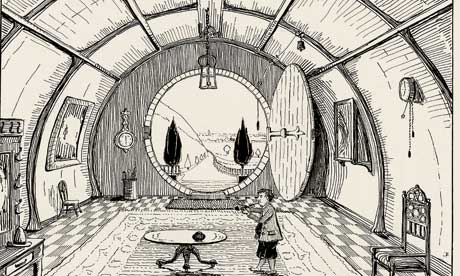
The Hobbit(s) and the call to ministry

On Mondays, Wednesdays and the occasional Saturday evening, ministers are a little bit like hobbits. As a result of his encounter with the ‘fierce and jealous love’ of the dwarves, Bilbo Baggins, we are told, ‘got up trembling’:

He had less than half a mind to fetch the lamp, and more than half a mind to pretend to, and go and hide behind the beer barrels in the cellar, and not come out again until all the dwarves had gone away. Suddenly he found that the music and the singing had stopped, and they were all looking at him with eyes shining in the dark.

For some of us, that’s how the call to train for pastoral ministry happens – where love and joy lead to confusion and timidity which in turn lead to the cessation of music and to finding oneself in the spotlight examined carefully by probing ‘eyes shining in the dark’.

When our assumptions are challenged, when our faith is stirred, when things once familiar become the new unknown, when we find ourselves travelling ‘too near the mountains’ in unguarded territory seldom traversed by ecclesial wayfarers, and when all we have in our kit are ‘old maps’ which are of ‘no use’ in this new terrain, it may be that at that point we have begun, like Abraham and Sarah and Mr Baggins, on a quest that will leave us and the future different.

Colourful and noisy and undersized hobbits enter the quest, as Tolkien reminds us in his ‘Notes on W. H. Auden’s review of The Return of the King’, not to preserve ‘this or that polity, such as the half republic half aristocracy of the Shire’, but rather to engage in ‘liberation from … evil tyranny’. Such words serve as a reminder of our calling too, that the people of God are not called to preserve that familiar life that they had known in the Shire but rather to imagine a future in which all of life’s enemies have been overcome, and to direct all their efforts towards that end. Along the way, they not only lose their reputation, but they also carry unanswered questions, all the while knowing that there can be no going back. Nor, as Bilbo was to discover, can there be anything to be gained by going sideways. And it is precisely in both the refusal to abandon questions and the determination to move forward nonetheless that Bilbo and his company of friends discover that prudence is not about worldly cleverness but is rather about uncomplicated minds and wills conformed to a life of virtue, of boundless mercy, and of unbending devotion to the destruction of that which would undo their very being. It is to this end, we hope, that the church’s hobbits will direct their efforts.

And along the way, may they learn from Galdalf and Aragorn and their other companions that

All that is gold does not glitter,
Not all those who wander are lost;
The old that is strong does not wither,
Deep roots are not reached by the frost,
From the ashes afire shall be woken,
A light from the shadows shall spring;
Renewed shall be blade that was broken:
The crownless again shall be king.

Peter Leithart on using the Bible politically

The latest edition of Comment includes articles by an impressive line-up of thinkers, including Marilynne Robinson, Jean Vanier, Matthew Milliner, Calvin Seerveld, Esther Meek and others. It also includes a nice wee piece by guest editor Peter Leithart who has this to say about Scripture:

‘When used as a tool of political assessment and evaluation, Scripture is a yardstick to measure what’s already out there in the world, rather than a potent political force in its own right. Christians who mine the Bible for positive moral, political, or aesthetic principles frequently have an intellectualistic and moralistic view of human experience. Much of the abundant, often edifying, literature on Christian worldview reduces Scripture to a system of ideas or a set of moral rules that we consciously embrace and apply to the world around us.

But the Bible is not a compendium of doctrines, ideas, or rules. Scripture teaches, but teaches through stories, poetry, exhortation, visions, letters. It addresses the whole man—our minds, but also our passions, imaginations, loves, and desires. Christians who attempt to apply the Bible to political life, for example, often focus so completely on discovering ethical standards that they ignore the significance of Scripture’s rhetoric. Rhetoric italicizes what is said. When using the Bible politically, we not only ask, “What does God say is good and right?” We must also ask, “What does God italicize?”‘ – Peter Leithart, ‘The Word of God and the City of Man

The Global Ecumenical Theological Institute

The World Communion of Reformed Churches is looking for young theologians interested in ecumenism. This is your chance to go to Korea as a participant in the Global Ecumenical Theological Institute (GETI) hosted by the World Council of Churches (WCC) in parallel with WCC Assembly in Busan, Korea (25 October to 9 November 2013).

Who is eligible?
Theology students or lecturers up to 45 years old who are members of WCRC member churches.

What is the GETI programme?
GETI is an intensive learning programme focussed on introductory courses in Asian Christianity, Asian theologies and interfaith realities as well as the specific Korean historical, religious and social context.

The programme coincides with the World Council of Churches Assembly in Busan. This allows GETI participants the opportunity to take part in major assembly events including thematic plenary sessions, worship, ecumenical conversations, workgroups and exhibitions. GETI students will not however participate in Assembly business sessions.

GETI seminars will be oriented according to major themes of the WCC Assembly. There will be opportunities for inter-generational dialogue with important leaders of the ecumenical and evangelical movement.

The programme will also include excursions such as a visit to Gwangju which is a city of great significance for Korean history. Here lectures will be given on Christian mission history and the role of churches in the process of democratization of Korea. The trip will include visits to the national monument of the Gwangju Movement for Democracy as well as to the commemoration site of Christian martyrs and the graves of Christian missionaries close to Honam Theological University. The programme may also include a visit to a traditional Korean village setting.

What will be required of you?

  • A presentation about your church background and a major ecumenical issue related to a WCC Assembly theme;
  • A presentation on a text from the GETI workbook;
  • A major paper on one aspect of the ecumenical movement experienced during the assembly to be submitted no later than mid-February 2014;
  • One comprehensive report and presentation on the GETI and the assembly experience to be given to your theological seminary, local churches or ecumenical youth organization.

At the end of the course you will receive a certificate which includes credits for all course elements attended and academic assignments carried out.

What will it cost?
As part of WCRC’s support of the ecumenical movement and leadership formation, WCRC will fully sponsor successful candidates to attend the GETI programme.

Selection process
WCRC will choose the five best applications to be forwarded to the GETI selection committee.

Interested?
Complete the application form and return to Aiko Sumichan (aws@wcrc.ch)

Application deadline: 28 November, 2012

Logos announces the P.T. Forsyth Collection

It’s always wonderfully encouraging to see that PT Forsyth continues to be read. And while all of Forsyth’s major publications are easily and freely accessible in various formats, Logos are planning to make them available in one place in e-book form with their PT Forsyth Collection. Here’s the product description:

The P. T. Forsyth Collection brings together 24 works from this celebrated Scottish theologian and preacher. After studying at the University of Göttingen under the notable theologian Albrecht Ritschl, Forsyth went on to become one of the early twentieth century’s most influential theologians—his ideas are largely thought to have anticipated, and mirrored, the neo-orthodox movement of Karl Barth and Emil Brunner.

The P. T. Forsyth Collection includes Forsyth’s best-known works, including The Cruciality of the Cross, his strong plea for the orthodox doctrine of atonement, and The Justification of God, a moving collection of lectures written at the height of World War I, when many Christians were having trouble reconciling their faith in God with the horrors of war. In This Life and the Next, Forsyth studies the doctrine of immortality and its impact on our current lives. Christ on Parnassus contains lectures on the connection between art and religion. The still-popular Positive Preaching and Modern Mind contains advice to future ministers—advice still relevant for and needed by today’s teachers and preachers.

Also included is the The Holy Father and the Living ChristChristian Perfection, and The Taste of Death and the Life of Grace, which were later reprinted in a single volume titled God the Holy Father, as well as The Principle of Authority in Relation to Certainty, Sanctity and Society, which was later republished as The Church, the Gospel, and Society.

Plus, there are works that examine the doctrine of Christ’s divinity, the connection between economics and the church, the ethics of war and Christianity, and much more. In the Logos Bible Software edition, all Scripture passages in the P. T. Forsyth Collection are tagged to appear on mouseover. For scholarly work or personal Bible study, this makes these resources more powerful and easier to access than ever before. Perform powerful searches by topic or Scripture reference—finding, for example, every mention of “resurrection” or “Mark 9:2.”

Forsyth buffs may also be keen to know that Logos also plan to make available the works of James Denney. Good stuff.

A wee report from the Confoederatio Helvetica

A few weeks ago, I was in Switzerland. I was there for a meeting with the World Communion of Reformed Churches, and to attend a fascinating conference on Churches and the Rule of Law for which I was invited to be a respondent to a paper on ‘The Bible and the State’ by Jim Skillen. It was a wonderful gathering of some very impressive minds, stimulating papers and friendly souls. A number of folk have asked me for a copy of my response. It can be downloaded here. I understand that a final version will, in due course, appear in published form as part of the John Knox Series.

But the trip wasn’t all ‘business’. One – this one at least – simply doesn’t travel half way around the world and not squeeze in some extra-curricular activities! So the itinerary included time in Lausanne (whose cathedral is among the most beautiful I’ve visited anywhere in the world), Neuchâtel, Montreux, Zermatt and the Matterhorn, the Bernese Oberland and the Junfrau (think Queenstown on some serious steroids), Lucerne, Safenwil (a real highlight for me, for obvious reasons), Basel (where I continued the Barth trail), St-Ursanne, Jura & Three-Lakes, and, of course, a significant amount of time in the amazing city of Geneva where I breathed in some more reformed air. Suffice it to say that, coffee and that terrible Calvinus beer excluded, Switzerland is amazing, and I hope to return.

Rules for nurses and other members of the hospital

Every visitor to a modern hospital will encounter a lot of baloney around its wards and halls and lifts. But these rules, taken from the ‘Standing Orders of St. Thomas’ Hospital 1689–1782’, (i) make good sense to me, (ii) prove in themselves that everything that Owen Barfield warned us about in his History in English Words is true, and (iii) should most certainly be reinstated at once as accepted practice throughout the globe’s medical establishments. I mean, seriously, whenever did such evolutionary-advanced societies cease the wise and long-tested practice of allowing dead bodies to be dismembered without the permission of a treasurer? So, for the sake of a better world, behold the wisdom of our forebears:

1. No Person shall be received into the House who is visited, or suspected to be visited, with the Plague, Itch, Scald-Head or other Infectious diseases, and if any such be taken in, then to be discharged as soon as discovered.

2. Patients shall not Swear, not take God’s Name in vain, nor revile, nor miscall one another, nor strike or beat another, nor steal Meat, or Drink, Apparel, or other thing, one from another.

3. Patients shall not abuse themselves by inordinate Drinking, nor incontinent Living, nor talk, nor not Immodestly, upon pain of expulsion; and when they go to or return from the Meals and Beds, they shall crave God’s Blessing and return Thanks to God.

4. No Drink shall be brought in and sold to Patients except by the Physician’s and Surgeon’s License.

5. No Patient with the Foul disease shall go out of his Ward, nor come into the House to fetch anything, nor within Chapel, nor sit upon the seats in the Courtyards, upon pain of Expulsion.

6. None of the Women shall go into the Men’s Wards, nor the Men into the Women’s wards, without License, upon pain of Expulsion.

7. The Sisters shall clean the Wards by Six a.m.

8. Every tenth bed is to be left empty to air and not more than one patient is to be put into each bed.

9. The Sisters shall see that no Card Play or Dicing takes place in the House.

10. If any of the Sisters shall disorder themselves by brawling with one another, or other misdemeanor, she is to be removed her Ward and subsequently discharged the House for ever.

11. Old sheets shall be washed and given the Surgeons for Dressings.

12. No Surgeon shall suffer his Servant to perform any Operation; dilate or cut open Imposthumes, or Sinuous Ulcers, except the Master of such Servant be present, and direct the same.

13. No Dead body shall be opened, Dissected or Dismembered without leave from the Treasurer, or Steward in the Absence of the Treasurer.

14. The Sexton shall keep the Chapel and yards clean and make graves six feet deep, six feet long and three feet wide at eighteen pence each.

Chicken Korma with Coriander Leaves – Dhaniwali Murgh Korma (Kashmir)

Kashmir is actually sheep and goat country and chicken is eaten rarely. This recipe was shown to me by Abdul Ahad Waza who is the premier Kashmir wedding and party caterer. Along with his four sons he cooks in his courtyard and supplies food to the culinary cognoscenti of Kashmir and in the winter does the same in Delhi. This is rather an unusual-flavoured Chicken Korma, mild and fragrant with a thin gravy. Good to eat with rice, roti or even sliced bread. The recipe serves 4.

Ingredients

1kg (organic) chicken
8 green cardamoms
5 garlic cloves
10cm cinnamon stick
10–12 strands of saffron
1/2 teaspoon turmeric powder
2 onions, chopped
1/2 teaspoon ginger powder
3–5 green (or red) chillies, chopped (and deseeded if you prefer)
salt
1 1/2 cups full-fat yoghurt
1/4 cup ghee or extra virgin olive oil
2 cups chicken stock
4 cloves
1/4 teaspoon ground black pepper
2–4 tablespoons chopped coriander leaves

Method

  1. Boil the chicken in 3 cups of water along with 2 of the garlic cloves for 3–4 minutes. Strain and discard water. Leave the chicken to cool, then rinse in lukewarm water. This removes all the odour of the chicken. Cut up the chicken into big bite-sized pieces.
  2. Pound the remaining garlic and soak in 1/2 cup of water to obtain a garlic infusion. Soak the saffron strands in 1/4 cup of water, pressing with the back of a spoon to get an infusion. Purée the onions with the green (or red) chillies. Whisk the yoghurt and set aside.
  3. Heat the ghee or oil in a heavy-based cooking pot and fry the onion purée until golden (about 12–15 minutes). Add the cloves, cardamoms and cinnamon followed by the turmeric powder. Add the chicken, garlic infusion and yoghurt and cover with a lid. Allow to simmer for 7–10 minutes until the juices are absorbed.
  4. Add the ginger powder and salt to taste and sauté for 3–4 minutes until the chicken is lightly browned. Add just enough chicken stock to get the amount of gravy desired (this dish does not need a great deal and you will probably want to then reduce the amount of gravy during the simmer).
  5. Simmer over a gentle heat for 40 minutes, stirring occasionally. When the chicken is tender, sprinkle with the saffron infusion, pepper and fresh coriander leaves. (Alternatively, turn it off after the simmer and then re-heat when required, adding the infusion, pepper and coriander leaves just before you are ready to serve it up).

This recipe is modified from Camellia Panjabi’s version in 50 Great Curries of India.

An essay competition for theology students and young pastors

The World Communion of Reformed Churches is sponsoring an essay competition for theology students and young pastors (up to 35 years of age). The topic is ‘Paradise: an inspirational concept for the financial and economic structures of the global society’.

Essays (written in English, French, Spanish or German) should be received no later than 23 December 2012, and the winner will be awarded the Lombard Prize.

More information is available here.

Towards a Modest and Messy Manifesto for Pastors: a draft

In just over a week, the Knox Centre for Ministry and Leadership will be welcoming a new group of ministry interns. This is often nearly as exciting as it is sad to say goodbye to those ones who are completing their studies with us. In addition to writing some new lectures, I’ve also been thinking about putting together a wee list of items of counsel for new (and old) ministers to consider and discuss. Of course, such a list could be endless, or radically brief. But here are 54 little tidbits that I came up with/stole today:

  1. Remember your baptism. Creep back into the font regularly.
  2. ‘Let nothing be done by force; let everything be done in freedom and love’.[1]
  3. Do not neglect the gift of prayer. Pray especially when you don’t have time to pray, when prayer makes the least sense, and when God’s aliveness seems the least likely version of reality.
  4. Read Scripture devotionally. Immerse your mind, your heart, your wallet, your time and your conscience in Scripture. This means reading the Bible for your sake, and not merely in order to mine passages that can be ‘used’ for some purpose other than hearing the Word of God for yourself. To read devotionally also entails a commitment to letting Scripture read you.
  5. Read Scripture in a scholarly way. Commit yourself to the disciplined study of Scripture, preferably in the original languages. Pastoral ministry is about three things: Exegesis, exegesis and exegesis. ‘Plow [Scripture] like a farmer, furrow after furrow’ (Eduard Thurneysen).
  6. Read newspapers in a scholarly way. Commit yourself to disciplined study of the newspaper. Pastoral ministry is about three things: Exegesis, exegesis and exegesis.
  7. Immerse yourself in the thought and writings of 2–3 significant thinkers for the next 20 years or more. Let them teach you, pastor you, advise you in various pastoral situations. Argue with them heaps, and learn from them.
  8. Always have (at least) one serious theological book on the go. Something like Dostoyevsky’s The Brother’s Karamazov or St Basil’s treatise On the Holy Spirit are worthy options.
  9. Regularly read paragraphs from P.T. Forsyth’s Positive Preaching and the Modern Mind and The Soul of Prayer, from Karl Barth’s The Word of God and the Word of Man, from Alexander Schmemann’s For the Life of the World, and from Athanasius’ On the Incarnation.
  10. Always have (at least) one novel or collection of poetry on the go, and read from it daily. Not only will this increase your chances of avoiding insanity, but it will make you a better theologian, pastor and preacher. Like sore thumbs and monotonous crickets are those untrustworthy and boring souls who don’t read novels and/or poetry.[2]
  11. Whatever the situation, always begin by asking the ‘Who’ question; i.e., ‘Who is Jesus Christ today, here and now?’[3] There may well come a time when you feel that the ‘Why’ and ‘How’ questions matter too, but they can wait their proper turn.
  12. In every situation, recall that humanity has been given one Great High Priest and that such a person is not you. Christian ministry has no justification or power or acceptance except that it be a participation, by the Spirit, in the vicarious humanity of the Son who, as the second (or last) Adam, leads creation and its priests into the worship and joy of the Father and into the service of the Father’s world.[4]
  13. In every situation, remember that every believer – and not just those with dog-collars (or their ‘secular’ equivalents) – receives from God all of the Great High Priest’s benefits and shares in what he is doing now.
  14. Every now and then, read 1 Peter 4 and, more than every now and then, 2 Corinthians.
  15. Learn to trust the people close to you.
  16. Learn to be suspicious of the people close to you.
  17. ‘Many people will want to give you advice. Mostly this says more about them than about you’ (Mary-Jane Konings).
  18. Hang out regularly – and informally – with a more seasoned minister. When you meet, beer and pizza should be the only additional default items.
  19. Hang out regularly – and informally – with peers. When you meet, beer and pizza – or beer and good Indian food – should be the only additional default items.
  20. Hang out regularly – and informally – with those you can mentor. When you meet, beer and pizza – or just beer – should be the only additional default item(s).
  21. Keep a whiteboard marker in the shower for those moments of inspiration.
  22. Despise and avoid romantic visions of Christian community. So Bonhoeffer: ‘God hates visionary dreaming; it makes the dreamer proud and pretentious. The man who fashions a visionary ideal of community demands that it be realized by God, by others, and by himself. He enters the community of Christians with his demands, sets up his own laws, and judges the brethren and God himself accordingly. He stands adamant, a living reproach to all others in the circle of the brethren. He acts as if he is the creator of the Christian community, as if his dream binds men together. When things do not go his way, he calls the effort a failure. When his ideal picture is destroyed, he sees the community going to smash. So he becomes, first an accuser of his brethren, then an accuser of God, and finally the despairing accuser of himself. Because God has already laid the only foundation of our fellowship, because God has bound us together in one body with other Christians in Jesus Christ, long before we entered into common life with them, we enter into that common life not as demanders but as thankful recipients. We thank God for giving us brethren who live by his call, by his forgiveness, and his promise. We do not complain of what God does not give us; we rather thank God for what he does give us daily. And is not what has been given us enough: brothers, who will go on living with us through sin and need under the blessing of his grace? Is the divine gift of Christian fellowship anything less than this, any day, even the most difficult and distressing day? Even when sin and misunderstanding burden the communal life, is not the sinning brother still a brother, with whom I, too, stand under the Word of Christ? Will not his sin be a constant occasion for me to give thanks that both of us may live in the forgiving love of God in Christ Jesus? Thus, the very hour of disillusionment with my brother becomes incomparably salutary, because it so thoroughly teaches me that neither of us can ever live by our own words and deeds, but only by the one Word and Deed which really binds us together – the forgiveness of sins in Jesus Christ. When the morning mists of dreams vanish, then dawns the bright day of Christian fellowship’.[5]
  23. Give thanks often and don’t complain about your church, not even to God: ‘If we do not give thanks daily for the Christian fellowship in which we have been placed, even where there is no great experience, no discoverable riches, but much weakness, small faith, and difficulty; if on the contrary, we only keep complaining to God that everything is so paltry and petty, so far from what we expected, then we hinder God from letting our fellowship grow according to the measure and riches which are there for us all in Jesus Christ. This applies in a special way to the complaints often heard from pastors and zealous members about their congregations. A pastor should not complain about his congregations, certainly never to other people, but also not to God. A congregation has not been entrusted to him in order that he should become its accuser before God and men. When a person becomes alienated from a Christian community in which he has been placed and begins to raise complaints about it, he had better examine himself first to see whether the trouble is not due to his wish dream that should be shattered by God; and if this be the case, let him thank God for leading him into this predicament. But if not, let him nevertheless guard against ever becoming an accuser of the congregation before God. Let him rather accuse himself for his unbelief. Let him pray to God for understanding of his own failure and his particular sin, and pray that he may not wrong his brethren. Let him, in the consciousness of his own guilt, make intercession for his brethren. Let him do what he is committed to do, and thank God … What may appear weak and trifling to us may be great and glorious to God. Just as the Christian should not be constantly feeling his spiritual pulse, so, too, the Christian community has not been given to us by God for us to be constantly taking its temperature’.[6]
  24. ‘Your church is not a reflection of you. It’s success doesn’t make you great; it’s failures don’t make you one. It’s really not about you’ (Carolyn Francis).
  25. Retain a private phone number, and that if for no other reason than that your partner and kids will be grateful.
  26. Remember that God has been calling people do to this impossible stuff for long before you came on the scene, and that you’re dreadfully unlikely to be the last.
  27. Don’t seek honour and don’t give a toss about who is the greatest (see Luke 9.46). As Bonhoeffer put it, ‘The desire for one’s own honor hinders faith. One who seeks his own honor is no longer seeking God and his neighbour … Every cult of personality that emphasizes the distinguished qualities, virtues, and talents of another person … is worldly and has no place in the Christian community; indeed, it poisons the Christian community … The Church does not need brilliant personalities but faithful servants of Jesus … The root of all sin is pride’.[7] Or, as Jesus put it, ‘change and become like little children’ (Matt 18.3).
  28. Fish, or garden, or tramp, or climb trees, or keep bees, or just do something that reminds you that you and this earth belong together, that you are made of dust, and to dust you will return. There is, we are reminded, ‘no clear line between religion and fly fishing. We lived at the junction of great trout rivers in western Montana, and our father was a Presbyterian minister and a fly fisherman who tied his own flies and taught others. He told us about Christ’s disciples being fishermen, and we were left to assume, as my brother and I did, that all first-class fishermen on the Sea of Galilee were fly fishermen and that John, the favorite, was a dry-fly fisherman’.[8]
  29. Learn a musical instrument, or paint, or cook. Human vocation involves undoing the curse of tastelessness and boringness that exists within creation, of adding value to creation itself, and of bearing witness to the wonderful truth that in the end all is music.
  30. Avoid ecclesiocentricity. The end game, after all, is not the church but the new creation. Consequently, those whose entire identity is wrapped up in churchly matters are not only living a lie but are failing to bear witness to the true nature of reality.
  31. Avoid ecclesioisolation: ‘Let him [or her] who cannot be alone beware of community. Let him [or her] who is not in community beware of being alone’.[9]
  32. Cultivate the gifts of friendship. This is a biggie, and its neglect is the cause of much pain in the minister, of much scandal in the church, and of much lying in the world.
  33. Start to seriously worry if you never change your mind about important things.
  34. Anticipate being surprised about God’s location and shape: ‘I can never know beforehand how God’s image should appear in others’.[10]
  35. While we’re speaking of anticipations, if you anticipate wanting something changed at the manse, or in the proposed ‘job description’ (Is there anything more ugly or category-confusing for a minister to have to contend with than one of these awfully-heretical documents?), agree on it early and be done with it.
  36. Because there is an inevitable unfinishedness about the routines of ministry, many ministers find it helpful to ‘pursue a hobby where you can complete projects regularly’ (Mary-Jane Konings).
  37. Minister out of your love life with God. Better still, minister out of God’s love life with you.
  38. Love the people that God has entrusted to your care. Live in solidarity with them, rejoice with them, cry with them and, if called upon, die for them. This includes your own family.
  39. For those with partners, never underestimate the gift that your partner’s eyes (and those of your kids too) are for noticing things within and outwith you that you need to know.
  40. At home, keep a strong-handled basket somewhere handy into which you can throw things during the week that you need to take to church on Sunday, and bring home things (like books that you’ll never read but someone thinks you should) that others give you. When at church, keep this basket on the front pew and make it known that this is what it is for.
  41. Develop ways of learning to speak the local lingo. ‘Laity sometimes complain that their young pastor, in sermons, uses “religious” words like “spiritual practice,” “liberation,” “empowerment,” “intentional community” … that no one understands and no one recalls having heard in Scripture. Such “preacher talk” makes the pastor seem detached, alien, and aloof from the people and hinders leadership’. (William Willimon)
  42. ‘At the same time, prepare yourself to become a teacher of the church’s peculiar speech to a people who may have forgotten how to use it. This may seem contrary to [the previous] suggestion. My friend, Stanley Hauerwas, says that the best preparation for being a pastor today is previously to have taught high school French. The skills required to drill French verbs into the heads of adolescents are the skills that pastors need to teach our people how to speak the gospel. Trouble is, most seminarians are more skilled, upon graduation from school, to be able to describe the world anthropologically than theologically. They have learned to use the language of Marxist analysis or feminist criticism better than the language of Zion. We must be persons who lovingly cultivate and actively use the church’s peculiar speech’. (William Willimon)
  43. ‘Keep telling yourself that the difference in thought between the laity in your first parish and that of your friends back in seminary is not so much the difference between ignorance and intelligence; it’s just different ways of thinking that arise out of life in different worlds. I recommend reading novels (Flannery O’Connor saved me in my first parish by writing true stories that sounded like they were written by one of my parishioners) in order to appreciate the thought and the speech of people who, while having never been initiated into the narrow confines of the world of theological education, are thinking deeply’. (William Willimon)
  44. ‘Remind yourself that while the seminary has an important role to play in the life of the church, it is the seminary that must be accountable to the church, not vice versa. It is my prejudice that, if you have difficulty making the transition from seminary to parish it is probably a criticism of the seminary. The Christian faith is to be studied and critically examined only for the purpose of its embodiment. Christians are those who are to become that which we profess. The purpose of theological discernment is not to devise something that is interesting to say to the modern world but rather to rock the modern world with the church’s demonstration that Jesus Christ is Lord and all other little lordlets are not’. (William Willimon)
  45. ‘Be open to the possibility that the matters that were focused upon in the course of the seminary curriculum, the questions raised and the arguments engaged, might be a distraction from the true, historic mission and purpose of the church and its ministry’. (William Willimon)
  46. ‘On the other hand, be open to the possibility that the church has a tendency to bed down with mediocrity, to accept the mere status quo as the norm, and to let itself off the theological hook too easily. One reason why the church needs theology explored and taught in its seminaries is that theology (at its best) keeps making Christian discipleship as hard as it ought to be. Theology keeps guard over the church’s peculiar speech and the church’s distinctive mission. Something there is within any accommodated, compromised church (and aren’t they all, in one way or another?) that needs to reassure itself, “All that academic, intellectual, theological stuff is bunk and is irrelevant to the way the church really is.” The way the church “really is” is faithless, mistaken, cowardly, and compromised. It’s sad that it is up to seminaries to offer some of the most trenchant and interesting critiques of the church. Criticism of the church ought to be part of the ongoing mission of a faithful church that takes Jesus more seriously and itself a little less so’. (William Willimon)
  47. ‘Your life would be infinitely easier and less complicated if God had called you to be an accountant or a seminary professor. Most of the stuff that you read in seminary will only prepare you really to grow and to develop after you leave seminary. Think of your tough transition into the parish as the beginning, not the end, of your adventure into real growth as a minister. Theology tends to be wasted on the young. It’s only when you run into a complete dead end in the parish, when you are aging and tired and fed up with the people of God (and maybe even God too) that you need to know where to go to have a good conversation with some saint in order to make it through the night. Believe it or not, it’s much easier to begin in the ministry, even considering the tough transition between seminary and the parish, than it is to continue in ministry. A winning smile, a pleasing personality, a winsome way with people, none of these are enough to keep you working with Jesus, preaching the Word, nurturing the flock, looking for the lost. Only God can do that and a major way God does that is through the prayerful, intense reading, study and reflection that you can only begin in three or four years of seminary’. (William Willimon)
  48. ‘Try not to listen to your parishioners when they attempt to use you to weasel out of the claims of Christ. Much of the criticism that you will receive, many of their negative comments about your work, are just their attempt to excuse themselves from discipleship. “When you are older, you will understand,” they told me as a young pastor. “You have still got all that theological stuff in you from seminary. Eventually, you’ll learn,” said older, cynical pastors … God has called you to preach and to live the gospel before them and they will use any means to avoid it. Be suspicious when people encourage you to see the transition from seminary to the parish as mainly a time finally to settle in and make peace with the “real world.” Jesus Christ is our definition of what’s real and there is much that passes for “the way things are” in the average church that makes Jesus want to grab a whip in hand and clean house’. (William Willimon)
  49. ‘The next few years could be among the most important in your ministry, including the years that you spent in seminary, because they are the years in which you will form your habits that will make your ministry. That’s one reason why I think the Lutherans are wise to require an internship year in a parish, before seminary graduation, for their pastors and why I think that a great way to begin is to begin your ministry as someone’s associate in a team ministry in a larger church. In a small, rural church, alone, with total responsibility in your shoulders, in the weekly treadmill of sermons and pastoral care, if you are not careful there is too little time to read and reflect, too little time to prepare your first sermons, so you develop bad habits of flying by the seat of your pants, taking short cuts, and borrowing from others what ought to be developed in the workshop of your own soul. Ministry has a way of coming at you, of jerking you around from here to there, so you need to take charge of your time, prioritize your work, and be sure that you don’t neglect the absolute essentials while you are doing the merely important. If you don’t define your ministry on the basis of your theological commitments, the parish has a way of defining your ministry on the basis of their selfish preoccupations and that is why so many clergy are so harried and tired today. Mind your habits’. (William Willimon)
  50. Speaking of habits, remember that ‘The pulpit is the real arena of the Kingdom of God’ (Karl Barth). In the busy demands that attend parish life, order your priorities accordingly.
  51. Woe to that minister who sub-contracts their pastoral care responsibilities to others and in so doing divorces the cure of souls from the ministry of the Word.
  52. Always strive to represent the local church to the church catholic, and the church catholic to the local church.
  53. Prepare three envelopes:

‘In a certain city there lived a young pastor who was starting her first day at her first solo pastorate. She had met the staff, put all her books on the shelves, and was arranging her desk when a curious thing happened. She opened the desk drawer, and there were three sealed envelopes, numbered one, two, and three, encircled with a rubber band, and with a note attached.

She eagerly unfolded the note, and this is what it said: “Dear Successor. Welcome to the Old Church on the Green. When I arrived here many years ago I found three envelopes in my desk as you just have. They were from my predecessor and his note told me to open each of them in turn whenever I found myself in difficulty in the parish. This was very helpful to me, so I am providing you with three numbered envelopes to open when you need them. Blessings on your ministry. Your Predecessor.”

She didn’t know what to make of this, but soon forgot about the envelopes amidst the whirlwind of starting a new ministry, meeting new people, putting names with faces, in the general excitement and anxiety of the first months. And truth to tell, she had a joyful honeymoon period where she learned to love the congregation and they learned to love her, and everybody was very happy and content.

But in the fullness of time some discontents could be discerned among the faithful. Well-meaning advisors came to her to tell her things they had heard, not that they felt that way, but others did. None of the complaints were major, but they ate at her morale. Some said she had annoying mannerisms in the pulpit, that she was never in the office, that she didn’t do enough pastoral visitation, that she had been seen coming out of a yoga class during the daytime when honest hard-working people are at their jobs.

All these things got her down, and one day she spotted the forgotten envelopes in her desk drawer. She wondered if she should open the first one, and after some struggling and prayer about it, she did so. Inside was a single sheet of paper and on it were the words: “Blame your predecessor.”

She had once taken interim ministry training so she knew how to do this and immediately put the strategy into play. She told her boards and committee that congregations were really dysfunctional family systems and the dysfunction was caused by the former pastor. They all nodded their heads and agreed to be healthier, and they forgot all about their complaints against her, since it is always easier to judge someone that isn’t around. And once again everybody was happy and content.

There came a time, however, when new discontents emerged. The economy went South, pledges were down, fuel cost were up, the endowment which many worshipped had taken a hit, new members were slow to arrive to help pay the bills. She was no longer the new pastor, and there were hints and rumors that a different kind of a leader might fix the problems. She didn’t know what to do. She tried everything she could think of. She went to a centering prayer workshop, she got a Day-Timer, and she attended the Alban Institute conference called “When your Job Sucks.” But none of it seemed to help, so one day, after much struggle and prayer, she opened the second envelope. Once again it was a single sheet of paper and on it were the words: “Reorganize.”

So she convinced her board to create a long-term planning committee, write a new mission statement, and re-write the by-laws. And everybody got very busy, and worked hard together, and there wasn’t enough energy left to complain, and the church thrived for many seasons, and everybody in the congregation felt proud of themselves for having such a well-organized church and such a clever pastor. And, once again, everybody was happy and content.

By this time our pastor was frankly getting a little bored, and not a little burned-out, and wondered just how long she could put out the energy it was taking to keep such a well-organized church going. And her soul was disquited within her.

Once again she tried everything she could think of. She joined a pastor’s support group, she went on a Conference Committee on pastoral excellence, she bought herself a smart-phone and started a blog. But none of it seemed to help, so finally one day in desperation she went to her desk drawer and she opened the third envelope. Once again inside was a single sheet of paper and on it were the words: “Prepare three envelopes.”’[11]

54.  Remember your baptism.

Suggestions will be gratefully received.

To be continued …


[1] Dietrich Bonhoeffer, Life Together (trans. John W. Doberstein; New York: Harper and Row, 1954), 66.

[2] See Michael Jinkins, Letters to New Pastors (Grand Rapids: Wm. B. Eerdmans, 2006), 49–55.

[3] See Dietrich Bonhoeffer, Christology (trans. John Bowden; London: Collins, 1966), 58ff.

[4] See Jason A. Goroncy, ‘”Tha mi a’ toirt fainear dur gearan”: J. McLeod Campbell and P.T. Forsyth on the Extent of Christ’s Vicarious Ministry’ in Evangelical Calvinism: Essays Resourcing the Continuing Reformation of the Church (ed. Myk Habets and Bobby Grow; Princeton Theological Monograph Series. Eugene, OR: Pickwick Publications, 2012), 253–86.

[5] Bonhoeffer, Life Together 27–29.

[6] Ibid. 29–30.

[7] Ibid. 95, 108, 109, 113.

[8] Norman Maclean, A River Runs Through It.

[9] Bonhoeffer, Life Together 78.

[10] Ibid. 93.

October stations …

Reading:

Listening:

‘Tui’

Earlier this week, New Zealand’s finest newspaper, the Otago Daily Times, published one of my recent poems – ‘Tui’. I had hoped to simply be able to provide a link to an online version of the poem but unfortunately none has appeared. Therefore, and particularly for the benefit of those outwith New Zealand who do not have access to the ODT, here ’tis:

The twelfth of
September felt like the
end of all
time. The feared turning
away and vastness of
noiselessness, cup of
bitterness,
undoing of dreaming
and the breaching
open of a wall that
refuses to be
dammed. There can be
now no journey backwards. This
long tide shall stay out. The
bow has been hard bent –

there shall be
no more music.

The nineteenth: we left
the trail, hacked our
way down through
autumn scrub, carrying
the too-small box to the
horizontal slide
of stones that
form the bank by
the River Garry, along
the Pass of Killiecrankie where
we stopped,
to surrender thanks and
to seek goodbye and
to cast our unfinished weight to
the mercy of the current.

[This poem first appeared in the Otago Daily Times, 29 October 2012, p. 9. The beautiful image, ‘Autumn, River Garry at Killiecrankie, Scotland’, is provided by Lindsay Mackinlay, and is used by permission].

Rick Floyd on the lost soul of the procedural church

Some years ago now, my dear friend Rick Floyd shared a wonderful wee parable about pastoral ministry. It was called ‘Prepare Three Envelopes’. He then followed it up with an insightful midrash which bears repeating:

One of the rules I live by is to never explain a joke, but I’m going to break that rule to talk about my recent post: Prepare Three Envelopes: A Parable about Pastoral Ministry.

As several of you have pointed out it is an old joke. John McFadden said he “kicked the slats out of his crib laughing” the first time he heard it. Several of you told me different variations on the one I told, which I think I first heard from Peter Wells, my canny former area minister.

Many of you said it was both funny and painful. Bob Grove-Markwood said, “I laughed, I cried.” Verlee Copeland said she wished “it were funnier for that bell tolls for us all.” It surely resonated with many clergy, which is no accident.

The joke itself was just the frame I used for the picture I wanted to draw. I put the joke in an extended shaggy dog style to accomplish several things. First, I wanted the heroine to be a bit of a cipher and not a fleshed-out character, so that clergy could fill in their own particulars and relate to her situation. I made her a woman pastor so that the parable wouldn’t be seen as strictly autobiographical, although there is more of my own story in it than is entirely comfortable.

I wanted to evoke a certain kind of congregation, what I will call here the procedural church. Now such a congregation doesn’t exist as an ideal type, but I believe most mainline congregations have features of what I will describe.

As I have written elsewhere (“Introduction” to When I Survey the Wondrous Cross) I believe the dominant mode of reflecting on congregational life in our time is not theological (as I believe it should be), but managerial, psychological, and political.

So a managerial congregation will borrow outlooks and methods from the corporate world, and be preoccupied with metrics, goals, objectives, and outcomes largely cast without use of the church’s historic grammar. My reference to the second envelope was a small swat at this approach.

The psychological congregation sees its life in therapeutic terms, and employs the language of health and pathology, of addiction and recovery, and co-dependence. This model loves to talk about boundaries. My little dig at interim ministry comes from my conviction that the family systems model employed by many interim ministers is a blunt tool to deal with complex congregational life, and often scapegoats former pastors, which the Intentional Interim Network dismissingly refers to in their training as BFP’s, Beloved Former Pastors. As a beloved former pastor myself I feel this outlook is disrespectful to dedicated leaders who have given their lives for the church.

The political church sees itself as a change-agent in an unjust and oppressive society, and understands its mission to advance a series of predetermined causes. The bond between congregants is political like-mindedness, and those who don’t “get it” are likely to be driven away without regret. This kind of church, usually liberal in the mainline, fosters a paranoid style, which demonize those who disagree with it. They are always railing against the Religious Right, but actually provide a mirror image of those they fear and distrust, a shadow side Religious Left.

Now I must insert the mandatory self-evident truth that there are genuine insights in all these approaches, and wise leaders should avail themselves of whatever is useful in the culture. Having said that, what is striking to me about the procedural church is the dominance of its perspective over the church’s own grammar.

Congregations can partake of all three of these procedural approaches in various combinations, but what they all share is a procedurally driven church whose agenda takes little account of the church’s own rich heritage of congregational self-understanding derived from scripture and tradition. Ecclesiology, the sub-category of theology that thinks deeply about the church, has a long and deep ecumenical storehouse of insights on how to be the church that are largely ignored or forgotten. Leander Keck, in his fine book, The Church Confident, once compared the contemporary church with folks who inherit a fine old mansion, but choose rather to live in a pup tent in the back yard.

So notice that in Prepare Three Envelopes I never mention God, Jesus Christ, the Holy Spirit, the Trinity, the Scriptures, the sacraments, the creeds, or Christian doctrine. Our heroine does pray, but whether it is Christian prayer is left an open question.

I tried to evoke a kind of flatness in this imaginary congregation. We don’t see our pastor preparing or delivering a sermon, baptizing a baby, presiding at the eucharist, praying by a sickbed, or standing by a grave, even though these activities take up a good deal of any pastor’s time in real life. What we do see her doing is strategizing and attending meetings, the hallmarks of the procedural church.

Now at the end of the parable our heroine is burned-out because she has been driving this frenetic congregational juggernaut out of her own soul, which is now seriously depleted. And if there is one feature common to all three kinds of procedural congregations it is this endless frenetic activity, what P.T. Forsyth once called “The Sin of Bustle.”

The procedural church is functionally atheistic, in that everything depends on us, and nothing depends on God, other than to bless and sanctify the works of our hands.

Morale is bad in the procedural church. Brad Braxton’s sudden and sad departure from Riverside Church has lit up the blogosphere with comments from clergy who feel ill-used by their congregations. There is always plenty of blame to go around in any church kerfuffle, but my perception of many congregations is that their fights and preoccupations about procedure, in Braxton’s case over his salary package, arise because they do not know how to be church.

They know how to manage organizations, they know how to analyze family systems, and they know how to drive a political agenda. But when it comes down to being the church of Christ, to hear his living voice in sermon and text, to eat his sustaining bread, to share his cruciform life, to know that it is his ministry we are called to share and not just be our own voluntary association, not so much! And clergy can blame toxic congregations all they want, but isn’t it the work of the ordained ministry to keep these things before them?

Without sound teaching, faithful preaching, lively and sacramental worship, and enriching group life, the congregation can have all the procedures down and still have lost its soul.
An ‘authentic’ church is a church which sees itself as ‘the bearer of a question’

I spent some time today reflecting on these words from Rowan Williams’ extraordinary essay ‘Women and the Ministry: A Case for Theological Seriousness’. (The essay appears in Feminine in the Church, and is also available here.) [HT: Chris Green for drawing my attention to this essay]:

If we had to choose between a Church tolerably confident of what it has to say and seeking only for effective means of saying it, and a Church constantly engaged in an internal dialogue and critique of itself, an exploration to discover what is central to its being, I should say that it is the latter which is the more authentic – a Church which understands that part of what it is offering to humanity is the possibility of living in such a mode. What the Church ‘has to say’ is never a simple verbal message: it is an invitation to entrust your life to a certain vision of the possibilities of humanity in union with God. And to entrust yourself in this way is to put your thinking and experience, your reactions and your initiatives daily into question, under the judgement of the central creative memory of Jesus Christ, present in his Spirit to his community.

I turned then to Mike Higton’s wonderful book, Difficult Gospel: The Theology of Rowan Williams, wherein he offers a stimulating commentary on these words of Williams’. I thought that it was worth sharing:

If the reality which the Church helps us to explore – the reality which it teaches – is that ‘ceaseless movement towards the Father’, then we need to be cautious about how we express the nature of the Church’s teaching. It is not going to be simply the doling out of well-understood truth – a case of those who have reached and understood the truth handing out that truth to others. Rather the Church will teach by inviting others to join with it in learning, and by pointing them to the sources from which it itself is slowly learning …

Rather than thinking of the Church as the bearer of answers, it might be better to think about the Church as the bearer of a question – the bearer of the question which the Gospel poses; we might say with Williams that the Church is ‘[t]hat which transmits God’s question from generation to generation’. The Church teaches by pointing away from itself to the transforming, upsetting impact of Jesus – pointing not so much to a stable, achieved religious system as to a disruption which can bring all systems of religious practice and knowledge face to face with a reality that cannot be exhausted by any system. The Church’s paradoxical task is to preserve this questioning – to find concrete forms of life, stable practices, and a learnable language that will keep alive the possibility of our hearing this disruption, and which will allow it to be felt deeper and far wider than the circle of its original impact’ (pp. 69–70).

Keith Dyer on healthy New Testament churches

I am grateful for good teachers, and Keith Dyer was certainly one of mine. He taught me about the centrality of apocalyptic in the New Testament, that the Book of the Revelation is one of the most bold and politically-charged pieces of literature ever penned, and that Rudolf Bultmann is one of the good guys. More importantly, he taught me that you didn’t have to switch off your brain in order to read the Bible and to be a Christian, and that following Jesus is inextricably bound up with the concrete life of communities. It was good to read today a recent piece written by Keith, and to hear again through the words his warm voice, his love for Scripture, and his service with the people of God. Here are the closing words from his reflection on healthy New Testament churches:

Healthy churches are transforming churches, not perfect churches. Transforming churches are both being transformed and also transforming the wider community — they breathe in, and they breathe out. They take note of the various models and arrangements for leadership and governance in the New Testament, and learn from the history of the church since then, to embody ways of being and doing that keep them close to the Way of Jesus.

Healthy churches can continue to thrive when differences are expressed passionately by their members. The whole point of the ‘body of Christ’ image (1 Cor 12-14) is that we are one body, but all different, and each and every one gifted differently for the benefit of the whole.

Healthy churches do not decide things based purely on rule by the majority and formal business procedures. Democracy in itself is not a Christian form of governance. It may be the best we have for our Nation and States, but Christian communities are the body of Christ, and 51% of Christ cannot tell 49% of Christ they are wrong. Rather, we Baptists agree to act on the basis of consensus — by overwhelming, if not 100%, majority. That may take time and a lot of praying and talking to achieve, and so sometimes we use the 67% majority as a guide. So be it.

If in the end a small minority is to be overruled by a large majority, the arguments and objections of the minority should be recorded clearly in the record of meeting. It may well be that the words of such prophets provide the foundation for the subsequent reconstruction of the community after the majority have been proved wrong. Thus it was for Jeremiah, that great prophet in the shalom (= health and wholeness) tradition of Israel, and we should always be ready to acknowledge that possibility when we face stubborn resistance within our own community of faith.

It may even be that we part company on an issue, but hopefully in doing so, we can agree that ‘Paul should go to the Gentiles, and Peter to the Jews’, or ‘Barnabas and Mark to Cyprus, and Paul and Silas to Galatia’, and thereby the transforming mission of God to all humanity can benefit regardless.

You can read the rest here.

Chickpea Salad

Ingredients

  • 1 small red onion, peeled and finely sliced
  • 1–2 fresh red chillies, deseeded and finely sliced
  • 2 handfuls of ripe red or yellow tomatoes, roughly chopped
  • 2–3 lemons
  • extra virgin olive oil
  • sea salt and freshly ground black pepper
  • 1 x 400g tin of chickpeas, drained, or around 4 large handfuls of soaked (overnight) and cooked chickpeas
  • Fresh peas, or snow peas
  • a handful of fresh coriander, chopped
  • a handful of fresh green or purple basil, finely ripped
  • 200g feta cheese

Directions

  1. Mix the tomatoes, onion and chillies in a bowl.
  2. Dress with the juice of 2 lemons and about 3 times as much good quality extra virgin olive oil. Season to taste.
  3. Heat the chickpeas in a pan, then add 90 per cent of them to the bowl. Mush up the remaining chickpeas and add these as well – they will give a nice creamy consistency. Allow to marinate for a little while and serve at room temperature.
  4. Just as you’re ready to serve, give the salad a final dress with the fresh coriander, basil and peas. Taste one last time for seasoning – you may want to add more lemon juice at this point. Place on a serving dish and crumble over with the feta.
  5. Enjoy with irresponsible amounts of New Zealand pinot gris!

An introduction to the poetry of Don Walls

The best gifts are those which are entirely unexpected. A few weeks ago now, at a folk club night, a warm-hearted cider-drinking lady named Dorothy introduced me to the work of the Yorkshire poet Don Walls. In fact, the evening opened with a reading of Walls’ delightful poem ‘Fibs’. Struck, I asked Dorothy if I might borrow her copy of Walls’ book, and she was kind enough to oblige. So in between the twang of banjos, friendly conversation with the amazingly-talented Lynn Vare, and downing my pint of Dunedin’s finest pilsner, I spent the night flicking through a small collection of poems gathered loosely around the theme of the garden shed. [You can watch/listen to Walls reading a number of offerings from this collection here.] A number of poems immediately resonated with me – ‘The Lament of the Door Knob’, ‘Doodling’, ‘Chocolate Cake, Fishing and the Germans’ and ‘When I Retire’ among them. But there was one poem in particular that seemed to so fill my mouth with black-dogged words I’ve ached to speak that I felt like Walls had stolen it from me. The poem is entitled ‘Manic Depression’. I thought I’d share it here:

I keep my manic depression in the garden shed.
You never know what mood he’s in.
Sometimes in darkness he lingers for days,
so you grab him by the scruff of the neck and drag him out,
bawl at him, give him little tasks like cutting the grass,
but he slouches round the garden lawn
and so you try another tack:
hold a rose under his nose
or your head on one side at the recital in the hawthorn tree
– blackbird, thrush, but to no avail.
And then, one morning you open the door and he rushes out,
praises daisies, rolls in the grass
and from his head a thousand thoughts all fledging at once,
writes poems all night, paints,
and marvels how yesterday’s tetchy birds sing today like nightingales.
And then the mists, and his mood dies back like greenness in Autumn
and dark winds whirl round the garden shed.

So thank you Dorothy. And thank you Mr Walls.

Another update on ‘Hallowed Be Thy Name’

T&T Clark have published another endorsement for my forthcoming book, Hallowed Be Thy Name: The Sanctification of All in the Soteriology of P. T. Forsyth. This time it is from Professor Alan P. F. Sell, who writes:

‘P. T. Forsyth (1848-1921) has been described as a “Barthian before Barth” (not entirely accurate, but a great compliment to Barth). His works enjoyed a revival in the middle years of the twentieth century, and now we are in the midst of a second great awakening inspired by Trevor Hart and others in the mid-1990s. Since then articles and monographs have appeared, and among the best is this book by Dr. Goroncy. He has fastened upon the thus far insufficiently-studied theme of sanctification which pervades Forsyth’s works. His treatment is stimulating, his research is unusually thorough, his style is fluent. The result is an important book which should be read by ministers of religion and church members, as well as by professional toilers in the theological vineyard—especially, perhaps, by any who have somehow momentarily mislaid the gospel’.

I am grateful to Professor Sell for his kind words. All going well, the book should be out in late March next year.