Uncategorized

Genocide

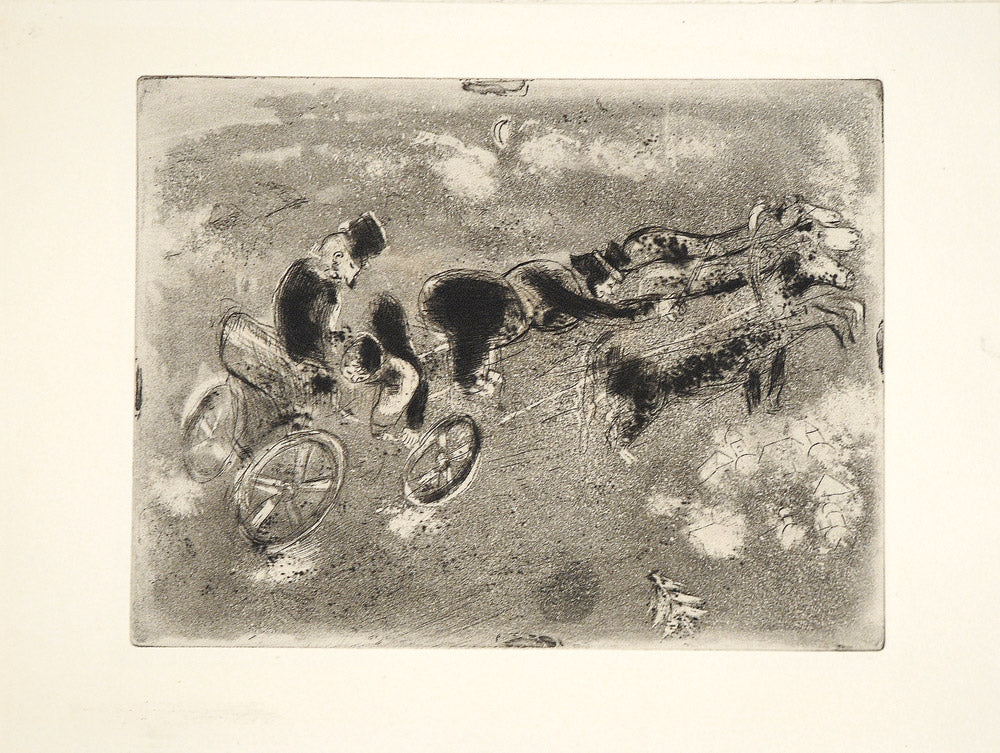
Marc Chagall, The Troika Galloping into the Night, 1948. Etching, 21 x 27.5 cm. Private collection.

‘In Ukraine there are no Jews. Nowhere – not in Poltava, Kharkov, Kremenchug, Borispol, not in Iagotin. You will not see the black, tear-filled eyes of a little girl, you will not hear the sorrowful drawling voice of an old woman, you will not glimpse the swarthy face of a hungry child in a single city or a single one of hundreds of thousands of shtetls.

Stillness. Silence. A people has been murdered. Murdered are elderly artisans, well-known masters of trades: tailors, hatmakers, shoemakers, tinsmiths, jewellers, housepainters, furriers, bookbinders; murdered are workers: porters, mechanics, electricians, carpenters, furnace workers, locksmiths; murdered are wagon drivers, tractor drivers, chauffeurs, cabinet makers; murdered are millers, bakers, pastry chefs, cooks; murdered are doctors, therapists, dentists, surgeons, gynecologists; murdered are experts in bacteriology and biochemistry, directors of university clinics, teachers of history, algebra, trigonometry; murdered are lecturers, department assistants, candidates and doctors of science; murdered are engineers, metallurgists, bridge builders, architects, ship builders; murdered are pavers, agronomists, field-crop growers, land surveyors; murdered are accountants, bookkeepers, store merchants, suppliers, managers, secretaries, night guards; murdered are teachers, dressmakers; murdered are grandmothers who could mend stockings and bake delicious bread, who could cook chicken soup and make strudel with walnuts and apples; and murdered are grandmothers who didn’t know how to do anything except love their children and grandchildren; murdered are women who were faithful to their husbands, and murdered are frivolous women; murdered are beautiful young women, serious students and happy schoolgirls; murdered are girls who were unattractive and foolish; murdered are hunchbacks; murdered are singers; murdered are blind people; murdered are deaf and mute people; murdered are violinists and pianists; murdered are three-year-old and two-year-old children; murdered are eighty-year-old elders who had cataracts in their dimmed eyes, cold transparent fingers and quiet, rustling voices like parchment; murdered are crying newborns who were greedily sucking at their mothers’ breasts until their final moments. All are murdered, many hundreds of thousands, millions of people.

This is not the death of individuals at war who had weapons in their hands and had left behind their home, family, fields, songs, books, customs and folktales. This is the murder of a people, the murder of homes, entire families, books, faith, the murder of the tree of life; this is the death of roots, and not branches or leaves; it is the murder of a people’s body and soul, the murder of life that toiled for generations to create thousands of intelligent, talented artisans and intellectuals. This is the murder of a people’s morals, customs and anecdotes passed from fathers to sons; this is the murder of memories, sad songs, and epic tales of good and bad times; it is the destruction of family homes and of burial grounds. This is the death of a people who had lived beside Ukrainian people for centuries, labouring, sinning, performing acts of kindness, and dying alongside them on one and the same earth’.

– Vasily Grossman, ‘Ukraine without Jews’, trans. Polly Zavadivker. Jewish Quarterly 58, no. 1 (2011): 13.

Grossman’s essay, originally titled ‘Ukraine bez yevreev’ in Russian, faced significant publication hurdles. The Red Army’s official newspaper, Krasnaya Zvezda, initially rejected the piece. It eventually found its way to print only in a shortened, Yiddish translation in Einikeit, the Jewish Anti-fascist Committee’s journal. The original Russian version remained unpublished during Grossman’s lifetime, until its discovery and publication in the journal Vek in 1990.

 

Around the broadcasting system of multiple transmitters

Photo: Shared by Stella Assange via Instagram|ABC News.

Around the interwebs …

Photo by Randy Fath on Unsplash.

Adam Gopnik reviews Charles Taylor’s new book, Cosmic Connections: Poetry in the Age of Disenchantment.

Victoria Emily Jones has a nice piece on New Mount Pilgrim’s Maafa Remembrance window.

Sailing to Byzantium: an exhibition of work by Olga Bakhtina.

Alfonse Borysewicz on art and transcendence.

Tyler Cowen’s discussion with David Bentley Hart is excellent. Here’s a taster: ‘There are people I know, in fact, people near here in Notre Dame, who are all terrifically intent on trying to revive a dying Christendom, because they think that would be the revival of Christianity in the West. They ally themselves to these reactionary figures like Victor Orbán. Whereas my ideal of what would be a brighter future for Christianity would be the final eclipse of that kind of conflation of Christianity with the interests of a particular civilization or culture or nation. I believe that’s a perfidious corruption. So, bright in what way? I would say that in many ways, the brightest future for Christianity may consist in the death of many of its institutions and of much of its cultural power’.

Mike Watson offers a defense of the Frankfurt School.

The Australian Association for the Study of Religion (AASR) has issued a CFP for their annual conference (29–30 November, in Canberra) on the theme ‘Thinking Religion in Place’.

Worthwhile piece by Eric Naiman about ChatGPT, reading Dostoevsky, writing [sic] essays, and the banality of ideas: ‘Users of ChatGPT don’t need the “heavenly bread” of intellectual freedom and individual authenticity; instead they want the grade and the degree that will lead to various forms of material bread after graduation. …. Readers of [The Brothers Karamazov] should understand that every time they use ChatGPT they are burning Christ at the stake’.

Excellent piece by Brian Boyd on Why We Need Amistics for AI: ‘Beneath a veneer of debate over how we should apply universal principles to novel technologies, our tech fights are a power struggle over who gets to count as “we” and who is left out — over who will rule whom. The result is that we often wind up going down technological paths unreflectively, seeking only pleasure and profit — and then are surprised to find things we don’t like. We also sometimes fail to go down technological paths whose ends we would have liked. We had better unlearn this habit, because a historic technological breakthrough is here in the form of generative AI. If we wish to decide together how we can use this breakthrough to live well, rather than having it choose for us, we must learn the practice of Amistics. … If we are to live well with AI, we must recognize and emphasize this level of ethical formation that is neither individual nor universal, not zero-sum but free-range. To act for the common good requires a community that understands its shared ends and goals. We must find ways for politics to enable meaningful decisionmaking to take place in actual communities and cultures, rather than in higher, more abstracted contexts’.

Speaking of the interwebs, I learned last week, via a Google search, that my father died last year. What a strange and estranged world we live with.

Talking books

Recently, Titus Olorunnisola, who serves as the Interim Director of Research at Whitley College, interviewed me about two of my recent publications – Imagination in an Age of Crisis and the T&T Clark Handbook of the Doctrine of Creation. Below is a revised transcript of that conversation.

TITUS: Why is art important in times of crisis?

ME: I remember seeing an image of a bombed-out National Library in Sarajevo in 1992. Among the ruins was a man playing the cello. I later learnt that his name is Vedran Smailović, that he is a Bosnian musician and that he was playing a fragment of music rescued from the Saxon State Library in Dresden after it was bombed in 1945 by British and American Forces. I was struck by this simple human action and what it might suggest about the possibility of seeking and making meaning amid even the most horrific of circumstances.

Of course, sometimes there may not be meaning to be had at all. At other times, the horror is so great that it silences us, leaves our bodies immobile, sucks all meaning out of life, renders things like ‘art’ to be an impossible indulgence – or worse.

But in time, if indifference doesn’t get the better of us, there can arise the possibility to respond to crises in other registers. And here, I think, is where the artist and those who receive art recognise something about arts’ capacity to come near to the truth of things and the artist’s capacity to witness to dislocation in ways that refuse to accept that the way things appear is the way that things must be or will be. This is about committing to being human in a particular direction.

Another way of approaching all this is to think of art as a way of paying attention, which involves refusing to deny, or forget, or bury the most uncomfortable truths of the human experience. Simone Weil referred to such attention as ‘the rarest and purest form of generosity’.

It is, of course, about a way of dignifying the human condition. But it’s more than that. It’s also something about how art and imagination are closely associated with our hopes, imagination being a prerequisite for understanding and nurturing hope.

TITUS: How do these convictions find shape in this particular book, Imagination in an Age of Crisis, and who is it written for?

ME: This book is the work of a diverse group of over 30 poets, art practitioners, and academics reflecting together on how the arts and theology inform – and are informed by – our imaginations. They help us see and interpret what is happening in places such as an Aboriginal cooking ritual, biodiversity loss, institutional responses to child sexual abuse, folk rituals, our experience of film, theatre, music, and literature. Their contributions assist us to discern the ways of Spirit and generate hope and empathy in our lives.

Poets do that through attention to language and reverence for mystery. Art practitioners do that by working closely with the ‘stuff’ of meaning both before and after the limits of rationality. And theologians do that through engagement with cultural practices and products as possible modes of epiphany and witness. And the book offers some record about that.

The book is written for those open to the possibility of discovering wider horizons of meaning in a messy world. It is also written for artists willing to entertain the possibility that they are engaged in serious theological work. And it is for those who believe – or who want to believe – that art and spirituality can be acts of defiant hope in the face of all that appears anything but hopeful.

TITUS: Why does this book matter for theology?

ME: It seems that one of the things that good art does is to shed light on the true nature of things; it broadens our horizons, it enriches our capacity to see, it alerts us to dimensions of reality that we had not seen before, and for which regular prose, sometimes, is not enough. This is a helpful way to think also about the task of theology.

The other thing I’d want to say here is that both art and theology are concerned with how we receive gifts concerned with particular ways of knowing. These are often pursued on the wager that there is the possibility of something like an epiphany or a connection. At their best, they are also an invitation to say ‘Yes’ to engaging in conversations concerned with opening up matters in ways that resist the temptations to tie up loose threads. This is important because, very often, the truth of things seems to be hidden in these threads.

TITUS: Turning to the creation book, you could have chosen to work on a book on any number of topics, so why did you choose to devote time and energy to put together a book on creation?

ME: I’ve asked myself that question a lot over the past 7 years, and whenever I skim through an inbox of around 3,000 emails related to this book, representing something of the privilege and challenge of working with over 70 contributors from all over the globe.

The answer to the question of why is, of course, multi-faceted. But let me name just three things:

First, it arises from my conviction that theologians must be concerned with the most pressing issues of our time. Incontrovertibly, these include the threats posed to our ecosystem. At the same time, and for various reasons, we are increasingly dislocated from the world. Such matters ought to be of pressing concern to theologians and to the communities their work serves.

Second, I wanted to work on the kind of book I would find helpful as a student or as a teacher. This is one of the reasons the chapters tend to be quite short and avoid, wherever possible, copious technical paraphernalia. But more importantly, it’s why the book attends to so many different themes. I wanted to expose the assumptions that we all have about the created world and how these assumptions influence what we think about all kinds of other things – like beauty, land, justice, time, evil, the bible, medicine, sport, and technology – and then, conversely, how what we think about such things affects how we think about and live with creation.

Finally, there is something too about the place that doctrines of creation have typically played and continue to play in Christian thought. Typically, when it is on the radar at all – and it’s very often missing, especially in ecclesiocentric theologies – Christian accounts of creation treat the idea as a great unifying theme in which many other ideas coinhere. I think this is unfortunate, not only because such approaches inevitably flatten out the rich multiplicity of voices and ideas about creation in the bible and elsewhere but also because of how such accounts serve the agendas of the powerful. I hope that this volume, with its multiplicity of voices, methodologies, and themes, might challenge such approaches in ways that open up and deepen our love for and fascination about this world and for the entire creation beyond. Of course, it will be up to others to judge whether or not the volume has achieved these aims.

Tempo

‘E il tempo che viviamo non è la fuga astratta e affannosa degli inafferrabili istanti: è questo semplice, immobile «mentre», in cui sempre già senza accorgercene siamo – la nostra spicciola eternità, che nessun affranto orologio potrà mai misurare’.

Giorgio Agamben, ‘Mentre’, 14 marzo 2024.

Cameras

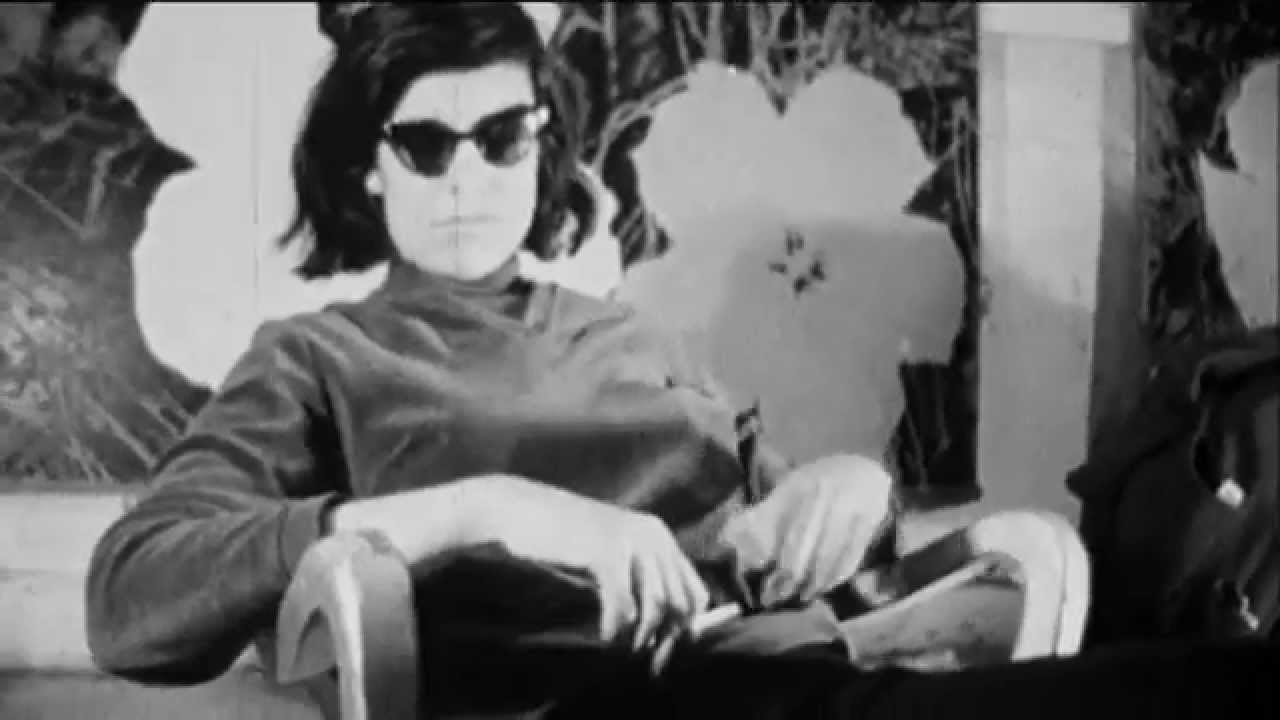
Still from Regarding Susan Sontag, a film by Nancy Kates, 2014.

‘Cameras miniaturize experience, transform history into spectacle. As much as they create sympathy, photographs cut sympathy, distance the emotions. Photography’s realism creates a confusion about the real which is (in the long run) analgesic morally as well as (both in the long and in the short run) sensorially stimulating. … Whatever the moral claims made on behalf of photography, its main effect is to convert the world into a department store or museum-without-walls in which every subject is depreciated into an article of consumption, promoted into an item for aesthetic appreciation. Through the camera people become customers or tourists of reality. … Bringing the exotic near, rendering the familiar and homely exotic, photographs make the entire world available as an object of appraisal. … The reason that humanism has become the reigning ideology of ambitious professional photographers – displacing formalist justifications of their quest for beauty – is that it masks the confusions about truth and beauty underlying the photographic enterprise’.

– Susan Sontag, On Photography (New York: Farrar, Straus & Giroux, 1977), 98, 100.

A Christmas Poem

Natalie Lennard, Born of Calamity, 2019. Giclee on Hahnemuhle Pearl Paper. Artist’s collection.

Sometimes I wonder
if Mary breastfed Jesus.
if she cried out when he bit her
or if she sobbed when he would not latch.

and sometimes I wonder
if this is all too vulgar
to ask in a church
full of men
without milk stains on their shirts
or coconut oil on their breasts
preaching from pulpits off limits to the Mother of God.

but then i think of feeding Jesus,
birthing Jesus,
the expulsion of blood
and smell of sweat,
the salt of a mother’s tears
onto the soft head of the Salt of the Earth,
feeling lonely
and tired
hungry
annoyed
overwhelmed
loving

and i think,
if the vulgarity of birth is not
honestly preached
by men who carry power but not burden,
who carry privilege but not labor,
who carry authority but not submission,
then it should not be preached at all.

because the real scandal of the Birth of God
lies in the cracked nipples of a
14 year old
and not in the sermons of ministers
who say women
are too delicate
to lead.

– Kaitlin Hardy Shetler

[Source: reddit]

Race and Christianity in Australia

Vernon Ah Kee, 'Austracism', 2003. Prints, digital print, printed in colour inks, from digital file, 120.0 x 180.0 cm. National Gallery of Australia, Canberra
Vernon Ah Kee, Austracism, 2003. Prints, digital print, printed in colour inks, from digital file, 120 x 180 cm. National Gallery of Australia, Canberra.

I have a new essay out: ‘Race and Christianity in Australia’, Post-Christendom Studies 4 (2019–2020): 25–74.

The opening paragraph reads:

The thesis of this essay is that racism in Australia has explicitly Christian roots. In particular, these roots find their beginnings in the European story of Christendom. To defend that claim, the essay does three things. First, it traces the history of racism in Australia, mapping how immigration policies and practices regarding assimilation following the Second World War expose longstanding commitments to the idea of an Australia that is both “white” and “Christian.” Second, it explores how the roots of such racism intersect with and are sponsored by the “biological heresy” of Christendom and its practice of both politicizing and making “barbarians” of “the other.” Finally, it offers three brief theological reflections on the possibilities of an alternative Christian witness amidst the conditions mapped in the first two sections. Here the concerns are with conceptions of power, with what it means to speak of the Christian community as “the body of Christ,” and with the theological task itself.

You can read the rest here.

Summoned to be Christian Amidst a Global Pandemic

eugene-chystiakov-_-Xn0Ttl8hw-unsplash.jpg

A guest post by Trevor Hart

I’ve been reading a book by Timothy Radcliffe entitled Alive in God: A Christian Imagination. And it has raised some troubling questions for me about Christian response to the pandemic. But in one chapter he cites the third century Bishop of Alexandria, Dionysius, writing in the midst of a terrible plague in North Africa in 260CE which killed a third of the population there. In an Easter letter Dionysius writes as follows:

Most of our fellow Christians showed unbounded love and loyalty, never sparing themselves and thinking only of one another. Heedless of danger, they took charge of the sick, attending to their every need and ministering to them in Christ, and with them departed this life serenely happy; for they were infected by others with the disease, drawing on themselves the sickness of their neighbours and cheerfully accepting their pains. Many, in nursing and curing others, transferred their death to themselves and died in their stead. The best of our brothers and sisters lost their lives in this manner, a number of priests, deacons and laymen and women winning high commendation so that death in this form, the result of great piety and strong faith, seems in every way the equal of martyrdom.

Dionysius, Radcliffe notes, contrasted such behaviour with that of the wider public, many of whom, at the first sign of the disease, pushed its victims aside (even members of their own families) and left them to die alone or in colonies of disease, leaving corpses without proper burial, in order to protect themselves from infection.

It’s hard to read stuff like this in the current climate. Despite the very real differences between our situation and that described by Dionysius, there are just too many resonances. If parallels are sought, then it is not, in our case, Christians who are known and lauded for their willing self-exposure to risk, but NHS staff and many other (easily forgotten) ‘frontline workers’ who are doing so daily, because the demands of their work and their sense of duty respectively compel them to.

Why should the parallel be drawn at all, you may ask? And why should Christians even reckon with the possibility (unless, of course, they are already frontline workers) of making themselves available to be put at risk? What good would that do? What use could it possibly serve? That’s a comforting set of questions to ask, perhaps, for those of us doing as we are told by our political leaders and remaining for the most part behind closed doors. But what is troubling me is the growing suspicion that there are some perfectly good answers to them; answers that ought at least to be reckoned with rather than conveniently swept aside in a rush to social conformism.

Dionysius refers to his fellow-Christians’ bravery as ‘the result of great piety and strong faith’, and it is hugely significant, of course, that he writes his account of their behaviour precisely in an Easter letter to his diocese – Easter, the same season in which we find ourselves today. What, then, was the substance of this ‘strong faith’ and the driver for their ‘piety’? Not, I think, the wrong-headed (and finally selfish) lack of respect for life that thinks it can and will ‘earn heaven’ by stepping up and volunteering for an early exit strategy. But rather two convictions in particular: First, the conviction that, in the resurrection of Jesus from death, God has shown and promised us that death is, however unwelcome and unpleasant, nonetheless not something to be afraid of, for it has no final hold on us. And, second, the conviction that in Jesus God defines ‘godliness’ (‘piety’) for us not in terms of cold showers and clean thoughts, but in the willingness to face even suffering and death in order to extend God’s love to others by meeting their needs.

You can probably see where this is heading, and I don’t like it any more than you do. And you can rest assured that I’m not headed towards any firm conclusion – just sharing an uncomfortable question or two for those of us profess an Easter faith. Because I suspect that there are things that those who, while being frightened of suffering and dying (who isn’t?), refuse finally to be afraid of death, and who are called to place the lives and well-being of others (especially the most vulnerable and disadvantaged) before any attempts to secure our own, might in fact be able to do, and to do without being socially irresponsible.

There have already been calls for volunteers to assist with various public tasks, and so provide vital support for key workers. As the unpicking of lock-down gradually begins there are likely to be many more such opportunities as lots of people, we are already being told, are fearful of venturing out until they can know that they are ‘secure from the risk of infection and death’. Christians, it seems to me, cannot in good faith demand that security for themselves, and might be in an ideal position to respond to such calls, no matter what is involved. Of course, lots of others are likely to respond too. My point is simply that Christians have no excuse not to.

But let me be more radical still! One of the more distressing aspects of the pandemic so far has been the way the sick have been isolated from ordinary human contact, and the dying often compelled to die in circumstances where, for fear of infection, not just the presence of loved ones but even the ordinary touch of human hands has been denied them. Of course they are cared for with skill and compassion. But the sterile environment of barrier nursing cannot help robbing them of the sort of contact which matters so much to our basic sense of humanity. In Jesus’ day, too, sickness tended to result in the isolation of its victims from ordinary social contexts and ways of behaving. That’s why, when Jesus touched lepers in healing them he not only breached all manner of social and religious regulations, but gave them back their humanity in the process – refusing to leave them treated as though they were ‘untouchables’ and less than fully human.

Touch, being held, matters to us as human beings from birth all the way to death. And no one, if possible, should die with the indignity of being refused the touch of another human hand the opportunity to be held in their moment of dying. That COVID-19 victims are not currently permitted that comfort is of course, a sensible strategy to avoid the needless infection of doctors, nurses, and other NHS staff.

But what if there were people who, without placing undue strain on our health services, were willing to make themselves available simply to sit with the dying, doing nothing for them other than extending that last unprotected human presence and contact – a gauntlet-less hand and an unmasked face? People able to do this because, although they, too, longed to carry on living, they had no good reason to fear death, and so no good excuse for not offering. People summoned to do so, in fact, by a God who has himself ‘healed our diseases’ not by remote fiat or from behind a sanitary prophylactic barrier, but by touching us, ‘bearing our infirmities’, making his own life vulnerable to suffering and death in order to love us and hold us through dying and death, without letting us go. Loving us all the way into that new creation where neither suffering nor death will have any place. What if there were a people like that?

Benedict Rogers on the International Crisis Group’s latest report

Burma is ruled by one of the world’s most brutal regimes, guilty not only of suppressing democracy but of causing one of the world’s worst humanitarian crises. In response, the International Crisis Group (ICG)has lost the plot.

Earlier this year, Cyclone Nargis hit Burma. Unlike almost any other government in response to a natural disaster, the junta in Burma initially refused, and then restricted and diverted international aid efforts. Aid was stolen by the regime (pdf). Burmese people who tried to help deliver aid were arrested. The little aid that was officially distributed was given for propaganda purposes and often taken back when the photocalls were over. At least 140,000 people died and 2.5 million left homeless in the wake of the regime’s deliberate neglect.

Following the cyclone another humanitarian crisis has unfolded, this time in western Burma (pdf)Chin State (pdf) has been hit by a famine caused by a plague of rats who multiply due to flowering of bamboo, a natural phenomenon that occurs every 50 years. True to form, the regime did nothing to prepare the people for the anticipated famine and has actively obstructed aid efforts. Officials took the World Food Programme to the wrong area, causing them to declare there was no famine. Since then, the WFP has revised its view – but the regime continues to block attempts to help the starving Chin people.

Burma’s military is continuing an offensive against ethnic peoples in eastern Burma, causing further humanitarian misery. Since 1996, more than 3,200 villages have been destroyed, and a million people displaced. Civilians are shot at point-blank range, or raped, taken for forced labour or used as human minesweepers. Children are taken off the streets andforced to join the Burmese army, which has the highest number of child soldiers in the world. Over 2,100 political prisoners languish in jail, double the number of last year, subjected to horrific torture, and Aung San Suu Kyi, Burma’s pro-democracy leader and Nobel laureate, marked 13 years in house arrest last week.

The International Crisis Group says this is all our fault. In one of the most extraordinary reports ever produced by a responsible and until-now respected organisation, ICG provides a subtle defence of the junta and blames the international community for focusing too much on “the political struggle”. It was understandable, ICG suggests, that the regime “hesitated to provide full, unfettered access for anyone claiming to be doing relief work”, because the west has been putting the junta under so much pressure to stop killing its people. Western media is at fault too, according to ICG, for showing images of dead bodies being dumped by regime officials in the river – something that was “very embarrassing” for the poor generals.

While grudgingly conceding that the root causes of the crisis are political, ICG appears to reject the notion that the solutions are therefore political too. The report rightly calls for more aid to Burma, and support for civil society projects, and warns that the country is on the verge of a major humanitarian crisis. I agree. The stories and statistics speak for themselves. But ICG goes on to perpetuate the lie that pro-democracy activists oppose aid. In reality, it is campaign groups that have called for more aid.

It was the Burma Campaign UK and Christian Solidarity Worldwide that led the effort last year to get the UK government to increase aid to Burma – with success. We have been calling for more funding for civil society and democracy groups, for cross-border humanitarian relief and for UN engagement for years (PDF). Much of our time has been spent on getting the generals to talk with the UN, the democracy movement and the ethnic groups (PDF). What we have opposed is ICG’s call for money to go into the pockets of the regime – for the simple reason that the junta will use such finance to expand their army, buy more guns and kill more people. I thought ICG was about conflict prevention. Now it seems they are about regime protection.

[Source: Guardian]

Be Careful What You Read to Your Children

Over at Stories For Speakers And Writers, Geoff introduces us to a book Three Cups of Tea, by Greg Mortensen, in which Mortensen pays tribute to his parents and reveals the secret to how he was inspired to be a mountaineer and then a builder of schools in the remote parts of Pakistan:

‘As a child in Tanzania, my parents Dempsey and Jerene Mortensen, read fastidiously to us at bedtime by candlelight and, later, electricity. These stories filled us with curiosity about the world and other cultures. They inspired the humanitarian adventure that shaped my life.’ – Greg Mortensen and David Oliver Relin, Three Cups of Tea: One Man’s Mission to Promote Peace…One School at a Time (New York: Penguin Books, 2006), 334-335.

Geoff has also posted a review of the book at Reviewing Books and Movies.

Children’s Television

The recent kerfuffle about the new afternoon broadcast time for Playschool indicates many parents really care about children’s TV. But there are much bigger issues at stake. The Australian Communications Media Authority is carrying out a review of Children’s Television Standards that has attracted a wide range of submissions, covering everything from junk food advertising to a new digital children’s channel. However, industry veteran Patricia Edgar says the debate should be about content and adapting to the new media environment, which has changed dramatically since the standards were introduced in the mid-1970s. Listen here.

Stein’s 10 Commandments of Fatherhood

Over at A Family Runs Through It, Phil has posted a really helpful synopsis of the final chapter of Ben Stein’s book, Tommy and Me. I thought they were so cool that I ordered the book straight away … for the bargain price of £0.06. I also thought that Phil’s synopsis deserved reposting so here they are again:

Ben Stein’s Ten Commandments of Fatherhood:

1. Time is of the essence. Spend large amounts of time with your child. Kids don’t want “quality time”… They want you to be there all the time.

2. Share your strength with your child. Be an ally, not an adversary. Share with him stories of your own fears, failings, and anxieties and how you overcame them.

3. Do not expect your child to make up for your own losses when you were a child. Let your kids pursue their own hopes and dreams.

4. Look for the good in your child and praise it. Children are nurtured by praise as plants are nurtured by water. Deny it to them at their peril and yours. Children who are told that they can succeed in fact usually do succeed.

5. Do not allow your children to be rude. Being polite is a basic foundation of human interaction, and kids will not succeed in life if they’re surly and disrespectful.

6. Patience is indispensable. Children’s behavioral flaws cannot be corrected by flipping a switch. It takes a long time and a lot of patience to teach positive behaviors. If you are an impatient, demanding, short-fused dad, you will get that irritable, demanding kind of kid.

7. Teach your child and let him teach you. Children will tell you what they want and need. Dads get into trouble when they do not listen to their kids and dismiss their feelings as not important. Also, your child should get the benefit of your wisdom and experience about life, so tell him what you know about the world around you. Learn from your children and let them learn from you.

8. Value your child for what he is, not for what you think he should be. I want my son to know that whatever he becomes in the future, he is prized just for being my son, right now.

9. Raising a child is a job for Mom and Dad. Children with absent fathers are wounded for the balance of their lives. Dad should and must be in there pitching along with Mom, helping out as an equal partner in the tough job of raising children. The true heroes of our generation are at home with their kids.

10. Being a Daddy is priority number one. When you decide that your kids come before your sales quota or your poker-playing schedule or your overtime to make partner, then you will find that all of the other pieces of Daddyhood fall into place – teaching and learning, patience, looking for the good and praising it. When you put your kids first, you are far less alone in this world. What’s more vital, so are they.

Thanks Phil.

We want to be good dads

The first post on a new blog always feels weird. Am I meant to be trying to set a tone, or outline parameters, or provide some sort of justification for why this blog exists and why people might be interested in reading it, or just get stuck into writing some thoughts?

Today is my own father’s birthday. It’s also the day after Father’s Day here in Scotland. Yesterday, my wife and 14-month old daughter took me out to lunch. Thinking that the restaurants would be booked-out with families celebrating Father’s Day, we pre-booked a place. In spite it being a great place that’s usually packed for lunch, we were the only one’s there. Of course, there may be a plethora of reasons for this that I don’t want to list here, but it does make one wonder what is going on and whether it is indicative of broader trends in our society.

And then this morning, I began the day with reading some discouraging and frightening statistics. Of course, for better or worse, statistics can’t tell the whole story, but they can reveal something. In this case, some disturbing trends:

  • On Mother’s Day the most phone calls are made. On Father’s Day the most collect phone calls are made.
  • In the last twenty years the percentage of single dads has more than doubled, from 10% to 23% of all single-parent households.
  • And this from today’s Time magazine:

Worldwide, 10% to 40% of children grow up in households with no father at all. In the U.S., more than half of divorced fathers lose contact with their kids within a few years. By the end of 10 years, as many as two-thirds of them have drifted out of their children’s lives. According to a 1994 study by the Children’s Defense Fund, men are more likely to default on a child-support payment (49%) than a used-car payment (3%). Even fathers in intact families spend a lot less time focused on their kids than they think: in the U.S. fathers average less than an hour a day (up from 20 minutes a few decades ago), usually squeezed in after the workday.

In Australia, the figure of about 4.5 minutes per day has been cited. OUCH!

Whichever group of statistics and studies you believe (see, for example here or here), the almost unanimous consensus is that dad’s are important. This blog exists to do one thing: encourage dads in their dadding – biological dads, stepdads, single dads, all dads. It’s not about a men’s movement, nor about undermining the role of mothers. It’s about the irreplaceable gift that fathering is – to kids, to mums, to society, to dads – not only when the kids are at home, but before they get there and after they leave.

An Israeli study found that the more frequently a father visited the hospital of an infant who is prematurely born, the more rapidly the infant gained weight and the more quickly the infant was able to leave the hospital. U.S. studies show that by the age of six months, the more children have contact with dad, the higher their levels of mental competence and psycho-motor functioning, and the greater their level of trust and friendliness.

So what I hope to do with this blog is to pass on stories, books, sites, films, music and ideas that I find around the traps that encourage me with my dadding. I’m pretty new at this dad thing. I really hope that others might be encouraged to contribute what they find useful or otherwise and have learnt – or are learning – along the way. None of us are experts. Nor, do I suspect, do any of us want to be. We want to be good dads … whatever it takes.