Poetry

‘The Second Coming’, by W. B. Yeats

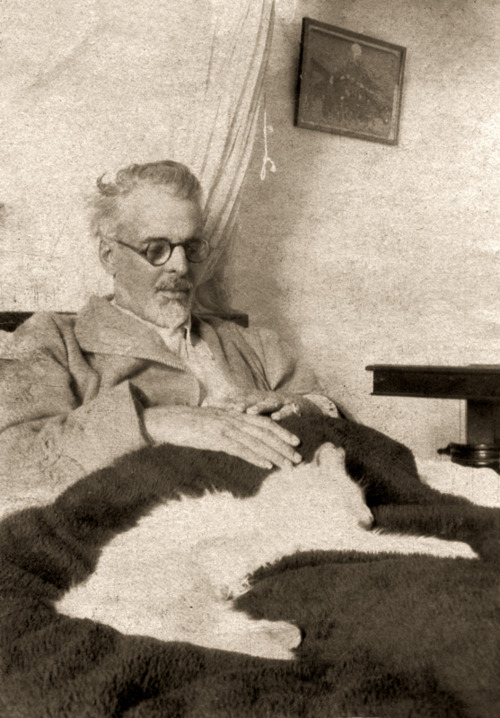
W.B. Yeats on his deathbed, 1939 by Georgie Hyde-LeesTurning and turning in the widening gyre
The falcon cannot hear the falconer;
Things fall apart; the centre cannot hold;
Mere anarchy is loosed upon the world,
The blood-dimmed tide is loosed, and everywhere
The ceremony of innocence is drowned;
The best lack all conviction, while the worst
Are full of passionate intensity.

Surely some revelation is at hand;
Surely the Second Coming is at hand.
The Second Coming! Hardly are those words out
When a vast image out of Spiritus Mundi
Troubles my sight: somewhere in sands of the desert
A shape with lion body and the head of a man,
A gaze blank and pitiless as the sun,
Is moving its slow thighs, while all about it
Reel shadows of the indignant desert birds.
The darkness drops again; but now I know
That twenty centuries of stony sleep
Were vexed to nightmare by a rocking cradle,
And what rough beast, its hour come round at last,
Slouches towards Bethlehem to be born?

– W. B. Yeats, ‘The Second Coming’, in The Collected Works of W. B. Yeats, Vol. 1: The Poems (New York: Simon & Schuster, 1996), 187.

[Notes: Penned 1919, in the aftermath of WWI, ‘The Second Coming’ was originally titled ‘The Second Birth’. The image, taken by Yeats’s wife Georgie Hyde-Lees, depicts Yeats on his deathbed in 1939.]

advent: two poems

‘Advent’, by Donald Hall

When I see the cradle rocking
What is it that I see?
I see a rood on the hilltop
     Of Calvary.

When I hear the cattle lowing
What is it that they say?
They say that shadows feasted
     At Tenebrae.

When I know that the grave is empty,
Absence eviscerates me,
And I dwell in a cavernous, constant
     Horror vacui.

– Donald Hall, ‘Advent’, in The Back Chamber: Poems (New York: Houghton Mifflin Harcourt, 2011), 22.

‘A Praise in Advent’, by Arnold Kenseth

See, as we stumble in the Advent snows,
God comes to fathom us. He sends his Son,
A gentleness by whom our fear’s undone,
A jubilance who overcomes our woes.

At first, we hold him in the ancient picture:
Skoaled by great angels, crooned by watching beasts,
Thick-footed shepherds by his side, deep frosts;
Love’s history: for you and me hope’s texture.

Now he is with us, at our village stones,
Fingering the mortar, testing. His mirth
Assaults our streets, and daily he goes forth
Troubling our elegant houses with unknowns

That were and are before whatever is
Began to be. By him was made the air,
Sparrows, eagles, Asias, the sweet despair
Of the free mind. All honest things are his.

He is the holy one we waited for, the Word
Who speaks to us who stammer back, the plot
Against the rich and poor, the Gordian knot
Our wit cannot untie. He is time’s Lord.

Thus, shall we sing him well these Christmas days
And at his birth-feast practice with him praise.

– Arnold Kenseth, ‘A Praise in Advent’, in The Ritual Year: Christmas, Winter, and Other Seasons: Poems (Amherst: Amherst Writers and Artists Press, 1993), 90.

Poems of Devotion. A Review

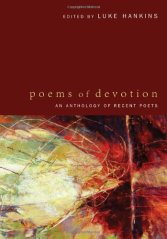
Poems of DevotionLuke Hankins (ed.). Poems of Devotion: An Anthology of Recent Poets (Eugene, OR.: Wipf and Stock, 2012). 236pp; ISBN: 978-1-61097-712-8

A guest-review by Mike Crowl.

Luke Hankins is not quite thirty. He’s already published a highly regarded book of poems, Weak Devotions, in which he ‘wrestles with the issues Donne, Herbert, Hopkins … also found worthy of their most impassioned work’ (John Wood), and a chapbook of translations from the French poems of Stella Vinitchi Radulescu (three of her poems are included in this book). He is also senior editor of the Asheville Poetry Review.

In Poems of Devotion, Hankins is aiming to present to the modern reader a substantial collection of poems on the theme of devotion, from a wide range of poets – American, English, and other nationalities, including some translations. If the word ‘devotion’ arouses thoughts of prissy, sappy pseudo poems that barely scratch the surface, you will find Hankins’ collection eschews such works; much of what is here is tough, painful, meditative, worshipful, and certainly deep enough to call you back again and again.

Hankins presents poets who are willing to wrestle with God. Many of them come from angles that are anything but devotional in the generally accepted sense. Some know from the outset where they’re going, but Hankins has looked more for poets who appear to work out their experience as they go along. As he writes in his introduction: ‘Great poems are – if not invariably, at least most often – an unfolding, not only for the reader, but for the poet in the process of composing’. And he quotes fellow poet, Charles Wright: ‘Writing is listening. Religious experience is silent listening and waiting. I have always been able to tell whether something I am writing is genuinely an expression of revelation or if it’s just me exercising my intellect. I can feel the difference, see it and taste it, but I don’t know how I can do that’. In the poems collected here, poetry is for the most part a means of meditating rather than an experience recounted.

That is not to say that these are floppy works without poetic structures: subtle rhymes and rhythms abound, the last lines are often a revelation; sharp metaphors of atmosphere and the spirit and creation are evident on every hand. The poets have taken their original searchings and crafted them well.

Many of these poets are not ‘saints’ in any ordinary sense, though they bring themselves to understand the need to submit to God’s will, even when it seems at odds with their very being, or when they haven’t found the answer they set out to look for. Old poets still look for answers in their old age. (Leonard Cohen has a couple of very good prose poems, for instance). There is also great joy and wonder (for example, in Luci Shaw’s Mary’s Delight; Shaw isn’t a poet I’ve greatly admired in the past, but this is a beauty) and praise (several poems are modern psalms) and worship (Thomas Merton’s Evening: Zero Weather, for instance).

Then there are the strange poems: Amit Majmudar’s extraordinary long piece about the angel we generally know as Satan; Michael Schiavo’s odd ‘dub versions of Shakespeare’s sonnets’, Bruce Beasley’s long, collage-like ‘Damaged Self-Portrait’.

Hankins offers seventy-seven poets in all. Some have only one poem, some have several, some provide several parts of a larger poem. But there’s no sense of stinting on the poets here; each one has room to breathe. There are some familiar names – T.S. Eliot, Theodore Roetke, E.E. Cummings, R.S. Thomas, Denise Levertov, Richard Wilbur – but the majority are unfamiliar – to me, anyway, and I suspect to many readers of the book.

The poems are book-ended by the substantial introduction, and a reprint of an interview between Hankins and Justin Bigos, which gives some background to Hankins and his poetic stance.

‘Iolaire’, by Donald S. Murray

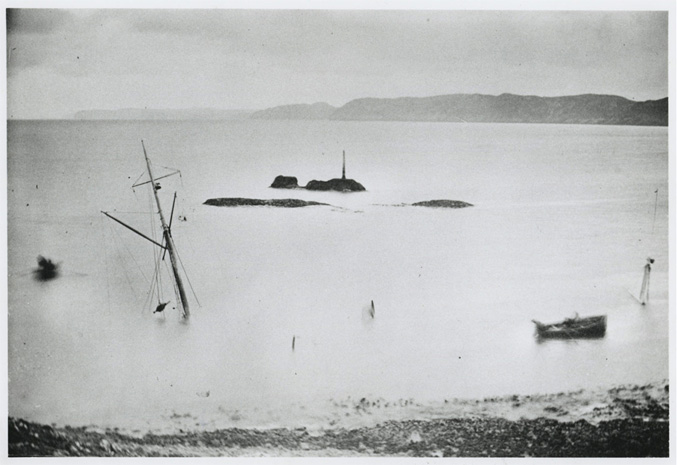
Iolaire Disaster

Donald Murray, who is originally from Lewis but now lives in Shetland, has shared a very moving (and very Calvinist!) poem about the Iolaire Disaster in 1919 for Remembrance Day 2013:

Sometimes we still sit upon that ledge
and consider the dark fervour of the waves,
wondering why some of us went under
while others clung with every fibre and were saved.
There are no answers to that question. Fortune
(whatever scholars tell us) does not favour the brave
or the virtuous. It rescued some
who could be wicked, hard and wretched ones enslaved
to drink or women, and swept aside
the good, the kind, those who each day forgave
others. We only know a rope was hurled
and we possessed both grip and faith
strong enough to hold it. Nothing else is known to us,
all as dark, intangible as the fervour of these waves.

‘The Good Man in Hell’, by Edwin Muir

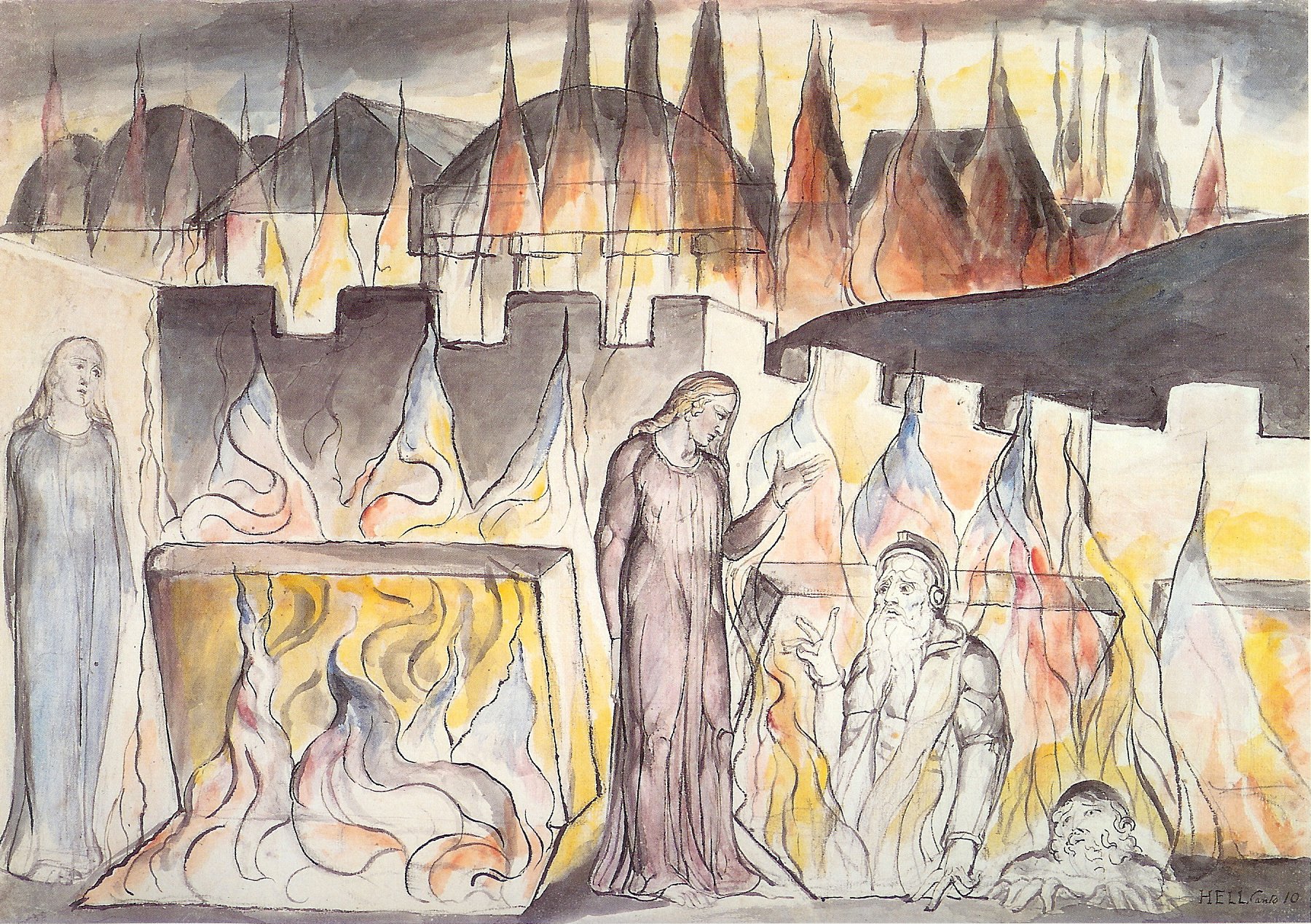
Blake Dante Hell X Farinata

If a good man were ever housed in Hell
By needful error of the qualities,
Perhaps to prove the rule or shame the devil,
Or speak the truth only a stranger sees,

Would he, surrendering to obvious hate,
Fill half eternity with cries and tears,
Or watch beside Hell’s little wicket gate
In patience for the first ten thousand years,

Feeling the curse climb slowly to his throat
That, uttered, dooms him to rescindless ill,
Forcing his praying tongue to run by rote,
Eternity entire before him still?

Would he at last, grown faithful in his station,
Kindle a little hope in hopeless Hell,
And sow among the damned doubts of damnation,
Since here someone could live and could live well

One doubt of evil would bring down such a grace,
Open such a gate, all Eden would enter in,
Hell be a place like any other place,
And love and hate and life and death begin.

– Edwin Muir, ‘The Good Man in Hell’ in Collected Poems (London: Faber and Faber, 1960), 104.

Sunday Hymn: ‘We sing a love that sets all people free’

wind man

We sing a love that sets all people free,
that blows like wind, that burns like scorching flame,
enfolds the earth, springs up like water clear:
come, living love, live in our hearts today.

We sing a love that seeks another’s good,
that longs to serve and not to count the cost,
a love that, yielding, finds itself made new:
come, caring love, live in our hearts today.

We sing a love, unflinching, unafraid
to be itself, despite another’s wrath,
a love that stands alone and undismayed:
come, strengthening love, live in our hearts today.

We sing a love that, wandering, will not rest
until it finds its way, its home, its source,
through joy and sadness pressing on refreshed:
come, pilgrim love, live in our hearts today.

We sing the Holy Spirit, full of love,
who seeks out scars of ancient bitterness,
brings to our wounds the healing grace of Christ:
come, radiant love, live in our hearts today.

– June Boyce-Tillman

[Image: Svetlana Lazarova]

Sunday Hymn: ‘On the turning away’

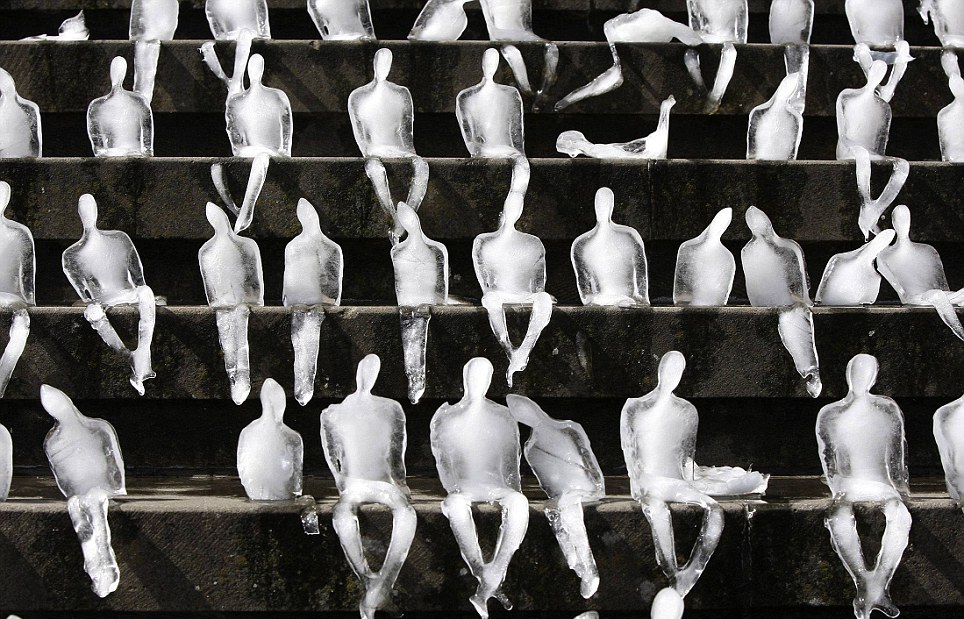
Ice people

On the turning away
From the pale and downtrodden,
And the words they say
Which we won’t understand.
‘Don’t accept that what’s happening
is just a case of others’ suffering
Or you’ll find that you’re joining in
The turning away’.

It’s a sin that somehow
Light is changing to shadow,
And casting its shroud
Over all we have known.
Unaware how the ranks have grown,
Driven on by a heart of stone,
We could find that we’re all alone
In the dream of the proud.

On the wings of the night
As the daytime is stirring,
Where the speechless unite
in a silent accord.
Using words you will find are strange,
Mesmerised as they light the flame,
Feel the new wind of change
On the wings of the night.

No more turning away
From the weak and the weary.
No more turning away
From the coldness inside.
Just a world that we all must share,
It’s not enough just to stand and stare.
Is it only a dream that there’ll be
No more turning away?

– David Gilmour & Anthony Moore

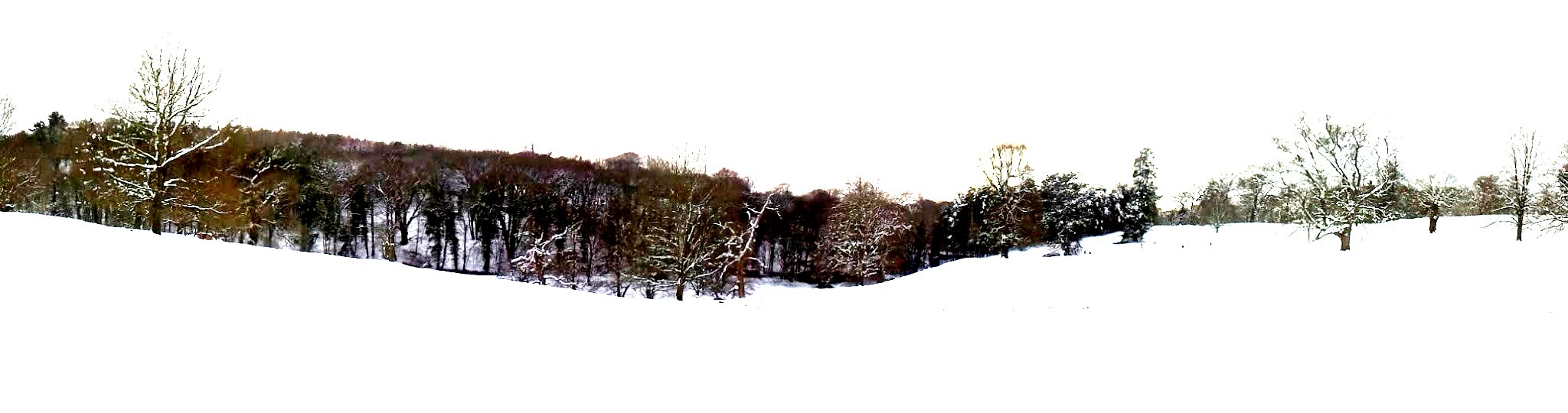
Pinkfoot, Hawarden

2013-03-24 17.34.26

Drink to the dregs the
winter’s fracture and
sun’s terminal
stretch and
follow the snow-lined
Broughton Brook.

Fly south-west
over Beeches Wood
toward the receding of
a tide once
certain but
now a tired
unknowing.

– Jason Goroncy, March 2013

‘Resurrection’, by R. S. Thomas

Easter. The grave clothes of winter
are still here, but the sepulchre
is empty. A messenger
from the tomb tells us
how a stone has been rolled
from the mind, and a tree lightens
the darkness with its blossom.
There are travellers upon the road
who have heard music blown
from a bare bough, and a child
tells us how the accident
of last year, a machine stranded
beside the way for lack
of petrol, is crowned with flowers.

‘They set up their decoy’, by R. S. Thomas

They set up their decoy
in the Hebrew sunlight. What
for? Did they expect
death to come sooner
to disprove his claim
to be God’s son? Who
can shoot down God?
Darkness arrived at
midday, the shadow
of whose wing? The blood
ticked from the cross, but it was not
their time it kept. It was no
time at all, but the accompaniment
to a face staring,
as over twenty centuries
it has stared, from unfathomable
darkness into unfathomable light.

– R. S. Thomas, Counterpoint (Newcastle upon Tyne: Bloodaxe Books, 1990), 38.

‘Open the Doors!’, by Edwin Morgan

Open the doors! Light of the day, shine in; light of the mind, shine out!

We have a building which is more than a building.
There is a commerce between inner and outer,
between brightness and shadow, between the world and those who

think about the world.

Is it not a mystery? The parts cohere, they come together
like petals of a flower, yet they also send their tongues
outward to feel and taste the teeming earth.
Did you want classic columns and predictable pediments? A
growl of old Gothic grandeur? A blissfully boring box?
Not here, no thanks! No icon, no IKEA, no iceberg, but

curves and caverns, nooks and niches, huddles and
heavens syncopations and surprises. Leave symmetry to
the cemetery.
But bring together slate and stainless steel, black granite
and grey granite, seasoned oak and sycamore, concrete
blond and smooth as silk – the mix is almost alive – it
breathes and beckons – imperial marble it is not!

Come down the Mile, into the heart of the city, past the kirk
of St Giles and the closes and wynds of the noted ghosts of
history who drank their claret and fell down the steep
tenements stairs into the arms of link-boys but who wrote
and talked the starry Enlightenment of their days –
And before them the auld makars who tickled a Scottish king’s
ear with melody and ribaldry and frank advice –
And when you are there, down there, in the midst of things,
not set upon an hill with your nose in the air,
This is where you know your parliament should be
And this is where it is, just here.

What do the people want of the place? They want it to be
filled with thinking persons as open and adventurous as its
architecture.
A nest of fearties is what they do not want.
A symposium of procrastinators is what they do not want.
A phalanx of forelock-tuggers is what they do not want.
And perhaps above all the droopy mantra of ‘it wizny me’ is
what they do not want.
Dear friends, dear lawgivers, dear parliamentarians, you are
picking up a thread of pride and self-esteem that has been
almost but not quite, oh no not quite, not ever broken or
forgotten.
When you convene you will be reconvening, with a sense of not
wholly the power, not yet wholly the power, but a good
sense of what was once in the honour of your grasp.
All right. Forget, or don’t forget, the past. Trumpets and
robes are fine, but in the present and the future you will
need something more.
What is it? We, the people, cannot tell you yet, but you will know about it when we do tell you.
We give you our consent to govern, don’t pocket it and ride away.
We give you our deepest dearest wish to govern well, don’t say we
have no mandate to be so bold.
We give you this great building, don’t let your work and hope be other than great when you enter and begin.
So now begin. Open the doors and begin.

‘Open the Doors!’ was originally written for the opening of the Scottish Parliament, 9 October 2004. Hearing a section of it read in the context of morning Eucharist, however – as I did this morning as part of the missio – gave a wonderfully fresh sense to it, and to the Supper too.

‘He atones not with blood’, by R. S. Thomas

He atones not with blood
but with the transfusions
that are the substitute of its loss.

Under the arc-lamps
we suffer the kisses
of the infected needle,

satisfied to be the saviour
not of the world, not
of the species, but of the one

anonymous member
of the gambling party
at the foot of the cross.

– R. S. Thomas, Counterpoint (Newcastle upon Tyne: Bloodaxe Books, 1990), 38.

Samuel Johnson, 1709–84

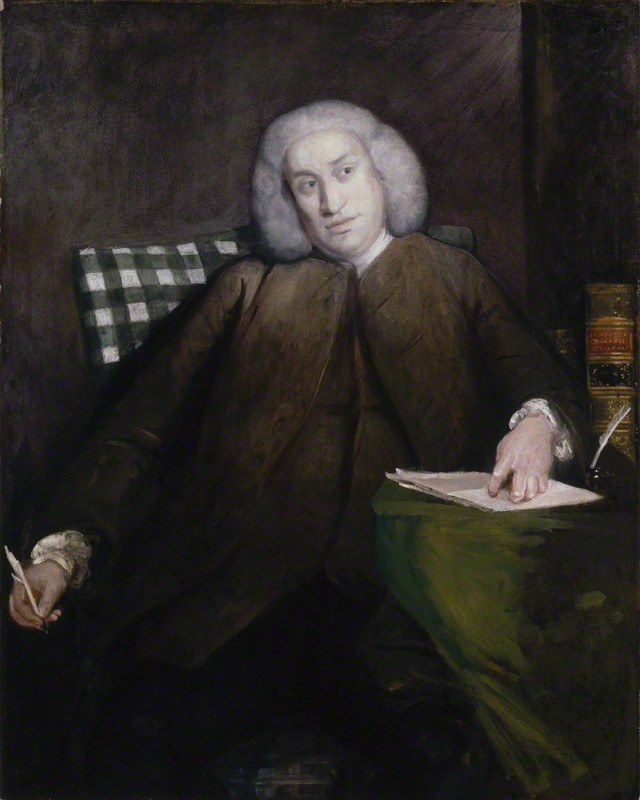
'Samuel Johnson', by Sir Joshua Reynolds. Oil on canvas, 1756–1757. 1276 mm x 1016 mm. National Portrait Gallery, London.

‘Samuel Johnson’, by Sir Joshua Reynolds. Oil on canvas, 1756–1757. 1276 mm x 1016 mm. National Portrait Gallery, London.

The small off-white cardboard
plaque says that you were
plagued with nervous tics,
a victim of melancholia, and
a bit of a gasbag.
That may be true.
But Sir Joshua Reynolds (1723–92)
has made you appear
already in your Hades;
ashen, and clad in rags
already the colour of
the dust (of which you were formed
and to which you have long returned),
and all but abandoned for the
company of friends who gave you life;
and forgotten but for
the Dictionary that bears your name.
Certainly, you now hang alongside
a most uninteresting tribe,
and unaware, it seems, that
the adventurous and handsome Joseph Banks
hangs not 30 metres from you
in the next room, and that
the inspiring Charles Kingsley – and his fishing pole –
hangs on the wall in the room above.

– Jason Goroncy

‘Deixa a Cúria, Pedro!’, by Pedro Casaldáliga

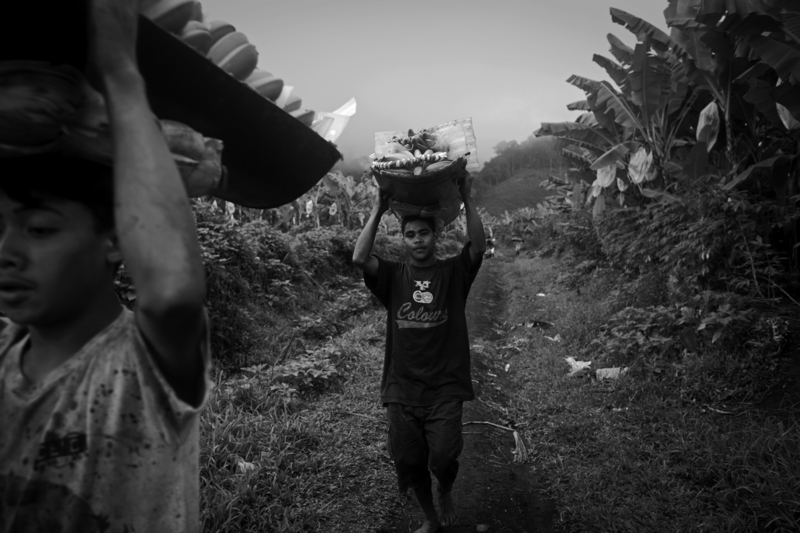
BANANA PLANTATION WORKERSPedro Casaldáliga, who is bishop emeritus of São Félix do Araguaia, Brazil, has penned what I think is a challenging poem – ‘Deixa a Cúria, Pedro!’ – in response to Benedict XVI’s announced retirement. Here is an English translation of the poem:

Leave the Curia, Peter,
disassemble the Sanhedrin and the walls,
order all the impeccable scrolls to be changed
to words of life and love.

Let us go to the garden of the banana plantations,
undercover and by night, at any risk,
for there, the Master sweats the blood of the poor.

The tunic/vestment is this humble disfigured flesh,
so many cries of children unanswered,
and memories embroidered with the anonymous dead.

A legion of mercenaries besieges the frontier of the rising dawn
and Caesar blesses them in his arrogance.
In the tidy bowl, Pilate, legalistic and cowardly, washes himself.

The people are just a “remnant”,
a remnant of hope.
Leave them not alone among the guards and princes.
It’s time to sweat with His agony,
It’s time to drink the chalice of the poor,
lift the cross, devoid of certainties,
shatter the building — law and seal — of the Roman tomb,
and wake up to
Easter.

Tell them, tell us all
that the grotto of Bethlehem,
the Beatitudes,
and the judgement of love as food,
remain in force and steadfast.

Be no longer troubled!

As you love Him,
love us,
simply,
as an equal, brother.

Give us, with your smiles, your new tears
the fish of joy,
the bread of the word,
roses of embers …
… the clarity of the untrammeled horizon,
the Sea of Galilee,
ecumenically open to the world.

‘The Eternity Man’, by Clive James

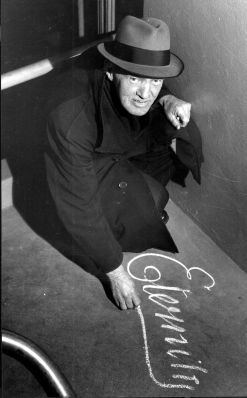
arthur staceThis afternoon, while plodding my way through The Book of My Enemy: Collected Verse 1958–2003, I was both surprised and delighted (two words that often belong together) to discover Clive James‘ poem on that wonderfully mysterious figure Arthur Stace, a person perhaps better known as ‘Mr Eternity’ or as ‘the Eternity Man’. (James also has a poem in this collection on the great R.S. Thomas, but that one will just have to wait until another day.)

James’ poem was too wonderful not to share, particularly with my Aussie readers for whom Stace – a ‘man with a single obsession’ – is both something of an icon, and a sacrament of otherness’s genuine and most radical strangeness in a world increasingly out of step with things sacred.

Never filmed, he was photographed only once,
Looking up startled into the death-trap flash
Like a threatened life form.
Still underlining his copybook one-word message
With the flourish that doubled back under the initial ‘E’,
He was caught red-eyed with the stark white chalk in his hand
Writing Eternity.

Before he died in 1967
At the age of eighty-eight
He had managed to write it five hundred thousand times,
And always in copperplate script.
Few streets or public places in the city of Sydney
Remained unmarked by the man with a single obsession –
Writing Eternity.

Wherever you lived, sooner or later he’d reach you.
Hauling their billycarts up for the day’s first run
Small boys swarmed when they came to the word
Arrestingly etched in the footpath.
It was self-protected by its perfect calligraphy –
The scrupulous sweep of a hand that had spent its lifetime
Writing Eternity.

He was born in a Balmain slum and raised underneath it,
Sleeping on hessian bags with his brothers and sisters
To keep beyond fist’s reach of his dipso parents.
His name was Arthur Stace.
He had no one to use it apart from his family.
His fate was to die as a man and return as a portent,
Writing Eternity.

His sisters grew up to be prostitutes. He was a pimp,
But in 1930, in his early forties, on meths,
He heard the Reverend John Ridley at Burton Street
Baptist Church, Darlinghurst,
And scrapped his planned night in the down-and-out sanctuary.
The piss artist had his vocation revealed unto him –
Writing Eternity.

‘I wish I could shout one word through the streets of Sydney!’
The Reverend Ridley shouted. ‘Eternity! You
Have got to meet it! You! Where will you spend
Eternity?’ Alone in his pew,
Avoided by all for his smell strong enough to see,
A man reborn saw the path stretch ahead he would stoop to,
Writing Eternity.

In New South Wales for more than a hundred years
We all had to learn that script in school,
But what school did he ever go to, and where
Did his chalk come from? How did he eat?
These nagging conundrums were mulled over endlessly
As he roamed unseen through the city without rhyme or reason
Writing Eternity.

In a blaze of glory the Thousand Year Reich was announced.
Old Bolsheviks shyly confessed with downcast eyes
And the first reffos arrived at Woolloomooloo.
Our troops sailed off to prop up the Middle East
Until Singapore fell and the Yanks overtipped for a taxi –
Yet still through the blacked-out streets he kept his own schedule
Writing Eternity.

But a mere word was ceasing to hold any terrors.
Belief in the afterlife faded. Where was God
When the Christmas snow came fluttering into the death camps?
Those kindling children, their piles of little shoes,
Condemned Divine Justice past hope of apology:
To rage at the storm and expect it to stop made more sense than
Writing Eternity.

He wrote it on the same night Hitler burned.
He wrote it as the Japanese cities melted
And the tanks rolled into Budapest.
While Sputnik skimmed through the stars he bent to his task
As if we believed there was still any Hell except history,
And Heaven could be rebuilt by one scuttling ratbag
Writing Eternity.

The rain didn’t always wash his word away.
He sometimes used more than chalk. Near my place once
I found it fingertip deep in the new white concrete.
It was lined with crimson enamel, a rune punched in
By a branding-iron from space. Down on one knee
I chipped out the paint with my penknife as if I could stop him
Writing Eternity.

He wouldn’t have known. He didn’t have time to go back,
Not even to visit his real bravura efforts
Which culminated in his famous Australia Square
Incised masterpiece filled with stainless steel.
Some snot-nosed kid with a grudge there would always be,
But he put all that behind him and kept on going,
Writing Eternity.

By the time he died I was half the world away
And when I came back I never gave him a thought.
It was almost fifty years after I unpicked it
That I pondered his word again,
On the dawn of the day when the laughing stock was yours truly
Who would have to go on alone and be caught in the spotlight
Writing Eternity.

From the thirty-third floor of the Regent I looked down naked.
The Opera House was sold out. I was afraid,
But the Harbour was flat calm all the way to the sea,
Its shaped, linked loops flush with silver,
And I suddenly saw what that showpiece of geology
Had really been up to ever since the magma cooled –
Writing Eternity.

That word again, and this time I could read it.
It said your life is on loan from those before you
Who had no chance, and before it is even over
Others will come to judge you, if only by
Forgetting your name; so better than glittering vainly
Would be to bend down in the dark half a million times
Writing Eternity.

Where will we spend it? Nowhere except here.
Life everlasting ends where it begins,
On Earth, but it is present at every moment.
We must seek grace now and not for ourselves alone
Was what that crazed saint meant in his ecstasy –
Since time is always, with chalk made from children’s ashes,
Writing Eternity.

‘Advent Stanzas’ by Robert Cording

four crowsI.
Are we always creating you, as Rilke said,
Trying, on our best days,
To make possible your coming-into-existence?

Or are you merely a story told in the dark,
A child’s drawing of barn and star?

Each year you are born again. It is no remedy

For what we go on doing to each other,
For history’s blind repetitions of hate and reprisal.

Here I am again, huddled in hope. For what
Do I wait? – I know you only as something missing,
And loved beyond reason.

As a word in my mouth I cannot embody.

II.
On the snow-dusted field this morning – an etching
Of mouse tracks declares the frenzy of its hunger.

The plodding dawn sun rises to another day’s
One warm hour. I’m walking to the iced-in local pond

Where my neighbors have sat through the night
Waiting for something to find their jigged lure.

The sky is paste white. Each bush and tree keeps
Its cold counsel. I’m walking head-on into a wind

That forces my breath back into my mouth.
Like rags of black cloth, crows drape a dead oak.

When I pass under them, their cries rip a seam
In the morning. Last week a life long friend told me,

There’s no such thing as happiness. It’s ten years
Since he found his son, then a nineteen-year old

Of extraordinary grace and goodness, curled up
In his dormitory room, unable to rise, to free

Himself of a division that made him manic and
Depressed, and still his son struggles from day to day,

The one partial remedy a dismal haze of drugs.
My friend hopes these days for very little – a stretch of

Hours, a string of a few days when nothing in his son’s life
Goes terribly wrong. This is the season of sad stories:

The crippling accident, the layoffs at the factory,
The family without a car, without a house, without money

For presents. The sadder the human drama, the greater
Our hope, or so the television news makes it seem

With its soap-opera stories of tragedy followed up
With ones of good will – images of Santas’ pots filling up

At the malls, truckloads of presents collected for the shelters,
Or the family posed with their special-needs child

In front of a fully equipped van given by the local dealership.
This is the season to keep the less fortunate in sight,

To believe that generosity will be generously repaid.
We’ve strung colored lights on our houses and trees,

And lit candles in the windows to hold back the dark.
For what do we hope? – That our candles will lead you

To our needs? That your gift of light will light
These darkest nights of the year? That our belief

In our own righteousness will be vindicated?
The prophet Amos knew the burden of our coming.

The day of the Lord is darkness, he said, darkness, not light,
As if someone went into a house and rested a hand against a wall,

And was bitten by a snake. Amos knew the shame of
What we fail, over and over, to do, the always burning

Image of what might be. Saint Paul, too, saw
The whole creation groaning for redemption.
And will you intercede with sighs too deep for words
Because you love us in our weakness, because

You love always, suddenly and completely, what is
In front of you, whether it is a lake or leper.

Because you come again and again to destroy the God
We keep making in our own image. Will we learn

To pray: May our hearts be broken open. Will we learn
To prepare a space in which you might come forth,
In which, like a bolt of winter solstice light,
You might enter the opening in the stones, lighting

Our dark tumulus from beginning to end?

III.
All last night the tatter of sleet, ice descending,
Each tree sheathed in ice, and then, deeper
Into the night, the shattering cracks and fall
Of branches being pruned by gusts of wind.

It is the first morning after the longest night,
Dawn colorless, the sun still cloud-silvered.
Four crows break the early stillness, an apocalypse
Of raucous squawks. My miniature four horsemen

Take and eat whatever they can in the field
Outside my door: a deer’s leg my dog has dragged
Home. Above them, the flinty sun has at last fired
A blue patch of sky, and suddenly each ice-transfigured

Trees shines. Each needle of pine, each branch
Of ash, throws off sparks of light. Once,
A rabbi saw a spark of goodness trapped inside
Each evil, the very source of life for that evil –

A contradiction not to be understood, but suffered,
The rabbi explained, though the one who prays
And studies Torah will be able to release that spark,
And evil, having lost its life-giving source, will cease.

When I finally open my door and walk out
Into the field, every inch of my skin seems touched
By light. So much light cannot be looked at:
My eyelids slam down like a blind.

All morning I drag limbs into a pile. By noon,
The trees and field have lost their shine. I douse
The pile of wood with gas, and set it aflame,
Watching the sparks disappear in the sky.

IV.
This is the night we have given for your birth.

After the cherished hymns, the prayers, the story
Of the one who will become peacemaker,
Healer of the sick, the one who feeds
The hungry and raises the dead,

We light small candles and stand in the dark

Of the church, hoping for the peace
A child knows, hoping to forget career, mortgage,
Money, hoping even to turn quietly away

From the blind, reductive selves inside us.

We are a picture a child might draw
As we sing Silent Night, Holy Night.
Yet, while each of us tries to inhabit the moment
That is passing, you seem to live in-between
The words we fill with our longing.

The time has come
To admit I believe in the simple astonishment
Of a newborn.

And also to say plainly, as Pascal knew, that you will live
In agony even to the end of the world,

Your will failing to be done on earth
As it is in heaven.

Come, o come Emmanuel,

I am a ghost waiting to be made flesh by love
I am too imperfect to bear.

– Robert Cording, ‘Advent Stanzas’, in The Best American Spiritual Writing 2005 (ed. Philip Zaleski; Boston/New York: Houghton Mifflin Harcourt, 2005), 18–22.
‘The child is your king’, by Mark Raffills

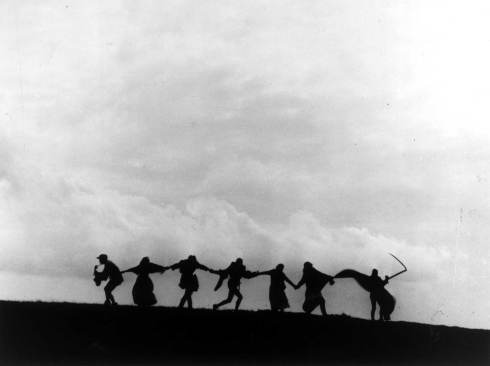
pied-piper-seventh-sealFar away the heart lies
beneath the trumpets
played upon the lips of angels
whose shadows fall upon
hillsides buckling
beneath a coating of gold dust
and the glorious things
that have no home
upon this earth.

And drawn swords
drip blood amidst the
torment wrought by the power
of kings, while blinded eyes grasp the
silver coins of betrayal,
hoping to hide the mess
we have made of innocence
and the child who wears dynamite.

You foolish man who thought
these times could not find you;
who thought there was no price to pay;
but the piper now comes calling
with the trumpet tight upon his lips,
your arrogance is your poison:
fall upon your sword;
the child is your king.

– Mark Raffills, ‘The child is your king’, in Loved, Mis-Loved and Loved Again (Nelson: Phantom Press, 2008), 69.

‘Tui’

Earlier this week, New Zealand’s finest newspaper, the Otago Daily Times, published one of my recent poems – ‘Tui’. I had hoped to simply be able to provide a link to an online version of the poem but unfortunately none has appeared. Therefore, and particularly for the benefit of those outwith New Zealand who do not have access to the ODT, here ’tis:

The twelfth of
September felt like the
end of all
time. The feared turning
away and vastness of
noiselessness, cup of
bitterness,
undoing of dreaming
and the breaching
open of a wall that
refuses to be
dammed. There can be
now no journey backwards. This
long tide shall stay out. The
bow has been hard bent –

there shall be
no more music.

The nineteenth: we left
the trail, hacked our
way down through
autumn scrub, carrying
the too-small box to the
horizontal slide
of stones that
form the bank by
the River Garry, along
the Pass of Killiecrankie where
we stopped,
to surrender thanks and
to seek goodbye and
to cast our unfinished weight to
the mercy of the current.

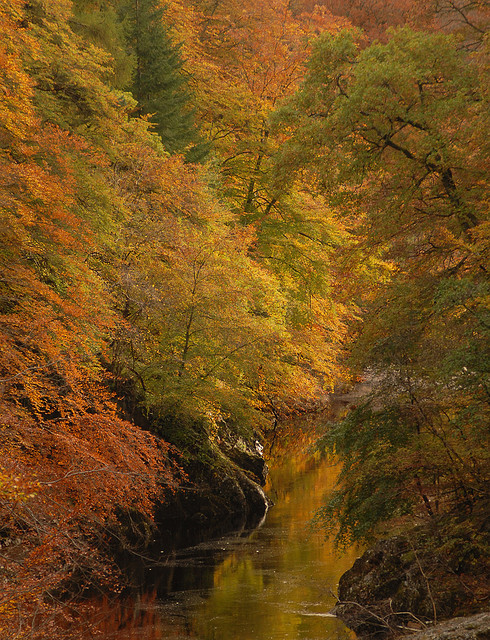
[This poem first appeared in the Otago Daily Times, 29 October 2012, p. 9. The beautiful image, ‘Autumn, River Garry at Killiecrankie, Scotland’, is provided by Lindsay Mackinlay, and is used by permission].

An introduction to the poetry of Don Walls

The best gifts are those which are entirely unexpected. A few weeks ago now, at a folk club night, a warm-hearted cider-drinking lady named Dorothy introduced me to the work of the Yorkshire poet Don Walls. In fact, the evening opened with a reading of Walls’ delightful poem ‘Fibs’. Struck, I asked Dorothy if I might borrow her copy of Walls’ book, and she was kind enough to oblige. So in between the twang of banjos, friendly conversation with the amazingly-talented Lynn Vare, and downing my pint of Dunedin’s finest pilsner, I spent the night flicking through a small collection of poems gathered loosely around the theme of the garden shed. [You can watch/listen to Walls reading a number of offerings from this collection here.] A number of poems immediately resonated with me – ‘The Lament of the Door Knob’, ‘Doodling’, ‘Chocolate Cake, Fishing and the Germans’ and ‘When I Retire’ among them. But there was one poem in particular that seemed to so fill my mouth with black-dogged words I’ve ached to speak that I felt like Walls had stolen it from me. The poem is entitled ‘Manic Depression’. I thought I’d share it here:

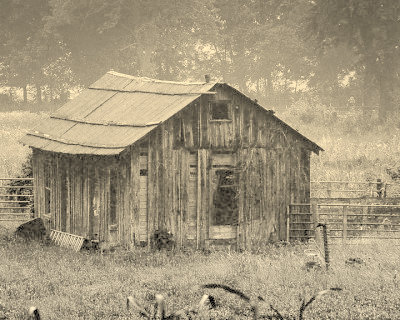
I keep my manic depression in the garden shed.
You never know what mood he’s in.
Sometimes in darkness he lingers for days,
so you grab him by the scruff of the neck and drag him out,
bawl at him, give him little tasks like cutting the grass,
but he slouches round the garden lawn
and so you try another tack:
hold a rose under his nose
or your head on one side at the recital in the hawthorn tree
– blackbird, thrush, but to no avail.
And then, one morning you open the door and he rushes out,
praises daisies, rolls in the grass
and from his head a thousand thoughts all fledging at once,
writes poems all night, paints,
and marvels how yesterday’s tetchy birds sing today like nightingales.
And then the mists, and his mood dies back like greenness in Autumn
and dark winds whirl round the garden shed.

So thank you Dorothy. And thank you Mr Walls.