Music

January bests …

From the reading chair: Not Every Spirit: A Dogmatics of Christian Disbelief by Christopher Morse; Secular Christianity and God Who Acts by Robert J. Blaikie; The Calvin Handbook edited by Herman J. Selderhuis; Studies in Theology by James Denney; Institutes of the Christian Religion: 1541 French Edition by John Calvin, edited by Elsie McKee; Markings: Poems and Drawings, and Berlin Diary by Cilla McQueen; Practical Theology: An Introduction by Richard R. Osmer.

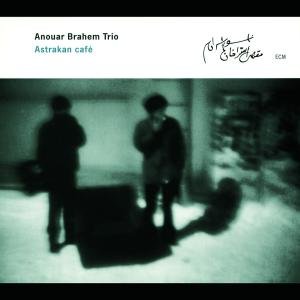
Through the iPod: The Astounding Eyes of Rita, Le Pas Du Chat Noir, Astrakan Cafe, ECM Touchstones: Conte de l’Incroyable Amour, Le Voyage de Sahar, Thimar, Barzakh, and Khomsa, all by Anouar Brahem; Available Light by Dave Dobbyn; Arvo Pärt: I am the True Vine by Paul Hillier; Britten Choral Works by Choir of King’s College Cambridge

On the screen: The Wire (Season 1); Mary and Max [2009].

By the bottle: Olssens Nipple Hill Pinot Noir 2008

Some more weekly wanderings

And here he is with Jan Garbarek & Manu Katche:

December bests …

From the reading chair:

Wrestling with God: The Story of My Life by Lloyd Geering; On Human Worth: A Christian Vindication of Equality by Duncan B. Forrester; Transformation of the Self in the Thought of Friedrich Schleiermacher by Jacqueline Mariña (reviewed here); Calvin’s Bible Commentary on the Psalms, Part I by John Calvin; Christianity: The First Three Thousand Years by Diarmaid MacCulloch; Home: A Novel by Marilynne Robinson.

Through the iPod:

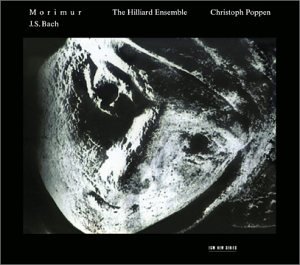
Sweet Bells by Kate Rusby; Guillaume de Machaut: Motets, Morimur, Motetten and English and Italian Renaissance Madrigals by Hilliard Ensemble, Officium – Jan Gabarek & The Hilliard Ensemble by Cristobal de Morales; Battle Studies by John Mayer; Stay Strong by Blair Douglas.

On the screen:

Allie Eagle and Me; Eagle vs. Shark; Doubt; The Lion King.

By the bottle: Coriole Redstone Cabernet Sauvignon 2006.

Some holiday reading/listening

The postie was very kind to me today, delivering no bills but only the following fun Christmas reading/listening:

And I’m still working my way through Diarmaid MacCulloch’s latest tome, Christianity: The First Three Thousand Years.

But first things first: fishing!

‘Love’s mysteries in souls do grow, But yet the body is his book’

  • Jason Byassee on tradition, Jaroslav Pelikan and the Masai creed: ‘I love the way Herbert McCabe, the Dominican priest and theologian, put it: “We don’t know what Christians will believe in the 24th century, but we know they will not be Arians or Nestorians.” Creeds, usually occasioned by a new teaching the church must either bless or condemn, cut off certain roads. But they do not mandate which road we all must go down for all time. Future ages will have to figure that out, while submitting to what has come before. But that submission is a granting of freedom, not a tragic cutting off of possibility’. There are some important implications here for the conversation currently going on in my own denomination about writing a new confession of faith.
  • Anthony Gottlieb on God and gardens.
  • Cynthia R. Nielsen continues her series on Gadamer with two more posts.
  • Stanley Hauerwas responds to Obama’s Nobel Prize acceptance speech.
  • Renardo Barden reviews Dylan’s Christmas album: ‘Occasionally Dylan chases and misses the high notes and botches daring full-throttle endings. His church Latin is no good, and he’s losing yet more ground on his claim to sing as good as Caruso. But he’s still out there, making new of what’s old, light of what’s silly, and merry for merriment’s sake’.
  • Halden Doerge offers some critiques of individualism as will to power: ‘… “individualism” is only scary to those who want to control the social lives of others. Honestly I don’t think it can possibly be a coincidence that the folks most virulently critical of individualism are white males who have significant university posts. Indeed I’m hard pressed to think of a single female scholar who has attacked individualism in ways akin to say Robert Bellah or Zygmunt Bauman … It seems to me that critiques of individualism invariably come beset with a totalizing vision of “the good society” that, ostensibly should be actualized whether people like it or not (because obviously they don’t like it or they’d be doing it already). In short, I don’t know how critiques of individualism, as such, avoid the charge that they are simply instances of the will to power. They are always animated with angst, fear, and revulsion towards the current shape of social life and deeply desirous of reshaping society in accordance with their own vision. It’s hard for me to image that not being ultimately fascist (Milbank is perhaps the most sophisticated example of a theological fascist writing today)’.
  • Andre Muller posts on music.
  • Finally, I’ve been posting on advent: Part I, II, III, IV.

November bests …

From the reading chair:

Reforming Theology: Explorations in the Theological Traditions of the United Reformed Church by David Peel; Dr. Dog by Babette Cole; Theology of Hope by Jürgen Moltmann; Open Secrets: A Spiritual Journey Through a Country Church by Richard Lischer; First As Tragedy, Then As Farce by Slavoj Žižek; Windows on the Cross by Tom Smail; The Seven Storey Mountain by Thomas Merton; The Pseudonyms of God by Robert McAfee Brown.

Through the iPod: Raising Sand by Alison Krauss and Robert Plant; American III: Solitary Man and American V: A Hundred Highways by Johnny Cash; Battle Studies by John Mayer; Play On by Carrie Underwood; The Charity of Night, Stealing Fire and Life Short Call Now by Bruce Cockburn; The Circle by Bon Jovi; Jennifer Hudson by Jennifer Hudson; Reality Killed the Video Star by Robbie Williams (this one took a while to grow on me); The North Star by Roddy Frame (HT: Bruce put me on to this). And as I begin to get into the Christmas thing, I’m listening to Christmas by Bruce Cockburn; Christmas in the Heart by Bob Dylan; My Christmas by Andrea Bocelli; Come to the Cradle by Michael Card; and Breath Of Heaven: A Christmas Collection by Vince Gill.

On the screen: Perfume: The Story of a Murderer [2006]

October bests …

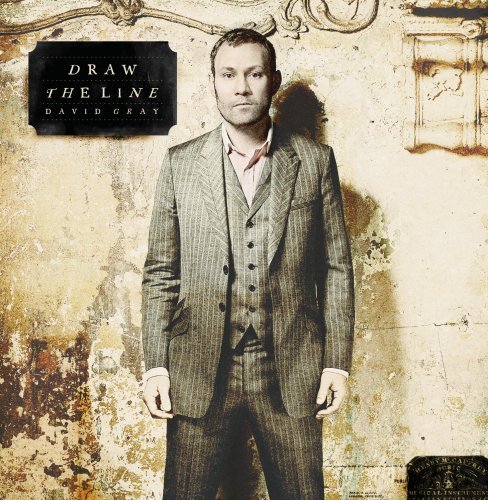
Draw the LineFrom the reading chair: Celtic Christianity: Making Myths and Chasing Dreams by Ian Bradley; The Quest For Celtic Christianity by Donald E. Meek; Banner in the West: A Spiritual History of Lewis and Harris by John Macleod; Why Study The Past?: The Quest For The Historical Church by Rowan Williams; Loving God With Our Minds: The Pastor As Theologian edited by Michael Welker and Cynthia A. Jarvis; Why Your World Is About to Get a Whole Lot Smaller: Oil and the End of Globalization by Jeff Rubin; Liberating Reformed Theology, Christianity and Democracy: A Theology for a Just World Order and Theology & Ministry in Context & Crisis: A South African Perspective by John W. de Gruchy; Witness to the World: The Christian Mission in Theological Perspective by David J. Bosch; Black and Reformed: Apartheid, Liberation, and the Calvinist Tradition by Allan A. Boesak; Praying with Paul by Thomas A. Smail.

Through the iPod: Kind of Blue (50th Anniversary) by Miles Davis; Looking for Butter Boy by Archie Roach; Daughtry and Leave This Town by Daughtry; Draw the Line by David Gray (this is easily in my top 10 for 2009); X&Y by Coldplay; Christmas In the Heart by Bob Dylan (Judy says that it won’t be being played in ‘our’ house this Christmas, so does anyone want me over for lunch).

By the bottle: Mt Difficulty Long Gully Pinot Noir 2007; Carrick Josephine Riesling 2007.

September bests …

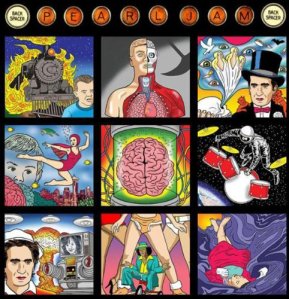
BackspacerFrom the reading chair: Biography as Theology: How Life Stories Can Remake Today’s Theology by James Wm. McClendon; The Concentration Camp and Other Stories by Geoffrey C. Bingham; The End of Suffering: Finding Purpose in Pain by Scott Cairns [reviewed here]; Pastoral Theology in the Classical Tradition by Andrew Purves; Poems for Gardeners edited by Germaine Greer; No Rusty Swords: Letters, Lectures, and Notes from the Collected Works by Dietrich Bonhoeffer.

Through the iPod: Come Up Full and The Crossing by Meg Hutchinson; Backspacer by Pearl Jam; Beautiful World and The Road Between by Khristian Mizzi; My Holiday by Mindy Smith; Our Bright Future by Tracy Chapman; Death Magnetic by Metallica; Symphony No. 4 in E minor, Op. 98 – Carlos Kleiber/Vienna Philharmonic Orchestra by Johannes Brahms.

On the screen: Shooting Dogs [2007], reviewed here;  Wallace and Gromit: A Matter of Loaf or Death [2009]; Shaun the Sheep: Sheep on the Loose [2009]; Shaun the Sheep: Off the Baa! [2008]; Sometimes in April [2005].

By the bottle: Seppeltsfield Cellar No 9 Muscat Rutherford (tasting notes).

Collingwood on things ‘perfectly serviceable’

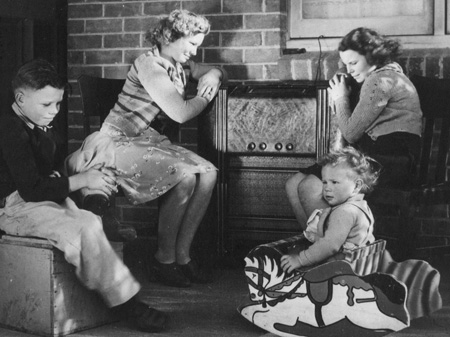
Wireless‘It is a weakness of printed literature that this reciprocity between writer and reader is difficult to maintain. The printing-press separates the writer from his audience and fosters cross-purposes between them. The organization of the literary profession and the “technique” of good writing, as that is understood among ourselves, consist to a great extent of methods for mitigating this evil; but the evil is only mitigated and not removed. It is intensified by every new mechanization of art. The reason why gramophone music is so unsatisfactory to any one accustomed to real music is not because the mechanical reproduction is bad – that would be easily compensated by the hearer’s imagination – but because the performers and the audience are out of touch. The audience is not collaborating, it is only overhearing. The same thing happens in the cinema, where collaboration as between author and producer is intense, but as between this unit and the audience non-existent. Performances on the wireless have the same defect. The consequence is that the gramophone, the cinema, and the wireless are perfectly serviceable as vehicles of amusement or of propaganda, for here the audience’s function is merely receptive and not concreative; but as vehicles of art they are subject to all the defects of the printing-press in an aggravated form. “Why”, one hears it asked, “should not the modern popular entertainment of the theatre, produce a new form of great art?” The answer is simple. In the Renaissance theatre collaboration between author and actors on the one hand, and audience on the other, was a lively reality. In the cinema it is impossible’. – Robin George Collingwood, The Principles of Art (Oxford: Oxford University Press, 1958), 323.

Tragically, the same critique may be laid against many churches. In fact, Collingwood’s words reminded me of Ben’s reflections on ‘a famous Sydney megachurch’ posted earlier this year.

August bests …

Moltmann - A Broad PlaceFrom the reading chair: In the Beauty of the Lilies, by John Updike; A Broad Place, by Jürgen Moltmann; An Educated Clergy: Scottish Theological Education and Training in the Kirk and Secession, 1560-1850, by Jack C. Whytock.

Through the iPod: Jewel, Lullaby; KD Lang, Watershed; jj, jj n° 2; Lucinda Williams, Little Honey and West; Emmylou Harris, All I Intended to Be; John Hiatt, Same Old Man and Slow Turning.

On the screen: Leonard Cohen: I’m Your Man [2005]; Disgrace [2008]

In the glass: Two Degrees Pinot Noir 2007.

July bests …

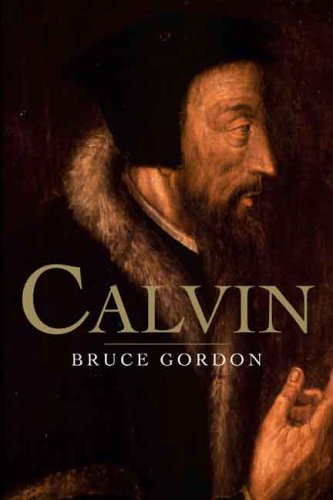
CalvinFrom the reading chair: Housekeeping: A Novel, and The Death of Adam: Essays on Modern Thought, both by Marilynne Robinson; John Calvin as Teacher, Pastor, and Theologian: The Shape of His Writings and Thought, by Randall C. Zachman; Calvin, by Bruce Gordon; Calvin’s Preaching, by T.H.L. Parker; The Theology of John Calvin by Charles Partee; Why Go to Church?: The Drama of the Eucharist, by Timothy Radcliffe; Christian Worship in Reformed Churches Past and Present, edited by Lukas Vischer; Calvin, Participation, and the Gift: The Activity of Believers in Union with Christ, by J. Todd Billings; Grace and Gratitude: The Eucharistic Theology of John Calvin, and The Old Protestantism and the New: Essays on the Reformation Heritage, both by Brain A. Gerrish; and A Theology of Proclamation by Dietrich Ritschl. 

Through the iPod: Twist, by Dave Dobbyn; Bruckner’s Symphonies 1–9, by Berlin Philharmonic conducted by Herbert von Karajan; Troubadour, by George Strait; Lady Antebellum, by Lady Antebellum; My One and Only Thrill, by Melody Gardot; Worrisome Heart, by Melody Gardot.                                                

On the screen: Dogville; Frost/Nixon; Milk; The Pawnbroker; The War on Democracy; The Savages.

In the glass: Speight’s Old Dark.

June bests …

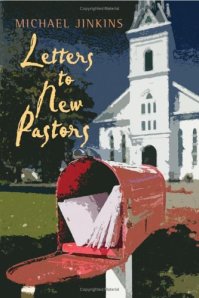
Letters to New PastorsBest books: Voicing Creation’s Praise, by Jeremy S. Begbie; Calvin: A Biography, by Bernard Cottret; Letters to New Pastors, by Michael Jinkins. (On Jinkins’ book: It’s been many moons since I read an entire book in a day, particularly in a day already replete with so many other commitments, but this one was impossible to put down. I think it’ll not be long before parts of it, at least, are revisited).

Best music: Dave Matthews Band, Big Whiskey And The GrooGrux King [2009]; Krzysztof Penderecki, St Luke Passion (Warsaw National Philharmonic Orchestra); Guy Clark, Keepers.

Best films: In Search of a Midnight Kiss [2007]; Så som i himmelen [2004]

Best drink: Glenmorangie, 18 Years Old

Adorno on dismantling the affirmative lie of culture

adornoA delightful morning spent meditating on two related thoughts from Theodor Adorno:

‘The eclipse of art which is being propagated by people who are either just plain thoughtless or resentful of art would be false and would play into the hands of conformism. Desublimation – the instantaneous, immediate gratification which art is supposedly able to furnish – is of course beneath art in terms of intra-aesthetic standards. But even in terms of real libidinal gratification, desublimation has little to offer …  The impoverished aestheticism that accompanies the sort of panting politics of the student movement is a complement of the general exhaustion of aesthetic vigour. To recommend the acceptance of jazz and rock-and-roll over Beethoven does nothing to dismantle the affirmative lie of culture. All it does is give the culture industry an excuse for more profit-taking and barbarity. The allegedly vigorous and uncorrupted essence of such products is in reality synthetically put together by the very powers that are the target of this supposed Great Refusal. They are worse than anything else’. – Theodor W. Adorno, Aesthetic Theory (ed. Gretel Adorno and Rolf Tiedemann; trans. C. Lenhardt; London/Boston/Melbourne/Henley: Routledge & Kegan Paul, 1984), 440–1.

‘The appeal to order alone, without concrete specificity, is futile; the appeal to the dissemination of norms, without these ever proving themselves in reality or before consciousness, is equally futile. The idea of an objectively binding order, huckstered to people because it is so lacking for them, has no claims if it does not prove itself internally and in confrontation with human beings. But this is precisely what no product of the culture industry would engage in. The concepts of order which it hammers into human beings are always those of the status quo. They remain unquestioned, unanalyzed and undialectically presupposed, even if they no longer have any substance for those who accept them. In contrast to the Kantian, the categorical imperative of the culture industry no longer has anything in common with freedom. It proclaims: you shall conform, without instruction as to what; conform to that which exists anyway, and to that which everyone thinks anyway as a reflex of its power and omnipresence. The power of the culture industry’s ideology is such that conformity has replaced consciousness. The order that springs from it is never confronted with what it claims to be or with the real interests of human beings. Order, however, is not good in itself. It would be so only as a good order. The fact that the culture industry is oblivious to this and extols order in abstracto, bears witness to the impotence and untruth of the messages it conveys. While it claims to lead the perplexed, it deludes them with false conflicts which they are to exchange for their own. It solves conflicts for them only in appearance, in a way that they can hardly be solved in their real lives. In the products of the culture industry human beings get into trouble only so that they can be rescued unharmed, usually by representatives of a benevolent collective; and then in empty harmony, they are reconciled with the general, whose demands they had experienced at the outset as irreconcilable with their interests. For this purpose the culture industry has developed formulas which even reach into such non-conceptual areas as light musical entertainment. Here too one gets into a ‘jam’, into rhythmic problems, which can be instantly disentangled by the triumph of the basic beat. Even its defenders, however, would hardly contradict Plato openly who maintained that what is objectively and intrinsically untrue cannot also be subjectively good and true for human beings. The concoctions of the culture industry are neither guides for a blissful life, nor a new art of moral responsibility, but rather exhortations to toe the line, behind which stand the most powerful interests. The consensus which it propagates strengthens blind, opaque authority. If the culture industry is measured not by its own substance and logic, but by its efficacy, by its position in reality and its explicit pretensions; if the focus of serious concern is with the efficacy to which it always appeals, the potential of its effect becomes twice as weighty. This potential, however, lies in the promotion and exploitation of the ego-weakness to which the powerless members of contemporary society, with its concentration of power, are condemned. Their consciousness is further developed retrogressively. It is no coincidence that cynical American film producers are heard to say that their pictures must take into consideration the level of eleven-year-olds. In doing so they would very much like to make adults into eleven-year-olds’. – Theodor W. Adorno, ‘Culture Industry Reconsidered’.

May bests …

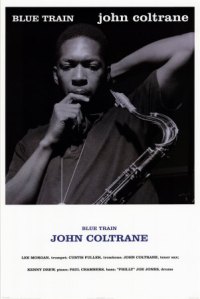
John Coltrane Blue TrainBest books: On Being Family: A Social Theology of the Family by Ray S. Anderson and Dennis B. Guernsey; John Newton, The Double Rainbow: James K. Baxter, Ngāti Hau and the Jerusalem Commune (Reviewed here); Reconstructing Pastoral Theology by Andrew Purves; We Are Still Married: Stories and Letters by Garrison Keillor; Bearing Fresh Olive Leaves by Calvin Seerveld.

Best music: Live In London by Leonard Cohen; Blue Train by John Coltrane; Outer South by Conor Oberst & the Mystic Valley Band.

Best films: A Love Song for Bobby Long [2005]; Kramer vs. Kramer  [1979]. 

Best drink: Frangelico.

‘The Young Lutheran’s Guide to the Orchestra’

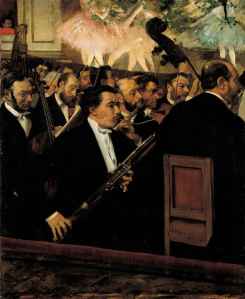
Degas- l'orchestre‘To each person, God gives some talent, such as writing, just to name one, and to many persons He has given musical talent, though not as many as think so. For the young Lutheran, the question must be: Do I have a genuine God-given musical talent, or do I only seem gifted in comparison to other Lutherans?

If your talent is choir or organ, there’s no problem. Choir members and organists can be sure their gift is from God because who else but God would be interested? Just like nobody gets fat on celery, nobody goes into church music for the wrong motives.

But for a Lutheran who feels led to play in an orchestra, the first question must be: Are you kidding? An orchestra?

In the Bible, we read about people singing and playing musical instruments, the harp, trumpet, psaltery, but always in praise of the Lord, not for amusement. We do not read that our Lord Himself ever played an instrument or enjoyed hearing others play theirs. The apostles did not attend concerts or go to dances. Are you sure this is what you want? Do you know what you’re getting into? Opera. Is that anyplace for a Christian? Don Juan and Mephistopheles and Wagner and all his pagan goddesses hooting and hollering, and the immorality – I mean, is anybody in opera married? You play in an orchestra, you’re going to wind up in opera, and the next thing you know, you’re going to be skipping Sunday mornings.

If you steer clear of opera and stick to orchestral concert music, where are the Christian composers? Modern ones are existentialists, the Romantics were secular humanists, the eighteenth century was all rationalists, and the seventeenth was Italians, except for Bach, and you can’t make a living playing Bach. You go in an orchestra, you’re going to be devoting your life to a lot of music that sort of swirls around in spiritual mystery searching for answers that people could find in the Bible if someone showed them where to look.

But if you’re determined to play in an orchestra, then you ought to ask yourself: Which instrument is the best one for a Lutheran to play? If our Lord had played an instrument, which one would he have chosen? Probably not a French horn. It takes too much of a person’s life. French horn players hardly have the time to marry and have children. The French horn is practically a religion all by itself. Should a Lutheran play the bassoon? Not if you want to be taken seriously. The name says it all: bassoon. Maybe you’d do it for a hobby (“Let’s go bassooning this weekend, honey!”) but not as your life occupation.

Many Lutherans start out playing clarinets in marching band and think of the clarinet as a Christian instrument, clear and strong and almost human, but a symphonic clarinet is different from the band clarinet: it’s sardonic, skeptical and definitely worldly. The English horn sounds Christian, maybe because we think of it as the Anglican Horn, but it’s so mournful, so plaintive. And so are English Horn players. They all have incredibly complicated problems, they’re all depressed, especially at night, which is when the concerts are. The oboe is the sensualist of the woodwind section, and if there’s ever a wind a Lutheran should avoid, it’s this one. In movie soundtracks, you tend to hear the oboe when the woman is taking off her clothes, or else later, when she asks the man for a cigarette. The flute is the big shot of the wind section. Jean-Pierre Rampal, James Galway, both millionaires (how many millionaire bassoonists are there?), because everyone knows it’s the hardest to play. To spend your life blowing across a tiny hole – it’s not really normal is it? The flute is a temptation to pride. Avoid it. The last member of the woodwind family is the flakiest, and that’s the piccolo. No Salvation Army Band ever included a piccolo and no piccolo virtuoso ever did an album of gospel music. This is not a devotional instrument.
violinWe come now to the string section. Strings are mentioned in the Scripture and therefore some Lutherans are tempted to become string players, but be careful. Bass, for example. An extremely slow instrument, the plowhorse of the orchestra, and bass players tend to be a little methodical, not inventive, not quick, not witty or brilliant, but reliable. This makes the instrument very tempting to German Lutherans. And yet, bass notes have a darkness and depth to them that, let’s face it, is sexual. And when bass players pick up their bows, I don’t think there’s any doubt what’s going on in their minds back there. The cello section seems so normal, and cellists seem like such nice people. The way they put their arms around their instruments, they look like parents zipping up a child’s snowsuit. They seem like us: comfortable, middle-range. And yet there is something too comfortable, maybe too sensual, about the cello. The way they hold the instrument between their legs: why can’t they hold it across their laps or alongside themselves? The viola section is not a nice place for a Lutheran and here you’ll have to have to take my word for it. I know violists and they are fine people until, late at night, they start drinking a few bottles of cheap red wine and roasting chickens over a pit in a vacant lot and talk about going to Yucatan with a woman named Rita. Don’t be part of this crowd. The violin is a problem for any Christian because it is a solo instrument, a virtuoso instrument, and we’re not solo people. We believe in taking a back seat and being helpful. So Christians think about becoming second violinists. They’re steady, humble, supportive. But who do they support? First violins. You want to get involved with them? The first violins are natural egotists. The conductor looks to them first, and most first violinists believe that the conductor secretly takes his cue from them, that he, a simple foreign person, gets carried away by listening to the violins and falls into a romantic, emotional reverie and forgets where in the score he is and looks to the concertmaster, the No. 1 first violin, to find out what’s going on: this is what violinists believe in their hearts. If the conductor dropped dead, the rest of the orchestra would simply follow the violin section, while the maestro’s body was carried away, and nobody would know the difference. Is this a place for a Lutheran to be? In the biggest collection of gold-plated narcissists ever gathered on one stage? No.

Let’s be clear about the brass section. First of all, the rest of the orchestra wishes the brass were playing in another room, and so does the conductor. His back is toward the audience, so they can’t see what he’s saying to the brass section; he’s saying: You’re too damn loud, shut the fuck up (in Italian, this doesn’t sound course at all). The brass section is made up of men who were at one time in the construction trades and went into music because the hours were better. They are heavy dudes, and that’s why composers wrote so few notes for them: because they’re juveniles. The tuba player, for example, is a stocky bearded guy who has a day job as a plumber. He’s the only member of the orchestra who bowls and goes deer hunting. It’s not an instrument for a sensitive Lutheran, and anyway, there’s only one tuba and he’s it. The trombonist is a humorist. He carries a water spray gun to keep his slide moist and often uses it against other members of the orchestra. A Shriner at heart, he knows more Speedy Gonzalez jokes than you thought existed. The trumpet is the brass instrument you imagine as Christian, thinking of Gideon and of the Psalms, but then you meet a real-life trumpet player and realize how militaristic these people are. They don’t want to wear black tie and play Bach, they want tight uniforms with shiny buttons, and they want to play as loudly as they possibly can. Most of the people who keel over dead at concerts are killed by trumpets.

There are two places in the orchestra for a Lutheran, and one is percussion. It’s the most Lutheran instrument there is. Percussionists are endlessly patient, because they don’t get to play much. Pages and pages of music go by where the violins are sawing away and the winds are tooting and the brass is blasting but the percussionist sits and counts the bars, like a hunter waiting for the quail to appear. A percussionist may have to wait for twenty minutes just to play a few beats, but those beats have to be exact and they have to be passionate and climactic. All that the epistles of Paul say a Christian should be – faithful, waiting, trusting, filled with fervor – are the qualities of the percussionist. The other Lutheran instrument, of course, is the harp. It is the perfect instrument for a Christian because it keeps you humble. You can’t gallivant around with a harp. Having one is like living with an elderly parent in poor health – it’s hard to get them in and out of cars, impossible to satisfy them. A harp takes fourteen hours to tune and remains in tune for twenty minutes or until somebody opens a door. It’s an instrument for a saint. If a harpist could find a good percussionist, they wouldn’t need an orchestra at all; they could settle down and make wonderful music, just the two of them’.

– Garrison Keillor, ‘The Young Lutheran’s Guide to the Orchestra’ in We Are Still Married (New York: Viking Penguin, 1989), 30–4.
April bests …

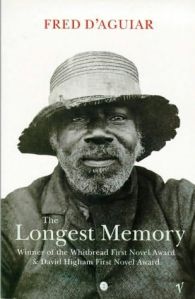
the-longest-memoryBest books: Wilfred Gordon McDonald Partridge, written by Mem Fox and illustrated by Julie Vivas; The Longest Memory, by Fred D’Aguiar; The Death of Adam: Essays on Modern Thought by Marilynne Robinson; The Puppet and the Dwarf: The Perverse Core of Christianity by Slavoj Žižek; Always the Sound of the Sea: The Daily Lives of New Zealand’s Lighthouse Keepers by Helen Beaglehole.

Best music: Blair Douglas, Stay Strong; Don McGlashan and the Seven Sisters, Marvellous Year; Neil Finn, Try Whistling This; Placido Domingo, Amore Infinito: Songs inspired by the Poetry of John Paul II (Karol Wojtyla); Nick Cave and Warren Ellis, The Assassination of Jesse James; Conor Oberst, Conor Oberst; Bob Dylan, Together Through Life.

Best films: Pan’s Labyrinth [2006]; Hunger [2008]; Pride and Prejudice [2001].

Best drink: PNG Coffee (Fairtrade) from Izon Coffee. (BTW: the folk at Izon are great to deal with)

Nick Cave: The Love Song Lecture

nick-cave

‘I see that my artistic life has centered around an attempt to articulate the nature of an almost palpable sense of loss that has laid claim to my life. A great gaping hole was blasted out of my world by the unexpected death of my father when I was nineteen years old. The way I learned to fill this hole, this void, was to write. My father taught me this as if to prepare me for his own passing. To write allowed me direct access to my imagination, to inspiration and ultimately to God. I found through the use of language, that I wrote god into existence. Language became the blanket that I threw over the invisible man, that gave him shape and form. Actualising of God through the medium of the love song remains my prime motivation as an artist. The love song is perhaps the truest and most distinctive human gift for recognising God and a gift that God himself needs. God gave us this gift in order that we speak and sing Him alive because God lives within communication. If the world was to suddenly fall silent God would deconstruct and die. Jesus Christ himself said, in one of His most beautiful quotes, “Where ever two or more are gathered together, I am in your midst.” He said this because where ever two or more are gathered together there is language. I found that language became a poultice to the wounds incurred by the death of my father. Language became a salve to longing.

Though the love song comes in many guises – songs of exultation and praise, songs of rage and of despair, erotic songs, songs of abandonment and loss – they all address God, for it is the haunted premises of longing that the true love song inhabits. It is a howl in the void, for Love and for comfort and it lives on the lips of the child crying for his mother. It is the song of the lover in need of her loved one, the raving of the lunatic supplicant petitioning his God. It is the cry of one chained to the earth, to the ordinary and to the mundane, craving flight; a flight into inspiration and imagination and divinity. The love song is the sound of our endeavours to become God-like, to rise up and above the earthbound and the mediocre’. – Nick Cave, ‘Love Song Lecture’.

March bests …

'Geoffrey Gurrumul Yunupingu', by Guy Maestri

'Geoffrey Gurrumul Yunupingu', by Guy Maestri

Best books: Geoffrey A. Studdert Kennedy, After War, Is Faith Possible?: The Life and Message of Geoffrey “Woodbine Willie” Studdert Kennedy (Eugene: Cascade Books, 2008). (Reviewed here)

Best music: Geoffrey Gurrumul Yunupingu, Gurrumul [2008: This is one of the best albums I’ve heard in a long time]; U2, No Line on the Horizon [2009]; Bob Dylan, The Bootleg Series, Vol. 8: Tell Tale Signs – Rare and Unreleased 1989-2006 [2008]; The Panics, Cruel Guards [2008]; Paul McCartney, Flaming Pie [1997].

Best films: The Reader [2008]

Best drink: 2007 Two Paddocks Pinot Noir

Malcolm Gordon – ‘One Voice’ – A Review

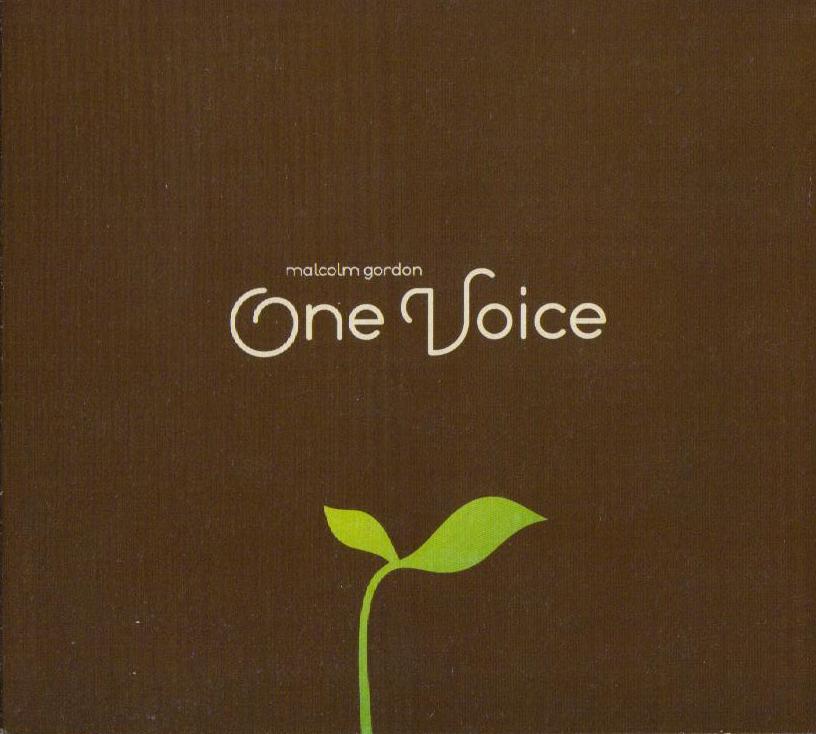
one-voice-1‘People remember what they sing. Ultimately, they believe what they sing’. So believes Malcolm Gordon – a Presbyterian minister who writes songs, good songs, even songs ‘decently and in order’. In 2001, he toured with Y-One, and between 2002-2006 with the band Somebody’s Cousin, with whom he recorded two albums – ‘Brighter Day’ (2004) and ‘Here We Are (2006). Since then, this Kiwi has written and directed his first musical, and released his debut solo album, As I Am.

2008 witnessed the release of his latest album – One Voice – and the One Voice Project dedicated to ‘exploring contemporary expressions of Christian worship’ and to ‘rally song writers and lyricists to produce a resource of contextual and contemporary worship music every couple of years’. He writes that ‘the guiding principal throughout this has been to create music that is “Theologically authentic and culturally credible”. Too often music that is sung in churches tends to excel in one of those areas at the expense of the other’.


One Voice betrays the witness of a gifted artist with a theologically-astute nose, of one who believes that what we sing matters and whose heart joins those for whom ‘aching for the dawn’ defines the way of true being. The prayerful songs on this beautifully-produced album take up themes of hope, justice-making, and of identity – that ‘our stories might find their meaning’, rhyme and reason in God. Gordon recognises that however one chooses to express eschatological hope, the ultimate theological foundation remains a basic conviction concerning the faithfulness of the God whose relationship with this world is secured in one who – though one with God – did not consider equality with God something to be exploited, but who made himself nothing. Believers bear witness to this ground of hope every time we break bread and drink wine together – an act, of prolepsis as well as of obedience, undertaken by the Church in hope for a time when every tongue might taste the goodness of the Lord, when friends and enemies, victim and perpetrators, sit at the same table and find their healing in its host who has borne the pain, shame, isolation and fear of all. It is to this that the Church’s songs, including Gordon’s, bear witness. I recall words from one of Halden Doerge‘s sermons on ‘Holy Saturday‘:

In the face of hopelessness and death we [the church] are called to be conduits of hope that dare to speak and listen on the day of silence. We are to dare to continue to give of ourselves, even to the point of death even when all hope seems to have vanished. When foundations dissolve, when brothers betray and God seems silent, we are called to buy fields of hope, to stand between our betrayer and his noose and to break bread together in senseless hope that we serve a God who abounds in surprises that follow the day of silence. We are bound to remember Holy Saturday and to live in it in senseless, glorious hope. Let us be a church that lives in Holy Saturday, longing to see the surprises of the self-giving God who transforms fields of blood into fields of hope. We are called this day to continue in the form of the self-giving that is the very life of God. On this day, this cold and silent yet gloriously beautiful day, let us remember the brokenness and the senselessness that we face as followers of Christ. And then let us gather up our courage in the Spirit and continue to give ourselves away without ceasing. In the deathly quiet of Holy Saturday, let us interrupt it with songs of hope, bread broken and lives poured out.

malcolm-gordonThe invitation to such interruption is taken up by Gordon in his powerful song ‘Break the Bread’ (sample):

Let’s break the bread,
with the broken hearted.
Break the bread,
in broken homes and in broken lives.
Spill the wine, for all the tears they’ll cry
Spill the wine, wherever innocents die.

Let’s break the bread,
with the ragged stranger.
Break the bread,
with the friendless child.
Spill the wine, with those who spill our blood
Spill the wine, Lord, as we remember you.

I’m praying I’ll live to see the day
When the Table is open
I’m praying a time will come around
When Your hope isn’t wasted.

Let’s break the bread,
with the unclean before the Unseen.
Break the bread,
inside these cold prison walls.
Spill the wine; let it run rich and red across this land
Spill the wine, Lord, as we remember you.

I’m praying I’ll live to see the day
When peace is more than a ceasefire.

Let’s break the bread …

‘People remember what they sing. Ultimately, they believe what they sing’.