Film

July bests …

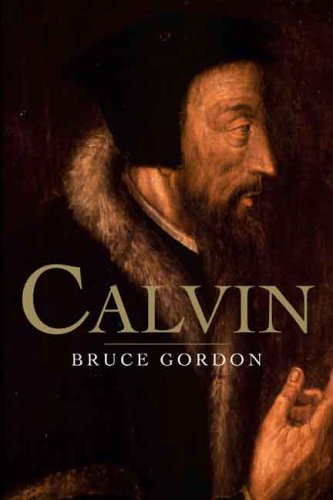
CalvinFrom the reading chair: Housekeeping: A Novel, and The Death of Adam: Essays on Modern Thought, both by Marilynne Robinson; John Calvin as Teacher, Pastor, and Theologian: The Shape of His Writings and Thought, by Randall C. Zachman; Calvin, by Bruce Gordon; Calvin’s Preaching, by T.H.L. Parker; The Theology of John Calvin by Charles Partee; Why Go to Church?: The Drama of the Eucharist, by Timothy Radcliffe; Christian Worship in Reformed Churches Past and Present, edited by Lukas Vischer; Calvin, Participation, and the Gift: The Activity of Believers in Union with Christ, by J. Todd Billings; Grace and Gratitude: The Eucharistic Theology of John Calvin, and The Old Protestantism and the New: Essays on the Reformation Heritage, both by Brain A. Gerrish; and A Theology of Proclamation by Dietrich Ritschl. 

Through the iPod: Twist, by Dave Dobbyn; Bruckner’s Symphonies 1–9, by Berlin Philharmonic conducted by Herbert von Karajan; Troubadour, by George Strait; Lady Antebellum, by Lady Antebellum; My One and Only Thrill, by Melody Gardot; Worrisome Heart, by Melody Gardot.                                                

On the screen: Dogville; Frost/Nixon; Milk; The Pawnbroker; The War on Democracy; The Savages.

In the glass: Speight’s Old Dark.

June bests …

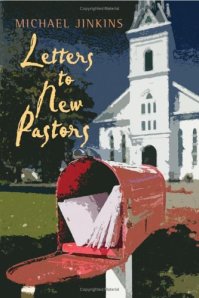
Letters to New PastorsBest books: Voicing Creation’s Praise, by Jeremy S. Begbie; Calvin: A Biography, by Bernard Cottret; Letters to New Pastors, by Michael Jinkins. (On Jinkins’ book: It’s been many moons since I read an entire book in a day, particularly in a day already replete with so many other commitments, but this one was impossible to put down. I think it’ll not be long before parts of it, at least, are revisited).

Best music: Dave Matthews Band, Big Whiskey And The GrooGrux King [2009]; Krzysztof Penderecki, St Luke Passion (Warsaw National Philharmonic Orchestra); Guy Clark, Keepers.

Best films: In Search of a Midnight Kiss [2007]; Så som i himmelen [2004]

Best drink: Glenmorangie, 18 Years Old

May bests …

John Coltrane Blue TrainBest books: On Being Family: A Social Theology of the Family by Ray S. Anderson and Dennis B. Guernsey; John Newton, The Double Rainbow: James K. Baxter, Ngāti Hau and the Jerusalem Commune (Reviewed here); Reconstructing Pastoral Theology by Andrew Purves; We Are Still Married: Stories and Letters by Garrison Keillor; Bearing Fresh Olive Leaves by Calvin Seerveld.

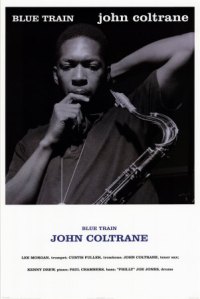
Best music: Live In London by Leonard Cohen; Blue Train by John Coltrane; Outer South by Conor Oberst & the Mystic Valley Band.

Best films: A Love Song for Bobby Long [2005]; Kramer vs. Kramer  [1979]. 

Best drink: Frangelico.

April bests …

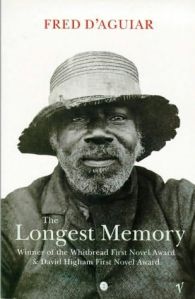
the-longest-memoryBest books: Wilfred Gordon McDonald Partridge, written by Mem Fox and illustrated by Julie Vivas; The Longest Memory, by Fred D’Aguiar; The Death of Adam: Essays on Modern Thought by Marilynne Robinson; The Puppet and the Dwarf: The Perverse Core of Christianity by Slavoj Žižek; Always the Sound of the Sea: The Daily Lives of New Zealand’s Lighthouse Keepers by Helen Beaglehole.

Best music: Blair Douglas, Stay Strong; Don McGlashan and the Seven Sisters, Marvellous Year; Neil Finn, Try Whistling This; Placido Domingo, Amore Infinito: Songs inspired by the Poetry of John Paul II (Karol Wojtyla); Nick Cave and Warren Ellis, The Assassination of Jesse James; Conor Oberst, Conor Oberst; Bob Dylan, Together Through Life.

Best films: Pan’s Labyrinth [2006]; Hunger [2008]; Pride and Prejudice [2001].

Best drink: PNG Coffee (Fairtrade) from Izon Coffee. (BTW: the folk at Izon are great to deal with)

March bests …

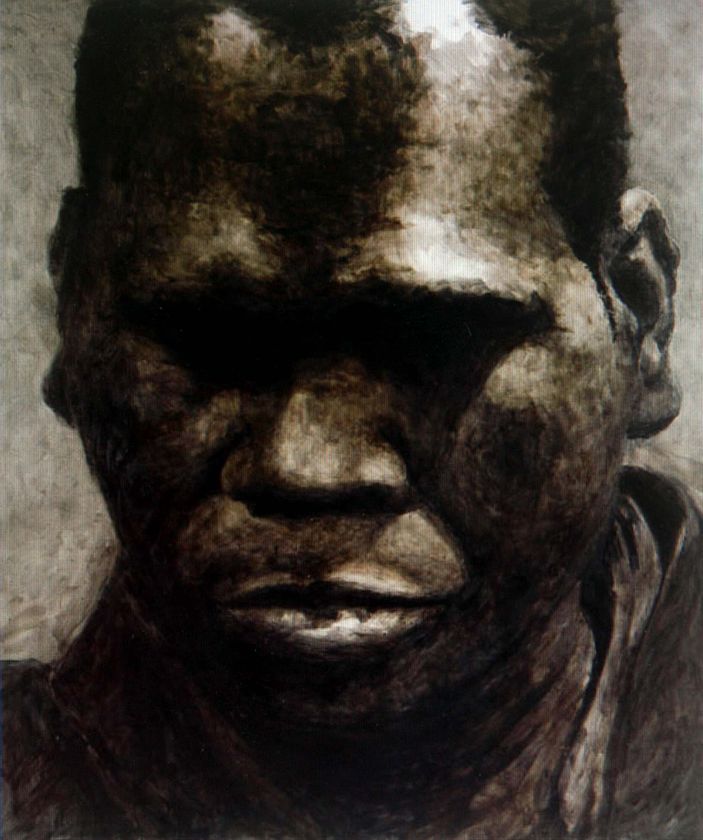
'Geoffrey Gurrumul Yunupingu', by Guy Maestri

'Geoffrey Gurrumul Yunupingu', by Guy Maestri

Best books: Geoffrey A. Studdert Kennedy, After War, Is Faith Possible?: The Life and Message of Geoffrey “Woodbine Willie” Studdert Kennedy (Eugene: Cascade Books, 2008). (Reviewed here)

Best music: Geoffrey Gurrumul Yunupingu, Gurrumul [2008: This is one of the best albums I’ve heard in a long time]; U2, No Line on the Horizon [2009]; Bob Dylan, The Bootleg Series, Vol. 8: Tell Tale Signs – Rare and Unreleased 1989-2006 [2008]; The Panics, Cruel Guards [2008]; Paul McCartney, Flaming Pie [1997].

Best films: The Reader [2008]

Best drink: 2007 Two Paddocks Pinot Noir

January bests …

Best books: Wright, David F. and Gary D. Badcock, eds. Disruption to Diversity: Edinburgh Divinity, 1846-1996. Edinburgh: T&T Clark, 1996; Alec C. Cheyne, The Transforming of the Kirk: Victorian Scotland’s Religious Revolution. Edinburgh: The Saint Andrew Press, 1983.

Best music: Parachute Band, Roadmaps and Revelations [2007].

Best films: Oranges Are Not the Only Fruit [1990] ♦♦♦½ ; Ladri Di Biciclette [1948] ♦♦♦♦; and Gran Torino [2009] – a near-perfect film! ♦♦♦♦♦

Best drink: Monteith’s Rata Honey & Spice Flavoured Summer Ale (even Judy said it was OK!)

December bests …

Best books: Giorgio Locatelli, Made in Italy: Food and Stories. New York: Ecco, 2007 (this one is easily among my favourite books of the year); Marcia JoAnn Bunge, ed. The Child in Christian Thought. Grand Rapids: Wm. B. Eerdmans, 2001; David H. Jensen, Graced Vulnerability: A Theology of Childhood. Cleveland: Pilgrim Press, 2005; and Ernest Hemingway, The Old Man and the Sea.

Best music: Malcolm Gordon, One Voice; and U2, The Golden Unplugged Album

Best films: Death Sentence (2007)

Best drink: Villa Maria Private Bin Merlot/Cabernet Sauvignon (2006)

November bests …

Best books: TF Torrance, Incarnation: The Person and Life of Christ [2008] (this is among the most exciting of publications to appear this year); Barack Obama, The Audacity of Hope: Thoughts on Reclaiming the American Dream.

Best music: Andrew Peterson, Clear to Venus; Sting, Songs from the Labyrinth [2006]

Best films: Black Gold [2007]

Best drink: Teeccino Herbal Coffee Almond Amaretto (also available in Australia from NTP Health Products)

[Apologies for the delay in posting this monthly bests. It’s been a hectic time. As a consolation, let me draw attention to an encouraging post by Richard Floyd on Forsyth and baptism].

October bests …

Best books: The Rise of Neo-Kantianism: German Academic Philosophy between Idealism and Positivism, by Klaus Christian Köhnke; Theology in a Global Context: The Last Two Hundred Years by Hans Schwarz; and Theoria, by Peter Fuller.

Best music: Sons of Korah, Rain [2008]; Dar Williams, Cry Cry Cry [1998]

Best films: 10 Items or Less [2007]; An American Crime [2008]
 
Best drink: Heartland Directors’ Cut Shiraz 2006

September bests …

Best books: The Changing Shape of English Nonconformity, 1825-1925, by Dale A. Johnson; Karl Barth’s Theology of Relations: Trinitarian, Christological, and Human: Towards an Ethic of the Family, by Gary W. Deddo

Best music: Roby Lakatos, The Gypsy Violin – Live in Budapest (2003); Show of Hands, Witness (2006); Martin Simpson, The Bramble Briar (2001)

Best films: Rails & Ties (2007); Cassandra’s Dream (2007)

Best drink: Trade Winds from the Cairngorm Brewery

Around the traps …

I’ve really had no time for blogging of late, but there’s been some good reads around the traps:

In their combination of a sophisticated philosophy with religious aspiration, the pagan Neoplatonists had only one serious rival-Christianity, and, anti-Christian though they were, it was the incorporation of their ideas into Christian theology that ensured their permanent influence on European culture. (p. viii).

The principal figure in the transmission of Neoplatonist thought into Christian theology is St. Augustine. (p. 177)

One Movie Meme

Byron has tagged me to contribute to the One Movie Meme, started by Ben and is now spreading like a bad strain of malaria, absorbing a ridiculous amount of bloggers’ actual movie time. Here goes:

1. One movie that made you laugh
A Day at the Races

2. One movie that made you cry

A Beautiful Mind

3. One movie you loved when you were a child
Phar Lap

4. One movie you’ve seen more than once
Legends of the Fall

5. One movie you hated
Pride & Prejudice (2005)

6. One movie that scared you
Der Untergang

7. One movie that bored you
V for Vendetta

8. One movie that made you happy
Erin Brockovich

9. One movie that made you miserable
Saving Private Ryan

10. One movie you weren’t brave enough to see
Pride & Prejudice – the second time or subsequent times (it’s almost on permanent play at our place)

11. One movie character you’ve fallen in love with
Sophie Magdalena Scholl

12. A movie that surprised you
The Lord of the Rings: The Fellowship of the Ring

13. The last movie you saw
The Hunting Party

14. The next movie you hope to see
I’m Not There

15. Now tag five people:

Daniel, Jim, Jon, Michael, & Steve

Last Rites

Reno Lauro is a Texan mate of mine who is also writing a PhD at St Andrews University. Recently, Reno created a 5-min low-budget film, Last Rites, for a competition for The Doorpost Film Project.

The finalists are elected by judges (50%) and ratings of individual viewers (50%), so it would be great if you could watch the film and, if you like it, rate it favorably.

My comment: ‘Lauro instantly and faithfully draws us into a narrative – and meta-narrative – than has been going on long before the film starts, or ends. A snapshot of the kingdom … in 5 minutes! Brilliant!’

Shooting Dogs – A Film Review

Recently, I watched one of the most challenging films that I’ve seen in months. Shooting Dogs (entitled Beyond the Gates in the USA where it has shamefully not got a distributor) tells the story of an English priest – Father Christopher (John Hurt) – who heads up a school in Rwanda in 1994. Christopher is caught up in the growing violence between Tutsi and Hutu tribes which escalates into genocide. The film, whose official website is a blog, is based on a story co-written by BBC journalist David Belton who was working in the country at the time of the genocide. The film powerfully accounts the events that took place at the Ecole Technique Officielle school in Kigali between April 6th and April 11th in 1994.

The film depicts the experiences of the world-weary school headmaster Father Christopher (John Hurt) and Joe Connor (Hugh Dancy), a charismatic and idealistic young man taking a year out teaching in Africa. When the genocide begins to erupt, the school becomes a refuge for Europeans and Tutsis. A contingent of Belgiant UN soldiers is stationed at the school but as the Hutu government vows to eliminate all Tutsis, the refugees wonder if the UN will protect them from the machete-wielding Hutu militias who start to surround the school. The film paints the UN as spineless, toothless and racist.

Director Michael Canton-Jones elicits naturalistic performances from the actors, some of whom are survivors of the genocide, as are many of the support crew. The film was shot at the location where the actual events took place. Canton-Jones employs mainly handheld cameras in order to give the film a documentary feel. John Hurt and Hugh Dancy give strong, emotional performances as characters caught up in a series of moral dilemmas as to how they can help the Rwandans – both Hutu and Tutsi . By focusing on the fate of one school, this accomplished film succeeds in giving an overview of the devastating Rwandan genocide and the apathetic paralysis of various governments and organisations in dealing with the growing conflict which claimed the lives of somewhere between 500,000 and 1,000,000 human beings.

I must say that despite watching the film with a bottle of good red (something which in itself requires reflection), it took me hours to get to sleep afterwards – such were the questions that it elicits: questions of justice, sense of call, costly discipleship, human limitation, the sacramentality of incarnational ministry, politics, love, racism, human depravity, hope, the sacrificial love of a parent. Moreover, it drove me to silence … and prayer.

Most reviewers have compared the film with Hotel Rwanda, almost unanimously preferring Shooting Dogs. I’m not sure it’s fair to compare the two films as is usually done. Although the overlap of historical subject matter is obvious enough, the films are attempting to do very different things. Both, I think, do it very well. Another film on the same theme is Sometimes in April, which I also watched recently. It’s also well worth watching.

Though its violent content makes it unsuitable for wee kids, I reckon that Shooting Dogs would be a great flick to watch – and discuss – with your teenagers.
Shooting Dogs – A Review

Last night I watched one of the most challenging films that I’ve seen in months. Shooting Dogs (entitled Beyond the Gates in the USA where it has shamefully not got a distributor) tells the story of an English priest – Father Christopher (John Hurt) – who heads up a school in Rwanda in 1994. Christopher is caught up in the growing violence between Tutsi and Hutu tribes which escalates into genocide. The film, whose official website is a blog, is based on a story co-written by BBC journalist David Belton who was working in the country at the time of the genocide. The film powerfully accounts the events that took place at the Ecole Technique Officielle school in Kigali between April 6th and April 11th in 1994.

The film depicts the experiences of the world-weary school headmaster Father Christopher (John Hurt) and Joe Connor (Hugh Dancy), a charismatic and idealistic young man taking a year out teaching in Africa. When the genocide begins to erupt, the school becomes a refuge for Europeans and Tutsis. A contingent of Belgiant UN soldiers is stationed at the school but as the Hutu government vows to eliminate all Tutsis, the refugees wonder if the UN will protect them from the machete-wielding Hutu militias who start to surround the school. The film paints the UN as spineless, toothless and racist.

Director Michael Canton-Jones elicits naturalistic performances from the actors, some of whom are survivors of the genocide, as are many of the support crew. The film was shot at the location where the actual events took place.
Canton-Jones employs mainly handheld cameras in order to give the film a documentary feel. John Hurt and Hugh Dancy give strong, emotional performances as characters caught up in a series of moral dilemmas as to how they can help the Rwandans – both Hutu and Tutsi . By focusing on the fate of one school, this accomplished film succeeds in giving an overview of the devastating Rwandan genocide and the apathetic paralysis of various governments and organisations in dealing with the growing conflict which claimed the lives of somewhere between 500,000 and 1,000,000 human beings.

I must say that despite watching the film with a bottle of good red (something which in itself requires reflection), it took me hours to get to sleep afterwards – such were the questions that it elicits: questions of justice, sense of call, costly discipleship, human limitation, the sacramentality of incarnational ministry, politics, love, racism, human depravity, hope. Moreover, it drove me to silence … and prayer.

Most reviewers have compared the film with Hotel Rwanda, almost unanimously preferring Shooting Dogs. I’m not sure it’s fair to compare the two films as is usually done. Although the overlap of historical subject matter is obvious enough, the films are attempting to do very different things. Both, I think, do it very well.

If I’m ever allowed back into a classroom, the issues wonderfully raised by this film would serve as a great compliment. A must see.

I’m just about to sit down (without a red) and watch another film on the Rwandan genocide. If Sometimes in April is half as good as Shooting Dogs, I’ll post on it sometime too.