Author: Jason Goroncy

The Advent caption competition winner announced

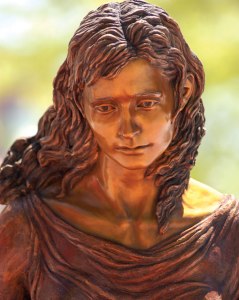
advent.jpgWith so many worthy entries, it was a tough gig indeed to decide on a winner for this year’s Advent Caption Competition. But after much anguish and discussion, and with some sortition and bribery, I am delighted to announce that this year’s winner is Brad Guderian with his caption, ‘What’s it mean when there’s a little cross on this thingy?’ Brad gets to choose one of the following titles:

Thanks to all who participated, and may I take this opportunity too to wish all readers of Per Crucem ad Lucem a very merry Christmas.

[If Brad could contact me via email with his choice of book and a postal address that he would like the book sent to I’d be delighted to get his prize into the post as soon as possible].

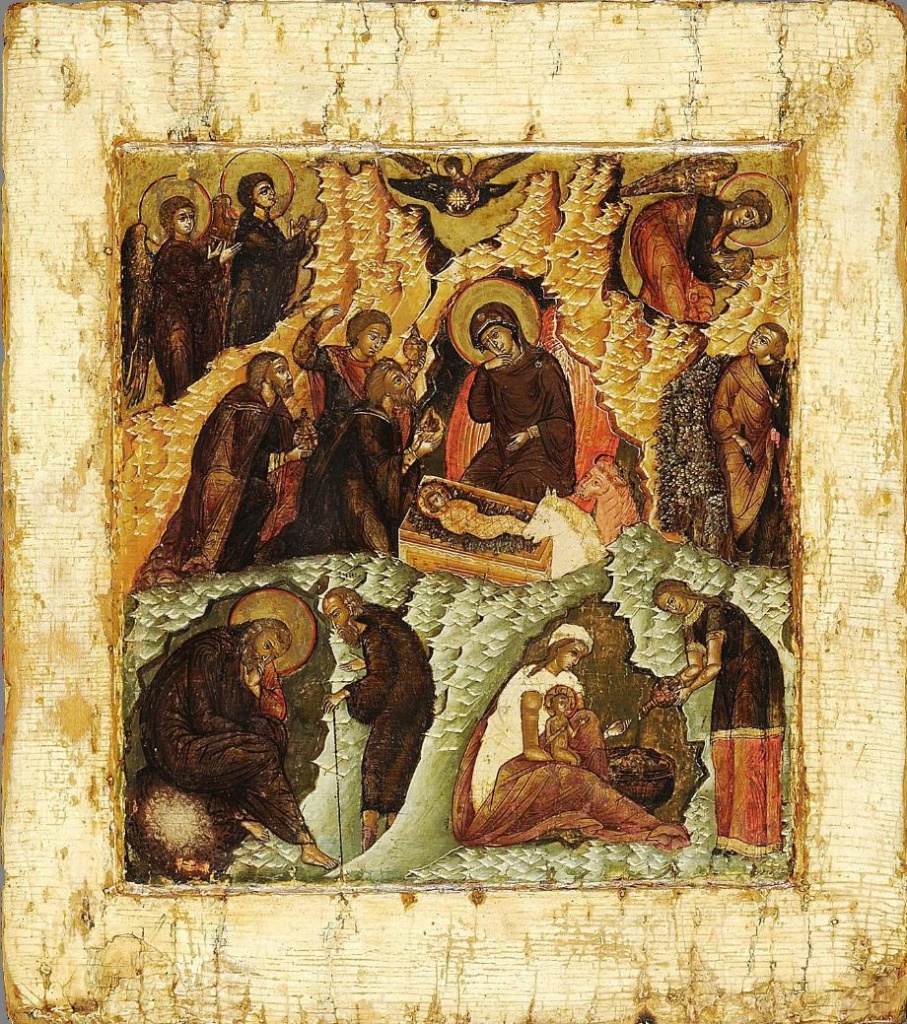
Setting Out into the Dark with God: A Christmas Meditation

The Nativity‘And the angel said to them,

“Be not afraid; for behold, I bring you Good News of a great joy that will come to all the people: for to you is born this day in the city oft David a Savior, who is Christ the Lord. And this will be a sign for you: you will find a babe wrapped in swaddling clothes and lying in a manger” ( Luke 2:10–12).

On Christmas night the shepherds are addressed by an angel who shines upon them with the blinding glory of God, and they are very much afraid. The tremendous, unearthly radiance shows that the angel is a messenger of heaven and clothes him with an incontrovertible authority. With this authority he commands them not to be afraid but to embrace the great joy he is announcing to them. And while the angel is speaking thus to these poor frightened people, he is joined by a vast number of others, who unite in a “Gloria” praising God in heaven’s heights and announcing the peace of God’s goodwill to men on earth. Then, we read, “the angels went away from them into heaven.” In all probability the singing was very beautiful and the shepherds were glad to listen; doubtless they were sorry when the concert was over and the performers disappeared behind heaven’s curtain. Probably, however, they were secretly a little relieved when the unwonted light of divine glory and the unwonted sound of heavenly music came to an end, and they found themselves once more in their familiar earthly darkness. They probably felt like shabby beggars who had suddenly been set in a king’s audience chamber among courtiers dressed in magnificent robes and were glad to slip away unnoticed and take to their heels.

But the strange thing is that the intimidating glory of the heavenly realm, which has now vanished, has left behind a human glow of joy in their souls, a light of joyous expectation, reinforcing the heavenward-pointing angel’s word and causing them to set out for Bethlehem. Now they can turn their backs on the whole epiphany of the heavenly glory for it was only a starting point, an initial spark, a stimulus leading to what was really intended; all that remains of it is the tiny seed of the word that has been implanted in their hearts and that now starts to grow in the form of expectation, curiosity and hope: “Let us go over to Bethlehem and see this thing that has happened, which the Lord has made known to us.” They want to see the word that has taken place. Not the angel’s word with its heavenly radiance: that has already become unimportant. They want to see the content of the angel’s word, that is, the Child, wrapped in swaddling clothes and lying in a manger. They want to see the word that has “happened”, the word that has taken place, the word that is not only something uttered but something done, something that can not only be heard but also seen.

Thus the word that the shepherds want to see is not the angel’s word. This was only the proclamation (the kerygma, as people say nowadays); it was only a pointer. The angels, with their heavenly authority, disappear: they belong to the heavenly realm; all that remains is a pointer to a word that has been done. By God, of course. Just as it is God who made it known to them through the angels.

So they set off, heaven behind them, and the earthly sign before them. But, Lord, what a sign! Not even the Child, but a child. Some child or other. No special child. Not a child radiating a light of glory, as the religious painters depicted, but on the contrary: a child that looks as inglorious as possible. Wrapped in swaddling clothes. So that it cannot move. It lies there, imprisoned, as it were, in the clothes in which it has been wrapped through the solicitude of others. There is nothing elevating about the manger in which it lies, either, nothing even remotely corresponding to the heavenly glory of the singing angels. There is practically nothing even half worth seeing; the destination of the shepherds’ nightly journey is the most ordinary scene. Indeed, in its poverty it is decidedly disappointing. It is something entirely human and ordinary, something quite profane, in no way distinguishedexcept for the fact that this is the promised sign, and it fits.

The shepherds believe the word. The word sends them from heaven and to earth, and as they proceed along this path, from light to darkness, from the extraordinary to the ordinary, from the solitary experience of God to the realm of ordinary human intercourse, from the splendor above to the poverty below, they are given the confirmation they need: the sign fits. Only now does their fearful joy under heaven’s radiance turn into a completely uninhibited, human and Christian joy. Because it fits. And why does it fit? Because the Lord, the High God, has taken the same path as they have: he has left his glory behind him and gone into the dark world, into the child’s apparent insignificance, into the unfreedom of human restrictions and bonds, into the poverty of the crib. This is the Word in action, and as yet the shepherds do not know, no one knows, how far down into the darkness this Word-in-action will lead. At all events it will descend much deeper than anyone else into what is worldly, apparently insignificant and profane; into what is bound, poor and powerless; so much so that we shall not be able to follow the last stage of his path. A heavy stone will block the way, preventing the others from approaching, while, in titter night, in ultimate loneliness and forsakenness, he descends to his dead human brothers.

It is true, therefore: in order that he shall find God, the Christian is placed on the streets of the world, sent to his manacled and poor brethren, to all who suffer, hunger and thirst; to all who are naked, sick and in prison. From henceforth this is his place; he must identify with them all. This is the great joy that is proclaimed to him today, for it is the same way that God sent a Savior to us. We ourselves may be poor and in bondage too, in need of liberation; yet at the same time all of us who have been given a share in the joy of deliverance are sent to be companions of those who are poor and in bondage.

But who will step out along this road that leads from God’s glory to the figure of the poor Child lying in the manger? Not the person who is taking a walk for his own pleasure. He will walk along other paths that are more likely to run in the opposite direction, paths that lead from the misery of his own existence toward some imaginary or dreamed-up attempt at a heaven, whether of a brief pleasure or of a long oblivion. The only one to journey from heaven, through the world, to the hell of the lost, is he who is aware, deep in his heart, of a mission to do so; such a one obeys a call that is stronger than his own comfort and his resistance. This is a call that has complete power and authority over my life; I submit to it because it comes from a higher plane than my entire existence. It is an appeal to my heart, demanding the investment of my total self; its hidden, magisterial radiance obliges me, willy-nilly, to submit. I may not know who it is that so takes me into his service. But one thing I do know: if l stay locked within myself, if I seek myself, I shall not find the peace that is promised to the man on whom God’s favor rests. I must go. I must enter the service of the poor and imprisoned. I must lose my soul if I am to regain it, for so long as I hold onto it, I shall lose it. This implacable, silent word (which yet is so unmistakable) burns in my heart and will not leave me in peace.

In other lands there are millions who are starving, who work themselves to death for a derisory day’s wage, heartlessly exploited like cattle. There too are the slaughtered peoples whose wars cannot end because certain interests (which are not theirs) are tied up with the continuance of their misery. And I know that all my talk about progress and mankind’s liberation will be dismissed with laughter and mockery by all the realistic forecasters of mankind’s next few decades. Indeed, I only need to open my eyes and ears, and I shall hear the cry of those unjustly oppressed growing louder every day, along with the clamor of those who are resolved to gain power at any price, through hatred and annihilation. These are the superpowers of darkness; in the face of them all our courage drains away, and we lose all belief in the mission that resides in our hearts, that mission that was once so bright, joyous and peace bringing; we lose all hope of really finding the poor Child wrapped in swaddling clothes. What can my pitiful mission achieve, this drop of water in the white-hot furnace? What is the point of my efforts, my dedication, my sacrifice, my pleading to God for a world that is resolved to perish?

“Be not afraid; for behold, I bring you Good News of a great joy … This day is born the Savior”, that is, he who, as Son of God and Son of the Father, has traveled (in obedience to the Father) the path that leads away from the Father and into the darkness of the world. Behind him omnipotence and freedom; before, powerlessness, bonds and obedience. Behind him the comprehensive divine vision; before him the prospect of the meaninglessness of death on the Cross between two criminals, Behind him the bliss of life with the Father; before him, grievous solidarity with all who do not know the Father, do not want to know him and deny his existence. Rejoice then, for God himself has passed this way! The Son took with him the awareness of doing the Father’s will. He took with him the unceasing prayer that the Father’s will would be done on the dark earth as in the brightness of heaven. He took with him his rejoicing that the Father had hidden these things from the wise and revealed them to babes, to the simple and the poor. “I am the way”, and this way is “the truth” for you; along this way you will find “the life”. Along “the way” that I am you will learn to lose your life in order to find it; you will learn to grow beyond yourselves and your insincerity into a truth that is greater than you are. From a worldly point of view everything may seem very dark; your dedication may seem unproductive and a failure. But do not be afraid: you are on God’s path. “Let not your hearts be troubled: believe in God; believe also in me.” I am walking on ahead of you and blazing the trail of Christian love for you. It leads to your most inaccessible brother, the person most forsaken by God. But it is the path of divine love itself. You are on the right path. All who deny themselves in order to carry out love’s commission are on the right path.

Miracles happen along this path. Apparently insignificant miracles, noticed by hardly anyone. The very finding of a Child wrapped in swaddling clothes, lying in a manger is this not a miracle in itself? Then there is the miracle when a particular mission, hidden in a person’s heart, really reaches its goal, bringing God’s peace and joy where there were nothing but despair and resignation; when someone succeeds in striking a tiny light in the midst of an overpowering darkness. When joy irradiates a heart that no longer dared to believe in it. Now and again we ourselves are assured that the angel’s word we are trying to obey will bring us to the place where God’s Word and Son is already made man. We are assured that, in spite of all the noise and nonsense, today, December 25, is Christmas just as truly as two millennia ago. Once and for all God has started out on his journey toward us, and nothing, till the world’s end, will stop him from coming to us and abiding in us’.

– Hans Urs von Balthasar, ‘Setting Out into the Dark with God’, in You Crown the Year With Your Goodness: Sermons Throughout the Liturgical Year (Ignatius Press, 1989).

Howick Christmas Cake

Aunt Daisy's Book of Selected Special RecipesSomething beautiful happened to me this week. What was conceived as a brief Twitter conversation a few weeks ago came full term yesterday when a friend of mine baked a Christmas cake and then shared it not only with me, but with my family too. It was what the ancients called ‘Yummy’.

Of course, I just had to get the recipe. As it happens, it comes from The Twelve Cakes of Christmas: An Evolutionary History, with Recipes by Helen Leach, Mary Browne and Raelene Inglis (Otago University Press, 2011), and is adapted from the Howick Christmas Cake recipe which was first published in Aunt Daisy’s Book of Selected Special Recipes from California, Canada, France, Australia and New Zealand (1935). Anyway, the cake tastes wonderful, or at least my friends’ effort at it did, and I thought it worth sharing the recipe here. I also think that I’ll have to give it a go myself over the next few days. I don’t really do desserts, so this is a big step up for me.

Ingredients

450 g bread flour
340 g raisins
340 g sultanas
340 g currants
225 g peel
225 g crystallised ginger, chopped
115 g walnuts, chopped
115 g almonds, chopped (no need to skin)
340 g butter
340 g sugar
6 eggs
1/2 teaspoon salt
1 teaspoon baking soda
2 tablespoons treacle
1 cup black currant jam

Royal icing
350g icing sugar
1 egg white
3-4 tsp lemon juice

Method

Prepare a 25 cm diameter-round pan or 23 cm-square pan by lining with a double layer of brown paper and a single layer of baking paper. Preheat the oven to 130˚C with a shelf in the middle or slightly below.

Weigh the flour and set aside. In a large bowl place the raisins, sultanas, currants, peel, ginger, walnuts and almonds. Add 2 tablespoons of the weighed flour and stir through, separating any clumps of dried fruit.

Soften the butter in a large bowl and cream with the sugar until light and fluffy. In another bowl beat the eggs until foamy. Add to the creamed mixture a little at a time and continue beating. If the mixture shows signs of curdling add a spoonful or two from the weighed flour. Beat well. Sift the remaining weighed flour with the salt and baking soda. Fold into the creamed mixture.

Add the treacle and jam to the fruit and stir to mix thoroughly. Lastly add the creamed mixture and fold through gently but thoroughly.

Spoon into the prepared cake pan. Smooth the surface with a wet hand. Place in the oven and bake for 4 to 4 1/2 hours. (Details on how to test when a cake is cooked are given below.) Remove from the oven, cover with a teatowel and leave in the pan until cold. Turn out on to a rack or tray. Remove brown paper and baking paper. Wrap in greaseproof paper and store in an airtight cake container or wrap in foil.

When you’re ready, it’s time to tackle the royal icing. Place sugar, egg and 3 tsp of lemon juice into a bowl and beat until smooth. Add the extra lemon juice if the mixture is too stiff. Spread generously on the top of the cake, and be sure to lick up any leftovers.

Hint

During the cooking check that the surface of the cake is not browning too much and if so cover with a double piece of baking paper. Bake the cake for the shorter time specified in the recipe and test for doneness. When cooked, a cake will have shrunk slightly from the sides of the cake pan, the middle will be firm when gently pushed at the centre and the colour will have darkened. If these criteria are met then use a warm skewer or wire cake tester to insert into the middle of the cake. It should come out with no uncooked mixture adhering to it. If necessary, continue to bake for another 10–15 minutes and test again.

‘The Eternity Man’, by Clive James

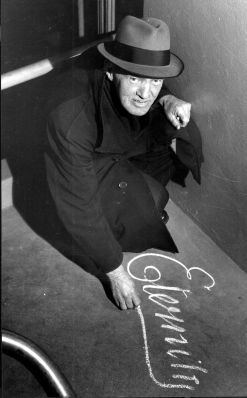
arthur staceThis afternoon, while plodding my way through The Book of My Enemy: Collected Verse 1958–2003, I was both surprised and delighted (two words that often belong together) to discover Clive James‘ poem on that wonderfully mysterious figure Arthur Stace, a person perhaps better known as ‘Mr Eternity’ or as ‘the Eternity Man’. (James also has a poem in this collection on the great R.S. Thomas, but that one will just have to wait until another day.)

James’ poem was too wonderful not to share, particularly with my Aussie readers for whom Stace – a ‘man with a single obsession’ – is both something of an icon, and a sacrament of otherness’s genuine and most radical strangeness in a world increasingly out of step with things sacred.

Never filmed, he was photographed only once,
Looking up startled into the death-trap flash
Like a threatened life form.
Still underlining his copybook one-word message
With the flourish that doubled back under the initial ‘E’,
He was caught red-eyed with the stark white chalk in his hand
Writing Eternity.

Before he died in 1967
At the age of eighty-eight
He had managed to write it five hundred thousand times,
And always in copperplate script.
Few streets or public places in the city of Sydney
Remained unmarked by the man with a single obsession –
Writing Eternity.

Wherever you lived, sooner or later he’d reach you.
Hauling their billycarts up for the day’s first run
Small boys swarmed when they came to the word
Arrestingly etched in the footpath.
It was self-protected by its perfect calligraphy –
The scrupulous sweep of a hand that had spent its lifetime
Writing Eternity.

He was born in a Balmain slum and raised underneath it,
Sleeping on hessian bags with his brothers and sisters
To keep beyond fist’s reach of his dipso parents.
His name was Arthur Stace.
He had no one to use it apart from his family.
His fate was to die as a man and return as a portent,
Writing Eternity.

His sisters grew up to be prostitutes. He was a pimp,
But in 1930, in his early forties, on meths,
He heard the Reverend John Ridley at Burton Street
Baptist Church, Darlinghurst,
And scrapped his planned night in the down-and-out sanctuary.
The piss artist had his vocation revealed unto him –
Writing Eternity.

‘I wish I could shout one word through the streets of Sydney!’
The Reverend Ridley shouted. ‘Eternity! You
Have got to meet it! You! Where will you spend
Eternity?’ Alone in his pew,
Avoided by all for his smell strong enough to see,
A man reborn saw the path stretch ahead he would stoop to,
Writing Eternity.

In New South Wales for more than a hundred years
We all had to learn that script in school,
But what school did he ever go to, and where
Did his chalk come from? How did he eat?
These nagging conundrums were mulled over endlessly
As he roamed unseen through the city without rhyme or reason
Writing Eternity.

In a blaze of glory the Thousand Year Reich was announced.
Old Bolsheviks shyly confessed with downcast eyes
And the first reffos arrived at Woolloomooloo.
Our troops sailed off to prop up the Middle East
Until Singapore fell and the Yanks overtipped for a taxi –
Yet still through the blacked-out streets he kept his own schedule
Writing Eternity.

But a mere word was ceasing to hold any terrors.
Belief in the afterlife faded. Where was God
When the Christmas snow came fluttering into the death camps?
Those kindling children, their piles of little shoes,
Condemned Divine Justice past hope of apology:
To rage at the storm and expect it to stop made more sense than
Writing Eternity.

He wrote it on the same night Hitler burned.
He wrote it as the Japanese cities melted
And the tanks rolled into Budapest.
While Sputnik skimmed through the stars he bent to his task
As if we believed there was still any Hell except history,
And Heaven could be rebuilt by one scuttling ratbag
Writing Eternity.

The rain didn’t always wash his word away.
He sometimes used more than chalk. Near my place once
I found it fingertip deep in the new white concrete.
It was lined with crimson enamel, a rune punched in
By a branding-iron from space. Down on one knee
I chipped out the paint with my penknife as if I could stop him
Writing Eternity.

He wouldn’t have known. He didn’t have time to go back,
Not even to visit his real bravura efforts
Which culminated in his famous Australia Square
Incised masterpiece filled with stainless steel.
Some snot-nosed kid with a grudge there would always be,
But he put all that behind him and kept on going,
Writing Eternity.

By the time he died I was half the world away
And when I came back I never gave him a thought.
It was almost fifty years after I unpicked it
That I pondered his word again,
On the dawn of the day when the laughing stock was yours truly
Who would have to go on alone and be caught in the spotlight
Writing Eternity.

From the thirty-third floor of the Regent I looked down naked.
The Opera House was sold out. I was afraid,
But the Harbour was flat calm all the way to the sea,
Its shaped, linked loops flush with silver,
And I suddenly saw what that showpiece of geology
Had really been up to ever since the magma cooled –
Writing Eternity.

That word again, and this time I could read it.
It said your life is on loan from those before you
Who had no chance, and before it is even over
Others will come to judge you, if only by
Forgetting your name; so better than glittering vainly
Would be to bend down in the dark half a million times
Writing Eternity.

Where will we spend it? Nowhere except here.
Life everlasting ends where it begins,
On Earth, but it is present at every moment.
We must seek grace now and not for ourselves alone
Was what that crazed saint meant in his ecstasy –
Since time is always, with chalk made from children’s ashes,
Writing Eternity.

There is a place

lamentBack in 1996, after the horror that was unleashed on a wee school in Dunblane, Scotland (and which led to sensible people creating meaningful firearms legislation in the UK), John Bell and Graham Maule penned the hymn ‘There is a place’ (it appears on the album The Last Journey: Songs for the Time of Grieving, and is also available via iTunes). Of course, for many who are surviving under the almost unspeakable burden of grieving the loss of a child – whether in Apia, Ramallah, Baghdad, Christchurch or Newtown – it may well feel like the time for singing is no more, and indeed that even to imagine that such a time might yet dawn is to contemplate the most unimaginable and disrespectful of hopes. (For such as these, I really hope that this post brings no additional pain.) For others, however, and hopefully too one day for those who for now wander in the shadows of death, I wanted to share Bell and Maule’s words of lament and of hope birthed in the good and extra-ordinary news that despite all that Marx and Freud and Feuerbach wish to decry Advent bids us to wait for:

There is a place prepared for little children
Those we once lived for, those we deeply mourn,
Those who from play, from learning and from laughter
Cruelly were torn.

There is a place where hands which held ours tightly
Now are released beyond all hurt and fear
Healed by that love which also feels our sorrow
Tear after tear.

There is a place where all the lost potential
Yields its full promise, finds its lost intent;
Silenced no more, young voices echo freely
As they were meant.

There is a place where God will hear our questions,
Suffer our anger, share our speechless grief.
Gently repair the innocence of loving
And of belief.

Jesus, who bids us to be like little children
Shields those our arms are yearning to embrace,
God will ensure that all are reunited;
There is a place.

Of course, Christians believe that the ‘place’ spoken of here refers not to a geographical location (whether beyond the clouds or elsewhere) but to a person; namely, to Jesus Christ, God’s one and only Son, whose geographical location, if you like, is in the bosom of the Father, where we too live, where all distance between the living and the dead has been and is being overcome, and where all abruptly cut off life ‘finds its lost intent’.

[Image: Fikri]

In inconsolable times …

mother-weepingJust after beginning to come somewhat to terms (I say ‘somewhat’ for with evil there can be no such arrangement) with the devastating and deadly powers unleashed in Cyclone Evan, we find ourselves again on this day stirred with rage, frustration, despair, lament and grief birthed by news of yet another mass shooting in the USA. It is timely (and sadly so) that I happen to be working on a book of essays on the Hebrew notion of tikkun olam (to mend the world). It is timely too that today my friend Rebecca Floyd drew my attention to two sermons by J. Mary Luti. The first, first preached after the tragic events of the massive Indian Ocean tsunami, and the second, an excerpt from a sermon on the Feast of the Holy Innocents, both speak to this week’s events. Here are a few snippets. From the first:

We Christians sometimes find it hard to refrain from overwhelming great empty spaces and terrifying silences with hope-filled murmuring about God’s love and abiding presence. We are people who count the resurrection as the core of our faith. For us, hope is second nature, nothing is impossible, death is not the end. But there are times when Easter comes too quickly, when we get Jesus off the cross and into glory with unseemly dispatch. Perhaps this haste is a reason why Easter is doubted by so many.

There are times when the God of the lilies of the field and of all our carefully-counted hairs must repulse us. Times when, in the face of the vulgar horrors of our world and the intimate tragedies of our lives, an all-caring God is inadequate. Times when light is premature, when it hurts our eyes and does not heal. Times when we need the cover of night.

Sooner or later, we all wonder with Job why we were ever born. Sooner or later, we all pore over the lexicon for a word with which to fashion inconsolable laments—and we find the cross, Christianity’s most believable symbol. It offers no answers. It offers instead a common lot: sooner or later life deposits us all at the cross. It is the gathering place for the world’s sorrow, its wasted efforts, its tormented children, its unimaginable catastrophes, and its utter silences. When we arrive at its foot, we also discover its hope – not the hope of Easter, but the hope that comes simply from having a place to gather when the pain is unspeakable and the sorrow beyond all bearing.

It is not yet the dawn. Not yet. We need to be healed, and we will be, but not too fast. We have to wait. It takes time. And we have to stay together, with every loss and horror creation has ever borne. We have to stay together so that it is not too frightening to wait, so that our waiting does not become despair. Like that inconsolable man in Indonesia, we may even prefer to wait, just as long as we are not alone. Together we will outwait death and come startled and blinking to Easter.

But no, not now. Not yet.
RachelAnd from the second:

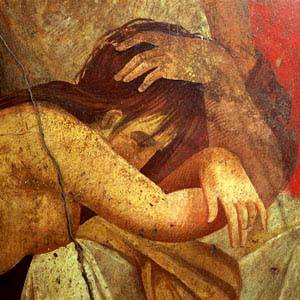
She will not be comforted. There is no way to address a grief like Rachael’s, and she stubbornly refuses everyone who tries. She refuses, in other words, to have the unspeakable reality of innocent suffering  diminished in any way by attempts to assuage or explain it. Rachael is a witness to the things in human life that are so awful that they cannot be addressed, explained or repaired. They can only be wept over, lamented, mourned.

Rachael, in her single keening voice gives voice to all the keening mothers of Bethlehem’s babies, and to the un-voiceable anguish of every parent, family, clan and nation from whom children have ever been torn away and destroyed by a police state, by Jim Crow or apatheid, by political greed and indifference, by the glorification of war, by random violence, or by crushing poverty. Rachael will not be hushed about these things. She will not be pacified.

But we are surrounded by hushing, pacifying voices — knowing voices that explain and justify the unfortunate necessity of innocent suffering, as if it happens all by itself without human complicity: Guns don’t kill people … Cool voices that cover up or prettify what violence actually does. False voices that paint a sanctified picture of the meaning of suffering. Pragmatic voices of tyrants. Pandering voices of politicians. Patriotic voices of presidents and generals. Blaming voices of the self-made. Aloof, pious voices (God help us!) too often of the church.

At the start of a new year, especially one that will almost certainly see at least one new war unleashed on this gasping planet, the stubborn wail of Rachael weeping for her children urges us to resist and to refuse those false voices of explanation, rationalization, justification, and obfuscation of all the things that are just not right and which must not be condoned.

Rachael’s grief, never to be comforted, urges us also to rip apart with our own lamentation (and our own repentance) the curtain behind which hides the greatest lie – that it just can’t be helped, that we have no choice but to stand by and accept the suffering of the innocent, the enslavement and destruction of the future. For the stuff of her life is the stuff of ours: the murder of innocents, whether it be lives destroyed in office buildings in New York, hospitals with inadequate supplies in Iraq, famine in Ethiopia, orphanages in Rwanda, school buses in Tel Aviv, a shot-up elementary school in your small town, or razed homes in the little town of modern Bethlehem.

When Rachael makes her brief appearance on the Christmas stage; when this wailing mother of a dead child shows up beside a sleeping child watched over by a virgin tender and mild, we are also reminded, thankfully, that what human words cannot speak of adequately or truthfully, God’s Word, the word we experience in Jesus, can.

The babe who escaped this time, the child whom one Herod could not find, but who will be found by another Herod in thirty-three years’ time and will not escape him then — this child is God’s final Word to our world. It is a Word of comfort Rachael might finally accept, for it is a Word of justice. A Word from a Voice clear and true, a ‘yes’ profound enough and persevering enough (through trial, cross and grave) to address whatever horrific stuff our living and dying, our ignorance, sin and fear can present.

Now and forever it is spoken powerfully against the powers-that-be, defeating death itself — even ours, if we follow its resonance and welcome its light.

And my friend Bruce Hamill has penned the following prayer for tomorrow’s church service:

Today we pray for a society obsessed with weapons of destruction and sometimes mass destruction, obsessed with self-defence and the perpetuation of violence. We pray for America and we pray for our own country inasmuch as we share the same cultural patterns and values. Lord we lament with your people everywhere, how much we have talked of the gospel but failed to appreciate the gospel of peace, replacing it with a gospel of personal security and individual salvation. We have failed you. Have mercy and bring your judgement first to the household of God. If we do not bear witness to the gospel of peace, who will? Lord have mercy on us.
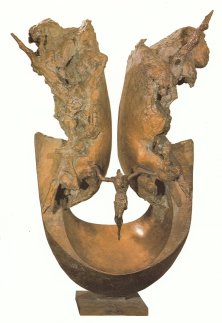
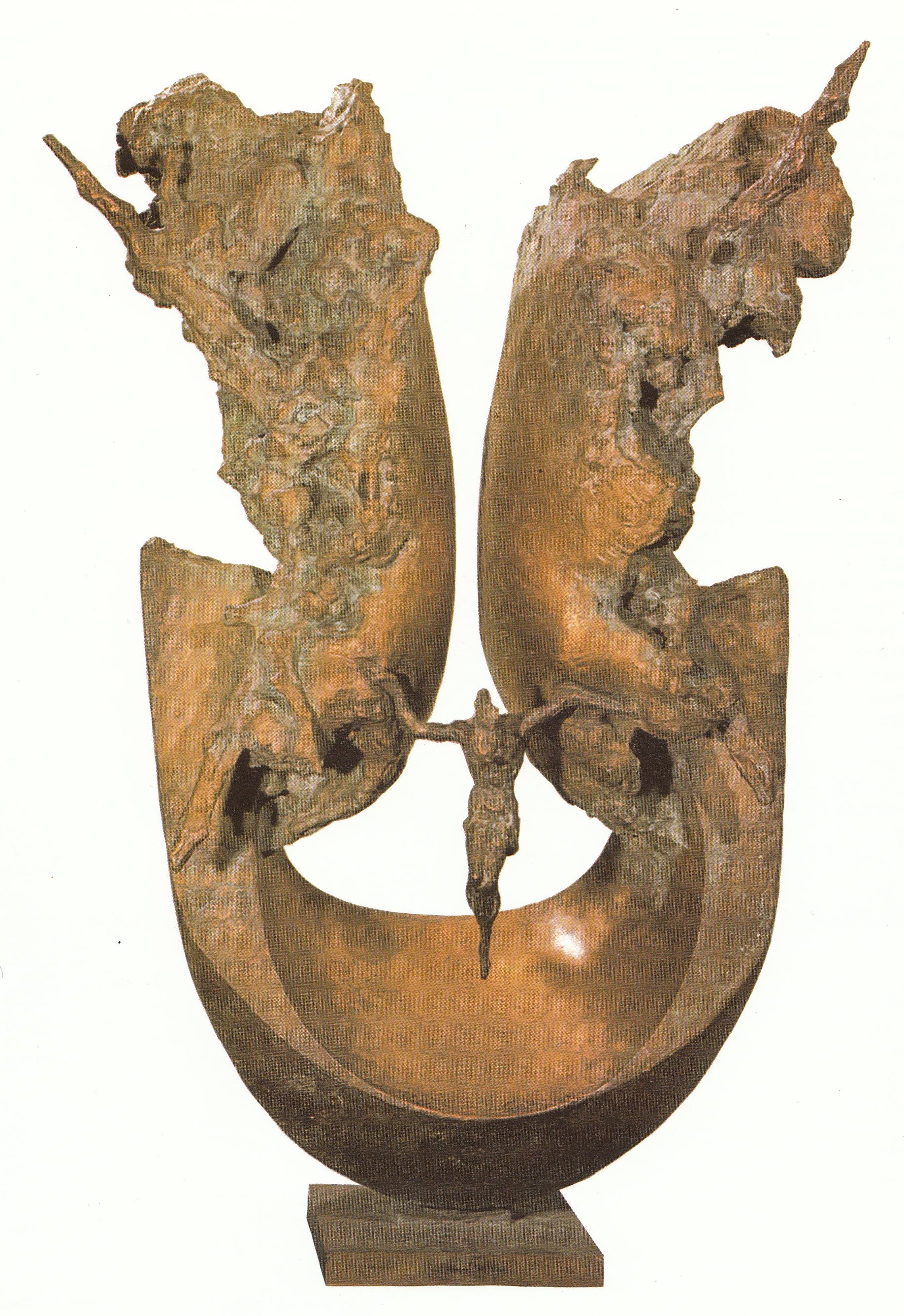
Keiji Kosaka - Reconciliation in the Midst of DiscontinuityAt times like these, however, I often find myself both reflecting on Keiji Kosaka’s profound sculpture ‘Reconciliation in the Midst of Discontinuity’, and turning to both Donald MacKinnon and to Gillian Rose, and to their efforts, each in their own way, to resist premature closure of what must remain open and patient and in agony. MacKinnon’s reflection on John 1.10–11 (‘He was in the world and the world took its origin through him and the world did not know him. He came to what was his own and his own people did not receive him’) provides one such example of what I mean. Here’s an excerpt::

It is sheer nonsense to speak of the Christian religion as offering a solution of the problem of evil. There is no solution offered in the gospels of the riddle of Iscariot through whose agency the Son of man goes his appointed way. It were good for him that he had not been born. The problem is stated; it is left unresolved, and we are presented with the likeness of the one who bore its ultimate burden, and bore it to the end, refusing the trick of bloodless victory to which the scoffers, who invited him to descend from his cross, were surely inviting him.

What the gospels present to us is the tale of an endurance. “Christ for us became obedient unto death, even the death of the cross.” The writer of the fourth gospel invites his readers to find in the tale of this endurance the ultimate secret of the universe itself. For the ground of that universe is on his view to be identified with the agent of that endurance. So his teaching cannot easily be qualified as optimistic or pessimistic. He is no pessimist; for he is confident that we can find order and design, the order and design of God himself, in the processes of the universe and in the course of human history. But if men would understand that design, they must not, in random speculative mood, look away from the concrete reality of Jesus of Nazareth, from the bitter history of his coming and rejection. Where the speculative intellect finds answer to its furthest ranging questions is still the same place where the bruised spirit may find consolation from the touch of a man of sorrows.

To suggest that Christianity deals with the problem of evil by encouraging the believer to view it from a cosmic perspective is totally to misunderstand both the difficulty and the consolation of its treatment. Rather Christianity takes the history of Jesus and urges the believer to find, in the endurance of the ultimate contradictions of human existence that belongs to its very substance, the assurance that in the worst that can befall his creatures, the creative Word keeps company with those whom he has called his own. “Is it nothing unto you all ye that pass by? Behold and consider whether there be any sorrow like unto my sorrow.” It is not as if the passer-by were invited immediately to assent to the proposition that there was indeed no such sorrow; he is asked to “consider”. It is a profound mistake to present the Christian gospel as if it were something that immediately showed itself, that authenticated itself without reflection. It is of the manner of the coming of Jesus that he comes so close to the ordinary ways of men that they hardly notice him, that they treat him as one of themselves. “There stands one among you whom you know not”: so the Baptist in that same first chapter of John to which I have so often referred. But how, except by coming so close to men, could he succour them? A Christ who at the last descended from the cross must leave the penitent robber without the promise of his company in paradise; and such a Christ we may dare say must also deprive himself of the precious comfort in his own extremity that he received from the gangster beside him; for it was that gangster who in Luke’s record continued with him to the very end of his temptation.

I am not here offering an apologetic, only bringing out certain elements in the complex reality of Christianity that seems to me of central importance. I would say that nobody these days, who is concerned at all with issues of faith and unbelief, can afford to treat them as opportunities for being clever. If men still believe – in spite of the strong, even overwhelming, case of the sceptic – it must be because they find malgré tout in Christianity the revelation of the eternal God, a revelation that touches them in the actual circumstances of their lives, whether in the common fear of a week of international crisis, or in the more personal extremities of sin, failure, bereavement, of unresolvable conflict of obligations when they find themselves pulled in two directions by claims of pity and by claims of truth. Is the so-called gospel in any sense good news to one who has bestowed love and care upon another whom he is forced in obedience to the claims of truth to acknowledge as worthless and corrupt? If it has no word of consolation in such extremity, how can we call it good news to the individual? What value is there in a cosmic optimism which leaves unplumbed the depths of human grief?

So I come back to the place where nearly I began, to the figure prostrate on the ground praying that the hour might pass. It is the claim of Christianity that men find God there, that in some sense all who came before that one were thieves and robbers, that he indeed it is in whom all things consist, through whom they take their origin, and by whom they will find their consummation. Men may well find in the end that this claim is beyond their acceptance, that it demands assent to what they cannot, if they are honest, say yes to. But those who believe its truth as long as indeed they do believe it must at least make sure that what is rejected is the substantial reality and not a counterfeit bereft alike of pity and of glory.

It may seem strange that I have gone so far without even mention of the Resurrection; but my reticence in this respect is of design. In one sense belief that Jesus was raised from the dead, that the Father pronounced a final Amen to his work, is a prius of my whole argument. To discuss the issue of the historical evidence for the Resurrection of Jesus and the complex theological problems that it raises would take me beyond the limitations I have deliberately imposed upon myself. Yet it is the prius of my whole argument; for it is in the Resurrection that we find the ultimate source of that peculiar tension between optimism and pessimism which I have judged characteristic of Christianity. One thing, however, in conclusion, I would dare to say, and that is this. It is a commonplace of traditional theology that in speech concerning God and the things of God “the negative way” must precede “the way of eminence”. If men would give sense to what they say, they must be agnostic before they dare invoke the resources of anthropomorphic imagery; they are always properly more confident concerning what they must deny than concerning what they may affirm. So with what men intend when they speak of the Resurrection of Jesus; they know what it is not in a way in which they cannot know what it is, inasmuch as its ultimate secret rests with the Father who raised him.

In knowing what it is not, they know that it is not a descent from the cross postponed for thirty-six hours. It is not the sudden dramatic happy ending which the producer of a Hollywood spectacular might have conceived. In the stories as we have them, it is only to his own that the risen Christ shows himself with the marks of his passion still upon him; his commerce with them is elusive and restricted, as if to guard them against the mistake of supposing that they were witnesses of a reversal, and not of a vindication, of those things which had happened. It is a commonplace of theology to speak of the Resurrection as the Father’s Amen to the work of Christ; yet it is a commonplace to whose inwardness writers on the subject often attend too little. For if it does anything, it drives one back to find the secret of the order of the world in what Christ said and did, and the healing of its continuing bitterness in the place of his endurance.

“Come down from the cross and we will believe.” Many Christians have joined in this cry; many continue indeed to make it their own, even when they pay lip service to the gospel of the Resurrection. But it is only in the light of the Resurrection that those Christians can learn rather to say with understanding the profound words of Pascal, that Christ will indeed be in agony unto the end of the world.
‘A Reflection on Advent’, by Rowan Williams

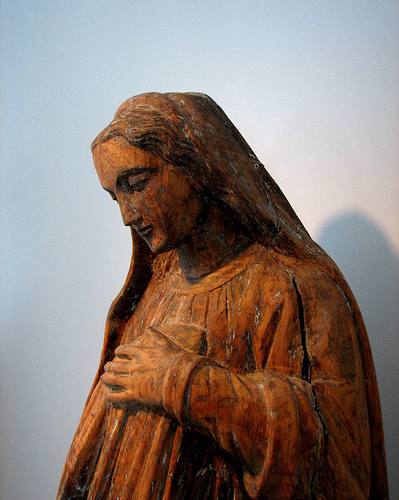
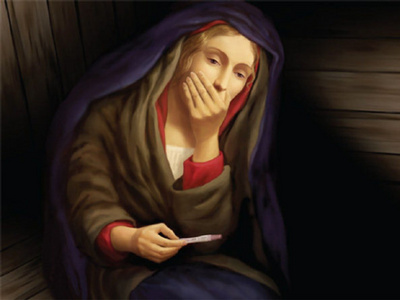
pregnant mary‘I suppose if you did one of those word association tests on “Advent”, the other word you’d come up with straight away would be “calendar”. That’s all that most people these days are really aware of where Advent is concerned. Advent is a time when you have calendars, and the Advent calendar is a countdown to Christmas, and it means daily sweets and chocolates.

It’s a slightly thin and rather inadequate account of what has for a long time been one of the most important and significant times in the Church’s year – a time of waiting, we sometimes say. But once we’ve said waiting, of course that’s not a very attractive word. We’re not a culture that’s very used to waiting. “Take waiting out of wanting” – that’s a slogan that was very popular some decades ago – and it still governs a great deal of the way we behave. We’d quite like to have things when we decide we want them. And so waiting seems negative, waiting seems perhaps passive, unexciting, the boring bit before we get to the exciting bit. So if there is a period of waiting, getting ready for Christmas, we pad it out with the daily chocolate, to make sure that we’re not feeling too miserable.

Well it’s that kind of waiting that Advent is about. We remember in Advent the time of waiting before the birth of Jesus, and we remember that time of waiting as the Bible shows it to us – as a time when people were indeed longing for something that would change everything, and yet at the same time not quite knowing what that something would be.

During Advent, Christians go back to that time of waiting as the Bible shows it to us. They read again the prophecies in the Hebrew Scriptures and the Old Testament. They read about how people were longing for an end to slavery, longing to be back home in some sense, longing to be at home with God again, longing for reconciliation. And all of that is expressed in the most powerful metaphors, especially in the prophecies of Isaiah; metaphors about the desert blossoming, metaphors about the rain falling, metaphors about day dawning after there’s been a long, long night.

So during this four weeks before Christmas, that’s what Christians are reflecting on. When Jesus comes into the life of the world with something unplanned, overwhelming, something that makes a colossal difference, we long for it and yet we don’t quite know what it’s going to involve. But this is a bit odd isn’t it, you might say. Surely Jesus has come into the world and by now we ought to know what sort of difference he’s made. But the truth is that we don’t yet know the difference Jesus might make. We know some of the difference he’s made to our lives as individuals, to the life of the Christian community, the Church, to the whole world. And yet there’s more. We’re still waiting to see what might happen if Jesus was allowed into our lives that bit more fully; that bit more radically.

So again for Christians Advent is a time when they do a bit of self-examination. Have I allowed Jesus in yet? Has the good news really made the full impact it might make, or is my life still locked into old patterns, into darkness, into slavery, into being not at home with myself or God or with other people? It’s a time of self-examination, of repentance indeed, facing myself honestly and saying sorry for the things that don’t easily face the light. And it’s a time of expectation and a time of hope. A time, therefore, also of quiet.

It’s been said so often it hardly needs saying again, but it is rather a pity that for a few weeks before Christmas we are saturated with Christmas carols. We don’t have quite the sort of quiet we need to think, “Well what would it be if Jesus really came as if for the first time into my life? What would it be for the good news really to change me?” Because for that to happen I need some reflective time; I need some peace; I need to slow down; I need, you might say, to take my time about things. And so all those bits of our contemporary culture which are about rushing to get gratification, getting the results straight away; all those habits in our culture which so drive the crises of our culture, whether it’s the credit crunch or the environmental crisis: all those things we have to cast a rather cold eye on during Advent and say slow down, take time, let yourself grow and open up, rather like a flower coming to blossom. It is a time of expectation, a time of excitement, a time of waiting, a time of peace, a time when we’re clearing our hearts and our minds a bit so we really can see clearly when Jesus arrives, and feel fully the impact of his coming.

It’s a time, as I’ve said, for going back to the prophecies, the foreshadowings of Jesus’ comings that we find in the Bible, and a time when two figures above all are representative of how we’re thinking and how we’re feeling. In the New Testament those two figures who are there right from the start of the Gospel story are

John the Baptist, Jesus’ cousin and forerunner, and the Blessed Virgin Mary, Jesus’ mother. John the Baptist, you might say, sums up the whole drive, the whole story of the Bible so far. “Yes,” says John the Baptist, “something is about to happen and you’ve very little idea what it is and you’ve no idea how radical and how complete a change it will involve.” So John the Baptist can say when the Promised One arrives, “I won’t be worthy even to untie his shoe. He belongs in a different world; a different league.” So John the Baptist is pointing forward and saying, “Everything you’ve always hoped for, everything you’ve longed for, the change, the freedom, the peace, is about to come. It will be a shock coping with that. Get yourself ready. Make straight the Lord’s path”, says John, quoting the old prophecies. And Mary, who in many icons of ancient Christian art stands on the other side of Jesus from John the Baptist, the two of them flanking the figure of Jesus – Mary is the one who quietly receives into herself, into her body, heart and mind, the full reality of what’s coming. She receives it so deeply that the promise becomes real, physically real, in her; it becomes the child that’s going to be Jesus. And she has to wait with the long nine months of pregnancy, faithfully, quietly, waiting to see what comes, ready to be changed as every mother is changed by the birth of a child.

These are the two figures that Christians think about a lot in Advent. When you light Advent wreaths in churches, two of the candles represent Mary and John the Baptist. In Advent, Christians have for centuries thought about death and judgement, about heaven and hell. They’ve thought about the way in which, when we’re up against the truth for the first time, when we really see what the reality of God is like, it will be a shock to the system. It may be deeply painful as well as deeply joyful. Death and judgement, and hell and heaven. It will be that experience of confronting the truth in such a way that you’re changed for good. We say yes to all of that, even with the pain and the risk. Or, God forbid, we say no, we can’t cope with the truth, we’d prefer our own darkness. And so part of our self-examination during Advent is looking into ourselves and saying, “Can I get myself to the point where I can look at God and say there’s truth and there’s beauty and light and love and it’s painful for me, weak and stupid though I am, to face that, and yet I’d rather be there with the truth, however much it costs, than be locked up with myself?”

During Advent, we try to get ourselves a bit more used to the truth – the truth about ourselves, which is not always very encouraging, but the truth about God above all which is always encouraging. The One who comes will come with a great challenge. It will be like fire on the earth, as the Bible says. And yet the One who comes is coming in love. He’s coming to set us free. And that’s something well worth waiting for’.

– Rowan Williams, ‘A Reflection on Advent’ in Darkness Yielding: Liturgies, Prayers and Reflections for Advent, Christmas, Holy Week and Easter (London: Canterbury Press/Cairns Publications, 2009), 6–9.

Advent as learning something of God’s own simultaneous ‘Yes’ and ‘No’

ambiguity‘Advent pulls the imagination in two directions. We turn our minds to the universal longing for God that is given voice in the Jewish scriptures, the yearning towards the ‘desire of all nations’; in the cycle of the great Advent antiphons that begin with O Sapientia on 16 December, the phrase come twice, in the sixth and seventh texts: O Rex gentium, ‘O King of nations and their salvation’. Christmas is the moment of recognition, the moment when what we have always secretly known is set out in plain and freshly terms. And at the same time, “Woe unto you who desire the day of the Lord” and “Who may abide the day of his coming? For he is like a refiner’s fire” … Christmas is a beauty that is the beginning of terror: the Burning Babe, who has come to cast fire upon the earth, Before his presence, the idols fall and shatter.

In other words, Advent is about the essential ambiguity of our religiousness. We live, as human beings, in an enormous hunger to be spoken to, to be touched, to be judged and loved and absolved. We live – at some level – in the awareness that there are things we cannot do for ourselves. No human being alone can teach himself or herself language; no human being alone can know himself or herself loved. And the whole human race alone cannot assure itself of its worth or interest, its dignity and lovableness, its responsibility. When no reality over against us pronounces a word of judgement or a word a word of affirmation, how do we know we are worth judging? The twentieth century has been in full flight from certain conceptions of personal morality, but what age has ever suffering from so acute an awareness of collective responsibility? Who shall absolve us from the guilt of the Holocaust? Colonialism? The Enlightenment? The failure of the Enlightenment? Who could absolve us from the guilt of a nuclear catastrophe? The appalling moral anxiousness of our age is an oblique recognition that the human being as such waits to hear something; and when we have collectively denied the possibility of hearing something from beyond our corporate culture, we expose ourselves to deep worries about our humanness …

We long to know we are addressed. And this is where the ambiguity comes in: we fantasize about what such an address might be; we project on to the empty space before us the voices we need to hear. Close Encounters of the Third Kind remains a haunting fiction – a story of extra-terrestrial visitation in which the ‘aliens’ turn out to have the ghostly shapes and faces of our lost childhood. The menacing stranger is, after all, only our forgotten innocence. It is a striking secular parody of the Christmas story, and one that points up the questionableness of our desire. What if our longing to hear a word spoken to us from beyond simply generates a loud echo of our need to be told we are all right, we have never fundamentally gone astray, we have never really left an undifferentiated Paradise? …

Our longings remind us of the essential human fact that we are talked and touched into life, and that a human race struggling to do all its talking and touching for itself faces a paralysing unhappiness and anxiety. And these longings are also fraught with the danger of illusion, the making of idols to meet our needs. The Israelites pour their treasures into a mould and out comes the Golden Calf; as if surprised, they cry, “Here is God”, as if they had not themselves determined the shape of the outcome.

“In that day a man shall cast his idols of silver, and his idols of gold, which they made each one for himself to worship, to the moles and to the bats.” For the people of God in Jewish scripture, loyalty to the covenant meant above all the forsaking of idols: the task is not to make sense of the world, beginning with unaided human resource, but to let ourselves be given sense purely by the summons of God. This was Israel’s own story: being led out of slavery and given shape and solidarity by the unexpected presence and pressure of God. Israel’s hostility to idols is a measure of the recognition that what I make to meet my needs cannot set me free, cannot give me a new and assured reality. The eyes of the idol are my own, looking back at me; I am still incommunicado …

The Christian, in the Advent season above all, must learn something of God’s own simultaneous “yes” and “no” to all religious aspiration and expectation. God, say the mystics, is innominabile and omninominable, the one for whom no name is adequate, the one of whom all true words speak. Only the newness of a new turn of history, the specific newness of new words, acts and relations, can show the God who will not allow himself to be caught in the circle of ideas alone, and so can show the God who exceeds both the fiercest longing and the profoundest speculation of creatures. Because Advent tells us to look for mystery, absolute grace, and freedom, in a fleshly human face, within the mobile form of our shared history, it brings our idolatry – philosophical and methodological alike – to judgement. Our hunger is met, we are talked and touched into new and everlasting life, our desire is answered; but only insofar as we have lived in an Advent of the religious imagination, struggling to let God be God; casting our idols of silver and gold to the moles and bats, “for fear of the Lord and for the glory of his majesty”, longing simply for our God to show himself as God in the “total and presuppositionless love” of his incarnate speech to us.”’

– Rowan Williams, ‘Advent: A University Sermon’, in Open to Judgement: Sermons and Addresses. [HT: Kent Eilers]

Advent: a caption competition

It’s been some time since I ran a competition here at PCaL, and I reckon that this image – which was last year’s billboard from St Matthew-in-the-City in Auckland – is just begging (still) for a caption:

advent.jpg

[I’ll let the competition run until Christmas. And, as usual, the winner – who will receive a book of their choice from a selected list – will be decided by a combination of the ancient and biblical practice of casting lots and the modern more reliable practice of what I judge to be the best caption.]

‘Advent Stanzas’ by Robert Cording

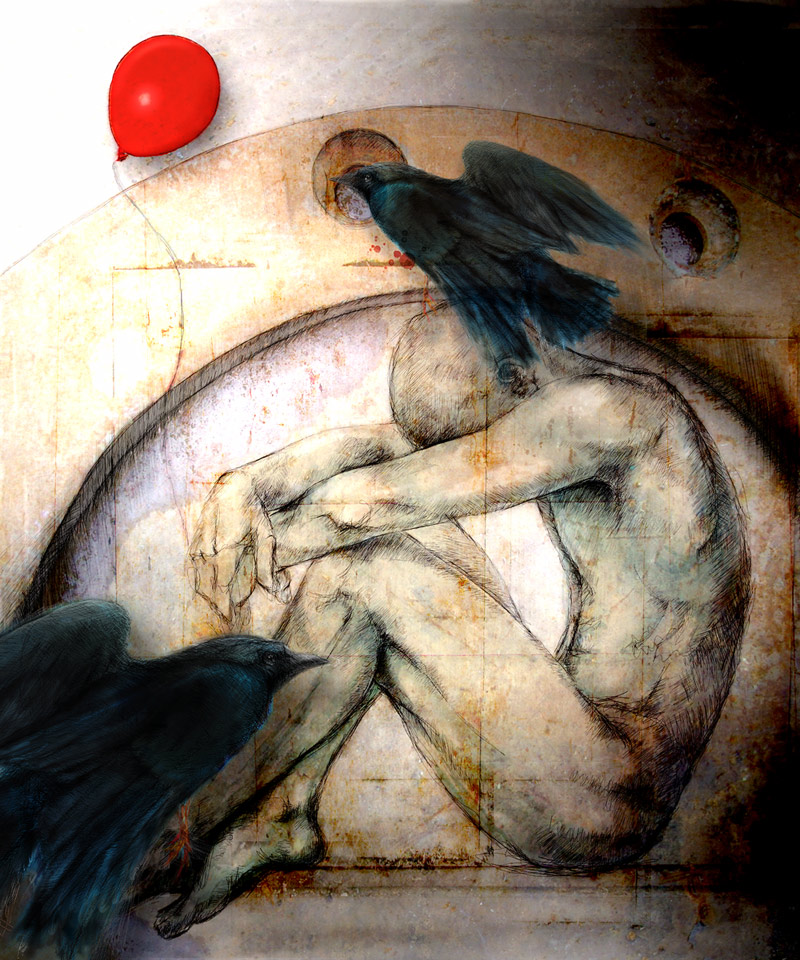
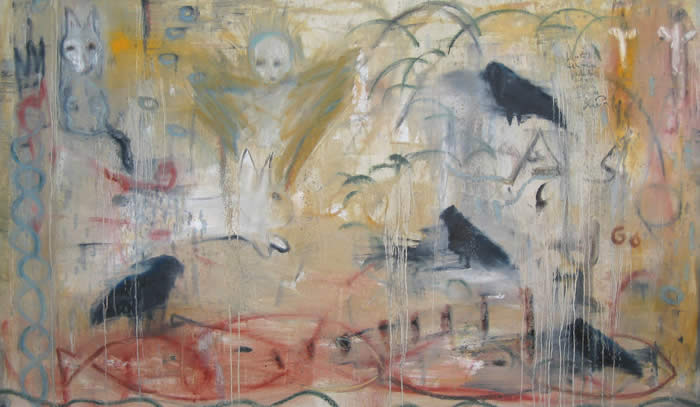
four crowsI.
Are we always creating you, as Rilke said,
Trying, on our best days,
To make possible your coming-into-existence?

Or are you merely a story told in the dark,
A child’s drawing of barn and star?

Each year you are born again. It is no remedy

For what we go on doing to each other,
For history’s blind repetitions of hate and reprisal.

Here I am again, huddled in hope. For what
Do I wait? – I know you only as something missing,
And loved beyond reason.

As a word in my mouth I cannot embody.

II.
On the snow-dusted field this morning – an etching
Of mouse tracks declares the frenzy of its hunger.

The plodding dawn sun rises to another day’s
One warm hour. I’m walking to the iced-in local pond

Where my neighbors have sat through the night
Waiting for something to find their jigged lure.

The sky is paste white. Each bush and tree keeps
Its cold counsel. I’m walking head-on into a wind

That forces my breath back into my mouth.
Like rags of black cloth, crows drape a dead oak.

When I pass under them, their cries rip a seam
In the morning. Last week a life long friend told me,

There’s no such thing as happiness. It’s ten years
Since he found his son, then a nineteen-year old

Of extraordinary grace and goodness, curled up
In his dormitory room, unable to rise, to free

Himself of a division that made him manic and
Depressed, and still his son struggles from day to day,

The one partial remedy a dismal haze of drugs.
My friend hopes these days for very little – a stretch of

Hours, a string of a few days when nothing in his son’s life
Goes terribly wrong. This is the season of sad stories:

The crippling accident, the layoffs at the factory,
The family without a car, without a house, without money

For presents. The sadder the human drama, the greater
Our hope, or so the television news makes it seem

With its soap-opera stories of tragedy followed up
With ones of good will – images of Santas’ pots filling up

At the malls, truckloads of presents collected for the shelters,
Or the family posed with their special-needs child

In front of a fully equipped van given by the local dealership.
This is the season to keep the less fortunate in sight,

To believe that generosity will be generously repaid.
We’ve strung colored lights on our houses and trees,

And lit candles in the windows to hold back the dark.
For what do we hope? – That our candles will lead you

To our needs? That your gift of light will light
These darkest nights of the year? That our belief

In our own righteousness will be vindicated?
The prophet Amos knew the burden of our coming.

The day of the Lord is darkness, he said, darkness, not light,
As if someone went into a house and rested a hand against a wall,

And was bitten by a snake. Amos knew the shame of
What we fail, over and over, to do, the always burning

Image of what might be. Saint Paul, too, saw
The whole creation groaning for redemption.
And will you intercede with sighs too deep for words
Because you love us in our weakness, because

You love always, suddenly and completely, what is
In front of you, whether it is a lake or leper.

Because you come again and again to destroy the God
We keep making in our own image. Will we learn

To pray: May our hearts be broken open. Will we learn
To prepare a space in which you might come forth,
In which, like a bolt of winter solstice light,
You might enter the opening in the stones, lighting

Our dark tumulus from beginning to end?

III.
All last night the tatter of sleet, ice descending,
Each tree sheathed in ice, and then, deeper
Into the night, the shattering cracks and fall
Of branches being pruned by gusts of wind.

It is the first morning after the longest night,
Dawn colorless, the sun still cloud-silvered.
Four crows break the early stillness, an apocalypse
Of raucous squawks. My miniature four horsemen

Take and eat whatever they can in the field
Outside my door: a deer’s leg my dog has dragged
Home. Above them, the flinty sun has at last fired
A blue patch of sky, and suddenly each ice-transfigured

Trees shines. Each needle of pine, each branch
Of ash, throws off sparks of light. Once,
A rabbi saw a spark of goodness trapped inside
Each evil, the very source of life for that evil –

A contradiction not to be understood, but suffered,
The rabbi explained, though the one who prays
And studies Torah will be able to release that spark,
And evil, having lost its life-giving source, will cease.

When I finally open my door and walk out
Into the field, every inch of my skin seems touched
By light. So much light cannot be looked at:
My eyelids slam down like a blind.

All morning I drag limbs into a pile. By noon,
The trees and field have lost their shine. I douse
The pile of wood with gas, and set it aflame,
Watching the sparks disappear in the sky.

IV.
This is the night we have given for your birth.

After the cherished hymns, the prayers, the story
Of the one who will become peacemaker,
Healer of the sick, the one who feeds
The hungry and raises the dead,

We light small candles and stand in the dark

Of the church, hoping for the peace
A child knows, hoping to forget career, mortgage,
Money, hoping even to turn quietly away

From the blind, reductive selves inside us.

We are a picture a child might draw
As we sing Silent Night, Holy Night.
Yet, while each of us tries to inhabit the moment
That is passing, you seem to live in-between
The words we fill with our longing.

The time has come
To admit I believe in the simple astonishment
Of a newborn.

And also to say plainly, as Pascal knew, that you will live
In agony even to the end of the world,

Your will failing to be done on earth
As it is in heaven.

Come, o come Emmanuel,

I am a ghost waiting to be made flesh by love
I am too imperfect to bear.

– Robert Cording, ‘Advent Stanzas’, in The Best American Spiritual Writing 2005 (ed. Philip Zaleski; Boston/New York: Houghton Mifflin Harcourt, 2005), 18–22.

On having triple vision

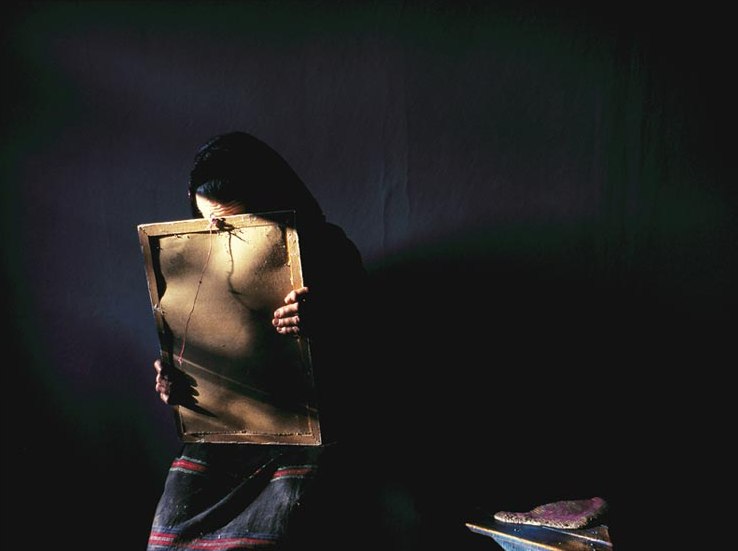
MirrorWhile their respective projects are not always as divorced from one another as is sometimes suggested, it would be fair to say that theologians and artists do not always share the same concerns. That said, I suspect that every reader of the Book of Psalms will have sensed something germane to the vocation of both theologian and artist. Both are concerned, it seems to me, with a deep commitment to fostering and sharpening a triple vision—to take seriously what has been, what will be, and what is contemporary. (Another way of thinking about this is to simply take the journey with St Paul through Romans 5 to 8.) And theology, like art, responds to that triple awareness, resists the temptation to dissect the tri-part vision, and keeps asking—in its own particular way and with its own particular tongue—the foundational questions for all being; namely, who is Jesus Christ, and what has God done, what is God doing, and what has God promised to do in him?

Put otherwise, both art and theology properly seek to speak about what our eyes have seen, about what our ears have heard, about what our lips have tasted, and about what our hands have touched. And both are equally concerned with the matter of hope—about what our eyes hope to see, our ears hope to hear, our lips hope to taste, and our hands hope to touch. And both are concerned too to be attentive to the immediate, to what is, to those realities contemporary to our senses. So art and theology are fixed on a triple vision—of attention to what is behind and before and over the horizon—a vision grounded in the history of God’s own past, future and contemporaneity.

‘The child is your king’, by Mark Raffills

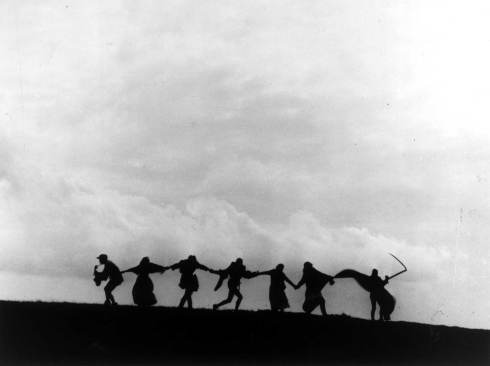
pied-piper-seventh-sealFar away the heart lies
beneath the trumpets
played upon the lips of angels
whose shadows fall upon
hillsides buckling
beneath a coating of gold dust
and the glorious things
that have no home
upon this earth.

And drawn swords
drip blood amidst the
torment wrought by the power
of kings, while blinded eyes grasp the
silver coins of betrayal,
hoping to hide the mess
we have made of innocence
and the child who wears dynamite.

You foolish man who thought
these times could not find you;
who thought there was no price to pay;
but the piper now comes calling
with the trumpet tight upon his lips,
your arrogance is your poison:
fall upon your sword;
the child is your king.

– Mark Raffills, ‘The child is your king’, in Loved, Mis-Loved and Loved Again (Nelson: Phantom Press, 2008), 69.

Participatio is out

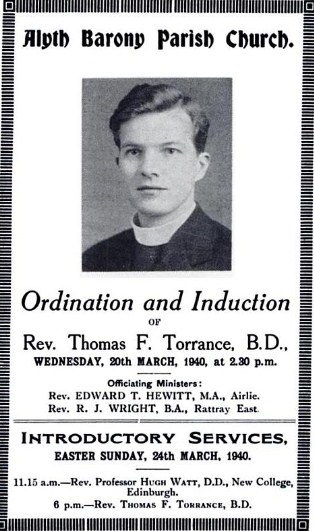
Torrance_4The latest edition of Participatio, the journal of the Thomas F. Torrance Theological Fellowship, is now available. It includes an extended article by Bob Walker on the relationship between the incarnation and the atonement in TF‘s theology, as well as pieces (some quite dated) by Baxter Kruger, David Fergusson, Victor Shepherd and Paul Molnar.

While I’m thinking of Torrance, those looking for some advent reading would do well to consider journeying with, among other of TF’s work, TF’s New College lectures published as Incarnation: The Person and Life of Christ, or his brilliant study on the Nicene Creed published as The Trinitarian Faith: The Evangelical Theology of the Ancient Catholic Faith (which was my own entrée to TF’s thought), or his extraordinary shorter book The Mediation of Christ.

November stations …

https://i0.wp.com/www.schwabe.ch/uploads/pics/shop/wc_4995.jpgA combination of conferences, travel, editing and teaching – and a Kilimanjaro of admin – has meant that it’s been a little bit of a light month on the reading front, and that the pile of unread books amassing on and under and around my desk, bed and toilet bowl are scaling to unforeseen heights. That said, my daughter’s school teacher – the lovely Margie Hanning – introduced me to some of the wonderful titles listed here.

Reading:

Listening:

  • 20 by Kate Rusby.

Watching:

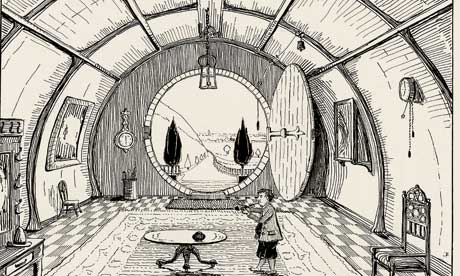
The Hobbit(s) and the call to ministry

On Mondays, Wednesdays and the occasional Saturday evening, ministers are a little bit like hobbits. As a result of his encounter with the ‘fierce and jealous love’ of the dwarves, Bilbo Baggins, we are told, ‘got up trembling’:

He had less than half a mind to fetch the lamp, and more than half a mind to pretend to, and go and hide behind the beer barrels in the cellar, and not come out again until all the dwarves had gone away. Suddenly he found that the music and the singing had stopped, and they were all looking at him with eyes shining in the dark.

For some of us, that’s how the call to train for pastoral ministry happens – where love and joy lead to confusion and timidity which in turn lead to the cessation of music and to finding oneself in the spotlight examined carefully by probing ‘eyes shining in the dark’.

When our assumptions are challenged, when our faith is stirred, when things once familiar become the new unknown, when we find ourselves travelling ‘too near the mountains’ in unguarded territory seldom traversed by ecclesial wayfarers, and when all we have in our kit are ‘old maps’ which are of ‘no use’ in this new terrain, it may be that at that point we have begun, like Abraham and Sarah and Mr Baggins, on a quest that will leave us and the future different.

Colourful and noisy and undersized hobbits enter the quest, as Tolkien reminds us in his ‘Notes on W. H. Auden’s review of The Return of the King’, not to preserve ‘this or that polity, such as the half republic half aristocracy of the Shire’, but rather to engage in ‘liberation from … evil tyranny’. Such words serve as a reminder of our calling too, that the people of God are not called to preserve that familiar life that they had known in the Shire but rather to imagine a future in which all of life’s enemies have been overcome, and to direct all their efforts towards that end. Along the way, they not only lose their reputation, but they also carry unanswered questions, all the while knowing that there can be no going back. Nor, as Bilbo was to discover, can there be anything to be gained by going sideways. And it is precisely in both the refusal to abandon questions and the determination to move forward nonetheless that Bilbo and his company of friends discover that prudence is not about worldly cleverness but is rather about uncomplicated minds and wills conformed to a life of virtue, of boundless mercy, and of unbending devotion to the destruction of that which would undo their very being. It is to this end, we hope, that the church’s hobbits will direct their efforts.

And along the way, may they learn from Galdalf and Aragorn and their other companions that

All that is gold does not glitter,
Not all those who wander are lost;
The old that is strong does not wither,
Deep roots are not reached by the frost,
From the ashes afire shall be woken,
A light from the shadows shall spring;
Renewed shall be blade that was broken:
The crownless again shall be king.

Peter Leithart on using the Bible politically

The latest edition of Comment includes articles by an impressive line-up of thinkers, including Marilynne Robinson, Jean Vanier, Matthew Milliner, Calvin Seerveld, Esther Meek and others. It also includes a nice wee piece by guest editor Peter Leithart who has this to say about Scripture:

‘When used as a tool of political assessment and evaluation, Scripture is a yardstick to measure what’s already out there in the world, rather than a potent political force in its own right. Christians who mine the Bible for positive moral, political, or aesthetic principles frequently have an intellectualistic and moralistic view of human experience. Much of the abundant, often edifying, literature on Christian worldview reduces Scripture to a system of ideas or a set of moral rules that we consciously embrace and apply to the world around us.

But the Bible is not a compendium of doctrines, ideas, or rules. Scripture teaches, but teaches through stories, poetry, exhortation, visions, letters. It addresses the whole man—our minds, but also our passions, imaginations, loves, and desires. Christians who attempt to apply the Bible to political life, for example, often focus so completely on discovering ethical standards that they ignore the significance of Scripture’s rhetoric. Rhetoric italicizes what is said. When using the Bible politically, we not only ask, “What does God say is good and right?” We must also ask, “What does God italicize?”‘ – Peter Leithart, ‘The Word of God and the City of Man

The Global Ecumenical Theological Institute

The World Communion of Reformed Churches is looking for young theologians interested in ecumenism. This is your chance to go to Korea as a participant in the Global Ecumenical Theological Institute (GETI) hosted by the World Council of Churches (WCC) in parallel with WCC Assembly in Busan, Korea (25 October to 9 November 2013).

Who is eligible?
Theology students or lecturers up to 45 years old who are members of WCRC member churches.

What is the GETI programme?
GETI is an intensive learning programme focussed on introductory courses in Asian Christianity, Asian theologies and interfaith realities as well as the specific Korean historical, religious and social context.

The programme coincides with the World Council of Churches Assembly in Busan. This allows GETI participants the opportunity to take part in major assembly events including thematic plenary sessions, worship, ecumenical conversations, workgroups and exhibitions. GETI students will not however participate in Assembly business sessions.

GETI seminars will be oriented according to major themes of the WCC Assembly. There will be opportunities for inter-generational dialogue with important leaders of the ecumenical and evangelical movement.

The programme will also include excursions such as a visit to Gwangju which is a city of great significance for Korean history. Here lectures will be given on Christian mission history and the role of churches in the process of democratization of Korea. The trip will include visits to the national monument of the Gwangju Movement for Democracy as well as to the commemoration site of Christian martyrs and the graves of Christian missionaries close to Honam Theological University. The programme may also include a visit to a traditional Korean village setting.

What will be required of you?

  • A presentation about your church background and a major ecumenical issue related to a WCC Assembly theme;
  • A presentation on a text from the GETI workbook;
  • A major paper on one aspect of the ecumenical movement experienced during the assembly to be submitted no later than mid-February 2014;
  • One comprehensive report and presentation on the GETI and the assembly experience to be given to your theological seminary, local churches or ecumenical youth organization.

At the end of the course you will receive a certificate which includes credits for all course elements attended and academic assignments carried out.

What will it cost?
As part of WCRC’s support of the ecumenical movement and leadership formation, WCRC will fully sponsor successful candidates to attend the GETI programme.

Selection process
WCRC will choose the five best applications to be forwarded to the GETI selection committee.

Interested?
Complete the application form and return to Aiko Sumichan (aws@wcrc.ch)

Application deadline: 28 November, 2012