Author: Jason Goroncy

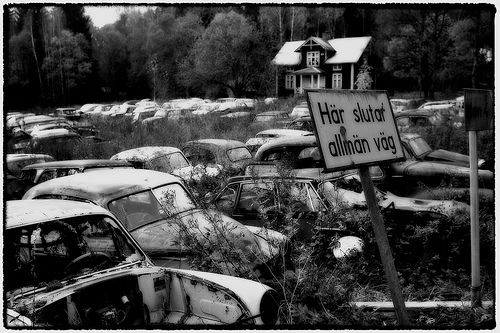
‘Epiphany Poem’, by George Mackay Brown

The Road Stops Here

The red king
Came to a great water. He said,
Here the journey ends.
No keel or skipper on this shore.

The yellow king
Halted under a hill. He said,
Turn the camels round.
Beyond, ice summits only.

The black king
Knocked on a city gate. He said,
All roads stop here.
These are gravestones, no inn.

The three kings
Met under a dry star.
There, at midnight,
The star began its singing.

The three kings
Suffered salt, snow, skulls.
They suffered the silence
Before the first word.

— George Mackay Brown

[Image: David Williamson]

Immanuel! Immanuel!

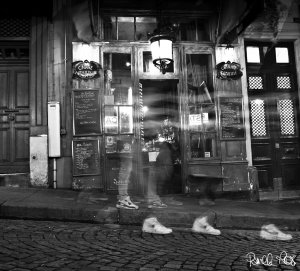
Pamela Ross, 'Ghost walker (Paris)'

1. Immanuel! Immanuel!
Our hearts are opened to You;
We see Your flesh in Maryʼs womb,
And know Your love is usward.
We cannot tell the glory left
Or if Your angels wholly wept.

2. Immanuel! Immanuel!
God in our flesh forever,
You walk our streets, and feel our pain
With love that none can sever.
Our eyes had never seen our God
Nor known that He would shed His blood.

3. Immanuel! Immanuel!
The prophets sang Your coming,
They said that God would dwell with Man
That we might see His loving.
Oh, how our hearts and minds are dazed,
Whilst all creation stares, amazed.

4. Immanuel! Immanuel!
We see Your eyes of pity,
We watch You walk in Spiritʼs power
In hamlet, vale and city.
We see the Fatherʼs glory near
And know His Presence all so dear.

5. Immanuel! Immanuel!
The Spirit dwells within You.
He shows His power and love to all
In fruit You bear abundant.
Ah Triune God, we see You One
In this eternal holy Son.

6. Immanuel! Immanuel!
The mystery of the Godhead
Is plain for us in all You do
And say as You lead homeward.
Great Shepherd of the needy flock
You lead us to the living Rock.

7. Immanuel! Immanuel!
Our great High-Priest in heaven,
You intercede as man for us
And lead our worship ever.
Our hearts are one with You above
Whilst here we tell the world Your love.

8. Immanuel! Immanuel!
The God who loves forever,
The sinful race made new in You,
Dear Father, Son and Spirit,
The whole ecclesia sings Your praise
As priests unto their God, always.

– Geoffrey Bingham

[Image: Pamela Ross, ‘Ghost walker (Paris)’]

A story of a girl, a boy, and ‘that voice’

Rembrandt - Joseph's Dream (c. 1645)

MARY (I)

Luke 1:26–38

No one ever listens to girls. Not in my world. No one listens when we have something to say. No one believes us when something amazing happens. No one believes us when we get used and abused.

I was by the hearth when it happened. I don’t know where my mother and father were. Or my brothers. I was by the hearth making bread, little flat breads dropped on a stone. It was one of my tasks.

I heard a noise. I thought it was the buzz of insects. But it was feet on gravel. I heard a voice – an unfamiliar voice, clear; it could have been a man or a woman’s. One word, ‘Hello.’

And then a face poked in through the door. When I think about it now I think it was a young face. Beardless. But I can’t be sure. I thought, ‘Oh. You’re beautiful.’

I wasn’t scared when he – when she – walked in. I know I should have been. After all, the visitor was a stranger.

I should have run. But I stood my ground. And when she spoke – the more I think about it, the more I think she was a she – she was kind.

‘Mary, I’ve got something to ask.’

She knew my name. She might have got it from someone, but somehow I knew she hadn’t.

‘Who are you?’ I asked.

‘You already know,’ she said.

And I did. I knew she was God. Or her messenger. I knew she was an angel.

‘Will you say yes?’ the angel asked. There was fear in her voice. As if any answer might be the wrong one.

I had felt womanhood stirring in me for months. My mother had told me what to expect. The itch in my chest. The stab in my belly. The blood that would come.

I knew what was being asked.

I said, ‘Why me?’

God shrugged.

I had two questions. ‘Will they hate me?’ ‘Will they hate the child?’

God wept. I stared.

‘Will you do it?’ she asked.

I gave the answer I knew I’d regret.

℘℘℘℘℘

JOSEPH (I)

Matthew 1:18–25

Do I look like a fool?

I might not be shiniest nail in the box, but that doesn’t mean I deserve to be treated like a pillock.

That’s what I felt like she’d done. Mary. My intended.

She’d told me she was pregnant.

I laughed when she first said it. It would be typical of her jokes.

But from the look on her face – fierce, determined, scared – I saw this was no joke.

I stared at her and I couldn’t speak.

I saw that she thought I might hit her. Or spit on her.

That’s what made me angry. That she could think that of me.

I wanted to get out. I wanted to shout.

I kicked a chair across the room.

Mary stood her ground.

I felt ashamed. To lose my temper like that.

I breathed deep and said, ‘Who’s the father?’

‘God,’ she said. Artlessly.

I laughed again. A sneer, really. I didn’t deserve to be insulted.

I walked towards the door. I’d drop her. Release the obligation. It was more than she deserved. She deserved to be publicly shamed. Stoned.

‘Joseph,’ she said. Just one word. ‘Joseph.’

It was the way she said it that mattered.

It wasn’t pleading. It wasn’t full of tears. There was no fear.

It was gentle. It had authority.

It was her voice, but it was not her voice.

It was a voice that knew me. That was more intimate than a whisper in my ear. It was a voice – impossible though it sounds – that knew my body better than I could.

It was that voice that stopped me.

It was that voice which told me I should try to trust her.

It was that voice which helped me say, ‘Yes.’ To her. To God.

– Rachel Mann, A Star-Filled Grace: Worship and Prayer Resources for Advent, Christmas & Epiphany (Glasgow: Wild Goose, 2015), 20–21, 23–24.

A few thoughts on that Hillsong piece …

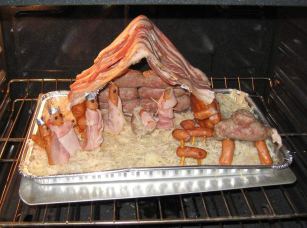
Sausage & bacon nativity scene… in the previous post:

  1. Yes, the musos are fabulous! While I certainly could do without the singers and the dancers, that music is a gift from a place that is very familiar to God. That it is apparently quite unfamiliar to many who profess to like and practice the kind of stuff that God likes and practices is something very near tragic. A spirit of celebration and praise is near the heart of all worship characterised by the gifts and promises of one literally pushed into the world kicking, farting, and screaming.
  2. Of course, every good thing has its ape, but apes are only apes and it seems only fair that they be allowed to have some fun too.
  3. But I concur with those who note the incongruence between the message and the medium. It’s like seeing an athletic woman selling ‘health drinks’ or muesli bars; you suspect that you’re being sold bullshit. More on this in a moment (see #6).
  4. However, far from seeing this performance as something that I ought to therefore dismiss out of hand, which may be an understandable first reaction, I feel drawn to ask further questions. I want to know, for example, what happens before, and after, this song. How am I to interpret this single performance in the context of a larger event and story and witness, and of a culture largely foreign to me? Maybe it’s simply – whether partly or mostly – a piece of shallow and money-making glitz and that’s all. But I can’t even begin to form that judgement unless I have some broader context – and some other stories – in which to evaluate it, lest my judgement be held hostage to simply another set of cultural manifestations. (Some, of course, might well argue that much of that context is already provided for us in other stories that we have heard and/or experienced first hand about Hillsong’s modus operandi. But I want to know more, and I’ve long learnt that the truth ain’t the facts.)
  5. That the piece doesn’t work in the cultures with which I identify and am most familiar and conversant doesn’t mean that it’s necessary discordant with the actions of God. After all, God isn’t a Christian, let alone a male Aussie with wog parents. Hell, I’m not even sure God speaks English. Indeed, one might make the argument that the stranger and more unfamiliar and more difficult it is to understand and interpret, the closer it may be to the stuff of God. (I’m not suggesting for a moment that this is Hillsong’s motivation here.) Nathanael’s observation about the Caribbean context, and that GQ article too, raise some perennial questions for me about the relationship between gospel and culture, of the temptations to make an ideology out of the former and of making indiscriminate familiarity with the latter the precondition for the gospel’s reception.
  6. Watching the performance of this single song, online, nearly 17,000 kilometres from where it was performed, I have the same kind of confusion I experience whenever I worship in a building with a national flag in it; or an Honour Roll commemorating those who gave their lives in ‘the service of freedom’ and ‘for God, King and Country’, some of whom, it is noted (sometimes with the sign of a little cross!), ‘paid the supreme sacrifice’; or whenever I see a reference, in my ecclesiological territory, to ‘senior pastor’; or when I hear that a qualification for being a bishop (in some other ecclesiological territories) is proof of a penis; or whenever I see an innocent bunch of carnations perched on a baptismal font; or whenever congregations celebrate the Lord’s Supper not with a common cup but with those hideous little shot glasses; or when I see a funeral casket draped with the flag of a football team; or when I see church children get shuffled off out of ‘adult church’ so that they can engage in some more ‘age-appropriate’ activites; or when I visit a church worship centre in rural Thailand that is, visually speaking, entirely indistinguishable from the Buddhist temple down the road save for a presence of a small crucifix. I could go on …
  7. A hearty thank you to all who have taken up my invitation. If to embark on theology is to be unstable bearers of live questions (as Mike Higton puts it), then I welcome the invitations that this clip offers, and the conversations that it has encouraged. May both continue.

[Image: source]

‘Silent Night’, Hillsong style

In recent years, Hillsong London has marked the coming of Christmas in ways reminiscent of what lots of churches do – an evening of carol singing marketed as ‘a night that is focused on celebrating what Christmas is really about – JESUS!’

Last year’s event included this unique performance of ‘Silent Night’:

Error
This video doesn’t exist

Some of us found the performance to be quite confusing, on so very many levels. This is not a bad thing. (Of course, a quick Google search reveals that there are no shortage of people who confess no such confusion at all.) When those whose experience across a wide range of ecclesiastical supermarkets together find that their hermeneutical skills are up against it, this is a time to embrace the questions.

So this post. I have my own developing thoughts, which I may post at some stage. But consider the comments box below my invitation to you, dear reader, to help me interpret what the Willy Wonka that was all about. [NB. I want this to be constructive, so vitriolic comments are likely to find my delete button.]

–––––––

Update: For those who may be interested, I’ve posted a few follow-up scribbles here.

‘The Christmas Meditation of Concrete Grady’

McCahon - NOUGHTS AND CROSSES, SERIES 2, NO. 2, 1976An old song of the music hall
I will sing, or none at all,
Though women lift their noses high
When I haul out to cool my throat
A bottle from my overcoat
And say a word to make their feathers fly.

On the hills above Kaitangata
A cord of old man manuka,
I cut it in a day.
Then I got my cheque and bummed a ride to town
For a pan of eels and a woman and a shakedown
And sold my traps for a bucket of White Lady.

Mad McAra, John O’Hara,
Swagger Joe and my dry father
In the marble orchard lie.
Their ghosts at daybreak in my room
Beckoning with a wicked thumb
Ask me for a bottle of White Lady.

When I was kneehigh to a gander
I learnt to fart against the thunder;
Big Mother Joseph broke her cane on me.
When the white Host rides in air
I bend my head and say a prayer
For that old harridan hot in Purgatory.

A burning orphan in the night
I took a wander by starlight
To where the Child in a loosebox lay –
‘Concrete Grady is my name
And I’ll be damned,’ I said to Him;
‘Then I’ll be damned Myself,’ said He to me.

– James K. Baxter

An open letter to the Rev Daniel Bullock, Director of Mission & Ministries for the Baptist Union of Victoria

Cairo 2011

Christians protect Muslims in prayer during the 2011 uprisings in Cairo, Egypt. Source: @NevineZaki

A few week’s ago, on the eve of what was anticipated to be a time of conflict and hostility in Melton, one of Melbourne’s western suburbs, the Director of Mission and Ministries for the Baptist Union of Victoria, the Rev Daniel Bullock, sent out a letter to Baptist church leaders inviting them to pray for fellow Baptists in the Melton area. Such a letter was both timely and appropriate.

However, my colleague Terry Falla and I felt that more could have – and ought to have – been said in that letter, and so we sent a brief response to Daniel and to the BUV’s communications department to that effect, hoping that they might be able to find a place to make it public. Unfortunately, Victorian Baptists – Baptists of all people! – have effectively abolished any such avenue for public discourse and discernment. Neither our denominational blog, nor our assemblies (or ‘Gatherings’ as they are now called), nor any other places of which I am aware, offer such opportunities to occur in any meaningful ways. The reasons for this are complex, and do not, as far as I have been able to discern, reflect the desires of either Daniel himself or of the BUV’s communications department. Given this current reality, I have decided to share our letter here instead in the hope that it might encourage further reflection and discussion among my colleagues in ministry:

Dear Daniel,

Your call for prayer for the churches of Melton (20/11/2015) was timely, for there is no doubt that, as incredible as it seems, religious liberty for some minorities in Australia is now under threat. Your invitation has caused us a great deal of soul searching and has given rise to the conviction that, should another town or city be the object of anti-Muslim protests, we as Baptists include those under attack in our call for prayer and find ways of standing in solidarity with them in extremely distressing and stressful days. After all, it is not mostly us Christian churches at this time in our history that are the objects of fear, anger, resentment, and prejudice, but our Muslim sisters and brothers.

Our recommendation is twofold: (i) a call for prayer for those who are the target of discrimination, and (ii) that in our own local contexts some of us meet with Muslim leaders and other Muslims to express our concern for and solidarity with them; to gratefully and graciously receive whatever hospitality might be offered; to share with them how our own faith tradition was itself born of adversity and persecution, and values profoundly the principles of liberty of conscience and freedom of worship for all; and to commit to embark on the journey of learning to celebrate together what Jonathan Sacks calls ‘the dignity of difference’. 

We encourage Victorian Baptists to embrace these challenging invitations with the fear-negating love, faith, hope, and courage that characterises followers of the crucified and risen Jesus. 

We look forward to hearing from you. 

In grace and peace,

Terry Falla & Jason Goroncy

Daniel’s response (published here with his permission) was both gracious and encouraging:

Dear Jason and Terry 

Thanks for your correspondence to the Comms Team with proposed posting for our BUV Blog, expressing your concerns and recommendations around our recent call to prayer regarding the events expected in Melton.

We don’t actually have a forum for this type of posting on the website – neither BUV Blog, nor Baptists on Mission provide a forum for ‘letter to the editor’ type pieces. I do take on board your point though, that although we did ask people to pray for the churches, for safety and peace on the streets, and for those charged with maintaining law and order, we didn’t also include prayer for those who are the objects of fear, anger, resentment, and prejudice. This was an oversight, which we will be sure to address on any future occasion. I agree with the points you are making, it’s a helpful and instructive communication, so again, thank you.

God bless

Daniel

‘Chorus’, by Seamus Heaney

The Cure at TroyA word (for today), from Seamus Heaney:

Human beings suffer,
They torture one another,
They get hurt and get hard.
No poem or play or song
Can fully right a wrong
Inflicted and endured.

The innocent in gaols
Beat on their bars together.
A hunger-striker’s father
Stands in the graveyard dumb.
The police widow in veils
Faints at the funeral home.

History says, Don’t hope
On this side of the grave.
But then, once in a lifetime
The longed-for tidal wave
Of justice can rise up,
And hope and history rhyme.

So hope for a great sea-change
On the far side of revenge.
Believe that further shore
Is reachable from here.
Believe in miracle
And cures and healing wells.

Call miracle self-healing:
The utter, self-revealing
Double-take of feeling.
If there’s fire on the mountain
Or lightning and storm
And a god speaks from the sky

That means someone is hearing
The outcry and the birth-cry
Of new life at its term.

– Seamus Heaney, ‘Chorus’, in The Cure at Troy: A Version of Sophocles’ Philoctetes (New York: Farrar, Straus and Giroux, 1991), 77–78.

Jonathan Sacks: two recent interviews, two book excerpts

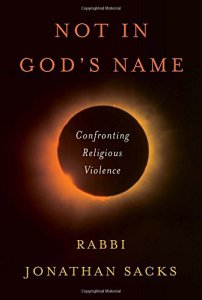
In this first interview, conducted by First Things Senior Editor Mark Bauerlein, Jonathan Sacks talks about themes attended to in his latest book, Not In God’s Name: Confronting Religious Violence. They discuss René Girard’s mimetic theory, the sibling rivalry that characterises the relationships between Abraham’s most enduring children – Jews, Christians, and Muslims – and the infinite depths and breadths of the divine love for them all.

The second interview is conducted by Walter Russell Mead, and then opens up to many questions from the floor. Here, Sacks explores the roots of religious extremism, the roots and natures of violence, different ways of reading those religious texts common to Abraham’s kids, secular nationalisms, and more:

Sacks - Not in God's NameAnd, two excerpts from the book:

When religion turns men into murderers, God weeps.

So the book of Genesis tells us. Having made human beings in his image, God sees the first man and woman disobey the first command, and the first human child commit the first murder. Within a short space of time ‘the world was filled with violence’. God ‘saw how great the wickedness of the human race had become on the earth’. We then read one of the most searing sentences in religious literature. ‘God regretted that he had made man on the earth, and his heart was filled with pain’ (Gen. 6:6).

Too often in the history of religion, people have killed in the name of the God of life, waged war in the name of the God of peace, hated in the name of the God of love and practised cruelty in the name of the God of compassion. When this happens, God speaks, sometimes in a still, small voice almost inaudible beneath the clamour of those claiming to speak on his behalf. What he says at such times is: Not in My Name.

Religion in the form of polytheism entered the world as the vindication of power. Not only was there no separation of church and state; religion was the transcendental justification of the state. Why was there hierarchy on earth? Because there was hierarchy in heaven. Just as the sun ruled the sky, so the pharaoh, king or emperor ruled the land. When some oppressed others, the few ruled the many, and whole populations were turned into slaves, this was – so it was said – to defend the sacred order written into the fabric of reality itself. Without it, there would be chaos. Polytheism was the cosmological vindication of the hierarchical society. Its monumental buildings, the ziggurats of Babylon and pyramids of Egypt, broad at the base, narrow at the top, were hierarchy’s visible symbols. Religion was the robe of sanctity worn to mask the naked pursuit of power.

It was against this background that Abrahamic monotheism emerged as a sustained protest. Not all at once but ultimately it made extraordinary claims. It said that every human being, regardless of colour, culture, class or creed, was in the image and likeness of God. The supreme Power intervened in history to liberate the supremely powerless. A society is judged by the way it treats its weakest and most vulnerable members. Life is sacred. Murder is both a crime and a sin. Between people there should be a covenantal bond of righteousness and justice, mercy and compassion, forgiveness and love. Though in its early books the Hebrew Bible commanded war, within centuries its prophets, Isaiah and Micah, became the first voices to speak of peace as an ideal. A day would come, they said, when the peoples of the earth would turn their swords into ploughshares, their spears into pruning hooks, and wage war no more. According to the Hebrew Bible, Abrahamic monotheism entered the world as a rejection of imperialism and the use of force to make some men masters and others slaves.

Abraham himself, the man revered by 2.4 billion Christians, 1.6 billion Muslims and 13 million Jews, ruled no empire, commanded no army, conquered no territory, performed no miracles and delivered no prophecies. Though he lived differently from his neighbours, he fought for them and prayed for them in some of the most audacious language ever uttered by a human to God – ‘Shall the Judge of all the earth not do justice?’ (Gen. 18:25) He sought to be true to his faith and a blessing to others regardless of their faith.

That idea, ignored for many of the intervening centuries, remains the simplest definition of the Abrahamic faith. It is not our task to conquer or convert the world or enforce uniformity of belief. It is our task to be a blessing to the world. The use of religion for political ends is not righteousness but idolatry. It was Machiavelli, not Moses or Mohammed, who said it is better to be feared than to be loved: the creed of the terrorist and the suicide bomber. It was Nietzsche, the man who first wrote the words ‘God is dead’, whose ethic was the will to power.

To invoke God to justify violence against the innocent is not an act of sanctity but of sacrilege. It is a kind of blasphemy. It is to take God’s name in vain.

And …

Terror is the epitome of idolatry. Its language is force, its principle to kill those with whom you disagree. That is the oldest and most primitive form of conflict resolution. It is the way of Cain. If anything is evil, terror is. In suicide bombings and other terrorist attacks, the victims are chosen at random, arbitrarily and indiscriminately. Terrorists, writes Michael Walzer, ‘are like killers on a rampage, except that their rampage is not just expressive of rage or madness; the rage is purposeful and programmatic. It aims at a general vulnerability: Kill these people in order to terrify those.’

The victims of terror are not only the dead and injured, but the very values on which a free society is built: trust, security, civil liberty, tolerance, the willingness of countries to open their doors to asylum seekers, the gracious safety of public places. Religiously motivated terror desecrates and defames religion itself. It is sacrilege against God and the life he endowed with his image. Islam, like Judaism, counts a single life as a universe. Suicide and murder are forbidden in the Abrahamic faiths. Judaism, Christianity and Islam all know the phenomenon of martyrdom – but martyrdom means being willing to die for your faith. It does not mean being willing to kill for your faith.

Terror is not a justifiable means to an acceptable end, because it does not end. Terrorists eventually turn against their own people. Walzer again: ‘The terrorists aim to rule, and murder is their method. They have their own internal police, death squads, disappearances. They begin by killing or intimidating those comrades who stand in their way, and they proceed to do the same, if they can, among the people they claim to represent. If terrorists are successful, they rule tyrannically, and their people bear, without consent, the costs of the terrorists’ rule.’ There is no route from terror to a free society.

Nor is it the cry of despair of the weak. The weak have different weapons. They know that justice is on their side. That is why the prophets used not weapons but words. It is why Gandhi and Martin Luther King preferred non-violent civil disobedience, knowing that it spoke to the world’s conscience, not its fears. True need never needs terror to make its voice heard.

The deliberate targeting of the innocent is an evil means to an evil end, to achieve a solution that does violence to the humanity and integrity of those we oppose. To give religious justification to it is to commit sacrilege against the God of Abraham, who is the God of life. Altruistic evil is still evil, and not all the piety in the world can purify it. Abraham’s God is the power that rescues the powerless, the God of glory who turns the radiance of his face to those without worldly glory: the poor, the destitute, the lonely, the marginal, the outsiders of the world. God hears the cry of the unheard, and so, if we follow him, do we.

Now is the time for Jews, Christians and Muslims to say what they failed to say in the past: We are all children of Abraham. And whether we are Isaac or Ishmael, Jacob or Esau, Leah or Rachel, Joseph or his brothers, we are precious in the sight of God. We are blessed. And to be blessed, no one has to be cursed. God’s love does not work that way.

Today God is calling us, Jew, Christian and Muslim, to let go of hate and the preaching of hate, and live at last as brothers and sisters, true to our faith and a blessing to others regardless of their faith, honouring God’s name by honouring his image, humankind.

Jonathan Sacks on one gift that religion bequeaths to liberal democracies

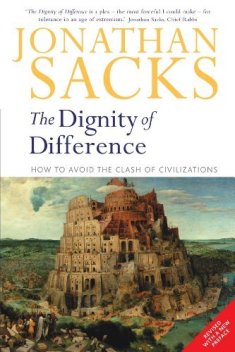
Sacks - The Dignity of DifferenceJonathan Sacks has described the public commons as ‘the places you go where you do not have to pay’. Such places are becoming increasingly rare in the world’s cities; they are being converted into shopping centres and entertainment complexes. ‘But these are not civic spaces. We go there as consumers, not as fellow citizens’. And so we are formed. Relationships once based on neighbourliness and the shared bonds of citizenship have become commercialised and disembodied. And exposed here, Sacks argues, is one of the real gifts that religion bequeaths to liberal democracies – that they can help such societies ‘to acquire the habits of co-operation which form the basis of trust on which the economics and politics of a free society depend’. He continues:

One of the classic roles of religion has been to preserve a space – physical and metaphysical – immune to the pressures of the market. When we stand before God we do so regardless of what we earn, what we own, what we buy, what we can afford. We do so as beings of ultimate, non-transactional value, here because someone – some force at the heart of being – called us into existence and summoned us to be a blessing. The power of the great world religions is that they are not mere philosophical systems, abstract truths strung together in strictly logical configurations. They are embodied truths, made vividly real in lives, homes, congregations, rituals, narratives, songs and prayers – in covenantal communities whose power is precisely that they are not subject to economic forces. They value people for what they are; they value actions for the ideals that brought them forth; they preserve relationships by endowing them with the charisma of eternity made real in the here-and-now.

Some things Forsyth

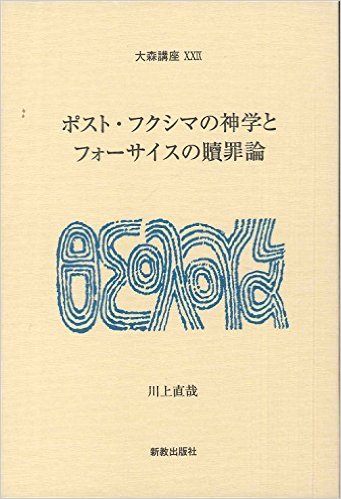
Kawakami on Forsyth and Post Fukushima TheologyMy friend Naoya Kawakami has sent news that his latest book, a theology which brings post-Fukushima realities into conversation with P. T. Forsyth’s thinking on the atonement, has just been published. It represents another reminder not only of the abiding power of good theology to speak to a context unimagined by the original author but also of the long and continuing interest in Forsyth’s work in Japan, where seventeen of Forsyth’s books have already been translated into Japanese, and four additional ones have undergone a second translation.

In addition to Naoya’s two published studies on Forsyth, two other books have also appeared in recent years, including Yutaka Morishima’s study Forsyth shingaku no kozo genri: Atonement wo megutte (A Structural Principle of P. T. Forsyth’s Theology: Through the Atonement). Yutaka also informs me that Forsyth’s book The Soul of Prayer, much loved in Japan, has now been translated into Korean. And that just last week, there was a meeting of pastors and theologians in Tokyo, the sole purpose of which was to read and discuss together Forsyth’s Faith, Freedom and the Future. I understand that the moderator of the group is working on a new translation of the book.

Also, Alan Gaunt, who once penned a wonderful poem inspired by Forsyth’s theology of the cross, has now written a delightful review of my book Hallowed Be Thy Name: The Sanctification of All in the Soteriology of P. T. Forsyth. The review, which was published in The Journal of the United Reformed Church History Society (May 2015), can be accessed here.

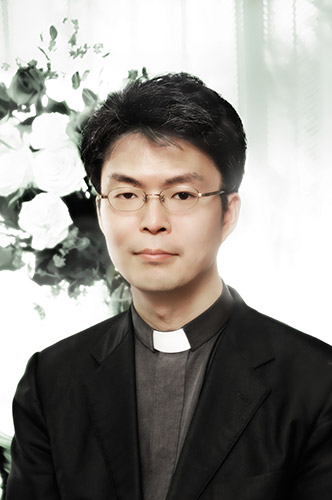
On a considerably more sombre note, Naoya has also asked me to share some news about the situation on the ground near Fukushima. He writes:

Naoya Kawakami

Unfortunately, the situation has become worse. Because of so many misrule and responsibilities, the illness and to contaminate have expanded. We have to see a kind of Massacre on the children and nature. So many people shut down their eyes to see the reality. And TEPCO and government have started what they want crudely.

But some churches stand with the mothers harmed so deeply. We are now waiting how the Lord shall do His Work with them.

Please pray for us and miserable victims.

Blessing,

Naoya Kawakami

On the relationship between systematic theology and analytic philosophy

As one who basically shares David Bentley Hart’s assessment of Anglo-American analytic philosophy as ‘degradingly barren’ and as ‘a silly game with poorly formulated rules, which serves as an excellent tool for avoiding thinking deeply about anything irreducible to crude propositions’, and who has enormous respect for Alan Torrance, I was interested in this recent discussion here between Helen De Cruz, Kevin Hector, and Alan on the (blessed and vexed) relationship between systematic theology and analytic philosophy.

And while I am considerably less sanguine than is Alan about the merits of analytic philosophy as a particularly helpful handmaiden in the pursuit and articulation of truth (partly on the grounds expressed in the interview about the ahistorical, acultural, and apolitical character of the way that Anglo analytic philosophers seem to go about their task; I have similar concerns, too, about those who undertake studies on Søren Kierkegaard, for example, with little or no concern to understand or attend to the context of village Lutheranism in nineteenth-century Denmark, or those who write books about Bonhoeffer as if he were a North American version of a Sydney Anglican (as opposed to an Anglican who happens to live in Sydney)), I was very grateful for the discussion, and for some of the acknowledgments contained therein, and for the opportunity to revisit the questions. I thought others might be too, so here ’tis:

On religion and civil society: a response to Simone Sinn

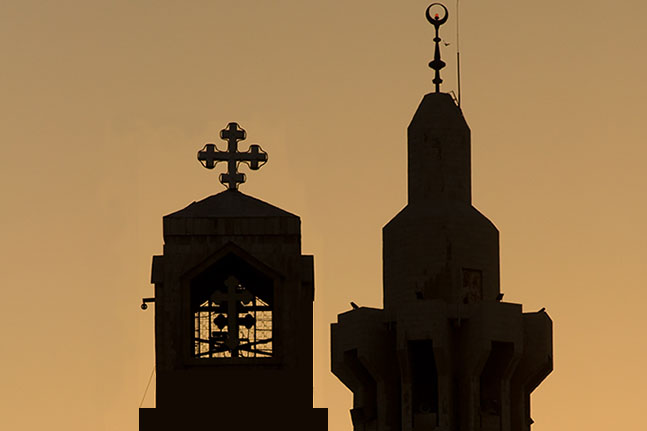
Church-MosqueLast week, I was again in Geneva participating in a colloquium on religion and state. The meeting had a particular focus on the ways in which Christianity and Islam conceive and negotiate their relationship with the state. It was, as I anticipated, a stimulating event. I was invited to give a response to a very fine paper by Simone Sinn of the Lutheran World Federation. I enjoy doing such things. The tricky bit about doing it this time, however, was that I first heard the paper at the same time as did everyone else; i.e., I never received a copy of the paper in advance. But like one of Alexander Pope’s fools, I braved upon ground where angels might think a couple of times before venturing, and hazarding a guess (which was pretty accurate, as it happens) at where Simone’s paper might go – and in a desperate state ripping shamelessly from Rowan Williams (especially his wonderful collection of essays in Faith in the Public Square) – I tentatively offered the following words (and some good discussion ensued):

–––––––––––– ℘℘℘℘℘℘ ––––––––––––

Taking some bearings

Ongoing deliberations about Turkey’s admission to the EU and, of course, what is being called ‘Europe’s refugee crisis’, have exposed even further all manner of concerns about what we might call Europe’s historic Christian identity and indeed about the idea of ‘Europe’ itself. As we speak, in my own country (which remains, in many ways, an outpost of Europe), there is widespread anxiety regarding the arrival of refugees, especially those from Muslim-majority lands, and concentrated protests going on regarding the building of mosques and the recent granting of a visa to a certain Dutch politician with a very interesting hair style who plans to launch a new political party in Australia. So, what a time to be thinking about these things!

The one thing that is certain in this current climate is that things are ‘deeply uncertain and fluid’. ‘There is’, as Rowan Williams has noted, ‘widespread impatience with transnational institutions, from the EU to the UN, yet equally widespread anxiety about the dominance of a single power. We are increasingly aware of the issues that cannot be solved by single sovereign states on their own – ecological crisis, terrorism, migrancy – yet are uncomfortable with any notion of global jurisdictions’. The global north is increasingly conscious of facing a highly critical, if internally diverse, Islamic world and is struggling to know how best to respond to its presence outside and inside its own borders. ‘Enlightenment liberalism, the self-evident creed of reasonable people, now appears as simply one cultural and historical phenomenon among others. Its supposed right to set the agenda for the rest of the world is no longer beyond question, however much the American Right or the European Left assume that their positions are the natural default beliefs of intelligent human beings, and that cultural and religious variety are superficial matters of choice or chance’.

As Williams also notes, the narrative, standard just a few decades ago, of a universal drift towards so-called secularization has had to undergo radical modification, a challenge severely hindered by the fact that so much of Europe seems to have developed a severe case of amnesia regarding its own complex history dating back at least as far as the Germanic, Turkic and Slavonic migrations that destroyed the Roman Empire between 376 and 800 CE. This is not a situation, in other words, that was birthed in the Enlightenment. Rediscovering this story, it seems to me, is critical if current challenges are to be responded to responsibly and constructively. I am grateful, therefore, for Simone’s paper and her efforts to locate more recent public discourse in some larger historical frames, with her two twentieth-century examples from Germany and Indonesia. This kind of work is important if we are to avoid the unhistorical and facile optimism that characterizes so much contemporary debate on all fronts.

Some theological commitments

Simone is equally concerned to bring other resources – explicitly, theological resources – to this task. This is highly proper, not least because the central and foundational convictions of political liberalism in Europe are an explicit fruit of its Christian history. Particularly, ‘the distinctively European style of political argument and debate is made possible by the Church’s persistent witness to the fact that states do not have ultimate religious claims on their citizens’.

Simone focuses on two theological commitments that, in her words, ‘enable an affirmative understanding of civil society’. She names here anthropology and political ethics. As important and fruitful and these two fields of enquiry might be, uprooted from some even more basic theological commitments I’m not convinced that they provide for the Christian community the robust ‘theological motives’ (to use Simone’s phrase) or theological muscle that the opportunities and challenges before us call for. More germane and fertile enquiry might be had by attending more explicitly to implications perhaps yet unearthed or unapplied to this new context in the following five areas:

  1. Incarnation. There are questions to be asked, for example about the character of Christ’s body as ‘extendible’ and ‘transposable’ and ‘unstable’, a body that can expand itself, for example, to incorporate other bodies and ‘make them extensions of his own’, as Graham Ward argues. What might be some implications for the church of its own claim that in Christ the world has been given a body that ‘can cross [all] boundaries, ethnic boundaries, gender boundaries, socio-economic boundaries’, and religious boundaries, for example, boundaries unpoliced by the church?
  2. Trinity. Recent decades have witnessed significant interest among theologians – both Roman Catholic (e.g., Karl Rahner, Jacques Dupuis, Gavin D’Costa, Raimundo Panikkar) and Protestant (e.g., Karl Barth, Wolfhart Pannenberg, Clark Pinnock, S. Mark Heim, John Hick) – to explore more intentionally ways in which the revelation of God’s triune mode of being might constitute a constructive basis or ‘roadmap’ for a positive interpretation of religious diversity and even religious pluralism from the standpoint of Christian theology. I understand that there has been a formal dialogue between French Muslims and Roman Catholics around this very question.
  3. Pneumatology. There are also questions to revisit here regarding the implications of the claim that the church has no monopoly on God’s Spirit but that the Spirit belongs to everybody, and to nobody; questions constructively explored some decades ago in the work of John V. Taylor.
  4. Soteriology. What bearing might faith’s claim that there can be no salvation apart from my neighbour, for example, have to our discussion on life together in changing territories?
  5. Ecclesiology. Are there not pressing questions also to be asked here about the strangely eschatological and provisional nature of the Christian community’s place in the world (something exposed, thank God, through the erosion of the Constantinian arrangements)? And then there are critical questions too about the alternative citizenship of the church and its sharing a common life with those who do not share that citizenship.

On the public commons

Simone champions the widely-held view that the notion of a ‘“civil society” presupposes a space … where citizens can organize themselves voluntarily around common interests or common goals’, a space, she says, where ‘active citizenship is experienced and exercised’, and, we might add (drawing on the work on John de Gruchy), a space ‘in constant need of broadening and deepening, and therefore of debate and [of] clarification’. Such a commitment need not, of course, be grounded in any consensus about what constitutes ultimate truth, or even agreement that such an oddity may exist. It requires only that citizens seek to meet in such a space, and a just state that will regulate its chaotically pluralist character. (I was at this point in Simone’s paper reminded of that pioneering Scottish architect and architectural theorist Alexander Thomson who, in the middle of the nineteenth century, championed a vision of public space that is both open and horizontal, and whose work was informed by a deep conviction that the so-called private life of the home be not divorced from the public space of the street where the community gathers to make and to carry out ideas together.)

Lest the liberal state loses its essential liberalism, that public space and ‘active citizenship’ of which Simone rightly speaks must engage also in a continuing dialogue with religious communities, and those with each other. Failure to do so would mean that the state would become ‘simply dogmatically secular, insisting that religious faith be publicly invisible; or … chaotically pluralist, with no proper account of its legitimacy’ except that ‘the state is the agency that happens to have the monopoly of force’ (Williams). Luke Bretherton, in his book Christianity and Contemporary Politics, argues much the same – that it is the state’s responsibility to ensure that ‘there is an increasingly constructive engagement between [itself] and minority religious groups’. To be sure, the source of our common life does not itself rest in the state any more than it rests in any other intermediate institution, guild, religious or civil association, each of which ought, in Williams’ words, to ‘have a natural liberty to exist and [to] organize themselves’. But the state is given a unique vocation to, to some degree, regulate this social variety and ‘chaotic pluralism’, a role that is an implicit outworking of any political philosophy that rejects a sacralized sovereignty. The challenge, therefore, is for the apparatus of the state to become what Williams calls ‘a reliable and creative “broker” of the concerns of the communities that make it up’.

The history of Islam, particularly outside of its historic-majority cultures, is a history characterised by the experience of negotiating and renegotiating its way in a great variety of settings. This is indeed the character of all living faith. Some Muslim scholars, such as the Swiss academic Tariq Ramadan (who teaches at the University of Oxford) insist that there is in Islam no absolute theological commitment to an imposition of specifically Muslim law even in majority contexts. In his book Western Muslims and the Future of Islam, he contends that Muslim identity need only be at odds with Western cultural identity where certain cultural habits are in direct conflict with Islamic precepts. This means, he argues, not only that there is no single ‘homeland’ for Muslims, but also that Muslims can be at home, can adapt in truly integrated rather than in ‘hodgepodge’ ways, in any geographical and political environment. And so they must, he insists, avoid ‘self-ghettoization’, avoid becoming ‘spectators in a society where they were once marginalized’, avoid retreat from the public commons and what Ramadan calls ‘the service of all, for the good of all’. ‘The “way of faithfulness”’, writes Ramadan, ‘compels [Muslims] not only to respect plurality but also to step outside the [intellectual, religious, and social] ghettos, [and to] know each other better’, to be constantly renegotiating the new public spaces, as must the church, and to act together to ‘ensure the fullest possible statement of shared moral goals and anxieties’ (Williams) in the public commons.

I share Simone’s conviction that viable civil societies in religiously plural contexts presuppose viable interreligious relations, with a high priority given to efforts at the local level where the freedom to engage in ‘convivial and cooperative relations’, however difficult and unstable, and to do so in ways that avoid what Luke Bretherton calls ‘religious vandalism’, yields – dare I say it – signs of the Spirit’s work, signs indeed that ‘the earth is the Lord’s and all that is in it, the world, and all those who live in it’ (Ps 24.1). All this, for me, is an outworking of an implicit christology which resists existing in a vacuum, which rejoices in the fact that ‘dialogue among the religions is no longer a luxury but a theological necessity’ (David Tracy), and which welcomes the encounters, challenges, and fresh questions that a rapidly-changing Europe (and Australia) occasions.

The Indian theologian Stanley Jedidiah Samartha (incidentally, I suspect that we could learn a great deal from the Indian experience vis-à-vis religious plurality) sees in the coming of Jesus part of ‘God’s dialogue with humanity’. Our dialogue with people of other faiths, he argues, is part of our participation in God’s dialogue with humanity, and this, as Karl Barth insisted, is grounded in God’s own intratrinitarian dialogue. Of course, as Williams has suggested elsewhere, part of what happens in a good dialogue between people of different faiths is, one hopes, learning to see what the other person’s face looks like when it is turned towards God. To shut out that possibility is to reject the invitation to grow up, and it is to abandon the difficult gift of ‘hard silence – a stepping-back from the urge to solve things prematurely’.

Some concluding thoughts

Simone’s paper is a welcome invitation to imagine a space less threatened by the ignorance that engenders and nourishes fear, and to embrace the unforeseen possibilities that a future which must not neglect its past – lest Europeans (and Australians too, for that matter) become a thriftless people – ought neither to be yoked to it.

In 2005, Rowan Williams delivered a speech not too far from here at the Palais de Congrès de Lyon. His speech was entitled ‘Is Europe at its End?’, and he concluded, as will I, with these words:

In short, my hopes for the future of Europe are that it will continue to be a culture of question and negotiation – because I believe that this is the way it is truest to its Christian roots. But given the enormous dangers of a dominant secularism, a denial of the public visibility of religious commitment and its role in managing and moulding social identity, I hope for a political climate in Europe that is open to co-operation between state and religious enterprise. If this does not happen, the state becomes unselfcritical in its godlessness and religious communities become isolated and defensive; they too lose the capacity for critical awareness.

Leonardo Boff on Papa Francisco: Iglesia en salida, ¿de dónde y hacia dónde?

Leonardo BoffIt was probably over twenty-five years ago, but I can still remember the moment when I first read Leonardo Boff. I can’t now remember if it was his Introducing Liberation Theology or his Jesus Christ Liberator, or something else. I can hardly even remember what any of his main arguments were. I can, however, remember being struck by a way of approaching the theological task itself that I had hardly ever encountered before. I wondered, is it really possible for theology to be so unenslaved to dogmatic minutiae, to bear so few signs of the overly-apologetic anxiety that so marks the discipline, to appear so unhindered by the opinions of his protagonists, to care so deeply and so courageously for the world, to so reek of Christ? I wondered, is this really theology at all? And while I did (and do) not share Boff’s mind on a number of subjects, there could be no doubting that here was a dear brother and teacher in Christ, labouring with that same bold freedom and disembarrassment and urgency and risk that I also encountered in Bonhoeffer’s Letters and Papers from Prison.

I relived some of those same moments again tonight when I happened across this recent statement (3 July 2015) from Boff, now 76. It is testimony to life’s celebration in the thick of fossilising death, to joy’s protesting hope amidst despair, and a summons to the Christian community to heed Pope Francis’ call to turn away from those patterns of non-cruciform power and self-service and self-preservation and religiosity that so often characterise its life and to turn towards the compassionate and thoroughly-worldly tradition of Jesus; a summons, put otherwise, to become contemporary with Christ. I thought it worth reposting:

Celebrando todavía la extraordinaria encíclica sobre “el cuidado de la Casa Común”, volvemos a reflexionar sobre una perspectiva importante del Papa Francisco, un verdadero logotipo de su comprensión de la Iglesia como “una Iglesia en salida”. Esta expresión encierra una velada crítica al modelo anterior de Iglesia que era una Iglesia “sin salida” debido a los diversos escándalos de orden moral y financiero, que forzaron a renunciar al Papa Benedicto XVI, una Iglesia que había perdido su mejor capital: la moralidad y la credibilidad de los cristianos y del mundo secular.

Pero el logotipo “Iglesia en salida” posee un significado más profundo, hecho posible porque viene de un Papa fuera de los cuadros institucionales de la vieja y cansada cristiandad europea. Esta había encerrado a la Iglesia dentro de una comprensión que la volvía prácticamente inaceptable para los modernos, rehén de tradiciones fosilizadas y con un mensaje que no mordía los problemas de los cristianos y del mundo actual. La “Iglesia en salida” quiere marcar una ruptura con aquel estado de cosas. Esta palabra “ruptura” irrita a los representantes del stablishment eclesiástico, pero no por eso deja de ser verdadera. Y entonces surge la pregunta: “salida” de dónde y hacia dónde? Veamos algunos pasos:

  • Salida de una Iglesia-fortaleza que protegía a los fieles de las libertades modernas hacia una Iglesia-hospital de campaña que atiende a toda persona que la busca, sin importar su estado moral o ideológico.
  • Salida de una Iglesia-institución absolutista, centrada en sí misma hacia una Iglesia-movimiento, abierta al diálogo universal, con otras Iglesias, religiones e ideologías.
  • Salida de una Iglesia-jerarquía, creadora de desigualdades hacia una Iglesia-pueblo de Dios, que hace de todos hermanos y hermanas: una inmensa comunidad fraternal.
  • Salida de una Iglesia-autoridad eclesiástica, distanciada de los fieles o incluso de espaldas a ellos, hacia una Iglesia-pastor que anda en medio del pueblo, con olor a oveja y misericordiosa.
  • Salida de una Iglesia-Papa de todos los cristianos y obispos que gobierna con el rígido derecho canónico hacia una Iglesia-obispo de Roma, que preside en la caridad y sólo a partir de ella se hace papa de la Iglesia universal.
  • Salida de una Iglesia-maestra de doctrinas y normas hacia una Iglesia-de prácticas sorprendentes y de encuentro afectuoso con las personas más allá de su pertenencia religiosa, moral o ideológica. Las periferias existenciales ganan centralidad.
  • Salida de una Iglesia-de poder sagrado, de pompa y circunstancia, de palacios pontificios y titulaciones de nobleza renacentista hacia una Iglesia-pobre y para los pobres, despojada de símbolos de honor, servidora y portavoz profética contra el sistema de acumulación de dinero, el ídolo que produce sufrimiento y miseria y mata a las personas.
  • Salida de la Iglesia-que habla de los pobres hacia una Iglesia-que va a los pobres, conversa con ellos, los abraza y los defiende.
  • Salida de una Iglesia-equidistante de los sistemas políticos y económicos hacia una Iglesia-que toma partido a favor de las víctimas y que llama por su nombre a los causantes de las injusticias e invita a Roma a representantes de los movimientos sociales mundiales para discutir con ellos cómo buscar alternativas.
  • Salida de una Iglesia-automagnificadora y acrítica hacia una Iglesia-de verdad sobre sí misma y contra cardenales, obispos y teólogos celosos de su status pero con cara de “vinagre o de viernes santo”, “tristes como si fuesen a su propio entierro”, una Iglesia, en fin, hecha de personas humanas.
  • Salida de una Iglesia-del orden y del rigorismo hacia una Iglesia-de la revolución de la ternura, de la misericordia y del cuidado.
  • Salida de una Iglesia-de devotos, como esos que aparecen en los programas televisivos, con curas artistas del mercado religioso, hacia una Iglesia-compromiso con la justicia social y con la liberación de los oprimidos.
  • Salida de una Iglesia-obediencia y de la reverencia hacia una Iglesia-alegría del evangelio y de esperanza todavía para este mundo.
  • Salida de una Iglesia-sin el mundo que permitió que surgiese un mundo sin Iglesia hacia una Iglesia-mundo, sensible al problema de la ecología y del futuro de la Casa Común, la madre Tierra.

Estas y otras salidas muestran que la Iglesia no se reduce solamente a una misión religiosa, acantonada en una parte privada de la realidad. Ella posee además una misión político-social en el mejor sentido de la palabra, como fuente de inspiración para las trasformaciones necesarias que rescaten a la humanidad para una civilización del amor y de la compasión, que sea menos individualista, materialista, cínica y desprovista de solidaridad.

Esta Iglesia-en-salida ha devuelto alegría y esperanza a los cristianos y reconquistado el sentimiento de ser un hogar espiritual. Por su sencillez, despojamiento y acogida con amor y ternura se ha granjeado la estima de muchas personas de otras confesiones, de simples ciudadanos del mundo e incluso de jefes de Estado que admiran la figura y las prácticas sorprendentes del Papa Francisco en favor de la paz, del diálogo entre los pueblos, de la renuncia a toda violencia y a la guerra.

Más que doctrinas y dogmas es la Tradición de Jesús, hecha de amor incondicional, de misericordia y de compasión que por él se actualiza y revela su inagotable energía humanizadora. Pues, entre otras cosas, este es el mensaje central de Jesús, aceptable por todas las personas de todos los rincones.

Seeking hospitality in Melbourne

There is a Christian missionary family (of 5), including three young children, who are currently serving in Siberia with Pioneers. They will be returning to Melbourne on furlough for six months from 11 January, and they are looking for a place (min 2 bedrooms) to stay, preferably somewhere in either Melbourne’s North, East, or South (including Mornington Peninsula) which is where their main supporter base is. They would prefer to remain in the one place so that their kids could attend the one school.

If you or someone you know may be able to help, then please get in touch with me via the Contact page

If you’re a Facebooker, then please feel free to spread the word too.

faithfulness, through a glass darkly

Through a glass darkly

To think about love as that which is sourced in God, which moves us towards healing, which is open to others, which refuses the bondage of disembodiment, which takes risks, and which carries with it certain responsibilities, is to recall that love is not too far removed from that other fruit of the Spirit that ought to characterise the Christian community; namely, faith. For the Christian community, to faith is to risk the entirety of its existence by leaning unreservedly into the Word who addresses it and who calls it away from its own life-less patterns of self-reliance and into God’s true freedom.

It is important to remember that faith is neither the ‘idolatry of certainty’ (Monika Hilder) nor the same as belief. To believe is part of faith, but faith also involves not believing, questioning, doubting, exploring, or not knowing what to believe. A faithful response to God includes the courage to explore further, to value mystery rather than carrying the burden of knowing all that is to be known. And a faithful community is one that welcomes and holds together all of these dimensions of faith – rejoicing, resting, anguishing, risking, exploring, being unstable bearers of live questions. Faith communities devoid of such dimensions are communities in danger, or worse, of not growing up at all.

It is not insignificant that the Bible has no arguments for the existence of God. It is not insignificant that the Bible offers little reason to think that faith should be facile and unambiguous. Indeed, the Bible is unfilled by comfortable and reassuring words about the life of belief and trust. It is unfilled by presentations of a God who expects or demands doubtless faith. If Abraham and Moses and Hannah and Job and Mary and Jesus and Simeon and Paul suggest any pattern, then our knowledge of God and of God’s ways is characterised not by epistemological certainty but by being found caught up in a reality planned and constrained only by mysterious love, love which appears to have little difficulty in making space for angst and struggle and disbelief, and which is at home looking through a glass darkly. Indeed, in a sense these are a kind of argument for God.

Faith is always being called into risky business. The faithful deal with shadows, partaking little of ‘the optimistic gleam of scientific progress’ (Catherine Keller). Faithful communities are therefore unavoidably characterised by some confusion, some doubt, and some ambiguity. Indeed, these are part of their gift and witness. And trusting this is a sign of their faithfulness to the One whose ways are not like ours.

[Image: David Mello]

Alfonse Borysewicz on ‘news of another mass shooting in the United States’

PrayersAlfonse Borysewicz wrote to me today saying that he had now lost count at how many shootings there have been since he wrote the Foreword to Tikkun Olam (2013,) which begins with these words:

‘I awoke to the news of another mass shooting in the United States, this time at a cinema. Once again, the news was met with outpourings of grief and shock, and with the same reluctance to engage with the questions that similar prior events had brought to the surface. Unfortunately this plague will be repeated soon enough in some other form and at some other place; it is just a matter of time’.

Prayers ascending for Chris Harper Mercer, for those who have died and were injured at his hands, for the Umpqua Community College, and indeed for all those victims and perpetrators of senseless violence in Syria, Burma, Nigeria, and elsewhere, for a President who has the power to drop nuclear bombs on Koreans but no power to take guns away from those he has been elected to govern, for Alfredo Prieto, and for all those who love them. Kyrie, eleison.