Year: 2009

Sauntering through the week …

Taieri Gorge Railway

Along the Taieri Gorge Railway

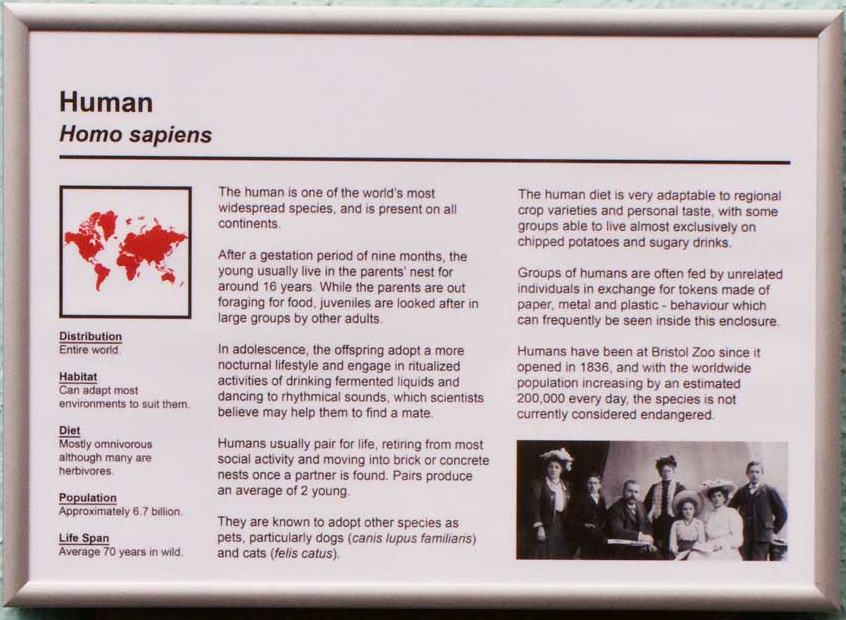
Humans


Jaroslav Pelikan on the need for creeds

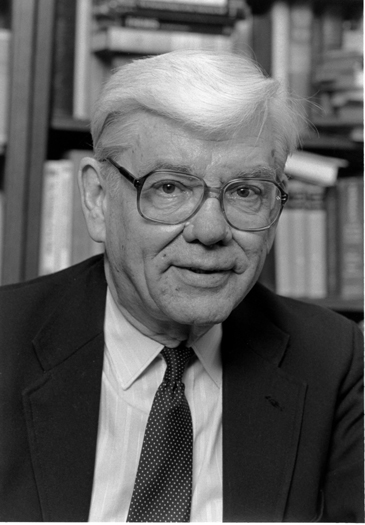
PelikanRecently, Speaking of Faith ran a repeat of an interview with Jaroslav Pelikan on the need for creeds wherein Pelikan argued that ‘strong statements of belief are not antithetical, but necessary, if 21st-century pluralism is to thrive’. It can be downloaded here or listened to here.

Of course, Pelikan (1923–2006) is best known for his wonderfully-helpful 5 volume work The Christian Tradition: A History of the Development of Doctrine. (Vols I, II, III, IV, V), but many have also benefited by drinking deeply from his many other books, including Jesus Through the Centuries: His Place in the History of Culture, Divine Rhetoric: The Sermon on the Mount As Message and As Model in Augustine, Chrysostom, and Luther, Credo: Historical and Theological Guide to Creeds and Confessions of Faith in the Christian Tradition, Acts (in the Brazos Theological Commentary on the Bible series), Fools for Christ: Essays on the Good, the True and the Beautiful, and Bach Among the Theologians.

Pelikan was ordained by the Lutheran Church, taught at Yale from 1962 until 1996, and in 1998 was received into the Orthodox Church in America. Those wanting to read more about Pelikan’s work can visit:

A Symposium: Aspects of Māori Christianity and Mission

Maori Church

Aspects of Māori Christianity and Mission

Historical, Theological and Contemporary Perspectives

A Symposium, November 18–19, 2009

Last year a number of University of Otāgo academics formed a research group, Te Whakapapa o te Whakapono: Lineages of Faith, in conjunction with Te Wānanga a Rangi (the Presbyterian Church’s Theological College for Māori ministers) in order to further research into Māori interactions with Christianity. This research is multi-disciplinary, with a strong emphasis on both theology and history. The project aims to examine the encounters between the Christian Church and the Tāngata Whenua in New Zealand, to trace the growth and development of Christian faith among the Māori people, and to consider the ways in which that development has contributed to the shaping of New Zealand identity and society. To further the aims of the research project a Symposium will be held at Salmond College, Dunedin from November 18-19, 2009.

Speakers/topics will include:

  • Kathie Irwin, ‘John and Hōriana Laughton’
  • Hirini Kaa, ‘Tīhei taruke!: Mohi Turei and Ngāti Porou Christianity’
  • Bernie Kernot, ‘Translating the Gospel in the Māori Art Tradition: the works of the late Rt Rev. Hāpai Winiata’
  • Robert Joseph, ‘1. Rangatiratanga in the American West – The Hirini Whaanga Whānau Migration to Utah in the 19th Century’ and ‘2. Are Mormons Maori? Doctrinal and Historical Parallels between Māoritanga and Mormonism’
  • Peter Lineham, ‘Is Destiny Church a Māori faith or a faith of Māori?’
  • Nathan Matthews, ‘Kaikatikīhama – Tō tātou taonga whakahirahira. The role of Māori Catholic Catechists in the Marist Mission 1870 -1900’
  • Simon Moetara, ‘Māori & the Pentecostal Churches in Aotearoa-NZ’
  • Hugh Morrison, ‘Presbyterian children, images of Māori and imperial sentiments’
  • Keith Newman, ‘Rātana, the Prophet. Mā te wa; the sign of the broken watch’
  • Lachy Paterson, ‘Race, gender and te ao Māori: Pākehā women field workers of the Presbyterian Māori Mission’
  • Murray Rae, ‘Rua Kēnana and the Iharaira’
  • Wayne Te Kaawa, ‘The Contribution of James MacFarlane’
  • Hone Te Rire, ‘Hīhita me ngā Tamariki o te Kohu’
  • Yvonne Wilkie, ‘The Presbyterian Women’s Missionary Union and their response to Māori Mission’

For more information or to register, contact Murray Rae (before 12 November).

Rick Floyd: Retired Pastor Ruminates

Rick Floyd is Pastor Emeritus of First Church of Christ in Pittsfield, Massachusetts, where he served for 22 years. He has authored A Course in Basic Christianity and When I Survey the Wondrous Cross: Reflections on the Atonement, a wonderful study which draws heavily upon the staurology of PT Forsyth (and which is all the better for doing so!)

He has a great nose (for theology that is) and his blog, Retired Pastor Ruminates, is one of my regular theo-blog stopping places. Many of Rick’s reflections bear witness to the sparks created at the intersection between pastoral ministry and theology, and draw sensibly on a lifetime of intimate and public engaging in both. To be sure, I never miss reading one of his posts, even those wherein he deliberates on things completely irrelevant like the Boston Red Sox. Regular readers of Per Crucem ad Lucem might consider adding Rick’s blog to your list and/or to your feed. Need a reason? Rick’s latest post on Karl Barth and preaching is all the reason you should require. He has also posted recently on Lesslie Newbigin, a Prayer for a Retired Pastor and a recipe for borscht.

On the writing of Reformed Confessions

pcanzIn recent times, the Presbyterian Church of Aotearoa New Zealand has been engaged in drafting a contemporary, indigenous confession of faith – Kupu Whakapono – with a view to it being accepted as a new subordinate standard. (You can read more about it here and here.) Among other things, the writing of this confession is evidence that while theology by committee is never easy – if not usually downright impossible – miracles still happen. The draft confession reads:

From this land of Aotearoa New Zealand
we confess that we believe in and belong to God
who is Father, Son and Holy Spirit.

We believe in God
the Father of Jesus Christ,
sender of the Holy Spirit;
Creator and Nurturer of all,
Love above all loves,
and Judge of all the earth.

We believe in Jesus Christ our Lord,
truly human and truly divine.
He lived among us full of grace and truth
and suffered death by human hand,
He was raised by God to new life,
setting us free from sin
and bringing to birth God’s new creation.
Now ascended, he calls us to repentance and faith,
and restores us to God and to one another.

We believe in God the Holy Spirit
who makes Christ known,
inspires the Scriptures,
transforms hearts and minds,
gathers us into the community of Christ
and sustains the Church in worship and in mission.

We belong to this triune God
who calls us to become what we are in Christ:
God’s own people, diversely gifted
witnesses to his love in word and in action,
servants of reconciliation,
and stewards of Creation.

Brought together in Christ,
women and men,
young and old,
tangata whenua and tauiwi,
we look forward in hope
to that fullness of life
in which justice and peace will flourish,
the reign of Christ will be complete,
and we shall forever sing praise to the glory of God.

Eberhard BuschIt’s not perfect – there’s no mention of Israel for a start – but its very existence does recall something inherently built in to our DNA as those people of God who identify most strongly with the Reformed branch of the Church Catholic. I was reminded of this afresh recently while reading an essay by Eberhard Busch titled ‘Reformed Identity’ Reformed World 58/4 (2008): 207–218). In this essay, Busch recalls not only that being Reformed entails what he calls ‘the unconditional subordination of [our] own tradition and doctrine to the holy scripture’, and that the Reformed consciously confess that they are members of ‘one, ecumenical church’, but also that the arrangement of the Reformed denominations occurs ‘in the travel of God’s people’. To be Reformed, in other words, means to affirm (as the Basis of Union of the Uniting Church in Australia would have it) that we belong ‘to the people of God on the way to the promised end’. It is the taking serious of this on-the-wayness – that the community is a participant in God’s eschatological liveliness – that calls for fresh expressions of the ancient faith. So Busch:

In every shape the Church is only on its way, – following the aim which is determined and brought about by Him alone. Therefore the life of the congregations and their members is essentially a pilgrimage, not fleeting life on earth, and not being obsessed by it. It is like the way of Israel through the desert. It is being on the way, in restlessness, in uneasiness, in fights, in sighs, and in thirst, but always with the motto: let’s go! Calvin indicated this direction: ‘After we have accepted the testimony of the gospel about the free-gracious love of God, we are waiting, till God will show that, what is still hidden below the hope’. For the Confessio Belgica (1561) or the Confessio Scotica (1560) this goal is clearer in the visible appearance of the rule and the realm of Christ, which had already begun when He rose to heaven. And the Heidelberg Catechism formulates that the coming judge is no one else than the already appeared redeemer. Therefore, we walk towards him ‘in all [our] sorrows and persecutions, with uplifted head’ … In this context it becomes clear that the Reformed are not so much interested in the possession of a confession, but more in the determination to confess. The Reformed acknowledge – in line with the ancestors – that we do not always have to say and do the same as they said and did. It is possible that we will be asked new questions, to which we will have to give new answers. It is possible that other insights become the focus of attention, inviting us to decide whether we confess or deny Jesus Christ. Certain biblical sentences speak particularly at different times. In 1942 the long forgotten words ‘Salvation is from the Jews’ (John 4:22) began to be heard in the Swiss churches in favour of the Jews. Monopolisation of biblical words is beyond such an experience. The Reformed denomination reminds us that we have to reckon with the Holy Spirit who wants to lead us in all truths. We have to be open to His concrete, new instructions. It is the Spirit, who allows us to think, say and do what is necessary now. The same Spirit urges us to get on the way from our own denomination to what is more than our and all other denominations.

Busch then proceeds to speak about the ‘gratitude of the Reformed Church’, recalling that when the freedom of the Spirit of Jesus in the Gospel does not exist in a denomination, then that denomination becomes inflexible. Busch believes that this danger is no longer a particular issue for the Reformed churches today (I’m not so sure about this), and he cites another danger which is ‘far more of a menace’:

That is the threat of a certain kind of liberalism: the danger that they gamble away the talent of a church, Reformed according to the Word of God, which has been handed over to them for safekeeping and for passing on to their neighbours. It is the danger of selling this talent for a small profit. Maybe they seem to be ‘Reformed’, but they have the title without the ‘Word of God’. That is the danger of wrongly interpreting the formula ‘The Reformed Church is always to be reformed’, so that they think they are Reformed because they are doing their work in a different way than the Reformers. They do not understand the true sense of that formula that we have to turn again and again to the fountain of faith, love, and hope. It is dangerous for the Reformed to store their legacy in a museum, which is visited occasionally, but not used in the daily life. In short, there is the danger that present-day Reformed Christians live in the church, as if it were not true that God is not the God of the dead but of the living. Therefore, our ancestors can not really join in our conversation today and are not allowed to have a say in our decisions. There is no space for their questioning whether we still really are Reformed Christians. When we think in this way, an unspiritual arbitrariness will appear in the church.

For the contemporary Reformed who live in Aotearoa New Zealand and who are seeking to carve out what it means to be faithful to God’s good news in Jesus Christ in this land, these words from Professor emeritus Busch are both timely and imperative. It is, after all, Reformation Day.

October bests …

Draw the LineFrom the reading chair: Celtic Christianity: Making Myths and Chasing Dreams by Ian Bradley; The Quest For Celtic Christianity by Donald E. Meek; Banner in the West: A Spiritual History of Lewis and Harris by John Macleod; Why Study The Past?: The Quest For The Historical Church by Rowan Williams; Loving God With Our Minds: The Pastor As Theologian edited by Michael Welker and Cynthia A. Jarvis; Why Your World Is About to Get a Whole Lot Smaller: Oil and the End of Globalization by Jeff Rubin; Liberating Reformed Theology, Christianity and Democracy: A Theology for a Just World Order and Theology & Ministry in Context & Crisis: A South African Perspective by John W. de Gruchy; Witness to the World: The Christian Mission in Theological Perspective by David J. Bosch; Black and Reformed: Apartheid, Liberation, and the Calvinist Tradition by Allan A. Boesak; Praying with Paul by Thomas A. Smail.

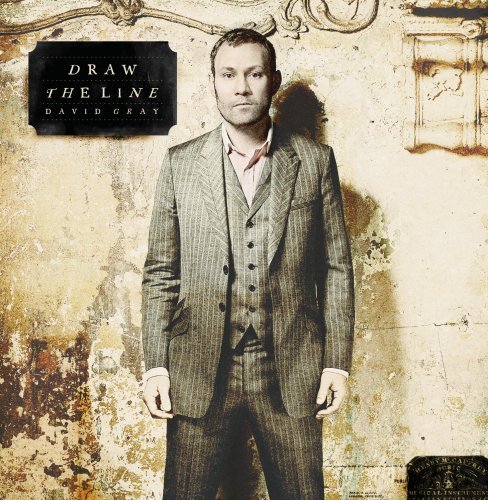
Through the iPod: Kind of Blue (50th Anniversary) by Miles Davis; Looking for Butter Boy by Archie Roach; Daughtry and Leave This Town by Daughtry; Draw the Line by David Gray (this is easily in my top 10 for 2009); X&Y by Coldplay; Christmas In the Heart by Bob Dylan (Judy says that it won’t be being played in ‘our’ house this Christmas, so does anyone want me over for lunch).

By the bottle: Mt Difficulty Long Gully Pinot Noir 2007; Carrick Josephine Riesling 2007.

The Poetry of Care and Loss

davisDoing the rounds this week:

  • Ellen Davis presented her inaugural lecture as the Amos Ragan Kearns Distinguished Professor of Bible and Practical Theology on October 27, 2009, at Duke Divinity School. The title of the lecture was ‘The Poetry of Care and Loss’. It is available via iTunes.
  • The Thailand Burma Border Consortium compares Eastern Burma to Darfur.
  • Julian Bell reviews Vincent van Gogh – The Letters (now we just need Thames & Hudson to review the price!).
  • A fascinating interview with Slavoj Žižek: ‘… it’s very easy to have a radical position which costs you nothing and for the price of nothing it gives you some kind of moral superiority. It also enables them to avoid the truly difficult questions’.
  • Andrew Brower Latz continues his note sharing on Alan Torrance’s 2009 Didsbury Lectures (Parts I, II and III).
  • Jim Gordon reminds us why reading Bonhoeffer is ‘like engaging in a theological detox programme’.
  • Kyle Strobel writes about Evangelical Idolatry.
  • Rick Floyd posts on Lesslie Newbigin’s The Gospel in a Pluralist Society.
  • W. Travis McMaken, on his way into his final qualifying exam in systematic theology, shares a quote from TF Torrance on modern preaching and the god named ‘existentialist decision’.

Speights and Barth on real men

SPEIGHTS-RIVER-ross-grade-websiteALT-1

Whether we’re talking of Monteiths, or Three Boys, or Emersons, or West Coast Brewing, New Zealand’s south island can boast being the home of some really decent beers (my own home brew included). One of the local favourites is Speights, whose Old Dark I’ve been enjoying of late. One of the most alluring features of Speights is their ad campaign, exploiting all the time-honoured associations between beer, horses, open spaces and ‘real’ men. Not only are there the amazing photos, (the ones of the river crossing and of the stag are two of my favourites) but one can also complete the Southern Man ID Chart, and sing the Southern Man Song which promotes:

Now I might not be rich
But I like things down here
We got the best looking girls
And the best damn beer
So you can keep your Queen City [Auckland]
With your cocktails and cool
Give me a beer in a seven
With the boys shooting pool

All part of what it means to be a ‘real’ man, right?

And then there’s Barth’s account in CD III/2 of what being a ‘real’ man looks like:

Real man lives with God as His covenant-partner. For God has created him to participate in the history in which God is at work with him and he with God; to be His partner in this common history of the covenant. He created him as His covenant-partner. Thus real man does not live a godless life – without God. A godless explanation of man, which overlooks the fact that he belongs to God, is from the very outset one which cannot explain real man, man himself. Indeed, it cannot even speak of him. It gropes past him into the void. It grasps only the sin in which he breaks the covenant with God and denies and obscures his true reality. Nor can it really explain or speak of his sin. For to do so it would obviously have to see him first in the light of the fact that he belongs to God, in his determination by the God who created him, and in the grace against which he sins. Real man does not act godlessly, but in the history of the covenant in which he is God’s partner by God’s election and calling. He thanks God for His grace by knowing Him as God, by obeying Him, by calling on Him as God, by enjoying freedom from Him and to Him. He is responsible before God, i.e., He gives to the Word of God the corresponding answer. That this is the case, that the man determined by God for life with God is real man, is decided by the existence of the man Jesus. Apart from anything else, this is the standard of what his reality is and what it is not. It reveals originally and definitively why God has created man. The man Jesus is man for God. As the Son of God He is this in a unique way. But as He is for God, the reality of each and every other man is decided. God has created man for Himself. And so real man is for God and not the reverse. He is the covenant-partner of God. He is determined by God for life with God. This is the distinctive feature of his being in the cosmos. – Karl Barth, Church Dogmatics III.2 (ed. Geoffrey W. Bromiley and Thomas F. Torrance; trans. Harold Knight, et al.; Edinburgh: T&T Clark, 1960), 203.

To be sure, I’ll keep enjoying my Old Dark, and Speights’ amazing pics, but as for me and my house (even though there’s been some question in the past about the manliness of my manhood), we’re going with Uncle Karl on this one.

SPEIGHTS-BLUES-STAG-MM


Thomas Long on Christian funerals

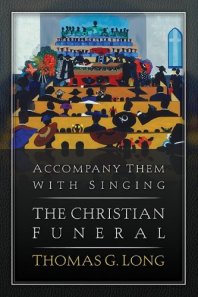
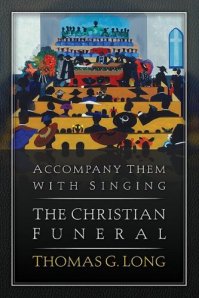
Accompany Them with SingingThere is a genuine sense in which every act of worship is a funeral, entailing acts of judgement and the declaration of God’s hope for humanity in Jesus Christ. That said, it’s really not easy finding good books about funerals (though I am always open to suggestions). And that’s why I’m encouraged by the appearance of Thomas Long‘s new book Accompany Them with Singing. I ordered my copy today, but while I’m waiting for it to arrive, here’s a few tasters:

Accompany them with singing

In a funeral, what is true about all worship, namely, that the gospel story is reenacted in dramatic form, comes to particular focus around the occasion of a death. The major theme of a funeral is the gospel story, and the life story of the person who has died is a motif running through this larger theme; perhaps more precisely, a funeral is about the intertwining of these two narratives. At a funeral, the faithful community gathers to enact the promises of the gospel and the convictions of the Christian faith about life and death, as they are refracted through the prism of the life of the one who has died.

To say that a funeral is a gospel liturgical drama seems simple and true, but this is precisely one of the aspects of the Christian funeral most obscured and crusted over by so many contemporary funeral customs. When it is clear that the funeral is a dramatic reenactment of the gospel, this shines a bright light on what a funeral is not. Despite popular misconceptions, a funeral is not primarily a quiet time when people gather to reflect on the legacy of the deceased, a devotional service dealing with grief, a show of community support for the mourning family, or even a “celebration of life.” Good funerals, in fact, do all of these things – console the grief-stricken, remember and honor the deceased, display community care, and give thanks for all the joys and graces experienced in the life of the one who has died. But these are some of the consequences of a good funeral, not its central meaning or purpose.

The funeral as drama

While it is true that the gospel is proclaimed in the words of the funeral, it is also true that the gospel is proclaimed in the actions of the funeral. The whole funeral, as an act of drama growing out of baptism, proclaims the gospel.

When a Christian dies, the church gathers to act out the story of what this death means in the light of the gospel, but it is a story that began long before the person died. It is a story that began at baptism. Since a funeral is built on the foundation of baptism, we cannot fully grasp the dramatic aspects of a funeral without seeing them in baptism as well, and it is there that we must begin.

On the banks of Louisiana’s Ouachita River, the congregation of St. Paul’s Baptist Church, an African American congregation, gathers every year, after several days of fervent prayer meetings and vigorous revival preaching, to baptize new converts to the Christian faith. The older members of the church call this spot on the river “the old burying ground,” because of what Paul said about baptism: “Therefore we have been buried with him by baptism into death, so that, just as Christ was raised from the dead by the glory of the Father, so we too might walk in newness of life” (Rom. 6:4). Here, in the flowing currents of the Ouachita, sinners are plunged beneath the waters symbolically to die with Christ, to be washed clean, and to be raised up to a new way of life.

On those days when the congregation of St. Paul’s gathers for baptism, the Ouachita River is, of course just the Ouachita, but in the drama of baptism it becomes much more. It is the Red Sea, the waters through which the children of Israel passed on their way to freedom and to the promised land. On baptism day, the Ouachita is also the Jordan River, the place of Jesus’ baptism, and it is the “river of the water of life, bright as crystal, flowing from the throne of God and of the Lamb” (Rev. 22:1) through the heavenly city. “We gather here on this old river that drifts into the sea,” said the pastor of St. Paul’s, standing hipdeep in the water one baptismal day, “because we have come back here. Things may have changed uptown; banks may have gone out; shopping centers may have closed, but this old river just keeps on. So we thought the church would come back here and tell the Lord, we thank him for this old river.”

The candidates for baptism, wearing cotton robes sewn especially for them by the older women in the congregation, “the mothers of the church,” stand on the riverbank waiting. At the beckoning of the pastor, the deacons take each of them by the hand, one by one, and lead them down into the river, as the congregation sings old hymns and spirituals like “Take me to the water; take me to the water; take me to the water to be baptized.”

When those baptized come out of the river, they are taken to an improvised dressing room, from which they emerge dressed in dazzling white “Sunday clothes,” and they go back to the river to sing and pray while others are baptized. Then the whole congregation goes back to the church building for a festive ceremony in which these new Christians are “fellowshipped into the church.”

Notice that the Baptists of St. Paul’s Church don’t just talk about their convictions concerning baptism; they act them out in a dramatic piece of what could be called Christian community theater there on the river. Baptism is about dying and rising with Christ. Baptism is about being washed clean from sin. Baptism is about being welcomed into a community of the faithful as a brother or sister in Christ. Baptism is about responding to a holy call and setting out on an adventure of faith. Every one of these claims about baptism, and more, is acted out in the drama of the baptismal service.

The same is true whenever and wherever baptism is performed. Whether it is the Baptists assembled on the banks of the muddy Ouachita or a Lutheran congregation around the font in a candle-lit church in Wisconsin or an assembly of Catholics observing the sacrament of baptism in a Texas cathedral, though the details may differ, the essential baptismal drama is the same. In the waters of baptism — river, lake, pool, or font — Christians “die” to the old self, and emerge from the waters to set out on a journey of new life. One of the earliest names for the Christian movement was “the Way” (Acts 9:2), because the faith was not understood as a set of ideas or intellectual beliefs, but as a journey down a road, a way of life. Just as Jesus came up out of the baptismal waters of the Jordan River and set out on the road to the cross, just so, Christians pass through the waters of baptism and begin to travel, following in the path of Jesus. Christians do not take this road alone, but, as the baptismal drama makes plain, they travel in the company of the saints. Those being baptized are visibly and audibly surrounded by the faithful, who pray and sing these new Christians along their baptismal way. The prayer for the baptismal journey in the Episcopal Book of Common Prayer points toward the road: “Send them into the world in witness to your love,” and then names the destination, “Bring them to the fullness of your peace and glory.” The church promises in the words of the Presbyterian Book of Common Worship, “to guide and nurture [them] by word and deed, with love and prayer, encouraging them to know and follow Christ.”

A Christian funeral is a continuation and elaboration of the baptismal service. If baptism is a form of worshipful drama performed at the beginning of the Christian life, a funeral is — or should be — an equally dramatic, and symmetrical, performance of worship performed at the end of life. When Christians traveling along the baptismal path die, the company of the faithful who were there to guide them at the beginning are also there to carry them at the end. In baptism, new Christians are “buried with Christ by baptism into death,” and they come up from the waters raised to “walk in newness of life.” In funerals, these same Christians, having traveled the pilgrim way, are once again buried with Christ in death in the sure confidence that they will be raised to new life. In baptism, the faithful sang them into this new way of life; now they gather around to sing them to God in death. Just as they washed the new Christian in the waters of baptism, they now lovingly wash the body of the deceased. Just as they adorned the newly baptized Christian with the garments of Christ, they now adorn the deceased in clothes fitting to meet God and perhaps place a pall, a symbol of the garments of baptism, over the coffin. As the church has been traveling with the baptized saint along the road of faith, the church now walks with the deceased on “the last mile of the way” to the place of farewell.

The funeral, then, is not just a collection of inspiring words said on the occasion of someone’s death. It is, rather, a dramatic event in which the church acts out what it believes to be happening from the perspective of faith. In this sense, a Christian funeral is a piece of theater, but it has more in common with ancient forms of religious drama than with popular theater. The philosopher Martha Nussbaum once contrasted ancient Greek drama with more contemporary Broadway style theater. Today, observed Nussbaum, a playgoing audience sits quietly in a darkened theater, “in the illusion of splendid isolation,” and watches the actors perform on a stage “bathed in artificial light, as if it were a separate world of fantasy and mystery.” Not so in ancient Greece. Greek plays “took place during a solemn civic/religious festival, whose trappings made spectators conscious that the values of the community were being examined and communicated.” Also, the plays were performed in broad daylight and “in the round,” that is, in the midst of the community. People could look across the stage and see the faces of their neighbors and fellow citizens on the other side. “To respond to these events,” says Nussbaum, “was to acknowledge and participate in a way of life.” Greek drama, like other forms of art, “was thought to be practical, aesthetic interest a practical interest—an interest in the good life and in communal self-understanding. To respond in a certain way was to move already toward this greater understanding.”

Just so, at a funeral the congregation does not gather as an audience to hear and see a production performed “on stage” at the front of the church or funeral home chapel. In fact, the congregation at a funeral is not an “audience” at all; they are the actors, and they are themselves on stage, moving and gesturing at the right times; singing, speaking, and praying their lines in the great drama of death and life. “[A]ll Christians are performers,” claims [theologian Shannon] Craigo-Snell, “and the entire Christian life is a performance in which we attempt to enact and create the events called for by the script/Scripture. Those who sit in the rear pew on Sunday mornings are no less actors than the clergy up front.” Even those neighbors, friends, and family members who are not a part of the church but who have come for this funeral are welcomed with the hospitality of God and invited to take up powerful roles in this drama.

[HT: Faith and Leadership]

 

Desmond Tutu on Nelson Mandela’s time in jail

Mandela

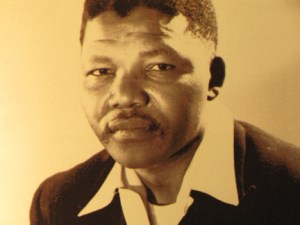
‘… time in jail was not wasted. He had gone to jail as an angry, frustrated young activist. In prison the fires of adversity purified him and removed the dross; the steel was tempered. He learned to be more generous in his judgment of others, being gentle with their foibles. It gave him a new depth and serenity at the core of his being, and made him tolerant and magnanimous to a fault, more ready to forgive than to nurse grudges – paradoxically regal and even arrogant, and at the same time ever so humble and modest’. – Desmond Tutu, ‘Setting Free the Past’, Oliver R. Tambo Lecture delivered at Georgetown University.

Free: Scottish Journal of Theology papers

SJTThe Scottish Journal of Theology has made available the following ‘classic papers from the last six decades’, hand-picked by the Editor, Iain Torrance. The articles will remain free to access until December 31st 2009.

  • Georges Florovsky, ‘The Lamb of God’, SJT 4/1 (1951): 13–28.
  • John Macmurray, ‘Prolegomena to a Christian Ethic’, SJT 9/1 (1956): 1–13.
  • Brian A. Gerrish, ‘Biblical Authority and the Continental Reformation’, SJT 10/4 (1957): 337–360.
  • Dan O. Via, ‘Darkness, Christ, and the Church in the Fourth Gospel’, SJT 14/2 (1961): 172–193.
  • C. Ewing, ‘Kant’s View of Immortality’, SJT 17/4 (1964): 385–395.
  • Rowan A. Greer, ‘The Use of Scripture in the Nestorian Controversy’, SJT 20/4 (1967): 413–422.
  • Kai Nielsen, ‘Truth-Conditions and Necessary Existence’, SJT 27/3 (1974): 257–267.
  • John D. Zizioulas, ‘Human Capacity and Human Incapacity: A Theological Exploration of Personhood’, SJT 28/5 (1975): 401–447.
  • Edward W. Fasholé-Luke, ‘The Quest for African Christian Theologies’, SJT 29/2 (1976): 159–176.
  • Kenneth Surin, ‘The Impassibility of God and the Problem of Evil’, SJT 35/2 (1982): 97–115.
  • T.F. Torrance, ‘The Deposit of Faith’, SJT 36/1 (1983): 1–28.
  • M. LaCugna, ‘Re-conceiving the Trinity as the Mystery of Salvation’, SJT 38/1 (1985): 1–23.
  • Frances M. Young, ‘Understanding Romans in the Light of 2 Corinthians’, SJT 43/4 (1990): 433–446.
  • Michael Goulder, ‘Nicodemus’, SJT 44/2 (1991): 153–168.
  • John Webster, ‘Locality and Catholicity: Reflections on Theology and the Church’, SJT 45/1 (1992): 1–18.
  • David F. Ford, ‘What Happens in the Eucharist?’, SJT 48/3 (1995): 359–381.
  • George Hunsinger, ‘The Politics of the Nonviolent God: Reflections on René Girard and Karl Barth’, SJT 51/1 (1998): 61–85.
  • Harriet A. Harris, ‘Should We Say that Personhood Is Relational?’, SJT 51/2 (1998): 214–234.
  • Elaine Graham, ‘Pastoral Theology: Therapy, Mission or Liberation?’, SJT 52/4 (1999): 430–454.
  • Rowan D. Williams, ‘Eugene F. Rogers’s Sexuality and the Christian Body: Their Way into the Triune God’, SJT 56/1 (2003): 82–88.

Howard’s Brutopia: Kevin Rudd on social democrats and neo-liberals

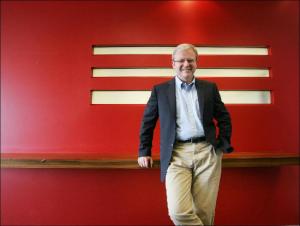
Kevin_RuddThere’s a good piece by Kevin Rudd in The Monthly from 2006 titled Howard’s Brutopia: The battle of ideas in Australian politics wherein he engages with, among other things, the thought of neo-liberal economist Friedrich Hayek. Here’s a snippert or two:

… it is critical that social democrats recognise that the culture war is not just a diversion. It is a fraud. There are no more corrosive agents at work today, on the so-called conservative institutions of family, community, church and country, than the unforgiving forces of neo-liberalism, materialism and consumerism, which lay waste to anything in their path …

Working within a comprehensive framework of self-regarding and other-regarding values gives social democrats a rich policy terrain in which to define a role for the state. This includes the security of the people; macro-economic stability; the identification of market failure in critical areas such as infrastructure; the identification of key public goods, including education, health, the environment and the social safety net; the fostering of new forms of social capital; and the protection of the family as the core incubator of human and social capital. These state functions do not interfere with the market; they support the market. But they have their origins in the view that the market is designed for human beings, not vice versa, and this remains the fundamental premise that separates social democrats from neo-liberals.

[The mention of Hayek recalled for me an interesting article by John Hibbs titled ‘Forsyth, Hayek and the Remoralisation of Society: Church, Life and Economics’, which appeared in Libertarian Alliance: Religious Notes 5 (1992): 1–4. If anyone would like a copy just email me].

One might then turn to consider this recent critique.

Soup by the path …

  • James Macintyre on the Death of Anglicanism? Want more on this? Ruth Gledhill posts some informative links at Rome parks tanks on Rowan’s lawn
  • Kyle Strobel continues his series on Lash’s Theology on the Way to Emmaus: A Theology of History
  • Rick Floyd posts a great recipe on my favourite soup at When life gives you beets, make borscht!
  • A five-part interview with Miroslav Volf discussing ideas of forgiveness, memory, identity, religion and violence:
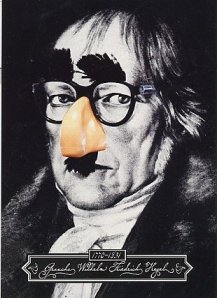
  • HegelAnd Peter Leithart reminds us why Hegel still rocks with some Hegel quotes on the Trinity from Anselm Min‘s article on ‘The Trinity and the Incarnation: Hegel and Classical Approaches’, The Journal of Religion 66, no. 2 (1986): 173–193:
    • ‘The three Persons are thus mutually internal in the unity and totality of the divine process, of which the Father is the originating principle, the Son the pluralizing, and the Spirit the reintegrating and unifying principle, and from which none could be separately considered. The distinction of Persons is thoroughly relative to the self-unifying totality of this divine process of which they are moments. This, however, must not be understood in modalistic fashion, in which the three Persons are merely manifestations of and thus subordinate to a more primordial divine nature or divine ground …’.
    • ‘The divine “nature” is not something that exists apart from the divine Persons and that somehow exercises control over them. It is an internal principle of the Persons in their concrete existence and as such not to be reified into an autonomous entity in its own right. The divine nature is precisely the nature of the Father and identical with him, by which he, not the nature, differentiates him-self from himself, returns to himself from that differentiation, and thus exists concretely as one God’.
    • And on the incarnation: ‘Creation is a function of God’s self-differentiation ad extra by virtue of his self-differentiation ad intra. The separation of the finite Other from the infinite is itself posited by God’s separation of himself from himself. By the same token the human need for reconciliation with God is simply the finite side of God’s need for reconciliation with himself through the mediation of the finite, a mediation not imposed on God from without but posited by God himself. The need for the Incarnation is first and foremost a necessity inherent in the immanent Trinity and only secondarily a human need. Hegel’s doctrine of creation and the Incarnation, in this sense, is thoroughly trinitarian’.

Forsyth on Christ’s complete and compendious act of redemption

forsyth-12There simply is never a bad time to read Forsyth, and it’s been a while since I posted any. So here’s a passage that I was meditating on just this morning:

‘The work of Christ does not simply face us as a landscape or a heroism faces us for our appreciation and description. His words might so confront us, but not His work underlying them and rising both to transcend them and suffuse them. It does not simply stamp itself on us. It is not only impressive, but dynamic. It makes and unmakes us for its own response, it creates (it does not simply elicit) the power to answer and understand itself. This we recognize when we say that our faith is not of ourselves, it is the gift of God by the Spirit. But we mostly mean this too vaguely, as if it were God’s gift by a second act of His Spirit distinct from the great, pregnant, and fontal gift of historic redemption in the Cross. We treat it as if it were a new departure and approach to us – that of the Spirit – forming another ‘dispensation’, and, therefore, an arbitrary influence upon us; whereas it is a part or function of God’s one pregnant deed and gift to us of Christ’s Cross, which has a faith-creating power intrinsic to it as the complete and compendious act of redemption; for redemption is really and at last faith-production’. – Peter T. Forsyth, The Preaching of Jesus and the Gospel of Christ (Blackwood: New Creation Publications, 1987), 80.

(Essential) books for preaching

preachAnna Carter Florence, over at The Christian Century, recently listed her 7 essential books for preaching. Her suggestions?

I think it’s a great list and, in addition to that growing list of ‘essential’ reading for the minister, and to some books on preaching I’ve mentioned elsewhere, I would want to suggest some further nominees:

I have here, on the main, deliberately chosen to not list books that attend primarily to issues of homiletical method (there are a plethora of excellent studies available on this) but rather to draw attention to those in which the evangelical content of preaching is the main concern. This decision was made because it is here at this point that the church faces its greatest crisis. We have loads of ‘excellent speakers’ and ‘gifted communicators’ who have absolutely nothing to say that’s worth hearing, let alone the Word of God. Recently, Ben Myers’ excellent review, titled Dietrich Bonhoeffer in New York, bore witness to this crisis. Reading my American Patriot’s Bible or my New Spirit-Filled Life Bible or my Green Bible (as opposed to my Green Chile Bible) will never be quite the same again.

Apologies (LOL) for another lengthy list, but Per Crucem ad Lucem is, after all, ‘a theology site on steroids’. Thanks Rick.

Reading Twentieth-Century Reformed & Presbyterian Thought

Man readingSome months back, I posted a list of suggested novels, plays and collections of poetry that I thought theology students and pastors ought to read, and in response received a number of excellent additional suggestions. Thanks heaps to those who offered such! Now, I am putting together a wee course on twentieth-century Reformed & Presbyterian thought for interns training for ordained pastoral ministry, part of which means offering some pre-reading suggestions. So far I’m considering selections from some of the following:

I’m also considering some of the following essays:

Am I missing anything really obvious here, particularly stuff that would be important for Presbyterian ordinands to engage with? Keep in mind that this is only one module of seven in an entire course dedicated to Presbyterian and Reformed studies, and that there is a separate module that attends to key New Zealand figures.

So what other texts ought I consider? And – to make it broader – if you’re a Pressie/Reformed minister, or even one from some lesser tribe, what twentieth-century reformed theology do you wish you had read when you were training?

Karl Barth on ‘orthodoxy’

Karl Barth, Amsterdam 1948Barth again, this time on ‘orthodoxy’:

‘Orthodoxy doubtless has much to live down, but it has nevertheless a powerful instinct for what is superfluous and what is indispensable. In this it surpasses many of the schools that oppose it. And this, and certainly not the mere habit and mental inertia of the people, is the primary reason why it still continues to be so potent both in cultus and church polity and even in state politics. In this respect it is quite superior … The weakness of orthodoxy is not the supernaturalistic element in the Bible and the dogmas. That is its strength. It is rather the fact that orthodoxy, and we all, so far as we are in our own way dogmaticians, have a way of regarding some objective descriptions of that element – such as even the word “God” for instance – as the element itself … To hold the word “God” or anything else before a man, with the demand that he believe it, is not to speak of God … God by himself is not God. He might be something else. Only the God who reveals himself is God. The God who becomes man is God. But the dogmatist does not speak of this God’. – Karl Barth, The Word of God and the Word of Man, 200–3.