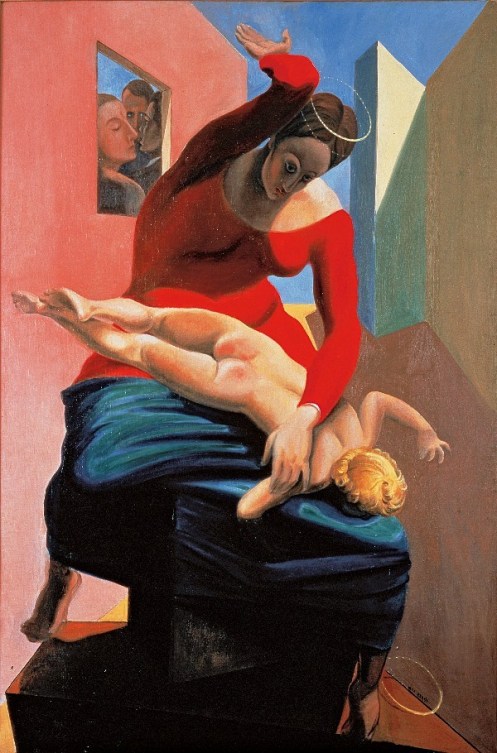
On Max Ernst’s ‘The Virgin Chastises the infant Jesus before Three Witnesses: André Breton, Paul Éluard, and the Painter’ (1926)

It appears that to bear the weight of mum’s judgement means not only a sore bum but also a dropped halo. It appears that the Aryan half-pint might have again stolen her favourite manicure set from the middle drawer of the bathroom cabinet while he was supposed to be tidying his sister’s bedroom. It does not yet appear that in this act of descending freedom, of vacating a head that others might gild mockingly with thorns, the embarrassing shape of kenotic love is taking costly form. And it’s not as if

there is chaste indulgence here; this act of discipline reminiscent of Michelangelo’s Sistine Christ, this act of judgement upon cobalt and rubicund outlining her own contorted arm and deepening her own overtaxed gaze. A foretaste of arms bearing sin-gnarled stock and hers, those eyes which again will grieve as arms not her own are brought to bear upon her bare first-born, this unexpected fruit in whom her future and that of all shall find shape. And an open roof. Did it fly off with upswing arm so that one who sees everything could weep?

It has been some time too since Paul and Vincent came over, and now this other Paul, and André and Max; seemingly unsedated risk now transformed into dispassion. Was Gala really the benchmark of our friendship, our means of communication, our shared wife? What kind of love did we make to each other in her? And what of love once promised now turned, love now come to assault me? A naked face turned away in a sensuous spell.

© Jason Goroncy
24 December 2011

Marilynne Robinson, ‘The Book of Books: What Literature Owes the Bible’

Marilynne Robinson nails it yet again in this recent piece – ‘The Book of Books: What Literature Owes the Bible’ – published in the online version of the New York Times (The print version will appear on page BR1 in tomorrow’s Sunday Book Review). Here’s a snippet:

Literatures are self-referential by nature, and even when references to Scripture in contemporary fiction and poetry are no more than ornamental or rhetorical — indeed, even when they are unintentional — they are still a natural consequence of the persistence of a powerful literary tradition. Biblical allusions can suggest a degree of seriousness or significance their context in a modern fiction does not always support. This is no cause for alarm. Every fiction is a leap in the dark, and a failed grasp at seriousness is to be respected for what it attempts. In any case, these references demonstrate that in the culture there is a well of special meaning to be drawn upon that can make an obscure death a martyrdom and a gesture of forgiveness an act of grace. Whatever the state of belief of a writer or reader, such resonances have meaning that is more than ornamental, since they acknowledge complexity of experience of a kind that is the substance of fiction …

A number of the great works of Western literature address themselves very directly to questions that arise within Christianity. They answer to the same impulse to put flesh on Scripture and doctrine, to test them by means of dramatic imagination, that is visible in the old paintings of the Annunciation or the road to Damascus. How is the violence and corruption of a beloved city to be understood as part of an eternal cosmic order? What would be the consequences for the story of the expulsion from Eden, if the fall were understood as divine providence? What if Job’s challenge to God’s justice had not been overawed and silenced by the wild glory of creation? How would a society within (always) notional Christendom respond to the presence of a truly innocent and guileless man? Dante created his great image of divine intent, justice and grace as the architecture of time and being. Milton explored the ancient, and Calvinist, teaching that the first sin was a felix culpa, a fortunate fall, and providential because it prepared the way for the world’s ultimate reconciliation to God. So his Satan is glorious, and the hell prepared for his minions is strikingly tolerable. What to say about Melville? He transferred the great poem at the end of Job into the world of experience, and set against it a man who can only maintain the pride of his humanity until this world overwhelms him. His God, rejoicing in his catalog of the splendidly fierce and untamable, might ask, “Hast thou seen my servant Ahab?” And then there is Dostoyevsky’s “idiot” Prince Myshkin, who disrupts and antagonizes by telling the truth and meaning no harm, the Christ who says, “Blessed is he who takes no offense at me.”

Each of these works reflects a profound knowledge of Scripture and tradition on the part of the writer, the kind of knowledge found only among those who take them seriously enough to probe the deepest questions in their terms. These texts are not allegories, because in each case the writer has posed a problem within a universe of thought that is fully open to his questioning once its terms are granted. Here the use of biblical allusion is not symbolism or metaphor, which are both rhetorical techniques for enriching a narrative whose primary interest does not rest with the larger resonances of the Bible. In fact these great texts resemble Socratic dialogues in that each venture presupposes that meaning can indeed be addressed within the constraints of the form and in its language, while the meaning to be discovered through this argument cannot be presupposed. Like paintings, they render meaning as beauty …

In our strange cultural moment it is necessary to make a distinction between religious propaganda and religious thought, the second of these being an attempt to do some sort of justice to the rich difficulties present in the tradition. The great problem for Christianity is always the humility of the figure in whom God is said to have been incarnate, and the insistence of the tradition that God is present in the persons of the despised and rejected. The failure of the notionally Christian worlds of Russia and Mississippi to be in any way sufficient to the occasion of Christ among them would be a true report always and everywhere. But theology is only in part social commentary. Crucially it has to do with the authority of a vision, of a world that is only like this world in essence …

Read the rest here.


Bruce McCormack’s 2011 Kantzer Lectures now available

Back in September, I posted on Bruce McCormack‘s 2011 Kantzer Lectures on the theme ‘The God who Graciously Elects’. I tried watching these at the time via the livestream, but the stream itself, or something at my end of it, was really quite inadequate. That said, what I did hear of the lectures was, as expected, fantastic. I’m pleased to announce that the lectures are now available for MP3 download:

Lecture One: Tuesday, September 27 |
“Is the Reformation Over? Reflections on the Place of the Doctrine of God in Evangelical Theology Today”.

Lecture Two:  Wednesday, September 28 | 
“From the One God to the Trinity: The Creation of the Orthodox
Understanding of God”.

Lecture Three: Wednesday, September 28 |
“The Great Reversal: From the Economy of God to the Trinity in
Modern Theology”

Lecture Four: Thursday, September 29 | 
“The God Who Reveals Himself: The Mystery of the Trinity in the New
Testament”

Lecture Five: Monday, October 3 | 
“Which Christology?  Refining the Economic Basis of the Christian
Doctrine of God”.

Lecture Six: Monday, October 3 | 
“The Processions Contain the Missions: Reconstructing the Doctrine
of an Immanent Trinity”.

Lecture Seven: Tuesday, October 4 |
“The Being of God as Gift and Grace: On Freedom and Necessity, Aseity
and the Divine “Attributes”.

The lectures are also available to watch via Henry Centre Media.


◊◊◊◊◊◊◊◊◊◊◊◊◊◊◊◊◊◊◊◊◊◊◊◊◊◊◊◊◊◊◊◊◊◊◊◊◊◊◊◊

By the way, if you’re the praying kind – i.e., if you’re someone who tries to be human – please consider ascending a few breaths for the people of Christchurch who have just, about an hour ago, experienced another earthquake.

Advent triptych

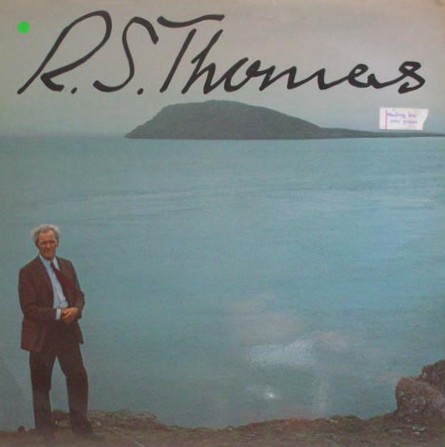
For the benefit of those readers of Per Crucem ad Lucem whose minds at this time of year are somewhat unlubricated, or on whom my subtleties more often than not simply carry through to the keeper, the previous three posts – poems by RS Thomas‘The Word’‘The Empty Church’ and ‘The Coming’ – form a triptych of Advent movement that I thought worked nicely together during this last week of Advent.

‘The Coming’

And God held in his hand
A small globe. Look, he said.
The son looked. Far off,
As through water, he saw
A scorched land of fierce
Colour. The light burned
There; crusted buildings
Cast their shadows; a bright
Serpent, a river
Uncoiled itself, radiant
With slime.
……        ………..On a bare
Hill a bare tree saddened
The sky. Many people
Held out their thin arms
To it, as though waiting
For a vanished April
To return to its crossed
Boughs. The son watched
Them. Let me go there, he said.

– RS Thomas, ‘The Coming’, in Collected Poems, 1945–1990 (London: Dent, 1993), 234.

‘The Empty Church’

They laid this stone trap
for him, enticing him with candles,
as though he would come like some huge moth
out of the darkness to beat there.
Ah, he had burned himself
before in the human flame
and escaped, leaving the reason
torn. He will not come any more

to our lure. Why, then, do I kneel still
striking my prayers on a stone
heart? Is it in hope one
of them will ignite yet and throw
on its illumined walls the shadow
of someone greater than I can understand?

– RS Thomas, ‘The Empty Church’, in Collected Poems, 1945–1990 (London: Dent, 1993), 349.

[Image: Tara Alan & Tyler Kellen]

‘The Word’

A pen appeared, and the god said:
‘Write what it is to be
man.’ And my hand hovered
long over the bare page,

until there, like footprints
of the lost traveller, letters
took shape on the page’s
blankness, and I spelled out

the word ‘lonely’. And my hand moved
to erase it; but the voices
of all those waiting at life’s
window cried out loud: ‘It is true.’

– RS Thomas, ‘The Word’, in Collected Poems, 1945–1990 (London: Dent, 1993), 265.

‘Thy works, not mine, O Christ’

Today marks the anniversary of the first General Assembly of the Church of Scotland convened in Edinburgh in 1560. And yesterday marked the birthday of one of my favourite hymn writers – Horatius Bonar (1808–89) – who also, incidentally, wins the prize among Kirkmen for the Bilbo Baggins-likeness award. Anyway, it only seemed proper to post one of his greatest hymns:

1. Thy works, not mine, O Christ,
Speak gladness to this heart;
They tell me all is done;
They bid my fear depart.
To whom save Thee,
Who canst alone for sin atone,
Lord, shall I flee?

2. Thy wounds, not mine, O Christ,
Can heal my bruisèd soul;
Thy stripes, not mine, contain
The balm that makes me whole.
To whom save Thee,
Who canst alone for sin atone,
Lord, shall I flee?

3. Thy Cross, not mine, O Christ,
Has borne the awful load
Of sins that none could bear
But the incarnate God.
To whom save Thee,
Who canst alone for sin atone,
Lord, shall I flee?

4. Thy death, not mine, O Christ,
Has paid the ransom due;
Ten thousand deaths like mine
Would have been all too few.
To whom save Thee,
Who canst alone for sin atone,
Lord, shall I flee?

5. Thy righteousness, O Christ,
Alone can cover me;
No righteousness avails
Save that which is of Thee.
To whom save Thee,
Who canst alone for sin atone,
Lord, shall I flee?

Seeking doctoral supervisors

Every now and then, someone who is considering undertaking a PhD by thesis will seek my thoughts about doctoral supervisors. And while there are lots of things I might draw the enquirer’s attention to, my standard reply is that I reckon that you want to look for 3 things in a supervisor:

  1. Someone who makes time for you, including responding to your calls/emails in a timely manner. There’s an element here too of the ‘pastoral’ reality in the supervisory relationship. A good supervisor knows, or at least acts as if they know, that they are working with a person and not just with ideas, and that most often that person experiences ‘the thesis’ as a mixed ride, and often with not a little stress, both internal and external. Some confidence that the supervisor is an aid – which includes some basic reliability on the communication front – and not a thorn in this journey is pretty important. (Side note: The 3-year thesis has some affinities with pregnancy, or so I’m led to believe. The first trimester is often about excitement and adjustment, and some weird conviction that this baby is going to be the best thing ever. Sometimes vomiting is involved too. The second trimester is like being in cruise control, and the baby sort of just hangs around while one starts to be a little more lax about the ‘no-alcohol’ rules and stuff. And the third trimester is something akin to ‘Let’s just get this baby out of here – enough is enough’.)
  2. Someone who knows what a doctoral thesis looks like. Just because a person has one doesn’t guarantee that they know what one looks like, or how to go about authoring a decent one, or helping someone else to do so.
  3. Someone – and this is perhaps the most important of the three – who asks the right kinds of questions. In other words, you’re not necessarily looking for someone who knows everything, or even a lot, about your subject of interest. But you are looking for someone who has a good nose for the general area and who can help you articulate the right kinds of questions. In PhDs – as in life – the right questions are always much more important, and much more interesting, than the answers.

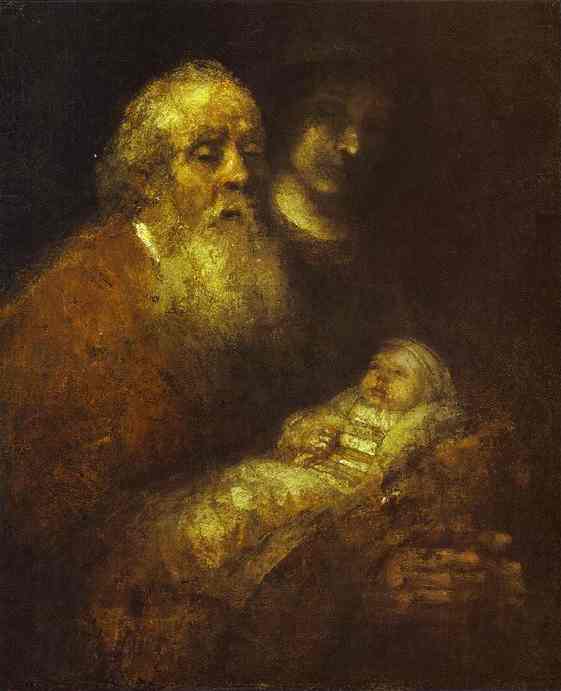
Marilyn Chandler McEntyre, ‘Simeon with the Christ Child in the Temple’

Rembrandt, 'Simeon with the Christ Child in the Temple', c. 1666-69.

How light he lies
in these ancient arms.
The infant’s eyes open
to meet the old man’s
as they close.

I have seen his eyesight fade.
I have wept some days to watch
his long waiting, sonorous mumbling
prayer trailing into sleep. For many
months he has wished to be
dismissed in peace.

Now, holding this child,
he can let go.

Glad for his good release, I mourn
the mother’s pain, the child’s plight,
the loss that comes
for me in this: no longer to see him
on the temple steps, old eyes glittering
with hope, always ready to retell
the ancient tales while doves coo
in the courtyard and chattering housewives
pass in the street and within
the drone of prayer turns story into song.

What darkness comes with this light
burden he bears now, gurgling
his brief contentment. Glory of Israel,
Revelation to the Gentiles, this little gift
of God will cost us all we know. I see
the sword in his mother’s heart,
and in his own – and mine, too,
as the old man, his log watch ended,
speaks his fateful benediction.

– Marilyn Chandler McEntyre, ‘Simeon with the Christ Child in the Temple’, in Drawn to the Light: Poems on Rembrandt’s Religious Paintings (Grand Rapids: Wm. B. Eerdmans, 2003), 37–8.

Words to sink your ears into

Missing your lectures? Eyes need a break? Need to kill some time over the Christmas period? Want to impress your friends (and enemies) with your learnedness? Check out some of the following links (which are mostly from our friends at Holden Village):

H. George Anderson

Karl Barth

  • “Was ist für Sie Mozart?”. Gespräch mit R. Schmalenbach (Text Schweizerdeutsch Text Standarddeutsch). Aus “Musik für einen Gast” (Radio Interview vom 17.9.1968, geführt von R. Schmalenbach). [mp3]
  • Weihnachtsgruss 1960 (siehe auch Letter Nr. 12) [mp3]
  • Institutio-Jubiläum 1959 (siehe Neue Zürcher Zeitung, Nr. 158, vom 11./12. Juli 2009, S. B 3) [mp3]
  • Aus dem Gespräch mit den Tübinger Stiftlern vom 2. März 1964 über die Entstehung der Barmer Theologischen Erklärung (siehe K. Barth, Gespräche 19641968, hrsg. von E. Busch [Gesamtausgabe, Abt. IV], Zürich 1997, S. 111–114; auch in: K. Barth, Texte zur Barmer Theologischen Erklärung, hrsg. von M. Rohkrämer, Zürich 20042, S. 221–223) [mp3]
  • Aus dem Gespräch mit der Kirchlichen Bruderschaft Württemberg vom 15. Juli 1963 über die Bedeutung von Barmen (siehe K. Barth, Gespräche 1963, hrsg. von E. Busch [Gesamtausgabe, Abt. IV], Zürich 2005, S. 54; auch in: K. Barth, Texte zur Barmer Theologischen Erklärung, hrsg. von M. Rohkrämer, Zürich 20042, S. 191) [mp3]
  • Aus “Die Liebe”, Abschiedsvorlesung Karl Barths vom 1. März 1962 an der Universität Basel (siehe K. Barth, Einführung in die evangelische Theologie, Zürich 20045, S. 220) [mp3]
  • Aus “The Community”, Vorlesung Karl Barths vom 26. April 1962 in Chicago und 2. Mai 1962 in Princeton (siehe K. Barth, Evangelical Theology. An Introduction, Grand Rapids, MI 1979, S. 41) [mp3]
  • Aus “Commentary”, Vorlesung Karl Barths vom 23. April 1962 in Chicago und 29. April 1962 in Princeton (siehe K. Barth, Evangelical Theology. An Introduction, Grand Rapids, MI 1979, S. 9–12) [mp3]
  • Tondokumente aus Letter Nr. 6.
  • Gespräch mit R. Schmalenbach. Aus “Musik für einen Gast” (Radio Interview vom 17.9.1968, geführt von R. Schmalenbach). [mp3]
  • Gespräch mit der Kirchlichen Bruderschaft in Württemberg. Aus dem Gespräch am 15.7.1963 im Restaurant Bruderholz in Basel. [mp3]
  • Gespräch in Bièvres. Aus der Diskusion am 20.10.1963 über Fragen im Zusammenhang seines Buches «Einführung in die evangelische Theologie». [mp3]
  • Podiumsdiskussion in Chicago. Aus dem Schlusswort bei der Podiumsdiskusion in Chicago 26.4.1962. [mp3]

Carl Braaten

Walter Brueggemann

Nancy Eiesland

Terry Fretheim

Martin Marty

Bonnie Miller-McLemore

Jürgen Moltmann

Ched Myers

Lesslie Newbigin

John Polkinghorne

Dorothee Sölle

William Stringfellow

  • Civil rights movement – an interview with Robert Penn Warren: Part I, Part II (1964)

Helmut Thielicke

Vitor Westhelle

Rowan Williams

Umhau Wolf

John Howard Yoder

some monday morning link love

New noises

Within the past fortnight, I discovered NoiseTrade, and some great new (and some already-familiar) sounds. These include:

There are others too, but which no longer seem to be available – like albums by Tyrone Wells, JD Eicher & the Goodnights and Andrew Osenga. If you discover some new noises that you like, why don’t you let me know in the comments. I have hungry ears …

‘Virgin’

As if until that moment
nothing real
had happened since Creation

As if outside the world were empty
so that she and he were all
there was — he mover, she moved upon

As if her submission were the most
dynamic of all works: as if
no one had ever said Yes like that

As if that day the sun had no place
in all the universe to pour its gold
but her small room

– Luci Shaw, ‘Virgin’ in Accompanied By Angels: Poems of the Incarnation (Grand Rapids: Wm. B. Eerdmans, 2006), 15.

Advent poem: ‘Eleven’


Her growing stomach struck me as grotesque.
Some other seed than mine engendered this:
Some stolen love, some alien, wretched bliss
Raped all integrity, all trust suppressed.
To consummate my pledge, by honor pressed,
Would violate that honor, transform kiss
To custom, love to duty, prove remiss
In truth, and make of joy a jest.

Exhausted by despair’s fatigue, I slept
The torment of the God-forsaken dead.
I tossed and turned, or when I woke, I wept,
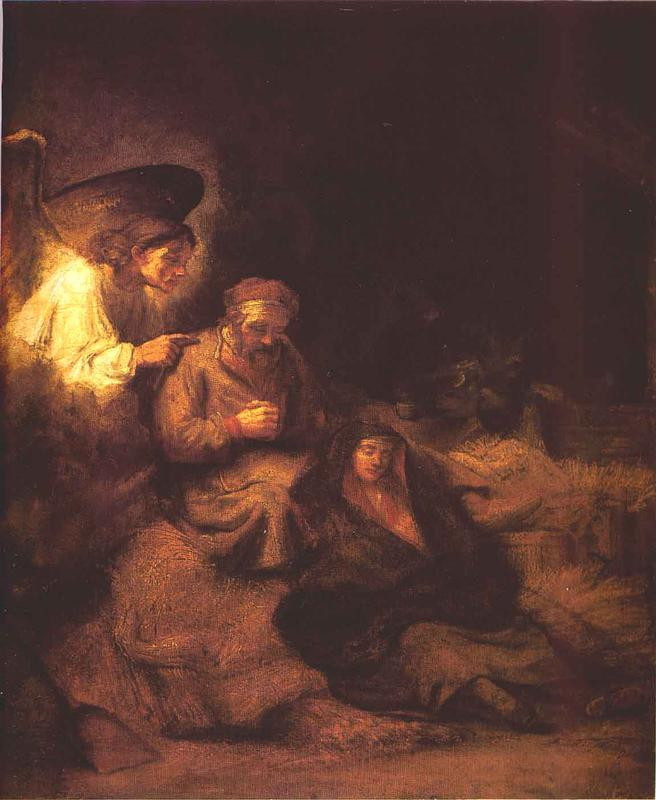
Until an angel stilled my fears, and said:

“Abandon doubt, and take this quiet boast:
The child she bears is by the Holy Ghost.”

– D.A. Carson, ‘Eleven’ in Holy Sonnets of the Twentieth Century (Grand Rapids/Nottingham: Baker/Crossway, 1994), 27.

Athanasius: a book competition

It’s time for another competition here at Per Crucem ad Lucem.

When C.S. Lewis first opened a copy of Athanasius’ De Incarnatione he quickly discovered that he was ‘reading a masterpiece’. ‘The whole book’, he said, ‘is a picture of the Tree of Life – a sappy and golden book, full of buoyancy and confidence. We cannot, I admit, appropriate all its confidence today. We cannot point to the high virtue of Christian living and the gay, almost mocking courage of Christian martyrdom, as a proof of our doctrines with quite that assurance which Athanasius takes as a matter of course. But whoever may be to blame for that it is not Athanasius’. (Lewis’ essay was published in God in The Dock as ‘On the Reading of Old Books’, and again as the ‘Introduction’ to the St Vladimir’s Seminary Press edition of Athanasius’ On the Incarnation.)

I draw attention to Athanasius for a reason. I’ve posted before about the importance of the Church’s production and encouragement of the kind of literature that assists us to know and celebrate our story. And I’ve already commended Simonetta Carr’s delightful little book on John Calvin, a book published by Reformation Heritage Books and targeted at children from 6–12 years of age. In addition to the book on Calvin, Carr has also written books on Augustine of Hippo and John Owen for that same series of ‘Christian Biographies for Young Readers. And now she has turned her attention to a fourth book, this time on Athanasius, and she has kindly sent me a copy as a giveaway here at Per Crucem ad Lucem. In order to determine the recipient of the book, I thought we could have a wee competition. The rules are simple – answer the following question:

Why should we bother teaching our kids (and ourselves for that matter!) about this particular fourth century bishop?

I’ll leave the competition open until next Wednesday, after which time I will announce the winner who, in the best of possible worlds with the best of possible postal services, should receive the book before Christmas.

(BTW: I notice that Peter Leithart’s recent book on Athanasius is now out. And, for those keen to read a little deeper, there’s also great titles by Thomas G. Weinandy, Khaled Anatolios, and Alvyn Pettersen.

Why did Rowan Williams defend Shari’a Law?

It’s because, Ben Myers argues, Williams was seeking to ‘promote [an] Hegelian style of public engagement, where what is good for any single community becomes part of the vision of what is good for all’. It also, as Ben notes, has everything to do with the fact that Williams seeks to take Philippians 2 seriously, where the church’s ‘vocation’ is to ‘reach out across all those boundaries that fragment the human community into self-protective ghettos’ and ‘to dismantle the whole logic of side-taking’. Read Ben’s piece here.