Theology

Candour: ‘Science and Christianity’

science-and-christianityThe Presbyterian Church of Aotearoa New Zealand produces a monthly magazine called Candour. The articles are targeted at church leaders and are usually of a good standard. The March issue is now out and concerns the theme ‘Science and Christianity’. You can become a subscriber by emailing here.

The TOC for the March issue is:

  • Reading nature and Scripture today – Don Nield
  • How can we inform bioethics decisions? – Helen Bichan
  • From a backyard point of view – Bob Eyles
  • Science and Christianity face an identical foe – John Kernohan
  • Intelligent Design: The way forward? – Don Nield
  • What kind of justice? – Douglas Mansill

Around the traps …

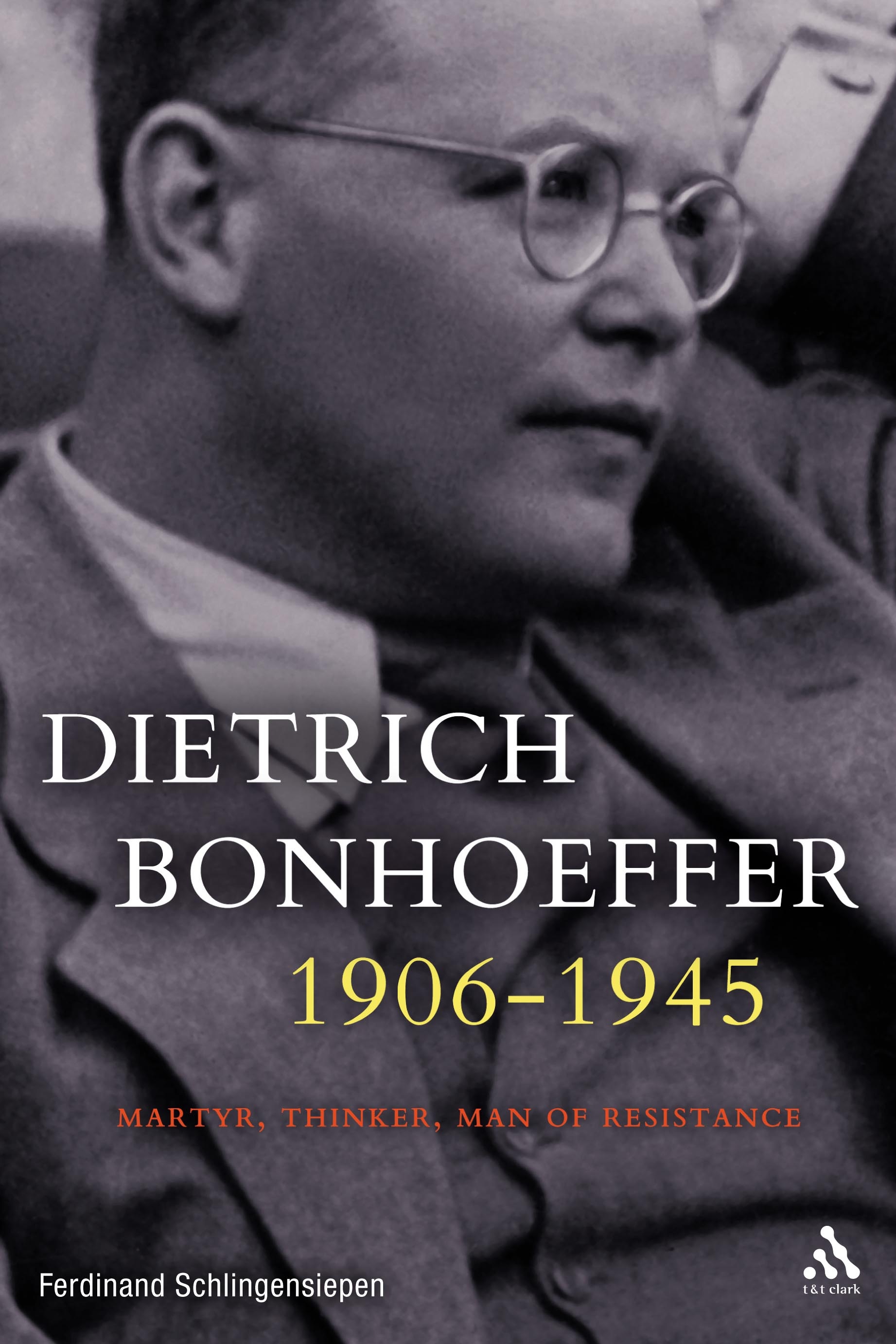
dietrich-bonhoeffer

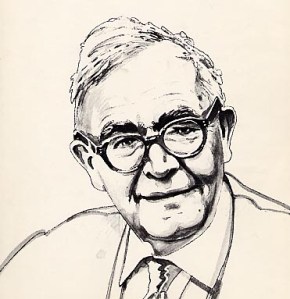
Karl Barth: ‘A Letter to Japanese Friends’

karl-barth-sketch‘In all circumstances, theology is a beautiful, a joyful task. It may and should be that today also for you. I say this to you after I have tried to study theology for more than fifty years. When I began doing this as a young man, I was often worried and morose in my work. Later, I could see that if one grasps it rightly, one is led by theology to a place that-despite all difficulties and tiresome work that awaits one there-is a bright place. Here with all one’s longing to see “face to face” (I Cor. 13:13) one can live-for oneself and for others. My dear Japanese friends, if you also find yourselves led to this bright place in your theological activity, then you have rightly understood me, and I think that your work also will be a sowing of living seed among both Christians and non-Christians of your land and people.

Theology, however, requires free persons. As a young theologian, I belonged to a “school.” It was not a bad school; I still think gratefully of my former teachers. But I later had to free myself from their school not only because there were some things in their instruction which were not entirely right, but simply because it was a school. And now I would not want the result of my life to be the formation of a new school. I am in the habit here of telling everyone who will listen that I myself in any case am no “Barthian.” The reason is that after having learned some things, I would like to remain free to continue to learn. You understand what I am saying to you: Concern yourself as little as possible with my name! Because there is only one interesting name, whereas the promotion of all other names can only lead to false bonds and can only provoke boring jealousy and obduracy in others. Do not take a single sentence from me untested. Instead, measure each of them by the Word of God who alone is true and who is judge and supreme teacher of us all. You understand me rightly if you allow yourselves to be led by what I say to what the Word of God says. Good theologians do not live in a house of ideas, principles, and methods. They stride through all such houses in order to come out again and again into the open. They remain on the way. They have the distant high mountains and the infinite sea of God before their eyes, and just for that reason and in closest proximity they surely also have their fellow human beings-the good and the evil, the fortunate and the unfortunate, the Christian and the non-Christian, the Eastern and the Western-to whom they may be witnesses in all modesty.

If you want to accompany me further in this joy and freedom, then everything is in order if you want to think in a friendly way on May 10 of the seventy-year-old man in Basel’.

– Karl Barth, Offene Briefe 1945-1968 [Karl Barth Gesamtausgabe, Vol. V]. Cited in Karl Barth, ‘Excerpts From Barth: The Strange New World Within The Bible’, TheolToday 43, no. 3 (1986), 417-8.

Karl Rahner on a theology of childhood

RahnerTragically, there remains a tendency in our own day to ‘instrumentalise’ childhood, and so to devalue childhood qua childhood. So Martha Stortz: We point children ‘too rapidly toward the adults they will become’. Childhood is not ‘something you do on the way to becoming an adult’.

One of the most valuable finds while preparing a course recently on a theology of the child has been Karl Rahner’s essay, ‘Ideas for a Theology of Childhood’ in which he was very critical of the cognitive developmental theory approach to assessing childrens’ ‘value’. In the essay Rahner is concerned about a number of things, which Martin Marty helpfully discusses under the following headings:

1. That we interpret the existence of children in a biblical matrix: that we first hear ‘what the divinely revealed word has to say about childhood. In the intention of the Creator and Redeemer of children what meaning does childhood have, and what task does it lay upon us for the perfecting and saving of humanity?’

2. That this beginning represents mystery unveiled. Consequently, those who care for/about children will delight in each act of unveiling and find meaning therein.

[C]hildhood is, in the last analysis, a mystery. It has the force of a beginning and a twofold beginning at that. It is a beginning in the sense of the absolute origin of the individual, and also the beginning which plunges its roots into a history over which the individual himself has no control. Childhood has the force of a beginning such that the future which corresponds to it is not simply the unfolding of some latent interior force, but something freely sent and something which actually comes to meet one. And it is not until this future is actually attained to that the beginning itself is unveiled in its significance, that it is actually given and comes to its own realisation, as a beginning which is open to the absolute beginning of God who is utter mystery, the ineffable and eternal, nameless and precisely as such accepted with love in his divine nature as he who presides over all things.

Put differently, it takes eschatology to make sense of human personhood. He goes on:

… we do not really know what childhood means at the beginning of our lives until we know what that childhood means which comes at the end of them; that childhood, namely, in which, by God-given repentance and conversion, we receive the kingdom of God and so become children. It is in this sense that we only recognise the child at the beginning of life from the child of the future.

sinead-13. That the child is open to God, who is the utter mystery.

4. The child is ‘effable’ but finds her origin in God’s ineffability (beyond words). This means, among other things, that those who care for and think about children – including theologians – will recognise in humility that we lack the words and concepts to penetrate the deep mystery of childhood (or human personhood full stop) which lies in God.

5. The child is to resist efforts by adults to control.

6. The child exists always at the threshold of the eternal.

7. The naming of the child is significant.

8. The child is accepted into divine love. On this Marty writes:

God in God’s divine nature always reaches out to accept creatures in love. The child may often deny, ignore, or even repudiate the love of God, also when it is reflected in the faces, arms, and acts of parents and others. Recovery of love, however, always can begin when that little child is allowed and encouraged to remain open to the eternal and thus is able to receive signs of divine love. Though the child is born into a world of accident, chance, contingency, and random happenings she will finally address it in openness to the One “who presides over all things.” Rahner expresses it tersely: “childhood is openness. Human childhood is infinite openness”.

9. The child is an independent and a dependent being.

10. Original childhood is preserved forever. This is a fascinating notion of Rahner’s:

[P]rovided we reverently and lovingly preserve this state of being delivered over to the mystery, life becomes for us a state in which our original childhood is preserved for ever; a state in which we are open to expect the unexpected, to commit ourselves to the incalculable, a state which endows us with the power still to be able to play, to recognise that the powers presiding over our existence are greater than our own designs, and to submit to their control as our deepest good.

Through this essay, Rahner rejects the notion that we progress through ‘stages’ or that we can talk about any life as a series of phases ‘each of which … is exhausted [and] leads on to the next, the very meaning of which is to disappear into the next, to be a preparation for it, to “exist” for the further stages beyond itself’. In such a scenario, he says, ‘childhood itself disappears’. Instead, he insists on the most profound sense of continuity of life. In Marty’s words, ‘For all that flows over the river bed, its base is not mud but rock: in this metaphor, the mystery of the child remains’. Or in Rahner’s:

We only become the children whom we were because we gather up time – and in this our childhood too – into our eternity … The special character of childhood may always be fading away so far as we are concerned, and may also disappear into that which comes afterwards in point of time, so that it seems only to derive its justification and its value from this, but this is not so. This morning does not derive its life simply from the afternoon which follows.

11. The child is open to expecting the unexpected.

12. Play has a special quality. Here we are reminded of Schleiermacher’s theology of the child, and of Barth’s venerating affair with Mozart.

sinead13. The child remains in an ambiguous relation to the concept and practice of control and controlling. Rahner speaks about the need for children to ‘recognise that the powers presiding over our existence are greater than our own designs, and to submit to their control as our deepest good’.

14. The child’s ending is revealed in the beginning.

15. The child is best revealed as a child of God. So Rahner:

… the childhood which belongs to the child in the biological sense is only the beginning, the prelude, the foretaste and the promise of this other childhood, which is the childhood proved and tested and at the same time assailed, which is present in the mature man. In other words we must take childhood in this latter sense as the true and proper childhood, the fulness of that former childhood, the childhood of immaturity.

But once we perceive the unity which exists between the childhood that comes at the beginning of our lives and the mature childhood, and once we realise the light which each throws upon the other, then it easily becomes clear that childhood in itself, and even at the human level, entails an orientation to God, that it achieves perfection in that relationship which we call being a child of God, that it is not merely a question of a metaphor, the transference of a word from one objective situation to another similar one, in which the comparison is merely secondary and incidental. Here it is rather the reality of childhood in the human sense that is ‘transferred’ into childhood in the divine sense. For if childhood (and this applies to childhood in the human sense as well) is openness, is trustful submission to control by another, the courage to allow fresh horizons, ever new and ever wider, to be opened up before one, a readiness to journey into the untried and the untested (and all this with that deep elemental and ultimate trust which seems inexhaustible in its endurance, the trust which the sceptics and those who have made shipwreck of their lives bitterly describe as ‘naïve’) then in all this that transcendence of faith, hope and love in which the ultimate essence of the basic act of religion precisely consists is already ipso facto an achieved and present fact …

Childhood is openness. Human childhood is infinite openness. The mature childhood of the adult is the attitude in which we bravely and trustfully maintain an infinite openness in all circumstances and despite the experiences of life which seem to invite us to close ourselves. Such openness, infinite and maintained in all circumstances, yet put into practice in the actual manner in which we live our lives, is the expression of man’s religious existence.

Rahner’s essay raises questions about the trinitarian shape of Christian anthropology – that human personhood can be ‘understood’ only insofar as we speak of the dynamic and perichoretic life of God – i.e. of Father, Son and Spirit in their giving and receiving, and in their perfect unity. And so Rahner talks not only about divine Fatherhood – that childhood takes its meaning and raison d’être from the Fatherhood of God, and that maturity means growing into fuller realisation of our being children of the Father – but also about the fact that human being is grounded in the sonship of the Son:

… all childhood in heaven and on earth derives its name and its origin from that one childhood in which the Logos itself receives its own nature in the act of eternal generation by the Father, in which we ourselves are admitted by grace to become participants in this self-bestowal of the Father upon the Logos and so have a share in the divine nature … Childhood is only truly understood, only realises the ultimate depths of its own nature, when it is seen as based upon the foundation of childhood of God. And when we really want to know what the real connection is between human childhood and childhood of God, then we need to commit ourselves to the infinite depths and power of that transcendental movement which is latent in human childhood itself, and allow ourselves to be projected from this into that which is enjoined upon us in the Christian teaching about the Father in heaven, and about men who have received the grace from the life of God himself to be children of God and brothers and sisters of one another.
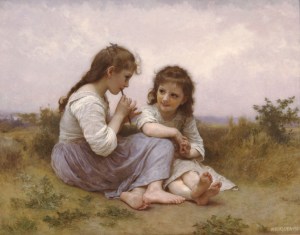
william-adolphe-bouguereau-a-childhood-idyll-1900Rahner fails (in this essay) to go on and develop the pneumatalogical dimensions of childhood – and of human being – though this final sentence at least hints of the communality of personhood, that one’s identity is ontologically bound up with that of the other, a reality only truly possible in the Spirit.

One of Rahner’s most pastorally potent claims, however, is his insistence that we do not lose or leave behind our childhood; rather, our childhood goes with us into our eternity:

Childhood endures as that which is given and abiding, the time that has been accepted and lived through freely. Childhood does not constitute past time, time that has eroded away, but rather that which remains, that which is coming to meet us as an intrinsic element in the single and enduring completeness of the time of our existence considered as a unity, that which we call the eternity of man as saved and redeemed. We do not lose childhood as that which recedes ever further into our past, that which remains behind as we advance forward in time, but rather we go towards it as that which has been achieved in time and redeemed forever in time. We only become the children whom we were because we gather up time – and in this our childhood too – into our eternity.
Conference on Global Theological Education

wrfThe World Reformed Fellowship has announced a conference on Global Theological Education (March 21 – 22, 2009). The conference will be held at The Reformed Millennium Center Jl.Industri Blok B 14 No.1, Kemayoran, Jakarta, Indonesia. The proposed schedule is as follows:

Saturday, March 21

16:00 – 16:15   Greetings from International Director, Dr. Samuel Logan and Local Host, Dr. Benyamin Intan

16:15 – 17:00   Dr. Stephen Tong, Executive Director of Stephen Tong Evangelistic Ministries International: “Reformed Theology in the 21st Century”

17:00 – 17:30   Dr. Ric Cannada, Chancellor of Reformed Theological Seminary in the USA: “”Reformed Theology and Theological Education in the United States”

17:30 – 18:00   Dr. Victor Cole of the Nairobi Evangelical School of Theology in Kenya: “Reformed Theology and Theological Education in Africa”

18:00 – 18:30   Dr. Kin Louie of the China Graduate School of Theology in Hong Kong: “Reformed Theology and Spiritual Formation”

18:30-19:30 Dinner

19:30-21:00 Q & A

Sunday, March 22

17:00 – 17:30 Dr. Augustus Lopes, Chancellor of Mackenzie University in Sao Paulo, Brazil: “Reformed Theology and Theological Education in Latin America”

17:30 – 18:00 Dr. In Whan Kim, President of Chong Shin University and Theological Seminary in Seoul: “Reformed Theology and the Pastoral Ministry””

18:00 – 18:30 “Dr. Matthew Ebenezer of New Theological College in Dehra Dun, India: “Reformed Theology and Missions”

18:30-19:30 Dinner

19:30-21:00 Q & A

Attendance at the conference is free but those wishing to attend must register in advance with Erwin Mah.

It may be emerging, but is it church?

emerging-churchIn a few weeks time, my colleague Kevin Ward will be giving a lecture entitled ‘It may be emerging, but is it church?’. It’s a good question, and for me it invites some assessment of the topic itself.

I am neither an expert – nor the son of one – on anything to do with the emerging church. I have splashed only in the shallows of the literature, and in none of the critiques. But that’s never stopped me having an opinion before. So here goes:

At the risk of copping out before I start, I want to suggest that there is a sense in which it is really too early to fully assess the movement (if it can be called that) known as ’emerging’. Also, any assessment is considerably hampered by the movement’s substantial diversity. That said, are there not some positive things that we can identify about the ’emerging’ movement, at least in its best proponents. These include:

(i) its sounding calls for the Church to appreciate and learn from its traditions without being bound to them;

(ii) its concern to treat Church, theology and mission as part of the one action of God rather than as separate departments in the Christian organisation;

(iii) its desire to relate positively – though not uncritically – to postmodern culture. This is evidenced, for example, in its preference for narrative over traditional systematics, its positive employment of technology, and its tendency towards eclectic worship;

(iv) its encouraging of people to read their Bibles and to take seriously the call of Jesus as the way of authentic discipleship that challenges some secular assumptions and worldly social injustices;

(v) its rejection of classic liberalism;

(vi) its conviction about the imperativeness [and yes that is a word … I looked it up!] of community for doing both life and theology; and

(vii) its creative and energetic spirituality.

And here are some of my concerns:

(i) there is strong tendency to prematurely deconstruct important traditional doctrines without fully appreciating their value and necessity for theology;

(ii) its way of throwing off the shackles of ‘dead’ ecclesiology encourages antinomianism;

(iii) there is a tendency (as in many immature movements) to identify itself reacting against other things (in this case a largely conservative form of evangelicalism) rather than constructively for things. At times this manifests itself in an intolerant, impatient and arrogant spirit;

(iv) in some of its less-informed proponents, there is a complete rejection of the tradition, and a de-centralising of christology from the heart of the Christian gospel. Again, this is definately not something unique to the emerging culture;

(v) there is a lack of clarity over its relationship with secular postmodernism (this, again, is not a problem unique to the ’emerging church’ but is closer to its heartbeat than it is to other ecclesiological forms) and too little critical thinking is being done on the relationship between gospel and culture. I recall those words from William R. Inge (Dean of St Pauls’ Cathedral, 1911-1934): ‘if you marry the spirit of your own generation, you will be a widow in the next’.

(vi) a hyped-up sense of the evangelistic benefits of its ecclesiology. Is there any evidence that ’emergent’ churches are more ‘successful’ in reaching the unchurched than the mainstream church is? [A wee confession: I hate these kinds of anti-theological and pragmatically-driven questions, but since this is often posed as one of emergent’s ‘selling points’ it at least needs to be asked];

(vii) there is a lack of clarity over its relationship with the mainstream Christian community, and little desire (as far as I can see) to formulate one; and

(viii) circular obsessions concerning who is and who is not ’emergent’, ’emerging’ or whatever other descriptor is in vogue this week are an annoying waste of energy.

It seems to me that if the ’emerging church’ movement is to have a positive impact on the Church more broadly it will have to – as many of its leading proponents are beconing aware – develop a serious systematic theology. The Lord has a way and a history of shaking up his people from complacency. That movement called ’emergent’ may be God’s way of doing this again in our generation. Time will tell.

What am I missing?

I look forward to hearing what Kevin has to say, but until then I’m just thinking out loud.

John Tulloch on the value of the Westminster Confession of Faith

wcf‘The [Westminster] Confession of Faith, in order to be understood and estimated at its real value, must be studied both historically and philosophically. And I do not hesitate to say, that it can only be understood aright by those who know something of the spirit and genius of the great Puritan conflict out of which it sprang, of the religious writings of the men who were concerned in its production, and the destructive principles, both theological and ecclesiastical, which these writings were warmly intended to defend. The Confession of Faith in its origin and its principles was the manifesto of a great religious party which, after a fierce conflict, gained a temporary ascendancy in England and Scotland … Indeed, the same thing could be said of every Protestant Confession of Faith … They are one and all historical monuments, marking the tides of religious thought as they have swelled with greater fullness in the course of the Christian centuries; and none of them can be understood aright simply by themselves, or as isolated dogmatic utterances, but only in connection with their time and the genius and character of the men who framed them … Those creeds and confessions are neither more nor less than the intellectual labours of great and good men assembled for the most part in synods or councils, all of which, as our Confession itself declares, ‘may err, and many have erred’. They are their best thoughts about Christian truth as they saw it in their time – intrinsically they are nothing more; and any claim of infallibility for them is the worst of all kinds of Popery – that Popery which degrades the Christian reason while it fails to nourish the Christian imagination.’. – Margaret Oliphant, A Memoir of the Life of John Tulloch, D.D., LL.D (Edinburgh: W. Blackwood, 1888), 222-3.
Around blogdom …

  1. “The Center of the Whole Bible” (Romans 3:21-26): audio | video
  2. “The Strange Triumph of a Slaughtered Lamb” (Revelation 12): audio | video
  3. “A Miracle Full of Surprises” (John 11): audio | video
  4. “Why Doubt the Resurrection of Jesus” (John 20:24-31)
  5. “The Ironies of the Cross” (Matthew 27:27-51)

Requisiat En Pace: Father Richard John Neuhaus

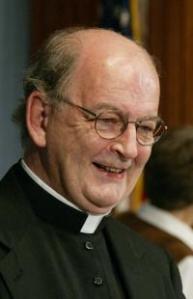
neuhausThe National Catholic Reporter reports that Fr. Richard John Neuhaus, the founder of First Things and ‘a leading voice of Catholic conservatism in America, and one of those rare theologians and spiritual leaders whose influence vastly exceeded the boundaries of their religious community, has died at 72’.

Related stories can found be at:

Around the traps …

‘ … as always the gospel comes in with a sober ‘Yes, but…’ The saviour arrives, but goes unrecognised. He is hidden in the form of poverty and insecurity, a displaced person. Instead of peace and the golden age restored, there is conflict, a trial, a cross and a mysterious new dawn breaking unlike anything that has gone before. He was in the world and the world did not know him. Yet to those who recognise him and trust him, he gives authority (not just ‘power’, as our translations have it) to become something of what he is – to share in the manifesting of his saving work.

So what’s happening here to the idea of a saviour? The gospel tells us something hard to hear – that there is not going to be a single charismatic leader or a dedicated political campaign or a war to end all wars that will bring the golden age; it tells us that history will end when God decides, not when we think we have sorted all our problems out; that we cannot turn the kingdoms of this world into the kingdom of God and his anointed; that we cannot reverse what has happened and restore a golden age. But it tells us something that at the same time explodes all our pessimism and world-weariness. There is a saviour, born so that all may have life in abundance, a saviour whose authority does not come from popularity, problem-solving or anything else in the human world. He is the presence of the power of creation itself. He is the indestructible divine life, and the illumination he gives cannot be shrouded or defeated by the darkness of human failure.

But he has become flesh. He has come to live as part of a world in which conflict comes back again and again, and history does not stop, a world in which change and insecurity are not halted by a magic word, by a stroke of pen or sword on the part of some great leader, some genius. He will change the world and – as he himself says later in John’s gospel – he will overcome the world simply by allowing into the world the unrestricted force and flood of divine life, poured out in self-sacrifice. It is not the restoring of a golden age, not even a return to the Garden of Eden; it is more – a new creation, a new horizon for us all.

And it can be brought into being only in ‘flesh’: not by material force, not by brilliant negotiation but by making real in human affairs the depth of divine life and love; by showing ‘glory’ – the intensity and radiance of unqualified joy, eternal self-giving. Only in the heart of the ordinary vulnerability of human life can this be shown in such a way, so that we are saved from the terrible temptation of confusing it with earthly power and success’. (Rowan Williams)

Confrontation(s) and (re)Discoveries

I’m still unpacking books. It’s often quite a disquieting experience being confronted with aspects your past (which is precisely what one’s library represents). There’s been not a few moments in recent weeks when I’ve found myself feeling somewhat embarrassed by a box’s contents, some of which have remained unopened for the best part of 4 years … and should have been thrown out 10 years before that. I can’t believe some of the junk that I’ve bought – and filled precious shelf-space with – over the years. The sense that one has matured a little is something of an encouragement. One of today’s highlights was the unearthing, after about 5 months, of Tom Smail’s brilliant (if not right at every point) Once and for All: A Confession of the Cross.  If only he didn’t write so clearly then perhaps he might be taken more seriously as a theologian. Anyway, here’s how he kicks off:

‘To write about the cross is, like Jacob at Peniel, to wrestle with something or, rather, with someone, who is totally mysterious and utterly unconquerable – a someone whom you cannot let go because you know that he has it in his power, certainly to wound you at the sore places he exposes, but also to bless you and to change your name and your destiny’. – Thomas A. Smail, Once and for All: A Confession of the Cross (Eugene: Wipf and Stock, 2005), ix.

The book has already been loaned out.

Moltmann on dogmatic thinking


‘[D]ogmatic thinking in theology likes to express itself in theses; not in theses for discussion, but in theses that are simply promulgated, which evoke agreement or rejection, but not independent thinking and responsible decision. They enforce their own ideas on the listener; they do not help him to formulate his own’. – Jürgen Moltmann, Trinity and the Kingdom of God: The Doctrine of God (trans. by Margaret Kohl; Minneapolis: Fortress, 1993), xii.

Forsyth on the difference between ‘Liberal’ and ‘Positive’ theology


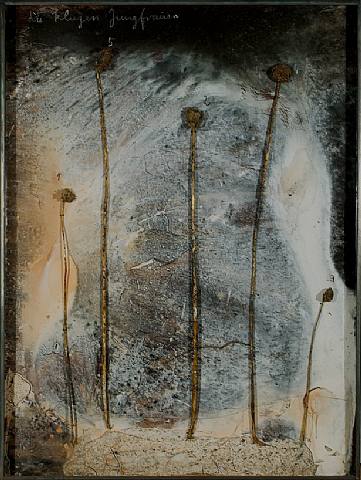
kiefer-the-five-wise-virginsWhile a liberal theology may or may not bear little trace of Christian experience, a positive Gospel, Forsyth contends is ‘given as a power to our Christian experience’. It is at bottom a theology of conversion, and not of being merely academically convinced. With echoes of Anselm, Forsyth avers that Positive theology is ‘faith giving a reasonable account of itself; it is not reason shaping, amending, or licensing faith … Its datum is in history, not in thought. It has the stigmata of the Cross on its heart’. While Liberal theology is doctrinaire, dogmatic, intellectualist and concerned with truth, Positive theology is more devout, pneumatic, evangelical and moral. Liberal concerned with life; the liberal is more doctrinaire and concerned with truth. The latter is ‘part of the religion’, the former, ‘a view of the religion’.

[The image comes from another Anselm, Anselm Kiefer, and depicts his 2007 work, ‘The Five Wise Virgins’]

Getting Kant out of my system

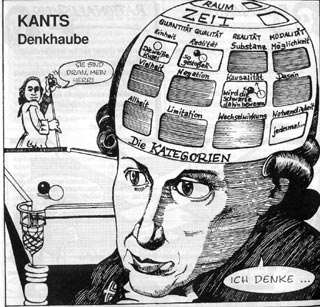
Having spent most of today reading that great father of modern thought – Kant – I confess that what I once discerned as a growing admiration for this Enlightenment thinker with ‘a good dose of Lutheran and Pauline scepticism’ is slowly being ebbed away. In fact, the more I read, it seems, the quicker the ebb ebbs. For example, consider this sample:

Because men are exceedingly frail in all acts of morality, and not only what they practise as a good action is very defective and flawed, but they also consciously and wilfully violate the divine law, they are quite unable to confront a holy and just judge, who cannot forgive evil-doing simpliciter. The question is, can we, by our vehement begging and beseeching, hope for and obtain through God’s goodness the forgiveness of all our sins? No, we cannot without contradiction conceive of a kindly judge; as ruler he may well be kindly, but a judge must be just. For if God could forgive all evil-doing, He could also make it permissible and if He can grant impunity, it rests also on His will to make it permitted; in that case, however, the moral laws would be an arbitrary matter, though in fact they are not arbitrary, but just as necessary and eternal as God. God’s justice is the precise allocation of punishments and rewards in accordance with men’s good or bad behaviour. The divine will is immutable. Hence we cannot hope that because of our begging and beseeching God will forgive us everything, for in that case it would be a matter, not of well-doing, but of begging and beseeching. We cannot therefore conceive of a kindly judge without wishing that on this occasion He might close His eyes and allow Himself to be moved by supplications and flatteries; but this might then befall only a few, and would have to be kept quiet; for if it were generally known, then everyone would want it so, and that would make a mockery of the law … [Man] cannot, indeed, hope for any remission of punishment for his crimes from a benevolent ruler, since in that case the divine will would not be holy; but man is holy insofar as he is adequate to the moral law; he can, therefore, hope for kindness from the benevolent ruler, not only in regard to the physical, where the very actions themselves already produce good consequences, but also in regard to the moral; but he cannot hope to be dispensed from morality, and from the consequences of violating it. The goodness of God consists, rather, in the aids whereby He can make up for the deficiencies of our natural frailty and thereby display His benevolence. – Immanuel Kant, Lectures on Ethics (ed. P. Heath and J. B. Schneewind; trans. P. Heath. Cambridge: Cambridge University Press, 1997), 114–5.

Ouch! It makes one wonder if Kant had ever read Galatians, or Romans! For what is absent in Kant here is not only any notion that the law of God is the law of God’s own being and so cannot be abstracted from God, but also any notion that in a world like ours holiness literally takes the form of grace.

This relates to something else that I’ve been thinking of today, namely Forsyth (as I do), whose deep indebtment to Kant is not without its criticisms. One of Forsyth’s greatest critiques of Kant is reserved for his discussion on prayer. He grants that Kant certainly represents ‘intellectual power and a certain stiff moral insight’, but he lacks ‘spiritual atmosphere, delicacy, or flexibility, which is rather the Catholic tradition’. It is in Kant’s treatment of prayer, Forsyth contends, that he most betrays an intellectualism that ‘tends to more force than finish, and always starves or perverts ethic’. This is because he treats prayer with ‘the equipment of his age’ rather than with the ‘practical experience’ that he would have gleaned if he had immersed himself in ‘the great saints or captains of the race’ like Paul, Thomas à Kempis, or even Cromwell and Gustavus Adolphus. If only Kant had gone to them, Forsyth conjectures, he would have ‘realized the difference between shame and shyness, between confusion at an unworthy thing and confusion at a thing too fine and sacred for exposure’.

Around the traps …


Around the traps …

The Doctrine of Election in Evangelical Calvinism

The latest edition of the Irish Theological Quarterly is now out and includes an essay by Myk Habets on ‘The Doctrine of Election in Evangelical Calvinism: T. F. Torrance as a Case Study’. Here’s the abstract:

Representing what may be termed ‘evangelical Calvinism,’ Thomas Forsyth Torrance’s doctrine of election is, with critical modifications, recommended as a model worthy of contemporary acceptance. Torrance follows Barth’s christologically conditioned doctrine of election closely, but not slavishly, and presents a view of universal atonement and even universal pardon, but not universal salvation. Torrance contends that the word ‘predestination’ emphasizes the sovereign freedom of grace and so the ‘pre-‘ in predestination refers neither to a temporal nor to a logical prius, but simply to God Himself, the Eternal. For God, election is not an event of the past but rather an action internal to God (a se). Because Christ is the ground of election, and Christ came in space—time, election took on a temporal component. Election derives from the Divine initiative of grace and Torrance is highly critical of Arminian theology at this point, accusing it of being semi-Pelagian; he is equally critical of Roman Catholicism which, according to Torrance, is also semi-Pelagian if not Pelagian outright.

Around the traps …

John Wilson’s Introduction to Modern Theology: A Review

John E. Wilson, Introduction to Modern Theology: Trajectories in the German Tradition (Louisville/London: Westminster John Knox Press, 2007). x+286 pages. ISBN: 978-0-664-22862-0

The work of the eighteenth-century Königsberg-born philosopher Immanuel Kant set a new direction for philosophical and theological enquiry up until our day. Because of Kant, theological behemoths like Fichte, Schelling, Hegel, Kierkegaard and Schleiermacher were able to propose new form to the increasingly important conversations between religion and reason, and revelation and experience. So attractive and dominating were these new forms that no Protestant theologian in nineteenth-century Germany could think without them. Moreover, late eighteenth- and nineteenth-century Germany witnessed one of the most creative and prodigious outputs in theological work in any period before or since.

In this introduction, Professor of Church History at Pittsburgh Theological Seminary John E. Wilson invites us on a survey of the German theological tradition beginning with Kant, and proceeding via Hegel, the Mediating Theologians and the Ritschlians, through to Bonhoeffer, the Niebuhr’s and Rahner, among others, purposing to demonstrate lines of continuity and trajectories in the German Protestant traditions since Kant.

Commencing with a useful historical overview of the political and social context from the French Revolution until those fertile decades following WWII, Wilson proceeds to devote chapters to many of the leading shapers of the German schools. Each chapter mostly stands alone and is given to introducing readers to the key writings, grammar (Wilson helpfully attends to key German words and explains them) and contributions of various theologians in an accessible though learned way. The chapter on post-liberal American theologian Paul Tillich was particularly helpful, not least because Tillich represents a revival in the basic pattern of nineteenth-century mediation theology (both in its method and in a return to its sources in German Idealism) but in a radically new context, but also because Tillich’s writing does not represent theological literature in its most reader-friendly form. One who provides help with reading Tillich’s map is never unwelcome.

While Wilson’s grasp of the literature is encyclopaedic in its scope, in not a few places the work is (over)dominated by questions of epistemology and on the relationship between religion and science. Other equally-important features of the tradition are all but ignored. For example, apart from the briefest of mentions in the context of Moltmann’s christology, there is an absence of discussion on nineteenth-century kenoticism. Another disappointment for this reviewer is that while Wilson traces the tradition’s tributary from Germany to the USA, the German tradition’s influence throughout other parts of the world is ignored. A concluding chapter which recapitulates the sweep undertaken, offers some critical reflection on the tradition and some suggestions for possible direction is also sadly lacking from this study (as is a bibliography). Consequently, the reader is left with the clear sense that while Hegel is (deservedly) no doubt the titan whose voice refuses to be silenced, she holds in her hands an unfinished manuscript.

These reservations aside, this volume is a valuable introduction to the theological landscape of nineteenth- and twentieth-century theology, not least for that burgeoning array of scholars undertaking work on Barth, Brunner, Bultmann, Ebeling, Bonhoeffer, or on those German theologians who emerged in the 1960’s and whose theological output remains underappreciated – Sölle, Moltmann, Pannenberg, Heidegger, Ott and Jüngel, in whom the tradition reaches its most satisfying evolution.