‘Liberals are right that the language we use as Christians is not “literally” true; rather, it is figurative, poetic, imaginative language. But the orthodox are right in a more profound way: for the language of imagination – which is to say, biblical language – is the only language we have for thinking and speaking of God, and we receive it as the gift of the Holy Spirit. Theology deceives itself if it conceives of its task as translating the figurative language of scripture and piety into some more nearly literal discourse about God. The theologian’s job is not to tell fellow believers what they really mean; rather, it is to help the church speak more faithfully the language of the Christian imagination. The theologian is not a translator but a grammarian’. – Richard Bauckham and Trevor Hart, ‘The Shape of Time’ in The Future as God’s Gift: Explorations in Christian Eschatology (ed. David Fergusson and Marcel Sarot; Edinburgh: T&T Clark, 2000), 86.
Theology
On being catholic
Last week, I was in Rüdlingen for a very fruitful gathering of the Network of Reformed Theologians associated with the work of the World Communion of Reformed Churches. (I chair the working group on Church and Society). One of the real gifts of being part of such a network, and of our regular face-to-face meetings, is that it occasions a situation in which it is extremely difficult, unattractive, and wasteful to engage in theological ruminations in non-catholic ways.
Catholicity, of course, does not mean uniformity; neither does it equate to the flattening of ethnic/cultural realities, a blending or hybridisation of such to the extent that all that remains is theo-cultural soup. But catholicity is, in fact, intrinsically related to the most radical particularity, the sui generis movement of the God who suckled on Mary’s breast. Responsible Christian theology will want to insist that both true unity and catholicity are possible only in the man Jesus Christ, the Son of the catholic God in whom particularism does not cancel out the universal horizon of love’s creative movement. It is the church’s claim, in other words, that the only reality that makes the church both catholic and one is not any particular form or set of practices but its catholic Lord who in his very person – i.e., in the hypostatic union – is the reconciliation between God and the warring factions that characterise the history of human cultures and relations, is the undoing of Babel’s achievement.
Moreover, in Christ, we learn to tell the truth not only about ourselves but also about our ‘others’, the recognition of which leads to what Miroslav Volf calls ‘double vision’ (the ability to view not only ‘from here’ but also ‘from there’) and thereby make possible the embrace of the other in such a way that both ‘our’ otherness and ‘their’ otherness is affirmed and blessed, made porous without loss of distinctives, and individual limitations transcended. Presupposing that we can both stand with a given tradition and learn from other traditions, and drawing upon Hannah Arendt’s notion of an ‘enlarged way of thinking [which] needs the presence of others “in whose place” it must think, [and] whose perspective it must take into consideration’, Volf describes the process by which ‘double vision’ is able to take place. It happens, he says,
by letting the voices and perspectives of others, especially those with whom we may be in conflict, resonate within ourselves, by allowing them to help us see them, as well as ourselves, from their perspective, and if needed, readjust our perspectives as we take into account their perspectives. Nothing can guarantee in advance that the perspectives will ultimately merge and agreement be reached. We may find that we must reject the perspective of the other. Yet we should seek to see things from their perspective in the hope that competing justices may become converging justices and eventually issue in agreement.
Responsible Christian theology will, I think, want to be explicit in grounding such talk of ‘double vision’ in trinitarian terms; i.e., in imitation of and participation in the triune dialogue. And there are important implications here too for interfaith engagement – that such be informed by a vision of the Triune Life who is both host and guest – and, as David Dark intimates, for the kinds of behaviour that characterise international politics:
To label entire populations – or even sections of the globe – as ‘enemy’ is bad theology, and no government that does so can claim to be operating in any mindful way ‘under’ God. To allow an all-too-human governing body to describe the world for us is to hand over our God-given duty to the likes of a phone book or a demonic stronghold. We have to take our thinking back. The same summons is communicated by Iraqi Christians who publicly pray that American Christians might consider more deeply their understanding of the body of Christ. Does our understanding of this communion move beyond national boundaries when it really counts? Do our imaginations, the way we think about other people, acquiesce to the idolatrous and destructive divisions of nation-states? The defensive distance we maintain between ourselves and the people we see in images of war and deprivation is a deadly construct.
Apocalyptic identity: How ‘new’ is the new identity? – a comment on Gal 3.27–28 & 1 Cor 7.17–24
In his essay on ‘The Apocalyptic Gospel in Galatians’, J. Louis Martyn insists that Paul’s apocalyptic theology – particularly in Galatians – is ‘focused on the motif of invasive movement from beyond’. In other words, Paul is concerned to track the shape of God’s ‘fundamental and determining line of movement’ and its ecclesial/missional implications. He writes:
In Paul’s gospel … the fundamental and determining line of movement is God’s. Since the antidote to what is wrong in the world does not lie in the world, the point of departure – on the apocalyptic landscape – from which there can be movement to set things right cannot be found in the world, or in any of its ideas of bad news and good news.
In short, it is not as though, provided with a good religious foundation for a good religious ladder, one could ascend from the wrong to the right. Things are the other way around. God has elected to invade the realm of the wrong – ‘the present evil age’ (1:4) – by sending God’s Son and the Spirit of the Son into it from outside it (4:4–6). And it is in this apocalyptic invasion that God has liberated us from the powers of the present evil age. Galatians is a particularly clear witness to one of Paul’s basic convictions: the gospel is not about human movement into blessedness (religion); it is about God’s liberating invasion of the cosmos (theology).
The divine movement in Jesus Christ and specifically in his cross, Martyn avers, is set against the ‘community-destroying effect of Sin as a cosmic power’ and the creation of an embodied new community characterised by mutual service in the world and by the putting to death of religion and the boundaries – ethnic and otherwise – that religion is concerned to preserve, often taking up the tools of violence in order to do so. He writes:
The Christ who is confessed in the formula solus Christus is the Christ in whom there is neither Jew nor Gentile. Instead of being the holy community that stands apart from the profane orb of the world, then, the church of this Christ is the active beachhead God is planting in a war of liberation from all religious differentiations. In short, it is in the birth and life of the church that Paul perceives the polarity between human religion and God’s apocalypse. Thus, a significant commentary on Paul’s letters can be found in the remark of Dietrich Bonhoeffer that ‘God has founded his church beyond religion …’.
Such a claim immediately raises the question about just how ‘new’ is this ‘active beachhead’ that God has created and/or is creating. Certainly there ought to be no (over-realised) talk of the community being anything other than truly worldly. And although we must go on to say something about the fact that the community resides in the world as ‘aliens and strangers’ (1 Pet 2.11), it is, in fact, the most worldly of communities, called and given over by the Word for a vocation entirely in this world but dependent entirely on resources from outwith. We might even say that apart from the church there is no world. This need not, of course, be to claim any more than Barth is hinting at when he reminds us that
The only advantage of the Church over against the world is that the Church knows the real situation of the world. Christians know what non-Christians do not … It belongs to the Church to witness to the dominion of Christ clearly, explicitly, and consciously.
One of the clearest expressions of this witness (made explicit in the Galatian letter) is when the Christian community resists the temptation to define itself along lines determined by the old creation and instead is defined by the apocalyptic reality dawned in Christ’s resurrection from the old order. So 3.27–28:
As many of you as were baptised into Christ have clothed yourselves with Christ. There is no longer Jew or Greek, there is no longer slave or free, there is no longer male and female; for all of you are one in Christ Jesus.
The baptismal liturgy drawn upon here presupposes that clothes are removed, an act which signifies a departure from ‘the old self with its practices and [being] clothed … with the new self’ (Col 3.9–10); i.e., with Christ who is himself both ‘the “place” in which the baptized now find their corporate life’ and the announcement of the old cosmos’ end. In this new situation, ‘there is no longer Jew or Greek, there is no longer slave or free, there is no longer male and female; for all of you are one in Christ Jesus’ (Gal 3.28). Martyn suggests elsewhere that while in the Epistle to the Galatians Paul is only interested in the first pair of opposites (i.e., the relationship between ‘Jew’ and ‘Gentile’), the text here presents a table in which certain pairs of opposites were identified as the elements that, it was believed, give to the cosmos its dependable structure. To therefore ‘pronounce the nonexistence of these opposites is to announce nothing less than the end of the cosmos’.
Religious, social, and sexual pairs of opposites are not replaced by equality, but rather by a newly created unity … so fundamentally and irreducibly identified with Christ himself as to cause Paul to use the masculine form of the word ‘one’. Members of the church are not one thing; they are one person, having been taken into the corpus of the One New Man.
St Paul was unwavering in his conviction that ‘God was making a new creation by drawing into one church both Jews and Gentiles’, believing that it was not enough simply to maintain a spiritual unity in the church catholic; the unity created in the second – or last – Adam needed to be seen and experienced in a concrete and local social reality as well. The break in sharing meals together would end the social unity of the church against the divisive forces of human recalcitrance.
While St Paul in Galatians is uninterested in attending to the distinction between ‘male and female’, our attendance to such can serve to sharpen our appreciation of the Apostle’s overall argument in this passage and to highlight how it exemplifies the apocalyptic nature of the Gospel that he was intent on proclaiming. In Galatians 3.28, the words ‘male and female’ seem to refer back to the Genesis narrative as if to say the distinction and differentiation was important then but in Christ those created distinctions cease to be relevant to God’s purposes; that is, they are superseded by participation in Christ, in the new creation.
The Synoptics, of course, reveal an astonishing tension on matters of sexual differentiation and family. On the one hand – say the example of Jesus’ response to the question about divorce – Jesus is content to employ the ancient and widespread assumptions based on the fact of how things were (or were perceived to be) ‘from the beginning of creation’ (Mark 10.6), suggesting an ethic grounded in (at least) the abiding functional goodness of creation. On the other hand, when informed that his biological mother and brothers were waiting for him, Jesus’ response indicates a re-evaluation of family relationships based not on the logic of the old creation but of the radical newness of the new eschatological family defined around himself (Mark 3.33–35). He is, it would seem, the new creation in nuce.
There is clearly a discernible tension here between theological arguments offered on the basis of creation and those made on the gospel’s power to bring about a new reality. We see this tension not only in the Gospels but also in Paul’s writing itself. So, for example, in Romans 1.18–32, Paul employs an argument explicitly based on creation and draws certain conclusions from ‘the things [God] has made’ in ‘the creation of the cosmos’ (Rom 1.20). In Galatians 3 and 6, however, Paul employs an entirely different – we might even say ‘opposite’ – logic when he argues that it is ‘explicitly not creation, but rather the new creation in which the building blocks of the old creation are declared to be nonexistent’ that the church is to take her theological and ethical cues from.
The divine affirmation recorded in Genesis 2 – ‘It is not good that the man should be alone (Gen 2.18) – is now brought under the scrutiny of the inbreaking of a new reality in the resurrection resulting in a different answer to Adam’s problem. ‘Now the answer to loneliness is not marriage, but rather the new-creational community that God is calling into being in Christ, the church marked by mutual love, as it is led by the Spirit of Christ (Gal 3:28b; 5:6,13, 22; 6:15)’. Of course, in a different context, Paul’s polemic takes different shape. So in the Corinthian correspondence, for example, the strict dichotomy between old and new is not so strictly championed and the pastor-missionary-theologian will ‘negotiate the relation between new creation and creation by advising married people to be married as though not being married (1 Cor 7:20)’. The apocalyptic realism underscored so heavily in Galatians cannot – if Paul is to be our theological guide – be simply employed to create a template to be placed on all and every situation. Rather, the theologian’s task calls for much more sensitivity than that, and requires equal attention to the particularities of context. So James Dunn:
It must be stressed again that this recognition of the historical relativity of the word of God does not diminish its authority as word of God. Precisely to the contrary, it sets scripture free to function as word of God in the way intended. If we insist, with the logic of the inerrancy school, that scripture must always say precisely the same thing in every historical context, then we muzzle scripture: we filter the word of God through a systematizing and harmonizing process which filters out much that God would say to particular situations, and lets through a message which soon becomes predictably repetitive, whatever the scripture consulted. Why should it be so hard to accept that God speaks different words to different situations (because different situations require different words)? In Jesus Christ, God committed his word to all the relativities of historical existence in first-century Palestine. Paul did not hesitate to express the gospel in different contexts, terms which no doubt would sound contradictory if they were abstracted from these contexts into some system and harmony which paid no heed to these contexts (1 Cor 9:20f.) – hence the apparent conflict between Paul and James (cf. Rom 3:28, ‘justified by faith apart from works’; James 2:26, ‘faith without works is dead’). Mark did not hesitate to press the implications of Jesus’ words about true cleanliness with a view presumably to the Gentile mission (Mark 7:19); whereas Matthew softened the force of the same words, since he had the Jewish mission in view (Matt 15:17). If we ignore such differentiation of the word of God in and to different situations, we rob scripture of its power to speak to different situations. It is only when we properly recognise the historical relativity of scripture that our ears can be properly attuned to hear the authoritative word which God speaks to us in the words of scripture here and now.
While 1 Corinthians 7.17–24, words which appear in an epistle addressed to a ‘multi-ethnic community’ (Witherington) existing in an ethnically and religiously diverse population, is principally concerned with social rather than ethnic realities, it is possible that we might observe here a general principle – ‘to remain as you are’ – that concerns both. In a recent study, J. Brian Tucker surveys and assesses ways in which the Apostle Paul negotiates and transforms existing social identities of the Christ-followers in Corinth in order to extend his gentile mission. He notes that the apostle is concerned to form a Christ-movement identity in the diaspora churches in such a way that previous ethno-social identities are not abrogated but are genuinely transformed ‘in Christ’. Rejecting the view that the church is a community in which such identities are so radically relativised as to be rendered meaningless, Tucker argues (on the basis of 1 Corinthians 7.17, 20 and 24) that Paul’s ‘primary ideological perspective’ is that Christ-followers should remain in the situation they were in when God called them. ‘The result of this interpretive move’, he suggests, ‘is that Paul, rather [than] seeking to obliterate existing social identities, is seen as one drawing from these to form diverse expressions of Christ-movement identity’. He concludes that for Paul, the continuation of various social and ethnic identities remains an open question and is always situationally determined. We might here wish to follow Gordon Fee and insist that such situational determination is determined first and foremost by God’s call rather than by the situation itself, and that the challenge that 1 Corinthians 7 poses to us is that believers need to learn to live out their calling before God in whatever situation they are found, letting the call of God itself ‘sanctify to oneself the situation’.
This is indeed consistent with what we observe throughout the Pauline corpus; namely, that the retention of one’s particularity in Christ is a basic characteristic in our understanding of the process of identity-construction as Christ-followers. This means, among other things, that ‘despite our enormous potential for identity construction, not all structures are feasible or available to us’ as identity builders. ‘We are forced to start from where we are and, in the world of Paul’s day, that meant as either Jews or gentiles, accepting these components to a great extent as part of the given’. So Philip Esler:
In any particular case, therefore, we need to be open to the possible stubbornness of ethnic affiliation, while not underestimating the power of individuals and groups to modify ethnic identity for particular social, political or religious ends.
It is important to note also, particularly if St Paul is to be our guide here, that the construction of identity in Christ occurs within a complex of layers of significant sub-identities (so Rom 11.1; Phil 3.5–6) all of which are important although not equally so and none of which ought to dethrone the primacy of baptismal identity in Christ. So William Campbell:
Paul shares with gentiles in Christ the primary identity-marker which is faith in Christ. He shares with gentiles a special bond as apostle to the gentiles but he differs from them in that he is both Jewish and, by divine commission, apostle to the gentiles. So whilst Paul shares the primary identification of being in Christ, this is accompanied by a differentiation in terms of ethnic and cultural affiliation. He is an Israelite but they are not Israelites despite being in Christ.
To be in Christ is not universal and the same for all peoples. Paul’s converts from the nations are clearly designated by him as gentiles throughout his letters. His strong insistence on their not becoming Jews underlines the fact that for Paul Jew and gentile are fundamental categories and that however much Jews and gentiles share in Christ this in no wise makes them the same … In Christ ethnic difference is not transcended but the hostility that accompanies this should be … Paul’s theologizing is dynamic and he by no means views his converts as continuing in an unchanged existence. They are continually changed by being in Christ but this involves their transformation as Jews or as gentiles, not into some third entity.
So what is being championed by the Apostle Paul (in Galatians, 1 Corinthians, and elsewhere) is not that humanity has been liberated from religious boundaries in order to take up residence as a citizen of a secular, desacralised world, but rather that those baptised into Christ are now to live in the reality of Christ as both the boundary and centre of their existence, a boundary which includes all humanity in our cultural/ethnic/gendered/social/historical particularities. Christ’s kenotic community therefore must not violate the divine-human solidarity announced and secured in the hypostatic union by placing boundaries between itself and the world. But this is not all, for, the radical solidarity created in the incarnation also creates a dissonance between that which depends upon arrangements which are passing away and those which depend upon and point to the coming reign of God. Put otherwise, the incarnation and the coming of the eschatological Spirit announce that ‘historical precedence must give way to eschatological preference’. So John Zizioulas insists that even Jesus must be liberated from his past history in order to bring to the present history of the church his eschatological presence and power:
Now if becoming history is the particularity of the Son in the economy, what is the contribution of the Spirit? Well, precisely the opposite: it is to liberate the Son and the economy from the bondage of history. If the Son dies on the cross, thus succumbing to the bondage of historical existence, it is the Spirit that raises him from the dead. The Spirit is the beyond history, and when he acts in history he does so in order to bring into history the last days, the eschaton.
Ecclesia and Ethics: An Eco-friendly and Economically-feasible Online Biblical Studies and Theology Conference
Ecclesia and Ethics: An Eco-friendly and Economically-feasible Online Biblical Studies and Theology Conference is an academic and ecclesial conference taking place on Saturday May 18th and Saturday May 25th 2013 in real-time via Webinar.
Main papers will be presented by N.T. Wright, Michael Gorman, Dennis Hollinger, Shane Claiborne, Stanley Hauerwas, Brian Rosner, Mariam Kamell, and Nijay Gupta. Additionally, there will be five Multiple Paper sessions throughout the conference, via five Virtual Rooms which will feature papers from a total of 20-25 selected papers.
No software will need to be purchased by presenters or attendees, and Webinar access is provided entirely for free due to a generous Capod Innovation Grant through the University of St Andrews in Scotland. Participants and attendees will be able to sign on, present, and listen to or watch presentations from anywhere in the world with a reliable internet connection and a computer. Registration for the conference consists of a $10/£7 (minimum) donation to a Recommended Charity.
Conference organisers are also seeking abstracts/papers which deal with the role and relationship of the Church to Christian Ethics and/or Moral Formation. Papers may be rooted in the areas of: the Exegesis of New Testament texts, New Testament Theology, the Exegesis of Old Testament texts, Biblical Theology, Practical Theology, Systematic Theology, or Theological Ethics. Selected candidates will present a 35-40 minute final paper (approx 5000-5500 words). All accepted papers will be considered for inclusion in the publication of the proceedings with T&T Clark. Interested parties are invited to submit a 250-300 word (max) abstract to ecclesiaethics@gmail.com for consideration from January 2013-March 2013.
For more information/registration, visit http://www.ecclesiaethics.com.
The great new theology e-group experiment
Recently, I undertook to begin building a wee e-community via Google Plus’s new ‘Communities’ feature. It’s called Theology: thinking faith together, and the intention is that it be a space ‘for the mutual sharing of and discussion about mature theological ideas (however developed) and resources which serve those who attend to the tasks of faith thinking’. The experiment is monitored by yours truly (believe me, and I know that this is difficult to verify with any degree of anything, but there are looneys out there who are even loonier than me), but if it sounds like something that you’re into, then consider joining in. It starts here.
‘Advent Stanzas’ by Robert Cording
I.
Are we always creating you, as Rilke said,
Trying, on our best days,
To make possible your coming-into-existence?
Or are you merely a story told in the dark,
A child’s drawing of barn and star?
Each year you are born again. It is no remedy
For what we go on doing to each other,
For history’s blind repetitions of hate and reprisal.
Here I am again, huddled in hope. For what
Do I wait? – I know you only as something missing,
And loved beyond reason.
As a word in my mouth I cannot embody.
II.
On the snow-dusted field this morning – an etching
Of mouse tracks declares the frenzy of its hunger.
The plodding dawn sun rises to another day’s
One warm hour. I’m walking to the iced-in local pond
Where my neighbors have sat through the night
Waiting for something to find their jigged lure.
The sky is paste white. Each bush and tree keeps
Its cold counsel. I’m walking head-on into a wind
That forces my breath back into my mouth.
Like rags of black cloth, crows drape a dead oak.
When I pass under them, their cries rip a seam
In the morning. Last week a life long friend told me,
There’s no such thing as happiness. It’s ten years
Since he found his son, then a nineteen-year old
Of extraordinary grace and goodness, curled up
In his dormitory room, unable to rise, to free
Himself of a division that made him manic and
Depressed, and still his son struggles from day to day,
The one partial remedy a dismal haze of drugs.
My friend hopes these days for very little – a stretch of
Hours, a string of a few days when nothing in his son’s life
Goes terribly wrong. This is the season of sad stories:
The crippling accident, the layoffs at the factory,
The family without a car, without a house, without money
For presents. The sadder the human drama, the greater
Our hope, or so the television news makes it seem
With its soap-opera stories of tragedy followed up
With ones of good will – images of Santas’ pots filling up
At the malls, truckloads of presents collected for the shelters,
Or the family posed with their special-needs child
In front of a fully equipped van given by the local dealership.
This is the season to keep the less fortunate in sight,
To believe that generosity will be generously repaid.
We’ve strung colored lights on our houses and trees,
And lit candles in the windows to hold back the dark.
For what do we hope? – That our candles will lead you
To our needs? That your gift of light will light
These darkest nights of the year? That our belief
In our own righteousness will be vindicated?
The prophet Amos knew the burden of our coming.
The day of the Lord is darkness, he said, darkness, not light,
As if someone went into a house and rested a hand against a wall,
And was bitten by a snake. Amos knew the shame of
What we fail, over and over, to do, the always burning
Image of what might be. Saint Paul, too, saw
The whole creation groaning for redemption.
And will you intercede with sighs too deep for words
Because you love us in our weakness, because
You love always, suddenly and completely, what is
In front of you, whether it is a lake or leper.
Because you come again and again to destroy the God
We keep making in our own image. Will we learn
To pray: May our hearts be broken open. Will we learn
To prepare a space in which you might come forth,
In which, like a bolt of winter solstice light,
You might enter the opening in the stones, lighting
Our dark tumulus from beginning to end?
III.
All last night the tatter of sleet, ice descending,
Each tree sheathed in ice, and then, deeper
Into the night, the shattering cracks and fall
Of branches being pruned by gusts of wind.
It is the first morning after the longest night,
Dawn colorless, the sun still cloud-silvered.
Four crows break the early stillness, an apocalypse
Of raucous squawks. My miniature four horsemen
Take and eat whatever they can in the field
Outside my door: a deer’s leg my dog has dragged
Home. Above them, the flinty sun has at last fired
A blue patch of sky, and suddenly each ice-transfigured
Trees shines. Each needle of pine, each branch
Of ash, throws off sparks of light. Once,
A rabbi saw a spark of goodness trapped inside
Each evil, the very source of life for that evil –
A contradiction not to be understood, but suffered,
The rabbi explained, though the one who prays
And studies Torah will be able to release that spark,
And evil, having lost its life-giving source, will cease.
When I finally open my door and walk out
Into the field, every inch of my skin seems touched
By light. So much light cannot be looked at:
My eyelids slam down like a blind.
All morning I drag limbs into a pile. By noon,
The trees and field have lost their shine. I douse
The pile of wood with gas, and set it aflame,
Watching the sparks disappear in the sky.
IV.
This is the night we have given for your birth.
After the cherished hymns, the prayers, the story
Of the one who will become peacemaker,
Healer of the sick, the one who feeds
The hungry and raises the dead,
We light small candles and stand in the dark
Of the church, hoping for the peace
A child knows, hoping to forget career, mortgage,
Money, hoping even to turn quietly away
From the blind, reductive selves inside us.
We are a picture a child might draw
As we sing Silent Night, Holy Night.
Yet, while each of us tries to inhabit the moment
That is passing, you seem to live in-between
The words we fill with our longing.
The time has come
To admit I believe in the simple astonishment
Of a newborn.
And also to say plainly, as Pascal knew, that you will live
In agony even to the end of the world,
Your will failing to be done on earth
As it is in heaven.
Come, o come Emmanuel,
I am a ghost waiting to be made flesh by love
I am too imperfect to bear.
– Robert Cording, ‘Advent Stanzas’, in The Best American Spiritual Writing 2005 (ed. Philip Zaleski; Boston/New York: Houghton Mifflin Harcourt, 2005), 18–22.
On having triple vision
While their respective projects are not always as divorced from one another as is sometimes suggested, it would be fair to say that theologians and artists do not always share the same concerns. That said, I suspect that every reader of the Book of Psalms will have sensed something germane to the vocation of both theologian and artist. Both are concerned, it seems to me, with a deep commitment to fostering and sharpening a triple vision—to take seriously what has been, what will be, and what is contemporary. (Another way of thinking about this is to simply take the journey with St Paul through Romans 5 to 8.) And theology, like art, responds to that triple awareness, resists the temptation to dissect the tri-part vision, and keeps asking—in its own particular way and with its own particular tongue—the foundational questions for all being; namely, who is Jesus Christ, and what has God done, what is God doing, and what has God promised to do in him?
Put otherwise, both art and theology properly seek to speak about what our eyes have seen, about what our ears have heard, about what our lips have tasted, and about what our hands have touched. And both are equally concerned with the matter of hope—about what our eyes hope to see, our ears hope to hear, our lips hope to taste, and our hands hope to touch. And both are concerned too to be attentive to the immediate, to what is, to those realities contemporary to our senses. So art and theology are fixed on a triple vision—of attention to what is behind and before and over the horizon—a vision grounded in the history of God’s own past, future and contemporaneity.
The Global Ecumenical Theological Institute
The World Communion of Reformed Churches is looking for young theologians interested in ecumenism. This is your chance to go to Korea as a participant in the Global Ecumenical Theological Institute (GETI) hosted by the World Council of Churches (WCC) in parallel with WCC Assembly in Busan, Korea (25 October to 9 November 2013).
Who is eligible?
Theology students or lecturers up to 45 years old who are members of WCRC member churches.
What is the GETI programme?
GETI is an intensive learning programme focussed on introductory courses in Asian Christianity, Asian theologies and interfaith realities as well as the specific Korean historical, religious and social context.
The programme coincides with the World Council of Churches Assembly in Busan. This allows GETI participants the opportunity to take part in major assembly events including thematic plenary sessions, worship, ecumenical conversations, workgroups and exhibitions. GETI students will not however participate in Assembly business sessions.
GETI seminars will be oriented according to major themes of the WCC Assembly. There will be opportunities for inter-generational dialogue with important leaders of the ecumenical and evangelical movement.
The programme will also include excursions such as a visit to Gwangju which is a city of great significance for Korean history. Here lectures will be given on Christian mission history and the role of churches in the process of democratization of Korea. The trip will include visits to the national monument of the Gwangju Movement for Democracy as well as to the commemoration site of Christian martyrs and the graves of Christian missionaries close to Honam Theological University. The programme may also include a visit to a traditional Korean village setting.
What will be required of you?
- A presentation about your church background and a major ecumenical issue related to a WCC Assembly theme;
- A presentation on a text from the GETI workbook;
- A major paper on one aspect of the ecumenical movement experienced during the assembly to be submitted no later than mid-February 2014;
- One comprehensive report and presentation on the GETI and the assembly experience to be given to your theological seminary, local churches or ecumenical youth organization.
At the end of the course you will receive a certificate which includes credits for all course elements attended and academic assignments carried out.
What will it cost?
As part of WCRC’s support of the ecumenical movement and leadership formation, WCRC will fully sponsor successful candidates to attend the GETI programme.
Selection process
WCRC will choose the five best applications to be forwarded to the GETI selection committee.
Interested?
Complete the application form and return to Aiko Sumichan (aws@wcrc.ch)
Application deadline: 28 November, 2012
A wee report from the Confoederatio Helvetica
A few weeks ago, I was in Switzerland. I was there for a meeting with the World Communion of Reformed Churches, and to attend a fascinating conference on Churches and the Rule of Law for which I was invited to be a respondent to a paper on ‘The Bible and the State’ by Jim Skillen. It was a wonderful gathering of some very impressive minds, stimulating papers and friendly souls. A number of folk have asked me for a copy of my response. It can be downloaded here. I understand that a final version will, in due course, appear in published form as part of the John Knox Series.
But the trip wasn’t all ‘business’. One – this one at least – simply doesn’t travel half way around the world and not squeeze in some extra-curricular activities! So the itinerary included time in Lausanne (whose cathedral is among the most beautiful I’ve visited anywhere in the world), Neuchâtel, Montreux, Zermatt and the Matterhorn, the Bernese Oberland and the Junfrau (think Queenstown on some serious steroids), Lucerne, Safenwil (a real highlight for me, for obvious reasons), Basel (where I continued the Barth trail), St-Ursanne, Jura & Three-Lakes, and, of course, a significant amount of time in the amazing city of Geneva where I breathed in some more reformed air. Suffice it to say that, coffee and that terrible Calvinus beer excluded, Switzerland is amazing, and I hope to return.
An essay competition for theology students and young pastors
The World Communion of Reformed Churches is sponsoring an essay competition for theology students and young pastors (up to 35 years of age). The topic is ‘Paradise: an inspirational concept for the financial and economic structures of the global society’.
Essays (written in English, French, Spanish or German) should be received no later than 23 December 2012, and the winner will be awarded the Lombard Prize.
More information is available here.
Rick Floyd on the lost soul of the procedural church
Some years ago now, my dear friend Rick Floyd shared a wonderful wee parable about pastoral ministry. It was called ‘Prepare Three Envelopes’. He then followed it up with an insightful midrash which bears repeating:
One of the rules I live by is to never explain a joke, but I’m going to break that rule to talk about my recent post: Prepare Three Envelopes: A Parable about Pastoral Ministry.
As several of you have pointed out it is an old joke. John McFadden said he “kicked the slats out of his crib laughing” the first time he heard it. Several of you told me different variations on the one I told, which I think I first heard from Peter Wells, my canny former area minister.
Many of you said it was both funny and painful. Bob Grove-Markwood said, “I laughed, I cried.” Verlee Copeland said she wished “it were funnier for that bell tolls for us all.” It surely resonated with many clergy, which is no accident.
The joke itself was just the frame I used for the picture I wanted to draw. I put the joke in an extended shaggy dog style to accomplish several things. First, I wanted the heroine to be a bit of a cipher and not a fleshed-out character, so that clergy could fill in their own particulars and relate to her situation. I made her a woman pastor so that the parable wouldn’t be seen as strictly autobiographical, although there is more of my own story in it than is entirely comfortable.
I wanted to evoke a certain kind of congregation, what I will call here the procedural church. Now such a congregation doesn’t exist as an ideal type, but I believe most mainline congregations have features of what I will describe.
As I have written elsewhere (“Introduction” to When I Survey the Wondrous Cross) I believe the dominant mode of reflecting on congregational life in our time is not theological (as I believe it should be), but managerial, psychological, and political.
So a managerial congregation will borrow outlooks and methods from the corporate world, and be preoccupied with metrics, goals, objectives, and outcomes largely cast without use of the church’s historic grammar. My reference to the second envelope was a small swat at this approach.
The psychological congregation sees its life in therapeutic terms, and employs the language of health and pathology, of addiction and recovery, and co-dependence. This model loves to talk about boundaries. My little dig at interim ministry comes from my conviction that the family systems model employed by many interim ministers is a blunt tool to deal with complex congregational life, and often scapegoats former pastors, which the Intentional Interim Network dismissingly refers to in their training as BFP’s, Beloved Former Pastors. As a beloved former pastor myself I feel this outlook is disrespectful to dedicated leaders who have given their lives for the church.
The political church sees itself as a change-agent in an unjust and oppressive society, and understands its mission to advance a series of predetermined causes. The bond between congregants is political like-mindedness, and those who don’t “get it” are likely to be driven away without regret. This kind of church, usually liberal in the mainline, fosters a paranoid style, which demonize those who disagree with it. They are always railing against the Religious Right, but actually provide a mirror image of those they fear and distrust, a shadow side Religious Left.
Now I must insert the mandatory self-evident truth that there are genuine insights in all these approaches, and wise leaders should avail themselves of whatever is useful in the culture. Having said that, what is striking to me about the procedural church is the dominance of its perspective over the church’s own grammar.
Congregations can partake of all three of these procedural approaches in various combinations, but what they all share is a procedurally driven church whose agenda takes little account of the church’s own rich heritage of congregational self-understanding derived from scripture and tradition. Ecclesiology, the sub-category of theology that thinks deeply about the church, has a long and deep ecumenical storehouse of insights on how to be the church that are largely ignored or forgotten. Leander Keck, in his fine book, The Church Confident, once compared the contemporary church with folks who inherit a fine old mansion, but choose rather to live in a pup tent in the back yard.
So notice that in Prepare Three Envelopes I never mention God, Jesus Christ, the Holy Spirit, the Trinity, the Scriptures, the sacraments, the creeds, or Christian doctrine. Our heroine does pray, but whether it is Christian prayer is left an open question.
I tried to evoke a kind of flatness in this imaginary congregation. We don’t see our pastor preparing or delivering a sermon, baptizing a baby, presiding at the eucharist, praying by a sickbed, or standing by a grave, even though these activities take up a good deal of any pastor’s time in real life. What we do see her doing is strategizing and attending meetings, the hallmarks of the procedural church.
Now at the end of the parable our heroine is burned-out because she has been driving this frenetic congregational juggernaut out of her own soul, which is now seriously depleted. And if there is one feature common to all three kinds of procedural congregations it is this endless frenetic activity, what P.T. Forsyth once called “The Sin of Bustle.”
The procedural church is functionally atheistic, in that everything depends on us, and nothing depends on God, other than to bless and sanctify the works of our hands.
Morale is bad in the procedural church. Brad Braxton’s sudden and sad departure from Riverside Church has lit up the blogosphere with comments from clergy who feel ill-used by their congregations. There is always plenty of blame to go around in any church kerfuffle, but my perception of many congregations is that their fights and preoccupations about procedure, in Braxton’s case over his salary package, arise because they do not know how to be church.
They know how to manage organizations, they know how to analyze family systems, and they know how to drive a political agenda. But when it comes down to being the church of Christ, to hear his living voice in sermon and text, to eat his sustaining bread, to share his cruciform life, to know that it is his ministry we are called to share and not just be our own voluntary association, not so much! And clergy can blame toxic congregations all they want, but isn’t it the work of the ordained ministry to keep these things before them?
Without sound teaching, faithful preaching, lively and sacramental worship, and enriching group life, the congregation can have all the procedures down and still have lost its soul.
An ‘authentic’ church is a church which sees itself as ‘the bearer of a question’
I spent some time today reflecting on these words from Rowan Williams’ extraordinary essay ‘Women and the Ministry: A Case for Theological Seriousness’. (The essay appears in Feminine in the Church, and is also available here.) [HT: Chris Green for drawing my attention to this essay]:
If we had to choose between a Church tolerably confident of what it has to say and seeking only for effective means of saying it, and a Church constantly engaged in an internal dialogue and critique of itself, an exploration to discover what is central to its being, I should say that it is the latter which is the more authentic – a Church which understands that part of what it is offering to humanity is the possibility of living in such a mode. What the Church ‘has to say’ is never a simple verbal message: it is an invitation to entrust your life to a certain vision of the possibilities of humanity in union with God. And to entrust yourself in this way is to put your thinking and experience, your reactions and your initiatives daily into question, under the judgement of the central creative memory of Jesus Christ, present in his Spirit to his community.
I turned then to Mike Higton’s wonderful book, Difficult Gospel: The Theology of Rowan Williams, wherein he offers a stimulating commentary on these words of Williams’. I thought that it was worth sharing:
If the reality which the Church helps us to explore – the reality which it teaches – is that ‘ceaseless movement towards the Father’, then we need to be cautious about how we express the nature of the Church’s teaching. It is not going to be simply the doling out of well-understood truth – a case of those who have reached and understood the truth handing out that truth to others. Rather the Church will teach by inviting others to join with it in learning, and by pointing them to the sources from which it itself is slowly learning …
Rather than thinking of the Church as the bearer of answers, it might be better to think about the Church as the bearer of a question – the bearer of the question which the Gospel poses; we might say with Williams that the Church is ‘[t]hat which transmits God’s question from generation to generation’. The Church teaches by pointing away from itself to the transforming, upsetting impact of Jesus – pointing not so much to a stable, achieved religious system as to a disruption which can bring all systems of religious practice and knowledge face to face with a reality that cannot be exhausted by any system. The Church’s paradoxical task is to preserve this questioning – to find concrete forms of life, stable practices, and a learnable language that will keep alive the possibility of our hearing this disruption, and which will allow it to be felt deeper and far wider than the circle of its original impact’ (pp. 69–70).
On jobs for Christians
Article 16 of The Apostolic Tradition of Hippolytus of Rome (c. 215) notes that there are (or were) some occupations that are simply deemed incompatible with being a Christian. (Parallel lists appear in Tertullian’s De idololatria (c. 211) and De spectaculis (c. 197–202)). What immediately strikes me about the catalogue of occupations that would render one ineligible from admission into the catechumenal process is the commitment to a non-violent ethic and an evading of the praxes of idolatry before you even begin the journey. In some ways, I guess it would be like refusing someone who works for one of the subsidiaries of News Corporation or for a bank who profits from usury from attending an Alpha Course:
If someone is a pimp who supports prostitutes, he shall cease or shall be rejected. If someone is a sculptor or a painter, let them be taught not to make idols. Either let them cease or let them be rejected. If someone is an actor or does shows in the theater, either he shall cease or he shall be rejected. If someone teaches children (worldly knowledge), it is good that he cease. [It seems that this prohibition, which is particularly strong in Tertullian’s thought, is based on the logic that teachers were required to teach about pagan gods and to observe pagan festivals, a bit like teacher’s today observing Anzac Day or Melbourne Cup day, I suppose.] But if he has no (other) trade, let him be permitted. A charioteer, likewise, or one who takes part in the games, or one who goes to the games, he shall cease or he shall be rejected. If someone is a gladiator, or one who teaches those among the gladiators how to fight, or a hunter who is in the wild beast shows in the arena, or a public official who is concerned with gladiator shows, either he shall cease, or he shall be rejected. If someone is a priest of idols, or an attendant of idols, he shall cease or he shall be rejected. A military man in authority must not execute men. If he is ordered, he must not carry it out. Nor must he take military oath. If he refuses, he shall be rejected. If someone is a military governor, or the ruler of a city who wears the purple, he shall cease or he shall be rejected. The catechumen or faithful who wants to become a soldier is to be rejected, for he has despised God. The prostitute, the wanton man, the one who castrates himself, or one who does that which may not be mentioned, are to be rejected, for they are impure. A magus shall not even be brought forward for consideration. An enchanter, or astrologer, or diviner, or interpreter of dreams, or a charlatan, or one who makes amulets, either they shall cease or they shall be rejected. If someone’s concubine is a slave, as long as she has raised her children and has clung only to him, let her hear. Otherwise, she shall be rejected. The man who has a concubine must cease and take a wife according to the law. If he will not, he shall be rejected.
While some may argue – and have indeed argued – that such a holding of the keys is the flip side of the church refusing to bury certain people because of their association with particular vocations, at the very least such a list invites us to not only consider what the church today might catalogue as occupations that render one ineligible for baptism and so for life in the community of God (of course, it is difficult to imagine how such a radically disparate and commercialised body not only outside of but also within Rome could today agree on anything, let alone pronounce on vocational anathemas), but also to think about how the call to repentance is among the first words that the kingdom of God proclaims. It also invites us to wonder more deeply about St Paul’s claim ‘where sin increased, grace abounded all the more’, and about the size and reach of Paul’s God.
The Los Angeles Theology Conference
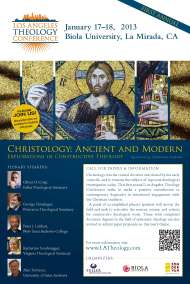
Zondervan Academic – which is part of the Murdoch empire – are partnering with Biola University and Fuller Theological Seminary to launch the annual Los Angeles Theology Conference. The inaugural gathering will take place January 17–18, 2013 on the Biola University campus, and will explore the dangerous and disruptive theme – Christology, Ancient and Modern: Explorations in Constructive Theology.
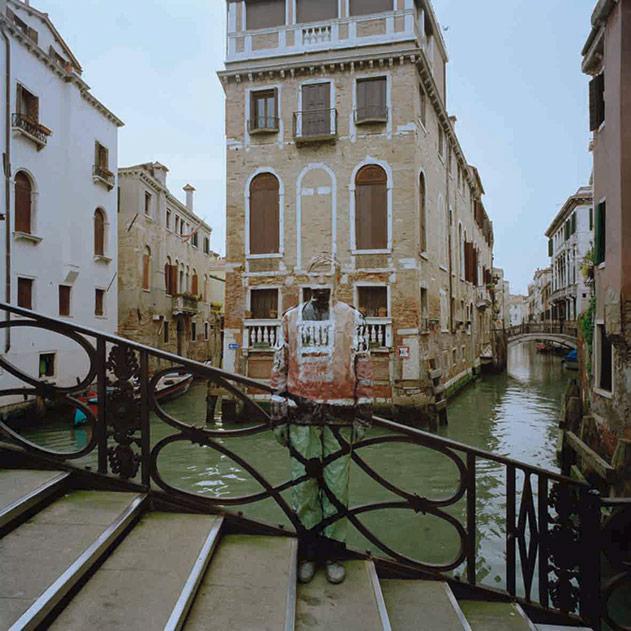
The impressive band of speakers includes Oliver Crisp, George Hunsinger, Peter Leithart, Katherine Sonderegger and Alan Torrance.
More information about paper proposals and registration is available here.
some thursday afternoon link love
- On the abandoned legacy of Baron Pierre de Coubertin – When the Olympics gave out medals for art
- Ai Wei Wei on his favorite artists, living in New York, and why the government is afraid of him
- Gordon Campbell on How the Republicans are using voter ID laws to steal the Presidency, on why Hating Australians is Boring and on the NZ government’s partial asset sales policy.
- More on asset sales: James Meek looks at how we happened to sell off our electricity
- Liu Bolin and the art of disappearing (plus a video on how he does it)
- Ben Myers’ letter to George Herbert
- Julie Bosman on E-Book Pricing
- Travis McMaken shares some more from Calvin and from Bruce Gordon on Calvin
- Adam Kotsko on how to read Žižek
- Why have we fallen out of love with organic food?
- Charles Simic on poets and money
- Quite a lineup – John Milbank, Benjamin Myers, Susan Neiman, Kevin Hart, Richard Kearney, Marilyn McCord Adams and Stanley Hauerwas – discuss God, good and evil
- Aung San Suu Kyi on the power of Buddhism
- Herman Melville – from Pittsfield to Liverpool to Jerusalem
- Rowan Williams and Francis Spufford on being a Christian
- Jesus vs. Mao? An interview with Yuan Zhiming
- Michel Foucault: lectures on Truth, Discourse & The Self
- Mary Beard on exams
- Jeff Johnson alerts us to what sounds like a fascinating book on the American Buffalo
- David Bentley Hart’s lecture on ‘Tradition v. Innovation’
- Kim Fabricius is at it again with another set of doodlings
- Dave Andrews’ Ramadan Diary
Finally, I want to give a big shout out to a friend, minister and musician named Malcolm Gordon. Malcs has been busy writing material for his latest album. (You can check out some of his earlier work here and here. You can even get some of it for free here.) The songs have grown out of his preaching ministry at St Paul’s Presbyterian in Katikati, in the Bay of Plenty. For a while now, Malcs has known that most of our theology (good and bad) is sung. He writes: ‘That’s how we retain and take ownership of anything, we hum it, we whistle it – we take the word made flesh and make it a song’.
Malcolm has recently stepped out of parish ministry to make more space for this wildly unpredictable gift of music, and he’s about to head into the studio to record an album that has the tentative working title, ‘Into the deep.’ You can listen to the title track itself here:
About this song, Malcolm writes: ‘This song seems to capture the incredible feeling of being out of our depth as we seek to follow the call of God into something that doesn’t even seem to exist yet. Still God’s word is a creative word, making so as it calls us to – well here’s hoping!’
Malcolm is currently and shamelessly trying to raise funds to complete the album through the mixing and mastering stage. So if you like what you hear, and want the church to hear more of it, and sing more of it, then please consider helping him out through this campaign on Social backing.
Stanley Hauerwas on being human
Yanks and Kiwis
In his recent book Fairness and Freedom: A History of Two Open Societies – New Zealand and the United States – which I’m yet to read (a fact which doesn’t always give me reason to pause from offering comment) – David Hackett Fischer observes that whereas public discourse and public policy in America is dominated by the rhetoric of freedom and liberty, here in New Zealand the same are organised around the principles of fairness and social justice. Throwing Australia into this mix would make a fascinating study and, I think, challenge some of Fischer’s conclusions. Still, Fischer’s sounds like an attractive thesis (nicely summarised in this article), and I look forward to checking out the book. (Just as good, however, might be reading a review of the book by American ex-pat Kim Fabricius.)
J. Louis Martyn on life after the invasion
After building a case that Paul’s letter to the Galatians witnesses to the apostles’ basic conviction that ‘the gospel is not about human movement into blessedness (religion); it is about God’s liberating invasion of the cosmos (theology)’, J. Louis Martyn – in a brilliant essay, ‘The Apocalyptic Gospel in Galatians’ (Interpretation 54, no. 3 (2000): 246–66) – proceeds to articulate more fully the shape of that ‘invasion’. Specifically, it means, according to Martyn, a truly crucified cosmos and a genuinely new creation. Commenting on Galatians 6.15, he writes:
Having repeatedly stated that the subject of his letter is the invasive route God has elected in order to make right what has gone wrong, Paul caps his argument by addressing that subject yet again. What do things look like when, having entered the present evil age in Christ, God has begun to set things right? To give the climactic answer to this question, our radical apocalyptic theologian does not refer to an improvement in the human situation. In an unbridled way, Paul speaks rather of nothing less than the dawn of the new creation.
“For me boasting is excluded, except in the cross of our Lord Jesus Christ, by which the cosmos has been crucified to me and I to the cosmos. For neither is circumcision anything nor is uncircumcision anything. What is something is the new creation” (6:14–15; Anchor Bible translation slightly modified).
Our attention is first seized by Paul’s verbs, “is excluded,” “has been crucified,” and “is.” We have in this paragraph a stunning declaration from which the word “should” is altogether absent. Paul speaks about what does and does not exist, not about what should and should not exist. There are two different worlds, the (old) cosmos and the new creation. Second, remembering Paul’s early reference to the present evil age, we also recall that in that reference he celebrated our deliverance from its power. Now, in closing his letter, he speaks of the old world, from which he has been painfully separated—by Christ’s death, by the death of that world, and by his own death to that world. The liberating dawn of the new creation is death? God’s idea of good news includes the crucifixion of God’s Son, of the world, and of human beings?
The crucified cosmos. After announcing the crucifixion of the cosmos, Paul explicates that announcement with an astonishing negation, “neither is circumcision anything nor is uncircumcision anything.” Surprising is the form of this negation (cf. Gal 5:6 and 1 Cor 7:19). In the immediate context, Paul has just referred to the circumcising Teachers (6:12–13). We are prepared, therefore, to find him striking a final blow, directly and simply, against observance of the Law. We expect Paul to say “neither circumcision, nor the food laws, nor the keeping of the sabbath is anything, for gentile observance of the Law reflects the enslaving power of the present evil age!”
He surprises his readers, however, by negating not merely Law observance, but also its opposite, non-Law observance. That to which Paul denies real existence is, in the technical sense of the expression, a pair of opposites, what Aristotle might have called an instance of fanantia, and what I will refer to as an antinomy.
This observation may prove to be of considerable help in our efforts to understand both of Paul’s major apocalyptic expressions in Galatians, “the present evil age” (1:4; in 6:14 the cosmos) and “the new creation” (6:15). For when we note that Paul speaks about a pair of opposites—an antinomy—and that he does so between the making of two cosmic announcements, we may recall how widespread in the ancient world was the thought that the fundamental building blocks of the cosmos are pairs of opposites. A number of the Galatians are almost certain to have been acquainted with this notion, and it is precisely the pattern of thought Paul presupposes in Gal 6:15.
He is making use of it, however, in a very peculiar fashion. He is denying real existence to an antinomy in order to show what it means to say that the old cosmos has suffered its death. He says in effect that the foundation of the cosmos has been subjected to a volcanic explosion that has scattered the pieces into new and confusing patterns. For example, citing an early Christian baptismal tradition, Paul emphatically says that the cosmos, founded as it was on certain pairs of opposites, no longer exists.
For when all of you were baptized into Christ,
you put on Christ as though he were your clothing.
There is neither Jew nor Greek;
there is neither slave nor free;
there is no “male and female”;
for all of you are One in Christ Jesus (3:27–28).
A frightening statement of what is and what is not—again absent the motif of exhortation—this declaration is one in which, as the baptizands are told of their unity in Christ, they also suffer loss of cosmos, as though a fissure had opened up under their feet, hurling them into an abyss.
Evangelical Calvinism
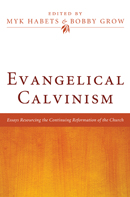
Congratulations to Myk Habets and Bobby Grow on the bringing to birth of Evangelical Calvinism: Essays Resourcing the Continuing Reformation of the Church. It’s good to see this baby come full term. The Table of Contents reads:
Prologue: Union in Christ: A Declaration for the Church. Andrew Purves and Mark Achtemeier
Introduction
1: Theologia Reformata et Semper Reformanda. Towards a Definition of Evangelical Calvinism. Myk Habets and Bobby Grow
Part 1: Prolegomena – Historical Theology
2: The Phylogeny of Calvin’s Progeny: A Prolusion. Charles Partee
3: The Depth Dimension of Scripture: A Prolegomenon to Evangelical Calvinism. Adam Nigh
4: Analogia Fidei or Analogia Entis: Either Through Christ or Through Nature. Bobby Grow
5: The Christology of Vicarious Agency in the Scots Confession According to Karl Barth. Andrew Purves
Part 2: Systematic Theology
6: Pietas, Religio, and the God Who Is. Gannon Murphy
7: “There is no God behind the back of Jesus Christ:” Christologically Conditioned Election. Myk Habets
8: A Way Forward on the Question of the Transmission of Original Sin. Marcus Johnson
9: “The Highest Degree of Importance”: Union with Christ and Soteriology. Marcus Johnson
10: “Tha mi a’ toirt fainear dur gearan:” J. McLeod Campbell and P.T. Forsyth on the Extent of Christ’s Vicarious Ministry. Jason Goroncy
11: “Suffer the little children to come to me, for theirs is the kingdom of heaven.” Infant Salvation and the Destiny of the Severely Mentally Disabled. Myk Habets
Part 3: Applied Theology
12: Living as God’s Children: Calvin’s Institutes as Primer for Spiritual Formation. Julie Canlis
13: Idolaters at Providential Prayer: Calvin’s Praying Through the Divine Governance. John C McDowell
14: Worshiping like a Calvinist: Cruciform Existence. Scott Kirkland
Part 4
15: Theses on a Theme. Myk Habets and Bobby Grow
Epilogue: Post Reformation Lament. Myk Habets
Eugene Peterson on being formed as a pastor
Here’s Rick McKinley’s interview with Eugene Peterson about what it means to be formed as a pastor today: