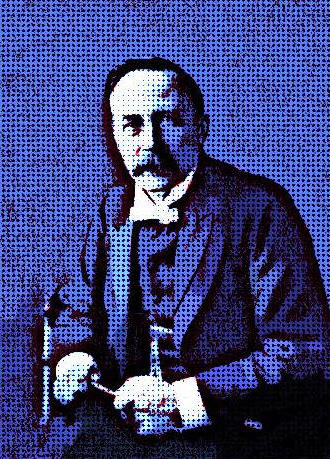
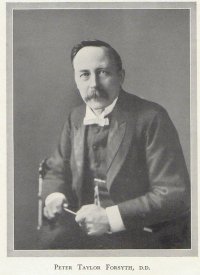
PT Forsyth

Forsyth: ‘Christianity and Society’

forsyth-61Regular readers of Per Crucem ad Lucem can gear themselves up for some more Forsyth in the next few posts. Here’s a few nuggets from his 1914 essay, ‘Christianity and Society’ (Methodist Review Quarterly):

‘The Church’s true attitude and action in the world is Christ’s. It is that of him whose indwelling makes it a Church The question, therefore, of the Church’s relation to Society is really the whole question of Christology’. (pp. 3-4)

‘Christ is God by his eternal personal relation to the divine holiness, rather than by his essential relation to the divine substance’. (p. 4)

‘The Church is not simply the superlative of religious society. It is not spiritual Humanity coming to its own. Christianity is not the republication of the lex naturæ with supreme éclat. Grace is not a mere reēnforcement of nature. There is a new Creation. That is the vital thing’. (p. 5)

‘The principle of the Church is thus the antithesis of the world; and yet it is in constant and positive relation with it. They co-exist in a vital paradox which is the essence of all active religion. The Gospel can neither humor human nature nor let it alone. That is the grand collision of history, however its form may vary … Hence the first business of the Church is not to influence man but to worship and glorify God, and to act on man only in that interest. All its doctrine, preaching, culture, and conduct is a confession and glorification of the Saviour. The Church does not save; it only bears living witness and makes humble confession, in manifold ways, of a God who does. It is not a company for the promotion of goodness, but a society for the honor of God’. (p. 6)

‘The evil neglect of the theologian by the public today is in a measure his own fault. His truth has not kept pace with the growth of social interest. It has been too idealogical, and not enough social. His doctrine has not remained a living expression even of his own society of the Church. He has failed to show how necessary it is for the social interest itself. And he has not so construed the Gospel as to force a social regeneration on the Christian conscience. He has been often occupied with a God of substance, process, or ideas, instead of a God of act, life, and the Kingdom’. (p. 7)

‘Christianity has more and more to face a dechurched civilization. The circumstances are thus quite different from the mediæval state of things. The traditional civilization is turned more and more upon its own resources. Can they save it from anarchy? It is on its trial’. (p. 14)

‘… our eyes are being purged today to see many things. We feel the effects of a modernized Pelagianism, the effect of worshiping (if it is worship) a God whose revelation is too little of a moral crisis and re-creation of human nature, and too much of its glorification. We inherit a Christianity which allows too much to human nature, and therefore is conquered by it’. (p. 17)

Forsyth: ‘Christ – King or Genius?’

forsyth-5Just been reading Forsyth’s essay, ‘Christ – King or Genius?’ published in the July 1916 edition of Methodist Review (pp. 433-47). It’s classic Forsyth-style, and picks up a great many of the themes that dominate his christology: Jesus’ self-identify, his difference from us, the soteriological priority given to his obedience, Christ as other than the apotheosis of Nature and the hierophant of humanity, his redeeming achievement as God’s Missionary, etc. Here’s a few Forsyth gems:

‘Hero worship is a precious protest against naturalism and for man; but it ends in Nietzsche and the superman unless it be itself superseded by the Godman’. (p. 438)

‘… the worship of God in Christ does not rest on a scorn of the gifted, but on a leveling grace which uplifts all. Truly it knows how mean man can be amid his very wisdom and greatness, how dark God may remain to us in the midst of culture’s kindliest light, and how weak he may be as a control amidst the men of genius, might, and liberty. But from such a brilliant and ignoble race Christ does not retire to the heights; he goes down to its depths – meaning not that he marches into its slums, but that he contracts himself into his impotence. He does not simply frequent man’s company; he is united with his soul and self-withdrawn into his sickness’. (p. 441)

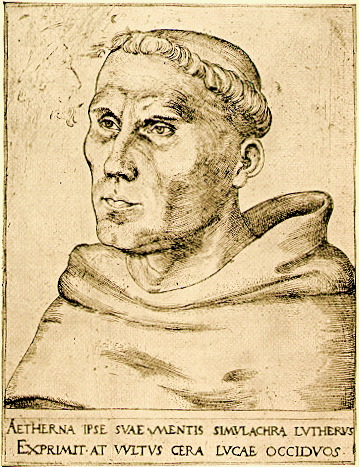
Forsyth on Luther’s merit

luther-1‘Luther’s merit was not the heroism of his conscience, but the rediscovery of a new conscience beyond the natural, and beyond the institutional – whether canonical in the Church, or civil in the State. He found a conscience higher and deeper than the natural, the ecclesiastical, or the Political – the individual, the canonical, or the civil; more royal than culture, clergy, or crown. He found a conscience within the conscience. He found anew the evangelical conscience, whose ideal is not heroism at all, but the humility and obedience of the conscience itself, its lostness and its nothingness except as rescued and set on its feet by Christ, in whom no man is a hero, but every man a beggar for his life’. – Peter T. Forsyth, Rome, Reform and Reaction: Four Lectures on the Religious Situation (London: Hodder & Stoughton, 1899), 121. 

Forsyth is aware that Christianity’s concern is not with the self-assertion or self-glorification of human nature, but with the redemption and reconstituting of wills. The conquered conscience recognises this ‘Another, greater and better … Who comes to us, gives Himself to us’ in such a way that we are enabled, in faith, to give ourselves to, and find ourselves in, him. There is, Forsyth avers, no higher relation possible to human persons. However, although faith consoles the conscience, it does not necessarily follow that the testimony of the gospel and the feeling of the conscience enter into some sort of harmony in faith. In fact, as Zachman notes in his brilliant study (The Assurance Of Faith: Conscience In The Theology Of Martin Luther And John Calvin), ‘in the experience of tribulation (Anfechtung), the opposition between the Word of God and the feeling of the conscience is intensified’ (p. 63; see also pp. 63-8, 80-7, 151, 182, 192, 198-203, 210-23, 226, 246). This is because, as Forsyth notes, the unconquerable relationship between conscience and Conscience entails the acquisition of a new and final authority:

The prime question of religion is not, “How do I stand to the spiritual universe?” but “How shall I stand before my Judge?” The last authority must be the authority owned by the conscience, and required by the sinful, guilty conscience of a race. It is the authority of a Saviour … One whose absolute property we are … It is the authority of the moral absolute, of the holy, which stands over us and changes us from self-satisfaction to self-scrutiny, self-knowledge, and self-humiliation in the presence of the righteousness loving and eternal. (Peter T. Forsyth, The Principle of Authority in Relation to Certainty, Sanctity and Society: An Essay in the Philosophy of Experimental Religion (London: Independent Press, 1952) 303-4; cf. pp. 400; Peter T. Forsyth, The Preaching of Jesus and the Gospel of Christ (Blackwood: New Creation Publications, 1987) 55-6.)

Around the traps …

  • Phil Baiden writes an appreciation of PT Forsyth.

  • The latest IJST (11/2) is out, and includes articles on:
    • ‘Development of Doctrine, or Denial? Balthasar’s Holy Saturday and Newman’s Essay’ (p 129-145), by Alyssa Pitstick
    • ‘The Descent into Hell as a Solution for the Problem of the Fate of Unevangelized Non-Christians: Balthasar’s Hell, the Limbo of the Fathers and Purgatory’ (p 146-171), by Gavin D’Costa
    • ‘One Commixture of Light’: Rethinking some Modern Uses and Critiques of Gregory of Nazianzus on the Unity and Equality of the Divine Persons’ (p 172-189), by Ben Fulford
    • ‘The Cruciality of the Cross’: P.T. Forsyth’s Understanding of the Atonement’ (p 190-207), by Theng-Huat Leow (Congratulations Theng-Huat!!)
    • ‘The Grammar of Pneumatology in Barth and Rahner: A Reconsideration’ (p 208-224), by Travis Ables

PT Forsyth on ‘How To Help Your Minister’

help‘By great care in his (sic) selection. I do not mean merely care as to his ability and character. I mean care that he is one who increases your own faith and ministers to your own soul. It is fatal to our Protestant principle to vote for a minister because you can just tolerate him yourself, but think he will be of great use among the young or in the town. The minister is first and foremost minister to your faith; and he will not feel that he gets from you what he needs unless he feel also that you are united in the bond of a growing faith and love. Select your minister for yourself, and not for your neighbour.

Let him feel that his ministry is a real factor in the reasons which lead you to live where you do. What help can you give to the minister’s work and soul if he feels that you are ready to remove to the other side of the town for better tennis, a better golf–course, or for a change merely? It is amazing that Christian people should take a house without any inquiry what the neighbourhood offers a family in the way of religious advantage. When men complain that they cannot hold their family to their faith because there is no church near they can profit by, whose fault is that?

Represent to him that it is unnecessary for him to attend every meeting held in connection with the church, that to be out most nights at such meetings is mischievous to next morning’s study, and that he cannot hope to be the blessing to his people that he might be if Sunday arrive simply at the close of a jaded week. Do not forget that what starts you on a new week is for him the end of a stale one, so far as nervous condition goes.

Tell him when he first comes to see you that it will make no difference to your sympathy or your Sunday attendance if he never comes to see you at all except in some crisis. You stand some chance then of being the best–visited family in the congregation.

Tell his wife the same thing, especially if she have a family of children.

Send him a note when the sermon has done you special good; and add that if he answer it, you will not send another.

But if a text trouble you, or a problem, put it in black and white, and say that if he is at a loss for a subject at any time, you would be grateful if he would take that, or would let you talk to him about it.

Use your opportunity to practise local preaching and the conduct of a service. Few things carry home to the pew so well as that what it means to be in the pulpit every Sunday. The minister has this reason of his own for wishing that all the Lord’s people were prophets. Besides, it is a great thing for a minister to know that he preaches to preachers, and is giving to givers. If you have a class, treat it not only as a teacher, but also as a pastor. Have a care of souls. That will open your eyes a little to what pastoral concern is. Faults and failings which to an outsider are mere matter of curiosity are to the pastor an anxiety and grief. You will help him to carry it if you know by experience what this divine concern is, if you have souls you watch for, and lives you train for Christ. Your family may teach you this pastoral sympathy if no other sphere does. Do not omit or neglect this pastoral office at home, as the manner of so many is. It casts on the minister a burden he was never meant to bear. The father is the true pastor of the young. You have no right to blame the minister for the indifference of your young people unless he is palpably incompetent, or worse. It seems to me sometimes that the congestion of work thrown on the church, the dispersion of its energies over trivial efforts to catch youth, the oppressive distraction of the minister, all have their root in the general neglect of family religion. The church and the minister are called on for work which God never meant should be done by the church at all, but by the home. The church is but one organ of the Kingdom of God, and the home is another. And we know what happens when a vital organ refuses work and throws a long strain on another. The end is weakness, illness and death.

Bring to church affairs business methods, but not the business spirit. A Church Meeting is not a committee, nor is it a political assembly. It is the sphere neither of criticism nor of mere discussion, but of Christian work and fellowship in faith and love. Let all truth–telling be the telling of the truth as it is in Jesus.

When the minister asks you to do something, do it without excuses, and without deprecating yourself as compared with someone else. If you wish to escape being asked, do what you are asked and let your unfitness be proved. People will not believe it till you convince them. Then you will have peace.

Do not ask him and his wife to tea “and spend the evening”. At least, do not regard it as part of his ministerial work.
punctualInsist that he be punctual in keeping engagements, answering letters, and especially in beginning service. You can sometimes see the whole secret of an ‘ineffectual ministry in the ten minutes after the hour at which worship should begin. A man who is systematically late at public meetings loses more influence than he knows. How can he hope to be effective with business people whom he exasperates to begin with? Besides, it is an offensive liberty to take.

It might help him if he thought there were the occasional risk of a deacon calling on some pressing business at 9 a.m.

If you are absent from church, let it be when he is there, not when he goes away. The minister supplying finds and reports abroad a poor congregation. It is gauche flattery to say to your minister you only miss when he does.

It would be a help to some if you made it understood, in some kind way, that the minister’s speech at a social meeting need not always be funny, so long as it was sunny.

Do not omit to thank him for asking a subscription. They do you a true service who suggest to you, or collect from you what it is your duty to find means to give. Let him know that when he has a case of real need, he may always reckon on you according to your power. Few things are more disagreeable to most ministers than to ask for money. Remember, those who ask you for Christian money are your agents, not your duns.

Make it clear that you have a higher respect for the office of the ministry than even for the man who fills it. A minister who holds his place only in the affection of his own people carries a too heavy burden; it puts too much of the responsibility upon his personal qualities alone. After all, the church is more than the minister, and the apostolic office is more than the idiosyncrasy of its occupant. No minister should be encouraged to think that he improves his position or usefulness by what doctors or lawyers would call unprofessional or undignified conduct, or by any course that lowers the standard of his office. Your minister, to be sure, needs sympathy, and he must have it; for with us the whole ministerial bond is dissolved when sympathy ceases between pulpit and pew, and divorce should quickly ensue. But there is something that the true minister craves more than sympathy with his person, and that is sympathy with his gospel. “I believe in you, but I don’t believe in your truth,” is no Christian relation. It is mere personal friendship, and the minister must have a higher aim than being his people’s friend; he must be their guide, teacher, and at need corrector. When he is appointed, he is appointed to this. He is not merely the representative of his own community, he is a representative of the whole Church and a special trustee of what Christ committed to the Church. He must speak sometimes to his own church in the name of the Church universal and invisible. You should help to protect him from a frame of mind that overlooks this or makes it impossible. You will lose as well as he if he become parochial or conventialist, if he be a mere prophetic individualist and make nothing of his office. A freelance may rouse and pique, but a lance of any kind is very apt to wound, especially when it is nothing but free.

The old–fashioned advice, “Pray for your minister”, is never out of date. I would only press it into detail.

Pray with him–i.e. let your private prayers include what is most on his heart.

Pray for him–not generally, but in detail. Realize his position by an act of imaginative sympathy, and pray for the special things you divine he needs.

reading-bibleIt may help him even more if you really and privately study your Bible. The minister is hampered by his people’s ignorance of their Bible more than by most things. It is a joy and a power to minister to a people exercised in the Bible and hungry for its light. The more you pray over your Bible, the more you pray with and for your minister. You both work with the same textbook. What must it be for the teacher when the class is habitually unprepared?

The more you do to help your minister, the more he will feel, if he is of the right sort, that he is there to help you rather than to be helped by you. He comes not to be ministered unto, but to minister. Your help will be abundantly returned to you. Help his gospel if you would have him help your soul. But if you go on neither really helping the other, then God help you both!’

– PT Forsyth, ‘How to help your minister’, in Revelation Old and New: Sermons and Addresses (ed. John Huxtable; London: Independent Press, 1962), 115-19.

[Editorial note: I have left unchanged Forsyth’s non-inclusive language. He was a person of his time after all, a truth evident not only in terms of grammar but also in terms of the shape that pastoral ministry took, and the way the home was understood. Still, there is enough truth and meat in this short piece to encourage and challenge pastors and pastored alike.]
Forsyth on measuring sin

sin‘Sin … is not measured by a law, or a nation, or a society of any kind, but by a Person. The righteousness of God was not in a requirement, system, book, or Church, but in a Person, and sin is defined by relation to Him. He came to reveal not only God but sin. The essence of sin is exposed by the touchstone of His presence, by our attitude to Him. He makes explicit what the sinfulness of sin is; He even aggravates it. He rouses the worst as well as the best of human nature. There is nothing that human nature hates like holy God. All the world’s sin receives its sharpest expression when in contact with Christ; when, in face of His moral beauty, goodness, power, and claim, He is first ignored, then discarded, denounced, called the agent of Beelzebub, and hustled out of the world in the name of God’. – PT Forsyth, Missions in State and Church: Sermons and Addresses (London: Hodder & Stoughton, 1908), 56-7.
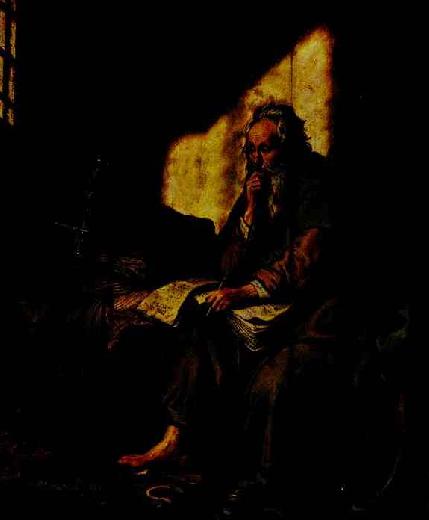
St Forsyth on St Paul


Paul‘[Paul] descended on the world … rather than arose from it. He defied it rather than deified it … He made the Church victorious by making it unpopular. He compelled the world to accommodate itself to him by preserving an evangelical isolation from it. He overcame the religious liberalism of his day by thought too profound to be welcome to the lazy public, and too positive to be welcome to the amateur discursive schools’. – PT Forsyth, Positive Preaching and Modern Mind: The Lyman Beecher Lecture on Preaching, Yale University, 1907 (London: Hodder & Stoughton, 1907), 80.

Forsyth on the difference between ‘Liberal’ and ‘Positive’ theology


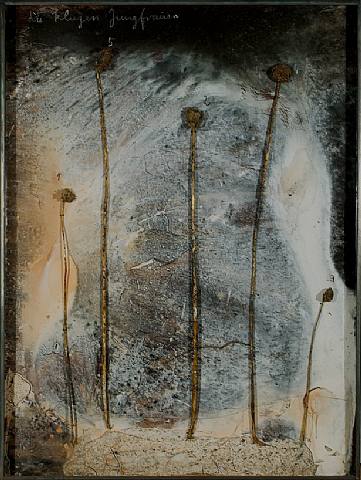
kiefer-the-five-wise-virginsWhile a liberal theology may or may not bear little trace of Christian experience, a positive Gospel, Forsyth contends is ‘given as a power to our Christian experience’. It is at bottom a theology of conversion, and not of being merely academically convinced. With echoes of Anselm, Forsyth avers that Positive theology is ‘faith giving a reasonable account of itself; it is not reason shaping, amending, or licensing faith … Its datum is in history, not in thought. It has the stigmata of the Cross on its heart’. While Liberal theology is doctrinaire, dogmatic, intellectualist and concerned with truth, Positive theology is more devout, pneumatic, evangelical and moral. Liberal concerned with life; the liberal is more doctrinaire and concerned with truth. The latter is ‘part of the religion’, the former, ‘a view of the religion’.

[The image comes from another Anselm, Anselm Kiefer, and depicts his 2007 work, ‘The Five Wise Virgins’]

Forsyth on the holiness of Christ

Forsyth‘We have seen in Christ a holiness the prophet did not know. It is not less solemn, it is not less sublime, but it is more sweet, it is more deep, it is more abiding. It is not a vision, but a presence and a power. We have seen through the smoke which filled the house. We have seen the face of Him that sat upon the throne. We have seen the Cross upon the altar. We have seen that the holiness of God is the holiness of love. There is no such awful gulf fixed between the King and the creature. We too are kings in Him. The word we hear is judgment indeed, and fear, but it is more. It is our judgment laid on the Holy. It is such mercy, pity, peace, and love. It is, indeed, infinite tenderness; but it is soul tenderness, it is moral tenderness, it is atoning, redeeming tenderness. It is the tenderness of the Holy, which does not soothe but save. It is love which does not simply comfort, and it is holiness which does not simply doom. It is holy love, which judges, saves, forgives, cleanses the conscience, destroys the guilt, reorganises the race, and makes a new world from the ruins of the old’. – PT Forsyth, Missions in State and Church: Sermons and Addresses (London: Hodder & Stoughton, 1908), 233.

Getting Kant out of my system

Having spent most of today reading that great father of modern thought – Kant – I confess that what I once discerned as a growing admiration for this Enlightenment thinker with ‘a good dose of Lutheran and Pauline scepticism’ is slowly being ebbed away. In fact, the more I read, it seems, the quicker the ebb ebbs. For example, consider this sample:

Because men are exceedingly frail in all acts of morality, and not only what they practise as a good action is very defective and flawed, but they also consciously and wilfully violate the divine law, they are quite unable to confront a holy and just judge, who cannot forgive evil-doing simpliciter. The question is, can we, by our vehement begging and beseeching, hope for and obtain through God’s goodness the forgiveness of all our sins? No, we cannot without contradiction conceive of a kindly judge; as ruler he may well be kindly, but a judge must be just. For if God could forgive all evil-doing, He could also make it permissible and if He can grant impunity, it rests also on His will to make it permitted; in that case, however, the moral laws would be an arbitrary matter, though in fact they are not arbitrary, but just as necessary and eternal as God. God’s justice is the precise allocation of punishments and rewards in accordance with men’s good or bad behaviour. The divine will is immutable. Hence we cannot hope that because of our begging and beseeching God will forgive us everything, for in that case it would be a matter, not of well-doing, but of begging and beseeching. We cannot therefore conceive of a kindly judge without wishing that on this occasion He might close His eyes and allow Himself to be moved by supplications and flatteries; but this might then befall only a few, and would have to be kept quiet; for if it were generally known, then everyone would want it so, and that would make a mockery of the law … [Man] cannot, indeed, hope for any remission of punishment for his crimes from a benevolent ruler, since in that case the divine will would not be holy; but man is holy insofar as he is adequate to the moral law; he can, therefore, hope for kindness from the benevolent ruler, not only in regard to the physical, where the very actions themselves already produce good consequences, but also in regard to the moral; but he cannot hope to be dispensed from morality, and from the consequences of violating it. The goodness of God consists, rather, in the aids whereby He can make up for the deficiencies of our natural frailty and thereby display His benevolence. – Immanuel Kant, Lectures on Ethics (ed. P. Heath and J. B. Schneewind; trans. P. Heath. Cambridge: Cambridge University Press, 1997), 114–5.

Ouch! It makes one wonder if Kant had ever read Galatians, or Romans! For what is absent in Kant here is not only any notion that the law of God is the law of God’s own being and so cannot be abstracted from God, but also any notion that in a world like ours holiness literally takes the form of grace.

This relates to something else that I’ve been thinking of today, namely Forsyth (as I do), whose deep indebtment to Kant is not without its criticisms. One of Forsyth’s greatest critiques of Kant is reserved for his discussion on prayer. He grants that Kant certainly represents ‘intellectual power and a certain stiff moral insight’, but he lacks ‘spiritual atmosphere, delicacy, or flexibility, which is rather the Catholic tradition’. It is in Kant’s treatment of prayer, Forsyth contends, that he most betrays an intellectualism that ‘tends to more force than finish, and always starves or perverts ethic’. This is because he treats prayer with ‘the equipment of his age’ rather than with the ‘practical experience’ that he would have gleaned if he had immersed himself in ‘the great saints or captains of the race’ like Paul, Thomas à Kempis, or even Cromwell and Gustavus Adolphus. If only Kant had gone to them, Forsyth conjectures, he would have ‘realized the difference between shame and shyness, between confusion at an unworthy thing and confusion at a thing too fine and sacred for exposure’.

God is for us!

Karl Barth once penned: ‘That man is against God is important and must be taken seriously. But what is far more important and must be taken more seriously is that in Jesus Christ God is for man. And it is only in the light of the second fact that the importance and seriousness of the first can be seen’. – Karl Barth, Church Dogmatics II.2 (Edinburgh: T&T Clark, 1957), 154.

Yes! In Jesus Christ, God has shown not only that God does not want to be God without humanity, but also that God does not want humanity to be humanity without God. God’s will is that God might not be only for himself, but that God might be for humanity all that God is in his eternity. And in the action of the Holy Spirit, the Triune God is present and active among us to hear and answer prayers, to create and sustain life in every minum of creation, to empower human beings to keep saying ‘No’ to sin and ‘Yes’ to God, and to continuously bring home afresh the good news of the Father’s sanctifying action in Jesus Christ, guaranteeing humanity’s inheritance, and empowering us to live in the reality of being ‘holy and blameless’ before God (Eph 1:4). Because God is Holy Love (one of Forsyth’s great themes), humanity’s failure to participate in God’s holiness, is, at core, a denial of God’s love. It is to receive God’s grace in vain. 

Who would have ever thought? God is for us! Hallelujah!

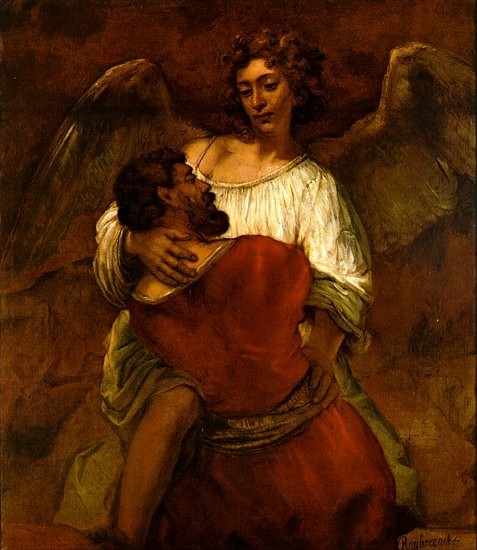
[Image: Rembrandt Harmensz. van Rijn, ‘Jacob Wrestling with the Angel’. Oil on canvas (137 × 116 cm) — ca. 1659/60. Gemäldegalerie der Staatlichen Museen, Berlin]

The [best] poet is the true prophet

‘It has often been said that the teachers of the age’s religion are to be sought rather among its poets than its preachers. But it seems as if we must look for our noblest theology also to our poets, rather than to our clerical schools … The age is deeply theological, and does not know it. It is like the man who was amazed to find that all his life he had been talking prose without being aware of it. We are theological, and don’t know it. Hence part of our unhappiness. It is like the sorrow of some young Werther who bears in his bosom the ferment of a genius not yet apprehended, and the germ of a revolution not yet realised. Our atheology belies our true deep selves, and our great poets are in this but prophets. They steal upon our less aggressive hours, and reveal our soul and future to ourselves. They fore-shadow our destiny, and they tell us that, in spite of all the savants say about the impossibility of a theology, it is the passion for a theology which is at the root of our mind’s unrest, and the possession of a theology which alone can lay our mind’s anarchy’. – PT Forsyth, ‘The Argument for Immortality Drawn from the Nature of Love: A Lecture on Lord Tennyson’s “Vastness”’. Christian World Pulpit, 2 December 1885, 360.

[Image: John Everett Millais, Alfred Tennyson 1881. Oil on canvas. Tate Gallery. Lent by National Museums Liverpool, Lady Lever Art Gallery]

Understanding holiness takes a miracle

Defying empirical definition, holiness, like Christianity itself, only makes sense from the inside, from direct experience and that not only of hearing the seraphim calling to one another ‘Holy, holy, holy is the LORD of hosts’, not even when such confrontation brings the self-revelation of personal and corporate uncleanness. Holiness comes home in that action when the same ‘LORD of hosts’ calls one of those seraphim to fly towards you with a live coal in its hand which he had taken with tongs from the holy altar and place that coal at the very source of one’s unholiness and say, ‘Behold, this has touched your lips; your guilt is taken away, and your sin forgiven’ (Isa 6:7).

One recalls here Forsyth’s words: ‘the holy is the ideal good, fair, and true, translated in our religious consciousness to a transcendent personal reality, not proved but known, experienced immediately and honoured at sight as the one thing in the world valuable in itself and making a world’ (Peter T. Forsyth, The Principle of Authority in Relation to Certainty, Sanctity and Society: An Essay in the Philosophy of Experimental Religion (London: Independent Press, 1952), 6).

Human curiosity longs for a rational expression of ‘the holy’ at the same time that holiness defies such explanation or ‘justification’ apart from moral experience. It is known only as the human subject is thrown back onto the miracle of revelation, of grace. (Even Otto sees something of this when he notes that accompanying the disvaluing of self is the feeling of being unworthy to be in the presence of ‘the holy one’, that we may even defile him, and that we subsequently require a covering that renders the approacher numinous, freeing them from their ‘profane’ being,’ so that they are no longer unfit to relate to the Holy). Certainly, when we are dealing with the holy, we are in ‘a region which thought cannot handle nor even reach. We cannot go there, it must come here. We are beyond both experience and thought, and we are dependent on revelation for any conviction of the reality of that ideal which moral experience demands but cannot ensure … The situation is only soluble by a miracle’ (Forsyth, Authority, 6).

Sermons are killing the Gospel

‘It is not sermons we need, but a Gospel, which sermons are killing … What we require is not a race of more powerful preachers, but that which makes their capital – a new Gospel which is yet the old, the old moralised, and replaced in the conscience, and in the public conscience, from which it has been removed. We need that the Gospel we offer be moralised at the centre from the Cross, and not rationalised at the surface by thin science. We need that more people should be asking “What must I do to be saved?” rather than “What should I rationally believe?”’ – P.T. Forsyth, The Church and the Sacraments (London: Independent Press, 1947 [1917]), 20.

How do we get at the entire personality of Christ?

‘How do we get at the entire personality of Christ? The account in the Gospels is too meager for our purpose, and to many it has been made by criticism more or less unstable. With these data we are more successful in reaching the character than the person, though even the character cannot be depicted on modem, intimate, and psychological lines. The motivation, the pragmatism, cannot easily be traced, if at all. As we go into the Gospels it becomes clearer that they were not put there to depict a character, or to be a monument to a personality, but to lead up to the great crisis and victory which, for the first Christians, made Christ Christ before a Gospel was written, even in rudiment. The Gospels have a tendency. There is a movement in them. They hurry, with many a leap, to a dénouement, to a goal in which the movement “arrives,” where the deep fire flames. They make for a crisis where the center of gravity lies. And, as the interest concentrates, the treatment expands. They are more ample as they draw to the close. They spend a disproportionate space on the passion, and on all the precincts of the Cross. Their stream is never so broad as when it enters the sea and disappears. The Gospels have the work of Christ on the Cross for their goal, as the Epistles have it for their center. Redemption is their Leitmotiv.’ – P.T. Forsyth, ‘Christ’s Person and His Cross’. The Methodist Review 66 (1917), 9-10.

The Cross and Violence

Richard Floyd, author of a wonderful study called When I Survey the Wondrous Cross, and a Forsythian scholar, has posted some helpful reflections on the cross and violence:

PT Forsyth on satisfying the holiness of God

‘There is only one thing that can satisfy the holiness of God, and that is holiness – adequate holiness … Nothing, no penalty, no passionate remorse, no verbal acknowledgment, no ritual, can satisfy the claim of holy law – nothing but holiness, actual holiness, and holiness upon the same scale as the one holy law which was broken. The confession must be adequate … All your repentance, and all the world’s repentance, would not be adequate to satisfying, establishing the broken law of holy God. Confession must be adequate – as Christ’s was. We do not now speak of Christ’s sufferings as being the equivalent of what we deserved, but we speak of His confession of God’s holiness, his acceptance of God’s judgment, being adequate in a way that sin forbade any acknowledgment from us to be. For the only adequate confession of a holy God is perfectly holy man. Wounded holiness can only be met by a personal holiness upon the scale of the race, upon the universal scale of the sinful race, and upon the eternal scale of the holy God who was wounded. It is not enough that the eternal validity of the holy law should be declared as some prophet might arise and declare it, with power to make the world admire, as the great and sublime Kant did. It must take effect’. – PT Forsyth, The Work of Christ (London: Hodder & Stoughton, 1910), 126-7.

PT Forsyth on our assurance

Forsyth consistently asserts that the Church’s faith rests not on some ‘subjective sanctity’ but on a ‘real principle’ – the objective work of Christ. This faith finds personal expression in his own experience of grace: ‘God has made life out of my shipwreck’, he says in his sermon on Ezekiel 37, ‘that is my experience. He has opened my grave and made me live; he has clothed my bones with flesh, and stirred me with life and hope; and if he has done that for me, then the incredible miracle is in principle done that saves the world.’ Here Forsyth gives voice to his conviction that he has been saved by that which saved the whole world. ‘It took a world salvation to save me, and what I know in this matter for me I foreknow for mankind.’ In other words, Forsyth is certain of his salvation because God has saved the world.

Now because Forsyth understands election both christologically and as related to God’s wider eschatological purposes concerning universal righteousness (as in Calvin, who in the Institutes deals with election at the end of Book Three, i.e. after he has expounded the persons and works of God), his doctrine of assurance avoids the anxiety-producing effects that have accompanied that Calvinist tradition that traces its roots through Beza and Perkins. Forsyth identifies that no matter how pastorally well-intended the federal theologians were, one result of decayed and pietistic federal Calvinism has been ‘a welter and a haze in which the soul turns for assurance from itself and its piety … to seek in the sacraments a stay and comfort which the elect found at a higher source’. Forsyth directs us to look to Christ in whom we are given the objective ground our election and so of assurance.

PT Forsyth on the certainty of our election in Christ

‘Now for this tremendous certainty [of election] there is no other foundation than the historical revelation and salvation in Christ as the eternal and comprehensive object of God’s loving will and choice, the Captain of the elect. We have not sufficient ground outside that for believing or trusting such a God. We cannot start with a view of God reached on speculative or other similar grounds, and then use Christ as a mere means for confirming it or giving it practical effect. That would mean a certainty higher than Christ’s, and the superfluity of Christ when the end had been reached. Which is not the Christian Gospel, be that Gospel right or wrong. In that Gospel our final certainty can never be detached from what Christ did, what He is and does for eternity. The eternal election is in Christ, “Mine elect in whom My soul delighteth”; and only in Christ does faith at every stage realise it. Hence it has been well pointed out that we must not preach election to produce the certainty of Christian faith, but preach Christ and faith in Him to give us the certainty of our election’. – Peter T. Forsyth, The Principle of Authority in Relation to Certainty, Sanctity and Society: An Essay in the Philosophy of Experimental Religion (London: Independent Press, 1952), 353.

Series – Theodicy: The Justification of God

Here’s the links to the series of studies by Trevor Faggotter based on PT Forsyth’s, The Justification of God: