Karl Barth

Recent wanderings: ‘The sudden disappointment of a hope leaves a scar which the ultimate fulfillment of that hope never entirely removes’

  • An attack on liberal Anglicanism – and on art?
  • Some words for teachers on the relationship between teaching styles and learning styles
  • David Fergusson on Rudolph Bultmann
  • Michael Gorman on why Christmas ought not include singing Happy Birthday to Jesus
  • Saddened to hear of the news of Edward Schillebeeckx’s passing. Schillebeeckx’s was one of the great voices in recent years, a true scholar and gentle prophet of reform. Here’s what he had to say twenty years ago: ‘My concern is that the further we move away in history from Vatican II, the more some people begin to interpret unity as uniformity. They seem to want to go back to the monolithic church which must form a bulwark on the one hand against communism and on the other hand against the Western liberal consumer society. I think that above all in the West, with its pluralist society, such an ideal of a monolith church is out of date and runs into a blind alley. And there is the danger that in that case, people with that ideal before their eyes will begin to force the church in the direction of a ghetto church, a church of the little flock, the holy remnant. But though the church is not of this world, it is of men and women. Men and women who are believing subjects of the church’. This mature voice once stated, in God Is New Each Moment, that ecumenism means ‘that we have to bear in mind the great Christian tradition that can be found in all the Christian churches – the Catholica, which does not in itself coincide with the empirical phenomenon of the Roman Catholic Church … In that sense, my work is, I think, a valid contribution to the unity of the church, in which there may be all kinds of differences, but in which the one Church community recognizes itself in the other communities and they recognize themselves in it’ (p. 74).
  • Some disturbing religious activities
  • An interesting interview with Better World Books
  • Robert Minto brings Simone Weil and Graham Greene’s Whiskey Priest into the same frame
  • Andrew Errington shares some Seamus Heaney
  • David Guretzki begins some reflections on Barth’s Credo
  • Jim Gordon posts on the importance of ideas in the practical renewal of the church
  • James Merrick shares some Marilynne Robinson on evangelicalism and Protestant liberalism
  • Finally, as one who has posted on beer before, I was delighted to read Arni Zachariasse’s post on  ‘6 reasons why your church needs (more) beer’:
  1. Beer is good for the community. Beer reduced inhibitions and nowhere are people more inhibited than in church. Congregants want at least one chair between them and the person next them. Even better if they get the entire pew to themselves. With a few pints down them, on the other hand, that invisible wall, that awkward space is all but gone. People will start laughing together, they will start crying together. They will even hug! Paul’s “holy kiss” might once again become commonplace, and not a relic of the Bible sped through by embarrassed readers-aloud. In addition to strengthening the ties between those already in the local church, the stranger will be welcomed with open arms, both his presence and his strange thoughts. Which leads me to the second point.
  2. Beer is good for the church’s communal theological inquiry. Here again alcohol’s inhibition reduction is beneficial. Imagine if people actually asked what was on their mind and weren’t afraid of embarrassing themselves because they weren’t among the chosen few in the front five pews, because they didn’t know the jargon or didn’t worry about having the Bible quoted at them. Imagine if people actually voiced those fleeting thoughts, objections and ideas. Theology would then, at last, actually be done in the church and by the church. Dogmatics, you could say, would finally become church dogmatics. Beer would not only have people doing theology and doing it more freely, but would strengthen people’s ties to the church while simultaneously opening the doors to new ideas from outside the church. (Maybe that’s why church leaders are against alcohol!)
  3. Beer is good for the worship. Have you ever heard drunk people sing? Of course you have! It’s about 80% of what drunk people do. They don’t do it well, no – but they do it with sincerity! With vocal chords and emotional capabilities lubricated by some good brew, the church’s worship would be amazing. It would be loud, brash, unashamed and totally in keeping with that unruly Holy Spirit. Liturgy would be shouted back at the minister. Hymns and choruses would sung on top of lungs along to bands unafraid to actually jam. And I can’t imagine what would happen in charismatic churches with all their tongue speaking and other pneumatalogical craziness.
  4. Beer is good for moral reflection. If you’re like 90% of Evangelicals, you’ve been taught that beer is bad. Consuming of alcohol is something that heathens and liberals do. But look at it this way: Drinking a beer is a physical manifestation of you re-evaluating your morals, of you thinking through, maybe for the first time, how you act out your faith. And it will be an entry into wider reflection, a small, very fun step in the direction of the examined life. And in light of the points raised previously, you’ll do it with your friends and you’ll have a great time.
  5. Keeping with the morals, beer supports Christian brothers and sisters. Or, more specifically, brothers. Some of the best beers in the world, Trappist beers in particular, are made by monks in Belgium and Holland. Trappist monastics brew this heavenly ales in order to keep their communities afloat and to support charitable causes. By buying Trappist beer you not only get some of the best tasting beer you’ll ever try, but you’ll also keep some of your brothers in Christ in their special monastic service.
  6. Beer will introduce you to the finer things in life. Not all beer will do this, granted, but if you do take my advice and buy some Trappist beer you will be introduced to a fascinating world of subtle flavours that will titillate your taste buds and satisfy your soul. Now, I’m not suggesting hedonism for it’s own vacuous sake. I’m suggesting that enjoying God’s gifts can be a worshipful activity and experience. Slowly savouring a glass of fine beer will inspire deep gratitude to the Lord for the blessings he has bestowed upon you, your ability to enjoy them and for existence itself. Fine beer will further introduce you to other tasty beverages like wine, whiskey, brandy and the like. Which means even more thanksgiving. This thanksgiving is great in solitude, but fantastic communally, with brothers and sisters in the church. Imagine a service of beer tasting. No, imagine the Eucharist with gourmet beer. Beautiful!

Theology for the community

The quote from David Lyall to which I drew attention in my previous post, What is practical theology?, and the ensuing discussion, reminded me of a section from John de Gruchy’s brilliant little book Theology and Ministry in Context and Crisis: A South African Perspective, wherein de Gruchy writes:

In Germany the title ‘theologian’ refers in the first place not to the academic theologian but to the pastor. It is the primary designation within the Protestant churches of an ordained minister. Yet few priests or pastors would regard themselves as such, especially within the Anglo-Saxon world. In his book Ferment in the Ministry, the north American pastoral psychologist Seward Hiltner imagined the possible responses which ordained ministers would give to a Gallup Poll which asked the question: ‘Do you regard yourself as a theologian?’

31% said, ‘Well, I am a minister, but you could hardly call me a theologian.’

22% said, ‘It is true I have studied theology, but I am not really a theologian.’

17% replied, ‘Brother, I sure ain’t. I’m only a simple parson, not one of those highpowered book guys.’

8% admitted, ‘Well, I guess I am, in a way, but I am more interested in serving people than in theology.’

7% said, ‘Where did you get that idea? And don’t do it again.’

4% replied, ‘I am about twice a year, when I go back to the alumni lectures.’

2% said, ‘Pardon me, I have to rush to a funeral.’

1% snorted, ‘I wonder who thought up that question?’

0.9% said, ‘Yes.’ (Seward Hiltner, Ferment in the Ministry (Nashville: Abingdon Press, 1969), 159.)

Why is there this reluctance on the part of ordained ministers, to regard themselves as theologians, and, on the part of some, especially Anglo-Saxons and their heirs, why is there such antipathy towards theology? In the Germanic world the traditional tendency and temptation is precisely the opposite, to glory in the title ‘theologian’, and to create theologies remote from Christian praxis and existence in the world. Helmut Thielicke has a German audience in mind when, in his A Little Exercise for Young Theologians, he writes about the ‘pathology of the young theologian’s conceit’. Yet even in Germany the idea that the ordained minister’s self-perception is that of a theologian cannot be assumed. At Christmas in 1939 Dietrich Bonhoeffer wrote in a letter to his former students:

How superficial and flippant, especially of theologians, to send theology to the knacker’s yard, to make out that one is not a theologian and doesn’t want to be, and in so doing to ridicule one’s own ministry and ordination and in the end to have, and to advocate, a bad theology instead of a good one! – Dietrich Bonhoeffer, True Patriotism: Letters, Lectures and Notes, 1939-1945 (ed. Edwin Hanton Robertson; trans. Edwin Hanton Robertson and John Bowden; The Collected Works of Dietrich Bonhoeffer; vol. 3; London: Collins, 1973), 28.

This attitude parallels the tendency within the church generally to disparage theology in the interests of ‘practical Christianity’.

Theology has a bad name amongst many theological students and ordained ministers, not primarily because of their modesty but because they fail to grasp its vital necessity and relevance to their vocation. Indeed, they may even regard it as something detrimental to their calling and the life and mission of the church. There are theological students who regard the study of theology as an unfortunate requirement for ordination, rather than as that which should provide the focus for their work. The image of a theologian is academic, intellectual, and far-removed from the everyday tasks of the parish minister. Much of the blame for this must be laid at the door of university departments of theology, theological colleges and seminaries, and those of us who teach in them. Theology has too often been taught in ways which reduce it to idealistic abstractions, and result in its rejection as a useful, indeed, essential part of the mission of the church and therefore of the ordained ministry. After all, the value of theology taught as a series of independent academic disciplines lacking both coherence or direction and unrelated to biblical vision or faith, is not self-evident for the Christian community struggling to be faithful in the midst of the world. This situation needs to be radically transformed if theology is to become the vocation of the ordained minister, and central to the total ministry of the church, and not simply be regarded as the peculiar province of scholars.

In John T. McNeill’s magnificent A History of the Cure of Souls, there is what we might call a ‘give-away’ comment which reinforces my argument that the ordained minister, is primarily a theologian. McNeill refers to the fact that ‘Jean Daniel Benoit, the expert on Calvin’s work in the cure of souls, states boldly that the Genevan Reformer was more a pastor than theologian’, but he then continues, ‘to be exact, he was a theologian in order to be a better pastor’. Conversely, in his introduction to Karl Barth’s essays, Against the Stream, Alec Vidler has this perceptive comment about the theologian’s theologian, Karl Barth: ‘I was aware of a quality or style about him which is hard to define. It may perhaps best be called pastoral, so long as this is not understood as a limitation.’ Christian pastors are called to be theologians, and those whom we normally designate theologians may well be pastors …

The primary task of the ministry of the Word and Sacraments is to enable the upbuilding of the church in such a way that it is always pointed beyond itself to the reign of God in Jesus Christ in the midst of the world. Its task is to keep the People of God mindful of the tradition of Jesus, crucified and risen, and what this means for their lives and the praxis of the church today. Its task is to enable the church to be faithful to its identity as the People of God in the world, discerning who God is and what God requires of them. In this way the ministry of the Word and Sacraments is, literally speaking, church leadership because it provides theological direction for the mission of the People of God in the world. – John W. de Gruchy, Theology and Ministry in Context and Crisis: A South African Perspective (London: Collins, 1987), 40–3, 47

And then there’s that wonderful section from Karl Barth’s Evangelical Theology: An Introduction, a book written in part to speak to ‘the present-day younger generation’ (p. i) and clearly with an intention to encourage budding pastors. The first lectures of this collection were delivered under the auspices of the Divinity School, the University of Chicago and were the Annie Kinkead Warfield Lectures of 1962 at the Princeton Theological Seminary. The section which I was reminded of appears in a chapter titled ‘The Community’:

Since the Christian life is consciously or unconsciously also a witness, the question of truth concerns not only the community but the individual Christian. He too is responsible for the quest for truth in this witness. Therefore, every Christian as such is also called to be a theologian. How much more so those who are specially commissioned in the community, whose service is preeminently concerned with speech in the narrower sense of the term! It is always a suspicious phenomenon when leading churchmen (whether or not they are adorned with a bishop’s silver cross), along with certain fiery evangelists, preachers, or well-meaning warriors for this or that practical Christian cause, are heard to affirm, cheerfully and no doubt also a bit disdainfully, that theology is after all not their business. “I am not a theologian; I am an administrator!” a high-ranking English churchman once said to me. And just as bad is the fact that not a few preachers, after they have exchanged their student years for the routine of practical service, seem to think that they are allowed to leave theology behind them as the butterfly does its caterpillar existence, as if it were an exertion over and done with for them. This will not do at all. Christian witness must always be forged anew in the fire of the question of truth. Otherwise it can in no case and at no time be a witness that is substantial and responsible, and consequently trustworthy and forceful. Theology is no undertaking that can be blithely surrendered to others by anyone engaged in the ministry of God’s Word. It is no hobby of some especially interested and gifted individuals. A community that is awake and conscious of its commission and task in the world will of necessity be a theologically interested community. This holds true in still greater measure for those members of the community who are specially commissioned … – Karl Barth, Evangelical Theology: An Introduction (trans. Grover Foley; Grand Rapids: Wm. B. Eerdmans, 1979, 40–1.

A little later on Barth proceeds to recall that theology – even, one should add, that is as extensive as Barth’s own Church Dogmatics (the word ‘Church’ is crucial here) – ought to be undertaken for the sake of the Community and its witness to the Word of God:

Theology would be an utter failure if it should place itself in some elegant eminence where it would be concerned only with God, the world, man, and some other items, perhaps those of historical interest, instead of being theology for the community. Like the pendulum which regulates the movements of a clock, so theology is responsible for the reasonable service of the community. It reminds all its members, especially those who have greater responsibilities, how serious is their situation and task. In this way it opens for them the way to freedom and joy in their service. (p. 42)

Who would have thought – dared to think – that a human discipline might have a responsibility beyond its own indulgence! In this case, ‘for the reasonable service of the community’, even for the equipping of the saints for the work of ministry, for building up the body of Christ, until we all attain to the unity of the faith and of the knowledge of the Son of God … (Eph 4:12–13). Pastors who are serious about serving their communities will be theologians, and unashamedly so.

I tidied up the kitchenette, I tuned the old banjo …

John Webster’s Evangel articles

Rob Bradshaw has recently made available the following articles by John Webster:

Thanks Rob.

Why universities welcome theological colleges

Today’s Eureka Street includes a piece by Neil Ormerod on ‘Why universities welcome theological colleges’. He concludes with this warning:

The movement [of theological education] to the university sector of course restores the ancient place of theology as a discipline within a university. But there are dangers in such a move. Theological colleges should be under no illusion that the interest of most of these universities extends beyond the financial. The colleges bring student numbers, and their theologians contribute relatively well to research outputs with minimal investment from the university. Apart from ACU they have no particular interest in theology for its own sake. A decline in student numbers or changes in government funding formulae for research could lead to a colder relationship. The last twelve months has proved tumultuous in the theological sector. The future is not likely to be less so.

The whole piece is worth reading, but his conclusion in particular invites reflection on a host of issues, one of which concerns the relationship between theology and religious studies. And that conversation reminds me of Karl Barth who, in his more generous moments, acknowledged the importance of various facets of religious studies, even though for Barth these could be never more than a beginning, and often a false start at that. The growing trend towards names like ‘religious studies’, ‘philosophy of religion’, ‘phenomenology of religion’, would seem, in Barth’s eyes, to give the game away. For Barth makes a quite fundamental distinction between ‘religion’ and ‘theology’, and the two are not to be confused. For Barth, ‘religion’ is something entirely human and concerns a human being’s search for God, a search so entirely fruitless or perverted that it ends with another god. Theology, on the other hand, is ‘God-talk’: not talk about God, for God is not an object that can form the content of our discourse, but rather the human response to, and participation in, the theologia that has already addressed, undressed and redressed us in Jesus Christ.

And whatever his critics may say of him, Barth’s work can never be faulted at this point. From the beginning, he is constantly aware of the demands of the subject. During the first year of his first university teaching appointment, in the academic atmosphere of Göttingen, Barth wrote to a friend:

To make you acquainted with my spiritual condition I will report to you what Barthold von Regensburg (AD 1272) once said: ‘A man who looks directly into the sun, into the burning radiance, will so injure his eyes that he will see it no more. It is like this also with faith; whoever looks too directly into the holy Christian faith will be astonished and deeply disturbed with his thoughts.’ And then he went on: ‘Often it seems to me problematic to what extent it is both good and possible to spend the thirty-four years that still separate me from my retirement at that task ‘being deeply disturbed with thoughts’. To be a proper professor of theology one must be a sturdy, tough, insensitive lump who notices absolutely nothing … will I perhaps in time myself become such a blockhead? Or explode? If you can see any third possibility, tell me of it for my comfort’. – Barth and Thurneysen, Revolutionary Theology in the Making: Barth-Thurneysen Correspondence, 1914-1925, 92–3.

Grant us more insensitive lumps O Lord.

Speights and Barth on real men

SPEIGHTS-RIVER-ross-grade-websiteALT-1

Whether we’re talking of Monteiths, or Three Boys, or Emersons, or West Coast Brewing, New Zealand’s south island can boast being the home of some really decent beers (my own home brew included). One of the local favourites is Speights, whose Old Dark I’ve been enjoying of late. One of the most alluring features of Speights is their ad campaign, exploiting all the time-honoured associations between beer, horses, open spaces and ‘real’ men. Not only are there the amazing photos, (the ones of the river crossing and of the stag are two of my favourites) but one can also complete the Southern Man ID Chart, and sing the Southern Man Song which promotes:

Now I might not be rich
But I like things down here
We got the best looking girls
And the best damn beer
So you can keep your Queen City [Auckland]
With your cocktails and cool
Give me a beer in a seven
With the boys shooting pool

All part of what it means to be a ‘real’ man, right?

And then there’s Barth’s account in CD III/2 of what being a ‘real’ man looks like:

Real man lives with God as His covenant-partner. For God has created him to participate in the history in which God is at work with him and he with God; to be His partner in this common history of the covenant. He created him as His covenant-partner. Thus real man does not live a godless life – without God. A godless explanation of man, which overlooks the fact that he belongs to God, is from the very outset one which cannot explain real man, man himself. Indeed, it cannot even speak of him. It gropes past him into the void. It grasps only the sin in which he breaks the covenant with God and denies and obscures his true reality. Nor can it really explain or speak of his sin. For to do so it would obviously have to see him first in the light of the fact that he belongs to God, in his determination by the God who created him, and in the grace against which he sins. Real man does not act godlessly, but in the history of the covenant in which he is God’s partner by God’s election and calling. He thanks God for His grace by knowing Him as God, by obeying Him, by calling on Him as God, by enjoying freedom from Him and to Him. He is responsible before God, i.e., He gives to the Word of God the corresponding answer. That this is the case, that the man determined by God for life with God is real man, is decided by the existence of the man Jesus. Apart from anything else, this is the standard of what his reality is and what it is not. It reveals originally and definitively why God has created man. The man Jesus is man for God. As the Son of God He is this in a unique way. But as He is for God, the reality of each and every other man is decided. God has created man for Himself. And so real man is for God and not the reverse. He is the covenant-partner of God. He is determined by God for life with God. This is the distinctive feature of his being in the cosmos. – Karl Barth, Church Dogmatics III.2 (ed. Geoffrey W. Bromiley and Thomas F. Torrance; trans. Harold Knight, et al.; Edinburgh: T&T Clark, 1960), 203.

To be sure, I’ll keep enjoying my Old Dark, and Speights’ amazing pics, but as for me and my house (even though there’s been some question in the past about the manliness of my manhood), we’re going with Uncle Karl on this one.

SPEIGHTS-BLUES-STAG-MM


Karl Barth on ‘orthodoxy’

Karl Barth, Amsterdam 1948Barth again, this time on ‘orthodoxy’:

‘Orthodoxy doubtless has much to live down, but it has nevertheless a powerful instinct for what is superfluous and what is indispensable. In this it surpasses many of the schools that oppose it. And this, and certainly not the mere habit and mental inertia of the people, is the primary reason why it still continues to be so potent both in cultus and church polity and even in state politics. In this respect it is quite superior … The weakness of orthodoxy is not the supernaturalistic element in the Bible and the dogmas. That is its strength. It is rather the fact that orthodoxy, and we all, so far as we are in our own way dogmaticians, have a way of regarding some objective descriptions of that element – such as even the word “God” for instance – as the element itself … To hold the word “God” or anything else before a man, with the demand that he believe it, is not to speak of God … God by himself is not God. He might be something else. Only the God who reveals himself is God. The God who becomes man is God. But the dogmatist does not speak of this God’. – Karl Barth, The Word of God and the Word of Man, 200–3.

Karl Barth on doing theology in the university

Karl Barth - SketchI’ve been re-reading some early lectures by Karl Barth from the period 1916–1923, published as The Word of God and the Word of Man. It really is an inspiring collection, the reading of which is of great encouragement to pastors and theological educators alike, recalling that our unique task is none other than to bear witness to the Word of God unveiled for us in Jesus Christ. When the demands of church and academy pull and prod us in all directions – directions determined, Barth insists, by the very question of being human – Barth graciously recalls our calling as witnesses to the given answer – the one Word of God. This witness alone is the love that we owe to God and to God’s people. And this is no less true for those called to serve in the academy, to which Barth offers the following reminder:

Theology is an omen, a sign that all is not well, even in the universitas literarum. There is an academic need which in the last analysis, as might be inferred, is the same as the general human need we have already described. Genuine science is confessedly uncertain of itself – uncertain not simply of this point or that, but of its fundamental and ultimate presupposition. Every science knows well that there is a minus sign in front of its parenthesis; and the hushed voice with which that sign is ordinarily spoken of betrays the secret that it is the nail from which the whole science hangs; it is the question mark that must be added to the otherwise structurally perfect logic. If this question mark is really the ultimate fact of each of the sciences, it is evident that the so-called academic cosmos is an eddy of scattered leaves whirling over a bottomless pit. And a question mark is actually the ultimate fact of each of the sciences.

So the university has a bad conscience, or an anxious one, and tolerates theology within its walls; and though it may be somewhat vexed at the want of reserve shown by the theologians when they deliberately ask about a matter that cannot with propriety be mentioned, yet, if I am not mistaken, it is secretly glad that some one is willing to be so unscientific as to talk aloud and distinctly about the undemonstrable central Fact upon which all other facts depend – and so to suggest that the whole academic system may have a meaning. Whatever the individual opinion of this or that non-theological doctrinaire may be, there is a general expectation that the religious teacher will give an answer to what for the others takes the shape of a question mark in the background of their secret thought. He is believed to be doing his duty (let him beware of doing it too well!) when he represents as a possibility what the others have known only as an impossibility or a concept of limitation. He is expected not to whisper and mumble about God, but to speak of him: not merely to hint of him, but to know him and witness to him; not to leave him somewhere in the background, but to disregard the universal method of science and place him in the foreground. (pp. 192–3)

Barth then proceeds to recall theology’s ‘position’ within the university’s program, and to draw out some implications for, so-called, ‘religious studies’ departments:

It is obvious that theology does not owe its position at the university to any arbitrary cause. It is there in response to a need and is therefore justified in being there. The other faculties may be there for a similar reason, but theology is forever different from them, in that its need is apparently never to be met. This marks its similarity to the church. It is the paradoxical but undeniable truth that as a science like other sciences theology has no right to its place; for it becomes then a wholly unnecessary duplication of disciplines belonging to the other faculties. Only when a theological faculty undertakes to say, or at least points out the need for saying, what the others rebus sic stantibus [things thus standing] dare not say, or dare not say out loud, only when it keeps reminding them that a chaos, though wonderful, is not therefore a cosmos, only when it is a question mark and an exclamation point on the farthest rim of scientific possibility – or rather, in contradistinction to the philosophical faculty, beyond the farthest rim – only then is there a reason for it.

A faculty in the science of religion has no reason for existence whatsoever; for though it is true that knowledge of religious phenomena is indispensable to the historian, the psychologist, and the philosopher, it is also true that these scholars are all capable of acquiring and applying this knowledge themselves, without theological assistance. Or is the so-called ‘religious insight’ the property only of that rare historian or psychologist who is also a theologian? Is the secular scientist incapable of studying the documents of religion with the same love and the same wisdom? Palpably not.

If then we say that theology is the science of religion, we deprive it of its right to a place at the university. Religion may be taught as well as anything else – but then it must be called into question as well as anything else. To be sure, it is both necessary and possible to know something about religion, but when I study it as something that may be learned, I confess thereby to having the same need above and beyond it as I have above and beyond any science – above and beyond the study of beetles, for instance. New and remarkable and highly intriguing questions about it may keep me busy, but they are questions like all other questions, questions which point on to an ultimate and unanswered question. They are not the question which is also the ultimate answer. They are not the question by virtue of which theology, once the mother of the whole university, still stands unique and first among the faculties, though with her head perhaps a little bowed. (pp. 193–5)

(what) would Barth tweet?

st-barth-twitterDrawing on recent posts by Halden Doerge, Ben Myers and Carol Howard Merritt, Graham Ford (a pastoral resident at Bryn Mawr Presbyterian Church (USA) in Bryn Mawr, Pennsylvania), asks ‘What would Barth tweet?’ He begins:

If Karl Barth rightly claimed that all theological discourse is repetition, then I’d suggest that his Twitter page would be a beautiful, rehashed failure. As the vanguard of the social networking world, Twitter thrives on novelty. As one of the twentieth century’s few great theologians, Barth strove for depth. “The Church Dogmatics” simply would not work in 140 character bites. And yet the rapidly changing nature of communication, virtual and otherwise, requires church and institutional leaders to know what words to speak and how.

Here’s the rest.

The Service of Intercession

Moses MosaicKarl Barth once noted that ‘Even within the world to which it belongs, it [the Church] does not exist ecstatically or eccentrically with reference to itself, but wholly with reference to them, to the world around. It saves and maintains its own life as it interposes and gives itself for all other human creatures’ (CD IV.3.2, 762). There can be no doubt that this ministry of intercession certainly involves prayer, but prayer without diakonia is not true prayer, even as diakonia without prayer is not true diakonia. Authentic intercession also involves a struggle against evil, identification with those who are estranged and alienated, and an ‘argument’ with God on behalf of those who have become disenfranchised from God, from human community and from creation. We might recall here Moses’ intercession for those who have worshipped the golden calf:

On the following day Moses said to the people, ‘You have committed a great sin. But now I shall go up to Yahweh: perhaps I can secure expiation for your sin.’ Moses then went back to Yahweh and said, ‘Oh, this people has committed a great sin by making themselves a god of gold. And yet, if it pleased you to forgive their sin …! If not, please blot me out of the book you have written!’ (Exodus 32:30–32)

Inherent in this intercession of responsible action is a sharing of guilt. This recalled something that I read recently in Bonhoeffer’s Ethics, (the implications of which we might also profitably tease out with a copy of TF Torrance’s The Mediation of Christ in hand). I cite Bonhoeffer:

[The] structure of responsible action includes both readiness to accept guilt and freedom.

When we once more turn our attention to the origin of all responsibility it becomes clear to us what we are to understand by acceptance of guilt. Jesus is not concerned with the proclamation and realization of new ethical ideals; He is not concerned with Himself being good (Matt. 19.17); He is concerned solely with love for the real man, and for that reason He is able to enter into the fellowship of the guilt of men and to take the burden of their guilt upon Himself. Jesus does not desire to be regarded as the only perfect one at the expense of men; He does not desire to look down on mankind as the only guiltless one while mankind goes to its ruin under the weight of its guilt; He does not wish that some idea of a new man should triumph amid the wreckage of a humanity whose guilt has destroyed it. He does not wish to acquit Himself of the guilt under which men die. A love which left man alone in his guilt would not be love for the real man. As one who acts responsibly in the historical existence of men Jesus becomes guilty. It must be emphasized that it is solely His love which makes Him incur guilt. From His selfless love, from His freedom from sin, Jesus enters into the guilt of men and takes this guilt upon Himself. Freedom from sin and the question of guilt are inseparable in Him. It is as the one who is without sin that Jesus takes upon Himself the guilt of His brothers, and it is under the burden of this guilt that He shows Himself to be without sin. In this Jesus Christ, who is guilty without sin, lies the origin of every action of responsible deputyship. If it is responsible action, if it is action which is concerned solely and entirely with the other man, if it arises from selfless love for the real man who is our brother, then, precisely because this is so, it cannot wish to shun the fellowship of human guilt. Jesus took upon Himself the guilt of all men, and for that reason every man who acts responsibly becomes guilty. If any man tries to escape guilt in responsibility he detaches himself from the ultimate reality of human existence, and what is more he cuts himself off from the redeeming mystery of Christ’s bearing guilt without sin and he has no share in the divine justification which lies upon this event. He sets his own personal innocence above his responsibility for men, and he is blind to the more irredeemable guilt which he incurs precisely in this; he is blind also to the fact that real innocence shows itself precisely in a man’s entering into the fellowship of guilt for the sake of other men. Through Jesus Christ it becomes an essential part of responsible action that the man who is without sin loves selflessly and for that reason incurs guilt. – Dietrich Bonhoeffer, Ethics (ed. Eberhard Bethge; trans. N.H. Smith; London: SCM, 1955), 209–10.

BonhoefferBonhoeffer (who my wife often confuses with Jason Alexander, a.k.a. George Costanza) then turns to consider the implications of this theology of Christ’s vicarious humanity for the human conscience and its relationship with law:

When Christ, true God and true man, has become the point of unity of my existence, conscience will indeed still formally be the call of my actual being to unity with myself, but this unity cannot now be realized by means of a return to the autonomy which I derive from the law; it must be realized in fellowship with Jesus Christ. Natural conscience, no matter how strict and rigorous it may be, is now seen to be the most ungodly self-justification, and it is overcome by the conscience which is set free in Jesus Christ and which summons me to unity with myself in Jesus Christ. Jesus Christ has become my conscience. This means that I can now find unity with myself only in the surrender of my ego to God and to men. The origin and the goal of my conscience is not a law but it is the living God and the living man as he confronts me in Jesus Christ. For the sake of God and of men Jesus became a breaker of the law. He broke the law of the Sabbath in order to keep it holy in love for God and for men. He forsook His parents in order to dwell in the house of His Father and thereby to purify His obedience towards His parents. He sat at table with sinners and outcasts; and for the love of men He came to be forsaken by God in His last hour. As the one who loved without sin, He became guilty; He wished to share in the fellowship of human guilt; He rejected the devil’s accusation which was intended to divert Him from this course. Thus it is Jesus Christ who sets conscience free for the service of God and of our neighbour; He sets conscience free even and especially when man enters into the fellowship of human guilt. The conscience which has been set free from the law will not be afraid to enter into the guilt of another man for the other man’s sake, and indeed precisely in doing this it will show itself in its purity. The conscience which has been set free is not timid like the conscience which is bound by the law, but it stands wide open for our neighbour and for his concrete distress. And so conscience joins with the responsibility which has its foundation in Christ in bearing guilt for the sake of our neighbour. (pp. 212–3)

This got me thinking: What might be some implications of Moses’ prayer, and Bonhoeffer’s words, for pastoral ministry? And for that of the people of God as a whole?

I’m still thinking …

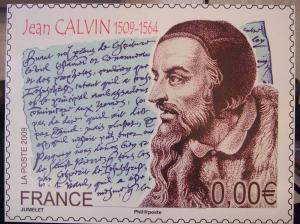
Barth’s Hymn to Calvin (the cataract)

calvin

Barth was not the only ‘modern’ theologian to have enjoyed a maturing relationship with Calvin’s thought. In the summer of 1922, the young Barth was teaching a course on the theology of Calvin. As he immersed himself in the reformer’s thought, he became beset by the peculiarity and muscle of what he found. On 8 June, 1922, Barth gave voice to this astonishment in a letter to his friend Eduard Thurneysen:

‘Calvin is a cataract, a primeval forest, a demonic power, something directly down from Himalaya, absolutely Chinese, strange, mythological; I lack completely the means, the suction cups, even to assimilate this phenomenon, not to speak of presenting it adequately. What I receive is only a thin little stream and what I can then give out again is only a yet thinner extract of this little stream. I could gladly and profitably set myself down and spend all the rest of my life just with Calvin’. – Karl Barth and Eduard Thurneysen, Revolutionary Theology in the Making: Barth-Thurneysen Correspondence, 1914–1925 (trans. James D. Smart; Richmond: Westminster John Knox Press, 1964), 101.

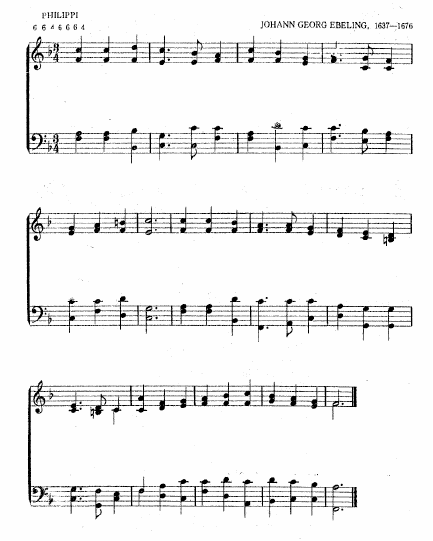
In January 2008, eighty-six years later, these words were then put into verse by David Alexander (then of Tainan Theological College and Seminary) to the tune of Philippi: 

Calvin’s a cataract, primeval forest, a demonic pow’r.
Something directly down, from Himalayan heights,
strange to the absolute, mythic in depth.

We lack the means the equipment to fathom this phenomenon,
nor to present it with adequate clarity.
What we receive is but a little stream.

We can give back but the thinnest of extracts of what we have got.
We would well benefit, if we would only sit,
spending our lives with John Calvin alone.


Hymn - Calvin’s A Cataract.jpg

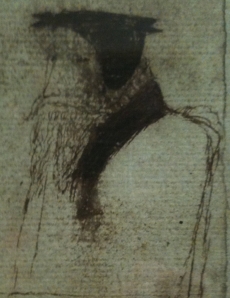
[Top image: Student sketch of Calvin made during a lecture in the Academy (c. 1559-63). HT: Heidelblog]

On searching for the perfect preacher

preacher parking‘Farel excelled in a certain sublimity of mind, so that nobody could either hear his thunders without trembling, or listen to his most fervent prayers without feeling almost as it were carried up into heaven. Viret possessed such winning eloquence, that his entranced audience hung upon his lips. Calvin never spoke without filling the mind of the hearer with the most weighty sentiments. I have often thought that a preacher compounded of the three would have been absolutely perfect’. (‘The Life of John Calvin’, in Selected Works of John Calvin: Tracts and Letters, Volume 1 (trans. H. Beveridge; Edinburgh: The Calvin Translation Society, 1844), xxxix).

However, it was none of these things that impressed Uncle Karl who, when he came to recall Calvin’s preaching, wrote:

‘How this man is grasped and stilled and claimed – not too quickly must one suppose by his experience of conversion, or by the thought of predestination, or by Christ, or even, as is commonly said, by passion for God’s glory – no, but in the first instance simply by the authority of the biblical books, which year by year he never tired of expounding systematically down to the very last verse!’ (Karl Barth, The Göttingen Dogmatics: Instruction in the Christian Religion (trans. Geoffrey W. Bromiley; vol. 1; Grand Rapids: Wm. B. Eerdmans, 1991), 54).

Thinking Calvin

CalvinIn recent days, my attention has turned to John Calvin, and to a paper that I’m trying to pen for an upcoming conference on Calvin. It has been great to meet books that have remained unopened on my shelves – and the library’s – for well over a decade (I knew I’d read them eventually!), to revisit some great studies, and to familiarise myself with some of the more recent and hard to get scholarship, including Bruce Gordon’s very readable Calvin, and Jean-Daniel Benoît’s enthralling study, Calvin in His Letters: A Study of Calvin’s Pastoral Counselling, Mainly from his Letters (trans. Richard Haig; Courtenay Studies in Reformation Theology; Appleford: Sutton Courtenay Press, 1986); thanks Jim for putting me on to Benoît. I’m also appreciating some re-digging into Barth’s reading of Calvin, such as this observation:

We must not view Calvin’s church of holiness as a catholicizing confusion of divine and human commands, at least not as far as Calvin himself was concerned, no matter what misunderstandings might have arisen among his successors. Calvin himself clearly saw the possibility of such a confusion. Under the pressure of the order and holiness that he found in God, he realized that order and holiness are incommensurable. They cannot be imitated on this side of the human sphere that is not to be confused with the other world, in the little city of Geneva that even at the pinnacle of his success he never truly regarded as a Jerusalem. With a certain resigned wisdom and grim humor, if we might put it thus, he spoke only of honoring God by bonds of humanity so far as this is possible seeing that we live on earth. Calvin did not fall victim to the illusion that gripped the Middle Ages and that has gained force again in the modern age, the illusion that there is a continuous path that leads step by step from an earthly city of God to the kingdom of heaven. For him the divine was always divine and the human always human. – Karl Barth, The Theology of John Calvin (trans. Geoffrey Bromiley; Grand Rapids: Wm. B. Eerdmans, 1995), 201.

If you’re interested, my own paper, (tentatively) titled ‘John Calvin: Servant of the Word’, proposes to attend to the notion of Calvin as minister of the Word, and to consider the attention that preaching occupied in Calvin’s ministry, his understanding of preaching as divine accommodation, as public, as event, as the Word of God, and its relationship to the proclamation activities of font and table.

Sex and Human Existence (or, Engaging Sex in the Right Places)

Magritte loversHalden’s and Ben’s recent posts on sex and personhood reminded me of Ray Anderson’s essay ‘Bonding Without Bondage’ (in On Being Family: A Social Theology of the Family). Anderson’s essay is on marriage, and begins by identifying a subtle but important distinction between a ‘theological’ view (i.e. that determined by theology proper and its Gospel shape) and an ‘ethical’ view (i.e. that determined by appeals to natural law) of marriage. The former is that held by Karl Barth, the latter by Emil Brunner. Anderson recalls that for Brunner marriage is not good in se, but only as it provides the optimum containment for what is otherwise unbridled impulse. For Brunner, sexuality is sanctified only through marriage, unless one chooses total abstinence. In other words, Brunner suggests that the erotic sexual impulse is an ‘unnatural’ and ‘unbridled biological instinct’ which can only be consecrated through marriage, or the ethical demand of abstinence (Love and Marriage, 183, 195). Barth, conversely, contends that human sexuality is a determination of human existence as the image and likeness of God and thus exists prior to, and independent of, marriage as a true order.

Anderson highlights that whereas for Brunner sexuality is sanctified as an ethical existence under the command of God only in the marriage relation, for Barth the command of God sanctifies human persons by including their sexuality within their humanity. In other words, the sexual relation of woman and man has already been constituted a true order of humanity, as an integral part of total humanity as male and female. Marriage, therefore, however conceived, integrates sexuality into total humanity.

Anderson observes that Brunner’s position of human sexuality ad extra to human personhood has serious consequences for understanding the role of sexuality in the case of the unmarried person as well as for a discussion of the matter of homosexuality. If we follow Brunner and understand the married couple as the basic model of man and woman as a community of love and all other relations as peripheral to it, then marriage will be offered as the highest – if not the only – possibility for authentic personhood. If, on the other hand, we follow Barth that humanity as determined by God is cohumanity, existing concretely as either male or female, then marriage (however conceived) is seen not as a ‘containment’ of that which has no other ethical point of reference, but as the ‘contextualizing’ of that which comes to expression in the total encounter of persons.

loversOne of the main points that Anderson seeks to bring home is that the divine command (‘What God has joined together …’) does not take place behind our backs, independent of human response and recognition. While marriage is grounded in God’s covenant love, it involves the mutual recognition, choice, and commitment of two people who are brought together by God in covenant partnership. God joins together actually as well as theoretically. God joins together in and by the encounter and decision of the two who form the union: not only on the basis of this human act of love but coincidental with it and as its objective validation. What begins as affection and feelings of love is absorbed into personal will expressed as commitment in marriage (with or without ‘a wedding’).

According to Barth, love, in contradistinction to mere affection,

‘may be recognised by the fact that it is determined, and indeed determined upon the life-partnership of marriage. Love does not question; it gives an answer. Love does not think; it knows. Love does not hesitate; it acts. Love does not fall into raptures; it is ready to undertake responsibilities. Love puts behind it all the Ifs and Buts, all the conditions, reservations, obscurities and uncertainties that may arise between a man and a woman. Love is not only affinity and attraction; it is union. Love makes these two persons indispensable to each other’. (CD III.4, 221)

Of course, one could – and indeed should – ask, what has love got to do with it?

Still, while certain to set marriage within the absolute determination of divine command, Anderson is equally concerned to not set marriage above the reality and practice of human existence. In this way, he avoids the idealism(s) often associated with marriage. He also notes that marriage can never be the solution to problems of personal unhappiness or loneliness. It can never be the relational horizon within which one expects to meet all his or her personal needs. Marriage, he contends, offers an expression of love and sexuality not realisable in any other human relationship, but it is no more human than any other human task or relationship. And, in particular, because marriage takes place under the divine command,

‘the sphere of the relationships of man and woman as they are embodied and lived out among us human beings is not simply a labyrinth of errors and failings, a morass of impurity, or a vale of tears at disorder and distress. For by the grace of God … there are always in this sphere individual means of conservation and rescue, of deliverance and restoration, assured points and lines even where everything seems to vacillate and dissolve, elements of order in the midst of disorder … And if there is no perfect marriage, there are marriages which for all their imperfection can be and are maintained and carried through, and in the last resort not without promise and joyfulness, arising with a certain necessity, and fragmentarily, at least, undertaken in all sincerity as a work of free life-fellowship. There is also loyalty even in the midst of disloyalty and constancy amid open inconstancy … Thus even where man does not keep the command, the command keeps man … He who here commands does not only judge and forgive: He also helps and heals’. (CD III.4, 239–40)

Coleridge on the ‘Ground’ of God

After re-reading McCormack and Molnar recently, I began to make my way through Berkeley’s fascinating essay on Coleridge, where I was struck by this claim:

‘The most radical element of Coleridge’s account of the Trinity is the inclusion of a fourth term: the “Prothesis” or “Ground” of God. [Coleridge] insists that this ground be conceived as will, and bases his claims of the personality of God on this subtlety’. – Richard Berkeley, Coleridge and the Crisis of Reason (Houndmills: Palgrave Macmillan, 2007), 46.

Now I’m no Coleridge scholar (Steve Holmes is my Coleridge man), but might it be that good ol’ uncle Samuel has something to contribute to this debate among Barth’s interpreters?

Barth on visual representations of Jesus

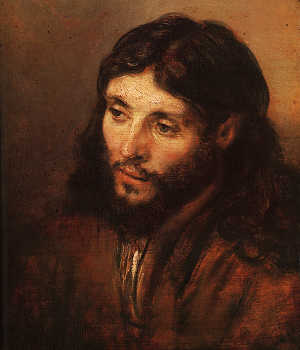
Rembrandt - Portrait of Christ's Head (1650)

Rembrandt Harmenszoon van Rijn, 'Portrait of Christ's Head', c.1650. State Museum, Berlin-Dahlem.

In preparing some lectures on theology and the arts recently, I’ve been struck yet again how that for all his radical revision of some central aspects of Calvin’s thought, Barth remains remarkably close to Calvin at so many key junctures, and consistently so (it would seem) on issues related to the visual arts. Here’s just one example:

This decisive task of preaching in divine service seems to suggest that the presence of artistic representations of Jesus Christ is not desirable in the places of assembly. For it is almost inevitable that such static works should constantly attract the eye and therefore the conscious or unconscious attention of the listening community, fixing them upon the particular conception of Jesus Christ entertained in all good faith no doubt by the artist. This is suspect for two reasons. The community should not be bound to a particular conception, as inevitably happens where there is an artistic representation, but should be led by the ongoing proclamation of His history as His history with us, so that it moves from one provisional Amen to another, in the wake of His living self-attestation pressing on from insight to insight. Supremely, however, even the most excellent of plastic arts does not have the means to display Jesus Christ in His truth, i.e., in His unity as true Son of God and Son of Man. There will necessarily be either on the one side, as in the great Italians, an abstract and docetic over-emphasis on His deity, or on the other, as in Rembrandt, an equally abstract, ebionite over-emphasis on His humanity, so that even with the best of intentions error will be promoted. If we certainly cannot prevent art or artists from attempting this exciting and challenging theme, it should at least be made clear both to them and to the community that it is better not to allow works of this kind to compete with the ministry of preaching. (Barth, CD, IV.3.2, 867)

To be sure, Barth had already anticipated this move in CD IV/2 when he insisted that Jesus Christ cannot be known in his humanity as abstracted from his divine sonship:

As God cannot be considered without His humanity, His humanity cannot be considered or known or magnified or worshipped without God. Any attempt to treat it in abstracto, in a vacuum, is from the very first a perverted and impossible undertaking. As Son of Man, and therefore in human form. Jesus Christ does not exist at all except in the act of God, as He is first the Son of God. Where He is not known as the latter, He cannot really be known in His humanity as abstracted from the divine Son as its Subject.

This was the difficulty which beset all the modern attempts – now, of course, more rare – to sketch a biography of Jesus, a picture of His life and character. It is no accident that the New Testament material for this purpose is so sparse and unsatisfactory. The scholars and men of letters who attempted it in their different ways were necessarily betrayed from one difficulty into another. A predicate cannot be properly seen and understood and portrayed without its subject. But in itself and as such the humanity of Jesus Christ is a predicate without a subject. And although the attempt was made – and very seriously sometimes – it was absolutely impossible to try to ascribe a religious significance, or to enter into a religious relationship, with this predicate suspended in empty space. It is only rhetorically that the empty predicate of His humanity could and can be counted as a subject which summons us in this way.

Even greater is the difficulty of representing Jesus Christ in the plastic arts. It is even greater because here there emerges unavoidably, and indeed purposively and exclusively, the particular and delicate question of the corporeality of Jesus. The prior demand of a picture of Christ is that its subject should be seen. And He must be seen as the artist thinks he sees Him according to the dictates of his own religious or irreligious, profound or superficial imagination, and as he then causes others to see Him (and sometimes in such a way that they cannot possibly fail to do so). As against this, the biographer of Jesus only speaks, or writes, on the basis of texts by which he can in some degree be checked by his readers or hearers, and in books which can be left unread or forgotten. The claim of the biographer is an impossible one. But that of the artist who portrays Christ is so pressing as to be quite intolerable. It must also be added that every picture in pencil, paint or stone is an attempt to catch the reality portrayed, which is as such in movement, at a definite moment in that movement, to fix it, to arrest or “freeze” its movement, to take it out of its movement. The biographer has at least the relative advantage over the artist that whether he does it well or badly he has to tell a story and therefore to see and understand and portray what he takes to be the life of Jesus on a horizontal plane, in a time-sequence, in movement. In addition to everything else, the picture of Christ is far too static as a supposed portrayal of the corporeality of Jesus Christ in a given moment. But what will always escape both the biographer and the artist, what their work will always lack, is the decisive thing – the vertical movement in which Jesus Christ is actual, the history in which the Son of God becomes the Son of Man and takes human essence and is man in this act. In this movement from above to below He presents Himself as the work and revelation of God by the Holy Spirit, as the Jesus Christ who is alive in the relationship of His divinity to His humanity. But He obviously cannot be represented in this movement, which is decisive for His being and knowledge, either in the form of narrative or (especially) in drawing, painting or sculpture. The attempt to represent Him can be undertaken and executed only in abstraction from this peculiarity of His being, and at bottom the result, either in literary or pictorial art, can only be a catastrophe. We say this with all due respect for the abilities of the great artists, and the good intentions of the not so great, who in all ages (incited rather than discouraged by the Church) have attempted this subject. But this cannot prevent us from saying that the history of the plastic representation of Christ is that of an attempt on the most intractable subject imaginable. We shall have to remember this when in the doctrine of the Church we come to the question of instruction by means of plastic art. It is already clear that from the point of view of Christology there can be no question of using the picture of Christ as a means of instruction’. (Barth, CD IV.2, 102–3)

That art is concerned with ‘earthly, creaturely things’ is reflected in Barth’s scathing critique of attempts to visualise the ‘inaccessible and incomprehensible side of the created world’, and he lists ‘heaven’, and Christ’s resurrection and ascension as examples: ‘There is no sense in trying to visualise the ascension as a literal event, like going up in a balloon. The achievements of Christian art in this field are amongst its worst perpetrations’ (Barth, CD III/2, 453). And, on the resurrection, he writes:

There is something else, however, which the Easter records and the whole of the New Testament say but wisely do not describe. In the appearances He not only came from death, but from His awakening from the dead. The New Testament almost always puts it in this way: “from the dead.” From the innumerable host of the dead this one man, who was the Son of God, was summoned and awakened and reconstituted as a living man, the same man as He had been before. This second thing which the New Testament declares but never attempts to describe is the decisive factor. What was there actually to describe? God awakened Him and so He “rose again.” If only Christian art had refrained from the attempt to depict it! He comes from this event which cannot be described or represented – that God awakened Him. (Barth, CD IV.2, 152)

Only with Mozart the musician, it would seem, are we in safer hands!

Karl Barth on those who claim to have ‘discovered a “new Barth”’

Karl Barth‘May I conclude with a more general observation – especially in view of a sentence which I came across some time ago – that “for the moment only the angels in heaven know where the way of this Church Dogmatics will finally lead.” The writer presumably meant that its future way – on which there may well be some further surprises – could easily end in the darkness of more or less serious heterodoxies or even heresies. Well, we shall have to hope for the best. I can certainly confirm his view to this extent. When I take up the theme of each part-volume, or even embark upon each new section, although I keep to a general direction, only the angels in heaven do actually know in detail what form the material will take. But to me it is very comforting that the angels in heaven do know, and as far as I am concerned it is enough if I am clear that at each point I listen as unreservedly as possible to the witness of Scripture and as impartially as possible to that of the Church, and then consider and formulate whatever may be the result. I am, therefore, a continual learner, and in consequence the aspect of this Church Dogmatics is always that of quiet but persistent movement. But is the same not true of the Church itself if it is not a dead Church but a Church which is engaged in a living consideration of its Lord? Would it not be abnormal if I were in a position to show the eternal mysteries, and the truths of the Christian faith as they are revealed in time, like a film which has been taken and fixed, as though I were myself the master of them? Of course it would. Am I then groping in the dark? Is anything and everything possible? Not at all. In the twenty-three years since I started this work I have found myself so held and directed that, as far as I can see, there have so far been no important breaks or contradictions in the presentation; no retractations have been necessary (except in detail); and above all – for all the constant critical freedom which I have had to exercise in this respect – I have always found myself content with the broad lines of Christian tradition. That is how I myself see it, and it is my own view that my contemporaries (and even perhaps successors) ought to speak at least more circumspectly when at this point or that they think they have discovered a “new Barth,” or, what is worse, a heresy which has seriously to be contested as such. Naturally, I do not regard myself as infallible. But there is perhaps more inward and outward continuity in the matter than some hasty observers and rash interjectors can at first sight credit’. – Karl Barth, Church Dogmatics IV/2 (Edinburgh: T&T Clark, 2004), x–xi.

Cassidy on McCormack on Barth: Election and Trinity

The latest issue of The Westminster Theological Journal includes a piece by James J. Cassidy entitled ‘Election and Trinity’ in which he offers a ‘non-Barthian’ critique of Bruce McCormack’s reading of Barth’s ‘second’ doctrine of election. It’s a predictable argument: ‘… what McCormack has done is conflate the very Creator-creature distinction that he claims to maintain. Or, rather, he has collapsed the creature into the Creator, just as his Christology (with its ‘‘Reformed kenosis’’) collapses the humanity into the divinity of Christ’.

I have neither the time nor the desire to engage with Cassidy here, at least at this stage,  but simply wanted to draw attention to the article.

Barth on love

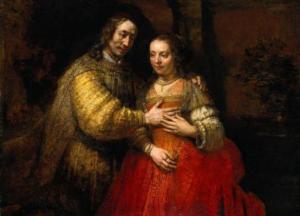
Rembrandt, 'The Jewish Bride'. Rijksmuseum, Amsterdam

Rembrandt, 'The Jewish Bride'. Rijksmuseum, Amsterdam

‘Love does not question; it gives an answer. Love does not think; it knows. Love does not hesitate; it acts. Love does not fall into raptures; it is ready to undertake responsibilities. Love puts behind it all the Ifs and Buts, all the conditions, reservations, obscurities and uncertainties that may arise between a man and a woman. Love is not only affinity and attraction; it is union. Love makes these two persons indispensable to each other. Love compels them to be with each other’. – Karl Barth, Church Dogmatics III.4 (trans. A.T. Mackay, et al.; Edinburgh: T&T Clark, 1961), 221.