Author: Jason Goroncy

FaceBook In Reality

It’s sometimes really quite difficult to explain to Facebook-addicts why the whole Facebook thing is so uselessly annoyingly. In fact, sometimes they even try to lure you back by promising you all the photos and groovy new applications in the world if you will just bow down and click ‘re-open your account’. When such tempter’s surround, send them this clip. It will make no difference to them, of course, because what they really need is death and resurrection into newness of Facebook-free life. But it does remind you why you made the best decision of your life when you hit that wee button – ‘suspend/delete your account’.

I say, come ye out from them and be ye free. (I’m a hypocrite of course)

To check out …

No time for blogging today but here’s a few things to check out:

  • David Congdon reports on a worrying trend in tertiary education.
  • ‘Gregory MacDonald’ reflects on how embracing Universalism has impacted his life.
  • Ben Meyers tells us how for Milton, those living outside Eden are ‘no longer fit for participation in the political sphere’.
  • Mick Dobson talks about some long overdue business for Australians.
  • How good was this!
  • And this Revelation definitely did not take long to grow on me.

‘Toward a Culture of Freedom’: A Review

Thorwald Lorenzen, Toward a Culture of Freedom: Reflections on the Ten Commandments Today (Eugene: Cascade, 2008), viii + 253 pages. ISBN: 978 1 55635 296 6. Review copy courtesy of Wipf and Stock.

Some years ago I took a fascinating (for many reasons) course on resurrection. One of the principle teachers was Thorwald Lorenzen, who was at that time a Baptist pastor serving in Canberra but now serves as Professor of Theology at Charles Sturt University. Dr Lorenzen is an erudite and [com]passionate NT scholar and theologian who brings to the task of doing theology a wide horizon of international experiences which inform his particular concern for human rights, expressed in a deep respect for the United Nations bill on The Universal Declaration of Human Rights. A key text for the resurrection course was Lorenzen’s Resurrection and Discipleship, a book deserving of a wide readership and one which helped to open at least one undergraduates eyes to a plethora of issues about the nature and role of NT narrative, about the value (and over-value) of tradition, and particularly about the relationship between resurrection faith and justice.

While nowhere near as carefully researched as Resurrection and Discipleship, and even at times offering surprisingly sloppy and unfair caricatures [eg. ‘Calvinist Christians expect God to plan and enact every detail in life’ (p. 1)], Lorenzen’s latest book continues to bring together his passions for justice, human rights, ethics and biblical exegesis in the service of the people of God and their witness to God’s good news in the world. Lorenzen properly resists interpreting the Ten Words moralistically or in abstraction from their deep rootedness in the covenant life and history of a people in communion (however seemingly fragile at times) with their God. He is also concerned at every point to let these Words speak to our world – and address our questions – in light of the wider sweep of the Scriptures’ metanarrative, and particularly in light of the final Word of God’s revelation – Jesus Christ. The chapter on adultery is a case in point, wherein Lorenzen does not shy away from the complex issues that continue to challenge the Church in its faithfulness to the Word of God and to compassionate witness to that Word in the world. On the question of gay and lesbian marriages, for example, he proffers the following:

‘Civil contracts in which gay and lesbian couples make a legal pledge to each other before the law are in order. They provide security and fairness for a committed and long-term relationship. Marriage, however, is another matter because it entails the desire for family. I think that every child has the right to experience the life-shaping presence of a mother and a father. The rights of a child precede the rights of gays and lesbians because the child is the more vulnerable part in the relationship’. (p, 129)

For those looking to rethink some implications of the Decalogue in a contemporary and increasingly politically-aware context, for those looking for helpful ideas for pulpit ministry, or for those looking for a book to work through in small study groups, Towards and Culture of Freedom might be a good place to consider stopping awhile. Not all will agree will every conclusion Lorenzen reaches, or even with the way he gets there; but to my mind, that’s one more reason why reading the book is worthwhile.

Here’s a few more tasters:

‘Each of us has, or rather is, a conscience. Conscience is the centre of our personhood. It makes us who we are. It shapes our identity. It is worth understanding and caring for’. (p. 20)

‘Deeds of liberation call for structures of liberation. God does not liberate people so that they can fall into the hands of false gods. Freedom therefore needs discipline and structures to ensure that it remains grounded in its author. The “ten words”, but also the statutes and ordinances, the cult and the prophets were all intended to preserve, protect and guide the ongoing journey of freedom’. (p. 24)

‘When some reformers in the sixteenth century took down the pictures and removed the statues from the churches, they wanted to make room for the living voice of the gospel. They wanted to celebrate Jesus as the one word that we need to hear, trust and obey in life and in death. But soon others, lesser minds and lesser hearts, came along and put a book where the pictures had been. So for many Christians the living voice of the gospel has been frozen into a book, the Bible. And around the world there are many Christians who spend more time and energy fighting about the Bible than in worshipping and obeying the Christ to whom the Bible points’. (p. 52)

‘A generation that ignores the wisdom and errors, achievements and failures of its predecessors is ill-prepared to face the future. Would the revolutions of Germany’s youth in the 1960s and of America’s youth in the 1970s have happened if their parents had talked about their war experiences and the associated horror and guilt and doubts?’ (p. 86)

Marilyn McCord Adams on the relevance of feelings

The relevance of feelings. [Defenders of hell often] do not enter at any length into how bad horrendous sufferings are…. [They] imply that those who are offended [by the doctrine of eternal torment] will be motivated by understandable feelings, which are nevertheless not relevant to a rational consideration of the subject.

I want to close with a contrary methodological contention…: namely, that feelings are highly relevant to the problem of evil and to the problem of hell, because they are one source of information about how bad something is for a person. To be sure they are not an infallible source. Certainly they are not always an articulate source. But they are a source. Where questions of value are concerned, reason is not an infallible source either. That is why so-called value calculations in abstraction from feelings can strike us as “cold” or “callous”. I do not believe we have any infallible faculties at all. But our best shot at valuations will some from the collaboration of feelings and reason, the latter articulating the former, the former giving data to the latter.

Personally, I am appalled at [the] valuations of defenders of eternal torment, at levels too deep for words (although I have already said many). I invite anyone who agrees with [them] – that the saved can in good conscience let their happiness be unaffected by the plight of the damned because the destruction of the latter is self-willed – to spend a week visiting patients who are dying of emphysema or of the advanced effects of alcoholism, to listen with sympathetic presence, to enter into their point of view on their lives, to face their pain and despair. Then ask whether one could in good conscience dismiss their suffering with, “Oh well, they brought it in themselves!”

I do not think this is sentimental. Other than experiencing such suffering in our own person, such sympathetic entering into the position of another is the best way we have to tell what it would be like to be that person and suffer as they do, the best data we can get on how bad it would be to suffer that way. Nor is my thesis especially new. It is but an extension of the old Augustinian-Platonist point, that where values are concerned, what and how well you see depends not simply on how well you think, but on what and how well you love (a point to which Swinburne seems otherwise sympathetic). I borrow a point from Charles Hartshorne when I suggest that sensitivity, sympathetic interaction, is an aspect of such loving, one that rightfully affects our judgment in ways we should not ignore’. – Marilyn McCord Adams, ‘The Problem of Hell: A Problem of Evil for Christians’, in Reasoned Faith: Essays in Philosophical Theology in Honor of Norman Kretzmann (ed. Eleonore Stump; Ithaca: Cornell University Press, 1993), 326.

A note: I’ve come across too few who have made the invaluable point that McCord Adams makes here (whether or not one agrees with her conclusions on universalism is another matter). Of course, the implications of her words reach well beyond conversations concerning apokatastasis – they reach to how we think about all of life. BTW: She really needs to update her homepage.

Around the traps …

Solzhenitsyn on the crisis of materialism

‘We have placed too much hope in political and social reforms, only to find out that we were being deprived of our most precious possession: our spiritual life. In the East, it is destroyed by the dealings and machinations of the ruling party. In the West, commercial interests tend to suffocate it. This is the real crisis. The split in the world is less terrible than the similarity of the disease plaguing its main sections.

If humanism were right in declaring that man is born to be happy, he would not be born to die. Since his body is doomed to die, his task on earth evidently must be of a more spiritual nature. It cannot unrestrained enjoyment of everyday life. It cannot be the search for the best ways to obtain material goods and then cheerfully get the most out of them. It has to be the fulfillment of a permanent, earnest duty so that one’s life journey may become an experience of moral growth, so that one may leave life a better human being than one started it. It is imperative to review the table of widespread human values. Its present incorrectness is astounding. It is not possible that assessment of the President’s performance be reduced to the question of how much money one makes or of unlimited availability of gasoline. Only voluntary, inspired self-restraint can raise man above the world stream of materialism’.

– Alexander Solzhenitsyn, ‘A World Split Apart’ (A paper presented at the Harvard Class Day Afternoon Exercises, Harvard University, Thursday, 8 June, 1978).

Erskine on why God bothered to create us

All wise people have long known that there are few things better to do on a Friday night than sit down with a cup of tea and read some Erskine:

‘God created man that he might be a partaker in His own holiness, as the only right and blessed state possible for him. If I truly apprehend this if I truly apprehend that righteousness and blessedness are one and the same thing, and just the very thing I most need I shall rejoice to know that God desires my righteousness; and if I further know that He will never cease to desire it and to insist upon it, and that all His dealings with me are for this one end, then I can have an entire confidence in Him, as desiring for me the very thing I desire for myself. I shall feel that I am perfectly safe in His hand, that I could not be so safe in any other hand; for that, as He desires the best thing for me, so He alone knows and can use the best means of accomplishing it in me’. – William Hanna, ed., Letters of Thomas Erskine of Linlathen (Edinburgh: David Douglas, 1884), 428-9.

Pilger: ‘The lies of Hiroshima live on’

There’s a challenging reflection by John Pilger in today’s Guardian on the USA’s murder of Japanese people in 1945:

‘The atomic bombing of Hiroshima and Nagasaki was a criminal act on an epic scale. It was premeditated mass murder that unleashed a weapon of intrinsic criminality. For this reason its apologists have sought refuge in the mythology of the ultimate “good war”, whose “ethical bath”, as Richard Drayton called it, has allowed the west not only to expiate its bloody imperial past but to promote 60 years of rapacious war, always beneath the shadow of The Bomb … Catching war criminals is fashionable again. Radovan Karadzic stands in the dock, but Sharon and Olmert, Bush and Blair do not. Why not? The memory of Hiroshima requires an answer’.

The full article is re-posted at Civicus.

A book commendation: Some years ago now, I read the inspiring biography of Takashi Nagai, a Japanese victim of terminal radiation disease, a peace activist, a physician, and a convert to Christianity. The book, A Song for Nagasaki, recounts the horrors of atomic devastation, the ironies of the bomb’s dropping on one of Japan’s few Christian communities, Nagai’s struggle to find meaning in suffering, and the power of the word of forgiveness and reconcilation. The book is written by Paul Glynn, an Australian Marist Brother who served over 20 years in Japan.

John Pilger: ‘The lies of Hiroshima live on, props in the war crimes of the 20th century’

‘When I first went to Hiroshima in 1967, the shadow on the steps was still there. It was an almost perfect impression of a human being at ease: legs splayed, back bent, one hand by her side as she sat waiting for a bank to open. At a quarter past eight on the morning of August 6, 1945, she and her silhouette were burned into the granite. I stared at the shadow for an hour or more, then walked down to the river and met a man called Yukio, whose chest was still etched with the pattern of the shirt he was wearing when the atomic bomb was dropped.

He and his family still lived in a shack thrown up in the dust of an atomic desert. He described a huge flash over the city, “a bluish light, something like an electrical short”, after which wind blew like a tornado and black rain fell. “I was thrown on the ground and noticed only the stalks of my flowers were left. Everything was still and quiet, and when I got up, there were people naked, not saying anything. Some of them had no skin or hair. I was certain I was dead.” Nine years later, when I returned to look for him, he was dead from leukaemia.

In the immediate aftermath of the bomb, the allied occupation authorities banned all mention of radiation poisoning and insisted that people had been killed or injured only by the bomb’s blast. It was the first big lie. “No radioactivity in Hiroshima ruin” said the front page of the New York Times, a classic of disinformation and journalistic abdication, which the Australian reporter Wilfred Burchett put right with his scoop of the century. “I write this as a warning to the world,” reported Burchett in the Daily Express, having reached Hiroshima after a perilous journey, the first correspondent to dare. He described hospital wards filled with people with no visible injuries but who were dying from what he called “an atomic plague”. For telling this truth, his press accreditation was withdrawn, he was pilloried and smeared – and vindicated.

The atomic bombing of Hiroshima and Nagasaki was a criminal act on an epic scale. It was premeditated mass murder that unleashed a weapon of intrinsic criminality. For this reason its apologists have sought refuge in the mythology of the ultimate “good war”, whose “ethical bath”, as Richard Drayton called it, has allowed the west not only to expiate its bloody imperial past but to promote 60 years of rapacious war, always beneath the shadow of The Bomb.

The most enduring lie is that the atomic bomb was dropped to end the war in the Pacific and save lives. “Even without the atomic bombing attacks,” concluded the United States Strategic Bombing Survey of 1946, “air supremacy over Japan could have exerted sufficient pressure to bring about unconditional surrender and obviate the need for invasion. Based on a detailed investigation of all the facts, and supported by the testimony of the surviving Japanese leaders involved, it is the Survey’s opinion that … Japan would have surrendered even if the atomic bombs had not been dropped, even if Russia had not entered the war and even if no invasion had been planned or contemplated.”

The National Archives in Washington contain US government documents that chart Japanese peace overtures as early as 1943. None was pursued. A cable sent on May 5, 1945 by the German ambassador in Tokyo and intercepted by the US dispels any doubt that the Japanese were desperate to sue for peace, including “capitulation even if the terms were hard”. Instead, the US secretary of war, Henry Stimson, told President Truman he was “fearful” that the US air force would have Japan so “bombed out” that the new weapon would not be able “to show its strength”. He later admitted that “no effort was made, and none was seriously considered, to achieve surrender merely in order not to have to use the bomb”. His foreign policy colleagues were eager “to browbeat the Russians with the bomb held rather ostentatiously on our hip”. General Leslie Groves, director of the Manhattan Project that made the bomb, testified: “There was never any illusion on my part that Russia was our enemy, and that the project was conducted on that basis.” The day after Hiroshima was obliterated, President Truman voiced his satisfaction with the “overwhelming success” of “the experiment”.

Since 1945, the United States is believed to have been on the brink of using nuclear weapons at least three times. In waging their bogus “war on terror”, the present governments in Washington and London have declared they are prepared to make “pre-emptive” nuclear strikes against non-nuclear states. With each stroke toward the midnight of a nuclear Armageddon, the lies of justification grow more outrageous. Iran is the current “threat”. But Iran has no nuclear weapons and the disinformation that it is planning a nuclear arsenal comes largely from a discredited CIA-sponsored Iranian opposition group, the MEK – just as the lies about Saddam Hussein’s weapons of mass destruction originated with the Iraqi National Congress, set up by Washington.

The role of western journalism in erecting this straw man is critical. That America’s Defence Intelligence Estimate says “with high confidence” that Iran gave up its nuclear weapons programme in 2003 has been consigned to the memory hole. That Iran’s president Mahmoud Ahmadinejad never threatened to “wipe Israel off the map” is of no interest. But such has been the mantra of this media “fact” that in his recent, obsequious performance before the Israeli parliament, Gordon Brown alluded to it as he threatened Iran, yet again.

This progression of lies has brought us to one of the most dangerous nuclear crises since 1945, because the real threat remains almost unmentionable in western establishment circles and therefore in the media. There is only one rampant nuclear power in the Middle East and that is Israel. The heroic Mordechai Vanunu tried to warn the world in 1986 when he smuggled out evidence that Israel was building as many as 200 nuclear warheads. In defiance of UN resolutions, Israel is today clearly itching to attack Iran, fearful that a new American administration might, just might, conduct genuine negotiations with a nation the west has defiled since Britain and America overthrew Iranian democracy in 1953.

In the New York Times on July 18, the Israeli historian Benny Morris, once considered a liberal and now a consultant to his country’s political and military establishment, threatened “an Iran turned into a nuclear wasteland”. This would be mass murder. For a Jew, the irony cries out.

The question begs: are the rest of us to be mere bystanders, claiming, as good Germans did, that “we did not know”? Do we hide ever more behind what Richard Falk has called “a self-righteous, one-way, legal/moral screen [with] positive images of western values and innocence portrayed as threatened, validating a campaign of unrestricted violence”? Catching war criminals is fashionable again. Radovan Karadzic stands in the dock, but Sharon and Olmert, Bush and Blair do not. Why not? The memory of Hiroshima requires an answer.’

Source: John Pilger, writing for The Guardian

Solzhenitsyn on humanism and its consequences

‘ … in early democracies, as in American democracy at the time of its birth, all individual human rights were granted because man is God’s creature. That is, freedom was given to the individual conditionally, in the assumption of his constant religious responsibility. Such was the heritage of the preceding thousand years. Two hundred or even fifty years ago, it would have seemed quite impossible, in America, that an individual could be granted boundless freedom simply for the satisfaction of his instincts or whims. Subsequently, however, all such limitations were discarded everywhere in the West; a total liberation occurred from the moral heritage of Christian centuries with their great reserves of mercy and sacrifice. State systems were becoming increasingly and totally materialistic. The West ended up by truly enforcing human rights, sometimes even excessively, but man’s sense of responsibility to God and society grew dimmer and dimmer. In the past decades, the legalistically selfish aspect of Western approach and thinking has reached its final dimension and the world wound up in a harsh spiritual crisis and a political impasse. All the glorified technological achievements of Progress, including the conquest of outer space, do not redeem the Twentieth century’s moral poverty which no one could imagine even as late as in the Nineteenth Century’.

– Alexander Solzhenitsyn, ‘A World Split Apart’ (A paper presented at the Harvard Class Day Afternoon Exercises, Harvard University, Thursday, 8 June, 1978).

Annie Villiers: ‘Mended’

Invisible mending

This is the place where souls come

To be mended                               where

Tatty ends of unfinished business

Or business                              unravelled

Are drawn together and tenderly

Made new.

Nimble stitches

Seen                           only by the weaver

Whose loving                                 fingers

Repair the frangible fabric of lives.

– Annie Villiers, ‘Mended’, in Parallel Lines: Riding the Central Otago Rail Trail (ed. Annie Villiers and John Z. Robinson; Dunedin: Longacre Press, 2007).

Introducing: Andrew Martin Fairbairn

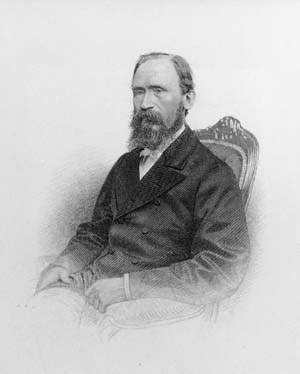
Andrew Martin Fairbairn (1838–1912), Congregational minister and college head, was born at Inverkeithing, Fife, on 4 November 1838. He came of covenanting stock and received strict religious training. He was the second son of John Fairbairn, a miller, and a leader in the United Secession church, and his wife, Helen, daughter of Andrew Martin, of Blainslie, near Lauder. He had very little regular schooling, and began to earn his own living before he was ten. A voracious reader with a retentive memory, he prepared himself for Edinburgh University, where he afterwards studied, though he took no degree.

Meanwhile Fairbairn had become an adherent of the Evangelical Union founded by James Morison, under whose influence Fairbairn decided to become a minister. He entered the theological college of the union in Glasgow in 1857, and in 1860 was ordained and inducted to the Evangelical Union pastorate in Bathgate. While in that post he visited Germany, where he studied at Berlin from 1865 to 1866 under Dorner, Tholuck, and Hengstenberg, and from that time onwards the advocacy of a freer and broader theology than that prevalent in the Scotland of his day became the passion of Fairbairn’s life. He married in 1868 Jane, youngest daughter of John Shields of Byres, Bathgate. They had two sons and two daughters.

Fairbairn wrote, preached, and lectured with untiring persistence, and did not shrink from controversy. He was chairman of the Evangelical Union in 1870. From Bathgate he moved in 1872 to St Paul’s Congregational Church, Aberdeen, where he won a great reputation as a preacher and as a lecturer on philosophical and theological subjects. His first book, Studies in the Philosophy of Religion and History (1876), at once called attention to him as a forceful religious teacher. In 1877 Fairbairn became principal of Airedale College, Bradford, thus transferring his religious allegiance to English Congregationalism. He soon showed his quality as a religious leader, and while at Airedale became chairman of the Congregational Union of England and Wales in 1883.

During the same period Fairbairn set himself to a task which absorbed him for many years, namely the reform and development of theological education among the free churches. When, therefore, it was proposed in 1886 to establish a Congregational theological college in Oxford, Fairbairn was marked out as the best man to lead the enterprise. He was made principal of the new foundation, Mansfield College, and its early success was largely due to his sagacity, industry, and tact. Its standing (and Fairbairn’s) was recognized when Gladstone dined there on 5 February 1890. Fairbairn’s wide learning and liberal spirit, the rugged eloquence of his style, and his deep insight into human nature made him a most attractive and stimulating teacher; his students responded with loyalty and devotion.

The substance of Fairbairn’s teaching was published in 1893 in the volume entitled Christ in Modern Theology, which its author described as ‘an endeavour, through a Christian doctrine of God, at a sketch of the first lines of a Christian theology’. The book speedily passed through twelve editions. It was followed by The Philosophy of the Christian Religion (1902), and the two together gave a fairly complete presentation of a theological position, strongly influenced by Hegelian idealism, which proved both stimulating and constructive at a time of stress and uncertainty. The theology is of a mediating type and, since it expresses the reaction of Fairbairn’s own mind to the intellectual conditions of his day, it now seems dated.

Among Fairbairn’s other writings are two volumes of sermons—The City of God (1882), hailed in its day as a real contribution to apologetics, and Catholicism, Roman and Anglican (1899), the substance of which had been the occasion of a sharp controversy with Cardinal Newman—and also a volume of Studies in Religion and Theology (1910). He also wrote two chapters, ‘Calvin’ and ‘Tendencies of European thought in the age of the Reformation’, for the second volume of the Cambridge Modern History (1903). His Gifford lectures on comparative religion were delivered in Aberdeen but, owing to adverse criticism of the sections on Chinese religion, were not published as they stood, and were never revised.

All this literary work was done in the intervals of an exceedingly busy life. A trusted leader of the free churches, Fairbairn was in demand all over the country as a preacher and lecturer. He paid several visits to America and lectured in many university centres. In 1898 he went as Haskell lecturer to India. Keenly interested in educational questions, he served on a royal commission on education (1894–5); was consulted by the University of Manchester concerning the establishment of its non-sectarian faculty of theology; played a leading part on the Welsh Theological Board, which devised regulations governing the teaching and examining of theology in the fledgeling University of Wales; and participated in the education controversy of 1902.

Fairbairn died at 112 St James’s Court, Buckingham Gate, London, on 9 February 1912. He was loved and honoured by a wide circle of friends. He was devoted to his family and never so happy as when in his hospitable home. He was a keen conversationalist, a little dogmatic and assertive in manner; W. B. Glover less deferentially described him as ‘a pompous windbag’. But he always had a sense of humour, and a sensitive appreciation of human needs and failings. His wide knowledge of people, books, and affairs made him a most entertaining companion. Above all he was deeply religious. Fairbairn was a DD of Edinburgh, Yale, Wales, Manchester, and Göttingen; a DLitt of Leeds; an LLD of Aberdeen; and a founder and fellow of the British Academy. A collection of Mansfield College Essays (1909), which includes a sonnet to him by Edward Shillito and a bibliography of his writings, was presented to him on his seventieth birthday. His monument is the college that he founded, which became a full college of Oxford University in 1995.

Key Works
Studies in the Philosophy of Religion and History (1876)
Studies in the Life of Christ (1881)
The City of God: A Series of Discussions in Religion (1883)
Religion in History and in Modern Life (1884; rev. 1893)
Christ in Modern Theology (1893)
Christ in the Centuries (1893)
Catholicism Roman and Anglican (1899)
Philosophy of the Christian Religion (1902).

Sources

Oxford Dictionary of National Biography · W.B. Selbie, The life of Andrew Martin Fairbairn (1914) · A.P.F. Sell, ‘An Arminian, a Calvinist and a liberal’, Dissenting thought and the life of the churches: studies in an English tradition (1990) · A.M. Fairbairn, ‘Experience in theology: a chapter of autobiography’, Contemporary Review, 91 (1907), 554–73 · R.S. Franks, ‘The theology of Andrew Martin Fairbairn’, Transactions of the Congregational Historical Society, 13 (1937–9), 140–50 · J.W. Grant, Free churchmanship in England, 1870–1940 [1955] · W.B. Glover, Evangelical nonconformists and higher criticism in the nineteenth century (1954) · M.D. Johnson, The dissolution of dissent, 1850–1918 (1987) · E. J. Price, ‘Dr Fairbairn and Airedale College: the hour and the man’, Transactions of the Congregational Historical Society, 13 (1937–9), 131–9 · K.W. Wadsworth, Yorkshire United Independent College (1954), 127–32 · H. Escott, A history of Scottish Congregationalism (1960) · Congregational Year Book (1913), 165–6 · W.D. McNaughton, The Scottish Congregational ministry, 1794–1993 (1993), 45–6 · R. Tudur Jones, Congregationalism in England, 1662–1962 (1962) · A.P.F. Sell, A reformed, evangelical, Catholic theology: the contribution of the World Alliance of Reformed Churches, 1875–1982 (1991) · A.P.F. Sell, Saints: visible, orderly and Catholic: the Congregational idea of the church (1986) · A.P.F. Sell, Theology in turmoil: the roots, course and significance of the conservative–liberal debate in modern theology (1986) · J. Ross, A history of Congregational independency in Scotland (1900) · Gladstone, Diaries · E. Kaye, Mansfield College, Oxford: its origin, history and significance (1996)

Wealth at death

£3462 6s. 2d.: probate, 5 June 1912, CGPLA Eng. & Wales

Note: Additional dictionary content from The Oxford Dictionary of National Biography can be obtained free in the UK from public libraries thanks to a national deal with the MLA.

See here for more biographies in the Introducing Series.

Solzhenitsyn on the Western way of life

‘But should someone ask me whether I would indicate the West such as it is today as a model to my country, frankly I would have to answer negatively. No, I could not recommend your society in its present state as an ideal for the transformation of ours. Through intense suffering our country has now achieved a spiritual development of such intensity that the Western system in its present state of spiritual exhaustion does not look attractive. Even those characteristics of your life which I have just mentioned are extremely saddening.

A fact which cannot be disputed is the weakening of human beings in the West while in the East they are becoming firmer and stronger. Six decades for our people and three decades for the people of Eastern Europe; during that time we have been through a spiritual training far in advance of Western experience. Life’s complexity and mortal weight have produced stronger, deeper and more interesting characters than those produced by standardized Western well-being. Therefore if our society were to be transformed into yours, it would mean an improvement in certain aspects, but also a change for the worse on some particularly significant scores. It is true, no doubt, that a society cannot remain in an abyss of lawlessness, as is the case in our country. But it is also demeaning for it to elect such mechanical legalistic smoothness as you have. After the suffering of decades of violence and oppression, the human soul longs for things higher, warmer and purer than those offered by today’s mass living habits, introduced by the revolting invasion of publicity, by TV stupor and by intolerable music.

All this is visible to observers from all the worlds of our planet. The Western way of life is less and less likely to become the leading model.

There are meaningful warnings that history gives a threatened or perishing society. Such are, for instance, the decadence of art, or a lack of great statesmen. There are open and evident warnings, too. The center of your democracy and of your culture is left without electric power for a few hours only, and all of a sudden crowds of American citizens start looting and creating havoc. The smooth surface film must be very thin, then, the social system quite unstable and unhealthy.

But the fight for our planet, physical and spiritual, a fight of cosmic proportions, is not a vague matter of the future; it has already started. The forces of Evil have begun their decisive offensive, you can feel their pressure, and yet your screens and publications are full of prescribed smiles and raised glasses. What is the joy about?’

– Alexander Solzhenitsyn, ‘A World Split Apart’ (A paper presented at the Harvard Class Day Afternoon Exercises, Harvard University, Thursday, 8 June, 1978).

Burma: 20 years on

This Friday, 8 August, marks the 20th anniversary of Burma’s biggest ever democracy uprising when hundreds of thousands of people across Burma bravely marched through the streets demanding an end to military dictatorship. Soldiers fired on crowds of unarmed protesters, killing thousands. Today there remain over 2000 political prisoners in Burma, many subjected to brutal torture and denied medical care.

There are a number of events being organised around London for Friday to mark this anniversary and to continue the voice of protest:

Demonstration outside the Burmese Embassy
1-2pm Friday 8 August
19A, Charles Street,
London W1J 5DX
Nearest tube: Green Park

Monument to Political Prisoners
Opening ceremony to unveil a glass monument to political prisoners in Burma.
Time: 10.30am to 12:00
Venue: Peace Garden
Imperial War Museum
St George’s Road, London SE1 6ER
Nearest Tube: Elephant & Castle

Exhibition on Political Prisoners in Burma
Time: 18:00 to 22:00
Venue: Rooms G-50, 51, 52
School of Oriental and African Studies
University of London, Thornhaugh Street, Russell Square, London WC1H 0XG
Free entrance. Refreshments will be provided.
Nearest Tube: Russell Square

And on Saturday 9 August …

Bike Ride for Burma
To commemorate 8th August 1988, the Burmese community has organised a bike ride in London from Queen Anne’s Gate, St James’s Park to Speakers Corner, Hyde Park Corner.
Details: Meet at 1200 at Queen Anne’s Gate entrance of St James’s Park. Nearest tube: St James’s Park (District & Circle). The ride will conclude at Hyde Park Corner at 1400.

If you cannot take part in the bike ride, you’re welcome to come along for a picnic in Hyde Park, near Speakers Corner at 2pm. For more details of the route and other information, see
www.burmapoliticalforum.org

Solzhenitsyn on the direction of freedom

‘Destructive and irresponsible freedom has been granted boundless space. Society appears to have little defense against the abyss of human decadence, such as, for example, misuse of liberty for moral violence against young people, motion pictures full of pornography, crime and horror. It is considered to be part of freedom and theoretically counter-balanced by the young people’s right not to look or not to accept. Life organized legalistically has thus shown its inability to defend itself against the corrosion of evil.

And what shall we say about the dark realm of criminality as such? Legal frames (especially in the United States) are broad enough to encourage not only individual freedom but also certain individual crimes. The culprit can go unpunished or obtain undeserved leniency with the support of thousands of public defenders. When a government starts an earnest fight against terrorism, public opinion immediately accuses it of violating the terrorists’ civil rights. There are many such cases’.

– Alexander Solzhenitsyn, ‘A World Split Apart’ (A paper presented at the Harvard Class Day Afternoon Exercises, Harvard University, Thursday, 8 June, 1978).