 Recently, I posted on Karl Rahner’s theology of childhood. Over the coming weeks, I plan to post similar reflections that contribute towards developing a theology of childhood. Initially, I propose to post mainly from those of the Reformed camp: John Calvin, Friedrich Daniel Ernst Schleiermacher, Karl Barth, David Jensen, Jürgen Moltmann, and from Australian Roman Catholic theologian Anthony Kelly. At some future stage, I’d also like to work on similar contributions from the Celtic and Anabaptist traditions (I’d welcome any relevant resources regarding these two areas).
Author: Jason Goroncy
February bests …
 Best book: Kim Fabricius, Propositions on Christian Theology: A Pilgrim Walks the Plank (Durham: Carolina Academic Press, 2008).
Best music: Archie Roach, Charcoal Lane; Morrissey, Years of Refusal [2009].
Best films: Seven Pounds [2008] ♦♦♦; The Wrestler ♦♦♦♦; Frozen River ♦♦♦½.
Best drink: Two Paddocks Pinot Noir (2007).
Political prisoners set free in Myanmar
 ‘Twenty-four political prisoners were set free in Myanmar on Saturday after the government announced that it would release 6,313 prisoners.
One of those released is prisoner of conscience Ma Khin Khin Leh, who has been the subject of Amnesty International campaigns since her arrest in July 1999. The authorities detained her because they could not find her husband, Kyaw Wunna, who was connected to a pro-democracy march expected to take place that month.
Of the other released political prisoners, there were nine Buddhist monks and one nun. Some were members of Myanmar’s opposition party, the National League for Democracy. These included Dr. Zaw Myint Maung, a MP-elect who had been in prison since 1990.
Another man, Zaw Naing Htwe, was released from a labour camp. Zaw Naing Htwe was sentenced to nine years in prison in December 2008 because he had received a letter from his elder brother, who was one of the imprisoned 88 Generation Students group leaders.
“There are still more than 2,100 political prisoners behind bars in Myanmar. Many of them are in poor health, partly as a result of harsh prison conditions,” said Donna Guest, Asia Pacific Deputy Director.
“While the release of these prisoners is welcome, the Myanmar government must release all other prisoners of conscience immediately and unconditionally.”‘
Source: Amnesty International
Seeing the world through Christian eyes
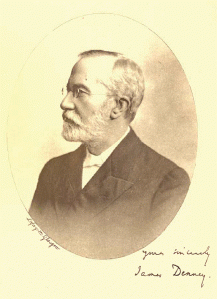 ‘We know the world only as a sinful world, and we know the relation of Christ to it, experimentally, only as that of its Saviour from sin’. We must ‘stick to the actual’ and try to ‘understand and interpret what is, not to wander off into what might have been, as though it might find there truths sublime or more profound. The world we live in is the only world’. – James Denney, The Christian Doctrine of Reconciliation (London: James Clarke & Co., 1959 [1917]), 181-2.
God: the artist who completes his work
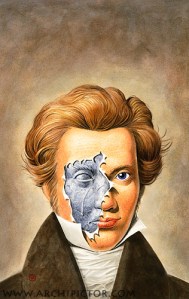 ‘If a poet or an artist puts himself into his Productions he is criticized. But that is exactly what God does, he does so in Christ. And precisely that is Christianity. The creation was really only completed when God included himself in it. Before the coming of Christ, God was certainly in the creation, but as an invisible sign, like the watermark in paper. But the creation was completed by the Incarnation because God thereby included himself in it’. – Søren Kierkegaard, The Journals of Kierkegaard (edited by Alexander Dru. New York: Harper & Brothers, 1959), 324.
William James on evolution
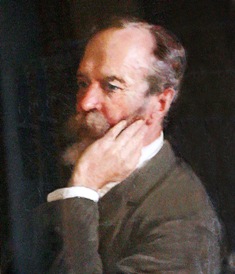 ‘The idea of a universal evolution lends itself to a doctrine of general meliorism and progress which fits the religious needs of the healthy-minded so well that it seems almost as if it might have been created for their use’. – William James, The Varieties of Religious Experience: A Study in Human Nature, being The Gifford Lectures on Natural Religion delivered at Edinburgh in 1901-1902 (New York: Longmans, Green, and Co., 1920 [1902]), 91.
Robert Jenson @ Otago: ‘The Regula Fidei and Scripture’
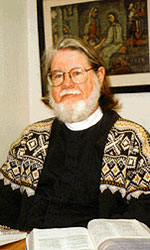 During March, the Department of Theology and Religious Studies at the University of Otago will be hosting Professor Robert Jenson who will deliver the 2009 Burns Lectures.
The title for the series is ‘The Regula Fidei and Scripture’, and will include the following lectures:
1. ‘Creed, Scripture, and Their Modern Alienation’, Wednesday March 11th, 5.10pm, Archway 2 Lecture Theatre.
2. ‘The Tanakh as Christian Scripture’, Thursday March 12th, 5.10pm, Archway 2 Lecture Theatre.
3. ‘The New Testament and the Regula Fidei’, Friday March 13th, 5.10pm, Archway 2 Lecture Theatre.
4. ‘The Apostles’ Creed’, Tuesday March 17th, 5.10pm, Archway 2 Lecture Theatre.
5. ‘The Creed as Critical Theory of Scripture’, Wednesday March 18th, 5.10pm, Archway 2 Lecture Theatre.
6. ‘Genesis 1:1 and Luke 1:26-38’, Thursday March 19th, 5.10pm, Archway 2 Lecture Theatre.
For more information, contact the department.
J. Baldwin Brown on the Fatherhood of God
 ‘God is not only a Father, He is the Father, whose restored love is to be the joy of the child’s heart …The Father includes in His Fatherhood and its manifestations, all that is needful to satisfy every need, instinct, sympathy, judgment, conviction, of the child’s nature; while He must equally reconcile Himself, in the wholeness of His nature, to the child. It is no casual yearning of a Father’s spirit, which may find a passing expression; it is the complete Fatherly nature, in the justice, righteousness, holiness, sacredness, of its love, which has to manifest itself to the world. Therefore it is by the Atonement that it declares itself’. – James Baldwin Brown, The Divine Life in Man (London: Ward & Co., 1859), 50.
PT Forsyth on ‘How To Help Your Minister’
 ‘By great care in his (sic) selection. I do not mean merely care as to his ability and character. I mean care that he is one who increases your own faith and ministers to your own soul. It is fatal to our Protestant principle to vote for a minister because you can just tolerate him yourself, but think he will be of great use among the young or in the town. The minister is first and foremost minister to your faith; and he will not feel that he gets from you what he needs unless he feel also that you are united in the bond of a growing faith and love. Select your minister for yourself, and not for your neighbour.
Let him feel that his ministry is a real factor in the reasons which lead you to live where you do. What help can you give to the minister’s work and soul if he feels that you are ready to remove to the other side of the town for better tennis, a better golf–course, or for a change merely? It is amazing that Christian people should take a house without any inquiry what the neighbourhood offers a family in the way of religious advantage. When men complain that they cannot hold their family to their faith because there is no church near they can profit by, whose fault is that?
Represent to him that it is unnecessary for him to attend every meeting held in connection with the church, that to be out most nights at such meetings is mischievous to next morning’s study, and that he cannot hope to be the blessing to his people that he might be if Sunday arrive simply at the close of a jaded week. Do not forget that what starts you on a new week is for him the end of a stale one, so far as nervous condition goes.
Tell him when he first comes to see you that it will make no difference to your sympathy or your Sunday attendance if he never comes to see you at all except in some crisis. You stand some chance then of being the best–visited family in the congregation.
Tell his wife the same thing, especially if she have a family of children.
Send him a note when the sermon has done you special good; and add that if he answer it, you will not send another.
But if a text trouble you, or a problem, put it in black and white, and say that if he is at a loss for a subject at any time, you would be grateful if he would take that, or would let you talk to him about it.
Use your opportunity to practise local preaching and the conduct of a service. Few things carry home to the pew so well as that what it means to be in the pulpit every Sunday. The minister has this reason of his own for wishing that all the Lord’s people were prophets. Besides, it is a great thing for a minister to know that he preaches to preachers, and is giving to givers. If you have a class, treat it not only as a teacher, but also as a pastor. Have a care of souls. That will open your eyes a little to what pastoral concern is. Faults and failings which to an outsider are mere matter of curiosity are to the pastor an anxiety and grief. You will help him to carry it if you know by experience what this divine concern is, if you have souls you watch for, and lives you train for Christ. Your family may teach you this pastoral sympathy if no other sphere does. Do not omit or neglect this pastoral office at home, as the manner of so many is. It casts on the minister a burden he was never meant to bear. The father is the true pastor of the young. You have no right to blame the minister for the indifference of your young people unless he is palpably incompetent, or worse. It seems to me sometimes that the congestion of work thrown on the church, the dispersion of its energies over trivial efforts to catch youth, the oppressive distraction of the minister, all have their root in the general neglect of family religion. The church and the minister are called on for work which God never meant should be done by the church at all, but by the home. The church is but one organ of the Kingdom of God, and the home is another. And we know what happens when a vital organ refuses work and throws a long strain on another. The end is weakness, illness and death.
Bring to church affairs business methods, but not the business spirit. A Church Meeting is not a committee, nor is it a political assembly. It is the sphere neither of criticism nor of mere discussion, but of Christian work and fellowship in faith and love. Let all truth–telling be the telling of the truth as it is in Jesus.
When the minister asks you to do something, do it without excuses, and without deprecating yourself as compared with someone else. If you wish to escape being asked, do what you are asked and let your unfitness be proved. People will not believe it till you convince them. Then you will have peace.
Do not ask him and his wife to tea “and spend the evening”. At least, do not regard it as part of his ministerial work.
 Insist that he be punctual in keeping engagements, answering letters, and especially in beginning service. You can sometimes see the whole secret of an ‘ineffectual ministry in the ten minutes after the hour at which worship should begin. A man who is systematically late at public meetings loses more influence than he knows. How can he hope to be effective with business people whom he exasperates to begin with? Besides, it is an offensive liberty to take.
It might help him if he thought there were the occasional risk of a deacon calling on some pressing business at 9 a.m.
If you are absent from church, let it be when he is there, not when he goes away. The minister supplying finds and reports abroad a poor congregation. It is gauche flattery to say to your minister you only miss when he does.
It would be a help to some if you made it understood, in some kind way, that the minister’s speech at a social meeting need not always be funny, so long as it was sunny.
Do not omit to thank him for asking a subscription. They do you a true service who suggest to you, or collect from you what it is your duty to find means to give. Let him know that when he has a case of real need, he may always reckon on you according to your power. Few things are more disagreeable to most ministers than to ask for money. Remember, those who ask you for Christian money are your agents, not your duns.
Make it clear that you have a higher respect for the office of the ministry than even for the man who fills it. A minister who holds his place only in the affection of his own people carries a too heavy burden; it puts too much of the responsibility upon his personal qualities alone. After all, the church is more than the minister, and the apostolic office is more than the idiosyncrasy of its occupant. No minister should be encouraged to think that he improves his position or usefulness by what doctors or lawyers would call unprofessional or undignified conduct, or by any course that lowers the standard of his office. Your minister, to be sure, needs sympathy, and he must have it; for with us the whole ministerial bond is dissolved when sympathy ceases between pulpit and pew, and divorce should quickly ensue. But there is something that the true minister craves more than sympathy with his person, and that is sympathy with his gospel. “I believe in you, but I don’t believe in your truth,” is no Christian relation. It is mere personal friendship, and the minister must have a higher aim than being his people’s friend; he must be their guide, teacher, and at need corrector. When he is appointed, he is appointed to this. He is not merely the representative of his own community, he is a representative of the whole Church and a special trustee of what Christ committed to the Church. He must speak sometimes to his own church in the name of the Church universal and invisible. You should help to protect him from a frame of mind that overlooks this or makes it impossible. You will lose as well as he if he become parochial or conventialist, if he be a mere prophetic individualist and make nothing of his office. A freelance may rouse and pique, but a lance of any kind is very apt to wound, especially when it is nothing but free.
The old–fashioned advice, “Pray for your minister”, is never out of date. I would only press it into detail.
Pray with him–i.e. let your private prayers include what is most on his heart.
Pray for him–not generally, but in detail. Realize his position by an act of imaginative sympathy, and pray for the special things you divine he needs.
 It may help him even more if you really and privately study your Bible. The minister is hampered by his people’s ignorance of their Bible more than by most things. It is a joy and a power to minister to a people exercised in the Bible and hungry for its light. The more you pray over your Bible, the more you pray with and for your minister. You both work with the same textbook. What must it be for the teacher when the class is habitually unprepared?
The more you do to help your minister, the more he will feel, if he is of the right sort, that he is there to help you rather than to be helped by you. He comes not to be ministered unto, but to minister. Your help will be abundantly returned to you. Help his gospel if you would have him help your soul. But if you go on neither really helping the other, then God help you both!’
– PT Forsyth, ‘How to help your minister’, in Revelation Old and New: Sermons and Addresses (ed. John Huxtable; London: Independent Press, 1962), 115-19.
[Editorial note: I have left unchanged Forsyth’s non-inclusive language. He was a person of his time after all, a truth evident not only in terms of grammar but also in terms of the shape that pastoral ministry took, and the way the home was understood. Still, there is enough truth and meat in this short piece to encourage and challenge pastors and pastored alike.]
Pastoral Ministry: Enter at Risk
 A quick glance over to the bookshelf beyond my desk, four titles catch my eye:
- Burnout in Church Leaders, by Peter Kaldor and Rod Bullpitt
- High Calling, High Stress: The Vocational Needs of Ministers, by Robin Pryor
- Pastors at Greater Risk by H. B. London and Neil B. Wiseman
- Coping With Depression in the Ministry and Other Helping Professions by Archibald D. Hart
These titles remind me – as if I needed reminding – that the journey into pastoral ministry ought to be impossible without regularly passing a sign that reads: ‘BEWARE: YOU ARE NOW ENTERING A DANGROUS AREA’, or ‘ ENTER AT RISK’, or ‘HAZARDOUS FOR HEALTH’, or ‘SPEEDING KILLS: SLOW DOWN’, or ‘SLIPPERY WHEN WET’.
One such sign appears in the latest edition of the Presbyterian Record (a monthly from the Presbyterian Church of Canada) and its cover story by Sandra Moll and Kristine O’Brien entitled ‘Breaking the Silence: The mental health of our clergy’. Also, a 2003 study undertaken by The Centre for Clergy Care and Congregational Health was recently brought to my attention. The study, ‘Clergy Well-Being: Seeking Wholeness with Integrity’, examined responses from 338 clergy from the six major protestant denominations in Ontario: United, Anglican, Presbyterian, Evangelical Lutheran, the Baptist Convention of Ontario and Quebec, and the Pentecostal Assemblies.
 And the results are in:
* Ministers worked an average of 50 hours per week, but over 25 per cent worked in excess of 55 hours each week.
* In a 30-day period, almost 40 per cent of ministers took three or fewer days off.
* 80 per cent felt guilty if people saw them taking time off during the week.
* 78 per cent felt their position as a minister demanded perfection.
* 51 per cent indicated that they had suffered physically from stress-induced problems.
* 67 per cent said they sometimes projected job frustrations onto their families.
* 38 per cent sought the aid of a clinical councillor;
* 21 per cent a psychologist;
* 15 per cent a psychiatrist;
* 45 per cent the advice of a family doctor regarding stress and anxiety issues.
* 20 per cent had been diagnosed with an emotional condition;
* When asked to specify the condition, 16 per cent named depression.
* 62 per cent said they sometimes appeared outwardly happy while they were in emotional distress.
* 75 per cent were afraid to let their parishioners know how they really felt.
* Close to 49 per cent of ministers identified two or fewer close friends in their church or community.
* 60 per cent said evenings with friends usually involved ‘church talk.’
* 55 per cent indicated that they sometimes feel very lonely.
*  81 per cent experienced a situation in which they required personal pastoral care in the past five years.
* Only 71 per cent sought and received such care.
* 40 per cent of ministers indicated that they had someone who was their personal pastor, but only 16 per cent indicated that they had a spiritual director.
* 80 per cent were sometimes jealous of the success of other ministers.
* 83 per cent believed ministry was a calling from God and the church. [How this informs/deforms one’s doctrine of God is significant in itself]
* 91 per cent agreed that being a minister felt more like a job than a calling.
* 77 per cent felt more like CEOs than pastors.
* 83 per cent felt their churches wanted a CEO, not a pastor.
* 94 per cent said they read Scripture for sermon preparation, but it rarely spoke to them personally.
* 86 per cent prayed regularly with others but had little time for personal prayer.
* 71 per cent did not feel spiritually affected while leading worship.
* 89 per cent sometimes felt like they were simply going through a ritual when they led worship.
* 70 per cent felt unfulfilled in ministry.
* 33 per cent had considered leaving their denomination.
* 60 per cent indicated that they had at some time considered leaving ministry.
 All this caused me to pause and pray for those families in pastoral ministry (particularly my students), and then to recall words penned long ago by one who though he lived in an age when the shape of pastoral ministry was significantly different from our own, also knew the burden, demands and cost of ministry:
‘There are churches that seem to live in an atmosphere of affable bustle, where all is heart and nothing is soul, where men decay and worship dies. There is an activity which is an index of more vigour than faith, more haste than speed, more work than power. It is sometimes more inspired by the business passion of efficiency than the Christian passion of fidelity or adoration. Its aim is to make the concern go rather than to compass the Righteousness of God. We want to advance faster than faith can, faster than is compatible with the moral genius of the Cross, and the law of its permanent progress. We occupy more than we can hold. If we take in new ground we have to resort to such devices to accomplish it that the tone of religion suffers and the love or care for Christian truth. And the preacher, as he is often the chief of sinners in this respect, is also the chief of sufferers. And so we may lose more in spiritual quality than we gain in Church extension. In God’s name we may thwart God’s will. Faith, ceasing to be communion, becomes mere occupation, and the Church a scene of beneficent bustle, from which the Spirit flees. Religious progress outruns moral, and thus it ceases to be spiritual in the Christian sense, in any but a vague pious sense. Before long the going power flags, the petrol gives out on a desert’. – PT Forsyth, The Preaching of Jesus and the Gospel of Christ (Blackwood: New Creation Publications, 1987 (1915)), 119.
Tomorrow, I’ll post Forsyth’s wee essay, ‘How To Help Your Minister’. Until then, check out this short piece and long blibliography.
Bruce Hamill: ‘Response to Kevin Ward’s Inaugural Lecture’
 Rev Dr Kevin Ward’s recent lecture – ‘It may be emerging, but is it church?’ – has sparked a good deal of constructive conversation, a conversation that was kicked off by a brief public response to the lecture by one who had enquired after one of Kevin’s earlier lectures – ‘So where’s the theology in all this? – the Rev Dr Bruce Hamill. Here’s Bruce’s gracious and insightful response to Kevin’s paper:
Introduction
Thanks for the privilege of responding to today very briefly, in just 10 minutes… Kevin, those who know you expect nothing less than a broad-visioned, scholarly, insightful, pastoral, provocative but conciliatory lecture, grounded in your passion for the church and the gospel. You have not disappointed us…
Since I am expected to ask theological questions I will try not to disappoint.
Right Question?
I particularly liked the provocative title… however, as I have thought about the relation between the title and the concluding answer, I reached the conclusion that, for all its provocation this question is not quite right. Not that I want to avoid your question, but perhaps to narrow down the scope of my response…a better question might be: Does this movement within the church (or among the churches) point the way forward for reform of the body of Christ? Does this movement with its 3 foci of (1) alignment with postmodernism (2) relevance (3) incarnationalism have the theological resources for a missional church in our time? Now my suspicion is that your answer to this question would be a nuanced one, but probably, like mine, a ‘no’. Indeed the last half of your paper demonstrates how the emergent church consistently shows a conflict with the classical marks of the church – a strong indicator that its theological principles and direction is fundamentally flawed. In this respect my response is, I suspect in basic agreement with your view (particularly in the latter half of your paper)
Incarnation and Mission
However, if this is the case, then I fear that the framework you inherit from Niebuhr and others in the missiology movement is too close to that used by the emergent church itself, to really expose its flaws. In what remains of my few minutes response I want to indicate some of the tensions within your argument.
To begin with I would note that your adoption of the term incarnation, as an adjective (‘incarnational’) to represent a stance which is neither isolationist nor accomodationist, raises my theological antennae. This appears to me to be a sociologising of the language of theology – of incarnation – which trades on its theological background.
So to a more directly theological question: What is the incarnation? (in just 5 minutes!) And how does it relate to the church’s cultural existence and mission?
David Congdon, a Princeton theologian who has influenced my response to this, says:
‘the incarnation is sui generis, i.e., it is wholly unique and unrepeatable. In short, the incarnation is an event, not an idea that can be applied or a process that can be completed or a reality that can be replicated.’
What I believe lies behind this is the whole doctrine of divine grace emerging from the church’s experience of salvation in the raising of the crucified Jesus. Namely, that the life of Jesus originated unnecessarily (contingently) and freely from God’s transcendent act and being. In the incarnation God’s freedom from us is the basis for God’s freedom for us in the life of Jesus.
 In this sense Jesus life represents a break in the fabric of culture and tradition and original sin. It introduces a radical newness from the Word of God. In this sense the church came to talk of him as being born of a virgin and also suggest that the Holy Spirit ‘overshadowed’ even the maternal contribution to Jesus existence. God enters into the physical conditions of human life, adopting, as it were, the human condition, however this is not an accommodation to or adaption to culture, but rather human culture is here accommodated to the Word of God.
So as Congdon argues, the incarnation cannot be a model for us. However, it does transform and con-form our life. As already enfleshed and enculturated, fallen human beings, we are, because of the incarnation and the form and history it took, reculturated (that’s my word) by God.
In Christ we are not made ‘incarnational’, but a given a history that conforms to his history culminating in death and resurrection. It is here that we see the weakness of the link so often made between ‘incarnation’ and ‘adaptation to human culture’. ‘As the Father sent me…’ refers not to his incarnation but to the form of his life culminating in crucifixion and resurrection – a transformative, salvific encounter with culture.
Other Missional Language in Tension
Let me mention some further places where I think the language of the earlier half of your paper leads you closer to the framework of the ’emerging church’ than the latter half of your paper should allow. You suggest that the aim of missional thinking is a ‘culturally indigenous church’. According to my dictionary “indigenous” means: “born in or originating from where it is found”. If however, the church is created by the crucifixion and resurrection of the incarnate Word it may look like its surrounding culture (like Paul sought to in 1 Cor 9 in order to serve those cultures) but it will not originate from where it is found. The cultural processes that we rely on in the creation of the church are not indigenous processes of human meaning-making. They are the processes whereby God “crunches” from the old order, in all its indigenous and alienated diversity and constant change, a new social order. Jesus very definitely did take the human context in all its particularity seriously, seriously enough to get crucified by it (as you point out). Seriously enough to spend most of his time with those who functioned as essentially non-representative of the culture – the culturally marginalised. I contend that to take culture seriously as Jesus did, is not to conform to its agenda.
As you say ‘there are limits to how far the culture can set the agenda and determine the shape’. My contention is that the issue is not the presence of a limit, but how that limit is set (and who determines it). I believe it is not by the balancing of principles, especially if one of those principles is Andrew Walls’ rather cosy ‘the gospel is at home in every culture and every culture is at home in the gospel’. Such a principle, even if balanced by the pilgrim principle which says that ‘the gospel is never fully at home’, makes the cross the exception rather than the culmination of Christ’s life. One cannot serve two masters, Christ and Culture (as Walls’s balancing act suggests). Cultural processes must have their limits set for them by Christ in the formation of his body, or our enlightenment culture becomes the default determiner of this process.
Church is not people who ‘have the gospel’ (like some ideal) and then apply it, enlightenment style, to the world’s forms. They are worldly people being re-formed by Spirit and Word and re-culturated into a new creation and an anticipation of the kingdom.
Barth, Form and Content
Which brings me to Karl Barth’s problem. He says that there is no ‘sacred sociology’, however I feel he needs to be challenged, by those like John Milbank, to understand the need of a theological sociology – a fuller ecclesiology.
Quoting Barth you say, “If then the church has been, and indeed should (the should is your addition) have its forms determined by whatever the current “political, economic and cultural models” of “its situation in world history” are, does that mean that anything goes?” [loaded question!] Barth has no “should”. I suspect he does not see such accomodation as an ecclesiological virtue – just an inevitability. However, I want to go beyond Barth and challenge the easy separation between form and content. Not only is it not true that anything goes (as you also clearly argue), but it is true that the form as well as the content should be subject to Christ and the Spirit (as you hinted at in places in your paper). This claim does not, as many seem to fear, imply that it will be a fixed form, or that to believe this requires identifying the form that Christ gives the church with a human form from the post. On the contrary it simply requires a formative process, by which enculturated people attend to Word and Sacrament, not just in their private spiritualities but also in their social habits and structures. This is in my view what it means to be a Reformed Church – constantly being re-formed socially.
Thanks again for the chance to respond to your stimulating lecture.
Kevin Ward: ‘It may be emerging, but is it church?’
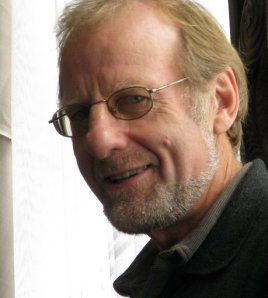 A week or so ago, I posted some reflections on the emerging church. I offered these in anticipation of Rev Dr Kevin Ward‘s then forthcoming inaugural lecture at the Knox Centre for Ministry and Leadership entitled ‘It may be emerging, but is it church?’ Kevin delivered his lecture on Monday, which was followed by a brief response by Rev Dr Bruce Hamill. Bruce’s response can be read here. Here’s Kevin’s paper:
‘IT MIGHT BE EMERGING: BUT IS IT CHURCH?’, a guest post by Kevin Ward
At a recent theological conference I was attending, one of the presenters outlining some of the factors in the changing context for theological education, referred to “fresh expressions” which he said was a more appropriate term than the previously favoured descriptor for experimental faith communities, “emerging church”, since as it turned out most of what they were emerging from was not church. He was Anglican and the term “fresh expressions” is a phrase developed by the C of E for some of its new developments, but the term “emerging church’ is still widespread and gains much attention from younger church leaders in NZ, including many of those accepted for ministry training by the PCANZ and coming to the Knox Centre for Ministry and Leadership. One of our courses here is now titled “Missional and Emerging Churches.” At the VisionNZ Conference last year one of the major presentations was “A Kiwi Emerging Kiwi Church: Yeah Right!” by Steve Taylor, who has emerged as the leading spokesperson for emerging church in NZ, and a significant global voice. Indeed it is interesting in reading on the movement globally how much NZ comes up in the material as being, along with, Australia and the UK initiators in it. Mike Riddel and Mark Pierson from NZ, and Michael Frost and Alan Hirsch from Australia are seen as pioneers. I might add that as well as being from down under, they along with Taylor are Baptists, a heritage of course I share myself, and something I will come back to.
A google search of “emerging church” came up with about 1,530,000 entries. So what are we to make of what Scot McKnight calls “the most controversial and misunderstood movement in the church today”. One article I read was titled “Emerging Churches – Heroes or Heretics.” Clearly unambivalent about the answer a brochure I received at the beginning of the year blazed out. “The last days Apostacy. Coming to a church near you. The emergent church.” It warns that “With the move of the Church back to Rome through organisations like evangelicals and Catholics together, Alpha, Promise Keepers and Interfaith dialogue… Rick Warren’s Purpose Driven and now the postmodern Emergent wave… believe that today’s post modern culture needs a more relevant and experiential approach to God, Church and Worship. Eg. Playing u2 as an expression of worship using multi-sensory stimulation, candles, icons, art, images, stained glass etc.” And it warns “The Emergent Church has taken hold in NZ and its teachings have been aired on Radio Rhema and also being taught in the BCNZ.” I must point out that the Knox Centre for Ministry and Leadership you’ll be pleased to know was not listed among those who have fallen into “the last days deception.”
We need of course to ask the question why has this movement arisen? The broad answer is fairly simple: it is part of a number of responses over the past half century to the increasingly obvious fact that the church in particular and Christian faith in general has been having a rather difficult time of it in western societies like NZ. I have written in a number of places on this, as have many others, and have no intention of rehearsing that fact. It is simply a given, whatever figures one uses and however positive the spin one tries to put on them. There have been many responses to this post Christian, or perhaps more correctly post Christendom reality, from the God is Dead theologies of the 60s, through the Church Growth movement of the 70s and Cell Churches of the 80s, to the Seeker Sensitive Churches of the 90s. Despite all these grand initiatives the rot continues.
What emerged in the 1990s was the realisation among some that not only were our western societies post Christendom, but they were also postmodern in at least some ways. That term is rather problematic, and again it is not my intention to explore all the issues around it. However in the broadest sense it is helpful to identify the fact that the cultural, social and intellectual world we live in today is very different from that which existed in 1960, even if there may well be more continuities than discontinuities. In this world all sorts of institutions that have existed for centuries have increasingly struggled. A number of Christian thinkers and leaders began arguing that the problem with all the recent efforts to reorganise church for our postChristendom world, was that they were still based on the assumptions and thinking of a modern society and culture. As that was rapidly diminishing and being replaced by postmodern forms so these attempts were simply short term arrangements, much like rearranging the deck chairs on the Titanic. Something more fundamental was needed.
There are many attempts, some helpful others not, to define the emerging church movement, but perhaps the simplest and most widely used is that by Eddie Gibbs and Ryan Bolger, in their study of the phenomenon, which they titled Emerging Churches¸ “communities that practice the way of Jesus within postmodern cultures.” Brian McLaren, who has emerged as its main spokesperson wrote in 1998 in the first of his many books:
You see, if we have a new world, we will need a new church. We don’t need a new religion per se, but a new framework for out theology. Not a new Spirit, but a new spirituality. Not a new Christ, but a new kind of Christian. Not a new denomination, but a new kind of church… The point is … you have a new world.
Now I want to say at this point that overall I would agree with the broad parameters of this argument. As Randall Prior summarised it at the Presbyterian General Assembly last year, “The form of the church which evolved in the era of Christendom and which served us well in that period is no longer sustainable. It is dying. It will die.” However I do want to add at least one cautionary note. Often the people involved use rather hyperbolic language, as if the church has only ever existed in one form or shape, at least since the inception of Christendom, often referred to as inherited church. Now that old form needs to be discarded and a brand new form developed. This is of course quite misleading. The form and shape of the church has constantly changed throughout its 2000 years of history. We see this even in the NT, and writers such as Hans Kung, David Bosch and Andrew Walls have provided helpful ways of understanding this.
Andrew Walls invites us to imagine a long living, scholarly visitor from space, a Professor of Comparative Inter Planetary Religions, able to get periodic study grants to visit planet earth every few centuries, to study earth religion, Christianity, on principles of Baconian induction. He visits a group of Jerusalem Jewish Christians about 37 CE; his next visit is in about 325 CE to a Church Council in Nicea; then in about 650 CE he visits a group of monks on a rocky outcrop in Ireland; in the 1840s he visits a Christian assembly in Exeter Hall London promoting mission to Africa; finally in 1980 he visits Lagos Nigeria where a white robed group is dancing and chanting through the streets on the way to church. At first glance they might appear to have nothing in common, or be part of the same religious community at all, but on deeper analysis he finds an essential continuity about the significance of Jesus, the use of scriptures, of bread and wine and water. But writes Walls, he recognises that these continuities are “cloaked with such heavy veils belonging to their environment that Christians of different times and places must often be unrecognizable to others, or even to themselves, as manifestations of a single phenomenon.”
At the heart of this debate about these emerging new forms of church life is the question of just what is the relationship between the historic faith and the environment in which it presently finds itself, between Christ and culture, of theology to context . This question is actually at the heart of many of the disputes that go on in the church, and I am aware were fought with some intensity and lasting consequences around a variety of issues in these hallowed halls for some considerable time.
When it comes to the relationship between the church and the culture that surrounds it there are a number of different models used to explain the various orientations. The classic work, which has formed the basis for all following discussions, is that of Richard Niebuhr, in Christ and Culture. He identifies five basic models: Christ against culture, the Christ of culture, Christ above culture, Christ and culture in paradox and Christ the transformer of culture. It seems, though, that the alternatives can be more simply discussed by reducing these to three.
(i) An “anticultural” response, “Christ against culture”. The attitude where the church sets itself up in opposition to the prevailing culture. The difficulty with this position is that there is no such thing as a culture free articulation of theology or understanding of the church. Consequently this position while opposing contemporary culture is in fact usually holding on to some culture of the past. The Amish, for example, hold on to the culture of early nineteenth century German settlers in Pennsylvania, traditional Anglicans to 1950s England and many fundamentalists to the pre 1960s American south.
(ii) An “accommodationist” response, “Christ of culture”. This is the opposite, where the church is so anxious to fit into the world that it becomes merely an extension of the culture and has lost any distinguishing particularity as a culture of its own. This response assumes the congruence of church and culture. It is assumed that the primary symbols of the church and of the culture are identical. The church sees itself in some way as representative of the culture at large and prides itself on its shaping, transforming role. Churches in nations where the two grew up together often exhibit the most radical forms of this. This has been a strong tendency in liberalism in western countries and can be seen as a major factor in the decline of mainstream denominations. The view fails to recognise that there is a basic incompatibility between the church and whatever time in which it lives.
(iii) An “incarnational” response. This response recognises some kind of tension between Christ and culture, as is found in all of Niebuhr’s final three categories. There is both continuity and discontinuity. Lesslie Newbigin rightly insists that the gospel only retains “its proper strangeness, its power to question us… when we are faithful to its universal suprarational, supranational, supracultural nature.” Yet the gospel travels through time not in some ideal form, but from one inculturated form to another. Consequently what missiologists call the “culturally indigenous church” is the aim of the incarnational approach.
A number of different terms are used to describe this approach to culture. The one that I find most helpful is “contextualisation”, although heated debate over its precise meaning continues, with Ecumenical and Evangelical interpretations differing considerably. At the core though is a recognition that many aspects of what humans believe, think, and do are contextually shaped. William Reiser defines it as “the process of a deep, sympathetic adaptation to, and appropriation of, a local culture in which the Church finds itself, in a way that does not compromise its faith.”
At the heart of the process is the model of the incarnation. In Jesus God took the human context in all its particularity seriously. Jesus was a historical person and so he was chronologically, geographically, religiously and culturally a first-century Jew. He neither repudiated his humanity or his Jewishness. The early church continued the principle as the gospel moved out of the language and culture of Jesus and his disciples into that of Graeco-Roman culture. Ever since those most effective in mission have “assumed that any culture can be host to Jesus Christ.”
However the critical point to note in an authentic contextual or incarnational approach is that there are limits to how far culture can set the agenda or determine the shape. Andrew Walls reminds us there are two important principles. On the one hand there is the ‘indigenzing’ principle, which affirms that the gospel is at home in every culture and every culture is at home with the gospel. But then there is the ‘pilgrim’ principle, which warns us that the gospel is never fully at home in any culture and will put us out of step with every society.
So there are two critical dimensions, which Max Stackhouse defines as the “textuality’ of the church – its faithfulness to the gospel – and its “contextuality” – its faithfulness to the world in which it finds itself. Hans Kung contends that we should aim for a “critical correlation” between the biblical message and the paradigm of the culture” and that “the task today is to come to terms with a postmodern paradigm”. The emerging church movement is endeavouring to take that task seriously and is to be commended for that.
If I can engage in a bit of personal narrative at this point, because, in a sense this lecture is part of an ongoing and unfinished conversation with myself. This is the second time I have given the inaugural lecture here. My earlier title was “Is New Zealand’s Future Churchless?” I outlined the paradox of countries like NZ where the data showed an ongoing resilience of relatively high levels of religious, and mainly Christian, believing and relatively low and declining levels of religious belonging. In light of this while it seemed religion was destined to continue rather than die out, as had been previously postulated in various forms of secularisation theory, the church itself may face a somewhat tenuous and uncertain future. I suggested that it would continue but needed to develop many more diverse forms, and these in essence would be “less church” in the sense of being much looser, less institutionalised, more eclectic, fluid rather than solid. Sounds much like emerging church!
After the address, Bruce Hammil, who through fate or destiny has been asked to be the respondent today, came up to me and asked “Where’s the theology in all of this?” A somewhat surprising question from Bruce! It was though a healthy rejoinder to me and a reminder that, central to my own thesis was the proposition that churches which had thrived had not only shown an ability to adapt their life and message to their rapidly changing cultural and social situation, but had also held a strong commitment to the central tenets of orthodox Christian belief. My major focus has been on the first half of that proposition, endeavouring to help churches realise the forms their life and message have taken have been wedded to a cultural and social context that has not existed for some time, and while they continue in their current form they indeed have a rather limited future. They are no longer incarnating the gospel in their context. To quote the new leader of the Labour Party, they have “lost touch with their electorate” and “need to reconnect”. Change is the essential challenge for the church, and I continue to be invited to help a broad range of churches understand the context they are in and how they might change to become culturally connected.
Now this is an essential task. While in some realms of theology we might be able to argue for some pure theology of the word, although I am somewhat sceptical of both the possibility and worth of that, even that great theologian Karl Barth, so often used to buttress the case for disregarding context when it comes to constructing theology, that it must be based solely on the self revelation of God in Christ, argued when it came to the church:
… in every age and place its constitution and order have been broadly determined and conditioned by political, economic, and cultural models more or less imperatively forced on it by its situation in world history… It has had and still has to adapt or approximate itself to these in order to maintain itself… in respect of the form of its existence… there is no sacred sociology [of the church].
There are then no sacred forms of church, however sacrosant these might appear to some. Of course we in the reformed tradition have always held this to be so, holding central to our understanding the reformation principle, ecclesia reformata semper reformanda. If then the church has its forms determined by whatever the current “political, economic and cultural models” of “its situation in world history” are does that mean that anything goes? That the answer to Bruce’s question is that “theology does not have a place in determining the form of church life.” That in fact ecclesiology is a pointless discipline. There is not a theology of the church, merely a praxis.
It is interesting to review literature on the church, from a historical perspective. It used to be for centuries that the basic questions these endeavoured to answer was “What are the marks of a true church?” From the 1970s on the nature of the question most writing was endeavouring to answer had changed, by one word. Instead of “What are the marks of a true church?” it was “What are the marks of a successful church?” – the word ‘successful’ some times being interchanged with the word ‘growing’, since to be successful was equated with growing. Probably two things lay behind this: as the decline of churches in the west became increasingly evident the overwhelming preoccupation became with turning decline into growth; and as the church splintered into greater and greater variety as the culture became more and more diverse, it became seen as a hopeless task to try and presume there was any true form. It was reinforced by a developing culture that became suspicious of any insistence on adherence to one particular form or expression in any area of life. Indeed ideology became the enemy, grammar was fascist, theory was irrelevant, praxis was what mattered. I might add that in NZ, which has always had a bent toward pragmatism and suspicion of intellectualism, all of this found fertile ground.
And so in the emerging church movement there is a sense of anything goes. For those for whom tradition or inherited forms are in fact the obstacle to being effective churches and a barrier to the mission of Jesus, it is a waste of time to listen to what it might have to say us about how the church should form its life. Graham Redding may have asked the question did Calvin have any place in the Café Church? in his 2005 inaugural lecture, but café church is relatively mild fare and rather orthodox when church can apparently be a bunch of kids at a skate board park or bmx track, a group of students gathering in pub or dance club, or some mid life couples sharing a few wines and a movie together.
So when is a gathering of followers of Jesus actually a church?
Many of those engaged in experimental forms of church argue that because Jesus promised that “wherever two or three come together in my name, there am I with them”, any such gathering is church. Within the Baptist tradition this is the primary definition that is used, as in the Pentecostal and Charismatic streams. The presence of Jesus by the Spirit is all that matters. It is thus no coincidence that many of the initiators of the emerging church movement in NZ and Australia have been Baptist. Such a simple definition leaves them much freer to experiment with a diversity of forms. I would hasten to add that for some quite some time I would also have held that as sufficient. It is interesting to observe though that the Baptist movement in NZ, after being driven by sheer pragmatism for the past couple of decades, is now acknowledging it has significant problems and challenges. The current leader of the movement in conversation with me in December said “our first task is to get our ecclesiology sorted out”. Interesting for me in that this drift was a significant factor in my leaving to become Presbyterian.
Further reflection though has made me realise I was still more Baptist than I imagined. As I mentioned one half of my thesis argued that effective churches had maintained a strong commitment to the central tenets of orthodox Christian beliefs. I identified these as being beliefs about Jesus Christ, about God, about scripture and about conversion, and used the Nicene Creed to define these. Nothing about the church though. No ecclesiology. And of course the Nicene Creed does include among its statements “We believe in one holy catholic and apostolic church”. So if we use this as a measure how does the emerging movement measure up? Is it in fact church?
1. One. Everybody affirms the unity or the oneness of the church, but ever since the Schism of 1054 that oneness has been somewhat difficult to locate, and since the splintering of the Reformation even more so. Daniel Migliore helpfully defines it as “a distinctive unity rooted in communion with God through Christ in the Spirit. The unity of the church is a fragmentary and provisional participation in the costly love of the triune God.” Recent trinitarian theology with its focus on a plurality within an essential oneness is helpful for us in understanding how the Christian gospel embraces both diversity and unity. Much of the NT is written dealing with this issue. The unity of the church does not lie in either a controlling doctrinal conformity or a formal institutional structure, and I would eschew all endeavours to impose either of those kinds of unity on the church. Within the diversity of our expressions it is in the life we participate in together with the triune God, and as Hans Kung expresses it, “It is one and the same God who gathers the scattered from all places and all ages and makes them into one people of God.”
However ever since the Reformers placed the focus on seeing the unity of the church in the invisible church rather than the visible church, that understanding has been used as a way of enabling churches and their leaders to do nothing about working to see unity as an actual mark of the church in its present reality. We have continued to be happily schismatic, tearing apart the fabric of church it seems whenever we have something on which we differ. What has been called the “creeping congregationalism”, which afflicts all varieties of church life in contemporary societies, heightens the tendency to focus on the local and the particular, as if that is all there was to being church. Jesus left behind a visible community not an invisible concept. A community he called to be one, and so it is incumbent on we who are the church to continually work hard to find ways to express in our increasingly diverse culture that this is a reality, not merely some ethereal and mystical entity. If the life of the trinity is the model of our unity then it does involved the diverse members working synergistically together for the glory of the one. One of my criticisms of the emerging church movement, is that with its brisk dismissal of inherited forms of church life, its distancing itself from tradition, its reluctance to work with the church as it is, it magnifies the image of a divided church and fails to put energy into working hard at ways to give expression to and so maintain the unity of the church. While I would admire its willingness to engage with our cultures and seek to find new ways of incarnating gospel and church within those, I believe it would be more true to being the church of Jesus Christ in the world today if it sought to do that working with the church as it already is. Brian McLaren says we need “a new church”. There is only one church, and it already is. The challenge is to continue to work within that church so it might better faithfully be the presence of God in Christ through the Spirit in the diverse communities it inhabits.
2. Holy. The word holy and the concept of holiness is hardly a popular word in our contemporary context, either inside or outside the church. It raises images of a “holier than thou” judgmentalism and an isolationist separatism fearful of contamination by an evil world. A preoccupation with holiness it is suggested has been a major hindrance to the mission of the church in the world. Identification and engagement with the world is what the creator God is about. The word holy is of course the primary word used to name the essence of the nature of God. It is if you like what marks out God as God, as distinctly different from everything else in creation. It is something that belongs essentially to God. For other things or persons to be described as holy therefore is to claim that they also are marked by the essence of the character of God, and in this way are to some extent different from the rest of creation. But how do we know what God is like if we are to share in that character. The central claim of the NT and of Christian thought is that the fullest revelation of God is to be found in the human person Jesus Christ. By looking at the life of Jesus we see what it is like to live a human life marked by the character, or holiness, of God. But more than that the NT claims that by his death, resurrection and gift of the Holy Spirit Christ mediates to us the very life of God so we can share in the fellowship of the trinity. Here is the essence of the holiness of the church. It can be identified by the degree to which it lives a life reflecting the glory of God seen in Christ and this is made possible by the presence of the Spirit in its midst. When we do this we will demonstrate a distinctive quality to our life that will indeed mark us out as different, distinct from others, as Peter put it a “peculiar people”. While this quality of holiness will be demonstrated in the church in an imperfect way, as Calvin put it, it is the “measure toward which it is daily advancing”.
 As suggested in my overview of the relationship of church and culture, the church lives in a relationship of some tension with whatever culture it lives in. It needs to both incarnate the gospel into that culture but also allow the gospel to transcend and judge every culture in which it is present. Part of the problem with Christendom and the way of being church that developed in that context, is that it ended up identifying the culture of those societies as being Christian, and simply became a reflection of the societies in which they existed. They no longer were a distinct or holy people. As the society and the culture in which they existed changed rapidly in the post war era they ended up with nothing left to offer the new societies which emerged and were seen as antiquarian reminders of a world that once was. Dean Inge once said that “If you marry the spirit of the age you will find yourself a widow in the next.” Sadly that has come to be true of much of mainline Protestantism in the West, including many of its evangelical expressions, shaped more by the values of the consumer market and business models than the gospel. The emerging church movement has been quite right in much of the critique it has offered of the way in which traditional church life had been simply an expression of modern western life and values.
But while some of its analysis of what has been problematic for the church is invaluable, in its headlong rush to become relevant to the emerging culture of a postmodern world, it runs the risk of making the same mistake and may end up wedding itself to the spirit of this age, just as firmly as the church it critiques may have to a previous age. When the wonders of this age begin to wind down, and I might suggest it might be a phase in history that is much more short lived than the previous, where will it be then? What will it have to offer and to say when all its flaws have been laid bare. The emerging church articulates strongly an incarnational theology and understands Jesus almost solely in these terms. Yet any serious reading of the life and ministry of Jesus will identify that while he did live incarnationally within the culture of first century Judaism, he also lived in considerable tension with most in that culture, at times spoke judgement on it, and ended up being rejected by it. If he was simply concerned with relevance why was he strung up on a cross. At times it is difficult to distinguish an emerging café or night club church from any other café or night club down the street. Postmodern culture is neither any better nor any worse than modern culture. So emerging leaders celebrate the death of modernity and raise three cheers for the arrival of postmodernity, without recognising the need to provide a proper critique of that which is problematic for living a Christ shaped life. On the other hand some critics of the emerging movement such as Don Carson and David Wells see only a culture antithetical to Christ in postmoderrnity, and fail to recognise they are just as closely wedded to the culture of modernity. Whatever culture we happen to be in as the church of Jesus Christ, we need first to allow Christ by the Spirit to form us into a distinctive culture of its own that preaches in the language of the time and place in which it is set the unique holy life of our Trinitarian God.
3. Catholic. The affirmation of the catholicity of the church refers to its universality and inclusivity. It is the church that has existed everywhere, always and for all. It guards the church against parochialism, sectarianism, racism and conceit chronology, among other things. It is clear that both the unity and the catholicity of the church go together, they are two interwoven dimensions of the one church. However as with oneness we need to guard against it being understood merely as an abstract kind of universalism hovering over the particularities of culture and history. Again it is a mark that needs to be demonstrated in the life of the visible church, its expression in the life of local congregations. Avery Dulles claims that catholicity “is not the accomplished fact of having many members or a wide geographical distribution, but rather the dynamic catholicity of a love reaching out to all and excluding no one.” I would agree with Daniel Migliore that the “church today needs to interpret the meaning of catholic as inclusive of all kinds of people”. What might this mean for us today?
One of the major trends of a post 60s world of the global village, has been a growing pluralism of our societies. Not just through the coming to societies such as NZ of markedly different cultural groups from overseas, but also by the breakup of the dominant white European culture into a multiplicity of subcultures. Not only is this across generations, but also within generations, so much so that since the beginning of the 90s it has been pointless to talk even about youth culture. This pluralisation has been heightened by the fact that increasingly people do not live their life in one geographical place where they might mix with people of a wide variety of ages and cultures, but rather are mobile and live their life with communities of choice, usually consisting of people of the same culture as me. Often these subgroups are quite exclusive, having their own distinctive language, symbols and lifestyles. At a time in the past when people in a community lived their lives in that particular community, when generations shared many of the activities of life together, the local church embraced within its community members from every walk and stage of life within that community. It was catholic, inclusive, in that sense. This was the parish or family church, an increasingly rare bird in our pluralistic society. How do we reach people today within all these different cultural subgroups, when the culture of church as it is, represents that culture of a bygone age?
The answer of much of the emerging church is that we need separate churches to incarnate the gospel into all those cultural subgroups. And so we have youth church, student church, young adults church, young marrieds church, breakfast church, café church, biker church – and so on and so on. These churches become quite age or culture specific. One practical question to ponder is what happens to these churches when their particular niche finishes? But there is a bigger issue. Murray Robertson retires this month after 40 years as Pastor of Spreydon Baptist Church during which he has had significant influence on the church in NZ. Last year he served as President of the Baptist Church, and wrote a series of columns in the Baptist Magazine on his observations as he visited churches around NZ. In one of these he noted that churches now “tend to divide along shared interest lines” and there is “an age based apartheid”. He writes “Maybe this is part of the phenomenon of people looking for a church in which they will feel comfortable, but… something quite precious is lost when you only meet and share with people who are pretty much identical to yourself.” Indeed is it a church when its membership is so exclusively limited to some subgroup that others are in fact shut out? The emerging church movement is again to be commended for its recognition that in our multicultural world there is no one expression of the gospel that will incarnate it for “all” those, even within one community in NZ. They draw correctly on the missional principle Paul spells out in 1 Corinthians 9 of becoming “all things to all peoples so that I might by all possible means save some”. But that needs to be balanced by the ecclesial principle he spells out in Ephesians 2, talking about the major cultural divide of his world, that “Christ…. Has made the two one and has destroyed the barrier, the dividing wall… to create in himself one new humanity.” Maybe what is a legitimate mission group is not in fact a church. It needs to see itself as part of the church catholic, and commit itself to being part of that church, and share its life with the greater whole in its lived practices, so that in this fractured divided tribalised world people may see that the gospel makes a difference, that estranged groups can be reconciled, that in Christ cultural separation might be transcended and that the new community of God’s people is inclusive of people of every race and every tribe and every tongue, even here now on earth. Might these questions also be asked of ethnic specific churches? To quote David Bosch
The new fellowship transcends every limit imposed by family, class or culture. We are not winning people like ourselves to ourselves but sharing the good news that in Christ God has shattered the barriers that divide the human race and has created a new community. The new people of God has no analogy; it is a “sociological impossibility” that has become possible.
4. Apostolic. Randall Prior at the Presbyterian Assembly defined the Apostolicity of the church as its essential missional nature. That before it is anything else it is missional, a view expressed by the missional church movement. While it is true the word apostle does have in it the idea of one who is sent, and while I agree fully with the sentiment being expressed, I do not believe that interpretation of apostolic as a mark of church is how it was understood by those who created the Nicence Creed or historically within the church. In confessing the apostolicity of the church we are acknowledging that the true church is founded on the apostles. The faith and life of the church must stand in continuity with their enduring witness. This continuity is ensured not by some physical continuity through the sacramental laying on of hands, but by our faithfulness to and reaffirmation of the gospel they gave witness to in the writings of the NT. As Jurgen Moltmann puts it: “The apostolic succession is in fact and in truth the evangelical succession, the continuing and unadulterated proclamation of the gospel of the risen Christ.”
It is of course one thing to affirm that “our supreme rule of faith is the Word of God” as the Presbyterian Church does or that “the Bible is the final authority in all matters of faith and practice”, as a Baptist church might. It is quite another to interpret what those words actually mean for us today. One of the things postmodern hermeneutics has made us aware of is there is no such thing as an un-interpreted word or act. There are two things this raises in relation to our engagement with emerging church. Being faithful to the apostolic witness is not just mere repetition of those words, or repeating the way in which they might have been interpreted as being appropriate to another place and another time. The apostolic word must be interpreted anew for every generation and every context. The emerging church is to be commended for its willingness, by and large, to take scripture seriously, and to seek to interpret afresh what it might mean for us today in our particular context rather than just repeat unthinkingly the formulas and answers of the past.
But secondly how do we know that new appropriation or interpretation is faithful to the witness of the apostles. Calvin argued that interpretation of scripture must take place within the hermeneutical community of the church. Too often in protestant and evangelical circles the doctrine of the priesthood of all believers has been understood within the culture of enlightenment individualism, to mean the right of every individual to interpret scripture for them self, a tendency heightened in the radical individualism of late modernity. So much so that Kevin van Hoozer asks in his hermeneutical tour de force, Is there a meaning in this text? or is there in fact just a never ending possibility of meanings. Listening to the voice of the church, the hermeneutical community, is one of the significant factors to take account of in discovering what this text means for us today. And by the church we mean the “one, holy, catholic, apostolic church”, the church throughout time historically and throughout the world geographically. This means giving due, but not stifling, weight to the voice of tradition. GK Chesterton wrote: “Tradition means giving votes to the most obscure of all classes – our ancestors. It is the democracy of the dead. Tradition refuses to submit to the small and arrogant oligarchy of those who happen to walking around.” With its ditching of traditional church, its giving up on traditions that might have developed and been passed on for centuries, apart from occasionally ransacking them and tearing out of any meaningful context some token that seems cute in the eclecticism of postmodern culture, the emerging church runs the risk of missing the wisdom that has developed over the centuries, of listening to the caution that might come from previous misinterpretations, and thus in the end run outside the boundaries of where the Spirit might be willing to venture with them. Sadly this is a pattern that has happened all too often in the history of well intentioned new movements. There is a use of scripture which is false teaching. There is heresy that is full of proof texts. Less dramatically there are also representations of the gospel that are unbalanced and therefore unhelpful, and maintaining conversation and community with the whole church so interpretation occurs within the checks and balances of that will help ensure an ongoing yet presently meaningful faithfulness to the gospel within the emerging movement.
Two further marks of the church have also been identified, particularly among Protestants. As Calvin put it, “Wherever we see the Word of God purely preached and heard, and the sacraments administered according to Christ’s institution, there it is not to be doubted, a church of God exists.” Holding this definition central to our understanding of the church, the Presbyterian Church has sent to Knox another group of students this year, to hopefully complete the final stage of their training so they can be ordained as Ministers of Word and Sacrament. So that we will have communities of believers where the “Word of God is purely preached” and as other definitions put it “the sacraments are rightly administered”. The former is in some ways easier to assess than the latter. What does it mean to ensure the sacraments are rightly administered? Orthodox theologian John Zizioulas argued it is the presence of the bishop that makes it so. Obviously a problematic definition for many churches. For Catholics and Anglicans it is someone rightly appointed by the bishop who ensures it is in faithful continuity with the apostolic tradition. We have argued here that being apostolic means faithfulness to the witness of the apostles as contained in the NT. Hence for Calvin, “as instituted by Christ”. Here is why the Reformed tradition has held word and sacrament together, because it is not just receiving the bread and the wine but doing so in the context of hearing the gospel story of what they mean that makes them a sacrament, a means of grace. So a theologically informed and properly recognised ministry is important to ensure that the church remains apostolic, faithful to the scriptures, in all aspects of its life, including the preaching and sacraments.
Parts of emerging church, as well as other experimental forms of church life, have often been critical of and resistant to theological training, often preferring to have leaders and pastors who are more entrepreneurial and creative. Too much theology kills those. Many Baptist churches in NZ have followed this also. And I have to say that at times I have been in churches and listened to sermons or seen communion or baptisms, that at best have not been faithful to the Scriptures and at times even heretical. An entertaining event but scarcely a sacrament. Sometimes they are missing completely. Which of course raises the question, is it church? A central reformation principle is ecclesia reformata semper reformanda, “the church reformed is always being reformed”. This phrase is often quoted by those who want to change and reform and do church in different ways . We are being true to our tradition in doing this. In some senses yes, but it is a misunderstanding of the reformers intent to see it as giving carte blanche to try whatever we want. The reformers reformed the church in the light of the Scriptures. Luther did not just way “Here I stand I can do no other”, but “My conscience is bound to the word of God, here I stand…” It is why ministers were teaching elders, and now ministers of word and sacrament, so that by placing the role of scripture central in life of the church and office of ministry the church will be continually reformed in the light of scripture. As the Church of Scotland statement on ministry in 2000 puts it, they are “to represent Christ in the faithful proclaiming of the Word and right administration of the Sacraments and so ensure the possibility of such reform and renewal.” The emerging church movement would do well to seek to ensure a theologically formed leadership so that it too will experience the renewing presence of Christ that come from faithful preaching of the gospel and administration of the sacraments.
I want to finish briefly by drawing from a sociological insight. Some of you might be surprised that it has taken me this long to mention one. Many of the grand theories of the earlier sociologists are now viewed with much suspicion. However there is one theory I think continues to provide invaluable insight. Max Weber’s theory of the routinisation of charisma. He argues that what happens in the evolution of religion is that a new group gathers around a charismatic leader and is a dynamic, free, loose charismatic movement. Over time it rationalises, routinises and systemises its life and so looses its charisma. Some people become frustrated with this and break away around the edges to form a new charismatic group with new energy and dynamism. It is this that ensures the ongoing renewal of the religion. Looking at the history of Christianity in the west there is much that can be helpfully explained by Weber. There is no question that much of church life in the west has become routinised and rationalised, there is little dynamism and charisma. The Spirit has been routinised out. I believe the emerging church movement can be understood in these terms, as can the charismatic movement of the 1960s and 70s. What has happened often in the past is that the established religious institution dechurches the new movement and the action is reciprocated by the movement. My hope is that in this instance we can avoid repeating history and that by remaining in communion and continuing in conversation, the emerging church may be part of the movement for renewal and reformation of the church in the west, and that the emerging church movement may gain from the wisdom and catholicity of the church to grow into a more faithful and dynamic communion of the triune God in our challenging western context.
When is a church a church? I would probably in the end agree with Miroslav Volf’s conclusion, that “where two or three are gathered in Christ’s name, not only is Christ present among them, but a Christian church is there as well, perhaps a bad church, a church that may well transgress against love and truth, but a church nonetheless.” Many in the emerging movement prefer to talk about the emerging conversation than emerging church. My plea would be for those within the movement to include in the conversation all of those who with them are members of the “one holy catholic apostolic church”, so they might come to more adequately share those marks. And to those sure they are members of that church, but suspicious as to whether these new comers qualify, to reach out in conversation with them and so help us all to more fully demonstrate the transforming presence of the risen Christ in our life together.
Brian McLaren, Reinventing Your Church, Grand Rapids: Zondervan, 1998, 13-14.
Andrew Walls, The Missionary Movement in Christian History, Edinburgh: T&T Clark, 1996, 3-7.
H. Richard Niebuhr, Christ and Culture, New York: Harper Brothers, 1953.
Lesslie Newbigin, “The Enduring Validity of Cross-Cultural Mission,” International Bulletin of Missionary Research 12, 1988 50.
As quoted in L. Sweet, Aquachurch. Loveland: Group Publishing, 1999. 81.
D. R. Jacobs, “Contextualization in Mission.” In Toward the Twenty First Century in Christian Mission, J.M. Phillips and R.T. Coote eds. Grand Rapids: Eerdmans, 1993. 236.
Max Stackhouse, “Contextualization, Contextuality and Contextualization.” In One Faith, Many Cultures: Inculturation, Indigenization, and Contextualization, R.O. Costas ed. New York: Orbis Books, 1988, 6.
Hans Kung, Theology for the Third Millennium: An Ecumencial View, New York: Doubleday, 1998, 166, 211.
Karl Barth, Church Dogmatics, IV/ 3/2: The Doctrine of Revelation, transl. G. Bromiley, Edinburgh: T&T Clark, 1962, 739.
Daniel Migliore, Faith Seeking Understanding: An Introduction to Christian Theology, Grand Rapids: Eerdmans, 1991, 201.
Hans Kung, The Church, New York: Image Books, 1967, 353.
Avery Dulles, Models of the Church, New York: Doubleday, 1974, 122.
David Bosch, Transforming Mission, Maryknoll: New York, 1991, 389.
Jurgen Moltmann, The Church in the Power of the Spirit¸ New York: Harper & Row, 177, 359.
Max Weber, The Sociology of Religion, Boston: Beacon Press, 1963.
Miroslav Volf, After Our Likeness: The Church as the Image of the Trinity¸Grand Rapids: Eerdmans, 1998, 136.
Blogging in the name of the Lord: Jason Goroncy

Readers of Per Crucem ad Lucem may like to know that Guy Davies (of The Exiled Preacher fame) has just posted an interview that he conducted with me some time back. It forms part of his (fifth) ‘Blogging in the name of the Lord’ series. Some of it’s even still true.
The Scandal of Weak Leadership: A Sermon on 2 Corinthians 11:16–12:10
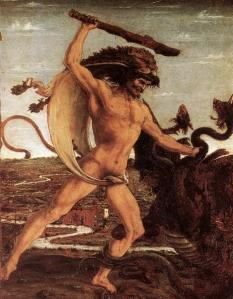 St Hercules Presbyterian Church in Lake Paringa is looking for a new minister. The ad reads:
Minister Required:
- For a growing, charismatic church with a congregation of diverse backgrounds.
- Must have strong leadership qualities and the ability to cast vision.
- Must be an excellent preacher.
- Needs to demonstrate appropriate spiritual gifts.
- The ability to interact with influential figures in our local community is a definite advantage.
- Attractive remuneration package with bonuses available when the church grows (which, of course, it will just as brother Ebenezer received the vision).
This is the sort of ad that I can imagine the church in Corinth writing. How disappointed they must have been when they got Paul! He was not the eloquent speaker for which they had hoped. Instead of providing the ‘strong’ leadership they wanted, he treated them with gentleness. And while he was prepared to teach about spiritual gifts, he hardly ever talked about his own ‘spiritual’ experiences, even less gloat about them. And rather than mixing with the influential, he insulted them. Even worse – he would not take their money!
Instead of getting Arnold Schwarzenegger or Napoleon or Takaroa, in Paul the Corinthians were given a weak, sick, persecuted, afflicted and bruised human being. And then to add insult to injury, Paul had the audacity to tell them that his weakness was actually proof that he was genuine!
What we have come to call 2 Corinthians constitutes Paul’s defence of his apostleship. All through this letter, Paul insists that the appropriate model for Christian ministry is one where divine power is demonstrated in the presence of weakness. He begins in Chapter 1 praising ‘the Father of mercies and the God of all consolation, who consoles us in all our affliction’ (1:3-4). In Chapter 2, he pictures himself as one led in a procession of death for Christ’s sake – not as the great victor of heroic Greek epics, but as the defeated captive of the exploits of worldly power and ambition. And he makes it clear that his presence in such a procession is not due to his own achievement, nor to God’s failure to care for him, but rather is due to God’s victory. And twice in the space of just a few verses (2:17-3:6) Paul tells us that he labors as he does because of his relationship with Christ, and because the focus of Christian ministry is to bear witness to one who was – as Paul tells us later on – ‘crucified in weakness, but who lives as a result of God’s power’ (13:4).
The fact that ministry can only be conducted in God’s power is reiterated again in Chapter 4. Indeed that’s precisely why, Paul says, we should not loose heart (4:1). He is even more explicit in vv. 7-11. Reading from Eugene Peterson’s The Message:
If you only look at us, you might well miss the brightness. We carry this precious Message around in the unadorned clay pots of our ordinary lives. That’s to prevent anyone from confusing God’s incomparable power with us. As it is, there’s not much chance of that. You know for yourselves that we’re not much to look at. We’ve been surrounded and battered by troubles, but we’re not demoralized; we’re not sure what to do, but we know that God knows what to do; we’ve been spiritually terrorized, but God hasn’t left our side; we’ve been thrown down, but we haven’t broken. What they did to Jesus, they do to us – trial and torture, mockery and murder; what Jesus did among them, he does in us – he lives! Our lives are at constant risk for Jesus’ sake, which makes Jesus’ life all the more evident in us.
So welcome to Christian ministry. Welcome to the life of the baptised, to the way of God’s reconciling the world to himself in Christ.
 Throughout this letter, Paul is up against the criticisms and accusations of those ‘pseudo-apostles’ who consider him weak and inferior. But instead of succumbing to boasting of his family connections and academic qualifications and spiritual experiences, Paul is embarrassed to talk about them. Instead of hiding those things in his life which would make him appear weak and vulnerable, he glories in them, no matter how much it makes him feel ‘a fool’ and ‘out of his mind’ to do so. Instead of putting together a hero’s résumé to impress the great minds of his age, Paul recites the persecutions he has endured, the dangers from which he has only narrowly escaped, and the crippling sense of responsibility that pressurises him every day. ‘Troubles, deprivations and anxieties – that has been my lot’, says Paul. ‘And how do I cope with all that? Do I emerge like some old President, dopey but glowing with self-confidence at the end of each test? No way!’: ‘Who is weak, and I do not feel weak? Who is led into sin, and I do not inwardly burn?’ (11:29). ‘In fact, if you really want to know what sort of apostle I am’, Paul says, ‘I am the sort who when the going gets really tough, bails out. In fact, I’ve always been like it. One of the first things I did after I was baptised was to run away’: ‘In Damascus the governor under King Aretas had the city of the Damascenes guarded in order to arrest me. But I was lowered in a basket from a window in the wall and slipped through his hands’. (11:32-33).
And as for that mysterious ‘thorn in the flesh’, who knows? The commentators have a field day here: Paul had a theological opponent; Paul had an unbelieving wife; Paul had poor eyesight; Paul had homosexual urges; Paul had malaria – all of which are possibilities, but must remain speculations. Whatever it was, and however much Paul at times wished it removed, it served as a constant reminder to him that the integrity and effectiveness of his ministry would rest not on his worthiness or credentials but on God’s grace. And even though we can’t know what the thorn was, Paul at least tells us why it was given to him and he asserts God’s promise to him that no hindrance would be suffered in his ministry as a result of it:
To keep me from becoming conceited because of these surpassingly great revelations, there was given me a thorn in my flesh, a messenger of Satan, to torment me. Three times I pleaded with the Lord to take it away from me. But he said to me, “My grace is sufficient for you, for my power is made perfect in weakness.” (12:7-9a)
‘… power is made perfect in weakness’. That’s how v. 9 is usually translated. But the verb used here (teleitai) could equally be translated as ‘brought to an end, finished, done with’. In other words, ‘My grace is sufficient for you; for power is brought to an end in weakness’. Indeed, the context indicates that Paul’s intention was not primarily to comfort people who were weak and suffering, but rather to challenge those obsessed with a particular brand of power. At heart, what Paul bears witness to is the revelation of God’s way with us as the way of paradox – of that recurring Word which warns against overly-optimistic reliance upon techniques or technicians which can intensify or alter creation’s true way of being, as if creation could fulfill and complete itself apart from the action of the initiative-taking God.
Paul’s words invite us to consider a different form of human life and service than that which is often trumpeted by so-called leadership gurus. For when we stand in God’s service, we must be able sometimes, and perhaps for long periods, to be still, to wait, to keep silent, to suffer. This, too, is power. Indeed, it is the power of God, the power of Jesus Christ, the power of the Lamb as well as the Lion, of the cross as well as the resurrection, of humiliation as well as exaltation, of death as well as life. As one theologian put it, the power which comes from God is
the capacity to be high or low, rich or poor, wise or foolish. It is the capacity for success or failure, for moving with the current or against it, for standing in the ranks or for solitariness. For some it will almost always be only the one, for others only the other, but usually it will be both for all of us in rapid alternation. In each case, however, it will be true capacity, the good gift of God, ascribed to each as needed in His service. God demands one service to be rendered in the light, another which can be performed only in shadow … Either way, it is grace, being for each of us exactly that which God causes to be allotted to us.[1]
Indeed, here is grace’s way – of Israel’s birth through a barren womb. Here is grace’s way – of the champion from Gath killed by Jesse’s youngest son. Here is grace’s way – of the Word taking on fallen flesh and stubbornly refusing to be fallen in it. Here is grace’s way – of ostracised women being commissioned as proclaimers of God’s good news. Here is grace’s way – that the deepest revelations of God are not given to the wise and understanding but to infants. Here is grace’s way – that God has a deliberate policy of positive discrimination towards nobodies, that the kingdom of God belongs to the poor and that the earth will be inherited by the meek. Here is grace’s way – love your enemies and bless those who make life hell for you. Here is grace’s way – of God making foolish and weak the wisdom and power of the world. Here is grace’s way – of God putting his treasure into jars of clay in order to show that God’s all-surpassing power is from God and not from us. Here is grace’s way – that only in humiliation do we find God exalting us, only in dying do we find God making us alive, only in throwing our lives away do we find God giving life back to us. Here is grace’s way – of power being brought to an end in weakness. Here is grace’s way – that we might actually be more use to God with our thorns than without them. Only when I am weak, am I strong.
 Father Mike Buckley once wrote a letter to ordinands who were preparing for ordination. In it he asked them this question: ‘Are you weak enough to be a priest?’ Buckley was taking a shot at the way society commonly evaluates people by listing their strengths. If someone is a capable speaker with an agile mind, we think they’ll make a good lawyer or a persuasive politician. If someone has good judgement, a scientific bent and manual dexterity we decree they’d make a splendid surgeon. And the tendency, Buckley says, for those of us in the church is to transfer this method of evaluation, to line up all the pluses to say that such and such a person would make a good minister.
Buckley says that such a transfer is disastrous because a more crucial question is ‘Is this person weak enough to be a priest?’ That’s a key question that needs to be asked by students training for pastoral ministry. It’s also a question that parish councils need to ask when they are meeting with a prospective minister. Is this person deficient enough that they have not been able to ward off suffering, that they have lived with a certain amount of failure, because it is in this deficiency, in this weakness, in this tasting of temptation, that they become qualified like that great high priest to sympathise with others in their weakness.
So Henri Nouwen reminds us, and with this I finish, that:
The way of the Christian leader is not the way of upward mobility in which our world has invested so much, but the way of downward mobility ending on the cross … Here we touch the most important quality of Christian leadership in the future. It is not a leadership of power and control, but a leadership of powerlessness and humility in which the suffering servant of God, Jesus Christ, is made manifest … To come to Christ is to come to the crucified and risen One. The life-giving apostle embodies in himself the crucifixion of Jesus in the sufferings and struggles he endures as he is faithful and obedient to his Lord. So Paul preaches the crucified and risen Jesus, and he embodies the dying of Jesus in his struggles to further point to the Savior. His message is about the cross and his life is cruciform, shaped to look like the cross … I leave you with the image of the leader with outstretched hands, who chooses a life of downward mobility. It is the image of the praying leader, the vulnerable leader, and the trusting leader. May that image fill your hearts with hope, courage, and confidence.[2]
[1] Karl Barth, Church Dogmatics III.4 (trans. A.T. Mackay, et al.; Edinburgh: T&T Clark, 1961), 396-7.
[2] Henri J.M. Nouwen, In the Name of Jesus: Reflections on Christian Leadership (New York: Crossroad, 1989), 62-3, 70, 73.
Karl Barth: ‘A Letter to Japanese Friends’
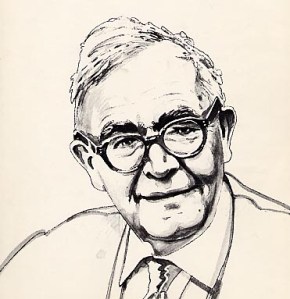 ‘In all circumstances, theology is a beautiful, a joyful task. It may and should be that today also for you. I say this to you after I have tried to study theology for more than fifty years. When I began doing this as a young man, I was often worried and morose in my work. Later, I could see that if one grasps it rightly, one is led by theology to a place that-despite all difficulties and tiresome work that awaits one there-is a bright place. Here with all one’s longing to see “face to face” (I Cor. 13:13) one can live-for oneself and for others. My dear Japanese friends, if you also find yourselves led to this bright place in your theological activity, then you have rightly understood me, and I think that your work also will be a sowing of living seed among both Christians and non-Christians of your land and people.
Theology, however, requires free persons. As a young theologian, I belonged to a “school.” It was not a bad school; I still think gratefully of my former teachers. But I later had to free myself from their school not only because there were some things in their instruction which were not entirely right, but simply because it was a school. And now I would not want the result of my life to be the formation of a new school. I am in the habit here of telling everyone who will listen that I myself in any case am no “Barthian.” The reason is that after having learned some things, I would like to remain free to continue to learn. You understand what I am saying to you: Concern yourself as little as possible with my name! Because there is only one interesting name, whereas the promotion of all other names can only lead to false bonds and can only provoke boring jealousy and obduracy in others. Do not take a single sentence from me untested. Instead, measure each of them by the Word of God who alone is true and who is judge and supreme teacher of us all. You understand me rightly if you allow yourselves to be led by what I say to what the Word of God says. Good theologians do not live in a house of ideas, principles, and methods. They stride through all such houses in order to come out again and again into the open. They remain on the way. They have the distant high mountains and the infinite sea of God before their eyes, and just for that reason and in closest proximity they surely also have their fellow human beings-the good and the evil, the fortunate and the unfortunate, the Christian and the non-Christian, the Eastern and the Western-to whom they may be witnesses in all modesty.
If you want to accompany me further in this joy and freedom, then everything is in order if you want to think in a friendly way on May 10 of the seventy-year-old man in Basel’.
– Karl Barth, Offene Briefe 1945-1968 [Karl Barth Gesamtausgabe, Vol. V]. Cited in Karl Barth, ‘Excerpts From Barth: The Strange New World Within The Bible’, TheolToday 43, no. 3 (1986), 417-8.
Per Crucem ad Lucem: Now serving on Facebook

This post is for the benefit of those who read Per Crucem ad Lucem via a feed (my preferred method of reading just about anything online). If this is you, you might have missed out on the news that Per Crucem ad Lucem is now available via Facebook (which is definately not my preferred format for online reading). Now, back to something important …
John Pilger on ‘The politics of bollocks’
 While much of the world has been observing the post-election balloons starting to deflate, the last streamers being swept up, and the last drop of bubbly being sculled (though some of us have now refilled our flutes after recent news), John Pilger‘s gutsy pen has been resisting all efforts to shut up and be grateful that at least President Bush is gone. It’s time, he says, for Obama-lovers to grow up. He is, of course, right. Here’s Pilger piece published in yesterday’s New Statesman:
‘Growing up in an Antipodean society proud of its rich variety of expletives, I never heard the word bollocks. It was only on arrival in England that I understood its magisterial power. All classes used it. Judges grunted it; an editor of the Daily Mirror used it as noun, adjective and verb. Certainly, the resonance of a double vowel saw off its closest American contender. It had authority.
A high official with the Gilbertian title of Lord West of Spithead used it to great effect on 27 January. The former admiral, who is a security adviser to Gordon Brown, was referring to Tony Blair’s assertion that invading countries and killing innocent people did not increase the threat of terrorism at home.
“That was clearly bollocks,” said his lordship, who warned of a perceived “linkage between the US, Israel and the UK” in the horrors inflicted on Gaza and the effect on the recruitment of terrorists in Britain. In other words, he was stating the obvious: that state terrorism begets individual or group terrorism at source. Just as Blair was the prime mover of the London bombings of 7 July 2005, so Brown, having pursued the same cynical crusades in Muslim countries and having armed and disported himself before the criminal regime in Tel Aviv, will share responsibility for related atrocities at home.
There is a lot of bollocks about at the moment.
The BBC’s explanation for banning an appeal on behalf of the stricken people of Gaza is a vivid example. Mark Thompson, the BBC’s director general, cited the corporation’s legal requirement to be “impartial . . . because Gaza remains a major ongoing news story in which humanitarian issues . . . are both at the heart of the story and contentious”.
In a letter to Thompson, David Bracewell, a licence-fee payer, illuminated the deceit behind this. He pointed to previous BBC appeals for the Disasters Emergency Committee that were not only made in the midst of “an ongoing news story” in which humanitarian issues were “contentious”, but also demonstrated how the corporation took sides.
In 1999, at the height of the illegal Nato bombing of Serbia and Kosovo, the TV presenter Jill Dando made an appeal on behalf of Kosovar refugees. The BBC web page for that appeal was linked to numerous articles meant to stress the gravity of the humanitarian issue. These included quotations from Blair himself, such as: “This will be a daily pounding until he [Slobodan Milosevic] comes into line with the terms that Nato has laid down.” There was no significant balance of view from the Yugoslav side, and not a single mention that the flight of Kosovar refugees began only after Nato had started bombing.
Similarly, in an appeal for victims of the civil war in the Congo, the BBC favoured the regime led by Joseph Kabila by not referring to Amnesty, Human Rights Watch and other reports accusing his forces of atrocities. In contrast, the rebel leader Laurent Nkunda was “accused of committing atrocities” and ordained the bad guy by the BBC. Kabila, who represented western interests, was clearly the good guy – just like Nato in the Balkans and Israel in the Middle East.
While Mark Thompson and his satraps richly deserve the Lord West of Spithead Bollocks Blue Ribbon, that honour goes to the cheer squad of President Barack Obama, whose cult-like obeisance goes on and on.
On 23 January, the Guardian‘s front page declared, “Obama shuts network of CIA ‘ghost prisons'”. The “wholesale deconstruction [sic] of George Bush’s war on terror”, said the report, had been ordered by the new president, who would be “shutting down the CIA’s secret prison network, banning torture and rendition . . .”
The bollocks quotient on this was so high that it read like the press release it was, citing “officials briefing reporters at the White House yesterday”. Obama’s orders, according to a group of 16 retired generals and admirals who attended a presidential signing ceremony, “would restore America’s moral standing in the world”. What moral standing? It never ceases to astonish that experienced reporters can transmit PR stunts like this, bearing in mind the moving belt of lies from the same source under only nominally different management.
Far from “deconstructing the war on terror”, Obama is clearly pursuing it with the same vigour, ideological backing and deception as the previous administration. George W Bush’s first war, in Afghanistan, and last war, in Pakistan, are now Obama’s wars – with thousands more US troops to be deployed, more bombing and more slaughter of civilians. Last month, on the day he described Afghanistan and Pakistan as “the central front in our enduring struggle against terrorism and extremism”, 22 Afghan civilians died beneath Obama’s bombs in a hamlet populated mainly by shepherds and which, by all accounts, had not laid eyes on the Taliban. Women and children were among the dead, which is normal.
Far from “shutting down the CIA’s secret prison network”, Obama’s executive orders actually give the CIA authority to carry out renditions, abductions and transfers of prisoners in secret without threat of legal obstruction. As theLos Angeles Times disclosed, “current and former US intelligence officials said that the rendition programme might be poised to play an expanded role”. A semantic sleight of hand is that “long-term prisons” are changed to “short-term prisons”; and while Americans are now banned from directly torturing people, foreigners working for the US are not. This means that America’s numerous “covert actions” will operate as they did under previous presidents, with proxy regimes, such as Augusto Pinochet’s in Chile, doing the dirtiest work.
Bush’s open support for torture, and Donald Rumsfeld’s extraordinary personal overseeing of certain torture techniques, upset many in America’s “secret army” of subversive military and intelligence operators because it exposed how the system worked. Obama’s newly confirmed director of national intelligence, Admiral Dennis Blair, has said the Army Field Manual may include new forms of “harsh interrogation” which will be kept secret.
Obama has chosen not to stop any of this. Neither do his ballyhooed executive orders put an end to Bush’s assault on constitutional and international law. He has retained Bush’s “right” to imprison anyone, without trial or charge. No “ghost prisoners” are being released or are due to be tried before a civilian court. His nominee for attorney general, Eric Holder, has endorsed an extension of Bush’s totalitarian USA Patriot Act, which allows federal agents to demand Americans’ library and bookshop records. The man of “change” is changing little. That ought to be front-page news from Washington.
The Lord West of Spithead Bollocks Prize (Runner-Up) is shared. On 28 January, a nationally run Greenpeace advertisement opposing a third runway at Heathrow Airport in London summed up the almost wilful naivety that has obstructed informed analysis of the Obama administration.
“Fortunately,” declared Greenpeace beneath a Godlike picture of Obama, “the White House has a new occupant, and he has asked us all to roll back the spectre of a warming planet.” This was followed by Obama’s rhetorical flourish about “putting off unpleasant decisions”. In fact, the president has made no commitment to curtail America’s infamous responsibility for the causes of global warming. As with George W Bush and most other modern-era presidents, it is oil, not stemming carbon emissions, that informs his administration. His national security adviser, General Jim Jones, a former Nato supreme commander, made his name planning US military control over the exploitation of oil and gas reserves from the Persian Gulf and the Caspian Sea to the Gulf of Guinea off Africa.
Sharing the Bollocks Runner-Up Prize is the Observer, which on 25 January published a major news report headlined, “How Obama set the tone for a new US revolution”. This was reminiscent of the Observer almost a dozen years ago when liberalism’s other great white hope, Tony Blair, came to power. “Goodbye xenophobia” was the Observer‘s post-election front page in 1997 and “The Foreign Office says ‘Hello World, remember us?'”. The government, said the breathless text, would push for “new worldwide rules on human rights and the environment” and implement “tough new limits” on arms sales. The opposite happened. Last year, Britain was the biggest arms dealer in the world; currently, it is second only to the United States.
In the Blair mould, the Obama White House “sprang into action” with its “radical plans”. The president’s first phone call was to that Palestinian quisling, the unelected and deeply unpopular Mahmoud Abbas. There was a “hot pace” and a “new era”, in which a notorious name from an ancien régime, Richard Holbrooke, was despatched to Pakistan. In 1978, Holbrooke betrayed a promise to normalise relations with the Vietnamese on the eve of a vicious embargo ruined the lives of countless Vietnamese children. Under Obama, the “sense of a new era abroad”, declared the Observer, “was reinforced by the confirmation of Hillary Clinton as secretary of state”. Clinton has threatened to “entirely obliterate Iran” on behalf of Israel.
What the childish fawning over Obama obscures is the dark power assembled under cover of America’s first “post-racial president”. Apart from the US, the world’s most dangerous state is demonstrably Israel, having recently killed and maimed some 4,000 people in Gaza with impunity. On 10 February, a bellicose Israeli electorate is likely to put Binyamin Netanyahu into power. Netanyahu is a fanatic’s fanatic who has made clear his intention of attacking Iran. In the Wall Street Journal of 24 January, he described Iran as the “terrorist mother base” and justified the murder of civilians in Gaza because “Israel cannot accept an Iranian terror base [Gaza] next to its major cities”. On 31 January, unaware he was being filmed, Tel Aviv’s ambassador to Australia described the massacres in Gaza as a “pre-introduction” – a dress rehearsal – for an attack on Iran.
For Netanyahu, the reassuring news is that the new US administration is the most Zionist in living memory, a truth that has struggled to be told from beneath the soggy layers of Obama-love. Not a single member of the president’s team demurred from his support for Israel’s barbaric actions in Gaza. Obama himself likened the safety of his two young daughters with that of Israeli children but made not a single reference to the thousands of Palestinian children killed with American weapons – a violation of both international and US law. He did, however, demand that the people of Gaza be denied “smuggled” small arms with which to defend themselves against the world’s fourth-largest military power. And he paid tribute to the Arab dictatorships, such as Egypt, which are bribed by the US treasury to help the United States and Israel enforce policies described by the UN special rapporteur Richard Falk, a Jew, as “genocidal”.
It is time the Obama lovers grew up. It is time those paid to keep the record straight gave us the opportunity to debate informatively. In the 21st century, people power remains a huge and exciting and largely untapped force for change, but it is nothing without truth. “In the time of universal deceit,” wrote George Orwell, “telling the truth is a revolutionary act.”
John Webster on the task of Christian theological anthropology
 ‘The task of Christian theological anthropology is to depict evangelical (that is, Gospel-constituted) humanism. It aims to display the vision of human identity and flourishing which is ingredient within the Gospel’s announcement that, in the being, action, and speech of Jesus Christ, the crucified who is now alive and present in the Spirit’s power, the good purposes of God the Father for his human creation are established and their completion is promised. Christian theological anthropology offers a portrayal of the nature and destiny of humankind by explicating the Gospel’s disclosure of the works and ways of the triune God’. – John Webster, ‘The Human Person’ in The Cambridge Companion to Postmodern Theology (ed. Kevin J. Vanhoozer; Cambridge: Cambridge University Press, 2003), 219.
Bono on belief and confusion
‘Belief and confusion are not mutually exclusive … I’m sure you question your atheism, just as I question faith. You have to pummel it to make sure that it can withstand it, to make sure you can trust it’. – Christian Scharen, One Step Closer: Why U2 Matters to Those Seeking God (Grand Rapids: Brazos Press, 2006), 117.
HT: CPX (Centre for Public Christianity)
Karl Rahner on a theology of childhood
 Tragically, there remains a tendency in our own day to ‘instrumentalise’ childhood, and so to devalue childhood qua childhood. So Martha Stortz: We point children ‘too rapidly toward the adults they will become’. Childhood is not ‘something you do on the way to becoming an adult’.
One of the most valuable finds while preparing a course recently on a theology of the child has been Karl Rahner’s essay, ‘Ideas for a Theology of Childhood’ in which he was very critical of the cognitive developmental theory approach to assessing childrens’ ‘value’. In the essay Rahner is concerned about a number of things, which Martin Marty helpfully discusses under the following headings:
1. That we interpret the existence of children in a biblical matrix: that we first hear ‘what the divinely revealed word has to say about childhood. In the intention of the Creator and Redeemer of children what meaning does childhood have, and what task does it lay upon us for the perfecting and saving of humanity?’
2. That this beginning represents mystery unveiled. Consequently, those who care for/about children will delight in each act of unveiling and find meaning therein.
[C]hildhood is, in the last analysis, a mystery. It has the force of a beginning and a twofold beginning at that. It is a beginning in the sense of the absolute origin of the individual, and also the beginning which plunges its roots into a history over which the individual himself has no control. Childhood has the force of a beginning such that the future which corresponds to it is not simply the unfolding of some latent interior force, but something freely sent and something which actually comes to meet one. And it is not until this future is actually attained to that the beginning itself is unveiled in its significance, that it is actually given and comes to its own realisation, as a beginning which is open to the absolute beginning of God who is utter mystery, the ineffable and eternal, nameless and precisely as such accepted with love in his divine nature as he who presides over all things.
Put differently, it takes eschatology to make sense of human personhood. He goes on:
… we do not really know what childhood means at the beginning of our lives until we know what that childhood means which comes at the end of them; that childhood, namely, in which, by God-given repentance and conversion, we receive the kingdom of God and so become children. It is in this sense that we only recognise the child at the beginning of life from the child of the future.
 3. That the child is open to God, who is the utter mystery.
4. The child is ‘effable’ but finds her origin in God’s ineffability (beyond words). This means, among other things, that those who care for and think about children – including theologians – will recognise in humility that we lack the words and concepts to penetrate the deep mystery of childhood (or human personhood full stop) which lies in God.
5. The child is to resist efforts by adults to control.
6. The child exists always at the threshold of the eternal.
7. The naming of the child is significant.
8. The child is accepted into divine love. On this Marty writes:
God in God’s divine nature always reaches out to accept creatures in love. The child may often deny, ignore, or even repudiate the love of God, also when it is reflected in the faces, arms, and acts of parents and others. Recovery of love, however, always can begin when that little child is allowed and encouraged to remain open to the eternal and thus is able to receive signs of divine love. Though the child is born into a world of accident, chance, contingency, and random happenings she will finally address it in openness to the One “who presides over all things.” Rahner expresses it tersely: “childhood is openness. Human childhood is infinite openness”.
9. The child is an independent and a dependent being.
10. Original childhood is preserved forever. This is a fascinating notion of Rahner’s:
[P]rovided we reverently and lovingly preserve this state of being delivered over to the mystery, life becomes for us a state in which our original childhood is preserved for ever; a state in which we are open to expect the unexpected, to commit ourselves to the incalculable, a state which endows us with the power still to be able to play, to recognise that the powers presiding over our existence are greater than our own designs, and to submit to their control as our deepest good.
Through this essay, Rahner rejects the notion that we progress through ‘stages’ or that we can talk about any life as a series of phases ‘each of which … is exhausted [and] leads on to the next, the very meaning of which is to disappear into the next, to be a preparation for it, to “exist” for the further stages beyond itself’. In such a scenario, he says, ‘childhood itself disappears’. Instead, he insists on the most profound sense of continuity of life. In Marty’s words, ‘For all that flows over the river bed, its base is not mud but rock: in this metaphor, the mystery of the child remains’. Or in Rahner’s:
We only become the children whom we were because we gather up time – and in this our childhood too – into our eternity … The special character of childhood may always be fading away so far as we are concerned, and may also disappear into that which comes afterwards in point of time, so that it seems only to derive its justification and its value from this, but this is not so. This morning does not derive its life simply from the afternoon which follows.
11. The child is open to expecting the unexpected.
12. Play has a special quality. Here we are reminded of Schleiermacher’s theology of the child, and of Barth’s venerating affair with Mozart.
 13. The child remains in an ambiguous relation to the concept and practice of control and controlling. Rahner speaks about the need for children to ‘recognise that the powers presiding over our existence are greater than our own designs, and to submit to their control as our deepest good’.
14. The child’s ending is revealed in the beginning.
15. The child is best revealed as a child of God. So Rahner:
… the childhood which belongs to the child in the biological sense is only the beginning, the prelude, the foretaste and the promise of this other childhood, which is the childhood proved and tested and at the same time assailed, which is present in the mature man. In other words we must take childhood in this latter sense as the true and proper childhood, the fulness of that former childhood, the childhood of immaturity.
But once we perceive the unity which exists between the childhood that comes at the beginning of our lives and the mature childhood, and once we realise the light which each throws upon the other, then it easily becomes clear that childhood in itself, and even at the human level, entails an orientation to God, that it achieves perfection in that relationship which we call being a child of God, that it is not merely a question of a metaphor, the transference of a word from one objective situation to another similar one, in which the comparison is merely secondary and incidental. Here it is rather the reality of childhood in the human sense that is ‘transferred’ into childhood in the divine sense. For if childhood (and this applies to childhood in the human sense as well) is openness, is trustful submission to control by another, the courage to allow fresh horizons, ever new and ever wider, to be opened up before one, a readiness to journey into the untried and the untested (and all this with that deep elemental and ultimate trust which seems inexhaustible in its endurance, the trust which the sceptics and those who have made shipwreck of their lives bitterly describe as ‘naïve’) then in all this that transcendence of faith, hope and love in which the ultimate essence of the basic act of religion precisely consists is already ipso facto an achieved and present fact …
Childhood is openness. Human childhood is infinite openness. The mature childhood of the adult is the attitude in which we bravely and trustfully maintain an infinite openness in all circumstances and despite the experiences of life which seem to invite us to close ourselves. Such openness, infinite and maintained in all circumstances, yet put into practice in the actual manner in which we live our lives, is the expression of man’s religious existence.
Rahner’s essay raises questions about the trinitarian shape of Christian anthropology – that human personhood can be ‘understood’ only insofar as we speak of the dynamic and perichoretic life of God – i.e. of Father, Son and Spirit in their giving and receiving, and in their perfect unity. And so Rahner talks not only about divine Fatherhood – that childhood takes its meaning and raison d’être from the Fatherhood of God, and that maturity means growing into fuller realisation of our being children of the Father – but also about the fact that human being is grounded in the sonship of the Son:
… all childhood in heaven and on earth derives its name and its origin from that one childhood in which the Logos itself receives its own nature in the act of eternal generation by the Father, in which we ourselves are admitted by grace to become participants in this self-bestowal of the Father upon the Logos and so have a share in the divine nature … Childhood is only truly understood, only realises the ultimate depths of its own nature, when it is seen as based upon the foundation of childhood of God. And when we really want to know what the real connection is between human childhood and childhood of God, then we need to commit ourselves to the infinite depths and power of that transcendental movement which is latent in human childhood itself, and allow ourselves to be projected from this into that which is enjoined upon us in the Christian teaching about the Father in heaven, and about men who have received the grace from the life of God himself to be children of God and brothers and sisters of one another.
 Rahner fails (in this essay) to go on and develop the pneumatalogical dimensions of childhood – and of human being – though this final sentence at least hints of the communality of personhood, that one’s identity is ontologically bound up with that of the other, a reality only truly possible in the Spirit.
One of Rahner’s most pastorally potent claims, however, is his insistence that we do not lose or leave behind our childhood; rather, our childhood goes with us into our eternity:
Childhood endures as that which is given and abiding, the time that has been accepted and lived through freely. Childhood does not constitute past time, time that has eroded away, but rather that which remains, that which is coming to meet us as an intrinsic element in the single and enduring completeness of the time of our existence considered as a unity, that which we call the eternity of man as saved and redeemed. We do not lose childhood as that which recedes ever further into our past, that which remains behind as we advance forward in time, but rather we go towards it as that which has been achieved in time and redeemed forever in time. We only become the children whom we were because we gather up time – and in this our childhood too – into our eternity.
 jasongoroncy.com