Author: Jason Goroncy

Speights and Barth on real men

SPEIGHTS-RIVER-ross-grade-websiteALT-1

Whether we’re talking of Monteiths, or Three Boys, or Emersons, or West Coast Brewing, New Zealand’s south island can boast being the home of some really decent beers (my own home brew included). One of the local favourites is Speights, whose Old Dark I’ve been enjoying of late. One of the most alluring features of Speights is their ad campaign, exploiting all the time-honoured associations between beer, horses, open spaces and ‘real’ men. Not only are there the amazing photos, (the ones of the river crossing and of the stag are two of my favourites) but one can also complete the Southern Man ID Chart, and sing the Southern Man Song which promotes:

Now I might not be rich
But I like things down here
We got the best looking girls
And the best damn beer
So you can keep your Queen City [Auckland]
With your cocktails and cool
Give me a beer in a seven
With the boys shooting pool

All part of what it means to be a ‘real’ man, right?

And then there’s Barth’s account in CD III/2 of what being a ‘real’ man looks like:

Real man lives with God as His covenant-partner. For God has created him to participate in the history in which God is at work with him and he with God; to be His partner in this common history of the covenant. He created him as His covenant-partner. Thus real man does not live a godless life – without God. A godless explanation of man, which overlooks the fact that he belongs to God, is from the very outset one which cannot explain real man, man himself. Indeed, it cannot even speak of him. It gropes past him into the void. It grasps only the sin in which he breaks the covenant with God and denies and obscures his true reality. Nor can it really explain or speak of his sin. For to do so it would obviously have to see him first in the light of the fact that he belongs to God, in his determination by the God who created him, and in the grace against which he sins. Real man does not act godlessly, but in the history of the covenant in which he is God’s partner by God’s election and calling. He thanks God for His grace by knowing Him as God, by obeying Him, by calling on Him as God, by enjoying freedom from Him and to Him. He is responsible before God, i.e., He gives to the Word of God the corresponding answer. That this is the case, that the man determined by God for life with God is real man, is decided by the existence of the man Jesus. Apart from anything else, this is the standard of what his reality is and what it is not. It reveals originally and definitively why God has created man. The man Jesus is man for God. As the Son of God He is this in a unique way. But as He is for God, the reality of each and every other man is decided. God has created man for Himself. And so real man is for God and not the reverse. He is the covenant-partner of God. He is determined by God for life with God. This is the distinctive feature of his being in the cosmos. – Karl Barth, Church Dogmatics III.2 (ed. Geoffrey W. Bromiley and Thomas F. Torrance; trans. Harold Knight, et al.; Edinburgh: T&T Clark, 1960), 203.

To be sure, I’ll keep enjoying my Old Dark, and Speights’ amazing pics, but as for me and my house (even though there’s been some question in the past about the manliness of my manhood), we’re going with Uncle Karl on this one.

SPEIGHTS-BLUES-STAG-MM


Thomas Long on Christian funerals

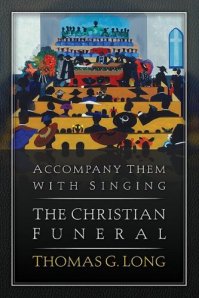
Accompany Them with SingingThere is a genuine sense in which every act of worship is a funeral, entailing acts of judgement and the declaration of God’s hope for humanity in Jesus Christ. That said, it’s really not easy finding good books about funerals (though I am always open to suggestions). And that’s why I’m encouraged by the appearance of Thomas Long‘s new book Accompany Them with Singing. I ordered my copy today, but while I’m waiting for it to arrive, here’s a few tasters:

Accompany them with singing

In a funeral, what is true about all worship, namely, that the gospel story is reenacted in dramatic form, comes to particular focus around the occasion of a death. The major theme of a funeral is the gospel story, and the life story of the person who has died is a motif running through this larger theme; perhaps more precisely, a funeral is about the intertwining of these two narratives. At a funeral, the faithful community gathers to enact the promises of the gospel and the convictions of the Christian faith about life and death, as they are refracted through the prism of the life of the one who has died.

To say that a funeral is a gospel liturgical drama seems simple and true, but this is precisely one of the aspects of the Christian funeral most obscured and crusted over by so many contemporary funeral customs. When it is clear that the funeral is a dramatic reenactment of the gospel, this shines a bright light on what a funeral is not. Despite popular misconceptions, a funeral is not primarily a quiet time when people gather to reflect on the legacy of the deceased, a devotional service dealing with grief, a show of community support for the mourning family, or even a “celebration of life.” Good funerals, in fact, do all of these things – console the grief-stricken, remember and honor the deceased, display community care, and give thanks for all the joys and graces experienced in the life of the one who has died. But these are some of the consequences of a good funeral, not its central meaning or purpose.

The funeral as drama

While it is true that the gospel is proclaimed in the words of the funeral, it is also true that the gospel is proclaimed in the actions of the funeral. The whole funeral, as an act of drama growing out of baptism, proclaims the gospel.

When a Christian dies, the church gathers to act out the story of what this death means in the light of the gospel, but it is a story that began long before the person died. It is a story that began at baptism. Since a funeral is built on the foundation of baptism, we cannot fully grasp the dramatic aspects of a funeral without seeing them in baptism as well, and it is there that we must begin.

On the banks of Louisiana’s Ouachita River, the congregation of St. Paul’s Baptist Church, an African American congregation, gathers every year, after several days of fervent prayer meetings and vigorous revival preaching, to baptize new converts to the Christian faith. The older members of the church call this spot on the river “the old burying ground,” because of what Paul said about baptism: “Therefore we have been buried with him by baptism into death, so that, just as Christ was raised from the dead by the glory of the Father, so we too might walk in newness of life” (Rom. 6:4). Here, in the flowing currents of the Ouachita, sinners are plunged beneath the waters symbolically to die with Christ, to be washed clean, and to be raised up to a new way of life.

On those days when the congregation of St. Paul’s gathers for baptism, the Ouachita River is, of course just the Ouachita, but in the drama of baptism it becomes much more. It is the Red Sea, the waters through which the children of Israel passed on their way to freedom and to the promised land. On baptism day, the Ouachita is also the Jordan River, the place of Jesus’ baptism, and it is the “river of the water of life, bright as crystal, flowing from the throne of God and of the Lamb” (Rev. 22:1) through the heavenly city. “We gather here on this old river that drifts into the sea,” said the pastor of St. Paul’s, standing hipdeep in the water one baptismal day, “because we have come back here. Things may have changed uptown; banks may have gone out; shopping centers may have closed, but this old river just keeps on. So we thought the church would come back here and tell the Lord, we thank him for this old river.”

The candidates for baptism, wearing cotton robes sewn especially for them by the older women in the congregation, “the mothers of the church,” stand on the riverbank waiting. At the beckoning of the pastor, the deacons take each of them by the hand, one by one, and lead them down into the river, as the congregation sings old hymns and spirituals like “Take me to the water; take me to the water; take me to the water to be baptized.”

When those baptized come out of the river, they are taken to an improvised dressing room, from which they emerge dressed in dazzling white “Sunday clothes,” and they go back to the river to sing and pray while others are baptized. Then the whole congregation goes back to the church building for a festive ceremony in which these new Christians are “fellowshipped into the church.”

Notice that the Baptists of St. Paul’s Church don’t just talk about their convictions concerning baptism; they act them out in a dramatic piece of what could be called Christian community theater there on the river. Baptism is about dying and rising with Christ. Baptism is about being washed clean from sin. Baptism is about being welcomed into a community of the faithful as a brother or sister in Christ. Baptism is about responding to a holy call and setting out on an adventure of faith. Every one of these claims about baptism, and more, is acted out in the drama of the baptismal service.

The same is true whenever and wherever baptism is performed. Whether it is the Baptists assembled on the banks of the muddy Ouachita or a Lutheran congregation around the font in a candle-lit church in Wisconsin or an assembly of Catholics observing the sacrament of baptism in a Texas cathedral, though the details may differ, the essential baptismal drama is the same. In the waters of baptism — river, lake, pool, or font — Christians “die” to the old self, and emerge from the waters to set out on a journey of new life. One of the earliest names for the Christian movement was “the Way” (Acts 9:2), because the faith was not understood as a set of ideas or intellectual beliefs, but as a journey down a road, a way of life. Just as Jesus came up out of the baptismal waters of the Jordan River and set out on the road to the cross, just so, Christians pass through the waters of baptism and begin to travel, following in the path of Jesus. Christians do not take this road alone, but, as the baptismal drama makes plain, they travel in the company of the saints. Those being baptized are visibly and audibly surrounded by the faithful, who pray and sing these new Christians along their baptismal way. The prayer for the baptismal journey in the Episcopal Book of Common Prayer points toward the road: “Send them into the world in witness to your love,” and then names the destination, “Bring them to the fullness of your peace and glory.” The church promises in the words of the Presbyterian Book of Common Worship, “to guide and nurture [them] by word and deed, with love and prayer, encouraging them to know and follow Christ.”

A Christian funeral is a continuation and elaboration of the baptismal service. If baptism is a form of worshipful drama performed at the beginning of the Christian life, a funeral is — or should be — an equally dramatic, and symmetrical, performance of worship performed at the end of life. When Christians traveling along the baptismal path die, the company of the faithful who were there to guide them at the beginning are also there to carry them at the end. In baptism, new Christians are “buried with Christ by baptism into death,” and they come up from the waters raised to “walk in newness of life.” In funerals, these same Christians, having traveled the pilgrim way, are once again buried with Christ in death in the sure confidence that they will be raised to new life. In baptism, the faithful sang them into this new way of life; now they gather around to sing them to God in death. Just as they washed the new Christian in the waters of baptism, they now lovingly wash the body of the deceased. Just as they adorned the newly baptized Christian with the garments of Christ, they now adorn the deceased in clothes fitting to meet God and perhaps place a pall, a symbol of the garments of baptism, over the coffin. As the church has been traveling with the baptized saint along the road of faith, the church now walks with the deceased on “the last mile of the way” to the place of farewell.

The funeral, then, is not just a collection of inspiring words said on the occasion of someone’s death. It is, rather, a dramatic event in which the church acts out what it believes to be happening from the perspective of faith. In this sense, a Christian funeral is a piece of theater, but it has more in common with ancient forms of religious drama than with popular theater. The philosopher Martha Nussbaum once contrasted ancient Greek drama with more contemporary Broadway style theater. Today, observed Nussbaum, a playgoing audience sits quietly in a darkened theater, “in the illusion of splendid isolation,” and watches the actors perform on a stage “bathed in artificial light, as if it were a separate world of fantasy and mystery.” Not so in ancient Greece. Greek plays “took place during a solemn civic/religious festival, whose trappings made spectators conscious that the values of the community were being examined and communicated.” Also, the plays were performed in broad daylight and “in the round,” that is, in the midst of the community. People could look across the stage and see the faces of their neighbors and fellow citizens on the other side. “To respond to these events,” says Nussbaum, “was to acknowledge and participate in a way of life.” Greek drama, like other forms of art, “was thought to be practical, aesthetic interest a practical interest—an interest in the good life and in communal self-understanding. To respond in a certain way was to move already toward this greater understanding.”

Just so, at a funeral the congregation does not gather as an audience to hear and see a production performed “on stage” at the front of the church or funeral home chapel. In fact, the congregation at a funeral is not an “audience” at all; they are the actors, and they are themselves on stage, moving and gesturing at the right times; singing, speaking, and praying their lines in the great drama of death and life. “[A]ll Christians are performers,” claims [theologian Shannon] Craigo-Snell, “and the entire Christian life is a performance in which we attempt to enact and create the events called for by the script/Scripture. Those who sit in the rear pew on Sunday mornings are no less actors than the clergy up front.” Even those neighbors, friends, and family members who are not a part of the church but who have come for this funeral are welcomed with the hospitality of God and invited to take up powerful roles in this drama.

[HT: Faith and Leadership]

 

Desmond Tutu on Nelson Mandela’s time in jail

Mandela

‘… time in jail was not wasted. He had gone to jail as an angry, frustrated young activist. In prison the fires of adversity purified him and removed the dross; the steel was tempered. He learned to be more generous in his judgment of others, being gentle with their foibles. It gave him a new depth and serenity at the core of his being, and made him tolerant and magnanimous to a fault, more ready to forgive than to nurse grudges – paradoxically regal and even arrogant, and at the same time ever so humble and modest’. – Desmond Tutu, ‘Setting Free the Past’, Oliver R. Tambo Lecture delivered at Georgetown University.

Free: Scottish Journal of Theology papers

SJTThe Scottish Journal of Theology has made available the following ‘classic papers from the last six decades’, hand-picked by the Editor, Iain Torrance. The articles will remain free to access until December 31st 2009.

  • Georges Florovsky, ‘The Lamb of God’, SJT 4/1 (1951): 13–28.
  • John Macmurray, ‘Prolegomena to a Christian Ethic’, SJT 9/1 (1956): 1–13.
  • Brian A. Gerrish, ‘Biblical Authority and the Continental Reformation’, SJT 10/4 (1957): 337–360.
  • Dan O. Via, ‘Darkness, Christ, and the Church in the Fourth Gospel’, SJT 14/2 (1961): 172–193.
  • C. Ewing, ‘Kant’s View of Immortality’, SJT 17/4 (1964): 385–395.
  • Rowan A. Greer, ‘The Use of Scripture in the Nestorian Controversy’, SJT 20/4 (1967): 413–422.
  • Kai Nielsen, ‘Truth-Conditions and Necessary Existence’, SJT 27/3 (1974): 257–267.
  • John D. Zizioulas, ‘Human Capacity and Human Incapacity: A Theological Exploration of Personhood’, SJT 28/5 (1975): 401–447.
  • Edward W. Fasholé-Luke, ‘The Quest for African Christian Theologies’, SJT 29/2 (1976): 159–176.
  • Kenneth Surin, ‘The Impassibility of God and the Problem of Evil’, SJT 35/2 (1982): 97–115.
  • T.F. Torrance, ‘The Deposit of Faith’, SJT 36/1 (1983): 1–28.
  • M. LaCugna, ‘Re-conceiving the Trinity as the Mystery of Salvation’, SJT 38/1 (1985): 1–23.
  • Frances M. Young, ‘Understanding Romans in the Light of 2 Corinthians’, SJT 43/4 (1990): 433–446.
  • Michael Goulder, ‘Nicodemus’, SJT 44/2 (1991): 153–168.
  • John Webster, ‘Locality and Catholicity: Reflections on Theology and the Church’, SJT 45/1 (1992): 1–18.
  • David F. Ford, ‘What Happens in the Eucharist?’, SJT 48/3 (1995): 359–381.
  • George Hunsinger, ‘The Politics of the Nonviolent God: Reflections on René Girard and Karl Barth’, SJT 51/1 (1998): 61–85.
  • Harriet A. Harris, ‘Should We Say that Personhood Is Relational?’, SJT 51/2 (1998): 214–234.
  • Elaine Graham, ‘Pastoral Theology: Therapy, Mission or Liberation?’, SJT 52/4 (1999): 430–454.
  • Rowan D. Williams, ‘Eugene F. Rogers’s Sexuality and the Christian Body: Their Way into the Triune God’, SJT 56/1 (2003): 82–88.

Howard’s Brutopia: Kevin Rudd on social democrats and neo-liberals

Kevin_RuddThere’s a good piece by Kevin Rudd in The Monthly from 2006 titled Howard’s Brutopia: The battle of ideas in Australian politics wherein he engages with, among other things, the thought of neo-liberal economist Friedrich Hayek. Here’s a snippert or two:

… it is critical that social democrats recognise that the culture war is not just a diversion. It is a fraud. There are no more corrosive agents at work today, on the so-called conservative institutions of family, community, church and country, than the unforgiving forces of neo-liberalism, materialism and consumerism, which lay waste to anything in their path …

Working within a comprehensive framework of self-regarding and other-regarding values gives social democrats a rich policy terrain in which to define a role for the state. This includes the security of the people; macro-economic stability; the identification of market failure in critical areas such as infrastructure; the identification of key public goods, including education, health, the environment and the social safety net; the fostering of new forms of social capital; and the protection of the family as the core incubator of human and social capital. These state functions do not interfere with the market; they support the market. But they have their origins in the view that the market is designed for human beings, not vice versa, and this remains the fundamental premise that separates social democrats from neo-liberals.

[The mention of Hayek recalled for me an interesting article by John Hibbs titled ‘Forsyth, Hayek and the Remoralisation of Society: Church, Life and Economics’, which appeared in Libertarian Alliance: Religious Notes 5 (1992): 1–4. If anyone would like a copy just email me].

One might then turn to consider this recent critique.

Soup by the path …

  • James Macintyre on the Death of Anglicanism? Want more on this? Ruth Gledhill posts some informative links at Rome parks tanks on Rowan’s lawn
  • Kyle Strobel continues his series on Lash’s Theology on the Way to Emmaus: A Theology of History
  • Rick Floyd posts a great recipe on my favourite soup at When life gives you beets, make borscht!
  • A five-part interview with Miroslav Volf discussing ideas of forgiveness, memory, identity, religion and violence:
  • HegelAnd Peter Leithart reminds us why Hegel still rocks with some Hegel quotes on the Trinity from Anselm Min‘s article on ‘The Trinity and the Incarnation: Hegel and Classical Approaches’, The Journal of Religion 66, no. 2 (1986): 173–193:
    • ‘The three Persons are thus mutually internal in the unity and totality of the divine process, of which the Father is the originating principle, the Son the pluralizing, and the Spirit the reintegrating and unifying principle, and from which none could be separately considered. The distinction of Persons is thoroughly relative to the self-unifying totality of this divine process of which they are moments. This, however, must not be understood in modalistic fashion, in which the three Persons are merely manifestations of and thus subordinate to a more primordial divine nature or divine ground …’.
    • ‘The divine “nature” is not something that exists apart from the divine Persons and that somehow exercises control over them. It is an internal principle of the Persons in their concrete existence and as such not to be reified into an autonomous entity in its own right. The divine nature is precisely the nature of the Father and identical with him, by which he, not the nature, differentiates him-self from himself, returns to himself from that differentiation, and thus exists concretely as one God’.
    • And on the incarnation: ‘Creation is a function of God’s self-differentiation ad extra by virtue of his self-differentiation ad intra. The separation of the finite Other from the infinite is itself posited by God’s separation of himself from himself. By the same token the human need for reconciliation with God is simply the finite side of God’s need for reconciliation with himself through the mediation of the finite, a mediation not imposed on God from without but posited by God himself. The need for the Incarnation is first and foremost a necessity inherent in the immanent Trinity and only secondarily a human need. Hegel’s doctrine of creation and the Incarnation, in this sense, is thoroughly trinitarian’.

Forsyth on Christ’s complete and compendious act of redemption

forsyth-12There simply is never a bad time to read Forsyth, and it’s been a while since I posted any. So here’s a passage that I was meditating on just this morning:

‘The work of Christ does not simply face us as a landscape or a heroism faces us for our appreciation and description. His words might so confront us, but not His work underlying them and rising both to transcend them and suffuse them. It does not simply stamp itself on us. It is not only impressive, but dynamic. It makes and unmakes us for its own response, it creates (it does not simply elicit) the power to answer and understand itself. This we recognize when we say that our faith is not of ourselves, it is the gift of God by the Spirit. But we mostly mean this too vaguely, as if it were God’s gift by a second act of His Spirit distinct from the great, pregnant, and fontal gift of historic redemption in the Cross. We treat it as if it were a new departure and approach to us – that of the Spirit – forming another ‘dispensation’, and, therefore, an arbitrary influence upon us; whereas it is a part or function of God’s one pregnant deed and gift to us of Christ’s Cross, which has a faith-creating power intrinsic to it as the complete and compendious act of redemption; for redemption is really and at last faith-production’. – Peter T. Forsyth, The Preaching of Jesus and the Gospel of Christ (Blackwood: New Creation Publications, 1987), 80.

(Essential) books for preaching

preachAnna Carter Florence, over at The Christian Century, recently listed her 7 essential books for preaching. Her suggestions?

I think it’s a great list and, in addition to that growing list of ‘essential’ reading for the minister, and to some books on preaching I’ve mentioned elsewhere, I would want to suggest some further nominees:

I have here, on the main, deliberately chosen to not list books that attend primarily to issues of homiletical method (there are a plethora of excellent studies available on this) but rather to draw attention to those in which the evangelical content of preaching is the main concern. This decision was made because it is here at this point that the church faces its greatest crisis. We have loads of ‘excellent speakers’ and ‘gifted communicators’ who have absolutely nothing to say that’s worth hearing, let alone the Word of God. Recently, Ben Myers’ excellent review, titled Dietrich Bonhoeffer in New York, bore witness to this crisis. Reading my American Patriot’s Bible or my New Spirit-Filled Life Bible or my Green Bible (as opposed to my Green Chile Bible) will never be quite the same again.

Apologies (LOL) for another lengthy list, but Per Crucem ad Lucem is, after all, ‘a theology site on steroids’. Thanks Rick.

Reading Twentieth-Century Reformed & Presbyterian Thought

Man readingSome months back, I posted a list of suggested novels, plays and collections of poetry that I thought theology students and pastors ought to read, and in response received a number of excellent additional suggestions. Thanks heaps to those who offered such! Now, I am putting together a wee course on twentieth-century Reformed & Presbyterian thought for interns training for ordained pastoral ministry, part of which means offering some pre-reading suggestions. So far I’m considering selections from some of the following:

I’m also considering some of the following essays:

Am I missing anything really obvious here, particularly stuff that would be important for Presbyterian ordinands to engage with? Keep in mind that this is only one module of seven in an entire course dedicated to Presbyterian and Reformed studies, and that there is a separate module that attends to key New Zealand figures.

So what other texts ought I consider? And – to make it broader – if you’re a Pressie/Reformed minister, or even one from some lesser tribe, what twentieth-century reformed theology do you wish you had read when you were training?

Karl Barth on ‘orthodoxy’

Karl Barth, Amsterdam 1948Barth again, this time on ‘orthodoxy’:

‘Orthodoxy doubtless has much to live down, but it has nevertheless a powerful instinct for what is superfluous and what is indispensable. In this it surpasses many of the schools that oppose it. And this, and certainly not the mere habit and mental inertia of the people, is the primary reason why it still continues to be so potent both in cultus and church polity and even in state politics. In this respect it is quite superior … The weakness of orthodoxy is not the supernaturalistic element in the Bible and the dogmas. That is its strength. It is rather the fact that orthodoxy, and we all, so far as we are in our own way dogmaticians, have a way of regarding some objective descriptions of that element – such as even the word “God” for instance – as the element itself … To hold the word “God” or anything else before a man, with the demand that he believe it, is not to speak of God … God by himself is not God. He might be something else. Only the God who reveals himself is God. The God who becomes man is God. But the dogmatist does not speak of this God’. – Karl Barth, The Word of God and the Word of Man, 200–3.

Karl Barth on doing theology in the university

Karl Barth - SketchI’ve been re-reading some early lectures by Karl Barth from the period 1916–1923, published as The Word of God and the Word of Man. It really is an inspiring collection, the reading of which is of great encouragement to pastors and theological educators alike, recalling that our unique task is none other than to bear witness to the Word of God unveiled for us in Jesus Christ. When the demands of church and academy pull and prod us in all directions – directions determined, Barth insists, by the very question of being human – Barth graciously recalls our calling as witnesses to the given answer – the one Word of God. This witness alone is the love that we owe to God and to God’s people. And this is no less true for those called to serve in the academy, to which Barth offers the following reminder:

Theology is an omen, a sign that all is not well, even in the universitas literarum. There is an academic need which in the last analysis, as might be inferred, is the same as the general human need we have already described. Genuine science is confessedly uncertain of itself – uncertain not simply of this point or that, but of its fundamental and ultimate presupposition. Every science knows well that there is a minus sign in front of its parenthesis; and the hushed voice with which that sign is ordinarily spoken of betrays the secret that it is the nail from which the whole science hangs; it is the question mark that must be added to the otherwise structurally perfect logic. If this question mark is really the ultimate fact of each of the sciences, it is evident that the so-called academic cosmos is an eddy of scattered leaves whirling over a bottomless pit. And a question mark is actually the ultimate fact of each of the sciences.

So the university has a bad conscience, or an anxious one, and tolerates theology within its walls; and though it may be somewhat vexed at the want of reserve shown by the theologians when they deliberately ask about a matter that cannot with propriety be mentioned, yet, if I am not mistaken, it is secretly glad that some one is willing to be so unscientific as to talk aloud and distinctly about the undemonstrable central Fact upon which all other facts depend – and so to suggest that the whole academic system may have a meaning. Whatever the individual opinion of this or that non-theological doctrinaire may be, there is a general expectation that the religious teacher will give an answer to what for the others takes the shape of a question mark in the background of their secret thought. He is believed to be doing his duty (let him beware of doing it too well!) when he represents as a possibility what the others have known only as an impossibility or a concept of limitation. He is expected not to whisper and mumble about God, but to speak of him: not merely to hint of him, but to know him and witness to him; not to leave him somewhere in the background, but to disregard the universal method of science and place him in the foreground. (pp. 192–3)

Barth then proceeds to recall theology’s ‘position’ within the university’s program, and to draw out some implications for, so-called, ‘religious studies’ departments:

It is obvious that theology does not owe its position at the university to any arbitrary cause. It is there in response to a need and is therefore justified in being there. The other faculties may be there for a similar reason, but theology is forever different from them, in that its need is apparently never to be met. This marks its similarity to the church. It is the paradoxical but undeniable truth that as a science like other sciences theology has no right to its place; for it becomes then a wholly unnecessary duplication of disciplines belonging to the other faculties. Only when a theological faculty undertakes to say, or at least points out the need for saying, what the others rebus sic stantibus [things thus standing] dare not say, or dare not say out loud, only when it keeps reminding them that a chaos, though wonderful, is not therefore a cosmos, only when it is a question mark and an exclamation point on the farthest rim of scientific possibility – or rather, in contradistinction to the philosophical faculty, beyond the farthest rim – only then is there a reason for it.

A faculty in the science of religion has no reason for existence whatsoever; for though it is true that knowledge of religious phenomena is indispensable to the historian, the psychologist, and the philosopher, it is also true that these scholars are all capable of acquiring and applying this knowledge themselves, without theological assistance. Or is the so-called ‘religious insight’ the property only of that rare historian or psychologist who is also a theologian? Is the secular scientist incapable of studying the documents of religion with the same love and the same wisdom? Palpably not.

If then we say that theology is the science of religion, we deprive it of its right to a place at the university. Religion may be taught as well as anything else – but then it must be called into question as well as anything else. To be sure, it is both necessary and possible to know something about religion, but when I study it as something that may be learned, I confess thereby to having the same need above and beyond it as I have above and beyond any science – above and beyond the study of beetles, for instance. New and remarkable and highly intriguing questions about it may keep me busy, but they are questions like all other questions, questions which point on to an ultimate and unanswered question. They are not the question which is also the ultimate answer. They are not the question by virtue of which theology, once the mother of the whole university, still stands unique and first among the faculties, though with her head perhaps a little bowed. (pp. 193–5)

(what) would Barth tweet?

st-barth-twitterDrawing on recent posts by Halden Doerge, Ben Myers and Carol Howard Merritt, Graham Ford (a pastoral resident at Bryn Mawr Presbyterian Church (USA) in Bryn Mawr, Pennsylvania), asks ‘What would Barth tweet?’ He begins:

If Karl Barth rightly claimed that all theological discourse is repetition, then I’d suggest that his Twitter page would be a beautiful, rehashed failure. As the vanguard of the social networking world, Twitter thrives on novelty. As one of the twentieth century’s few great theologians, Barth strove for depth. “The Church Dogmatics” simply would not work in 140 character bites. And yet the rapidly changing nature of communication, virtual and otherwise, requires church and institutional leaders to know what words to speak and how.

Here’s the rest.

Dietrich by the path …

Last Light

[Image: Colin Webb,  ‘Last Light’]

Calvin’s Candour

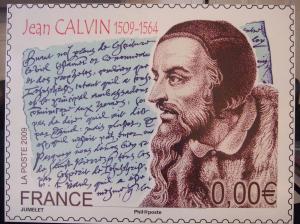
Calvin 15Candour is a ‘monthly magazine about ministry and leadership’ produced by the Presbyterian Church of Aotearoa New Zealand. Recent issues have been dedicated to ‘Ecumenism and collaboration’, ‘Interaction with Contemporary Culture’ and ‘Ministry paradigms and hats’. The latest issue is dedicated to John Calvin, and includes (heavily) edited versions of conference papers by Graham Redding, Murray Rae and yours truly. Enjoy.

Michael Mullins on ‘Black Faces’ and the Chaser

ChasersMichael Mullins posts an insightful commentary on the recent ‘Black Faces’ performance on Hey Hey It’s Saturday. Towards the end of the piece, Mullins draws a comparison with The Chasers Make a Wish Foundation’ routine:

The ABC’s own review processes approved the segment before it went to air, though management and the Chaser failed to anticipate the public response. The Chaser team maintains to this day that it was misunderstood by the public. It was intended as a parody against unthinking charity. The withdrawal of the segment, and the ABC’s apology for it, was a capitulation to the public outcry. The socially constructive statement was lost, and unthinking charity won the day.

Want to read more? Ben posted a good piece on this back in June.

Robert Fisk: Obama, man of peace? No, just a Nobel prize of a mistake

FiskFisk offers the most interesting reflection I’ve read this weekend on the Nobel sham:

His Middle East policy is collapsing. The Israelis have taunted him by ignoring his demand for an end to settlement-building and by continuing to build their colonies on Arab land. His special envoy is bluntly told by the Israelis that an Arab-Israel peace will take “many years”. Now he wants the Palestinians to talk peace to Israel without conditions. He put pressure on the Palestinian leader to throw away the opportunity of international scrutiny of UN Judge Goldstone’s damning indictment of Israeli war crimes in Gaza while his Assistant Secretary of State said that the Goldstone report was “seriously flawed”. After breaking his pre-election promise to call the 1915 Armenian massacres by Ottoman Turkey a genocide, he has urged the Armenians to sign a treaty with Turkey, again “without pre-conditions”. His army is still facing an insurgency in Iraq. He cannot decide how to win “his” war in Afghanistan. I shall not mention Iran.

And now President Barack Obama has just won the Nobel Peace Prize. After only eight months in office. Not bad. No wonder he said he was “humbled” when told the news. He should have felt humiliated. But perhaps weakness becomes a Nobel Peace Prize winner. Shimon Peres won it, too, and he never won an Israeli election. Yasser Arafat won it. And look what happened to him. For the first time in history, the Norwegian Nobel committee awarded its peace prize to a man who has achieved nothing – in the faint hope that he will do something good in the future. That’s how bad things are. That’s how explosive the Middle East has become.

Isn’t there anyone in the White House to remind Mr Obama that the Israelis have never obliged a US president who asked for an end to the building of colonies for Jews – and Jews only – on Arab land? Bill Clinton demanded this – it was written into the Oslo accords – and the Israelis ignored him. George W Bush demanded an end to the fighting in Jenin nine years ago. The Israelis ignored him. Mr Obama demands a total end to all settlement construction. “They just don’t get it, do they?” an Israeli minister – apparently Prime Minister Benjamin Netanyahu – was reported to have said when the US Secretary of State, Hillary Clinton, reiterated her president’s words. That’s what Avigdor Lieberman, Israel’s crackpot foreign minister – he’s not as much a crackpot as Mahmoud Ahmadinejad, but he’s getting close – said again on Thursday. “Whoever says it’s possible to reach in the coming years a comprehensive agreement,” he announced before meeting Mr Obama’s benighted and elderly envoy George Mitchell, “… simply doesn’t understand the reality.”

Across Arabia, needless to say, the Arab potentates continue to shake with fear in their golden minarets. That great Lebanese journalist Samir Kassir – murdered in 2005, quite possibly by Mr Obama’s new-found Syrian chums – put it well in one of his last essays. “Undeterred by Egypt since Sadat’s peace,” he wrote, “convinced of America’s unfailing support, guaranteed moral impunity by Europe’s bad conscience, and backed by a nuclear arsenal that was acquired with the help of Western powers, and that keeps growing without exciting any comment from the international community, Israel can literally do anything it wants, or is prompted to do by its leaders’ fantasies of domination.”

So Israel is getting away with it as usual, abusing the distinguished (and Jewish) head of the UN inquiry into Gaza war crimes – which also blamed Hamas – while joining the Americans in further disgracing the craven Palestinian Authority “President” Mahmoud Abbas, who is more interested in maintaining his relations with Washington than with his own Palestinian people. He’s even gone back on his word to refuse peace talks until Israel’s colonial expansion comes to an end. In a single devastating sentence, that usually mild Jordanian commentator Rami Khouri noted last week that Mr Abbas is “a tragic shell of a man, hollow, politically impotent, backed and respected by nobody”. I put “President” Abbas into quotation marks since he now has Mr Ahmadinejad’s status in the eyes of his people. Hamas is delighted. Thanks to President Obama.

Oddly, Mr Obama is also humiliating the Armenian president, Serg Sarkisian, by insisting that he talks to his Turkish adversaries without conditions. In the West Bank, you have to forget the Jewish colonies. In Armenia, you have to forget the Turkish murder of one and a half million Armenians in 1915. Mr Obama refused to honour his pre-election promise to recognise the 20th century’s first holocaust as a genocide. But if he can’t handle the First World War, how can he handle World War Three?

Mr Obama advertised the Afghanistan conflict as the war America had to fight – not that anarchic land of Mesopotamia which Mr Bush rashly invaded. He’d forgotten that Afghanistan was another Bush war; and he even announced that Pakistan was now America’s war, too. The White House produced its “Afpak” soundbite. And the drones came in droves over the old Durand Line, to kill the Taliban and a host of innocent civilians. Should Mr Obama concentrate on al-Qa’ida? Or yield to General Stanley McChrystal’s Vietnam-style demand for 40,000 more troops? The White House shows the two of them sitting opposite each other, Mr Obama in the smoothie suite, McChrystal in his battledress. The rabbit and the hare.

No way are they going to win. The neocons say that “the graveyard of empire” is a cliché. It is. But it’s also true. The Afghan government is totally corrupted; its paid warlords – paid by Karzai and the Americans – ramp up the drugs trade and the fear of Afghan civilians. But it’s much bigger than this.

The Indian embassy was bombed again last week. Has Mr Obama any idea why? Does he realise that Washington’s decision to support India against Pakistan over Kashmir – symbolised by his appointment of Richard Holbrooke as envoy to Afghanistan and Pakistan but with no remit to discuss divided Kashmir – enraged Pakistan. He may want India to balance the power of China (some hope!) but Pakistan’s military intelligence realises that the only way of persuading Mr Obama to act fairly over Kashmir – recognising Pakistan’s claims as well as India’s – is to increase their support for the Taliban. No justice in Kashmir, no security for US troops – or the Indian embassy – in Afghanistan.

Then, after stroking the Iranian pussycat at the Geneva nuclear talks, the US president discovered that the feline was showing its claws again at the end of last week. A Revolutionary Guard commander, an adviser to Supreme Leader Khamenei, warned that Iran would “blow up the heart” of Israel if Israel or the US attacked the Islamic Republic. I doubt it. Blow up Israel and you blow up “Palestine”. Iranians – who understand the West much better than we understand them – have another policy in the case of the apocalypse. If the Israelis attack, they may leave Israel alone. They have a plan, I’m told, to target instead only US troops in Iraq and Afghanistan, and their bases in the Gulf and their warships cruising through Hormuz. They would leave Israel alone. Americans would then learn the price of kneeling before their Israeli masters.

For the Iranians know that the US has no stomach for a third war in the Middle East. Which is why Mr Obama has been sending his generals thick and fast to the defence ministry in Tel Aviv to tell the Israelis not to strike at Iran. And why Israel’s leaders – including Mr Netanyahu – were blowing the peace pipe all week about the need for international negotiations with Iran. But it raises an interesting question. Is Mr Obama more frightened of Iran’s retaliation? Or of its nuclear capabilities? Or more terrified of Israel’s possible aggression against Iran?

But, please, no attacks on 10 December. That’s when Barack Obama turns up in Oslo to pocket his peace prize – for achievements he has not yet achieved and for dreams that will turn into nightmares.

[Source: The Independent]

And the answer is … Pelagius!

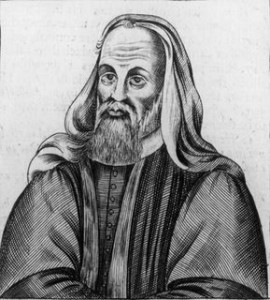
Pelagius 2There is a time for everything under heaven … and it is time to reveal the answer to our Who said it? competition. It was Pelagius! What this might say about the suggestions of Jonathan Edwards, Calvin and Augustine (!), to say nothing of Joel Osteen, is absolutely fascinating, and recalls (at least) the polemical point-scoring nature of the theological enterprise, and the distortive fruit of such. Ah depravity! (Speaking of which, check out Halden’s recent posts)

There are few things more blatantly satanic for a Reformed theologian than Pelagianism. Remembering Pelagius, however, recalls that history is written by the winners; in this case by those who sat on the winning team at the Council of Carthage in 418 and honked their Augustinian kazoos.

But what do we know about Pelagius himself? Sadly little. We do, however, have the following brief account by J. Stevenson:

Pelagius, b. c. 355, a lay monk (?) from Great Britain or Ireland, was in Rome for a long period up to 410. Later he was in Sicily and Africa (410), and in Palestine (411ff). He was the author of a Commentary on the Epistles of Paul (still extant). From c. 410 he was involved in the controversy about grace and free will, to which his name is attached. His views were attacked by Augustine (q.v.), Jerome and Orosius, and were finally condemned by the Council of Ephesus in 431.

Donald Meek notes that Pelagius’s views met with a strong following in Britain (a following which has been abiding; so Barth’s description of British Christianity as ‘incurably Pelagian’), but his teaching met with severe disapproval beyond Britain in the years around 431. In 429 Germanus, bishop of Auxerre, was dispatched to Britain by Pope Celestine in an attempt to root out the heresy. Like most bishops, he was unsuccessful, but tried again around 436–7. The ‘official’ story is that Pelagianism was suppressed during the fifth century. Clearly this applies to Pelagianism as a mass movement, since it certainly does not mean that the thoughts and influence of Pelagius were banned or destroyed; commentaries by Pelagius, often under more respectable names (e.g. Jerone) or expurgated, were read by ecclesiastics in the churches of Britain and Ireland many centuries later. And Barth’s description of anglo-Christianity still rings true – perhaps more than ever.

Still, it must be questioned just how far Pelagius’ own views relate to that of the movement which would bear his name. In a helpful review of Diarmaid MacCulloch’s brilliant new study, Christianity: The First Three Thousand Years, Rowan Williams properly cautions that ‘Pelagius’s opposition to Augustine on original sin was not a sunny and optimistic vision but part of a fiercely rigorous morality that left little room for the lights and shadows of human experience and the uneven quality of what we call freedom’. Feel cautioned.

Thanks to those who threw their hat in the ring with this. It was fun, and so we might do it again sometime soon.

**UPDATE**

For those wishing to read further on these issues, Dr Mark Elliott (who really isn’t as grumpy as he looks in this photo) has been kind enough to offer a few suggestions:

… time’s running on

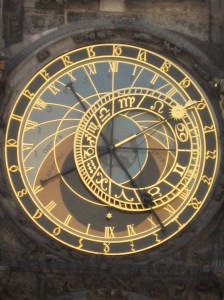
Astronomical Clock PragueThere’s now less than 24 hours remaining in our Who said it? competition. Some fascinating suggestions thus far; and most people (though not naughty Martin Fey!) have resisted the temptation to cheat. While there have so far been no seconder’s for Dan’s ‘Joel Osteen’, a number are running with Calvin, and some people have even cast a second (split) vote.

So, in the haunting tone of Dr Lecter, ‘Tick tock. Tick tock …’

VOTE NOW!

BTW: The image is of the famous Prague Orloj, a medieval astronomical clock located in Prague’s beautiful city centre. This may be a hint to an answer, but then again …