Author: Jason Goroncy

Luther and Calvin on Slander (and Women)

Although I’m writing lectures on Calvin at the moment, brother Martin is rarely far away. So as a bit of fun [read ‘distraction’], I thought I’d check out some of their reflections on the same topic – namely, slander. Unlike Calvin who is typically careful, measured, sober, and rarely amusing, Luther – whether relatively dry or completely off his face – is a brilliant hoot, often careless, never politically correct and always calls a spade a shovel. Isn’t that precisely one of the reasons why we love him so much! Anyway, here he is in near-full swing:

‘It is especially among womenfolk that the shameful vice of slander is prevalent, so that great misfortune is often caused by an evil tongue. This is the work of those bitter and poisonous brides of the devil, who when they hear a word about another, viciously make it sharper, more pointed, and more bitter against the others, so that sometimes misery and murder are the result.

All this comes from the shameful, demonic filth which naturally clings to us, that everyone enjoys hearing and telling the worst about his neighbor and it tickles him to see a fault in someone else. If a woman were as beautiful as the sun but had one little spot or blemish on her body, you would be expected to forget everything else and to look only for that spot and to talk about it. If a lady were famous for her honor and virtue, still some poisonous tongue would come along and say that she had once been seen laughing with some man and defame her in such a way as to eclipse all her praise and honor. These are really poisonous spiders that can suck out nothing but poison from a beautiful, lovely rose, ruining both the flower and the nectar, while a little bee sucks out nothing but honey, leaving the roses unharmed. That is the way some people act. All they can notice about other people are the faults or impurities which they can denounce, but what is good about them they do not see. People have many virtues which the devil cannot destroy, yet he hides or disfigures them to make them invisible. For example, even though a woman may be full of faults and have no other virtue, she is still a creature of God. At least she can carry water and wash clothes’. – Luther’s Works, Vol. 21: The Sermon on the Mount and the Magnificat, 41.

Calvin makes what I think is the same basic point, but O how different in tone. Here he is on the ninth commandment (‘You shall not be a false witness against your neighbour’, Exod 20:16):

‘The purpose of this commandment is: since God (who is truth) abhors a lie, we must practice truth without deceit toward one another. To sum up, then: let us not malign anyone with slanders or false charges, nor harm his substance by falsehood, in short, injure him by unbridled evil speaking and impudence. To this prohibition the command is linked that we should faithfully help everyone as much as we can in affirming the truth, in order to protect the integrity of his name and possessions’. – Institutes of the Christian Religion, II.viii.47.

Drifting or resolve?

‘One of the most striking evidences of sinful human nature lies in the universal propensity for downward drift. In other words, it takes thought,  resolve, energy, and effort to bring about reform. In the grace of God, sometimes human beings display such virtues. But where such virtues are absent, the drift is invariably toward compromise, comfort, indiscipline, sliding disobedience, and decay that advances, sometimes at a crawl and sometimes at a gallop, across generations.

People do not drift toward holiness. Apart from grace-driven effort, people do not gravitate toward godliness, prayer, obedience to Scripture, faith, and delight in the Lord. We drift toward compromise and call it tolerance; we drift toward disobedience and call it freedom; we drift toward superstition and call it faith. We cherish the indiscipline of lost self-control and call it relaxation; we slouch toward prayerlessness and delude ourselves into thinking we have escaped legalism; we slide toward godlessness and convince ourselves we have been liberated’. – Don Carson, For the Love of God: A Daily Companion for Discovering the Treasures of God’s Word, Volume Two, 23 January.

… let every creature bless his holy name

Writing lectures on Calvin at the moment, and these two lines from the psalms keep coming to mind:

‘Your righteousness is like the mighty mountains, your judgements are like the great deep; you save humans and animals alike, O Yahweh. (Psalm 36:6)

‘My mouth shall always praise Yahweh, let every creature bless his holy name for ever and ever’. (Psalm 145:21)

Some more weekly wanderings

And here he is with Jan Garbarek & Manu Katche:

A rollicking take on obscurity

The scene is the office of the dean of admissions at Instant College. A pale adolescent approaches the dean, who is appropriately clad in flowing white memos.

STUDENT: Y-you sent for me, sir?

DEAN: Yes, my boy. We’ve decided to accept you as a student here at Instant.

STUDENT: Sir, I can’t tell you how pleased I am. I mean, my high school average is 65, I got straight Ds in mathematics, confuse the Norman Conquest with Dday, have a sub-average IQ, and got turned down by every other college in America. Yet in spite of all of this, you’ve accepted me.

DEAN: Not in spite of it, boy! Because of it!

STUDENT (dimly): Sir?

DEAN: Don’t you see? You’re a challenge. We’re starting with nothing—you. Yet before we’re through, corporations will seek your advice, little magazines will print your monographs on such arcane subjects as forensic medicine and epistemology, newspapers will publish your utterances as you enplane for conferences abroad.

STUDENT: Me?

DEAN: You. Because you will be an Expert.

STUDENT: An expert what?

DEAN: Just an Expert.

STUDENT: But sir, I don’t know anything and I can’t learn much. Not in four years, anyway.

DEAN: Why, my boy, we’ll have you out of here in an hour. All you need is the catalyst that instantly transforms the lowest common denominator, you, into an Expert.

STUDENT: Money? Power? Intellect? Charm?

DEAN: No. These things are but children’s toys compared to Jargon.

STUDENT: Jargon?

DEAN (turning to his textbook): The dictionary calls it “confused, unintelligible language: gibberish, a dialect regarded as barbarous or outlandish.” But we at Instant call it the Expert’s Ultimate Weapon. In 1967, it will hypnotize friends, quash enemies and intimidate whole nations. Follow me.

A school bell rings, and the entire faculty enters: Dr. Gummidge, professor of sociology; the Rev. Mr. Logos, head of the theological seminary; Dr. Beazle, head of the medical school; Mr. Flap, instructor in government; and finally, General Redstone, chief of the ROTC. Dr. Gummidge steps forward, conducts the student to an uncomfortable chair, mills about him like a lonely crowd, and begins.

GUMMIDGE: Remember Gummidge’s Law and you will never be Found Out: The amount of expertise varies in inverse proportion to the number of statements understood by the General Public.

STUDENT: In other words?

GUMMIDGE: In other words, never say “In other words.” That will force you to clarify your statements. Keep all pronunciamentos orotund and hazy. Suppose your mother comes to school and asks how you are doing. Do I reply: “He is at the bottom of his class—lazy and good-for-nothing”?

STUDENT: Why not? Everyone else does.

GUMMIDGE: I am not everyone else. I reply: “The student in question is performing minimally for his peer group and is an emerging underachiever.”

STUDENT: Wow!

GUMMIDGE: Exactly. If you are poor, I refer to you as disadvantaged; if you live in a slum, you are in a culturally deprived environment.

STUDENT: If I want to get out of a crowded class?

GUMMIDGE: You seek a more favorable pupil-teacher ratio, plus a decentralized learning center in the multiversity.

STUDENT: If I’m learning a language by conversing in it?

GUMMIDGE: That’s the aural-oral method. Say it aloud.

The student does and is completely incomprehensible. A cheer goes up from the faculty.

GUMMIDGE: From now on, you must never speak; you must verbalize.

STUDENT: Must I verbalize Jargon only to my peer group?

GUMMIDGE: Not at all. You can now use it even when addressing preschoolers. In his book Translations from the English, Robert Paul Smith offers these samples: “He shows a real ability in plastic conception.” That means he can make a snake out of clay. “He’s rather slow in group integration and reacts negatively to aggressive stimulus.” He cries easily. And “He does seem to have developed late in large-muscle control.” He falls on his head frequently.

STUDENT (awestruck): I’ll never be able to do it.

GUMMIDGE: Of course you will. The uninitiated are easily impressed. It’s all rather like the ignorant woman who learns that her friend’s son has graduated from medical school. “How’s your boy?” she asks. The friend clucks sadly: “He’s a practicing homosexual.” “Wonderful!” cries the first. “Where’s his office?” Do I make myself clear?

STUDENT: No, sir,

GUMMIDGE: Fine. Now open your textbook to the David Riesman chapter. Here is the eminent sociologist writing about Jargon: “Phrases such as ‘achievement-oriented’ or ‘need-achievement’ were, if I am not mistaken, invented by colleagues and friends of mine, Harry Murray and David C. McClelland … It has occurred to me that they may be driven by a kind of asceticism precisely because they are poetic men of feeling who . . . have chosen to deal with soft data in a hard way.” Now then, my boy, is there any better example of flapdoodle than that?

STUDENT: Well, how about these samples from Harvard Sociologist Talcott Parsons: “Adaptation, goal-attainment, integration and pattern maintenance.”

GUMMIDGE: Yes, first rate. Even I practice them, just as Horowitz plays the scales. Try them in a sentence. Two men open a store. Someone provides the cash. What’s that?

STUDENT: Adaptation?

GUMMIDGE: And then they entice customers—

STUDENT: Goal-attainment.

GUMMIDGE: They set up a sales staff—

STUDENT: Integration.

GUMMIDGE: And they don’t steal from the cash register.

STUDENT: They agree to maintain the wider values of the culture. That’s pattern maintenance.

GUMMIDGE: Perfect. See how complicated you can make things? Imagine what damage you can wreak in the schools where a situation is no longer practical, it is viable; where a pupil is no longer unmanageable, but alienated. Get it?

STUDENT: Got it.

GUMMIDGE: Do books have words and pictures?

STUDENT: No, sir, they have verbal symbols and visual representations.

GUMMIDGE: You’re on your way. For your final exam, read and commit to memory the 23rd Psalm Jargonized by Alan Simpson, president of Vassar College.

STUDENT (droning): “The Lord is my external-internal integrative mechanism. I shall not be deprived of gratifications for my viscerogenic hungers or my need-dispositions. He motivates me to orient myself towards a nonsocial object with effective significance.”

The student falls into a dreamlike trance during which Professor Gummidge tiptoes off and is replaced by the Rev. Mr. Logos, who continues the psalm.

LOGOS: “He positions me in a nondecisional situation. He maximizes my adjustment . . .” (As the student wakes up): I’m the Reverend Mr. Logos. Bless you, my son.

STUDENT: I see you’re wearing a turned-around collar and a yarmulke. Just what is your religion?

LOGOS: I am a theologian. Does that answer you?

STUDENT: No.

LOGOS: Splendid. How would you refer to a priest disagreeing with a minister?

STUDENT: As two guys arguing?

LOGOS: No, no, no! Religious leaders never argue, they have dialogues, or I-Thou relationships.

STUDENT: If their studies are mainly about Jesus?

LOGOS: They are Christocentrically oriented. If they are interpreting the Bible, hermeneutics is the term.

STUDENT: Can you predict what words will be In for the theological year ahead?

LOGOS: Certainly. Demythologizing, optimism, theology of hope, engage and commitment.

STUDENT: I like dialectic theology and conceptualism.

LOGOS: Forget them. They’re all Out. Concentrate on phenomenology, sociological inspiration, ethical activism, crisis of authority.

STUDENT: Suppose someone realizes that I don’t have the faintest idea what I’m talking about?

LOGOS: Then accuse him of objectification. If he doesn’t go away, ask him what he did before he got religion, before his ultimate faith-concern, or better still, Selbstverständnis.

STUDENT: But that’s not even English.

LOGOS: All the better. Many influential theologians wrote in German—Bultmann, Bonhoeffer, Barth—and German not only offers us a chance to obfuscate, it adds a tangy foreign flavor. For instance, there is Historic, meaning bare facts, Geschichte, meaning interpretive history.

STUDENT: Sort of like the difference between The World Almanac and Toynbee.

LOGOS: Remember Gummidge’s Law: don’t clarify!

STUDENT: Sorry.

LOGOS: Don’t let it happen again. Vorverständnis is one of my favorites. It means presupposition. Wissenschaft is far better than saying simply discipline or science, and anxiety sounds much deeper if you say Angst. If you grow weary of German, there is always Greek—almost everyone has seen Never on Sunday—with such splendid specimens as kerygma (message of the Scriptures) and agape (divine love).

STUDENT (writing furiously): Are you sure Jargon really works? In religion, I mean?

LOGOS: Does it? I quote from a distinguished cleric: “I can’t make heads or tails out of a great deal of what Tillich says.” The confessor is Dr. Billy Graham himself.

At this, the Rev. Mr. Logos is borne away by the laity to edit a book of his sermons entitled Through Exegesis and Hermeneutics We Arrive at Kerygma. In his place steps Dr. Beazle, who takes the student’s blood pressure, temperature, hemoglobin count and wallet.

BEAZLE: Now what kind of medical career do you want, physical or psychiatric?

STUDENT: I don’t know. I never thought about it.

BEAZLE: That’s a good start. Suppose we begin with plain everyday medicine. Was it not Herman Melville who wrote: “A man of true science uses but few hard words, and those only when none other will answer his purpose; whereas the smatterer in science thinks that by mouthing hard words he proves that he understands hard things.” Now you don’t want to be an ordinary man of true science when you can be a full-fledged Smatterer, do you?

STUDENT: I guess not.

BEAZLE: Very well, remember never to let the patient be fully aware of what is wrong. Even tonsillitis can be described as a malign hypertrophied condition that affects nares and pharynx and may result in paraphonia clausa. It was I, you know, who wrote the sign seen in hospitals: “Illumination is required to be extinguished on these premises on the termination of daily activities.”

STUDENT: Which means—

BEAZLE: Put out the lights when you leave.

STUDENT: Marvelous.

BEAZLE: It was nothing, really. We medical men have been confounding patients for years. As far back as 1699, the physician and poet Samuel Garth wrote: “The patient’s ears remorseless he assails/Murders with jargon where his medicine fails.” Still, physical medicine is nothing compared with psychiatry. There’s where we Jargonists truly have our day. Suppose a man loses his wife and is unable to love anyone because he is sad. What do I tell him?

STUDENT: Cheer up, there are lots of fish in the—?

BEAZLE (interrupting): Of course not. I intone: You have suffered an object loss in which you had an over-cathesis of libido and have been unable to decathect the libido and invest it in a new object. Do you follow me?

STUDENT: I think so.

BEAZLE: Then be warned: the public is on our trail; they now have learned the meanings of the “oses” and the “itises.” You had better replace them with “inadequacies,” and “dependencies,” tell the man who acts out fantasies that he is “role playing,” speak of the creation of a child as “exclusive electivity of dynamic specificity.”

STUDENT: And when the child is born?

BEAZLE: His development proceeds through “mutual synthesis carried on through a functional zone of mutuality.”

STUDENT: In short, he grows up.

BEAZLE: In long, he proceeds in a continuous unidirectional ever-varying interplay of organism and environment.

STUDENT: If a patient is unhappy?

BEAZLE: He is having an identity crisis.

STUDENT: But suppose he’s just unhappy?

BEAZLE: No one is just unhappy. Psych harder!

STUDENT: I’ll start immediately. I will follow Lionel Trilling’s dictum: no one will fall in love and get married as long as I’m present.

BEAZLE: What will they do?

STUDENT: Their libidinal impulses being reciprocal, they will integrate their individual erotic drives and bring them within the same frame of reference. How am I doing?

BEAZLE: Not badly, but I can still understand you.

STUDENT: Sorry. Day by day I will grow more obscure, until my patients and I completely fail to communicate.

BEAZLE: Oh, if only I could believe that! Smog, confuse, obfuscate!

He exits, to invent a cure for clarity and lucidity which he will sell to nine leading pharmaceutical firms. Mr. Flap and General Redstone come forward.

FLAP: Order of magnitude, expedite, implement, reorient, interoccupational mobility, mission oriented—

REDSTONE: Component forces, readiness levels, destruct—

STUDENT: Excuse me—

REDSTONE (ignoring him): Credibility, paramilitary department—wide contingency plans, pre-emptive war, scenario, remote area conflict. . .

FLAP: Expedite, channels, maximize, bureau potential—

STUDENT: Gentlemen, please, I—

DEAN: It’s no good, son. Once the civilian and the military start arguing, it can go on for years.

REDSTONE: Circular error probability, target systems, pipeline requirements, deterrent gaps . . . counterinsurgency . . . soft target . . .

The general grinds to a halt. Two enlisted men enter, paint him a neutral olive drab and carry him off to the Pentagon, where he will replace a computer.

FLAP (running down): Extended care facilities . . . oligopoly . . . input . . . phasein . . . interlocking intervention . . . (He creaks, coughs and crawls into a filing cabinet.)

DEAN (handing the student a diploma printed on sheeplike vinyl): We’ve done all we can for you, son. In George Orwell’s paraphrase: “The race is not to the swift—nor the battle to the strong . . . but time and chance—”

STUDENT: I know. “Objective considerations of contemporary phenomena compels the conclusion that success or failure in competitive activities exhibits no tendency to be commensurate with innate capacity, but that a considerable element of the unpredictable must be taken into account.”

DEAN: Exactly. (Moist of eye, he pats the new graduate on the head.) You can now take your pick of careers in medicine, religion, business and geopolitics—as well as wine-tasting and art criticism. And if you fail at everything, there’s a job for you at Instant College. (Calling after him as the student exits.) And remember, it is better to curse one candle than to light the darkness . . .

He extinguishes the lights, leaving the audience in blackness as

THE CURTAIN FALLS

[Source: ‘Essay: Right you are if you say you are – Obscurely’, Time Magazine, Friday, 30 December, 1966]

The insanity of Dunedin summers

The water tank is full, the garden is soaked, the roof is fixed, the heater is on, the coffee is warm … it’s a good day to read.  It is high summer in Dunedin after all.

‘The climate in Dunedin, from its bracing character, as compared with the more warm, and, in some instances, weakening climate of the northern parts of New Zealand, presents an advantage for study, which those who have had experience in warm climates will fully appreciate’. – ‘Notes of Travel in New Zealand’, Evangelist, June 1871; cited in the Otago Daily Times, 28 December 2009.

That said, it’s just as likely to be beach weather tomorrow, (at least for 10 minutes or so) …

One could go crazy here. Which brings me to a piece by J.A. Torrance on ‘Public Institutions’ in a fascinating book titled Picturesque Dunedin: or Dunedin and its neighbourhood in 1890 (Dunedin Mills, Dick and Co., Printers and Publishers, Octagon 1890) edited by Alex Bathgate. In a section on ‘The Lunatic Asylum’, Torrance writes:

‘This question of insanity has all along been a serious one to Otago, and indeed to the whole of New Zealand, not because this kind of malady has prevailed here more than in other places, but because of the shameful extent to which weak-minded and mentally impaired persons have been deported from the Home country by their relatives or others, and shunted on to the colony’. (p. 223)

So, not only are ‘the grounds around the buildings a veritable Slough of Despond’, but one might reasonably conclude that Dunedin is a great place to get wet, study and go mad … especially if you’re a ring-in from out-of-town.

Listening to the tradition, thinking in centuries

As part of my contribution to Ben Myers’ hunt for some appropriate reading for a post-grad seminar on the ‘spirituality of theology’, I suggested that he ‘shoot for something outside of the past century’. Here’s part of the reason why:

‘When we learn to listen to the tradition faithfully, not assuming that we already know what we shall hear, but instead allowing earlier voices their own integrity, we will inevitably be surprised by the strangeness of much what is said. At that point we will be faced with a choice: we might take the modern way of patronising earlier voices by assigning them to their “place in history”, and so pretending that they have nothing to say to us; or we might believe that to listen to these voices in all their strangeness, and to regard their positions as serious, and live, options is actually a theological imperative. Perhaps the most two obvious areas where this will be true are sexual ethics and biblical interpretation …’. – Steve R. Holmes, Listening to the Past: The Place of Tradition in Theology (Carlisle: Paternoster, 2002), 86.

Recent wanderings: ‘The sudden disappointment of a hope leaves a scar which the ultimate fulfillment of that hope never entirely removes’

  • An attack on liberal Anglicanism – and on art?
  • Some words for teachers on the relationship between teaching styles and learning styles
  • David Fergusson on Rudolph Bultmann
  • Michael Gorman on why Christmas ought not include singing Happy Birthday to Jesus
  • Saddened to hear of the news of Edward Schillebeeckx’s passing. Schillebeeckx’s was one of the great voices in recent years, a true scholar and gentle prophet of reform. Here’s what he had to say twenty years ago: ‘My concern is that the further we move away in history from Vatican II, the more some people begin to interpret unity as uniformity. They seem to want to go back to the monolithic church which must form a bulwark on the one hand against communism and on the other hand against the Western liberal consumer society. I think that above all in the West, with its pluralist society, such an ideal of a monolith church is out of date and runs into a blind alley. And there is the danger that in that case, people with that ideal before their eyes will begin to force the church in the direction of a ghetto church, a church of the little flock, the holy remnant. But though the church is not of this world, it is of men and women. Men and women who are believing subjects of the church’. This mature voice once stated, in God Is New Each Moment, that ecumenism means ‘that we have to bear in mind the great Christian tradition that can be found in all the Christian churches – the Catholica, which does not in itself coincide with the empirical phenomenon of the Roman Catholic Church … In that sense, my work is, I think, a valid contribution to the unity of the church, in which there may be all kinds of differences, but in which the one Church community recognizes itself in the other communities and they recognize themselves in it’ (p. 74).
  • Some disturbing religious activities
  • An interesting interview with Better World Books
  • Robert Minto brings Simone Weil and Graham Greene’s Whiskey Priest into the same frame
  • Andrew Errington shares some Seamus Heaney
  • David Guretzki begins some reflections on Barth’s Credo
  • Jim Gordon posts on the importance of ideas in the practical renewal of the church
  • James Merrick shares some Marilynne Robinson on evangelicalism and Protestant liberalism
  • Finally, as one who has posted on beer before, I was delighted to read Arni Zachariasse’s post on  ‘6 reasons why your church needs (more) beer’:
  1. Beer is good for the community. Beer reduced inhibitions and nowhere are people more inhibited than in church. Congregants want at least one chair between them and the person next them. Even better if they get the entire pew to themselves. With a few pints down them, on the other hand, that invisible wall, that awkward space is all but gone. People will start laughing together, they will start crying together. They will even hug! Paul’s “holy kiss” might once again become commonplace, and not a relic of the Bible sped through by embarrassed readers-aloud. In addition to strengthening the ties between those already in the local church, the stranger will be welcomed with open arms, both his presence and his strange thoughts. Which leads me to the second point.
  2. Beer is good for the church’s communal theological inquiry. Here again alcohol’s inhibition reduction is beneficial. Imagine if people actually asked what was on their mind and weren’t afraid of embarrassing themselves because they weren’t among the chosen few in the front five pews, because they didn’t know the jargon or didn’t worry about having the Bible quoted at them. Imagine if people actually voiced those fleeting thoughts, objections and ideas. Theology would then, at last, actually be done in the church and by the church. Dogmatics, you could say, would finally become church dogmatics. Beer would not only have people doing theology and doing it more freely, but would strengthen people’s ties to the church while simultaneously opening the doors to new ideas from outside the church. (Maybe that’s why church leaders are against alcohol!)
  3. Beer is good for the worship. Have you ever heard drunk people sing? Of course you have! It’s about 80% of what drunk people do. They don’t do it well, no – but they do it with sincerity! With vocal chords and emotional capabilities lubricated by some good brew, the church’s worship would be amazing. It would be loud, brash, unashamed and totally in keeping with that unruly Holy Spirit. Liturgy would be shouted back at the minister. Hymns and choruses would sung on top of lungs along to bands unafraid to actually jam. And I can’t imagine what would happen in charismatic churches with all their tongue speaking and other pneumatalogical craziness.
  4. Beer is good for moral reflection. If you’re like 90% of Evangelicals, you’ve been taught that beer is bad. Consuming of alcohol is something that heathens and liberals do. But look at it this way: Drinking a beer is a physical manifestation of you re-evaluating your morals, of you thinking through, maybe for the first time, how you act out your faith. And it will be an entry into wider reflection, a small, very fun step in the direction of the examined life. And in light of the points raised previously, you’ll do it with your friends and you’ll have a great time.
  5. Keeping with the morals, beer supports Christian brothers and sisters. Or, more specifically, brothers. Some of the best beers in the world, Trappist beers in particular, are made by monks in Belgium and Holland. Trappist monastics brew this heavenly ales in order to keep their communities afloat and to support charitable causes. By buying Trappist beer you not only get some of the best tasting beer you’ll ever try, but you’ll also keep some of your brothers in Christ in their special monastic service.
  6. Beer will introduce you to the finer things in life. Not all beer will do this, granted, but if you do take my advice and buy some Trappist beer you will be introduced to a fascinating world of subtle flavours that will titillate your taste buds and satisfy your soul. Now, I’m not suggesting hedonism for it’s own vacuous sake. I’m suggesting that enjoying God’s gifts can be a worshipful activity and experience. Slowly savouring a glass of fine beer will inspire deep gratitude to the Lord for the blessings he has bestowed upon you, your ability to enjoy them and for existence itself. Fine beer will further introduce you to other tasty beverages like wine, whiskey, brandy and the like. Which means even more thanksgiving. This thanksgiving is great in solitude, but fantastic communally, with brothers and sisters in the church. Imagine a service of beer tasting. No, imagine the Eucharist with gourmet beer. Beautiful!

Doing my bit to reduce landfill

I never cease to be amazed at some of the books that people literally throw away. Such scandalous and violent disposals are certainly a sign that we are living in the last days. A recent trip to the local tip saw me return with three books:

An enquiry to the bloke who works there ‘in the book section’ revealed that the most thrown away book at the tip is the Bible.

Rituals of rebirth: planning some 2010 reading

Here’s some books I’m looking forward to reading (and, in some cases, re-reading) in 2010:

All of which reminds me of Alberto Manguel’s invitation to engage in reading (‘a ritual of rebirth’), an invitation which also carries the warning that spending too much time on the internet is to play with something like hell:

‘In our time, bereft of epic dreams – which we’ve replaced with dreams of pillage – the illusion of immortality is created by technology. The Web, and its promise of a voice and a site for all, is our equivalent of the mare incognitum, the unknown sea that lured ancient travelers with the temptation of discovery. Immaterial as water, too vast for any mortal apprehension, the Web’s outstanding qualities allow us to confuse the ungraspable with the eternal. Like the sea, the Web is volatile: 70 percent of its communications last less than four months. Its virtue (its virtuality) entails a constant present – which for medieval scholars was one of the definitions of hell. Alexandria and its scholars, by contrast, never mistook the true nature of the past; they knew it to be the source of an ever-shifting present in which new readers engaged with old books which became new in the reading process. Every reader exists to ensure for a certain book a modest immortality. Reading is, in this sense, a ritual of rebirth’. – Alberto Manguel, The Library at Night (New Haven/London: Yale University Press, 2006), 27–8.

December bests …

From the reading chair:

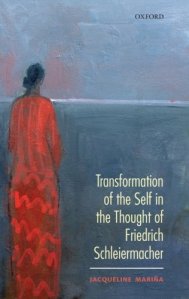
Wrestling with God: The Story of My Life by Lloyd Geering; On Human Worth: A Christian Vindication of Equality by Duncan B. Forrester; Transformation of the Self in the Thought of Friedrich Schleiermacher by Jacqueline Mariña (reviewed here); Calvin’s Bible Commentary on the Psalms, Part I by John Calvin; Christianity: The First Three Thousand Years by Diarmaid MacCulloch; Home: A Novel by Marilynne Robinson.

Through the iPod:

Sweet Bells by Kate Rusby; Guillaume de Machaut: Motets, Morimur, Motetten and English and Italian Renaissance Madrigals by Hilliard Ensemble, Officium – Jan Gabarek & The Hilliard Ensemble by Cristobal de Morales; Battle Studies by John Mayer; Stay Strong by Blair Douglas.

On the screen:

Allie Eagle and Me; Eagle vs. Shark; Doubt; The Lion King.

By the bottle: Coriole Redstone Cabernet Sauvignon 2006.

Advent V: ‘He was born for the Cross’

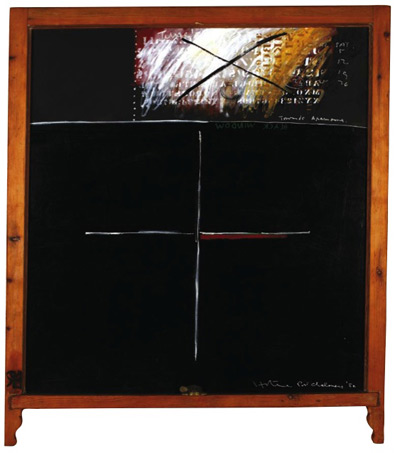
Ralph Hotere, 'Towards Aramoana', 1982

‘That Cross was deep embedded in the very structure of Christ’s Person, because nowadays you cannot separate His Person from His vocation, from the work He came to do, and the words He came to speak. The Cross was not simply a fate awaiting Christ in the future; it pervaded subliminally His holy Person. He was born for the Cross. It was His genius, His destiny. It was quite inevitable that, in a world like this, One holy as Jesus was holy should come to the Cross. The parable was spoken by One in whom the Cross and all it stands for were latent in His idea of God; and it became patent, came to the surface, became actual, and practical, and powerful in the stress of man’s crisis and the fullness of God’s time. That is an important phrase. Christ Himself came in a fullness of time. The Cross which consummated and crowned Christ came in its fullness of time. The time was not full during Christ’s life for preaching an atonement that life could never make’. – P.T. Forsyth, The Work of Christ (London: Hodder & Stoughton, 1910), 107–8.

Transformation of the Self in the Thought of Friedrich Schleiermacher: A Review

A Review: Transformation of the Self in the Thought of Friedrich Schleiermacher, by Jacqueline Mariña. Pp. x + 270. Oxford: Oxford University Press, 2008, ISBN 978 0 19 920637 7. £61.

In this study, Jacqueline Mariña, a Professor of Philosophy at Purdue University, seeks to provide an exposition and analysis of the key metaphysical concepts undergirding Friedrich Schleiermacher’s thought regarding moral and spiritual transformation. She does so via an exegesis of the post-Enlightenment and post-Kantian metaphysics upon which the mature Schleiermacher develops his ethics – particularly the notions of self-consciousness and personal identity – and that in sustained conversation with some of the German theologian’s key dialogue partners, principally Kant, but also Spinoza and Leibniz, and, less so, Fichte and Jacobi, and with Platonic and Augustinian metaphysics of the self. Mariña also offers some helpful analyses of the development of Schleiermacher’s thought regarding ethics.

Mariña’s essay has notable merits, principal among them being its defence of Schleiermacher’s overall moral theory as both the cornerstone of his thought and a legitimate entrée for understanding his theology. She understands that Schleiermacher’s ethics are irreversibly engaged with his metaphysics of the absolute and the philosophy of religion. Building on the work of Frederick Beiser, she argues that ethical theory is ‘central to Schleiermacher’s outlook’ and that ‘it is in the sphere of ethics that religion has its ultimate meaning, for the fruit of all true religion lies in its transformative power over the self’ (p. 3). The significance of Schleiermacher’s achievement, Mariña argues, is that by focusing on religious experience and the transcendental conditions of subjectivity, Schleiermacher offers an account of religion unencumbered by reductionism and dogmaticism. Insofar as he does this, Mariña contends, Schleiermacher makes an important contribution to contemporary interreligious dialogue.

Drawing on Schleiermacher’s early essays On Freedom (1790–2), his notes on Kant’s second Critique (1789), the third of his Dialogues on Freedom (1789), and his review of Kant’s Anthropology from a Pragmatic Point of View (1799), the opening chapter, titled ‘The Philosopher’s Stone’, examines Schleiermacher’s struggle with Kant’s practical philosophy. Mariña notes that while he had some sympathies with Kant’s project, the early Schleiermacher became ‘increasingly dissatisfied with some of the deep philosophical problems posed by the notion of transcendental freedom’ (p. 16).

Chapters Two and Three provide an analysis of two early works (1793–94) by Schleiermacher on Spinoza, namely Spinozism and the Short Presentation of the Spinozistic System. Chapter Two examines Schleiermacher’s claim that there are no genuine individuals, and does so by way of considering Kant’s distinction between noumena and phenomena. Mariña argues that Kant’s analysis of transcendental subjectivity remains an important part of the early Schleiermacher’s thought and informs his decision to abandon Spinozism. She concludes: ‘Despite his familiarity with Kant’s arguments against the possibility of knowledge of the transcendent, in Spinozism Schleiermacher had already come to the conclusion that it is through the transcendental activity of the self that the soul comes into contact with what is genuinely real’ (p. 75). Chapter Three builds on the work undertaken in the previous chapter and considers more deeply issues of personal identity and (in agreement with Kant) our lack of access to a substantial noumenal self.

Mariña then turns to the influence of Leibniz – ‘a poor philosopher [who] from time to time … developed better insights’ (p. 109) – on Schleiermacher’s thought by way of discussion on Schleiermacher’s Monologen (1800) wherein Schleiermacher, playing on Leibniz’s notion of the self as a mirror of the world, envisions transcendentally-free beings expressing themselves into the world. The author recalls Schleiermacher’s appropriation of Kant’s critique of rational psychology and his avouchment that we have no access to knowledge of self as it is in itself. ‘Self-knowledge is only of the empirical self, and this means that the self knows itself only in its relation to that which is different from it and stands outside it. It is, therefore, through the world that the self comes to know itself’ (pp. 110–11). ‘Without the other, there is no knowledge of the self. The person expresses him or herself to the other, and the self as thus expressed is reflected back to the self in the self-consciousness of the other. Loss of the other is therefore a loss of oneself’ (p. 143). This contextualises and anticipates the later discussion on christology, and addresses a foundation of Schleiermacher’s employment of Leibniz’s (and Hegel’s) claim that it is ‘only in relation to a historical individual with a perfect God-consciousness’ that human beings can ‘achieve moral perfection. For only such a one who expresses the divine love perfectly knows the essence of all rational beings as their capacity to express the divine love. Such a one reflects this essence back to them so that they can thereby know themselves as beings that express the divine love’ (p. 144). Clearly, Schleiermacher has moved beyond Kant. The author here identifies key Leibnizian themes that Schleiermacher will develop further in his Dialektik (1814–15) and in Der christliche Glaube (1821–22); particularly the relationship between God and the self, and the self and the world, and the integration that occurs between one’s representation of the world and one’s own desires, and so one’s actions.

In Chapter Five, Schleiermacher’s 1805–06 works, Notes on Ethics, and his Outline of a Critique of Previous Ethical Theories (1803), serve as the basis for exploring the implications of ensouled human nature, and so a reality in which sensuously-conditioned desires can be infused with ethical content. Mariña considers how the teleology of moral action seeks the perfection of this world and not some other. She recognises (in a later chapter) that at the centre of Schleiermacher’s ethics lies the ‘non-transposable character of individuals and historical communities, each of which has a special character determined by a particular historical development’ (p. 168), and that ‘Schleiermacher recognized that not to acknowledge our situatedness can only lead to delusions of absolute knowledge having the most pernicious of consequences’ (p. 176), but unfortunately she does not take up Karl Barth’s suggestion, in The Theology of Schleiermacher, that we know Schleiermacher best when we understand him as a virtuoso of family life, in the society of relatives either of blood or of one’s own choosing (pp. 108–9).

The notion of ensoulment is further developed in Chapter Six, wherein Mariña probes the ensoulment of human nature through reason and through the establishment of community, and in Chapter Seven, ‘Transforming the Self through Christ’, in which the author recalls Schleiermacher’s christology (a subject which ‘encapsulates the whole of his theology’ (p. 187)) in terms of Christ’s own God-consciousness and in terms of Christ’s creating God-consciousness in others, consequently transforming their ethical outlook. Mariña contends that Schleiermacher’s Christ – the one who ‘defines what it means to be human’ (p. 196) – engages in person-forming activity, a work established in the original divine decree and which involves a transformation of ethic. Insofar as he does this, Christ is, in Schleiermacher’s words, ‘the completion of the creation of man’ (cited on p. 196). This means, Mariña contends, that for Schleiermacher, ‘Jesus is no mere teacher of morality, but that what he mediates is a relation to the ground of being and love, and thereby to the transcendental ground of all true religion and ethics’ (p. 197). Moreover, our assimilation into Jesus’ divine life is ‘achieved through the communication of his words and deeds’, both of which are required to effect the divine love in history and shape human self-consciousness and being in the world. ‘The divine love manifest in the life of the historical Jesus brings a new way of envisioning what it means to be a human being, and what it means to be in community’ (p. 219).

The final chapter returns to the challenges of religious pluralism which were broached in the introduction and does so via an analysis of arguments proffered in the 1821 edition of On Religion and in the second edition of Der christliche Glaube. Mariña argues that Schleiermacher’s thought provides a ‘generally coherent account of how it is possible that differing religious traditions are all based on the same experience of the absolute’ (p. 224). She further claims that religious differences are differences only in degree, not in kind. ‘It is because there is a single, fundamental experience to which all the world’s religions are related that there can be meaningful and significant dialogue among them’ (p. 243).

Mariña’s study has a number of strengths. Building upon her already published work on Schleiermacher and Kant, she offers a valuable analysis of several chief sources of Schleiermacher’s thought, and of Schleiermacher’s employment, discarding and development of some of their ideas through various stages of his own theological and philosophical maturation, properly observing the way in which Schleiermacher’s ethics are grounded upon his theological claims, that philosophical ethics is purposely descriptive of how divine causality finds shape in human community through individual persons. Insofar as she does this, Mariña’s essay fills a noticeable gap in the English-speaking literature, and is a welcome complement to works by Richard R. Niebuhr (Schleiermacher on Christ and Religion, 1964), Albert Blackwell (Schleiermacher’s Early Philosophy of Life: Determinism, Freedom, Phantasy, 1982), Brian Gerrish (A Prince of the Church: Schleiermacher and the Beginnings of Modern Theology, 1984), Julia A. Lamm (The Living God: Schleiermacher’s Theological Appropriation of Spinoza, 1996), Catherine L. Kelsey, (Thinking about Christ with Schleiermacher, 2003), and Richard Crouter (Friedrich Schleiermacher: Between Enlightenment and Romanticism, 2005).

Mariña’s argument could have been more persuasive had she attended further to a number of her claims: for example, the claim that Schleiermacher’s proposals concerning transcendental freedom are made at the cost of abandoning determinism. Readers may also be left unsatisfied that Mariña stops short of recounting how the transformation of self with which Schleiermacher is so concerned is effected, and what lay behind the author’s decision to give relatively little attention to Schleiermacher’s more mature ethics (for example, his lectures on philosophical ethics delivered at the University of Berlin between 1812–1830, a period which overlaps Hegel’s time at that same institution, or Schleiermacher’s six Akademieabhandlungen read before the Academy of Sciences between 1819 and 1830) which invite us to consider how language, tradition and institutions inform the moral shape of human being both universally and particularly, and which may have assisted Mariña to provide a more rigorous comparison between Schleiermacher’s early and later ethics and their relation to Schleiermacher’s christology developed in Der christliche Glaube (1821/22, 1830/31) – to which she appropriately turns in her penultimate chapter though fails to develop as fully as her project requires – and particularly the relationship between Jesus’ own God-consciousness, the ethical significance of the hypostatic union, and his mediating to us divine causality. Moreover, Schleiermacher’s privileging of God’s ecclesiological community as that creation of the Spirit with which Jesus’ religiosity is a contemporary reality is disregarded by Mariña. Here, some readers may also take issue that Mariña’s reading of Schleiermacher as positing unmediated moments of the feeling of absolute dependence (a notion which betrays Leibniz’ influence) are offered too independently of Schleiermacher’s careful underscoring of historical, social, theological and cultural contingencies and practices with which much of his philosophical ethics are concerned. Finally, while appropriately situating this project and its value against the backdrop of contemporary challenges posed by various forms of religious (and other) fundamentalism and inter-religious dialogue, the author minimises the obstacles to interreligious dialogue and overplays the profitability that Schleiermacher’s project offers therein.

Few will follow Mariña on every point, and those seeking a particularly transpicuous exposition of Schleiermacher’s thought might well be disappointed, but this remains a valuable essay all the same, and those wishing to engage with Schleiermacher’s abiding significance for ethics will not want to be without it.

Some holiday reading/listening

The postie was very kind to me today, delivering no bills but only the following fun Christmas reading/listening:

And I’m still working my way through Diarmaid MacCulloch’s latest tome, Christianity: The First Three Thousand Years.

But first things first: fishing!

The Seriousness of Nasi Goreng and the Picayunishness of Copenhagen

In her delightful book, The World of Street Food, Troth Wells recalls a story by Liz Cullen as part of her introduction to a recipe for nasi goreng:

As a first-time delegate at a meeting on sustainable development in Bali, I was feeling disheartened. It seemed that every agreement reached was being diluted by the addition of statements such as ‘where appropriate’ or ‘where feasible’ thus mitigating any feeling that the ‘major players’ were about addressing issues of inequality and justice. It was therefore refreshing to walk on the beach at Nusa Dua and eat nasi goreng, cooked at a little mobile stall under the trees … (p. 60)

’twas strange weather today in Dunedin …

‘Love’s mysteries in souls do grow, But yet the body is his book’

  • Jason Byassee on tradition, Jaroslav Pelikan and the Masai creed: ‘I love the way Herbert McCabe, the Dominican priest and theologian, put it: “We don’t know what Christians will believe in the 24th century, but we know they will not be Arians or Nestorians.” Creeds, usually occasioned by a new teaching the church must either bless or condemn, cut off certain roads. But they do not mandate which road we all must go down for all time. Future ages will have to figure that out, while submitting to what has come before. But that submission is a granting of freedom, not a tragic cutting off of possibility’. There are some important implications here for the conversation currently going on in my own denomination about writing a new confession of faith.
  • Anthony Gottlieb on God and gardens.
  • Cynthia R. Nielsen continues her series on Gadamer with two more posts.
  • Stanley Hauerwas responds to Obama’s Nobel Prize acceptance speech.
  • Renardo Barden reviews Dylan’s Christmas album: ‘Occasionally Dylan chases and misses the high notes and botches daring full-throttle endings. His church Latin is no good, and he’s losing yet more ground on his claim to sing as good as Caruso. But he’s still out there, making new of what’s old, light of what’s silly, and merry for merriment’s sake’.
  • Halden Doerge offers some critiques of individualism as will to power: ‘… “individualism” is only scary to those who want to control the social lives of others. Honestly I don’t think it can possibly be a coincidence that the folks most virulently critical of individualism are white males who have significant university posts. Indeed I’m hard pressed to think of a single female scholar who has attacked individualism in ways akin to say Robert Bellah or Zygmunt Bauman … It seems to me that critiques of individualism invariably come beset with a totalizing vision of “the good society” that, ostensibly should be actualized whether people like it or not (because obviously they don’t like it or they’d be doing it already). In short, I don’t know how critiques of individualism, as such, avoid the charge that they are simply instances of the will to power. They are always animated with angst, fear, and revulsion towards the current shape of social life and deeply desirous of reshaping society in accordance with their own vision. It’s hard for me to image that not being ultimately fascist (Milbank is perhaps the most sophisticated example of a theological fascist writing today)’.
  • Andre Muller posts on music.
  • Finally, I’ve been posting on advent: Part I, II, III, IV.

Advent IV: Weighing the virgin conception

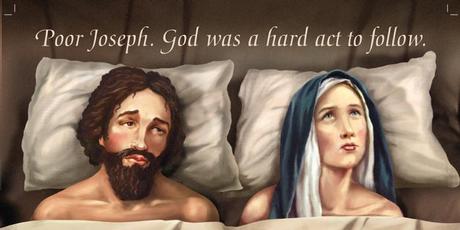
Today’s New Zealand Herald ran this image and its accompanying story about an Auckland church’s (St Matthews’) new billboard. I’m not really interested here in engaging with the controversy around the offensiveness or cleverness or otherwise of the image, or about how I feel about its defacement some five hours after it was erected. I am interested, however, in taking up the image’s and St Matthews’ (both St Matthews in fact, the apostle’s and the Auckland church’s) invitation to enquire about the Christmas event of Mary’s virginal conception, and about the Church’s ongoing proclamation of that event as part of the Good News for which it exists to bear witness.

So here’s my response to that invitation: The miracle of the virgin conception is a judgement against the possibility of the creature producing its own word of revelation and reconciliation. It is a judgement against us thinking that we can know God apart from God’s initiative, and that we might save ourselves apart from God’s bloody intrusion into our situation. It is the proclamation of God’s gracious and free decision to be God for us, to unveil for us, to reconcile us. And it is the proclamation of God’s gracious and free decision to save us, and that by becoming personally involved – literally enfleshed – in the deepest depths of creaturely experience. This is why it is Good News. In PT Forsyth’s words, ‘The Virgin birth is not a necessity created by the integrity and infallibility of the Bible; it is a necessity created (if at all) by the solidarity of the Gospel, and by the requirements of grace’. (Positive Preaching and the Modern Mind, 14).

Advent III: But then … they appear

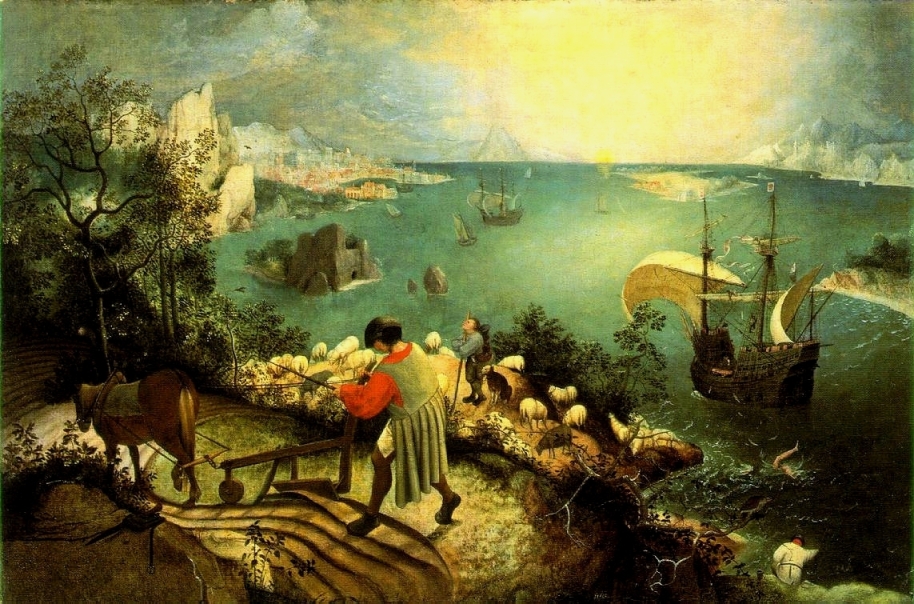
After W.H. Auden had visited the Musées Royaux des Beaux-Arts de Belgique in Brussels, and seen Pieter Brueghel the Elder’s c.1558 work, Landscape with the Fall of Icarus, he went away and penned the following cynical words:

About suffering they were never wrong,
The Old Masters; how well, they understood
Its human position; how it takes place
While someone else is eating or opening a window or just walking dully along;
How, when the aged are reverently, passionately waiting
For the miraculous birth, there always must be
Children who did not specially want it to happen, skating
On a pond at the edge of the wood:
They never forgot
That even the dreadful martyrdom must run its course
Anyhow in a corner, some untidy spot
Where the dogs go on with their doggy life and the torturer’s horse
Scratches its innocent behind on a tree.
In Breughel’s Icarus, for instance: how everything turns away
Quite leisurely from the disaster; the ploughman may
Have heard the splash, the forsaken cry,
But for him it was not an important failure; the sun shone
As it had to on the white legs disappearing into the green
Water; and the expensive delicate ship that must have seen
Something amazing, a boy falling out of the sky,
had somewhere to get to and sailed calmly on.

William Willimon recalls Brueghel’s painting, and Auden’s poem, in his book On a Wild and Windy Mountain, wherein he observes that we trudge past bleeding crosses with a shrug of the shoulders, that Good Fridays are so commonplace among us as to be unnoteworthy, and that tragedy achieves nobility only in the theater. ‘Everydayness and ordinariness’, he writes, ‘become our best defenses, the most effective relativizers of the tragic in our midst. Some young Icarus falls from the sky every day, so one had best get on with the business at hand until the extraordinary comes. For now, go to work, eat, make friends, make money, make love, mind your business – that’s the best way to cope, for the time being, with the expectedness of the tragic. The old masters knew best’ (p. 15).

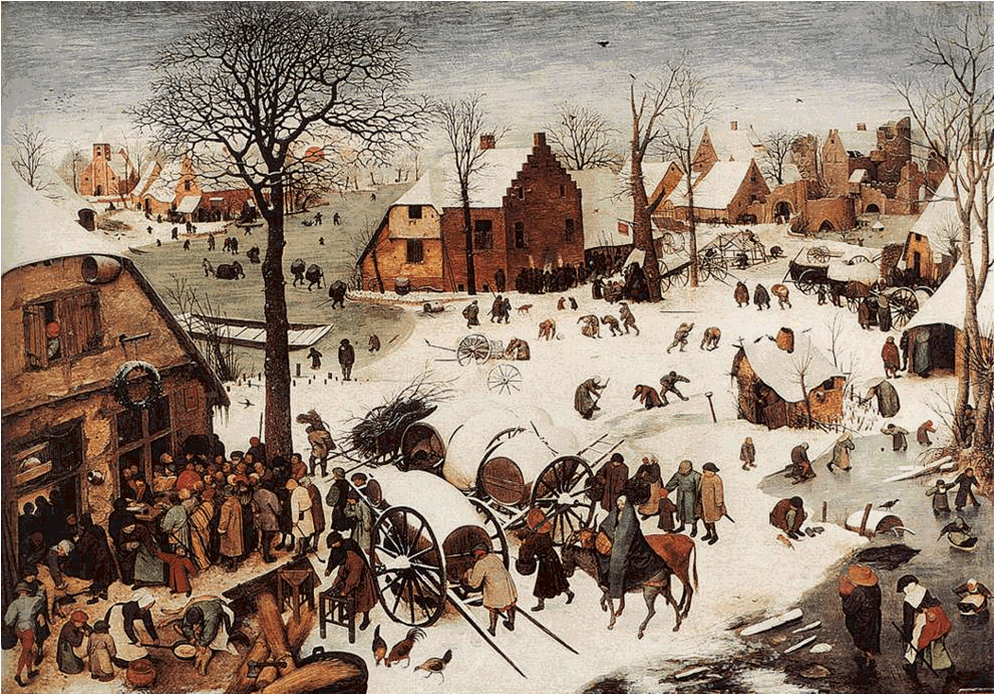
Willimon proceeds to compare Landscape with the Fall of Icarus with another of the Dutch masters’ works: Numbering at Bethlehem. He notes the ordinariness of the depiction, a day mundane and unpromising – in its highlights at least – and nothing beyond the expected.

But then … they appear.

They appear. ‘An inconspicuous, thoroughly ordinary young woman on a little donkey led by a stoop-shouldered, bearded peasant who carries a saw. Here is Mary, with Joseph the carpenter, come to town to be counted. They are so easily overlooked in the midst of ordinariness. Old masters like Brueghel’, Willimon rightly suggests (and we might add Rembrandt), ‘were never wrong’. Rather, they understood, and bore witness to in their work, the truth of Emmanuel, the scandal of the unostentatious God living – and dying – with us, of God stained with the sweat of human bondage and soaked – baptised – in the blood of human violence, of God incognito. ‘They understood our blindness not only to the tragic but also to the triumphant in our midst … In life, the Presence goes unnoted as we thumb through the evening paper. And so we wait, sitting in the darkness of the everyday until something extraordinary breaks in. Someday God may break into this world, we say. But for the time being, it is best to work, eat, make love, pay taxes, fill out government forms, and mind our business. The old masters knew it best’ (p. 16).

I have posted elsewhere on the pseudonymous activity of God, suggesting that ‘in the economy of holy love, the locus of greatest clarity equates to the point of greatest incongruity and surprise’. It is precisely that we may ‘see’ what Willimon so beautifully refers to as ‘the triumphant in our midst’ that we are graced, and that that we might witness to the day when good will triumph over all, certain that the grace of holy love will win at last because it did not fail to win at its most decisive time. In the meantime, such seeing typically requires what is another great advent theme: waiting, or what R.S. Thomas, in his poem ‘Kneeling’, called ‘moments of great calm’:

Moments of great calm,
Kneeling before an altar
Of wood in a stone church
In summer, waiting for the God
To speak; the air a staircase
For silence; the sun’s light
Ringing me, as though I acted
A great role. And the audiences
Still; all that close throng
Of spirits waiting, as I,
For the message.
Prompt me, God;
But not yet. When I speak,
Though it be you who speak
Through me, something is lost.
The meaning is in the waiting.

[This meditation was first written for the Advent series over at Hopeful Imagination, and I have posted other Advent reflections here.]