Author: Jason Goroncy

Hope: a mid-winter reflection

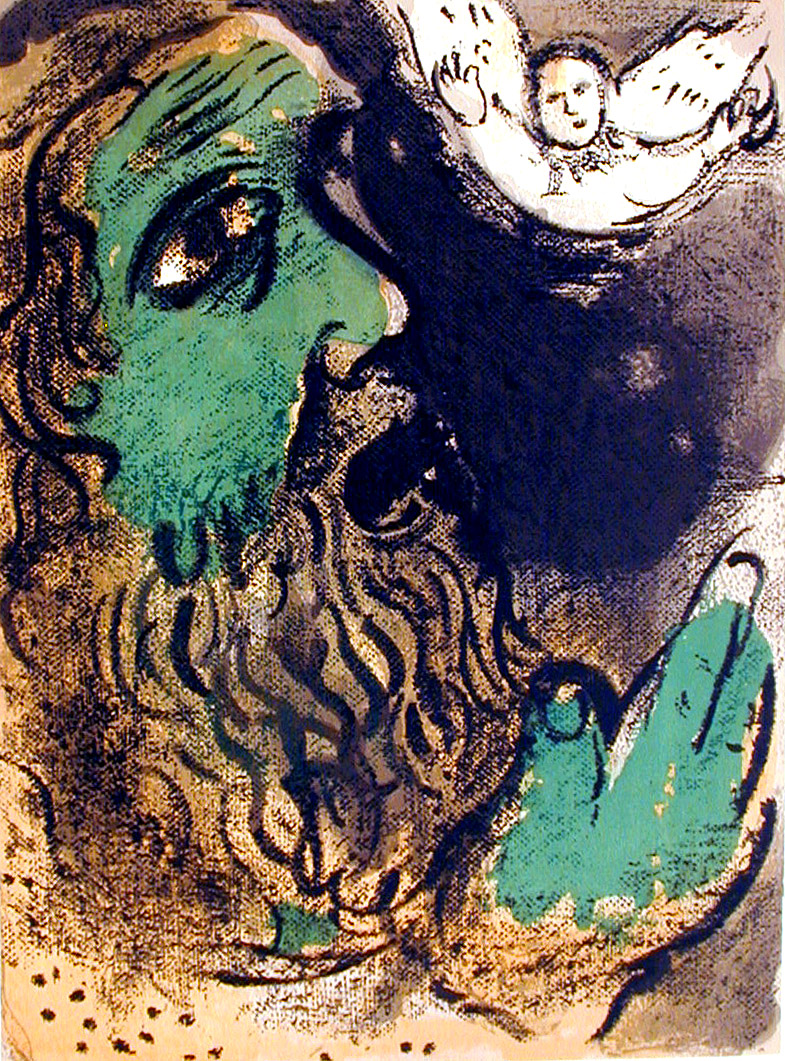
Psalm 88

A Korah Prayer of Heman

1-9 God, you’re my last chance of the day. I spend the night on my knees before you.
Put me on your salvation agenda;
take notes on the trouble I’m in.
I’ve had my fill of trouble;
I’m camped on the edge of hell.
I’m written off as a lost cause,
one more statistic, a hopeless case.
Abandoned as already dead,
one more body in a stack of corpses,
And not so much as a gravestone—
I’m a black hole in oblivion.
You’ve dropped me into a bottomless pit,
sunk me in a pitch-black abyss.
I’m battered senseless by your rage,
relentlessly pounded by your waves of anger.
You turned my friends against me,
made me horrible to them.
I’m caught in a maze and can’t find my way out,
blinded by tears of pain and frustration.

9-12 I call to you, God; all day I call.
I wring my hands, I plead for help.
Are the dead a live audience for your miracles?
Do ghosts ever join the choirs that praise you?
Does your love make any difference in a graveyard?
Is your faithful presence noticed in the corridors of hell?
Are your marvelous wonders ever seen in the dark,
your righteous ways noticed in the Land of No Memory?

13-18 I’m standing my ground, God, shouting for help,
at my prayers every morning, on my knees each daybreak.
Why, God, do you turn a deaf ear?
Why do you make yourself scarce?
For as long as I remember I’ve been hurting;
I’ve taken the worst you can hand out, and I’ve had it.
Your wildfire anger has blazed through my life;
I’m bleeding, black-and-blue.
You’ve attacked me fiercely from every side,
raining down blows till I’m nearly dead.
You made lover and neighbor alike dump me;
the only friend I have left is Darkness.

There are a number of striking things about this psalm:

First, there is the honesty: ‘Why, God, do you turn a deaf ear? Why do you make yourself scarce?’

Then there is the fact that cries penned here are not the cheap and thoughtless rage of people who use their darker moments to denounce God from afar. Rather, these cries actively engage with God. In his darkness, Heman the Ezrahite turns not to his friends, nor to the propaganda of the theologians or the atheists. We are here reminded of Simon Peter’s words to Jesus in John 6: ‘Lord, to whom can we go? You have the words of eternal life’ (John 6:68).

And, finally, there is the fact that there is no relief. Heman the Ezrahite begins by crying to the Lord, and he ends in gloom and despair. Most so-called ‘psalms of lament’ begin with discouragement and despair but end in light and joy. But this one begins in gloom and ends in gloom. Along the way, Heman has wrestled with God. And the fact that he brings his lament to God is a reminder that lament, even at its most extreme, might still be an affirmation of faith, a refusal to let go of God.

Despite his crying out to God, Heman feels unheard (vv. 2, 14), he feels that he is near death (v. 3), that he is doomed (vv. 4–5), that he has lost all of his friends (v. 8), even that he is under God’s wrath (vv. 7, 16). Worse yet, Heman is convinced that his whole life has been lived under the shadow of death: ‘For as long as I remember I’ve been hurting; I’ve taken the worst you can hand out, and I’ve had it. Your wildfire anger has blazed through my life; I’m bleeding, black-and-blue’.

The psalms ends with the seemingly hopeless declaration: ‘the only friend I have left is Darkness’ (v. 18). Not God; only the darkness.

I’ve been reflecting on this psalm in light of the winter that is now upon us. The heaters and electric blankets in our homes seek to hide the awful reality that we have entered the season of dying, of the end of life, and of the overcoming of light.

And, of course, the Apostle Paul was consistent in his claim that part of the reality of the Christian existence is that we live with a ‘body of death’ (Rom 7). And in 2 Corinthians 4, he talks about the way that we carry the gospel in ‘jars of clay, so that it may be made clear that this extraordinary power that we carry belongs to God and does not come from us. We are afflicted in every way, but not crushed; perplexed, but not driven to despair; persecuted, but not forsaken; struck down, but not destroyed; always carrying in the body the death of Jesus, so that the life of Jesus may also be made visible in our bodies. For while we live, we are always being given up to death for Jesus’ sake, so that the life of Jesus may be made visible in our mortal flesh’.

It seems that whether we like it or not, this is just the way it is. And especially so, perhaps, for ministers of the gospel who carry a unique burden. This was, at least, the view proposed by Ronald Gregor Smith is his unpublished lecture given at the University of Glasgow in 1938 and entitled ‘Preparing for the Ministry’:

‘There are dark times in everyone’s life, times when the terror of being alive comes swooping down like an evil thing, compassing the poor mind with unimaginable tortures, shaking questions from its wings before which the established habits cower and shrink away, and leaving the victim exhausted and apathetic. If these times come only once or twice in a person’s life, then it is possible still to continue with the accustomed things, or if that time first breaks through the crust of routine at the crucial moment of death, it does not matter that the routine is smashed for ever. But to one who is studying for the ministry, these times come not once or twice, but again and again, storming like a black wave breaking on an island fortress, till his defences are battered in and he is utterly exposed to the mercy of the attack … And the pity of it is that from the first day of preparation the young man [as they all were in those days!] is deprived of the only succour he might have: the terror of the Spirit’s visitation. When He comes to him in the night – while the applause of teachers and comrades is still ringing in his ears – and whispers dread simple questions in his ears, then all this training has taught him t5o deny the rightness of these questions. This is mere melancholy, this is useless idealism, this is not how souls are saved. And he turns to his books again, and if he cannot sleep, helps himself with an anodyne, and slays the ghost which came in the guise of the Spirit. But that ghost is truly the Spirit. The young man who abandons this fight is doing a week thing. But if he does not abandon it, he must be prepared to face a living death and a martyrdom of the spirit untold in the lives of the saints. For he is no saint, yet he must fight the fight which only the Spirit can win … it is a fight whose strength is weakness, whose life is the utter nonentity of the person. For the life of it is the Spirit, always and only the Spirit’.

Something of this same truth is picked up too by Frederick Buechner in A Room Called Remember: Uncollected Pieces:

‘“My God, my God, why has thou forsaken me?” As Christ speaks those words, he, too, is in the wilderness. He speaks them when all is lost. He speaks them when there is nothing even he can hear except for the croak of his own voice and, when as far as even he can see, there is no God to hear him. And in a way his words are a love song, the greatest love song of them all. In a way his words are the words we all of us must speak before we know what it means to love God as we are commanded to love him … This is the love that you and I are called to move toward both through the wilderness times on broken legs and through times when we catch glimpses and hear whispers from beyond the wilderness. Nobody ever claimed the journey was going to be an easy one. It is not easy to love God with all your heart and soul and might when much of the time you have all but forgotten his name. But to love God is not a goal we have to struggle toward on our own, because what at its heart the gospel is all about is that God himself moves us toward it even when we believe that he has forsaken us’. (pp. 44–5)

The Bible tells us that death is the great enemy, not only ‘our’ great enemy, but God’s too. The Bible also tells us that Christ succumbed to death, allowed God’s great enemy to bring him into the nothingness which is humanity’s greatest fear, and all the time he trusted in God. Through the nothingness, he trusted in God. The Spirit was there enabling him to trust in God … to make trust possible.

We, of course, live in this time between the times, a life which is – because of the resurrection of Jesus – constituted by hope. Like Jesus, we too face the full brunt of death’s power. And, like Jesus, the Spirit enables us to face the winter of human existence trusting in God … come what may.

A piece of music like Bach’s Suite No.3 In D/Air on a G String oozes with the hope of God, a Romans 8 kind of hope, the kind of hope that enables us to cry out ‘Abba! Father!’, the kind of hope that considers that ‘the sufferings of this present time are not worth comparing with the glory about to be revealed to us’, the kind of hope that joins with all the creation in waiting ‘with eager longing for the revealing of the children of God’, the kind of hope that joins with all the creation as it waits to be ‘set free from its bondage to decay and obtain the freedom of the glory of the children of God’. St Paul writes:

‘We know that the whole creation has been groaning in labor pains until now; and not only the creation, but we ourselves, who have the first fruits of the Spirit, groan inwardly while we wait for adoption, the redemption of our bodies. For in hope we were saved. Now hope that is seen is not hope. For who hopes for what is seen? But if we hope for what we do not see, we wait for it with patience. Likewise the Spirit helps us in our weakness; for we do not know how to pray as we ought, but that very Spirit intercedes with sighs too deep for words. And God, who searches the heart, knows what is the mind of the Spirit, because the Spirit intercedes for the saints according to the will of God. We know that all things work together for good for those who love God, who are called according to his purpose. For those whom he foreknew he also predestined to be conformed to the image of his Son, in order that he might be the firstborn within a large family. And those whom he predestined he also called; and those whom he called he also justified; and those whom he justified he also glorified’.

It’s that hope which enables us to live in the Winter as if the Spring is coming. And it’s a hope that is witnessed to nicely in Joyce Rupp’s ‘Prayer 49: Winter’, published in Prayers to Sophia: Deepening Our Relationship With Holy Wisdom (p. 114):

Source of Courage for my Soul,
your season of winter teaches me
about the dark season inside of me.
All the old external props fall away in winter,
nothing to rely on except the whisper of faith.

In the light of a summer’s brilliant day,
it is easy to be brave and confident,
but inside of winter, I stumble blindly,
seeking what I so easily fed on in the light.
This winter journey demands steel courage,
firm determination, fierce boldness,
a heart unyielding to the phantoms of fear
and the menacing moans of despair.

When I stay on this inward road,
true abundance becomes known.
Winter shows what summer never could:
the core of what I believe and value,
the sum of who and what I love.
I learn the enormous power of endurance
and the gift of accepting and loving
who I truly am.

Wise Spirit of the Darkness,
take my hand and teach me to be unafraid
of the wild winds of my inner winter.
Lead me through the gloomy valleys
and teach me how to walk in the dark.

Interviews

The folks over at Grace Communion International have recently uploaded the following interviews:

Preaching on God’s justice as free grace

‘Preaching on justice means speaking about God in the indicative. Faced with the demand which God’s commandment places on us, our task is to deliver “the message of the free grace of God to all people” (Barmen VI). Because, in the Bible, justice is first and foremost a summarized rephrasing of God’s own good works. The Psalms declare: “How wonderful are the things the Lord does … his righteousness endures forever” (Ps 111:2f.). Hence, “the heavens proclaim his righteousness” (Ps 97:6) “and from one generation to the next … shall sing aloud of [his] righteousness” (Ps 145:7).

God’s justice (i.e., righteousness) – that is, his active caring for his creation – is his attentive accompaniment of his people; that is, his saving deeds and his good guidance. Justice – that is, his constant listening to the cries of the suffering – is his strong arm that liberates the captives; and in all this is God’s passionate love for his people, which can rage terribly about their wickedness and stupidity, but which can do nothing else except be “merciful and gracious, slow to anger and abounding in steadfast love” (Ps 103:8). Where the justitia is blind, indeed inevitably must be blind to avoid being dazzled by the specific case at hand, it is said of the God of Israel: he watches, he listens and he yields – he applies the freedom of his love by doing justice to each of his creatures in a way that is conducive to his or her life in his or her particular situation. Justice: that is the way of our God through the time and space of his creation, the way on which he keeps his covenant and faithfulness to Israel unto eternity, and through Israel to the whole world, and never abandons the work of his hands. And hence: In the path of righteousness there is life (Prov 12:28a).

Also in the [Accra Confession], this prae of God’s justice takes precedence before all human endeavour. That is why the statements of faith always start with confessions of belief in God before going on to the rejections of economic injustice and ecological destruction.

In this context, I believe it is important to explicitly praise the confessional character of the Accra Declaration. For, in a very specific way, it corresponds to the fact that for us Christians standing up for justice is not a matter of political belief, but the response to God’s own words and deeds, through which we live and to which we, in faith, bear witness.

In order to make this clear, the sermon will, however, have to make the praise for God’s justice resound more clearly and comprehensively than the Accra Confession did or was able to do. I draw attention again to what was said at the beginning regarding the distinction between confession and sermon. Whereas the Accra Confession recalls God’s action in rather dry theological sentences, the sermon, guided by Bible stories, tells of the salvation work of God in such a way that it becomes clear: what happened at that time is also true today; the (hi)story of God with his people also embraces my world and my (hi)story. God is able to change my world and my life, and he will do so!

Hence, the sermon should avoid speaking “gesetzlich” (which means mixing gospel and the law) about the gospel (Manfred Josuttis). This always happens when the impression is given that human deeds could/should take the place of God’s action, as in: “Easter occurs when we rise up against death…” This kind of sermon does not offer much comfort, for it leaves those hearing it on their own, when they would in actual fact be in urgent need of God’s healing action …

After Accra, our basic task in preaching, and simultaneously our unmistakable Christian contribution is to keep making new attempts to tell about the justice of God and to offer it to our listeners as free grace so that despite all their fears and hardship they will become aware of their wealth; despite all their weaknesses they will become aware of their God-given power (cf. 2 Cor 6:3ff.; 12:9) and so become willing and able to stand up to injustice’.

– Peter Bukowski, ‘Preaching on Justice: The Question of the Homiletic Implementation of the Accra Confession’, Reformed World 55, no. 3 (2005), 236–7, 238.

June bests …

From the reading chair: Patterns of Reform: Continuity and Change in the Reformation Kirk by James D. Kirk; Humanism and Reform: The Church in Europe, England and Scotland, 1400–1643 edited by James Kirk; The True Face of the Kirk: An Examination of the Ethos and Traditions of the Church of Scotland by R. Stuart Louden; Theology of the Reformed Confessions and Knowledge of God and the Service of God According to the Teaching of the Reformation: Recalling the Scottish Confession of 1560 by Karl Barth; John Knox: An Introduction to His Life and Works by Richard G. Kyle and Dale W. Johnson (reviewed here); Called to Be Human: Letters to My Children on Living a Christian Life by Michael Jinkins; Theosis in the Theology of Thomas Torrance by Myk Habets (reviewed here); Hyperion and Selected Poems by Friedrich Holderlin.

Through the iPod: Beethoven, Britten: Violin Concertos, Bach: Inventions & Partita and Vivaldi: The Four Seasons by Janine Jansen.

On the screen: The Wire: The Complete Third Season; Invictus.

The World Communion of Reformed Churches: A Wee Reflection

Bruce Hamill and I have spent the last 10 days or so in Grand Rapids, Michigan, serving as delegates of the Presbyterian Church of Aotearoa New Zealand at the United General Council of the newly-formed World Communion of Reformed Churches (WCRC). The Council has been involved in the bringing together of two former bodies – the World Alliance of Reformed Churches (WARC) and the Reformed Ecumenical Council (REC) – into one World Communion that represents over 80 million Reformed Christians worldwide. It has been a very exciting meeting to attend, and I have felt a deep sense of privilege in being here as a participant.

It has been a rich time of worship, of meeting delegates and visitors from all over the world, of catching up with old friends and making new ones, of sharing resources and ideas about ministry, theological education and mission, of attending to administrative matters (there was no shortage of this), of hearing about what God and God’s people are doing – and are not doing – in different parts of the globe, and of reflecting on both the catholicity and the reformed identity of this branch of the Church, among other things. And, as is typically the case at these ecumenical gatherings, there has been no shortage of talk about ‘justice’, ‘peace’, ‘mission, ‘unity’, and about addressing the powers of empire. The spirit of Accra abides.

One of the issues that I was keen to ‘place on the table’ at this gathering concerned the relationship between Reformed Churches and the State. It seems to me that a tradition like mine which is so heavily imbedded in what is now a rapidly-disappearing Christendom has well and truly entered (in most parts of the world) a time in which our relationship with the State is overdue for a rethink. Put differently, is it time for Reformed Churches who have long been in bed with the State to start thinking about wearing an ecclesiastical condom, at least at more ‘risky’ times of the month? Conversely, is it time for Reformed Churches who have long  sidelined themselves from their societies to re-think their bed etiquette? One place that I thought that such a rethink may be encouraged is in the teasing out of a few implications of being a ‘communion’, as opposed to a being a mere ‘alliance’ (Bruce has more to say about this distinction here). So I trundled along to a section called ‘Reformed Identity, Theology and Communion’, naïvely thinking that the topic of conversation at such a group might have at least something to do with Reformed identity, theology and/or communion.

After what felt like countless hours of talking around in circles about neither Reformed identity, nor theology, nor communion – hours made all the more painful by an incompetent section moderator – I offered the following proposal:

‘The World Communion of Reformed Churches acknowledges that the affirmation of communion has implications for our life together. The shape of this life together is fashioned upon the Gospel, that is, upon the gracious economy of the Triune God who makes us one.

Our identity and communion is created, sustained and fleshed out by Jesus Christ. This reality, which the Bible calls ‘life in Christ Jesus’ (Rom 6.23; 1 Cor 1.30; 2 Tim 3.12), redefines and reconstitutes our identity thus making all other identify-forming relationships secondary.

Therefore, as one of the many concrete expressions of this communion:

  1. We will not kill one another.
  2. We will make disciples in our congregations who might learn to resist participation in the State’s machinery of violence and thereby offer a distinctive Christian witness to an alternative way of living that is determined to not perpetuate the practices of that world which is passing away but which is formed by the new creation inaugurated in the resurrection of Jesus from the dead.
  3. We will communicate – in word and in action – to our respective states and governments that our principle allegiance is to Jesus Christ.
  4. We will offer our full support to all those in our communion for whom this commitment will come at great cost.

We are a people who confess to follow one who puts himself in the way of evil, who intervenes on behalf of the oppressed and the weak and the downtrodden, and who does so not with swords and spears, but by bearing on his body the blows and resisting retaliation. Jesus confronts the cycle of violence and declares that ‘The violence stops with me’. He suffers in his own person the wrong that is done, and trusts the outcome to God. That is the pattern of obedient life that Christians are called to follow and into which they are incorporated through baptism. Forgiveness, compassion, prayer and sacrifice are the tools that Christ takes up in his war against evil and sin. When those who bear his name take up arms to wage war, and insist that such action is necessary, unavoidable and a last resort, they are resorting to a logic other than that of the Logos incarnate. It must be confessed therefore that they have failed in the call to inhabit God’s new creation, a call which allows for no exceptions when it comes to loving even our enemies’.

Unsurprisingly, the proposal received very little support (something like 15% I guess). That it received so little support was less disappointing to me, however, than the fact that here was a group of intelligent and articulate reformed thinkers and church leaders who – because of an incompetent moderator – were not afforded the opportunity to even discuss the issue/s being raised. It was, sadly, a wasted opportunity and I can only thank God for the many informal discussions that arose after my presentation. It was also a learning opportunity for me in ecumenical diplomacy (something that I hope never to be too good at) and at the importance of having well-moderated meetings.

After dusting myself off, I decided to give my modest proposal another (if even-more modest) crack in a session the following day, and that via the addition of a single sentence to a report of the Policy Committee. The Report serves as the guide for the future work of the Executive Committee of the WCRC. To the recommendation that ‘WCRC, working with appropriate member churches and other organizations, seek ways to accompany member churches through prophetic solidarity, education and advocacy’, I suggested the following addition: ‘This will include a commitment to not participate in violence against one another’. This time, the proposal was enthusiastically received, but again there was no discussion. And perhaps just as well, for a body of this size (around 1000) to engage in a meaningful conversation about the implications of such a statement would have us stuck here in Grand Rapids for many more moons, and while Calvin College is a extraordinarily-beautiful setting to be hanging out in for a few weeks, I’m looking forward to getting home and to doing some further thinking myself about reformed identity and about the shape of reformed ecclesiology in post-Christendom states.

[Photo by Erick Coll/UGC]

A commendation for Anthony Thiselton’s The Living Paul: An Introduction to the Apostle and his Thought

I want to take a wee break from posting on Stringfellow to commend another book, namely Anthony Thiselton’s The Living Paul: An Introduction to the Apostle and his Thought.

Here’s a book written by someone who has wrestled long and hard with the subject but doesn’t feel the need to keep reminding you of that fact, a book written in full awareness and appreciation of the technical issues and debates going on in the background but is not sidetracked or straightjacketed by them, a book which articulates the subject at hand with sensitivity, pastoral wisdom, theological acumen, and a level of clarity and conciseness that I struggle to reach writing a birthday card.

Anthony Thiselton’s brief for The Living Paul was to pen ‘something which makes Paul accessible, but without undue oversimplification’. He has fulfilled this brief impressively. Many an undergrad will be helped here.

William Stringfellow, Imposters of God: Inquiries into Favorite Idols – Part IV

After chapters on money and status (pp. 31–6), race (pp. 39–43), and patriotism (pp. 47–52), Stringfellow, in Chapter Seven, turns to the idol named ‘Church’. He recalls that by the sheer gift of God, the Church lives in the midst of a history constituted by the Fall and in ‘juxtaposition to each and every institution and ideology in their fallenness’ for the critical purpose of ‘being a witness and example of the society of mankind and of all creatures liberated from the power of death’ (p. 55). In building his argument, Stringfellow considers the very constitution of the Church at Pentecost, where, he notes, arise two peculiar characteristics which distinguish the Church as free from the power of death. Both, he insists, pertain to the Church as renewed creation, that is, both inhere in the unity of the Church, bestowed in Pentecost by God for the sake and service of the world. He names these characteristics the ‘secular unity’ of the Church and the ‘churchly unity’ of the Church:

The secular unity of the church at Pentecost consists in the extraordinary transcendence, in that event in which the church is called into being, of all worldly distinctions familiar to men. Thus, according to the biblical testimony, on the day of Pentecost there are gathered in one place men of every tribe and tongue who are, in becoming the new society of the church, no longer divided and separated and unreconciled on account of their differences of race or language, ideology or class, nationality or age, sex or status, occupation or education, or, indeed, even place and time (Acts 2). Such distinctions, so esteemed in the world that they are representative of the idols men worship and vainly look to for justification, are surpassed in such a way in the establishment of the church in history that the church is characterized, biblically, as “a new creation,” “a holy nation,” “a priest among the nations,” “a foretaste of the Kingdom of God,” “a pilgrim people,” “a pioneer of salvation,” “a new race,” a community in which there is neither Jew nor Greek, bond or free, but in which all have become one in Christ.

Coincident with this worldly unity of the church at Pentecost is a churchly unity encompassing the manifold charismatic gifts bestowed upon the church and distributed and appointed among members of the church, such as prophetism, preaching, teaching, healing, administration, speaking in tongues, and so on. (See Ephesians 4:11–14, cf. 1 Corinthians 14:1–19.) These particular gifts of God to the church are missionary gifts – that is, they are entrusted to the church and authenticated in their exercise by members of the church as means of witness and service to the world. At the same time, according to the biblical precedent, the efficacy of a specific gift requires the presence and use of all the other various gifts so that they are all interrelated and interdependent, and so that each enhances the wholeness of the body of the church. The diversity of charismatic gifts is not occasion for division of the church into sects or parties or for status distinctions or exclusionary practices among members of the church. The gifts are contributions to a churchly unity which serves a broken, divided, fallen world as a forerunner of the reconciliation vouchsafed in Christ for the world.

It is possible to speak of the marks of the church in other frames of reference which are both trustworthy and worthwhile, but it is never possible to omit these two marks of the church manifested in the constitution of the church at Pentecost. (pp. 56–7)

Stringfellow proceeds to note that ‘a distinctive mark of the biblical mind’ is the ability to ‘discern that human history is a drama of death and resurrection and not, as religionists of all sorts suppose, a simplistic conflict of evil vs. good in an abstract sense’ (p. 64). God has embodied the aspects of the essential conflict between life and death into his own drama of death and resurrection: ‘In the light of the Gospel, every life, every person, every event, is included in the context of death and resurrection – of death and the resurrection of life, of death and transcending the power of death. As death is not just something which each of us must eventually face, but a power at work here and now, so the power of the resurrection is neither something remote nor merely promissory. The resurrection of Jesus Christ means the available power of God confronting and transcending the power of death here and now in the daily realities of our lives’ (pp. 64–5).

It is to this truth that the Church is elected, called and empowered to bear witness. This election, calling and empowerment takes place in the event of Jesus’ resurrection. This event announces the end of the reign of death and inaugurates the new creation in which we need no longer fear the power of death, and so we need no longer serve any idols:

The resurrection constitutes freedom for men from all idolatries, whether of race or money or church or whatever. It constitutes freedom from death as a moral power in history, freedom to welcome and honor life as a gift, freedom to live by grace, unburdened by the anxiety for justification which enslaves men to idols.

In this freedom, we can begin to be faithful to our own humanity, and so faithful to God. We can go to work to give back to our various idols their true nature and purpose in relation to human beings and human living: to love our country and try to restore it to a sense of its true vocation in the family of nations; to use money as a medium facilitating equable exchange of goods and services; and try to get it so used in our society and in our world, and so on.

In this freedom, we no longer serve idols in our work or other experiences; we serve the living God. We work in the service of life, for ourselves and our fellow men. We work to re-establish human life in our relationships with ourselves and others and things in our society, anticipating in hope the final restoration when God will be “all in all.”

Thus work takes on the character of worship “in spirit and in truth,” and in our worship we celebrate the life and restoration we are working for. In such freedom, then, the present obvious dichotomy between what Christians do in the sanctuary and what they do in society can be done away with. What is affirmed and enacted in our corporate liturgical worship is what we affirm and work for in our daily lives. In both, we celebrate the gift of life as such by participation in God’s affirmation of life in the face of death. (pp. 65–6)

Imposters of God, which began its life as a study book for high school students, has been described as a work which ‘exposes the reality of idolatry at the heart of our common life in the world: work, status, money, race, the church, etc. But perhaps most importantly, it provides hope: a way of living in grace’ (Anthony Dancer). Yes it does. And Karl Barth was right about Stringfellow when he said, ‘You should listen to this man!’

Don’t forget Wipf & Stock’s offer to readers of Per Crucem ad Lucem of 40% off the retail price of any of the Stringfellow volumes. To obtain the 40% discount, just include the coupon code STRINGFELLOW with your order.

‘The Chapel, St Martin’s Island’, by John Birnie

you were well above the other yachts and boats
the ripples and sparkles below were like a dream
when you sailed calm as an ocean liner
into the side of the hill

the ripples kept jiggling in before the breeze
the light sprang off this and that surface
and the air came in above it all
pushed for a moment then flowed around
your sail run aground and turned to stone

all the trees billowed out
and turned to waves as your sail and hull
anchored you into the green hill
a school of sheep drift past

it could all be dismissed as fanciful
or laughed off as a half-remembered dream
but for the testimony of sand on the floor
gritty as questions and prayers
except for the witness of ribs and planks
except for the amen of the figurehead
the wooden cross setting a course
out over the open sea

[I’ve mentioned before my association with the very special St Martin Island Community who gather on a beautiful and historically-significant island in Otago Harbour. This poem appeared in today’s Otago Daily Times]

Stringfellow on patriotism and nationalism

A question arising from the previous post is whether Stringfellow makes any distinction between ‘patriotism’ and ‘nationalism’. I am yet to read all of Stringfellow’s writings, but my sense thus far is that any distinction made between the two typically is equally concerned to hold the two together. So he understands patriotism as one of the clearest expressions of the idolatry of nationhood. Patriotism, according to Stringfellow, is just one of the ‘legion’ of principalities, alongside which he names the Pentagon, the Ford Motor Company, Harvard University, the Diners Club, the Olympics, the Methodist Church (I’m yet to discover what he has against the Methodist Church), capitalism, Maoism, humanism, Mormonism, astrology, the Puritan work ethic, science and scientism, white supremacy, sports, sex, any profession or discipline, technology, money, and the family. (See An Ethic for Christians and Other Aliens in a Strange Land, 78).

He also avers, in Imposters of God, that ‘… no nation enjoys exemption from idolatry; no subjects of any nation can escape the claims of idolatrous patriotism, whatever aesthetic or temperamental distinctions may lodge in this or that particular scene’ (pp. 100–1). And so, in another place, he cautions the ‘biblical person’ to always be ‘wary of claims which the State makes for allegiance, obedience, and service under the rubric called patriotism’ (An Ethic for Christians and Other Aliens in a Strange Land, 113)

Nationalism, therefore, is nothing short of blasphemous, making promises that only God can deliver on, and proclaiming a bastard Gospel which announces a pagan form of (political, economic and, in some cases religious) salvation. Nationalism is, to borrow from Luther, God’s ape (!), never having an original idea in its life but only setting itself in God’s place. Nationalism is simply idol worship sanctioned and demanded by the local god, the state claiming worship that belongs to Christ alone, and a level of commitment that belongs to the body of Christ alone. Rowan Williams’ essay, ‘Being a People: Reflections on the Concept of the “Laity”’ (Religion, State & Society 27/1, 1999), is very helpful here. Reflecting on Stringfellow’s statement that ‘the church is the exemplary nation juxtaposed to all the other nations’, Williams writes:

‘In the face of the demonic presence in national social and political life of the trend towards idolatry, towards absolutising the local and tangible, and of the incapacity of worldly nations effectively to repent and be converted, the Church – a visible, institutional ground of identity, a historically tangible `people’ – represents the calling of all human beings to belong together in justice. In this sense, the Church is also, for Stringfellow, ‘the priest of nations’: while it is visibly a polity and structure among others, it has the task not only of showing to others what the true ground of human belonging is, but also of undertaking what he calls ‘advocacy’ on behalf of every victim in such a way that it becomes worship. This is a complex idea, expressed (as usual with Stringfellow) in painfully compressed form. What it seems to mean is this. The Church’s willingness to stand with the victims of the nations of this world arises out of its own experience of God’s victory over death, its own experience of the possibility of resisting the power of idolatry and so discovering what cannot be destroyed. So when it stands with the powerless and the victims, it does so in conscious and articulate gratitude for God’s ability to take us beyond death. Advocacy becomes praise; and praise itself, properly understood, is a political matter because it witnesses to a God who brings us where no power or principality of this earth can intimidate or confine us’. (p. 12)

William Stringfellow, Imposters of God: Inquiries into Favorite Idols – Part III

‘More than any of the other great and familiar principalities of this world – more than the university or the corporation or the profession, or even race – the nation is a symbol of salvation for men, an image of the Kingdom; it is a facsimile of that order, tranquility, dominion, and fulfillment of life in society which seems lost in the present era and yet after which men yearn persistently despite all disillusionments and defeats’ (p. 47). So begins Stringfellow’s assessment of the idol of patriotism. He proceeds to argue that the ‘sheer arrogance of the idolatrous claims of nations, perhaps especially those possessed of enormous economic and military strength, is so startling’ that our fascination with such idolatry can be ‘explained in no other conceivable manner than as moral insanity’ (p. 48). Throughout the book, Stringfellow assesses that the idols are always in competition with each other, but this competition is nowhere more ferocious, he insists, than where the idols are nations: ‘The necessary corollary of the claim that a nation is God’s surrogate in the world is the invincibility inherent in the ultimacy of a nation’s cause, and this notion is sufficient to rationalize any aggression, subversion, or subjection between nations. This is what every war attests. Or, to put the same thing a bit differently, as with all idols, the actual moral power on which the nation as an idol relies and to which it appeals in its practical conduct is the power of death’ (pp. 48–9).

And as with the other idols that Stringfellow names throughout this book, his concern here is a positive one, positive, that is, as defined by the interruption to the demonic rule of the principalities that takes place in the resurrection of Jesus, an event which reconstitutes and inaugurates humanity into life and freedom amidst the death and bondage regimes of the principalities and their idols. His concern throughout is to assist us to ‘identify our own idols as a first step towards freeing ourselves from enslavement to them’ (p. 51)

Don’t forget Wipf & Stock’s offer to readers of Per Crucem ad Lucem of 40% off the retail price of any of the Stringfellow volumes. To obtain the 40% discount, just include the coupon code STRINGFELLOW with your order.

William Stringfellow, Imposters of God: Inquiries into Favorite Idols – Part II

Work, what Stringfellow describes as ‘a worship of death disguised as an ethic of justification for men’ (p. 26), is the subject of Chapter Three, which is a reflection on Galatians 6:7–8. Of work he writes:

No form of idolatry is more cynically practiced or more empirically corrupted, though perhaps none is so clothed in romantic shibboleth. None is more alien to biblical insight either. In such societies, no favorite idol is more blatantly a symbol of death than the ethic of work, and no popular idolatry is more poignantly a worship of death than the activity called work. The myth on which the worship of work is based is that in the occupation of work itself – in the mere doing of it – as well as in the products of work or in the rewards of work, a man’s existence is morally vindicated. Work is the way, it is supposed, that a man proves his virtue. Work is beheld as intrinsically worthwhile, and most especially so if it enhances a person’s wealth, influence, or reputation. Immortality is even attributed to some men because their work has been remembered after they have died (usually because the dead have left a large estate or endowment or some similar monument), and the patent incredibility of such assertions is seldom recognized and never ridiculed. (pp. 23–4)

Only in Christ and in the justification that takes place in Christ’s person, is work ‘redeemed from idolatry’ as the workers come to realise the freedom from the power of death given by the affirmation of life as a gift. Then alone might work become ‘a celebration and use of that freedom’ (p. 28).

Don’t forget Wipf & Stock’s offer to readers of Per Crucem ad Lucem of 40% off the retail price of any of the Stringfellow volumes. To obtain the 40% discount, just include the coupon code STRINGFELLOW with your order.

William Stringfellow, Imposters of God: Inquiries into Favorite Idols – Part I

Developed as the 1968 Mendenhall Lectures at DePaul University, William Stringfellow’s Imposters of God begins with this insight:

Nothing seems more bewildering to a person outside the Church about those inside the Church than the contrast between how Christians behave in society and what Christians do in the sanctuary.

This contrast is not, I suspect, just taken for granted by outsiders as evidence of the hypocrisy of professed Christians. It is not simply that Christians do not practice what is preached and neglect to authenticate worship by witness. The non-churchmen is, I suggest, much more bewildered by the difficulty of discerning either connection or consistency between social action and liturgical event. The two apparently represent not only distinguishable but altogether separate realms: the former deals with ethics, the latter with aesthetics; the first is empirical, the second theatrical; the one is mundane, the other quaint. For the stranger to the Church, to whom the churchman appears to act in the marketplace much the same as everybody else, the straightforward and cogent explanation is that these peculiar sanctuary activities are sentimentally significant—as habit, tradition or superstition—but otherwise irrelevant, superfluous and ineffectual.

More or less secretly, or at least quietly, legions of church people suffer this same sort of bewilderment. If these people sense any relationship between practical life and sacramental experience, it is tenuous, illusive and visceral: a felt connection, a matter not readily elucidated, a spooky thing. On occasion, when a priest or preacher goes forth from the sanctuary to affirm in the world what is celebrated at the altar, he is usually ridiculed for meddling in affairs outside his vocation. Or when, in the midst of worship, a pastor ventures to be articulate about the relationship between ethics and sacraments, his effort is apt to be regarded as an intrusion defiling the congregation’s ears. (pp. xxi–xxii)

The book, which is essentially a series of studies on St Paul’s Epistle to the Galatians, proceeds to name and speak to a number of our culture’s idols (namely religion, work, money, status, race, patriotism, the Church, and education, which ‘clearly has many ideological components, including the worship of middle-class values good and bad, and of an egalitarian type of democracy’ (p. 17) – all of which compete ‘for the very lives of men’ (p. 18) – convinced as Stringfellow is that ‘a significant clue toward understanding what society and sanctuary have to do with one another can be found in examining the common idolatries of men and also that peculiar freedom in Christ from all idolatries, the freedom in which human beings are no longer slaves, but become sons and heirs of God’ (p. xxiii).

Throughout Imposters of God, Stringfellow is concerned to demote what he calls ‘the prevalence and present practice of idolatry among us’ (p. 5), convinced, as he is, that our contemporaries in the West are as enslaved as ever, and perhaps more than ever, to the idols that we suppose our ‘less civilized counterpart[s]’ were. Whether those idols be our children, or the ‘present idolatrous fascination with science’ (which is not significantly ‘distinguishable from the adoration of fire and thunder’), or with the ferocious homage exacted by state leaders, or by the State itself, which is no less idolatrous than the allegiance commanded by Caesar Augustus. Whatever the form taken, ‘all idols are imposters of God’ (p. 6). Indeed:

Idolatry is the worship of what man has turned into such an imposter. In other words, idolatry means honoring the idol as that which renders the existence of the idolater morally significant, ultimately worthwhile. The idolater believes that his virtue or worthiness depends upon the consistency, zeal, and appropriateness of the devotion, service, and elevation he accords to the idol. Thus Americans who have devoutly served the idols of respectability and status all their lives feel threatened in their very being when their children refuse to offer these idols the same worship. (p. 6)

While constituted by the Fall which ‘begets the human quest for meaning in existence’, and after which human persons searching for their lost identity seek ‘somehow to bridge the brokenness of their relationships within themselves and with others and with the principalities and powers’ (p. 15), and to grope for justification, humanity is then – by the event of euchatastrophic love, that is, in the ‘embodiment of God’s action in the midst of the Fall’ (p. 16) – reconstituted, justified. Stringfellow bears witness to this new decisiveness, this new location of human personhood, when he recalls the Christian claim of justification in Christ as ‘the event in which God gives and establishes the moral significance of human life in this world’ (p. 6). It is the event of truth, and of truth-making. Conversely, idolatry, or what I call the praxis of death, both defies God and dehumanises human persons. ‘Every idol is an acolyte of death’ (p. 63), writes Stringfellow. It represents the attempt to return to the time of death, and a refusal to live in the new time, the time of eternal life. And Stringfellow maps the consequences of such a decision: ‘Where idolatrous patriotism is practiced, the vocation of the nation so idolized is destroyed. When money becomes an idol, the true utility of money is lost. When the family is idolized, the members of the family are enslaved. Every idol, therefore, represents a thing or being existing in a state of profound disorientation’ (p. 9).

And again: ‘Thus idolatry means more than that men are religious. It means that they are religious in a peculiar way: they are pantheists. The contemporary, Western, urban man is in truth as much a pantheist as any Greek or any Inca. Discussions about “secularism” – whether for it or against it – would be more realistic if they took this fact into account’. (p. 19)

Don’t forget Wipf & Stock’s offer to readers of Per Crucem ad Lucem of 40% off the retail price of any of the Stringfellow volumes. To obtain the 40% discount, just include the coupon code STRINGFELLOW with your order.

Theosis in the Theology of Thomas Torrance: A Review

A Review of Myk Habets, Theosis in the Theology of Thomas Torrance (Ashgate New Critical Thinking in Religion, Theology and Biblical Studies; Surrey: Ashgate, 2009), x + 212 pp. ISBN 978-0-7546-6799-5; EISBN: 978-0-7546-9407-6

This book represents the published version of Myk Habets’ PhD dissertation recently completed at the University of Otago under the supervision of Ivor Davidson. In the Introduction, Habets offers a brief outline of the history of the doctrine of theosis (or “divinisation” or “deification”) in both the Eastern Church (represented by Pseudo-Dionysius, Maximus the Confessor, John of Damascus, Symeon the New Theologian, Nicholas Cabasilas and Gregory Palamas) and in that of the West (here he considers Augustine, Aquinas, the Finnish School of Luther interpretation, John Calvin – in whose thought the notion of theosis finds its voice in the grammar of “union with Christ” – the Oxford Movement, the Wesleys and modern Pentecostalism). He suggests that T.F. Torrance functions as something of a mediating theologian insofar as his soteriology betrays a “creative continuity” (8) with both Eastern and Western notions of atonement and gathers them around “the controlling metaphor of theosis” (ix).

Through an examination of Torrance’s doctrines of creation, anthropology, incarnation, reconciliation and spirit-ecclesiology, Habets identifies that while theosis is not the central point of Torrancean soteriology, and that “direct references to theosis within Torrance’s work are relatively few” (14), (Torrance prefers to employ the grammar of “union,” “communion,” “participation,” “atoning exchange,” etc.), “it is a necessarily crucial integrating theme within his overall theological oeuvre” (16). Habets’ study examines these themes in their theological contexts and concludes that “what emerges is a complex but coherent Torrancean doctrine of theosis,” albeit one which raises “critical questions, deficiencies, and indications for further study” (15–16).

Chapter One explores Torrance’s claim in The Christian Doctrine of God that creation is “proleptically conditioned by redemption,” that from the beginning creation’s telos is both revealed and actualised in the incarnation. With striking clarity, Habets outlines the mutual history that creation and redemption share, a history which is brought together in a creative synthesis in Torrance’s doctrine of theosis. This work of theosis is the purpose of Holy Love’s gracious determination to not live for himself alone but to bring into being an-other, namely creation, which might share, in Torrance’s words, “the Communion of Love” which constitutes the Triune life. This, Torrance insists in the aforementioned book, is the “secret of the creation, hidden from the ages” but has now in Christ “become disclosed to us” (218), secured in the act of God’s incarnation, and fruited in the human experience of redemption which comes as the gift of the Holy Spirit. Habets contends that while “Christ is central to creation as a whole, [and] not simply to humanity” (27), humanity is given “the function and privilege” to assist creation to both “realise and evidence its rational order and beauty and thus to express God” and to “realise its priestly vocation, in order to bring forth the requisite praise that God deserves” (45).

In Chapter Two, Habets attends to the core of Torrance’s theology – Jesus Christ – and he outlines the redemptive nature of the Incarnation and how, for Torrance, Christ’s entire life concerns the work of divinisation. Rehearsing the central motifs in Torrance’s christology (namely, the retrospective/prospective aspects of the atonement, the homoousion, the vicarious humanity, mediation, and ascension of Christ, etc.), Habets recalls Torrance’s indebtment to the Greek Fathers in “constructing a doctrine of theosis around two distinct but interrelated movements” that take place in the hypostatic union (a doctrine with significant epistemological currency in Torrance’s thought), namely the “divinising” of the human nature of the Logos and the subsequent application of this to the human subject in “deification” (55). So Habets: “In the person of Jesus Christ we see true humanity partaking of true Divinity by nature in such a way that by union, communion, and theosis with Christ by the Spirit we too, by grace, can participate in the divine nature” (62). The ultimate achievement of this divinising action is reached in the ascension of the Son: “As a man, Jesus Christ has perfect fellowship with God, and because of the eternity of the hypostatic union, the one person of the Son is in the ‘place’ (topos) and ‘space’ (chora) of humanity in and with God” (89). While otherwise sympathetic to Torrance’s theology, Habets charges Torrance with a “lack of detailed attention to actual historical life of Christ” (83), with misrepresenting patristic sources, with embracing a form of divine passibility which leaves his christology too ambiguous at points (see 84–7), and, more substantially, with a deficient and underdeveloped pneumatology, particularly that as concerns the bond of union in Christ’s theandric nature. On the latter, Habets contends that Torrance’s over-correction of Edward Irving’s apparent Ebionite christology leads to Torrance going “too far in the direction of Alexandrian christology” (74) and so under-emphasising the atoning work of the Spirit in Christ’s life.

Habets turns, in Chapter Three, to examine the dynamics of how believers are brought into relationship with God. He properly highlights Torrance’s indebtment to Calvin (and to Barth) and argues that the Church’s doctrines of theosis are compatible with Reformed theology’s understanding of participation. In many ways, the discussion on union with Christ (97–115) takes us to the very heart of the Reformed account of the doctrine of theosis that Torrance represents. This informs Habets’ thesis that theosis functions as a “controlling metaphor that gives coherence to the disparate themes of Torrance’s soteriology” (94). Some readers may feel that Habets has overplayed his hand in proposing that the doctrine of union with Christ is determined by a deeper and distinct-though-related doctrine of theosis within Torrance’s theology; others, that Habets has not made his case, or that he remains too uncritical of the character of theosis that Torrance outlines and whether it remains too incompatible with the Reformed ontology with which Torrance otherwise operates. Habets is not unaware of these criticisms, however, and devotes some ink to wrestling with them. Throughout, Habets consistently avers that the hypostatic union means that humanity’s centre and God’s coincide, that in Christ the Triune God and humanity dwell in each other in mutual personal satisfaction in such a way that humanity is gathered up into the space of the triune community but without loss of creaturely status, nor blurring of the Creator–creature distinctives.

Pneumatology and ecclesiology are the subjects of Chapter Four, “Community and Communion.” Here Habets, in the most constructive of the book’s chapters, argues for the indispensability of an adequate pneumatology (which is “perhaps the least examined aspect of Torrance’s theology” (140)) for a doctrine of theosis as “it is here that the reality of the believer’s participation in the divine nature emerges” (139). He notes that the same Holy Spirit who equips and enables the incarnate Son to offer the “wonderful exchange” for us is also the “bond of love who unites believers to the incarnate Son and enables them to be drawn into the life of God” as well as “the bond of communion who constitutes the church as the locus of theosis” (139; cf. 168–70). Habets (tentatively) agrees with Jason Yeung’s assessment (in Being and Knowing: An Examination of T.F. Torrance’s Christological Science) that while Torrance is right to never isolate pneumatology from christology, Torrance’s pneumatology remains under-developed. Moreover, Habets charges that Torrance’s robust emphasis on the objective elements of soteriology are not matched by corresponding subjective aspects. He recalls the gracious action of God who in/by/with the Spirit unites the Church to the response, obedience, faith and worship of Jesus, and raises that communion up in Christ to participate in heaven’s worship and in the eternal communion of the triune family. Put short, “theosis is worship from beginning to end, for it is an active participation in Jesus Christ made possible by the Spirit” (192). The “central ecclesial acts” in which “theosis occurs” (170), Habets notes of Torrance’s thought, is in Baptism and Eucharist. “Participation in the sacraments is … the path to participation in the divine nature, a mystery of the faith that unites the believer to Christ by the Spirit” (184). Baptism functions as “the liturgical mediation of forgiveness” (176), as the event through which believers participate in the incarnate Son’s theopoiesis, and as that action which “inaugurates theosis in the believer” (178). Habets understands that the Eucharist, like Baptism, is a mediating rather than a constitutive form of God’s saving action. Moreover, it is a form in which Christ’s real presence reflects the hypostatic movement evident in the incarnation and in Christ’s priestly work. In answering the question “How close is the union that believers have with God in theosis by means of the Eucharist?”, Habets recalls Torrance’s claim that “No union, save that of the Persons of the Holy Trinity, could be closer, without passing into absolute identity, than that between Christ and His Church as enacted in the Holy Eucharist” (182).

The book’s conclusion draws together and recapitulates the main themes of the study before naming some concerns that the author has about some details of his subject’s theology, evidencing that Habets is a grateful though not uncritical reader of Torrance. Habets remains unconvinced, for example, of Torrance’s insistence that Christ assumed fallen human nature, that Torrance has done enough to articulate the compatibility between the model of theosis he is proposing and a Reformed doctrine of justification by faith, and that Torrance’s theology of unio mystica is pneumatalogically sufficient in those areas where the concern presses beyond epistemology. Moreover, Habets believes that Torrance’s theology of theosis, while compatible with the Church’s teaching and with contemporary scholarship, requires additional maturity, sophistication and some “specific discussion beyond that which he provides of what theosis ‘looks like’ in everyday life” (189).

While the book could do with an additional proofread and edit (there are a number of typographical and grammatical errors, particularly in the footnotes), it joins work by Colyer, McGrath, Dawson and Molnar as an insightful and clear introduction to Torrance’s extensive oeuvre, and makes a real contribution to ongoing conversations about the shape and location that the Christian doctrine of theosis assumes in systematic and ecumenical theology, and in theological anthropology.

[An edited version of this review is to appear in Colloquium in due course]

On William Stringfellow’s homosexuality

Since I started posting on William Stringfellow, I’ve received a significant number of emails asking if I might comment on Stringfellow’s homosexuality, and how, if anything, such might undermine or affirm his authority to speak to the Church on other issues. My initial reaction to these requests was largely one of dismissal, partly because I do not think that the blogosphere is the best place to have this discussion, and partly because this question should not dominate any of our thinking about what Stringfellow (or anyone else for that matter) has to offer us. I still believe both of these factors are true. That said, I have decided that some things can be said, and even that some things may be of help for our thinking about, and reading of, Stringfellow’s work.

There are a minimal number of references in Stringfellow’s own work to the question of homosexuality. That Stringfellow says abundantly more about Jesus Christ than he does about himself is, I think, significant in itself. One place where Stringfellow does speak to the question of homosexuality is in his essay ‘Loneliness, Dread and Holiness’, published in The Christian Century on 10 October 1962. Significantly, the essay is a reflection on 2 Corinthians 12:8–9a, ‘Three times I besought the Lord about this, that it should leave me; but he said to me, “My grace is sufficient for you, for my power is made perfect in weakness”‘.

In that essay, Stringfellow begins by recalling the loneliness which is ‘as intimate and as common to men as death’, and ‘the void [which] may be mere boredom’, and then proceeds to note all the places that exploit and profit from that transient loneliness and boredom ‘promising that time will be consumed for those who pay the price’ – whether it be a dance studio, a club, a bar, with ‘prostitutes or homosexuals or whatever one wants’  – even if it means relieving the loneliness in lust. ‘These are’, he writes,

‘establishments often populated by those who realize that loneliness is more than the burden of time and who are beguiled by another fiction: that loneliness can be conquered by erotic infatuation. Here are folk, whether men or women, whether looking for the same or the other sex, for whom seduction becomes a way of life, who insist on the importance of what meets the eye – physique, clothes, the appearance of youth. Here are the lonely whose search for a partner is so dangerous, so stimulating and so exhausting that the search itself provides an apparent escape from loneliness. But when a partner is found for an hour or a night or a transient affair, the search immediately resumes, becomes compulsive. And while erotic companionship seems more appealing – and more human – than resignation to boredom, while touching another may be more intimate and more honest than watching another, no one may really find his own identity in another, least of all in the body of another. Perhaps this is the most absurd fiction of them all: the notion that is present, primitively, in erotic partnerships but also very often in other relationships – between parents and children, in friendship, in marriage – that one’s own identity must be sought and can be found in another person’.

Later in the essay, Stringfellow exposes his own cards: namely, that the issue is not primarily about sexuality but is about our hope in Christ who alone fills the vacuum of the human heart. There is no attempt here to justify, nor to call that which many name evil good. There is only one man’s witness to him who in subjecting to death takes the dread out of loneliness and who calls us to love, to abandon our idols and to worship God above all else, and to enjoy God’s love not just for ourselves but for all, ‘including those who do not yet enjoy God’s love for themselves or for anyone or anything else’. This posture of enjoyment of God is, Stringfellow insists, ‘the estate of holiness’. ‘Holiness’, he writes, ‘does not mean that you are any better than anyone else. Holiness is not about goodness; holiness is not common pietism. Holiness is not about pleasing God, even less about appeasing God. Holiness is about enjoying God. Holiness is the integrity of greeting, confessing, honoring and trusting God’s presence in all events and in any event, no matter what, no matter when, no matter where’.

The question of Stringfellow’s sexuality has been taken up by Marshall Ron Johnston in his fascinating PhD thesis entitled ‘Bombast, Blasphemy, and the Bastard Gospel: William Stringfellow and American Exceptionalism’ (Baylor University, 2007). In his thesis, Johnston notes that ‘while it is true that fundamentalists and many evangelicals would have rejected Stringfellow’s thought outright in light of his homosexuality, he seemed to have managed to keep that fact of his life private, identifying himself in many forums as “celibate by vocation”’.

Johnston recalls Stringfellow’s thorough engagement in his two passions – religion and politics. He writes that Stringfellow’s interest in issues of faith were transformed from one of intellectual absorption to one of existential centrality, and that Stringfellow credited this transformation to the awareness that while religion must be intellectually respectable, it ‘must also provide the core and motivation of one’s whole life’. While Stringfellow does refer to an ‘unusually close relationship with another fellow’ (i.e. Anthony Towne, whom he would later refer to as ‘my sweet companion for seventeen years’. A Simplicity of Faith, 115. This was, in Anthony Dancer’s words, the ‘closest Stringfellow ever came to becoming uncloseted’), he also confesses their decision that their friendship would not endure if it were self-centered, but only if it were God-centered.

Johnston contends that Stringfellow never openly declared his homosexuality, and recounts Andrew McThenia’s observation that ‘the taking up of joint residency with Anthony Towne was Stringfellow’s “first and only ‘public’ acknowledgement” of his sexual orientation’. Of course, those who have read Stringfellow’s Instead of Death will recall his description of himself as vocationally committed to celibacy (p. 10). As for Stringfellow’s relationship with Towne, in a memorial address entitled ‘The Felicity of Anthony Towne’, Stringfellow stated that Towne’s ‘vocation – as that may be distinguished from his occupation – was, in principle, monastic, as is my own’ (A Simplicity of Faith, 52). Parenthetically, he added, ‘That is the explanation of our relationship’ (A Simplicity of Faith, 52).

Johnston (on pp. 57ff.) later recalls that while Stringfellow was never public about his own homosexuality, he was not reticent about identifying with those devoted to homosexual advocacy. Stringfellow served for several years as the general counsel for the George W. Henry Foundation, an organisation established to help homosexuals and others who were, in the words of the time, ‘by reason of their sexual deviation … in trouble with themselves, the law, or society’. This association apparently afforded Stringfellow opportunities to speak about homosexual advocacy to various groups. For example, in 1965 he delivered an address at Christ Church Cathedral in Hartford, Connecticut, entitled ‘The Humanity of Sex’. In that address, Stringfellow offered a brief comment on the theology and ethics of homosexuality before turning most of his attention to various legal issues surrounding the gay lifestyle. He framed his address in the context of a Christian’s identification with the marginalised in American society. In his introductory remarks Stringfellow noted that ‘according to the ethics of American society’, homosexuals ‘are not respectable’. Identifying himself as ‘a Christian, not a moralist’, Stringfellow referred to Christ’s care for the outcasts as one reason for interest in their legal situation. He stated, ‘If homosexuals in this society are orphans or prisoners, for a Christian that is itself enough reason to be concerned with them’. Beyond his interest as a Christian, Stringfellow was also concerned with the legal situation of the homosexual from the constitutional perspective of equal treatment. He noted that he was ‘bred in’ a legal tradition ‘which believes that if anyone is not represented or cannot secure representation before the law, whatever his cause and whatever the popularity or social approval of his cause, the whole society is imperiled’. Later, in the same address, Stringfellow suggested an association between legal cases involving homosexuals and civil rights cases associated with the ‘present racial crisis’. So, Johnston continues, for Stringfellow the justification for an interest in the issue of homosexuality and the advocacy for homosexuals was based upon a sense of Christian responsibility to identify with the outcast and upon a sense of legal responsibility to provide equal treatment under the United States Constitution.

Johnston proceeds to suggest that Stringfellow’s ethic of homosexuality is best understood in light of his overall theological framework. Certainly, Stringfellow assumed a certain ‘givenness’ to homosexuality that was associated with his overall view of the diversity of sexuality, complaining in a 1979 address to the national convention of the group Integrity, Gay Episcopalians and their Friends, that ‘[the] matter of sexual proclivity and the prominence of the sexual identity of a person, are both highly overrated’. Consequently, he continued, ‘the issue is not homosexuality but sexuality in any and all of its species [because] there are as many varieties of sexuality as there be (sic) human beings’.

Here’s Johnston:

In light of that understanding of sexuality, Stringfellow explained that at Christian conversion ‘all that a particular person is, sexuality along with all else, suffers the death in Christ which inaugurates the new (or renewed) life in Christ’. This new life does not mean the sublimation of sexuality in any of its forms. Instead, according to Stringfellow, conversion means that Christians ‘have exceptional freedom to be who [they] are, and, thus, to welcome and affirm [their] sexuality as a gift, absolved from guilt or embarrassment or shame’. Stringfellow’s understanding of Christian conversion is important here, because it was essentially anthropocentric. In the address at Christ Church in Hartford in 1965, he had explained it: ‘To become and to be Christian is to become utterly vulnerable to God’s own affirmation of one’s existence . . . and, as it were, to participate in God’s affirmation of one’s self and of all things’. Based upon such a perspective of homosexuality and Christianity, Stringfellow asked rhetorically, ‘Can a homosexual be a Christian?’ He answered with further questions: ‘Can a rich man be a Christian? Can an infant be a Christian? Or one who is sick, or insane, or indolent, or one possessed of power or status or respectability? Can anybody be a Christian?’ He considered such questions ‘theologically absurd’, since ‘[nothing] . . . familiar to the human experience, including all the varieties of sexuality deprives any man of God’s love’. Consequently, Stringfellow answered, ‘Can a homosexual be a Christian? Yes: if his sexuality is not an idol’.

In light of the anthropocentric description of conversion, Stringfellow’s view of idolatry logically follows. An idol is something that hinders a person ‘from accepting himself in a way which means loving the whole world just as it is and thereby following Christ’. Thus, in Stringfellow’s view homosexuality, which is inherently morally neutral, is paradoxically acceptable for a Christian as long as the homosexual accepts him or herself in Christ, acknowledging and receiving God’s love …

Anthony Dancer, in his dissertation on Stringfellow, devotes a section to the nexus of the latter’s homosexuality, his work, and his thought. Dancer notes that as a homosexual Stringfellow certainly had a personal point of identification with the marginalized, which ‘put him in touch with reading the gospel from “below”’. I would agree with Dancer’s assessment and add further clarifying comments … Stringfellow, as a gay man, remained for his lifetime outside of the traditional family structures that have in many cases characterized the so-called ‘American dream’. Arguably, as an outsider he was more capable of observing the various hypocrisies of ‘family values’ as they have been promoted by various conservative groups. By the same token, however, his critique of the notion of American exceptionalism, a concept which depends in part on the centrality of family values, could likely be dismissed as the rantings of an angry man, excluded from much of the promise of American society. Perhaps, paradoxically, both are the case. Ultimately, his exclusion from the essentials of the American dream helped fuel his critique, substantively and motivationally, of America’s claims to moral superiority.

One of the emails that I received recently came from someone who is ‘working in a very conservative theological context’, but is also ‘very happy to learn from Stringfellow’. This person suggested that ‘there is something about Stringfellow’s insights as a lay theologian of the highest order (along with Ellul) that … transcends the “suitability for teaching office” question – although’, he adds, ‘I do take those concerns seriously’. He continues: ‘From my last decade or so working and living in community – as an Anglican non-layperson – in the inner-city Sydney areas of Darlinghurst, Kings Cross and Glebe, I’ve found that Stringfellow is more than qualified to speak into such contexts. More so than many others who might “tick all the right boxes”. Not that I mean to glorify brokenness or make it “the” qualification that trumps all others … But Stringfellow’s struggle alongside the forgotten ones, personal illness and grief (and I suspect being gay) combine to afford him insight and practical wisdom that is a pearl of great price in the types of contexts I’m used to and somewhat rare in the scholarly circles I am now “playing house” with’. I think there is much wisdom here.

I also think that Mike Higton, summarising Rowan Williams’ essay ‘The Body’s Grace’, has outlined a very helpful beginning point for this conversation to take place. It certainly seems to me to be consonant with Stringfellow’s own approach. Higton writes:

  1. The gospel, the good news spoken by God to the world in Jesus Christ – is God’s command. To put it the other way around, the command of God is not extraneous to the gospel, as if God, while saving us in Christ by the Spirit, said, ‘Oh, and there’s another, unrelated thing I wanted to talk to you about’.
  2. The connection between gospel and command is intelligible. That is, it is possible for us by attending to the Gospel to understand how and why we are commanded and such understanding is the fundamental task of Christian ethics.
  3. The gospel so understood provides the criterion by which we discover what truly is a binding command upon us. Faced, for instance, with a range of biblical commands about slavery, women, usury, polygamy, and sexual relationships, the fundamental theological question is not, ‘Which of these is culturally conditioned?’ but ‘How, if at all, do these matters relate to the gospel?’ Theological ethics is a matter, we might say, of taking every thought captive to Christ.
  4. Because this attention to the gospel is the fundamental task of Christian ethics, any approach that simply stops with the apparent demands we find in Scripture, without asking whether and how they connect to the gospel, fails to take the command of God seriously.
  5. If there is some intelligible connection between the gospel and sexual relationships, there would be a binding Christian sexual ethic (a command of God regarding sexual behaviour) even if there were no passages in Scripture that explicitly treated sexual matters.

In his book Worship, Community and the Triune God of Grace, James Torrance recounts an experience that a colleague of his, Roland Walls (who was a member of the Community of the Transfiguration in Roslin village, a few miles out of Edinburgh) had. One day, James noticed in his garden a piece of sculpture he had not seen before. Roland told him about it. A young sculptor, brought up among the Exclusive Brethren, one day confessed to the fellowship that he was gay. As a result, he was asked to leave the Assembly. In his distress, he found his way to the Roslin Community, where Roland found him on his knees in prayer in the chapel. The young man poured out his story and unburdened his heart. At the end of their conversation, Roland simply put his arms around him and gave him a hug! That hug symbolised everything for the man. He knew he was loved, accepted, forgiven. He went back, found a block of sandstone and carved out a figure of the two Adams. They are kneeling, embracing one another. Christ lays his head on the right shoulder of fallen Adam, and fallen Adam lays his head on the right shoulder of Christ the second Adam. The only way in which one can distinguish between the two Adams is by the nail prints in the hands of Christ. That sculptor saw himself in fallen Adam, and in that symbolic hug he saw himself accepted in Christ, the second Adam. There one sees the Pauline theology of an Irenaeus – that what was lost in Adam has been restored in Christ. That is the biblical concept of ‘the one and the many’ – that we, the many, can see ourselves accepted by grace in Christ, the one Mediator, who fulfils God’s purpose – to gather together all things in Christ, the head – the doctrine of ‘recapitulation’.

Irenaeus used the metaphor of ‘the two hands of God’ in his criticism of Marcion. God our Father has ‘two hands’ – the Word and the Spirit – by whom he created and redeemed the world. Marcion had taught that the Creator God of the Old Testament was different from the Redeemer God of the New Testament. No, according to Irenaeus, the God who created this world (and Adam) has redeemed this world (with Adam) by the same Word and the same Spirit. The one by whom and for whom all things were created has taken our humanity upon himself in order to redeem us, i.e. ‘to bring many sons and daughters to glory’. It is by these ‘two hands’ that God gives himself to us in love to bring us to intimate communion. We can extend that metaphor further. Think of a hug! When we hug somebody whom we love there is a double movement. We give ourselves to the beloved, and in the same act by putting our arms around the other, we draw that person close to our heart! That is a parable of the double movement of grace, the God-humanward and the human-Godward movement, that takes place in the hypostatic union and in which we participate through the ministry of the Spirit. In Christ, the Word made flesh, and in the Holy Spirit – his ‘two hands’ – God our Father in grace gives himself to us as God. But in Jesus Christ, the Word made flesh, and in the Spirit we are led to the Father by the intercessions of Christ and the intercessions of the Spirit. We are lifted up by ‘the everlasting arms’. As in the mediatorial ministry of Christ, the Spirit is the interceding Spirit, through whom Jesus Christ our ascended High Priest presents us to the Father.

One of the reasons that I found Ray Anderson’s posts on Homosexuality and the Church so encouraging is because Anderson is at least wanting to allow the gospel and its shape to determine our ethics, rather than some vague commitment to natural theology or to so-called Christian moralism. Regardless of whether one agrees or otherwise with his conclusions, this is the right ordering. He also takes sin seriously enough, and the tragic condition of human fallenness seriously enough, and the gift of Holy Scripture seriously enough, that he is not prepared to simply dismiss those texts in the Bible which speak to this issue.

In response to a recent comment on my blog, I wrote that ‘if I was at some stage to try and articulate a theologically-robust reflection on the issues of sexuality, sin and ministry, I think that I would try to explore the relationship between these issues twofold: (i) in light of an ethic determined by eschatology, i.e. by the coming of God in Jesus Christ, and (ii) in light of the Church’s two sacraments – namely the Baptism by which we are put to death and inaugurated into a new humanity, and the Table at which sinners feast in anticipation of the great banquet which is to come. Clearly, it is christology that must determine a Christian response to these questions. If the word one of us is given to speak during this time-between-the-times comes via something of a contradiction in one’s own personhood, then this, it seems to me, does not abrogate the message. Clearly I have no problem with learning from Stringfellow’. I do not think that one’s sexual orientations disqualify or qualify one from being heard, nor from being ordained.

NT scholar Richard Hays devotes a chapter to homosexuality in his excellent book The Moral Vision of the New Testament. While that particular chapter is in some ways among the least satisfying in the book, his response to the question ‘Should persons of homosexual orientation be ordained?’ is worth recalling here in the context of thinking about Stringfellow’s own life and witness. He writes:

‘I save this question deliberately for last, where it belongs. It is unfortunate that the battle line has been drawn in the denominations at the question of ordination of homosexuals. The ensuing struggle has had the unfortunate effect of reinforcing a double standard for clergy and lay morality; it would be far better to articulate a single set of moral norms that apply to all Jesus’ followers. Strictures against homosexuality belong in the church’s moral catechesis, not in its ordination requirements. It is arbitrary to single out homosexuality as a special sin that precludes ordination. (Certainly, the New Testament does not do this.) The church has no analogous special rules to exclude from ordination the greedy or the self-righteous. Such matters are left to the discernment of the bodies charged with examining candidates for ordination; these bodies must determine whether the individual candidate has the gifts and graces requisite for ministry. In any event, a person of homosexual orientation seeking to live a life of disciplined abstinence would clearly be an appropriate candidate for ordination’ (p. 403).

There is, of course, much more to be said, not least on the relationship between Christians who are non-celibate homosexuals and the Church’s teaching ministry. But this post is about Stringfellow, and what I’ve written will have to do for now.

Thinking about Anglicanism

I have a deep and abiding appreciation for Anglicanism, and for Anglican theology, fostered in no small part by a year that I spent as an undergrad studying at Ridley Theological College. But it is no news to anyone that Anglicanism finds itself in hard times. Not uniquely hard, nor uniquely for this time, but still hard. And it may be fair to say that the Anglican communion needs all the friends it can get at the moment. So I was struck by these stinging words from Thomas Merton:

‘The Church of England depends, for its existence, almost entirely on the solidarity and conservativism of the English ruling class. Its strength is not in anything supernatural, but in the strong social and racial instincts which bind the members of this caste together; and the English cling to their Church the way they cling to their King and to their old schools: because of a big, vague, sweet complex of subjective dispositions regarding the English countryside, old castles and cottages, games of cricket in the long summer afternoons, tea-parties on the Thames, croquet, roast-beef, pipe-smoking, the Christmas panto, Punch and the London Times and all those other things the mere thought of which produces a kind of a warm and inexpressible ache in the English heart’. – Thomas Merton, The Seven Storey Mountain (San Diego: Harcourt Brace, 1988), 72.

Let’s just pretend for a moment that Merton is not completely off the page here, and that most Anglicans really are like Jane Austen’s Mr Collins; is this all that we might want to – even feel compelled to – say about our Anglican sisters and brothers, few of whom I know enjoy ‘tea-parties on the Thames’ or anywhere for that matter, and about Anglicanism itself?

Forsyth’s assessment of Anglicanism has significantly more currency than that of Merton’s and, in true Forsyth style, he goes to the bottom of things. Forsyth locates the enigma and scandal of Anglicanism in the schism which occured at the time of the Reformation. Painfully aware that he may cause offense, and that he is stepping on toes long blistered, some of which like it so, Forsyth, addressing a British audience from the Free Church camp, recalls that it is the judgement of the chief branch of the Catholic family that Anglicanism is guilty of sponsoring (ongoing) schism in the church:

‘If it is denied that there was a schism, how is it that the put with so much learning (whatever insight) fails to convince? It fails to convince, on one side, Rome and the Greek Church (which know a good deal about schisms), and, on the other hand, ourselves (who are not ignorant of them). If the Anglican Church did not owe its existence to a schism from the Pope and, in connection therewith, to a schism from the great Church of the West, at least it came out there. By its detachment from European Christianity it acquired much of the insular spirit, which in a Church is the sectarian note. It seems extravagant, not to say harsh, to speak thus of a Church so great and even glorious. But I am only speaking the language it has taught us. Of course, it is a true Church and a noble, with a great glory both in past and future. Historically it is the mother of us all. And we should differ as Churches – respectfully, and not bitterly, like political parties or petty heretics. But, if it will insist on treating as sectaries and schismatics those outside itself in virtue of a succession now more than shaky to its own scholars – it must not be grieved if we interrogate its own history and explore it with the torch of the Gospel. It is a schism and a sect, which abjures the name because of its greatness just as the Norman raid is dignified as the Conquest, and claims to be the beginning of the true England and of English nobility. But it is not size that parts a Church from a sect. Indeed, the larger the Church the greater is the risk of corruption into a sect, by the spirit of ascendancy; while quite small “sects” may be full of the faith and love that make a Church. Most of the sects were, in their inception, nearer the actual conditions of the New Testament churches than the Churches were which they left. And, if the actual form, practice, and precedent of the New Testament Churches, as distinct from their Gospel, were decisive for all time, it is the sects that would be in the true succession, the true Churches. But, if a sect is the debasement of a Church, and if a Church is really debased only by moral faults, then the egoism, the pride, the spirit of ascendancy that gather these up is more likely to beset a great institution with a prerogative, a history, and vested interests. A Church becomes a sect when it develops the egoism which for the Church is moral marasmus and when it sees in its size, its splendour, and its domination the chief sign of its calling’. – The Church and the Sacraments, pp. 41–2.

‘The Musician’, by R. S. Thomas

A memory of Kreisler once:
At some recital in this same city,
The seats all taken, I found myself pushed
On to the stage with a few others,
So near that I could see the toil
Of his face muscles, a pulse like a moth
Fluttering under the fine skin,
And the indelible veins of his smooth brow.

I could see, too, the twitching of the fingers,
Caught temporarily in art’s neurosis,
As we sat there or warmly applauded
This player who so beautifully suffered
For each of us upon his instrument.

So it must have been on Calvary
In the fiercer light of the thorns’ halo:
The men standing by and that one figure,
The hands bleeding, the mind bruised but calm,
Making such music as lives still.
And no one daring to interrupt
Because it was himself that he played
And closer than all of them the God listened.

– R. S. Thomas, ‘The Musician’ in Tares (Chester Springs: Dufour Editions, 1961), 19.

‘To My Father’s Violin’, by Thomas Hardy

Does he want you down there
In the Nether Glooms where
The hours may be a dragging load upon him,
As he hears the axle grind
Round and round
Of the great world, in the blind
Still profound
Of the night-time? He might liven at the sound
Of your string, revealing you had not forgone him.

In the gallery west the nave,
But a few yards from his grave,
Did you, tucked beneath his chin, to his bowing
Guide the homely harmony
Of the quire
Who for long years strenuously –
Son and sire –
Caught the strains that at his fingering low or higher
From your four thin threads and eff-holes came outflowing.

And, too, what merry tunes
He would bow at nights or noons
That chanced to find him bent to lute a measure,
When he made you speak his heart
As in dream,
Without book or music-chart,
On some theme
Elusive as a jack-o’-lanthorn’s gleam,
And the psalm of duty shelved for trill of pleasure.

Well, you can not, alas,
The barrier overpass
That screens him in those Mournful Meads hereunder,
Where no fiddling can be heard
In the glades
Of silentness, no bird
Thrills the shades;
Where no viol is touched for songs or serenades,
No bowing wakes a congregation’s wonder.

He must do without you now,
Stir you no more anyhow
To yearning concords taught you in your glory;
While, your strings a tangled wreck,
Once smart drawn,
Ten worm-wounds in your neck,
Purflings wan
With dust-hoar, here alone I sadly con
Your present dumbness, shape your olden story.

– Thomas Hardy, ‘To My Father’s Violin’, in Selected Poems (New York: Penguin, 1998), 116–7.

A hopeful vision

‘In the final chapters of John’s vision, we might expect to discover that the sinners, who clearly do not escape the apocalyptic judgment described in 18:1–20:15,59 are either in the lake of fire or have now been annihilated by it. But instead, we actually find them outside the city (Rev 22:15). Furthermore, this “exclusion” is one that must be read in the light of the fact that there is still a mission to the nations (Rev 21:24; 22:2). John’s vision reveals that because sin has no future in God’s world, the impure may not enter the city (Rev 21:27). Yet this provides no ammunition for those who want to preach the “final” judgment of hellfire and damnation as “On no day will [the] gates [of the New Jerusalem] ever be shut” (Rev 21:25). Against the openness of God, the evil that would annihilate God’s creation, close down history and shut the world off from its Creator, does not have a hope in hell’. – Bradley Jersak, Her Gates Will Never Be Shut: Hell, Hope, and the New Jerusalem (Eugene: Wipf and Stock, 2009), 210.

A pay rise for divinity teachers

Scotland in the 1560s:

‘Discussion of university faculty salaries highlighted their concern that a primary aim of the proposed national school system be the development of the preaching pastorate. Teachers of mathematics, physics, and philosophy were to receive 100 pounds a year; teachers of medicine and law 133 and 1/3 pounds; but teachers of Hebrew, Greek, and divinity were to be paid 200 pounds, the salary of a college principal’. – Robert M. Healey, ‘The Preaching Ministry in Scotland’s First Book of Discipline’. Church History 58, no. 3 (1989), 347.

Now there’s a society with the right priorities! There were, of course, less favourable features, but we shall not dwell on these here …