Author: Jason Goroncy

A dog is not just for Christmas …

Since being accused of promoting ‘sick’ and ‘just plain wrong’ culinary suggestions, of championing a dodgy theology, of not understanding much about life, of demonstrating ‘the reality of total depravity’ and of promoting ‘that knotty variety of Hard Knox Calvinism that flourishes in the chilly sub-Antarctic climes of Dunedin’, I am delighted to advertise my equilibrious nature via the promotion of this video on ‘After The Rapture Pet Care’:

[H/T: Robin Parry]

Calvin the preacher

‘[Calvin] the preacher does not so much move forward from point to point as be borne onwards by the movement of his author’s thought. Even so, this is not a simple, uncomplicated stepping from clause to clause; for within each clause there is movement and counter-movement of one sort or another. The sermons are like rivers, moving strongly in one direction, alive with eddies and crosscurrents, now thundering in cataracts, now a calm mirror of the banks and the sky; but never still, never stagnant. Calvin’s intention (like that of the medieval theology lecturers) was to expound each passage. Usually this entailed the continuous exposition of sentence by sentence, sometimes of clause by clause. After a brief preface to remind the congregation of what the previous passage had said, and thus to set the present verses within their context, he would embark on the exposition of the sentences, usually rendering them in a slightly different (sometimes very different) form from the head text; this partly because he was translating direct as he went along, partly for the sake of clarification by paraphrasing. The exposition will consist where necessary of simple exegesis and the unravelling of any difficulties (perhaps discrepancies with other passages of Scripture, which, again like medieval lecturing, had always to be reconciled); after this he will apply the place to “our” use so that “we” may profit from it and be “edified”’.

– Thomas Henry Louis Parker, Calvin’s Preaching (Edinburgh: T&T Clark, 1992), 132–3.

Main Course: felis domesticus

There is surprisingly little online advice about how to prepare a cat for human consumption. But here’s an edit of what I could pull together by way of some basic preparation and simple recipes.

Preparation

1. Get a large cutting board and lay out your cat. Lop off the head, the tail and the feet with a sharp butcher’s knife. These parts of the cat contain little usable meat, so give them to the dog.

2. Make a longitudinal incision on the cat’s abdomen. Reach your hand into the body cavity, and remove all of the internal organs. Discard them – especially the liver. It may look tasty, but the liver of a felis domesticus is frequently too toxic for human consumption.

3. Time to skin. As the saying goes, there’s more than one way to do it, but the basic advice is to use a sharp knife to trim off the skin, and pull it back, snipping away at the muscle tissue. Alternatively, grab some loose skin near the head stump and, using a pair of pliers, peel it back off the carcass like a banana or like how you’d skin an eel, rolling it off the body.

4. Wash the meat of stray gristle and hairs.

5. Pour yourself a drink.

Recipes

Here too you have some options:

Microwaved Cat

Place your prepared a cat in a high powered magnetron microwave for 10 minutes. This will denature the proteins and caramelise the sugars. Unfortunately, it will taste like a microwaved burger. Just as well there are other options.

Beer Roasted Cat

Ingredients

  • 1 cat cut into roast
  • 1 can of Campbell’s Cream of Mushroom soup
  • 1 cube of beef bouillon
  • 1 clove of garlic
  • 1 Fine Irish Stout

Directions

Cover and soak cat roast in salt water for 24 hours. Drain water and then cover and soak in beer for 6 hours. Drain and place in crock pot with your cans of soup. Add a clove of garlic, and a cube of beef bouillon. If you start to slow cook your cat in the morning with your George Foreman Cooker (or it’s ilk), you’ll have finely cooked feline in time for supper.

If a slow cooker is not available, a cat can be baked at 170 degrees for 2–3 hours in a conventional oven and still come out pretty good. Beer Roasted Cat is fantastic served with mashed potatoes, collard greens, and fresh, homemade egg rolls. When planning a full meal just remember – cat is a course best served hot!

Cat may not be the most glamorous, or tastiest of game meats, but with a little thought and preparation, Baked Cat can make the belly of the persnicketiest diner glow with home baked goodness.

You could also try a modified version of this: Instead of using Campbell’s Cream of Mushroom soup, try using 1 chili and 2 tablespoons of grated ginger.

Cat Braisé

Ingredients

  • 1 cat cut in serving-sized pieces dusted in flour with salt and pepper
  • 1/4 cup extra virgin olive oil
  • 6 artichokes
  • thick slices of slab bacon, diced
  • 1 small sweet onion, diced
  • 4 cloves garlic, minced
  • 1 carrot, diced
  • 1 lemon
  • 3 small tomatoes, peeled, seeded, and diced
  • 1/2 cup dry white wine
  • 2–4 cup homemade chicken broth
  • 4 flat parsley stems, 6 leafy thyme branches, 1 bay leaf tied up with kitchen twine
  • Salt and pepper
  • 1/4 cup chopped flat-leaf parsley (optional)

Directions

1. Snap the leaves off the artichokes until only the tender inner leaves remain. Snap off the stem. Trim the remaining green bits from the bottom of the artichoke, and cut off the inner leaves in a bunch at the point where they are very tender. Pare the tough green outer layer off the remaining stem, pairing the stem into a point. Now cut the artichoke bottom into quarters and remove the choke with a sharp knife from each quarter. Rinse to remove any traces of foin and drop them into a bowl of water acidulated with the juice of half a lemon.

2. Heat 2 tablesoons of olive oil in a large heavy casserole or Dutch oven. Dredge the cat pieces in seasoned flour, shaking off excess. Brown over medium heat, turning regularly, until golden on all sides. Remove cat pieces to a plate and dump any oil remaining in the pan. Add 1 tablespoon of the remaining oil and the bacon dice. Sauté until cooked but not crisp. Add the remaining tablespoon of oil and the onion and carrot. Saute for 5 minutes, then add the artichoke quarters and the garlic, stir one minute, and add the tomatoes and the white wine. Turn up the heat and reduce until syrupy, stirring constantly, for about 5 minutes. Lay the parsely, thyme and bayleaf garnish on top of the vegetables. Arrange the cat pieces on top, together with any juice accumulated in the plate.

3. Pour in enough broth to come halfway up the sides of the cat pieces. Cover and bring to a simmer. Continue to simmer over very low heat about 1 hour or cook in the oven at 170 degrees for the same amount of time. The cat should be just tender and part readily from the bone. Don’t overcook or it will become dry. Check the liquid level frequently and add more broth if necessary. Turn the cat pieces once.

4. When done, remove the cat pieces to a warm platter and arrange the vegetables, removed with a slotted spoon, around them. Cover and keep warm. Strain the remaining pan juices into a smaller saucepan and reduce over high heat, skimming frequently, until reduced by 1/3. Pour over the platter and serve immediately. Sprinkle with finely chopped flat-leaf parsley if you like.

5. Serve with the best bottle of Sauvignon Blanc that you can source.

Cat Tamales

1. Toss one pot of bone-free cat strips right into the frying pan.

2. Add 1 cup of Mexican-style chili sauce, 2 cloves of garlic, and 1 tablespoon of crushed cumin seeds. Add chili powder, and salt and pepper, to taste.

3. Fry at a medium-high temperature in a little cooking oil, stirring occasionally. After ten or fifteen minutes, add 1 cup of water, reduce heat, and simmer.

4. Meanwhile, place 3 cups of cornmeal in a mixing bowl. Add 1/4 cup of butter, 1/4 cup of lard, 1 teaspoon of baking powder, and 1/2 a teaspoon of salt. Mix well. To this, add one and a half cups of chicken or cat broth. Beat until you have a light, soft dough.

5. Now take a small ball of your dough mixture, and spread it out on a corn husk. Remember to pre-soak your corn husks for an hour or two, so they will be soft and easy to roll. If you don’t have any corn husks, you can use aluminum foil, in 4×4 inch squares.

6. Spread at least a tablespoon full of your filling down the center of your dough. Then roll the whole thing up, tucking in the ends of the corn husk, so it stays together.

7. When you have 12 to 18 tamales ready to cook, steam them over boiling water, for about two hours.

8. Garnish with a little lettuce, spread a little salsa over the top, and they’re ready to serve!

9. Enjoy with a pilsner.

Cat Au Gratin

Ingredients

  • 1 cat – skinned and diced
  • 1 medium onion – chopped
  • 1/4 cup butter
  • 1 tablespoon flour
  • 1 teaspoon salt
  • 1/4 teaspoon pepper
  • 2 cups milk
  • 2 cups cheddar cheese – shredded
  • 1/4 cup dry breadcrumbs
  • paprika

Directions

1. Cut skinned cat pieces into dices.

2. Cook and stir onion in butter in a large saucepan until onion is tender. Stir in flour, salt and pepper.

3. Cook over low heat, stirring constantly, until mixture is bubbly; remove from heat.

4. Stir in milk and 1–1/2 cups of the cheese. Heat to boiling, stirring constantly. Boil and stir 1 minute.

5. Place cat in ungreased casserole dish and pour on the cheese sauce.

6. Cook uncovered in 165 C degree oven 1 hour 20 minutes.

7. Mix remaining cheese and the bread crumbs; sprinkle over cat. Sprinkle with paprika. Cook uncovered until top is brown and bubbly, 15 to 20 minutes longer.

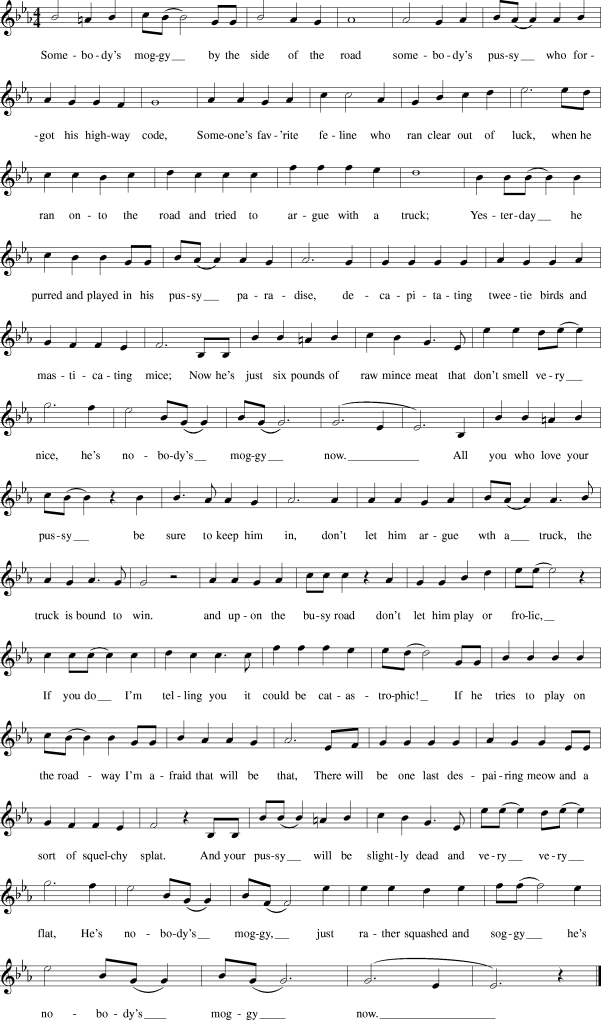
Dinner Music: ‘Nobody’s Moggy Now’, by Eric Bogle

Somebody’s moggy by the side of the road
Somebody’s moggy who forgot his highway code
Someone’s favourite feline who ran clean out of luck
When he ran onto the road and tried to argue with a truck

Yesterday he burled and played in his pussy paradise
Decapitating tweety birds and masticating mice
Now he’s just six pounds of raw minced meat
That don’t smell very nice

He’s nobody’s moggy now.

You who love your pussy, be sure to keep him in
Don’t let him argue with a truck, the truck is bound to win
And upon a busy road, don’t let him play or frolic
If you do, I’m warning you, it could be cat-astrophic
If he tries to play on the roadway I’m afraid that will be that
There will be one last despairing meouw and a sort of squelchy splat
And your pussy will be slightly dead and very very flat
He’s nobody’s moggy, just red and squashed and soggy,

He’s nobody’s moggy nooow, hoummmmm…

Video

‘A Small Ode on Mixed Flatting’, by James K. Baxter

Elicited by the decision of the Otago University authorities to forbid this practice among students

Dunedin nights are often cold
(I notice it as I grow old);
The south wind scourging from the Pole
Drives every rat to his own hole,
Lashing the drunks who wear thin shirts
And little girls in mini-skirts.
Leander, that Greek lad, was bold
To swim the Hellespont raging cold
To visit Hero in her tower
Just for an amorous half-hour.
And lay his wet brine-tangled head
Upon her pillow – Hush! The dead
Can get good housing – Thomas Bracken,
Smellie, McLeod, McColl, McCracken,
A thousand founding fathers lie
Well roofed against the howling sky
In mixed accommodation – Hush!
It is the living make us blush
Because the young have wicked hearts
And blood to swell their private parts.
To think of corpses pleases me;
They keep such perfect chastity.
O Dr Williams, you were right
To shove the lovers out of sight;
Now they can wander half the night
Through coffee house and street and park
And fidget in the dripping dark,
While we play Mozart and applaud
The angel with the flaming sword!
King Calvin in his grave will smile
To know we know that man is vile;
But Robert Burns, that sad old rip
From whom I got my Fellowship
Will grunt upon his rain-washed stone
Above the empty Octagon,
And say – ‘O that I had the strength
To slip yon lassie half a length!
Apollo! Venus! Bless my ballocks!
Where are the games, the hugs, the frolics?
Are all you bastards melancholics?
Have you forgotten that your city
Was founded well in bastardry
And half your elders (God be thankit)
Were born the wrong side of the blanket?
You scholars, throw away your books
And learn your songs from lasse’s looks
As I did once – ‘Ah, well; it’s grim;
But I will have to censor him.
He liked to call a spade a spade
And toss among the glum and staid
A poem like a hand grenade –
And I remember clearly how
(Truth is the only poet’s vow)
When my spare tyre was half this size,
With drumming veins and bloodshot eyes
I blundered through the rain and sleet
To dip my wick in Castle street.
Not on the footpath – no, in a flat,
With a sofa where I often sat,
Smoked, drank, cursed, in the company
Of a female student who unwisely
Did not mind but would pull the curtain
Over the window – And did a certain
Act occur? It did. It did.
As Byron wrote of Sennacherib –
‘The Assyrian came down like a wolf on the fold
And his cohorts were gleaming in purple and gold’ –
But now, at nearly forty-two,
An inmate of the social zoo,
Married, baptized, well heeled, well shod,
Almost on speaking terms with God,
I intend to save my moral bacon
By fencing the young from fornication!
Ah, Dr Williams, I agree
We need more walls at the Varsity;
The students who go double-flatting
With their she-catting and tom-catting
Won’t ever get a pass in Latin;
The moral mainstay of the nation
Is careful, private masturbation;
A vaseline jar or a candle
Will drive away the stink of scandal!
The Golden Age will come again –
Those tall asthenic bird-like men
With spectacles and lecture notes,
Those girls with wool around their throats
Studying till their eyes are yellow
A new corrupt text of Othello,
Vaguely agnostic, rationalist,
A green banana in each fist
To signify the purity
Of educational ecstasy –
And, if they marry, they will live
By the Cardinal Imperative:
A car, a fridge, a radiogram,
A clean well-fitted diaphragm,
Two-and-a-half children per
Family; to keep out thunder
Insurance policies for each;
A sad glad fortnight at the beach
Each year, when Mum and Dad will bitch
From some half-forgotten itch –
Turn on the lights! – or else the gas!
If I kneel down like a stone at Mass
And wake my good wife with bad dreams,
And scribble verse on sordid themes,
At least I know man was not made
On the style of a slot-machine arcade –
Almost, it seems, the other day,
When Francis threw his coat away
And stood under the palace light
Naked in the Bishop’s sight
To marry Lady Poverty
In folly and virginity,
The angels laughed – do they then weep
Tears of blood if two should sleep
Together and keep the cradle warm?
Each night of earth , though the wind storm
Black land behind, white sea in front,
Leander swims the Hellespont;
To Hero’s bed he enters cold;
And he will drown; and she grow old –
But what they tell each other there
You’ll not find in a book anywhere.

1967


– James K. Baxter, ‘A Small Ode on Mixed Flatting’ in Collected Poems (ed. John Edward Weir; Wellington: Oxford University Press, 1979), 396–99.

Blogging Presbyterian Ministers

I guess that it is encouraging to see blogging catching on among Presbyterian ministers (and their partners) here in Aotearoa New Zealand. Here’s a list (repeated in the sidebar) of those that I know of:

Am I missing anyone?

And while I’m in ‘give ’em a plug’ mode, there’s a few other Pressie-tribe sites that are worth noting:


Advent V: ‘The sign of God is powerlessness in the world’

‘And to us who come, in the midst of the wicked world torn by malice, to venerate the Infant lying in the manger, what law and wisdom of life are given by this miraculous sign? To what do the angels now call those who come to venerate Christ? They call them to receive into their hearts His humiliation, His persecution, His Crucifixion, as the sole sign of the Christian life, as its power and triumph.

For the best self-attestation of the Good is its defenselessness in the face of the power of evil. The best attestation of Truth is silence in the face of much-talkative falsehood. The supreme manifestation of Beauty consists in the unadornment by vain adornment. The power of God triumphs by means of itself, not by means of the power of this world. For the world, there is no power of God. The world does not see and does not know the power of God: it laughs at the power of God. But Christians know that the sign of God is powerlessness in the world – the Infant in the manger.

And there is no need to gild the manger, for a gilded manger is no longer Christ’s manger. There is no need for earthly defense, for such defense is superfluous for the Infant Christ. There is no need for earthly magnificence, for it is rejected by the King of Glory, the Infant in the manger. But there is a need for the authentic revelation of the God of Love. There is a need for the image of all-forgiving meekness, praying for His enemies and tormentors. There is a need for the image of the way of the cross to Christ’s Kingdom, to defeat evil by the triumphant self-evidence of good. There is a need for the image of freedom from the world. And powerless, we are powerful. In the kingdom of this world we desire to serve the Kingdom of God; we believe in, call, and await this Kingdom. For we have come to know the sign of the Infant in the manger. Power in powerlessness, Triumph in humiliation. And let our heart be our manger, in which we bear the divine sign, the sign of the cross.

By this sign reigns the King of kings, the Infant in the manger. In Him and with Him we are united forever by the fact He was made man. We call him Emmanuel – God with us’.

– Sergeĭ Nikolaevich Bulgakov, Churchly Joy: Orthodox Devotions for the Church Year (trans. Boris Jakim; Grand Rapids: Wm. B. Eerdmans Publishing, 2008), 39–40.

Advent IV: ‘The process of Your coming’, by Karl Rahner

‘Every year we celebrate the holy season of Advent, O God. Every year we pray those beautiful prayers of longing and waiting, and sing those lovely songs of hope and promise. Every year we roll up all our needs and yearnings and faithful expectation into one word: “Come!”

And yet, what a strange prayer this is! After all, You have already come and pitched Your tent among us. You have already shared our life with its little joys, its long days of tedious routine, its bitter end. Could we invite You to anything more than this with our “Come”? Could You approach any nearer to us than You did when You became the “Son of Man,” when You adopted our ordinary little ways so thoroughly that it’s almost hard for us to distinguish You from the rest of our fellow men?

In spite of all this we still pray: “Come.” And this word issues as much from the depth of our hearts as it did long ago from the hearts of our forefathers, the kings and prophets who saw Your day still far off in the distance, and fervently blessed its coming. Is it true, then, that we only “celebrate” this season, or is it still really Advent?

Are You the eternal Advent? Are You He who is always still to come, but never arrives in such a way as to fulfill our expectations? Are You the infinitely distant One, who can never be reached?

Are You only the distant horizon surrounding the world of our deeds and sufferings, the horizon which, no matter where we roam, is always just as far away? Are You only the eternal Today, containing within itself all time and all change, equally near to everything, and thus also equally distant?

When our bleeding feet have apparently covered a part of the distance toY our eternity, don’t You always retreat twice as far away from us, into the immense reaches filled only by your infinite being? Has humanity drawn the least bit closer to You in the thousands and thousands of years that have elapsed since it boldly began its most exciting and fearsome adventure, the search for You?

Have I come any nearer to You in the course of my life, or doesn’t all the ground I have won only make my cup all the more bitter because the distance to You is still infinite? Must we remain ever far from You, O God of immensity, because You are ever near to us, and therefore have no need of “coming” to us? Is it because there is no place in our world to which You must first “find your way”?

You tell me that you have really already come, that Your name is Jesus, Son of Mary, and that I know in what place and at what time I can find You. That’s all true, of course, Lord – but forgive me if I say that this coming of Yours seems to me more like a going, more like a departure than an arrival.

You have clothed Yourself in the form of a slave. You, the hidden God, have been found as one of us. You have quietly and inconspicuously taken Your place in our ranks and marched along with us. You have walked with us, even though we are beings who are never coming, but rather always going, since any goal we reach has only one purpose: to point beyond itself and lead us to the last goal, our end.

And thus we still cry: “Come! Come to us, You who never pass away, You whose day has no evening, whose reality knows no end! Come to us, because our march is only a procession to the grave.” Despairing of ourselves, we call upon You – then most of all, when, in composure and quiet resignation, we bring ourselves to accept our finiteness.

You promised that You would come, and actually made good Your promise. But how, O Lord, how did You come? You did it by taking a human life as Your own. You became like us in everything: born of a woman, You suffered under Pontius Pilate, were crucified, died, and were buried. And thus You took up again the very thing we wanted to discard. You began what we thought would end with your coming: our poor human kind of life, which is sheer frailty, finiteness, and death.

Contrary to all our fond hopes, You seized upon precisely this kind of human life and made it Your own. And You did this not in order to change or abolish it, not so that You could visibly and tangibly transform it, not to divinize it. You didn’t even fill it to overflowing with the kind of goods that men are able to wrest from the small, rocky acre of their temporal life, and which they laboriously store away as their meager provision for eternity.

No,You took upon Yourself our kind of life, just as it is. You let it slip away from You, just as ours vanishes from us. You held on to it carefully, so that not a single drop of its torments would be spilled. You hoarded its every fleeting moment, so You could suffer through it all, right to the bitter end.

You too felt the inexorable wheel of blind, brute nature rolling over Your life, while the clear-seeing eye of human malice looked on in cruel satisfaction. And when Your humanity glanced upwards to the One who, in purest truth and deepest love, is called “Father,” it too caught sight of the God whose ways are unfathomable and whose judgments are incomprehensible, who hands us the chalice or lets it pass, all according to His own holy will. You too learned in the hard school of suffering that no “why” will ever ferret out the secret of that will, which could have done otherwise, and yet chose to do something we would never understand.

You were supposed to come to redeem us from ourselves, and yet You, who alone are absolutely free and unbounded, were “made,” even as we are. Of course, I know that You remained what You always were, but still, didn’t our mortality make You shudder, You the Immortal God? Didn’t You, the broad and limitless Being, shrink back in horror from our narrowness? Weren’t You, absolute Truth, revolted at our pretense?

Didn’t You nail yourself to the cross of creation, when You took as Your own life something which You had drawn out of nothing, when You assumed as Your very own the darkness that You had previously spread out in the eternal distance as the background to Your own inaccessible light? Isn’t the Cross of Golgotha only the visible form of the cross You have prepared for Yourself, which towers throughout the spaces of eternity?

Is that Your real coming? Is that what humanity has been waiting for? Is that why men have made the whole of human history a single great Advent-choir, in which even the blasphemers take part – a single chant crying out for You and Your coming? Is Your humble human existence from Bethlehem to Calvary really the coming that was to redeem wretched humanity from its misery?

Is our grief taken from us, simply because you wept too? Is our surrender to finiteness no longer a terrible act of despair, simply because You also capitulated? Does our road, which doesn’t want to end, have a happy ending despite itself, just because You are traveling it with us?

But how can this be? And why should it be? How can our life be the redemption of itself, simply because it has also become Your life? How can You buy us back from the law, simply by having fallen under the law Yourself (Gal. 4:5)?

Or is it this way: is my surrender to the crushing narrowness of earthly existence the beginning of my liberation from it, precisely because this surrender is my “Amen” to Your human life, my way of saying yes to Your human coming, which happens in a manner so contrary to my expectations?

But of what value is it to me that my destiny is now a participation in Yours, if You have merely made what is mine Your own? Or have You made my life only the beginning of Your coming, only the starting point of Your life?

Slowly a light is beginning to dawn. I’ve begun to understand something I have known for a long time: You are still in the process of Your coming. Your appearance in the form of a slave was only the beginning of Your coming, a beginning in which You chose to redeem men by embracing the very slavery from which You were freeing them. And You can really achieve Your purpose in this paradoxical way, because the paths that You tread have a real ending, the narrow passes which You enter soon open out into broad liberty, the cross that You carry inevitably becomes a brilliant banner of triumph.

It is said that You will come again, and this is true. But the word again is misleading. It won’t really be “another” coming, because You have never really gone away. In the human existence that You made Your own for all eternity, You have never left us.

But still You will come again, because the fact that You have already come must continue to be revealed ever more clearly. It will become progressively more manifest to the world that the heart of all things is already transformed, because You have taken them all to Your heart.

Behold, You come. And Your coming is neither past nor future, but the present, which has only to reach its fulfillment. Now it is still the one single hour of Your Advent, at the end of which we too shall have found out that You have really come.

O God who is to come, grant me the grace to live now, in the hour of Your Advent, in such a way that I may merit to live in You forever, in the blissful hour of Your eternity’.

– Karl Rahner, Encounters with Silence (Westminster: Newman Press, 1965), 80–87

‘Change of Address’

Recently, I participated in a group reading of Luke’s account of Jesus’ death. I was struck by the change in tone and of heart of the second criminal crucified with Jesus. One moment, he was with the crowds in their hurls of abuse; the next he was questioning the justice associated with his own death and asking Jesus to remember him when Jesus came into his kingdom.

What brought about this incredible change in the criminal? I wondered if it might be simply the first word that Jesus spoke in the interim – the word ‘Father’, and the fact that in that simple address this man was given a glimpse into the deepest truth of all reality.

Perhaps like many prisoners, this man too had a lousy relationship with his earthly father. Perhaps like all of us, to hear (i.e., to really hear, and so to be overcome by the crisis that comes in that hearing) that we are forgiven even though we don’t know what we are doing cuts right through all our defenses. (So PT Forsyth: ‘The greatest, last, humanest, passion is the passion to be forgiven’). Perhaps we will never know. And perhaps that doesn’t matter. What does matter, though, is the transformation experienced in this briefest of exchanges. A wee poem attempts to capture something of this transformation:

Change of Address

The mob, by this time, was blood-crazed,
choler coupled with the shame of betraying ‘innocent blood’,
tempestuous with fury against a God way too human.

And two brigands – one on his right and one on his left –
were also there, their antisocial terror
flaring into blasphemous howls.

They joined the rest – sibilating the fruit of irrational rage:
‘If you are the Son of God, come down from the cross’. But a night in
the garden had closed that possibility.

And now, lifted up on the mob’s violent altar,
amid swells of vengeance fueled by power’s lusts
a prayer: ‘Father, forgive them …’.

Abruptly, and with all the violence of a different nature
one neighbour fell silent. His ire ended;
his soft confession birthed.

Could it be that something in that cry – ‘Father’ –
untwisted his tangled self,
broke open the truth of all things?

Father?
Father?
Father?

Where am I?

© Jason A. Goroncy
17 November 2010

Advent III: ‘Advent Calendar’, by Rowan Williams

He will come like last leaf’s fall.
One night when the November wind
has flayed the trees to bone, and earth
wakes choking on the mould,
the soft shroud’s folding.

He will come like frost.
One morning when the shrinking earth
opens on mist, to find itself
arrested in the net
of alien, sword-set beauty.

He will come like dark.
One evening when the bursting red
December sun draws up the sheet
and penny-masks its eye to yield
the star-snowed fields of sky.

He will come, will come,
will come like crying in the night,
like blood, like breaking,
as the earth writhes to toss him free.
He will come like child.

– Rowan Williams, The Poems of Rowan Williams (Grand Rapids: Wm. B. Eerdmans, 2004), 31.

November exploits …

Reading:

Listening:

Watching:

Drinking:

Advent II: ‘The Waiting’, by RS Thomas

Are there angels or only
the Furies? We sleep
on a stone pillow
and the troubles of Europe
are the molecules that
compound it. Where is
the ladder or that heavenly
traffic that electrified Jacob?

We wrestle with somebody,
something which withholds its name.
How is the anonymous
disposed? The enemy is without
number; is there an infiltration
of its forces by one not
indifferent to the human?
Though genes have their war,

yet the smiling goes on
from cradle to cradle.
Our experiments are repeatable,
but what is love the precipitate
of? We have eaten of a tree
whose foliage is radioactive
and the autumn of
its fall-out is upon our children.

Why, then, of all possible
turnings do we take
this one rather than that,
when the only signs discernible
are what no one has erected?
Is it because, at the road’s
ending, the one who is as a power
in hiding is waiting to be christened?

– RS Thomas, Collected Later Poems (Highgreen: Bloodaxe, 2004), 268.

Advent I: On Matthew 11.25–27

In keeping with my practice in recent years, I propose to again post a series of short Advent reflections. Here’s the first:

‘I praise you, Father, Lord of heaven and earth, because you have hidden these things from the wise and learned, and revealed them to little children. Yes, Father, for this was your good pleasure. All things have been committed to me by my Father. No one knows the Son except the Father, and no one knows the Father except the Son and those to whom the Son chooses to reveal him. (Mt 11:25–27)

It is God’s way—it keeps being so—to hide Himself from those whom Jesus ironically calls “wise and learned.” It is God’s way—it keeps being so!—to reveal Himself to the humble. The relevance of this text to understanding the mission of Jesus is decisive. His God can only be known through the revelation made to the “little children.” There is no other place where Jesus has wanted to reveal his Father to us. This is how God has wanted it. He does not want human beings to identify Him with the Law, with the cult, with power, with ritual purity, with judgment, and with punishment. He does not want to be identified with the encyclicals, the canonical code, liturgical rubrics, or other fanciful things. Only in the revelation to those who do not count—the marginalized and those who remain excluded from everything—can the true face of God be known. For this reason, Jesus perceives himself as a relief for the afflicted and the oppressed. (see Mt 11:28-30). Jesus frees God from His own yoke. And he frees the poor from the God that had condemned them to their fate by showing them that God is with them, that He has decided to undergo the same fate as the poor. For this reason, he calls them “blessed.” The new times they have hoped for have come’.

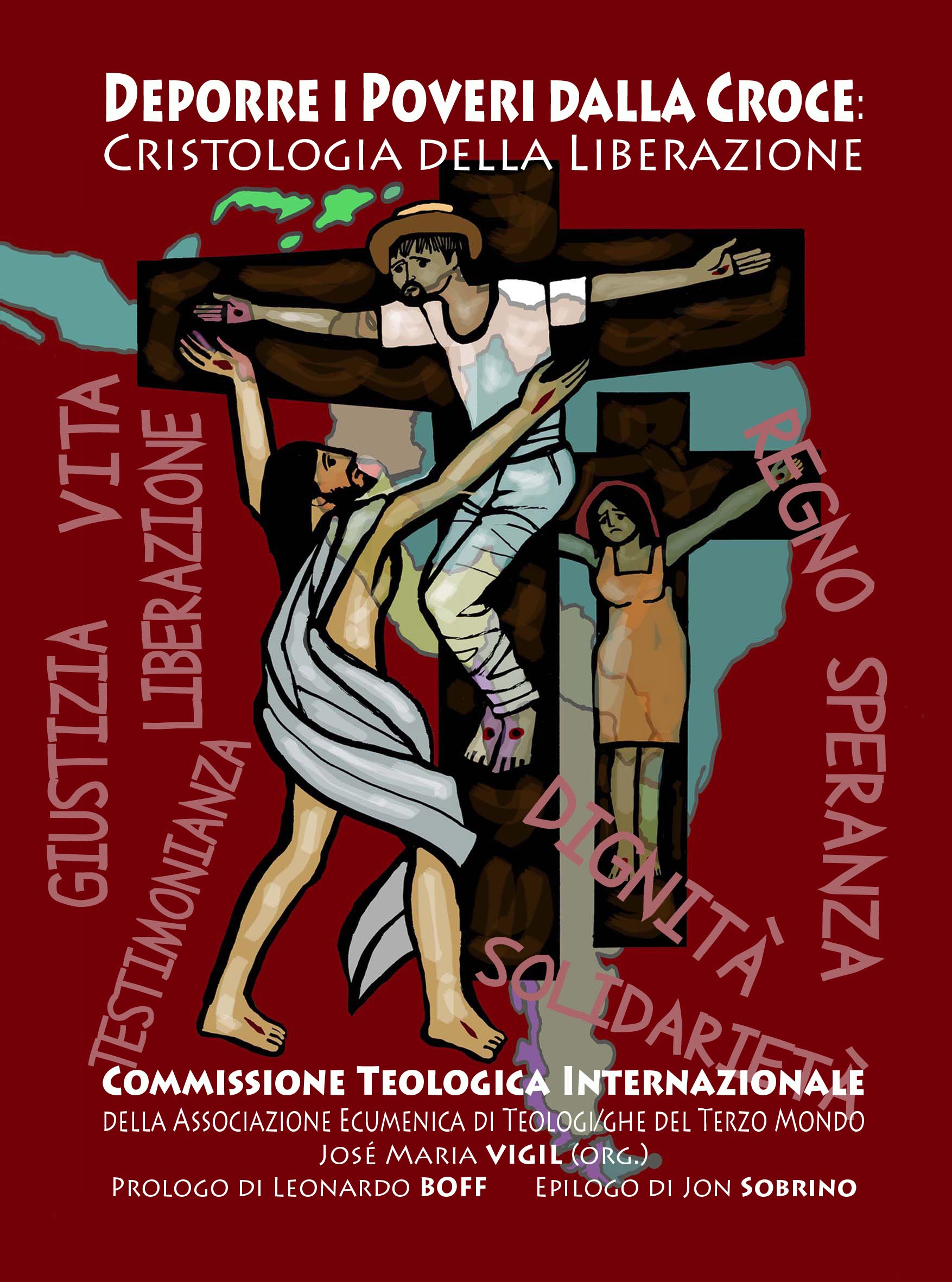
– Oscar Campana, ‘Jesus, the Poor, and Theology’ in Getting the Poor Down From the Cross: Christology of Liberation (ed. José María Vigil; np: International Teological Commission of the Ecumenical Association of Third World Theologians, 2007), 58.

BTW: It’s always worth heading over to Hopeful Imagination this time of year to read the Advent reflections.

Cooking

‘In the beginning was the Word. It was only when human beings appeared that the Word became food on a table. We know that language allows us to understand each other and to express what we think and feel. We humans, however, are more than language. We humans are cookingage, i.e., that which allows us to prepare the food with which we can nourish not only our body, but also our spirit. It was when we started to cook our first meals and when we started to conjugate the incarnate Word that we noticed that we were human. Both table and Word humanize us. No wonder it is essential that the table on which our meals are served be conjoined with good conversation: at the table, the word is essential’. (p. vi)

So writes Joaquín Racionero Page in his ‘Foreword’ to Angel F. Mendez Montoya’s delightful book The Theology of Food: Eating and the Eucharist, a book which recalls something that Lévi-Strauss once argued; namely, that in order to properly learn who we are, we need to look at the food and cooking patterns we enjoy for these reveal to us, like language itself, something of the basic structure of our systems of signification.

Such revelation, discovery, participation, is of the bene esse of life. And Voltaire was right, ‘Nothing would be more tiresome than eating and drinking if God had not made them a pleasure as well as a necessity’. Indeed, and I would say the same about cooking. One of my greatest – and increasing so – life-giving joys in recent years has been cooking, and all things related – like opening up the door of the glass house and having one’s nasal passages and entire head literally attacked by the aroma of basil and tomatoes! Along the way, I’ve started to build up the beginnings of a decent library of books on food. Here’s some of my favourites:

And here’s a few more that I’m chasing (and which are on my Wishlist, if anyone’s feeling particularly generous)

What’s your ‘must have’ cookbook/book on food?

BTW: there’s no such thing as ‘just a little’ garlic, nor a ‘dash’ of wine.

What is Fresh Expressions and what might we learn from it?

A guest post by Mark Johnston.

For some time now, Fresh Expressions UK has been getting people’s attention as snippets of what the Church of England and other mainline denominations are doing in the UK reaches these shores. This year in July, Bishop Graham Cray, the leader of the Fresh Expressions movement in the UK was in New Zealand at the invitation of a couple of Anglican Diocese and several of us Presbyterians jumped on board to hear Bishop Cray, along with several Methodists and Baptists.

What is Fresh Expressions?

Fresh Expressions is best summed up as a movement in church planting that has taken off since the publication of a Church of England report in 2004 called “Mission Shaped Church[1]. It’s not often that a CofE report releases energy and momentum in the church but this one did. It initially was written to sum up the state of the Church of England in its mission context and clarify its thinking about church planting as a strategy of parish mission. It however became a document that captured something of the challenge to re-think the parish principle and put forward theological and missiological reasons for endorsing and resourcing a whole host of experiments in church life and forming of new communities of faith. These experiments might have previously fallen outside the inherited ecclesial and economic unit definitions of a “church”. Mission Shaped Church reclaimed them as real expressions of church, genuine attempts to embody the life of Christ in new and changing cultural circumstances.

Fresh Expressions emerged out of the coalescing of various interest and energies identified both by the research and writing that went into the report and a desire to work the report’s practical suggestions to the CofE into something tangible on the ground. When Rowan Williams, Archbishop of Canterbury made the report a centrepiece of his episcopal leadership, official energies, resources and permission-giving became available to sustain a movement of common interest. It is noteworthy however those leaders in the movement found themselves less propelled by the official endorsement than a sense of the Spirit of God doing something serendipitously and they were caught up in it. Fresh Expressions seemed to emerge and evolve from a collaborative intent and joining of hands rather than driven by top down policy or a strategic plan of any kind. The subsequent addition of Methodist, URC, Congregational and Baptist partners indicated there was more to this movement than a one church’s re-thinking local mission.

What makes Fresh Expressions interesting and more durable than a single church growth strategy or method is its umbrella like nature. Rather than prescribing a particular approach it has welcomed diversity in approach, form and to a certain extent theological colour. For instance there are tales of church planting an Anglo-Catholic expression in a city supermarket, the formation of new social justice communities, new rural faith communities, “goth” church, a church that makes bread, as well as more conventional congregational plants. But this is not without being held together by a central idea and some key theological reference points. The big idea that defines Fresh Expressions is “establishing a form of church for our changing cultures, established primarily for the benefit of people who are not yet members of any church”.

It is church planting in a broad sense. Fresh Expressions defines Church Planting as “the process by which the seed of the life and message of Jesus embodied by a community of Christians is immersed for mission reasons in a particular cultural or geographic context”[2]. It includes the efforts of inherited congregations to plant a new expression alongside the old, intended to engage different cultures, generations and sub-cultures, in other words people “not like them”. It affirms pioneer individual or teams who feel called to start from scratch and establish a new form of witness in marginalised areas of cities often left behind by middle class churches. It provides support for new cultural expressions of church amongst 2nd and 3rd generation immigrants who are seeking to find culturally appropriate ways of engaging “third culture” peers and friends, who shun both traditional immigrant churches and the “white” churches. It also encourages the emerging attempts at new monastic and lifestyle communities to embody Christ in the midst of culture.

Missiologically “Fresh Expressions” arises out of the recognition that the attractional mode the church operates in is flawed and contributes now to a major disconnection between churches and huge sections of society. Society has changed and the church is finding itself stranded. This is exacerbated by operational theologies which make mission a tack on church activity or duty rather than a gift of participating in the mission of God in Christ towards the world. “It is not the Church of God that has a mission in the world, but the God of mission who has a church in the world” [3]. If the church belongs to the mission of God then the church is no longer the centre of mission and has no reason to draw energy towards itself and its own preservation. This frees the church for a more light-footed and responsive form of existence, to become sent, to cross boundaries into new spaces, to be expressed in new shapes and forms suited to the context.

Church planting with a theological underpinning

However “Fresh Expressions” is not interested in reducing church planting to strategy. It is a theological intention after the pattern of Christ. Authentic church planting is shaped by the incarnation. The incarnational principle calls the church to identify with and enter the world as it is, to give up its own power, preferences and likes in order that Christ might be embodied in contexts where people no longer relate to our expressions of church. The issue is not relevance, it is incarnation. Irrelevance is a symptom of churches that have become non-incarnational. The incarnational principle expresses itself as church dies to self (John 12:24) and gives up its preferences and privileges for the sake of being Christ to the other (1 Corinthians 9:19-23). It is not church or worship or community as we would like it. It is not cloning. It is discovering what church could be for and with others who may not be like us. This is difficult DNA for us Presbyterians, since our origins as a colonial settler church were seldom sourced in this way. Fresh Expressions is recalling the church to one of its core DNA.

Fresh Expressions are not immune to the criticism that this call to contextualised mission can lead to a loss of distinctiveness, the message and form of the gospel so accommodated to the language and forms of the hearers that it loses its content and edge. It recognises that planting in the pattern of Christ is also the pattern of the cross, there is a world to counter. There is always a tension between adapting and identifying with context and becoming colonised by that culture. That is the tightrope walked both by inherited forms of church and fresh expressions. Church planting from the incarnational principle begins in a journey of cross shaped sacrifice and planting with this DNA will determine how a fresh expression wrestles with syncretistic temptations in the future.

Lastly the pattern of Christ shapes church planting by the resurrection. There is a world to anticipate and whatever a fresh expression becomes – it is called to become a pointer to God’s future. Fresh Expressions reminds the church that too much attention can be given to the passing on of the inheritance of the past and too little as an anticipation and foretaste of God’s future. What Fresh Expression’s celebrate is the possibility of church as hopeful and expressive of what salvation means in the ordinary and everyday realities of many different kinds of context. For dispirited and disbelieving people in those contexts, Fresh Expressions are attempts to offer another kind of lense to see God and God’s purposes by, a foretaste sufficient for people to say, “whatever eternal life means, if it means life like what I see here then …”.

This does not come about by good intentions or churches with creative ideas. Fresh Expressions is a movement that regards mission as a Spirit event. It requires discerning the Spirit of God and allowing God to bring forth the future in fresh and “ready to be surprised” ways. This does not mean the entire abandonment of inherited church, but rather the intention to take incarnationally motivated risks, to corporately practice deep listening to God, context and one another and to connect this to shapes of common life, activity and obedience. Fresh Expressions challenges the church to begin with “divine listening” in mission and relativise our dominant default practices of strategic analysis and planning. The biblical narrative reminds us that God creates new futures in the most inauspicious of places.

Six years down the track, “Fresh Expressions” has become a large network of support, story sharing and research, intentional collaboration and training that is spread across the major mainline denominations in England. Individual ventures to form and plant a new expression of church can register with the Fresh Expressions network and currently about 2000 Church of England and 1000 Methodist Fresh Expressions are on the books. Figures for other denominations are not available yet. Telling and publicising stories of what ordinary people and churches are doing on the ground is an important vehicle for spreading encouragement and vision. Professionally produced DVD’s of these stories have been released to spread the word. The website acts as a hub. Individual denominations make their own decisions about what funding they will make available to their own fresh expression projects. Ecumenical cooperation takes place at the training, equipping and support level through regional “FEASTS”. Several denominations have now developed ordained pioneer ministry tracks in their theological colleges and selection criteria processes have been modified to take account of and discern “church planting” or pioneer gifting and callings. Resources for church leader and planting teams and short-term course have been developed. Critiques[4] and research of Fresh Expressions has continued to be published and this is regarded as healthy addition to a movement which is evolving as a practice based and learning organisation. Its structures are lightweight, based on high levels of trust and collaborative working.

Benefits of Fresh Expressions in our own situation

So what does Fresh Expressions bring into a local situation where church members or a leader is keen to develop a new way of engaging the community or un-churched people? Fresh Expressions firstly helps to give some language and framework to this desire. It recasts it as matter of embodiment. How is the life of God to be expressed amongst these people in such a way that they might encounter Christ for themselves? Fresh Expressions affirms that one way forward may be to intentionally plant a communal expression of the gospel that is more responsive to their realities and context. Many of our churches planted and grown in one kind of soil find themselves amidst increased cultural and lifestyle diversity, in much changed soil conditions, and limited in their ability to grow an engagement with people unlike themselves. The reality is while some churches adapt, planting the seeds of church into the changed conditions allows for more people in more conditions and cultures to find a welcome and a home.

Secondly Fresh Expressions is positive about the role that inherited and present modes of church have to play. This is not a prescription for ditching the old and embracing only what is new and different. There is an affirmation of the catholicity of the church and the need for new alongside and in relationship with the inherited modes of the church. Churches are encouraged to plant new expressions within “parishes” and to creatively maintain the apostolic link to tradition to fund their imaginations and faithfulness to the Gospel. However at the same time inherited churches are urged to practice cultural hospitality by allowing space and permission for experimentation and radical developments to emerge.

Thirdly Fresh Expressions has developed a sense of “best practice” to aid in the church planting task. Tellingly it urges church planting normally not to begin with corporate worship. Beginning with worship events has tended to perpetuate attractional models of church, often growing by transfer growth from other churches, failing to evolve as contextual rooted expressions and resembling cloning of church than genuine fresh expressions. A process of intense listening to context and God is urged accompanied by loving and serving people in the desired locations or social contexts. This becomes a formative journey for community to emerge, the exploration of what discipleship means and finally the public shaping of church.

Fourthly Fresh Expressions as a movement is developing resources that build capacity in churches concerned for church planting. Their development of “Mission shaped Intro” and “Mission shaped ministry” training materials are designed to introduce people to church planting and equip motivated members of churches who may go on to form a team for church planting. Much of the story-telling material, available in DVD form, offer a catalogue of what God is doing through ordinary people taking risks to innovate and grow new expressions of God’s life in their communities. It is hoped that the production of a New Zealand equivalent will provide a diverse range of stories which can inspire and illuminate the art of the possible.

Fifthly, Fresh Expressions is building up a considerable body of research and reflection upon church planting from a mainline denominational base. It does not claim to have all the answers and is intent on learning from the grass-roots activity of experimentation, theological reflection and a praxis based learning cycle. For instance Graham Cray drew attention to possible sources of failure in church planting due to attempts at cloning, being too event centred and burning people out in resource hungry “attractive” events, lacking long term investment of people and funding, lone ranger, personality centred and CEO type leadership models, and the failure to start with key DNA (expressive of the Trinitarian God, incarnational, transformative, disciple-making and relational).

That is a good place to finish. Fresh Expressions is not a new word for contemporary worship services or community projects. Fresh Expressions in the end is not a focus on “forms” or “expressions” but the kind of intentionality that accompanies church becoming the embodiment of Christ in the world. A church can only grow from the DNA present in the seed. “Unless and until the Kingdom and mission are in the DNA of the seed of the church what is planted will prove to be sterile. If mission is not located in the identity of the church, planting is very unlikely to recover it.”[5]

The Purple Crown: The Politics of Martyrdom: A book note

The Purple Crown: The Politics of Martyrdom (Polyglossia: Radical Reformation Theologies) by Tripp York. Scottdale/Waterloo: Herald Press, 2007. Pp 199. $19.99, ISBN 978-0-8261-9393-0.

Through recalling the truthful performances and writings of the early church (e.g., Ignatius of Antioch, Polycarp and Cyprian) and of those on all sides of the Reformation, through examination of Augustine’s account of the analogical relationship between the Civitas Dei and the Civitas Terrena (each with their rival soteriologies), through a biography of Oscar Romero which is itself ‘a gospel’, and drawing heavily on the work of William Cavanaugh and John Howard Yoder, York reflects on the natures of, and relationship between, word and deed, and reminds us that martyrdom is the kind of public, political and liturgical witness – a second baptism, and ‘a moment in rhetoric’ (p. 146) – that unapologetically reveals the world to be the world, and reminds the church, as does the eucharist itself, that ‘allegiance to the heavenly city presumes an exilic posture that confers a missionary stance’ that sometimes, though not always, takes the shape of martyrdom (p. 100). But martyrs are not victims; neither is martyrdom tragic. Rather, as York reminds us, the logic of martyrdom belongs in the world of the apocalyptic, the witness participating in ‘the ongoing creation of not an alternative world but an authentic world: a world inaugurated by the cross and the empty tomb’ (p. 147). While few readers will follow York on every point, and many will want to go deeper and wider than this essay does, this book is a clear, insightful and ecclesiologically-fruitful introduction to the relationship between martyrdom and discipleship.

Hauerwas on War, Sacrifice and the Alternative to the Sacrifices of War

The ABC’s outstanding Religion and Ethics site has recently posted a stirring three-part reflection on war by Stanley Hauerwas:

Here are some tasters:

  • ‘I think the language of sacrifice is particularly important for societies like the United States in which war remains our most determinative common experience, because states like the United States depend on the story of our wars for our ability to narrate our history as a unified story’.
  • ‘I think it is a mistake to focus – as we most often do – only on the sacrifice of life that war requires. War also requires that we sacrifice our normal unwillingness to kill. It may seem odd to call the sacrifice of our unwillingness to kill “a sacrifice,” but I will argue that this sacrifice often renders the lives of those who make it unintelligible. The sacrifice of our unwillingness to kill is but the dark side of the willingness in war to be killed. Of course I am not suggesting that every person who has killed in war suffers from having killed. But I do believe that those who have killed without the killing troubling their lives should not have been in the business of killing in the first place … Killing creates a world of silence isolating those who have killed’.
  • ‘Awarding of medals becomes particularly important. Medals gesture to the soldier that what he did was right and the community for which he fought is grateful. Medals mark that his community of sane and normal people, people who do not normally kill, welcome him back into “normality.” [Lt Col Dave] Grossman calls attention to Richard Gabriel’s observation that “primitive societies” often require soldiers to perform purification rights before letting them rejoin the community. Such rites often involve washing or other forms of cleaning. Gabriel suggest the long voyage home on troop ships in World War II served to give soldiers time to tell to one another their stories and to receive support from one another. This process was reinforced by their being welcomed home by parades and other forms of celebration. Yet soldiers returning from Vietnam were flown home often within days and sometimes hours of their last combat. There were no fellow soldiers to greet them. There was no one to convince them of their own sanity. Unable to purge their guilt or to be assured they had acted rightly, they turned their emotions inward’.
  • ‘Killing shatters speech, ends communication, isolating us into different worlds whose difference we cannot even acknowledge. No sacrifice is more dramatic than the sacrifice asked of those sent to war, that is, the sacrifice of their unwillingness to kill. Even more cruelly, we expect those who have killed to return to “normality”’.
  • Hauerwas also cites from Carolyn Marvin’s and David Ingle’s book Blood Sacrifice and the Nation: Totem Rituals and the American Flag: ‘In the religiously plural society of the United States, sectarian faith is optional for citizens, as everyone knows. Americans have rarely bled, sacrificed or died for Christianity or any other sectarian faith. Americans have often bled, sacrificed and died for their country. This fact is an important clue to its religious power. Though denominations are permitted to exist in the United States, they are not permitted to kill, for their beliefs are not officially true. What is really true in any society is what is worth killing for, and what citizens may be compelled to sacrifice their lives for’. To which Hauerwas comments: ‘This is a sobering judgment, but one that cannot be ignored if Christians are to speak truthfully to ourselves and our neighbours about war. I think, however, Christians must insist that what is true is not what a society thinks is worth killing for, but rather that for which they think it worth dying. Indeed, I sometimes think that Christians became such energetic killers because we were first so willing to die rather than betray our faith. Yet the value of Marvin’s and Ingle’s claim that truth is to be found in that for which you are willing to kill is how it helps us see that the Christian alternative to war is not to have a more adequate “ethic” for conducting war. No, the Christian alternative to war is worship … The sacrifices of war are undeniable. But in the cross of Christ, the Father has forever ended our attempts to sacrifice to God in terms set by the city of man. We (that is, we Christians) have now been incorporated into Christ’s sacrifice for the world so that the world no longer needs to make sacrifices for tribe or state, or even humanity. Constituted by the body and blood of Christ we participate in God’s Kingdom so that the world may know that we, the church of Jesus Christ, are the end of sacrifice. If Christians leave the Eucharistic table ready to kill one another, we not only eat and drink judgment on ourselves, but we rob the world of the witness necessary for the world to know there is an alternative to the sacrifices of war’.

Discovering the World 360°

For about an hour or so yesterday, and with only a cup of Earl Grey in me (in case you were wondering), my daughter and I felt that we’d been flung around the world. Why? We discovered 360° Cities. Of the plethora of spots we visited, here were some of our favourites:


‘travelling along the border’: a wee reflection on Luke 17.11–19

Now on his way to Jerusalem, Jesus traveled along the border between Samaria and Galilee. As he was going into a village, ten men who had leprosy met him. They stood at a distance and called out in a loud voice, “Jesus, Master, have pity on us!” When he saw them, he said, “Go, show yourselves to the priests.” And as they went, they were cleansed. One of them, when he saw he was healed, came back, praising God in a loud voice. He threw himself at Jesus’ feet and thanked him—and he was a Samaritan. Jesus asked, “Were not all ten cleansed? Where are the other nine? Has no one returned to give praise to God except this foreigner?” Then he said to him, “Rise and go; your faith has made you well.” (Luke 17.11–19)

Reading this text this week, I was struck by v. 11, and particularly by the way that the NIV translates the verse using the word ‘border’ (the NJB uses the word ‘borderlands’), a word that recalls that while Jesus moves through life facing a particular direction, i.e., towards Jerusalem, he spends most of his time living along and between borders, in the borderlands of what we today call the ‘secular’ and the ‘religious’, between borders of race, of gender, of acceptability, of confusion, of life and death. This is his ‘ordinary’ location and time. And even though the NT wastes little ink in describing what Jesus did when he wasn’t doing anything, his very poster of interruptability speaks something, I think, of how he conceived of ordinariness.

And then there are the interruptions themselves (most of the events recorded in the Gospels are simply interruptions!): in this case ten men who had leprosy:

As he was going into a village, ten men who had leprosy met him. They stood at a distance and called out in a loud voice, “Jesus, Master, have pity on us!” When he saw them, he said, “Go, show yourselves to the priests.” And as they went, they were cleansed. (vv. 12–14).

So the show is over – we’re back to normal time again – a time constituted by sight and blindness, by that rare eye which sees the hand of God at work and gives thanks for what it sees, and by that which takes even the spectacular interruptions for granted, granting them no place to reassess the ordinary times between the moments in which the powers of heaven and of hell break in. For ordinary time is time for patient hope and faithful listening. It is time for seeing what is invisible.

Even before I came to Luke 17, I had already been thinking about the way that the Church has its own calendar, its own sense of time, a time inimitable because grounded in the one unique narrative of Jesus Christ and enfleshed in the body with which he has so incontrovertibly and enduringly bound himself, and which contrasts so powerfully with the civic metanarrative by which we are constantly tempted to have our lives constrained.

My friend Ross Langmead once wrote a song called ‘Lord, let me see’ (you can hear it here), wherein we are given a glimpse into what ‘ordinary time’ might be about, and he encourages us to see, to hear, to care, to learn and to love, not only in the ‘special’ or ‘rare’ moments which break into our otherwise ‘normal’ existence, but in the ordinary:

1. Lord, let me see, see more and more:
See the beauty of a person, not the colour of the skin,
See the faces of the homeless with no-one to take them in,
See discouragement because she’ll never win,
See the face of our Lord in the pain.
Lord, let me see.

2. Lord, let me hear, hear more and more:
Hear the sounds of great rejoicing, hear a person barely sigh,
Hear the ring of truth, and hollowness of those who live a lie,
Hear the wail of starving people who will die,
Hear the voice of our Lord in the cry.
Lord, let me hear.

3. Lord, let me care, care more and more:
Care for those who feel the loneliness, for those who have no say,
Care for friends who have no job and find it hard to face the day,
Care for those with whom we sing and work and pray;
And in care, Jesus Christ will be found.
Lord, let me care.

4. Lord, let me learn, learn more and more:
Learn that what I know is just a speck of what there is to know,
Learn from listening to my neighbour when I’d rather speak and go,
Learn that as we live in faith and trust we grow;
Learn to see, hear and care, with our Lord.
Lord, let me learn.

5. Lord, let me love, love more and more:
Love the loveless and the fragile, help them be what they can be,
Love the way that I would like them to be looking after me,
For to know you is to love them and be free;
And in love Jesus Christ will be found.
Lord, let me love.

A prayer by Rubem Alves seems a good way to bring this post to an end:

O God, just as the disciples heard Christ’s words of promise and began to eat the bread and drink the wine in the suffering of a long remembrance and in the joy of a hope, grant that we may hear your words, spoken in each thing of everyday affairs.

Coffee, on our table in the morning;
the simple gesture of opening a door to go out, free;
the shouts of children in the parks;
a familiar song, sung by an unfamiliar face;
a friendly tree that has not yet been cut down.

May simple things speak to us of your mercy, and tell us that life can be good. And may these sacramental gifts make us remember those who do not receive them,

who have their lives cut, every day, in the bread absent
from the table;
in the door of the prison, the hospital, the welfare home
that does not open;
in the sad child, feet without shoes, eyes without hope;
in the war hymns that glorify death;
in the deserts where once there was life.

Christ was also sacrificed. And may we learn that we participate in the saving sacrifice of Christ when we participate in the suffering of his little ones. Amen.