Author: Jason Goroncy

Rowan Williams: Fighting the good fight

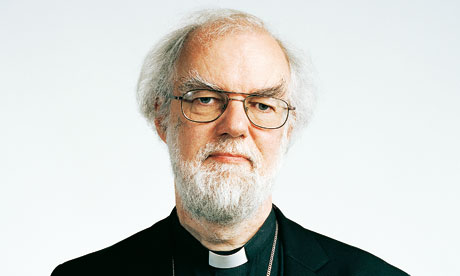
A week or so ago, the Guardian published a delightful interview between David Hare and Rowan Williams in which they discuss politics, education, economics, localism, prisons, the church, faith, self-absorption, and Welsh poets.

The entire interview is worth reading, but here are a few snippets to whet appetites: When asked by Hare whether Williams is paying too high a price for keeping together people who believe different things about gender, priesthood and sexuality, Williams responds: ‘I’ve no sympathy for that view. I don’t want to see the church so balkanised that we talk only to people we like and agree with. Thirty years ago, little knowing what fate had in store, I wrote an article about the role of a bishop, saying a bishop is a person who has to make each side of a debate audible to the other. The words “irony” and “prescience” come to mind. And of course you attract the reproach that you lack the courage of leadership and so on. But to me it’s a question of what only the archbishop of Canterbury can do’.

And on Welsh poet(-priests):

‘I always get annoyed when people call RS Thomas a poet-priest. He’s a poet, dammit. And a very good one. The implication is that somehow a poet-priest can get away with things a real poet can’t, or a real priest can’t. I’m very huffy about that. But I do accept there’s something in the pastoral office that does express itself appropriately in poetry. And the curious kind of invitation to the most vulnerable places in people that is part of priesthood does come up somewhere in poetic terms. Herbert’s very important to me. Herbert’s the man. Partly because of the absolute candour when he says, I’m going to let rip, I’m feeling I can’t stand God, I’ve had more than enough of Him. OK, let it run, get it out there. And then, just as the vehicle is careering towards the cliff edge, there’s a squeal of brakes. “Methought I heard one calling Child!/And I replied My Lord.” I love that ending, because it means, “Sorry, yes, OK, I’m not feeling any happier, but there’s nowhere else to go.” Herbert is not sweet.’

Barth on marriage (some notes from CD III/4)

Over the past few weeks, I have been teaching on a diverse range of subjects – childhood, worship, disability, religious pluralism, and marriage. On each occasion, Uncle Karl has never been too far away. I found his section on marriage in CD III/4 (pp. 225–29) to be a particularly fruitful launching pad. For those who may be interested, here’s a wee summary of that section:

  1. Marriage is treated by Barth under the rubric of the divine command. This implies that marriage’s eventuality ‘must have the character of a responsible act outwards in relation to those around’.
  2. The material significance of the institutional and formal side of marriage ‘is an event and its substance a reality in virtue of which the two partners thus joined together enter and come to stand in a new and different relationship to those around them, and the latter in turn must adopt a new relationship to them. In relationship to others they are no longer these two individuals. They are now a married couple’.
  3. This transition of the couple ‘from affection to love and marriage’ means a change in their place in the ‘framework of the civil and ecclesiastical society to which they belong’. Married, they are now ‘a new life-cell’ in a wider societal structure, a ‘distinct and special circle, a family, a new sociological unity which can be broadened by the addition of children’.
  4. Those who enter and live in marriage make a ‘decision’ which has necessary social consequences, effects and implications: ‘Marriage cannot and will not be carried through as a purely private undertaking. Even the smallest cottage of the happiest of lovers cannot be habitable inside unless it has at least a door and a few windows opening outwards. At some point it finds itself implicated in affinities and friendships as part of the Christian and civil community … Marriage would not be marriage were it not for the willingness and readiness to undertake such active participation in the nearer, the more distant and the most distant events of the surrounding contemporary world’.
  5. Marriage is not a license or ‘permission to establish an egoistic partnership of two persons, but a new and special commitment to such active participation, in which it may and must be significant and fruitful, an outward witness and help, as the inner fellowship of these two persons, and in which it may in its own place and manner be a factor in human history’.
  6. Those who decide to be married may ‘not shrink from this responsibility. And those who wish to live and not languish in marriage will have to take this responsibility in all seriousness’.
  7. ‘This outward responsibility of marriage is symbolised in its external form, and from this standpoint it includes the institutional act and status of marriage’.
  8. But a wedding does not make or constitute a marriage: ‘the equation of marriage with the wedding ceremony is a dreadful and deep-rooted error. Two people may be formally married and fail to live a life which can seriously be regarded as married life. And it may happen that two people are not married and yet in their precarious way live under the law of marriage. A wedding is only the regulative confirmation and legitimation of a marriage before and by society. It does not constitute marriage’. Barth considers such confusion as ‘the fundamental mistake in the traditional doctrine of marriage’: ‘It despises love, with all the inevitable consequences, because in relation to the genesis of marriage it looks only outwards to the institutional character of marriage, to the actual ceremony, to the formal decision bound up with marriage. From this standpoint it necessarily regards, love as an alien, easily painful, imponderable and probably rather dangerous element. But from this standpoint it cannot without legalism and artificiality vindicate its true and justifiable concern with regard to marriage. From institutional marriage as such there is naturally no way to love, nor to full, exclusive, lasting fellowship in marriage. Above all, the institution in itself offers not the smallest guarantee that a marriage is concluded in responsibility before God. But now that we have dissociated ourselves from this doctrine of marriage which is essentially a doctrine of the wedding ceremony, it is time to give it its due’.
  9. This does not mean, however, the privitisation of marriage. Indeed, founding of a new sociological unit in the human demands ‘public advertisement and recognition, and a definite form’: ‘How can two persons try to achieve this transition without confessing themselves to the world around as two who have become one, acknowledging their obligation towards it? And how can they try to be a couple without coming forward and acting in society as such, and without being addressed and treated as such from without?’
  10.  It is proper therefore that the wider society recognises the creation of a ‘new sociological unit’ and ‘makes possible their special life’. Those who would be married ought to be prepared to make a ‘public confession of their marriage and desire public confirmation of it’.
  11. Such public confession takes three forms – domestic, legal and ecclesiastical – none of which is able to underlie or guarantee the inner reality of marriage as a mutual understanding of the two partners, nor can they secure the essential reality of the couple’s outward relationship, their responsibility before society and active share in its life. ‘The institution in all its forms is only the means of this understanding – an instrument subject to historical variation in its forms, limited in its externality, and unable to bring about the actual approval of a marriage by all the members of the surrounding society. Nevertheless, in spite of its limitations, it is an unambiguous and indeed the only unambiguous means of achieving this understanding. That is the reason why those who desire marriage must be prepared to respect this institution and to desire its order and protection, i.e., not the constitution but the declaration of marriage by the wedding ceremony’.
  12. The domestic aspect of marriage normally signifies (for young couples, in particular) a broadening of the relationship in which they stand to their parents as children. ‘It is this which justifies parents in having a part in this act, or the way to it, and obliges children to consult their parents in the matter … Marriage without an understanding with the parents is always an audacious undertaking, and without their consent, or at least an attempt to secure it, will usually be unsuccessful. But in this matter the understanding can only have the character of an intensive – and, if the parents are shrewd, not too intensive– counselling, not of command, prohibition or obligatory obedience. The “Honour thy father and mother” is defined and limited by the fact that the parents are now confronted by respectful and teachable but adult and free [persons], and that even the most well meaning of parents can neither give nor take away from their children what constitutes marriage as marriage – the gift and task of married life-fellowship and the love which lies at the basis of marriage together with its responsibility before God’.
  13. The legal side of marriage. True to the Reformed tradition, Barth believes that the state’s demands of notification, ratification and official proclamation of ‘a real marriage’ are legitimate and that the state’s authority ought to be respected by the contracting parties in this matter marriage. But ‘even the declaration of the state cannot constitute marriage. According to the valid and effective formula, it can only declare it to be concluded. It is concluded in heaven by God and on earth by the married couple’. Those, therefore, who seek to be married ‘must’, in Barth’s words, ‘also desire its legal conditions and consequences and therefore its official enactment’. Then in the fine print, which is often the locus of Barth’s hidden gems, Barth states: ‘It should be urged on state officials that they ought to confine themselves to the legal aspect and not invest it with a pseudo-religious character’.
  14. The ecclesiastical side. Here Barth insists not only that ‘the conclusion of a Christian marriage has the character of an event in the Christian community’, even though church weddings are  not ‘unconditionally demanded either by a biblical direction or by the nature of the case’, but also that ‘the so-called marriage altar is a free invention of the flowery speech of modern religion. In its present-day form this ecclesiastical action is a survival from the time when the Church and its law took the place of the law of the state and therefore – to the great detriment of its own task – equated its law, i.e., its understanding of what is right before God, with the law of the state, the independence of which was at that time not realised. In obscure vacillation between an act of law and one of pastoral care it is thus widely enacted on and even beyond the border line of what is justifiable in the Christian community. In its presentday form and constitution, it is no less questionable, both from the Christian and the general standpoint, than other occasional offices such as confirmation and burial’. Barth’s logic here is precisely why I – as a minister – no longer agree to be party to the so-called ‘signing of the register’ in weddings. Not only do I reject the notion of the church functioning in a reduced ministry as the state’s (unpaid) chaplain, but also, and more importantly, as Barth rightly points out, the distinction between law and pastoral care, and, we might add, between law and prophecy, is blurred ‘beyond the border line of what is justifiable in the Christian community’.
  15. The Church can only say that ‘it is of importance to make clear in some special formal way the responsibility of a marriage concluded in the sight of God as a responsibility before the Christian community’. While Barth concedes that ‘the right form in which to do this has still to be found’, he is unyielding that regardless of form, ‘it must be completely divested of the character of a religious doublet to the civil ceremony. It should honestly assume the character of a pastoral exhortation – not the first, but the final and public one – concerning the conclusion of marriage, of a declaration of the union of these two members, to which the community must respond with a reminder of God’s promise and command and a proclamation of the divine blessing. Such an exhortation needs to be freed from all ambiguous connexion with the social festivity of the marriage celebrations and integrated with or plainly annexed to the regular worship of the community’.
  16. There remains ‘the decisive fact, with or without the emphasis of a special sacramental action, that the contracting of a marriage has a spiritual implication and obligation’, and this not only in relation to God, but also in relation of people, and therefore to the Christian community.
  17. ‘The conclusion and existence of a marriage honours or dishonours, promotes or disturbs, edifies or scandalises the whole community. It requires the faith, the preaching, the intercession, the understanding and loving interest of the latter. It is an affair of the community and not merely of the married couple. If the declaration of this commitment and obligation cannot be a legal action like the corresponding declaration in the case of the state, it must yet be considered that if the latter is to be seriously effective and powerful it presupposes the existence of this spiritual and ecclesiastical tie and obligation. And although this spiritual tie and obligation cannot be created or guaranteed by any declaration – and the marriage itself certainly cannot be constituted by what takes place between the married couple and the community – the credal declaration of a marriage to the community and the responsive declaration of the latter cannot be evaded in some form, perhaps extremely unpretentious. The event of a marriage in its full bearing on the mutual relationship between the community and the couple must be presented in some way no less to the former than to the latter’.

Aung San Suu Kyi: the 2011 Reith Lectures

This year’s Reith Lectures address the theme ‘Securing Freedom’. The five lectures are being given by the Burmese pro-democracy leader Aung San Suu Kyi and former Director-General of MI5, Baroness Manningham-Buller. Aung San Suu Kyi’s lectures focus on the struggle for democracy inside an authoritarian regime, and Eliza Manningham-Buller’s will consider how, once secured, a country maintains its freedom.

The first two of these lectures are now available, and are unsurprisingly inspiring:


Happy birthday Jean Cauvin

Today’s the day to light a few candles for one of the original homeboys of the reformed movement, one whom John Updike once described as ‘calm, gentle, [and] reasonable’, and whom Karl Barth described as ‘a cataract, a primeval forest, a demonic power, something directly down from Himalaya, absolutely Chinese, strange, mythological’. We are talking here of Mr and Mrs Cauvin’s little boy Jean.

Now Mr Cauvin Jnr, of course, was not too fond of those who lit candles, associating them on more than one occasion with that most deplorable practice of pouring wine and water into the cruet. So perhaps a few pints of Calvinus (which now comes with a new black Cauvin option) might be a more appropriate way to celebrate his big day.

A new layout

Regular readers of Per Crucem ad Lucem may have noticed that of late I’ve been playing around a little with the template and layout of this blog. Seemed like a good idea at the time (i.e., I felt it needed a sprucing up), and it offered me a nice break from writing lectures (and blog posts for that matter). Anyway, any thoughts you may have about the new layout will be gratefully received.

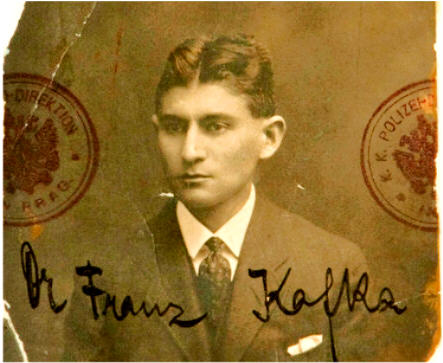
W.H. Auden on reading Franz Kafka

Work’s dictates mean that postings will be a little infrequent over the next fortnight or so. But here’s a few thoughts from W.H. Auden on reading Franz Kafka that I’ve been ruminating on this morning over a cup of lukewarm tea. It comes from Auden’s The Dyer’s Hand and Other Essays (New York: Random House, 1962):

‘Sometimes in real life one meets a character and thinks, “This man comes straight out of Shakespeare or Dickens,” but nobody ever met a Kafka character. On the other hand, one can have experiences which one recognises as Kafkaesque, while one would never call and experience of one’s own Dickensian or Shakespearian … Kafka may be one of those writers who are doomed to be read by the wrong public. Those on whom their effect would be most beneficial are repelled and on whose whom they most fascinate their effect may be dangerous, even harmful … I am inclined to believe that one should only read Kafka when one is in a eupeptic state of physical and mental health and, in consequence, tempted to dismiss any scrupulous heart-searching as a morbid fuss. When one is in low spirits, one should probably keep away from him, for, unless introspection is accompanied, as it always was in Kafka, by an equal passion for the good life, it all too easily degenerates into a spineless narcissistic fascination with one’s own sin and weakness’. (pp. 160, 166)

[H/T: Time’s Flow Stemmed]

Doing justice honourably

A guest post by Janet Sim Elder.

A crucial question in this election year is how do we do justice honourably with both victims and offenders? How can recidivism continue downwards and how do public attitudes change to being solidly evidence-based? How do we face the challenge of changing the justice landscape? Can we provide the moral courage to help our society take steps towards a more just and merciful society?

Biblical pillars of doing justice and loving mercy [Micah 6:8b] are heavily strained in NZ. We rush to apportion blame rather than ask who has been hurt by crime. We mete out a retributive ‘justice’ which perpetuates further injustices. We legislate for three strikes and there is no more mercy. Have we the moral courage to do the harder task? To ask the restorative questions ‘Together, how can we put this right? Are forgiveness and reconciliation possible?’.

Voices which have shaped increasingly punitive justice policies recently with both major political parties have come from a minority. Populist politicians listen to these voices above others. Shameful stripping of citizenship for all prisoners is the latest in punitive legislation in the news as I write.

Voices we might listen to more attentively as we prepare to vote include the Chief Justice, the Rt Hon Dame Sian Elias, Judge Sir David Carruthers Chair of the Parole Board[1], and Chief Family Court Judge Andrew Becroft – all with intimate knowledge of our justice system.

They all firmly support evidence-based change, and a better informed wider society, alongside the Silverstream Declaration soon to be released by the organisations which wrote the Declaration at the “Breaking down the Barriers” Conference in October 2010. Sponsors of this landmark gathering in Upper Hutt were Prison Fellowship New Zealand [PFNZ], Prison Chaplaincy Service of Aotearoa NZ, Pathway Trust, Pillars Inc. and the Salvation Army. National and international research was shared by experts in their fields, showing conclusively there are alternatives that do work to get prison numbers down.

The conference confirmed we need together to do more about the impact of crime on victims, that Restorative Justice works positively for both victims and offenders alike. When prisons treat people with more dignity and compassion, reoffending goes down. We could benefit from having open prisons like Norway where dislocated families have visiting rights over a weekend with their parent. Children see their dads on the weekend. Imagine that!

With an incarceration rate soaring over most other OECD countries[2], the most painful question is – could we become a less punitive society? There’s been a 35% increase in population in 187 NZ prison sites in the last five years! Corrections is now the largest government department. Fiscal sense? The Silverstream Declaration suggests it’s ‘fiscally irresponsible’ to be building more prisons.[3] Reputable international evidence is mounting that incarceration does not work for most offenders.

Working in Restorative Justice, I gain the growing conviction that victims’ stories of crimes (from burglary to rape and brutal murder) are stories to be told to offenders. To stand in their victims’ shoes is the darkest place to be, but easily avoided. Courageously telling stories, in a safe place, face to face, is what can turn both the lives of victims and offenders around towards life no longer dominated by painful pasts. The best apology victims say they want is when they know the offender will never commit the crime against anyone, ever again.

Offenders, male and female, find it very difficult to rehabilitate. Creative, hopeful ways forward were outlined at the conference: projects bringing church and community group resources together to address reintegration issues facing people as they return to life in the complex world outside the prison.[4]

What does the Gospel story teach about God’s ‘justice and mercy’ and how we act towards other human beings? The supreme example comes from Jesus on the cross.

‘Revealed in his dying prayer, “Father, forgive them for they know not what they do,” is the conviction that justice in itself is not enough, that the humanity of the perpetrators of injustice must be upheld alongside the humanity of the victims, and that justice must serve still higher goals of reconciliation, healing and rehabilitation…’[5].

If we want to change the justice landscape, say ‘no more’ to quick-fix legislation, knee-jerk, non-evidence-based reactions embodied in flaky legislation, we must seriously become better informed. In the light of God’s generous giving to us in Christ, we cannot do less.

Janet Sim Elder is an elder of Knox Presbyterian Church, Dunedin, and convenor of their Social Justice Workgroups.

[1] A recent survey by the Board over the last ten years on serious criminals released on parole showed the number re-offending in any one month over that time was reduced from 100 incidents per month ten years ago to the most recent  average of 45 incidents per month.

[2] NZ has the fourth highest rate of any OECD country except  the USA (1), Mexico (2) and the Czech republic (3). Communication from Barry Matthews, CE Corrections [07/10/10].

[3] The average cost p.a. to keep one prisoner incarcerated is $90,000. It costs an average $3,600 for a year’s community service sentence.

[5] Graham Redding: Crime and Justice: a Biblical and Theological Perspective, from Crime & Justice (pub. PCANZ  October 2010)

June stations …

Reading:

Listening:

Watching:

Teaching positions in the Antipodes

Carey Baptist College in Auckland is on the hunt for a specialist in Old Testament, and a specialist in New Testament, to join their teaching team of eight. For a copy of a full position description email Charles Hewlett. Applications close on 29 July 2011.

Also, the Uniting Church Theological College and Centre for Theology and Ministry in Melbourne is seeking a new Professor of Old Testament to start in January 2012. Details are available for download here.

Karl Barth in North America

Like a foretaste of heaven, the last few weeks has been a time of meeting new friends, of enjoying some of the greatest pieces of art ever produced, of drowning in Californian zinfandels, Spanish whites and Kentucky bourbons, of watching the Boston Red Sox (a team I have followed since primary school) enjoy a winning streak and the Bruins claim victory in the Stanley Cup, and of basking in the writings of Karl Barth.

As well as visiting the The Museum of Modern Art in New York, the Isabella Stewart Gardner Museum in Boston, and The Clark in the Berkshires, I participated in the 27th Summer Karl Barth Session for Pastors, a gathering of the Massachusetts Convention of Congregational Ministers (formed in 1692) at the First Church and Parish in Dedham, Massachusetts (a faith community which itself has a very fascinating history). Our subject was ‘Barth’s Elusive Universalism’, and we were led by Dr. William Klempa, Principal Emeritus of the Presbyterian College in Montreal who in the summer of 1960 was in Basel, studying Calvin, KD II/2 and baptism with Uncle Karl himself.

A week or so later it was down to Princeton (my first time in this most picturesque of headquarters of American Presbyterianism) for Thomas Aquinas and Karl Barth: An Unofficial Protestant-Catholic Dialogue where participants were served a feast of wonderful papers by John Bowlin, Holy Taylor Coolman, Robert Jenson, Keith Johnson, Guy Mansini, Amy Marga, Bruce McCormack, Richard Schenk, Joseph Wawrykow and Thomas Joseph White.

With characteristic clarity, Professor Jenson began by noting that there is a divine essence to be known, and that in Christ God reveals himself as God. That said, the God who ‘self-introduces himself’ is ‘hidden … not by some metaphysical reality but by being absolutely in our face’. Moreover, it is precisely as Lord that God reveals himself, i.e., as one who stands as Object over us, and over against us. God persists in intruding on us: the God who is antecedently Object in the context of the divine relations, who, as Triune, makes himself our Object. Jenson insisted, with some force, that ‘God’s being is event. For God to be is to happen. Full stop! … We are not to ask how this happens; it just is … God behappens himself!’ God, said Jenson, is event in his revelation because he is event in himself as Father, Son and Spirit, i.e., in ‘the name by which God names himself’. And just as quickly: The event of God must be free, i.e., act, personal. For God to be is to be a first person person. God is a sheer decision of person; i.e., a decision eternally occurs who is God. Following Barth, Jenson noted that Jesus Christ himself, as God and Man, is the covenant between God and humanity, and that God is ‘constituted in his decision to reconcile creation to himself’, a subject picked up, unsurprisingly, later in the afternoon by Bruce McCormack in a fantastic and clear paper on the processions and missions in Aquinas and Barth. Jenson finished by noting that the whole of Barth’s Dogmatics is concerned with divine being; that the triune name names God’s one simple essence and describes his own history with us; that God’s being is an explosion of love in freedom, and that what joins love and freedom together is God’s election; that God’s being cannot finally be separated from his decision to be for us; and that systematic theologians are cannibals who dismember their predecessors and serve up the pieces that we want.

Richard Schenk’s address was entitled ‘Theology, Metaphysics and Discipleship’, and began by recalling Luther’s famous words ‘Ergo in Christo crucixo est vera Theologia et cognito Dei’. Schenk reminded us, via the work of Robert Jenson, of the ecumenical context in which all theology takes place, noting also the work of Remi Brague (whose thought he would draw upon at greater length later in his paper) and his notion of ‘non-digestive inclusion’ (like much of the church’s attitude to Israel) and Paul Ricœur’s ‘three models of successful – because intentionally partial – integration’: exchange of memories, forgiveness and translation. The stated goal of Schenk’s paper was to identify within Thomas’ writings the dimension of a theodicy-capable theology of the cross. Schenk leaned heavily on Gerhard Ebeling’s work on Thomas, and argued that theodicy is also always anthropodicy. He noted how Thomas defends the fool who says ‘There is no God’ because God’s being/existence is not self-evident. Indeed, it is precisely finitude as finitude which leads us to ask, ‘There must be more out there’. Schenk concluded by citing a lengthy section by Jenson on petitionary prayer, and by noting Jüngel’s observation that the real difference between Rome and the Reformed is over the question of eschatology (and that for the former there is a greater emphasis on delayed eschatology). The passage from Jenson, taken from his essay ‘Ipse Pater Non Est Impassibilis’, and published in Divine Impassibility and the Mystery of Human Suffering, reads:

‘ As the general assignment of our conference supposes, our attempts to construe the fact of providence are indeed a chief place where difficulties with God’s impassibility/passibility impede our efforts. According to Thomas – whom I should doubtless forebear to cite in this company – God’s universal knowledge and universal will are in such a sort one that God’s foreseeing determines what is seen. He is the cause of all things per suum intellectum, and in this context that holds precisely with respect of their ordering to their good. The Pre/provision, moreover, extends to every item and single event of creation. It is apparent that this doctrine must provoke some questions. One is the so-called problem of theodicy. In my judgment this problem is in this life insoluble: faith in God’s universal ordering of creation to the good – i.e., to himself – will remain a great “Nevertheless …” until the final vision … In my view, however, the really difficult question concerns the meaningfulness of petitionary prayer – which is, after all, the kind most recommended and practiced in Scripture. Suppose I pray for someone’s recovery. If the Lord foresees from all eternity that my friend will/not recover, and if that foreseeing determines the event, and if he thus already knows what he ordains and ordains what he knows, what role does my petition have? It is a question every pastor regularly encounters. And the answered offered are in large part evasions. Prayer undoubtedly “opens” the soul to God, but is the content of the utterance irrelevant to its benefit? Praying is undoubtedly salutary obedience to the Lord’s command, but why this particular command in the first place? Petition is undoubtedly – and this has been my own mantra – the appropriate utterance of a creature to the Creator, but is we remain with this formalism how does that construe the Creator/creature relation? Not, I fear, conformably to Thomas’s resolution of determinism … Prayer is involvement in Providence. If prayer is anything less, it is simply a pitiful delusion. Perhaps if we were more straightforwardly to consider the biblical necessity of the two sentences previous to this one [the basic implication of which is that we ought to regard prayer as “mattering to” and “affecting” God], discussion of God’s relation to our time, and so of his passibility/impassibility, would make more progress. (pp. 125–26) .

In another real outstanding paper of the conference, John Bowlin talked about Thomas and Barth on friendship, outlining the covenantal backbone to friendship, a covenant that comes with human obligations that are features of the graced nature of the friendship itself. Drawing upon CD II/2 §§ 32–38, Bowlin noted that Barth understands the logic of friendship in terms of the doctrine of election, the Act which creates a relationship which while created against a background which is ‘wrong’, is entirely grace from first to last. The aim of election, Bowlin averred, is friendship, ‘or at least the potential of friendship’. And like every offer of friendship, this friendship too ‘comes with requirements’. Rejecting both Kant’s and Nietzsche’s understanding of friendship, the principle obligation of friendship, Bowlin argued, is to be a friend.

Great fun all round. It was wonderful to share a pint with some friends like Alfonse Borysewicz and Bruce McCormack, to finally meet in the flesh some theo-bloggers whose blogs I have long followed (Chris TerryNelson, David W. Congdon, and W. Travis McMaken among them), to meet some impressive young pastors like Andy Nagel and Rali Weaver, and teachers like Max Stackhouse and Richard and Martha Burnett, and to eat the biggest steak I’ve ever seen in my life; and pure joy to spend considerable time with two amazing people – Rick and Martha Floyd – in the Berkshires. And as for the Karl Barth Research Collection at Princeton – wow! In Arnie’s words, ‘I’ll be back’.

Terrence Malick’s The Tree of Life: a review

My friend Reno Lauro spent 18 months working with Terrence Malick on The Tree of Life. Now he’s also written an exquisite review of the film:

‘In an age when the most common uses of movies include sightseeing, adventure, and entertainment, the American filmmaker Terrence Malick offers us an invitation to probe time, space, and the mysteries of human existence. Defying cinematic formulas of convention and consumption, Malick has managed to build a grand cathedral to the ineffable mysteries of the human quest for divine answers. With all the ambition of the great master builders of old, Malick creates a living edifice designed with a geometry of life and love. Hewed from blocks of living duration, mortared with light and adorned with Fibonacci’s energy, The Tree of Life is much more than simply a ‘movie,’ it is that rare event in the life of an art form that extends the possibilities of its own craft. Malick has reintroduced the dynamic possibilities of a cinema of time to American moviegoers’.

You can read the remainder of the review here.

Eberhard Busch, Barth: A Review

Eberhard Busch, Barth (trans. Richard Burnett and Martha Burnett; Nashville: Abingdon Press, 2008). viii+95pp. ISBN 9780687492466.

Those who help us read and understand the great theologians of the church are themselves a great gift to the church. In this volume, an eminent doyen of contemporary Barth scholarship, Eberhard Busch, with striking clarity and warmth, and with unequalled familiarity (at least in print) with his subject, introduces neophytes and those long-familiar with Karl Barth to the Reformed theologian’s life, location and work.

Busch, who is Professor Emeritus for systematic theology at Georg-August-Universität in Göttingen, provides readers with a map which, if followed carefully, will assist them to more accurately locate Barth’s contribution within a wider landscape of theological conversation and, more particularly, to navigate their way into Barth’s magnum opus, Die Kirchliche Dogmatik, highlighting key markers apart from which Barth’s readers easily wander off course, and steering readers clear of the slippery climbs of the secondary literature. Busch is an outstanding guide.

The book begins with an entrée into Barth’s early period as an assistant pastor in Geneva from 1909 to 1911 (a period in which he was fundamentally shaped by the theological liberalism associated with Schleiermacher), his ministry at Safenwil, and his move by 1916 into the strange new world of the bible wherein he discovered the Godness of God, the grace of revelation which ‘hits us’ like an ‘arrow from the other side of the shore’ (p. 5). In Chapter Two, ‘The Rise of the Confessing Church’, Busch traces the way that Barth pressed his theological knowledge into the service of the church, championing the reality that the one binding Word of God is Jesus Christ. Here, Busch introduces readers to the Barmen Declaration, noting that ‘wherever the church looses herself from any bond which is to God’s Word and at the same time to worldly power, wherever she listens solely to God’s Word, she will not cease to speak out politically, but she will do so from a different position’ (p. 12). In Chapter Three, Busch lays out the ecclesial, political and historical context in which Barth penned his thirteen-volume Church Dogmatics, attending to the part that reason, natural theology, freedom and church played in Barth’s thought, and sketching Barth’s involvement, after the Second World War, in ecumenical efforts, in post-Vatican II discussions as well as discussions with American theologians from 1962 onwards.

Having so set the scene, the remainder of the book, pages 23–83, are given to summarising Barth’s Dogmatics. Beginning with an explanation of Barth’s understanding of the graced nature of theology, of the fact that divine speech ‘is not and can never be a presupposition that falls into our hands’ (p. 26), Busch attends to Barth on religion, faith, knowledge, the trinity, divine freedom, the relationship between Israel and Church in the one covenant of grace – the reconciliation which is ‘so essential that the covenant would risk falling “in the void” … were it not fulfilled’ (p. 43) in Jesus Christ – God’s calling and bringing of creation into correspondence with his covenant, God’s triumph in the creation of faithful servants in their own free decision (what Barth in CD II/2 calls the ‘autonomy of the creature’), the relationship between Gospel and Law, prayer, the sin which is nothing, real and misunderstood, the relationship between sanctification and justification, theodicy, and Christian community in relation to Christ, the world and the vocation ‘to be God’s witness within her own times’ (p. 76). Busch concludes by outlining how Barth understands Christ’s resurrection and its relationship to ‘historical facts’ (p. 80), to history itself as past, present and future are bound together in Christ, and to Christian hope. Each chapter concludes with a set of questions for further reflection.

A junior cousin to Busch’s earlier book The Great Passion: An Introduction to Karl Barth’s Theology (Eerdmans, 2004), significantly briefer than Bromiley’s Introduction to the Theology of Karl Barth, and more lightweight than Hunsinger’s How to Read Karl Barth, Busch’s Barth is a genuine introduction which impressively fulfils the brief of the ‘Abingdon Pillars of Theology’ series (of which it is a part) – of assisting college and seminary students to ‘grasp the basic and necessary facts, influence, and significance of major theologians’.

Funerals

I’ve just finished reading Reading Ray S. Anderson: Theology as Ministry – Ministry as Theology by Christian D. Kettler (a commendable introduction to Anderson’s work). Therein I was reminded of a powerful section of Anderson’s writing on ‘Contextualizing Death in a Community of Faith and Hope’ in his On Being Human: Essays in Theological Anthropology. Anderson believed that at death we are no longer in control of our body, and that at death, if not before, the community needs to take over: ‘The community – whether represented by the congregation of God’s people or a family, or a friend, or a lover of the one who has died – must assume subjective responsibility for the body in the death of a person. To allow the body to become a mere impersonal object is to commit an indignity against the person’ (p. 142).

Anderson proceeds to note that ‘that which is professional in the service of burying the dead must be continually contextualized by that which is processional’ (p. 143), and cites the importance of accompanying the dead on their pilgrimage: ‘To die without a processional which manifests that transition [to a new beginning] through the presence of the human community under the power of the divine Word is to be abandoned at the moment when one is weakest and most vulnerable’ (p. 143).

All this is by way of saying (I’m slow; give me a break!) that the latest edition of Candour has a focus on funerals. It includes the following essays:

  • ‘Ministers and their grief’, by Rose Luxford.
  • ‘The funeral: “the service of witness to the resurrection” vs “this is your life”‘, by Allister Lane.
  • ‘Funerals in a rural parish’, by Stephanie Wells.
  • ‘Funerals: issues and reflections for ministers’, by Martin Fey.
  • ‘Reflections of a rest home chaplain’, by Jan Gough.

BTW: I drew attention some time back to Thomas Long’s book Accompany Them with Singing: The Christian Funeral (you can read the first chapter here). It really is an outstanding piece of work. Long also has a piece on ‘Grief without stages’ in the latest edition of Christian Century.


Writing to the choir: Facebook and ‘the new scourge of writing’

Out from a brief blogging hiatus I come to draw attention to Lisa Lebduska’s recent piece – ‘The Facebook Mirror’ – and the dangers that the social media leader poses for writing and writers:

‘Facebook presents far more danger than the cultivation of lowercase first-person “i”s and emoticons :). The real threat posed by Facebook is not that it ruins writers’ ability to punctuate or encourages them to replace words with pictures. The problem with Facebook is that it nurtures one of writing teachers’ greatest foes – the teenage fantasy that writers write only to themselves and to those who are just like them.

Although Facebook is properly classified as “social software,” it is more accurately categorized as mirror-ware, a whole new kind of social that consists only of us and our self-projections. And it is that mirror, that seductive invitation to reflect us and only us back to ourselves that damns us.

On Facebook, we post pictures to represent ourselves: our best, shiniest, toothiest, happiest/sexiest ponderer/wanderer/adventurer. The fairest ones of all. Or we post some other person or object as icon. Puppy, baby, six-year old self. The poor person’s version of identity airbrushing. To deepen the portrait, we post our status, likes and dislikes – bananas, skiing, taxes – and photo albums of grand vacations, graduations and celebrations. To our walls we announce opinions, as they come. What we find good, stupid, evil, sexy.

Facebook writers expect homogeneity from their audience. All readers read the same observation, and insights in the same way, regardless of who they are, what they know, what they need to know or even what they seek. Facebook writers do not select, shape or color moments and thoughts for particular readers. They trade the pleasure of imagining the absent reader for the imagined adoring gaze of selves. And they expect their friends to “like” their posts, pictures etc. immediately, and to shower them publicly with praise.

With Facebook, we don’t need to explain why Obama should be elected or gays shouldn’t be allowed to marry or a hundred seagull photos merit viewing. If birds bore our friend Gerard, too bad. If Gerard didn’t vote for Obama or has a male partner, that’s too bad, too.

Although our Facebook friends include those we haven’t seen in years, decades, even, we can pretend that they share our experiences, our views, and our general disposition towards life. No justification, no explanation.

On Facebook we never think outside the four walls of the self, and we need never imagine readers different from us. We expect neither argument nor curiosity nor challenge. Just a thumbs up or down.

Teachers spend years working to broaden students’ intellectual worlds beyond their own virtual backyards. We challenge them to discover ideas that come from individuals who might be very unlike them; people they would never conceive of friending, or if asked to friend would be more than likely to ignore. Or who don’t have computers.

So is Facebook truly the new scourge of writing? Maybe not. Like all tools of such ubiquity and power, Facebook must be recognized for what it is – a medium that invites carefully polished reflections of our favorite self. But writers generally write for readers other than that self. We need, then, to provide contexts that allow our students to know and consider those readers. How often do we ask students to hear, read and truly understand a viewpoint different from their own? How often do we expect them to think of someone, anyone, other than themselves? The ability to imagine a perspective other than our own – the idea of an audience consisting of curious minds rather than adoring fans – defines our most effective writers’.

While I’m not buying everything at Café Lebduska, there are some important implications here for pastors and teachers (and theo-bloggers). Too few of us, it seems, intentionally read literature which challenges profoundly our own worldview and practice and, at least in the circles most commonplace to me, seek and/or create opportunities to speak into hostile environments where swords might be sharpened by the wrestle (Eph 6.12; 1 Tim 1.18; 6.12; 2 Tim 4.7) rather than dulled by the all-too-common proclivity towards the cozy, the monotonous and the pedestrian – what Lebduska names ‘the teenage fantasy’ and what I simply call ‘the boring’. There are, of course, those who seem to go out of their way to speak only to Babylonians, and sometimes preaching to the choir, as it were, might be just that too. For what it’s worth, it seems to me that the focus for most pastors/teachers/theo-bloggers should be given to bearing witness to the for-ness rather than against-ness announced in the gospel, but there remains an against-ness which must be discerningly spoken as well. Moreover, there can be no question here that both strategies are undertaken in love for the other and for the truth. But if Ernest Hemingway is right when he says that ‘there is nothing to writing. All you do is sit down at a typewriter and bleed’, and if the great Salvation Army preacher Samuel Logan Brengle is also right when he avers that ‘the great battles, the battles that decide our destiny and the destiny of generations yet unborn, are not fought on public platforms, but in the lonely hours of the night’, then there remains something poisonous about the Facebook ‘mirror-ware’ which threatens to undermine, at the very least, the task of the writer, and preacher.

And speaking of mirrors, it’s not as if they’re all destructive; for there is, of course, another mirror where those so called might look – namely, into the mirror of our election, Jesus Christ, who is both our friend and enemy, and who both thumbs us, our ministries and our statuses ‘up’ and ‘down’, although the later only that he made do the former (Rom 11.32).


A Pentecost Prayer

O God the Holy Ghost
Who art light unto thine elect
Evermore enlighten us.
Thou who art fire of love
Evermore enkindle us.
Thou who art Lord and Giver of Life,
Evermore live in us.
Thou who bestowest sevenfold grace,
Evermore replenish us.
As the wind is thy symbol,
So forward our goings.
As the dove, so launch us heavenwards.
As water, so purify our spirits.
As a cloud, so abate our temptations.
As dew, so revive our languor.
As fire, so purge our dross.

– Christina Georgina Rossetti, The Face of the Deep: a devotional commentary on the Apocalypse (London: Society for Promoting Christian Knowledge, 1892), 155.

One other great Pentecost prayer that comes readily to mind is James K. Baxter’s: ‘Song to the Holy Spirit’.

Hinterland Theology: A Stimulus to Theological Construction: A Review

Alan P.F. Sell, Hinterland Theology: A Stimulus to Theological Construction (Studies in Christian History and Thought; Milton Keynes/Colorado Springs/Secunderabad: Paternoster, 2008). xvi+715pp.

In his book Defending and Declaring the Faith: Some Scottish Examples 1860–1920 (1987), Alan Sell had already demonstrated his ardour and gift for bringing the dead back to life, for turning strangers into friends, and for wading the small streams and largely-inaccessible rivers on the landscape of British ecclesiastical life. Now, over two decades later, Professor Sell, in Hinterland Theology: A Stimulus to Theological Construction, turns his binoculars south to introduce readers to some other forgotten saints, to those whose writings are not the staple of general undergraduate courses. These are the second eleven (actually ten), if you like, of Nonconformist Dissent – drawn from among those who served the Church in the wake of the Toleration Act of 1689 after which there was ‘no longer one authority to which appeals on religious questions could be lodged’ (p. 54), and in the wake of the Enlightenment and the Evangelical Revival, and in the wakes of modern biblical criticism and theological liberalism. From the outset, Sell suggests that ‘we have not fully understood the Lockes and Barths of this world until we have investigated what the hinterland people made of them’ (p. 2).

Drawing upon letters, sermons, tracts and monographs, and with an eye on doctrinal controversies, the prevailing intellectual winds, and impressively alert to pastoral challenges, Sell has penned an encyclopaedic dictionary of rarely-mentioned theologians – Thomas Ridgley, Abraham Taylor (who ‘shot across the London sky like a volatile theological meteor’ (p. 41)), Samuel Chandler, George Payne, Richard Alliott, David Worthington Simon, T. Vincent Tymms, Walter Frederick Adeney, Robert S. Franks and Charles S. Duthie. Apart from Chandler, who was Presbyterian, and Tymms, who was Baptist, the rest were Congregationalists, and all but two (or perhaps three) were sons of the manse. Each chapter begins with a comprehensive biography of the chosen personality before turning to introduce and then engage with their thought, contribution and intellectual location. A familiar encore of themes appear over the period surveyed (1667 to 1981), including deism, miracles, apologetics, supernaturalism, Bible, Trinity, theism, Arianism, Calvinism, Unitarianism, Roman Catholicism, theological method, the eternal generation of the Son, kenotic christology, divine impassibility, natural theology, ecclesiology and pastoral ministry, among others, suggesting that theological adjustments and time-lags, and the ongoing ‘construction through conversations’ (p. 1) conducted by hinterland theologians, significantly stimulated the philosophico-theological landscape, and bore significant fruit – for good and for ill – in the Church.

After a brief Introduction, the book is presented in five parts. In Part One, ‘In the Wake of Toleration’, and with colour and wit, Sell introduces us to Thomas Ridgley whose ‘greatest contribution lay in the field of theological education’ (p. 13), and to Abraham Taylor and his defence against John Gill’s charge of antinomianism, and his plunge into the debates over the doctrinal declension betrayed in eighteenth-century trinitarian controversies and, in particular, his dissatisfaction in these matters with fellow Congregationalist, Isaac Watts. (Taylor charged Watts with sponsoring Sabellianism and Socinianism, with teaching that Christ possessed a super-angelic spirit, and with displaying a lack of clarity over the nature of divine personhood, among other things). Sell also introduces us to Samuel Chandler, the ‘moderate Calvinist’ and ‘apostle of liberty of conscience and freedom of thought’ (p. 85) who also wrestled with John Gill (on the relationship between morality and the will of God) and with Anthony Collins, John Locke and Thomas Morgan (on deism), and with John Guyse (on what it means to preach Christ),who spoke at Watts’ internment, who (from 1732 to 1739) was a prime advocate of the repeal of the Test and Corporation Acts that precluded Dissenters from holding state or civic office’ (p. 77) and whose greatest talents most conspicuously shone forth from the pulpit.

In Part Two, ‘In the Wake of Enlightenment and Revival’, Sell considers the life and contribution of George Payne, a thinker who ‘set out to be “useful” but was perceived as “dangerous”’ (p. 123). Sell’s discussion here introduces us to the landscape of early-nineteenth century thinking on metaphysics and ethics, on moderate Calvinism, and on the Trinity. Sell turns next to the inexorable logician and winsome evangelist Richard Alliott, who was ‘among the first Congregationalists to notice Schleiermacher in print’ (p. 191) and who, while longing for the revival of the Church, insisted that there would be no revival until believers ‘experience within stronger faith in the presence and word of our God, in the finished work of Christ, [and] in the indwelling of the Spirit in our hearts’ (p. 200). But Alliot, who by 1860 held the Chair of Theology and Philosophy at Spring Hill College,  held no misconceptions that ‘piety by itself will not sustain a ministry’ and that ‘scholarship will render a preacher more effective’ (p. 203). Sell describes Alliot, who authored Psychology and Theology (1855), as ‘a theologian between the times’ in whom ‘classical theism’s cosmological-causal head came together with Romanticism’s heart, and the whole was undergirded by the Evangelical Revival’s concern for souls’ (p. 222).

Part Three is titled ‘In the Wake of Modern Biblical Criticism’. Here we are acquainted with David Worthington Simon, T. Vincent Tymms, and Walter Frederick Adeney. Describing Simon as ‘the most spiritually anguished, the slowest-burning, and the most pioneering scholar – and hence the most highly suspect – to fall with the confines of this book’ (p. 227), Sell recalls Simon’s study at Lancashire College and in Germany (a land to which he returned again), his oversight of the newly formed church at Birkenhead from 1855, and his call to serve as Resident Tutor and Professor of Theology at Spring Hill College, ‘an institution where at least relatively open theological enquiry was the order of the day’ (p. 236), and then, from 1883, as Principal of the Scottish Congregational Theological Hall in Edinburgh, and thereafter as Principal of Yorkshire United Independent College on Bradford (1893 until 1907). Alive to the changing intellectual environment, Simon, championing what Sell names as a ‘biblical-historical-pneumatic epistemology’ (p. 250), championed a marriage of both intellectual and spiritual depth, resisting attempts by some to divorce the historical and the spiritual and arguing that the soul’s relation to God is not independent of biblical facts. From Simon, Sell turns to Tymms, tracing the Baptist theologian’s journey from Regent’s Park College, to his pastorates at Berwick, Accrington and Clapton, to Vice-President of the Baptist Union of Great Britain and Ireland, to President of the London Baptist Association, and to the Presidency of Rawdon College, Leeds. Sell reflects on Tymms’ widely-read book, The Mystery of God, and his embroilment in controversies over Bible translation, particularly as such affected the Indian mission field. He notes that Tymms distinguished himself by encouraging ‘original thought among his students rather than … prepar[ing] them for examinations’ (p. 311), and by his Forsyth-like witness to the centrality of Christ’s Cross which has ‘irradiated the world with light, and is filling the moral universe with songs of everlasting joy’ (p. 317). Tymms would press further still, insisting in his stimulating and judicious book The Christian Idea of Atonement, that ‘the cross is God’s definition of Himself’ (p. 340). Moreover, the cross is, Tymms insists, the only word of theodicy available to the Christian: ‘The cross is … precious because it reveals that God is not a mere passionless watcher of an agonising evolution, but is Himself a partaker of the universal travail, and has been constrained by love to take the chief labour on Himself’ (p. 345). Sell introduces us next to Adeney, Congregationalist minister turned Professor of Church History and New Testament, whose attention to the centrality of the cross fell some way short of Tymms’, but among whose enviable gifts included an ability to ‘write at varying degrees of technicality, and … a particular concern to reach ministers, people in the pews, and children’ (p. 366). He was one of those ‘believing biblical critics’, like Westcott, Hort, Peake and W.H. Bennett, who ‘harvested the fruits of modern biblical criticism in such a way that only the most suspicious conservative evangelicals’ (p. 410) would think to accuse him of undermining Scripture. No advocate of sentimental theology, Adeney championed the truth of God’s fatherly love – love expressed in the ‘essentially Christian’ (p. 399) doctrine of the Trinity – as ‘the source and spring of the Christian gospel’ (p. 395). Still, he warned that ‘speculation about God always plunges us into darkness’, an observation which draws the following comment from Sell: ‘It is, no doubt, an unsanctified thought, but one sometimes feels that some present-day theologians think that they know as much about the inner working of the Trinity as some older Calvinist divines thought they knew about God’s inscrutable will’ (p. 411).

‘In the Wake of Theological Liberalism’ is the equally-revealing title of Part Four, and the subjects here are Robert S. Franks and Charles S. Duthie. Again, Sell locates each personality in their biographical and intellectual context before turning to introduce and appraise their writings and thoughts. Sell highlights the former’s engagement with the thought of Kant, Abelard, Anselm, and Schleiermacher, and the latter’s engagement with Pascal, Barth, Thielicke, Ferré and Tillich. Of these last two named, Duthie’s introducing of their thought to both Church and students (he spent 30 years of his life training ministers) was ‘not because [he agreed] with all the main positions they occupy but because [he felt] deeply that they are concerned to fashion a living theology for our own time, a theology which is faithful to the “given” Gospel in terms of man’s predicament today’ (p. 521). In calling the Church to its evangelistic task, Duthie suggested that we not only read Tillich with Barth in hand, but also the reverse.

After 562 pages, Sell still has more to say, and the book’s final part is a 71-page conclusion wherein Sell retraces the landscape he has just surveyed, recapitulates key themes, offers suggestions about contemporary practice, and recalls that the voices of hinterland theologians – past and present – are ‘frequently constructive, occasionally provocative, and variously stimulating. They have pertinent observations to share on our current theological agenda, and they challenge us by reminding us of some themes which we may have been inclined to overlook’ (p. 635).

Readers already familiar with Professor Sell’s writing will know that he is a meticulous researcher whose reading is extensive, whose commitment to ecumenism is exemplary, whose love for, and devotion to, the Nonconformist tradition is contagious, who is not shy of noting error and distortion of the Gospel when and where he sees it, whose acumen for critically-identifying contemporary theological trends is cultivated and well coached, and whose writing betrays not a few hours of pastorally-informed reflection. While Hinterland Theology could certainly have done with a more meticulous proof-reader, with this hefty tome Sell has given us a rich resource. That he decided to take the trouble to write this book leaves the Church in his debt. This volume will be of interest to historians, theologians, philosophers, and a must-read for those with a particular interest in British Nonconformity.
 

Abraham Joshua Heschel on contemporary religion

‘Little does contemporary religion ask of man.

It is ready to offer comfort; it has no courage to challenge. It is ready to offer edification; it has no courage to break the idols, to shatter callousness.

The trouble is that religion has become “religion” – institution, dogma, ritual. It is no longer an event. Its acceptance involves neither risk nor strain. Religion has achieved respectability by the grace of society, and its representatives publish as a frontispiece the nihil obstat signed by social scientists.

We define self-reliance and call it faith, shrewdness and call it wisdom, anthropology and call it ethics, literature and call it Bible, inner security and call it religion, conscience and call it God. However, nothing counterfeit can endure forever.

It is customary to blame secular science and antireligious philosophy for the eclipse of religion in modern society. It would be more honest to blame religion for its own defeats. Religion declined not because it was refuted, but because it became irrelevant, dull, oppressive, insipid.

When faith is completely replaced by creed, worship by discipline, love by habit; when the crisis of today is ignored because of the splendor of the past; when faith becomes an heirloom rather than a living fountain; when religion speaks only in the name of authority rather than with the voice of compassion, its message becomes meaningless’.

– Abraham Joshua Heschel, I Asked for Wonder: a spiritual anthology (ed. Samuel H. Dresner; New York: Crossroad, 1988), 39–40.

May stations …

Reading:

Listening:

Watching: