Author: Jason Goroncy

‘July, Carey’s Bay’, by Brian Turner

(visiting Cilla)

A storm was forecast but had not arrived
by the time I had to leave. You said, surprised,
What a beautiful night. You said it twice
as we stood on your verandah and listened

to the sou’wester gusting in the trees,
watched it burring the silver waters
of the harbour all the way from Carey’s Bay
to Taiaroa and reaches beyond my comprehension;

the light on the sea sounding (if one can
hear
light) like cow bells tinkling
across a white field. In the oil-stained bay
yachts swung on their moorings, straining,

and I hoping to be home
before the first wild shower of rain.

– from Listening to the River (Dunedin: McIndoe, 1983).

Systematic Theology Association of Aotearoa New Zealand – annual meeting

The annual meeting of STAANZ (Systematic Theology Association of Aotearoa New Zealand) will be held in Auckland, at Epsom Baptist Church, 6 Inverary Rd, Epsom, beginning a 0900 on Wednesday 7 December and concluding at 1700 on Thursday 8 December. The topic this year is ‘Trinity’. There is a call for papers, and abstracts can be emailed to Nicola Hoggard-Creegan before the end of August.

The good, the beautiful and the true

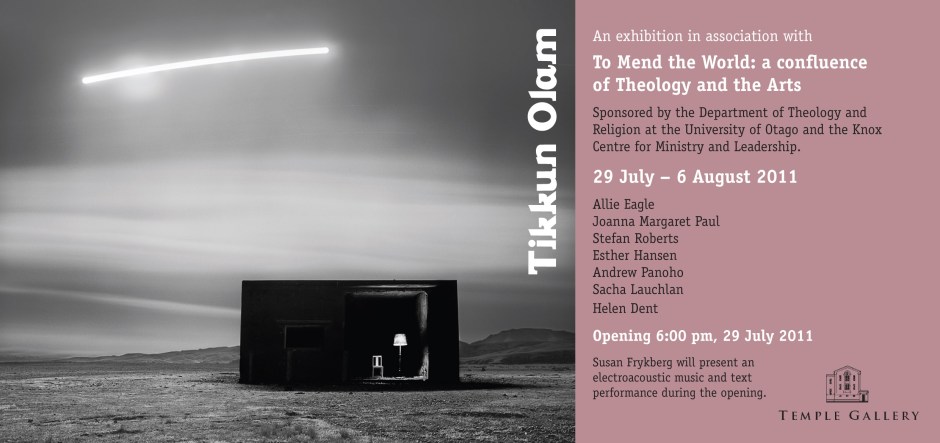
Last week, a conference and exhibition (actually, the exhibition is still running) took place which I had the privilege to help organise. We chose for our theme the Hebrew phrase ‘Tikkun Olam’ – to mend the world – and invited artists and theologians to converse together about the following questions: Can there be repair? Can art and can theology tell the truth of the world’s woundedness and still speak of hope?

One of the themes to arise from the conversations concerned the Church’s long and deep indebtment to the three-fold notion of the good, the beautiful and the true, a notion articulated in Plato and given significant mileage through Thomas Aquinas in whom it reaches something of a dead end because in the final analysis Thomas’s articulation – like Kant’s after him – is too divorced from the particular form that God’s life actually takes in the world. For God’s beauty is not, as some suggest, the infinite serenity of God’s life. Rather, God’s beauty is the infinite drama of God’s life, a drama which, as Jonathan Edwards so wonderfully articulated, draws attention to God’s intrinsic plurality – God is beautiful precisely because God is Triune.

And so it is perhaps not too odd that the twentieth century which witnessed something of a renaissance of interest in the doctrine of the Trinity also witnessed a widescale broadening of the notion of beauty in the discourse of aesthetics. Beauty was no longer understood in the narrow terms outlined by Kant and others, and it became rightly recognised as having to do, in John de Gruchy’s words, with ‘the experience and perception of reality that we associate with the imagination and creativity, with metaphor and symbol, with games, playfulness, and friendship. The arts, whether fine or popular in all their manifold forms are central to aesthetics because they embody and express this dimension of experience, they evoke memories and suggest possibilities, thereby enabling us to see reality differently’.

Where beauty has been banished from contemporary aesthetic discourse, it has largely been in ‘reaction to the aestheticism of those who pursued beauty for its own sake, a Romantic escapism oblivious to the ugly realities of a world gripped by oppression’. But movements birthed by reaction alone are doomed to fail; and anyway, any account of aesthetics which claims the name ‘Christian’ will have to deal with the fact that the very centre of divine unveiling recalls that the beautiful and the ugly are not so easy to disentangle as we might first expect. Indeed, a Christian account of beauty can neither ignore nor offer easy escape from evil.

It is not, therefore, improper – indeed, it may be incumbent upon Christian theologians and artists – to approach the question of beauty through a consideration of its opposite, namely ugliness. Indeed, it is sometimes the case, as Theodor Adorno observes, that ‘art has to make use of the ugly in order to denounce the world which creates and recreates ugliness in its own image’. John de Gruchy suggests that ‘it is precisely this protest against unjust ugliness that reinforces the value and significance of beauty as something potentially redemptive. Indeed, if aesthetics were just about the beautiful we would never really understand “the dynamic life inherent in the concept of beauty”’. If ugliness has the capacity to destroy life, then Dostoevsky’s claim that ‘beauty will save the world’ invites us to not only (as PT Forsyth put it) ‘distrust the easy optimism of the merely happy creeds’, but also to see the invitation towards theological aesthetics as about faith seeking to understand reality – in its ugly forms too – from the vista of the beauty of God revealed primarily in the bloodied wounds of the cross where all that is ugly is transfigured by a profundity of beauty. Such beauty, as Karl Barth insists, ‘embraces death as well as life, fear as well as joy, what we might call the ugly as well as what we might call the beautiful’. To speak of beauty in its deepest reality is, in other words, to speak not just of any beauty, but rather of a very specific beauty. Indeed, it is beauty so specific that it goes by a particular name – Jesus Christ. Jesus Christ – who he is and what God does in him – is the very beauty of God.

‘From Bracken’s Lookout, Dunedin’, by Brian Turner

…Who ever saw
The limit in the given anyhow?
 – Seamus Heaney

Just what you’d expect of a lookout
named after a poet
whose best-known phrase is ‘Not understood’,

the carpark on the first step of the hill
to Opoho is sited so we sit
with backs to the cemetery,

where Bracken’s remains are buried,
facing the city that’s encircled
by sea and high hills.

We’re in between here, and so much
that’s past and present is taut
with a longing for permanence,

immortality seeming out of the question,
though I’m old enough to know
there are ghosts yet to be laid to rest

in the shadowed streets below.
What we have here’s random selection,
the language of hereafter and begetting,

and what’s given is what we sense
and nothing else. Extravagance
is not part of a southern legacy

and all know what ‘for better or worse’
means, and the phrase
‘what goes up must come down’

always raises a smile, is oddly regenerative.
I loiter, lost and found,
and watch the birds – for whom

everything depends on the given –
swing back and forth in the late sun
scribing arcs of a pendulum.

– Brian Turner, ‘From Bracken’s Lookout, Dunedin’, in Taking Off (Wellington: Victoria University Press, 2001), 84–5.

‘Semi-Kiwi’, by Brian Turner

The barn roof needs painting
and the spouting is ruined.
Likewise the roof of this house
in which we live, borer here,
rot there. I’m neither handy
in the great Kiwi DIY tradition,
nor monied, which rather leaves
us up shit creek without a shovel.
I grub to find what Stevens called
the ‘plain sense of things’
and come up empty-handed
more often than not, but
I’m a dab-hand at recognising,
if not suppressing, self-pity,
and I can back a trailer
expertly, so all is not lost.

– Brian Turner, ‘Semi-Kiwi’, in Taking Off (Wellington: Victoria University Press, 2001), 17.

‘Some reasons why I got this job’, by Brian Turner

Because I’m charming, elegant, gracious.
Cultivated, strapping, and look good on the box.
Because I haven’t appeared on
This Is Your Life.
Because I don’t sit up late
and watch sad movies on TV.
Because I’ve given the effigies to charity
and thrown away the pins.
Because I’m fast on the bike
and cast very nicely when standing
in ripples in high country streams.
Because footie’s no more important than art.
Because there’s love in a cool climate.
Because I accept that we just have to live with sandflies.
Because, when Americans began talking loudly
outside the motel window at 6:15 this morning
they weren’t threatened with weapons of mass destruction.
Because I’ve been surprised by what I’ve written
and perseverance isn’t to be sneezed at
except when caught in the middle of a bull paddock.
Because there’s no good reason to give up trying
to do the decent thing, now and again.
Because annoyance or irritation
make more sense than anger and outrage.
Because there’s room to do better.
Because we’re not yet lost nor found.
Because my grandmother was scared I was drawn
to depravity, and her husband told me
if I wasn’t careful I’d become an anathema.
Because … because this is not the sort of poem
I’m said to write. Or is it?

– Brian Turner, ‘Some reasons why I got this job’. New Zealand Listener, March 15, 2003.

‘On Top of the World’, by Brian Turner

‘On Top of the World’
(for Kila Hepi)

The days seem longer all of a sudden
now that August’s here
and inventions become realities
ingrained.

Riding between Wedderburn
and Hills Creek we’re on top
of the world, my young friend Kila
and I, the clouds like white drapery
spilling down the mountains,
and the sun’s like acclamation
strobing the downs. And the angels
in their white dresses
kick their bangled heels
and dabble their feet
in the ever blue blue.

It seems that the purer
the air the greater one’s ardour.
We stop and listen for the songs
of air and water and I swear
I heard the rapt sounds
of angels singing, not of Paradise lost
but Paradise now.

[Image: Tony Bridge]

‘Place’, by Brian Turner

Once in a while
you may come across a place
where everything
seems as close to perfection
as you will ever need.
And striving to be faultless
the air on its knees
holds the trees apart,
yet nothing is categorically
thus, or that, and before the dusk
mellows and fails
the light is like honey
on the stems of tussock grass,
and the shadows are mauve birthmarks
on the hills.

– Brian Turner, All That Blue Can Be (Dunedin: John McIndoe, 1989).

‘Sadness and Shadow’, by Brian Turner

Few would doubt that New Zealand punches well above its weight in a number of areas, not least of which is poetry. Since arriving in this land, I have made a concerted effort to better understand its story. And while reading some the significant and lesser-known histories has been indispensable to that end, no less so has been familiarising myself with this land’s painters, sculptors, musicians, novelists and poets. Of the latter, I have particularly enjoyed work by Ursula Bethell, Glenn Colquhoun, C.K. Stead, Cilla McQueen and, of course, James K. Baxter. Recently, I also discovered the work of Dunedin-born poet Brian Turner, who was just conferred with an honorary doctorate by the University of Otago. Anyway, I’ve decided that this week here at Per Crucem ad Lucem I’ll be posting poems by Turner. Enjoy. Here’s the first:

Sadness and Shadow

The one known as The Leader said
If we can discern the difference
Between sadness and shadow
we’ll have unlocked the doors to peace.

So they trooped off into the hills
to a hut at the head of a tussocky valley
with snarls of matagouri in the gulleys
and vast shields of scree like grey-blue tunics
on the mountains all round.

And there they stayed. The sun shone
without libation, the wind blew whoo
under the edges of the roofing iron.
On nights when the moon was bright
mica sparkled in schist by the river.

In winter they went to be early
leaving the fire to burn sIowly
through the night, a dervish,
and the river muttered and shrank.
Mice scurried along rafters and squeaked.

Weeks went by. No one wanted to be first
to say it was time to go home. One
by one they died forlorn, unenlightened,
wondering where, exactly, they’d
come from, and if anyone was still there
wittering on about free trade
and indigenous rights, prostitution,
rugby and the demise of Friday Flash.

Bewildereds couldn’t understand why
technological advances hadn’t solved
age-old questions, removed dilenmma,
or why even the brightest people stumbled
when faced with the conflict between
personal expression and social obligation.

Eventually the sole survivor
walked out of the hills
but couldn’t find one familiar face,
so she returned to the hut
in the mountains and buried
the remains of her friends,
and she lay down beside sadness
and shadow and waited to hear
the lilting sounds of peace on the wind.


July stations …

Reading:

Listening:

Watching:

To Mend the World: gratitude

Those for whom Per Crucem ad Lucem is a regular stopping place will know that recent months have seen me involved in birthing a twin project called To Mend the World. With the exhibition now in full swing (at the Temple Gallery) and the conference furniture packed away, it’s good to be able to pause a while, to claim some space to do an initial reflection. It has been a wonderful and wonderfully-full two days.

It has certainly been a privilege to be part of a small band who together envisioned the conference, whose energy made it possible, and whose commitment to the conversation between art and theology is long and outstanding. We had a great line up of speakers who, via some wonderfully-stimulating presentations, modelled what the organisers of the conference had hoped – a humble and respectful but no less critical and intelligent conversation by artists and theologians around the conference theme of ‘Tikkun olam’. We were overwhelmed by the number of people who registered for the conference – around double what we had initially anticipated – plus a number of welcomed-walk ins too, all of whom engaged in the conversations with enthusiasm and grace. Like every conference of which I’ve been a part, this one too provided opportunity to re-connect with friends, to finally put some faces to names, and to meet in-the-flesh those with whom one has only ever ‘met’ in e-land. Of this latter category, it was really great to finally meet Paul Fromont, with whom I enjoyed a very rewarding conversation and my first pint of Moe Methode.

An event of this kind is an all-too-rare thing, and its happening has been both a real joy and a long-time goal for me personally. I hope that all who attended left the event as encouraged, challenged and enriched as I was by the encounter.

Speaking of theology and the arts, here’s a few recent links of interest:

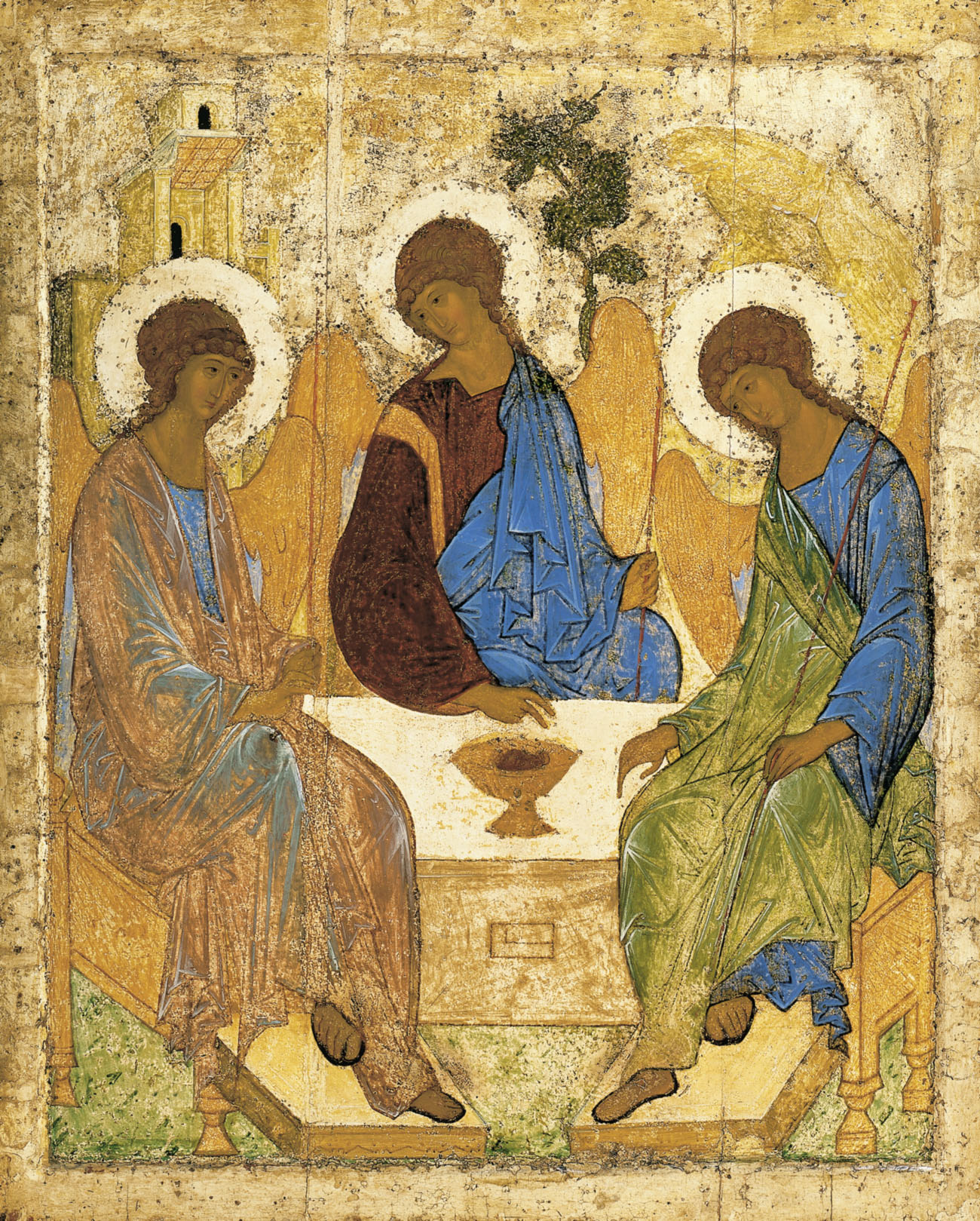
‘Rublev’, by Rowan Williams

One day, God walked in, pale from the grey steppe,
slit-eyed against the wind, and stopped,
said, Colour me, breathe your blood into my mouth.

I said, Here is the blood of all our people,
these are their bruises, blue and purple,
gold, brown, and pale green wash of death.

These (god) are the chromatic pains of flesh,
I said, I trust I shall make you blush,
O I shall stain you with the scars of birth

For ever, I shall root you in the wood,
under the sun shall bake you bread
of beechmast, never let you forth

To the white desert, to the starving sand.
But we shall sit and speak around
one table, share one food, one earth.

– Rowan Williams, ‘Rublev’ in After Silent Centuries (Oxford: The Perpetua Press, 1994).

Gulls of a feather

I’ve just returned from a few days away with the family on the lovely Banks Peninsula, where two days of snow and blizzards were promptly followed by much-welcomed sun and blindingly-clear light. (Unfortunately, there has not been enough of the latter to make our driveway at home accessible yet.) Having survived the former, these gulls were well and truly enjoying the latter. I initially thought that a caption contest might be a fun thing, but I now think that their joy is simply worth sharing as is.

This slideshow requires JavaScript.


John [Updike] on Paul [Tillich]

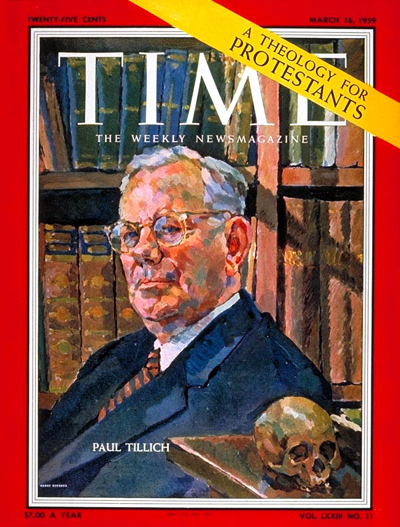
While Tillich writes with ‘admirable intelligence … the net effect [of his thought] is one of ambiguity, even futility – as if the theologian were trying to revivify the Christian corpse with transfusions of Greek humanism, German metaphysics, and psychoanalytical theory. Terms like “grace” and “Will of God” walk through these pages [i.e., the pages of Morality & Beyond] as bloodless ghosts, transparent against the milky background of “beyond” and “being” that Tillich, God forbid, would confuse with the Christian faith’.

– John Updike, Assorted Prose (London: Andre Deutsch, 1965), 183.

To be sure, I’ve always found Tillich’s sermons to be quite engaging; but Updike’s description of Tillich’s Morality & Beyond rings true for most of Tillich’s three-volume systematics as well.

Karl Barth: Prayer 18

‘Lord our God, we praise you and thank you that you, in your dear Son, in mercy beyond understanding, would humble yourself so much for our sakes, in order that in him we may be so highly exalted for your sake. We praise you and thank you for his mighty decision regarding your people Israel and the pagan nations from which you called our ancestors. We praise you and thank you for all of your gracious election and calling, that you are also the God of the rejected and the uncalled, and that you never cease to deal with each one of us in a fatherly and righteous manner. Let us never tire of recognizing you and praying to you in all of these mysteries, that we may in faith lay hold of your Word, through which you magnify your honor and give us, with eternal blessing, peace and joy, even in this life. We pray for your church here and in all nations, for the sleeping church, that it may awaken; for the persecuted church, that it may continually rejoice and be assured of what it has in you; and for the confessing church, that it may live not for its own sake, but for your glory.

We pray for the rulers and the authorities all over the world: for the good ones, that you may preserve them; and for the bad ones, that you may either turn their hearts or put an end to their power, all according to your will; and for everyone, that you may advise them that they are and must remain your servants.

We pray that all tyranny and disorder may be fended off, and that all oppressed nations and people may be granted justice.

We pray for the poor, the sick, the prisoners, the helpless, and the troubled, for all who suffer – perhaps from something only you know – that you yourself may comfort them with the hope of your kingdom. Amen’.

– Karl Barth, Fifty Prayers (trans. David Carl Stassen; London/Louisville: Westminster John Knox, 2008), 20–1.

BTW: The latest edition of IJST includes an article by A.J. Cocksworth titled ‘Attending to the Sabbath: An Alternative Direction in Karl Barth’s Theology of Prayer’ (13/3, July 2011, 251–271).

‘To Mend the World’: conference and exhibition

I want to give the ‘To Mend the World’ conference and exhibition one final plug. The conference runs from 29–30 July, and the exhibition from 29 July through to 6 August. It really is shaping up to be a very exciting twin-project, with an impressive line-up of speakers and artists. Registration for the conference has exceeded expectation, and is still open if you’re keen to attend.

Rowan Williams on theological education

Call me theologically naïve, or ignorant, or not well enough read, but I simply do not understand some of the criticisms directed at Rowan Williams. Archbishop Williams is a person of deep faith and prayer, of contagious love for Christ, for the Scriptures and tradition which bear witness to him, and for Christ’s church, and who for decade after decade has been among the church’s finest public theologians (and poets!), producing first-rate scholarship with exemplary integrity and gospel-spirited passion, and helping a new generation of Christians to find the words and posture to understand and bear witness to the deepest realties of their faith in a rapidly changing cultural landscape. Moreover, his literary and spoken output alone – books, radio interviews, lectures (his 2011 Holy Week Lectures on Lewis’ Narnia are outstanding), reviews, articles, etc. – not to mention his gracious and steady leadership of the Anglican communion, leads me often to wonder if there are not two equally-brilliant and identical twins that Mr & Mrs Williams named ‘Rowan’ sometime last century.

Put differently, I keep an eye open to read and digest everything he writes. And why not, when it is so edifying and educative, and models a way of doing theology so worthy of emulation, if not entirely uncritically so. But there’s one lecture that I’ve missed, until now – his CEFACS lecture, given some years ago at the Centre for Anglican Communion Studies in Birmingham. So thanks Jim for pointing me to it, not least because the lecture attends to a subject in which I have some serious investment, namely theological education.

In that lecture, Williams invites us to think about theological education by way of the analogy of a musical education: ‘Just as, in relation to musical education, I might be reasonably sure of being able to identify what a musically educated person is like. I would know what sort of skills to look for and listen for in that case. Now I want to suggest that a theologically educated person is somebody who has acquired the skill of reading the world, reading and interpreting the world, in the context and framework of Christian belief and Christian worship … That means that a theologically educated person is not someone who simply knows a great deal about the Bible or history of doctrine but somebody who is able to engage in some quite risky and innovative interpretation, and who is able, if I can put it this way, to recognise holy lives. Because I think that the skill that belongs to being a theologically educated person is a very significant part – the skill of knowing what an exemplary life looks like lived in the context of doctrine and worship’.

Then, drawing upon the work of Thomas Aquinas and the example of God’s revelation to Moses, Williams proceeds to argue that ‘theology is inevitably, consistently to do with human lives, not in any sense that excludes theology having to do with God – far from it: but in recognition of the fact that because God is not an object lying around for examination, God’s impact upon and the difference God makes to human lives is where we are bound to begin. The word of God, the self communication of God is always bound up with the actual and concrete transformation of human situations – corporate and individual … From the vantage point of Christian theology that should not surprise us at all. Christian theology begins from the series of events – events of transformation’.

And later on: ‘Theology begins when something in the human world and human lives has struck at such depth that we need language more than just the conventional language of human agency and historical forces. Theology arises then when the world looks new. One of the saddest things that can be said about theology is that it has become stale; that it no longer speaks of transformation. Because the impulse to do theology arises when the world looks different from what you thought it was. The New Testament is riveting, exasperating, exhausting, inexhaustible because it is the work in progress of the people whose world is in “in the business” of being reformed, reshaped’.

And here is the point – the challenge, if you like – for those engaged in theological education: ‘Theological education is bound … to be regularly a matter of looking at the patterns of human lives. Theology has a great deal to do with biography and with history – the Bible containing many examples of both. It is out of those narratives, out of those stories and transactions that the ideas emerge and I would venture to say that a bad theological education is one which never gets you from the ideas to the narratives; and a good theological education is one that pushes you inexorably from the narratives to the ideas’. One thinks here of James Wm. McClendon Jr’s fine book, Biography as Theology: How Life Stories Can remake Today’s Theology, or of the work of Ray Anderson whose entire project is an outworking of the conviction that ministry precedes theology.

And that is why, Williams reminds us, contra Nietzsche, ‘theology is inevitably a component in the business of Christian discernment’, and good theology is concerned not to ‘set out to give you a map of another world but a set of instructions for this one’. And that is why, Williams notes, ‘theology is an uncomfortable partner in the academic enterprise … An uncomfortable partner in the enterprise because universities on the whole do not set themselves the task of educating people in the discernment of holiness. Why should they? And yet there is something in the level of critical questioning which theology ought to bring to the intellectual enterprise overall that is essential to intellectual health’.

These introductory points made, Williams then turns to some of the particularities of theological education in light of the definitions he has introduced. And here he wishes to speak about bible study, doctrine and church history.

Regarding the first of these, bible study, Williams is adamant that theological education ‘is designed to produce people who are really literate in the Bible’. Why? Because ‘the Bible is the primary record of the primary difference God makes. It begins, of course, by recording the greatest difference of all – the difference between things being there and things not being there and associates that with God. And in Christian scripture that primordial difference between being and non-being is latched on with an enormously ambitious theological pun at the beginning of St John’s Gospel latched on to the life of Jesus of Nazareth as the one who makes the difference between being and non-being within the world’s history. But the narrative of Hebrew scripture, what Christians call the Old Testament, evolves in a series of upheavals. The uprooting of Abraham from his native land, the release from slavery of the people of Israel, the betrayal and exile that follows the abandonment by God’s people of God’s justice, the restoration of the people around more liturgy. And within its contours we are not allowed at any point, I think, to come too quickly to a generalised version of what all this is about and who this God is. We have to watch the story in its process. We have to attend to and be involved in the drama of the narrative’.

Williams then encourages us to adopt a particular posture when we turn to Christian scripture:

‘Be patient, don’t assume the end of the story is come. God is a God who upturns the conventions and the ideas and the images we have and he does it centrally, focally, forever, in the life and death of Jesus. We watch them again as Christian scripture evolves, we watch people in that new landscape trying to find the words for it. To say that is not in the least to say that the Bible does not tell us the truth. The way the bible tells us the truth is by showing us how God’s reality, in its freedom and majesty, impresses itself upon human life. We read the impress, we read the impact, we begin to understand who it is that we are dealing with and that is as true of the New Testament as of the Old. Frequently as I read Paul’s epistles I read the impatient, inarticulacy of someone whose vision is bigger than his language and that is what makes Paul so intensely worth reading, so inspired, so much a vehicle of God’s spirit. Watching him struggle, sometimes very impatiently, with ideas that are getting away from him is precisely to be drawn into what Paul sees and what Paul knows – to meet Paul’s God. There is an extraordinary moment when Paul realises that he has dug himself in far more deeply than he originally intended to in an argument and suddenly breaks away saying “I don’t know where this is going but …” as he does, of course, so memorably at the end of his most agonised excursions – Romans 9–11. How am I going to bring all these ideas together, Paul asks at the end of 11 when he has been wrestling with the fate of Israel and he can say only, “O the depth and mystery of God”. And it is not a short cut because you have watched him getting there. I had a friend years ago who complained about the way in which theologians would revert to talking about mystery when things were getting difficult and it is a good discipline I think for any theologian to save the language of mystery, if you like, until the very last moment. That is to say to follow through argument, definition, refinement of terms as bravely and consistently as you can and not to give up too soon. Only when you have demonstrated that you are at the end of that story can you afford to say with Paul that you don’t know where to go but God does. Now that means, I think, that a person who is educated in reading the Bible is a person who, you can say theologically, by the Grace of the Holy Spirit, has been brought into that relationship with the God of the Bible which allows them to recognise in the language of the Bible their own faith and their own narrative. And that is something rather different from quarrying the Bible for little bits that happily remind you of how you feel. That is not biblical theology. It may be a useful form of apologetical psychology but it is not particularly theological. But to find in that language, that narrative, that register of exploration, something of the faith that transforms your own life; that I think is to see what biblical understanding is … The Christian comes into the biblical world – a strange world, a world in which images and ideas and words are not always what you expect. But the education of the Christian in the biblical world is an education in the skills of analogy and connection … That means that being a biblically educated person is a great deal more than knowing the texts’.

Williams turns next to the matter of Christian doctrine, rejecting the kind of doctrine-as-finished-product approach so often associated with theological education, and proposing instead a notion of doctrine as ‘the process of finding the words for a new landscape which like any such process is going to be in many ways vulnerable and rather bumpy’. ‘We can’t tell all the truth’, he says, ‘we can tell the truth consistently, we hope intelligently and then once again … come to the point when we say that is as far as we can go but we have done the work’. A ‘doctrinally educated person therefore is … somebody who can see what sort of human anxieties, aspirations, tensions, prayer, love, sin and grace led people to think it mattered to talk about Jesus in this way, to talk about God in this way, to talk about the Sacraments of the Church in this way. It was not a word game. It wasn’t a way of passing the long winter evenings’. Williams cites Barth and Bonhoeffer as examples of what it looks like to do theology in this way, i.e., in a way that takes the contemporary location seriously, in a way that seeks to profess Christ in a new and different space.

Williams then comes to the matter of education in church history, a subject with he has written very helpfully on before (see, for example, his wonderful book Why Study The Past?: The Quest for the Historical Church), and a subject which, he observes, ‘has tended sometimes to be a little bit of a Cinderella subject in theological education’. He continues:

‘When it has been done people don’t always quite see why it is done, whether there is a theological reason for doing it. It becomes another bundle of anecdotes. Facts about the past which may or may not be interesting, probably not very. Stories about people far away, speaking foreign languages with strange names with very bizarre ideas. Now I don’t think that will do as an approach to Church History because one of the things that comes out of being a biblically educated and doctrinally educated person is some sense of what it means to belong to the body of Christ. That is to be part of a community which has no spatial or temporal boundaries but in which every participant has something to give and something to receive … Those odd people in the text books are actually our brothers and sisters in Christ, and frequently you would much prefer that they weren’t. Almost as much as you would prefer that some of your contemporaries weren’t! But these are people in whom Christ is given to you’.

He argues that the difficulty with teaching church history is that the subject frequently falls apart into two equally unhelpful poles: ‘There is the kind of Church History which looks at the past as answering the questions. That is the story, that is how we got here and it all ends happily because it ended with us. And there is the kind of Church History which says we have to be deeply conscious of the absolute cultural gulf that separates us from everybody before 1550 or 1700 or 1981 or whatever. Both of those are unhelpful simply as historical method but they are totally insupportable as theological method’. And so part of the challenge, he goes on to say, ‘is being able to cope both with the continuity and with the gulf. These are people deciding to be disciples of the same Lord that I try to follow. These are people speaking of that discipleship in categories that are so strange that it will take me a lot of patience to learn what they say and listen to it effectively. Yet both those elements are true and essential in the process’. Not only is the position that nothing important happened between the NT and now (or between the first and the fifteenth centuries) ‘intellectually shabby and indefensible’ but such a view is also ‘spiritually impoverished’, for whether we like it or not, God has graced us with ‘a very, very large number of companions on the journey. Each one of whom will have something distinctive to say however well I hear it, however easily I digest it’. And here Williams returns to the question of reading the Bible, noting that ‘an educated reader of the Bible is also somebody who knows how to read the Bible in company – in company with other Christians now, in company with Christians through the ages’, in the company of the Christian community ‘and to find education and discipleship in that process’.

Finally, Williams makes the point that as alarming, pre-modern and unattractive as it sounds, one indispensable, if not largely forgotten, theological virtue is obedience. Naming Barth as ‘the greatest theologian of obedience in the 20th century’, Williams defines obedience in theology as ‘that absolutely faithful attention to the otherness of what you are dealing with, that springs you from the trap of your own preoccupations and preferences. Somewhere in all of this business of theological education we have to come to terms with that sense of an otherness, an elsewhere – not another place, another realm, another world but that which is not simply on the map of our concerns, our security, our ideas. An obedient theology is one which seeks to be formed by what is there and a holy life is one which lets itself be impacted, be impressed by the will of God. For Karl Barth, that meant of course, that an obedient theologian was someone who was free to be the most dramatic possible nuisance in church and world. Obedience to the otherness of God, such a person would be obedient to no other constraints and no tyranny that could be concocted on the face of the earth’.

‘What obedience means for us’, he continues, ‘is a far tougher, far more complex matter to work out. And yet’, he says, ‘a theology that does not somehow tackle that issue of obedience somewhere along the line as part of the education we are talking about, will fail to be theology. And that is an obedience, of course, which challenges great deal of what we often mean by the term’. Williams then provides some examples of what he is talking about, examples which underscore his claim that obedience is far from what we often associate with terms like passivity or docility: ‘Whatever obedience means there, it does not mean docility. Obedience can mean again Paul throwing down his pen with exasperation and say “I don’t know what more to say; it is too big for me to speak of” – that’s obedience. It’s St Thomas Aquinas saying at the end of his life saying, ‘all I’ve written seems like so much straw compared with what has been shown to me’. It is Luther throwing his inkpot at the devil. It is Barth wonderfully, at the end of a deeply boring and conventional parish mission, designed to make everybody feel a great deal worse, decided as he tells us to preach a sermon on little angels with harps and sheets of music. Because he felt he had been listening for a week to a mission all about how ‘I’ ought to feel and not about how God was, therefore he wanted to turn the whole thing back to praise, and that’s obedience’.

Linking this back to the subject of theological education, Williams concludes by noting that obedience properly belongs in the very DNA of any theological education worthy of its subject, for such education is about ‘passionate intention to what is there, to the extent that I am changed by that attention, and set free by it from other pressures to conformity’. And he then offers some specific words to his own Anglican Communion, words which I venture to say are pertinent to the entire body of Christ: ‘We have a very long way to go in making our Anglican church a coherent, communal, obedient, renewed family of congregations. And yet we share the reality given in Christ by our baptism, the reality of Christ’s body. The theological education we need, I believe, in the Communion is something which will make that come alive for us, which will make us literate in reading scripture and doctrine and church history, which will deepen in us those skills of discernment that we need in respect of our own calling and the calling of others, which will set us free from being simply an ecclesiastical organisation preoccupied with policing itself in various ways which will perhaps make us a more effective servant of the world into which God calls us. The world in which God invites us to recognise him, respond to him, praise, be glad in him, a world which is on the way to becoming that new creation which is really the context, the locus of any theology worth the name’.

Prophesying to dry bones: Some encouragement for preachers

There can be little doubt that one of the real gifts that P.T. Forsyth bequeaths to the Church is the encouragement of her pastors to forego the ‘sin of bustle’ that would see them running errands for the culture motivated in no small part by an attempt to convince the world – and the church! – of the use, value and worthiness of their vocation, and to instead give themselves to preach the Gospel, to believe in that divinely-ordained foolishness, and to trust its effects to God.

Those who carry the burden – a joyous burden to be sure, but a burden nonetheless – of preaching week after week will no doubt be familiar with that anxiety that attends the final read through the manuscript, the fruit of one’s wrestling with the very real possibility of God’s communication – which is nothing less than God’s self-disclosure – to those not only desperate to hear the Word of life but also to those long deafened by the drums of seemingly-endless counter words, that Saturday night feeling that, despite all one’s best efforts, things for tomorrow’s sermon just don’t seem right, that the fire that burns so freshly in the heart of the biblical witness has all but been snuffed out by the time the sermon was penned, and perhaps the best that one can now hope for is a decent night’s sleep and to simply trust that something that one says on the morrow might find fertile soil. To be sure, to believe in preaching is to believe in miracles or, more properly, it is to believe in One who not only already longs to speak but who also ‘gives life to the dead and calls into existence things that do not exist’ (Romans 4.17). Moreover, to believe in preaching is to believe that such calling into existence occurs via the irresponsible method of liberally sowing seeds whether in places where there is no soil, or on rocky ground, or among thorns, or in fertile and productive soil (see Matthew 13).

To those who so believe – or who wish to believe in such things in spite of all appearances – I hope that these words of Forsyth’s from a sermon on Ezekiel’s prophecy to the dry bones, and to the Spirit, preached over a century ago might come as an encouragement:

‘God takes the man of little faith, takes him like Ezekiel, carries him back in spirit through history to the dark ages of Europe; plants him beside a church with its faith dried and enterprise dulled into mere orthodoxy beneath the Pagan empire. He sets you in the valley of the dark ages, when the Spanish Moors had more light and life than the Christians of Europe. He asks you, “Can these bones live? You cannot say, but God’s answer is the wonderful eleventh, twelfth, and thirteenth centuries. The past was not dead; the Church is never without its recuperative power somewhere. As the body of Christ, it must rise, and cannot be holden of death, howsoever long the torpor may be.

Or again, God takes you onward, and sets you in another dismal valley, the church of the Borgias and Medicis, amongst the parched bones of faith, when the former revival had shrunk to a mere renaissance, when Paganism was not in the Empire but in the Church’s own heart and head. He points you to the wicked Church of all the cultures at Rome in the valley of the fifteenth century, when the faithful had all but ceased to be. “Can these bones live?” You see not how. God’s answer is Luther, Calvin, and the sixteenth century, the rediscovery of St. Paul, the coronation of faith, the vitalising of Europe, Puritanism, the birth of democracy, the rise of constitutionalism, Free Churchism, and the dawn of modern times. No, the past is not dead.

And once more He plants you by the English Church of last century, with Deism outside, and drought within, but no thirst. Can they live? God’s answer is Wesley and the Evangelical revival, Newman and the Oxford revival, and much more that I cannot name because I must single out the feature which has gathered us here – modern missions. I doubt if any such answer has ever been given to the prophet’s question as this. We have the answer before our eyes. The world has it, and it is often as smoke in its eyes. But the men who first faced the problem, and first moved in these missions had not this answer before their eyes, they had it before their faith alone. They were prophets indeed, in the true inspired line, for they had it in their souls only. They had it surer there in their faith than many of us who have it in our sight. They lived in the valley of the eighteenth century, but their souls stood upon Pisgah; they saw the Promised Land, and all things delivered unto Christ of the Father. They had Imperial minds, but they had also holy methods. They saw the bones stirred and clothed, and men trooping from their living graves at the call of the Spirit alone. They saw races roused, rescued, civilised by the Gospel. Nay, they saw more; they saw the Church itself converted to missions, a bony Church quickened, fleshed, and marshalled anew. They saw that the Church must be reconverted if it was to survive, but they also saw that it would be reconverted, because they had the Spirit that makes the Church, and felt the first flutter of His breast. And the Church did need this reconversion. There was not among the heathen more contemptuous opposition to missions than these men met sometimes in the Church at home. When we speak of the great effect of the Church on the heathen, let us not forget the great blessing of the heathen to the Church. The receiving of them has been to the Church itself life from the dead. The Church has more faith in its own Gospel because of its proved power abroad; it is more sure of its own word, and it feels that it is not only a mighty word, a true word, but a more genial and pitiful word. The old bones live again in a humaner life. Every missionary is preaching to the Church that sent him no less than to the churches he found. When we speak of the action of grace, think also of the reaction of grace, the force of its recoil; deep calleth unto deep. The Gospel’s word to the world includes also its echo to the Church. Missions are an integral part of the Church and a source of new life to it, and the missionaries are prophets that call flesh upon our bones. To convert the heathen is to bless and serve the Church. These missionaries are not hobby-riders that the Church patronises; they are organs, agents, and deputies of the Church itself. They do not act alongside of us, but for us; they are the long arms of the Church and the limbs by which it covers the breadth of the world. The man to whom missions are a fanatic fad, and not his own concern, has yet to learn the soul of the Christian Gospel and the secret of the Church’s life …

Some members of the Church – yea, some Churches themselves – make a greater problem than even the world or the heathen does. They make us ask, “Can these bones live?” These people who go to church, who uphold their Church, who would fight for their Church, would make civil war for its privileges, who have more fight than faith in them, whose souls are exceedingly filled with contempt, and they have a name to live, but are spiritually dead, who care for their Church chiefly as partisans, or because it is a centre of social rank or of juvenile amusements – can they live? What preacher but is cast into occasional despair by that question as he looks upon many spiritual skeletons around him? What preacher has not many a time to answer with Ezekiel that they can only live by some miracle of God; he, poor son of man, has failed, and is hopeless. He is preaching, perhaps, out of duty more than inspiration; he often prophesies in obedience rather than in hope. Well, preach hope till you have hope; then preach it because you have it. “Prophesy over these bones; call out to the Spirit,” says the Lord. At the Lord’s call, if not at your own impulse, call; call with a faith of life when the sense of life is low; speak the word you are bidden, and wait for the word you feel; and then the matter is the Lord’s, and you win a new confidence in the midst of self-despair.

But it is not with bones or mummies that the preacher has chiefly to do. He comes, let us say, and lifts a vital voice. He is a man of parts and force; he collects a following, he is the centre of an interesting congregation. It looks well, comfortable; it is no skeleton crowd, it has flesh and blood. What is lacking? Perhaps the things that are not revealed to flesh and blood, the unearthly lustre in the eye, and movement in the mien, the Spirit of life. It is a congregation possibly, not a church; it is not dry, but it is not inspired; it is cultured possibly, but it is not kindled. The spirit has not come to stay, and there is not amongst them the shout of a king. So far, perhaps, it is only education, culture, that the preacher has supplied; it is mere religion, not regeneration. The bones are clothed, but not quickened; they know about sacred things, but they do not know about the Holy Ghost.

So prophesy once more, Son of man, saith the Lord. Prophesy to the Spirit of life; preach, but, still more, pray; invoke the abiding Spirit to enter these easy forms. They are less dismal than they were, but still too dull. Court for their sake the spirit and cultivate the discernment of the Spirit. Amid the many airs that fan them, amid the crowd of vivacious interests that tickle them as they pass, make the Spirit of a new life blow on them. Above every other influence woo and wait upon the Spirit. Trace and press the Spirit of God; in every providence seize the Divine grace, subdue the spirit of the age to the Spirit of Christ; set up among the critics the Judge of all the earth. Preach the Spirit which not only clothes the skeletons decently and comfortably, but set them on their feet in the Kingdom of God. Preach what cast down imaginations and high things to the obedience of Christ; proclaim that Spirit which turns mere vitality into true life, mere comfort into the mighty peace; turn your worldly skeletons, by all means, into living congregations, but, above all, turn your congregation into a living Church.

And how shall you do that if your appeals to men have not been preceded by your cry to the Spirit, if your action on them is not inspired by your wrestling with God? Only then can you turn a crowd into a people, and a people into the Kingdom of God. That is the way to turn your Aceldama into the habitation of a multitude, and your multitude into a spiritual phalanx. Prophesy no more to the bones, preach no more as if it were dead worldlings you had; pray to the Spirit of God and preach to the spirit of man. Preach as to those who have begun to live and seek life. Never mind about current literature, mind the deep things of God. Preach to them great things. Let the trivial rubbish alone that occupies too much of our Church interest. It is possible to lose the soul in the effort to win souls. Dwell less upon the minor truths, dwell more upon the mighty truths which grow mightier by iteration. Take care of the spiritual pounds, and the current pence will look after themselves. Preach character by all means more than has been done, but preach it through a Gospel which takes the making of character out of your hands. Preach the Lord’s Supper more often, and the tea-meetings less, as the Church’s social centre and family hearth. Do not preach about goodness less, but about grace more. Do not preach self-denial, preach a cross that compels self-denial. Don’t mistake fervour and ardour for the Holy Ghost; do not take the flush for the blood or the blood for the life. Bring to men the Spirit, prophesy to the spirit in them; bring to them great demands – it is the demands of life that make men, is it not? Tax them, ask of them great sacrifices. We grow up as we lay down. Sacrifice before faith? No, first the sacrifice which is faith. There is no such tax on self-will as faith, no such sacrifice of our self-satisfaction as true faith, faith of the right kind, faith which is a cross as well as a trust in a cross and a resurrection, too. Trouble them, trouble them with the stir of a higher life. Living water is always troubled, it is an angel’s trace upon the pool. Leave them not at ease; do not stop with putting on the flesh that just saves them from being skeletons. Infuse the flesh with the spirit; propose a great task, a thing incredible, and keep it before them till they rise to it. Does not the spirit make demands on us which no preacher can venture to do? Does not something in our own soul as he prophesies stir us, rebuke us, exact from us more than we dare? All the movements the true prophets store escape beyond their dreams and demands’.

– from Jason A. Goroncy (ed.). Descending on Humanity and Intervening in History: Notes from the Pulpit Ministry of P.T. Forsyth. Eugene: Wipf & Stock, forthcoming.

Candour reviews

I recently accepted the illustrious mantle of reviews editor for Candour, a magazine for ministers and leaders of the Presbyterian Church of Aotearoa New Zealand. The aim is that each edition of Candour will include a medium-length review of some kind, mostly of books but hopefully also of plays, music, dance and film. Consequently, I’m now on the hunt for possible reviewers, i.e., for those who would be willing to do the occasional review, and pick up a ‘free’ book in the process. If you’d like your name added to the list of reviewers that I can call on from time to time, then please let me know via email, indicating the kind of areas (e.g., missiology, history, fiction, prayer, etc.) that you are most interested in writing about, and any relevant qualifications you may have.