Author: Jason Goroncy

My books are available from Logos

The folk at Logos contacted me today. They are interested in selling my books, and have posted information about them here, here and here.

While browsing the site, I was surprised to learn that I had written another book, In Search of Health and Wealth: The Prosperity Gospel in African, Reformed Perspective.  I don’t remember writing this one, so I’m guessing that a mistake has been made. There might be other explanations, of course, but a simple mistake seems to be the most likely one. I’ve let the folk at Logos know.

[An update: apparently, I’m no longer the author of the above-mentioned book. Now I can just return to my normal level of confusion. Thank you team Logos.]

Christian Wiman on belief, faith, poetry, experience, and the unreligious artist

IAM (International Arts Movement) recently posted Makoto Fujimura’s 4-part interview with Christian Wiman. I thought it was worth sharing:

1. On belief and faith

Error
This video doesn’t exist

2. On poetry and faith

Error
This video doesn’t exist

3. On experience and self-expression

Error
This video doesn’t exist

4. The unreligious artist

Error
This video doesn’t exist

Whenever I read Wiman, or read about Wiman, I am reminded of the Church’s long history of mistreatment and silencing of the doubters and sceptics in its midst, of my own disquiet about the idolatry of certainty, and of my own hunger for honest conversation about the mysteries that lie most deeply in the centre of existence. I am also reminded that scepticism as well as faith ‘seeking understanding’ (after Anselm) involves not only some continuity with the past but also the constructive work of doing what Hans-Georg Gadamer famously refers to as opening ‘horizons’ of meaning where one learns ‘to look beyond what is close at hand—not in order to look away from it, but to see it better within a larger whole and in truer proportion’. Theologians, it seems to me, ought to champion the opening up of such ‘hermeneutic space’ for all those – whether so-called believers or sceptics – who simply cannot imag­ine any other way of the world being. This is one place where the work of artists like Wiman take on an almost indispensable role for the church, and perhaps especially in those parts of it which tend to be more than a little wordy (and a little nerdy!) – where, despite all claims to the contrary, what is communicated is that ultimate truths really can be captured by human constructs – not only in liturgical contexts but also in our other theological musings.

My friend Cynthia Rigby recently identified Wiman as an example of one for whom the search for meaning constitutes ‘a kind of belief that … would not run nearly as deep were it void of skepticism’. Clearly, doubt and scepticism may be expressions of faith. Equally, belief may be an expression of a lack of faith, a mistrust and/or fear – the fear of not believing. All this is part of the complexity and ambiguity of scepticism. What sceptics and doubters need, Paul Tillich said, is not repression but courage which ‘does not deny that there is doubt, but … takes the doubt into itself as an expression of its finitude and affirms the content of an ultimate concern’. This is the kind of scepticism which is essential for the kind of theology that grown-ups do!

St Ambrose once said that ‘it did not suit God to save his people by arguments’. Of course, arguments have their uses – encouraging the gift of clarification, for example – but they are no substitute for imagination, vision, and hope, truths not lost on the biblical writers. It is not insignificant that the Bible has no arguments for the existence of God. It is not insignificant that the Bible offers little reason to think that faith should be facile and unambiguous. Indeed, the Bible is unfilled by comfortable and reassuring words about the life of belief and trust. It is unfilled by presentations of a God who expects or demands doubtless faith. If Abraham and Moses and Hannah and Job and Mary and Jesus and Paul suggest any pattern, then our knowledge of God and of God’s ways is learnt not, in the first instance, by clinical enquiry and epistemological certainty but by being found caught up in a reality planned and constrained only by mysterious love, love which appears to have little difficulty in making space for angst and struggle and disbelief. Indeed, in a sense these are a kind of argument for God.

Die Taufe ist kein Sakrament. Einsichten aus Karl Barths Sakramentsverständnis

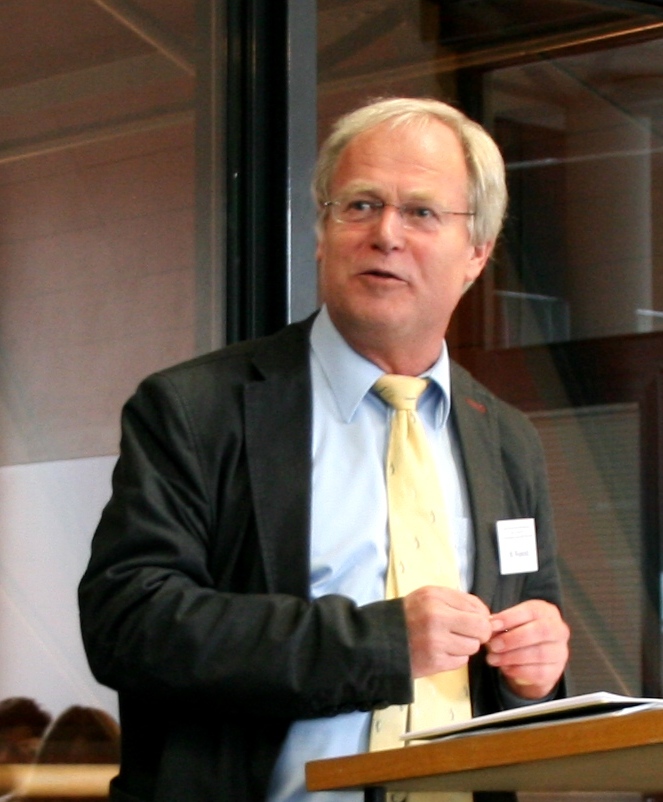
WeinrichIt is a most humanising thing, gratitude. For it is not only the confession of our being-in-dependence, but it is also an expression of our remarkable freedom. We, in the Reformed tradition, do not talk nearly enough about freedom. And perhaps no one has brought this truth home to me more than my friend Michael Weinrich, to whom I am most grateful. I was delighted to learn that Michael recently gave a lecture on Karl Barth (a subject with which he is most familiar) and the sacraments, a lecture in which the promise and gift of freedom featured greatly. The lecture will, in due course, be published by Theologischen Verlag Zürich, but a summary/report is already available. It reads:

„Jesus Christus ist das eine Sakrament“. So versteht Karl Barth das Sakrament in der Kirchlichen Dogmatik (KD). Wie kommt Barth zu diesem Verständnis? Was sagt es über menschliche Freiheit und Gottes souveränes Gott-Sein? Seine Antworten und Thesen hat Michael Weinrich, Professor für Ökumenik und Systematik, auf dem Barth Symposion Anfang Mai vorgetragen.

TATBEKENNTNIS STATT MYSTERIUM

Als Sakrament, sprich als Übersetzung des griechischen mysterion, bezeichnete Barth Taufe und Abendmahl in der KD nicht. Stattdessen sprach er von einem „Tatbekenntnis“ bzw. einer „freien menschlichen Tatantwort“ auf Gottes in Christus „vollzogene göttliche Wendung“ (KD IV/4, 81.IX.99).

Damit unterstreiche Barth, dass nicht nur ein „Gesinnungswechsel“, sondern eine neue „Lebensrichtung“ zur Debatte stehe, so Weinrich.

Ist die Wassertaufe menschliche Antwort auf das Sakrament der Geschichte Jesu Christi, handelt der Mensch als Subjekt. Er gibt, selbst frei, also als von Gott Befreiter, eine Antwort auf Gottes Anrede. Der Mensch entspricht Gottes Verheißung. Weinrich: „Erst in der dann vom Menschen frei gegebenen Antwort kommt die Anrede Gottes zu ihrem Ziel, in dem das ‚Es ist vollbracht!‘ auch zu der ihm entsprechenden Anerkennung findet.“

BUNDESTHEOLOGIE

Das „christologisch orientierte Sakramentsverständnis in der KD“ sei eine Konsequenz, so Weinrichs These zugespitzt formuliert, von Barths Verankerung der Versöhnungslehre in der Bundestheologie. In dem Bund Gottes mit dem Menschen begegnen sich „der freie Gott“ und „der freie Mensch“ als Partner, als zwei Subjekte. Weinrich: „Der Bund ist essenziell auf die freie Antwort des Bundespartners ausgerichtet, die als solche eben auch eine ganz und gar menschliche Antwort zu sein hat ohne eine permanente Inanspruchnahme der Assistenz Gottes“.

DIE ENTSAKRAMENTALISIERUNG DER SAKRAMENTE

Die „Entsakramentalisierung der Sakramente“ bei Barth sei „die Konsequenz einer bundestheologischen Vertiefung seiner Ekklesiologie“, so Weinrich. In dieser müsse Gott Gott bleiben können und der Mensch Mensch. Hier wird der „schmale Grat der Freiheit“ betreten, der menschlichen Freiheit im Bund mit Gott.

Taufe und Abendmahl seien so verstanden keine „geheimnisvollen Rituale“, sondern „gemeinschaftlich eingebundene freie menschliche Antworten des von Gott angesprochenen und auf Gott hörenden Menschen“.

Dabei verweise die Taufe auf die im Geist vermittelte „Begründung“ des christlichen Lebens in Christus und das Abendmahl auf seine allein von Christus zu erwartende „Erneuerung“ (vgl. KD IV/4,72f.).

MYSTERIUM DER OFFENBARUNG

Diese bundestheologische Auslegung von Taufe und Abendmahl wirft einen kritischen Blick auf die Sakramentalisierung der Kirche. Weinrich gibt – mit Barth – zu bedenken:

„Die weithin in den Kirchen vollzogene Sakramentalisierung der Taufe ebenso wie des Abendmahls bedeuten keine Aufwertung beider, sondern deren Doketisierung [Zuschreibung eines Scheinleibes Christi, bs] zu ‚einem sonderbar konkurrierenden Duplikat der Geschichte Jesu Christi‘ (KD IV/4, 112), die sie ihrer spezifischen Würde als freies Tatbekenntnis berauben, indem sie nun selbst als Gnaden-mittel (Sakrament) ausgegeben werden.

Anstatt Sakramente als Zeichen von Gottes Handeln in Konkurrenz zur Geschichte Gottes mit Jesus Christus aufzubauen, gelte es, das Mysterium der Offenbarung in Jesus Christus zu respektieren, so Barth (vgl. KD IV/4, 168).

Als Sakrament „im Sinne von Heilsoffenbarung oder Heilswerk, Sündenreinigung, Gnadeneingießung oder Wiedergeburt“ schwäche die Taufe „einerseits die entscheidende Deutlichkeit des Christusgeschehens“ (KD IV/4, 233) und gefährde „anderseits die sich hier erschließende Perspektive auf die freie Beteiligung des Menschen in dem erfüllten Bund.“

Fazit: Die Würde der Taufe glänzt „in der befreiten Umkehr zu Gott als das Humanste, was ein Mensch zu tun vermag“ (vgl. KD IV/4, 157), sie besteht nicht in der Zuschreibung eines sakramentalen Sinns.

Rick Floyd reviews Hallowed be Thy Name

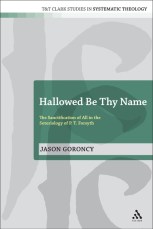
Hallowed be thy nameA recent edition of Theology Today (70.4, January 2014) includes Rick Floyd’review of my book Hallowed be Thy Name: The Sanctification of All in the Soteriology of P. T. Forsyth (T&T Clark, 2013). Therein, he writes:

Dr. Goroncy is a felicitous writer. He knows his Forsyth, and he also knows the late Victorian world in which Forsyth lived and worked. He leads us ably through the material and brings us to his conclusion, which is that the trajectory of Forsyth’s thinking should have led him to dogmatic universalism, but did not. This is the most controversial (and most interesting) part of the book. The subject of universal salvation has recently gained wide public attention sparked by the popular book Love Wins by Rob Bell (Harper One, 2011). Goroncy’s thoughtful, nuanced treatment of this timely subject adds depth to this conversation …

It is good to see a new generation of scholars take up this important theologian. And now that Forsyth’s writings, once hard to find and largely out of print, are widely available in print and electronically, I hope to see renewed interest by scholars and preachers of this great ‘‘preacher’s theologian.’’

Me too! Access to the remainder of the review is available here.

I am grateful to Rick for his kind words about my book, not least because he knows his Forsyth too! His own study on Forsyth’s thought, When I Survey the Wondrous Cross: Reflections on the Atonement (Pickwick Publications, 2000) is a very clear reading of Forsyth’s testimony to God’s most unpopular work – the atonement. I warmly commend it.

Trevor Hart on church music

Hymn

‘Music has always been a central feature of Christian worship, and it’s worth asking why that might be. After all, there’s no very obvious reason why God should take pleasure (if indeed he does!) in the sound of voices and pipe organ or whatever other instruments we might use. We’re told in the Bible that in the temple there were cymbals and drums and all sorts of percussive music accompanying and complementing the singing, which isn’t very Anglican, but sounds like quite a lot of fun! But why music at all? Why not praise God in some altogether more quiet and sedate fashion?

I suspect the answer has as much to do with us as with God. Musical settings of words, for instance, transform the words, seeming to get more meaning out of them than simply saying them. And, typically, we also find words that are sung regularly quite easy to remember (often we’re still humming the tune and singing along in our head later in the day). So, what we sing together gets ingrained, and shapes the substance of our faith. That’s one reason why I am quite careful about our choice of hymns in church. Singing bad theology can be dangerous to our spiritual health!’

– Trevor Hart, ‘A letter from “The Rectory”’, The NET: The magazine of Saint Andrew’s Church, St. Andrews, May 2014, 23.

An interview with Mike Crowl, a ‘prostate wimp’

I recently had the privilege of proof-reading a very different kind of book – one on one man’s journey through diagnoses about and surgery on his prostate. The book was published about a week ago, and I thought it might be fun to do a wee interview with the author – friend and blogger Mike Crowl:

Mike, congratulations on the publication of your most recent book, Diary of a Prostate Wimp: the aftermath of having a prostate biopsy. Its coming indicates again that you are person with many interests – music, writing, acting, religion. You’re the almost-‘renaissance man’. I want to ask you about your book – a book which I learnt a lot from about things which I hope to never experience first hand – but before we talk about the book, please tell us a bit about yourself.

I’d certainly prefer that men don’t have to go through what I went through too, or even worse, what Dave (whose story is also in the book) went through, but these experiences are more common than we realize.

That aside, I’m retired, have had a varied working career including running a Christian bookshop, OC Books, for 17 years, and am now trying to catch up on some of the projects that I haven’t had sufficient time for in the past.

Your latest book is quite a contrast to your previous book Grimhilda! – a tale for children (and their parents) about a dragon baby sitter, animated toys, and parents with lessons to learn (and about which I wrote here). What is the story behind this most recent project? What is the book about?

Like most men, I began to have increasing problems with urinating as a result of my prostate increasing in size. Unfortunately, prostate growth is normal for almost all men. My GP was keeping track of this via a regular blood test. The results showed a need for some concern, and I was sent for a biopsy, in case there was any cancer in the prostate. The biopsy, which is quite invasive (there’s concern worldwide that it’s actually dangerous, because of infections) caused my bladder to seize up. This is known as water retention, and when you can’t pee, they give you a catheter. For blokes, this is a very unpleasant thing to have.

When did you first realize that you wanted to write a book about your experience with prostate problems?

I wrote blog posts about the experience back in 2008/9, and after I’d had a prostate operation, a man in Australia wrote and said he was experiencing similar issues, and that reading about my experience had been helpful. I thought that perhaps other men might find the posts of use if I put them into a book, but the project went on hold for a few years, partly because the children’s musical/book took priority.

The topic seems kind of ‘private’. Why did you choose to make the details of this story so ‘public? Who were you writing for?

One of the first responses I got when the book was published was ‘TMI [too much information] Mr. Crowl’. This came from a female friend. However, much of what I’d written had appeared in the blog posts, so it wasn’t private material suddenly being made public. Some other matters came from my own diary notes, though I edited out things that were even more private. I had debated how far to go with detail, but I don’t think I went overboard. When I showed the book to Dave, he immediately picked up on things that might be considered private and confirmed that these were things he’d experienced too. For me it was a matter of trying to say that there’s no need for men to be reticent about these issues: it’s helpful for guys to know they’re not alone in going through these experiences.

What do you hope readers will gain from the book?

In spite of the increasing talk about prostate cancer, I don’t think the average man realizes that he’s likely to have some issues with his prostate at some point in his life, quite apart from the cancer aspect. I certainly didn’t. Anything that gives more information is useful, and if it can be put across in a reader-friendly fashion, then it’s all to the good. We talk about young men thinking they’re bullet-proof, but I suspect that men continue to think the same thing throughout their lives until something like this hits them.

Are there similar books that inspired the idea for this one?

Far more of them focus on the prostate cancer aspect than on the biopsy and what they call the TURP operation (read the book for an explanation!). While prostate cancer kills more men than any other cancer, not every man who has problems with his prostate has cancer. I know many more guys who’ve been through the prostate operation than guys who’ve had cancer. So I think this book is slightly unusual in focusing on the lesser issue than the greater.

What was the most challenging part of writing this book?

Balancing out the different voices: the slightly jokey blog posts, the more serious diary and ‘God Notes’ (stuff I wrote to God during the time) and Dave’s story, which also appeared as blog posts originally. But in general this was a good deal easier to put together than the children’s book had been. I’d be interested to know what you thought about the prayer angle of the book.

I valued – and was challenged by – the raw honesty of the prayers. And I appreciated the way that you tried to mimic in print life’s own ‘natural’ integration of medical issues, emotions, humor, sex, and God. What have you learned from this experience – both the experience of living with prostate troubles and the experience of writing about them?

Ask questions. Medical people deal with so many different illnesses they tend to only answer things that are necessary. Be persistent with your doctor, don’t let him or her fob you off. New Zealand doctors are better than some overseas ones – in the UK, for instance, it seems from anecdotal information that GPs are less likely to concern themselves with men and their prostate needs, and may even be quite uninformed. If you’re a man, it’s likely you’ll need to deal with some prostate issue at some time. Forewarned is forearmed.

Why did you choose to go the e-book route? How have you found the process to be?

I went this way because I knew I could get it published more readily. Print publishing in New Zealand is difficult these days, as it is in much of the world, and it’s also a long process even if your book is accepted. Some of the e-book technical challenges seemed overwhelming at first, but there are books to guide you (both Kindle and Smashwords have very detailed style books available for free). Furthermore, the cost factor is considerably less and you’re not left holding a bundle of unsold stock with e-books. Their shelf life is indefinite, unlike many printed books.

What are you working on now? Is there another book in the pipeline?

I’m planning to write a ‘sequel’ to Grimhilda!  How it will relate to the previous book is the question at the moment. I have my ideas, my co-writer (Cherianne Parks, who worked on Grimhilda! with me) has other ideas; there are things I believe should be in it, but whether they fit the mix is another matter. I’d like to see it finished by the end of the year. Cherianne isn’t sure that’s realistic!

Thank you Mike. This has been fun.

Thank you too, Jason, for the chance to talk about it further.

mission: a statement

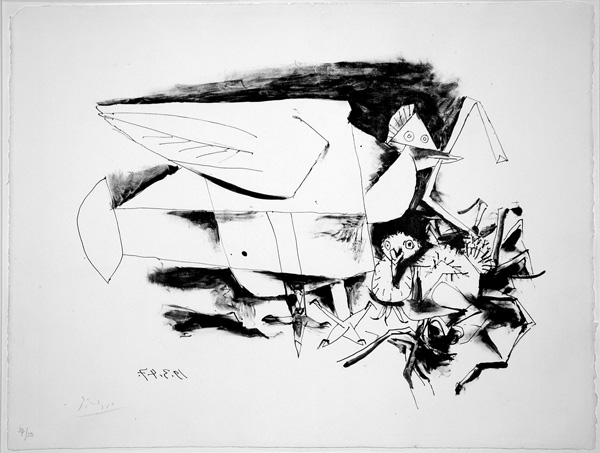
Pablo Picasso, 'The dove and its little ones' (Lithograph, 1947)

Pablo Picasso, ‘The dove and its little ones’ (Lithograph, 1947)

As a people claimed by the Spirit of the gospel, we believe that God desires to gather all creation under the reign of Jesus Christ, to bring all creation into unbridled communion with and in God, and with itself. To this end, God – the very One who, in the movement of missionary love, continually broods over creation and initiates a friendship with Abraham pregnant with promise – elects a people called Israel, makes them into a priestly nation to offer worship on behalf of all the world’s nations and peoples with a view to their reconciliation to God; and, in the fulness of time, God, in Jesus of Nazareth, moves anew into the world in order to reconcile all things to God; and God also calls forth a new community who, with Israel and with Jesus, participates in and bears witness (martyria) to God’s own loving and reconciling activities in the world. Born of the life, death and resurrection of Jesus, this new community is called ‘the Christian community’ (or ‘the church’).

We believe that the Christian community, a creation of God’s Word in election, is a people called by God to participate and share in God’s mission in this world – to be a humble, prophetic and celebratory sign, embodiment and hope-filled foretaste of life in the coming reign of God. It is a people sent by God in the name of Jesus and the power of the Holy Spirit to witness to, and to represent, the liberating, empowering, healing, and reconciling love of God wherever such is identified. It is a people empowered by God to embody in its own life the mystery of salvation and the transfiguration of creation.

Mission, therefore, is not an ‘optional extra’ for the Christian community but is of its essence, finding both its genesis and its telos in the trinitarian relations and in God’s own movement into the world, the object of God’s love. The Christian community cannot be true to itself apart from this action of bearing servant witness (martyria) (i) to God’s will for the salvation and transformation of the world; (ii) to God’s command to maturing discipleship; (iii) to God’s compassion, mercy and advocacy for the poor, the needy and the marginalised; (iv) to God’s vision for the flourishing of societies that reflect the justice of love and seek the end to unjust structures; and (v) to God’s desire for the integrity of a creation liberated from abusive, irresponsible and destructive actions.

Waiting Without Justification: Broodings on Vocation in Conversation with Merton’s Letters

The Hidden Ground of LoveA guest post by Chris Green

Last summer, I read a collection of Thomas Merton’s letters, The Hidden Ground of Love (New York: Farrar, Straus, Giroux, 1985). I was affected most deeply by some of Merton’s responses to the letters of then up-and-coming feminist theologian Rosemary Radford Ruether, exchanges that took place in 1966 and 67, near the end of Merton’s life—he died in December 68—and at the beginning of Reuther’s career.

The correspondence begins with Ruether’s letter of August 12, 1966. She is grateful to have heard of Merton’s appreciation for an article she had recently published, and wonders if she might send him the manuscript of her work, The Church Against Itself. Their earliest letters are warm if lively exchanges, the friendly back-and-forth of kindred spirits. He’s direct about his struggles with Catholic hierarchy—“I do wonder at times if the Church is real at all … Am I part of a great big hoax?”—and he always writes under the assumption that she shares his vision and his experience. Early in 1967, however, Ruether delivered a few stinging criticisms of the monastic life. In the following few letters, he writes with an edge, attempting to correct what he takes to be her fundamental misapprehension of his vocation. At points he stops just short of out-and-out rebuke. Still, he never hides the fact that her criticisms open old wounds in him, wounds that obviously have not healed and are not healing.

For example, in a letter dated 19 March, Merton remarks how he finds himself wanting to shake off his monastic orders, to make his way out to the “big-time struggle” in the world beyond his hermitage. Bluntly put, he wants to be “more effective” in real-world matters. He nonetheless insists that he cannot abandon his given way of life. To do so, he insists, would mark a “real betrayal of the Kingdom.” In his experience, most if not all of the monks who abandon the monastery in hopes of making a more significant impact in the wider world soon lose their way entirely. So, in spite of himself, he knows he’s not going to up and leave his post.

A few weeks after (in a letter from 9 April), Merton seems to reach a kind of resolution, writing that he’s convinced he must pursue his own way, “marginal and lost” as it is, without any rationale or apology. The monk’s life, he says, is not supposed to be explained, only lived.

But judging by the letters that follow, he hadn’t really convinced himself.

***

Taken as a whole, these letters suggest that even after a quarter century of immersion in the monastic life, Merton could not rest in his calling. We sense, in and under his words, an agonizing unsettledness. If just for a moment he seems to have found his footing—some surety about what he’s bound to do and why it’s good for him to do it—the very next moment the ground drops out from under him. What troubles him most, it seems, is a nagging sense that he’s not living truthfully, that somehow he’s been deceived and so is deceiving others. In one of the March letters, Merton had admitted to Reuther that his previous responses weren’t adequately honest, and that her criticisms, inaccurate as they may have been on some points, had nevertheless struck a nerve. He acknowledges the depth of his uncertainty:

Problem: unrecognized assumption of my own that I have to get out of here. Below that: recognition that life here is to some extent (not entirely) a lie and that I can no longer just say the community lies and I don’t. With that: sense of being totally unable to do anything about it that is not a feeble gesture. But the genuine realization that this is my vocation, but that I have not yet found the way of being really true to it. Rock bottom: I don’t know what is down there. I just don’t know.

The monastic life, he acknowledges bluntly, is “an idol.” Not that he despises his fellow monks. They are “idiots,” he knows, but they remain nonetheless God’s idiots—and just so are his brothers, his responsibility. He recognizes that it’s his vanity that aches to belong to “a really groovy worldly in-group,” and he knows better than to surrender to such temptation. The solidarity required of him begins with loving these very idiots, many of whom have given themselves over to what he can see as this idolatrous form of the monastic life. Such a life, which he cannot but experience as “exile, humiliation, desperation,” he knows is nonetheless the chosen way for him—and better than whatever alternatives he might find for himself.

Again, however, Merton’s resolution, such as it is, holds only for a little while. After a few months, the language of despair surfaces again:

I hang on in desperation to what I think I have been called to, trusting not in it but in the mercy of Christ, who knows better than I that it isn’t real, but that it is at least a choice. And there don’t seem to be more meaningful ones around, for me, all things considered.

***

What sustained Merton through all of this “exile, humiliation, desperation”? Not mere resignation—although he certainly sounds fatalistic at times. No, I think he had in his depths some small but lively hope that God was in fact using his unsettledness somehow for his (and others’) good. He trusted, even against hope, that through this disquiet God was working to deliver him from damning fantasies and pretentions, saving him from delusions about the effectiveness of his work and from “wish-dreams” about the community to which he was called. He wanted to live free of such idolatries. And I think he tried at least to offer that kind of hope as a cry for mercy.

Maybe there is a kairos coming, but I have no notion where or when. I am in the most uncomfortable and unenviable position of waiting without any justification, without a convincing explanation, and without any assurance except that it seems to be what God wants of me and that this kind of desperation is what it means for me to be without idols—I hope.

***

Frederick Buechner has said that we find our vocation just at the point that our “deep gladness meets the world’s deep need.” For some people, perhaps, that turns out to be true. But at least for a few of us, vocation is not nearly so gladdening or fulfilling. For some of us, finding and living our calling feels at least at times like protracted martyrdom.

If that seems unnecessarily dire—or “unhealthy,” as we are wont to say—we should perhaps recall the Lord’s response to Paul’s desire to have his “thorn” removed (2 Cor 12.7). I suspect that some of us simply cannot remain true to the gospel in any serious sense if we do not at least at times find ourselves “thorned” into desperation, if we are not riled by a sanctified and sanctifying discomfort. Like Merton, we won’t be free to find the truth of our calling—or to learn how to be true to it—without also facing how untrue it all feels to us. Maybe we’re never going to move into our vocation until we learn what it means to wait without justification or assurance in the fires of idol-destroying desperation? Perhaps such endurance becomes possible only as we’re wasting away on the margins of what seems most important? Maybe it’s only in exile that we find our way?

John (de Gruchy) on John (Calvin): a commendation

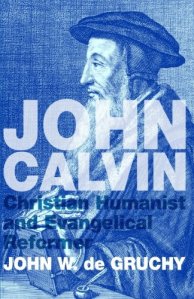
De Gruchy - John Calvin

John W. de Gruchy, John Calvin: Christian Humanist and Evangelical Reformer (Eugene, OR: Cascade Books, 2013). ISBN: 978-1-62032-773-9. 240pp.

John de Gruchy’s little book on John Calvin is a great read! One of its real achievements is that its author has succeeded, in little over 200 pages, in capturing something of Calvin’s spirit and energy. It is certainly no hagiography – de Gruchy is not shy to point out those areas where paradox exists in his subject, and where he thinks that the reformer simply got it wrong! In an honest effort to introduce one of the most important figures in Western intellectual, theological, and social history, it picks up some themes that marked and gave anatomy to his work. De Gruchy is especially keen to retrieve Calvin and the tradition that exists most consciously in his wake as constructive expressions of Christian humanism, a movement of social transformation that is at once liberating, ecumenical, and humanising.

Writing with a non-technical style, and out of his own experience of witnessing both the beauty and the ugliness of the reformed project played out in his native South Africa, de Gruchy builds a compelling case for why we should take Calvin’s thought seriously as a resource for what it means today to engage in the public commons, and for encouraging the kind of flourishing of human society that God desires. Certainly not everything in Calvin’s thought lends itself to such a project, but there is much that does, and these are the features that de Gruchy identifies and develops. He concludes his study by offering six affirmations about Christian humanism and its public vision. They bear repeating and thinking about as a way into considering Calvin’s own vision, and its portability today. They are:

First, Christian humanism is inclusive in its vision of humanity. It recognises that being human is our primary identity – coming before those of religion, race, culture, social class or gender.

Second, Christian humanism affirms both the God-given dignity of being human and the concomitant responsibility of being human. Given human brokenness, it understands the gospel as God’s way of restoring human dignity and awakening our responsibility for the world in which we live.

Third, Christian humanism is open to knowledge and insight from wherever truth is to be found, but it draws most deeply from the Christian Scriptures and the long history of their interpretation through the centuries, embodied in what is called ‘Christian tradition’.

Fourth, Christian humanism insists that love of God is inseparable from love for others; that faith and discipleship belong together; that theology and ethics are part of the same enterprise, and that the renewal of church life and public life are intrinsically connected.

Fifth, Christian humanism places justice, good governance, ecological responsibility and global well-being above national and sectional interests. It is concerned to ensure that scientific and technological development serve the common good and the well-being of the earth.

Sixth, Christian humanism encourages human creativity and cherishes beauty. It insists that goodness, truth and beauty are inseparable, though distinct. Just as it places a premium on moral values and the search for truth, it also regards the development of aesthetic values and sensitivity through the arts as essential for human well-being.

I warmly and enthusiastically commend this book, particularly for those for whom Calvin remains something of a persona non grata, or an embarrassing – or worse! – spokesperson for the Christian faith, and for those who wish to gain a clearer sense of the world-embracing vision of the reformed project at its best.


Hunting for Children’s Sunday School curriculums

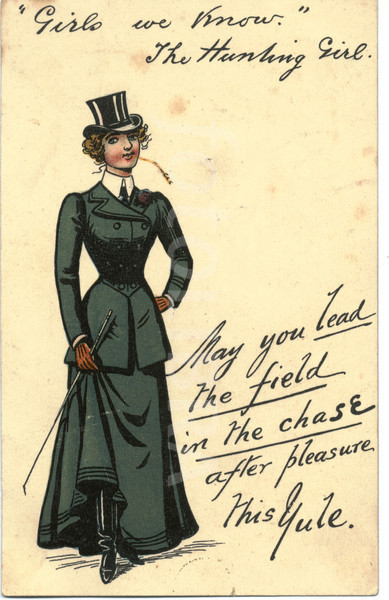
Edwardian hunting girl 1902One would be a fool to assume that the perpetual nature of this hunt is undertaken in tandem with other activities which characterise normal human life. There is nothing here that allows for ebbs and flows in intensity. Indeed, it is little less than an all-consuming obsession ­– and a provocation of the gravest order to the gods of sleep and family life – that allows, in the spirit of the First Commandment, for no rival claims. And all of my best efforts to both encourage her to broaden her areas of interest and to distract her away from such an idolatrous quest have proved to be as successful as my efforts to birth an appreciation for the delectable cuisine of the sub-continent.

So – in the spirit of ‘Happy wife, happy life’ – I give in. More shamefully, dear readers, I reach out from just on the north side of the 46th parallel south, to elicit your help to feed this beast, to hold back nothing, and to bring me your best golden calves.

Here’s what ‘I’ need: suggestions for children’s Sunday School curriculum.

In the past, her appetite has experienced temporary satisfaction with The King, The Snake and the Promise and Meet the King (both from Matthias Media, as is Get Ready! which she is about to put on the Visa card), and, more recently, with the Jesus Storybook Bible curriculum. Somewhat – and many!!!! – less satisfactory hunting trips have seen material from a number of other fields occupying the kitchen table for months on end.

Anyway, I asked her about the criteria for a successful hunt. Her reply was as follows:

Something which:

    • is congruous with the Church’s great creeds [she’s happy to go either way with the filioque thing!]
    • increases biblical literacy
    • helps kids (and teachers) to learn the Bible’s big story (lectionary-based resources do not help here)
    • is engaging for the children but resists the temptation to ‘entertain’
    • is a half-year or full-year (or more) program
    • has idiot-proof instructions for teachers
    • is affordable
    • serves children aged 3­–10

So it’s over to you. Help!

Finishing creation

I.

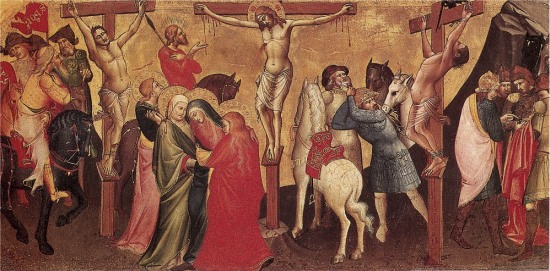
Crucifixion Lorenzo Monaco

II. What if James Alison is right? What if …

‘… Jesus knew from the beginning what he was doing, completely possessed as he was by his quickened imagination of the ever-living God. It was this which enabled him to stage a solemn mime in the midst of this death-based culture, so that he might be killed as a way of leading people out of that culture based on death, allowing us to come to be what God always wanted us to be, that is, utterly and absolutely alive with Him. What Jesus’ entirely living imagination means, then, is that he was working so as to bring to existence what God had always wanted, but which had become trapped in the violent and fatal parody which we have seen, and which we tend to live out. So what Jesus was bringing into being was the fulfillment of creation, and this he knew very well as he was doing it …

This means something rather important: the understanding of God as Creator changes from someone who once did something to someone who is doing something through Jesus, who was in on what the Father was doing through him from the beginning. Creation is not finished until Jesus dies (shouting tetelestai – it is accomplished), thus opening the whole of creation, which consequently begins fully, in a completely new way, in the garden on the first day of the week. This means, and here is the central point: we understand creation starting from and through Jesus. God’s graciousness which brings what is not into existence from nothing is exactly the same thing as Jesus’ death-less self-giving out of love which enables him to break the human culture of death, and is a self-giving which is entirely fixed on bringing into being a radiantly living and exuberant culture. It is not as though creation were a different act, something which happened alongside the salvation worked by Jesus, but rather that the salvation which Jesus was working was, at the same time, the fulfillment of creation. This was the power and the authority in Jesus’ works and words and signs. Through him the Creator was bringing his work to completion. The act of creation was revealed for what it really is: the bringing to existence and the making possible of a human living together which does not know death; and Jesus was in on this from the beginning. Such is our world that God could only be properly perceived as Creator by means of the overcoming of death’.

– James Alison, Raising Abel: The Recovery of the Eschatological Imagination (New York: The Crossroad Publishing Company, 1996), 54–55.

Could it be true? Could this be the promise made to a dying thief? And to a grieving mother who now had new responsibilities?

III. Christop Booth, in his Good Friday drawings, tells the story that we remember on this day like this:

This slideshow requires JavaScript.


An interview with Michael Leunig

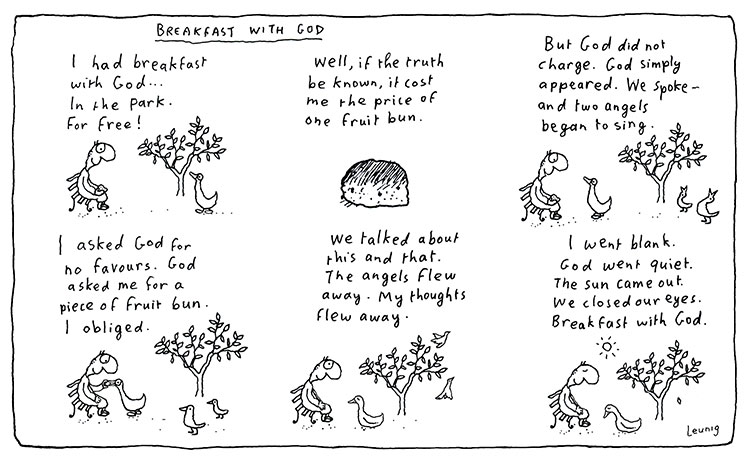
Well, it’s not very often at all that one hears anything listen-worthy on New Zealand radio, but when such rare occurrences do take place, they almost inevitably do so on Radio New Zealand. This was the case yesterday morning when Kathryn Ryan interviewed the delightful Michael Leunig on the Nine to Noon programme. You can listen to the interview here.

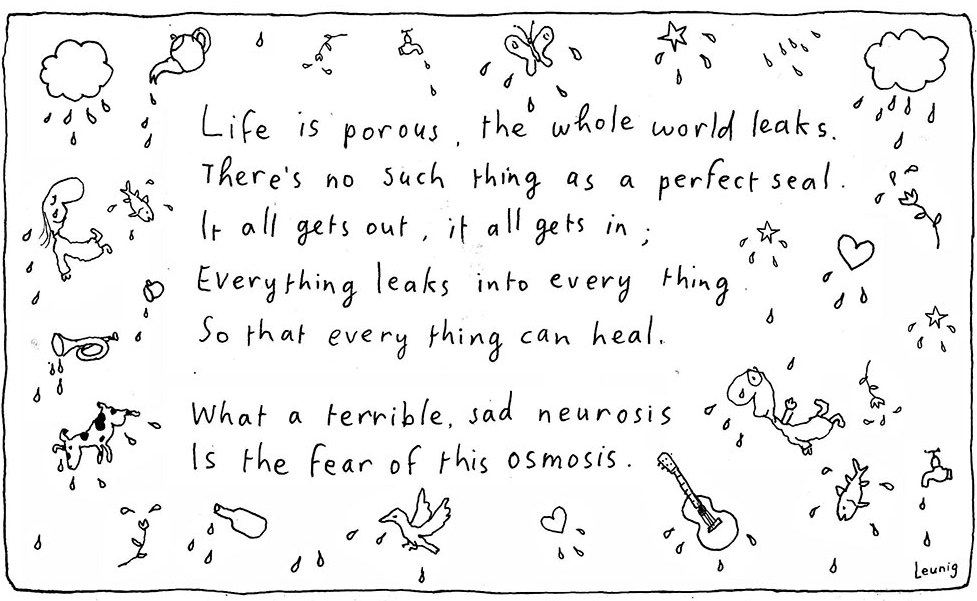
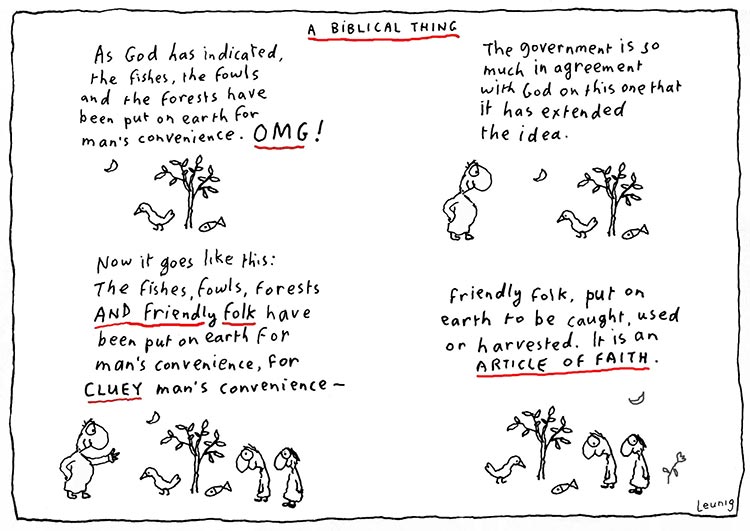
And while I’m mentioning St Michael, here are two of his most recent works:

Life is porous - 12 April 2014

A Biblical Thing - 16 April 2014


The Quest for the Trinity: a review

The Quest for the TrinityStephen R. Holmes, The Quest for the Trinity: The Doctrine of God in Scripture, History and Modernity (Downers Grove: IVP Academic, 2012). ISBN: 9780830839865.

The Quest for the Trinity makes plain again that Steve Holmes is among the most erudite and trustworthy theologians working today. His acquaintance with the tradition’s own wrestlings to articulate its speech about God, and its nuances and real game-shifting moves, is extraordinary, and his ability to communicate these in an accessible, albeit at times dense and somewhat dry, 200-page account is nothing short of remarkable.

The book has an encyclopaedic and ecumenical character about it. Holmes writes with a disciplined handle on the primary literature, its various nuances and theo-historical location, and is conversant with, but not distracted by, much recent secondary literature. His treatments on Irenaeus, Origen, Basil, Gregory of Nazianzus, Hilary of Poitiers, Augustine, Aquinas, Hegel, Schleiermacher and Dorner, in particular, as well as of the various anti-trinitarian movements between the sixteenth and eighteenth centuries, are exceedingly helpful and clearly laid out.

Holmes is concerned to defend the thesis that apart from some relatively minor disagreement and development, the doctrine of the Trinity was basically settled by ecumenical consensus in the fourth century, enjoyed ‘essential stability’ until the eighteenth century, and has been the accepted position of the church, with no significant modification, until the modern period and its various ‘recoveries’. Holmes believes that rather than representing a genuine recovery of a lost doctrine, however, the modern ‘trinitarian revival’ represents a departure, misunderstanding, and misappropriation of the received tradition, sometimes in the name of underwriting some social, political, or ecclesial programme. He builds a strong case, and those who believe particularly that unambiguous continuity with traditional articulations of doctrine central to the faith remains an indispensable feature of doing theology responsibly today will find much here to bolster that claim.

Of course, there are additional ways to tell the story of faith’s efforts to think and speak about God – ways which are no less responsible to revelation, which are not necessarily at odds with the articulations offered by the Fathers but which offer some different ways of expressing such claims, and which remind us that we might be better to acknowledge a greater plurality of expressions within the one tradition.

Whether Holmes holds that such different accents represent voices too insignificant to hear, or too far removed from settled orthodoxy, or whether it is due to editorial concerns, he chooses not to engage with modern contextual (including feminist) accounts of the Trinity, or with the work of Christian mystics such as Hildegard of Bingen, John of the Cross, and Julian of Norwich, or with some other ways that faith has sought to ‘speak’ of the Triune God: for instance, ways that some visual artists and poets and musicians have taken. Here, the catholic and innovative work of Sarah Coakley is to be much welcomed (for it represents both a fruit of the tradition that Holmes is keen to guard as well exhibiting something that is actually demanded by it), along with that of J. S. Bach, William Blake, Dorothy Sayers, and Marlene Scholz.

These niggles aside, The Quest for the Trinity is an extraordinary and timely achievement, and no reader – even those who may finally remain not entirely convinced of Holmes’ thesis vis-à-vis modern accounts and retellings of the tradition – could fail to learn much here, and to be challenged again about what it means, and about how, to speak of Father, Son and Spirit, and of the ‘persons’ of the Trinity. Such a challenge is most urgent, particularly for those of us whose task it is to preach the gospel, and it may be most timely for those of us who have looked primarily to the likes of Rahner, Zizioulas, Pannenberg, Moltmann, Gunton, Jenson, Volf, and/or Plantinga to interpret the history, and articulate the meaning, of the doctrine for us. On those parts of the tradition given attention by Holmes, teachers and students alike will find here a reliable and fruitful guide, and, for some of us, a challenge to rethink what we may have been taught about the apparent gulf that exists between Latin and Greek doctrines of the Trinity, and about accounts that have painted the Fathers to be working at some odds with the authors of the Bible. Indeed, if Holmes’ thesis is anywhere near correct, then most of what passes for ‘trinitarian theology’ today will have to be re-thought.

‘Religious Language under Pressure’: Rowan Williams’ Edward Schillebeeckx Lecture

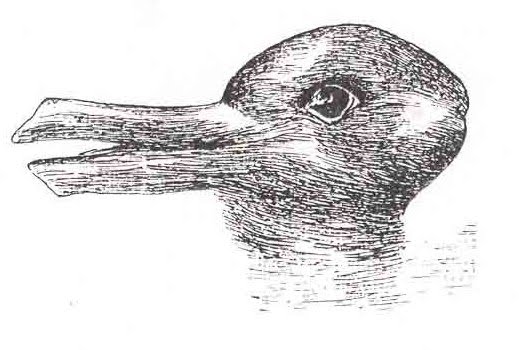
duck rabbit illusionOn 13 December last year, Rowan Williams was at the Radboud University in Nijmegen to deliver the Edward Schillebeeckx lecture, an event organised by the Soeterbeeck Programme and the journal Tijdschrift voor Theologie. In what was a very stimulating lecture – are Williams’s lectures ever otherwise! – Williams draws inspiration from Michael Leunig, Cornelius Ernst, Thomas Aquinas, Victor Preller, Buddhist meditation practices, Maurice Merleau-Ponty, and, of course, Edward Schillebeeckx.

Picking up on the theme of the lecture, Williams argued that ‘Our language becomes “religious” when it is most under pressure; when what it does, says, or expresses, or embodies, is a kind of letting go under the pressure of recognising that we have to change the discourse, that the questions no longer work. We let go and ask – ask rather than answer! – “Are there other ways of speaking or seeing or being?”‘

And he unpacks five implications:

1. Language is not just ‘stimulus and response’, a system of cause and effect. We can’t predict or control speech or the way we understand it. Language is risky and unpredictable.
2. Language necessarily has an unfinished/unclosed character about it. There is always something more to be said. One implication of this is that repetition is not really possible.
3. Language is something one does with one’s body. Speech is a bodily event, an act which takes place from a particular location.
4. We place our language under pressure so that we can think better, think more deeply, discover something new; so that we can move out of the frame we started with.
5. Silence in our speech is significant. We expect silence to do some work for us. In other words, silence is never empty. It’s not even silent.

He concludes with these words:

Our religious language is no more than our ordinary language – a simple set of descriptions. We do not look out from the castle of our brain and label that object called ‘God’. On the contrary, when we believe we have found, for the moment, an adequate way of talking about God – a doctrinal formulation, an image, a scriptural text – we need to remind ourselves of exactly what it is we are talking about; which is, supremely, the uncontrollable, the unconditioned. Like the Buddhist, faced with what comes at the far end of meditation, we have to say there are no words that are going to hold this. However satisfactory what I have said so far may appear, I have to recognise what it doesn’t say. I have to put my religious language, so to speak, under the judgement of a God who can’t be exhaustively and finally spoken of. I have to allow my religious speaking to move in and out of silence for contemplation. To put it another way: I have to put my religious language under pressure; I have to make sure that the language of my faith, my creed, my doctrine, is not left to sit complacently without that tightening of the grip of mystery on it which prevents it from being authoritarian, or oppressive; which respects that ‘openness’ (once again to use Father Schillebeeckx’s word), [which] prevents that openness surviving.

And one of the paradoxes about this, a paradox well worth reflecting on, is that instead of this meaning that our religious language is ‘a shot at the truth which makes no great claim to tell us, truthfully, something about God’, the contrary is true: the more our religious language shows that it is under pressure – under scrutiny, under judgement – the more we recognise that what we have said may be true but not adequate, the more we speak truthfully about God, the more we declare and show what God is, or who God is.

Some people speak as though a tentative approach to the language of our doctrine, our creed, our liturgy, will somehow resign all claims to truth, or revelation, or whatever, somehow blur the clear boundaries of the faith we have received. But I don’t believe that. When I say the creed, I do so without any reservation, but I try to do so without any complacency. When I make the declarations I make in the creed – about God, about the Incarnation, about the last things – I accept that these are the best words I can find to carry what needs to be carried, and precisely because of that they remain something that falls short of what is really there. And in that recognition that they fall short, and in the continuous self-examination – [and the] self-questioning that comes with that – I show that God is more than just the content of my mind, or the collective content of human minds, or a construct of the imagination.

If I am showing that it is difficult to talk about God, I am showing something true about God. Let me just repeat that because I do think it’s crucial: If I am showing that it is difficult to talk about God, I am showing what is true about God. And those who speak easily, glibly, fluently about God, may be less truthful because there is less of that openness to the infinite, unconditioned, mystery of the God we speak of. That sense of infinite, unconditioned mystery surrounding our words and our actions, soaking through the practice of our faith, spilling over in different ways into the events and exchanges of the world; that sense of where we stand, how we speak, in the presence of the difficult God was, I believe, something profoundly close to the heart of Edward Schillebeeckx’s theology. What I have shared with you this evening owes a great deal to the inspiration of a theologian who was not afraid to say ‘If it is difficult to speak God, that’s because that is the truthful way to speak of God.

Theologians need, I believe, not to be afraid of recognising that creative, essential, difficulty as the way of finding truthfulness and, perhaps, as one way of recovering that natural theology faithful to human experience which Edward Schillebeeckx shared with us, and still does.

[HT: Thanks to Chris Green for drawing my attention to this lecture. Chris was particularly enamoured by the section around the 01:01:00 mark; i.e., with the section which I have typed up.]

‘The pastor as theological reader’, by Cynthia L. Rigby

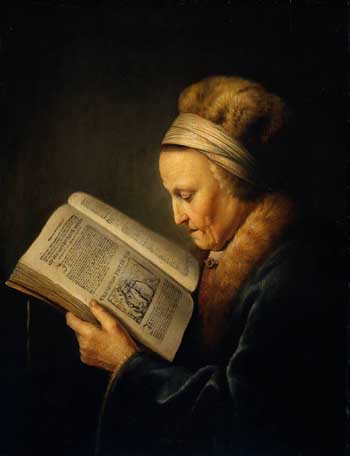
Reading 2Last spring, one of the graduating M.Div. seniors at Austin Seminary asked us professors for a list of books he should read “sometime in his life.” A heartening request, but it got even better. In the last few months, John has made it clear that he does not understand “sometime” to mean an ever-receding future in which he will (he hopes) have the time to read. On the contrary, John seems to think that “sometime” began the day after graduation. Last week, in fact, I received an e-mail which revealed that John is on schedule to complete five classics—by à Kempis, Bonhoeffer, Dillard, H. R. Niebuhr, and Moltmann—by this December. Inspiring, isn’t it? But here’s the catch: he has not yet taken a call. Will he be able to keep on reading, once he becomes a pastor?

Pastors commonly lament that they aren’t able to keep up with the biblical languages. But in my conversations with pastors, frustration with keeping up with the theological literature is also conveyed. Frequent comments include: “There are just so many books out there—how do I know what to read?” “Why don’t theologians write shorter books? When I do have time to work through one, I feel like the author could have gotten to the main point a lot sooner,” and “Why don’t theologians ever write books for pastors?” My sense is that pastors yearn to participate in the wider theological conversation, but do not want to have to fight their way in. Any of us could generate a dozen ideas for how pastors can be helped with their theological reading. Seminaries could provide bibliographies—and, possibly, “book reports” on specific theological works—on-line. Pastors could form reading groups that meet weekly to discuss and encourage one another. Churches could include a weekly “reading day” in pastors’ job descriptions (try not to laugh).

Theology professors might help pastors strategize on how to read particular theologians, given their different emphases, styles, and contexts. For example, a professor might advise: (1) Be sure to keep a pocket dictionary of philosophical terms on your desk while reading Tillich; or (2) Don’t worry, when reading Barth, if your mind wanders, here and there. Let his words wash over you like a piece of music by Mozart . . . eventually, he’ll come back to whatever point you missed; or (3) Don’t immediately assume Gutiérrez is wrong, just because you don’t resonate with his argument. Allow him to let you “see” what theology looks like from a Latin American context.

While any of these strategies might be helpful in managing symptoms of the problem, I wonder if there is not also a need to address what underlies feelings of being overwhelmed, concerns about having too little time, and fears about wasting time on words that don’t have immediate application to the “real world” work of ministry. As helpful as “how-to” advice can be, I have come to believe that the fundamental problem pastors have with reading theology is not a dearth of information regarding what and how to read, but an absence of the conviction that the theological conversation is their conversation.

In the remainder of this brief essay I will propose four points for reflecting on “how to read a theology book” that focus less on the doing of the reading and more on our being as readers. Instead of pushing you to “just do it” (read theology), I reflect on what it means to “really be it” (a reader of theology). The theology of the Reformation, in contrast to our cultural wisdom, teaches us that we don’t create ourselves by doing. Nor does what we do (or not do) always reveal who we are, for we are sinful. Rather, what we do is to proceed from who we are: beloved children of God; brothers and sisters of Christ.

With this in mind, I suggest that the fundamental strategy for reading a theology book is to engage it as those who: remember who we are; revel in the richness of our inheritance; converse with our fellow heirs; and create with Christ as partners in the ministry of reconciliation. Let me explore the four facets of this strategy in greater detail.

REMEMBER.

“TO SIT ALONE IN THE LAMPLIGHT WITH A BOOK SPREAD OUT BEFORE
YOU, AND HOLD INTIMATE CONVERSE WITH [PEOPLE] OF UNSEEN GENERATIONS—
SUCH IS A PLEASURE BEYOND COMPARE.”—Kenko Yoshida

Week after week, pastors remind members of their congregations of who they are. “You are children of God,” we tell them. “You are joined, at this Table, with Christians all around the world—from every time and place.”

But how do these affirmations come into play—practically speaking—when we pick up a theology book and steal an hour to read? If we think of reading theology as something we do outside of community, as a kind of hunting for provisions to bring “home” to our congregations, it is no wonder we’re frustrated when the hunt seems unsuccessful! In actuality, to spend an afternoon with a text like Calvin’s Institutes is not to close ourselves off from the community in order to “study.” Rather, it is to be intentional about creating a space to develop an intimate relationship with a fellow seeker of understanding, a crucial member of the community of faith. As we read, we hold in our hands a tangible link to brothers and sisters in Christ from “unseen generations.” Like the bread that joins us to those who partake in different times and places, so the theology book has a sacramental quality—participating in a reality larger than the sum of the meanings of the words inside.

I wonder if pastors neglect their theological reading because, on some level, they understand it to be in tension with their calling to be with people. If reading a theology book means leaving the community behind or sitting in the proverbial “ivory tower,” it’s no wonder that ministers—and their congregations—are hesitant to make it a priority. But what if we were convinced that to read theology was to sit in the midst of the community, inviting the saints separated from us by time and space to enter into the circle with us? When we read as rememberers of who we are in relationship to others, our communal life is enriched by the physically absent who are really made present.

REVEL.

“BOOKS, BOOKS, BOOKS . . . LIKE SOME SMALL NIMBLE MOUSE BETWEEN
THE RIBS OF A MASTODON, I NIBBLED HERE AND THERE AT THIS OR
THAT BOX . . . THE FIRST BOOK FIRST. AND HOW I FELT IT BEAT UNDER
MY PILLOW, IN THE MORNING’S DARK. AN HOUR BEFORE THE SUN
WOULD LET ME READ! MY BOOKS!”—Elizabeth Barrett Browning

Theological books abound, it seems. Many pastors, like Browning, have inherited box after box of dusty old books. But how many of us have heard them beating under our pillows?

We might approach our theology books with dread, rather than joy-full anticipation, because we are afraid they might defeat us in our struggle to read. With no intention to “nibble here and there”—but only to succeed in our mission to conquer—we are back on the hunt. And who can fault us, in our competitive context, for setting our sights high? For wanting to master the material?

Recognizing that it is impossible to read every word of every book, students sometimes ask me to help them formulate an attack plan. Perhaps seminaries should offer courses in speed reading, some have suggested. That way, graduates would have some hope of keeping up once they leave seminary and take a church.

Drawn by Browning’s curious and playful spirit, I suggest that the “divide and conquer” approach to reading theology should be resisted. I wonder, instead, if “remembering” who we are as members of the Christian community can inspire us to approach our books with a spirit of revelry—knowing that the point isn’t to learn it all; loving how much theology there is; immersing ourselves in it. When we pick up a theology book, we might imagine ourselves sitting in a room full of the treasures that are our inheritance, basking in the wonder that we can’t begin to count how much there is. When we engage in our theological reading, we might envision ourselves encircled by colorful friends we can spend a lifetime getting to know. The goal of our reading, then, is not to master, control, or conquer, pleading for understanding whenever we haven’t done what we know we should do. Rather, it is to live into our identity as members of the body of Christ: to enter into relationship; to revel in the possibilities; to open ourselves up to the great cloud of witnesses that surrounds us; to hear the pulse.

CONVERSE.

“READING FURNISHES THE MIND ONLY WITH MATERIALS OF
KNOWLEDGE;IT IS THINKING THAT MAKES WHAT WE READ OURS.”—John Locke

As rememberers who sit in the center of the circle and revel in the riches that surround us, one of our greatest joys is to enter into the conversation. To read theology books is not like entering a museum, where we might work our way around from display to display without feeling the need to announce our presence or opinions. On the contrary, if reading a theology book is about developing a relationship with a brother or sister in Christ, our active participation is required and desired. When we read a theology book, we are being called upon to make a thoughtful contribution to the circle itself.

Eager to engage the circle of witnesses who surround us, we should avoid reading theology books Siskel-and-Ebert style. The “thinking” which Locke advocates would shrivel from self-centered declarations about whether we agree or disagree with the author, or whether the book “works” for us. To offer a simple “thumbs up” or “thumbs down” in response to our theological reading is, again, to fall into a “hunt and conquer” rather than a “remember and revel” mentality.

Remembering who we are in relation to the authors of the theology books who surround us, we make theological ideas our own in the context of conversation. “Talking with” our theology books, then, requires committed attempts to understand what the other is saying, even when we disagree. It involves asking questions (OK . . . a bit difficult to do when you are reading a book and not talking to a “live” person . . . but try writing them in the margins and see if the author addresses them later). It respects the other enough to argue, rather than conveniently dismissing.

As we think about what we are reading, conversing with the witnesses who surround us, we will find that we are being shaped and molded in our Christian convictions. We begin, then, to read theology not only with the hope that we will find ideas for our next sermon or lecture series, but with the expectation that we will, indeed, be changed.

CREATE.

“YOU ARE THE SAME TODAY THAT YOU ARE GOING TO BE IN FIVE YEARS
FROM NOW EXCEPT FOR TWO THINGS: THE PEOPLE WITH WHOM YOU
ASSOCIATE AND THE BOOKS YOU READ.”—Charles Jones

We read theology as creatures called to participate in God’s work of creation; as partners in the ministry of reconciliation and as ministers charged to tend the sheep of God.

But the charge to join in God’s ongoing creative work comes with a reminder: We are creators not as God is Creator, for we create only as creatures. Our creative ministerial acts flow not from omnipotence or a never-ending store of Wisdom, but from the reality of our own ongoing creation. The replenishing of our resources that we seek when reading theology will not translate into effective ministry unless we ourselves are replenished. For theology books to get our creative theological juices flowing, we have to be created by them. And if we ask the reasonable question—how can we be created by a mere book?—it’s time to go back to remembering. Theology books are not only books, but vehicles through which we enter into relationship with the communion of saints. Theology books are not to be attacked, and finished, and evaluated, but participated in, and conversed with, and nibbled again and again.

When we read theology in this way, our reading becomes less a matter of “something I work into my schedule because it’s important” and more a reflection of who we are. Reading theology doesn’t make us theologians; we read theology because we are theologians. As those who are called to speak words about God, how can we do otherwise than remember our relationship to the saints, revel in our inheritance, converse openly with one another, and create out of our ongoing re-creation in Christ? However we go about the logistics of our reading, let us seek to live into the truth that theology books are God’s open-ended invitation to join in communion.

Grace Ji-Sun Kim’s Contemplations from the Heart

Congratulations to Grace Ji-Sun Kim on the publication of her latest offering, Contemplations from the Heart: Spiritual Reflections on Family, Community, and the Divine, now available from the good folk at Wipf and Stock. Grace invited me to pen a wee endorsement for the book, which I was happy to do. Here’s what I wrote:

To be human is to be bound to this earth—to its concerns, frustrations, passions, pains, loves, vulnerabilities, and hopes; but to stake all on the claim that the bounds of humanity interplay with the movement of God is to be a theologian. Kim’s reflections on a wide range of subjects are an invitation to think further about what this claim looks like in the turbulence of the ordinary.

Tikkun Olam – a review by Lynne Baab

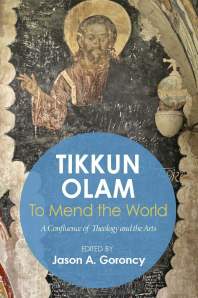
Tikkun Olam CoverJason Goroncy (editor), Tikkun Olam – To Mend the World: A Confluence of Theology and the Arts (Eugene, OR: Pickwick Publications, 2014). ISBN: 9781610979221; 208pp.

A guest review by Lynne Baab

In recent years, congregations are engaging more intentionally with the arts. Music and, to some extent, poetry and drama have always played a role in congregational life and worship, but now the visual arts are becoming more prominent as well. Increasingly, congregations display or even create visual art during worship. Some congregations have established temporary or permanent art galleries showcasing artists and craftspeople from within or outside the congregation. Christians are discovering that the all the arts – visual art, music, theatre, poetry, etc. – are a wonderful way to make connections with the wider community. In the midst of this growing interest, theological reflection about theology and the arts is welcome.

Tikkun Olam gives the opportunity for us to listen to a range of voices on this relevant topic. Several of the voices will be well known to New Zealand Presbyterians. Contributors include Professor of Theology and Presbyterian minister Murray Rae, Presbyterian minister Jono Ryan, and Knox Centre for Ministry and Leadership Intern Carolyn Kelly Johnston, and the editor of the volume is Jason Goroncy, Lecturer and Dean of Studies at the Knox Centre. Most of the ten chapters in the book began their life as presentations at a 2011 symposium and art exhibition in Dunedin. Two of the chapters are written by internationally known writers and speakers on Christianity and the arts: William Dyrness, Professor of Theology and Culture at Fuller Theological Seminary, and Trevor Hart, Professor of Divinity and Director of the Institute for Theology, Imagination and the Arts at the University of St Andrews. The additional contributors come from New Zealand, Australia and North America.

Jason Goroncy, in his Introduction, mentions that the opening two words of the title, Tikkun Olam, appear first in the Mishnah and can mean ‘repairing’, ‘mending’, ‘welfare’, ‘perfection’ or ‘healing’ of the world. The choice of title indicates the role that contributors believe the arts play, which includes an acknowledgment that things are not right with the world and that Christians need to explore all possible means to bring healing. Jason expands on this idea by citing Rowan Williams, who writes about the ‘acute awareness of the world not being at home in itself’. Artists, Jason believes, are called to speak responsibly into that reality, ‘to speak with fidelity not only to time but to eternity, and to acknowledge the meaningful relation of both to human being in the world and, in so doing so, dignify the human condition’. Jason quotes a W. H. Auden poem and notes that the poem describes the role of poetry in pointing ‘the way toward healing and toward a renewed sense of enchantment, freedom and praise beyond the pedestrian and clamorous’.

I particularly like the subtitle of the volume which avoids the temptation to focus on a biblical basis for the arts or a theological foundation for engagement with the arts. ‘Confluence’ implies overlaps and reflection, and the essays accomplish that task well. I’ll illustrate what that confluence looks like by describing the chapters written by people familiar in the PCANZ.

Jono Ryan, minister at Highgate Mission in Dunedin and New Zealand coordinator of Servants to Asia’s Urban Poor, has titled his chapter, ‘Questioning the Extravagance of Beauty in a World of Poverty’. Using the story of the woman who poured the expensive jar of ointment on Jesus’ feet (Mark 14:3–9), Jono describes the reasons why questions about the extravagance of art might be asked today in the light of world poverty. He affirms the significance of the questions, but also argues that the woman’s ‘excessive’ action has true parallels with Christ’s extravagant gift to us on the cross. He acknowledges that we cannot definitively solve this question but that we need to keep wrestling with it: ‘To be a follower of Jesus means, among other things, to live attentive to the cry of the poor. But it also means to live attentive to the beauty of God, which does not distance itself from poverty and injustice, but seeks to transform it’.

Carolyn Kelly’s chapter is entitled ‘Reforming Beauty: Can Theological Sense Accommodate Aesthetic Sensibility?’ Using Jane Austen’s book Sense and Sensibility as well as the same story Jono cited about the woman anointing Jesus’ feet, Carolyn discusses some of the history of theological ‘sense’ juxtaposed with artistic ‘sensibility’. She argues that theology and the arts must meet each other in order for us see the aspects of both that ‘we have become inured to’.

Murray Rae’s chapter, ‘Building from the Rubble: Architecture, Memory and Hope’, focuses on architecture after disasters, including World War 2 and September 11. He cites the architecture of the Jewish Museum in Berlin as an example of the way a building can help people process grief, participate in the world’s brokenness and move toward healing. Murray writes: ‘Architecture itself cannot heal our brokenness. But what we build and how we build it can reveal the extent to which the Spirit is at work within us, nudging us toward forgiveness and reconciliation and a true mending of the world’.

The other chapters include these titles: ‘The Artist’s Role in Healing the Earth’, ‘Cosmos, Kenosis and Creativity’, ‘Living Close to the Wound’, and ‘New Media Art Practice’, showing the range in the essays. I long for congregations and their leaders to continue to grow in seeing the arts as a way to experience God’s beauty and engage with the wider culture. This volume made me think more deeply about the role of the arts in healing the world.

Lynne Baab is the Jack Somerville Senior Lecturer in Pastoral Theology at the University of Otago and Adjunct Tutor at the Knox Centre for Ministry and Leadership.