Author: Jason Goroncy

Apologetics

‘Evangelicals are still much divided, it seems to me, on apologetic method. On the one hand, there is a strong theoretical tendency to a quasi-presuppositionalist or even a Bathian position. On the other hand, in action evangelical apologetics evince a practical evidentialism. Appeals to reason and proof are commonplace, despite a very strong account of the noetic effects of sin. One underlying source of the problem is that, in the world of thought, there has been a troublesome period of transition between the older forms of empiricism and positivism and the radical skepticism of the postmoderns about all knowledge. Christians have a confused epistemology: but then, so does everybody else. Sell’s book is an crudite discussion of the major issues for Christian apologetics in the twenty-first century. He offers the work as a ‘prolegomena to Christian apologetics’ (p. 353). In his first section he enquires as to what it is that Christians would like to commend, and distinguishes Christianity’s central piece of good news as ‘in Christ’s death and resurrection God has done for us that which we could never have done for ourselves’ (p. 35). He proposes that buth the confessors of this gospel and those whom they address share the imago dei, and hence an epistemological common ground. As for the presuppositions of Christian apologetics, Sell argues that it is possible to understand Christian language as speaking of God, and that the transcendent God is active to save in human hislory. He then searches for a starling point and proposes that, notwithstanding the necessity of beginning with Christ in the gospel, it is not necessary to be completely skeptical about the role of natural theology and religious experience. Sell calls his approach a ‘reasoned eclecticism’: that which starts ‘from the Cross-resurrection event, and then, having regard to the witnessing context, draws in appropriate ways upon the deliverances of human reasoning and experience, and offers a viable method of commending the faith in an intellectual environment’ (p. 354). This, he claims, renders the articulation of a Christian world-view possible. It is, I agree, a far more plausible approach than both a rigid evidentialism, which is dependent on a particular view of human reason, and the idiosyncratic presuppositionalisrn of the van Tilian school.’

(Jensen, M. A Review of Confessing and Commending the Faith: Historic Witness and Apologetic Method, by Alan P. F. Sell. Cardiff: University of Wales Press, 2002, in The Reformed Theological Review 64:2 (August, 2005), 96-97.)

Feeling sick … coffee anyone?

I’m feeling sick, embarrassed, angry, frustrated, ashamed, etc. etc. this week. No it’s not jetlag. It’s because the University of St Andrews (where I am a student) has just awarded an honorary degree to Mohammad Khatami … in law of all things! I condemn the university for this gutless decision.

On another note, Tim Fullerton from Oxfam America has just sent out an email about the injustices in the coffee-drinking industry. Here it is:

Each year, coffee companies make billions of dollars. Starbucks alone earned almost $5.8 billion in net revenues during the first three quarters of 2006.

Yet, for every cup of coffee Starbucks sells, poor farmers in coffee-growing countries like Ethiopia earn only about $.03. Even worse, while Ethiopian farmers grow some of the finest name-brand coffees in the world – think Harar, Yirgacheffe, and Sidamo – they don’t see the premium profits those names command among consumers.

Tell Starbucks to give Ethiopia control over its coffee names.

With as many as 15 million Ethiopians dependent on coffee, Ethiopia has decided to get its farmers more of what they deserve. The country’s government has asked Starbucks to sign a licensing agreement that will allow Ethiopia to control the names of its coffees. That way, Ethiopia can help determine an export price that makes sure farmers see a larger share of the profits enabling them to feed their children, send them to school and get them better healthcare.

Oxfam and a coalition of allies are asking Starbucks to sign this agreement. According to one coalition member, control of the name brands could increase Ethiopia’s coffee export income by more than 25 percent – or $88 million annually. This money could go a lot way to help lift millions of Ethiopians out of poverty.

So please, help us convince Starbucks to sign this agreement with Ethiopia. Poor farmers deserve a fair share of the profits.

Holy Communion – 11

The Apostle Paul had a very functional view of the Lord’s Supper. Linked, as it was at that time, with ‘the love feast’, he demanded that they ‘discern the Lord’s body’. That is, that (i) they saw what Christ’s body was given for, namely forgiveness related to love, and (ii) that they saw the body of Christ, its members and their needs, and shared mutually in meeting those needs. All partook of one food and drink – the body and blood of Christ which was ‘the one bread’, ‘the one cup’. That made them the one cup and the one bread. It was significant for their unity as the people of God, the body of Christ.

In all then, we see the grace of the sacraments was simply the grace of forgiveness, God’s love. The sacraments demonstrate the corporate nature of the people of God, initiated by grace into grace, and daily living in the grace of the Cross and the Resurrection. Baptism and the Supper unite to bring this grace (i) by the enactment of each sacrament, and (ii) by that dynamic remembrance which stimulates the people of God. Another way of saying this is that the grace of God is powerfully set forth and emphasised by the sacraments because every day the community needs the love of God in forgiveness, justification and sanctification, all of which flow from the atonement, i.e. from the one act of Christ’s Cross and Resurrection.

The sacraments are a participation, a communion of persons, a partaking in the transfigured humanity of the incarnate Son of God (Gal 3:27; Matt 28:19; Rom 6:3; 1 Cor 10:2; Eph 4:24; 1 Cor 10:16ff.; 11:24, 27ff.). What this portrays to us is that the life of the people of God must not be reduced to spiritualism or mysticism. If the sacraments were merely spiritual mysticism then they would be simply another aspect of worship. To partake of the sacraments is not to watch a religious drama, or to meditate upon emblems as one would a picture. Water washes those baptised, food is consumed at the table of the Lord.

The whole life of faith is a life lived in Christ (e.g. Gal 2:20; Col 3:3; John 14:23). Christ’s is a vicarious humanity so that ‘for us’ and ‘on our behalf’ are key emphases of the New Testament. Christ, in solidarity with us, is circumcised and baptised as our representative. In our place Jesus obeys, and as our Head Jesus dies for our sins and is raised. It is not that we merely share in Christ’s personality. Christ came to redeem – for this purpose he was incarnate. The energetic, crucial and tragic action is found in Christ’s work, drawing all sinners into the judgement of his cross where both the holiness of God and the conscience of humankind is satisfied. Justification is realised in the risen Lord Jesus – but we have this work, this personhood, this power, and this grace bestowed – re-presented – upon us in the sacraments. In this action, Christ is the Chief Actor.

With the coming of the Word in the presence of the Holy Spirit, in the solemn moment of truth the Gospel is crystallised, and we are clinched in our relationship with Christ in his action conveyed in baptism (1 Cor 12:12-13; Acts 22:16; 1 Cor 6:11). It is the continuity of our life in Christ which is reinforced, and highlighted to us in Holy Communion. For here, in a sacramental way, the life of Christ is conveyed into the life of the worshipper and the worshipping community through the bread and wine.

… the bread and the wine of the Eucharist are not merely emblems of the sacrifice that was once offered for the sins of the world; they are the vehicle by means of which the virtue of that sacrifice is appropriated by the participant.[1]

______________________
[1] Peter T. Forsyth, The Church and the Sacraments (London: Independent Press, 1947), 162.

Holy Communion – 10

2. Freedom

In the Supper, there is an ‘uplifting’ of our own humanity, a freely given participation in the life of God.

This in turn transforms the whole conception of the analogical relation in the sacramental participation. Not only is it one which has Christological content, but it is an active analogy, the kind by which we are conducted upward to spiritual things, and are more and more raised up to share in the life of God. This is an elevation or exaltation into fellowship with the divine life through the amazing condescension of the Son who has been pleased to unite Himself with us in our poverty and unrighteousness, that through redemption, justification, sanctification, eternal life, and all the other benefits that reside in Christ we may be endowed with divine riches, even with the life and love that overflow in Christ from God Himself.[1]

The reality is that in Jesus Christ, God shares his own freedom with us, creating a human community called the Church whose spirit is none other than the same Holy Spirit of the Triune God. As God ceaselessly pours himself out on his people, freedom happens. This freedom is enacted in Baptism and celebrated at the Supper. In the words of Robert Jensen, ‘The practice of my freedom is that I am opened to the possibility by utterly various and unpredictable gifts which the Spirit gives other members of the church. Freedom is being able to drink from one cup with the rich and the poor, the healthy and the alarmingly diseased. Freedom is having to forgive and be forgiven.’[2]

In the Supper we ‘celebrate’ this freedom through divine service as an act of thanksgiving for God’s rendering of free service to us through Christ.[3] This eucharist is properly that of the Son to the Father into which we are uplifted as we fellowship with Christ in the Spirit through the communion (koinonia) of the meal. cf. John 16:32‑33; 17:24.
Thus the Sacrament is an action in which we receive Christ and feed upon His Body and Blood by faith, giving thanks for what He has done in the whole course of His obedience, but it is also an action in which we set forth the bread and wine and plead the merits of Christ, taking shelter in His sole and sufficient Mediation and advocacy on our behalf, and lift up our hearts in praise and thanksgiving for His triumphant resurrection and for His ascension, in which we cling to the royal intercessions of the ascended Lord who is set down on the throne of God Almighty … It is our entering within the veil through Christ, who ever lives to make intercession for us and our consecration before the face of the Father.[4]
___________________________________
[1] Torrance, Conflict, 145.
[2] Robert W. Jenson, On Thinking the Human: Resolutions of Difficult Notions (Grand Rapids: Wm. B. Eerdmans, 2003), 44.
[3] Barth, CD IV/2, 702.
[4] Torrance, Conflict , 147f.

Holy Communion – 9

3.4 The Lord’s Supper as faithfulness and freedom; as upholding and uplifting[1]

1. Faithfulness: ‘where two or three are gathered in my name, there I will be with them.’ (Matt 18:20)

There is an ‘upholding’ of those who bear the name of Christ, a faithful act on the part of Christ, binding himself to our time and place. We are affirmed and ‘named’ even in our inability to believe. Christ comes to us through the act of receiving the elements, we do not ‘ascend’ to Christ through the elements. Thus, to ‘discern the body’ (1 Cor 11), is to perceive the presence of Christ in each other. The issue of the presence of an ‘unbeliever’ at the Lord’s table is not dealt with by Paul in 1 Cor 11. His emphasis is on the ‘unworthy’ partaking, not an ‘unworthy person.’

John Wesley considered the Supper to be a ‘converting ordinance,’ where non-Christians would come to know Christ.

One of the salient features of the Methodist Revival was the fact that the Sacrament of the Lord’s Supper came to be regarded not simply as a confirming, but as a converting ordinance … the Lord’s Supper can mark the beginning of the Christian life. It would be possible to give a lengthy list of early Methodists who were, like Susannah Wesley, the mother of John and Charles, converted at the Lord’s Supper. It was the actual experience of the Lord’s Supper as a converting ordinance that led the Wesley’s so insistently to contend for its use by men and women before conversion. They took this stand against the Moravians who would have denied the Sacrament to all except those who had received full assurance of faith.[2]

Others argue that the Supper should not be viewed in this ‘evangelistic’ way. So Otto Weber writes:

The Meal is not a means of mission; it has never been that. The totality within which and in which Christ through the Holy Spirit gives himself to us is a mystery. But in this it is important that the proprium of the Supper in comparison with baptism, which is also physical, is that it deals with us in our supra‑individual (and not just trans‑subjective) existence as the Community.[3]

It reminds/speaks the Gospel to the Christian community. At the same time, Weber says further:
The New Testament has no trace of the idea of ‘partaking on the part of unworthy people.’ There is also no reason to interrogate the participants at the Supper about their ‘worthiness’ or ‘unworthiness’ or to investigate it. This is all the more remarkable since otherwise there is definitely the practice of ‘ecclesiastical discipline.’ What we do find in Scripture is the term ‘unworthy’ (anexios) in 1 Corinthians 11:27. There is the ‘partaking’ which is itself ‘unworthy’ (manducatio indigna), but there is no trace of the idea of ‘partaking by those who are unworthy’ (manducatio indignorum) … The question of the ‘partaking by the unbeliever,’ or as it is put in the Wittenberg Concord, the ‘partaking by the unworthy’ (manducatio indignorum), is not raised by the New Testament. It is a question which arises in the practice and teaching of the Church.[4]
________________________________________
[1] See Barth, CD IV/2, 702ff.
[2] John C. Bowmer, The Sacrament of the Lord’s Supper in Early Methodism (Westminster: Dacre Press, 1951), 106‑7; Also John R. Parris, John Wesley’s Doctrine of the Sacraments (London: Epworth Press, 1963), 68ff.
[3] Weber, Foundations, 636.
[4] Weber, Foundations, 645.

Holy Communion – 8

3.3 Jesus Christ as the objective reality of the Lord’s Supper.

1. The mode of sacramental relation reflects the mode of hypostatic union between humanity and deity in Christ

Christ as the objective union of human and divine in his own person is also the objective presence of God to humans and humans to God. All forms and theories with regard to this ‘presence’ are relative to this objective ‘presence’ of God in Christ. Again, we must say that the mysterion is located in the Incarnate One, not in the mechanical or supernatural relation between physical element and spiritual grace.

2. Transubstantiation?

The medieval doctrine of transubstantiation was confirmed in 1215 as official dogma. This formulation of the relation of Christ to the elements takes the is, ‘this is my body’, with the strictest literalism. Philosophically, this miracle was explained by Thomas Aquinas on the basis of the Aristotelian distinction between the accidents of a thing (its perceptible characteristics, such as taste, texture), and the essence or substance of a thing (the true reality of a thing). Thus, in the miracle of transubstantiation, when the prayer of the Priest invokes the presence of Christ into the elements, the substance of bread is transformed into the substance of flesh, while the accidental qualities of bread remain. Thus Christ is assumed to be actually present as real substance in the bread and wine, leading to the adoration of the elements as well as a propitiatory immolation of Christ in a ‘sacrifice’.[1]

The Reformers agreed on the rejection of this notion of ‘real presence’ and sacrifice based on the doctrine of transubstantiation, with Luther holding that Christ is truly present ‘under and with the elements,’ in such a way that the humanity of Christ becomes capable of omnipresence wherever the Lord’s Supper is held due to the doctrine of the ubiquity (i.e. omnipresence) of the human nature of Jesus. This is explained in Lutheran theology by the concept of communicatio idiomatum – where the properties belonging to one of the natures of Christ is fully incorporated into the other. Some have termed this Lutheran view, ‘consubstantiation.’ Luther wrote, ‘What is the sacrament of the Altar? It is the true Body and Blood of our Lord Jesus Christ, under the bread and wine, given unto us Christians to eat and to drink, as it was instituted by Christ Himself.’[2]

Calvin, on the other hand, while denying ‘real presence’ in terms of substance, spoke in terms of a ‘spiritual’ presence of Christ in the form of the assembled company of believers who receive the elements:

… he has, through the hand of his only-begotten Son, given to his church another sacrament, that is, a spiritual banquet, wherein Christ attests himself to be the life-giving bread, upon which our souls feed unto true and blessed immortality … (B)read and wine … represent for us the invisible food that we receive from the flesh and blood of Christ. For as in baptism, God, regenerating us, engrafts us into the society of his church and makes us his own by adoption, so we have said, that he discharges the function of a provident householder in continually supplying to us the food to sustain and preserve us in that life into which he has begotten us by his Word. Now Christ is the only food of our soul, and therefore our Heavenly Father invites us to Christ, that, refreshed by partaking of him, we may repeatedly gather strength until we shall have reached heavenly immortality.[3]

The view of Zwingli tended to be more of a memorial supper focussing on the historical event of Christ’s death and resurrection, with his presence ‘in the Spirit,’ so that the sacramental elements themselves were totally symbolic, possessing no qualities of ‘presence.’ So, ‘The presence of Christ’ in the Lord’s Supper is understood by Zwingli in an ‘idealistic’ fashion, so to speak, by Luther in a tangible‑‘objective’ fashion, by Melanchton in an actual fashion, and by Calvin in a ‘spiritual fashion.’[4]

Karl Barth adds an important warning: ‘From the standpoint of the community itself, of the company assembled round the table of the Lord, what takes place will always be highly problematical. Yet’, he goes on, ‘in spite of this it is a fellowship of the Lord’s Supper, united by Him both with Him and also, because with Him, in itself; communio sanctorum as a fellowship of the sure and certain hope of eternal life.’[5]

3. The eschatological union between creature and Creator grounds the Church both in a history as well as in a future

The Lord’s Supper reaches back into the event of Christ’s death – ‘On the night on which he was betrayed.’ It also reaches forward into the future – ‘Until he comes’ (1 Cor 11:23, 26). ‘Through the Eucharist the Church becomes, so to speak, the great arch that spans history, supported by only two pillars, the Cross which stands on this side of time, and the coming of Christ in power which stands at the end of history.’[6]

David Watson suggests that the Lord’s Supper causes the Christian to look in four directions:

i. to look back by remembering God’s mercy when he delivered his people from bondage; and to the Cross, the great event of deliverance from sin;
ii. to look in by purifying oneself from everything evil;
iii. to look around by including one’s entire household as well as the stranger;iv. to look forward by anticipating the coming of Christ and the completion of the Messianic age.[7]

[1] Cf. G. Bromiley, ‘Transubstantiation’, in Evangelical Dictionary of Theology (ed. W. A. Elwell; Grand Rapids: Baker, 1991), 1108. Also Berkouwer, Sacraments, 219ff.
[2] Martin Luther, ‘Small Catechism, Book of Concord’, in Joseph Stump, An Explanation of Luther’s Small Catechism (Whitefish: Kessinger, 2004), 21.
[3] John Calvin, Institutes of the Christian Religion, IV.17.1. (ed. J. T. McNeill; trans. F. L. Battles; Philadelphia: The Westminster Press, 1977), 2:1360f.
[4] Weber, Foundations, 632.
[5] Barth, CD IV/2, 704.
[6] Torrance, Conflict, 171.
[7] David Watson, I Believe in the Church (London: Hodder & Stoughton, 1999), 237‑241.

Holy Communion – 7


3.2 The apostolic recognition of this event as foundational for their new life in the mystery of the Kingdom.

After the resurrection and ascension the disciples understood why, again and again, Jesus had gathered the lost sheep of the House of Israel, the cultically unclean and those debarred from the temple liturgy of sacrifice, and although it scandalized the priests He deliberately broke down the barriers erected by the cultus, and enacted in their midst a sign of the Messianic Meal, when many would come from the east and the west and sit down with Abraham, Isaac, and Jacob in the Kingdom of Heaven. That eschatological meal was not an eating and drinking between holy priests and people, but the marriage-supper of the Lamb, who because he had come to bear their sin, gathered the poor and the outcast, the weary and the heavy laden, the publicans and sinners, and fed them with the bread of life and gave them living water to drink. The disciples remembered also the parables of the prodigal son and his feasting in the father’s house, of the bridegroom and the wedding feast, and the final judgment which would discover those who had given or not given food to the hungry and drink to the thirsty, and they understood their bearing upon the Lord’s Supper as the great eschatological meal of the Kingdom of God through which that very Kingdom is realized here and now, as far as may be in the conditions of this passing world. The disciples recalled, too, those Galilean meals of fellowship with Jesus, the miraculous feeding of the multitudes by the Great Shepherd of the sheep, and the equally wonderful words He spoke about manna and water, about His flesh and blood, and the life-giving Spirit, and they knew that what had been parable and sign and miracle then had at last materialized in the Easter breaking of bread.[1]

The resurrection qualifies the Last Supper, and transforms it into an eschatological representation of Christ; his presence continues to be with them, yet it is a ‘presence in absence.’ Thus, we have to distinguish, in a doctrine of the ‘real presence’ of Christ in the elements of the Lord’s Supper, between the eschatological parousia and the final parousia in judgement and new creation. It is the same Jesus who is present through re‑presentation, and yet this presence is veiled so as to create a space between the Word of forgiveness and the final power of healing for the Church to reach out and bind the lost into this fellowship.

Certainly bread and wine are signs, in contrast to some kind of self-effectual power inherently present in them They refer to ‘something’ else. They remain what they are – it is senseless to speculate about whether their ‘substance’ is transformed. But, on the other hand, they are certainly not random ‘signs,’ ‘deposits,’ and ‘gifts (or ‘elements’), but derive their intention from the event of the history of Jesus with his disciples, from the breaking of bread and the Last Supper. They are elect signs, destined for their meaning. What gives them their validity is neither our faith, nor their symbolic power, nor any salvific effectuality which inheres in them intrinsically, but solely the intended historical act of Jesus. There is no ‘something’ which could be found which would guarantee their ‘efficaciousness’. But he is present in them. He has determined that they will be the ‘elements’ of the Supper which he conducts with his disciples, ‘until he comes’ … He has determined himself to give his own a share in himself in that they receive these ‘elements’ within the context of the Meal. In the Meal, that is, in the giving and taking of bread and wine, he desires to be present among his own – and ‘to take them into the victory of his lordship by the power of the Holy Spirit.’[2]


[1] Torrance, Conflict, 169.

[2] Otto Weber, Foundations of Dogmatics, Volume Two (trans. D. L. Guder; Grand Rapids: Wm. B. Eerdmans, 1983), 627, italics mine.

Holy Communion – 6

§ 3 The Lord’s Supper as an Event within Covenant/Salvation History

3.1 The inauguration of the new ‘covenant’ in the body and blood of Jesus Christ.

The antecedents of the Lord’s Supper can be located in the history of redemption as portrayed through Israel:

i. the Passover meal (Passover Haggadah) with its commemoration of the exodus from Egypt, with its meal of unleavened bread;

ii. the assimilation of the covenant meal (Kiddush) at Mt. Sinai which took account of the mighty events of Israel’s redemption to the Passover, with the addition of the rite of sanctification using a cup of wine (Exod 24:11);

iii. the rite of thanksgiving (Chaburah meal), or blessing, along with the breaking of bread at the start of the meal along with the cup of wine at the end.[1]

Jesus seems self‑consciously to draw these elements together in his own identification with the messianic implications of these rites.

Jesus must have followed the Jewish custom of passing round a cup of wine in token of thanksgiving to God; but before that was done, a piece of bread and a cup of wine were set aside for the Messiah in case He should suddenly come to His own in the midst of the feast. Then at the end of the meal, fully charged with pascal and covenantal significance, Jesus took the bread and wine set aside for the Messiah, and said, ‘This is my body broken for you. This is my blood which is shed for you.’ By breaking the bread and giving it to the disciples, by passing round the cup, He associated them with His sacrifice, giving their existence in relation to Himself a new form in the Kingdom of God, indeed constituting them as the Church concorporate with Himself.[2]


[1] Cf. Torrance, Conflict, 134‑5.

[2] Torrance, Conflict, 170.

Holy Communion – 5

2.2 The Eschatological aspect of Sacrament

1. Jesus, is the eschatos – the one who is the ‘end of the age,’ the final Word of God to humans, who has already come, is present, and yet to come

In Christ, the eschaton broke into the present and yet the final Word of judgement and present redemptive action of the Word are ‘held apart’ to leave room for repentance and faith. So Mark 2:1-12, where an interval of time occurs between the word of forgiveness and the healing of the body. This is what Torrance calls an ‘eschatological reserve’ between the Word of the Kingdom and its power.[1]

The Church is redeemed, not in Word only, but in power, and yet it waits for the redemption of the body. The sacrament functions to preserve this unity between Word and power while maintaining the eschatological tension. The word of forgiveness is proclaimed, yet the healing of the body (resurrection) is delayed. As we shall see, this means that all healing is provisional, and a miraculous healing may be understood itself as a kind of sacrament of the resurrection.

2. There is a ‘presence in absence,’ associated with the sacrament

Paul says, ‘from now on, therefore, we regard no one from a human point of view; even though we once knew Christ from a human point of view, we know him no longer in that way’ (2 Cor 5:16). In the words of the institution that Paul received for the Lord’s Supper he says, ‘Do this in remembrance of me … For as often as you eat this bread and drink this cup, you proclaim the Lord’s death until he comes’ (1 Cor 11:24, 26). The ‘until he comes’ portrays for us the provisional nature of the sacramental life of the Church. With the ascension, Christ withdraws from one form of presence to enter into a new form of presence, attested in the sacraments of Baptism and the Supper, among other forms.

The sacraments point to their own disappearance as interim events sustaining the life of the Church between Pentecost and resurrection. ‘The really significant event in Baptism is a hidden event; it recedes from sight in the ascension of Christ and waits to be revealed full at the last day.’[2]


[1] See Torrance, Conflict, 159.

[2] See Torrance, Conflict, 167.

Holy Communion – 4

§2 Sacrament as the Re‑Presentation of Christ

2.1 The sacrament gives to the church a ‘communion in the mystery of Christ,’ and thus the sacrament is a true sign of this mystery.

Matthew 18:20: ‘for where two or three are gathered in my name, there am I in the midst of them.’ John 14:21, 23: ‘They who have my commandments and keep them are those who love me; and those who love me will be loved by my Father, and I will love them and reveal myself to them … Those who love me will keep my word, and my Father will love them, and we will come to them and make our home with them.’

According to T. F. Torrance, Calvin meant by the term ‘signify’ as used of a sacrament, or the term ‘present,’ not merely that which recalls to memory, or that which symbolises a thing, but that which designates the thing itself, that which re‑presents a thing; thus the sacrament is an act of re‑presenting the same Word which is given in the Incarnation.[1]Kerygm is in the fullest sense the sacramental action of the Church through which the mystery of the Kingdom concerning Christ and His Church, hid from the foundation of the world, is now being revealed in history … in kerygma the same word continues to be ‘made flesh’ in the life of the Church.’[2]

The very withdrawal of Jesus from visible and direct relation to the world casts the Church into an eschatological relation with Christ the head of the Church. The Church lives between the cross and the parousia and thus the original sacramental relation of the creature to the Creator in the hypostatic union (Incarnation) is now re‑presented through the enactment of the life of the Church itself. But in this re‑presentation the full presence of the parousia is screened, permitting the Church to have a genuine history in relation to the world. In God’s revealing to and through the Church in Jesus Christ, God also is concealed in order to be present, not merely as another ‘presence’ alongside the existence of others, but in and through their existence.[3]

Here is the danger of idolatry in the sacrament – ‘The call to worship can be the temptation to idolatry’, said Barth, but this is a call which cannot be avoided.[4] The work and sign of Christ’s presence is not frustrated by unbelief, however, precisely because the re‑presentation is governed from the side of divine action, ‘offence can be taken’ through the substitution of the sign for that which is not signified.[5] This danger of ‘offence’ seems to be greater for one who stands within the church than the one who comes in from without, and may actually be an ‘unbeliever’ in the church’s eyes (cf. 1 Cor 14).


[1] Cf. Thomas F. Torrance, Conflict and Agreement. Vol. 2 (London: Lutterworth Press, 1960), 140‑1.

[2] Torrance, Conflict, 158‑9.

[3] Karl Barth, Church Dogmatics II/1 (eds. G. W. Bromiley and T. F. Torrance; trans. G. W. Bromiley; Edinburgh: T&T Clark, 1969), 55.

[4] Barth, CD II/1, 55.

[5] Barth, CD II/1, 55‑6.

Holy Communion – 3

1.2 Revelation as Sacrament

‘Revelation means sacrament’.[1] For God to reveal himself, this revelation must be disclosed in creaturely objectivity, adapted to our creaturely existence and knowledge. The theological concept of sacrament is thus bound up in the structure and nature of God’s revelation. Thus, there is ambiguity from the perspective of the human person – the objectification of divine revelation is not a predication of the creaturely mind – and a provisional aspect to revelation – the final Word of revelation encompasses the ‘end of history’ as well as its significance. This means that there is an eschatological tension between the revelation of God in its historical form and its ultimate reality. This is true both of revelation and sacrament as a sign of revelation.

1. The life, death and resurrection of Jesus Christ as the primary sacrament

Jesus Christ is the mysterion through which all sacramental ‘mystery’ is mediated and objectively confirmed (1 Tim 3:16).

In the New Testament mysterion denotes an event in the world of time and space which is directly initiated and brought to pass by God alone, so that in distinction from all other events it is basically a mystery to human cognition in respect of its origin and possibility. If it discloses itself to man, this will not be from without, but only from within, through itself and therefore once again only through God’s revelation … Faith as a human action is nowhere called (in Scripture) a mystery, nor is Christian obedience, nor love, nor hope, nor the existence and function of the ecclesia, nor its proclamation of the Gospel, nor its tradition as such, nor baptism, nor the Lord’s Supper.[2]

The human nature of Jesus is the sacramental reality of revelation on the ground of the hypostatic union between the divine and human in the one person. There is attestation, or witness of God to humans and humans to God, in this primary event which is determinative of all secondary occurrences of the Christ event.

For, in the light of the attestation which occurred through the man Jesus, we find the attestation of God wherever it is the attestation of that occurrence. That the eternal Word as such became flesh is a unique occurrence. It happened only once. It is not therefore the starting point for a general concept of Incarnation. But its attestation through the existence of the man Jesus is a beginning of which there are continuations; a sacramental continuity stretches backwards into the existence of the people of Israel, whose Messiah He is, and forwards into the existence of the apostolate and the Church founded on the apostolate. The humanity of Jesus Christ as such is the first sacrament, the foundation of everything that God instituted and used in His revelation … And, as this first sacrament, the humanity of Jesus Christ is at the same time the basic reality and substance of the highest possibility of the creature as such.[3]

2. The true mysterion is located in the single event of the incarnate presence of God in Jesus Christ

Baptism and the Supper are regarded in the New Testament as two aspects of the one event. There is, therefore, properly speaking, one sacrament, of which Baptism and the Supper are correlated expressions.

The language that the New Testament uses about Baptism is interchangeable with that it uses concerning the Supper (Cf. Mark 10:38f.; 1 Cor 10:1ff.; 12:12‑13). Thus, the relation between Baptism and the Supper is bound up in the Word of God as Incarnate, inscripturated, and proclaimed. This locates the objective reality of the sacraments in the presence of Christ both as an event within salvation history and as the Lord of the Church. There is a primary objectivity through Christ to which both the objective (physical) and subjective (personal) nature of the sacraments are bound.

Here it is important to see that the true mysterion is located in the primary objectivity – the Incarnation – and not in the secondary objectivity, the physical aspects of the sacrament. In the sacrament, undergirded by the Word of God and attended by the Spirit of Christ, the sacramental action of the Church itself takes place, through which the mysteries of the Kingdom concerning Jesus Christ are made known. The original presentation of God to humans and humans to God becomes a re‑presentation in the sacramental life of the church.


[1] Barth, CD II/1, 52.

[2] Barth, CD IV/4, 108‑9.

[3] Karl Barth, Church Dogmatics Il/2, (eds G. W. Bromiley and T. F. Torrance; trans. G. W. Bromiley; Edinburgh: T&T Clark, 1957), 54.

Holy Communion – 2

The Sacramental Life of the Church

While some groups and denominations within the Church believe the sacraments to be critical for the life and ministry of the Church (Orthodox, Roman Catholic, and some Anglicans), others see them as either unimportant or irrelevant (eg. Quakers, Salvation Army). This study considers the notion that Jesus Christ is Himself the Primary Sacrament, and that the function of the sacraments for and in the Church is to re‑present Christ to us.

§1 Jesus Christ as the Primary Sacrament

1.1 The Concept of Sacrament

1. Sacrament as mysterion

The Greek word mysterion, as found in the New Testament, was translated by Jerome into Latin as sacramentum. In Ephesians 5:32, for example, where Paul speaks of marriage and the ‘one flesh’ relationship as a great mysterion, Jerome used the word sacramentum, thereby creating the theological concept of marriage as a sacrament.

The word ‘sacrament’ originally meant a ‘thing set apart as sacred,’ and ‘a military oath of obedience,’ where a citizen of Rome was inducted into the army and loyalty to Caesar, who was considered to have divine status.[1]

Augustine later defined sacrament as a ‘visible word’,[2] or an ‘outward and visible sign of an inward and spiritual grace’.[3] The similarity between the outward form and the hidden grace tended to be stressed. As a result, the ritual of a sacrament came to be regarded as ‘conveying grace,’ rather than relating human persons to God through participation in Christ through faith.

The technical term for this direct mediation of grace through the elements and ritual of a sacrament was described as ex opere operato (on the basis of the work wrought). In other words, the grace of God conveyed in the sacrament was not dependent upon the recipient, nor the officiant, but the act itself.[4]

2. Sacrament and the Word of God

Both Luther and Calvin rejected the doctrine of ex opere operato and agreed upon the effective relation of Word to Sacrament and the importance of faith. However, they also wanted to protect the sacraments against an undue subjectivising, a charge which Rome made against the Reformers in the their rejection of ex opere operato. Berkouwer points out that the Roman Catholic doctrine contains within it a subjectivising factor itself – there is the necessity of a certain disposition, or rather, the absence of a ‘negative disposition’ which constitutes the effectiveness of the sacrament. Supernatural grace is prevented from entering the soul if an obstacle is in the way.[5]

Reformed theology, particularly as found in Calvin, reached beyond the synthesis of objectivity/subjectivity in the Roman doctrine of ex opere operato and posited a third possibility. The objectivity in the sacrament is not in the elements or the act but in the ‘object of faith,’ Jesus Christ, the true mysterion.[6] Thus Calvin took the outward form of the sacrament with full objective seriousness, but did not locate the mysterion in the relation between physical sign and grace, but in the person and work of Christ himself. Thus, the grace of the sacrament is the same grace as in justification. For Calvin, the sacrament is directed toward faith in order to nourish and strengthen it. This is what Karl Barth described as Calvin’s ‘cognitive sacramentalism’.[7]

3. Sacraments as signs

By the 12th Century, the Medieval Church had concluded that there were 7 sacraments, and the Council of Trent made this a dogma of the Church. In addition to Baptism and the Lord’s Supper, they added Confirmation, Holy Orders, Marriage, Confession, and Extreme Unction. The Reformers rejected the additional five as having no Biblical basis. A sacrament is a sign, but not all signs are sacraments.[8] Therefore, the doctrine of the sacraments cannot be based on a phenomenological basis, but must be a recognition of those signs through which God has determined to act.

Here we must heed Berkouwer’s warning against developing a general concept of sacrament, and then applying it to Baptism and the Lord’s Supper. The Bible does not speak of sacrament, but only of those concrete actions directed by Christ.[9]


[1] Cf. R. S. Wallace, ‘Sacrament’, in Evangelical Dictionary of Theology (ed. W. A. Elwell; Grand Rapids: Baker, 1991), 965.

[2] Cited in Carol Harrison, Beauty and Revelation in the Thought of Saint Augustine (Oxford: Oxford University Press, 2005), 245.

[3] Augustine, Augustine: Confessions Books I-IV (Cambridge: Cambridge University Press, 1995), 163.

[4] Cf. Gerrit C. Berkouwer, The Sacraments (Grand Rapids: Wm. B. Eerdmans, 1975), 62.

[5] Cf. Berkouwer, Sacraments, 68.

[6] Cf. Berkouwer, Sacraments, 72ff.

[7] Karl Barth, Church Dogmatics IV/4 (eds. G. W. Bromiley and T. F. Torrance; trans. G. W. Bromiley; Edinburgh: T&T Clark, 1969), 130.

[8] Berkouwer, Sacraments, 24.

[9] Berkouwer, Sacraments, 9.

Holy Communion – 1

Over the next few weeks, I will be posting some thoughts from a recent paper that I gave on Holy Communion. Much of this material will be based on some very helpful lecture notes by Ray Anderson.

The Gospel declares that we are saved by God’s grace alone. Jesus Christ is the grace and truth of God incarnate. Christians have traditionally held that God has also given us means of grace whereby we receive the grace of God in Christ. They are means of grace only in so far as they literally ‘speak’ the word of Christ to us.

Traditionally, these means of grace have included various spiritual disciplines, especially Baptism, the Lord’s Supper, Holy Scripture, prayer, fasting, meeting with God’s people, worship and confession. In more recent times, Christians have also spoken of other things, like silence, suffering, candles, even coffee, as a means of grace.

John Wesley believed that Jesus is God’s means of grace. For him, the ‘means of grace’ were also ‘works of piety’ (spiritual disciplines) and ‘works of mercy’ (doing good to others). He said that means of grace are ‘outward signs, words, or actions, ordained of God, and appointed for this end, to be the ordinary channels whereby he might convey to [people], preventing, justifying, or sanctifying grace’.[1]

Wesley talked about a variety of works of piety:

The chief of these means are prayer, whether in secret or with the great congregation; searching the Scriptures; (which implies reading, hearing, and meditating thereon;) and receiving the Lord’s Supper, eating bread and drinking wine in remembrance of Him: And these we believe to be ordained of God, as the ordinary channels of conveying His grace to the souls of men.[2]

In this paper, we will be looking at Holy Communion as God’s gift to us.

The two gospel sacraments (Baptism and Holy Communion) are pledges and pictures of God’s grace and of the redeeming love of Jesus Christ. In this sense, they are proclamation activities, i.e. they proclaim the gospel visibly in the same way that preaching proclaims the gospel verbally. In this it is important to remember that while the Word can and does exist and function apart from the sacraments, the sacraments have no function apart from the Word of God.

The sacraments are rightly viewed as means of grace, for God makes them means to faith, using them to strengthen faith’s confidence in his promises and to call forth acts of faith for receiving the good gifts signified. The efficacy of the sacraments to this end resides not in the faith or virtue of the minister or believer but in the faithfulness of God, who, having given the signs, is now pleased to use them. Knowing this, Christ and the Apostles not only speak of the sign as if it were the thing signified but speak too as if receiving the former is the same as receiving the latter (e.g., Matt 26:26-28; 1 Cor 10:15-21; 1 Pet 3:21-22). As the preaching of the Word makes the gospel audible, so the sacraments make it visible, and God stirs up faith by both means. In other words, sacraments function as means of grace on the principle that, literally, seeing is (i.e., leads to) believing.

Being linked with the Passover, the Supper points back to the old exodus (Israel being released from slavery in Egypt), and forward to the ‘new’ exodus (Luke 9:28) – Jesus’ death which would secure our release from sin and the devil. It also has in view the second parousia of Jesus Christ. In Luke 22:18 we see this fact. It is also given voice in 1 Corinthians 11:26, where Paul says that we are to share in this meal ‘until he comes’. This simple meal points to the ultimate purpose of God when all the redeemed people of God shall be gathered together in glory to celebrate the full salvation and liberty of the children of God.


[1] Cited in Christopher J. Cocksworth, Evangelical Eucharistic Thought in the Church of England (Cambridge: Cambridge University Press, 1993), 64.

[2] John Wesley, Sermons on Several Occasions (New York: G. Lane and C. B. Tippett, 1845), 137.

.

On Freedom


‘The practice of my freedom is that I am opened to the possibility by utterly various and unpredictable gifts which the Spirit gives other members of the church. Freedom is being able to drink from one cup with the rich and the poor, the healthy and the alarmingly diseased. Freedom is having to forgive and be forgiven.’ (Robert W. Jenson, On Thinking the Human: Resolutions of Difficult Notions (Grand Rapids: Wm. B. Eerdmans, 2003), 44)

A Psalm of Trust

I little see, I little know,
Yet can I fear no ill;
He who hath guided me till now
Will be my Leader still.

No burden yet was on me laid
Of trouble or of care,
But he my trembling steps hath stayed
And given me strength to bear.

I came not hither of my will,
Or wisdom of my own;
That Higher Power upholds me still,
And still must bear me on.

I knew not of this wondrous earth,
Nor dreamed what blessings lay
Beyond the gates of human birth
To glad my future way.

And what beyond this life may be
As little I divine –
What love may wait to welcome me,
What fellowships be mine.

I know not what beyond may lie,
But look in humble faith,
Into a larger life to die
And find new birth in death.

Like pebbles…

‘There is no belief that does not need to be reminded of revelation, no action that does not need to be recalled to a necessary knowledge, no man who does not need to be recalled to the freedom of God. In so far as this recollection has not yet taken place—and when indeed has it ever ‘already’ taken place?—men are asleep, even the apostle, even the saint, even the lover. Men are sold under time, its property. They lie like pebbles in the’ stream of time’, and backwards and forwards the ripples hurry over them.’ Karl Barth, The Epistle to the Romans (trans. E. C. Hoskyns. London: Oxford University Press, 1977), 499.

Only God Is Free

Openness theology is being hotly debated in evangelical churches and theological societies. Very often, the discussions center on the word freedom. If God has granted human beings genuine freedom, openness theologians argue, the future must be genuinely open. God, they conclude, must restrict his own knowledge and simply refuse to know in advance everything we’re going to do. Therefore God puts himself in the position of having to react to history, “repenting” of previous vows, changing his mind about what he is going to do.

In such discussions, human freedom is spoken of as if it were genuine and real, and God’s freedom is spoken of as if it were limited. This is an unusual assumption in the history of Christian theology, and it would be well for us to note it. Space limitations preclude countering these arguments fully. Here, a simple restating of traditional Christian notions of freedom will have to do.

Not-so-Free at Last
To begin with, it is important to realize that human freedom is actually a very limited freedom. This might not be apparent, for it seems we make choices and do things we want to do. Behind this freedom, however, there stand many factors that influence and restrict our choices.

For example, have we not been launched into the world without anyone consulting us? Yes, our parents made a choice, but we ourselves did not. We were never free to decide that we would enter this world. Our birth depended upon some extraneous activity.

Again, what kind of a world was it into which we were launched? Did we have any say regarding it? Not at all. We might have preferred some very different world, such as a nonmaterial world, a world of pure mind or spirit.

But we had no choice. We are forced to live a life that is, in part, physical. We cannot change it. We have to make the best of it.

Were we allowed to express some racial preference at birth? No. We were born Europeans or Americans, Africans, Asians, Latinos—with all the associated advantages and disadvantages. We have no choice in this matter. We have to belong to this or that racial category.

What say did we have in relation to the social structure into which we were born? None. The structure existed long before our birth. And even as we grow older, we cannot always change it. Suppose we were born slaves, or medieval serfs, condemned to live lives of toil and poverty and with little hope of escape. Perhaps our social structure offers hope of education. But perhaps it does not.

Perhaps we are born into a Christian society. But perhaps, too, we come into the Muslim or the Hindu world, or one that is animistic, or atheistic. Did we have anything to say about this?

Does our freedom mean that we have never been influenced by others? Of course it does not. All kinds of people—parents, teachers, relatives, friends, colleagues—have helped to make us who we now are and thus have shaped our choices. Here, too, our freedom is a limited freedom.

We enter a society full of laws and customs not of our choosing. We might, of course, break laws or customs. We might become criminals or rebels. We might demonstrate our freedom in this way. But society has sanctions. The loss of freedom by imprisonment might be the penalty for criminal activity. And if we are rebels, society might shun us and prevent us from achieving our ends. Even here, then, freedom of choice and action is limited.

Even so-called artistic creativity is limited. Artists can only work with what already exists in our universe or with materials that humans manufacture—clay, canvas, carving knives, brushes. It is surely nonsensical to compare our puny efforts at creativity with the creative work of God—who made all things from nothing by the word of his mouth. Cocreators? No. At very best subcreators!

Hemmed in by Environment
Maybe real freedom lies in the moral sphere. But are the choices we make between good and evil entirely our own? Have not many factors—parental teaching, law and custom, the form of society, the religious background—contributed to our decisions, many of which are outside our own control? No, we are not compelled by any of these factors to choose this or that option. But ours is a limited freedom. Indeed, we are also restricted by what will result for others through our choices. Few of us live totally autonomous lives. We belong to communities, and in different ways these communities impose restrictions upon our freedom.

Do not heredity and the environment play a part in the moral no less than the physical sphere? Are we not the victims of all that has been done before us and all that is being done around us? This is the point made by the doctrine of original sin. Sinfulness is not merely individual. It is also collective. What our forebears did, and what others are doing around us, profoundly influence our own choices and in many cases restrict them.

But there is more. Because sinning is addictive, it too restricts our freedom. This addictive power of sin finds graphic illustration in those who become entrapped by drink or drugs. It applies also to other forms of entanglement: ambition, lying, theft, the love of money, or the love of power. Those who use their moral freedom in this way easily lose much of their freedom. Yes, we are free to do what is wrong, but as Paul tells us, this kind of freedom is in fact a slavery to sin (Rom. 7:11ff.). It also carries with it serious consequences (Gal. 6:7). Speaking of collective as well as individual sin and guilt, a German writer put it well: “World history is world judgment.” Sinning brings corruption, and corruption involves the extinction of human freedom.

In the end, any human freedom we do enjoy is always hemmed in. At best, human beings have only the freedom to react to the circumstances in which they find themselves.

No Mere Ad Hoc Reactor
In sharp contrast to the serious and often fatal limitations of human freedom is the total unlimitedness of divine freedom. In his dealings with us, God does work in time and space. Does this mean that he is subject to their limitations? Not at all! Unlike us, God made time and space but dwells in eternity. He operates within time and space out of the context of his eternal will and purpose.

In making time and space, God created the world into which we were launched at birth, our limited bodily and moral lives. That we are born, that we grow, that we gain and dispose of various resources, that we may suffer illnesses, and then that we age and die—all these are divinely appointed (cf. Ps. 139:13ff.).

Did God intend that we should be the victims of sickness and death? Perhaps not. But does this mean that God’s purposes have been resisted? Not at all! There is no limitation on God. Human sin brings spiritual death, but it also brings physical suffering and physical death as well—and this was the consequence that God freely chose. His response to human sin was something he had planned—and planned in freedom. It was no mere ad hoc reaction. In his freedom, God gave us the limited freedom to choose good or evil. Foreseeing in eternity what that choice would be, he also foreordained the consequence (Rom. 1:18ff., James 1:14ff.).

Does he realize that thousands among us are condemned to lives of poverty, ignorance, conflict, and religious falsehood—circumstances that, among other things, severely restrict our freedom? Indeed he does realize this, for in his freedom, God has supervised the setting of our lives. Though these conditions result from human folly and sin (abuses of human freedom), God has also in his eternal freedom provided a remedy, even before the foundation of the world (Eph. 1:4). Ready to suffer with us, he also redeems.

Unlike our existence, God’s work in time and space does not restrict his freedom. God’s being is spiritual: Physical limitations do not apply to him (Ps.139:7ff.). God’s being is eternal: He can act freely in all the tenses of time (Isa. 42:9; 44:7). In fact, God is there already in all the factors that influence our choices. He is there in the choices that we make, the words we speak, and the acts we perform. He is there in the results and ramifications of these choices, words, and acts, interweaving them with the choices, words, and acts of others in order to achieve the divine purposes of grace and judgment.

What about human sinfulness? Does not this constitute a limitation on the freedom of God? Right choices, of course, obviously do not conflict with the divine freedom. But supposing we make wrong choices, as we so often do—does not conflict arise? Does not our action restrict the divine freedom, prevent God from achieving his purposes, and force him into forms of action that he had not originally contemplated? And when we repent of our misdeeds, do we not bring a new pressure upon God, forcing him to reconsider the new approach that he had planned? In other words, does not the sinful use (or abuse) of human freedom impose a limitation on the divine freedom? This is the main question openness theologians ask.

In reply, we need to recognize that the freedom of God is not like human freedom. God is free to grant some freedom to creatures, yet also free to control the destiny of these creatures, to overrule their freedom in fulfillment of his own ends. In divine righteousness, God’s freedom from the very outset imposes penalties on abuses of our limited freedom. In divine grace, God freely seeks a saving outcome even for sinful creatures. This is authentic freedom, and it transcends by far our thinking about freedom (Isa. 55:8ff.).

God in his freedom can use even our transgressions as instruments of his grace. Even as he reproves and smites he can also bind up and heal (Job 5:17ff.). He is not forced into last-minute decisions brought on by human decisions. God in his freedom was open to human choices. He was also ready for all eventualities, and he would at once give the foreseen appropriate response. In his divine freedom, therefore, God is never placed at risk.

God is also free to intervene in human affairs, transcending the seeming laws that he himself has made. From one point of view, everything God does in and with and through his creatures is an immanent intervention. Do we not pray to God that he will intervene? And are not our prayers in many cases answered?

At times, however, God in his freedom intervenes in a way that confounds the rule of cause and effect. These interventions are miracles. The freedom of God means that he is able to intervene miraculously whenever he sees fit.

Supreme among these free interventions were the Incarnation and Resurrection of the divine Son. The eternal freedom of God allowed human freedom to abound in its abuses, plotting against the divine Son, hounding him to judgment, condemning him unjustly, crucifying him, and thus incurring the guilt. Nevertheless, God’s freedom was still in control. The passion of God—the suffering and death of Christ—was itself the action of God. Out of this welter of human ignorance, folly, and viciousness, God accomplished reconciliation, the “sweet exchange” whereby Jesus took to himself our sin and thus enabled us to become righteous—and truly free—in him (2 Cor. 5:21).

Salvation and authentic human freedom (Rom. 6:22; Gal. 5:1) are the true goals of the God who “loves in freedom” (as Karl Barth put it)—as the free Creator, the free Reconciler, and the free Redeemer.

This traditional view not only makes room for human and divine freedom, but also better understands how they are alike and different. Discussions of openness theology should take this view into account more regularly.

This paper is by Geoffrey Bromiley, professor emeritus at Fuller Theological Seminary. It’s taken from Christianity Today, February 4, 2002, Vol. 46, No. 2, Pages 72-5.
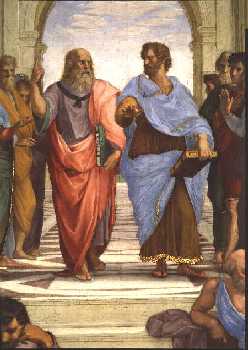
Biblical critics and dogmaticians in dialogue 2

Dogmaticians and biblical critics ought to dialogue more readily, for they share the same task of edifying the Church. They do not do this by their own unaided powers, but in the power of the same Risen One for whose body they exists, and for whose Person they bear witness to. John Webster has reminded is that ‘the particular task of theology is to attest the truth of the gospel in the wake of Christ’s own self-attestation’ (John Webster, Holiness (London: SCM, 2003), 3). So much as the Church seeks to do this articulating work, it concentrates on two fundamental tasks, exegesis and dogmatics. Webster rightly asserts:

‘Exegesis is of supremely critical importance, because the chief instrument through which Christ publishes the gospel is Holy Scripture. Exegesis is the attempt to hear what the Spirit says to the Churches; without it, theology cannot even begin to discharge its office. Dogmatics is complimentary but strictly subordinate to the exegetical task. It is not an improvement upon Holy Scripture, replacing the informal, occasional, language of Scripture by conceptual forms which are better organized, more sophisticated or more firmly grounded. Rather, dogmatics seeks simply to produce a set of flexible accounts of the essential content of the gospel as it is found in Holy Scripture, with the aim of informing, guiding and correcting the Church’s reading. Dogmatics attempts a ‘reading’ of the gospel which in its turn assists the Church’s reading. Developing such a ‘reading’ of the gospel entails, of course, the development (or annexation) of conceptual vocabularies and forms of argument whose range and sophistication may seem distant from the more immediate, urgent idioms of Scripture. But though technical sophistication is not without its attendant perils, it is only vicious when allowed to drift free from the proper end of theology, which is the saints’ edification. When that end is kept in view and allowed to govern the work of theology, then dogmatics can be pursued as a modest work of holy reason, transparent to the gospel and doing its service in the Church as the school of Christ.’ (Webster, Holiness, 3-4)